
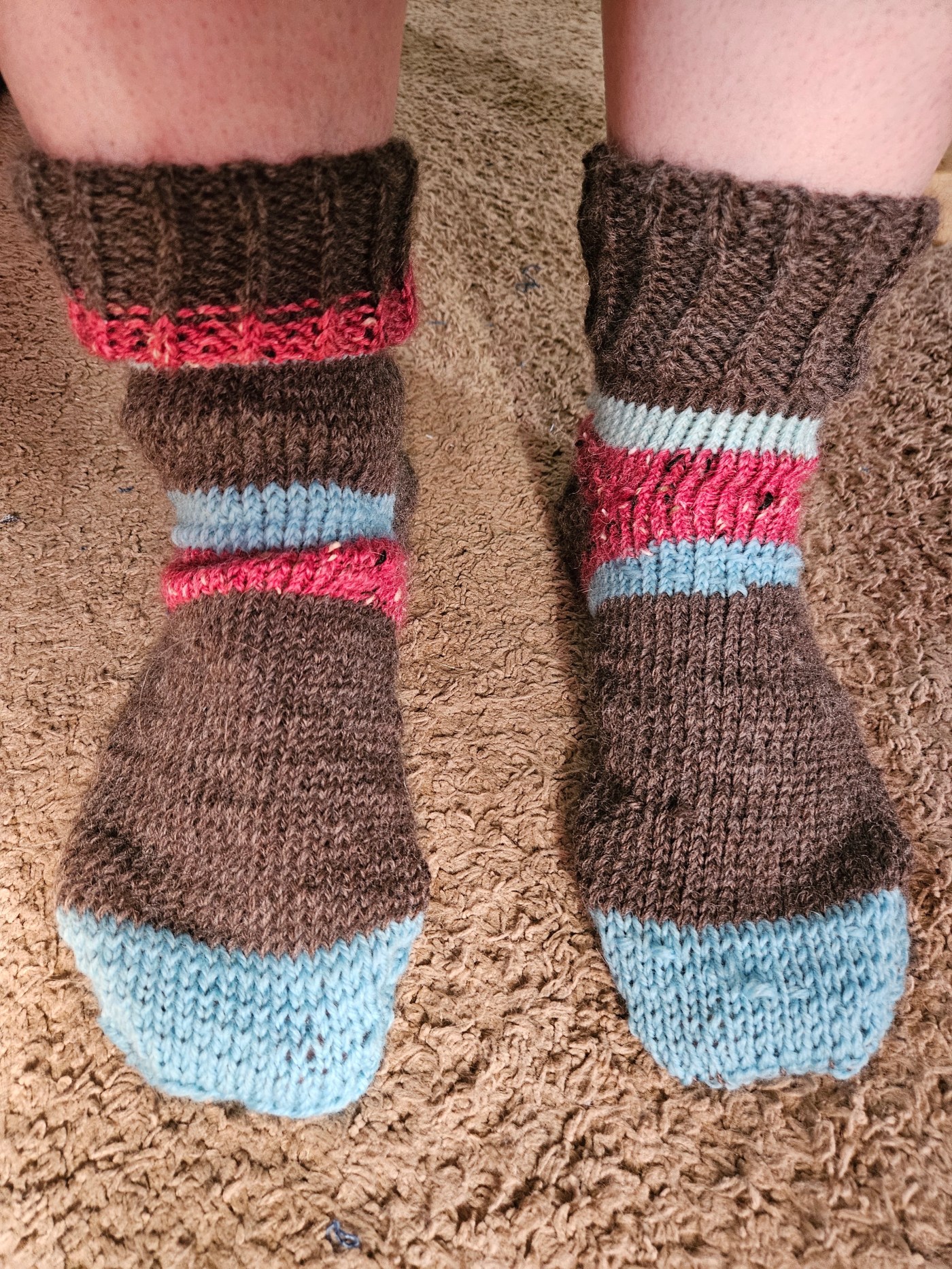
A special thanks to the pattern writing of Weichien Chan from Saskie & Co and Jamie Lomax from Pacific Knit Co, for explaining this process with such clarity, that I leveled up from a sock knitting dreamer to a sock knitter. Check out their patterns! I’m glad I did. 😃
The Sock Saga
How? And, why? Those were the questions burning at the back of mind as the sock process eluded me, again and again. For years, I couldn’t wrap my mind around the heel of the sock patterns I acquired. I tried a toe up approach. I tried to mess around with short rows. I even bought a sock pattern book from a used book store, for a bit of sock heritage. Heel flap, confused me. The mechanics of double pointed needles, challenged my hand eye coordination. Magic Loop tested my patience and exposed my tight tension, from my cluttered mind. But the Addi Sockenwunder 9″ cable in 3.5mm became the key to unlock knitting mechanics I was lacking.
If you’re familiar with this blog, you know my frustrations with knitting in the round. This came to a head in February, during the Melt the ICE hat knit along. I seriously messed up my tension, and initial attempt by twisting my work. My joined stitches became a helix, coiling around the cable. I frogged my work, and started again, this time waiting a few rows before joining. (I found this wisdom thanks to the advice of Reddit, I think? To the past comment thread that helped me, know that I am eternally grateful.) This time around, I was determined to keep my hands loose and my mind relaxed, and it worked. I did not feel the hand fatigue, I normally experience when knitting in the round. The short cable length of the Sockenwunder needles was the key, the stitches slid easily around in the exact space of a sock circumference. This is why Magic Loop and I, did not form a lasting relationship, the shifting of stitches was a hurdle I disliked. Same with DPNs, I don’t want to keep track of stitches on needles, I want to be in a flow state of stitching. That is the best part of knitting in the round, in my opinion, you just go and knit. It is incredibly relaxing, like crocheting a simple stitch across a project, you and the stitching implement become one with the yarn, looping and creating a fabric with a relaxed mind.
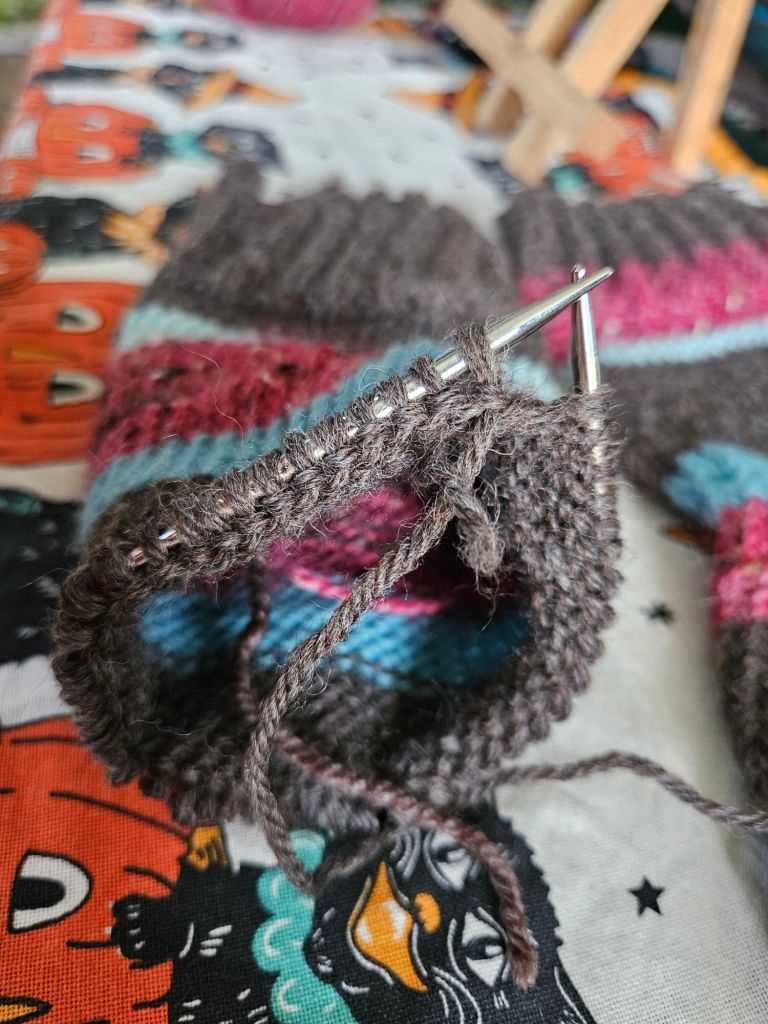
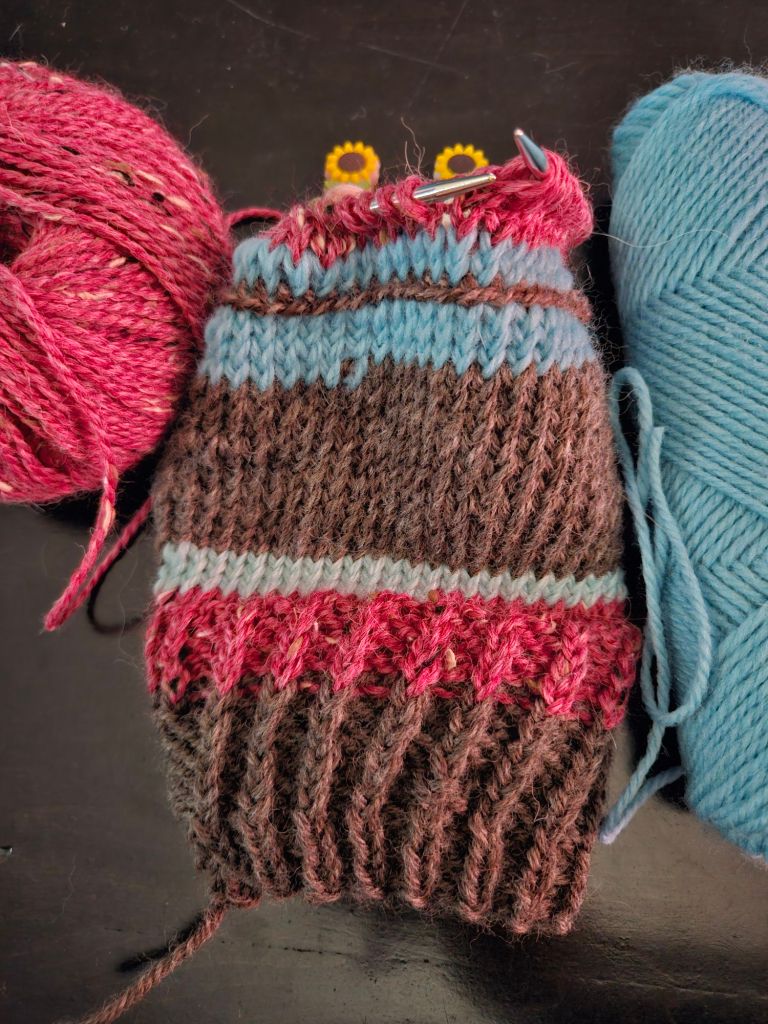
For this reason, the Sockenwunder socks came together quickly, despite the new techniques I was employing in this project. My first sock, I began at the end of the day on a Thursday, knit the body of the sock on Friday, and finished the toe and heel on Saturday. My second sock was began on Sunday, knit Monday, and wrapped up on Tuesday. Quick and easy, compared to a sweater! It’s what I want out of this knitting practice, something quick and relaxing, that is a pleasure to replicate over and over again. In the short term for my own feet for this coming winter, and in the long term for loved ones and beyond, hopefully charity knitting socks and possibly selling them at a market or online marketplace.
Sock Pattern
My sock pattern was loosely based on the patterns featured in the Arctic Knits book, which I will not go into detail for copyright reasons, but one thing I will talk about is my sizing mistake. I cast on an extra ten stitches from the Saskie & Co pattern, because of my usual tight tension knitting in the round. They fit a bit loose, and that’s okay. These first socks are a toile, for future socks, as I develop my preferences for socks. They are still usable, with a relaxed cabin socks fit for lounging around the house. I may layer other cotton socks underneath on cold days to pad the fit.
Another deviation from the sock patterns in the Arctic Knits book, was my choice to knit stripes, with scrap yarn from my Saskie Cardigan (another Saskie & Co project I will share soon). I didn’t know if these socks would turn out or be another failed attempt, so I used up my extras, in random stripes. This freed up my mind to concentrate on the mechanics of knitting the sock, and not the knitting charts. In the future, I plan to make the socks as written by Weichien Chan, they are stunning color work socks.
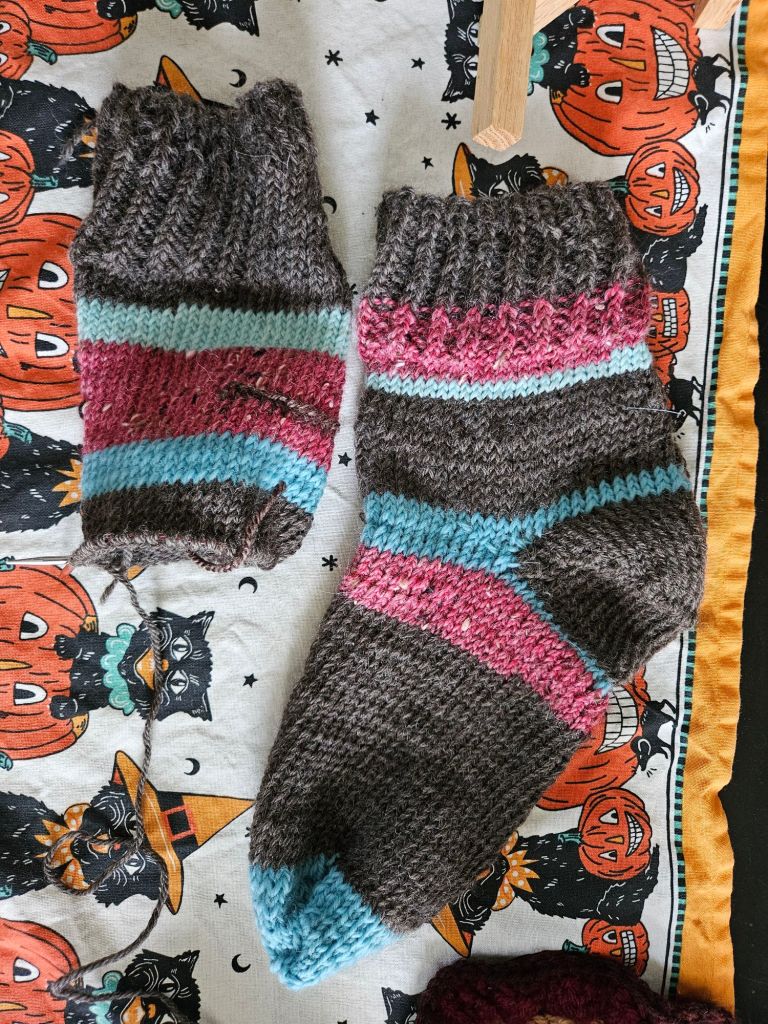
Now, what about that random raised row of brown yarn? That is the magic of the after thought sock! You make temporary arrangements for your heel and pick it up again after the sock body and toe are complete. This is where Pacific Knit Co’s tutorial had my back. Sometimes I need things rephrased, and many detailed pictures to make a new skill click. I’m a visual learner. Sometimes those patterns, although well written jumble in my mind. By using the combination of both pattern designers I successfully picked up the stitches above and below. I did this with a second set of circulars from Clover that were a bit longer, 16″ but the same gauge of 3.5 mm. The length difference was helpful during the knitting process, as the long needles hung down out of the way of my hands knitting on the Sockenwunder, and alleviated the stress of stitches falling off when unattended to.
Both Weichien and Jamie helped finally see the how and why of the heel shaping. With the heel flap techniques, I lost sight of the point. With the patterns that had me turn the heel while knitting the body, the complexity of this, overwhelmed me. But the after thought heel, eliminated both of these hiccups. I could see the sock body and the heel taking shape, it was intuitive. If you have experienced overwhelm by socks, I high recommend mixing up your tools and techniques. That is why we have so many to choose from, you must experiment to find the right fit like selecting a bowling ball.
Experimentation and repetition are my biggest takeaways from this multi-year sock saga. It’s not the finished project, as much as the process that defines the success. Knitting requires a patience and tenacity to frog and cast on again that has been hard for me, as a perfectionist with squirrel brain to stay the course with. Mistakes anger me. Frogging feels like a waste of time, but its not. Committing the skills to memory by practice is no different to volleyball practice drills or math homework. To be a skilled maker, you must put the time in, no short cuts. In this age of information and short cuts, it’s counter-cultural to slow down and fixate one skill until it is acquired, but it is the only way as humans we learn.
 One Rabbit Riot