After Thought Heel Socks

A special thanks to the pattern writing of Weichien Chan from Saskie & Co and Jamie Lomax from Pacific Knit Co, for explaining this process with such clarity, that I leveled up from a sock knitting dreamer to a sock knitter. Check out their patterns! I’m glad I did. 😃

The Sock Saga

How? And, why? Those were the questions burning at the back of mind as the sock process eluded me, again and again. For years, I couldn’t wrap my mind around the heel of the sock patterns I acquired. I tried a toe up approach. I tried to mess around with short rows. I even bought a sock pattern book from a used book store, for a bit of sock heritage. Heel flap, confused me. The mechanics of double pointed needles, challenged my hand eye coordination. Magic Loop tested my patience and exposed my tight tension, from my cluttered mind. But the Addi Sockenwunder 9″ cable in 3.5mm became the key to unlock knitting mechanics I was lacking.

If you’re familiar with this blog, you know my frustrations with knitting in the round. This came to a head in February, during the Melt the ICE hat knit along. I seriously messed up my tension, and initial attempt by twisting my work. My joined stitches became a helix, coiling around the cable. I frogged my work, and started again, this time waiting a few rows before joining. (I found this wisdom thanks to the advice of Reddit, I think? To the past comment thread that helped me, know that I am eternally grateful.) This time around, I was determined to keep my hands loose and my mind relaxed, and it worked. I did not feel the hand fatigue, I normally experience when knitting in the round. The short cable length of the Sockenwunder needles was the key, the stitches slid easily around in the exact space of a sock circumference. This is why Magic Loop and I, did not form a lasting relationship, the shifting of stitches was a hurdle I disliked. Same with DPNs, I don’t want to keep track of stitches on needles, I want to be in a flow state of stitching. That is the best part of knitting in the round, in my opinion, you just go and knit. It is incredibly relaxing, like crocheting a simple stitch across a project, you and the stitching implement become one with the yarn, looping and creating a fabric with a relaxed mind.
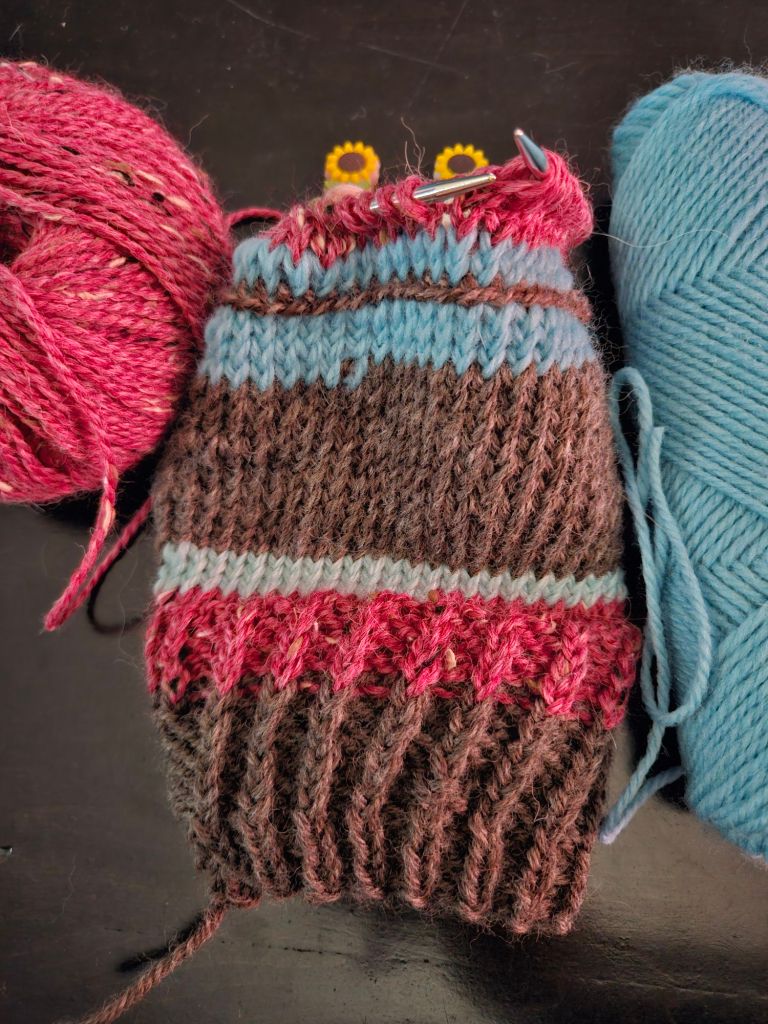
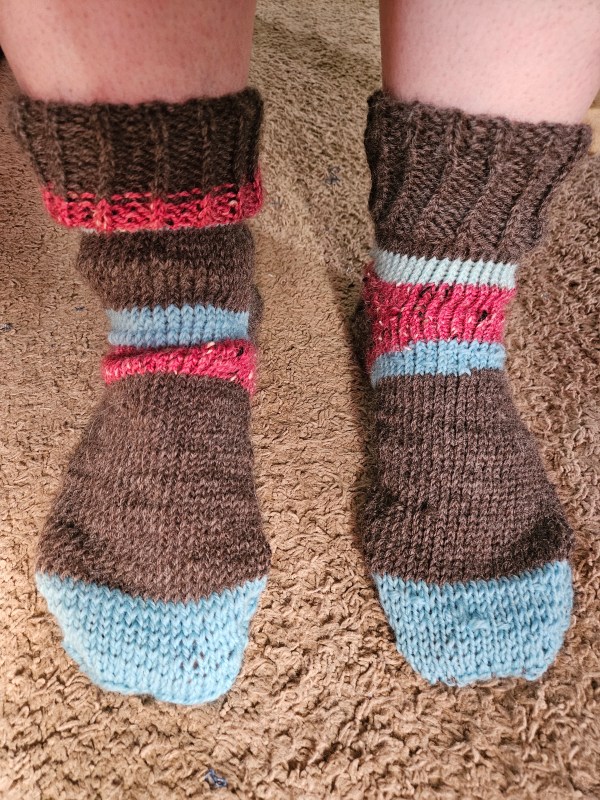
For this reason, the Sockenwunder socks came together quickly, despite the new techniques I was employing in this project. My first sock, I began at the end of the day on a Thursday, knit the body of the sock on Friday, and finished the toe and heel on Saturday. My second sock was began on Sunday, knit Monday, and wrapped up on Tuesday. Quick and easy, compared to a sweater! It’s what I want out of this knitting practice, something quick and relaxing, that is a pleasure to replicate over and over again. In the short term for my own feet for this coming winter, and in the long term for loved ones and beyond, hopefully charity knitting socks and possibly selling them at a market or online marketplace.

Sock Pattern

My sock pattern was loosely based on the patterns featured in the Arctic Knits book, which I will not go into detail for copyright reasons, but one thing I will talk about is my sizing mistake. I cast on an extra ten stitches from the Saskie & Co pattern, because of my usual tight tension knitting in the round. They fit a bit loose, and that’s okay. These first socks are a toile, for future socks, as I develop my preferences for socks. They are still usable, with a relaxed cabin socks fit for lounging around the house. I may layer other cotton socks underneath on cold days to pad the fit.

Another deviation from the sock patterns in the Arctic Knits book, was my choice to knit stripes, with scrap yarn from my Saskie Cardigan (another Saskie & Co project I will share soon). I didn’t know if these socks would turn out or be another failed attempt, so I used up my extras, in random stripes. This freed up my mind to concentrate on the mechanics of knitting the sock, and not the knitting charts. In the future, I plan to make the socks as written by Weichien Chan, they are stunning color work socks.
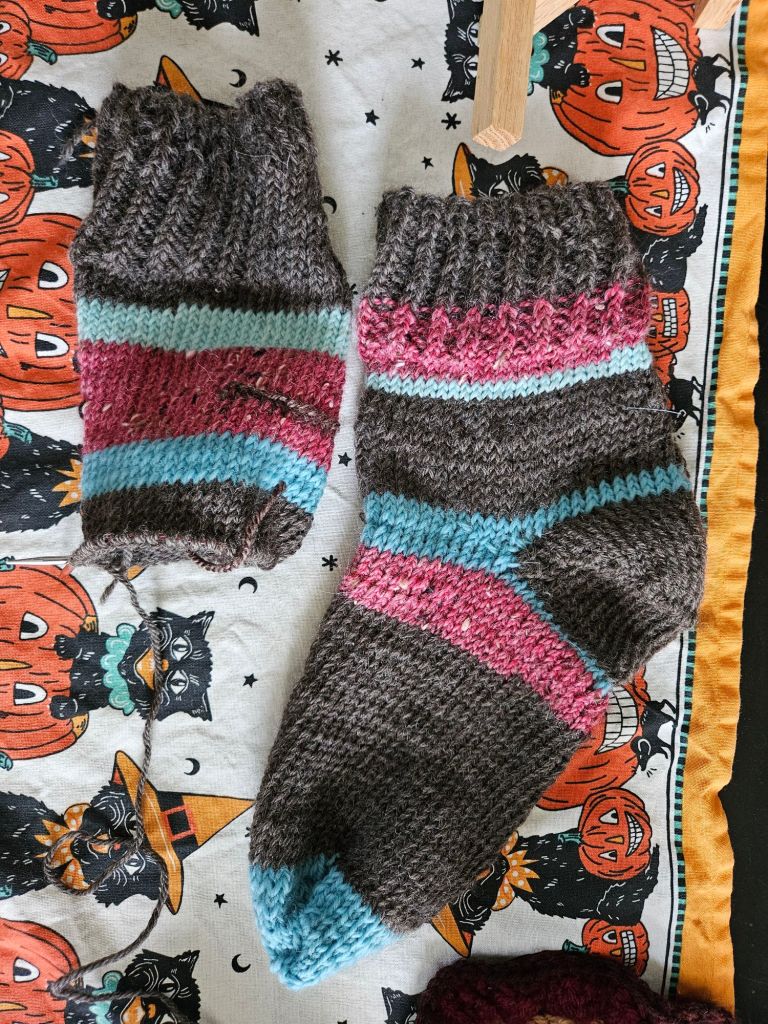
I used a combination of Knit Picks Wool of the Andes, Knit Picks Stroll, and Kelbourne Woolens Germantown.

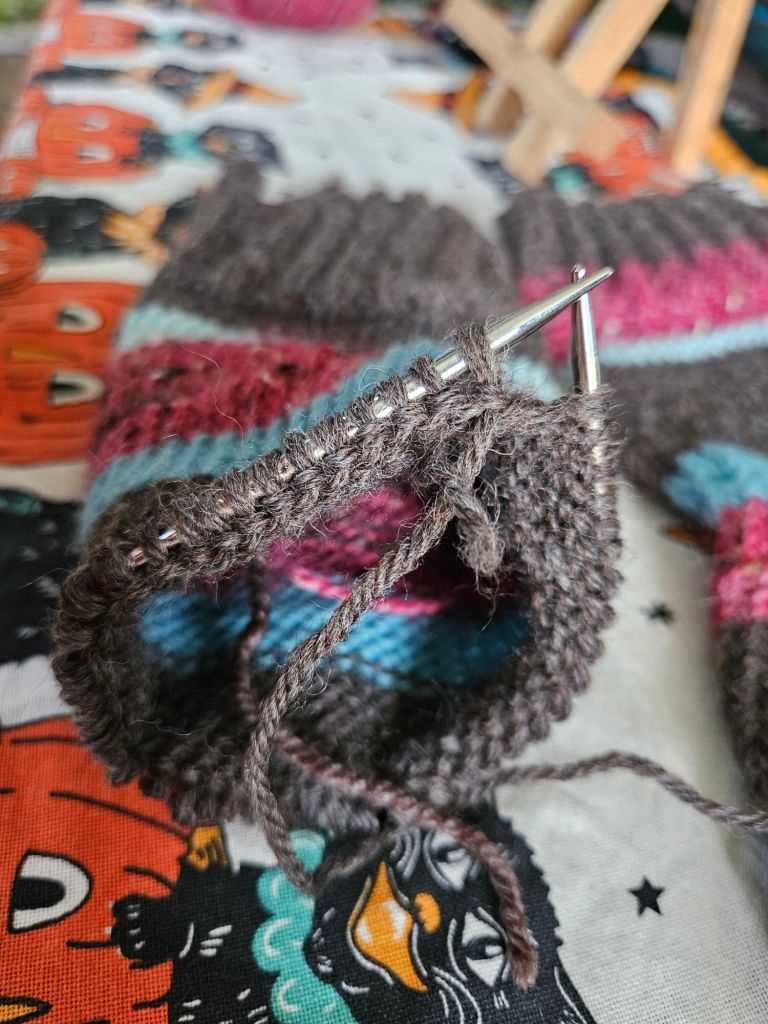
Now, what about that random raised row of brown yarn? That is the magic of the after thought sock! You make temporary arrangements for your heel and pick it up again after the sock body and toe are complete. This is where Pacific Knit Co’s tutorial had my back. Sometimes I need things rephrased, and many detailed pictures to make a new skill click. I’m a visual learner. Sometimes those patterns, although well written jumble in my mind. By using the combination of both pattern designers I successfully picked up the stitches above and below. I did this with a second set of circulars from Clover that were a bit longer, 16″ but the same gauge of 3.5 mm. The length difference was helpful during the knitting process, as the long needles hung down out of the way of my hands knitting on the Sockenwunder, and alleviated the stress of stitches falling off when unattended to.

Both Weichien and Jamie helped finally see the how and why of the heel shaping. With the heel flap techniques, I lost sight of the point. With the patterns that had me turn the heel while knitting the body, the complexity of this, overwhelmed me. But the after thought heel, eliminated both of these hiccups. I could see the sock body and the heel taking shape, it was intuitive. If you have experienced overwhelm by socks, I high recommend mixing up your tools and techniques. That is why we have so many to choose from, you must experiment to find the right fit like selecting a bowling ball.

Experimentation and repetition are my biggest takeaways from this multi-year sock saga. It’s not the finished project, as much as the process that defines the success. Knitting requires a patience and tenacity to frog and cast on again that has been hard for me, as a perfectionist with squirrel brain to stay the course with. Mistakes anger me. Frogging feels like a waste of time, but its not. Committing the skills to memory by practice is no different to volleyball practice drills or math homework. To be a skilled maker, you must put the time in, no short cuts. In this age of information and short cuts, it’s counter-cultural to slow down and fixate one skill until it is acquired, but it is the only way as humans we learn.
Town Farm Cardigan

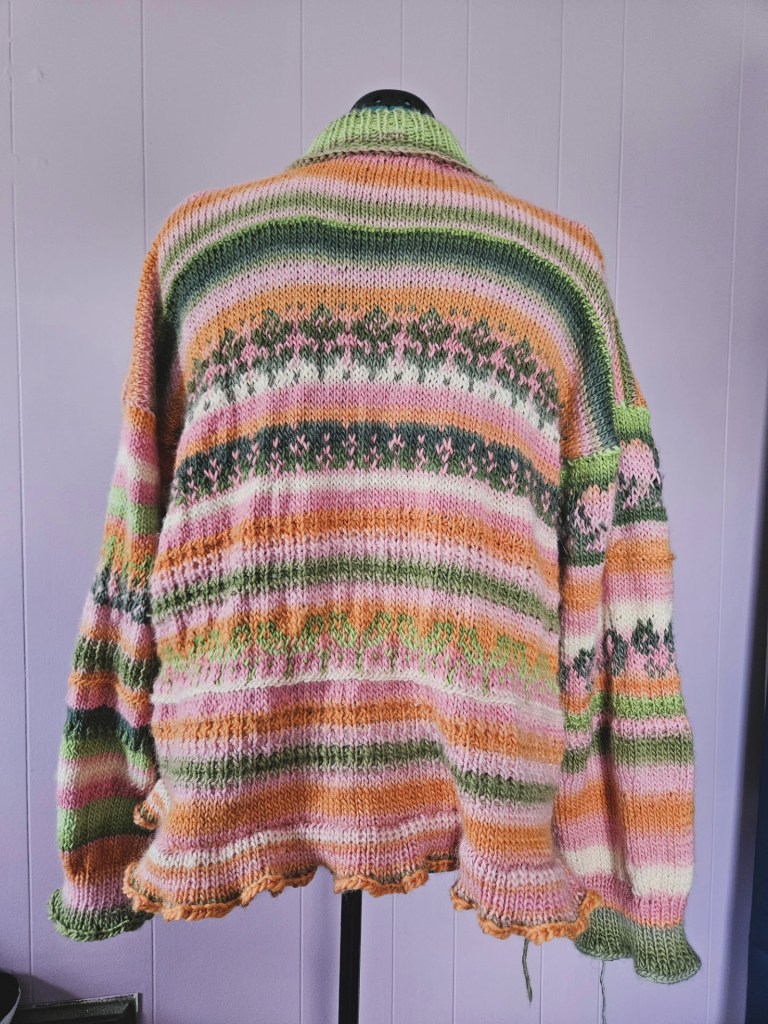
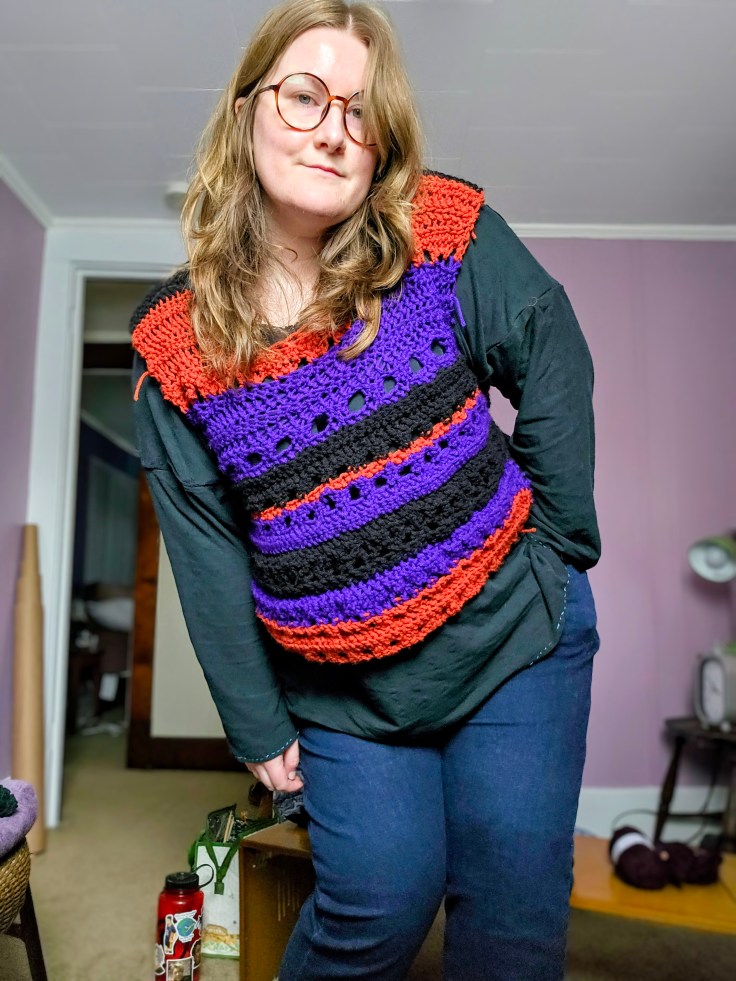
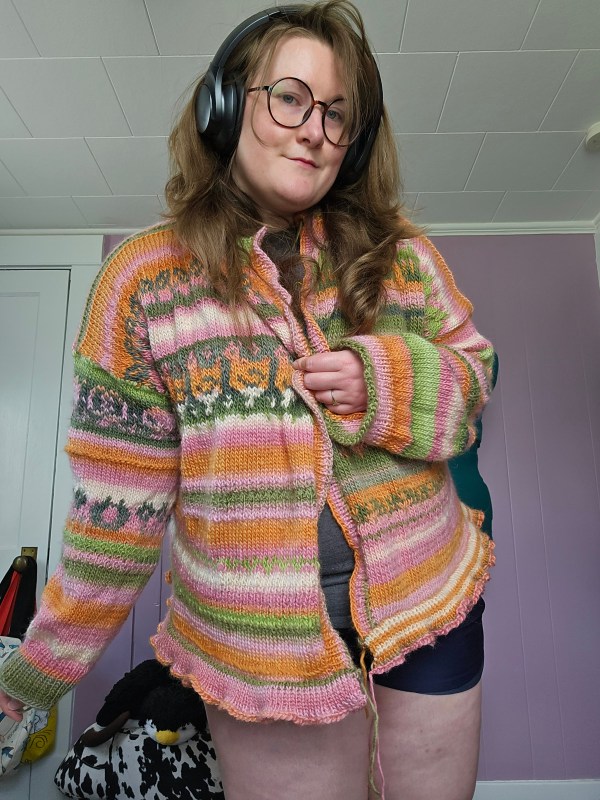
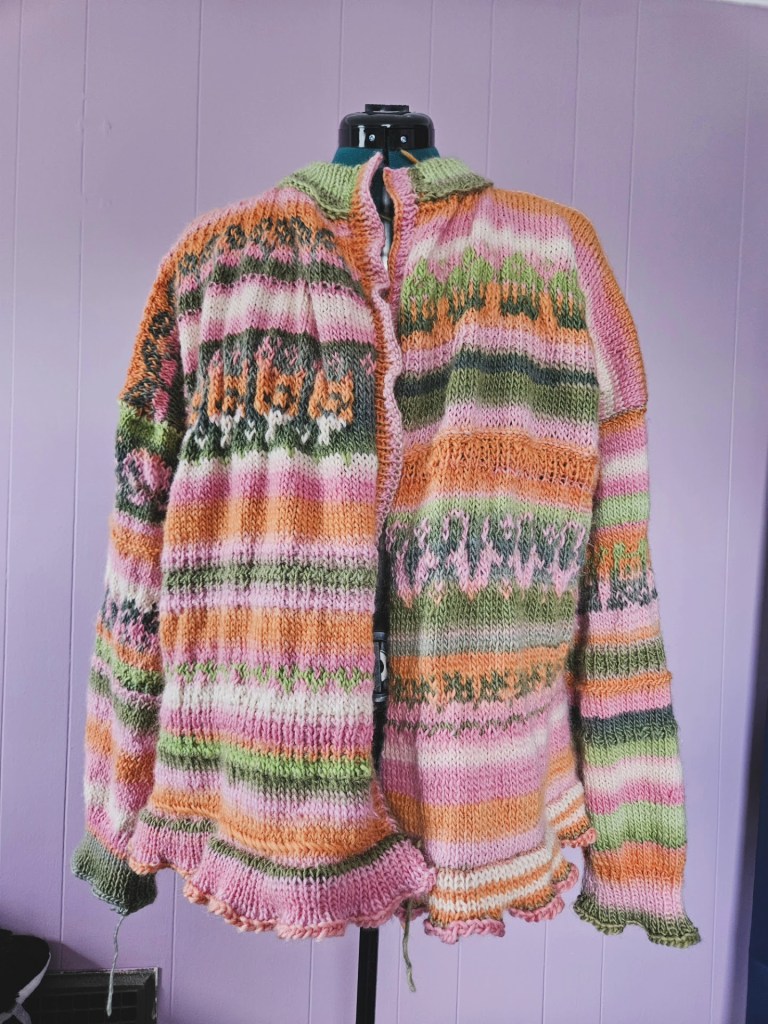
I wanted to make a cardigan that celebrated our garden, with a yarn inspired by Beatrix Potter, that was made from wool, and featured a fair isle design. To do this I used Pacific Knit Co’s farm doodle deck and Knit Picks’ Chroma Worsted Weight yarn in the colors Beatrix and New Leaf. The Chroma yarn has become a fast favorite of mine for its durability and delicious halo. The yarn is comprised of 70% super wash wool and 30% nylon. This was a bit of a stash busting project, and a splurge. I wished to use up three skeins of deadstock New Leaf, finding the pink-orange-white of Beatrix was the perfect spring-inspired color palette upon which to build. Using a gift card from Christmas, I purchased 6 skeins of Beatrix, although I had to repurchase more with this project using thirteen skeins in total. Not cheap! But worth the splurge to create a piece I plan to wear for the rest of my life that celebrates the garden we have created here at our new house. It’s our in-town farm, as our friend calls it.

The bulk of this project was done on US 8 straight needles, and seamed together using a 5.5 mm crochet hook. The bottom ribbing was created using a US 4 circular needle. The size reduction of 1.5 mm, changed the gauge to create this floral ruffle along the bottom edge. At complete accident! But I like it. In addition, I used mostly stockinette stitches, with 1×1 ribbing at the cuffs, collar, button band, and bottom hem, and the seersucker stitch for added texture, in between color work sections. Will I add buttons? I am uncertain. The original plan was to use buttons, and have purchased buttons, yet I like to wear my garments first beforehand, to see if I want to wear the garment closed. Since yesterday was the Summer Solstice, I have a while to wait!

This garment took approximately 4 months to complete, along side other sewing, crochet, and knitting projects.

The Search for Affordable Yarn – A Review

When my go-to yarn, Big Twist, was temporarily discontinued in 2025, I felt adrift in a sea of unfamiliar yarns with unfamiliar prices. Which raised an interesting question: what will be my new tried and yarn? I thought I would share this journey with short reviews of the yarn I explored in search of a new favorite.

Yarn Criteria:

What am I looking for in a yarn? Big Twist was my favorite for a few key reasons – affordability, quality, color range, and ease of accessibility. Big Twist had a large selection of colors in a worsted weight that did not split easily or snag in knotted tangles. The skeins contained 380 yards, selling for 4.49 USD, which made sweater projects affordable. It was easy to source in person. Now I am not looking for in-person yarn purchases like I used to. It’s just not possible at this time.

Wool of the Andes

Wool, worsted weight, has a large color range, and can also be purchased in a superwash variety. This yarn is a Knit Picks, made from Peruvian Highland Wool is sold for 4.99 USD per 110-yard skein. I like how sticky this yarn is. When it is stitched up, it stays in place and has great stitch definition. It’s not too itchy. I am sensitive to wool, and I find this yarn to be fine. I also used the superwash for a hat, so that could be where the extra scratchy feeling came from. I think this is a great yarn for budget wool, and for beginners, the best part is that it arrives in a skein, not a hank that you have to unwind. Yes, I would buy this again. I just purchased this for an upcoming rabbit-related project.

Mighty Stitch

Silky and soft. This yarn had great sheen for an 80% acrylic, 20% wool fiber. It was labeled as worsted, but I found it to be too thin compared to my other worsted yarns, which created some issues in my project. This Knit Picks yarn is 7.99 USD for 208 yards. When I purchased this yarn, it was on sale, but still more than I am used to paying for acrylic. Due to the thinness of the yarn, I failed to meet the gauge. I found myself using a lot more than I thought I would. The most disappointing thing was the way it slides out of knots, which was a problem for the colorwork and color blocking sections. The yarn also doesn’t respond well to my husband’s beard. I found this out because I knit him a sweater, and the top was falling apart where it caught on his beard. Would I buy again? No. I don’t trust it not to pull out of the weave, and I felt let down by the price for the experience.

Lion Brand Pound of Love

I found these oversized yarn skeins at Michael’s, and I was thrilled. Lion Brand is a fantastic budget yarn that I used before on a previous sweater project. At 1020 yards for 11.99 USD, this yarn has been a game-changer for experimentation. I can try new projects, have room to mess up, or be able to make gifts, blankets, etc, on a budget. It does not split. I can knit or crochet easily, and it meets the gauge. My only negative critiques are the color range and the composition of the fiber. I wish there were more colors; the range is small compared to Knit Picks or Big Twist. I also wish acrylic were not made from plastic. I wish this were wool, and was kinder to the environment. Yes, I will buy this again. It is the best budget acrylic yarn I have found that is easy to purchase and would be a great beginner yarn to learn with.

Loops and Threads Soft Classic

Before Big Twist fully came back in Fall 2025, I thought Loops and Threads may be Michael’s brand expression of Big Twist, after they acquired Joann’s IP and the yarn vendor contracts, so I gave it a shot, and I have some mixed feelings. The color range is large, which I like. Some of the shades are lovely, and some are a bit garish. Some of the yarn dyeing is odd. Some of the texture of the acrylic fiber is also odd. It can be a bit limp, almost too soft. I love the mushroom and curry color ways. The black yarn I purchased, however, smelled like a cheap pleather purse- a bit fishy and a bit like burnt hair. I still can’t get the smell out of the yarn with airing out, Febreeze, and laundering. Maybe it was the chemical dye? For this reason, I have some pause. But you can’t beat the 3.99 USD price and 354 yards per skein. Let the creativity reign! Yes, I will buy again.

Palette

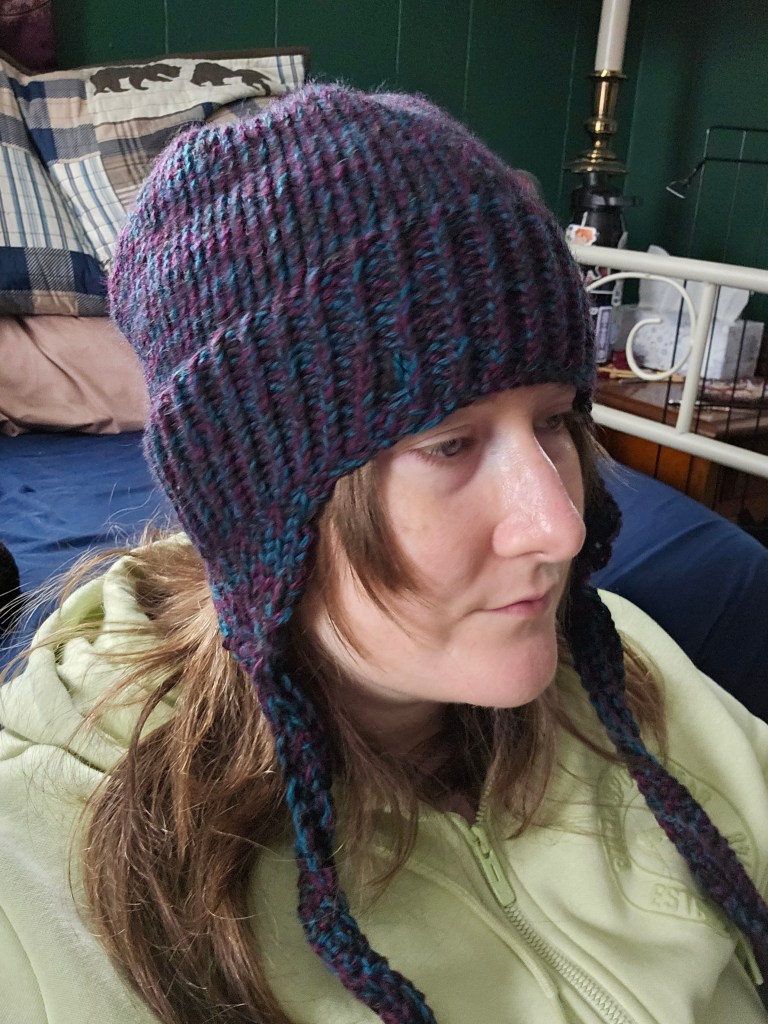
Palette Fingering Weight yarn from Knit Picks is a 100% Peruvian Highland wool yarn that has become my go-to winter accessory yarn. With its lightweight ply, I combine it with other yarns to create marled and warm hats, mittens, and socks. The hat to the left is three strands of Palette held together on US 7 needles. The hat to the right is made with two strands of worsted-weight acrylic (Big Twist) and one strand of Palette. It’s a non-superwash and has a lovely squish to the skeins. This yarn is already skeined up, no Hanks to unravel, and contains 231 yards for 5.49 USD per ball of yarn. I will rebuy. I actually panicked on New Year’s Eve, that I had drained my whole stash, to find they were at the bottom of a tote bag.

Caron Cakes

I have worked with two Caron Cake varieties in 2025 – Blossom Cakes and Big Cakes. The Blossom Cakes are a blend of 61% cotton and 31% acrylic fibers. They are variegated, worsted-weight cakes of 481 yards that sell for 14.99 USD per cake. They tend to do a BOGO sale at Michael’s, so I get them on sale, or else I would be less enthused about this item. The Big Cakes are also worsted-weight acrylic yarn, which is self-striping. I love the quality of the yarn, but the striping is a bit tricky. I am currently using them for blankets, but I did consider separating the sections of color to make something different. The Big Cakes contain 603 yards, which are sold for 14.99 USD. On a sale, you can make a blanket for a great price. For this reason, I will try the cakes again, with the proper project. They are complicated, and without a plan, they feel like a waste of money. With a good plan, they are a great resource.

Final Thoughts:

I found more options than I expected last year, and this led me to actually be happy that I had to find a new option for my tried-and-true yarn. Moving forward, I don’t have a sole favorite; instead, I feel like a nuanced palette of tastes is the better way to describe it. If you are a new knitter or curious about trying some of these yarns, I hope my thoughts helped. These are all my opinions, and all the yarn was purchased with my own money.

Will I Wear A Knit Tank?

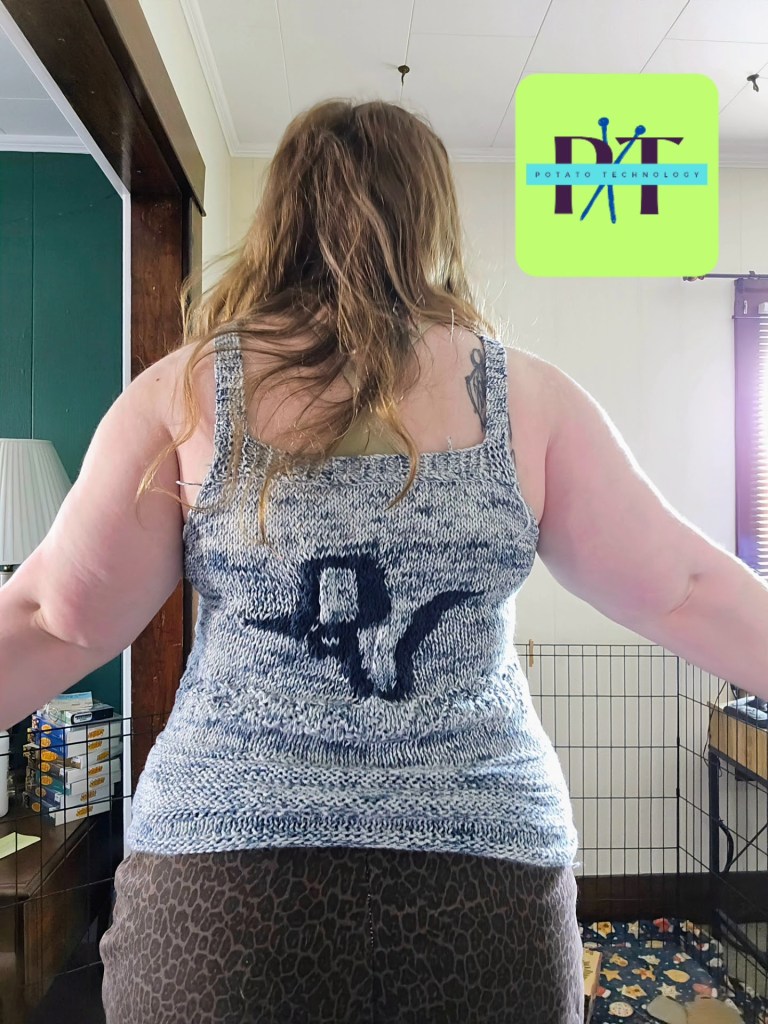
This is a follow-up to my recent post, ‘Will I Wear a Knit T-shirt?’, where I examined the fibers and wearability of a knit t-shirt and discussed whether this summer knit project could be a suitable option. Since then, I finished and got to wear a new piece of knitwear – my first knit tank top. I wore it in July, in full humidity with highs in the upper 80s to low 90s Fahrenheit. My experience surprised me – I said before that my knit t-shirts are wonderfully comfortable, but have a temperature and humidity limit for me, but the tank top surprised me!

I think it was the high pima cotton content in the Knit Picks Comfy – a 75% Pima Cotton and 25% Acrylic mixture that uplifted the breathability for me. I was melting in the hot sun, but the air flow and temperature regulation were spectacular! This tank had delicate straps but did not have a lacy stitch or open weave. It was constructed with regular knit and purl stitches, with sections that had double layers of yarn due to two sections of colorwork graphics on the front and back.

With Pima Cotton, Silk, Bamboo, or Linen as the primary fiber, or a blend of these natural fibers, I believe knit tanks are just as breathable as woven fabric, and for sure more breathable than moisture-wicking tech fabrics, which are polyester. No, I wouldn’t work out in this top, but there is something to say for a garment that is comfy and breathable for those long summer days. It was a simple stitch-up up only calling for two hanks of 100-gram worsted-weight yarn, about 240 yards, with the addition of 1/3 or 40 yards of the accent yarn, another cotton-acrylic worsted-weight blend from Loops and Threads. You can make a tank like this for 30 USD or less, and this is a size large. So if you have a small amount of yarn, you can do a lot with it!

Do you think a knit tank would be an item you would wear?

Is A Yarn Made From Recycled Marine Plastics Any Good?

As I have dove deeper into the world of fiber crafts and created often, I’ve become more conscious of the fibers I choose. Mainly because when a project doesn’t work, I feel like a jerk for making that mistake in hard to break down acrylic. I would feel less of a fool if my mistakes were constructed in biodegradable natural fibers like wool, cotton, linen, or bamboo. Starting in 2024, I began to migrate back to natural fibers, which I mentioned before in my Summer Knitting Plans post from last year. I had been hesitant to use wool before that, supposed allergies that I debunked in 2024, which led me to explore the many fiber offerings of Knit Picks.

When I was looking at sock yarns in the fall, a particular fiber caught my eye – Oceana. The Oceana line has this vibrant kaleidoscope of colors that evokes the tropical hues of a coral reef. It’s stunning! When my stepdad gifted me a Knit Picks gift card for Christmas, I knew exactly what I would order – the Oceana! Not just for the colors, but the innovative fiber content.

L to R: Sea Lettuce, Spirulina, Tiger Fish, Swordfish, Axoloti

This yarn is composed of 54% Superfine Alpaca and 46% Polyester SEAQUAL, which is made from marine litter cleaned from the ocean, and that plastic is then recycled into polyester (acrylic) yarn that is blended with the Alpaca fiber to create the Oceana yarn. The halo seems to be the Alpaca, based on my experience working with this yarn, and the interior chain fluffy fiber strand seems to be a combo of the recycled polyester and Alpaca fiber. Now, fiber blends are not the best for decomposing, but I like the motives behind this yarn. Instead of using newly created polyester, which doesn’t break down easily and is cluttering our environment, they are taking the trash out of the ocean and repurposing it into something useful. How cool is that? Can more polyester-based products start with recycling the plastic litter before making more? We literally have endless resources of trash, thanks to Shein and our rampant overconsumption.

So how does this yarn knit up? Excellently! It has this plush texture with a fuzzy halo that to me looks like those mohair strands knitters use to plush up a sweater.

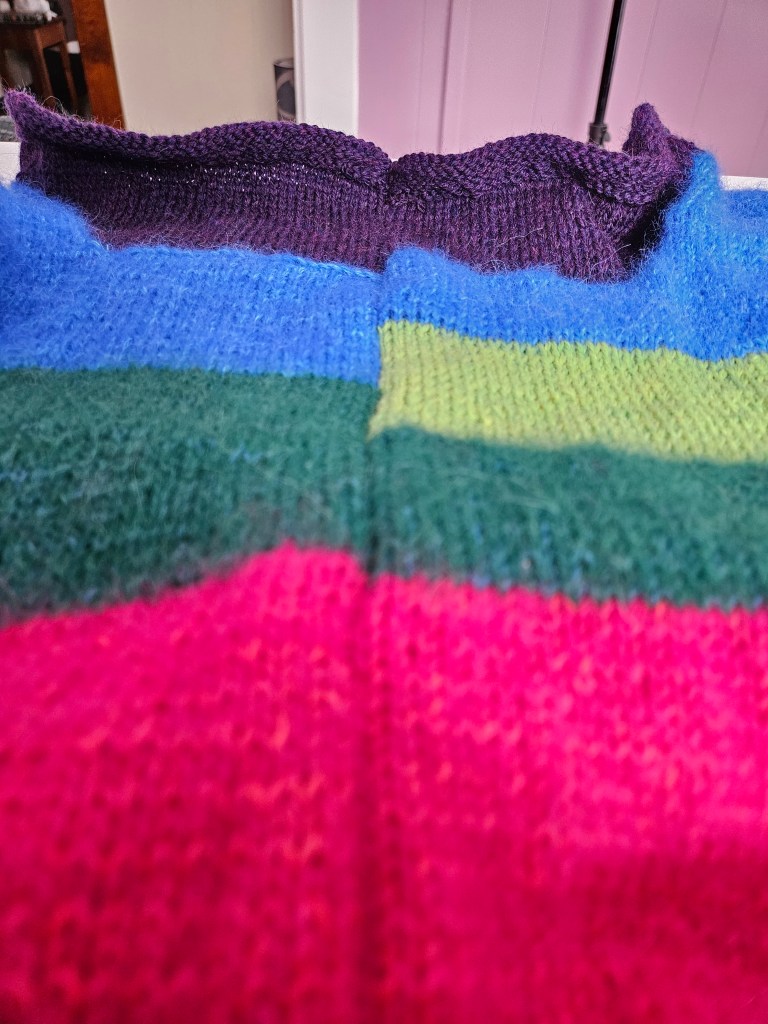
I’d say the only cons I have are the price and the yardage. I didn’t find this yarn went far, and had to play yarn chicken a few times. I secondly was only able to order five skeins with my gift card, the yarn was on sale might I add, with a 50 USD gift card. When I ran out of yarn, I chose to supplement with Knit Picks Palette yarn in fingering weight, held in double strands to match gauge. I do understand that part of the price is the process of SEAQUAL and the Alpaca fiber costs as well, but it was just a bit too much for me to purchase more at full price when I ran out, especially when I had existing yarn in my stash that could work.

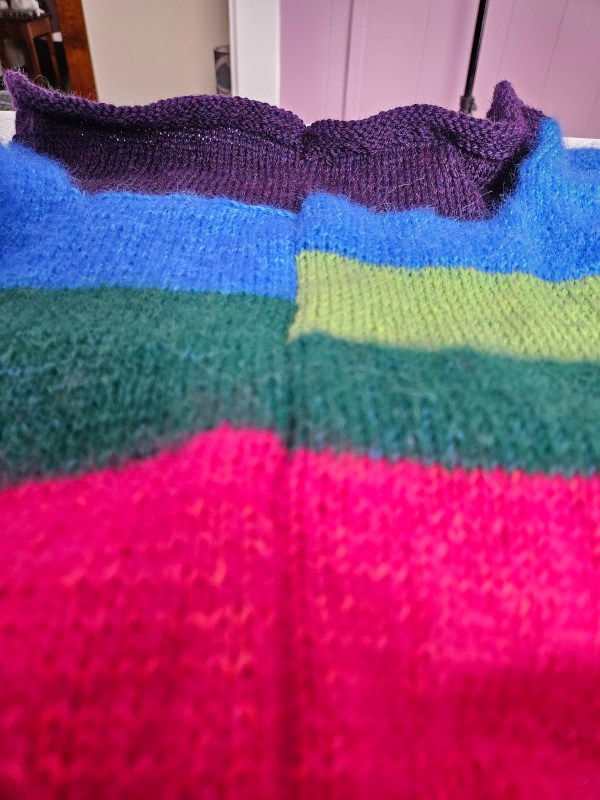
I had planned to have this project done by the time I reviewed the yarn, but as it is now April, and I’ve shifted to summer and spring knitting it is unlikely this project is wrapping up soon. Here’s a look at the project at its current state. 🙂

Create a website or blog at WordPress.com

Up ↑