#73 – Welcome, Again!

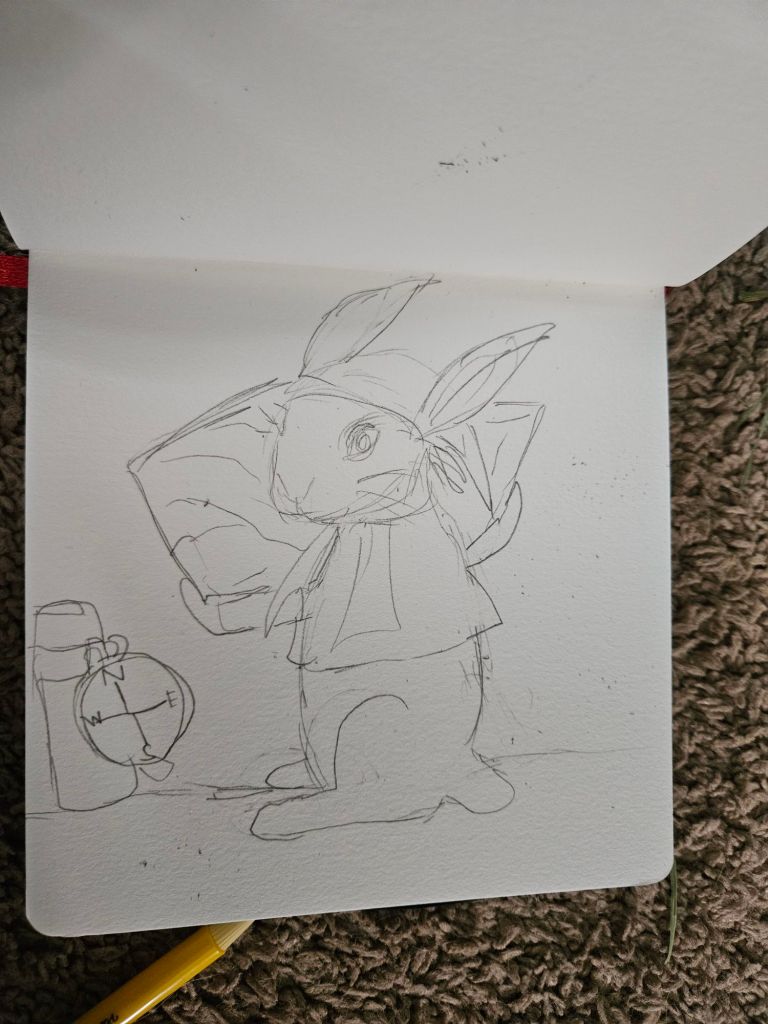
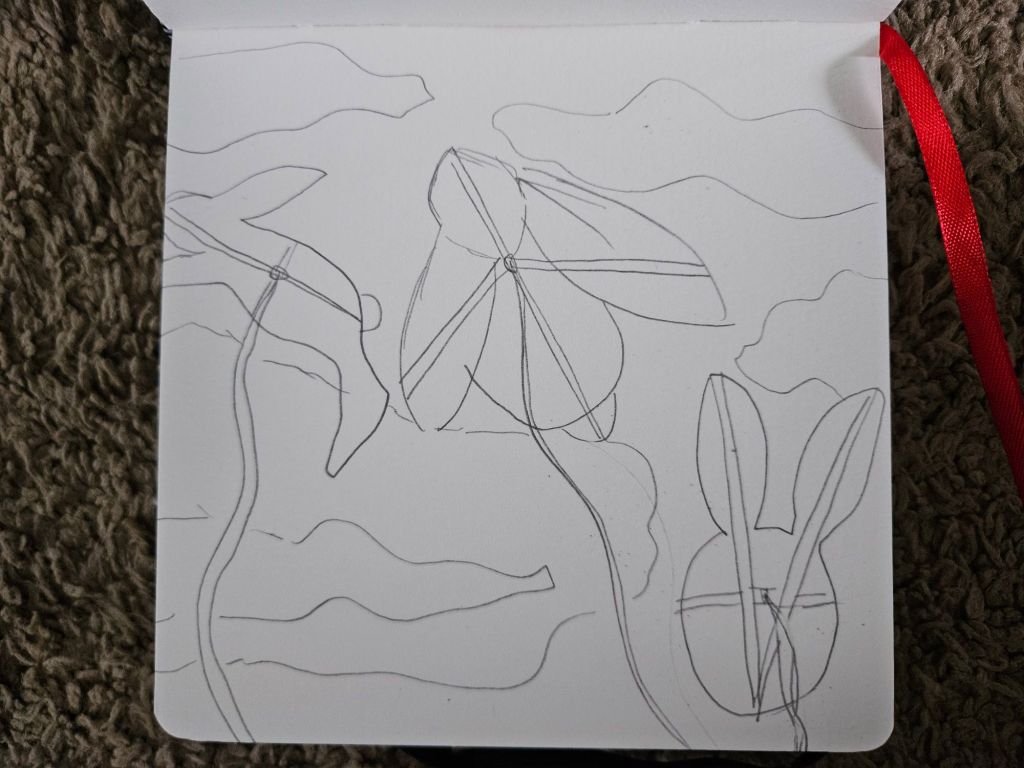
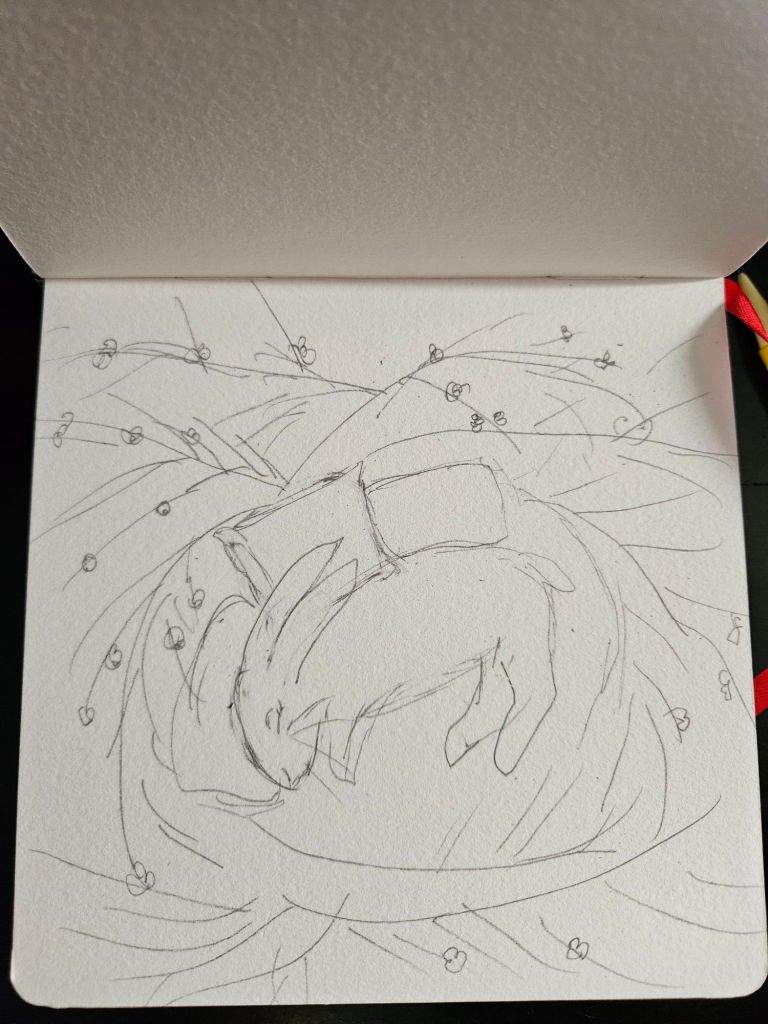
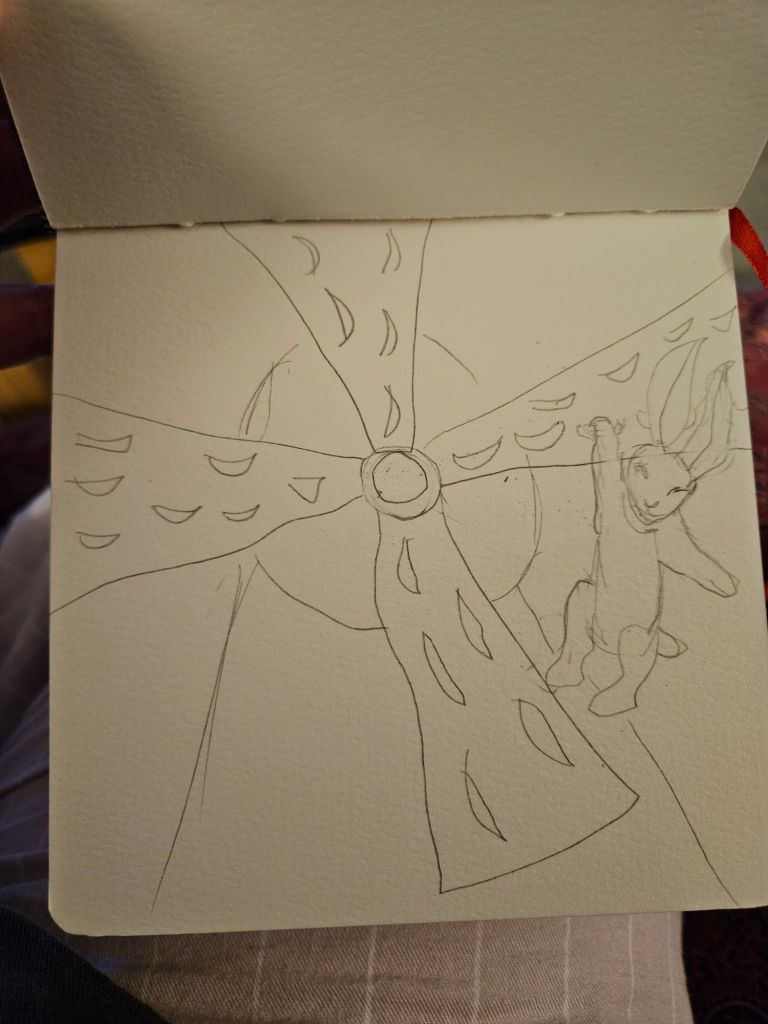
A lot has changed in the 2 years since this blog was launched, and I thought, it might be time to update my introduction.

In 2023, my plan was to finding a new landing place for me to explore writing again, after Muirin Project, my blog from 2016-2019. I wanted to showcase my novel, catalog my knitting and sewing journey, journal my bible study, and share my love for creative expression in many artistic mediums.

Now I have added some new things to the mix – Japanese learning, Kpop, garment workers/conscious consumption, and most excitingly: gardening! Which welcomed my husband to the site to share his experiences with gardening and bring awareness to why natural ecosystems, seed saving, and eating local matter. He is also preparing to share his other favorite hobby – woodworking.

Now, for something I question – should I change the site name? I am uncertain for SEO purposes and the likelihood of broken links. I don’t think it is wise. But this site is so much more than just my work, it is the harmonizing voices of myself and Kyle which is how I think the world becomes a better place – working together. Let’s keep the honmoon sealed. ❤

Featured post

Our 2026 Gardening Seeds: Melons, Molokhia, and Peas

In a continuation of my series highlighting the garden seeds we ordered for our 2026 garden, I’m going to combine several vegetables into one post. This post will go over our melon, molokhia, and pea seeds. Below, I am including links to the previous installments of the series. Plus, here’s a post that showcases all of the seeds we ordered.

Links to Other Seeds:

Melons

Last year, I think we grew four types of melons: one watermelon, one cantaloupe, and two specialty melons. We had moderate success and were able to harvest one cantaloupe and multiple specialty melons. Given that we didn’t know what we were doing, I was pretty happy with the outcome. This year, we’re dialing it back by only growing three varieties of melons and no watermelons, which was the only type to not produce an edible fruit last year. The three varieties we bought were also bred to grow in northern climates, so we should be in a good position to succeed even if we have a cooler summer.

Melon Seeds, Molokhia Seeds, Pea Seeds
Our melon, molokhia, and pea seeds for 2026.

Cream of Saskatchewan

This white-fleshed watermelon has Saskatchewan in its name, but its origins are Russian. It grows very well in northern climates that have shorter growing seasons. Despite its white flesh, it is known for its sweetness and great flavor. It has a very thin rind and does not store well. This heirloom seed was bought from Seed Savers Exchange.

Montreal Market

This muskmelon has a fascinating story. The seed dates back to early French settlers of North America (to at least the 17th century), and Burpee commercialized it in 1881, but at one point it was thought to be extinct. Thankfully, a group of Montreal seed preservationists located a few seeds in 1996 and brought it back. A green-fleshed variety, Montreal Market has a sweet and spicy flavor that is unique. Grows very well in cool climates. Our seeds came from Fedco.

Pride of Wisconsin

Fedco, who we bought this seed from, describes the Pride of Wisconsin as the “best full-size open-pollinated muskmelon.” It was introduced by the St. Louis Seed Co. in 1923 and nearly went extinct during hybridization. The taste is supposed to be divine, and the flesh is edible down to the rind.

Palestinian Molokhia

I first learned about Molokhia in a podcast from True Love Seeds called Seeds and Their People. If you haven’t listened to that podcast yet, I recommend it. Magz came across molokhia when she was looking for flax seeds, buying both from True Love Seeds despite not knowing that I listened to their podcast. Molokhia is a green that is natively grown in the Middle East, North Africa, and East Africa that is rich in vitamins and minerals. It’s eaten like spinach and is also called Egyptian Spinach, while its fiber is used to make twine, rope, and rugs.

This variety comes from Palestinian refugees/immigrants living in the United States. Molokhia should be picked throughout the season for a perpetual harvest, and the leaves can be frozen or dried. Side note: I may not always love modern technology and the modern world, but the ability to learn about and purchase seeds that are vital to a culture halfway around the world is amazing. Buying and growing this seed is especially important, as the Palestinian culture, including its foodways, is being threatened. By learning about Palestinian culture and humanizing the Palestinian people, we are able to better understand them. The relationship between the Palestinian and Israeli people can be tough to understand, but one thing we should be able to agree on is that no one should have to worry about their culture being destroyed. As a Christian, I have no problem using the word “genocide” to describe what’s happening to the Palestinian people.

Peas

Peas get such a negative reputation, which is unfair. It’s probably because of people’s experience eating canned peas as children. While I also like those, fresh peas are amazing. Last year, we grew a couple of rows of snap peas and had some success, but we had issues with weeds and our corn shading the plants too much. This year, we’re growing all new varieties and picked one variety each of snap peas, snow peas, and shelling peas.

Green Arrow

Full transparency: This shelling pea variety’s name caught our attention and is the main reason we chose it. I’ve been watching the TV series Smallville over the past six months or so, and Oliver Queen (aka Green Arrow) is one of my favorite characters. As a seed, the Green Arrow pea is an heirloom that has been developed to have good disease resistance and high production. We got our seeds from Pinetree Gardens.

Oregon Sugar Pod II

The Oregon Sugar Pod II is a snow pea that has a contained growing habit with only 30-inch-tall vines that don’t climb. Like Green Arrow, this variety is highly disease resistant and very productive. Our seeds were bought from Territorial.

Sugar Ann

This variety is a snap pea that is known for its exceptional flavor and was named an All-American Winner in 1984. It grows in a bush habit with only 18-inch vines that don’t need to be trellised. Snap peas are my favorite, and I have a hard time not eating them fresh off the vine. Can be planted late in summer for fall harvesting. Our Sugar Ann seeds came from Southern Exposure.

Have you grown any of these varieties before, or have you grown molokhia in the past?

How I am Preparing to Leave Pinterest, if OpenAI Buys Them

I want to start off by pleading with Pinterest, please don’t work with OpenAI. (I know this is purely a rumor, but even so, I think using the internet to voice opinions is important.) I have been using your platform since 2012, and it is so useful! It has become less useful over time, with the “purely financial” decisions of peppering in a multitude of advertising pins and allowing AI-generated art to invade the platform. Even so, it is still a platform I use and love to escape into for inspiration.

Without Pinterest, creative writing projects like Udal Cuain, knitting colorwork projects, sewing projects, and home decor ideas would have been more difficult to source and may not have been on my radar – ever. I’ve even learned simplified versions of songs to play on the piano before I bought proper books, for free through Pinterest. Now what about fandoms? On really difficult days, my Stray Kids board is filled with memes, SKZ Code, captured moments from lives, silly edits, and STAY inside jokes that would not exist in one place to make me smile.

I don’t want to leave Pinterest at all, but there comes a time when we must make a stand for what is right – if you integrate with OpenAI, as rumors have thrown around, many other like-minded individuals, and I will leave because, as artists, we will not stand for the theft being carried out by generative AI of our work. Art is human. Generative AI is regurgitation. Art is for an audience of many; AI-generated art is for an audience of one. Human-made art has emotion; AI-generated art is the result of algorithmic decisions. AI-generated things are not new; they are not groundbreaking. They are human effort and human creativity scraped by these computers and served up as “new” all while consuming vast amounts of electricity and clean water, for nothing but perceived “innovation” that makes these tech bros wealthier. It gives nothing to humanity; it feeds the greed of the few. Alright, that’s enough of looking into the abyss for me.

How do I plan to make this change if Pinterest is bought by OpenAI?

  • Crafting Books
  • Used Books, Magazines, and Catalogs
  • Respectful Fan Accounts on Instagram
  • Physical Notebooks
  • Migrating to Milanote
  • Blogs and Research
  • Building a Creative 3rd Place Elsewhere
  • Creating Your Own Charts
  • Physical Moodboards
  • Acknowledging Frustration
  • Diving into History
  • Utilizing Libraries

Yes, we’ll be going back to analog inspirations, like going back to the 1990s and 2000s. I’ll be crafting even slower, researching longer, and spending more time digging to learn how to do new techniques like fillet crochet or how to paint using gouache paints, but that’s okay. At least it will be honest inspiration. In time, we will all come back together through a new creative community platform, and it will be a bit of a waste of time. So, Pinterest, put these rumors to bed, please, because when it comes to AI, we artists mean business, and you will be left behind.

Thanks for coming to my TED Talk ❤

Our 2026 Gardening Seeds: Cucumbers, Flax, and Leeks

In a continuation of my series highlighting the garden seeds we ordered for our 2026 garden, I’m going to combine several vegetables into one post. This post will go over our cucumber, flax, and leek seeds. And if you missed the previous installments, you can read about our bean seeds and corn seeds. Plus, here’s a post that showcases all of the seeds we ordered.

Cucumbers

I love cucumbers, so much so that I dug into the history of them in this post. They’re one of my favorite vegetables to eat during the summer heat, and I crave the coolness they provide. Last year, we planted a lot of cucumber plants, and the vines went everywhere. They intersected with each other and other plants and were difficult to navigate through. We also had more cucumbers than we knew what to do with and lost some ripe ones that were buried underneath leaves. Because of that, we’re scaling back our cucumbers in this year’s garden. We still want variety that can be eaten fresh and pickled. Plus, there’s still a specialty cucumber that I couldn’t resist.

Cucumber Seeds, Garden Seeds, Leek Seeds, Flax Seeds
Our cucumber, flax, and leek seeds for the 2026 garden.

Bushy

This short-season cucumber is one of the earliest varieties you can find, maturing in 45 to 50 days. This variety has a bush-growing habit, as is evident by its name, and can even be grown in containers, which we are considering. The cucumbers are excellent for fresh eating and pickling. The Bushy cucumber originated in Moscow, Russia, where plants that thrive in short summers are essential. We haven’t grown this variety in the past. The seeds come from Pinetree Gardens.

Mexican Sour Gherkin

This is a variety I’ve been interested in for a couple of years. Also called Cucamelon or Mouse Melon, the Mexican Sour Gherkin is native to Central America and has been eaten there since before the Europeans arrived. This variety grows on vines, so it needs a trellis or fence and grows many 1-inch fruits that resemble tiny watermelons. Our seeds come from Fedco.

Flax

Historically, Pennsylvania grew a lot of flax, which was milled, spun, and used to create linen for clothing, bedding, and more. Its oil is what we call linseed oil. Over time, the commonwealth stopped growing flax on a large scale, and we no longer have mills for processing. Last year, Magz learned about the PA Flax Seed Project, which has a goal of reestablishing flax as a commodity crop in Pennsylvania. As a result, we became interested in being part of the movement to see flax grown in PA once again.

Common Flax

We were originally going to participate in the Square Yard Project, which is part of the PA Flax Project, but their website for signing up was down when we were ordering seeds. So, Magz found seeds from True Love Seeds, which is based in Pennsylvania. According to their seed description, common flax is mostly grown in Europe and Central Asia. Linseed can be used medicinally for its anti-inflammatory properties. The oil and seeds can be consumed and are rich in omega-3s. Plus, the fiber can be used to create textiles. We bought a single pack of it with the goal of learning how to grow it. It’s supposed to be very easy to grow.

Leeks

We have never grown leeks and, to my knowledge, have only cooked them once or twice. But with a flavor that’s described as being similar to a green onion but sweeter, we’re confident that we’ll like them. One of my gardening goals is to grow onions in the future, but they can be finicky and can take a lot of preparation, so leeks seemed like the next best thing.

King Richard

I knew that I wanted a leek variety with the shortest time to maturity that I could find in case we have another late spring or an early frost in the fall. The King Richard Leek fits that mold, only needing 75 days to mature. Our seeds come from Fedco.
Do you have a favorite cucumber variety to grow? If so, I’d love to hear about it and possibly grow it in the future. Also, have you ever grown flax or leeks? I look forward to hearing from you.

Our 2026 Gardening Seeds: Corn

Earlier this week, I wrote about the bean seeds we ordered for our 2026 garden. Before that, I shared images of all the seed packets. In this post, I am going to go over the corn seeds we purchased.

Check Out Our Other Seed Posts:

We loved growing corn last year. We grew three varieties – Hopi Blue, Butter & Sugar, and Black Iroquois, Sweet Mexican – and had success with all of them. There were definitely some lessons we learned along the way, including not planting right before a heavy period of rain, not planting too close to the fence, and keeping more space between the seeds, but it was a positive experience overall.
Corn Seeds, Garden Seeds
Our corn seeds for 2026.

Because of that, we’re growing more varieties, including a popcorn variety and multiple flint corns that can be turned into cornmeal or flour. If there’s one common thread among the seeds, it’s that we want to grow heirloom varieties as much as possible. Modern sweet corn is great, but some hybrids were bred to prioritize sugar content over flavor, which we don’t like. Heirlooms help find the sweet spot of sweetness and traditional corn flavor. We’re really excited about the varieties we chose for this year’s garden.

Bear Paw

This is a variety we found late in the seed-picking process. It’s a popcorn variety, and according to the seed description, the “ears are often flattened and split at the silk end, giving them the appearance of a bear’s paw.” The Bear Paw was developed by Vermont’s Glenn Thompson, who released it in the 1930s. It was served at New England movie theaters and even featured at a World’s Fair. It matures in only 70-80 days and grows to about 4 to 5 feet tall. This is a new variety for us. It comes from Seed Savers Exchange.
Black Iroquois, Sweet Mexican

This is one of three corn varieties that we grew last year. We had success growing this variety and found it a joy to watch the kernels transition from white to nearly all bluish-black. The flavor was also amazing, and it wasn’t too sweet. It’s an heirloom variety that dates back to 1864 and likely originated in upstate New York. These seeds come from Southern Exposure.

Country Gentleman

Country Gentleman is an heirloom sweet corn variety that dates back to the 1890s. Its ears grow kernels in random patterns (called shoepeg) rather than neat rows and on stalks that can be taller than nine feet. While sweet, it’s less sweet than modern varieties. This will be the first year we grow this variety. Our seeds came from Sow True.

Hjerleid Blue

Even though the kernels of this variety turn blue when they mature, Hjerleid Blue is a sweet corn. The kernels start out white but transition into a dark blue, almost violet color. It is an heirloom that dates back to the 1940s when Ludwig Hjerleid developed it in Wisconsin. The plants will reach 4 to 6 feet tall and produce short, 4- to 6-inch ears. This is our first year growing this variety, and the seeds come from Seed Savers Exchange.

Hopi Blue

We grew this corn last year with great success until the point where the ears needed to dry out. As a flint/flour corn, Hopi Blue is meant to stay on the stalk until it’s dried out, much like dry beans should stay on their plants. Unfortunately, deer got to our ears before they dried out. Apart from that, the corn was great. The stalks reached more than 7 feet in height, and it was beautiful to see how different this variety looked compared to the sweet corn varieties we grew. This variety dates back more than 800 years, when the Hopi Tribe grew it in Northern Arizona. In fact, it’s still grown by them in the same region. Last year, we got the seeds from Fedco, but this year, they’re coming from Pinetree Gardens.

Luther Hill

Luther Hill is an heirloom sweet corn named for the horticulturalist who developed it in New Jersey in 1902. It’s popular in the Mid-Atlantic region for its ability to navigate a wide range of temperatures. Short, 5 1/2-foot stalks produce 2 ears per plant with shorter, white-kernel ears. It’s supposed to have a great flavor. This will be our first year growing this variety. The seeds come from Southern Exposure.

Northern Lights

Northern Lights is a gorgeous flint corn that produces ears with multicolor kernels in blue, red, yellow, and purple. It’s used as a grinding corn for flour. It’s our first year growing this variety, and the seeds come from Baker Creek.

Painted Mountain

Like Northern Lights, Painted Mountain is a flint corn developed for grinding into flour. This variety produces kernels of gold, orange, red, and purple and was developed to grow in some of the harshest conditions. This is a new variety for us, and the seeds come from Fedco.

Stowells Evergreen

Stowells Evergreen is an heirloom sweet corn that dates back to 1838 and is named after Nathaniel Stowell, who developed it. The stalks grow to 7 1/2 feet tall and produce 7- to 8-inch ears. We haven’t grown this in the past. Our seeds come from Pinetree Gardens.

#79 – Craftivism

This is a new term for me, but it is genius. Craftivism is activism through crafting. It is using your art and everyday things to show what you believe and to speak out against injustice. And to use an internet term, this has completely “changed my brain chemistry” to think of using my knitting to say what I believe, just like art.

What made this a tangible thing for me to get started in community was the Welcome Blanket collection at my local yarn shop. Together, sections of knit and crochet squares would be collected and seamed into blankets, like receiving blankets, to welcome immigrants to the United States. With all the ICE-y conditions out there, it’s swimming against the current in a way that aligns with my beliefs and what we are called to do as Christians – love your neighbor and take care of immigrants. Not to worship power, money, and excuse racism like some so-called “Christians” in my country are doing. Seeing my crochet square stitched together with other like minded indivduals’ fiber art was powerful. It reminded me of how we are stronger together and how doing small things, as a community, makes a difference. I also enjoyed reflecting on my own immigrant heritage and sharing my story of how my family came to the US and why immigration is necessary.
As an American who is not Indigenous, every part of my family tree came from somewhere else. Some of my family came from Germany, I believe, in the early 1900s, since my great-grandmother, who was born in 1912 in the US, spoke German as her first language at home. Some of my family from Ireland left County Cork’s farmland during the potato famine to escape certain death from the genocide of starvation by Great Britain. Some of my family from County Armagh immigrated in the late 1800s to the US, went back to Ireland in the early 1900s, and came back again to the US during the Troubles. The rest of my family came from Canada in the 1960s. If we are not members of Indigenous nations, then we are all here because of immigration. To act like immigration is dangerous, un-American, and unwelcome is not American to me. We all came from somewhere else. Let’s love our neighbors and support them in this new chapter of their lives, which came about because of a very difficult decision.

The second opportunity that brought Craftivism back on my radar was the Melt the Ice hat. This hat was used from protest by Norwegians in the 1940s during the Nazi occupation of Norway. Minnesotans, many of whom are descended from Norwegian immigrants, but now are a rich community of immigrants from all over the world, brought the hat pattern back to raise money for the Immigrant Rapid Response fund, which provides assistance for immediate needs – food, rent, etc. This fundraiser raised $650,000 with a $5 pattern during the Melt the Ice MAL in February 2026. If you are not aware of what has been going on in Minneapolis, there has been violence, there has been death, there has been kidnapping, and unlawful occupation of a city by federal forces in the name of corruption and power. Making the hat felt like there was a healthy place to channel my grief and anger over what is happening while bringing community together – Craftivism is powerful.

Have you ever heard of Craftivism? Would you participate in it?

Maybe Fiction Isn’t the Best Way to Express the Art?

With a new year comes new goals, like should I get organized and make this the year I return to writing as my full-time focus? I’ve been mulling over this for the past six months. I started watching more book-focused media and picked up physical books again, all in the quest to jump back into fiction writing after a one-time try in 2017 – also known as Udal Cuain. It was the ultimate escape during a time when every part of my life was falling apart, and we were struggling. My family was struggling; it was isolating, but instead, I crafted a world that I could escape into. I couldn’t afford therapy, so I wrote about what was on my mind. And it helped. It felt like a high I had never experienced before, but then it stopped helping. Life got a lot more complicated, but also better, more on track, and I walked away from it. Then I lost the draft for 6 years until I found it last January.

Life has been messy again, and the world feels like it is literally on fire, and I can feel the pull to want a coping mechanism.

This is where our story begins.

As I share often on this blog, I have become a sewist and fiber artist. I began this journey to a career pivot after a layoff in 2020, and it has become my whole world, particularly knitting and crochet. I find the more I dive into the craft of yarn, the more I feel creative release and the ability to tell stories with my stitches. You can even protest with it. I have been a visual artist my whole life, the frequency depending on how many notebooks, pencils, or paints I have access to. It is my first love. So where does writing fit in?

I was always a writer who enjoyed essays. I like writing about something, researching the subject, and I adore historical research. I enjoyed poetry in school, but my affection for literature came much later. Mainly by force, if you want to take AP English, you must read this many books over the summer. I’m still not the most passionate reader, I definitely take breaks between reading sprints, and sometimes I won’t pick up a book for months, because my hands are always busy with a project. This has put my desire to write another novel, a more polished one, in conflict with my life and potentially my calling.

This week, I sat down to brainstorm another round of novel ideas. This is my third or fourth round of this since 2023. Every time, I think of some good options, narrow my list down, start plotting, and hit a wall. My heart is not in it. I don’t see the characters or care to take my time to meet them. I want to get on with it and then analyze the deeper meaning. The other thing that happens regularly is that I freeze, and I think about how the world has changed since 2017 – mainly BookTok.

I don’t read Romantasy, I’m not going to write spice because that’s not my interest. Don’t look to me for trauma or disturbing plot lines; I don’t want to write that. I am white, cis, and straight, so will I offend by not having representation? I also don’t have the proper experience to offer diverse representation. I don’t know what I have to say in a book, like in a bigger picture – I don’t know what the deeper meaning is that I am looking to point to that I couldn’t just write about in an essay or create with visual or fiber art. This is where the title should start making sense. I don’t think worldbuilding and dialogue are my paint and canvas, and I don’t think we spend enough time considering where our gifts are best suited right now because of social media content.

We are so concerned with getting our work plugged into the algorithm, jumping on trends, cross-posting, and getting successful that we aren’t considering if the medium is best for our art. We are trying to fit in, and that’s killing creativity and the editing eye to know that’s not for me. I feel like it is obvious now, since reflecting on why I have writer’s block, but taking the time to look objectively feels so hard to do when we are fighting the AI monster. But it is okay to specialize. It is okay to find your niche and not appeal to everyone. It is better to work within your wheelhouse and say something authentically you and express it in a medium that feels true to yourself than worry about keeping up with others.

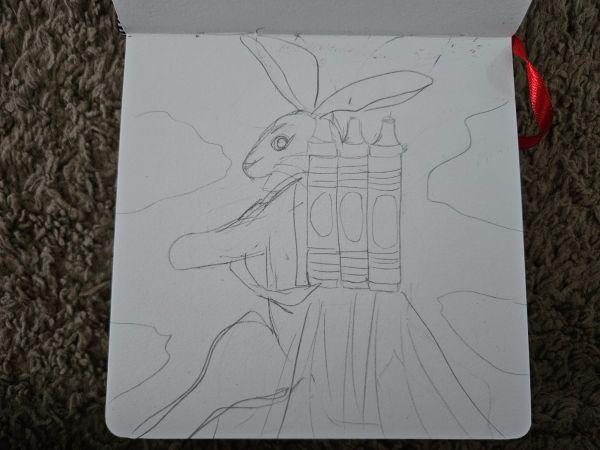
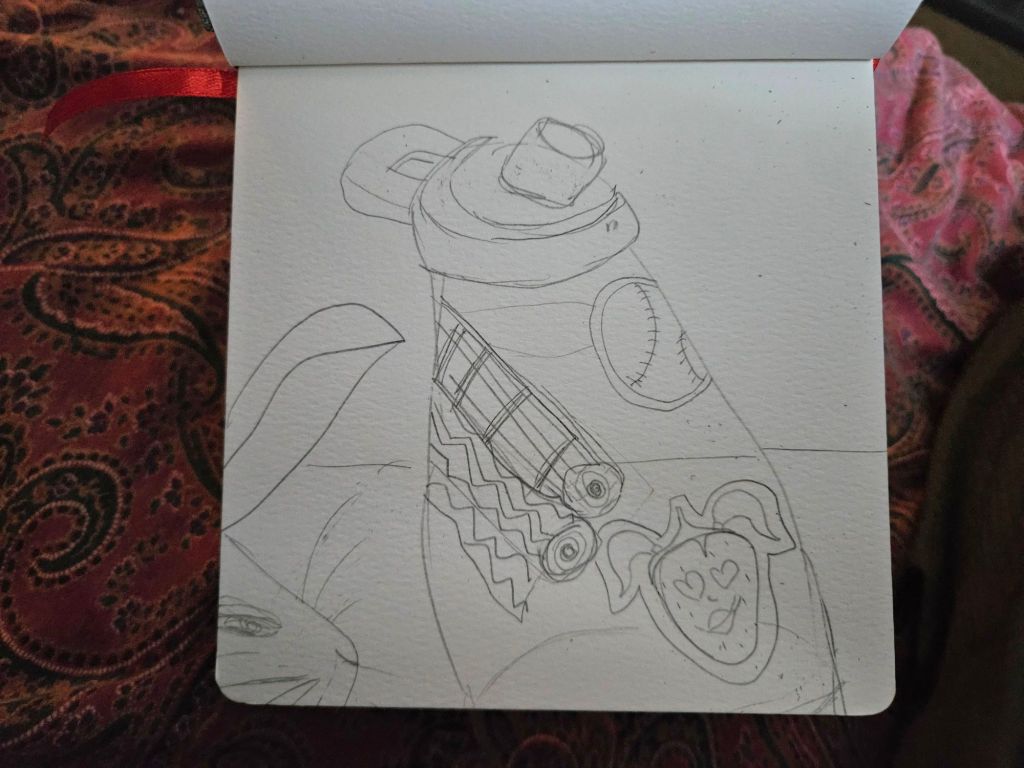
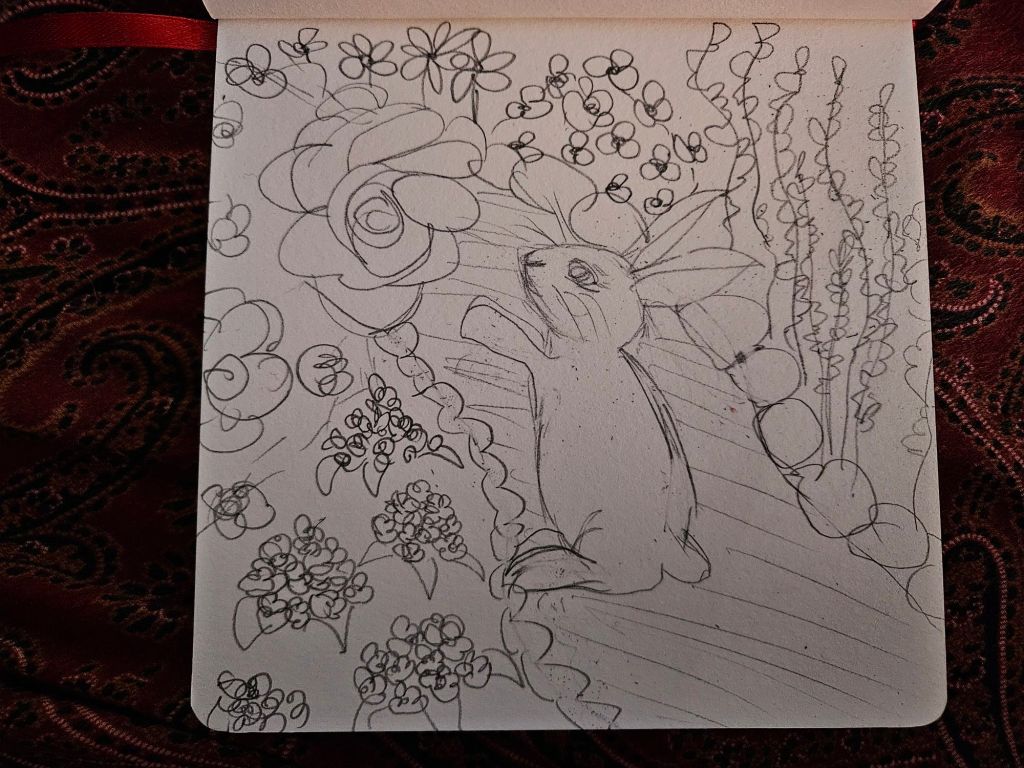
Maybe the best thing we can do as creative people is edit and focus on where we feel the most alive. I feel the most alive planning a personal knitting project that features motifs that represent my life and my loves. I love blogging and talking about serious things, not in literary techniques but in societal critique. I spent the day today, sketching and drafting pet portraits, and I am the most relaxed I have been in months. It’s the same high I felt writing Udal Cuain. I didn’t feel that way while brainstorming a novel. I felt nervous. So I don’t think it’s for me anymore.

Have you ever fallen into this trap? How did you find your way out? Thanks for spending time with me today. Until next time. Stay safe out there and know you are loved.

Our 2026 Gardening Seeds: Beans

It may still be winter with snow on the ground here in Pennsylvania, but the garden is just around the corner. What has been a harsh and frigid winter, with the temperature not getting above freezing for nearly two consecutive months and two feet of snow on the ground, is starting to break. When I started this blog post, it was bright and sunny outside, and the daily high has remained above freezing for nearly two weeks. For us, that means garden preparations, which have snuck up on me. One day, we were beginning to receive our catalogs in late November, and what felt like the next, we realized we needed to place our orders before things sold out.

In early February, we placed our orders, and the seeds have all arrived. So, now is as good of a time as ever to go over everything we ordered and what starts we’re going to purchase from our local greenhouse.

Starts We’re Buying From the Greenhouse

Before diving into the seeds we purchased, I want to go over the vegetables we’re going to buy starts for instead of seeds. There are a couple of reasons for this. One is that we’ve never grown the vegetable before and want to begin with an established start that only needs to be transplanted rather than attempting to start our own seeds. My preference is to start my own seeds, but beginning with a start that only needs to be transplanted increases the chance of success. A couple of vegetables that fall into this category are broccoli and cauliflower. Technically, we tried growing broccoli last year, but they barely reached the transplanting stage and quickly failed. We’ve never tried growing cauliflower.

Check Out Our Other Seed Posts:

The second reason is that we like the options our greenhouse offers for a specific vegetable. Ground cherries and eggplant fall into this category. We bought starts for these last year and had success and will buy the same ones this year. Eventually, we’d like to buy additional eggplant varieties to grow, but we’re content with the Asian-style eggplant we got from the greenhouse last year. Finally, there are some vegetables that we will likely buy extra plants for. These will mostly be tomatoes and peppers. We bought seeds for both, but we would like to have an abundance of fruit from both, so adding extra plants is never a bad thing.

Seed Picks

Now, we move to the seeds we ordered.

Beans

Our bean seed choices are reflective of our larger approach to seed selection for this year’s garden. We wanted a variety of styles (wax, green, dry, and French), growing habits (bush and pole), and colors (green, yellow, red, black, and brown). You’ll soon see just how much we love beans.

Bean Seeds, Gardening Seeds
Our 2026 bean seeds.

Beurre de Rocquen

A wax-style bean from France that descended from the first wax beans to be introduced to the country from Algeria in the mid-19th century. A bush-growing habit that should flower and produce early in the season. Supposed to be a delicious bean. It’s our first time growing it. Purchased from Baker Creek.

Black Turtle

We grew these beans last year and had moderate success. The plants generally grew well and produced pods. We were able to harvest a 1/4 cup of beans that dried on the plant. I greatly underestimated how many plants you need to have an abundant harvest. We’re growing more this year. These are the traditional black beans that are popular in Latin American cuisine. They’re intended to dry on the plant and in the pod, and the plants will stay relatively compact in a bush habit. Last year, we bought the variety from Baker Creek. This year, they came from Sow True Seeds, and the seed packet is gorgeous.

Blue Lake 274

One of the most popular bush beans grown in the United States, Blue Lake 274 has been grown since the 1940s. It’s a versatile and productive bean that is great for fresh eating, freezing, and canning. We’ve never grown this variety. Our seeds came from Southern Exposure Seed Exchange.

Cherokee Trail of Tears

I’ve been curious about this variety since we started gardening and finally bought them for 2026. It’s an heirloom variety that dates back to at least the 1830s when members of the Cherokee Nation were forcefully relocated from the Smoky Mountains to Oklahoma by the U.S. government. That became known as the Trail of Tears, which is where the bean gets its name from. As for the bean, it grows on a pole habit with beautiful pinkish-purple flowers and develops green pods, but the bean is black. It can be eaten fresh or dried. We bought our seeds from Seed Savers Exchange.

Cherokee Wax

Not quite an heirloom, the Cherokee Wax bean was introduced by Clemson University in the 1940s and has been a favorite for gardeners ever since. Has a bush-growing habit and produces lots of yellow bean pods that are great for fresh eating and preserving. I love pickling wax beans into dilly beans. This is our first time growing this variety. Our seeds came from Pinetree Gardens.

Cranberry

An heirloom bean that can be tracked back to 1825 from England, the Cranberry bean is a horticultural style. I’ve since learned that horticultural beans have flatter pods than snap beans. The Cranberry bean produces beautiful scarlet-colored beans with lighter swirls. I’m a little unclear on what color the pods are, but some descriptions list them as green, while others list them as having pink highlights, so we’ll see. It’s very exciting. These have a bush habit. As you can probably tell, it’s our first year growing these. The seeds come from Territorial.

Grandma Nellie’s Yellow Mushroom

This is a unique heirloom variety that we’re really excited about. It’s a pole bean that requires trellising and produces yellow pods with beans that have an umami element similar to mushrooms. This variety originated in Russia and arrived in the United States via Saskatchewan. This is our first year growing these. The seeds come from Southern Exposure.

Iroquois Skunk Pole

Magz got me these as a Valentine’s Day gift this year, and they’re a fascinating bean variety. They’re an heirloom variety that has been grown by members of the Iroquois nation in the Great Lakes region for centuries. These grow on 6-foot vines with green pods. The beans can be eaten fresh as a snap bean or left to dry when the beans become beautifully speckled in black and white. These seeds come from Baker Creek.

Maxibel Haricot Vert

This is the classic French filet green bean. The pod may be green, but the bean is a speckled brown. Grows in a bush habit and is supposed to be delicious. This is our first time growing these, and we bought them from Fedco.

Missouri Bill

Missouri Bill is a shelling bean that is supposed to be great in stews or when baked. These have a compact, bush habit that develops rosy white flowers. The beans are buff-colored with scarlet-brown streaks on them and are stunning. Why they’re called Missouri Bill is a bit confusing, with one source I found claiming that the seeds were saved by a guy from Missouri named Bill. We bought ours from Territorial, and they state that their seeds originally came from the San Juan Islands off the coast of Washington. It’s our first year growing them.

Have you grown any of these varieties before? Let me know in the comments. In the next post, I’ll look at the corn seeds we picked.

DIY K-Pop Band Tees Using Embroidery and Knitting

In 2025, one of my goals was to try my hand at crafting my own K-Pop Merch. Some bands are easy to find Merch for, and others, well, you are left to your own ingenuity. The bands I selected to try for this are NCT 127 and NMIXX, which I have tried and failed to find band tees for that I liked. For this project, I used two different techniques – embroidery and stranded colorwork knitting.

NCT 127 Embroidery

My first idea was to pick up a blank T-shirt from the craft section and get to work. The shirt I chose was a Gildan tee from Walmart, which I DO NOT recommend. This shirt is so freaking thin. Horrible quality compared to the blanks I have found at Michael’s, Dollar General, or even Hobby Lobby. But as I was dubious of my embroidery skills, I went ahead with the Walmart shirt as practice. That was the right call, because dang, embroidery is not as straightforward as it looks.

For this project, you will need: an embroidery hoop, embroidery floss bundles, a marker or pen to sketch your design on your shirt, and backing like embroidery interfacing or a fabric scrap that I used (because I forgot that the embroidery needed a backing).

For the design, I chose something simple. The song, the band, and a little imagery. I love their early album Cherrybomb (2017), but the song is almost 10 years old now, and it’s kinda hard to find any NCT Merch with it at this point. Seemed like the perfect option for a first try. I wasn’t expecting my stitches to be so tight; I felt like I was fighting myself across the whole piece. This was because I forgot about the backing for stability, and all this embroidery on this poor quality shirt, yeah, it wasn’t great. Afterwards, I added a backing to the embroidery with a scrap piece of another t-shirt.

Is it my best work? No. But is it a start for making better projects in the future? Yes! And I wear it anyway in the garden and as a sleep shirt.

Red Velvet Knitting

My desire for Red Velvet Merch was entirely motivated by the confusing announcement in April 2025 that members Yeri and Wendy did not renew their contracts with SM Entertainment, but Red Velvet was not disbanding. They have become one of my top girl groups after their release of Cosmic in 2024, so it seemed only appropriate to use the album Cosmic as my muse for a cotton knit tank with stranded colorwork. It’s a bit easier to find Red Velvet Merch on sites like Teepublic, from which I have bought a shirt. This project was more about expressing my love for this album, and I hope that Cosmic will not be their last release as a group.

You will need: a pencil, pen, graph paper, and stitch markers. (Along with your basic knitting supplies – needles, yarn, scissors, tapestry needle)

To start, I searched Pinterest for album artwork and a logo. I found a lot of options to use as a compass for the project, but decided the simplest option would be best. I opted for one color to keep the floats simple. To make my colorwork charts, I always use graph paper and a pencil to be able to adjust the marks that I transfer from the image. Once I am happy with my design, I trace over it in pen and use a pencil to cross out the lines of the pattern as I complete the project to mark my progress. To understand the dimensions of the image as I worked, I also marked the “canvas” with stitch markers. It is also important to note your garment construction and how that relates to your chart. I made this tank knitting bottom up, so I began working on my colorwork from the bottom of the chart.

I am thrilled with how this project turned out! As my first stranded colorwork project with this complex of a design, it was far easier than I thought to complete. You just have to plan out your image and be patient with your floats. Try not to hold too tightly and remember that blocking will help the tension relax.

2026 Garden Seeds Collection

All of our garden seeds for 2026 have been ordered and delivered, so I thought I’d share pictures of everything. This is just a short post, but I’m in the process of writing a longer post (or perhaps a series of posts) explaining all the seeds we bought.

All I Wanted is Golden Hour: Part 4

Last week, I shared my anticipation for Ateez’s first 2026 comeback, Golden Hour: Part 4. This album exceeded my expectations! It may be a short 5-track extended play, but it hits you like a flavor bomb. I had expressed boredom with the recent direction of their music, and I still hold this opinion of some of the music from Golden Hour: Part 2 and Part 3, but I am starting to see the vision.

Ghost

Ghost blends the traditional Ateez sound and production with the new thematic explorations of Golden Hour: Part 3 and In Your Fantasy Edition. There was an 80s sound to some of the songs in Part 3 that was okay, but not my favorite. Bringing the two artistic elements together feels like Ateez’s full circle. This song was a great opening for the album to bridge the transition of where they have been creatively and where we are going. Without it, Adrenaline and Ghost would feel jarring, in my opinion.

There’s no way out, 경고하는 메시지
Don’t say it out, 네 귀에 속삭이지
되돌리기엔 이미 늦어버렸지
Know you want it more, more than me

[Chorus:]
Now, you see that I’m a ghost
When the lights get low
네 진심의 끈을 풀어
Now, you see it in your soul
When I get so close
감촉만 새기고 가

Adrenaline

I love this song! It’s one of those title tracks that I replay, over and over, and don’t get bored – for real. Adrenaline reminds me of some of my favorite past Ateez title tracks – Wonderland, Guerrilla, Hala Hala, Say My Name. Yeosang being front and center for the chorus is what we were asking for. I love how his voice pairs with San and Yunho. This song was less formulaic. It isn’t a build just to Mingi rapping or Junho hitting an impossibly high note. Hongjoong is still captain but sprinkled in, yet because he writes their music, you can feel his presence in the tone and character, a lot like Taeyong (NCT 127) or Bang Chan (Stray Kids).

The pre-chorus is my favorite part of the song. It builds before the beat drop, with four different members and their unique styles, increasing the tension in the song like adrenaline building in your body. It was such a clever detail to make the song come to life.

[Pre-Chorus: Yeosang, YunhoSanSeonghwa]
I can feel it go, flushin’ through my veins
시동 걸어 막 활활 타오르게
I can feel it go, runnin’ through my veins
Buzzin’ up my neck, pumpin’ adrenaline

I can feel it go, flushin’ through my veins
시동 걸어 막 활활 타오르게

I can feel it go, runnin’ through my veins
Buzzin’ up my neck, pumpin’ adrenaline
 (Let’s go)

I have been underwhelmed by San’s contributions in recent years, as just the dude being used as the muscle eye candy instead of utilizing his voice. Finally, his singing is back, and he kept his shirt on. This was a gimmicky part of Ice on My Teeth that I didn’t care for because I’m not into women being objectified, and I don’t want men objectified either.

NASA

Some of the lyrics of this song are a little cringe, like referencing Apple Stock, but I think that is because NASA is also an American agency, so it felt a bit US-centered, but I get it for the theme. I’m probably projecting all my current political frustration on these lyrics because this song is good. It’s a slow burn, satisfying earworm. I love the stage performance for KBS, in their space suit-inspired outfits. There is this lovely, quiet moment on a bridge with what you assume is “space” sound. I would love for them to make more music like this song. It’s unlike anything else in their discography.

[Pre-Chorus: Wooyoung, Jongho]
뱉어 난 gold and silver
만들어, masterpiece
가치는 안 변하지
It’s ’til I rest in peace
Turn up
I fly, so higher than the sky
We go
저 우주까지 올라, going up

[Chorus: Yunho, YeosangWooyoung, *San*, Seonghwa]
Shoot for the stars like NASA, always going up like my stack
Ready on your mark, go faster, shoot for the stars like NASA

On The Road

This is a solid song, not my favorite, but melodically good. A breath of fresh air after two songs with big energy. It’s a song that I think will grow on me in time until I love it. It’s chill, but explores themes that they have always been good at exploring. Melodically, it reminds me of Wave, The Ring, and maybe Django.

[Pre-Chorus: Yunho, Seonghwa]
Can’t stay behind
다시 시작인 것처럼
We live our lives
‘Cause I’ma go down this road tonight

[Chorus: Wooyoung, SanJongho]
Go left, go right
I’ma go down this road tonight
That’s right, it’s time
‘Cause, nothing won’t make me change my mind

Oh-oh-oh
Oh-oh-oh
Oh-oh-oh

Yeah, we’re goin’ down this road tonight

This happens to me often with B-sides from K-pop. For example, when Aespa released Armageddon in 2024, my favorite songs were Supernova and Armageddon, but now in 2026, I love Bahama and Live My Life. The same with Nmixx and their Fe:304 Forward album from 2025, I loved Know About Me, and Slingshot, but now Ocean is a song I never skip.

Choose

The sentimental favorite. I recently used this song to share my ‘Melt the ICE’ hat on Instagram for the ache of this song’s emotion. I choose to stand with my neighbor, and this song excels in making me feel love. It was a great choice to end the album, a bit of a lighter production song after the EDM of Adrenaline and NASA. I believe this song was released as a single for the seventh anniversary of ATINY, the Ateez fandom.

We can be forever lost under velvet skies
Fall together closer
‘Cause I would choose you
And I’m trying, I’m trying, it’s you, nobody

We can stay forever even in quiet nights
Run together closer
‘Cause I would choose you
And I’m trying, I’m trying, it’s you, nobody

nobody
(Hoo-hoo) nobody
(Hoo-hoo) yeah, I’m trying, I’m trying, it’s you, nobody

I Feel Like A Real Atiny Again

Going into 2025, I was seriously questioning my Atiny allegiance. Like, how many albums do you have to skip to not consider yourself a fan anymore? I mean, it happened to me with TOP. Thankfully, it was really just one and a half, but it felt like a long time of being in an Ateez desert, waiting for the pirate ship to sail overhead. If you are looking for something a little different to listen to, give Golden Hour: Part 4 a try!

Create a website or blog at WordPress.com

Up ↑