3 Ways To Upcycle Your Hoodies

The harvest season awakens something in me. I know it is the season that everything dies, but it does so beautifully. Humidity, also bids farewell for 6 months, and with it the best time of the year for getting dressed awakens from its slumber. But what are you to do when the itch to buy something new descends, as it did upon your mind last August? I’m determined to find new ways to scratch this itch, without over consuming and overspending. May I introduce you to my newest sewing obsession – applique?

Applique is like drawing on my clothes. I love it! Items from my wardrobe that I don’t like anymore can be erased and sketched upon once again with needle, thread, and scrap fabric. Or sometimes you get the double whammy of upcycling a garment with applique, from another garment you aren’t vibing with anymore. This is what did to re-imagine three hoodies from my existing wardrobe with patches and cut up scraps from projects that didn’t work out, to recycle and enjoy those projects in a new form.

1: Removing and Replacing a Portion of the Garment

Sometimes, try as you might, you have to cut out a portion of fabric from damage. This is what happened to this hoodie. It used to have block letters, embroidered by machine, that I had grown tired of. Even though I had good memories from the destination this hoodie used to spell out across the front, I had grown tired of being a billboard for this place. I tried to remove the embroidery, very carefully, but my stitch ripper did its thing too well and made holes. To remedy this, I cut a large section of fabric, bigger than the area I needed to replace to fix this problem. Next I secured this to the hoodie, by hand sewing, but you could sew this with your machine very easily. Just watch for pins! Finally, I cut out a moon and some birds, abstract style, from scrap fabric, sewing those to the newly repaired hoodie. It’s ready to wear once again!

2: Why Not Add a Separating Zipper and Patches?

Sometime it is not the graphic, but the overall function of the garment that needs an upgrade. I do wear this light blue hoodie, but not as much as I could, if the hoodie had a full zip, so I could wear it as a jacket. To make this upgrade, I purchased a separating zipper, usually labeled as a jacket/coat zipper. Before I began my cut, I marked where to cut, ensuring I would cut evenly in the middle of the garment. Next, I pinned the zipper in place, adjusting this several times, for perfect placement. I sewed this by hand, which I highly recommend, since a special sewing foot and some direction is needed to sew zippers without obliterating your needle.

I was quite pleased with its new functional form, but it was still missing some personality. It was time to cover the Nike logo. Once again, I tried to seam rip the logo, but those logo’s are quote stubborn. Instead, I changed it up to sew these Canadian Geese patches and a moon to this area of the hoodie, inspired by the film Fly Away Home.

3: Cover and Forget the Old Screen Printing

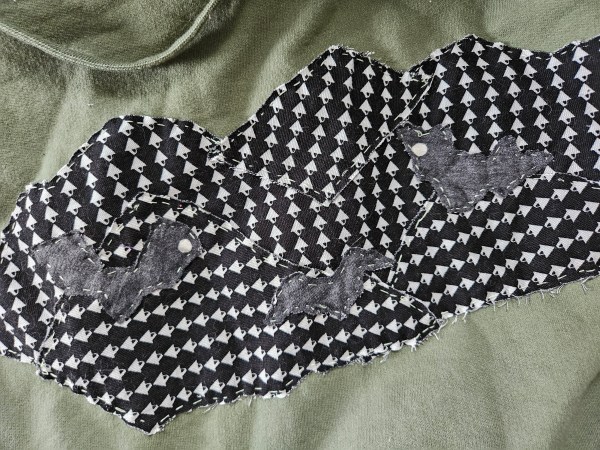
Now for the easiest upcycle – covering a screen print graphic with applique. For this design, I layered pieces of the background fabric, which was cut to be mountains, into a night sky. When choosing an applique this sizable, I recommend trying this one before you sew the pieces into place. By doing this first, I noticed the graphic was extending into the armpit, not desirable for comfort or the image I was creating with this applique pieces. I trimmed from the sides and tried again, before I began to sew. I first sewed the sky and then placed the bats. These bats were also free hand cut on the fold.

By changing up the graphic from a business, to piece of artwork, I can share something I am interested in with the world. Bats. Bats are great pollinators and help us maintain the mosquito population. They are also ambassadors of spooky season. Through some sewing and a little imagination, I transformed an unworn hoodie into a favorite piece of art. I hope this inspires you to get creative with something you might toss in the donate pile, and give your garments a second chance with a dash of applique!

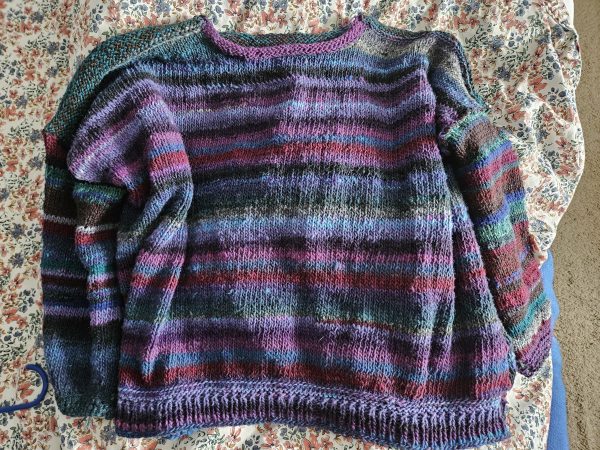
Glowing Clouds Sweater ft. Noro Yarn

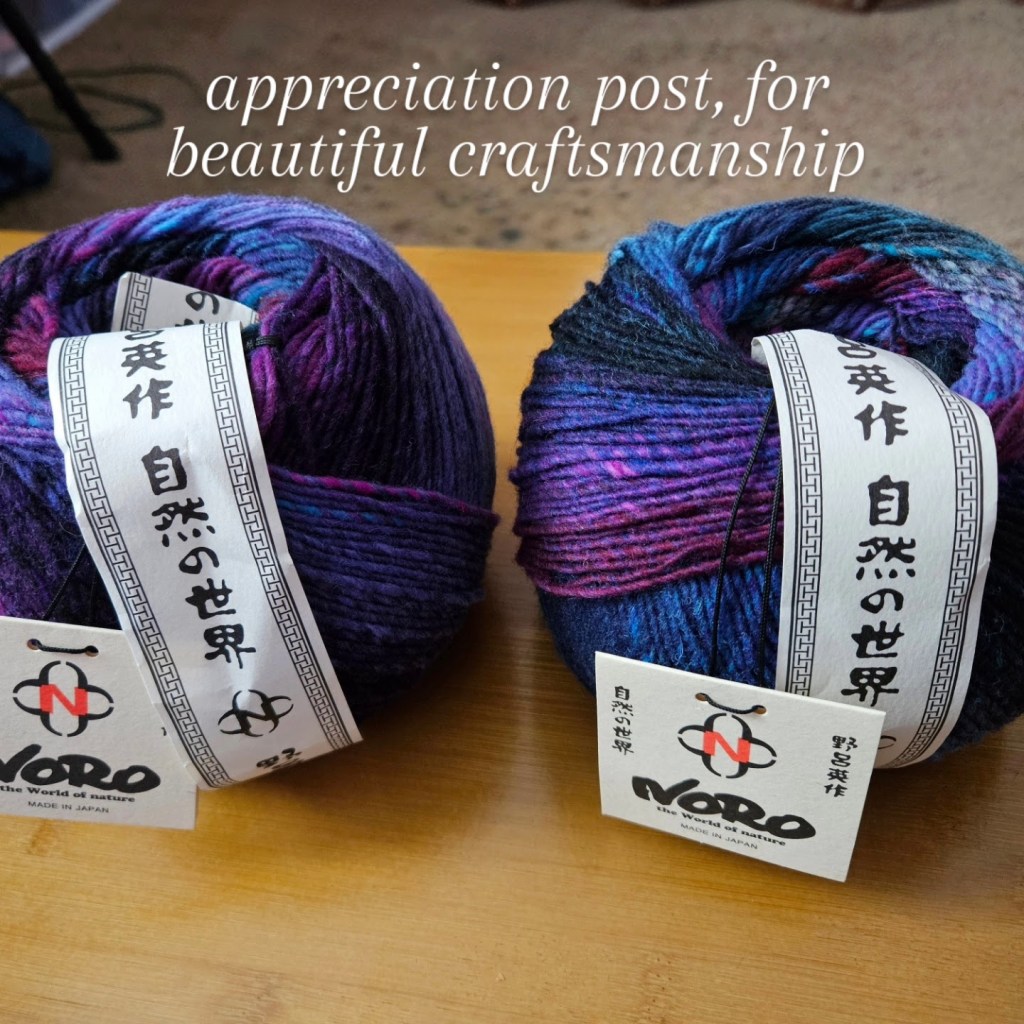
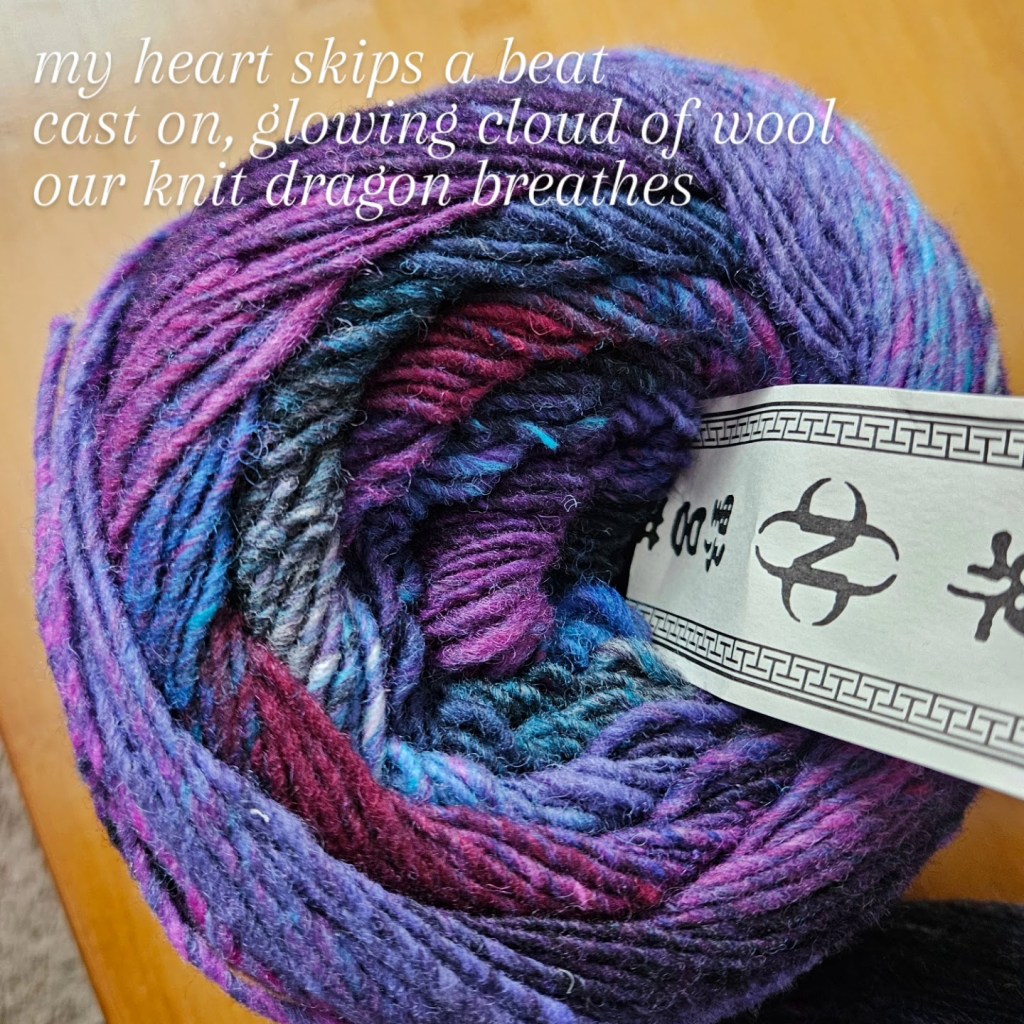
When I first saw these dragon egg skeins, it was right in the wake of Joann’s closure, I felt a sense of wonder. Like, maybe there was more to see outside the cave, to paraphrase Plato. I began to look at niche and new to me yarn brands, and Noro stole my heart.

The yarn is effervescent, floating on the loveliness of its craftsmanship. The yarn looks hand spun, although it is made on a hybrid machine. It called to me, as a knitter who had stuck to the budget yarn and avoided wool for years because the scratchiness was all I could remember. I didn’t know that wool, in spite of the scratchiness, has unique properties that enhance your stitches and make caring for your sweaters easy. Wool is antimicrobial naturally, meaning you don’t have to wash them consistently like other garments in your closet. They can be spot cleaned and refreshed between wears. The other important thing I was missing out on was the way the wool grips onto itself, it has memory, and a squish that is unlike what I had experienced with my acrylic and cotton based fibers.

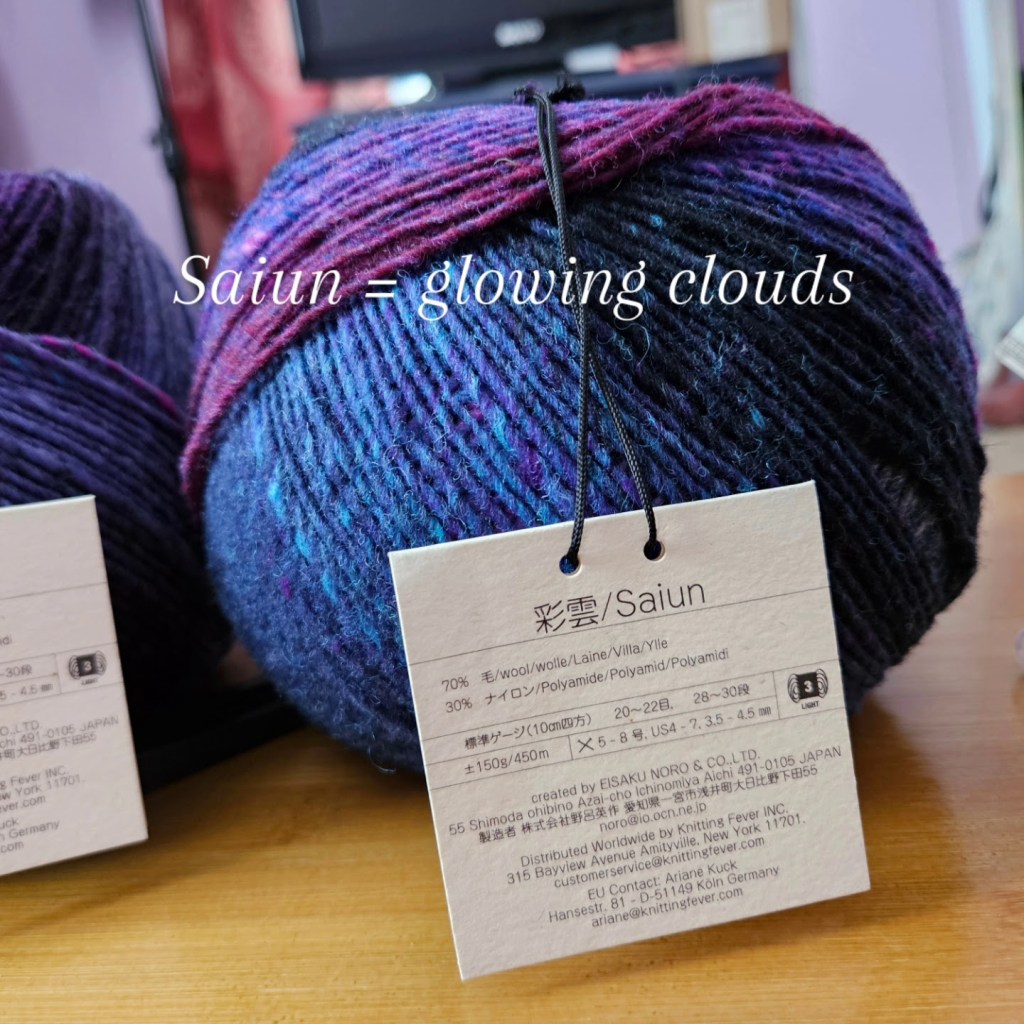
Now, the Noro had me from first sight, but how was this self striping yarn to work with? Great actually! I chose the colorway Kori, a cool toned blend of blues and purples, with occasional hints of green, red, and gray.

The pooling was well behaved and the transitions were gradual. The hand spun feel of the yarn did pose some issues for me, when it came to gauge. There were sections that were quite thick and disconcertingly thin. I did cut some of thread like sections out of my yarn, because one snapped on me as I was working with it. This led to some yarn chicken, unfortunately.

My lack of yardage was also my own fault. When I first ordered this yarn, from my local yarn shop, I had planned to make a vest. But once I felt the fabric the yarn created, I wanted a whole sweater. This was not going to be possible with 900 meters of yarn. I had to get crafty, and sourced some yarn from my stash that was a similar color and weight, and most importantly, was a non-super wash wool like the Noro. To mimic the color story of the Sauin, I was careful to splice in the other yarn where the colors made sense and I think it is hard to tell what is the Noro yarn and what is Knit Picks Palette.

So what is it like to wear? A dream honestly. It feels like a vintage sweater, like a wool sweater from the 80s or 90s, a find that would make you do a happy dance if you picked this up at a thrift store. It is minimally scratchy, warm, yet breathable. It’s made me a wool convert and a Noro stan. I want to make this over and over again. What will keep me in check is the price point and availability. Each skein of the Sauin was 35 USD. That is why I chose to add in yarn from my stash to keep this project at 70 USD, instead of 105 or 140 USD, since I am bad at guessing yardage. This yarn brand is incredibly popular, which has made it tricky to get my hands on, but I am seeing that is 2026 the yarn is becoming more common in the US. That makes me happy to see – every knitter and crocheter should give this fiber a try!

How I Duplicated My Favorite Pair of Pants

Have you noticed I am not sewing as much as I used to? As Marie Kondo instructs, if it doesn’t bring you joy, let it go. That’s been my relationship with sewing, honestly, since 2024. Sewing and I had hit a rough patch in our relationship. No longer in the euphoric beginning, nor going deeper and bonding through the big sewing wins. We were burned out in the grind of sewing, striving to be better but lacking the proper knowledge to do so. Therefore, we’ve been on a break – off and on since 2025, and it’s been good.

It’s given me time to reflect on what I want to pursue, sewing, specializing, and what I feel like I should make because of the internet. It’s given me time to ponder what drives me to make my own clothes. When I began sewing, I was intrigued by historical styles, and then I drifted into more feminine items like dresses, blouses, and skirts. Shorts and pants were made and quickly cut up for scrap because they were such enigmas for my mind to understand. On this break, I’ve given myself room to figure out what I like to wear, which is key to sewing your own clothes. You can chase all the trendy patterns and styles, but if you don’t want to wear them, then you have a very expensive wardrobe of your own sweat equity that is useless to you. My desire was to break this cycle.

Going into 2023, I wasn’t sure what to make anymore or what I wanted to sew, but I felt this compulsion to keep going because I was so committed to this new hobby. A hobby I wanted to become my future career. It’s been in the midst of the slowdown that my artistic point of view has recalibrated. I like pants (trousers), overalls (dungarees), denim (dungarees), comfortable silhouettes like that of Lucy & Yak, and that is what I want to make.

This has only intensified since the Trad Wife trend co-opted the flouncy dresses, giving me the ick at the thought of associating with something I have always strived to avoid. Growing up in communities dominated by the Reformed Presbyterian church (a denomination I do not belong to and never shall) and Christian Nationalism spreading its snakey tendrils throughout the Christian bubble – I want nothing to do with the Trad Wife and all it represents.

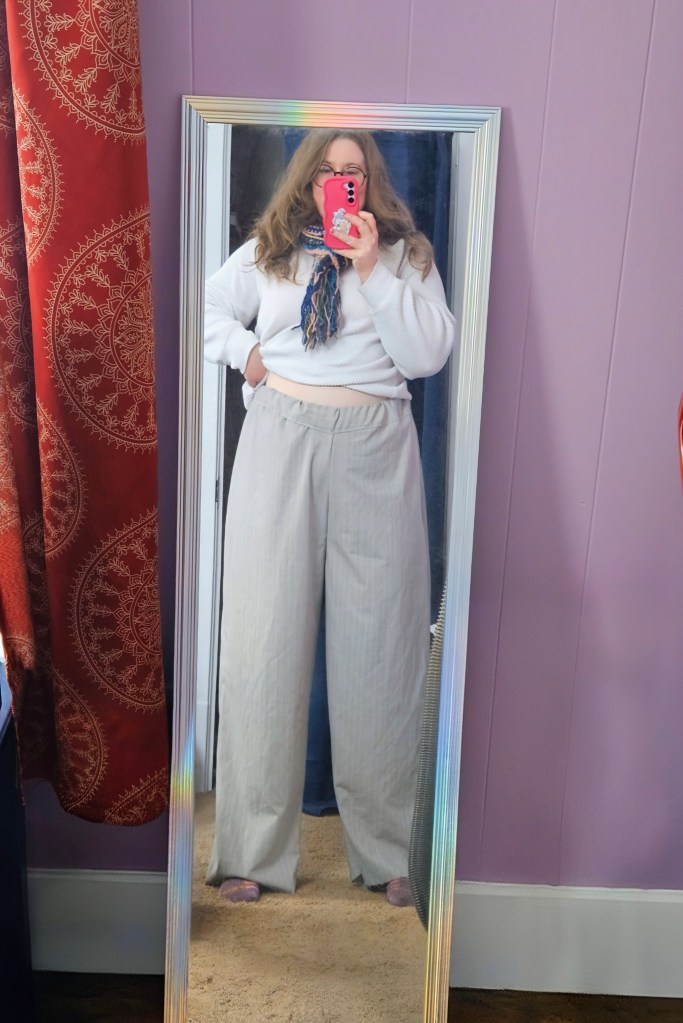
That brings us to the present day, March 2026. After 2 years of sitting in my fabric stash, I finally started to cut the trouser fabric I bought to make my own pants in 2024. Too intimidated by my own past failure, I let it hide in my crafting closet, all of 2025, for fear of failing again. I did fail at pants in September 2025 with another fabric, so it was not unfounded fear. But what is the point of living in fear, especially for something so small? Would I learn that I am not very good at sewing? Sure, and who cares?! Is crafting a competition? No. It’s about making incremental steps towards success through practice.

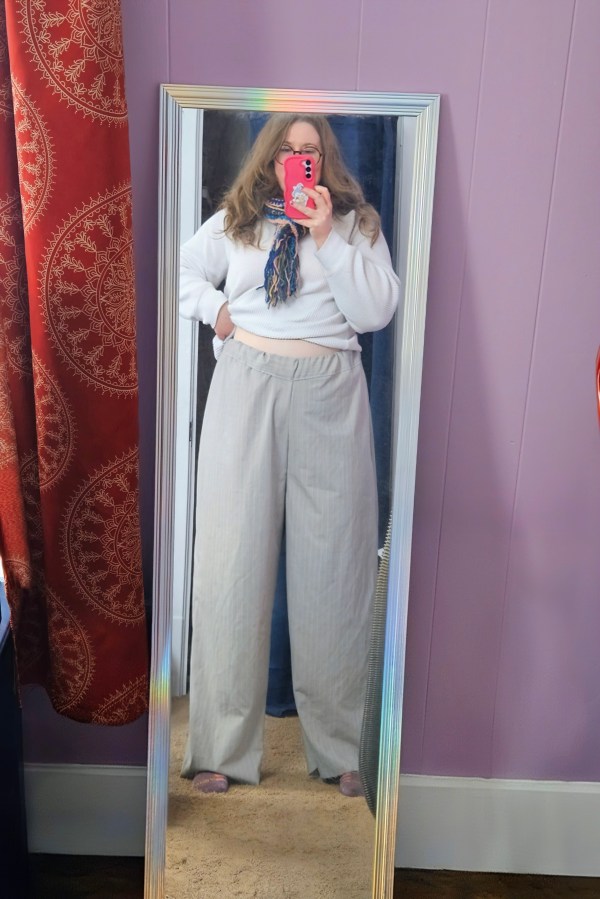
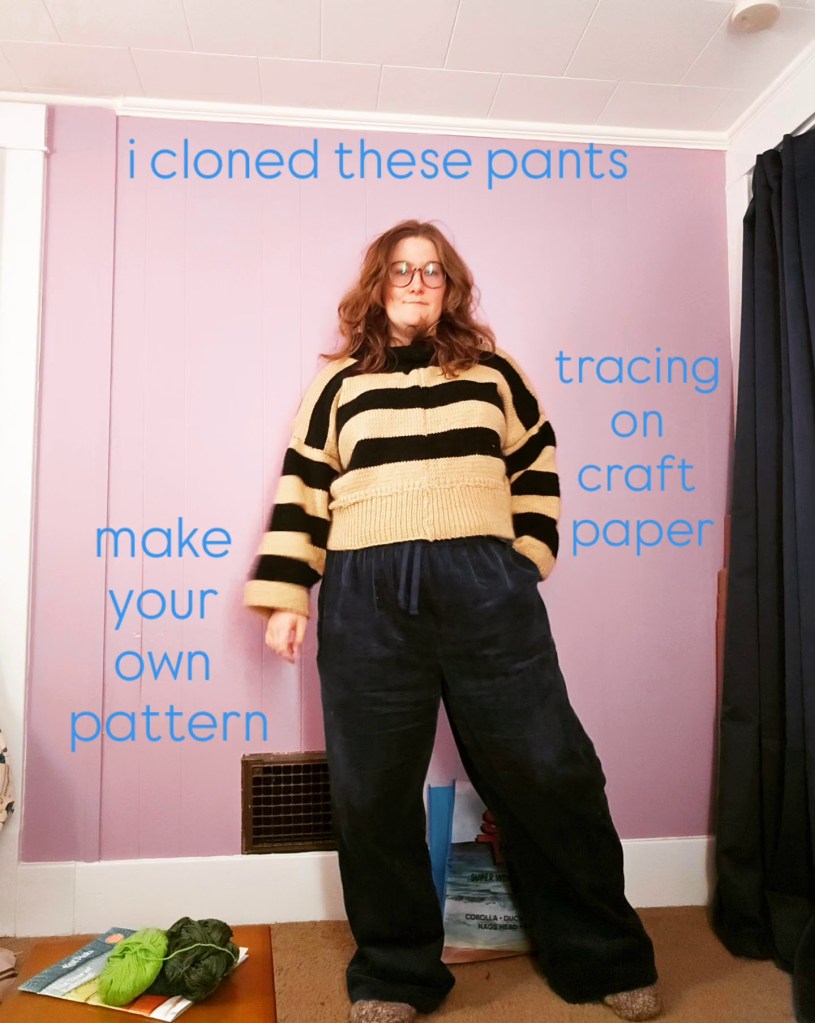
For my birthday, Kyle gave me two garments from Lucy & Yak, something I had dreamed of since 2019. A pair of denim dungarees and a pair of corduroy pants. And you know what I thought of looking at them folded? What a lovely thing to take a pattern from. Use brown craft paper or wrapping paper, and feel free. I traced methodically, marking the seam allowance, and back from the front pattern piece. I carefully laid out my pattern, mirroring the right and left pieces for the front and back. Then, over two weeks, I slowly sewed these pants together by hand with a fresh sewing needle, which makes all the difference. Don’t be cheap like I used to be; buy new needles regularly to save your hands. Sew with courage, because this might be the time it all clicks. What if you never let yourself succeed? That would be more terrible than failing again at doing the hard thing.

I wish you happy sewing and good-fitting pants that make you smile every time you wear them.

Create a website or blog at WordPress.com

Up ↑