What’s the worst travel experience you’ve ever had?
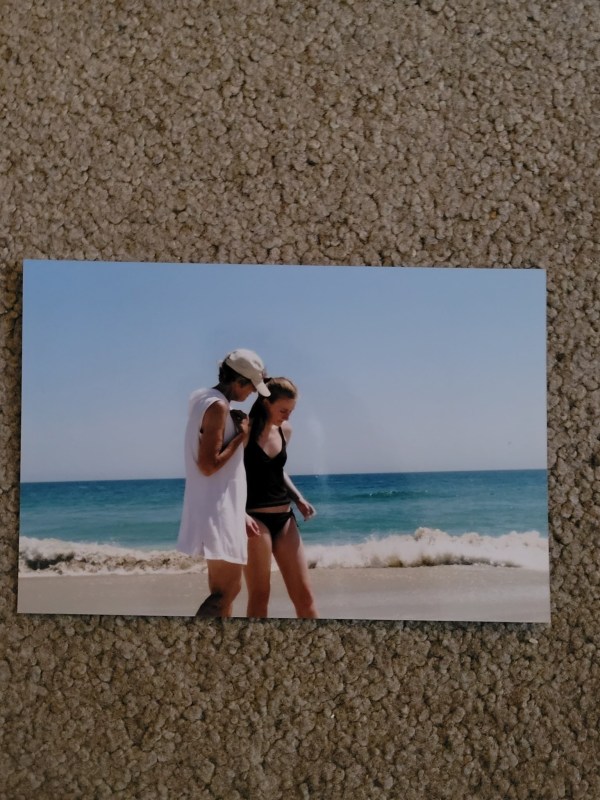
I don’t go to the Outer Banks anymore, for a lot of reasons. Price for one, the cost of beach house rental is insanely high. When I went in the past I was still a student, my parents split the rental with several other people, including my extended family. Now as an adult I’m still amazed they could afford it, but the economy wasn’t in shambles as it is now. I digress.
Another reason I no longer go is because of several bad trips back to back years, literally getting there felt like a white knuckle ride on some occasions. There were always accidents to contend with. Traveling on I-95 through Virginia can be dicey. there is a large volume of traffic and beachgoing caravans mixed with local commuters, add in a tunnel and there were problems.
Where things began to take a turn was the succession of problems leaving Pennsylvania. The first bad year, began an hour on the road, we got a call from my grandparents inquiring if we could pick them up in WV. They were ahead of us, on the side of the road on I-79 after hitting a deer. The deer did not make it sadly, as it goes with wildlife crossing interstates, but I am thankful they were unharmed aside from a smashed up car.
The next year, my grandparents rode with us to the Outer Banks. Everything was going well until we stopped at the Bedford exit of the Pennsylvania Turnpike. Tragedy struck as my grandma fell on uneven ground, and badly hurt her face on the concrete. In her words, “she smashed her face.” She had the best comedic timing in times of stress, for being such a serious person. Thankfully, we able to get her to a local hospital and she made a fully recovery. I still dislike that exit though, the Midway rest stop feels cursed.
After that, I began hating that trip. It felt like we were in suspended reality on that 10 hour drive between safety and catastrophe. It’s not a drive I enjoy doing anymore. Too much baggage, without including my mom’s spider bite in the night or how many OBX Hospital visits we’ve had.
A couple of months ago, Magz showed me a video from an Australian YouTuber who was working on a project that required some woodworking tools. She and her husband didn’t have the necessary tools, so they went to a local tool library and borrowed what they needed. This was the first time I had heard of a tool library, and I was so thrilled and blown away that they exist. I quickly started researching tool libraries to learn more about them and where they exist, but it’s safe to say that we need more of them.
A tool library is exactly what it sounds like: It’s a library, but instead of lending books, they lend tools. In some cases, they are connected to a community book library, so the library card allows a person to borrow books and tools. In other cases, like the one the Australian YouTuber showed, it’s a standalone library, so you pay an annual membership fee to borrow tools. But even when it costs money, it’s usually cheaper than the cost of a single new tool. A tool library in Buffalo, NY, has three membership levels – $30/year (can borrow 5 tools at a time; 1 user), $75/year (25 tools at a time; 1 user), and $150/year (50 tools at a time; 2 users). If you consider that even an affordable miter saw, like the 10-inch Metabo that I have, costs $140 on sale, a tool library membership is a no-brainer until you build out your tool collection.
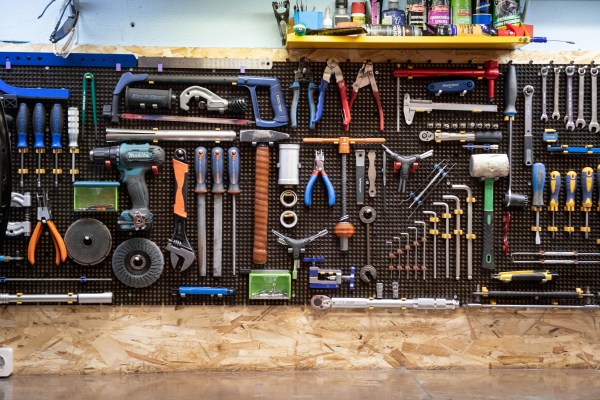
Tool libraries tend to have a massive selection of tools to borrow. That includes hand tools and power tools, woodworking tools and gardening equipment, and automotive tools and painting supplies. You can find something as small as a mini hand clamp and individual router bits or as large as a jobsite table saw with a stand and air compressors. The possibilities are nearly endless.
When I first started researching tool libraries, I was surprised at how many of them exist in the United States. There’s a wonderful website called Tool Library Finder that lists 204 of them, with every state but Delaware, South Carolina, Alabama, Mississippi, Oklahoma, Nebraska, North Dakota, Wyoming, Nevada, and Alaska having at least one. Even Puerto Rico has one. Pennsylvania, where we live, has five of them; four of them are dedicated to woodworking, and the fifth is focused on gardening. So, if you live in America, there’s a good chance that you’re within driving distance of a tool library, and if you’re like me, you may not have known it existed. The bulk of them are located in concentrated centers of population and the Northeast, which has always been known for woodworking and craftsmanship, but there are also libraries in seemingly random places, like Carbondale, Illinois, or three in the Sioux Falls/Sioux City area.
This post continues a trend of posts that I’ve published recently on tips for woodworking on a budget and how the internet has led people to believe that they need to have the very best equipment and tools to participate in a hobby. Tool libraries were one of my suggestions for woodworking on a budget. They are an incredible resource to a variety of people and for a plethora of reasons. People who are new homeowners and don’t have all the maintenance or lawncare equipment that they need, someone who doesn’t have the space to permanently store large tools, and a young person who doesn’t have the money to buy every tool are all examples of people who would benefit from a tool library. Tool libraries allow a person to borrow a tool they may only use once instead of having to buy and attempt to sell it after the fact. They also help a person to try different tool brands and features before buying one.
Finally, I think we’re living in a time where American politicians are so focused on money and profit that it’s easy to forget the importance of community and culture. On the surface, billionaires are controlling everything, and politicians promote policies that help these same billionaires. Yet, under the surface, community and culture are as rich as they’ve ever been, and I think tool libraries fit into this. Tool libraries exist to serve their communities. They’re often non-profits and operate to benefit local craftspeople, woodworkers, and gardeners. These libraries help people get started in a hobby that they’ve always wanted to participate in, aid in the maintenance of homes, and educate people on how to use tools, further developing a skill. I cannot see any negative to tool libraries, and the way they help to combat out-of-control capitalistic greed is exciting and a step in the right direction. I think we should all be focused on ways to improve our communities and their citizens. Supporting and promoting entities like tool libraries is a small way to carry out this mission.
Do you have a tool library close to you? If so, have you ever borrowed from it? And if you don’t have a tool library, there are ways to pursue creating one in your area. There are multiple Reddit threads that discuss establishing a tool library that is affiliated with a local book library. I think it starts with reaching out to your local book library and getting the conversation started. A library’s leadership team may not have known about tool libraries or that there is interest in having one in your community. And once that is known, that leadership team can share its invaluable experience of gathering funding and getting the project off the ground. We’re better humans when we live in community and support each other. Tool libraries are part of that.
I think Pennsylvania is an underrated state when it comes to natural beauty. To an outsider, the state probably looks like Pittsburgh in the west, Philadelphia in the east, and nothing between them. I’ve even seen the area between the two cities as Pennsyltucky, which seems offensive to both states. Sure, the population centers of the state are the headliners when it comes to the economy and politics, but there’s a lot more going on outside their city limits.
I grew up in Central Pennsylvania, in the middle of the Appalachian Mountains’ Ridge-and-Valley System. This geography is defined by a series of long and narrow ridges (usually called mountains) that are often oriented diagonally from the southwest to the northeast with wide valleys separating them. The ridges typically have dense forests that are perfect for exploring, hiking, and hunting, while the valleys feature nutrient-rich soil that is ideal for farming and gardening. This system is located between the Appalachian Plateau to the west and the higher mountains to the east. If you’ve never seen the Ridge-and-Valley System, it’s quite unique, even if the tallest mountain in the system tops out just shy of 5,000 feet (Spruce Knob in West Virginia).
Woods make up a lot of Pennsylvania (it is called Penn’s Woods, after all), but it’s far from the commonwealth’s only geographical feature. East of the Ridge-and-Valley System is the Piedmont and Delaware River Valley. In Western Pennsylvania is the Appalachian Plateau, and the Glaciated Plateau precedes a drop in elevation as you approach Lake Erie. I have visited or lived in many of the state’s geographical regions, and we currently live on the border of the Glaciated Plateau and Appalachian Plateau, but there is one feature that I only learned about in the past eight years: wetlands.
In 2018, we moved from Pennsylvania to Southeast Georgia for about five months. It was both a culture and environmental shock. It felt like a 180-degree flip from what we were used to in Pennsylvania. It was flat and incredibly hot. There were forests, but they were almost entirely new growth due to the prominence of the lumber industry in the area. But the biggest shock was the swamp. We lived near Statesboro, so it was far from the middle of nowhere, but within 40 minutes, you could be at a state park that was entirely cyprus swamp. I had never experienced a swamp before, so I was completely out of my element. Alligators, snapping turtles, and water moccasins were present. It was terrifying and so beautiful. If you’ve never visited a swamp, it’s unlike anything else.
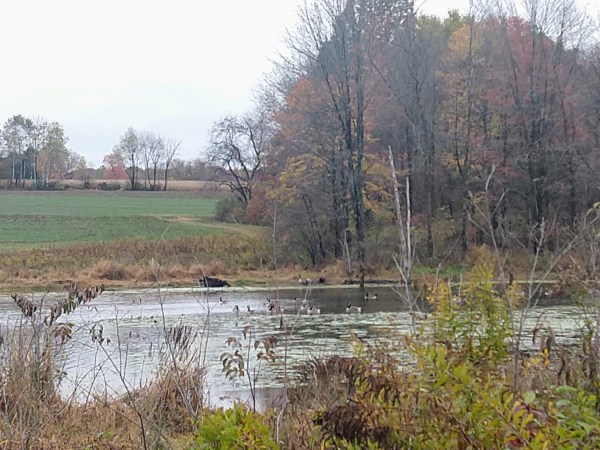
But when we moved back from Georgia to Northwest Pennsylvania, I was pretty confident that I was leaving the swamp behind, but I was wrong. We quickly learned that Northwest Pennsylvania is full of wetlands similar to what we saw in Georgia, although their origins are different. While southern swamps developed from peat accumulation, the wetlands of Northwest PA developed when the glaciers of the most recent Ice Age receded. If you’ve ever driven north on I-79 between the I-80 interchange and Erie, you can see a distinct geographical difference once you reach Crawford County. The land levels out, and marshes replace some of the farmland. The interstate even crosses the Conneaut Marsh Complex, the largest such marsh in the state, and if you stop off at Meadville, you can walk through and around some of the wetlands. Doing so is a great opportunity to see numerous examples of plants and wildlife that only exist in a wetland environment, and if you like waterfowl, they’re the perfect place for you. It’s not uncommon to see herons feeding in some of the bodies of water.
Two years later, we moved a bit further south, although still in Western Pennsylvania, and we thought that we’d likely have to drive back to the Meadville area to see wetlands again. Instead, we learned that there is a wetland located within 10 miles of our house that’s part of a conservation center. We recently went there to walk around and learned about wetlands’ role in healing the environment after decades of harm.
The type of wetlands closest to us are known as aerobic wetlands. They were built in the late 1980s and throughout the 1990s to combat acid runoff from an underground coal mine that had been abandoned for over six decades. The wetlands are part of a passive water treatment facility that uses different materials to filter out heavy metals found in acid runoff and are detrimental to the environment and wildlife. Through the treatment media and plants naturally found in wetlands, this passive system has had an amazing impact on improving the land and waterways close to the coal mine. It’s resulted in cleaner water and a thriving ecosystem. In fact, if you walk around the stream that comes out of the wetlands, you’d never know that it began as polluted runoff water.
When scientists and members of the local universities were planning the passive water treatment system, they took inspiration from native wetlands that have proven their effectiveness at filtering out impurities. They’re vitally important to cleaning up the messes that humans have made. Plus, they’re home to a wide range of plants and animals that depend on wetlands to survive. Our local wetlands listed roughly 30 species that are part of that wetland’s ecosystem, including multiple types of waterfowl, frogs, and mammals. The Conneaut Marsh Complex near Meadville is home to approximately 10,000 waterfowl during migration each spring and fall, and several endangered bird species live within the complex. Every ecosystem is home to plant and animal species that depend on that unique area for its survival, and it’s incredibly important that we protect each of them.
In America, we’re living in a time when environmental protections are under threat. Thankfully, most of the protections have been upheld in court, but it’s alarming that someone would even consider reverting back to a time when we value progress over the environment. We need to do everything we can to let our representatives know how important nature is to us. The wetlands are a perfect example of this.
I’m going to start reviewing some of the interesting beers that we try. Or if it goes well and I enjoy writing them, I may review every new beer we try. Beer is fascinating because of the nuances that are developed by the brewmaster. Two breweries can brew the same type of beer but can have vastly different results. Breweries have varying inspirations that impact how they approach brewing beer. Take my favorite brewery, Dogfish Head, for example. Since their founding, they’ve been driven to brew culinary-inspired beers, and it often results in complex flavors that are common along the East Coast. Beers are fun to drink and fun to write about. This will be my way of remembering what a beer tastes like down the road.
First up on my series of beer reviews is one that I didn’t know existed until last weekend. It’s Great Lakes’ Cran Orange Wheat, the brewery’s September release, even though we didn’t find it until October. Before diving into the beer, a little bit about the brewery. Great Lakes is from Cleveland, Ohio, and was started by two brothers in 1988. Since then, they’ve expanded to sell beers in nearly one-third of the states. Their most famous beers are their Edmund Fitzgerald Porter, Commodore Perry IPA, and Eliot Ness Amber Lager, which are their flagships and available year-round. They do an incredible job of taking inspiration from the region, with many of their beer names honoring Lake Erie and Northeast Ohio.
And now we move to the beer itself. It’s a fruited wheat ale with a 5.5% ABV and 17 IBUs. We paid around $12 for a six pack of cans.
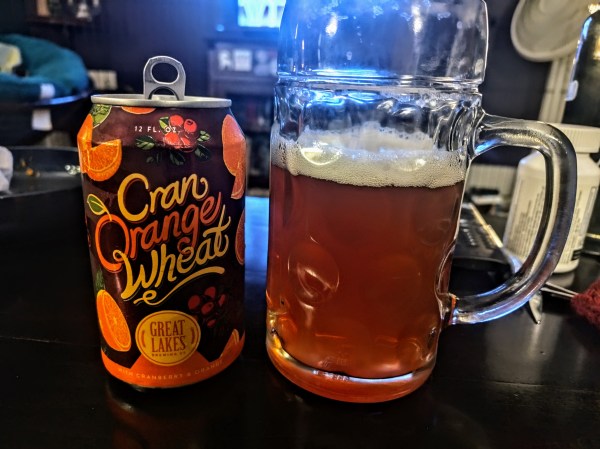
Cran Orange Wheat is a gorgeous reddish-orange color that reminds me of a Cara Cara orange. It has a medium head on it, which helps to release the aromatics, but more on that in a second.
I’m a sucker for beer can and bottle design/artwork. Regardless if it’s a well-designed graphic or just a striking color palette, the design is the first thing that draws you in when you’re exploring new beers. A well-designed product shows that the brewery dedicates time and attention to providing the consumer with an all-encompassing experience. Great Lakes really understands this, and their beers almost always include an eye-catching design, especially their flagship beers, which include some of the most recognizable labels you’ll find on a distributor’s shelf.
They continue this trend with Cran Orange Wheat. The artwork that gives me Christmas-themed wallpaper vibes. The base layer of the design is maroon with oranges and cranberries placed on top of it. The beer’s name is written in a lovely script that stands out from the can while staying within the overall design theme. The design works for me and does a great job of setting the consumer up for a delightful drinking experience.
A deep inhale of the beer after it’s poured immediately transports you to Christmas time. It could be a pot of water with cranberries, oranges, and spices on the stove or a Christmas-themed candle, but it’s invigorating and full of natural scent notes. The cranberries are the first to hit your nose, and they’re followed by a bright citrus note from the oranges. Specifically, it reminds me of the fresh cranberry relish we make at Thanksgiving and Christmas.
The initial flavor hit you get when you first take a sip of Cran Orange Wheat is a punch of cranberry. With it comes a slight bitterness and astringency that the cranberries bring. Alone, it would leave your mouth feeling dry. But immediately after that are the warming citrus notes of the orange, and it’s not an artificial orange flavor, either. It tastes like someone squeezed an orange into your glass. It results in a well-balanced, easy-to-drink beer that is tart but stops short of being a sour. This works perfectly for me because I love sours and the “pucker” effect they deliver.
I would describe Orange Cran Wheat with a simple phrase: Thanksgiving in a glass. Of course, I don’t mean turkey and mashed potatoes, but more so the scent and vibe of the holiday. I think this is what Great Lakes was going for too. Their page for the beer mentions pairing it with turkey and pecan pie, both common elements of an excellent holiday meal. As soon as I took my first sip of this beer, I found myself wanting more of it. It’s incredibly easy to drink, and you’ll find yourself going back for more. Perhaps the worst part of it is that it’s only released for one month. I give this beer a score of 8/10 and recommend seeking it out if you can buy Great Lakes beer in your area.
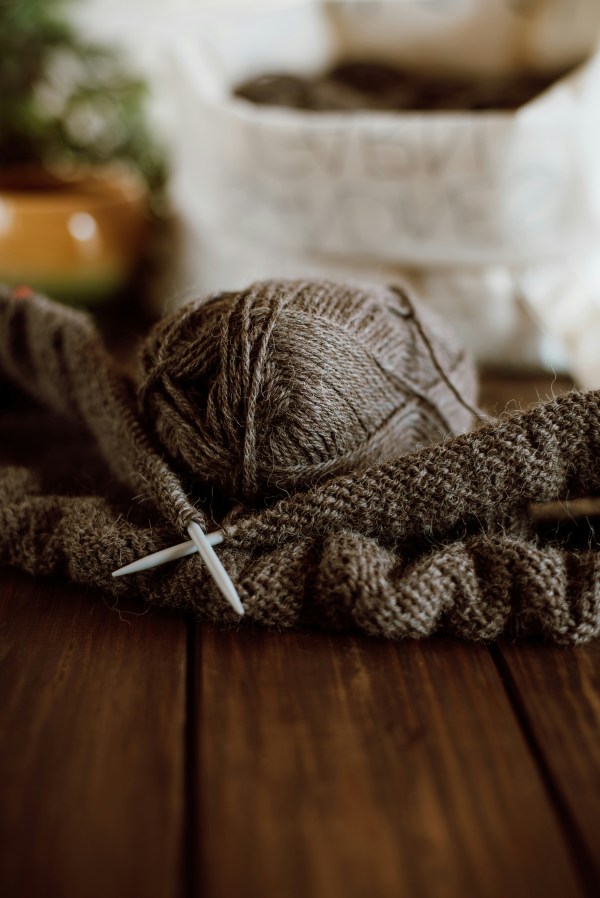
I think that one of the best things to come out of the internet is thoughtful discussion, albeit few and far between, but those rogue moments of principle sure are great. I experienced this over the weekend, when in a bit of a mood, I decided to pick up a fiber art project and queue up a Mark Vogel video. I love his content, he is as wordy as my grandma, with the love of music to boot. He has this way of challenging without being confrontational, and inspiring me to want to keep improving on fiber arts and interpersonal communication, just like she did.
This video though, challenged me in a way I did not see coming, and helped me synthesize some petty feeling I was carrying, that were rather useless. A few years ago, when I began this blog, hot takes were still a bit of a novelty, but now it feels like hot takes are the way we communicate in 2026, with common sense and self-control the delicacy appreciated by a few. How did a few years take something we all grew up knowing how to do, having common sense and self-control, and turn the behavior on its head to be an acquired taste?
That is why, I don’t share all the opinions I have anymore, some of my takes are straight up dumb and I don’t want to make a fool of myself. I did this in the beginning of my blogging, and now I cringe to think of the catharsis out there on the internet, which is why some of my posts have been changed to private. Anyways, writing is a journey. But, one thing I have shared, at least I think I have, is my indifference to PetiteKnit patterns. Not that I have purchased one to know if they are good or not, just that the ubiquitous PetiteKnit patterns have cluttered my feed and have become odious to me by how many people are making them. Yes, that is a very petty opinion, and I say, yes I agree with you. I don’t think I am correct, but it’s how I feel.
When I first discovered knitting Youtube and knitting podcasts, I was inundated with PetiteKnit this and PetiteKnit that.
This was around the time of the Cumulus O-neck blouse, the Sophie scarf, the Frankie, the Olga, the Ivy, the Maggie Cardigan, etc. The Sophie scarf in all its iterations and the Frankie are the two trigger points for me where I began to have negative feels towards the name PetiteKnit, I could feel myself tuning out or rolling my eyes when I heard someone talk about the next cast on being Sophie or Frankie. But I never sat with myself to figure out why had this reaction.
I think deep down I was concerned it was jealousy from her success, and I mean envy for the incredible careers Mette Wendelbroe Okkels has had would be reasonable. A doctor and the biggest pattern designer of this decade? Yeah, that is intimidating!
I think there is a lot of confusion too about where then name comes from. You see this very thin, white woman, from Sweden in these picture perfect places and it feels like another rich influence flaunting their privilege and a possible fascist ideology in this post-2024 US election landscape. But that’s not where the name comes from, she began designing baby patterns. Petite referring to small humans. She is not a Taylor Swift, she is just really good at what she does and the 2020 lockdown boosted sales.
So if it’s not jealousy, than what is my gripe? Well, when Mark Vogel was musing on an odd comment he received about his stockinette project. Specifically, that if it’s “stockinette” no one needs an update, he shared some thoughts that convicted me and clarified for me where my PetiteKnit burnout was coming from.
(For context, a lot of PetiteKnit patterns have stockinette, it’s a timeless finish and something I like in my own projects. Especially since I am not yet versed in cabling. Stockinette is common, but not boring, as the commenter supposed. Most store bought “professional” knits utilize stockinette.)
There is a trend in particular with knitters who share their work on the internet to be focused on “store-bought” looking knits. Which is not why I knit, I knit to create things I can’t find at the store. But for a lot of 2026 knitters, they want it to look store bought, and they want to make things that are trendy. This has created a boom of projects from just a few pattern designers flooding my feed, and everyone’s knitting feed realistically, with a repetition of names:
The popularity is not the fault of the designers, it is their success for their hard work, what is actually bugging me is the sheeple nature of humans. When I hear one of these designs being mentioned it is usually with the intention of making it exactly as the designer did for their sample, like down to the color, the yarn brand, an exact replica. Over and over, and over again, as the algorithm spreads these trends, and we see the same project replicated ad nauseum, until our minds snark at the mention of these designs and their creators.
I’m not the only one who feels this way, a lot of the snark you see online about these designs echoes this sentiment, particularly when it comes to Rhinebeck, a sea of the same sweater, but instead of approaching this feeling with thoughtful contemplation, the snark is turned into vicious critiques of the creatives who made the patterns. We as humans are so good at tearing each other down, and getting upset at the pattern designers instead of being frustrated at the knitting influencers and overly-online knitting culture that is algorithmically flattening the creativity of the craft, is misguided and wrong. Like most good things, internet trends and virality, followed with this longing to be apart of something is making us make the same things.
That’s what I have caught myself doing. I am so bored and resentful, I don’t want to see the same thing over and over again. I want to see some original thought! Try a new yarn, or color! Experiment instead of copy and pasting the crumbs of the sample until there is no flavor left to behold. Be creative! The pattern was supposed to be a tool for that, not an AI prompt for you to shut your brain off and steal someone else’s work.
Quiet Luxury and store bought quality knit patterns, now merging with the need for basics in a recession is influencing the sad beige knitting trend we snark about, not PetiteKnit. I’m not afraid to say I had it all wrong. I’m glad there are positive and respectful creators out there like Mark, who encourage us to think deeper and respect one another. So let’s be kind knitters, and stop snarking on PetiteKnit from a reformed snarker, who has grown. Because you know what I learned while researching this post? PetiteKnit has a ton of interesting patterns that I’ve never heard of before! There is personality and variety, that social media drowned out and that’s a shame, so go forth curious my friend to make something new!

This is not a shock, Etsy in 2026 sucks. It has been going downhill for a while, but the drop off in our current time is abysmal.
I used to find amazing things on the site. The best coat I’ve ever own from an indie designer from Shanghai. A cool elephant print messenger bag from Thailand. An intricate glass bead necklace from a glass artisan in Estonia. Vintage buttons from Ohio. Handmade wind chimes to honor the passing of my family dog from a shop in Maryland.
But there is no replacement for what was. 7 years ago I purchased a moonstone ring from an artist in India, but through my moves I have misplaced it. Frustrated with myself for not being more careful, I went on Etsy to see if I could find a similar piece and I thought I had. The seller said they were from my home state and prominently displayed certification on their listings, so I went ahead and purchased a new ring.
That’s when I realized I got got by the new Etsy. The ring did not ship for over a week, no message from the seller at all after purchase, and when it did ship the origin was not from Pennsylvania but from New York City, a port city, a drop shipper paradise. Then the ring arrived, looking nothing like the listing.
The stone was plastic, flat, lower than the metal setting, clear instead of the milky hue of moonstone, and loose in its setting. The ring came in a cheap plastic bag like you won it out of a gachapon machine. This was a trinket, not the certified small business jewelry I thought I ordered. This was a Alibaba or Temu special delivery from an Etsy seller cosplaying as a handmade artist who probably stole the product images on their site.
Why is this the way now? I just want to go back to the days of easily being connected with real artists and not people stealing and scamming to make a buck. I hope the person really needed that money.
I’m not bothering to contact Etsy, they will do nothing. They created this situation by rewarding AI and drop shippers, while silencing the makers who made their company a household name. Instead I have deleted my account and the start of a shop, I have had in limbo on the back end since 2020 because Etsy is not a place I want to be a part of anymore, as a seller or a customer. It is hollow.

This past weekend, I cut my hand while we were trying to take down our garden fence. It wasn’t a super bad cut, but it was bad enough that we thought stitches may have been needed. Thankfully, that wasn’t the case. But while we were trying to figure out how bad it was and getting it covered to stop the bleeding, we realized that we no longer had any large bandages or butterfly closures. We ended up going to our next-door neighbors, a retired couple who have become our friends, to ask if they had any larger bandages. In spite of my blood, they immediately welcomed us into their house so that we were out of the cold. They put a large bandage on my cut and gave us extra bandages and a package of bleed stop. The bandage did enough to slow the bleeding and gave us enough time that we were able to go to Wal-Mart that night and buy even more first-aid supplies. And given how well the cut has healed in the days that have followed, I think they may have helped me avoid an emergency room visit and stitches.
In the two days after we reached out for help, each of them checked in on me to ask how the cut and my hand were, and I could feel the genuine care. I didn’t get the impression that they were asking as a courtesy but instead truly cared about Magz and me. And this wasn’t the first time we’ve had this type of an experience with these neighbors. They’ve let us borrow books, shared beers, and have always made us feel welcome in the neighborhood. We’ve always tried to reciprocate the kindness through snowblowing, sharing vegetables from our garden, giving beers to try, and baking cookies for them.
These neighborly actions extend beyond our next-door neighbors too. Last week, we had an issue with an Amazon delivery that went to the back porch of our neighbor across the street. We had no idea where the package was left, but two days later, it appeared on our front porch with a kind note from our neighbor, apologizing for the delay and opening it without realizing it was ours. I’m bringing these situations up because they filled us with incredible warmth and happiness.
Perhaps the craziest part of these examples is how caught off guard we were by them. We’ve lived here for more than two years, but anytime someone goes out of their way to display kindness, it still surprises us. That’s because it hasn’t been the norm for us. Where we previously lived, the house we rented was between two houses where the owners didn’t keep their dogs on leashes, so there was a lot of dog poop to deal with. Before that, one of our neighbors was hot and cold with their friendship. Before that, our flat was one in a series of one-story townhomes, and no one really interacted. Finally, our first apartment was on the top floor of a house, where the first floor consisted of two businesses. It was not very neighborly, to say the least.
I love the neighborhood we live in now. It reminds me of where my dad lives. Everyone knows everyone else in his development. People go for walks and talk to each other. Sometimes it’s a full conversation. Other times it’s a simple hello to someone on their porch. We have that here. People sit on their porches and talk. They’ll go out of their way to say hello and be friendly, while at the same time, they respect others’ privacy, which is the best of both worlds.
At one time, I think this was more common than it is now. I’m not someone who believes everything was better than it is now. That’s a doomsday and nihilistic approach to life, which doesn’t help. But at the same time, I can’t ignore the reality that there’s less community and communication now than there used to be. Working from home, social media, and the internet have all contributed to a society where face-to-face contact isn’t as important as it once was. It’s easy to go a week or more without leaving your house/property and saying hello to your neighbors. For a long time, I was happy with this. Not having to talk to anyone was a dream, but I’m not realizing how unhealthy that is.
It’s an incredible feeling to know that your neighbors are looking out and care for you. It’s worth it to nurture friendships with our neighbors so that we know what’s going on in their lives and can recognize when something is wrong. It’s my belief that we’re meant to live in community with one another, and doing so requires communication and openness. The experiences of the past week with our neighbors serve as reminders to be friendly. That doesn’t mean we have to be best friends with all of our neighbors, but there are many benefits to knowing their names and not being strangers.
I’m guessing that most of us grew up watching Mister Rogers’ Neighborhood on PBS. Each episode began with his theme song, “Won’t You Be My Neighbor?” The first verse’s lyrics are:
It’s a beautiful day in this neighborhood
A beautiful day for a neighbor
Would you be mine?
Could you be mine?Somewhere along the way, a lot of us forgot or ignored Mr. Rogers’ message. The internet has allowed people to hide behind comments without ever having to speak to the person they’re attacking. People are quick to share defining opinions without any consideration of long-term repercussions. The result is that we live in a society that is polarizing and full of hatred. At one time, we could look to our leaders as examples of how to work together, but that isn’t the case currently. And yet, there are still pockets of brightness and care. Neighborhoods like ours exist all across the world even if they are no longer the norm. But that doesn’t mean it isn’t the right way to live. We should all try to be more like Mr. Rogers, whose message was full of love and kindness. Perhaps if we all emulated him just a little, we could fight against all the hatred that we see in Washington and see leaders be elected who also emulate Mr. Rogers. I think it’s a goal worth pursuing. And so I leave you with this: Even though we may not live in physical proximity to each other, I’d love for you to be my neighbor. I encourage you to say “hello” or “Howdy, Neighbor,” as Wilson from Home Improvement would say to your own neighbor.
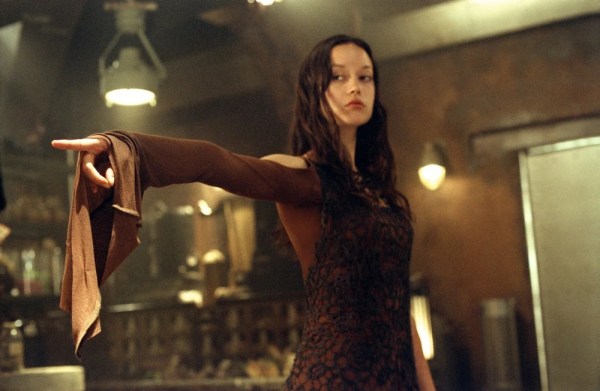
How does one tell the story of a one who is difficult to understand? An unknown, yet is a crucial piece of Firefly. That is River Tam. Alliance fugitive, genius, and younger sister of Simon Tam. Also, she is a young adult woman who is still finding her way. She is a talented dancer and that elegance and beauty brings tension to the reality that she is no longer just a girl, she can kill you with her brain and carries trauma, more vast than her years in the ‘verse.
Upon my first watches of the Firefly series, I thought River’s style was based on convenience, an amalgam of hand-me-downs from Kaylee, Inara, and Zoey. But with a more recent re-watch, I don’t think this is the case. River has clear vision for what she wants, and yes the first few days may have been hand-me-downs, but with a show tasked with telling so much is such a small window, everything is intentional. The costume designer, Trpcic, had a fantastic canvas to do what the story needed – tell us who River is without spoiling what she would become in her story arc. She is a girl who loves dresses, the freedom of comfort, flowy silhouette, and the protection of big combat boots.
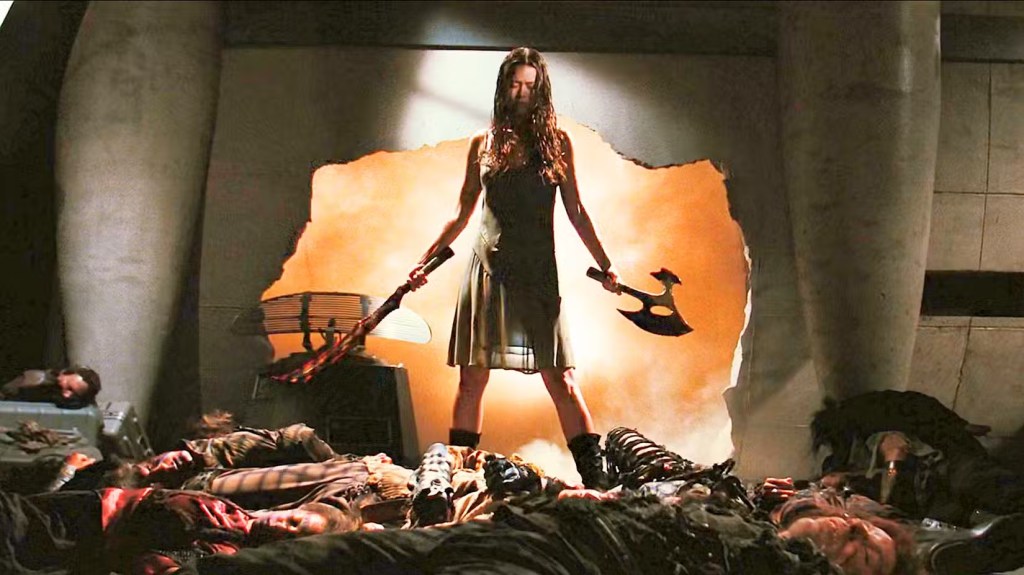
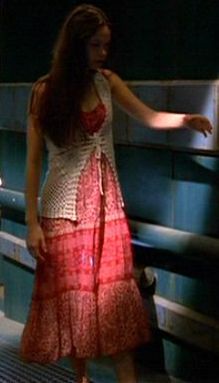
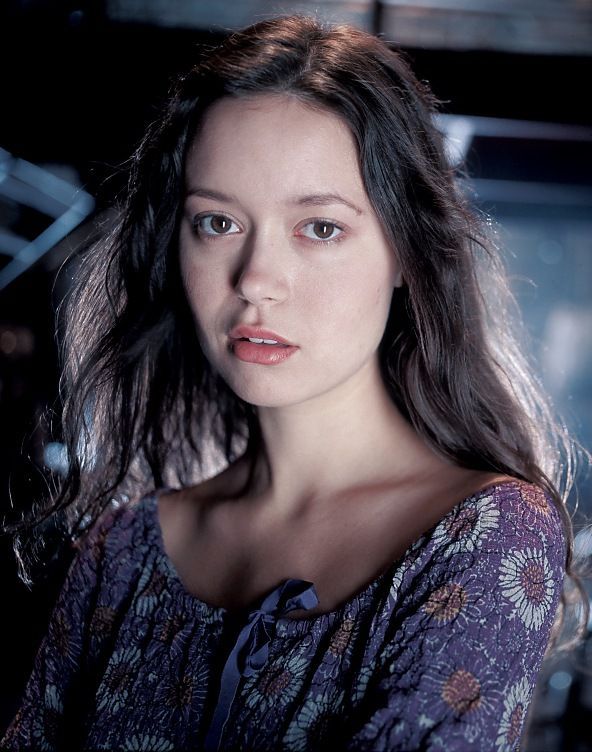
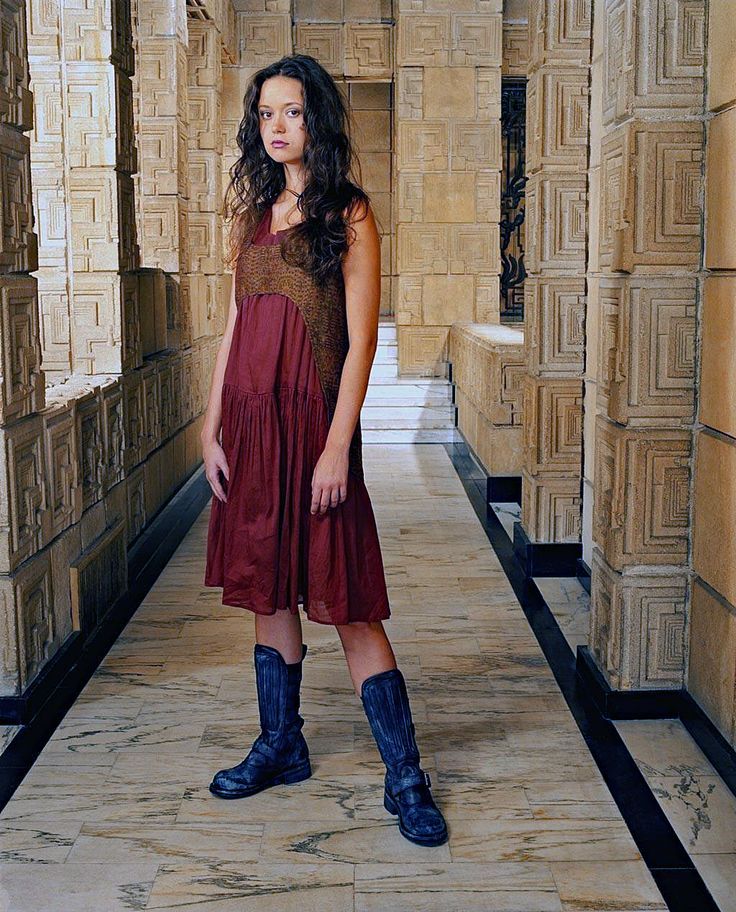
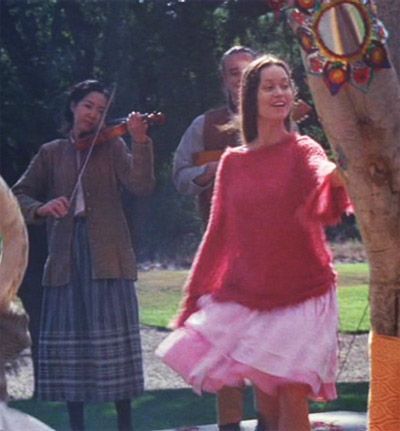
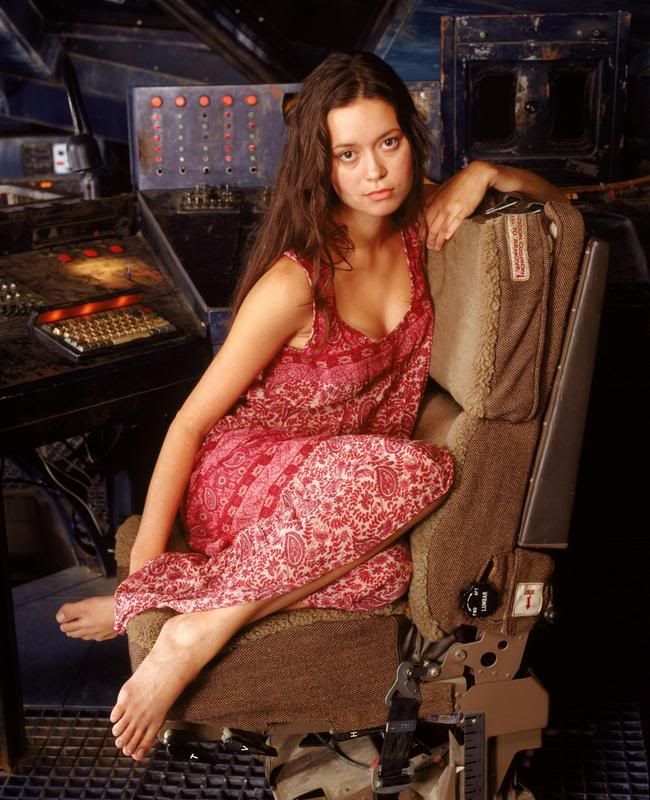
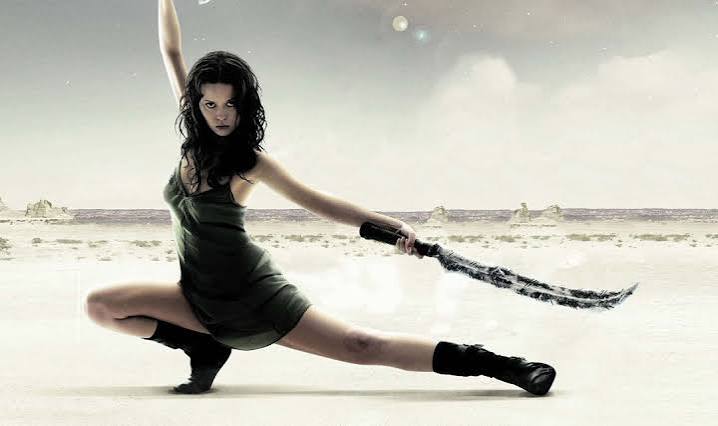
Her clothes dance with her, gliding and twirling in those rare moments where River can soak in the simple pleasures of being free to exist as a human and not a weapon. You can see all that she craved from her time as an imprisoned experiment of the Alliance – color, nature, warmth, dreaming. Bohemian clothing is associated with a romanticism and idealism of the world free to exist in peace, love, and harmony. All things River has been deprived of by her captors. But when she is aboard the Serenity, she is given another chance at life. She is alive again. She is healing. Pink is an optimistic color, flowers a symbol of new hope. In the movie, when she can no longer ignore her trauma, and must confront it, River changes to darker colors. Her silhouettes stay romantic and delicate but in deeper colors. They communicate a maturity, she has passed from the arrested development state we find River in at the beginning of the story, to the woman who is accepting her new reality but choosing her path through it.
I’m not a huge fan of dresses, even though I have tried to like them in my twenties, they’re not for me. So if I consider incorporating her looks into my style, I have a bit of a road block when I see the over sized, pink dresses. What I do appreciate about River’s style is the Bohemian flair, knit and crochet details, and excellent taste in boots. I also like how she wears her hair. It’s how I’ve worn my hair for most of my life. I am inspired to knit pieces that she would wear and have incorporated sheer layering tops into my wardrobe this fall as well as a pair of Doc Marten look a-likes. I would like to dress like her, because I feel a kinship with River. Sometimes being neurodivergent, feels like you are stuck in your head, in a place no one can reach you. She is one of my favorite female characters for her realness. She is a strong female who is sometimes complete paralyzed by her struggles, she needs her community to bring her back from the brink, that’s real life. We are not lone wolves, lone wolves don’t survive. We need our pack.

