Tyra Banks, Gap Happy Stripe, and Project Runway 22

This post is a little bit of a mash up, I guess the connecting thread is Zac Posen, or maturity? I’m not sure. I’ve been mulling over two topics that have been in my head this week. The first is the premiere of Project Runway Season 22, the second, being a knitting “controversy” that I believe is not a controversy at all. So, maybe, the connection is drama fatigue?

The Television Evolution from the 1990’s to the 2020’s

Social media is bad for us, we can agree on that. It compresses nuance, and that is exactly what is happening here. But, in the case of television and the fashion industry, it seems to be brain chemistry altering, to borrow an internet term, and the effects are getting strange. This is far from a comprehensive history, just a quick snippet for context.

Television has gone through several iterations in my lifetime – from the rise of cable, to the golden age of reality TV in the 2000’s, to streaming. In 2005, YouTube transformed who could occupy our attention, shortly following in 2007, the Iphone brought a new screen to our lives. In 2020, Tik Tok became the supreme ruler of culture, with the short-form content revolution. Now, in 2026, streaming platforms of shows and film, are self aware that they are the second or third screen vying for our goldfish-like attention spans. This is bad for business. What are networks supposed to do? I’d say they are letting this short form content culture lead.

Enter Project Runway Season 21 and its new, Tik Tok and YouTube editing style with quick cuts and comedy edits, that are self-aware to a level, that was a bit jarring to me. It was like internet culture was uploaded to an established show of 21 years, in order to modernize it. It did just that, it laid its cards on the table of what producers think a successful television show must have in the mid-2020’s – drama and internet-personas instead of contestants, in my opinion. It’s only gotten worse with the announcement of Season 22.

Why is it so loud here?

It’s noisy. I feel like everything about the show is shouting at me. I tried watching the first episode, and quit after the intro. Instead of letting the viewer sit back and engage with the show, the show demands shock, shade, and a level of seriousness that is simply undermined by how the contestants, presenters, and judges act. They are caricatures of humans. Like Zoolander or The Devil Wears Prada, it’s not an accurate representation of human behavior. The drama has been dialed up to a point of puppetry and theater, which would be fun if it was for say, in the pursuit of comedy like RuPaul’s Drag Race, which I am a fan of. This version of Project Runway is not about the clothing or the craft of sewing. It is for the purpose of creating internet buzz and translating that into streaming numbers. It feels so trite to say that. Project Runway is a business, what I miss is the illusion of the storytelling.

Tim Gunn, Zac Posen, Michael Kors, and Nina Garcia brought an industry seriousness to the show that provided context. With the elimination of all but Nina Garcia, and the death knell of losing the spot to show at NYFW, the legitimacy of the show is in shredded. What is all for? Internet fame. Even the challenges were different last year, with sponsorship themes shoe horned into a semblance of “design criteria” and it felt off. For example, the PNC “brilliantly boring” challenge to use boring fabric. There was the Eczema awareness challenge, that should have gone deeper, but instead gave us a concept and then quickly shooed it off screen.

In contrast, I have gained greater appreciation for Drag Race and its the commitment to staying on topic.The causes presented on the show seem genuine and it is refreshing! Like it is all in alignment with worldview.

Lack of Integrity in the Fashion Industry

I think this is because to have a clear worldview in the fashion industry right now, it has to be political, and they don’t want to do that at Disney, and so the political stances are muddled for the sake of saying nothing. Which is a political stance, indifference is infuriating with the amount of clout the show claims to have. This show is fashion “influencing” but make it a reality show.

The worst part of this muddled stance is the inclusion of Tyra Banks. The Netflix documentary from this winter makes sense now, it was a PR project to rebuild Tyra’s image. I grew up with America’s Next Top Model, created by Tyra Banks. I watched ANTM long before Project Runway, and it was a sh*tshow.

She let the cameras roll in Season 2, when a dangerously inebriated contestant, Shandy, experienced SA, and then Tyra had the gall to keep her from the hospital and police, to keep filming. She framed Shandy as an example of cheating, and publicly shamed her for a decade. She pressured contestants, Joanie and Danielle to undergo dangerous dental procedures. Tyra created photoshoots promoting blackface.

She fat shamed and encouraged ED on the show, ignoring the dangers of ED, all while shaming contestants who couldn’t “hide it” well enough. This is just a short list of the problematic behaviors on the ANTM show, a show that preyed on young women of color, and then made a mockery of them, reinforcing racism again and again for profit. I have no interest in watching a show that Tyra Banks is a part of, when she danced around an apologize in her documentary and, in my opinion, did not take any responsibility. Just have integrity, it’s all I ask for. Apologize. Truly make amends and rebuild your reputation through real change. This path is not fooling anyone.

Connecting the Two

Okay, so how are my two topics connected? Well first off, I wish they had brought a quality judge back like Zac Posen, but secondly, I think as much as people are not up in arms enough about Tyra coming back to television, I think the internet is always trying to drum up knitting controversies, that are not that serious.

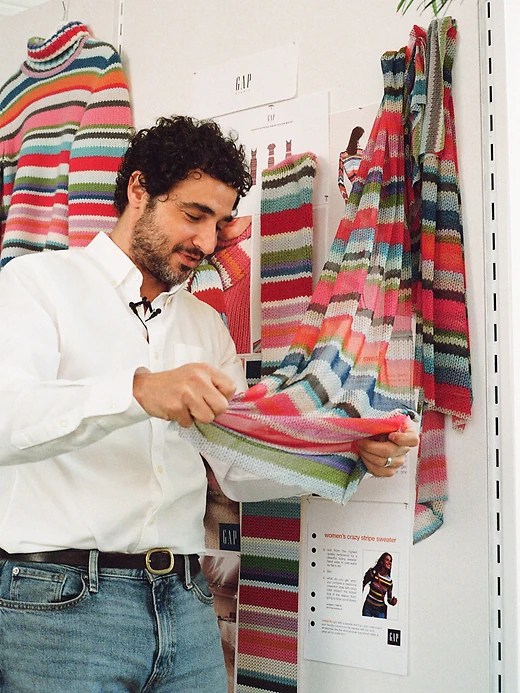
I was definitely dragged into caring about The Game of Wool, by my corner of the internet, and proceeded to make a bingo card, as my farewell, once I realized I didn’t give a hoot even if this show was a let down. The most recent “controversy” I’ve seen is the Gap Happy Stripe collection for Summer 2026, promoted by the CCO, Zac Posen. The collection is not a knitwear focused throwback, instead it utilizes technology to make something “knitwear” centered. The image of the original knit has been printed on a mesh collection, that I believe has a decently high polyester content, because mesh.

As a fiber artist, if I want a happy stripe inspired piece, I’m just going to recreate it. Done. I don’t need to feel slighted by Gap, or be frustrated that they are not centering knitters with “fake knitwear” as I have seen touted on the internet. Gap is a fast fashion company, the knitwear would be machine knit, and the workers are not being compensated fairly. It’s the fashion industry, its problematic. They make poor choices and they create a ton of pollution. They also favor tech “innovations” so this is not radical, it seems inline with Project Runway to be honest.

I don’t think Zac Posen should “canceled” for this or for us to spam Gap, with anger that knitters have been slighted again. I don’t buy store bought knit anymore. I certainly don’t buy store bought crochet, because its either fake or created with slave labor. I try to buy thoughtfully, make what I can, mend, up cycle, and treat clothing as a permanent object. I think that is the best we can do right now. The problems with the fashion industry are not contained to Gap. It’s world wide. I have no reason to buy a mesh printed garment, so its a moot point for me. Protect your peace, the world is incredibly messy right now, this is a drop in the bucket.

Do you remember the Gap Happy Stripe collection? I don’t. I remember colorful knitwear from the early 2000’s and wearing one from Old Navy or Aeropostale. I’m getting tired of the internet shouting. I’m getting tired of endless knitting drama. I’m quite tired of dumb reboots of shows I liked. Whew, I think it I did it! Thank you, reader, hanging in with me on this random post. I hope you have a wonderful weekend. ❤

Night Sky Sweater

I’ve mentioned this before, but as a maker, I revisit a single project many times before it is done. Sometimes I will live with a finished object for a month, a few months, or even a year, and suddenly pick it back up again to adjust something that feels off. Honestly, taking a season or two away from that garment – such as, putting away a dress for the winter, or a sweater while you sweat it out for the summer, can give your mind the space to forget and re-acquaint yourself to the garment like you picked it up from the store. It is a whole new piece again, which can lead to me be less than thrilled with past me and her design choices.

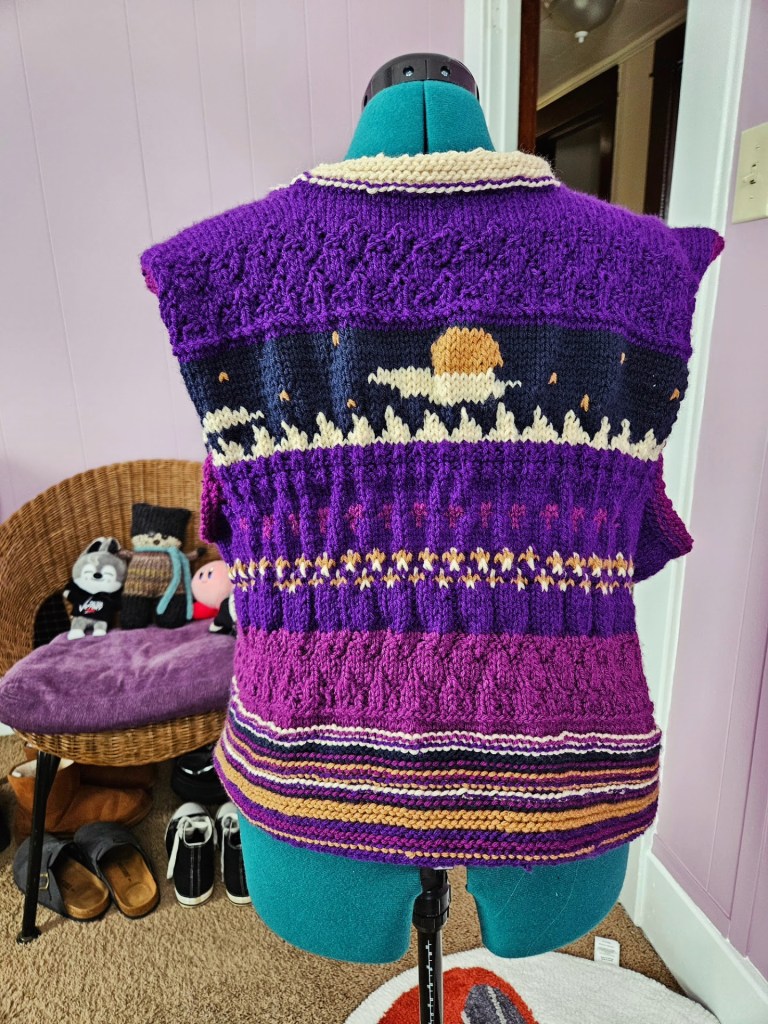
Take this vest for example, I began this project in December 2024, wrapping it in February 2025. I wore it a few times, as it stands as a vest that winter and spring, then it was put away for the warm weather. When cool air returned in the fall, I pulled it out of its drawer and set it on my dress form. This vest did not feel complete, it had more to say, even though my hands were weary back in the winter, so I stopped and called this piece done. But its not done, it would be a gorgeous colorful sweater, and it was time to go back to this garment to make it whole.

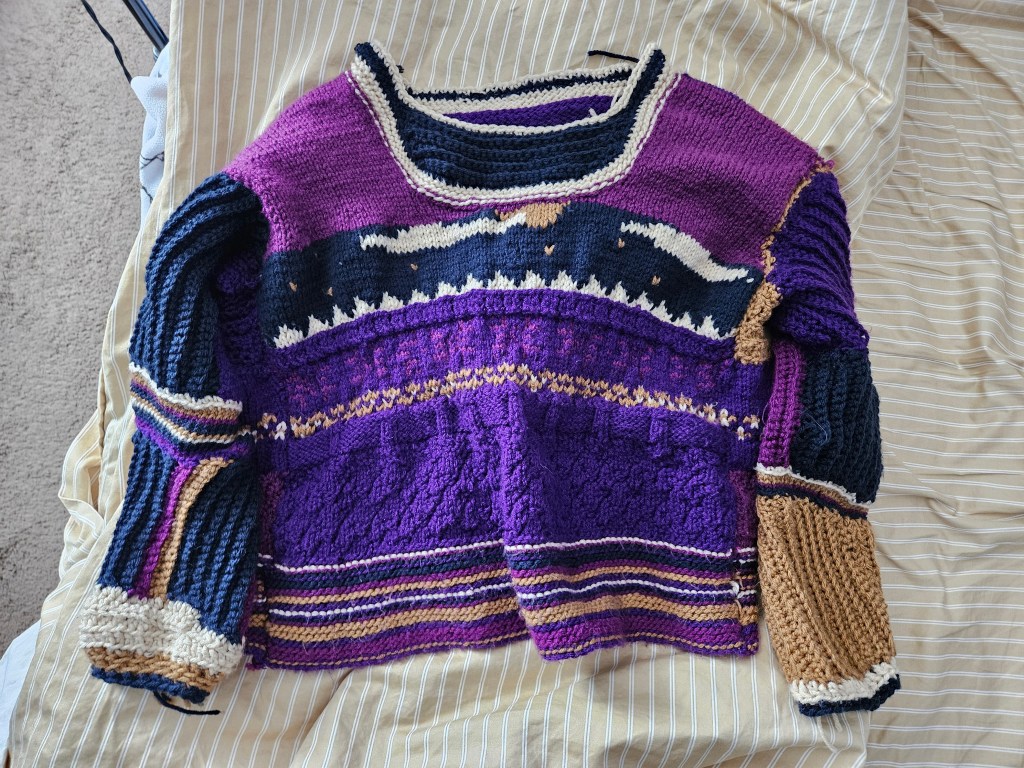
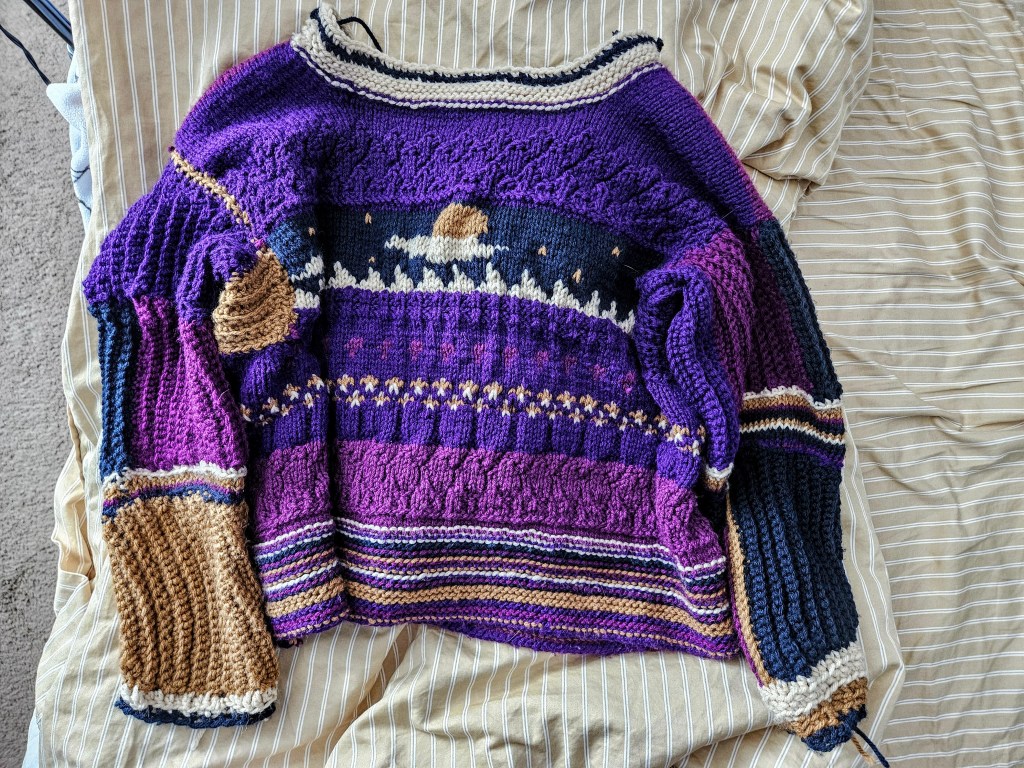
Now, this was a self drafted piece. A complicated self drafted piece that helped me cut my color work chops in a garment. This was the first sweater I made with such a large color palette and the first time I decided to make a knitted piece with the motivation of telling a story. I wanted to evoke a winter sky, with a moon that was visible on the front and back. A moon with stars, and clouds, floating above a forest. This sweater would not only feature colorful forms across the fabric, it would have texture. I chose to use the ‘seersucker stitch’ as it was labeled from a Pinterest chart, to weave a diamond texture into the fabric for a 3-D plush effect. I chose large and miniature color work sections to create ebb and flow in the color story.

For the bind off, I had grown tired of the classic 1×1 rib, so I tried something a little different! I chose to create tight stripes, knit stitched together. Instead of stockinette which used knit (right side) and purl (wrong side) for it’s classic construction, I decided knit stitch, knitting the right side and wrong side, would stabilize the stitches for a lack of curling in the finished fabric. And it worked! The technique and color changes ground the color palette for a cohesive garment.

Keeping these previous choices in mind, when it came time to add sleeves and a new collar, I chose to employee a new to me technique, crochet. I wanted the sleeves to be made in the round, and be completed quickly so I could wear this piece for most of the winter. Crochet is much easier to do in the round, and to make progress quickly. The crochet stitches allowed me to work in new directions too, so the sweater had vertical texture to contrast with the horizontal lines of the original vest. With sleeves complete, this is one of my favorite pieces to date. It tells a story. The color palette reminds me of Stardew Valley. The cloud on the back reminds me of an episode of Avatar: The Last Airbender when Appa is missing, and Aang thinks a cloud flying above is Appa floating above. I love the variety of colors – gold, navy, magenta, violet, and cream.

This was a labor of love, but I would highly recommend trying a complex project such as this if you are interested in making your own garments. Not only does this piece express my identity, it taught me how to be a better fiber artist. I feel proud each time I wear it. Get inspired and start stitching something from your own imagination!

If I Love Fashion History, Do I Have to Like the Met Gala?

The more popular and well-covered the Met Gala is online, the more controversial it becomes. This once New York Society event has transformed into an international spectacle that feels more like the Oscars or the Olympics than a fundraiser for a museum’s costume archive. That is the origin of the Met Gala, a dinner to raise money for the Costume Institute, to pay for the day-to-day operations and expansion of the collection displayed at the Metropolitan Museum of Art in New York City. The spectacle and theme, red carpet coverage, constant intertwining with rich, questionable people, and the baked-in elitism of making Anna Wintour’s guest list have become the bigger story of this so-called “fundraiser.”

Now, I am being a bit dramatic in questioning its fundraising; it is successful at its core function. For a deeper dive, I suggest checking out Abby Cox’s video about the history of the Met Gala. I believe they have raised enough to create an entire wing for the museum. The hefty price tag per plate or per table is usually not the attendees’ responsibility to cover, as the attendees are usually there to represent a brand or company. What I have seen as the biggest defense for the Met Gala is this system of big brands, donating money to the arts, that they would otherwise pocket or invest in questionable things, such as political donations to Trump or AI technology. But is that enough to make this event palatable? The Met Gala was sponsored by Lauren and Jeff Bezos, which alone made this year’s gala controversial. The justification once again is that his money is better spent on the arts than on something else, like another Melania movie. Such as comparing this sponsorship to the investments by Carnegie, Frick, and Morgan in the arts during the Gilded Age to improve their public opinion.

I have mixed thoughts on this, as a believer in the preservation of the arts, but also a kid who grew up in the Pittsburgh area and was surrounded by Carnegie libraries, museums, etc. Are these nice to have? Yes. Does it make up for the pollution, labor practices, and wealth hoarding by these industrialists that were so greedy they did not care if they were evil, but instead chose to buy their way into good public standing? No. My Grandma died of COPD, from the level of pollution she was exposed to as a kid in the 1940s. The Atlantic Monthly, in 1868, called the city of Pittsburgh, “hell with the lid taken off.” Soot from the Steel factories coated everything. The number of heart conditions in my family, and later autoimmune conditions, has been shocking, until you consider the effect of pollution. Similarly, the number of people from my home region with Cancer has been downright terrifying. You still can’t eat the fish from the rivers or ponds.

But forget that, right? Let’s have a ball, and display our wealth to all the people around the world who will never experience this kind of luxury. We have to preserve the arts and fashion history! Yeah…honestly, when you consider how much human suffering is essential to this kind of wealth, that these systems depend on most people going without human rights and dignity so that they can wear their custom haute couture to donate millions to a single museum, it’s disgusting to me. And I love fashion.

History is great, sometimes, but more often than not, it is a tragic collection of stories of inequality, suffering, war, destruction, and a few that benefit greatly from the oppression of others. You don’t have to dig far into the history of my country to see how true this is. I mean, each day this Iran War drags on, add another footnote to the list of wrongs. I would rather preserve cultures than general historical collections that focus on white, Eurocentric clothing on white Eurocentric mannequins. The bulk of the vast Costume Institute’s collection, the biggest in the world, is mostly Western clothing with a few token exceptions, displayed on mostly small, white mannequins. The Met has enough resources and clout to do better. The fashion industry is not interested in doing better, though. They are one of the biggest polluting industries in the world, and have knit together their brand empires with sweatshops in the global south. I guess my point is, I think we all know enough about Western fashion and luxury fashion. More than I think we need to know. Who is preserving the fashion history of the places and people who make the clothes, and whose lives are being wasted away sewing day in and day out to feed their family a meager portion, while these brands spend hundreds of thousands of dollars at the Met Gala? If they have enough to blow money on this event, it is despicable that they choose to not pay their workers properly, and give them vacation time, health care, maternity/paternity leave, etc.

The most difficult part of this conversation, for most of us, is the Amazon of it all. I shop on Amazon, most of us do. Sometimes it literally is the only option, and I know it is not a good company, and I am not proud of supporting it. It makes me feel like a big hypocrite. Because with Amazon, you don’t have to leave the US to see how bad they treat their employees. It’s out in the open, and hyper-consumerism and lack of other options make the bad behavior of Amazon seem beyond reproach due to how entrenched the company is in our world. I do think the Met Gala is an offensive flaunting of wealth that we, normal people, should stop worshipping because it’s pretty and is “art.” I do think the “Eat the Rich” protests are valid, and I think a lot of us feel stuck because we feel like hypocrites. After all, the system seems rigged right now for billionaire domination, and sometimes the only or cheaper option is supporting these businesses, like Amazon.

I like fashion history, but I don’t like the Met Gala. I don’t like Bezos or how he does business, and I do have an Amazon package arriving today. Just as much of life is complex, this subject is so layered, and I hope I made sense in this post.

The Brilliance of Dress Up and Styling Games

Something I didn’t expect when I began playing Animal Crossing: New Horizons was how much it would evoke memories of playing dress-up and room styling flash games as a kid. Specifically, the Lizzie McGuire, My Scene, and Fashion Polly games. Although early ACNH gameplay surrounds building an island community and infrastructure, the longer you spend on your island, the more you decorate. Either the island itself, your house, islander houses, vacation homes, or, recently, hotel rooms. Styling your character gets a lot of in-game attention, too, from the hair and eye customization upgrades from Nook Miles, or the daily offerings from Able Sisters – you are motivated to play dress up. Sometimes, receiving Nook Miles for the simple act of changing your outfit. That is perfectly fine with me!

Moving away from flash games of my tweens, and into reading fashion magazines in my teens and 20s, it wasn’t as fun just looking at the fashion – I wanted to experiment. Which, I think, translates to a lot of us as shopping, because playing games is seen as childish. Since playing ACNH, I have found a new outlet to express the creative itch that has helped me explore my own personal style without playing into the shopping addiction that the current culture is infected with. Not to say I am immune, throughout college and too far into my adult life, I was stuck in a cycle of emotional spending and trend chasing. Most of the jobs I had were terrible, and that fed into the idea of treating myself as a trade-off. Not wise, nor was it satisfying.

Looking back on that time, playing around with different outfits and designing rooms, like I used to as a tween, was what I was looking for. Something to clear my head or try new things, without hauling new items or overhauling my living spaces. I think renting fed into this need to design a space that felt like me. I missed the customization of my childhood bedroom, in shades of purple with a wall of curated fashion ads pulled from Vogue, W, and Harper’s Bazaar. Although thankful for a roof over my head, those cookie-cutter rentals of beige and white feel soulless on purpose; they are not designed to have design.

Before ACNH was released in 2020, there was The Sims 4, which I played at the end of the 2010s and sort of satisfied my design game wishes. House building and customization were by far my favorite parts of gameplay. The clothing options were okay, sometimes a bit stifling because you dressed your sim for occasions and not simply to change the outfit. But my main gripe with The Sims 4 is the paywall DLC. How many gamepacks do you need to make it worth it? And how much money must you spend to get the full experience? It’s quite frustrating to get minimal variety from the base game, which you pay for just to spend money again and again to expand the catalog of clothing, hair, furniture, etc. It’s ridiculous!

Although ACNH costs 60 USD, you get a vast catalog of items, with one DLC game expansion – Happy Home Paradise for 20 USD. Some features are behind a Nintendo Online Membership, like Dreaming, Zelda items, Hello Kitty items, Nintendo throwback games, and Amibos, but nothing compared to The Sims 4. The game can be played daily without these elements and not feel like your catalog is incomplete, in my opinion.

The clothing catalog from ACNH is vast, with clothing for all seasons, from various cultures, and for specific occasions like professions or holiday offerings. When the shopping bug is eating at me, I like going on the game and buying a new outfit from Able Sisters with the imaginary currency of Bells. Even the act of dressing my house up or my character in a gameplay session can clear my head from wanting new things. The game provides that space to create and change it up that my mind desires, but keeps it to the sandbox. And isn’t that the point of most impulse purchases? We are chasing the feeling of new, so why spend real-life resources to consume endlessly? Just play a game.

What about curating your wardrobe or trying a new aesthetic? ACNH thrives on a perfectly curated aesthetic! The game literally awards you points each week, for the design level of your home. What I think has helped me the most, though, to push out the intrusive, trendy thoughts and find my style, is building a capsule wardrobe for my character and then changing it up. When I am feeling stuck in a design rut, I can explore outfits and a specific style through the game.

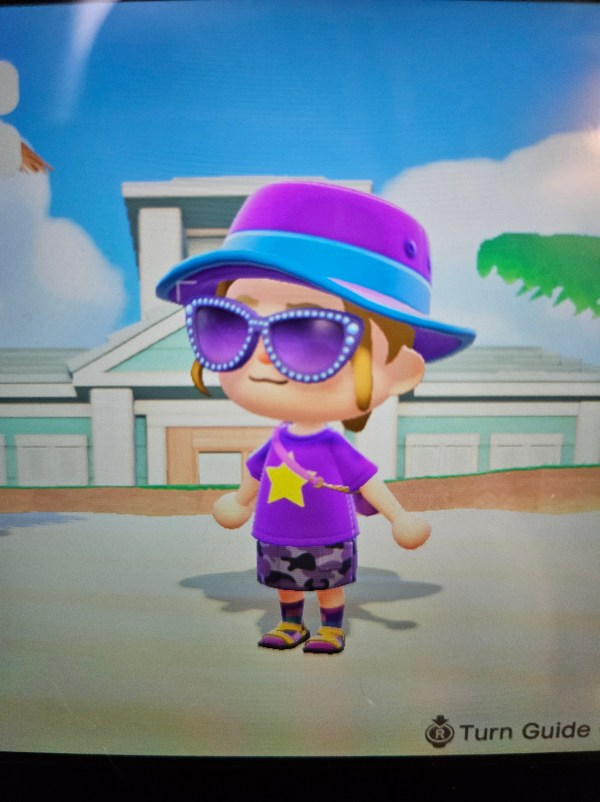
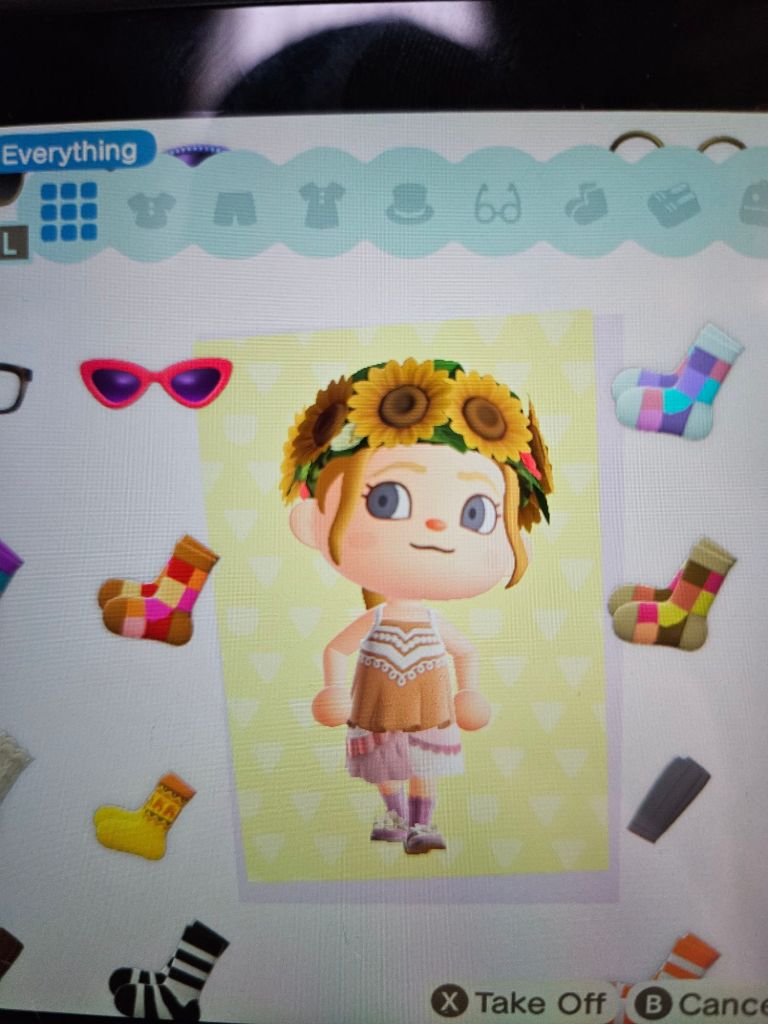
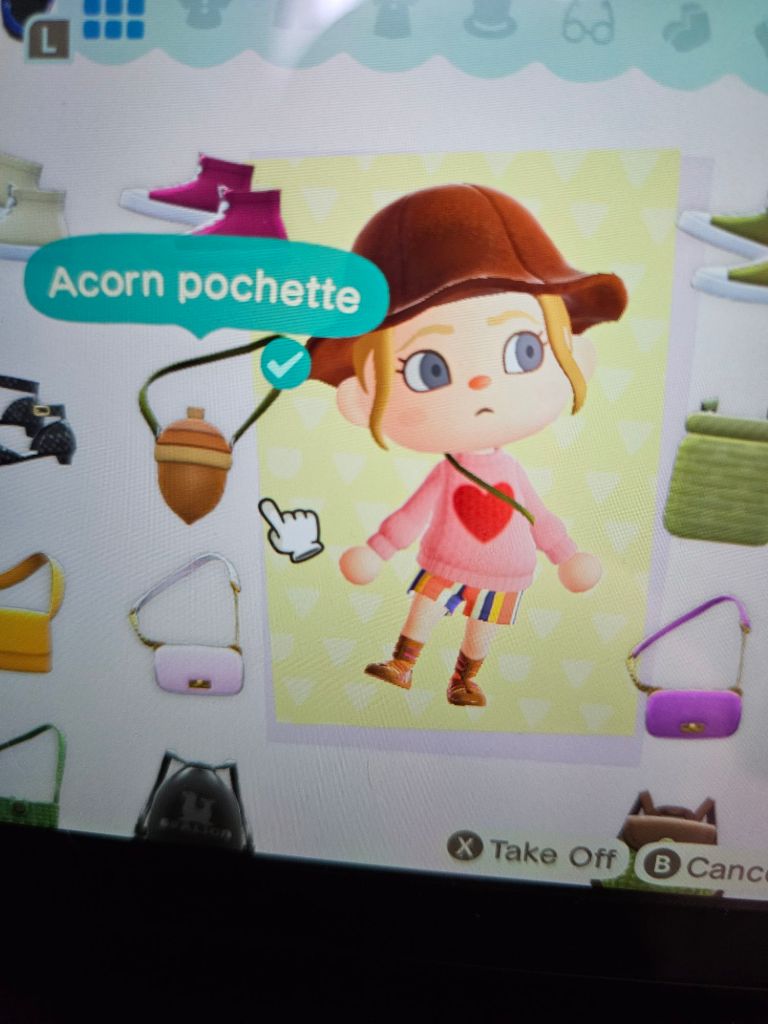
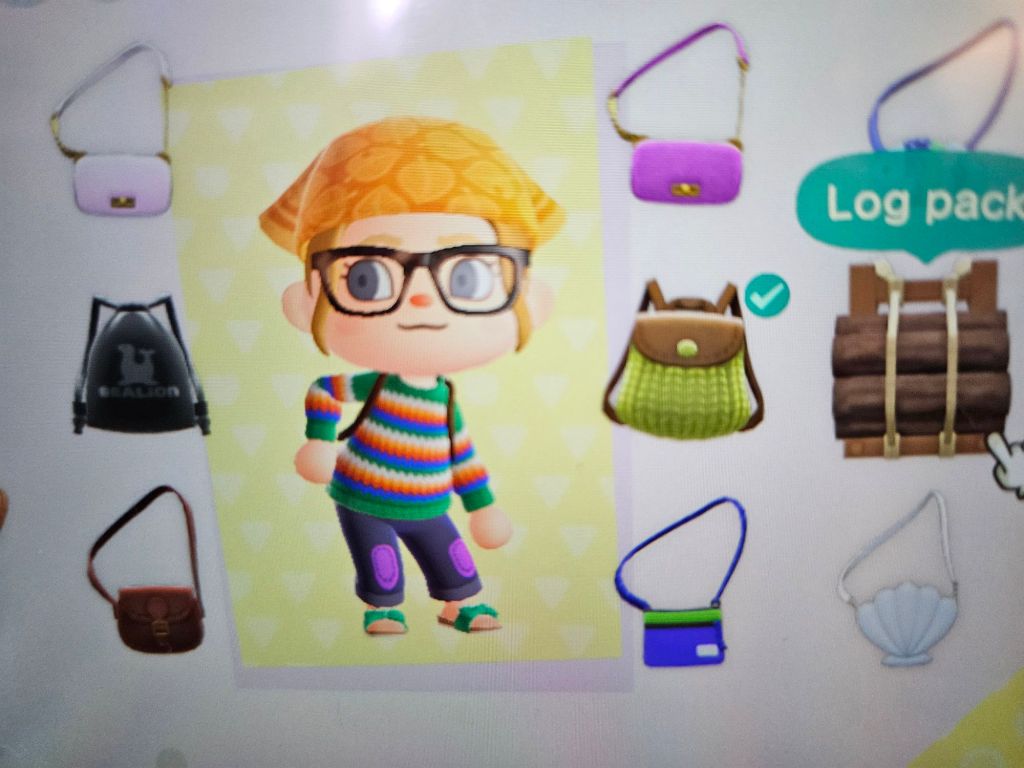
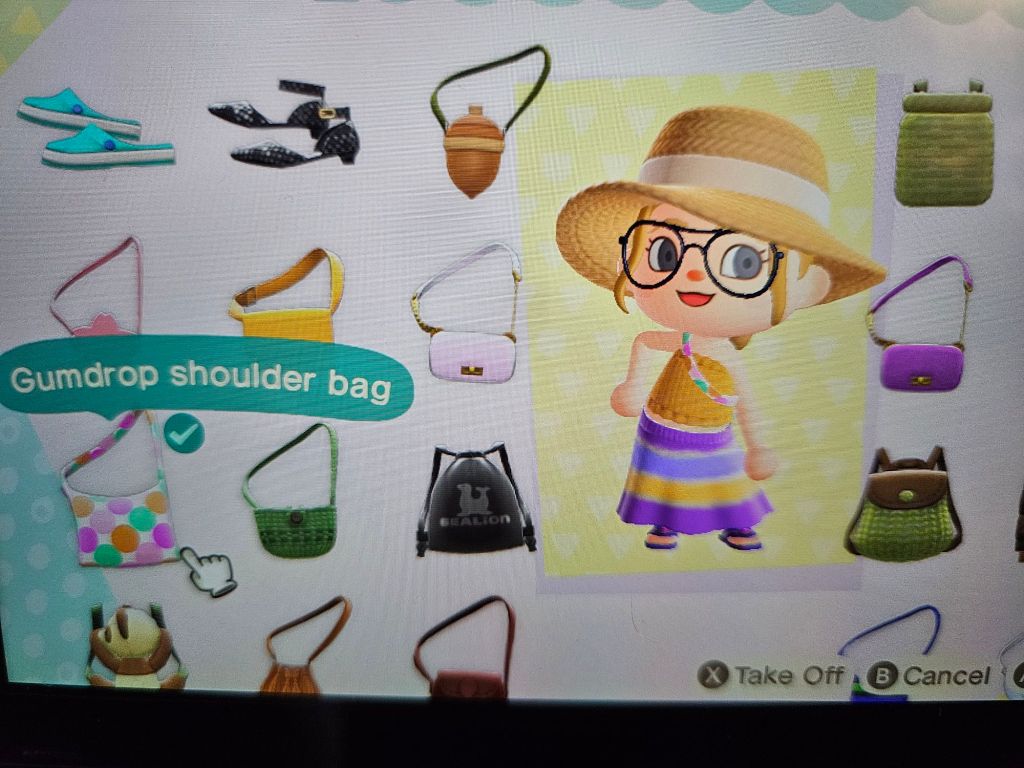
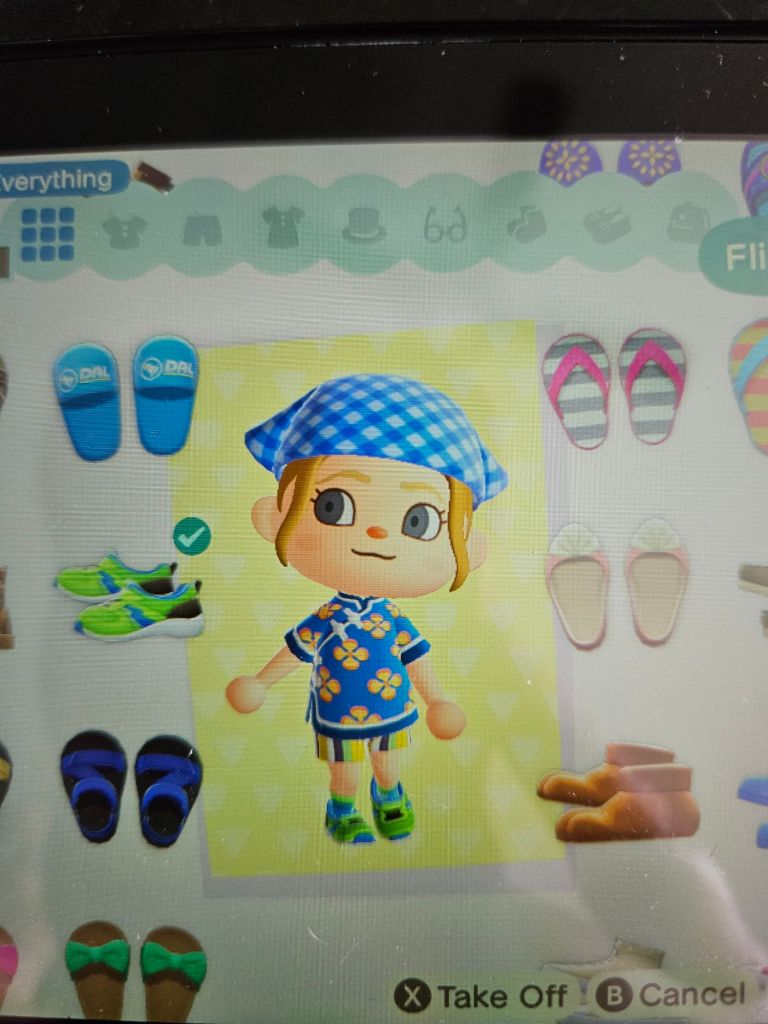
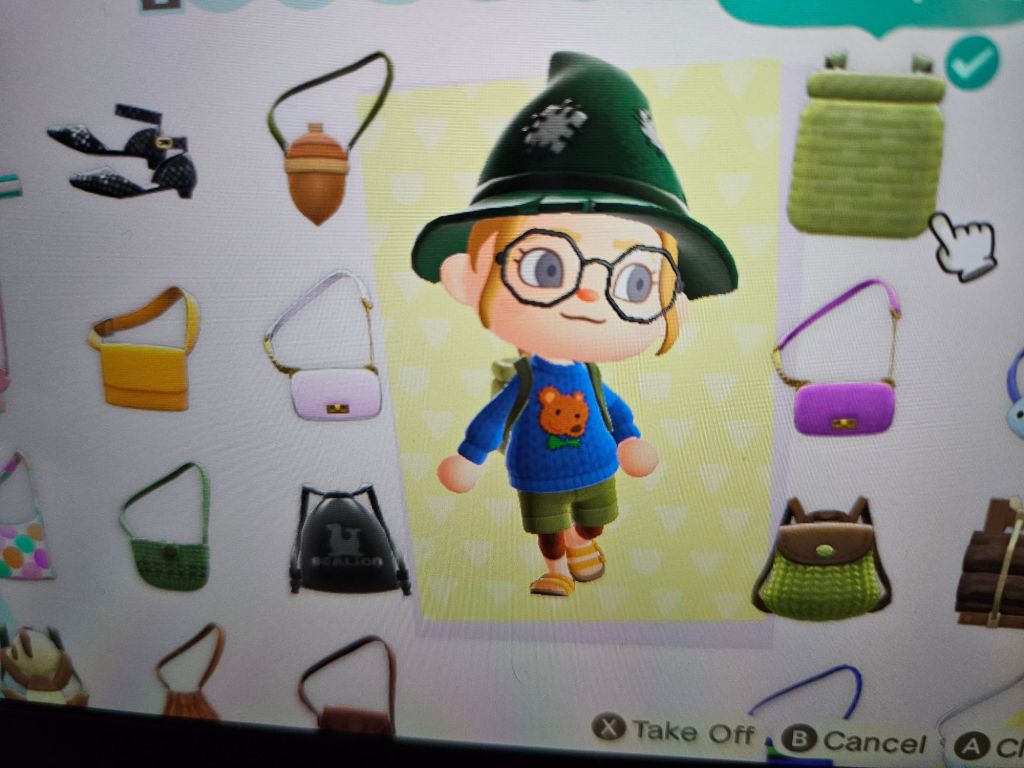
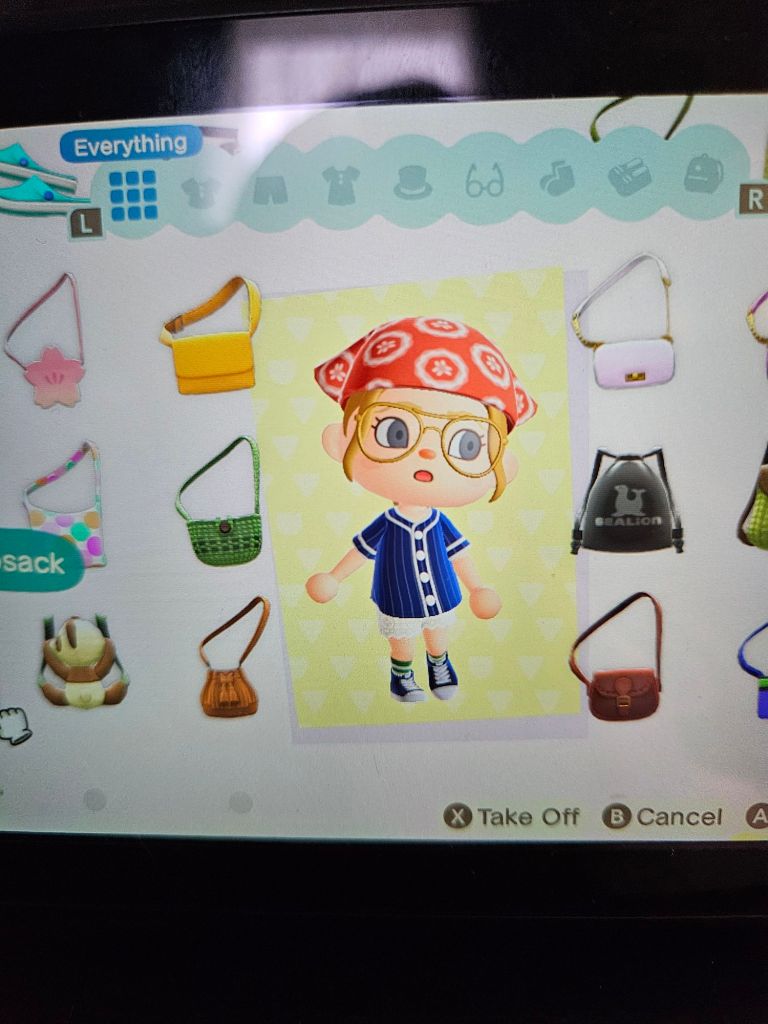
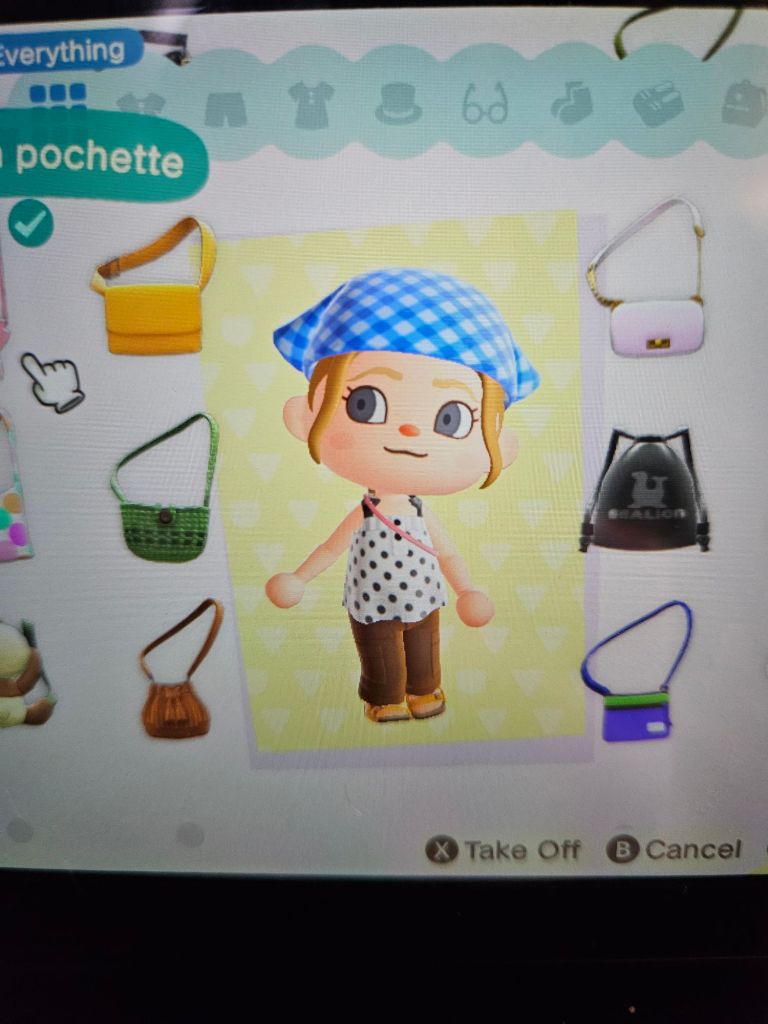
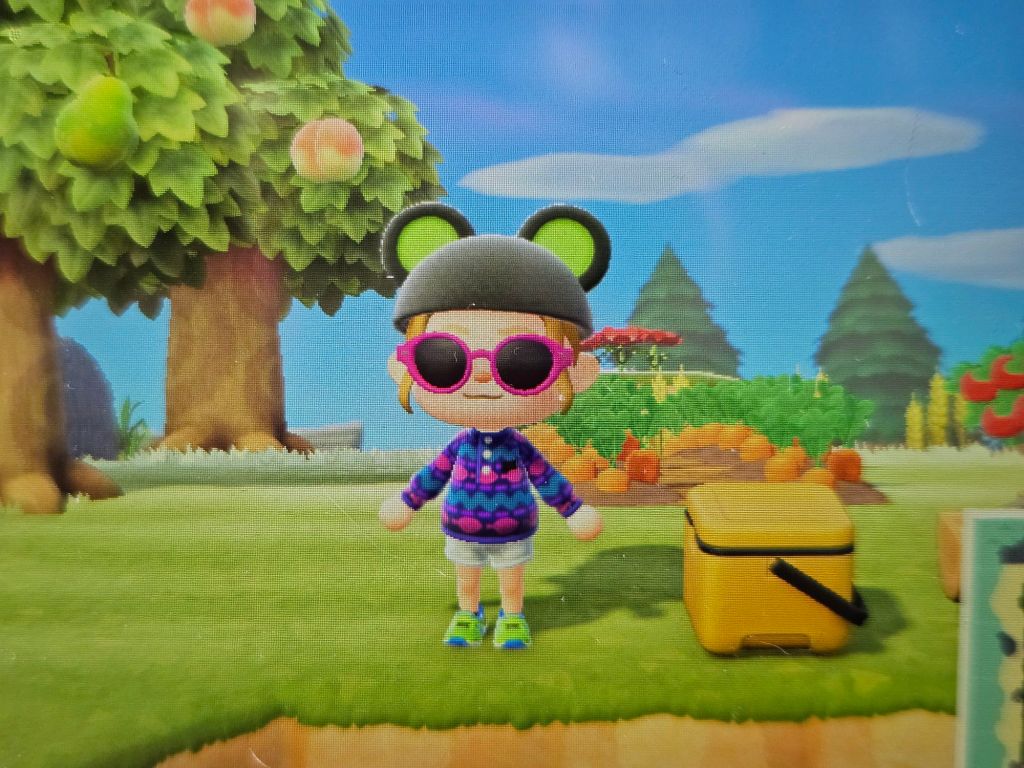
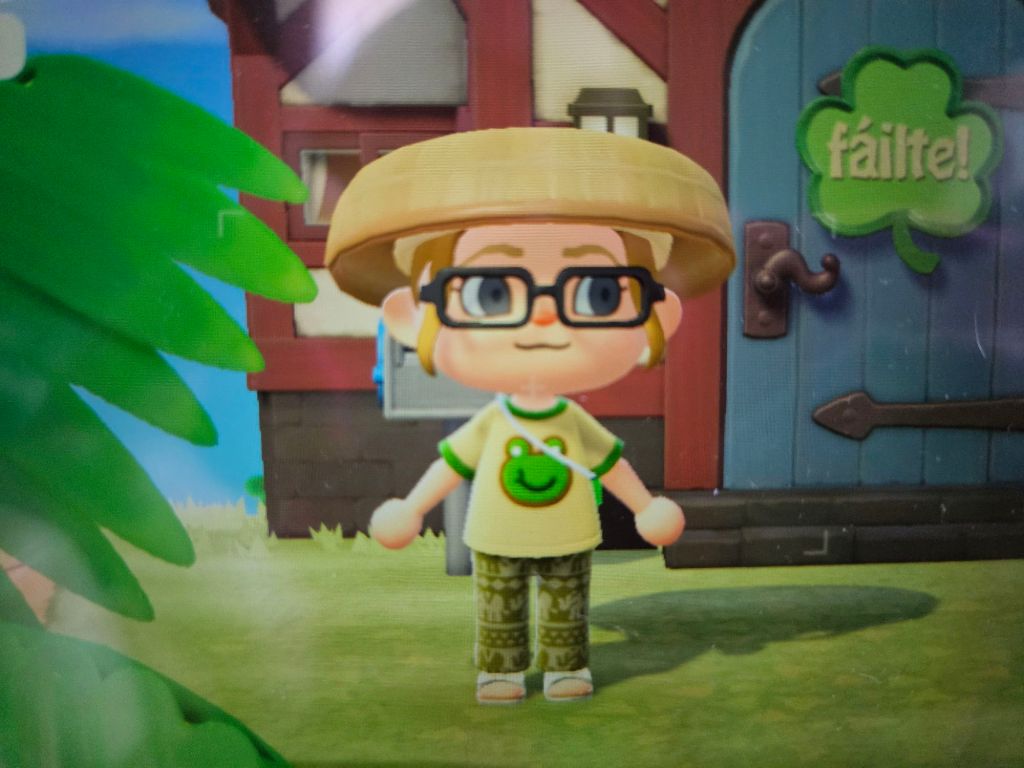
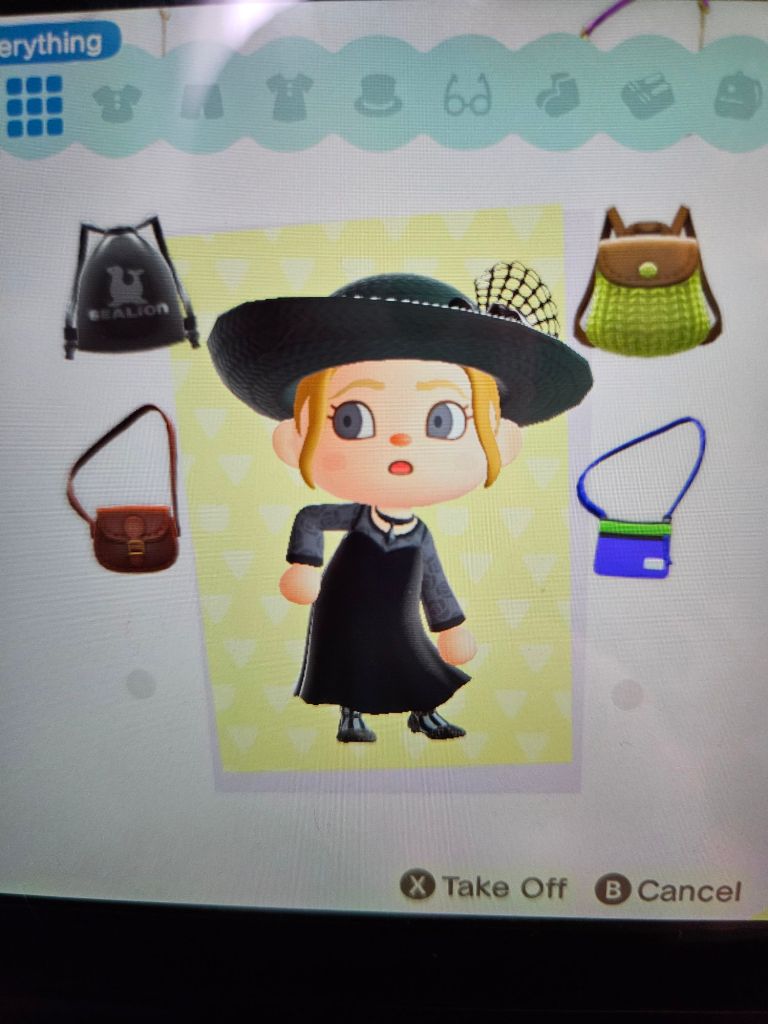
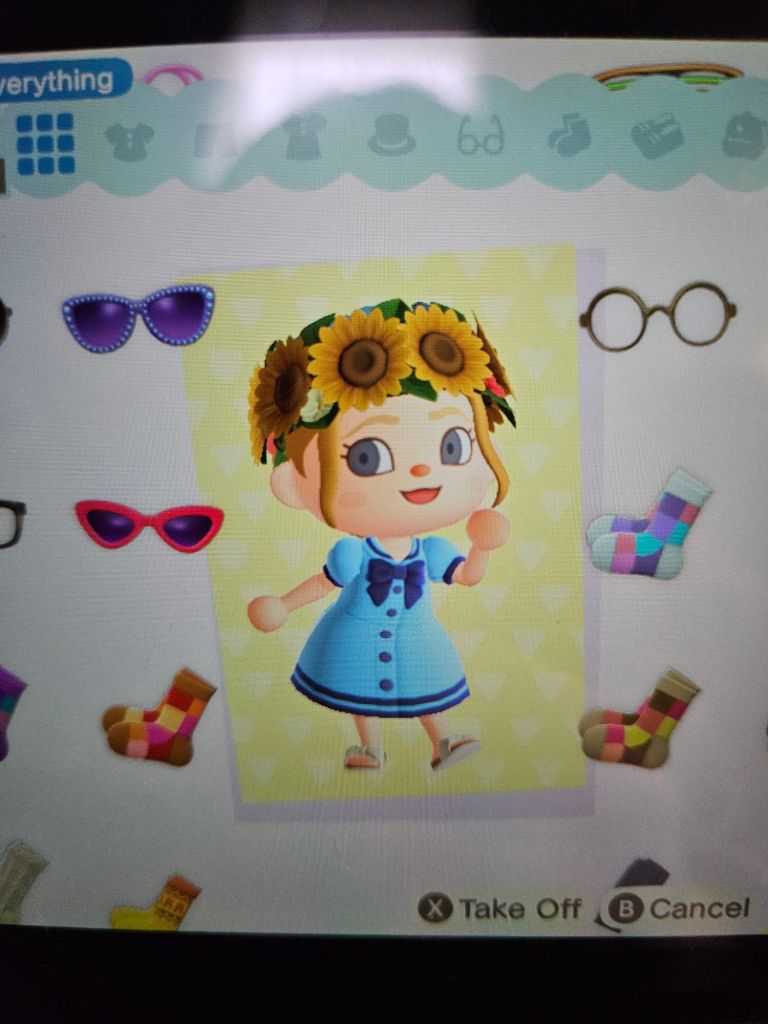
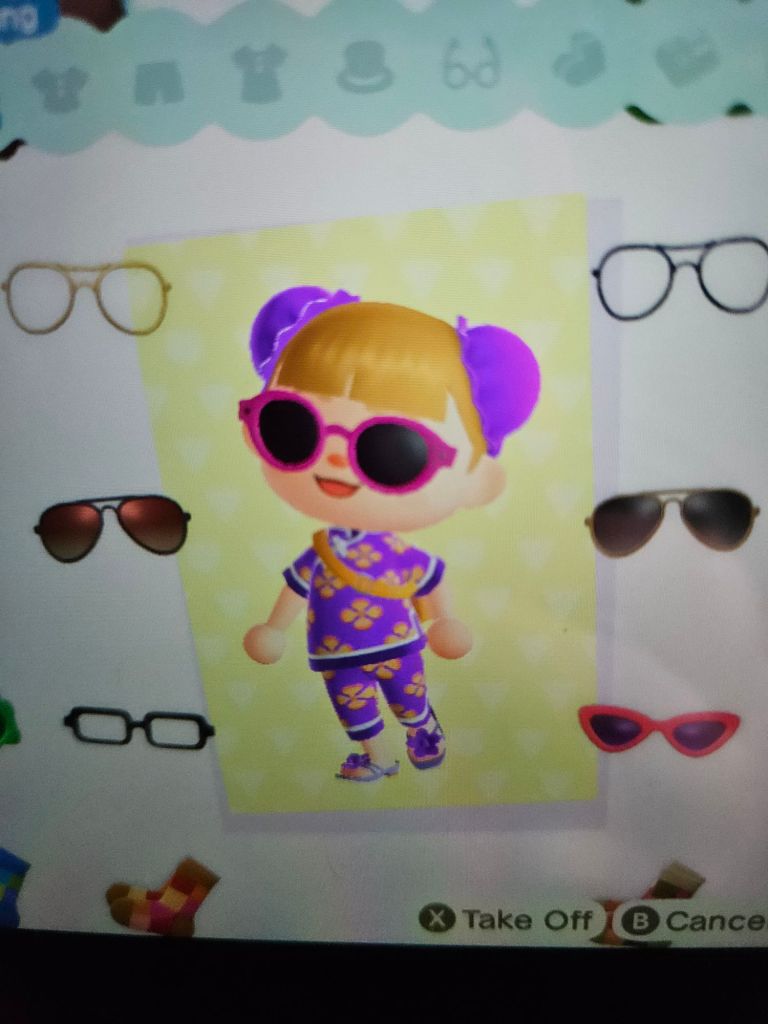
As you can see from these images of my character and her current wardrobe, I’ve been in a more casual mood in the game and in real life lately. I’ve been wearing casual separates, but that might be because my character had the outfits first. When I was in my dress phase, my character wore fancy, frilly dresses.

Is the clothing groundbreaking? No, but it’s darling. Look at that froggy tee! You can play around with different styles, such as these three outfits below. From left to right – Addams Family, Red Velvet’s Cosmic music video, and trying a style from another culture. That is one of my favorite parts of the game, getting the chance to style clothing from around the world in the context of my ACNH character.

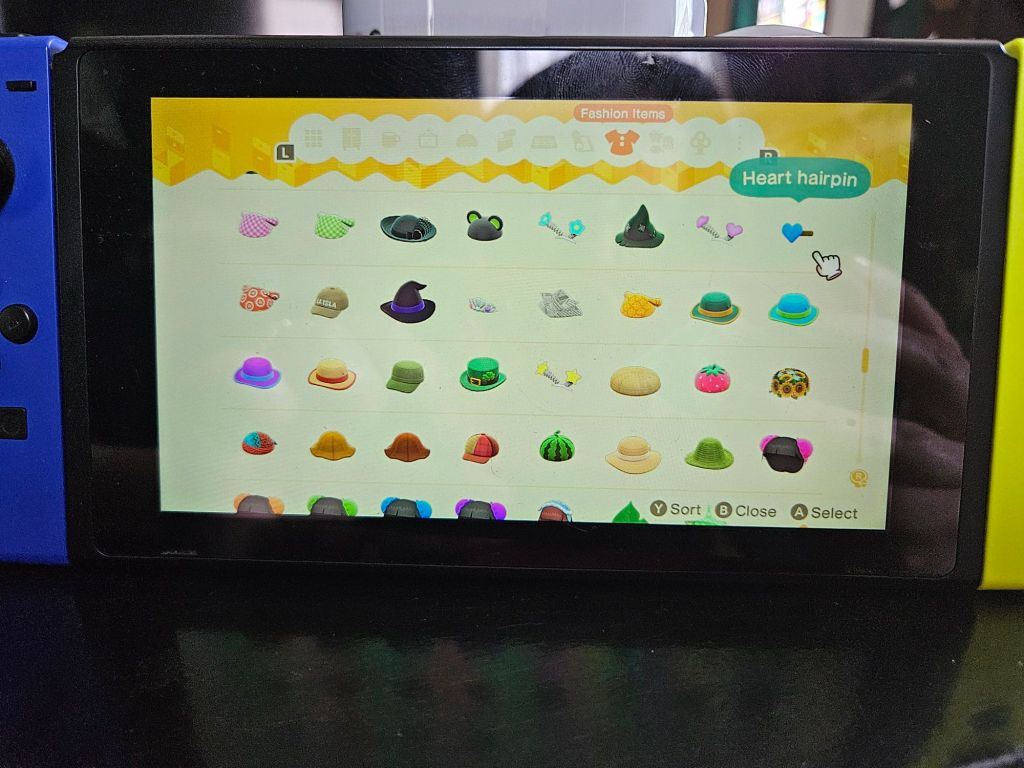
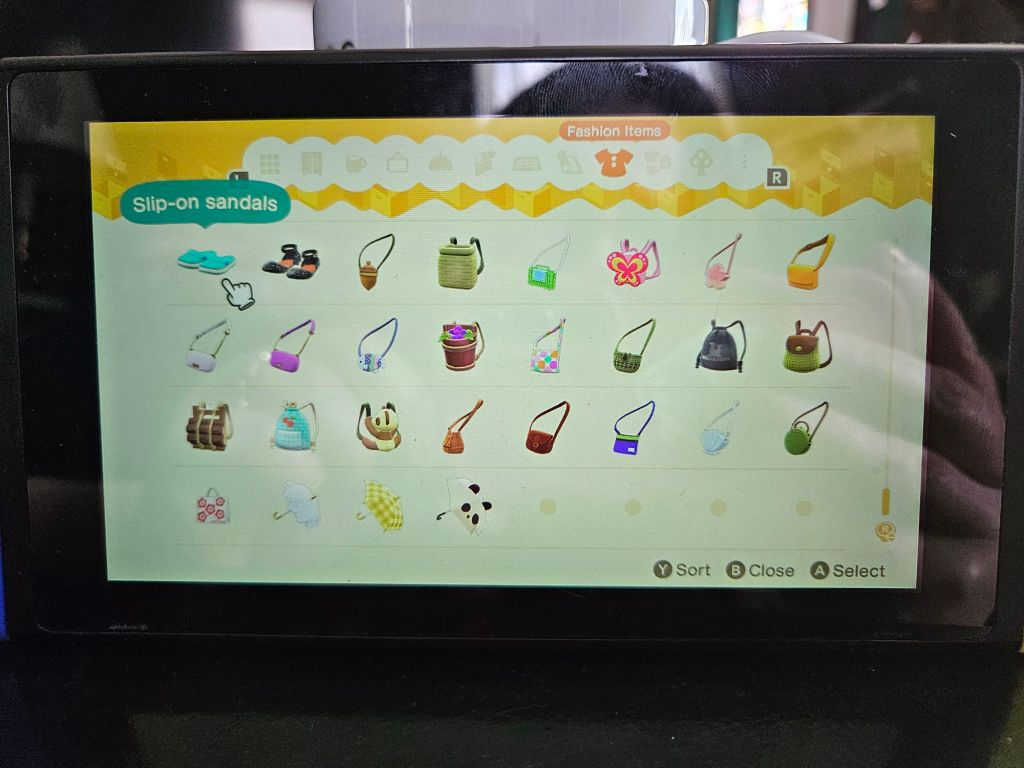
Finally, ACNH has one specific style contribution to my wardrobe – hats, shoes, and bags. This game has retrained my brain to accessorize. Sometimes I clash with an unexpected combo – and I have learned the art of doing that before I buy or create in real life. I always have a hat when I leave the house. I never used to do that. Look at this inspiration, though! My outfits on Honeycrisp and in real life feel incomplete without the eclectic bag, statement hat, and an interesting pair of shoes.

So if you are feeling stuck in your style or struggling with overconsumption, may I suggest playing a game?

How I Duplicated My Favorite Pair of Pants

Have you noticed I am not sewing as much as I used to? As Marie Kondo instructs, if it doesn’t bring you joy, let it go. That’s been my relationship with sewing, honestly, since 2024. Sewing and I had hit a rough patch in our relationship. No longer in the euphoric beginning, nor going deeper and bonding through the big sewing wins. We were burned out in the grind of sewing, striving to be better but lacking the proper knowledge to do so. Therefore, we’ve been on a break – off and on since 2025, and it’s been good.

It’s given me time to reflect on what I want to pursue, sewing, specializing, and what I feel like I should make because of the internet. It’s given me time to ponder what drives me to make my own clothes. When I began sewing, I was intrigued by historical styles, and then I drifted into more feminine items like dresses, blouses, and skirts. Shorts and pants were made and quickly cut up for scrap because they were such enigmas for my mind to understand. On this break, I’ve given myself room to figure out what I like to wear, which is key to sewing your own clothes. You can chase all the trendy patterns and styles, but if you don’t want to wear them, then you have a very expensive wardrobe of your own sweat equity that is useless to you. My desire was to break this cycle.

Going into 2023, I wasn’t sure what to make anymore or what I wanted to sew, but I felt this compulsion to keep going because I was so committed to this new hobby. A hobby I wanted to become my future career. It’s been in the midst of the slowdown that my artistic point of view has recalibrated. I like pants (trousers), overalls (dungarees), denim (dungarees), comfortable silhouettes like that of Lucy & Yak, and that is what I want to make.

This has only intensified since the Trad Wife trend co-opted the flouncy dresses, giving me the ick at the thought of associating with something I have always strived to avoid. Growing up in communities dominated by the Reformed Presbyterian church (a denomination I do not belong to and never shall) and Christian Nationalism spreading its snakey tendrils throughout the Christian bubble – I want nothing to do with the Trad Wife and all it represents.

That brings us to the present day, March 2026. After 2 years of sitting in my fabric stash, I finally started to cut the trouser fabric I bought to make my own pants in 2024. Too intimidated by my own past failure, I let it hide in my crafting closet, all of 2025, for fear of failing again. I did fail at pants in September 2025 with another fabric, so it was not unfounded fear. But what is the point of living in fear, especially for something so small? Would I learn that I am not very good at sewing? Sure, and who cares?! Is crafting a competition? No. It’s about making incremental steps towards success through practice.

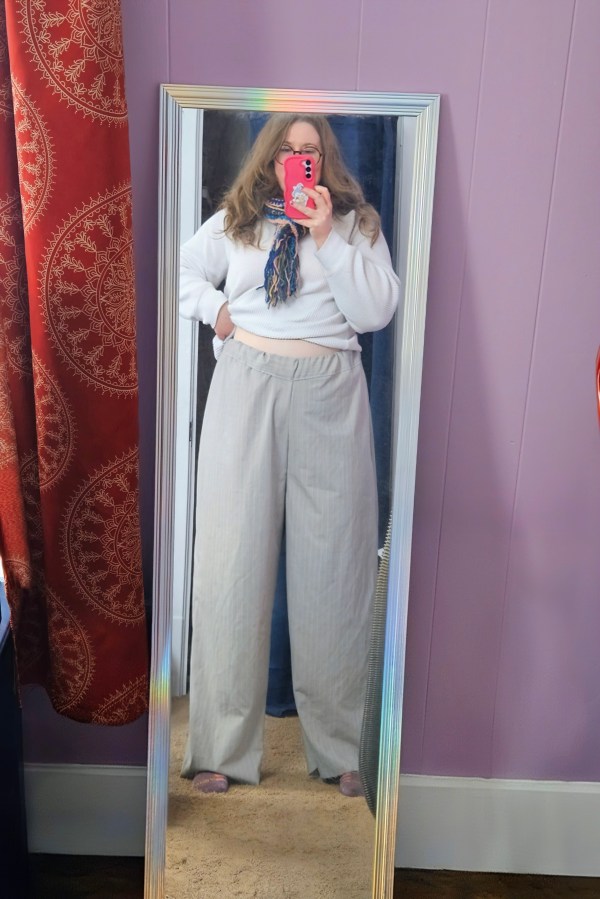
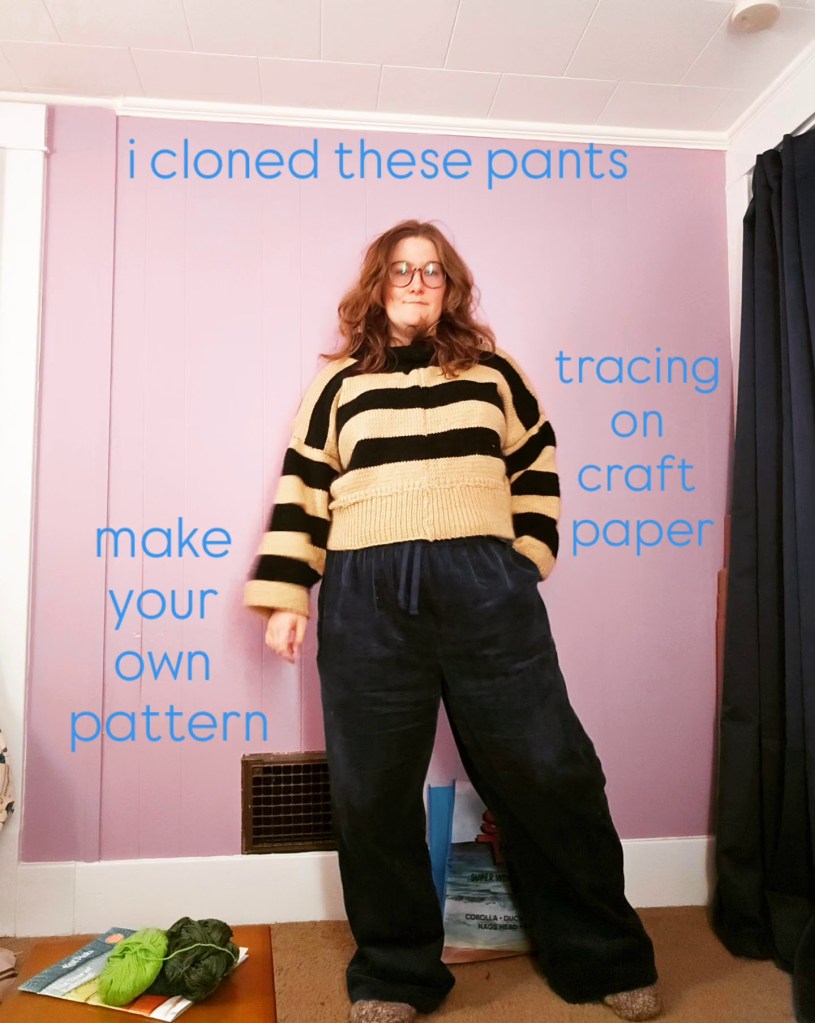
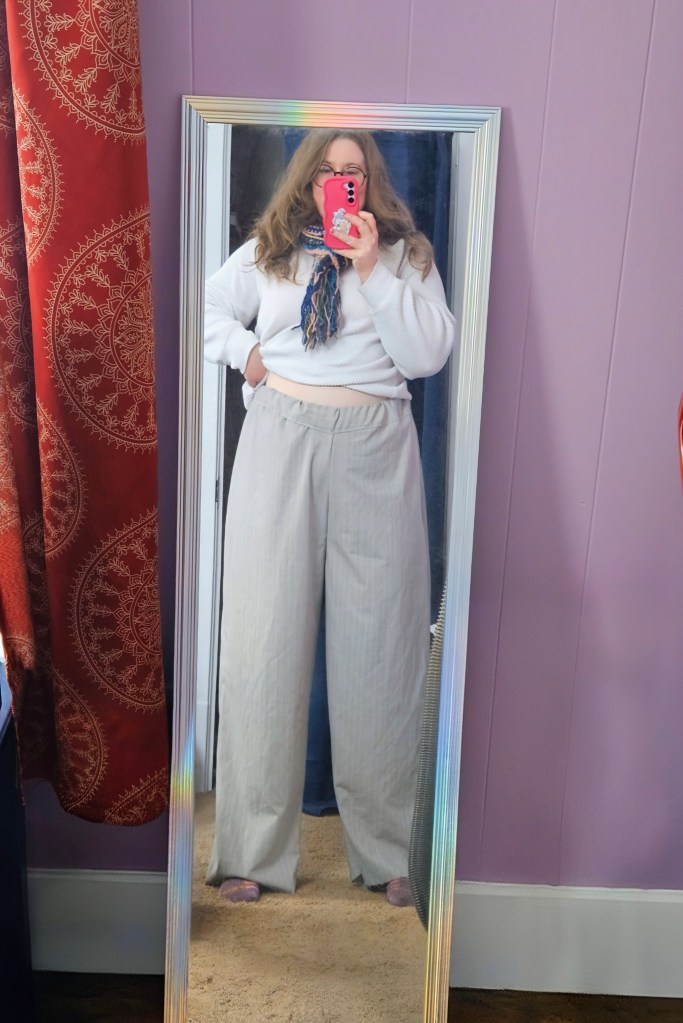
For my birthday, Kyle gave me two garments from Lucy & Yak, something I had dreamed of since 2019. A pair of denim dungarees and a pair of corduroy pants. And you know what I thought of looking at them folded? What a lovely thing to take a pattern from. Use brown craft paper or wrapping paper, and feel free. I traced methodically, marking the seam allowance, and back from the front pattern piece. I carefully laid out my pattern, mirroring the right and left pieces for the front and back. Then, over two weeks, I slowly sewed these pants together by hand with a fresh sewing needle, which makes all the difference. Don’t be cheap like I used to be; buy new needles regularly to save your hands. Sew with courage, because this might be the time it all clicks. What if you never let yourself succeed? That would be more terrible than failing again at doing the hard thing.

I wish you happy sewing and good-fitting pants that make you smile every time you wear them.

How I am Preparing to Leave Pinterest, if OpenAI Buys Them

I want to start off by pleading with Pinterest, please don’t work with OpenAI. (I know this is purely a rumor, but even so, I think using the internet to voice opinions is important.) I have been using your platform since 2012, and it is so useful! It has become less useful over time, with the “purely financial” decisions of peppering in a multitude of advertising pins and allowing AI-generated art to invade the platform. Even so, it is still a platform I use and love to escape into for inspiration.

Without Pinterest, creative writing projects like Udal Cuain, knitting colorwork projects, sewing projects, and home decor ideas would have been more difficult to source and may not have been on my radar – ever. I’ve even learned simplified versions of songs to play on the piano before I bought proper books, for free through Pinterest. Now what about fandoms? On really difficult days, my Stray Kids board is filled with memes, SKZ Code, captured moments from lives, silly edits, and STAY inside jokes that would not exist in one place to make me smile.

I don’t want to leave Pinterest at all, but there comes a time when we must make a stand for what is right – if you integrate with OpenAI, as rumors have thrown around, many other like-minded individuals, and I will leave because, as artists, we will not stand for the theft being carried out by generative AI of our work. Art is human. Generative AI is regurgitation. Art is for an audience of many; AI-generated art is for an audience of one. Human-made art has emotion; AI-generated art is the result of algorithmic decisions. AI-generated things are not new; they are not groundbreaking. They are human effort and human creativity scraped by these computers and served up as “new” all while consuming vast amounts of electricity and clean water, for nothing but perceived “innovation” that makes these tech bros wealthier. It gives nothing to humanity; it feeds the greed of the few. Alright, that’s enough of looking into the abyss for me.

How do I plan to make this change if Pinterest is bought by OpenAI?

  • Crafting Books
  • Used Books, Magazines, and Catalogs
  • Respectful Fan Accounts on Instagram
  • Physical Notebooks
  • Migrating to Milanote
  • Blogs and Research
  • Building a Creative 3rd Place Elsewhere
  • Creating Your Own Charts
  • Physical Moodboards
  • Acknowledging Frustration
  • Diving into History
  • Utilizing Libraries

Yes, we’ll be going back to analog inspirations, like going back to the 1990s and 2000s. I’ll be crafting even slower, researching longer, and spending more time digging to learn how to do new techniques like fillet crochet or how to paint using gouache paints, but that’s okay. At least it will be honest inspiration. In time, we will all come back together through a new creative community platform, and it will be a bit of a waste of time. So, Pinterest, put these rumors to bed, please, because when it comes to AI, we artists mean business, and you will be left behind.

Thanks for coming to my TED Talk ❤

Unrelatabilty and 2025 Holiday Campaigns

I had plans originally to write about Ralph Lauren Christmas on its own, but then I saw two advertisements, one from local brand Steel City and another from Banana Republic, so bizarre that I knew I would be here. Hopefully not ranting too much, for the goal of this discussion for me is to think more deeply about the subtle oddities in my culture, I see weaving themselves in, like they are normal. Overconsumption, cultural appropriation, and the cosplay of wealth.

Banana Republic’s Holiday Edit

So what does fippery have to do with it? Fippery is another word for ostentatious; it’s showy. Frivility in dress or style. I also find the attitudes of these two brands, and I do want to write about exactly that. Banana Republic has always been in my mind, a bit ridiculous. But with every re-watch of Seinfeld, I see J. Peterman in Banana Republic’s threads, but their recent holiday commercial pushed me over the edge. They are that nonsense.

The holiday commercial is set in Ireland, County Cork, and I know I haven’t been to Ireland in 20 years, but dang, nothing about this commercial felt authentic. They play a cover of “Linger” from the Cranberries over the holiday scene in a pub, wandering around the town, finding a telephone booth with Irish Gaelic on the sign. They are all wearing vaguely Irish clothing, but really it looks like cast walked through a Premium Outlets on their way to Castletownshend, Cork. There are lovely Irish Christmas songs and many other songs by Irish bands that would have captured the spirit of the season better than a breakup song. No shade to the Cranberries, I love them. There were better Cranberries songs to pick. Personally, I would have looked at Dreams, Ode to My Family, and I Can’t Be With You to capture the nostalgia of the season with a non-traditional song.

Moving beyond the music, there was nothing really Irish about this ad. We barely see the town, we barely see the people, or the ancient beauty of Ireland. Think about movies such a Waking Ned Devine or Banshees of Inisherin – the landscape is a character, so is the music, and community. Ireland felt warm, not in temperature, but in the warmth of the people. The land feels like there is magic just under the surface, an imagination unbreakable, and a spirit that carries the culmination of all those who came before in an essence that makes you want to know more. The sweaters are intricate, made with the intention of preserving heritage crafts. Just take a look at Banana Republic’s holiday page compared to Blarney Woolen Mills, which is based in County Cork! The source material was right there. I guess what I am trying to say is obvious: Banana Republic’s collection is the fast fashion version of Irish style, don’t fall for it, no matter how they try to sell you on the “luxury” of it all. Now, what really bugged me about this ad was, in my opinion, the cultural appropriation of it all.

There is a fairisle sweater in this Irish collection, which is actually a Scottish heritage craft from the Shetlands. This sweater contains wool from Italy, being sold as an Irish-inspired sweater. You couldn’t even use Irish wool? Or include iconic Aran sweaters? Fisherman sweaters like the iconic one from When Harry Met Sally? The Donegal Wool sweater and sweater vest, straight up annoy me because these are again Italian wool. There is a wonderful mill in Donegal called McNutt that could have supplied true, authentic craftsmanship. We still have our clothing pieces from this store and Blarney Woolen Mills, 20 years later. I don’t like Ireland, which has been used for centuries, been the butt of the joke for centuries, being used again to peddle some lackluster clothes.

Gap, Inc. is a huge brand; they should have invested in sustainable Irish materials and supported the local Irish economy by using Irish craftspeople to create this collection. But just like J. Peterman, they come and see, then they steal other cultures’ designs to make a quick buck from subpar clothing. Look at the prices! The Banana Republic sweaters, made in Italy with Italian wool, versus the Blarney Woolen Mills sweaters made in Ireland from Irish wool, both made from merino wool, too. Local is better. Also, look at the craftsmanship of the Blarney sweaters; those cables are stunning and also affordable. Shame on you, Gap!

Steel City, What Are You Doing?

Actually, to quote the Big Fat Quiz Show, “You slag!” Steel City is a brand no one outside of the Pittsburgh area will know about, and that’s okay. Small businesses are great, and when this brand first started, they were cool. Their claim to fame was hyper-local graphic tees of beloved cultural things such as Turners Tea, the Stillers (aka the Steelers), Kennywood, Mr. Rogers, the Pens (Pittsburgh Penguins), and nostalgia. Over time, though they have expanded, which is great, creeping out to the suburbs of Cranberry and Ross Park Mall, and that is where things have taken a bizarre turn. In 2022, I went to their location in Cranberry Township and was appalled by how tissue-paper-thin the new items were. We had bought pierogi and Potato Patch shirts, which were of great quality, but the new stuff was off. The prices, quite higher than before, and I was no longer interested in their stuff.

But as targeted ads go, I keep seeing their stuff everywhere, and it has gone in some random places. There was a motorcycle and a desert aesthetic to their pieces now? Okay, odd. Neither of these things has anything to do with Pittsburgh. I guess the name is the only connection? Next, I got ads for quiet luxury workwear pieces, the local graphic tees, now behind a t-shirt club paywall. It felt soulless, and I was incredibly disappointed. I thought in the beginning maybe they were going to make the items in Pittsburgh, but they are made overseas. This morning, though, I got an ad that straight up felt out of touch.

Seriously? In this economy? With the amount of destruction the fashion industry creates on our planet? Honestly, Steel City, what the flipping heck are you doing? This brand is neither relatable nor cool anymore. Wasteful consumption is not in style, no matter what the internet says.

Ralph Lauren Christmas

Now, Ralph Lauren isn’t promoting this; this is just a TikTok trend, and I just wanted to drop my two cents. I’ve spent the last five years chasing the nostalgia of old Christmas, Christmas before everything hurt. Before people died. When I was a kid, things were simple. No matter how much you spend, decorate, chase – this aesthetic is not going to fix what is broken in your heart. I encourage you to seek out authenticity this Christmas. Volunteer time at shelters, donate supplies, check on neighbors. Call those friends or those family members you haven’t seen in so long and connect once again. The Home Alone house is stunning, but remember, what brings the true Christmas spirit is the relationships reconciled for the Old Man and Kevin on Christmas morning. People over things, always.

What If Game of Wool Celebrated Design and Craftsmanship?

If you missed it, I made a Game of Wool Bingo card for episodes 1-3, because in my opinion, this show should not be taken seriously. I’ve given up watching, interacting with recaps, etc. I’m not going to watch beyond episode 3, and that is because hate-watching is validation in the attention economy of 2025. That got me thinking, what do I wish Game of Wool was instead of what it is? Game of Wool, just like Project Runway, I have notes!

No Kits or Internet Dressing Projects

I don’t want any themed-making kits sold per episode. They have been doing this for the episodes I have watched, each week partnering with a big yarn company, honestly making kits that serve no purpose other than a cash grab. I also don’t want to watch weekly episodes with challenges that create useless items. Useless from a practical and technical standpoint.

  • Crochet and knit swimwear is dumb. You can’t wear it other than for a photo shoot, which places it in the “internet dressing” category. It’s for a photo. It’s not even practical for a music festival. But it does resemble a “Coachella” look.
  • A crochet deck chair had potential, but it was not used within the materials provided or the time frame.
  • A dog sweater with a required hat is not kind or practical for dogs. The sweater is comfortable, but the hat is not comfortable for the dog. Again, it is for a photo. Washability was not discussed either.
  • The mohair sweater was the only challenge that was the closest to being a useful challenge, for design teamwork and wearability, but they ruined it with the ridiculous time frame.
  • A couch cover is useless, because I have thought about constructing one for my own couch to stash bust, but it’s just not practical for anything other than a showpiece. Which is how they judged it, so a lot of wool was wasted to make a big, useless swath of fabric.
  • The fair isle vest misrepresented a heritage craft of the region they were filming in. Why not just film a historical film set in the Renaissance, and put the actresses in Victorian corsets without a chemise, tight-laced? Same level of idiocy to be flashy!

This Game of Wool presents everything that late-stage capitalism is in relation to crafting and hobbies, thanks to greed, social media, and the attention economy. The British farmers could use the income; how about sourcing locally? What about sustainability and slow fashion? Yeah, 12-hour challenges do not represent anything but hustle culture. Girl boss, slay!

How Would I Fix It?

  • Real experts, not these two ladies.
  • Either all amateurs or all expert contestants. Pick a lane. Either be the Bake-Off or be Project Runway and offer a CFDA mentorship kind of prize.
  • Bring in a real mentor to help in the wool barn.
  • Take them on field trips to see wool being processed, dyed, and spun. Same with flax for linen.
  • Tell the story of why textiles matter and why fair trade for the animals, farmers, and ethical standards matter.
  • Explain why local matters for the economy and the ecology of the region.
  • Teach the history of cottage industries.
  • Teach the history of how knitting has changed the world, such as the development of textile machinery and the creation of the binary code. Essentially, fill in the gap of what Sci Show failed to do.
  • Set real challenges that teach, showcase the skill of the fiber artists, and show innovation.
  • Do a challenge that involves unravelling sweaters for yarn and teach the world about this amazing, sustainable possibility.
  • Task the fiber artists to design patterns, and explore what goes into design and proper pattern writing, because it is a technical skill.
  • Make things that will be auctioned off for charity.
  • Bring in people as guest judges who will bring professional connections and opportunities for the fiber artists.
  • Set realistic deadlines, and slow down the pace of the show. Follow a timeline like Mind of a Chef that explores moments of cooking over an entire season.
  • Let the makers make, unencumbered by the pace of the internet. Take note from Bernadette Banner and other makers out there that celebrate true craftsmanship and sustainability in the heyday of microplastics.

I’m tired of this show discounting a skill that has been tossed aside as a Grandma hobby since the Industrial Revolution. In these weird and wacky times, slow fashion and an appreciation of craftsmanship are in short supply in the media. This show had such potential! But they are truly chasing the money over integrity.

Game of Wool Bingo Card

As a knitter, a crocheter, and a fan of shows such as Bake Off and Project Runway, I am hate watching Game of Wool. Yes, it is that mediocre. It’s frankly, shocking how unlikeable the judges are portrayed, and how blatantly the production is profiting off the design kits, while not openly compensating the designers. It’s been a disappointment for sure. So here’s a bingo card to make your  watch through a bit more fun!

Socks Are Madness

This is a story of a winding road. It is not just passion that makes us try new and difficult things, but also the desire to fit in. Sometimes the road is bumpy, and bumpier still than we expected.

Last winter, I began a journey; at the time, I did not realize how technical this would be, and oh, how I miss the naive wonder of that time. I started my quest to make socks. The sock does not appear technical from the outside. It is a tube of knit fabric which we slip on our feet, most every day. Due to the Industrial Revolution, socks can be knit by machine with ease and speed. This has suspended our connection to the technology that first developed the sock—hand knitting.

In our modern day, socks are affordable and accessible. They are for sale everywhere in a myriad of textures, weights, and styles. We have socks for athleticism, socks for leisure, socks for style. They are boring, mundane Christmas gifts of childhood, and puppets with googly eyes. But what does it take to make a sock by hand?

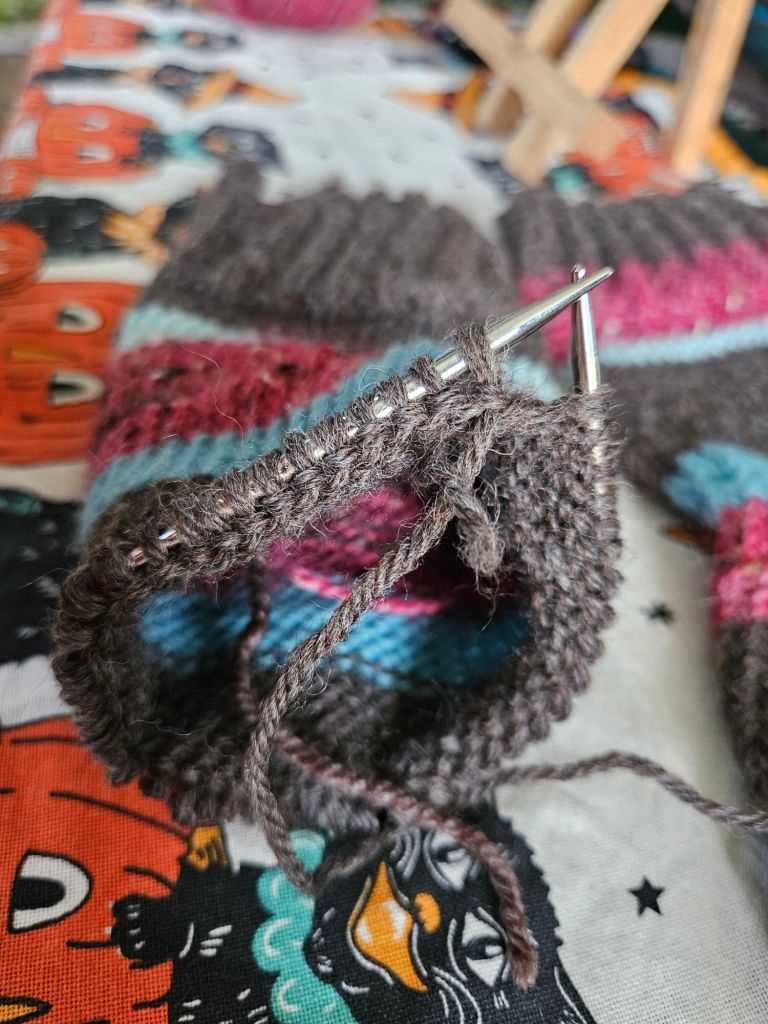
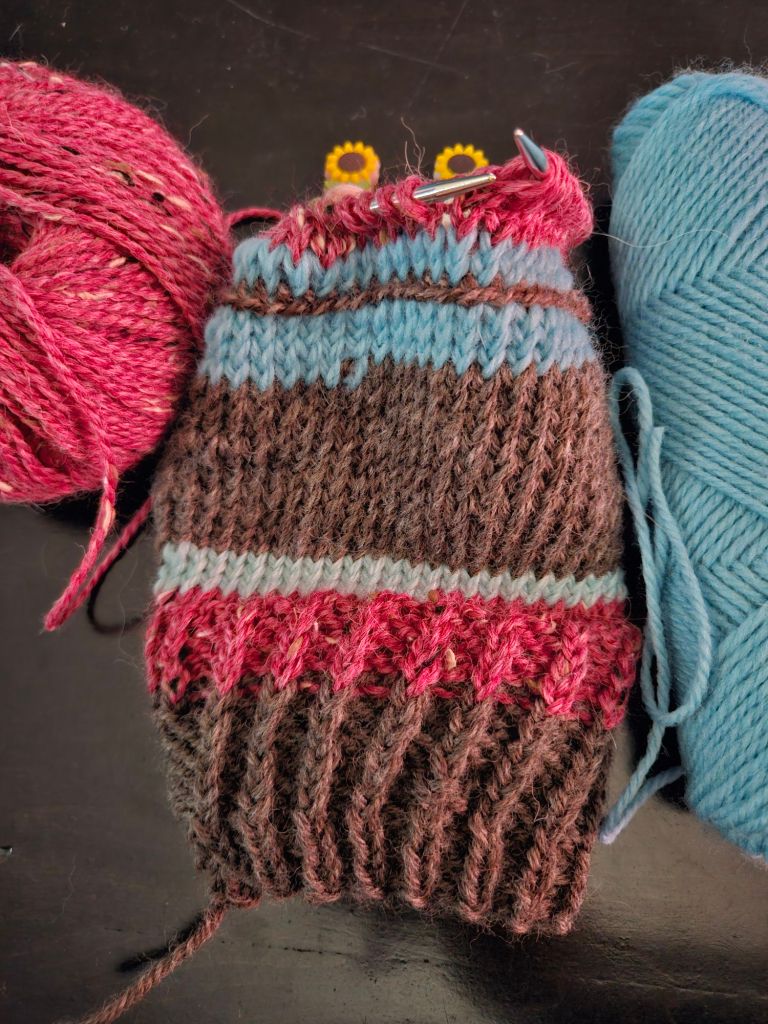
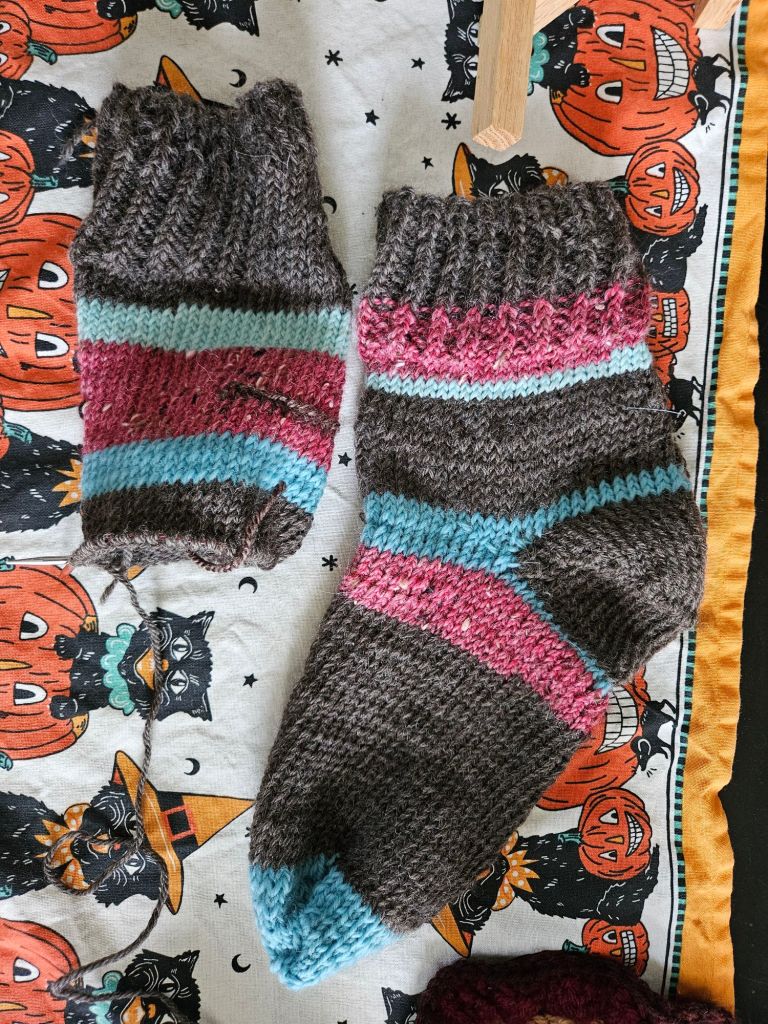
I gave this a shot last year, and it challenged me! I cataloged my experience in Socks, A Journey, and Socks: An Update, where I began knitting socks flat on straight needles and three months later gave circular knitting a try. My first flat knit socks were made top down, in a tube style that negates the heel flap and requires sewing the sock into a tube. They are loose in fit but warm and great socks to wear around the house. My advanced tries, knitting in the round and turning the heel, were more of an adventure. My tension was tight, and my heel flap a nightmare, unable to be duplicated into a second sock, for how off script my technique became. I didn’t grasp the why of what I was doing and therefore messed up the pattern.

This summer, I went to a local yarn shop where I began my journey to sock more traditionally. I picked up a pair of small-gauge double-pointed needles and sock sock-making kit with proper sock yarn of wool and nylon, to do it “properly” and oh my, did this bomb. The toe-up pattern, new to me from my previous projects that were cuff down, pushed me far out of my depth. I sank instead of swimming. The four double-pointed needles and my uncoordinated hands created tension and laddering in the knit, which looks exactly as it sounds. I tried three times to knit a few centimeters before the stitches fell off the needles, the sock falling off with the stitches. In desperation, as the needles were 29 USD and the sock kit 29 USD, I was feeling very silly and wasteful purchasing new needles and new yarn that I couldn’t do anything with.

So I pivoted to my trusty straight needles until I saw my mom later that weekend, and she lent me a pair of small-gauge, small-circumference needles to finish the sock. Still baffled by the heel flap and the vague instructions on the pattern, I tried German short rows for shaping the heel. In a fortnight, I completed the first of the two socks. I cast off and handed it to Kyle to try on, and the size was all wrong. I tried to frog it back into a skein of yarn, but the splitty yarn tangled, ripped, and became a ball of knots. It was over, and I was furious with myself for wasting time, money, resources, and, honestly, hurting my eyes squinting to see my tiny stitches for almost two weeks to accomplish nothing.

Socks are madness. And maybe I should stop beating myself up about my failure when socks are one of the hardest things to make by hand. I am an overachiever and a perfectionist, so this type of failure cuts me deep. I obsess, I rage, and I fall apart in the madness of learning something that may take years to execute once, not even perfectly. But you know what? I have made good socks before! Comfortable, almost perfect for what I was looking to achieve, socks. But I rejected them as being good because I was embarrassed at how I made them. I didn’t follow the right techniques, I used the “wrong” yarn, and I didn’t turn the heel.

Sometimes I have major imposter syndrome as a knitter. I feel like a fraud because I don’t use the exact same patterns, same tools, same yarn as everyone else on the internet. But why is that a bad thing? I’ve listened to other knitters in podcasts discuss how the sameness of knitting is making it boring. Apparently, at Rhinebeck or other knitting events, it is easy to see the same sweater throughout the sea of people, and that is a new thing. Listening to knitters, who have been knitting long before 2020, when I really started knitting consistently, knitters used to do their own thing. Yarn suggestions in patterns were exactly that – a suggestion.

People were designing more and experimenting instead of knitting in the homogenized way we see today, which is one of the ways I feel like an outsider. I don’t want to knit the same things as everyone else, but I also want to be good at the craft, and it leaves me in this push-and-pull tension. It became clear to me, though, that my search to “fit in” with the proper sock kit and the expensive needles didn’t make me a better maker. It was honestly a bit of a handicap. So I guess my takeaway is to be yourself?
I don’t want to stagnate in my skills, but if I can find my own technique to make socks and other garments with the “non-standard” tools and yarn, then is it really stagnation or just getting creative with where my skill level is at? I’ve been pondering this a lot and have more thoughts on this from both the point of view of a knitter and a sewist. But that will have to wait for next time.

Create a website or blog at WordPress.com

Up ↑