
Rediscovering My Love of Bowling

If you’re familiar with my posts on the blog, you may be surprised to see my name attached to something that isn’t related to gardening or woodworking. But today I’m writing about something Magz and I did last Friday: we went bowling. As two adults without kids, why would we go bowling in the middle of summer?

My guess is that nearly every American has gone bowling at least once in their life. When Magz and I were kids, they almost became a third place. It’s where friends had their birthday parties, where you went with your youth group, and where you’d go to kill an afternoon in the winter or when it was really hot. And I think that most people stop bowling once they reach high school and stop having birthday parties…or at least that’s how it has been for us. Despite that, we have still thought about going bowling for something to do.

Bowling
Photo by Jorik Kleen on Unsplash

We often look for fun activities around us. Because we love our home, both inside and out, it can be a struggle to want to go places. What we really enjoy are local activities where we can kill a couple of hours and not spend a ton of money. We’re fans of mini-golfing for this reason, but with only one course in town, it becomes repetitive, and the place needs a bit of TLC. Two years ago, not long after we bought our house, we tried going bowling at our local alley, but the vibe was off. When you entered the building, it felt like you were walking down a labyrinth just to find the lanes. Plus, everything was poorly lit, even in the middle of the afternoon, so we left without even talking to someone.

For nearly two years, we stopped talking about going bowling until early last week when we watched a YouTube video from Phil Edwards. If you’ve never heard of Phil Edwards, his channel dives into various historical and cultural topics, and he presents them in very intelligent and creative ways. This video was about bowling alleys replacing traditional pinsetters with string pins. It covers the history of bowling alleys and pinsetters, why some bowling alleys are switching to string pins, and how bowling is becoming the latest victim of private equity and commercialization. The biggest takeaway is that we need to do everything we can to keep local, independent bowling alleys open and thriving. So, we started looking at the bowling alleys in our area and were shocked to see how many there are. Within a 30-mile radius, there are probably 10 of them. And the best news is that they all appear to be independently owned. So, last Friday on a day off from work, we went to the closest one outside of our town.

My Love of Bowling

I used to really enjoy bowling. Like others, I would go to friends’ birthday parties, glow bowling as part of church youth group lock-ins, and the occasional summer afternoon when my dad had off work. But unlike others, my interest in bowling stayed when it cooled for others. In middle school, I played as an extra on my mom’s and stepdad’s team in their church league. I have no idea how I did, but I remember enjoying it and began bowling at least once a week. I had my own ball, learned how to throw a hook, and steadily improved to the place where my average was in the 140s. I bowled as much as I could until it all stopped.

During my sophomore year of high school, I moved with my mom full-time, and the three of us moved two hours away, and everything changed. We stopped bowling. We went bowling at the local alley once, but it wasn’t as nice as the old place, so we never went. Eventually, even the conversations about bowling stopped. The balls were never thrown, and I don’t even know where my ball is anymore. I finally went bowling again in 2011 or 2012 during my sophomore year of college. My dad, stepmom, and brother visited me for a couple of days, and we went bowling one evening. I don’t remember all the details, but we had a lot of fun. And until last Friday, that was the most recent time I bowled. I don’t think my enjoyment of bowling ever ceased, though; it just became hard to find the time or gather enough friends to go bowling with. It felt like something that would be lost to my past. Thankfully, that proved to not be the case.

Bowling Again After 14 Years

Let me describe the bowling alley we went to last Friday. First, it’s primarily a pizza restaurant that is in a bowling alley. The entire business goes by the pizza restaurant’s name. So, it’s a pizza joint where you bowl rather than a bowling alley where you eat pizza. Because they make the majority of their money selling food, it’s more affordable to bowl there than other alleys in the area.

This setup also helps keep the bowling alley classic. In the Phil Edwards video I linked to earlier, two ways private equity is negatively affecting bowling alleys are through unnecessary “upgrades” and by selling advertising space everywhere. This bowling alley used traditional equipment, and there were no TVs showing sports or playing music. Otherwise, the only sounds were from bowling.

This bowling alley also had the smell we wanted from a bowling alley, as weird as that sounds. We like when bowling alleys are older and have a faint grease or stale cigarette smoke smell. Those smells mean that the bowling alley has been around for a long time and has survived the decades.

This bowling alley had all the hits that you look for: the multicolor leather shoes with too-long laces, the racks of balls, some with chips taken out of them, and the swivel chairs by each ball return. (Side note: I recently learned that you can buy these rental bowling shoes brand-new.) Feeling comfortable was great, but now to the real question: How do you bowl? When you haven’t done something in more than a decade, it’s really awkward doing it again for the first time.

What weight of ball do I want? Where do I stand before I throw? Which arrow on the lane do I aim the ball at? How do I throw a hook again? These questions all went through my head as I got ready to throw my first ball. And it was only made worse because Magz did really well on her first frame, knocking down nine of the ten pins. Meanwhile, three of my first four balls went into the gutter. As someone who used to be a pretty good bowler and is very competitive, yikes!

Eventually, I got more comfortable, found the ball I liked, and settled in. We played three games. Magz took game one by more than 20 points, as I failed to break 100. I pulled it together in game two with 150 points and regressed a little in game three to the 140s. Magz did quite well and was consistent across all three games, and I am so proud of her. Those three games flew by, and we had such a great time.

Support Your Local Bowling Alley

Even though we ultimately went bowling because we like doing it, we were initially nudged to go by that Phil Edwards video. Any time I hear of something being in the crosshairs of private equity and unnecessary modernization, it frustrates me, and I want to fight against it. Finding a bowling alley that still has all the traditional equipment with classic styling is a wonderful thing. It’s like stepping back in time, but everything still works. If you have an independent bowling alley around you and haven’t gone in a while, I recommend checking it out. It is a great way to spend a couple of hours, and who knows, you might just get the itch to go more often. I know that we’ll be going back in the near future.
Weekly Garden Update #7 – Melon or Pumpkin?

In this week’s gardening update, I’m mainly going to focus on a plant that was supposed to be a melon but is looking more like a pumpkin with each passing day. Additionally, I’ll go over some of the harvesting that we’ve done as well as what we’re seeing in the garden. Let’s dive in.

Is It a Melon or a Pumpkin?

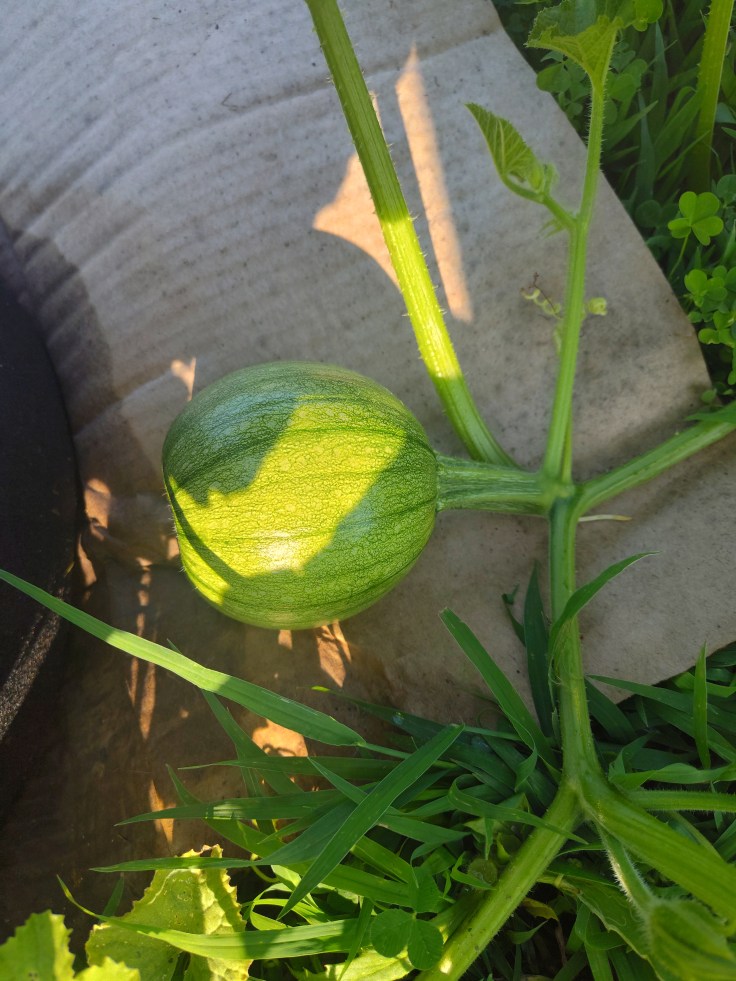
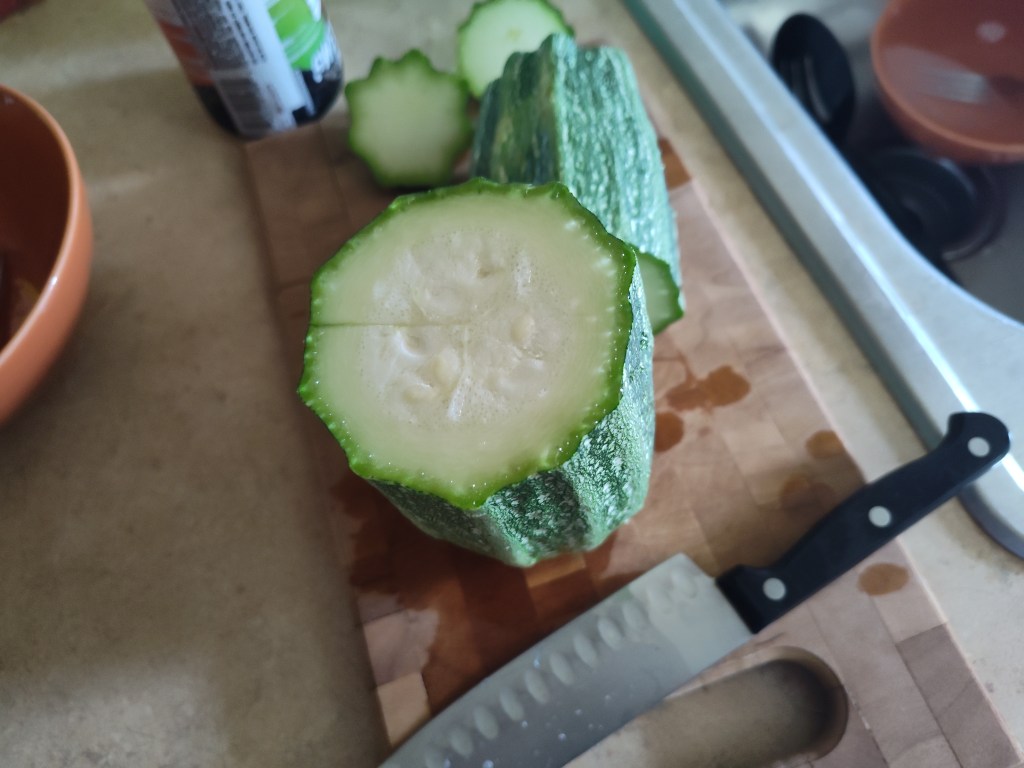
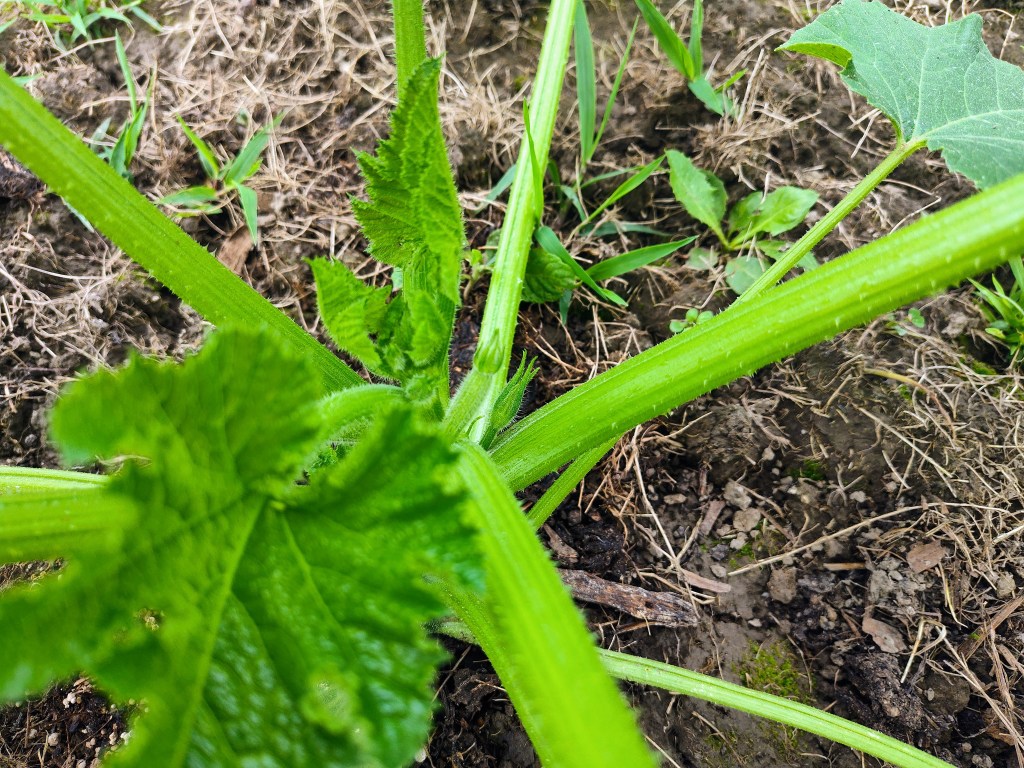
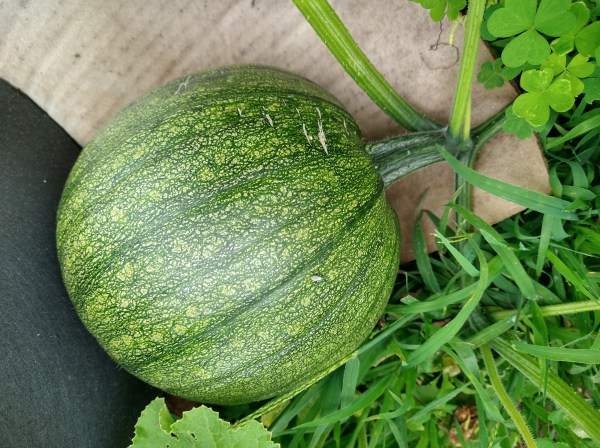
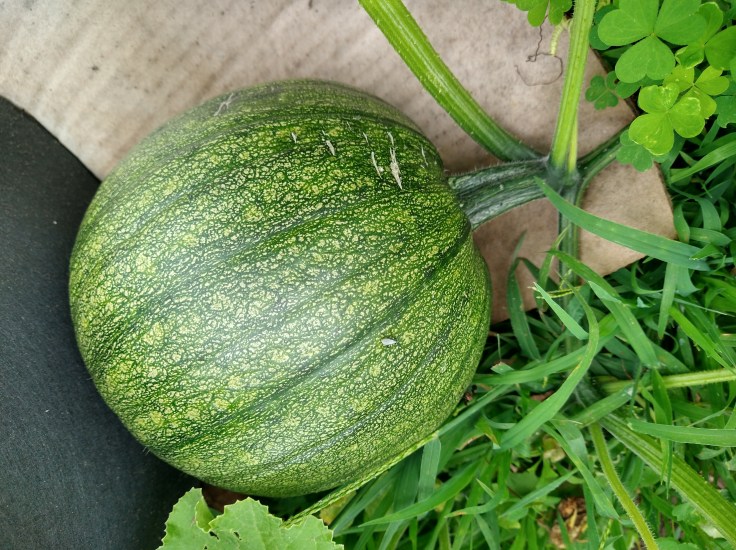
One look at this picture, and it’s obviously a pumpkin, right? That’s what we’re thinking now too. The skin is giving off serious pumpkin vibes, and the stem is thick and curved much like a pumpkin. Heck, even the leaves look like pumpkin leaves. And I expect that by early September it should begin to turn orange. So why did we think it was a melon? The answer is simple: we didn’t plant any pumpkins in this bed this year. In this section of the bed, we planted three varieties of melons, and for most of the plant’s life, I thought it was a melon plant. I obviously wasn’t paying attention to the leaf shape, which looks nothing like a melon leaf. This begs the question of how do we have a pumpkin when we didn’t plant pumpkin seeds?

Pumpkin
This pumpkin started out as a melon, or so we thought.

I think there are only two possibilities. One is that the envelope of Cream of Saskatchewan melon seeds we received actually had pumpkin seeds in it. I don’t think this is the case because I believe I would have noticed if the seeds looked like pumpkin seeds rather than watermelon seeds. Also, in this same row, we have several melon plants growing, so I’m confident we received and planted the proper seeds.

The other possibility is that this seed was left on the ground from last year and grew this spring. I’m confident this is what happened. We grew pumpkins in this bed last year, including a New England Sugar Pie variety, which is what this pumpkin looks like. There were a couple of pumpkins that deer started to eat, allowing seeds to fall on the ground. Then, this spring, I likely tilled them into the soil when I was turning it over, allowing this seed to germinate and grow. It’s similar to the rogue tomato plants we have in this same bed. Those are also growing well. I’m getting a kick out of how this happens, and we’re pretty happy with this pumpkin plant since the plants we’re intentionally growing aren’t doing all that well.

Squash, Beans, and First Tomato

We’re continuing to harvest summer squash, with the yellow crooknecks being ready to pick. We’ve also been picking more Costata Romanesca and Lebanese White Bush and have learned the importance of consistent watering and waiting until the vegetables are fully ripe before picking. One of our Costata Romanescas was firm for about 75 percent of its length before tapering to a soft section in the last 2 inches. We picked two Lebanese White Bushes. One was white and the other was a pale green. We learned that they need to be white before picking because it indicates full ripeness. We’re also starting to see the first patty pan squashes growing on the plants. Last year, these were our favorite summer squash to eat, so we’re really excited to be able to eat them again soon.

One thing I can’t figure out is why our winter squash have done nothing. We planted a couple varieties with multiple plants of each variety. Some of the plants have completely died off, while others haven’t taken off, and we haven’t seen any fruit development. It’s a similar story with our intentionally planted pumpkins. I’m unsure if this is the result of the intense heat wave we had in June or something else, but last year, our winter squash grew very well.

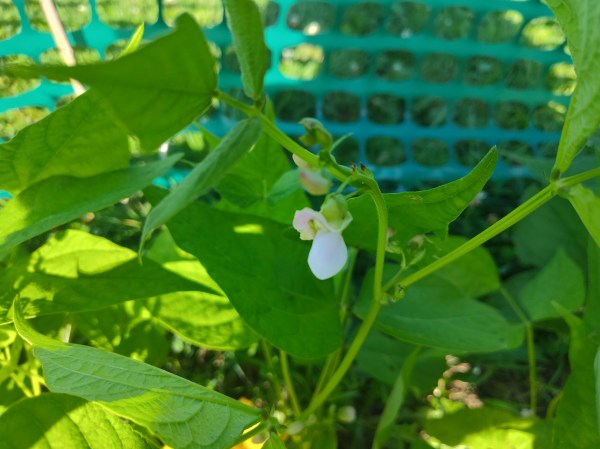
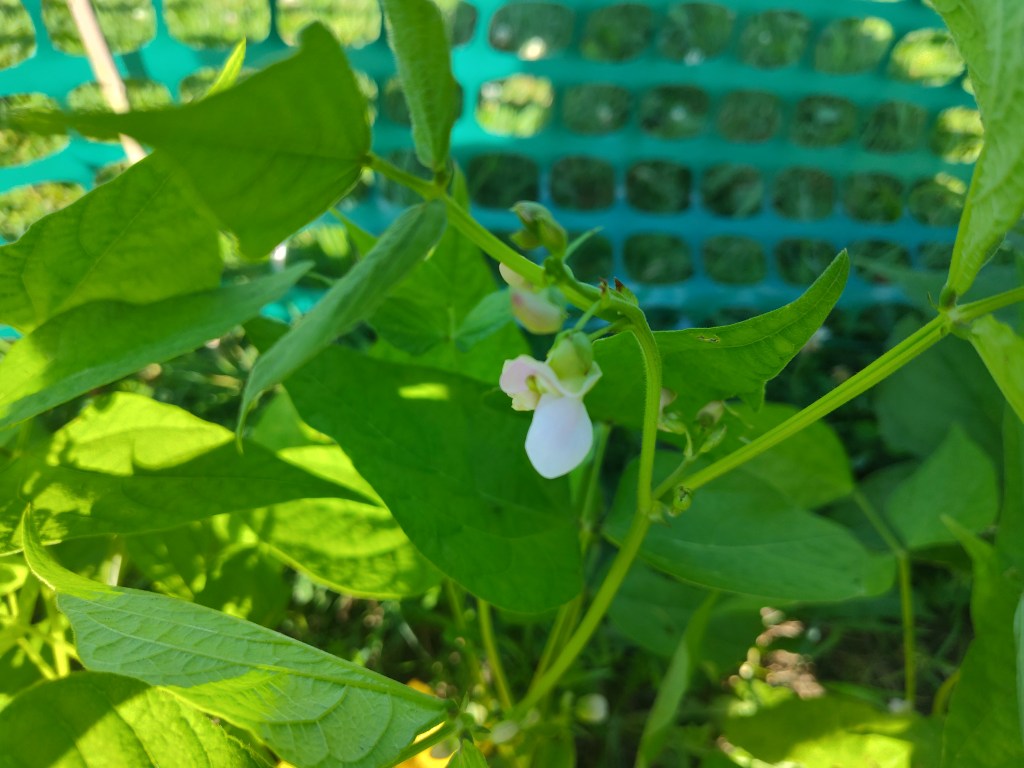
We continue to have an excellent year for beans. We’re picking a batch of them every couple of days and have been enjoying eating our fresh snap and wax beans. We’re also seeing pods on our shelling beans, which is really exciting.

Cherokee Wax, Blue Lake Bush, Iroquois Skunk Pole
Cherokee Wax, Blue Lake Bush, Iroquois Skunk Pole Beans

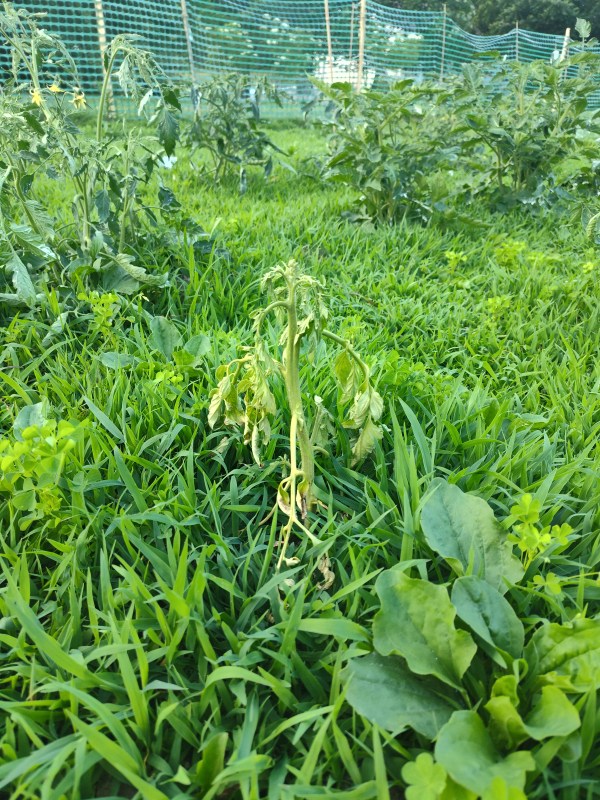
Finally, we harvested our first tomato last night. It was a cherry tomato was delicious. Our tomatoes have been kind of weird this year. The plants took off after being transplanted into the garden, but inconsistent watering, weed issues, and uneven temperatures led to some issues. At one point, it looked like most plants were going to die, but that’s no longer the case. There are a lot of tomatoes growing and starting to turn red, but the leaves are still brown and don’t look healthy. I’m choosing to focus on the positives in that we’re going to be able to harvest tomatoes from plants that don’t look great while thinking about ways to improve next year.

Cucumber Bitterness

One of the most disappointing vegetables this year has been our cucumbers. Like our tomatoes, the plants took off after being transplanted, but a combination of not remembering how far the Bushy variety spreads and not being able to see the vegetables below the leaves has made it difficult to pick the cucumbers at the ideal size. And the flavor of these cucumbers has been hit and miss. Some have been amazing and similar to the freshest-tasting cucumbers I’ve ever eaten. Others, though, have been bitter and not pleasant to eat. This was due to the heat wave we had in June since cucumbers are apparently very heat-sensitive and respond to it by developing thicker skins, which causes bitterness. We may take a year off from growing cucumbers next year because they’re a bit finicky and annoying to grow. But when we do grow them again, I want to find a variety that is less heat-sensitive because we tend to get one weeklong heatwave each summer.

Up Next

Do you have any experience with cucumbers being bitter? If so, do you have any tips for addressing the issue at this point in the summer?

The Fun of Naming Your Garden Beds

Jeremy Clarkson’s Amazon Prime original Clarkson’s Farm is one of our favorite shows. The show provides a less-than-glamorous look at everything that goes into growing the food that Britain eats. And even though he is far from the average farmer, given his financial success in the entertainment and journalism industries, the show has been lauded by farmers across the globe. I wrote about the show in an earlier post, which I think is worth checking out, as it dives into everything that can be learned from the show. I’m revisiting the show in this post because it’s where we first learned about naming garden beds, or fields, in the case of a farmer.

In the first season (it may have even been the first episode), Jeremy invites Kaleb to the farm to have him become the farm manager. As a test, Jeremy asks Kaleb to go through the field names without looking at a map. This was the first time I had heard of a farmer naming fields. I worked on a dairy farm early in high school and don’t remember him ever referring to a field’s name. Granted, my job was mostly milking cows, but I think I would have heard him referring to a field by its name if he gave them names. The cows had names; the fields didn’t.

But I think naming fields is brilliant. When you have a bunch of fields in close proximity to each other, it can be really difficult coming up with directions for farm workers. Think about the last time you attempted to give directions solely off reference points instead of road names or route numbers. It isn’t easy. By naming the fields and using those names on a map of the farm, everyone can quickly identify the field’s location. Granted, using numbers or letters is equally efficient, but it does lack creativity and fun.

Last year, our garden consisted of 5 beds, and it was confusing trying to talk about the same bed if we weren’t standing outside looking at the garden. Saying “the bed behind the garden” worked because it was the only bed there, but it was a struggle anytime we needed to talk about the 4 beds beside each other on our second lot. So, this year, we wanted to come up with garden bed names to help us quickly identify which one we’re talking about when discussing seeds, plans, harvesting, etc.

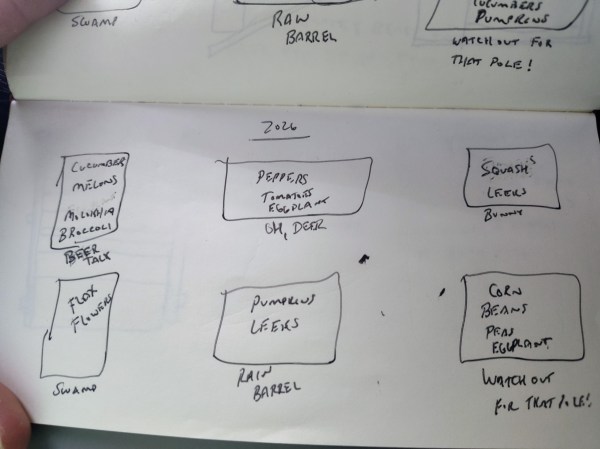
These are the names we came up with:

  • Beer Talk – This is the bed we often hang out by and talk with our neighbor over a can, bottle, or glass of beer.
  • Oh, Deer – This bed was where we grew our corn last year. Deer got into the bed and ate a lot of our late-season corn. We aren’t growing corn there this year, but the name remains.
  • Bunny – This is a new bed for 2026. It’s where a lot of rabbits hung out before creating the garden bed. They still hang out in the yard and grass that surrounds the bed.
  • Swamp – This bed struggles with drainage. When we get a lot of rain in the spring, it’s the last bed to drain.
  • Rain Barrel – This bed is the one closest to our rain barrel, so this one makes a lot of sense.
  • Watch for That Pole! – An homage to the movie George of the Jungle, we found a cemented, hollowed-out metal pole in the middle of this bed last year. We think it may have been a clothesline pole in the past, and instead of removing it, the previous owners broke it off at the base.
Garden names
Our garden bed names for the 2026 season.

Those are the 6 names. We may change them in future years, or we may keep them as they are. But it was a lot of fun figuring out creative names that fit the beds, and it’s a lot easier talking about specific beds now. Have you ever named your garden beds to make things a bit easier? If so, I’d love to hear the names you came up with.

Weekly Garden Update #6 – Cucumbers, Zucchini, Corn Growth & More

In this week’s update, we finally harvested our first cucumbers from this year’s garden. We also picked more zucchini, our corn is producing ears, our melons are showing major growth, we harvested a bunch of beans, and more. Let’s dive in!

First Cucumber Harvest

Until last week, our cucumber plants were perplexing. As a refresher, we’re growing a variety called Bushy, which originally came from Russia and does well in cool climates. I started them from seeds and transplanted 4 plants into the garden, with 3 of them surviving. What has confused me about this cucumber is that the name Bushy implies a contained plant that doesn’t sprawl out. That hasn’t been the case, as the plants have vined out feet from the roots. Yesterday, I revisited the seed listing, and this variety still produces 5-foot vines, so they’re growing as expected.

Bushy Cucumbers, cucumbers
Cucumber Harvest

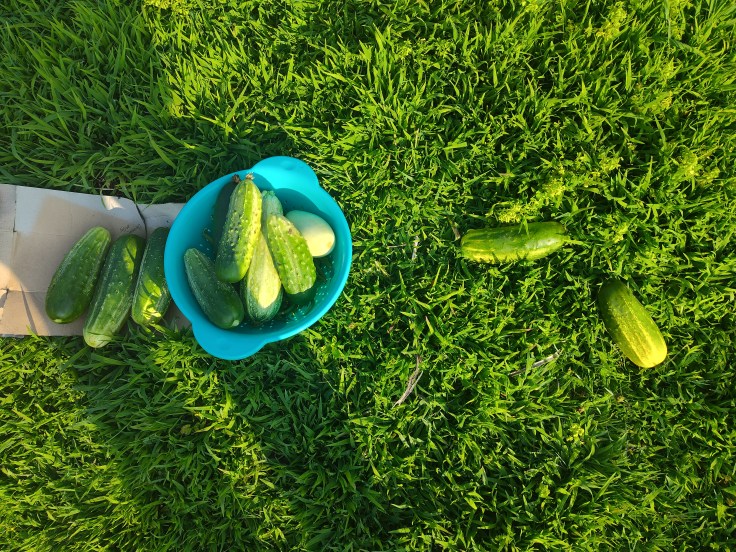
The other thing that’s perplexed me about them is how long they’re taking to grow. It felt like this year’s cucumbers (and other vegetables) were taking longer to mature than last year’s garden; however, looking at my weekly blog entries from last year, I learned that we didn’t pick our first cucumbers until the second week of July. So, at most, we’re a week late, which is almost entirely the result of the weather. The craziest part is that on Wednesday of last week, our cucumbers were only 3 or 4 inches long, but by Sunday evening, we picked 6 that were 7 to 8 inches long, with 2 of them being overripe. Magz cut 2 of the cucumbers into chunks, and we ate them raw with dinner. The Bushy cucumber is a very tasty variety that is firm enough to hold up to brining for pickles but still tender enough to be eaten fresh.

Experiencing New Summer Squash Varieties

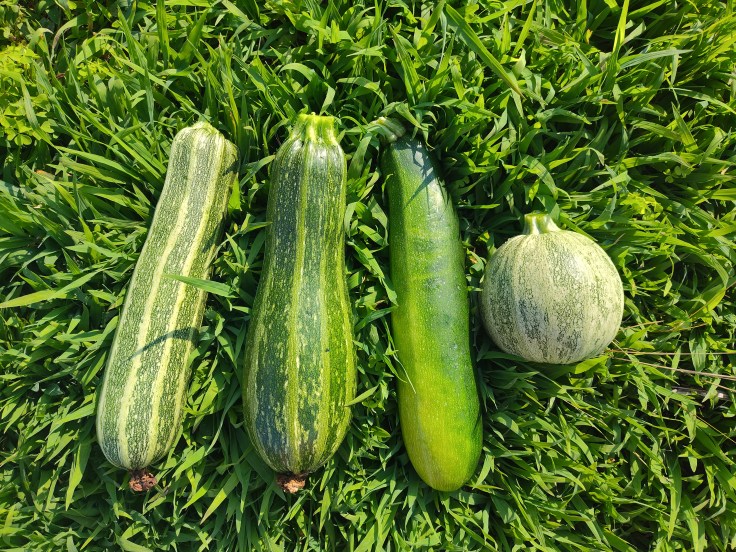
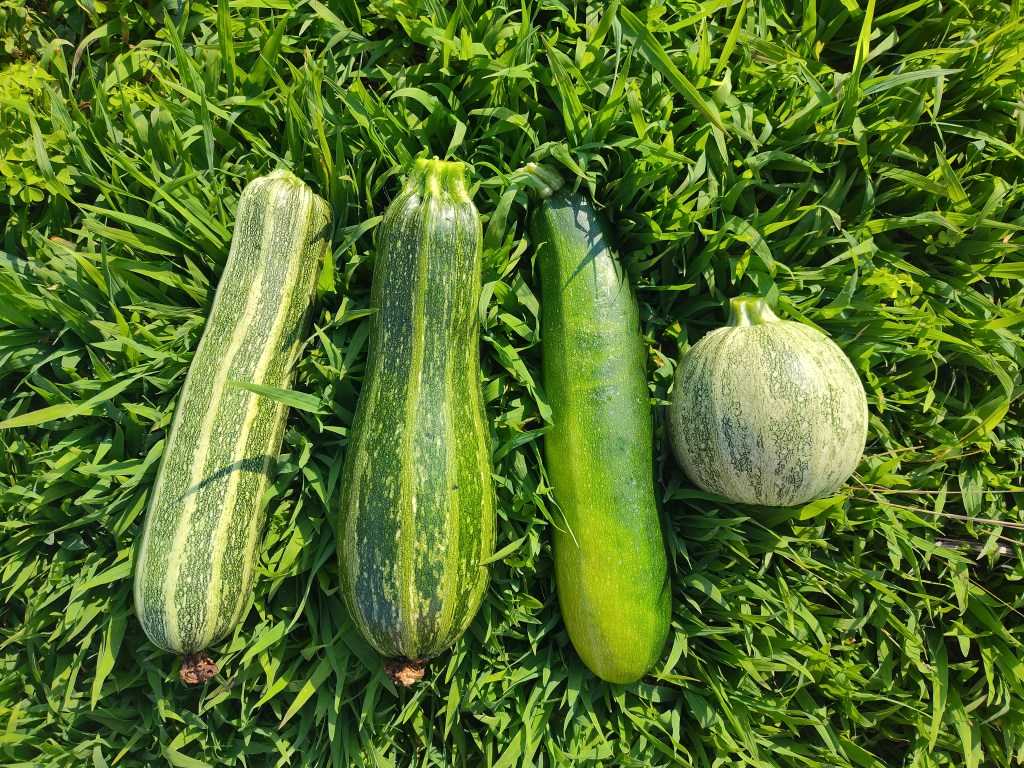
In last week’s update, I wrote about our first zucchini harvest for the year, which was a Costata Romanesca. Since then, we’ve picked 4 or 5 more of them as well as 3 or 4 Lebanese White Bush, 2 Ronde de Nice, and 1 Black Beauty. The Lebanese White Bush is an heirloom variety that produces 4-to-5-inch squashes that are light green in color. The Ronde de Nice is a French heirloom that has an acorn shape but is a summer squash. It can be dark or light green and is typically picked at 4 inches in diameter. The Black Beauty is the dark green zucchini that comes to mind for most people when they think of a zucchini. It has a smooth skin with an even color, and we pick ours when they’re 8 to 10 inches in length.

Costata Romanesca, Black Beauty, Ronde de Nice, zucchini
Costata Romanesca, Black Beauty, and Ronde de Nice summer squash

We’ve eaten at least one of each variety except for the Black Beauty, and all are delicious. My dad and stepmom visited us this past weekend, and we were able to send them home with some Costata Romanesca, Ronde de Nice, and Lebanese White Bush. My dad messaged me yesterday and said that they fried the Ronde de Nice and loved it. In a future blog post, I’ll review each variety and detail the flavors.

Corn Tassels and Ears

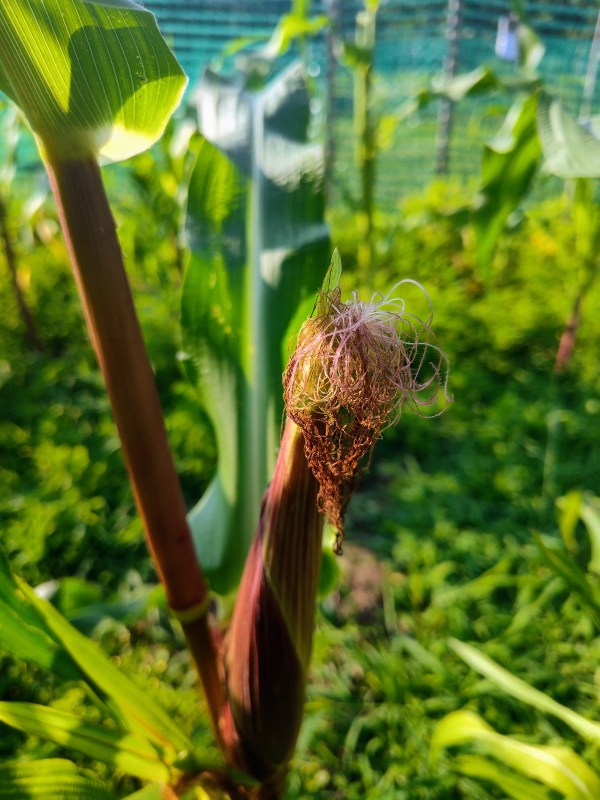
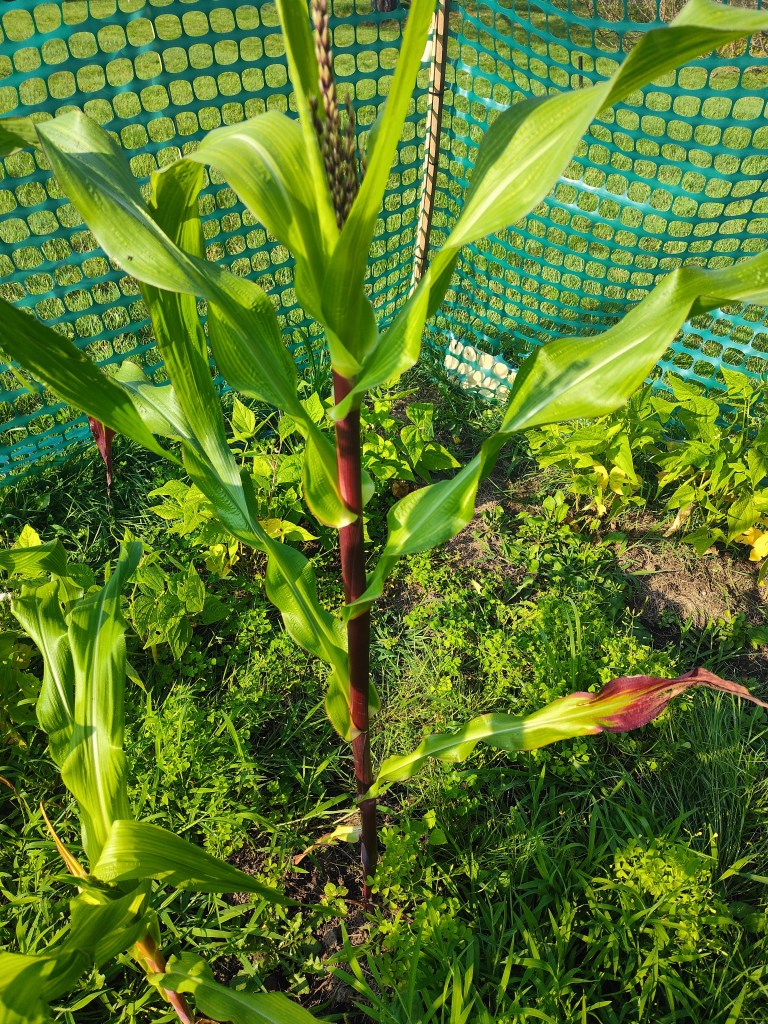
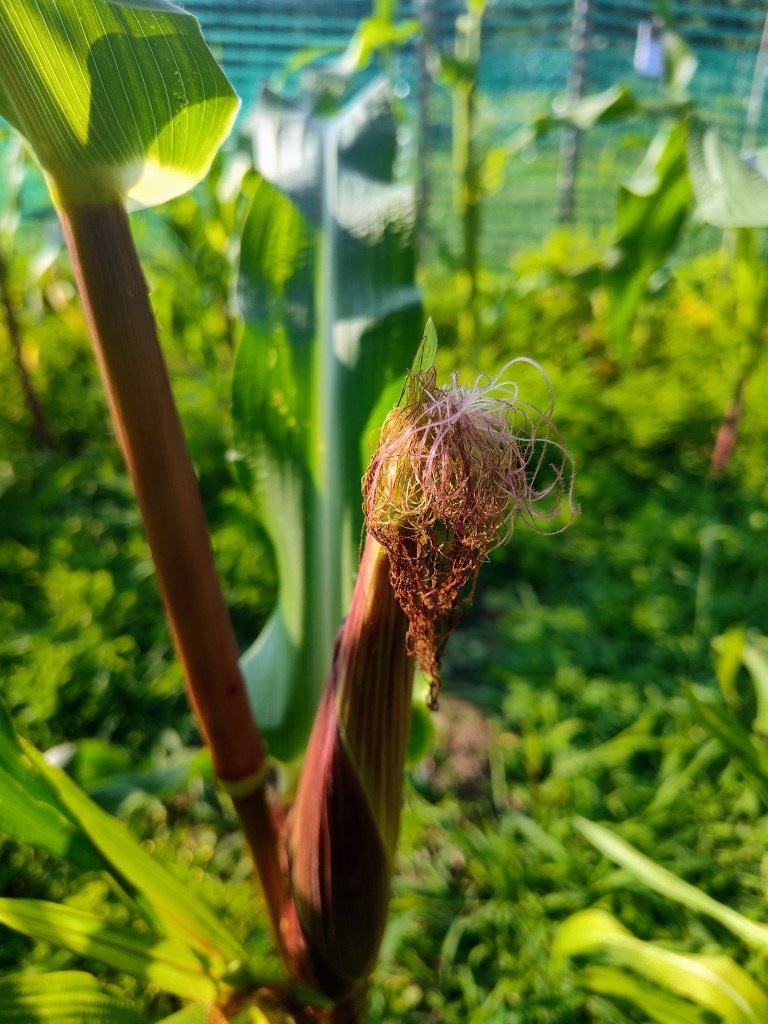
Our corn has really taken off over the past week. Our Painted Mountain corn has the most beautiful reddish-purple stalk, and even the tassels and silk have a purple tinge to them. They’re almost 6 feet tall and have ears developing. Meanwhile, our Sweet Mexican corn is approaching 7 feet tall, and the tassels are starting to appear. Nearly every day, we go out to the garden to tap the stalks to help germinate the ears.

A Bean Harvest

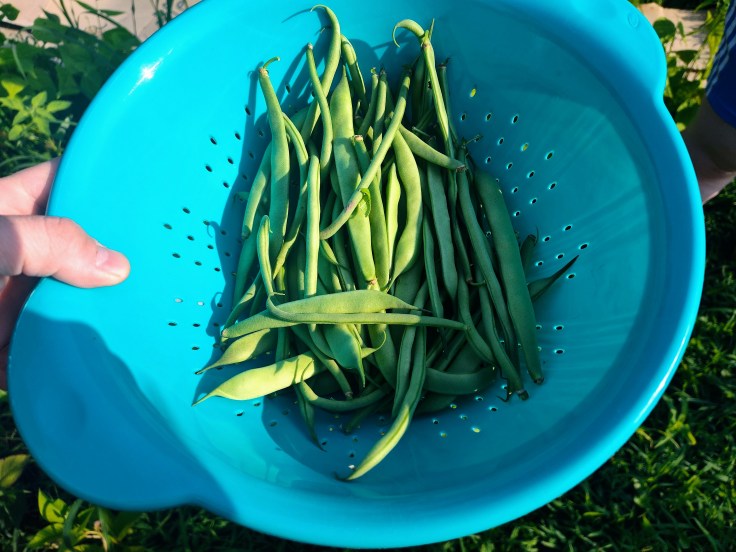
On Sunday, we had the joy of being able to harvest a full dinner’s worth of beans. We grew beans last year and were able to eat some, but they didn’t grow well, and we never had enough ripen at once to have as a meal. This year, conditions seem to be perfect for growing them, because we’re having a ton of success. We picked Beurre De Rocquencourt and Maxibel Haricot Vert, yielding a quart in total. Magz steamed them, melted butter over them, and added a pinch of Kosher salt and black pepper.

Beans, Maxibel Haricot Vert bean, Beurre de Rocquen bean
First bean harvest of 2026.

Even though we ate the two varieties together, you could taste a difference between the two beans, which I love. Yesterday, that harvest was followed up with another quart of beans, with Cherokee Wax beans comprising the bulk of the haul.

A Grab Bag of Topics – Potatoes, Peppers, Flax & More

Our potatoes continue to do well with the exception of one bag of Adirondack Blues. For some reason, that bag never took off, and on Saturday, I noticed that the plant that had been growing in it died. It’s not a big deal since we have 19 other bags that are doing well, and we’re going to use that bag to transplant a couple of the Gochugaru pepper plants I started late. In other pepper news, one of our habanero plants is producing fruit. It currently has 3 or 4 small peppers on it, each about 2 inches long.

Our flax and sunflowers are looking great. The flax plants are about 2 feet tall and have a lovely light purple flower on top. Not knowing how they grow or what to expect from them has made the process of growing them all the more fun. What we didn’t realize is how much flax you need to grow in order to turn it into a sizable amount of yarn/thread. We thought that growing a few rows of it would yield a decent amount, but it looks like we’ll need to grow an entire bed of it in the future. Meanwhile, our sunflowers are 4 feet tall (Mammoth variety) and 12 inches tall (Teddy Bear). The plants are looking healthy, and we’re hopeful that we’ll get heads to form on them this year and that we can prevent the squirrels from attacking them.
Lastly, we’re beginning to see progress from our melons. All 3 varieties are vining nicely and producing flowers, but the Montreal Market and Pride of Wisconsin are stealing the show. Both have fruit growing. The Montreal Market is nearly the size of a softball, while the Pride of Wisconsin is close to tennis ball size. Happy Gardening!

Montreal Market Melon, Melon
Montreal Market melon growing

What’s in Our Garden?

This is a post I originally came up with last fall, but it was too late in the growing season to make sense. This post is going to be regularly updated to share what we’re currently growing. It’ll be a way to keep everyone in the know with what’s currently in the garden and containers.

Beans

Our beans are being grown in two sections of our property. We have the majority of them growing in the ground in one of our garden beds alongside our corn. These are our bush-habit beans, so they won’t grow too tall and don’t have to be trellised. They’re growing along the perimeter of the bed, alongside the fence. The 7 varieties we’re growing here are Cranberry (shelling), Missouri Bill (shelling), Black Turtle (shelling), Maxibel Hericort Vert (snap), Blue Lake 274 (snap), Beurre de Rocquen (snap), and Cherokee Wax (snap). All of our bush beans have germinated, with the majority of the plants about 2 inches tall. These were planted close together and shouldn’t need to be thinned. Update: As of mid-July, all of our beans are doing very well. They’re all about 18 inches tall, have flowers, and small beans growing.

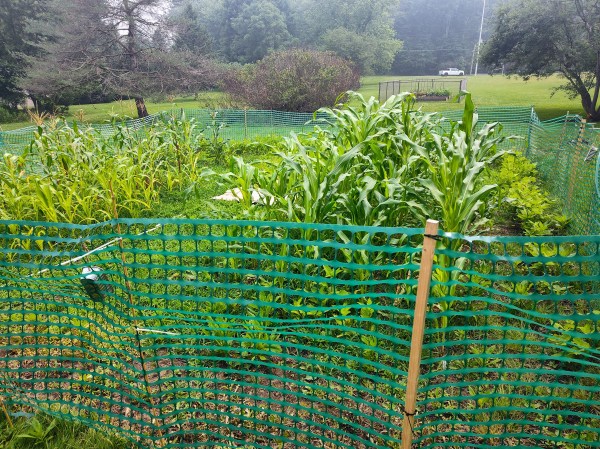
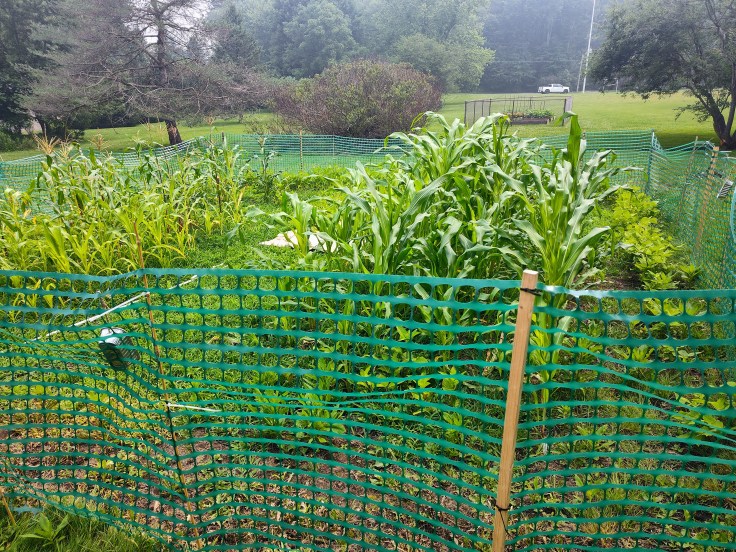
corn, beans
Rows of corn and bean plants

We also have 3 pole beans growing elsewhere on the property in the trellising containers that I built. These are located alongside our garage and by our potatoes. Update: Of the pole beans we planted, only the Iroquois Skunk pole beans have grown. The other varieties failed to germinate, so we replaced those with the Skunk pole beans. The first planter has done very well and has a lot of beans growing on the vines.

Corn

We enjoyed growing corn so much last year that we wanted to expand upon the 3 varieties we planted, which we did by buying 9 varieties for this year’s garden. As mentioned above, our corn is growing in the same bed as the beans, which was intentional since they are companion crops and are two-thirds of what the Native Americans called the Three Sisters, along with squash. In the right circumstances, corn stalks can be used as the pole that beans will climb, eliminating the need for a trellis system.

The 9 varieties are Hopi Blue (flint), Painted Mountain (flint), Northern Lights (flint), Country Gentleman (sweet), Luther Hill (sweet), Stowell’s Evergreen (sweet), Sweet Iroquois Black Mexican (sweet), Hjeirleid Blue (sweet), and Bear Paw (popcorn). Of these, we grew the Hopi Blue and Sweet Iroquois Black Mexican last year. Everything else is new to us. We’ve also never grown popcorn before, so that’ll be exciting.

Update: After starting with full rows of flint, popcorn, and dent corn and half rows of sweet corn, all the varieties now have full rows. Germination went pretty well even though oppressive heat and excessive rain occurred not long after the second sowing occurred. The corn has a wide range of heights, from ankle height for the newest plants to 6 feet tall for the flint corn we planted first. There are multiple varieties that are in tassel and putting on ears to the point where silk is showing.

Cucumbers

We’re only growing 2 varieties of cucumbers this year. One is called Bushy, and it’s a non-vining variety that produces cucumbers that can be used for slicing or pickling. I started 4 of these inside and transplanted them into our garden. Of the 4 plants, 3 are still alive and have sprawled much more than I thought they would based on their name. Update: We have had a lot of blossoms and many small cucumbers, with the largest being roughly 5 inches long. We should be able to pick them soon.

The other variety is the Mexican Sour Gherkin, also known as the Mouse Melon cucumber. These put out vines and need to be trellised. The cucumbers are small, roughly the size of a golf ball, and look like baby watermelons. We’re growing these in one of the planters I built from the Ikea chair. I started the first batch of these inside and transplanted them. Unfortunately, they didn’t transplant successfully, so I had to restart them by direct sowing. They have yet to germinate. Update: These never germinated.

Eggplant

We greatly enjoyed growing and eating eggplant last year. We bought an Asian variety from our local greenhouse and enjoyed slicing and roasting them all summer. This year, we again opted to buy 2 starts from the greenhouse over seeds. They were a couple of inches tall when purchased and have grown since being transplanted into the garden, but they aren’t looking the healthiest. Some of the leaves turned brown at first, which I think is the result of a watering issue (Too much or too little? Who knows?). We also had some small flying bugs that were causing damage, but I think these have been addressed with Sevin spray. Update: The plants are about 15 inches tall but have yet to flower. Last year, I think I remember the plants flowering and putting on fruit earlier than this, but the plants look healthy now. At one point, I was convinced the plants were dying, but they look very healthy now.

Leeks

I don’t understand how to grow onion-adjacent vegetables. I’ve never tried to grow bulb onions, but I’ve never been able to get spring onions to reach maturity so that they can be harvested. They start out looking great and eventually die off. This year, we passed over onions in favor of leeks, but it looks like it could be the same result. I started 12 cells of them inside and transplanted them when they were 3 inches tall. Update: I believe that the transplanted leeks died. However, in a stunning turn of events, the seeds that I planted have germinated and have greens on them 10 inches long. I’m still unsure if we’ll get a full-size leek out of it, but I’m really excited by the progress so far.

Melons

Pennsylvania isn’t the first state that comes to mind when you think of growing melons, but we had decent success last year with them. We grew heirloom varieties that weren’t native to the region. They also weren’t bred for cool climates, yet we still harvested a half-dozen or so fruit. This year, we focused on varieties that were bred to have success in cool areas. They are Cream of Saskatchewan, Montreal Market, and Pride of Wisconsin. We are growing 4 of each, and all were directly sown into the garden bed.

Update: I believe that 9 of the 12 plants remain and are having success to varying degrees. A few plants have vined out and have small, ping-pong ball-sized fruits on them.

Molokhia

I also struggle to grow greens. I’ve never been able to successfully grow lettuce. Last year, we grew mustard greens with some success, but they quickly got out of control. Molokhia is the only green we’re growing this year. It’s a vegetable that is popular in Middle Eastern and African cuisines and is also known as Egyptian Spinach. Molokhia plants enjoy hot weather, so I started the seeds inside to give them a head start. They germinated well, and I was able to transplant 6 plants; however, in the first days after being transplanted, they began not looking so great and have since died. I directly sowed another line of seeds, which have germinated, but it’s still too early to know if they’ll succeed.

Update: The tallest of our Molokhia plants are 6 to 7 inches tall. Because this is the first year we’ve grown it, we’re a little unsure how things will progress until we harvest some of the leaves. What we do know is that it should be harvested when the plant is 12 inches tall.

Peas

We grew one type of peas last year. They were a snap variety, which I love to eat. They were successful in that we harvested some pods, but we didn’t get the yield I was hoping for. That was largely because I planted them when I was feeling overwhelmed by all the other plants and didn’t give them the attention they deserved. This year, we’re growing 3 varieties: Green Arrow (shelling), Sugar Ann (snap), and Oregon Sugar Pod (snow). I was more careful with organizing the rows of peas this year than I was last year, and it’s going to pay off as the plants grow.

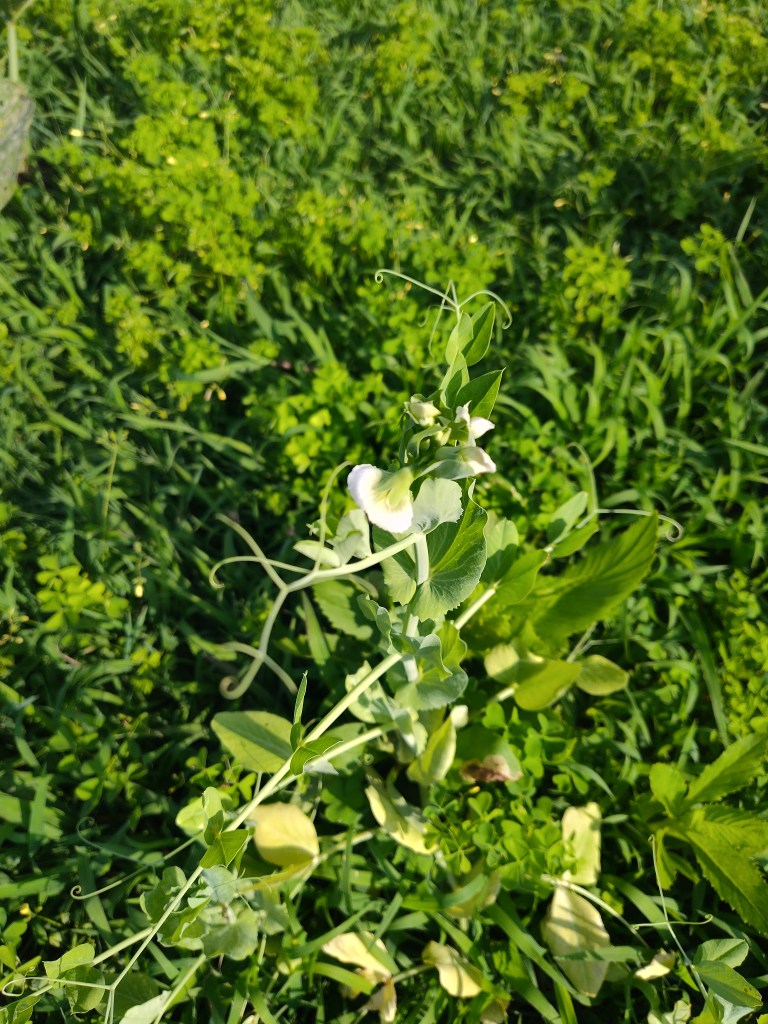
Update: We have rows of each pea variety growing, with the majority of the plants roughly 10 inches tall. They’re also putting on blossoms. I think we’ll get some pods to develop, but I wonder if they were planted too late due to weather.

Peppers

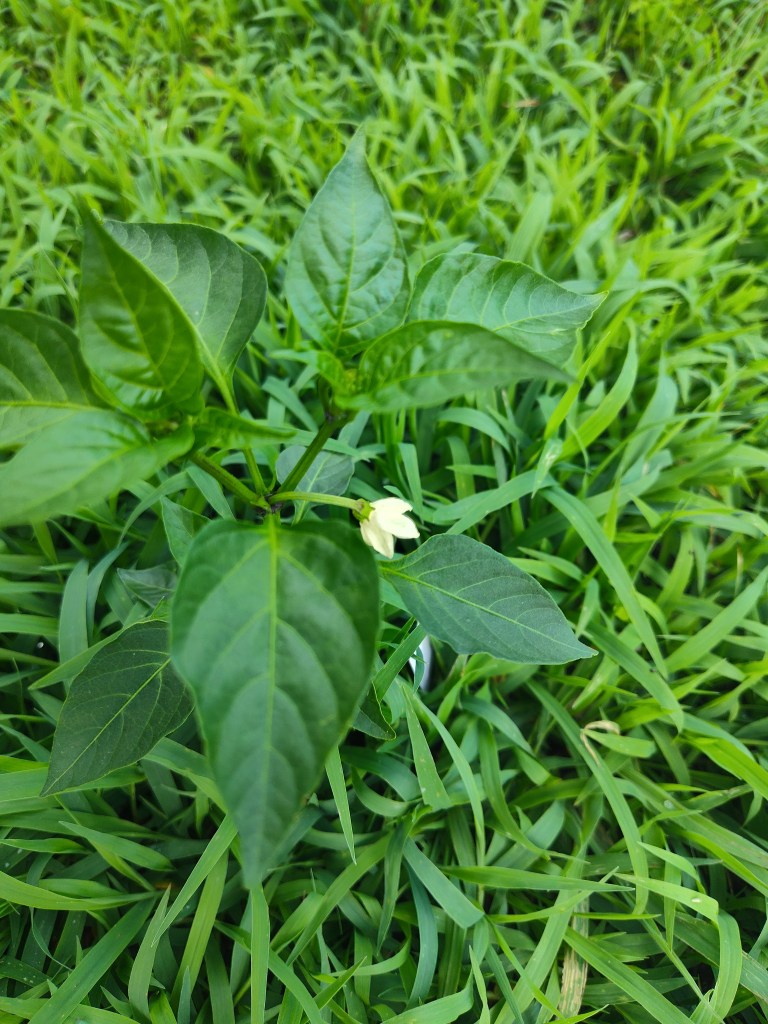
Peppers were another vegetable we had issues with last year. I started seeds and we bought starts, but none of the plants ever produced a mature pepper. Peppers can be tough to grow, and I don’t believe I was ready to correctly handle them last year. This year, we bought 4 varieties: Gochugarju (hot), Jaluv an Attitude (hot), Habanero (hot), and Takii’s New Ace (sweet bell). We bought the Takii’s New Ace largely because it can produce mature fruit quicker than other varieties, which is important in northern states where it can take until June to regularly get above 70 degrees. I also started a lot of cells for each variety and was intentional with developing a good root nest before transplanting.

Update: Peppers remain the most problematic vegetable for me to grow. There are still a few plants in the garden, but the others have died. We have a couple of fruits developing on a gochugaru plant, but I was hoping for more success with them this year. We still have the 4 plants that I started in the basement still growing in containers, and they’re looking good. I’m unsure if I’ll transplant them into the garden bed or to another container at this point.

Potatoes

I recently wrote in-depth about how we’re growing our potatoes in bags this year and how well it’s going. If you didn’t read that post, I recommend checking it out. We’re growing 4 potato varieties this year: Red Norland (early season), Adirondack Blue (midseason), German Butterball (late season), and Magic Molly (late season). They’re all doing very well.

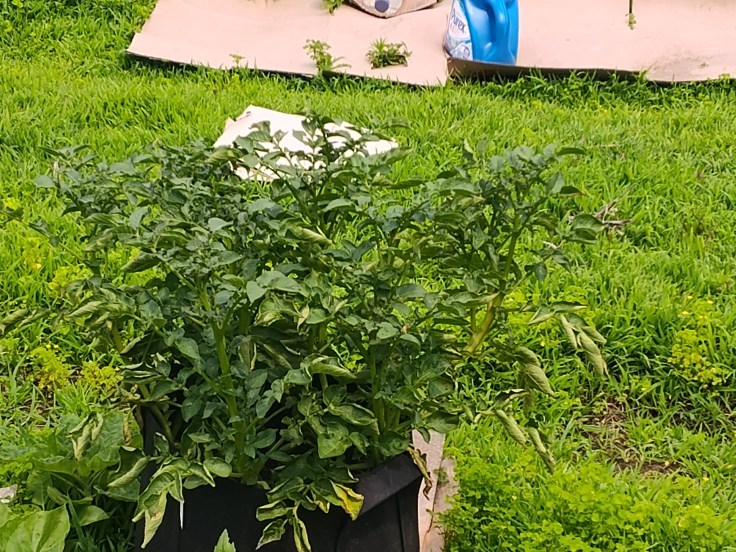
Potato
An example of our potato plants

We split each of the 4 varieties into 5 grow bags for a total of 20, and they’ve all needed to be hilled with dirt to the point where we won’t be adding any more dirt to the bags. Within a few days of planting, some of the plants began poking through the soil. We were adding more dirt on a daily basis for a while until we decided to buy enough dirt to top off all of the bags in early June. I am shocked with how well and quickly they’ve grown. Still, we’ve had several of the bags begin to show plants poking through the soil, so we’re seeing a lot of growth and may only be a month away from harvesting our first potatoes. From here on out, we’ll only have to water the bags, monitor them for weeds, and wait for the plants to flower and die off.

Update: Our potatoes continue to be the most productive and successful vegetable. All of our bags have plants growing, with the majority of them completely full. The most successful bags have plants that are 18 inches above the top of the bag and are starting to put on flowers.

Pumpkins

We loved growing pumpkins last year and had a lot of success with them despite not knowing what we were doing. We harvested 3 of them, making pumpkin pie with them for Thanksgiving. They made the most delicious pumpkin pie we’ve ever had. We would have been able to harvest more of them had deer not broken through our fence and ate some of the pumpkins.

This year, we’re only growing 2 varieties—Winter Luxury and New England Sugar Pie, which grew last year. We’re being really intentional with how we’re growing our pumpkins this year, with 5 hills built for each variety. Weirdly, only 1 plant of each variety has germinated so far, and we’re going to re-sow seeds. Update: After re-sowing the seeds, all 10 of the hills germinated. All of the plants currently have flowers, with one plant vining out and beginning to grow fruit.

Squash (Summer)

We are growing a ton of summer squash with 7 varieties: Black Beauty (Zucchini), Costata Romanesca (Zucchini), Early Summer Crookneck (Yellow Squash), Lebanese White (Zucchini), Ronde de Nice (Zucchini/Scallop hybrid), White Scallop (Patty Pan), and Yellow Crookneck (Yellow Squash). We love squash, if you couldn’t tell.

We directly sowed 5 of each variety, and all have germinated. Update: Our squash has taken off like crazy, and we’ve harvested multiple fruits: 1 Black Beauty zucchini, 2 Costata Romanesca zucchini, and 1 Ronde de Nice squash. We have more that are close to being picked and several baby yellow Crooknecks growing.

Squash (Winter)

We’re also growing 3 varieties of winter squash: Burpee’s Butterbush (Butternut), Turks Turban (Gourd), and Burgess Buttercup (Buttercup). We started 3 of each variety directly in the garden, and then our neighbor gave us 5 more buttercup starts. Three of the starts didn’t make it, but I replaced them with seeds from our stash, giving us 14 winter squash plants, assuming everything germinates. Update: After re-sowing the winter squash seeds, we had successful germination. Unfortunately, the buttercup squash our neighbor gave us aren’t doing too well; however, the seeds I planted have grown into healthy-looking plants.

Tomatoes

We’re growing a ton of tomatoes this year, so buckle up. After growing some rare and colorful varieties last year, we returned to growing all red tomatoes. The varieties are Aichi First (Slicing), Early Cherry (Cherry), Heinz (Paste), Korean Long (Paste), Large Red (Slicing), Little Bing (Cherry), Martino’s Roma (Paste), Mountaineer Pride (Slicing), Sub Arctic Plenty (Slicing), and Umpqua Beauty (Slicing). I don’t remember the exact number, but I think I started 6 cells of each variety and transplanted a total of 20 or so plants. Not all have survived, but we probably have around 16 plants, with 13 of them in the garden and 3 Little Bing plants in a planter. Immediately after transplanting our starts, I started more Heinz, Early Cherry, and Aichi First seeds, which have since germinated.

Update: Our tomato plants have put me through the wringer this year. They started out perfectly, but then an issue with grass growing in the garden bed combined with me forgetting to trim leaves on the plants led to them looking sickly. That was followed by torrential rainstorms that yielded 3.5 inches of rain in less than 12 hours. Since then, we’ve had warm weather and more consistent precipitation, which has salvaged the majority of the plants. We have lots of blossoms and small fruits growing on the plants. Our most successful variety has been the Little Bing, which is being grown in a planter. It looks healthy and has dozens of small tomatoes on it.

Weekly Garden Update #5 – First Harvest, Leeks, Rabbits & Deer

In this week’s garden update, we harvested our first vegetable from the garden, our leeks are actually growing, and we are having an issue with rabbits and deer. Plus, our tomatoes are managing to hold on. Let’s dive in.

Harvesting the First Zucchini

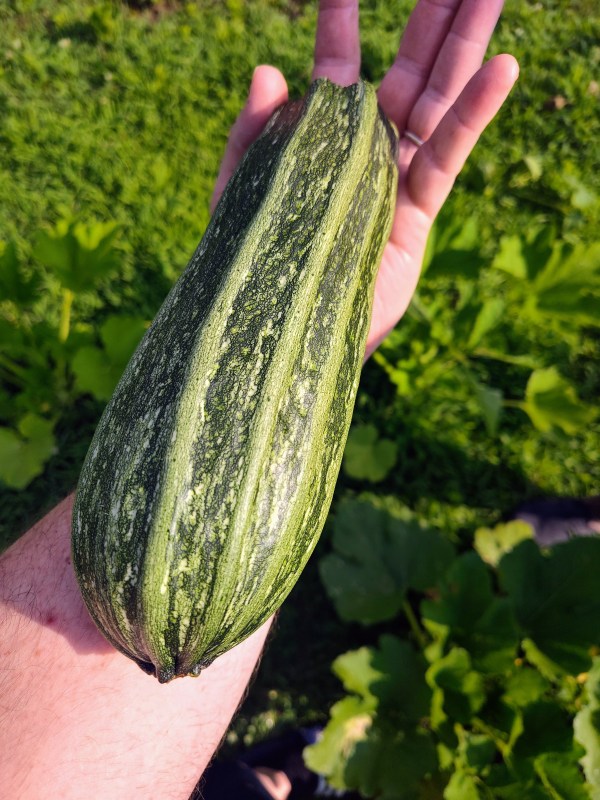
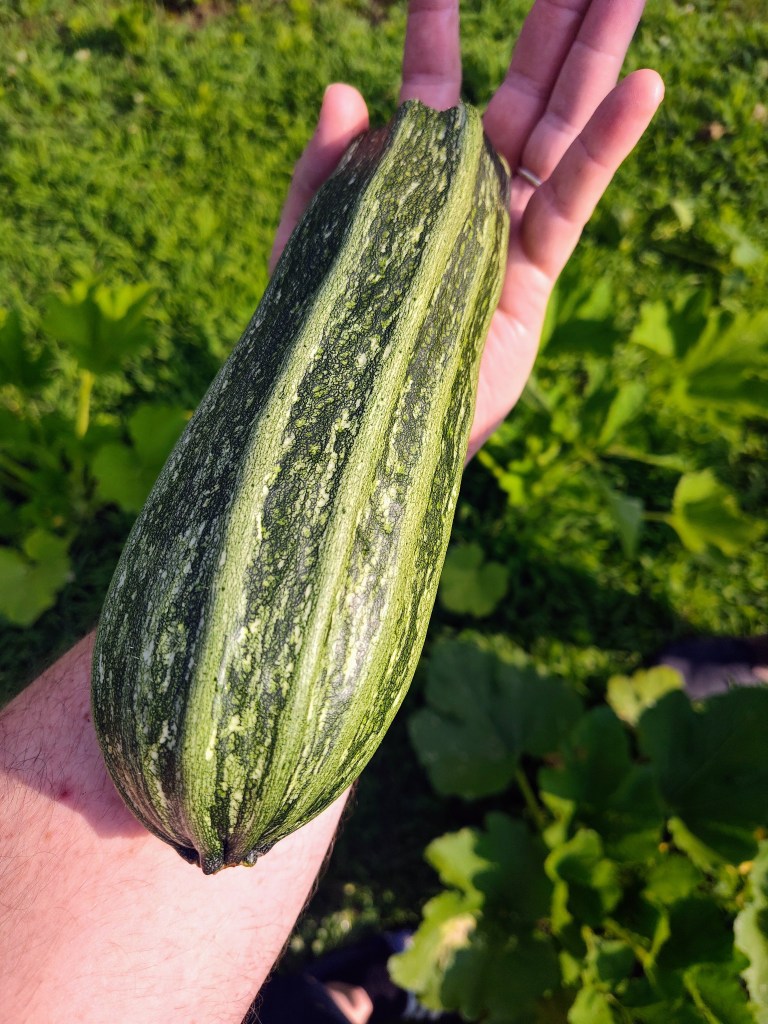
We are growing a ton of squash this summer, and the plants are taking off. The first variety to produce fruit is the Costata Romanesca, an Italian heirloom zucchini. The fruit is striped, lighter green than a typical Black Beauty zucchini, and huge. We harvested ours at 12 inches, and it was as thick as my forearm. We ate it the evening we picked it, and it was delicious.

Our favorite way to eat summer squash is to chunk it, drizzle oil over it, season it with Season All, and roast it in the oven until the skin is a little crispy and the “meat” is tender. It had a lot more flavor than the standard green zucchini. It was even more flavorful than the White Scallop patty pan squash we grew last year, which had been our favorite type of squash. We will certainly be growing this variety again in the future.
Our Leeks Are (Surprisingly) Growing

I started leeks this spring because I really want to successfully grow onions one of these years. I started leeks inside and directly sowed some in the garden. The leeks that I transplanted died pretty quickly, and while I saw that the seeds germinated in the garden, I had low expectations for them given the excess rain we had and stopped checking on them. This past weekend, however, I noticed what looked like onions in the garden bed. Sure enough, the leeks are still growing and are pretty tall (about 12 inches). I still don’t know if they’ll be able to develop bulbs below the soil surface, but I’m really excited that they’re still growing.

Issues With Deer and Rabbits

In spite of the Irish Spring and disposable baking trays, we’re still having issues with deer and rabbits getting into one of our garden beds. I’ll start with the deer. While we haven’t seen the deer, we have seen hoof prints in the soil that have appeared since the fence went up. I think it’s only one deer based on the number of hoof prints, and thankfully, it doesn’t look like it’s done any damage, but the fact that it’s the bed where we’re growing corn is concerning. I knew that our fence only being four feet tall could be problematic, but because we planted the corn inside a border of bean plants, I thought perhaps it would keep deer away. If you’ve been a reader of the blog since last summer, you’ll remember that we had deer destroy our fence and eat corn that was on the verge of being picked. Before the corn puts on ears, we need to address the issue. Our neighbor suggested adding a string or something small, about two feet above the fence. Anything that can deter them from jumping over the fence would likely succeed.

Rabbits have been even more difficult. There have been several times this summer where we’ll walk off our back porch and see one or two rabbits hopping through the same garden bed that the deer is getting into. Unfortunately, the rabbits are simply chewing through the fence to gain access, and once they’ve breached security, they’re finding the corn stalks irresistible. However, they quickly learn that they don’t like the corn stalks and don’t eat them. They only chew them enough to knock them over. It’s quite annoying, but the rabbits are so cute that it’s hard to actually be mad. Getting them out of the garden is quite an ordeal, though. It usually requires Magz and me to both go into the bed, keep the gate open, and calmly guide them toward the opening. Sometimes, they try to run into the fence, which isn’t rigid, thankfully, so they don’t get hurt. To address this, we’ve started zip-tying scraps of pressure-treated lumber across the opening they bit into the fence.

Tomato Plants Are (Mostly) Holding On

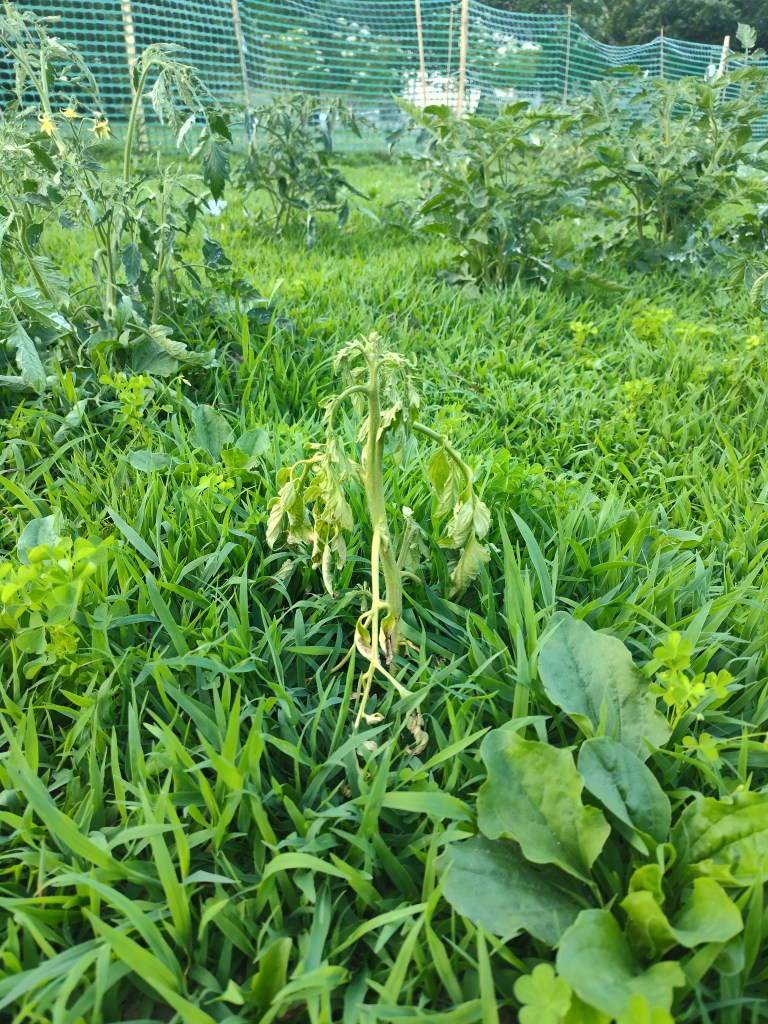
Last week, I wrote about how sad our tomato plants have been looking since we received a torrential rainstorm on July 5. All of the plants were drooping, the leaves were wilted, and they looked unhealthy in general. In the days that have passed, the majority of those plants have made drastic improvements, putting on more blossoms and fruit and looking stronger. There are still two plants that look unhealthy and may not survive, but that’s an incredible blessing compared to where we were last week at this time.

Up Next

We’re going to continue to harvest summer squash as they ripen, which I’ll report on next week. We also have some beans that will be ready to pick as well as our first cucumbers. How are your gardens doing? Happy gardening.

An Array of Vegetable Blossoms

I wanted to share the beauty of vegetable blossoms in the garden. It’s fun to see how unique each vegetable’s blossom is.

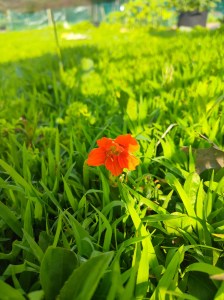
Nasturtium
A single Nasturtium flower that overwintered in our garden.

Weekly Garden Update #4 – Continued Tomato Problems, Blossoms Galore, and Zucchini

In this week’s update, I go over a very helpful comment I received about how to fix a tomato problem we were having. I also highlight some of the incredible progress we’re seeing in the garden, including zucchinis that are close to being ready for harvest.

Tomato Issues

Last week, I wrote about a problem we were having with a single tomato plant in our garden. This plant was clearly dying even though all the surrounding plants were healthy. A wonderful reader commented on the post to say that it was likely a fungus that was the result of the tomato’s leaves touching wet grass. I knew this and addressed it last year but had forgotten to take care of it prior to receiving the comment. On Saturday, I went out and addressed the tomatoes by trimming some of the branches that weren’t producing fruit and were low enough to touch the grass. I then staked the tomatoes to hold them upright and removed the grass growing below them. They immediately looked more maintained and healthier; however, unfortunately, it may have been too late, or there’s a larger issue at hand.

It rained a lot on July 4th and 5th. Our rain gauge, which I had emptied on the morning of July 5th, showed 3.25 inches on July 6th. I know that rain gauges aren’t always the most accurate, but it’s safe to say that we received a ton of rain. Yesterday, the majority of the plants I trimmed looked stressed. The leaves were drooping, and the stems appeared to have no strength to hold themselves upright. What’s really weird is that another tomato plant in the same bed looks fine. Also, the rogue plants that are growing in another bed are looking healthy. It’s weird because if there was a fungal issue, I think it would affect all plants in the same bed. I’m also now questioning the need to rotate vegetables if our tomatoes were successful last year in another bed even though the same grass issues were present. I don’t have a lot of hope that the tomato plants are going to survive, but this morning, they did look healthier than they did last night, so it could be that the soil needs to drain and that they were simply overwatered. It would be amazing if that were the case.

So Many Blossoms

We have so many blossoms on our plants, and it feels like it happened all at once. Like one evening they weren’t there, and the next morning they were. It’s happening on our squash, cucumber, bean, melon, and tomato plants. We’ve had cucumber blossoms and baby cucumbers for a few days now, and the Costata Romanesca zucchini plants have had blossoms for a bit. But the other zucchinis, beans, tomatoes, and melons are all more recent.

This time of the year is amazing for gardening. It feels like things are changing all the time and that there’s something new to look at every time you go into the garden. One of my favorite things is noticing the difference between the varieties of a vegetable. For example, our Montreal Market melon blossoms are different from the Pride of Wisconsin blossoms. I’m taking pictures of the different varieties to share in an upcoming post.

Zucchini

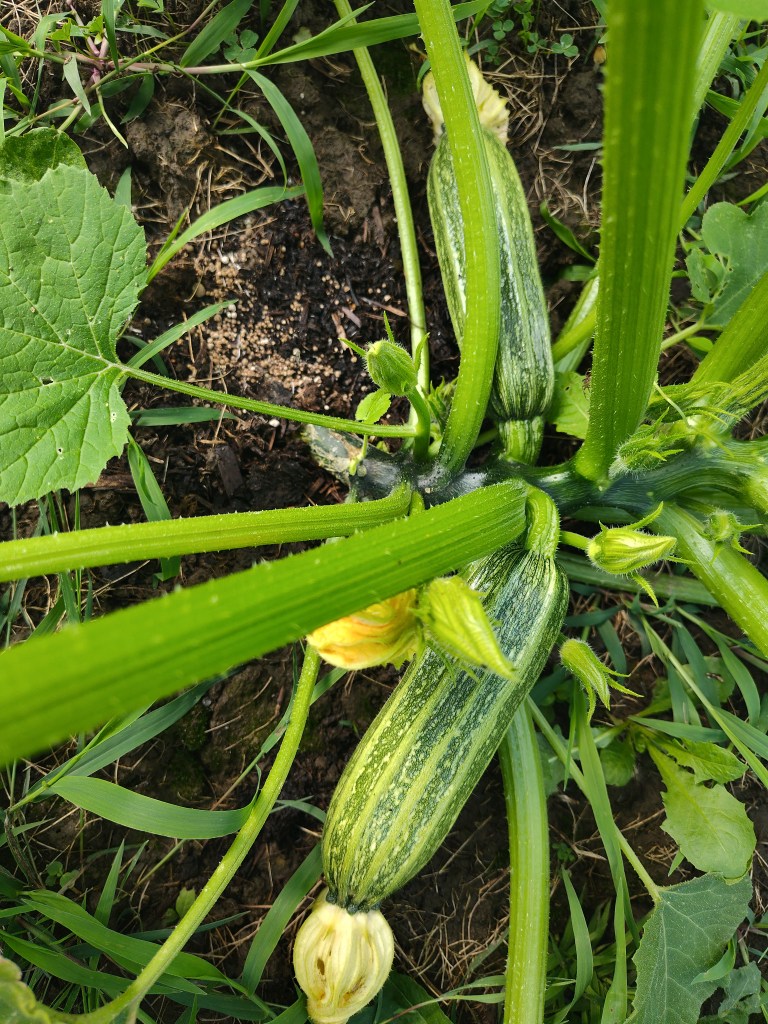
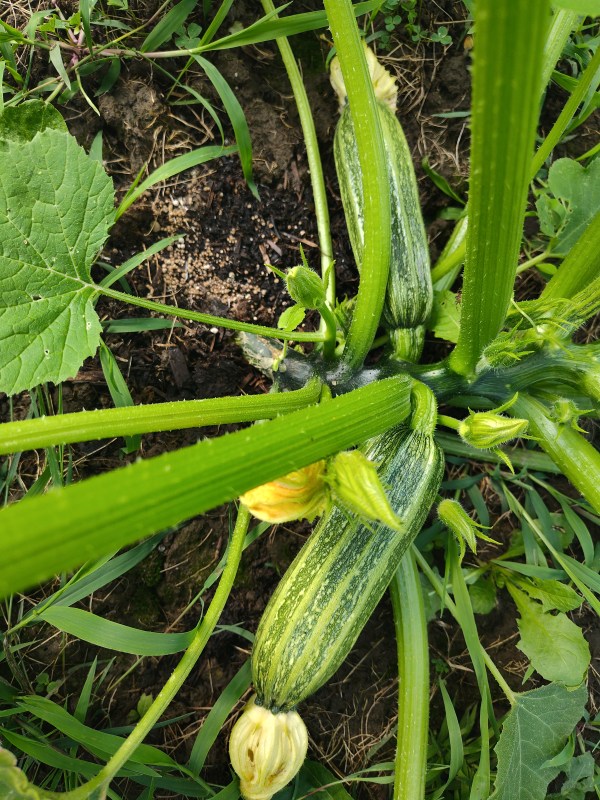
The most exciting garden development has been the appearance and growth of two Costata Romanesca zucchinis. Late last week, we noticed that one of the plants was putting fruit on, with two of them reaching finger length. When we looked last night, one zucchini was roughly six inches long, and the other was four inches long.

costata romanesca zucchini, zucchini
Costata Romanesca zucchini

Unlike other zucchinis, though, this variety shouldn’t be picked until it reaches 12 inches. We may be able to pick the first one at the end of this week, which is so exciting. Take a look at how beautiful these zucchinis are.

Up Next

I think the biggest thing we’ll be monitoring this week is the health of our tomatoes. Will they survive or die? We’re also looking forward to harvesting the first vegetables this week. Lastly, we’re still seeing evidence that deer are getting into the garden bed where our corn is growing. I have a rough idea of how to get the fence higher, but we’ll see if it works. Happy gardening!

What’s Wrong With This Tomato Plant?

Our garden is doing very well this year. Our squash plants are thriving and putting on finger-length fruit, our tomatoes have a lot of blossoms, and our corn is up to my waist. In general, we are ecstatic with how much success we’re having. But this is a garden, so let’s be realistic: we’re not achieving perfection. And one example of where something is failing is this single tomato plant.

tomato plant, gardening
A dying tomato plant.

I took this picture last evening, and it’s pretty clear that the plant is going to die, but the thing I can’t figure out is why. I know that there is a lot of grass and other weeds growing around it. We’re in the process of remedying that with cardboard, but the grass is present around our other plants, and they’re thriving. It’s not the soil, moisture levels, nutrients, or amount of sun. This bed is full of tomato plants, and this is the only one that looks like this. For comparison’s sake, here’s the tomato plant that’s right beside it.

tomato plant, gardening
An example of a thriving tomato plant.

This tomato plant is the same variety and only planted about 18 inches from the dying one. It has healthy leaves, it’s standing upright without support, and it has blossoms on it. By all counts, it’s doing very well and will produce fruit. The majority of our tomato plants look just like this one. Side note: we’re going through a week-long heat wave, so the plants show signs of stress from the heat before the sun goes down. Besides that, though, they’re incredibly healthy with a lot of flowers. So, if everything is the same between the dying plant and this one that is thriving, what is the cause? I honestly don’t know, but if you have any theories, I would love to hear them, because I’m perplexed.

Actually, although I wish I knew the answer to what’s causing the plant to die, there is something so refreshing about gardening, with how you don’t always have solutions. Gardening is quite analog when almost everything in our world is digital. And even though there is a lot of science behind a successful garden, you also need to rely on your senses. Is a tomato plant’s leaves curled? Do they feel brittle? How firm is the zucchini? Does the soil feel moist when you place a finger in it? These are all things that research can’t give you straightforward answers to. Sure, books, blogs, and videos can describe how something should feel, look, or smell, but you have to experience it for yourself.

We were watching something on YouTube last night about the lack of silence in the world today, which is something I’ve expressed frustration over in recent years. The video included a clip of Fred Rogers from Mr. Rogers’ Neighborhood. In it, he said:

Our society is much more interested in information than wonder, in noise rather than silence…And I feel that we need a lot more wonder and a lot more silence in our lives.

With the explosion of data, social media, and the internet’s intrusion into our lives, the quote could easily be from 2026. But if you’re familiar with Fred Rogers, you’ll know that he passed away in 2003. That quote was actually from 1994 or 1997. Charlie Rose interviewed him twice, and I’m having some difficulty determining which interview this quote is from, but I believe it’s 1994. Either way, though, it was at least a couple of years before the Internet became a household norm and at least a decade before the first iPhone. He was concerned about the wave of information long before it reached its current level.

Gardening is great because you can escape the oppressive nature of technology and information. When you look up the cause of tomato leaf curl, you’ll get a lot of different answers. It could be too much water. It could be too little water. It could be too much sun. It could be not enough sun. A lack of nutrients could be the problem. It could be root rot. And then there are the endless number of pests it could be. Because gardening is an extension of nature, it feels like it’s beyond the realm of technology, and I think that’s what draws many of us to it. My job requires me to be on a computer on a daily basis, which I’ve accepted because it’s allowed us to buy a house and have a garden. But beyond that, I generally hate technology even though I’m guilty of doom scrolling on Reddit or picking up my phone because I’m bored. But nature and gardening allow us to escape that, if we choose to. It’s like John Muir said: “Into the woods I go, to lose my mind and find my soul.” I’ve seen woods replaced with forest, but I also think garden or nature work here. As a society, it seems that we’ve grown afraid of not knowing the answer to something, but that mindset causes us to lose all wonder and creativity. It leads to an absence of being motivated to discover the answer on our own.

To circle back to our dying tomato plant, I have no idea what caused it to die, but I’m sad about it. I’m also comfortable with not knowing the answer at this time. Plants are living creatures, just like humans and animals. Unfortunately, they get sick like we do, and sometimes we just don’t know the reason. But I’ll continue to hone my gardening skills so that this happens less over time, and if you have any ideas as to why it died, I’d love to hear them. I’m not interested in researching the answer and becoming overwhelmed by information, but I’m always up for a good conversation. And in the meantime, happy gardening!

2026 Weekly Garden Update #3 – Rogue Tomatoes, Blossoms, Slow Pepper Growth & More

In this week’s update, we’ve been noticing tomato plants popping up in a bed where we didn’t plant them this year. We’ve also had great growth in our cucumbers and intentionally planted tomatoes and now have blossoms on them. Still, one vegetable that isn’t growing as well as we’d like is pepper. But with a heat wave on the horizon, that may change this week. Finally, I expanded our trellises to accommodate the pole beans we’re growing. Let’s dive in.

Rogue Tomato Plants

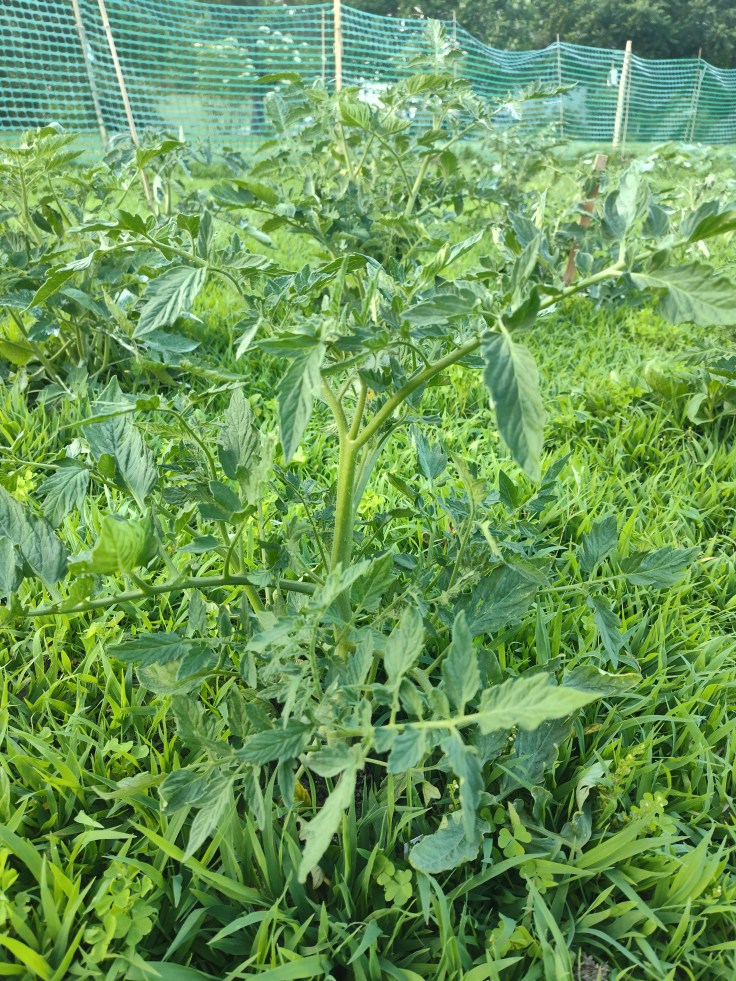
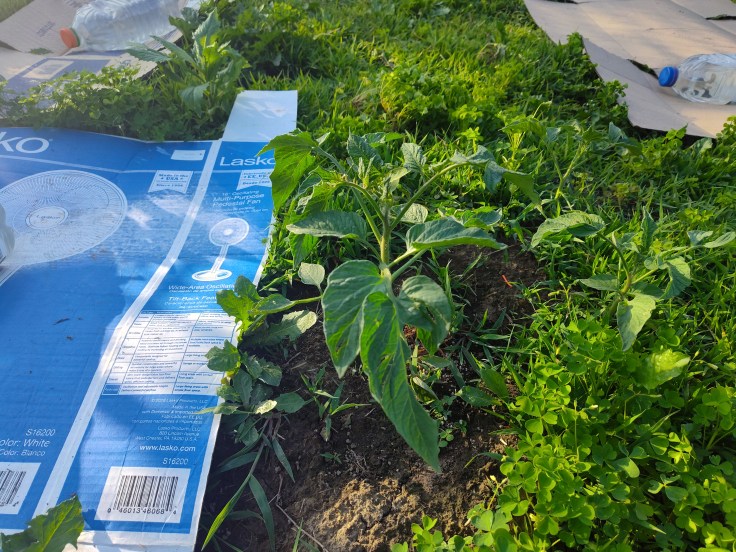
Something pretty bizarre and funny is happening in our garden this year: we’ve had close to a dozen tomato plants germinate that we didn’t plant. The bed they’re appearing in is where we grew tomatoes last year; however, this year, we’re growing cucumbers, molokhia, and melons in it. I’m pretty certain what happened is that seeds germinated from tomatoes that fell off the plants last year, but it’s still pretty crazy. We had a really cold winter last year, so I’m surprised that the seeds survived. I also tilled the soil this spring, but that may have brought the seeds closer to the surface and helped with germination.

Tomato plant
The rogue tomato plant in our cucumber/melon bed.

I know that we could have pulled them immediately, but for the most part, they aren’t growing in places where they’ll hinder the growth of our melons, molokhia, and cucumbers, so we’ve let them go. The funny part is not knowing what varieties they are. There appear to be at least three varieties, but until they grow more and start producing fruit, we won’t know what they are. At this point, we’re committed to letting them grow to maturity unless they start to affect the plants we planted this year. The best case is that we have extra tomatoes. The worst case is that they never produce fruit or we have to pull them. It’s a fun journey.

Plants Are Blossoming

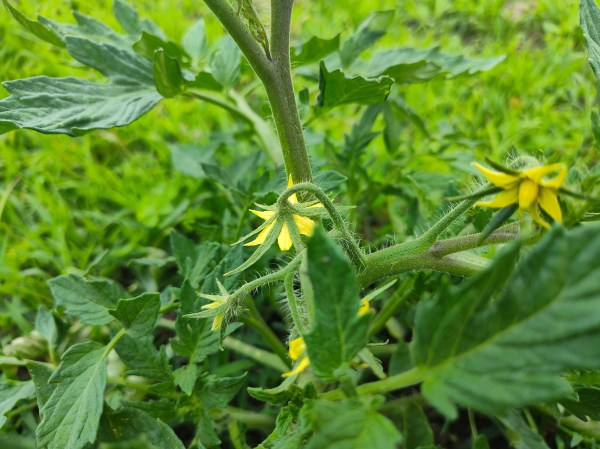
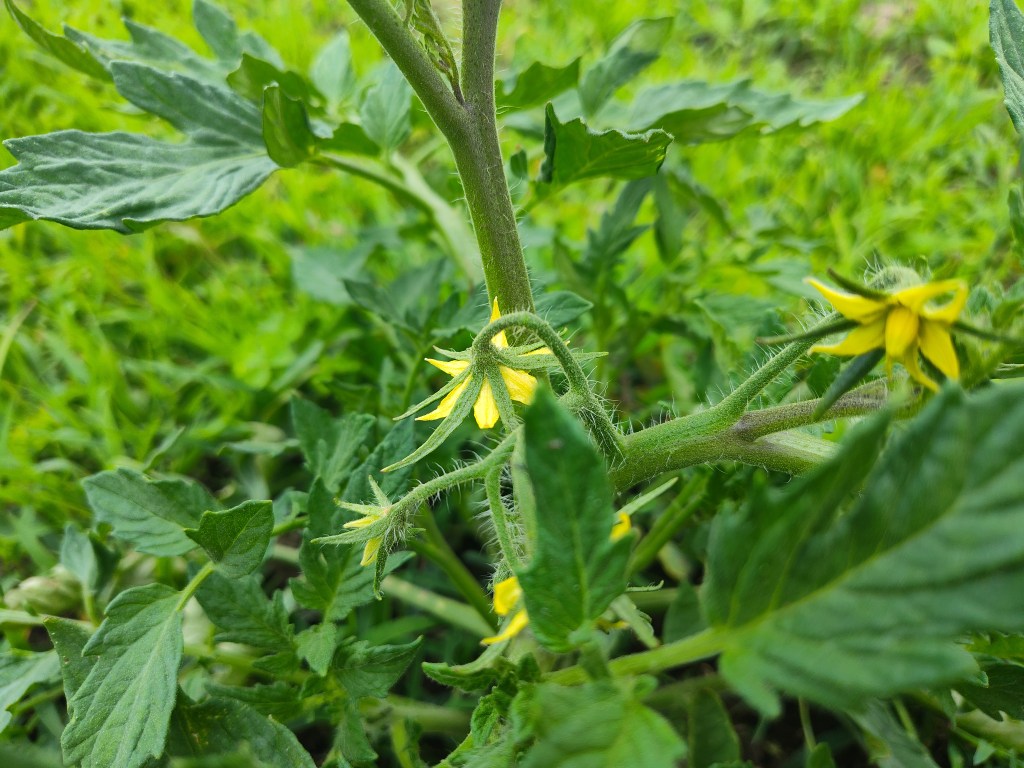
Elsewhere in the garden, some of the plants we intentionally planted have started to put on blossoms. Three of our cucumber plants (the fourth one died) are flowering and have teeny-tiny cucumbers growing behind the flowers. Several of our tomato varieties have blossoms on them, including Large Red, Roma, Heinz, Sub Arctic Plenty, and Little Bing. Also, our first batch of Iroquois Skunk Pole beans is putting on flowers.

This is very exciting, because I don’t think there are many better things in life than a tomato eaten fresh off the plant. And because of how our pole beans are growing, we should be done harvesting beans from the first batch by the time the other two batches are reaching maturity. I think this is the part of gardening that’s the most fun.

Expanding Our Trellises

Because two of the final three batches of pole beans are starting to take off, I had to adapt and expand the trellises I built from old Ikea furniture. If you recall, these three planters were originally used for other things: Sour Mexican Gherkin cucumbers, Cherokee Trail of Tears beans, and Grandma Nellie’s Mushroom beans. None of these were successful, so I started Iroquois Skunk Pole beans in all three. These trellises have gotten weird.
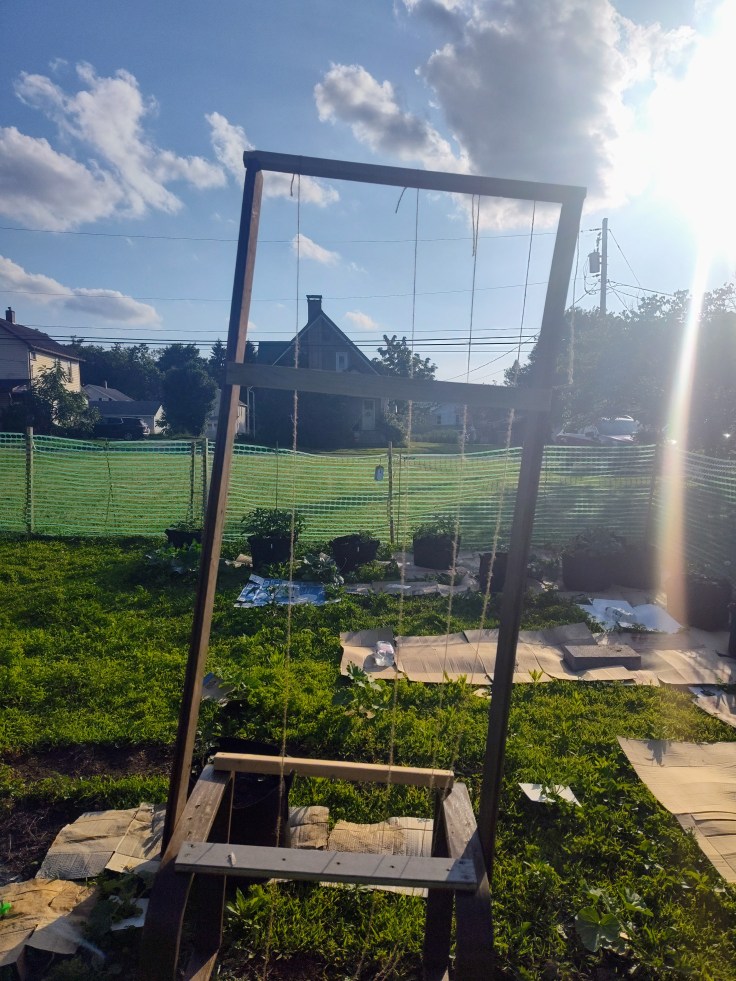
On one of them, I took the other side from one of the Ikea chairs, cut it down, and used the curved pieces in opposite directions to get the height where it needed to be. I then used a scrap piece of lumber for stability, added a piece to hold the twine, and tied the twine.

Trellis, bean plants, Iroquois Skunk Pole Bean
The extension I added to the trellis I built. It’s a bit wonky, but it was made entirely from scraps.

For the other trellis, I attached two pieces of scrap lumber that was in our garage when we bought our house to the existing planter. That got it to the necessary height. I then used a couple of scraps to strengthen the trellis and tied the twine. Both are ready for the plants to climb.

Upcoming Heatwave

This week, a large portion of the Eastern United States, us included, is under some sort of a heat advisory. Starting tomorrow (Tuesday), through Friday, the high is supposed to be in the mid-to-upper 90s. This is both good and bad. It’s bad because when it’s that hot and humid, being outside isn’t fun. It’s good because our soil needs to dry out a bit, which will benefit our plants. Our pepper plants are looking pretty healthy, but they’re still small because it hasn’t been overly warm to this point. The heat, humidity, and sunlight should go a long way to addressing this problem. My hope is that because of how much rain we’ve gotten, we’ll only need to water once during the heatwave, if at all.

Up Next

If you’re in an area that’s going to face this heatwave, please stay safe. Drink lots of water, and stay in the shade as much as possible. For your garden, I hope the heat benefits yours as much as we’re hoping it benefits ours. Also, have you ever had rogue plants pop up in garden beds where they don’t belong? Happy gardening!

Create a website or blog at WordPress.com

Up ↑