

We’re growing potatoes again this year after not doing so since 2022. We attempted to grow them last year, but our seed potatoes arrived moldy and rotten. We still tried to plant them, but the wet spring we had killed them before they could grow. We wanted to attempt to grow them again this year, but we didn’t want to grow them in the ground, and we wanted to buy them from a different seed company.
In my post that went over the varieties of potatoes we bought, I mentioned the varieties we’re growing as well as the company we bought from, Urban Farmer. Those potatoes arrived in late April and were in perfect condition. I was surprised at how late they arrived and thought there was a chance they weren’t going to arrive. I eventually emailed the company, and they arrived within a few days of getting a response. Given the condition of the potatoes when they arrived, I’m a fan of not receiving them until late August. It was not nice having to worry if I was properly storing them for a month or so until it was time to transplant.
When we decided we were growing potatoes again this year, we knew that we weren’t going to grow them in the ground. Standing by helplessly as last year’s seed potatoes died in the ground was an awful feeling, and it wasn’t one we want to experience again. Even though the soil is better this year, which would provide a better growing environment for them, we can’t control the weather, and another wet spring could kill another year’s worth of potatoes. That brought us back to our old friend, the container garden.
In 2022, we grew our entire garden in containers, and by containers, I mean 5-gallon buckets and plastic totes. I wrote about our experience in this blog post, so I won’t rehash it here, but it was mostly successful, and I recommend it for anyone who’s limited on space or can’t have a traditional garden. Growing potatoes in them was a success. We grew three varieties in three separate totes and probably harvested between 15 and 20 pounds. For our first time growing potatoes, we were very happy with the results. This year, though, we aren’t growing our potatoes in containers but instead are using grow bags. Don’t get me wrong; the totes worked great, but it was too easy to crowd the potatoes and too heavy to move if we had to relocate them.
What Grow Bags Work Best?
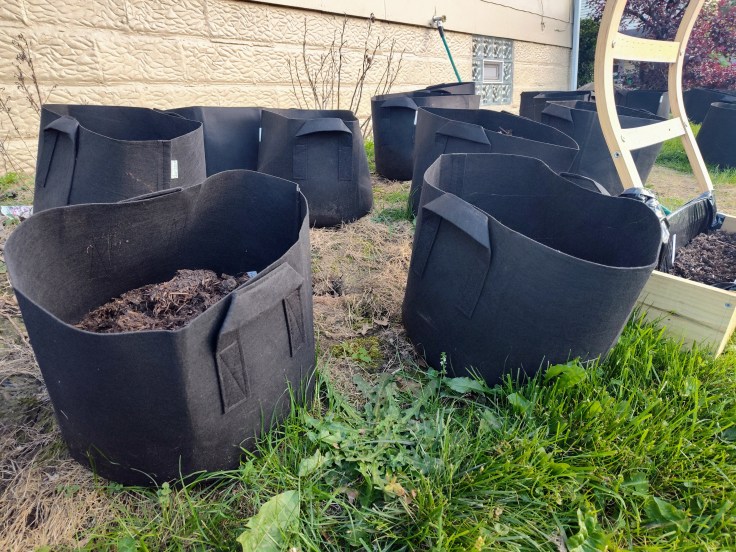
There are numerous sizes of grow bags. We went with the 10-gallon ones, and they came from Amazon. These are the ones we’re using. I picked the 10-gallon bags because they are big enough to hold four pieces of a seed potato and have enough space to hill them as they grow. At the same time, they are small enough that it’ll be easy to move them when they’re full. Grow bags are also great because it’s really hard to overwater what’s growing in them. Made of mesh, they’re breathable and let excess water flow through.
Although there are some grow bags that have flaps on the side that provide easy access to the potatoes when they’re ready to be harvested, ours don’t have that. It is convenient, but I don’t think it’s necessary. It’s easy to pull the plants out to access the ready potatoes, and I prefer to harvest all of them from one bag.
We started with 10 bags, which were a birthday gift from Magz’s parents, but when we started to plant the seed potatoes, we knew we needed more, so we bought another 10-pack, which was the perfect amount for the four varieties we bought.
Planting in Grow Bags
Growing potatoes in bags couldn’t be simpler. We used a mushroom compost and top soil blend that we bought in bulk from our local Agway and put a layer on the bottom of each bag roughly five inches deep. After that, we applied an all-purpose 5-10-10 fertilizer and mixed it in. The seed potatoes went in next. Whether the seed potatoes need to be cut prior to planting seems to be personal preference, but I like to cut ours as long as each segment has an eye. Any potatoes that only have one eye go in whole. I try to cut the potatoes at least 24 hours in advance of planting them. This allows the potato’s flesh to harden over and develop a skin that protects it as it starts to grow. With the potatoes in the soil, I cover them with a few inches of soil and water them. It’s that simple.
It’s important to use ID tags in the bags if you’re growing multiple varieties to know which type is growing in each bag. This helps to know when the potatoes are early, mid, or late-season varieties and to recognize when each is close to being ready for harvesting. After they’re planted, you just need to pay attention to when the potato plants start to grow. When you start to see the green of the plant breaking through the soil, you want to hill them up with more soil so that the plant is covered. With the bags, we’ll continue to add more soil until the bags are full. At that point, we’ll stop and wait until the plants die off, indicating that they can be harvested.
5 Reasons to Grow Potatoes in Bags
I feel that using grow bags takes some stress off growing potatoes. Granted, it is a bit more work than planting in the ground, but I think it takes a few years to improve soil to make it suitable for potato growing. Most of our yard is heavy with clay, which compacts and makes it tough to grow tuberous plants, such as carrots, beets, and potatoes. Over time, that should improve, but it’s not where it needs to be yet.
1.) Choosing the Perfect Soil
With grow bags, you can buy the perfect soil for potatoes. This blend we bought seems to be advantageous for potatoes, as it’s loose and has the necessary nutrients that help potatoes thrive.
2.) Water Management
They’re also great because you can’t overwater what’s growing in them. Excess moisture simply drains out. The flip side of this is that you need to water more often than you would in-ground plants, but it’s not a big hassle.
3.) Maneuverability
Another reason to use grow bags is that they’re easy to move. Any container is technically able to be relocated, but it becomes a pain once it reaches a certain size and weight. The 10-gallon bags are perfect for this because they never weigh so much that it’s hard to carry them, but they’re still heavy enough to not be blown by the wind.
4.) Sustainability
A major reason we wanted to use grow bags this year is that they’re sustainable. They may not be as sustainable as growing in the ground, but the bags we bought are durable and should last at least a few years. They’re made of a sewn fabric that has some flexibility and won’t rip under normal conditions. They’re much better than the plastic containers we used in the past, which would crack and break within a few months. And when we’re done using them in the fall, they’re easy to clean and store until next spring.
5.) They Can Be Decorative
Over time, our goal is to make our garden more aesthetically pleasing. Grow bags contribute to this. They look much better than the totes and buckets we previously used. The bags can be placed together in one location, simulating a garden bed, or can be placed in separate locations as space allows. We currently have ours on the hillside beside our house, and it gives this area of the yard some purpose and beauty.
To wrap up, if you’re on the fence about using grow bags, I would recommend it. Even if you have the space for an in-ground or raised-bed garden, grow bags can be the perfect complementary vessel. They’re affordable (our 10-pack cost $25.99), sustainable, and easy to move around. Have you ever used grow bags for your garden? If so, what has your experience been?

