I think Pennsylvania is an underrated state when it comes to natural beauty. To an outsider, the state probably looks like Pittsburgh in the west, Philadelphia in the east, and nothing between them. I’ve even seen the area between the two cities as Pennsyltucky, which seems offensive to both states. Sure, the population centers of the state are the headliners when it comes to the economy and politics, but there’s a lot more going on outside their city limits.
I grew up in Central Pennsylvania, in the middle of the Appalachian Mountains’ Ridge-and-Valley System. This geography is defined by a series of long and narrow ridges (usually called mountains) that are often oriented diagonally from the southwest to the northeast with wide valleys separating them. The ridges typically have dense forests that are perfect for exploring, hiking, and hunting, while the valleys feature nutrient-rich soil that is ideal for farming and gardening. This system is located between the Appalachian Plateau to the west and the higher mountains to the east. If you’ve never seen the Ridge-and-Valley System, it’s quite unique, even if the tallest mountain in the system tops out just shy of 5,000 feet (Spruce Knob in West Virginia).
Woods make up a lot of Pennsylvania (it is called Penn’s Woods, after all), but it’s far from the commonwealth’s only geographical feature. East of the Ridge-and-Valley System is the Piedmont and Delaware River Valley. In Western Pennsylvania is the Appalachian Plateau, and the Glaciated Plateau precedes a drop in elevation as you approach Lake Erie. I have visited or lived in many of the state’s geographical regions, and we currently live on the border of the Glaciated Plateau and Appalachian Plateau, but there is one feature that I only learned about in the past eight years: wetlands.
Pennsylvania Has Wetlands?
In 2018, we moved from Pennsylvania to Southeast Georgia for about five months. It was both a culture and environmental shock. It felt like a 180-degree flip from what we were used to in Pennsylvania. It was flat and incredibly hot. There were forests, but they were almost entirely new growth due to the prominence of the lumber industry in the area. But the biggest shock was the swamp. We lived near Statesboro, so it was far from the middle of nowhere, but within 40 minutes, you could be at a state park that was entirely cyprus swamp. I had never experienced a swamp before, so I was completely out of my element. Alligators, snapping turtles, and water moccasins were present. It was terrifying and so beautiful. If you’ve never visited a swamp, it’s unlike anything else.
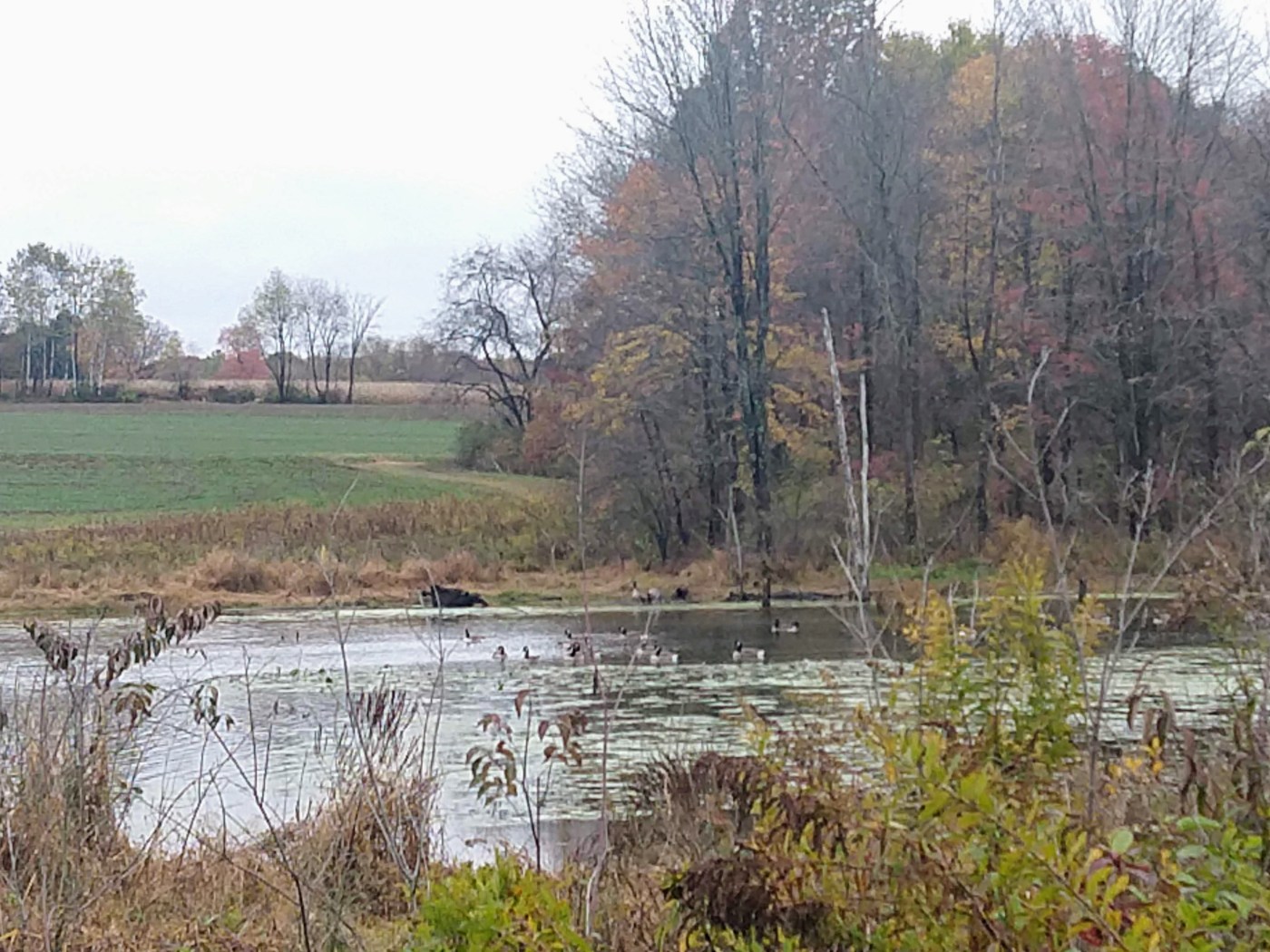
But when we moved back from Georgia to Northwest Pennsylvania, I was pretty confident that I was leaving the swamp behind, but I was wrong. We quickly learned that Northwest Pennsylvania is full of wetlands similar to what we saw in Georgia, although their origins are different. While southern swamps developed from peat accumulation, the wetlands of Northwest PA developed when the glaciers of the most recent Ice Age receded. If you’ve ever driven north on I-79 between the I-80 interchange and Erie, you can see a distinct geographical difference once you reach Crawford County. The land levels out, and marshes replace some of the farmland. The interstate even crosses the Conneaut Marsh Complex, the largest such marsh in the state, and if you stop off at Meadville, you can walk through and around some of the wetlands. Doing so is a great opportunity to see numerous examples of plants and wildlife that only exist in a wetland environment, and if you like waterfowl, they’re the perfect place for you. It’s not uncommon to see herons feeding in some of the bodies of water.
Two years later, we moved a bit further south, although still in Western Pennsylvania, and we thought that we’d likely have to drive back to the Meadville area to see wetlands again. Instead, we learned that there is a wetland located within 10 miles of our house that’s part of a conservation center. We recently went there to walk around and learned about wetlands’ role in healing the environment after decades of harm.
The Importance of Wetlands
The type of wetlands closest to us are known as aerobic wetlands. They were built in the late 1980s and throughout the 1990s to combat acid runoff from an underground coal mine that had been abandoned for over six decades. The wetlands are part of a passive water treatment facility that uses different materials to filter out heavy metals found in acid runoff and are detrimental to the environment and wildlife. Through the treatment media and plants naturally found in wetlands, this passive system has had an amazing impact on improving the land and waterways close to the coal mine. It’s resulted in cleaner water and a thriving ecosystem. In fact, if you walk around the stream that comes out of the wetlands, you’d never know that it began as polluted runoff water.
When scientists and members of the local universities were planning the passive water treatment system, they took inspiration from native wetlands that have proven their effectiveness at filtering out impurities. They’re vitally important to cleaning up the messes that humans have made. Plus, they’re home to a wide range of plants and animals that depend on wetlands to survive. Our local wetlands listed roughly 30 species that are part of that wetland’s ecosystem, including multiple types of waterfowl, frogs, and mammals. The Conneaut Marsh Complex near Meadville is home to approximately 10,000 waterfowl during migration each spring and fall, and several endangered bird species live within the complex. Every ecosystem is home to plant and animal species that depend on that unique area for its survival, and it’s incredibly important that we protect each of them.
In America, we’re living in a time when environmental protections are under threat. Thankfully, most of the protections have been upheld in court, but it’s alarming that someone would even consider reverting back to a time when we value progress over the environment. We need to do everything we can to let our representatives know how important nature is to us. The wetlands are a perfect example of this.


Leave a Reply