
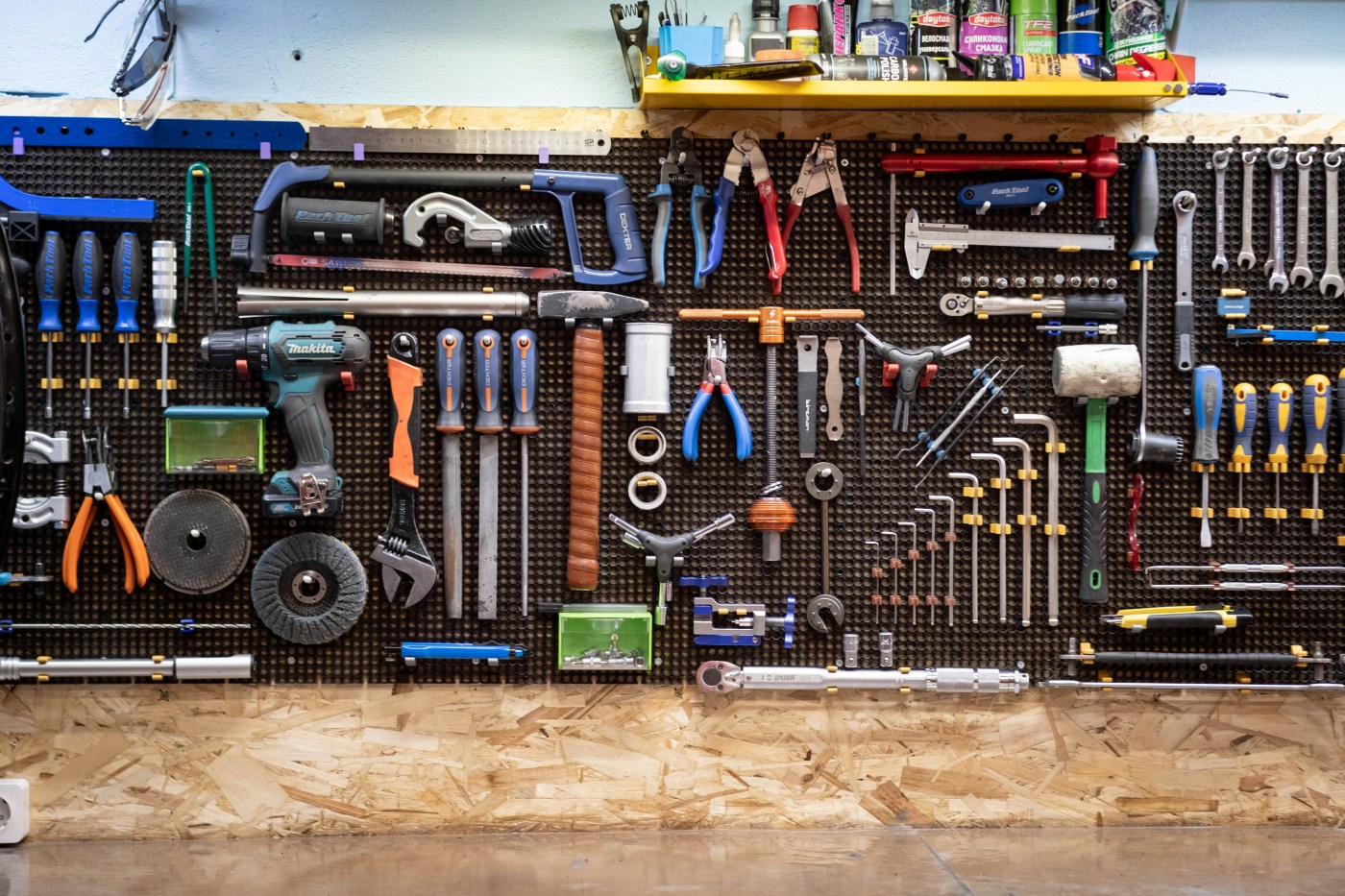
A couple of months ago, Magz showed me a video from an Australian YouTuber who was working on a project that required some woodworking tools. She and her husband didn’t have the necessary tools, so they went to a local tool library and borrowed what they needed. This was the first time I had heard of a tool library, and I was so thrilled and blown away that they exist. I quickly started researching tool libraries to learn more about them and where they exist, but it’s safe to say that we need more of them.
What’s a Tool Library?
A tool library is exactly what it sounds like: It’s a library, but instead of lending books, they lend tools. In some cases, they are connected to a community book library, so the library card allows a person to borrow books and tools. In other cases, like the one the Australian YouTuber showed, it’s a standalone library, so you pay an annual membership fee to borrow tools. But even when it costs money, it’s usually cheaper than the cost of a single new tool. A tool library in Buffalo, NY, has three membership levels – $30/year (can borrow 5 tools at a time; 1 user), $75/year (25 tools at a time; 1 user), and $150/year (50 tools at a time; 2 users). If you consider that even an affordable miter saw, like the 10-inch Metabo that I have, costs $140 on sale, a tool library membership is a no-brainer until you build out your tool collection.
Tool libraries tend to have a massive selection of tools to borrow. That includes hand tools and power tools, woodworking tools and gardening equipment, and automotive tools and painting supplies. You can find something as small as a mini hand clamp and individual router bits or as large as a jobsite table saw with a stand and air compressors. The possibilities are nearly endless.
When I first started researching tool libraries, I was surprised at how many of them exist in the United States. There’s a wonderful website called Tool Library Finder that lists 204 of them, with every state but Delaware, South Carolina, Alabama, Mississippi, Oklahoma, Nebraska, North Dakota, Wyoming, Nevada, and Alaska having at least one. Even Puerto Rico has one. Pennsylvania, where we live, has five of them; four of them are dedicated to woodworking, and the fifth is focused on gardening. So, if you live in America, there’s a good chance that you’re within driving distance of a tool library, and if you’re like me, you may not have known it existed. The bulk of them are located in concentrated centers of population and the Northeast, which has always been known for woodworking and craftsmanship, but there are also libraries in seemingly random places, like Carbondale, Illinois, or three in the Sioux Falls/Sioux City area.
Why Are Tool Libraries Important?
This post continues a trend of posts that I’ve published recently on tips for woodworking on a budget and how the internet has led people to believe that they need to have the very best equipment and tools to participate in a hobby. Tool libraries were one of my suggestions for woodworking on a budget. They are an incredible resource to a variety of people and for a plethora of reasons. People who are new homeowners and don’t have all the maintenance or lawncare equipment that they need, someone who doesn’t have the space to permanently store large tools, and a young person who doesn’t have the money to buy every tool are all examples of people who would benefit from a tool library. Tool libraries allow a person to borrow a tool they may only use once instead of having to buy and attempt to sell it after the fact. They also help a person to try different tool brands and features before buying one.
Finally, I think we’re living in a time where American politicians are so focused on money and profit that it’s easy to forget the importance of community and culture. On the surface, billionaires are controlling everything, and politicians promote policies that help these same billionaires. Yet, under the surface, community and culture are as rich as they’ve ever been, and I think tool libraries fit into this. Tool libraries exist to serve their communities. They’re often non-profits and operate to benefit local craftspeople, woodworkers, and gardeners. These libraries help people get started in a hobby that they’ve always wanted to participate in, aid in the maintenance of homes, and educate people on how to use tools, further developing a skill. I cannot see any negative to tool libraries, and the way they help to combat out-of-control capitalistic greed is exciting and a step in the right direction. I think we should all be focused on ways to improve our communities and their citizens. Supporting and promoting entities like tool libraries is a small way to carry out this mission.
Do you have a tool library close to you? If so, have you ever borrowed from it? And if you don’t have a tool library, there are ways to pursue creating one in your area. There are multiple Reddit threads that discuss establishing a tool library that is affiliated with a local book library. I think it starts with reaching out to your local book library and getting the conversation started. A library’s leadership team may not have known about tool libraries or that there is interest in having one in your community. And once that is known, that leadership team can share its invaluable experience of gathering funding and getting the project off the ground. We’re better humans when we live in community and support each other. Tool libraries are part of that.


Leave a Reply