
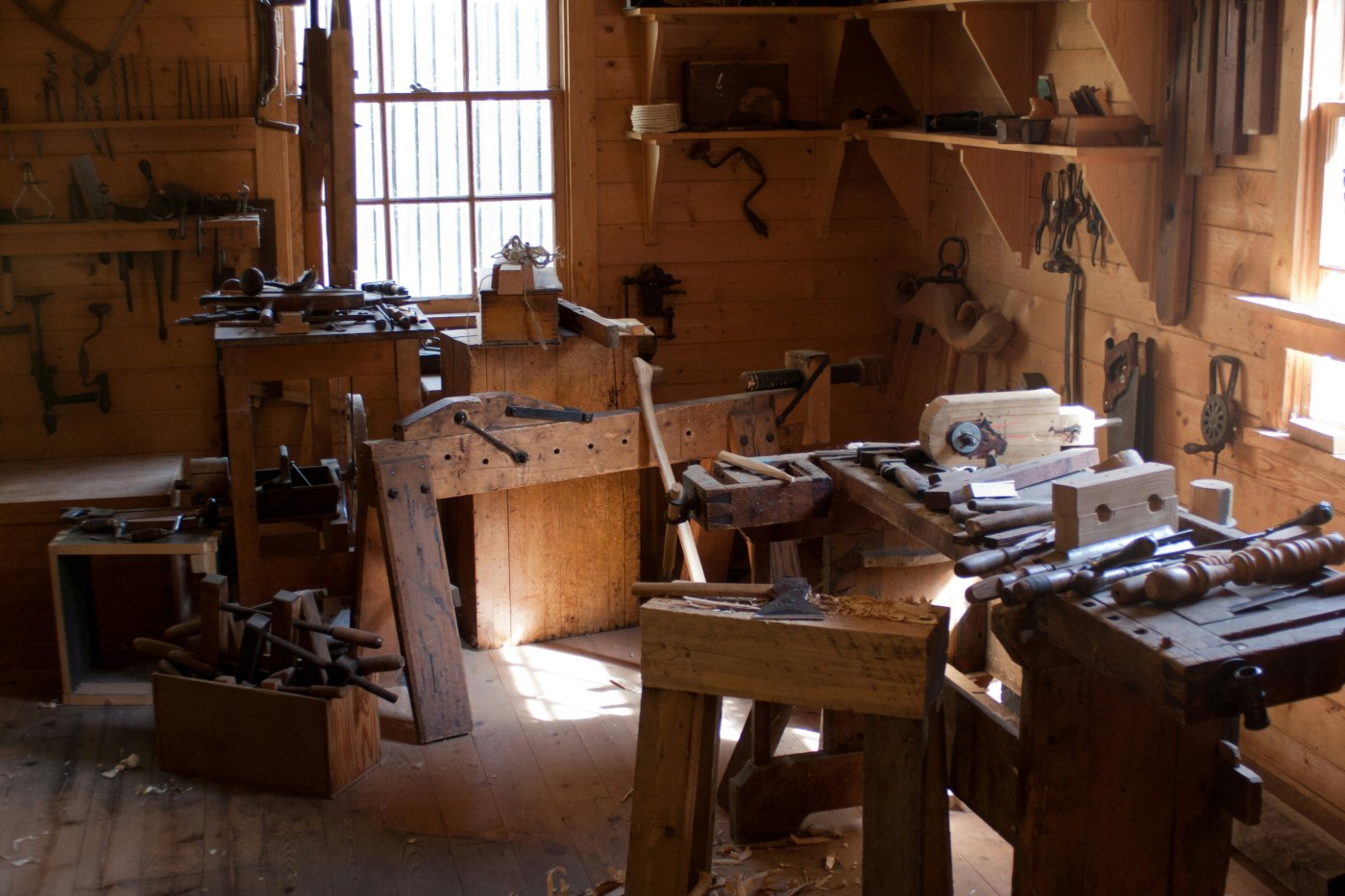
This is a post I’ve been wanting to write for some time, as I’ve started to publish more woodworking content on the blog. The topic stems from my post about how the Internet is ruining hobbies by selling lies. Something that really frustrates me is someone who is potentially interested in a hobby like woodworking becoming discouraged because they think the cost of entry is too steep, often the result of how content creators and influencers present the hobby online. Thankfully, some areas have opened tool libraries that allow members to borrow tools for a low monthly or annual fee. It’s a blessing to have one of these nearby, and it seems that more are opening, but if you don’t, there are still ways to begin woodworking on a budget. Here are some tips I’ve learned along the way for getting into woodworking and expanding your tool collection.
Buy Used or Buy Cheap – Not Both
There are generally two directions to consider when trying to start woodworking on a budget: buying used tools or buying cheap tools. Both are great options, but you should never buy used cheap tools. What do I mean?
Buying used tools on Marketplace or Craigslist or at an auction or a yard sale can be a great way to buy quality tools that were expensive when new. These tools are often older and heavier but will last for decades if they were maintained and continue to be moving forward. It’s pretty easy to find Sears/Craftsman, Delta, and old Dewalt tools online. They’ll usually have metal frames and may not be the color you associate with the modern versions, but they work. Older saws and joiners will often be belt-driven instead of the blade(s) being directly connected to the motor. This makes them heavier but also easier to work on and maintain. I bought my joiner this way and also considered buying a band saw and drill press used before finding the ones I ultimately bought. When buying used, thoroughly investigate the tool as much as you can before buying.
In contrast, buying cheap is straightforward: buying new tools that are more affordable than Dewalt, Rigid, Sawstop, Festool, etc. Ryobi, Craftsman, Bauer, Hercules, and Skillsaw are well-known brands that can be bought in stores in the U.S. and are very affordable. I have a Ryobi drill press, band saw, jig saw, reciprocating saw, and drill, and all work as intended. All but the drill were bought at our local outlet store. I also have a right-angle drill, router, dovetail jig, and many hand tools from Harbor Freight, which sells Bauer and Hercules. I’ve never had an issue with a Harbor Freight tool. On Amazon, you can buy brands such as Wen and Vevor, which have solid reputations. I have a Wen biscuit jointer and would like to buy their scroll saw when I get one. All of the tools listed above were at least $100 cheaper than a similar version bought at Home Depot or Lowe’s.
Prioritize How Much You Spend on Tools by Which You’ll Use the Most
I think the biggest issue new woodworkers run into is placing too much emphasis on tools that aren’t used often. In my woodshop, I use my table saw, miter saw, sanders, and band saw the most. They’re also the tools that I intentionally bought from brands with a reputation of reliability and durability. I have a Rigid table saw and belt sander, a Metabo miter saw and random orbital sander, and a Ryobi band saw. I already wrote about why I bought the band saw I did, and I’m confident in its reliability in spite of its price. A drill is another tool that often gets used in the woodshop, when repairing things, or around the house. I think it’s wise to invest in a drill and impact driver that will last. I have a set of Porter-Cable drills that have worked flawlessly for the past seven years. They weren’t the most expensive drills, but they also weren’t the cheapest.
My recommendation is to take time and make a list of the tools you think you’ll use the most, and it may be different for everyone. Once that list is prepared, find the most cost-effective option that still provides the durability, performance, and reliability you want. If that means buying a Sawstop table saw or a Dewalt sander, you should do what makes sense for you. In some cases, the price difference between a more expensive brand, like Bosch, and a Harbor Freight tool is only $10 or $20, so it could make sense to buy the Bosch even if it’s a tool you won’t use a lot. It’s just a matter of what’s available at a given time.
Don’t Be Afraid of Odd Amazon Brands, But Avoid Knock-Offs
Amazon is full of brands that you’ll never find anywhere else. The majority are made in China and often have names that can be humorous to native English speakers. A lot of people will write these off as cheap garbage, but don’t be so quick to overlook them. I love watching Project Farm’s reviews on YouTube, and something I’ve learned is that these Chinese brands are capable of producing a product that goes toe-to-toe with the name brands but at a reduced cost. In some of his tests, the cheap brands even outperform the name brands. Because a lot of tool brands share countries of origin, it’s fair to assume that many are made in the same factory, providing cheaper brands with access to the same technologies, molds, and toolings as the expensive brands.
At one point, Harbor Freight tools were considered cheap garbage, but now their reliability and performance compete with Dewalt, Milwaukee, and Makita. It’s worth taking the time to read/watch reviews and see if the Amazon brand will fit your needs. You may surprise yourself by finding a gem.
However, beware of blatant knock-offs that claim to be Dewalt, Milwaukee, Makita, etc. but with a price that seems too good. They’re often poor quality and can even be dangerous. Brands that imitate a name brand’s appearance by using the appropriate color are often okay, though.
Pick a Color for Battery-Powered Tools
For the majority of the above information, I’m talking about larger power tools and not drills or other battery-powered hand tools. But when it comes to battery-powered tools, I think it’s wise to pick a brand that best serves your needs and stick with their battery system. Power tool brands have unique colors: Dewalt is yellow, Makita is blue, Milwaukee is red, and Rigid is orange. Harbor Freight has blended this a bit because their Hercules line is similar to Makita, while their Bauer line is close to Milwaukee’s red. But you can still identify most tool brands by their color. Each brand has its own battery system that works with most if not all of their tools. Joining a brand that has a dozen or more tools that can use the same battery opens up a lot of opportunities.
This is a mistake that I made. I have Porter-Cable drills and a Bauer right-angle drill and chainsaw. I’m now at a place where I don’t know what brand to buy when I need to replace my drills. Porter-Cable still makes great drills but produces few other tools anymore. I’ll likely end up buying Bauer to take advantage of already having their battery and charger, but had I thought about this years ago, I could have gotten in front of this decision.
Know You Can Upgrade Later
The underlying thread of staying within your means when buying woodworking tools is that you’ll have the opportunity to upgrade down the road. You can buy a bunch of tools, learn which ones you use the most and what aspects you like or dislike with each tool, and then decide what direction to go in the future. Maybe the cheaper version you bought becomes your favorite. Perhaps you’ll want something with more power or better dust collection. Either way, you have the freedom to make that decision later when you buy an affordable option now. Contrast that with buying the expensive version first and realizing you don’t like it. At that point, you either have to sell it for a loss or deal with it.
I have plans to upgrade most of my tools in the future. I’d like a cabinet-style table saw that doesn’t fold down. I’d also like a more powerful wet/dry vacuum that works with more of my tools. Finally, I’d like a slider miter saw to cut wider boards. But my current versions continue to perform well and serve my needs, allowing me to buy additional tools to try out. I prefer having more tools than fewer more expensive tools. The ability to try different tools and see how useful they can be in the shop offers invaluable experience and learning opportunities.
It’s Important to Woodwork
The most important part of woodworking is actually working with wood. If it’s a hobby you think you could be passionate about, the best way to learn if you like it is to get your hands dirty and start building things. Getting started can be the most difficult part, but I urge you to buy the tools you can afford and give yourself a chance to love it. I don’t think you’ll regret it. And if you are a woodworker, I’d love to hear what tools you have and how you’ve found cost-effective ways to woodwork. Finally, if you need specific tool recommendations, let me know. I’d be happy to help.


Leave a Reply