
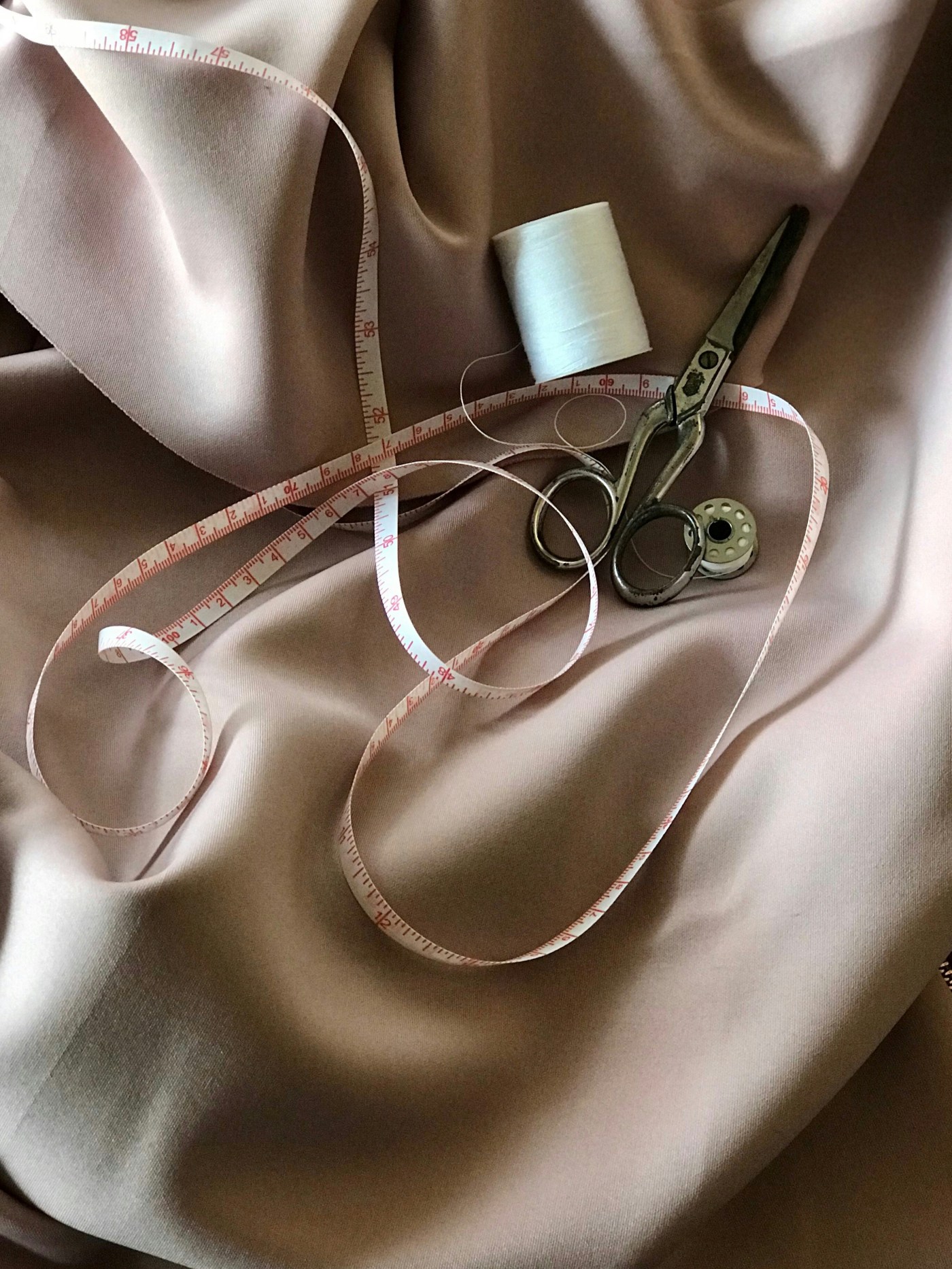
I’ve been sewing for five and a half years, and yes, it took me close to that amount of time to learn these helpful tips. The skill of taking a needle and thread to fasten pieces of fabric together is one of the most complex technologies I’ve ever learned, and yeah, some of the more obvious things can go over your head because there is so much to learn. Even with half a decade of sewing experience, I am still a rookie. Here are four things I have learned about sewing recently that have changed my sewing experience from a laborious struggle to a relaxing craft I want to do.
Needles
I knew I needed to change out my sewing machine needle consistently (which I usually forget to do), but did you know you should change out your hand needles often? Nope, I did not. I recently began changing my needles after each large project or after two small projects, and wow, the difference in hand fatigue is mind-blowing! My issue with sewing by hand has been the wear and tear on my hands, particularly some on my finger joints, which felt exhausted after hours of pushing the needle through the fabric – apparently that’s not how it is supposed to be. The needle should glide; cheap needles or needles that are dulled from use will not do this. I feel like a silly goose.
Now that I know and have experienced the difference between fresh needles and started purchasing DMC needles from my local fabric shop, I am sewing more. Most importantly, my hands are happy, my stitches are small and straighter – it’s like night and day. The needle glides into the fabric and through to the other side with minimal pressure, my thread is not getting tangled, and I am sewing with more efficiency. If you sew, go change your needles.
Shear Maintenance
Did you know you should oil and sharpen your fabric shears? I did not. It’s such a simple concept, though. Own thing, use thing, repair thing, use thing more. Repeat. What’s silly is that, in our disposable culture, I thought fabric scissors had a lifespan and had to be replaced once they dulled from wear. But regular maintenance, like a car, keeps them around and working well.
I keep my scissors crisp by cutting aluminum foil from time to time. I oil my shears with a towel, very carefully. Please don’t cut yourself like I did the first time.
Know About Me: Fabric Edition
Kill the doubt, I don’t want it, kill the fear, I don’t want it
Kill the rule, I don’t want it, kill the end, I don’t want itLet me show you that, show you that, mm-mm
Know about me…Let me show you that, show you that, mm-mm
Know about me (know about me, that’s that)– Nmixx, Fe:304 Forward
Researching fabric is important, but when you are first getting started, you feel overwhelmed and like you’ll never be able to cram all this knowledge into your head. There are a lot of fabric types! With two main families – woven and knit that separate into a myriad of options that will make your head spin. But truly, what will make your head spin more is not buying the proper fabric for the project at hand, with one caveat being in the beginning. When you are truly beginning, you just gotta see what is cheap or available because you are going to mess up – don’t use the good or expensive stuff to keep yourself from heartbreak.
I’ve started researching any fabric I am looking at to know if this textile will be applicable for the idea I have in my head, and pivot based on the information I glean. I thought it would be time-consuming, but it’s not. It saves money and fabric from being wasted in the chaos of choosing an incompatible fabric for your garment plan. You don’t want a stretch when you need a structured fabric. When you need opaqueness, a sheer fabric would throw a wrench in your plans. Fabrics, like people, have their own character, attributes, and talents. It’s more of a matchmaking process than just adding to the cart.
Ask a human. Ask a reputable website. Don’t ask ChatGPT. OpenAI is a little busy now with its Department of War contract, but don’t worry, they “promise” not to do mass surveillance or help create automatic weapons.
Hand Posture
I learned this final tip from Abby Cox and Nicole Rudolph during a TikTok Sewing Tutorial Reaction video. Sewing hand posture will determine your sewing experience. Whether you can sew for hours or for half an hour before you need a break. I used to sew with a hand-straining posture that created wrist, hand, and finger discomfort. Pulling the needle to the side, horizontally, reduces strain compared to pulling upward. It uses a light wrist flicking motion. Similarly, holding the fabric to the side with your wrist loosely bent will keep your hands relaxed and reduce hand strain. I have applied this new hand posture to my sewing, and it was a game-changer. I’m not surprised that I was doing it wrong. I am self-taught, but dang, the ability to sew a pair of pants by hand without hand strain was incredible!
I hope these sewing tips help you as much as they helped me. I wish you happy sewing!
 One Rabbit Riot