Weekly Garden Update #6 – Melon or Pumpkin?

In this week’s gardening update, I’m mainly going to focus on a plant that was supposed to be a melon but is looking more like a pumpkin with each passing day. Additionally, I’ll go over some of the harvesting that we’ve done as well as what we’re seeing in the garden. Let’s dive in.

Is It a Melon or a Pumpkin?

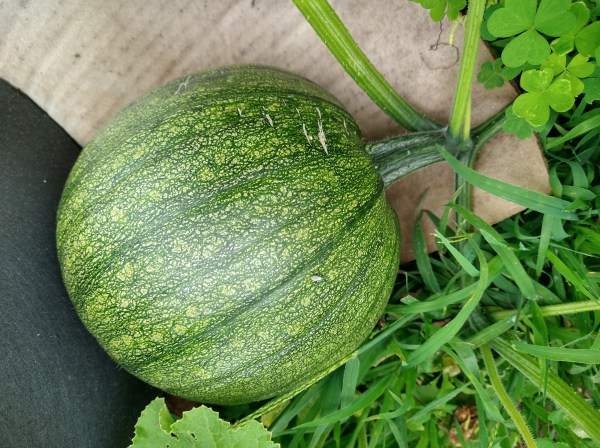
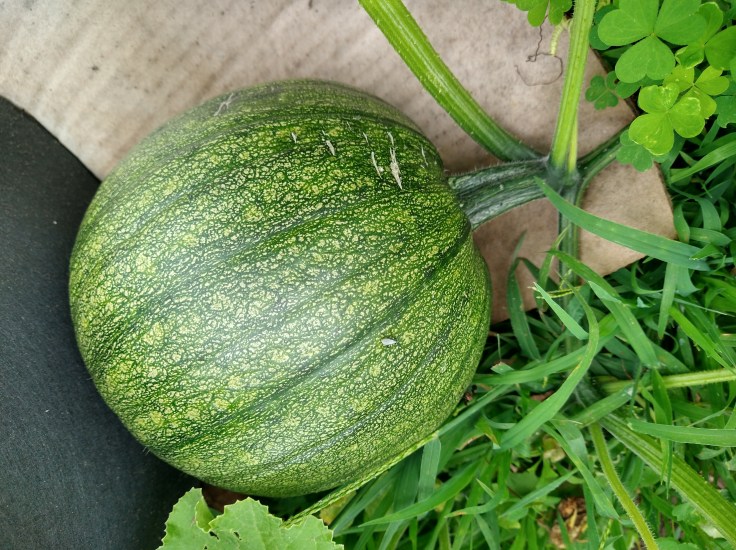
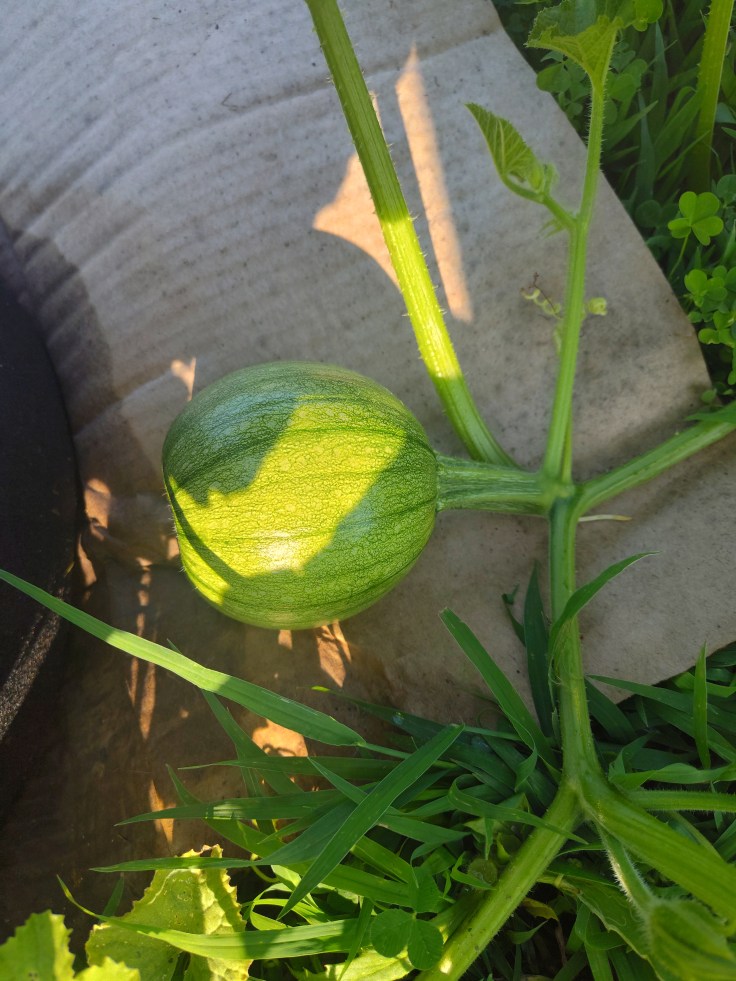
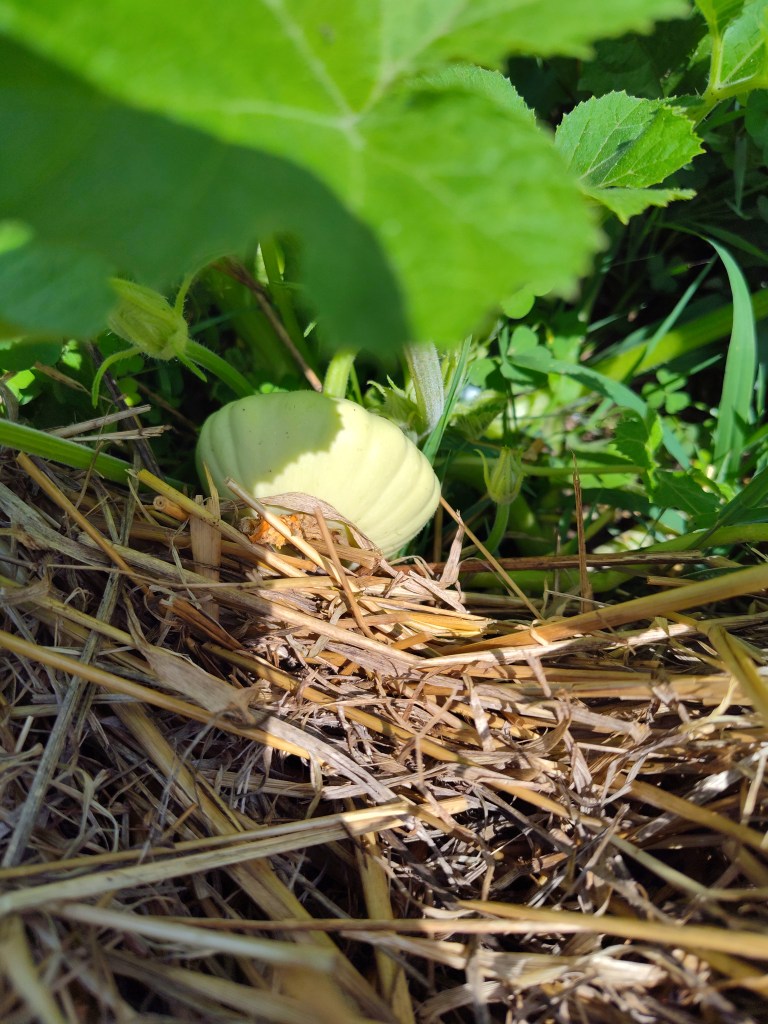
One look at this picture, and it’s obviously a pumpkin, right? That’s what we’re thinking now too. The skin is giving off serious pumpkin vibes, and the stem is thick and curved much like a pumpkin. Heck, even the leaves look like pumpkin leaves. And I expect that by early September it should begin to turn orange. So why did we think it was a melon? The answer is simple: we didn’t plant any pumpkins in this bed this year. In this section of the bed, we planted three varieties of melons, and for most of the plant’s life, I thought it was a melon plant. I obviously wasn’t paying attention to the leaf shape, which looks nothing like a melon leaf. This begs the question of how do we have a pumpkin when we didn’t plant pumpkin seeds?

Pumpkin
This pumpkin started out as a melon, or so we thought.

I think there are only two possibilities. One is that the envelope of Cream of Saskatchewan melon seeds we received actually had pumpkin seeds in it. I don’t think this is the case because I believe I would have noticed if the seeds looked like pumpkin seeds rather than watermelon seeds. Also, in this same row, we have several melon plants growing, so I’m confident we received and planted the proper seeds.

The other possibility is that this seed was left on the ground from last year and grew this spring. I’m confident this is what happened. We grew pumpkins in this bed last year, including a New England Sugar Pie variety, which is what this pumpkin looks like. There were a couple of pumpkins that deer started to eat, allowing seeds to fall on the ground. Then, this spring, I likely tilled them into the soil when I was turning it over, allowing this seed to germinate and grow. It’s similar to the rogue tomato plants we have in this same bed. Those are also growing well. I’m getting a kick out of how this happens, and we’re pretty happy with this pumpkin plant since the plants we’re intentionally growing aren’t doing all that well.

Squash, Beans, and First Tomato

We’re continuing to harvest summer squash, with the yellow crooknecks being ready to pick. We’ve also been picking more Costata Romanesca and Lebanese White Bush and have learned the importance of consistent watering and waiting until the vegetables are fully ripe before picking. One of our Costata Romanescas was firm for about 75 percent of its length before tapering to a soft section in the last 2 inches. We picked two Lebanese White Bushes. One was white and the other was a pale green. We learned that they need to be white before picking because it indicates full ripeness. We’re also starting to see the first patty pan squashes growing on the plants. Last year, these were our favorite summer squash to eat, so we’re really excited to be able to eat them again soon.

One thing I can’t figure out is why our winter squash have done nothing. We planted a couple varieties with multiple plants of each variety. Some of the plants have completely died off, while others haven’t taken off, and we haven’t seen any fruit development. It’s a similar story with our intentionally planted pumpkins. I’m unsure if this is the result of the intense heat wave we had in June or something else, but last year, our winter squash grew very well.

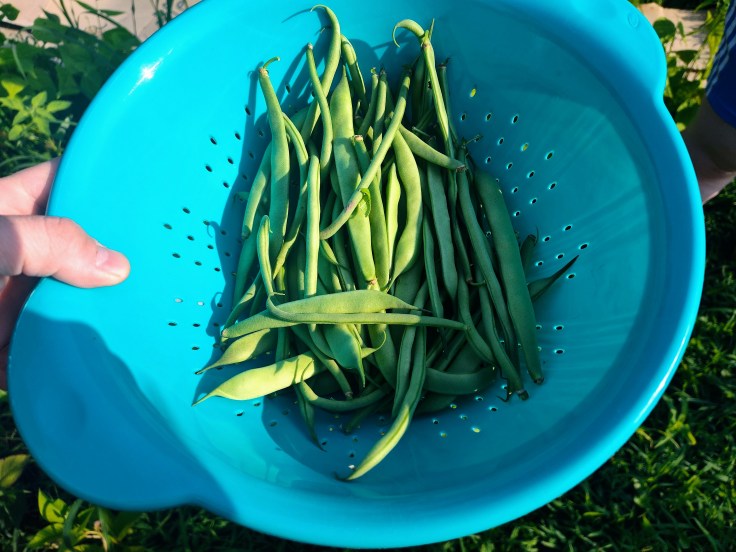
We continue to have an excellent year for beans. We’re picking a batch of them every couple of days and have been enjoying eating our fresh snap and wax beans. We’re also seeing pods on our shelling beans, which is really exciting.

Cherokee Wax, Blue Lake Bush, Iroquois Skunk Pole
Cherokee Wax, Blue Lake Bush, Iroquois Skunk Pole Beans

Finally, we harvested our first tomato last night. It was a cherry tomato was delicious. Our tomatoes have been kind of weird this year. The plants took off after being transplanted into the garden, but inconsistent watering, weed issues, and uneven temperatures led to some issues. At one point, it looked like most plants were going to die, but that’s no longer the case. There are a lot of tomatoes growing and starting to turn red, but the leaves are still brown and don’t look healthy. I’m choosing to focus on the positives in that we’re going to be able to harvest tomatoes from plants that don’t look great while thinking about ways to improve next year.

Cucumber Bitterness

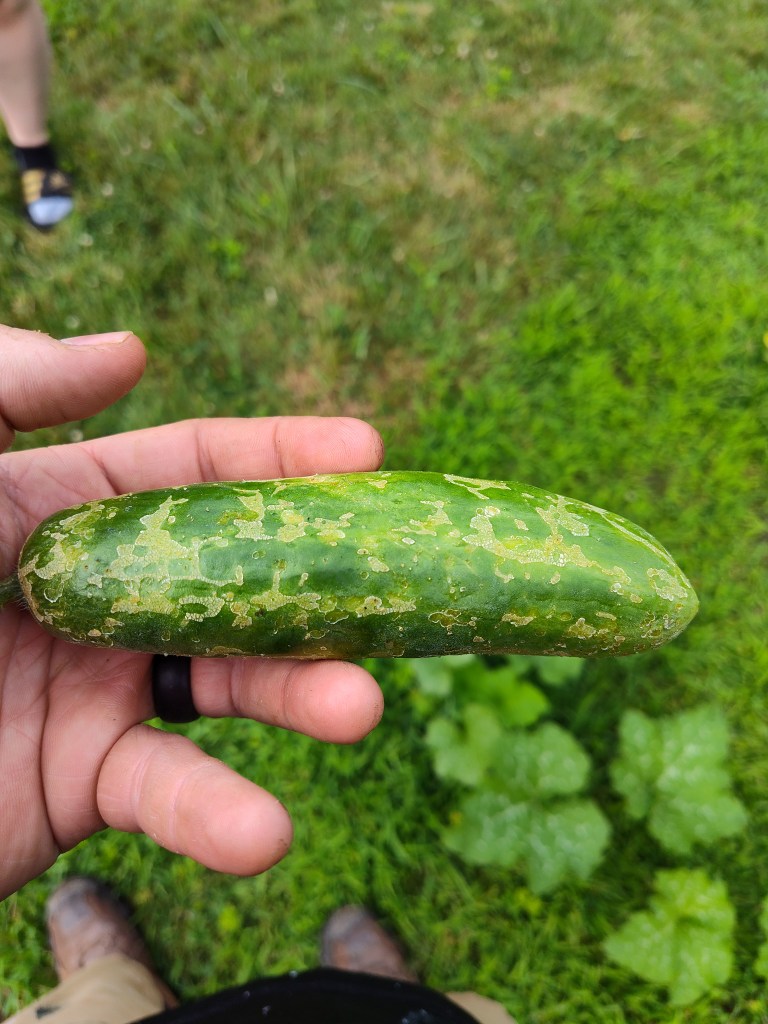
One of the most disappointing vegetables this year has been our cucumbers. Like our tomatoes, the plants took off after being transplanted, but a combination of not remembering how far the Bushy variety spreads and not being able to see the vegetables below the leaves has made it difficult to pick the cucumbers at the ideal size. And the flavor of these cucumbers has been hit and miss. Some have been amazing and similar to the freshest-tasting cucumbers I’ve ever eaten. Others, though, have been bitter and not pleasant to eat. This was due to the heat wave we had in June since cucumbers are apparently very heat-sensitive and respond to it by developing thicker skins, which causes bitterness. We may take a year off from growing cucumbers next year because they’re a bit finicky and annoying to grow. But when we do grow them again, I want to find a variety that is less heat-sensitive because we tend to get one weeklong heatwave each summer.

Up Next

Do you have any experience with cucumbers being bitter? If so, do you have any tips for addressing the issue at this point in the summer?

Weekly Garden Update #6 – Cucumbers, Zucchini, Corn Growth & More

In this week’s update, we finally harvested our first cucumbers from this year’s garden. We also picked more zucchini, our corn is producing ears, our melons are showing major growth, we harvested a bunch of beans, and more. Let’s dive in!

First Cucumber Harvest

Until last week, our cucumber plants were perplexing. As a refresher, we’re growing a variety called Bushy, which originally came from Russia and does well in cool climates. I started them from seeds and transplanted 4 plants into the garden, with 3 of them surviving. What has confused me about this cucumber is that the name Bushy implies a contained plant that doesn’t sprawl out. That hasn’t been the case, as the plants have vined out feet from the roots. Yesterday, I revisited the seed listing, and this variety still produces 5-foot vines, so they’re growing as expected.

Bushy Cucumbers, cucumbers
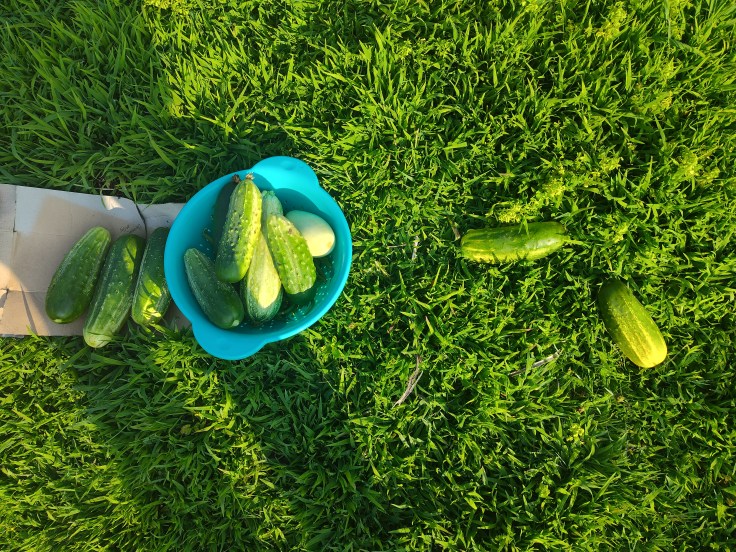
Cucumber Harvest

The other thing that’s perplexed me about them is how long they’re taking to grow. It felt like this year’s cucumbers (and other vegetables) were taking longer to mature than last year’s garden; however, looking at my weekly blog entries from last year, I learned that we didn’t pick our first cucumbers until the second week of July. So, at most, we’re a week late, which is almost entirely the result of the weather. The craziest part is that on Wednesday of last week, our cucumbers were only 3 or 4 inches long, but by Sunday evening, we picked 6 that were 7 to 8 inches long, with 2 of them being overripe. Magz cut 2 of the cucumbers into chunks, and we ate them raw with dinner. The Bushy cucumber is a very tasty variety that is firm enough to hold up to brining for pickles but still tender enough to be eaten fresh.

Experiencing New Summer Squash Varieties

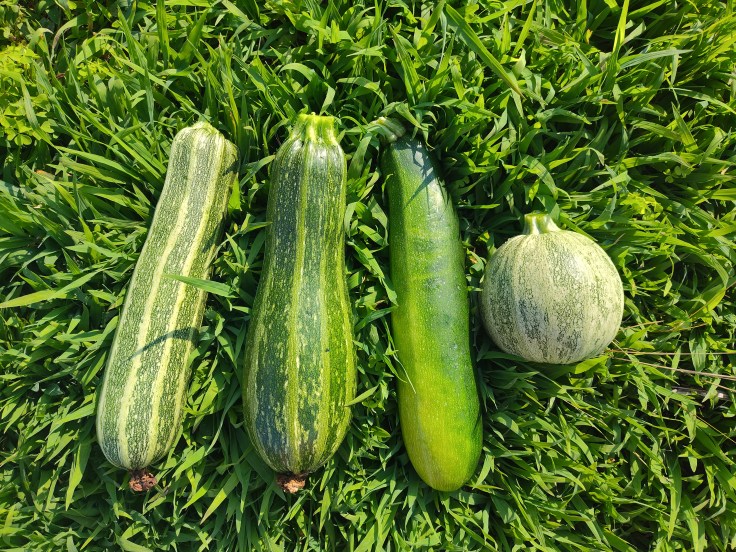
In last week’s update, I wrote about our first zucchini harvest for the year, which was a Costata Romanesca. Since then, we’ve picked 4 or 5 more of them as well as 3 or 4 Lebanese White Bush, 2 Ronde de Nice, and 1 Black Beauty. The Lebanese White Bush is an heirloom variety that produces 4-to-5-inch squashes that are light green in color. The Ronde de Nice is a French heirloom that has an acorn shape but is a summer squash. It can be dark or light green and is typically picked at 4 inches in diameter. The Black Beauty is the dark green zucchini that comes to mind for most people when they think of a zucchini. It has a smooth skin with an even color, and we pick ours when they’re 8 to 10 inches in length.

Costata Romanesca, Black Beauty, Ronde de Nice, zucchini
Costata Romanesca, Black Beauty, and Ronde de Nice summer squash

We’ve eaten at least one of each variety except for the Black Beauty, and all are delicious. My dad and stepmom visited us this past weekend, and we were able to send them home with some Costata Romanesca, Ronde de Nice, and Lebanese White Bush. My dad messaged me yesterday and said that they fried the Ronde de Nice and loved it. In a future blog post, I’ll review each variety and detail the flavors.

Corn Tassels and Ears

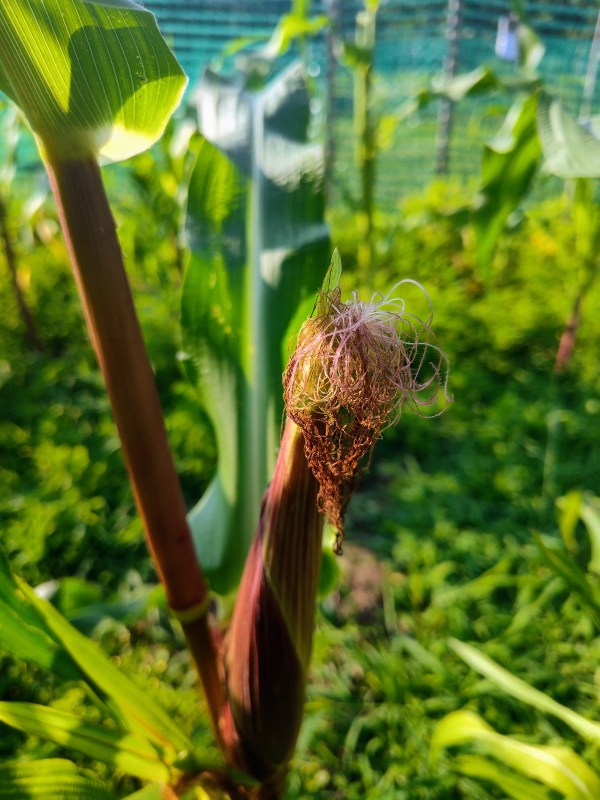
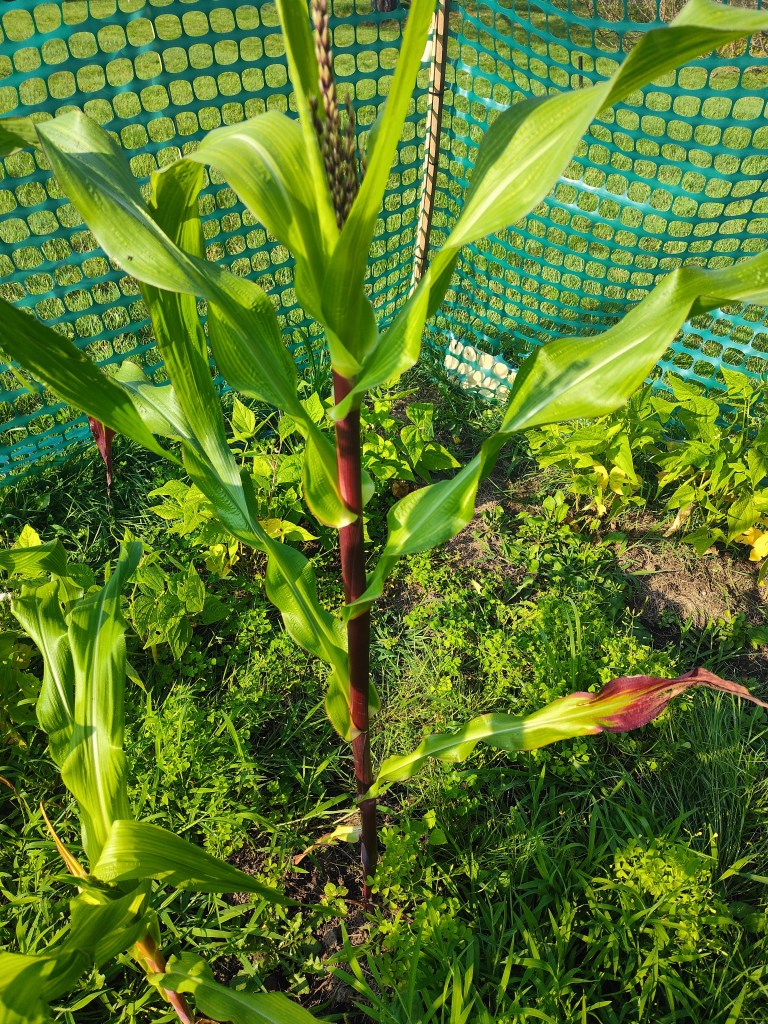
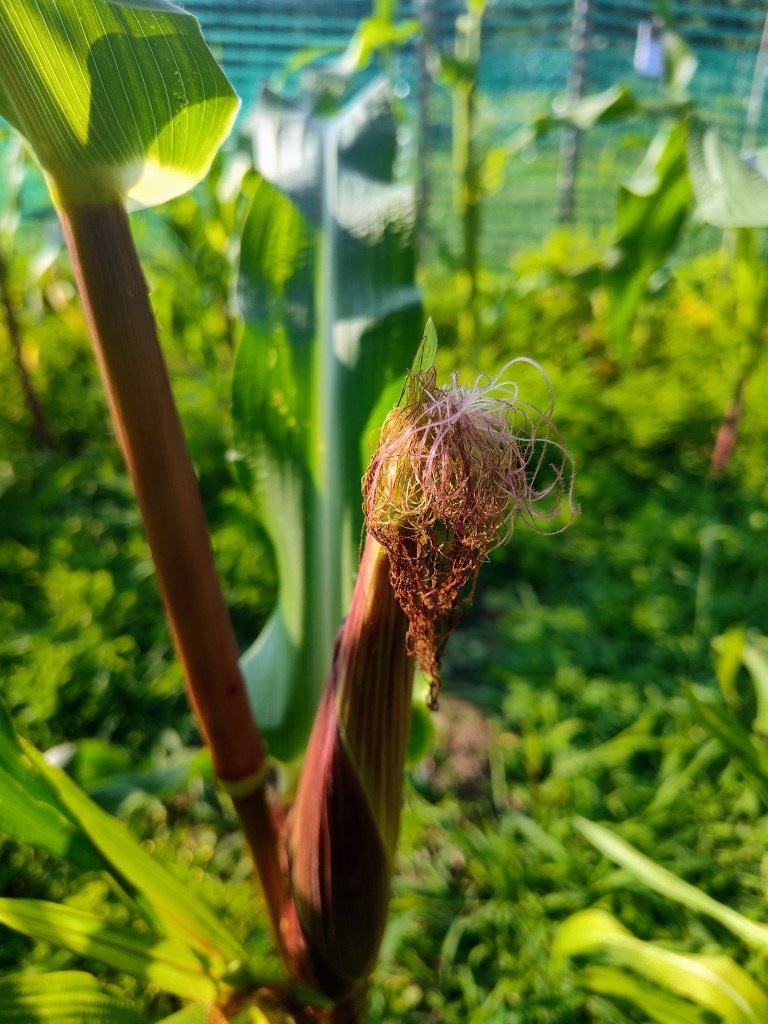
Our corn has really taken off over the past week. Our Painted Mountain corn has the most beautiful reddish-purple stalk, and even the tassels and silk have a purple tinge to them. They’re almost 6 feet tall and have ears developing. Meanwhile, our Sweet Mexican corn is approaching 7 feet tall, and the tassels are starting to appear. Nearly every day, we go out to the garden to tap the stalks to help germinate the ears.

A Bean Harvest

On Sunday, we had the joy of being able to harvest a full dinner’s worth of beans. We grew beans last year and were able to eat some, but they didn’t grow well, and we never had enough ripen at once to have as a meal. This year, conditions seem to be perfect for growing them, because we’re having a ton of success. We picked Beurre De Rocquencourt and Maxibel Haricot Vert, yielding a quart in total. Magz steamed them, melted butter over them, and added a pinch of Kosher salt and black pepper.

Beans, Maxibel Haricot Vert bean, Beurre de Rocquen bean
First bean harvest of 2026.

Even though we ate the two varieties together, you could taste a difference between the two beans, which I love. Yesterday, that harvest was followed up with another quart of beans, with Cherokee Wax beans comprising the bulk of the haul.

A Grab Bag of Topics – Potatoes, Peppers, Flax & More

Our potatoes continue to do well with the exception of one bag of Adirondack Blues. For some reason, that bag never took off, and on Saturday, I noticed that the plant that had been growing in it died. It’s not a big deal since we have 19 other bags that are doing well, and we’re going to use that bag to transplant a couple of the Gochugaru pepper plants I started late. In other pepper news, one of our habanero plants is producing fruit. It currently has 3 or 4 small peppers on it, each about 2 inches long.

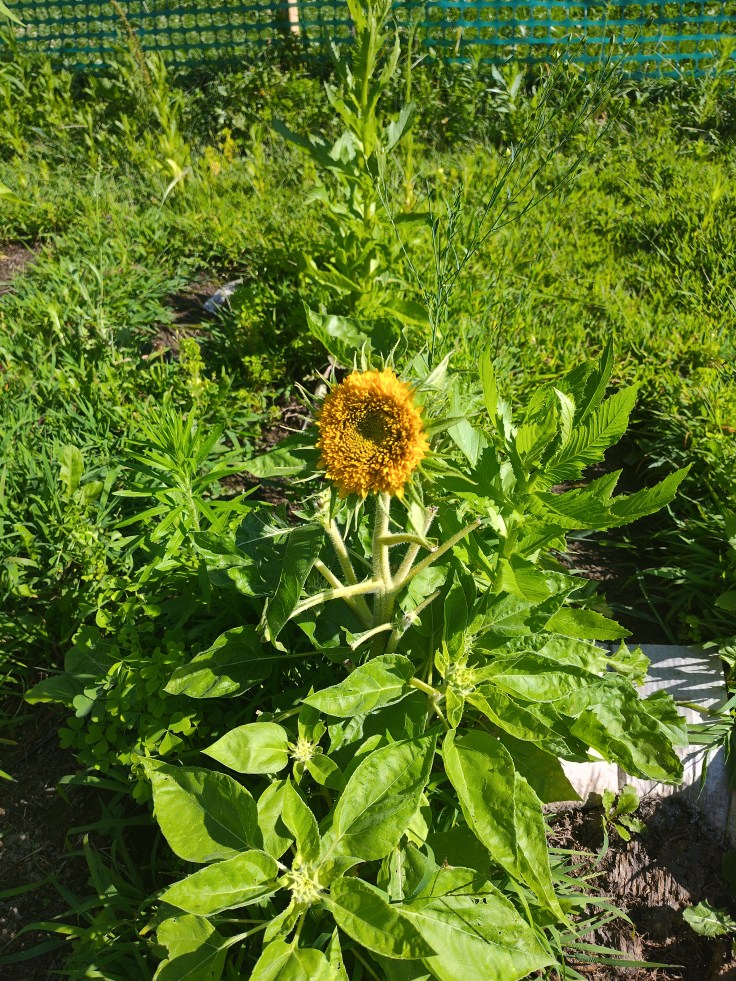
Our flax and sunflowers are looking great. The flax plants are about 2 feet tall and have a lovely light purple flower on top. Not knowing how they grow or what to expect from them has made the process of growing them all the more fun. What we didn’t realize is how much flax you need to grow in order to turn it into a sizable amount of yarn/thread. We thought that growing a few rows of it would yield a decent amount, but it looks like we’ll need to grow an entire bed of it in the future. Meanwhile, our sunflowers are 4 feet tall (Mammoth variety) and 12 inches tall (Teddy Bear). The plants are looking healthy, and we’re hopeful that we’ll get heads to form on them this year and that we can prevent the squirrels from attacking them.

Lastly, we’re beginning to see progress from our melons. All 3 varieties are vining nicely and producing flowers, but the Montreal Market and Pride of Wisconsin are stealing the show. Both have fruit growing. The Montreal Market is nearly the size of a softball, while the Pride of Wisconsin is close to tennis ball size. Happy Gardening!

Montreal Market Melon, Melon
Montreal Market melon growing

2026 Weekly Garden Update #2 – Wind, Moving Potatoes, Bean Germination

In this week’s update, we had a serious windstorm that tested our fences, in an effort to kill grass in the garden, we moved potato bags, and we finally had bean germination in the planters I built. Let’s dive in!

Windstorm Tested Our Fence

Last Thursday, we had a pretty strong windstorm that basically lasted all day. There wasn’t a thunderstorm attached to it, but this windstorm came on the heels of lots of rain that softened the soil. The windstorm didn’t have overly strong gusts of 40+ MPH, but it was a steady 15 MPH all day long with gusts around 25 MPH. The long-term consistency of it resulted in the wind working the weaker fence posts and bamboo stakes loose to the point where multiple sections of the fence were bent over and nearly falling on our garden beds. It even broke some of the posts off in the ground, making it impossible to hammer them back in.

I quickly cut and hammered in 6 more of the heavy-duty fence posts I wrote about last week, shoring up the most problematic sections. It’s really cool to watch how these thicker posts can take on the strain of the wind and weight of the fence without struggling. As I was attaching the fence to the posts with zip ties, I noticed that there were places throughout the garden where the fence material was stretching as it battled the wind. I think it was because there was only 1 vertical strip of the fence that was connected to the fence post, so it was carrying all the weight. In these places, I added a second zip tie and made sure that 2 vertical strips were attached. We’ve since had some more wind, and it looks to be doing better.

Moving Our Potato Bags

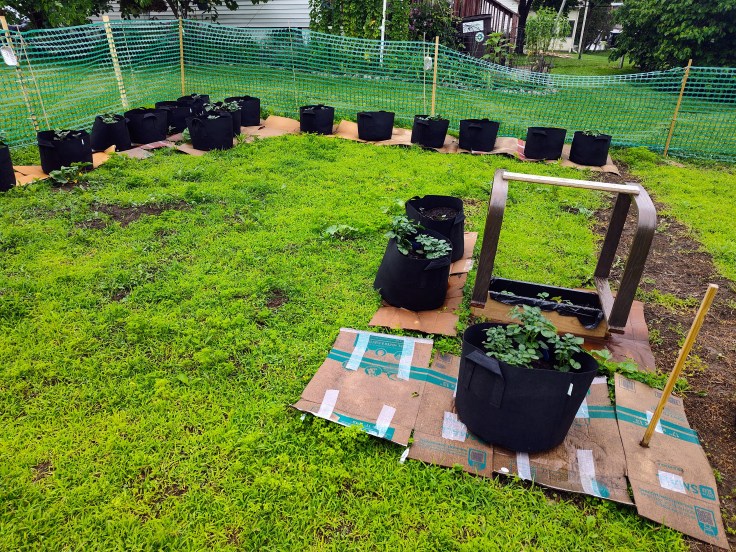
Since we planted our potatoes, we had the bags positioned at the side of our house. It was a great location because it got sun early in the morning, late in the afternoon, and in the evening. The house still provided shade during the hottest part of the day. They were also able to get adequate rain while being protected from strong winds. Last Friday, the bags were moved into our garden to weigh down the cardboard we placed in the beds to kill grass. Using cardboard as a weed killer is going very well. Within a week, the grass under the cardboard was mostly killed off, with bare soil exposed. What didn’t go as well, though, was the wind blowing the cardboard around the garden.

Potato bags, cardboard, fence
Our potato bags weighing down the cardboard that’s killing the grass.

I expected the cardboard to be heavy enough to stay put when it got wet, but that wasn’t the case. The same day that I cut new fence posts, I had to go out and gather the cardboard pieces that were blown around. The potato bags weigh a lot and will prevent the cardboard from being blown around in the future. The bags also look good in the garden, and it’s nice to be able to see all of our plants in one area. We’re also going to be using gallon milk jugs, vinegar bottles, and other used containers that we fill with water to weigh down additional cardboard pieces.

Getting Beans to Germinate

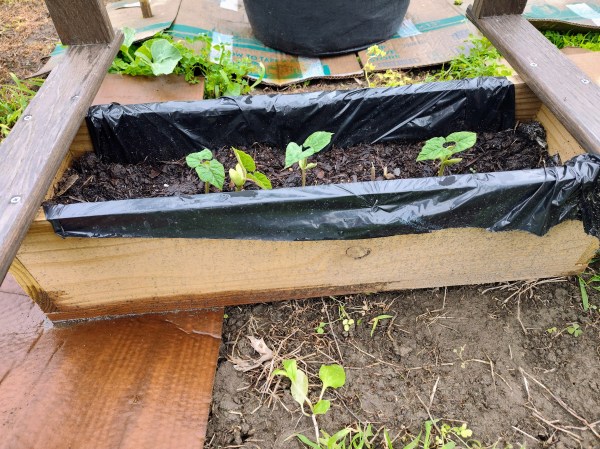
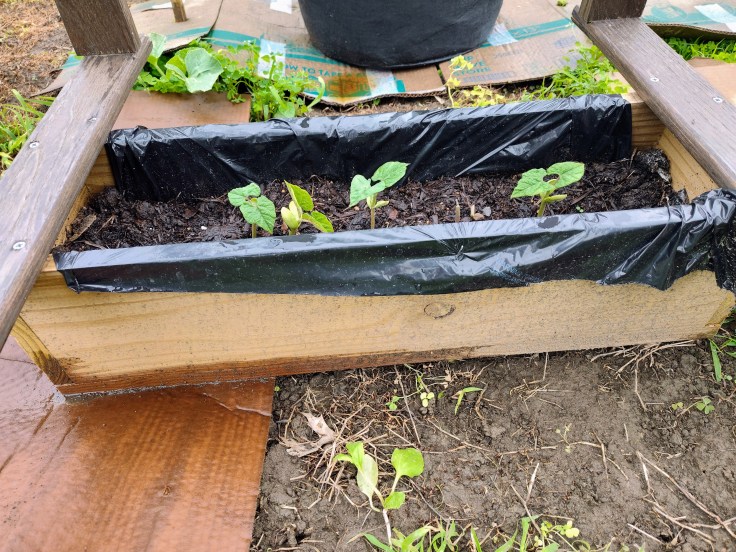
If you’re a regular reader of the blog, you’ll know that we’ve had issues with getting our beans to germinate in planters I built. There are three planters. Originally, one had Cherokee Trail of Tears beans in it, another had Grandma Nellie’s Mushroom beans in it, and the third had Mexican Sour Gherkin cucumbers in it. The beans never germinated, and the cucumber transplanted died. However, in another planter that I built last year, we had successful germination of Iroquois Skunk Pole beans. It was very perplexing. We resowed bean and cucumber seeds in the planters, but again, they failed. Finally, we tried planting in them a third time, but the difference this time is that we planted the Skunk Pole beans, which we had already successfully germinated. This past weekend, they finally germinated.

Iroquois Skunk Pole Beans, Bean Plants
Our Iroquois Skunk Pole Beans have germinated.

In all three planters, we have bean plants starting to grow, and now we have to figure out the trellising system. The Skunk Pole plants grow very tall (the first plants are roughly 8 feet tall), so we need to build an extension of some sort onto the existing planter so that the plants can thrive. I’m not certain what direction this will take, but I’ll follow up when it’s done. Right now, we’re very excited to have more beans growing.

Other Updates and Looking Ahead

The second batch of pumpkins, beans, corn, and squash that we sowed are doing great. It’s crazy that we went from roughly a 10-percent germination rate to a 100-percent one with the pumpkins and squash. It doesn’t make any sense. We need to sow more pea seeds when the weather cooperates to get a full row of plants, and closer to the end of the month, the plan is to sow the rest of our sweet corn rows. Happy gardening!

Weekly Garden Update #20 – Tomatoes, Corn Silk, Beans & More

In this week’s update, we have a lot of tomatoes ripening, but do we know the variety of each? It’s questionable. Our corn is starting to develop ears and silk. Along the same lines, we’re harvesting some beans, and there are a lot of blossoms on the other varieties. Finally, I’ll go over some general notes from the week, including pictures, and highlight this week’s Seed of the Week. Let’s dive in.

So Many Tomatoes

We have more than a dozen tomato plants, and the majority of them have fruit that is starting to ripen. Our paste tomatoes, which I originally thought were pear tomatoes, continue to grow and are now more than three inches long. Our actual pear tomatoes also have lots of fruit, and we harvested the first one on Saturday, immediately eating it. All of our pear and paste tomato plants have dozens of fruit on them. Then there are the Queen Aliquippa plants. These are the tallest tomato plants we have (more than three feet tall) and are growing lots of fruit. The problem we’re having is knowing when they’re ripe. Because they remain green when fully ripe, it’s not as obvious as red tomatoes. Thankfully, they develop a blushy red color on the bottom when they’re fully ripe, which will make it a bit easier to know when they’re ready.

That brings us to our Black Krim and Cherokee Purple tomatoes. These tomatoes look VERY similar to each other, growing to similar sizes when ripe and having similar colors and markings. Both are a deep red on the bottom with a dark blue/purple on the top. I think we bought two Cherokee Purple plants and four Black Krims, but it could be the other way around. The numbers could also be wrong. We kept the plant marker with the plants, but it’s currently buried under straw. If necessary, I’ll dig around to find it, but I’m hoping that we’ll be able to delineate between the two before that point.

Tomatoes
Black Krim or Cherokee Purple Tomatoes

Corn Silk Developing

Over the past week, our Butter & Sugar and Black Mexican-Sweet Iroquois sweet corn plants have grown to a point where they’re in tassel, with roughly half the plants now developing ears with silk showing. I think they’re still weeks away from being ready to be harvested, but they’re well on their way. The other variety, Hopi Blue, continues to grow and is close to five feet tall now. The three rows of Black Mexican-Sweet Iroquois that I planted a couple of weeks ago have germinated with nearly a 100 percent success rate. I’ll likely thin these seedlings as needed this week.

Corn
Corn Silk

Beans Are Finally Starting to Produce

We haven’t had the greatest success with growing beans this year. The late spring and overabundance of rain stunted their growth, and to this point, they’re still only about 18 inches tall. In the past, we’ve had bean plants reach 30 inches tall. That being said, we are starting to see some bean pods on the plants. We’ve been pulling Provider bush beans for about a week now, but only a few pods per plant. Although the pods are pretty small, they’re delicious eaten right out of the garden. Our Jamapa plants are also putting on pods, with at least one being five inches in length. This bean is a shelling variety, though, so we’re going to let it dry on the plant as much as possible before harvesting. Finally, we have the Kebarika beans. These can be harvested as snap beans or as shelling beans. Our plants have been flowering for about a week now, so the bean pods will be following.

Notes From the Garden

  • Last week, I weeded and thinned our carrot and beet bed. You may remember that we’ve had a lot of issues growing both this year; however, I’m refusing to give up. My hope is that by clearing the area around the plants and thinning them to only one root every four inches, they’ll be able to develop and be harvestable.
  • We now have four spaghetti squashes on our plant. The first two are about seven inches in length, the third one is now four inches in length but still green, and the newest one is still a baby with the blossom only recently falling off.
  • The mystery plant beside our spaghetti squash has started to put on fruit. After flowering, the fruit starts yellow and turns green.
  • We are beginning to become inundated with cucumbers. Our Boston Pickling cucumbers are rapidly growing. We’ve already harvested three, and there are at least a half-dozen more on the vine that will be ready in the next couple of days. Our burpless variety has produced two more full-size fruit, but we’ve had a pest getting to them. There have been little scrapes all over the fruit, and it’s the only variety with these, which is confusing. We’ve added some straw beneath the vines and fruit to help with any dampness problems, and I sprayed some insect killer on the plant.
  • Our tomatillos are coming on furiously. I understand why people say that you can quickly become overwhelmed by how many you’ll have. We have three plants, and each of them has more than two dozen husks.
  • The first White Scallop patty pan squash that we saw is now about four inches in diameter and two inches tall. Everything I’ve read has said that these will grow to six inches in diameter and three inches tall when fully ripe. They should be ready within a week.

Seed of the Week

This week’s Seed of the Week is the White Scallop, mostly because it’s doing so well, and we’re close to harvesting our first one. The White Scallop is a patty pan summer squash that is rounder and flatter compared to a zucchini. It’s one of the oldest squash varieties and has been grown by Native Americans for hundreds of years. Baker Creek, which is where we bought the seeds, writes that these were first depicted by Europeans in 1591, so we have evidence of them being grown for at least 400 years. These are very easy to grow. The plants don’t vine out or sprawl, but instead grow vertically and stay compact. They’re supposed to be one of the best-tasting squashes. We’re very excited to eat these.

Up Next

We’ll harvest our first White Scallop squash this week. We’re also hoping to harvest more tomatoes, especially some of the larger varieties. We’ll also likely harvest more cucumbers and need to figure out how to preserve them. Happy gardening!

Create a website or blog at WordPress.com

Up ↑