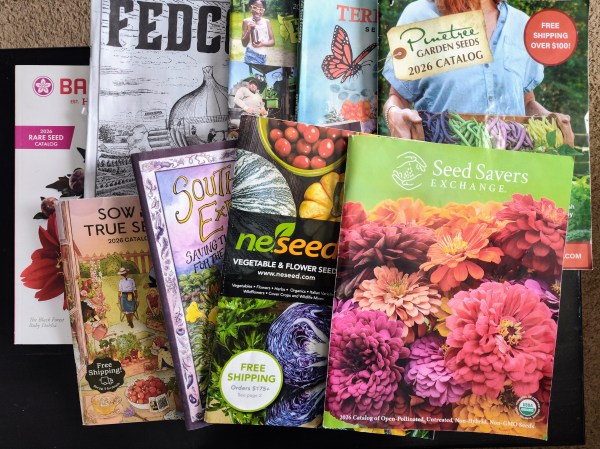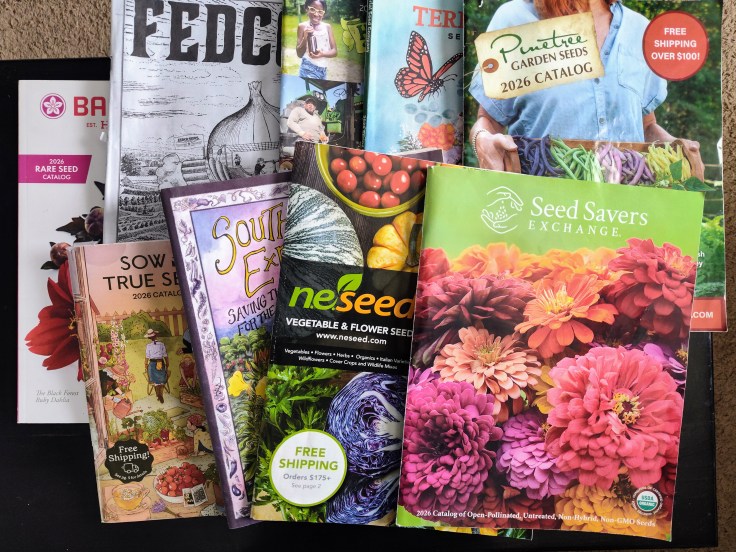
Reviewing Territorial Seeds’ 2026 Catalog

Ahead of the 2025 gardening season, one of my first posts on the blog was titled “Where to Buy Garden Seeds.” There was a heavy emphasis on the seed catalogs we requested, what we liked about each one, and the ones we purchased seeds from. This year, I’m doing things a bit differently by dedicating a post to each seed catalog. In each post, I’ll review the catalog, go over the things I like and dislike about it, and score the catalog. Here’s how I’m scoring all the catalogs.

Scoring Criteria

I’m going to be looking at the following areas and applying them to each catalog we receive:

  • Number of pages – 1 point per page over 100 pages; minus-1 point per page under 100 pages.
  • New varieties – 1/2 (.50) point for each new variety for 2026.
  • Total number of seeds – 1/4 (.25) point per seed.
  • Selection of “Specialty Seeds” – By “Specialty Seeds,” I mean any specially designated seeds that are separated from the other seeds. Examples are All-American Selections, Italian Gourmet, and Indigenous Royalties. – 1 point will be awarded for each specialty category.
  • Images – 1 point if there is an image for every seed; 1/2 (.50) point if fewer.
  • Non-Seed Offerings – 1 point for each category (fertilizers, seed-starting items, merchandise, weed control, pesticides, garden gear, etc.)
  • How Is it Organized/Ordered? – 1 point if its order is a positive; minus-1 point if it’s a negative.
  • Beauty – This is completely subjective, but it’s my way of determining if it’s aesthetically pleasing to look at. Does it include original artwork? Are the images crisp and clean? Is the text easy to read? A maximum of 10 points can be awarded.
  • What Sets it Apart or Makes it Unique? – This is another subjective category. What about a catalog makes it stand out from the others? A maximum of 10 points can be awarded.

Links to Other Reviews

Pages – 58 Points

Territorial Seeds’ 2026 catalog is 158 pages.

New Varieties – 46 Points

Territorial is offering 92 new varieties for 2026: 23 vegetable, 64 flowers, and 5 herb seeds.

Total Number of Seeds – 278 Points

They are selling 698 vegetable, 325 flower, and 89 herb seeds for a total of 1,112.

Specialty Seeds – 2 Points

Territorial offers two specialty seeds: All-American Selections and seeds that are part of the Territorial Select Maintenance Breeding Program.

Images – 1 Point

There is one image for each item offered.

Beauty – 8 Points

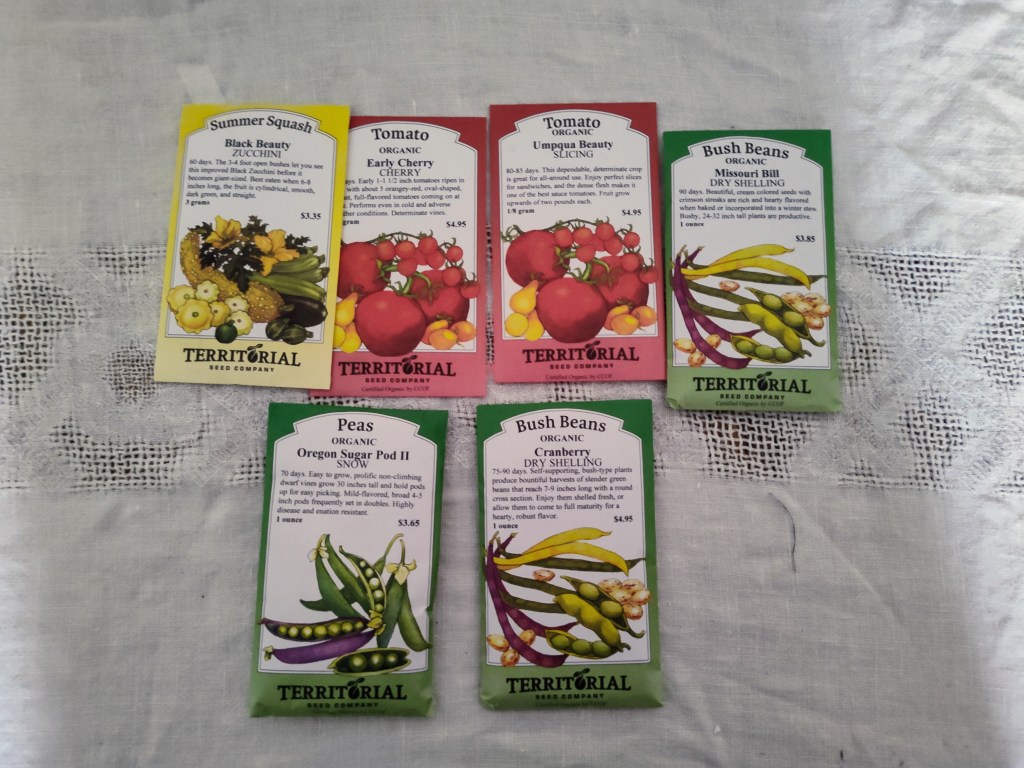
The catalog is lovely to look at. It features beautiful images and is very easy to read.

Non-Seed Offerings – 18 Points

Territorial offers non-seed items in the following categories: potting, containers, seed starting, irrigation, trellising, soil testing, season extenders & mulches, row covers, labeling, fertilizers & amendments, insect & pest control, beneficial insects, bees & bee supplies, tools, books, composting, greenhouse, and storage.

Unique Quality – 5 Points

Territorial’s catalog is wonderful and offers everything that you would expect from a seed catalog; however, it isn’t overly unique. It features everything you want but doesn’t stand out from any of the others.

How Is it Ordered/Organized? – 1 Point

The catalog is categorized by vegetables, flowers, and herbs and then each section is alphabetized.

Review

Time to be honest: We received Territorial’s catalog last year and didn’t enjoy it, but that wasn’t the company’s fault. We used to watch a YouTube channel and the people were big fans of Territorial. However, as the channel’s direction and the people’s approach to life changed, it put a sour taste in my mouth about Territorial. It’s unfair, but it’s the truth. I didn’t request their 2026 catalog, but it arrived in the mail one day, and I was fully prepared to not have an interest in it. But I flipped through it and was excited about how beautiful it was as well as how many unique varieties it featured. It reminded me why I requested their catalog in the first place.

The 2026 catalog is as beautiful as the previous ones have been. The cover artwork is gorgeous and features, insects, bees, and a butterfly. They offer bean and tomato varieties that I haven’t seen anywhere else. It’s a great catalog with competitive pricing that will result in us buying from them this year.

Score – 417 Points

Reviewing Fedco Seeds’ 2026 Seed Catalog

Ahead of the 2025 gardening season, one of my first posts on the blog was titled “Where to Buy Garden Seeds.” There was a heavy emphasis on the seed catalogs we requested, what we liked about each one, and the ones we purchased seeds from. This year, I’m doing things a bit differently by dedicating a post to each seed catalog. In each post, I’ll review the catalog, go over the things I like and dislike about it, and score the catalog. Here’s how I’m scoring all the catalogs.

Scoring Criteria

I’m going to be looking at the following areas and applying them to each catalog we receive:

  • Number of pages – 1 point per page over 100 pages; minus-1 point per page under 100 pages.
  • New varieties – 1/2 (.50) point for each new variety for 2026.
  • Total number of seeds – 1/4 (.25) point per seed.
  • Selection of “Specialty Seeds” – By “Specialty Seeds,” I mean any specially designated seeds that are separated from the other seeds. Examples are All-American Selections, Italian Gourmet, and Indigenous Royalties. – 1 point will be awarded for each specialty category.
  • Images – 1 point if there is an image for every seed; 1/2 (.50) point if fewer.
  • Non-Seed Offerings – 1 point for each category (fertilizers, seed-starting items, merchandise, weed control, pesticides, garden gear, etc.)
  • How Is it Organized/Ordered? – 1 point if its order is a positive; minus-1 point if it’s a negative.
  • Beauty – This is completely subjective, but it’s my way of determining if it’s aesthetically pleasing to look at. Does it include original artwork? Are the images crisp and clean? Is the text easy to read? A maximum of 10 points can be awarded.
  • What Sets it Apart or Makes it Unique? – This is another subjective category. What about a catalog makes it stand out from the others? A maximum of 10 points can be awarded.

Links to Other Reviews

Pages – 75 Points

Fedco’s 2026 catalog is 175 pages.

New Varieties – 16 Points

They are offering 32 new varieties for 2026.

Total Number of Seeds – 415.75 Points

Fedco is offering 965 vegetable, 120 herb, and 578 flower seeds for a total of 1,663 varieties. That is the most seeds offered by any company this year, which shocked me. I expected Baker Creek to offer the most.

Specialty Seeds – 5 Points

Fedco sells seeds that include Indigenous Royalties, Black Benefit Sharing, Breeder Royalties, Independent Plant Breeders, and A Seed Without a Price. Fedco is dedicated to seed/plant freedom and independence, and they are open about which seeds include royalties going back to the breeder, farmer, or people group that developed the variety.

Images – .5 Points

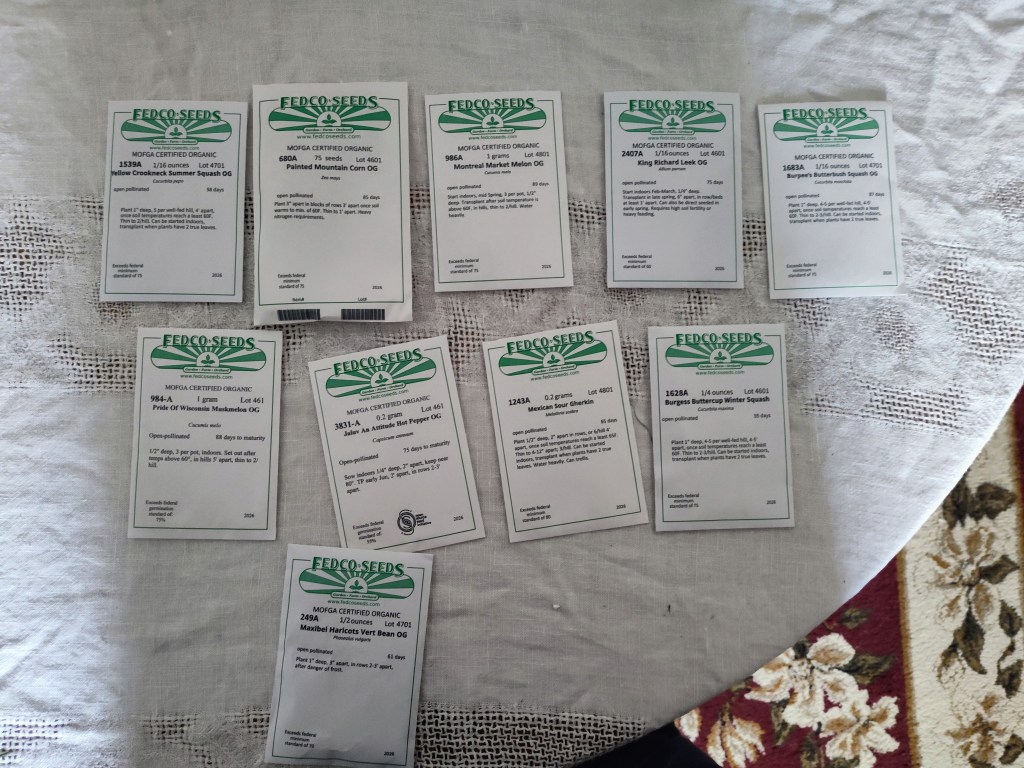
Fedco doesn’t have any real images; however, they do have artwork that depicts the vegetable, but not every seed has a piece of art.

Beauty – 6 Points

The catalog has beautiful artwork, but there are no images, as mentioned above. Plus, the artwork is all in black and white, which makes it tough to know what the vegetables look like. I love the artwork, and we’ve used color pencils to colorize past catalogs, but the lack of colored images does make it more difficult to pick seeds.

Non-Seed Offerings – 14 Points

Fedco features non-seed offerings in the following categories: inoculants & probiotics, soil amendments & fertilizers, Fedco’s fertilizer mixes, compost & potting soil, mulches, fencing & netting, floating row covers, plant protection & plant control, seed starting, garden tools, orchard tools, drip irrigation, garden garb, and books.

Unique Quality – 10 Points

I think Fedco produces the most unique and interesting catalog of any company we buy from. It is printed on paper that feels like a newspaper, and the entire catalog looks like a mail order catalog that was sent out in the 1800s. If you’ve played Red Dead Redemption 2, envision the catalogs you buy things from in the stores. All the artwork is fun and stunning.

How Is it Ordered/Organized? – 1 Point

Fedco’s catalog is categorized by vegetables, herbs, and flowers with the varieties being alphabetized. Then, they go further and break down each seed variety in subcategories. For example, beans are broken down into bush (green, Roma, purple, wax), Bush haricots verts, shell and dry, pole, miscellaneous, lima, and soybeans.

Review

Fedco’s 2026 seed catalog lives up to expectations. It’s always one of the most beautiful catalogs that we receive, and it’s one we look forward to each year. It was not free, but at only $3, which also includes a $3 coupon that can be used when you place an order, it’s still a bargain. The seed artwork is as beautiful as it always is, and Fedco’s transparency about its stances on seed independence, breeder royalties, and more is always welcome. We love companies that care about gardeners and the preservation of seeds, which is certainly Fedco.

Score – 543.25 Points

Reviewing Baker Creek’s 2026 Seed Catalog

Ahead of the 2025 gardening season, one of my first posts on the blog was titled “Where to Buy Garden Seeds.” There was a heavy emphasis on the seed catalogs we requested, what we liked about each one, and the ones we purchased seeds from. This year, I’m doing things a bit differently by dedicating a post to each seed catalog. In each post, I’ll review the catalog, go over the things I like and dislike about it, and score the catalog. Here’s how I’m scoring all the catalogs.

Scoring Criteria

I’m going to be looking at the following areas and applying them to each catalog we receive:

  • Number of pages – 1 point per page over 100 pages; minus-1 point per page under 100 pages.
  • New varieties – 1/2 (.50) point for each new variety for 2026.
  • Total number of seeds – 1/4 (.25) point per seed.
  • Selection of “Specialty Seeds” – By “Specialty Seeds,” I mean any specially designated seeds that are separated from the other seeds. Examples are All-American Selections, Italian Gourmet, and Indigenous Royalties. – 1 point will be awarded for each specialty category.
  • Images – 1 point if there is an image for every seed; 1/2 (.50) point if fewer.
  • Non-Seed Offerings – 1 point for each category (fertilizers, seed-starting items, merchandise, weed control, pesticides, garden gear, etc.)
  • How Is it Organized/Ordered? – 1 point if its order is a positive; minus-1 point if it’s a negative.
  • Beauty – This is completely subjective, but it’s my way of determining if it’s aesthetically pleasing to look at. Does it include original artwork? Are the images crisp and clean? Is the text easy to read? A maximum of 10 points can be awarded.
  • What Sets it Apart or Makes it Unique? – This is another subjective category. What about a catalog makes it stand out from the others? A maximum of 10 points can be awarded.

Links to Other Reviews

Pages – 63 Points

For the Baker Creek catalog, I’m referring to the free version that is 163 pages. There is also an expanded version that is more than 500 pages and costs $14.95 to order.

New Varieties – 5.5 Points

They are offering 11 new varieties for 2026.

Total Number of Seeds – 359.75 Points

Baker Creek offers 886 vegetable, 448 flower, and 105 herb varieties for a total of 1,439. To this point, this is by far the most seeds offered by a company. Not all of them are featured in the free catalog, however.

Specialty Seeds – 0 Points

All of Baker Creek’s seeds are heirlooms, which I don’t count as specialty since that’s all they sell.

Images – 1 Point

They include one image for every item sold in the catalog.

Beauty – 10 Points

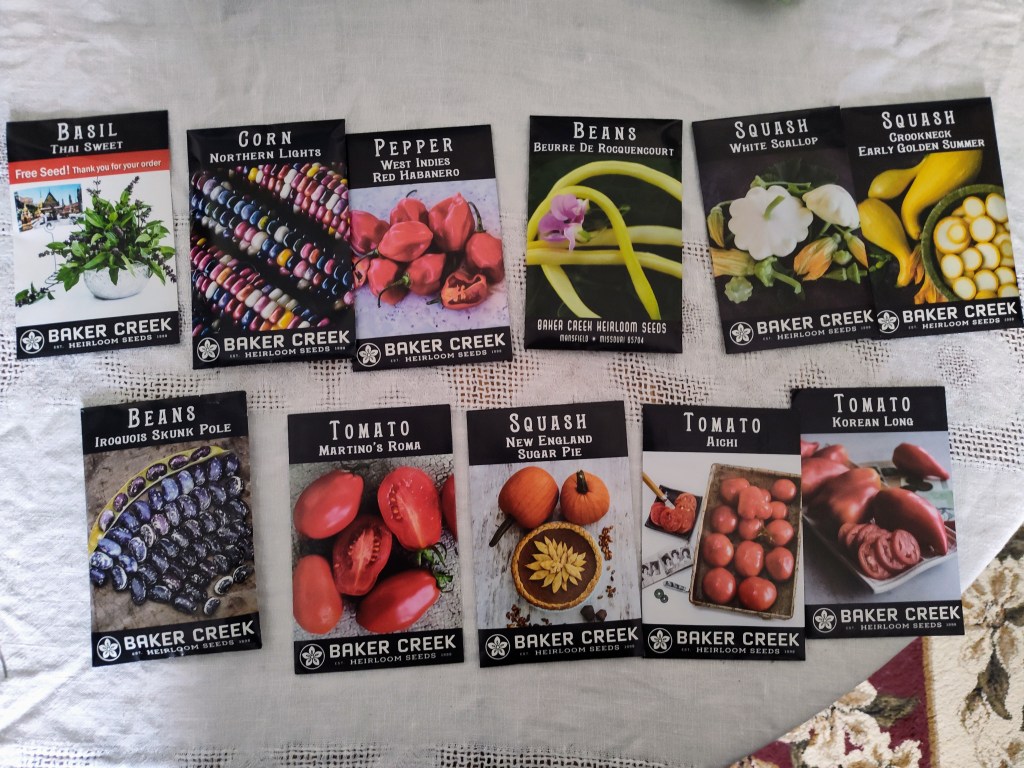
I’m a big fan of Baker Creek’s catalogs. The images are beautiful, and most of the time, you see more than just the vegetable or flower. They often include images of how the item can be used in juices, salads, etc. There are also several pages dedicated to a single seed, essentially giving a full-page ad for one item.

Non-Seed Offerings – 5 Points

They offer non-seed items in the following categories: books, clothing, fertilizer, gardening tools, and sourdough starters.

Unique Quality – 7 Points

Baker Creek has fun with its catalogs. As mentioned above, they like to include images of how the item can be used, such as teas from edible flowers, juices from vegetables and fruit, and custards from pumpkins. If a variety is especially large, they’ll feature an image of someone holding the item to show how large it is. Baker Creek is owned and operated by an eclectic group of people, which comes across in the catalogs.

How Is it Ordered/Organized? – 0 Points

I actually don’t enjoy how Baker Creek organizes their free catalog. I haven’t looked at their larger catalogs, but I’m assuming it’s organized in a similar manner. While it’s alphabetized, which I appreciate, the seeds aren’t categorized by vegetable/flower/herbs, so it’s actually a bit difficult to find specific seed varieties.

Review

We have been fans of Baker Creek for probably six years now. The first mini garden we had together was grown from a lot of Baker Creek seeds. Their seeds are of the highest quality, and they have varieties that no other companies offer. They are a company that is dedicated to seeds and helping people live self-sustaining lives. They host several homesteading events each year at their headquarters in Missouri, and gardening plays a key role in those events. Their catalog conveys the care and dedication they have for gardening and seed preservation.

Score: 451.25 Points

Reviewing Seed Savers Exchange 2026 Seed Catalog

Ahead of the 2025 gardening season, one of my first posts on the blog was titled “Where to Buy Garden Seeds.” There was a heavy emphasis on the seed catalogs we requested, what we liked about each one, and the ones we purchased seeds from. This year, I’m doing things a bit differently by dedicating a post to each seed catalog. In each post, I’ll review the catalog, go over the things I like and dislike about it, and score the catalog. Here’s how I’m scoring all the catalogs.

Scoring Criteria

I’m going to be looking at the following areas and applying them to each catalog we receive:

  • Number of pages – 1 point per page over 100 pages; minus-1 point per page under 100 pages.
  • New varieties – 1/2 (.50) point for each new variety for 2026.
  • Total number of seeds – 1/4 (.25) point per seed.
  • Selection of “Specialty Seeds” – By “Specialty Seeds,” I mean any specially designated seeds that are separated from the other seeds. Examples are All-American Selections, Italian Gourmet, and Indigenous Royalties. – 1 point will be awarded for each specialty category.
  • Images – 1 point if there is an image for every seed; 1/2 (.50) point if fewer.
  • Non-Seed Offerings – 1 point for each category (fertilizers, seed-starting items, merchandise, weed control, pesticides, garden gear, etc.)
  • How Is it Organized/Ordered? – 1 point if its order is a positive; minus-1 point if it’s a negative.
  • Beauty – This is completely subjective, but it’s my way of determining if it’s aesthetically pleasing to look at. Does it include original artwork? Are the images crisp and clean? Is the text easy to read? A maximum of 10 points can be awarded.
  • What Sets it Apart or Makes it Unique? – This is another subjective category. What about a catalog makes it stand out from the others? A maximum of 10 points can be awarded.

Links to Other Reviews

Pages – 55 Points

Seed Savers Exchange’s (SSE) 2026 catalog has 155 pages.

New Varieties – 8.5 Points

SSE is offering 17 new seed varieties for 2026.

Total Number of Seeds – 158.25 Points

SSE is selling 475 vegetable, 120 flower, and 38 herb varieties for a total of 633.

Specialty Seeds – 1 Point

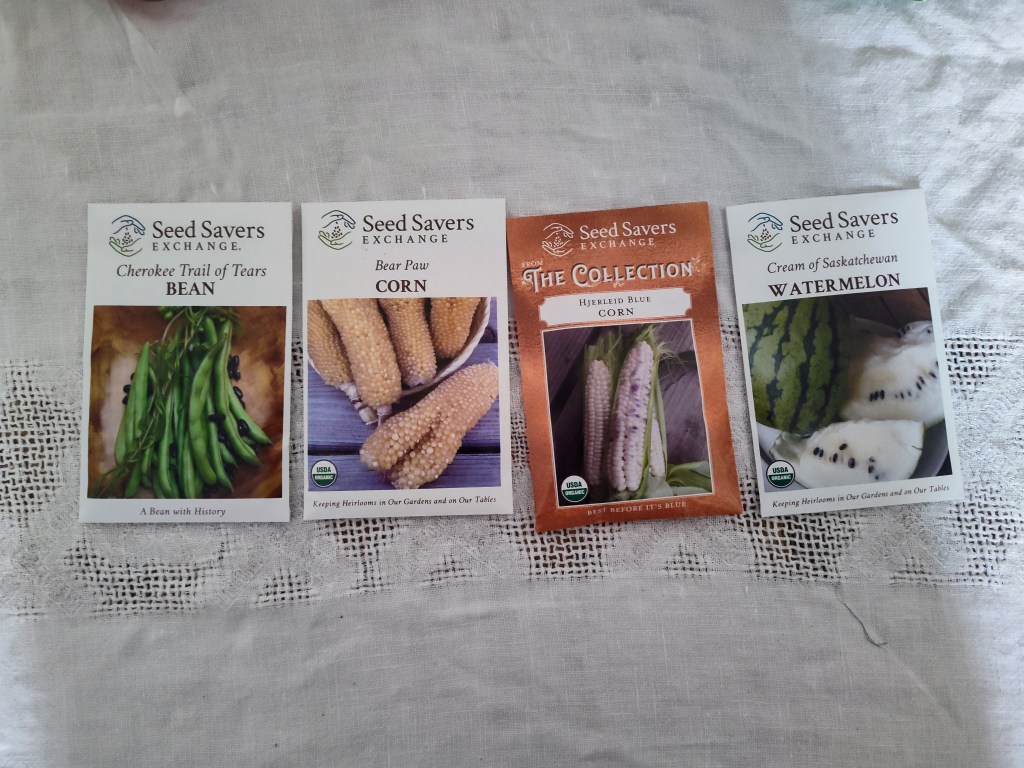
Seed Savers features one type of specialty seed. They’re called the “From the Collection” seeds, which are varieties that are featured by the company on an annual basis. To quote the catalog, these seeds “were entrusted to SSE for preservation in our seed bank to ensure they are protected and available both today and for generations to come.” They are designated in the catalog with a copper badge.

Images – 1 Point

There is one image for every item sold.

Beauty – 10 Points

The SSE catalog features beautiful, clear images that highlight the differences between the different varieties. The font is large and easy to read. I also love the non-seed images. It’s a lovely catalog to look at.

Non-Seed Offerings – 5 Points

Seed Savers has non-seed offerings in the categories of apparel, books, garden tools, kitchen gifts, and seed saving tools.

Unique Quality – 9 Points

As a seed catalog, it’s pretty standard. It does everything you would expect without missing anything. However, it’s the non-seed content where the catalog really shines. There are numerous stories, growing tips, recipes, and more. SSE is a non-profit that is devoted to preserving seeds and helping gardeners to best use the vegetables they grow. This dedication shows in the catalog.

How Is it Ordered/Organized? – 0 Points

The seeds are categorized into vegetables, herbs, and flowers, with each category being alphabetized. That is a positive. However, the tomatoes are organized by color rather than “type,” which makes it a bit difficult to find specific varieties. That’s a negative.

Review

We received Seed Savers Exchange’s 2025 catalog, which was our first experience with the company. However, we didn’t purchase any seeds from them last year and weren’t expecting to receive a catalog for 2026. But since we did receive one, we are giving it a very detailed look through and have found so many seeds that we’re interested in. We also love the company and everything they stand for. If you’re dedicated to the preservation of seeds and food cultures, SSE is a seed company that you’ll love.

Score: 247.75 Points

Reviewing High Mowing Organic Seeds’ 2026 Seed Catalog

Ahead of the 2025 gardening season, one of my first posts on the blog was titled “Where to Buy Garden Seeds.” There was a heavy emphasis on the seed catalogs we requested, what we liked about each one, and the ones we purchased seeds from. This year, I’m doing things a bit differently by dedicating a post to each seed catalog. In each post, I’ll review the catalog, go over the things I like and dislike about it, and score the catalog. Here’s how I’m scoring all the catalogs.

Scoring Criteria

I’m going to be looking at the following areas and applying them to each catalog we receive:

  • Number of pages – 1 point per page over 100 pages; minus-1 point per page under 100 pages.
  • New varieties – 1/2 (.50) point for each new variety for 2026.
  • Total number of seeds – 1/4 (.25) point per seed.
  • Selection of “Specialty Seeds” – By “Specialty Seeds,” I mean any specially designated seeds that are separated from the other seeds. Examples are All-American Selections, Italian Gourmet, and Indigenous Royalties. – 1 point will be awarded for each specialty category.
  • Images – 1 point if there is an image for every seed; 1/2 (.50) point if fewer.
  • Non-Seed Offerings – 1 point for each category (fertilizers, seed-starting items, merchandise, weed control, pesticides, garden gear, etc.)
  • How Is it Organized/Ordered? – 1 point if its order is a positive; minus-1 point if it’s a negative.
  • Beauty – This is completely subjective, but it’s my way of determining if it’s aesthetically pleasing to look at. Does it include original artwork? Are the images crisp and clean? Is the text easy to read? A maximum of 10 points can be awarded.
  • What Sets it Apart or Makes it Unique? – This is another subjective category. What about a catalog makes it stand out from the others? A maximum of 10 points can be awarded.

Links to Other Reviews

Pages – 21 Points

The 2026 High Mowing Organic Seeds catalog has 121 pages.

New Varieties – 24 Points

The company is offering 48 new varieties this year, which are conveniently featured on the first page of the catalog.

Total Number of Seeds – 227.5 Points

High Mowing is selling 775 vegetable, 87 flower, and 48 herb varieties for a total of 910.

Specialty Seeds – 1 Point

The only specialty seeds offered are the Galaxy Suite Tomatoes, which are tomatoes bred at Cornell University. High Mowing is the only producer of these tomatoes.

Images – 1 Point

There is one image for each seed and item listed in the catalog.

Beauty – 10 Points

The catalog is full of stunning, high-quality images that allow you to clearly see the color differences between varieties. I also love that they place the images beside each other (rather than always beside the seed listing) so that you can compare vegetable sizes and qualities.

Non-Seed Offerings – 9 Points

High Mowing sells non-seed items in the following categories: Seeds and Pots, Potting Soil, Heat Mats, Seeding, Labels, Inoculants, Clips, Harvesting, and Merch.

Unique Quality – 9 Points

High Mowing only offers organic seeds, which is unique in its own right, but that’s not specifically related to the catalog. Their catalog also has thumb tabs that make it quick to find the different vegetables, which other catalogs have. However, what makes their tabs unique is the addition of seed images on these tabs. I don’t know of another catalog that does this. Another unique aspect is the presence of stories through the catalog. These include stories about the farms and co-ops they work with, projects they support, and individuals who are making a difference in fighting food insecurity.

How Is it Ordered/Organized? – 1 Point

The catalog is categorized into vegetables, flowers, and herbs, and each category is alphabetized. The pricing system is very clear and easy to read.

Review

High Mowing is yet another seed company whose catalog we received for the first time last year. I learned about the company through a Google search, and I think we’re both very thankful that we did. Everything about High Mowing conveys how much they care about providing gardeners and farmers with the best seeds possible. But they take it further with their clear mission of helping to educate and provide food security to those in at-risk communities. That is something Magz and I are passionate about, so it’s fitting that we have found seed companies that also care. Their catalog reflects everything they are about: the vegetables take center stage with quality images and detailed descriptions. The pricing tables are also easy to understand, and I love reading stories about farmers, partners, and those who are helping give back.

Score: 303.5 Points

Reviewing Sow True Seeds 2026 Seed Catalog

Ahead of the 2025 gardening season, one of my first posts on the blog was titled “Where to Buy Garden Seeds.” There was a heavy emphasis on the seed catalogs we requested, what we liked about each one, and the ones we purchased seeds from. This year, I’m doing things a bit differently by dedicating a post to each seed catalog. In each post, I’ll review the catalog, go over the things I like and dislike about it, and score the catalog. Here’s how I’m scoring all the catalogs.

Scoring Criteria

I’m going to be looking at the following areas and applying them to each catalog we receive:

  • Number of pages – 1 point per page over 100 pages; minus-1 point per page under 100 pages.
  • New varieties – 1/2 (.50) point for each new variety for 2026.
  • Total number of seeds – 1/4 (.25) point per seed.
  • Selection of “Specialty Seeds” – By “Specialty Seeds,” I mean any specially designated seeds that are separated from the other seeds. Examples are All-American Selections, Italian Gourmet, and Indigenous Royalties. – 1 point will be awarded for each specialty category.
  • Images – 1 point if there is an image for every seed; 1/2 (.50) point if fewer.
  • Non-Seed Offerings – 1 point for each category (fertilizers, seed-starting items, merchandise, weed control, pesticides, garden gear, etc.)
  • How Is it Organized/Ordered? – 1 point if its order is a positive; minus-1 point if it’s a negative.
  • Beauty – This is completely subjective, but it’s my way of determining if it’s aesthetically pleasing to look at. Does it include original artwork? Are the images crisp and clean? Is the text easy to read? A maximum of 10 points can be awarded.
  • What Sets it Apart or Makes it Unique? – This is another subjective category. What about a catalog makes it stand out from the others? A maximum of 10 points can be awarded.

Links to Other Reviews

Pages – 3 Points

The catalog has 103 pages, and none of them have advertisements on them.

New Varieties – N/A – 0 Points

Neither the catalog nor the website indicate which seed varieties are new for 2026, so I had to give this category 0 points for not applicable and unavailable.

Total Number of Seeds – 146.5 Points

Sow True has 414 vegetable, 111 flower, and 61 herb seed varieties for a total of 586.

Specialty Seeds – 2 Points

Sow True features two types of specialty seeds – Slow Food’s Ark of Taste varieties and Small Farm Grown. Ark of Taste seed varieties are ones designated by the non-profit Slow Food to be vital to culture and should be preserved at all costs. Small Farm Grown varieties are ones grown on smaller-scale farms, which reflects Sow True’s commitment to support smaller farms when possible.

Images – .5 Points

Roughly half the seeds have images.

Non-Seed Offerings – 20 Points

The catalog and website sell non-seed items in 15 categories: hand tools, garden gloves, kids tools, soil amendments, soil testing, fertilizers, cover crops, seed starting, seed saving, growing supplies, pest management, indoor growing, gifts, merchandise, and books. They also have pages of the catalog dedicated to educating gardeners with a planting guide, a seed-starting guide, seed saving tips, a companion planting guide, and definitions of open-pollinated, heirloom, cold stratification, and scarification.

How Is it Ordered/Organized? – 1 Point

The catalog is divided into categories of vegetable seeds, bulbs & live plants, vegetable seeds, herb seeds, and flower seeds, and each category is ordered alphabetically. Each category also has a marker on the edge of the page for quick reference.

Beauty – 10 Points

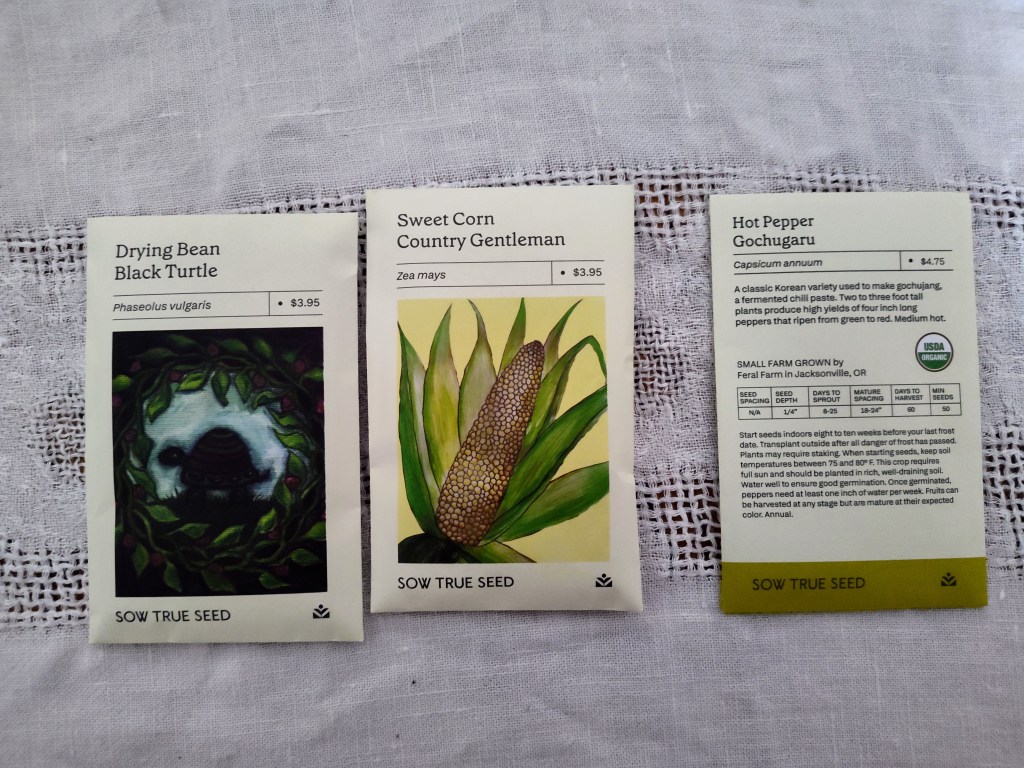
The catalog is easy-to-read, colorful, and features crisp imagery. One of my favorite parts of their catalog is the artwork that graces the cover and the featured seed packets.

What Sets it Apart or Makes it Unique? – 10 Points

I find Sow True Seeds’ catalog to be among the most unique that we receive. It’s shorter and narrower than others, being shaped similar to a book rather than a magazine. This compact shape makes it easy to carry and tuck in a pocket, as you would a journal. I also love the blend of artwork and photography, and the free guides make it more of an educational resource than a simple catalog.

Review

Like Pinetree Gardens, 2025 was the first year we received Sow True Seeds’ catalog or purchased seeds from them. They are an excellent seed company. They’re located in Asheville, North Carolina and operate as a co-op rather than a traditional business. That buy-in is reflected in the quality and care of everything they do. They go out of their way to support small farmers, to educate, and to create a community. It’s also reflected in their catalog. The seed descriptions are brief, clear, and informative. They provide all the necessary information with little extra. There are tables for each vegetable that provide the seed depth, spacing, germination time, days to maturity, and isolation distance. Combine that with the bonus guides, and it’s one of the best catalogs you can request.

Score: 193 Points

Reviewing Pinetree Gardens 2026 Seed Catalog

Ahead of the 2025 gardening season, one of my first posts on the blog was titled “Where to Buy Garden Seeds.” There was a heavy emphasis on the seed catalogs we requested, what we liked about each one, and the ones we purchased seeds from. This year, I’m doing things a bit differently by dedicating a post to each seed catalog. In each post, I’ll review the catalog, go over the things I like and dislike about it, and score the catalog. The first installment will be Pinetree Gardens catalog, but before digging into the review, here’s how I’ll score all the catalogs.

Scoring Criteria

I’m going to be looking at the following areas and applying them to each catalog we receive:

  • Number of pages – 1 point per page over 100 pages; minus-1 point per page under 100 pages.
  • New varieties – 1/2 (.50) point for each new variety for 2026.
  • Total number of seeds – 1/4 (.25) point per seed.
  • Selection of “Specialty Seeds” – By “Specialty Seeds,” I mean any specially designated seeds that are separated from the other seeds. Examples are All-American Selections, Italian Gourmet, and Indigenous Royalties. – 1 point will be awarded for each specialty category.
  • Images – 1 point if there is an image for every seed; 1/2 (.50) point if fewer.
  • Non-Seed Offerings – 1 point for each category (fertilizers, seed-starting items, merchandise, weed control, pesticides, garden gear, etc.)
  • How Is it Organized/Ordered? – 1 point if its order is a positive; minus-1 point if it’s a negative.
  • Beauty – This is completely subjective, but it’s my way of determining if it’s aesthetically pleasing to look at. Does it include original artwork? Are the images crisp and clean? Is the text easy to read? A maximum of 10 points can be awarded.
  • What Sets it Apart or Makes it Unique? – This is another subjective category. What about a catalog makes it stand out from the others? A maximum of 10 points can be awarded.

Links to Other Reviews:

Pinetree Gardens 2026 Seed Catalog Review

Pages – 29 Points

The catalog has 129 pages, and none of the pages are advertisements.

New Varieties – 24.5 Points

Pinetree is offering 29 new varieties this year, including three new tomatoes, two new squashes, and two new melons.

Total Number of Seeds – 311.5 Points

There are 119 herbs, 434 flowers, and 693 vegetable seeds for a total of 1,246 seeds.

Specialty Seeds – 1 Point

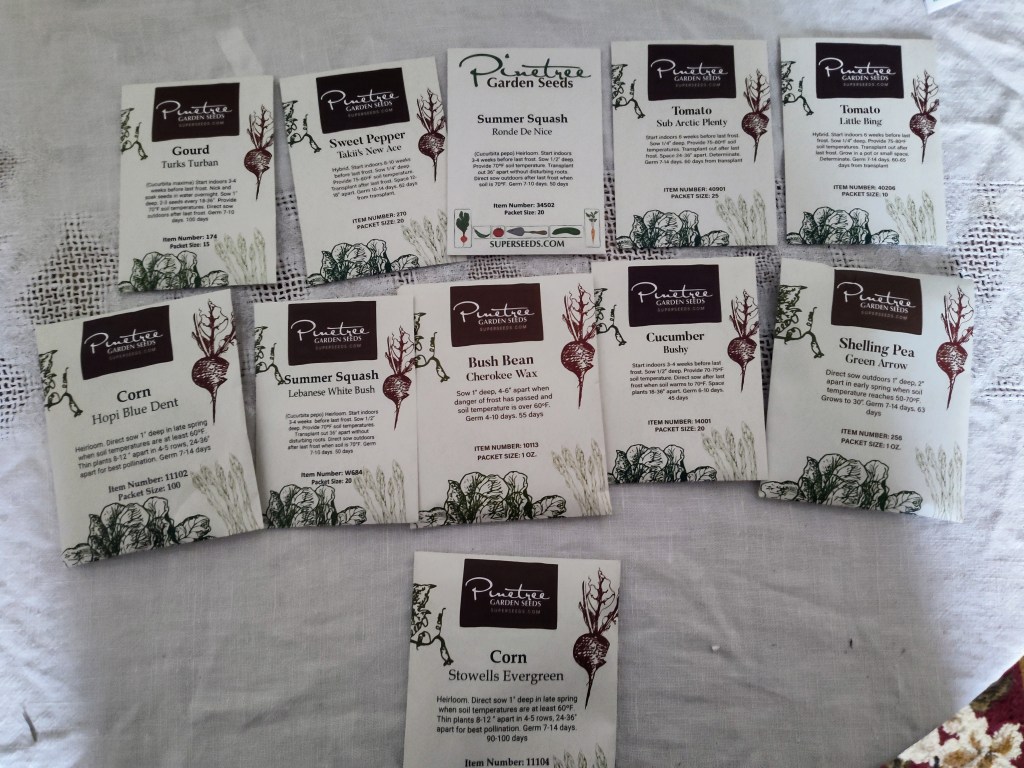
Pinetree Gardens offers one specialty type of seed, which are their All-American Selections. These seeds are tested in independent trials.

Images – 1 Point

The catalog has one image for every item offered in the catalog.

Non-Seed Offerings – 24 Points

Pinetree Gardens really shines with its non-seed offerings. I believe they feature more equipment in their catalog than any other seed company. The categories I counted are seed starting, planting mediums, garden labels, watering aides, trellising, inoculant, fertilizers, thermometers, container growing, season extenders, weed control, insecticides, animal deterrents, pollinators, garden gear, household, kitchen gadgets, countertop sprouts, canning essentials, spices, teas, essential oils, and books.

How Is it Ordered/Organized? – 1 Point

The catalog is divided into three sections for its seeds – vegetables, herbs, and flowers. Each section’s seeds are then alphabetized. It makes finding a specific vegetable, flower, or herb very easy.

Beauty – 10 Points

Pinetree Gardens catalog is bright, easy-to-read, and clean. The text color always stands out from the page. The images are high-quality and do a great job of highlighting the product being sold.

What Sets it Apart or Makes it Unique? – 8 Points

There isn’t a lot that makes this catalog overly unique, but that isn’t a bad thing. It’s simply a very good catalog that provides everything you need as a gardener. One unique aspect is the brief growing guide for each vegetable. It includes the germination time and temperature, seed sowing requirements, harvesting information, and more. And if a vegetable is prone to specific diseases, there’s a key that indicates what each seed is resistant against.

Review

2025 was the first year we received Pinetree Gardens’ seed catalog and purchased from them. They have become one of our favorite companies to purchase from, and it started because of their catalog. The 2026 catalog continues what they did so successfully in 2025 (and likely in the preceding years). I love the variety of seeds they carry, their prices, and all the non-seed items they sell. Their keys and icons make it very easy to identify and find what you’re looking for. Finally, I’m a big fan of companies that make their own seed collections. They’re such a great way for gardeners who have difficulty making decisions or are just getting started to try a bunch of seeds at one time. Overall, I think Pinetree Gardens has the best catalog, but we’ll see if the scores reflect that.

As an aside, their employees and customer service are great. They had a very minor issue this year where catalogs were sent to the right address but with the wrong person’s name. They reached out to everyone to explain what happened, which is so kind.

Score: 410 Points

Tomatoes: A Brief History

A research project that started with my looking into Pennsylvania’s native plants has expanded into a general overview of where our most popular commodity crops originated. I’ve said this before: I’m a history nerd and struggle to only do surface-level research. It’s quickly becoming evident that what started as a brief historical post is now a full-fledged project, which I’m excited about. It’s been a long time since I’ve been this excited or interested in doing historical research. Moving forward, I’m going to look at the history of many of the vegetables we grew in our garden this year. Starting out are tomatoes, which are probably the most commonly-grown “vegetable” in the United States.

From South America to Europe to the World

As many know, tomatoes aren’t vegetables. They’re technically fruit and are members of the nightshade, which also includes potatoes, eggplants, peppers, and tobacco. The part of the tomato plant that we eat is the berry, although we eat it as a vegetable rather than a fruit.

The modern tomato’s origins go back to Western South America in Ecuador and Peru where it grew wild. Around 500 B.C., it was first domesticated by the Aztecs and Mayans in modern-day Mexico. It wasn’t until the 16th century that Europeans first saw them as they conquered the people groups of Central and South America. Spanish priest Bernardino de Sahagun reported seeing tomatoes in Aztec markets in what is now Mexico City (known as Tenochtitlan at the time). In 1544, they first appeared in European literature in Pietro Andrea Mattioli’s herbal. Mattioli was an Italian doctor and naturalist whose commentary on medicinal plants was pivotal. At this time, tomatoes were viewed as a new type of eggplant, and in 1554, he referred to them as “golden apples.”

After the Spanish first encountered tomatoes, they took the fruit with them as they continued their mission of conquering the Caribbean and (eventually) the South Pacific. From the Philippines, they were taken into Southeast Asia and reached China in the 16th century. In Italy, they were mostly grown ornamentally due to toxicity fears associated with other nightshades. In fact, they weren’t incorporated into cuisine until the late 17th-early 18th century.

Elsewhere, the tomato reached the island of Great Britain until the late 15th century, but due to the spread of misinformation by John Gerard that tomatoes were poisonous, it took centuries before they were widely consumed. Tomatoes reached the Middle East in the late 18th to early 19th century when a British diplomat transported them to Aleppo, Syria.

Tomatoes were first mentioned in the United States in 1710 when they were recognized by an English herbalist named William Salmon in modern-day South Carolina. It’s speculated that they arrived via the Caribbean and were grown on plantations in the Southeast by the 1750s. Like other parts of the world, the majority of Americans (or colonists prior to the American Revolution) maintained the view that tomatoes were poisonous and should not be consumed. However, that mindset changed during the 19th century as horticulturalists began breeding tomatoes for commercial sales. The most famous of these horticulturalists was Alexander Livingston, who was responsible for helping to develop a tomato that was uniform in size, smooth, and sweet. In 1937, the USDA that he was behind over half the major tomato varieties that were available at the time. Since that time period, more than 100,000 varieties of tomatoes have been identified, and they are largely broken down into five or so categories.

Types of Tomatoes

Tomatoes are generally categorized in the following ways:

Beefsteak

The beefsteak variety is the largest variety of tomato, often measuring nearly 8 inches in diameter and weighing a pound or more. It’s one of the most popular types grown in the United States, and gardeners love beefsteaks for their wide range of uses, including in sandwiches and salads; however, they aren’t a good saucing tomato due to the large and numerous seed cavities. Popular varieties include the Brandywine, Cherokee Purple, and Mortgage Lifter.

Cherry/Grape

Although cherry and grape tomatoes are technically separate varieties of tomatoes, I’m writing about them together because people tend to grow them for the same purpose: fresh eating. Cherry and grape tomato plants produce small fruits, from the size of a blueberry up to a golf ball. Cherry tomatoes tend to be spherical and more uniform in size, while grape tomatoes are often oblong. These types are the ones most closely related to the wild varieties that were grown in South and Central America. Cherry and grape tomatoes are usually eaten fresh or in salads. Popular varieties include Matt Wild Cherry, which shares many characteristics with its ancient, wild relative, Black Cherry, and Yellow Pear.

Oxheart

The oxheart tomato is similar to the beefsteak in size, but different in shape. Whereas beefsteaks are round and spherical, an oxheart tomato will be shaped like a heart or strawberry with a round top that tapers to a point at the bottom. They have fewer and smaller seed cavities than beefsteak tomatoes, which means less water. They are a versatile type of tomato and can be used in everything from fresh eating to canning. Common varieties include Amish Paste and Oxheart Pink.

Paste/Plum

Paste/plum tomatoes are the perfect tomatoes for making sauces and canning due to their low number of seed cavities. This means they have less water content than other types of tomatoes, making them perfect for cooking down into sauces and pastes. Their plants are often determinate, so all their fruit will ripen around the same time, making it easier to harvest batches for processing. Some of the most popular varieties to grow are Amish Paste, Roma, and San Marzano.

Slicing/Globe

Globe tomatoes are likely the ones that come to mind when you think of tomatoes. They’re uniformly round, can be red or green, and can be cooked or eaten raw. They’re easy to slice and serve on sandwiches and can be chunked for salads. They are sweet, but only have a mild tomato flavor. There are many varieties of globe tomatoes, but some popular ones are Black Krim, Mountain Princess, and Bumble Bee.

There you have it; a very brief history of the tomato and the categories they are separated into. I say it’s very brief because there are entire books dedicated to the history of the tomato. One is The Tomato in America: Early History, Culture, and Cookery by Andrew Smith. That is a phenomenal book to read if you can find it. It’s also available to borrow digitally for free through Open Library. Tomatoes are one of the most important and popular vegetables grown commercially and in home gardens, so it was always going to be impossible to provide an in-depth history in a single blog post. But, if you’re like me, you will find this interesting and be intrigued to embark on additional research.

I’m going to continue to do these brief histories of vegetables, but they won’t be a weekly occurrence. I’ll publish them as I’m able to work on them and sprinkle them in with other out-of-season content. Next up, I am going to start writing about the seed catalogs we’ve received for the 2026 growing season.

Making Pie From Pumpkins We Grew

If you’ve been following our blog since the summer, you’ll know that we grew a lot of pumpkins this year. Or at least we tried to. Some of them didn’t take off, but we eventually had success with seeds we bought and planted in July. You’ll also know that one of my goals with the garden was to make food entirely out of the garden. This Thanksgiving, we’ve been able to accomplish that by roasting pumpkins we harvested in September, puréeing the flesh, and making a pie. Here’s a brief walkthrough of the pumpkins we used, the roasting and puréeing process, and the final product, with pictures of each step.

The Pumpkins

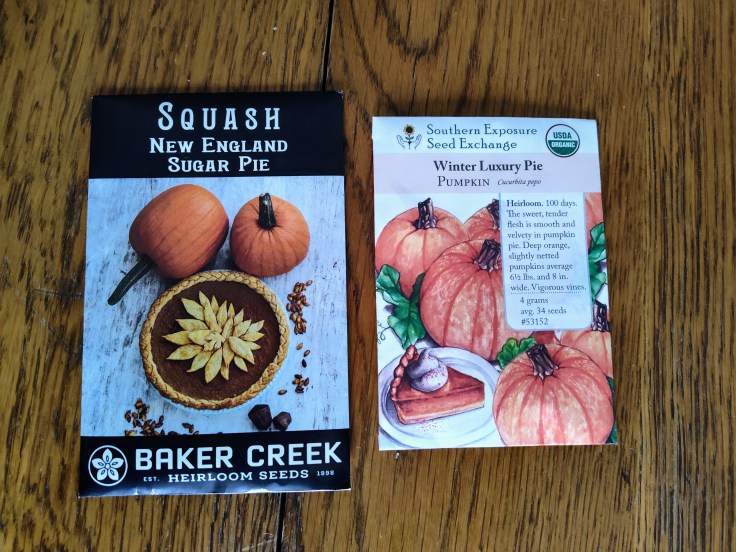
The pumpkins we used were New England Sugar Pies. We bought the seeds from Baker Creek. This variety dates back to the 1860s and is the perfect pumpkin for pie. Baker Creek describes it in the following way: “The noted small sugar pumpkin of New England. The orange fruit weighs 4 to 5 lbs and has fine, sweet flesh superb for pies.” That description is spot-on. Without any added sweetness, the roasted flesh was delightful. It was the perfect pumpkin to use. It was easy to grow, and we’ll certainly grow more of this variety.

Roasting & Puréeing

I had never roasted a pumpkin prior to this week, but I approached it similar to how I’ve roasted spaghetti squash. I split each pumpkin in half and scooped out the seeds. I think we could have washed, dried, and roasted the seeds to eat, but I wasn’t interested in that much work this time. With the seeds out, I brushed some oil on the flesh, pierced the skin in a few places to aid in the roasting process and put them in a 400-degree oven for an hour or so. Our house smelled so good during this time.

pumpkins
Pumpkins split in half

To purée them, I let them cool entirely and used a spoon to scoop out the flesh, which was much easier than I anticipated. The flesh then went into our small food processor and was blended until smooth, with water being added as needed. A note for future me: Buy a larger food processor. It took some time, since it had to be done in batches, but it was an easy process in general. In the end, we had more than a quart of pumpkin purée, which was much more than we needed for the pie, so Magz made a pumpkin soup with the excess. It was delicious.

Making a Pie

I love making pies. My grandma is an excellent pie maker, so I think I came by it naturally. I also always make a homemade crust. A few years ago, I found a great pumpkin pie recipe that uses almond milk in place of dairy since Magz can’t have dairy. If you weren’t told it was made with almond milk, you’d never know. I used that recipe again this year, and there was no noticeable difference between the homemade purée and canned pumpkin when it came to mixing and baking other than it needed to cook a bit longer due to additional moisture. The end product was great. Please ignore the divot. That was the result of foil touching it when I was trying to prevent the crust from burning. It was absolutely delicious.

pumpkin
Pumpkin pie

Exploring the Origins of Our Crops & The Role Immigration Played in It

I’m continuing my exploration of what is commonly grown in our state of Pennsylvania. Last week, I wrote about the state’s native plants and what we have growing on our property. This week, I’m looking at the commercial crops that are most prominent in the state and if they are native to North America or were brought here during European Expansion. I ultimately want to learn if the origins of Pennsylvania’s most commonly-grown crops align with where most of the state’s immigrants came from during the 17th, 18th, and 19th centuries.

Like Magz, I majored in history, and even though I don’t work in history, I still love it. I also approach a lot of things in life from a historian’s perspective and try to ask questions to dig deeper into topics. The gardening offseason seems like a great time to dive into these sorts of topics. Eventually, I want to look at all the vegetables we grew in the garden in 2025 and learn when they arrived in North America if they aren’t native to the continent.

What Does Pennsylvania Grow?

With this question, I’m not talking about what people grow in their personal gardens. I’m talking about the crops that are commercially grown and contribute to the state’s agricultural sector. Pennsylvania plays a prominent role in the agriculture of the United States, equating to just over $9 billion in 2024. That ranked 23rd in the country.

The majority of what’s grown in the state won’t surprise most people. There are a lot of cereal grains (wheat, oats, barley, and sorghum) as well as corn. These are largely grown on a commercial scale and are used to feed animals, as Pennsylvania is a large producer of dairy products. But there are also some surprising crops that you may not associate with the state and a lot of vegetables that are sold throughout the country and world.

Here are Pennsylvania’s most common crops, along with where they originated:

CropNative/Non-NativeOrigin Location
CornNative
WheatImportedFertile Crescent
OatImportedFertile Crescent
BarleyImportedFertile Crescent
SorghumImportedSudan
SoybeansImportedEast Asia
TobaccoNative
SunflowerNative
PotatoesImportedSouth America
Sweet PotatoesImportedSouth America
ApplesImportedCentral Asia
PumpkinsNative
PeachesImportedChina
MushroomsNative
RyeImportedFertile Crescent
BlueberriesNative
CherriesImportedFertile Crescent

Those crops aren’t in any particular order, but they do make up the bulk of what’s grown commercially in the state. It’s difficult to know exactly when immigration to the United States peaked, but most people think of the 19th and early 20th centuries as a key time period because that’s when large groups of Europeans arrived. They brought with them their cultures, foods, and seeds in an effort to keep a semblance of their home alive with them. It’s now why we grow so many different vegetables, both commercially and in home gardens.

Again, these aren’t in any order, but the countries are:

  • France
  • Netherlands
  • Sweden
  • Britain
  • Germany
  • Wales
  • Northern Ireland (aka Scots-Irish or Ulster Scots)
  • Ireland

If you compare the crops and where they originated with the countries that contributed the most immigrants, you won’t see any connections. On the surface, that is shocking and may lead to the question, “How did those plants/seeds get to the United States?” It requires taking the research to a deeper level, which taught me a few things.

Plants Arrived From Asia Via Europe

It was decades after European immigrants came to the United States that people from Asia, including the Middle East, immigrated in large quantities. And by that time period, the majority of what we grow commercially in Pennsylvania was already established. Instead, these plants were “obtained” by Europeans via colonization and trade and brought back to Europe where they were planted. In some cases, new varieties were established through adaptation that allowed these plants to thrive in different soil conditions and climates.

Ignorance of Where Our Food Comes From

It’s my belief that because of how history gets told in the West certain aspects are conveniently forgotten. In history, we were always taught that popular history is told by the winners/victors/privileged. You usually have to look to find firsthand accounts from the losers of a battle or war or from an underprivileged person. I think this holds true for the history of what we eat. In the United States, we were taught from a young age that Europeans brought their food, including plants and seeds, with them. But there was never a mention or discussion of whether those plants were native to Europe.

It took me until at least high school to realize that the Silk Road, British East India Trading Company, and Dutch East India Trading Company played key roles in transporting ingredients and plants across the globe. Sometimes, that happened through legitimate trade. Other times, it was less legitimate and more forceful. Either way, crops like cereal grains, cherries, soybeans, and peaches all came from the fertile crescent, Central Asia, and East Asia. Meanwhile, the Spanish brought potatoes and sweet potatoes back from Central and South America as a result of the inquisition. Learning this was a reminder to always go one level deeper when researching. I used to do that all the time when taking history classes, but it’s easy to get out of the habit if you aren’t being forced to.

Immigration Always Has & Always Will Play a Key Role in the American Identity

The United States is at a weird, and frankly, sad place in time. While immigrants have always been treated unfairly, including by other immigrant groups, we’re at a crossroads. Immigrants, including those legally in the country, are being rounded up and deported to places that aren’t their home. This is in spite of us being told that only those with criminal records would be subjected to arrest and deportation. Another lie. Forgotten is all the positive impact that immigrants have on communities and the economy, including how we grow our food. We’ve already seen the struggle to produce food at the same level as a result.

For some reason, there is a group of Americans who forgot how the country was started and the fact that immigrants and foreign-born people have always comprised a large part of our population. Unless a person is 100 percent Native American, everyone is in the United States because of immigration. Whether it was pre-Revolutionary War or the 20th century following the brutal genocides in Africa, Europe, and Asia, people have always been welcomed here with open arms. I’m concerned that we’re forgetting that.

American culture is weird. We want to say it’s a melting pot, but that’s not true. It’s better than a melting pot. A melting pot implies that people lose their personal identity and assimilate into each one common culture. What we’ve always had is an ability for people groups to maintain their uniqueness while pushing toward a common goal. Whether it was the millions of Europeans who came over during the 19th and early 20th centuries or the recent movement of those from the Middle East, Africa, and Southeast Asia, everyone has played a key role in shaping and honing what we know as American culture. The culture isn’t set in stone, but is instead one that is always changing and being refined. When we lose sight of that, we become isolationist, nationalistic, and the antithesis of what the nation was founded as.

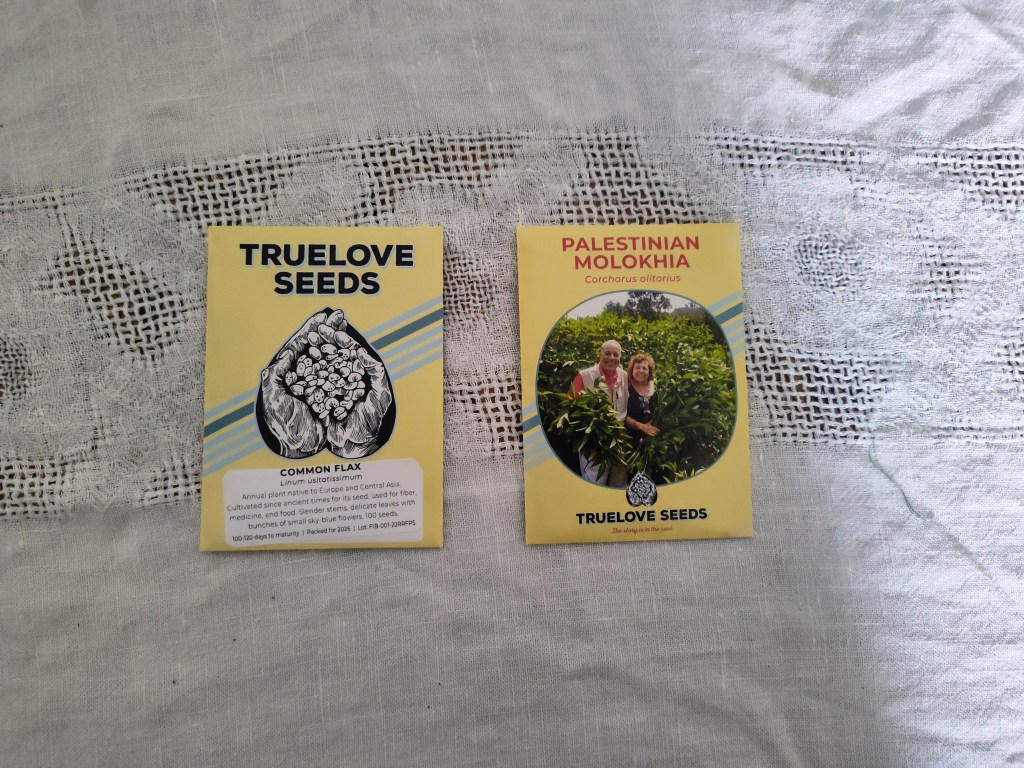
Very little of what we consume or partake in as Americans is uniquely American. Sure, we’ve refined a lot of the seeds and plants to better serve our needs, but the majority didn’t originate here. And new foods and seeds coming to the country haven’t stopped. I listen to a podcast called Seeds and Their People, where the hosts talk to farmers and gardeners and discuss the origin stories of them as people and their seeds. Recently, they’ve had Palestinian refugees on their podcast who’ve been in the United States since the war in Gaza broke out in 2023. Regardless of where you fall on the Israel-Palestine debate, there are a lot of people whose lives have been completely altered by decisions that never considered their opinions. These farmers have been able to get seeds native to Palestine to plant in America. That may seem like a small thing, but those seeds represent their culture and help them feel at home. We should never lose sight of that.

This post really expanded from what I originally set out to write. I thought that I’d just look at where our state’s most common crops originated. It morphed into a deeper conversation of the importance of immigration to American culture and how we get our food.

Create a website or blog at WordPress.com

Up ↑