Learning About Pennsylvania’s Wetlands

I think Pennsylvania is an underrated state when it comes to natural beauty. To an outsider, the state probably looks like Pittsburgh in the west, Philadelphia in the east, and nothing between them. I’ve even seen the area between the two cities as Pennsyltucky, which seems offensive to both states. Sure, the population centers of the state are the headliners when it comes to the economy and politics, but there’s a lot more going on outside their city limits.

I grew up in Central Pennsylvania, in the middle of the Appalachian Mountains’ Ridge-and-Valley System. This geography is defined by a series of long and narrow ridges (usually called mountains) that are often oriented diagonally from the southwest to the northeast with wide valleys separating them. The ridges typically have dense forests that are perfect for exploring, hiking, and hunting, while the valleys feature nutrient-rich soil that is ideal for farming and gardening. This system is located between the Appalachian Plateau to the west and the higher mountains to the east. If you’ve never seen the Ridge-and-Valley System, it’s quite unique, even if the tallest mountain in the system tops out just shy of 5,000 feet (Spruce Knob in West Virginia).

Woods make up a lot of Pennsylvania (it is called Penn’s Woods, after all), but it’s far from the commonwealth’s only geographical feature. East of the Ridge-and-Valley System is the Piedmont and Delaware River Valley. In Western Pennsylvania is the Appalachian Plateau, and the Glaciated Plateau precedes a drop in elevation as you approach Lake Erie. I have visited or lived in many of the state’s geographical regions, and we currently live on the border of the Glaciated Plateau and Appalachian Plateau, but there is one feature that I only learned about in the past eight years: wetlands.

Pennsylvania Has Wetlands?

In 2018, we moved from Pennsylvania to Southeast Georgia for about five months. It was both a culture and environmental shock. It felt like a 180-degree flip from what we were used to in Pennsylvania. It was flat and incredibly hot. There were forests, but they were almost entirely new growth due to the prominence of the lumber industry in the area. But the biggest shock was the swamp. We lived near Statesboro, so it was far from the middle of nowhere, but within 40 minutes, you could be at a state park that was entirely cyprus swamp. I had never experienced a swamp before, so I was completely out of my element. Alligators, snapping turtles, and water moccasins were present. It was terrifying and so beautiful. If you’ve never visited a swamp, it’s unlike anything else.

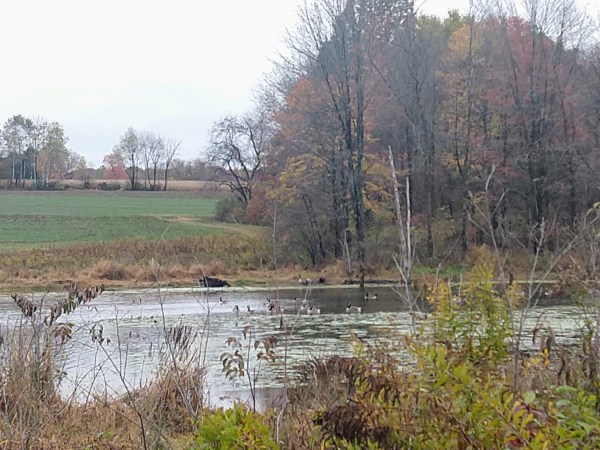
But when we moved back from Georgia to Northwest Pennsylvania, I was pretty confident that I was leaving the swamp behind, but I was wrong. We quickly learned that Northwest Pennsylvania is full of wetlands similar to what we saw in Georgia, although their origins are different. While southern swamps developed from peat accumulation, the wetlands of Northwest PA developed when the glaciers of the most recent Ice Age receded. If you’ve ever driven north on I-79 between the I-80 interchange and Erie, you can see a distinct geographical difference once you reach Crawford County. The land levels out, and marshes replace some of the farmland. The interstate even crosses the Conneaut Marsh Complex, the largest such marsh in the state, and if you stop off at Meadville, you can walk through and around some of the wetlands. Doing so is a great opportunity to see numerous examples of plants and wildlife that only exist in a wetland environment, and if you like waterfowl, they’re the perfect place for you. It’s not uncommon to see herons feeding in some of the bodies of water.

Two years later, we moved a bit further south, although still in Western Pennsylvania, and we thought that we’d likely have to drive back to the Meadville area to see wetlands again. Instead, we learned that there is a wetland located within 10 miles of our house that’s part of a conservation center. We recently went there to walk around and learned about wetlands’ role in healing the environment after decades of harm.

The Importance of Wetlands

The type of wetlands closest to us are known as aerobic wetlands. They were built in the late 1980s and throughout the 1990s to combat acid runoff from an underground coal mine that had been abandoned for over six decades. The wetlands are part of a passive water treatment facility that uses different materials to filter out heavy metals found in acid runoff and are detrimental to the environment and wildlife. Through the treatment media and plants naturally found in wetlands, this passive system has had an amazing impact on improving the land and waterways close to the coal mine. It’s resulted in cleaner water and a thriving ecosystem. In fact, if you walk around the stream that comes out of the wetlands, you’d never know that it began as polluted runoff water.

When scientists and members of the local universities were planning the passive water treatment system, they took inspiration from native wetlands that have proven their effectiveness at filtering out impurities. They’re vitally important to cleaning up the messes that humans have made. Plus, they’re home to a wide range of plants and animals that depend on wetlands to survive. Our local wetlands listed roughly 30 species that are part of that wetland’s ecosystem, including multiple types of waterfowl, frogs, and mammals. The Conneaut Marsh Complex near Meadville is home to approximately 10,000 waterfowl during migration each spring and fall, and several endangered bird species live within the complex. Every ecosystem is home to plant and animal species that depend on that unique area for its survival, and it’s incredibly important that we protect each of them.

In America, we’re living in a time when environmental protections are under threat. Thankfully, most of the protections have been upheld in court, but it’s alarming that someone would even consider reverting back to a time when we value progress over the environment. We need to do everything we can to let our representatives know how important nature is to us. The wetlands are a perfect example of this.

Kindness in the Culture: Cottontail Cottage

The algorithm brought something truly life-changing to me, shocking right? Not because it was a product or a service or an ideology, but because it reminded me that goodness, gentleness, and kindness make the world a better place. That is what makes Cottontail Cottage so special.

Prey animals. They are animals that get forgotten by us humans, sometimes they are seen as nuisance animals to us. They dig up our yard or garden, like chipmunks, squirrels, and rabbits. They are animals that our pets discover, like baby rabbit nests, skunks, and birds, that dogs and cats interact with. They are animals that we come into collision with our cars like deer, rabbits, skunks, and opossums. We forget that we are in their space and that our urban sprawl is eating into their native homes.

The decorative plants, concrete, mowing, roads, and traffic, have changed their home forever. And yes, I understand that this is what humans do, I think sometimes we forget how to live in harmony with creation, and to take accountability for how our dominion of the land, affects its original inhabitants. (Something that America has a whole lot of failings with for both disrupting nature, but also historic nations and their societies. That is a topic for another day, that I culturally do not have the appropriate experience to speak about. But it is something I recognize.)

Learning about a small wildlife rescue, located in New York state that is volunteer-run and donation funded, was one of the most amazing things I’ve learned about. Briggette Dix and her team are dedicated to treating and rehabilitating orphaned and injured neonate Eastern Cottontail rabbits. They prioritize care that puts the Eastern Cottontail first, by not treating the rabbits in a way that disrupts their wildlife nature but allows them to heal, grow strong, and be released back into the wild.

They help Eastern Cottontails, chipmunks, squirrels, deer, skunks, birds, opossums, and even bats. They bring awareness to treating wildlife with respect and dignity and encourage healthier boundaries between our world and them. For example, encouraging pet owners to be aware of wildlife in their yard to prevent dogs and cats from stumbling upon baby rabbit nests. They treat bites, car accident carnage when animals are struck by cars, and rescue animals from dangerous situations such as birds stuck on glue traps, rabbits caught in window wells, etc.

Briggette and her team are a shining light in contrast to the darkness of our society and their generous work is something of great importance to our world. In my region, we are seeing wild animals and humans coming into closer and closer contact. Coyotes walking down city roads at night, or curling up beside cars for a night’s sleep, bears wandering into yards and Walmart parking lots, animals like rabbits, deer, skunks, opossums, raccoons, and more being at greater and greater risk of habitat loss because of out of control development.

Wooded areas and meadows are being sold off to create townhouse neighborhoods as people move out of decaying cities instead of working to fix what is broken. They are taking what little habitat we have left for these natural animals and it is not good for anyone. We all need our places to exist. We need a healthy ecosystem, which includes flora and fauna on all levels of the food chain so that nature can do its thing and we can continue to enjoy our wild places.

It’s in all of our best interests to do better and be kinder to our prey animals and their world. Encouraging kindness in the culture, I believe goes beyond just being nice to our fellow humans, it means being kind to our nature and our animals as well. They were here first and deserve our respect. That’s what the work of Cottontail Cottage is teaching me as both a soul wanting to bring change and as a supporter of their cause.

As a believer, I think it is what God is calling us to do, to care for what He made and respect it. Helping orphaned rabbits is agape love in action. How can you bring kindness into your culture?

#51 – Forsythia, Thumb Print Cookies and Rain

Driving home on a cloudy, rainy Sunday a wash of bright, sunshine-yellow that burst upon the landscape once I got within my hometown’s county. A golden, almost firey shrubbery that dotted the yards of homes near and far. But what is this? This long-forgotten friend that signals spring, the forsythia.

At first, I thought this was a local plant, potentially a Pennsylvanian cherry blossom? But actually, I learned that forsythia originates from Eastern Asia and Eastern Europe. I wonder what brought them here? Maybe the simple beauty or immigrant communities from Eastern Europe who came to Beaver County brought a sense of home? That would be cool.

Since I moved from home, I think my springs have been colored with different shades of spring. The crocus, the daffodil, and when May creeps in, the rhododendron (a tongue twister). I look at photos and videos with wanderlust of the Sakura and forget my local splendor, the forsythia.

I didn’t realize how much I missed those beautiful golden blossoms until I saw them again. It was a welcome call, a return to normalcy to a world of childhood that felt like a warm hug. As I mentioned before in Easter Traditions and Celebrating the Resurrection there isn’t a lot of familiarity in my holidays anymore, but this, it felt like a moment stuck in time.

This wasn’t the only familiar sight of the weekend. I went home and got to give my parents hugs, and my family dog snuggles, and ate a new little tradition – thumbprint cookies from My Sweet Lily. My mom and Scott (who I’m referring to when I say my parents) travel down to Pittsburgh’s Strip District each Easter season to get a ham at Wholey’s Market and make another stop. To a bakery that sells dairy-free confections of creme-filled pastries called lady locks and these cookies called thumbprints, rolled in sprinkles with a dollop of icing on top.

This variety with the frosting, is incredibly sweet, vibrantly colored, and sort of stomach ache-inducing but I love them and choose to indulge in their sweetness once a year. I’ve had these cookies with jam and with a chocolate ganache, which is splendidly rich. I was curious where these cookies originated from and they are an Americanized version of the Swedish hallongrotta cookie. The name hallongrottor translates to raspberry cave, as these cookies are traditionally served with raspberry jam filling the depression in the top of the cookie.

Today we have a familiar friend visiting our basement, rainwater. Oh rainwater, flowing into the basement and making the journey to the washing machine an adventure of tiny stream crossings. I’m trying to be patient and accept that this Spring is going to be a rainy one, just like the rainy winter we had and it will pass. The basement will dry out.

Meanwhile, the rain is kind of calming, gentle, and cozy on this April day. I can’t believe it’s April already and I’m so excited. I’ve been designing up a storm for summer and I can’t wait to share it with you. ❤

#50 – Irish Landscapes

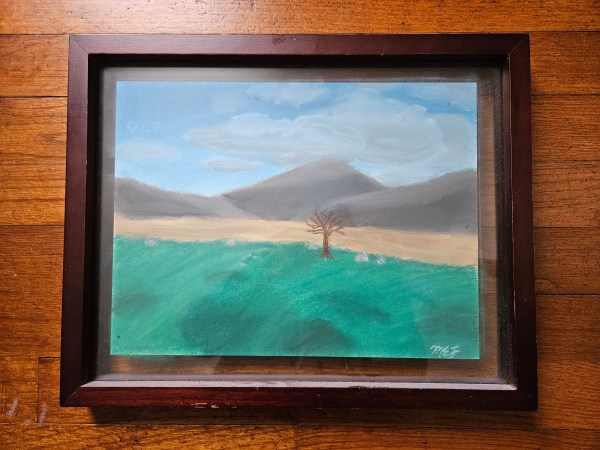
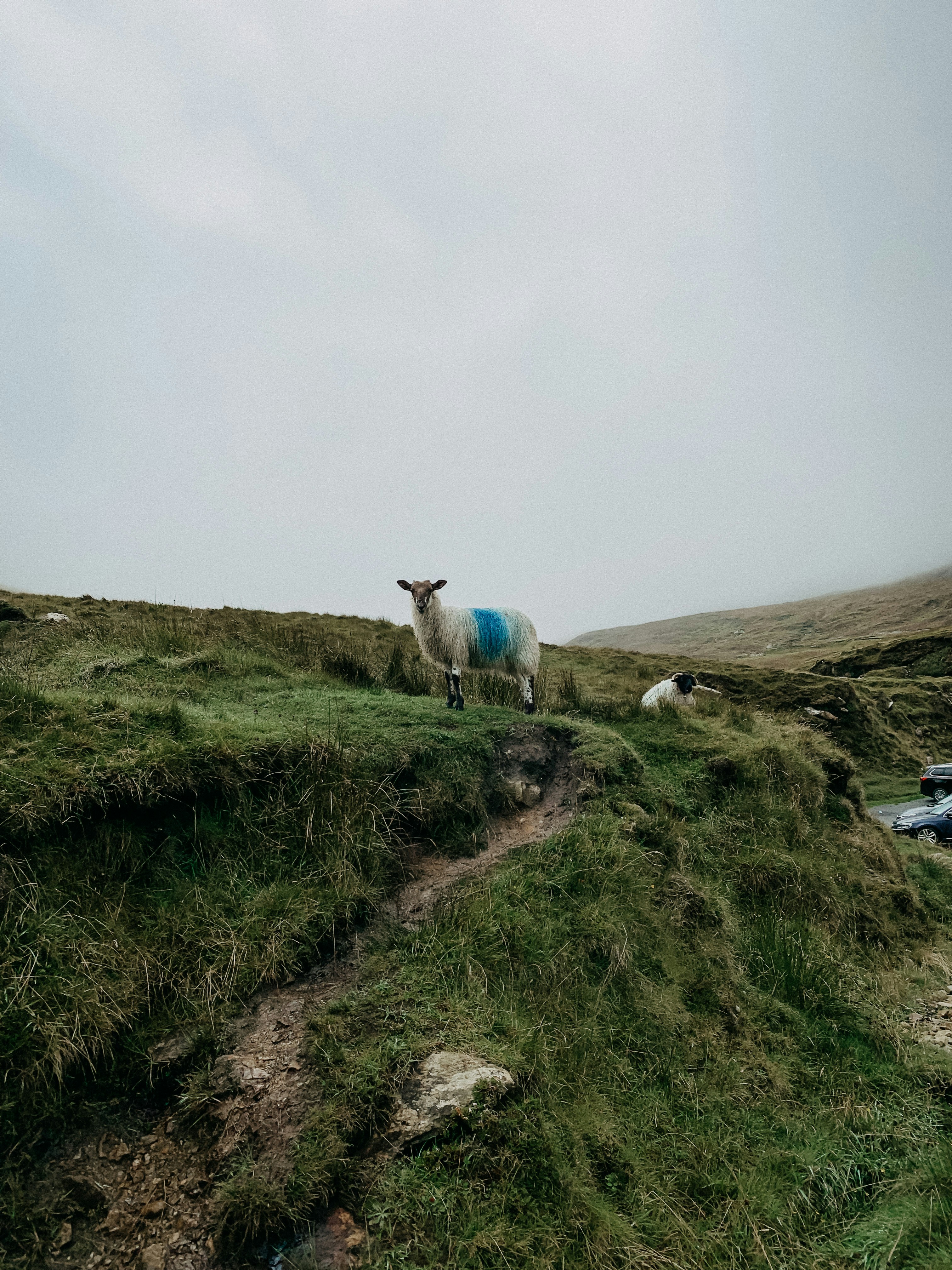
My go-to inspiration in high school was this daily calendar my mom had in her office. Each day featured a photograph from a scene in Ireland, and each day, at the end of the day, my mom would bring the paper home and give me the photograph to draw from. Before the days of Pinterest and Instagram, it was a bit tricky to find beautiful images to practice with. There were magazines of course and books, not to mention literally the world around you, but this was a game changer to get daily inspiration. In the 2000s, it was before the supremacy of the touchscreen smartphone with apps galore and fantastic cameras to snap photos in that you could carry around in your pocket. If you took photos for inspiration, you had to print them and it was not cheap. Printing even on printer paper was not cheap and trust me, parents did not like us wasting ink.

This is a taste of what the images featured via a modern source – Unsplash.

What is special to me about the framed image above is that I didn’t frame it. My grandparents did. It was a piece that I guess spoke to them and they framed it and hung it in their bedroom. Something I didn’t appreciate at the time, as a moody teenager I was embarrassed by it. Now in 2024, it hangs in the hallway outside my bedroom and when I see it hanging there proudly in its frame I remember how much they believed in my art, my writing, my fashion sense. I wish I could show them all that I am doing now. I think they would be proud.

Create a website or blog at WordPress.com

Up ↑