I’ve written about it a few other times, but it’s been a difficult gardening year for us. Weeds, pests, weather, and poor decisions have all contributed to struggles with tomatoes, cucumbers, peppers, squash, and pumpkins. Thankfully, one of the vegetables we’ve been able to grow has been potatoes.
After receiving some rotten potato starts in 2025 and the healthy ones rotting in the soil instead of growing, we were intentional about how we grew them this year. All the potatoes came from Urban Farmer and arrived in perfect condition. We also decided to grow them in bags this year, which I wrote about in a previous post. This is by far the best decision we made for our garden this year. The bags were easy to plant in, could be maneuvered throughout the garden as needed, and the plants took off in all but one of the bags.
We harvested our first potatoes in early August when we pulled a bag of Red Norlands. We pulled them a bit early and probably could have gotten a bigger yield had we left them to grow a couple more weeks, but they tasted great and were firm with smooth skins. We got two meals out of the first batch.
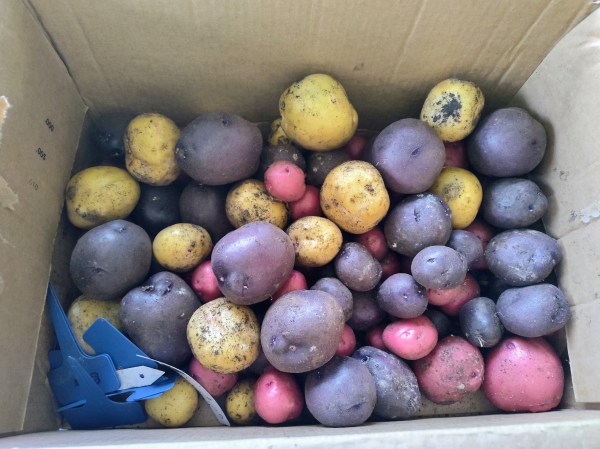
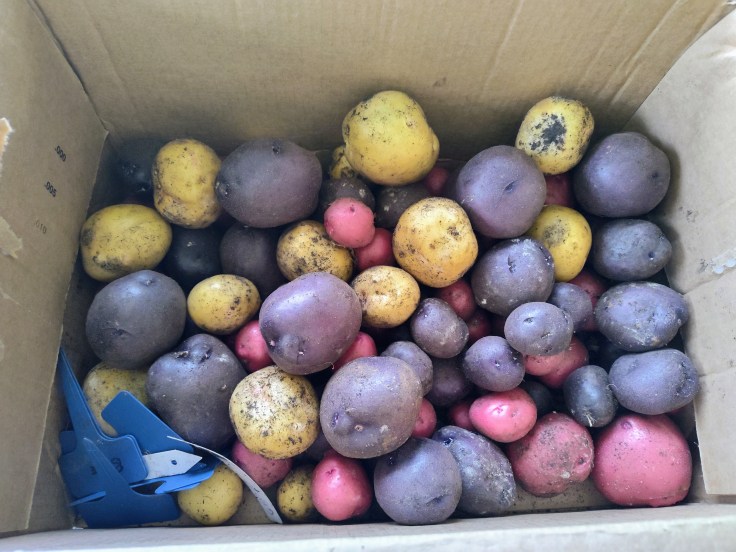
German Butterballs, Adirondack Blues, and Red Norlands
Afterward, we were committed to leaving the potatoes in the soil until we were 100 percent certain that they were ready. We ultimately waited until this past Monday (Labor Day) to harvest another batch of them, and we pulled them from 10 bags, harvesting some of each variety we grew – Red Norland, Adirondack Blue, and German Butterball. We got roughly 10 pounds or so and gave some to our neighbors, but we still have a lot to eat. Plus, we have eight bags left to harvest. We’ve already tried some of the Adirondack Blues, and they were also delicious.
Potatoes Are My Favorite Vegetable to Grow
Successfully growing potatoes this year reminded me of why I love growing them so much. They’re relatively easy to grow compared to other vegetables, especially when grown in bags. They’re also fun to watch grow since the green “stalks” grow super tall and develop beautiful flowers. The most fun part is harvesting. We can lift the bags to make them easier to access so that we aren’t bending down so far. Diving into the soil to find the potatoes feels like searching for treasure, and when you think that you’ve found all the potatoes from one bag only to find a straggler, it’s an amazing feeling.
Our potatoes may have been successful this year, but it doesn’t mean that there isn’t room for improvement next year. We had 20 bags, but it would have been better if we had another 10 or 20. We planted five potato pieces in each bag, and some of the bags felt a bit crowded. If we only had three pieces in each bag, I think we would have had an even better yield.
Two other ways that we can improve are having more soil in each and applying fertilizer again after the initial application. This year, each bag was about three-quarters full, but if we can top each bag off so that the soil is flush with the top, it will better protect the plants from the sun and help them grow more. We added a scoop of a balanced fertilizer when we planted the starts, but I never went back to fertilize the bags again. That would have certainly helped.
We had a blast growing potatoes this year and can’t wait to grow them again next year. We’ll likely try to grow more bags to have a better yield. We’ve even discussed giving Magz’s parents a couple of grow bags full of soil and starts next year so that they can grow potatoes next year. If you grew potatoes this year, how have yours been doing?
I skipped a gardening update last week because there wasn’t much to write about. We were at a place where things were still growing but not ready to harvest yet, and there just wasn’t much to include in an update. Thankfully, things are different this week. Let’s dive in!
Harvesting Corn & Potatoes
Yesterday afternoon, we spent an hour or so in the garden harvesting vegetables we’ve been waiting on, including corn and potatoes. Most of our corn has been growing very well. Two varieties are over 10 feet tall, two others are more than six feet tall, and the others are about four feet tall. All seem to be in line with expectations. The stalks have been in tassle for several weeks and have had ears growing for quite some time. But until yesterday, none of the ears were ready to be picked.
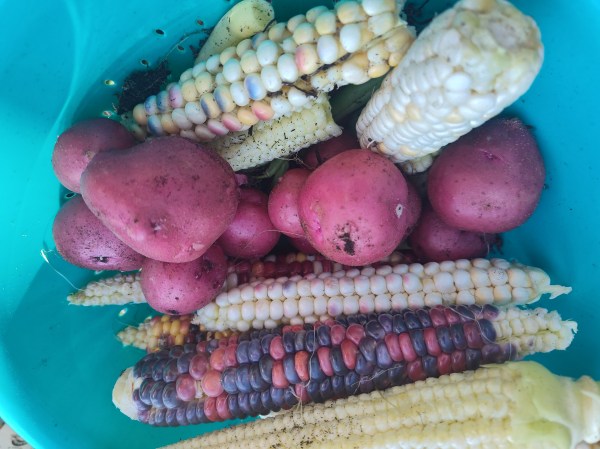
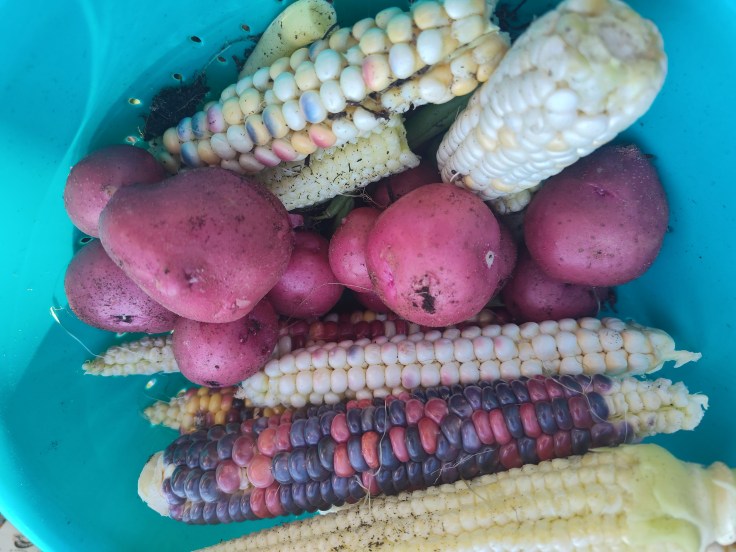
I believe we picked a half-dozen ears split between three or four varieties. There were two Painted Mountains, two Country Gentleman, and I think one each of the Luther Hill and Black Iroquois, Sweet Mexican varieties. The ears varied fairly widely in length, but they were pretty full ears. I think our favorite variety was the Country Gentleman, which is an heirloom from the late 18th century. It is sweet corn, but not nearly as sweet as our modern hybrids. It also doesn’t grow in rows like corn typically does. Instead, it is a shoepeg type, so the kernels grow in zig-zags. It’s beautiful.
Red Norland potatoes and corn harvest.
We also really enjoyed the Painted Mountain corn. This is a flint, or dent, corn, so it typically isn’t eaten fresh like this. Instead, it’s usually left to dry on the stalk and then ground into cornmeal. We decided to eat it fresh because we’re unlikely to grow enough ears to mill, but we didn’t want it to go to waste. Plus, it can still be eaten fresh, and we learned it’s absolutely delicious. It’s one of the best-tasting corn varieties we’ve ever had. The downside is that its texture is a bit off. It’s starchier and chewier than sweet corn usually is, but if you can get past that, the flavor is excellent.
We also pulled our first batch of potatoes yesterday but likely did so a couple of weeks early. Growing potatoes in bags has gone very well, with all but one bag growing very well. All the others are full of two-foot-tall plants, and most have flowers on them. Plus, some have started to die back, indicating that they’re close to being ready. Unfortunately, I was misled by some Reddit threads, and we pulled a bag of Red Norland potatoes a bit too early. The potatoes we did harvest look amazing. We have roughly a dozen appropriately sized, beautiful red-skinned potatoes. They’re firm and are going to be delicious. But we could also see on the roots a lot of places where new potatoes were starting to grow, so we likely lost out on the opportunity to grow another dozen potatoes. With the rest of the bags, we’re going to wait until the plants have completely died off before harvesting.
Melons Are Growing Well
In what has been a very weird year for gardening, from the inconsistent temperatures and rain to the Canadian wildfire smoke, our melons have been doing exceptionally well. This is odd, because growing melons in cooler climates like ours is difficult. We’ve tried growing them in the past, but they always failed to grow to their fullest size or lacked flavor. This year, for whatever reason, they’re doing well.
We’re growing three varieties of melons: Pride of Wisconsin (muskmelon), Montreal Market (muskmelon), and Cream of Saskatchewan (watermelon). I’m confident that we have at least one of each variety growing, with multiple fruit being close to volleyball size. None of these tend to produce huge melons, but if we get something around five pounds, I would be thrilled. I think it’s difficult to tell when melons are ready to be harvested, but by early September, we should be close.
Try Little Bing Tomatoes
The Little Bing tomato is one of the most highly anticipated things we’re growing this year. Not only is the name funny, but it’s also described as being one of the best-tasting cherry tomatoes the seed company employees have tasted. I started them inside and transplanted them into a small rectangular planter we have. After transplanting, the plants took off, and we’ve had dozens of blossoms and fruit for weeks. Thankfully, the tomatoes have started to turn red, and we were able to harvest the first ones yesterday. The seed company was 100 percent correct on the flavor. This tomato is very sweet, but not syrupy sweet. It also has a great tomato flavor without any of the “tinniness” that can happen. They’re not too big, but they can still be sliced. They may be the perfect cherry tomato.
Elsewhere in the Garden
We’ve also continued to pick beans, even though I thought they would have stopped growing by now. We’re still eating Cherokee Wax and Blue Lake Bush beans and even gave a quart of them to our neighbors last evening. Our shelling beans are also doing well. They have large pods, and the plants continue to look healthy.
Our other tomato plants are holding on, and the bulk of the tomatoes are starting to ripen. Our peppers are in a similar state. We are also finally starting to see some eggplants growing on the plans. Last year, we harvested a ton of them, but this year, they’ve been much slower to grow and develop.
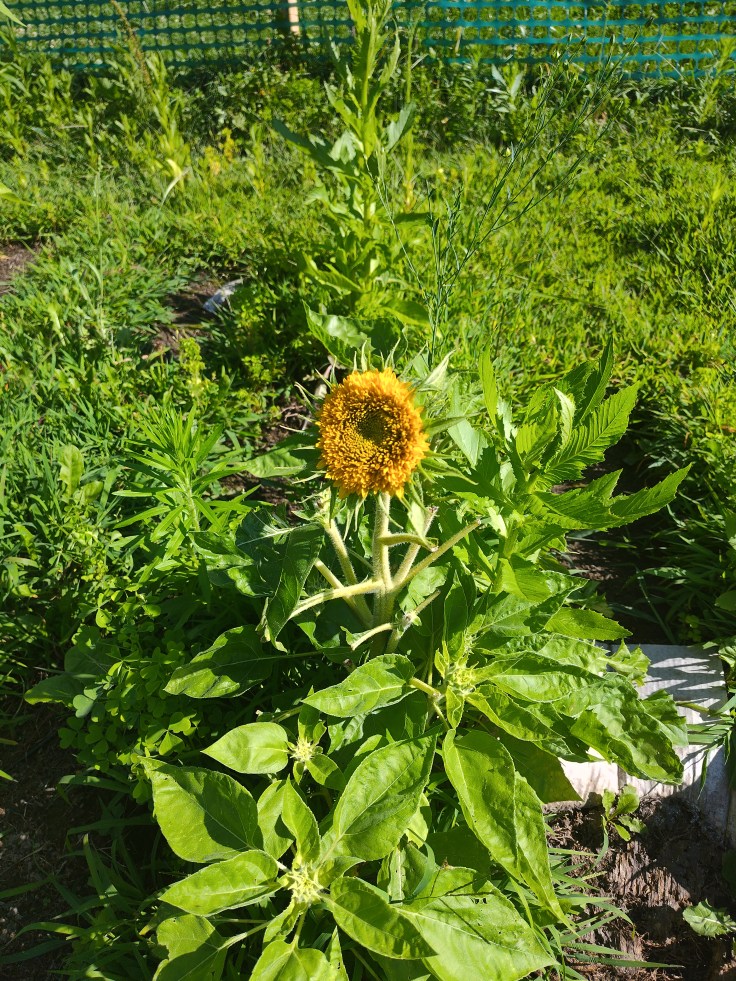
Finally, our sunflowers are looking great, and one of the Teddy sunflower plants has grown a flowerhead. It’s stunning. I wasn’t sure if we’d ever see this happen. That’s all for this week’s update. Happy Gardening!
We’re growing potatoes again this year after not doing so since 2022. We attempted to grow them last year, but our seed potatoes arrived moldy and rotten. We still tried to plant them, but the wet spring we had killed them before they could grow. We wanted to attempt to grow them again this year, but we didn’t want to grow them in the ground, and we wanted to buy them from a different seed company.
In my post that went over the varieties of potatoes we bought, I mentioned the varieties we’re growing as well as the company we bought from, Urban Farmer. Those potatoes arrived in late April and were in perfect condition. I was surprised at how late they arrived and thought there was a chance they weren’t going to arrive. I eventually emailed the company, and they arrived within a few days of getting a response. Given the condition of the potatoes when they arrived, I’m a fan of not receiving them until late August. It was not nice having to worry if I was properly storing them for a month or so until it was time to transplant.
When we decided we were growing potatoes again this year, we knew that we weren’t going to grow them in the ground. Standing by helplessly as last year’s seed potatoes died in the ground was an awful feeling, and it wasn’t one we want to experience again. Even though the soil is better this year, which would provide a better growing environment for them, we can’t control the weather, and another wet spring could kill another year’s worth of potatoes. That brought us back to our old friend, the container garden.
In 2022, we grew our entire garden in containers, and by containers, I mean 5-gallon buckets and plastic totes. I wrote about our experience in this blog post, so I won’t rehash it here, but it was mostly successful, and I recommend it for anyone who’s limited on space or can’t have a traditional garden. Growing potatoes in them was a success. We grew three varieties in three separate totes and probably harvested between 15 and 20 pounds. For our first time growing potatoes, we were very happy with the results. This year, though, we aren’t growing our potatoes in containers but instead are using grow bags. Don’t get me wrong; the totes worked great, but it was too easy to crowd the potatoes and too heavy to move if we had to relocate them.
What Grow Bags Work Best?
There are numerous sizes of grow bags. We went with the 10-gallon ones, and they came from Amazon. These are the ones we’re using. I picked the 10-gallon bags because they are big enough to hold four pieces of a seed potato and have enough space to hill them as they grow. At the same time, they are small enough that it’ll be easy to move them when they’re full. Grow bags are also great because it’s really hard to overwater what’s growing in them. Made of mesh, they’re breathable and let excess water flow through.
Although there are some grow bags that have flaps on the side that provide easy access to the potatoes when they’re ready to be harvested, ours don’t have that. It is convenient, but I don’t think it’s necessary. It’s easy to pull the plants out to access the ready potatoes, and I prefer to harvest all of them from one bag.
We started with 10 bags, which were a birthday gift from Magz’s parents, but when we started to plant the seed potatoes, we knew we needed more, so we bought another 10-pack, which was the perfect amount for the four varieties we bought.
Planting in Grow Bags
Growing potatoes in bags couldn’t be simpler. We used a mushroom compost and top soil blend that we bought in bulk from our local Agway and put a layer on the bottom of each bag roughly five inches deep. After that, we applied an all-purpose 5-10-10 fertilizer and mixed it in. The seed potatoes went in next. Whether the seed potatoes need to be cut prior to planting seems to be personal preference, but I like to cut ours as long as each segment has an eye. Any potatoes that only have one eye go in whole. I try to cut the potatoes at least 24 hours in advance of planting them. This allows the potato’s flesh to harden over and develop a skin that protects it as it starts to grow. With the potatoes in the soil, I cover them with a few inches of soil and water them. It’s that simple.
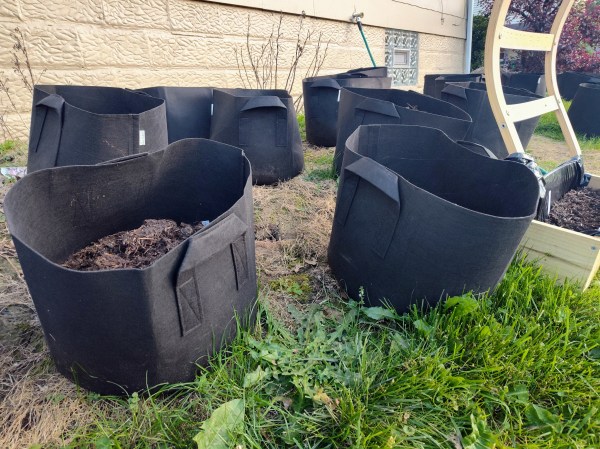
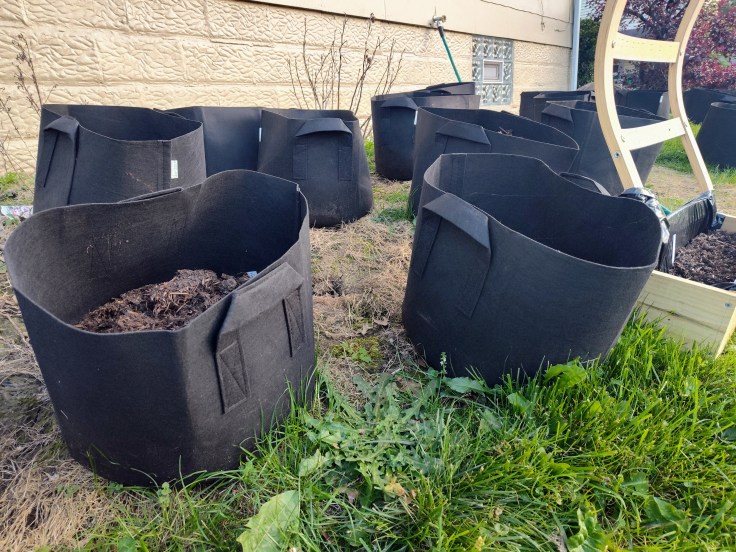
Some of our potato grow bags
It’s important to use ID tags in the bags if you’re growing multiple varieties to know which type is growing in each bag. This helps to know when the potatoes are early, mid, or late-season varieties and to recognize when each is close to being ready for harvesting. After they’re planted, you just need to pay attention to when the potato plants start to grow. When you start to see the green of the plant breaking through the soil, you want to hill them up with more soil so that the plant is covered. With the bags, we’ll continue to add more soil until the bags are full. At that point, we’ll stop and wait until the plants die off, indicating that they can be harvested.
5 Reasons to Grow Potatoes in Bags
I feel that using grow bags takes some stress off growing potatoes. Granted, it is a bit more work than planting in the ground, but I think it takes a few years to improve soil to make it suitable for potato growing. Most of our yard is heavy with clay, which compacts and makes it tough to grow tuberous plants, such as carrots, beets, and potatoes. Over time, that should improve, but it’s not where it needs to be yet.
1.) Choosing the Perfect Soil
With grow bags, you can buy the perfect soil for potatoes. This blend we bought seems to be advantageous for potatoes, as it’s loose and has the necessary nutrients that help potatoes thrive.
2.) Water Management
They’re also great because you can’t overwater what’s growing in them. Excess moisture simply drains out. The flip side of this is that you need to water more often than you would in-ground plants, but it’s not a big hassle.
3.) Maneuverability
Another reason to use grow bags is that they’re easy to move. Any container is technically able to be relocated, but it becomes a pain once it reaches a certain size and weight. The 10-gallon bags are perfect for this because they never weigh so much that it’s hard to carry them, but they’re still heavy enough to not be blown by the wind.
4.) Sustainability
A major reason we wanted to use grow bags this year is that they’re sustainable. They may not be as sustainable as growing in the ground, but the bags we bought are durable and should last at least a few years. They’re made of a sewn fabric that has some flexibility and won’t rip under normal conditions. They’re much better than the plastic containers we used in the past, which would crack and break within a few months. And when we’re done using them in the fall, they’re easy to clean and store until next spring.
5.) They Can Be Decorative
Over time, our goal is to make our garden more aesthetically pleasing. Grow bags contribute to this. They look much better than the totes and buckets we previously used. The bags can be placed together in one location, simulating a garden bed, or can be placed in separate locations as space allows. We currently have ours on the hillside beside our house, and it gives this area of the yard some purpose and beauty.
To wrap up, if you’re on the fence about using grow bags, I would recommend it. Even if you have the space for an in-ground or raised-bed garden, grow bags can be the perfect complementary vessel. They’re affordable (our 10-pack cost $25.99), sustainable, and easy to move around. Have you ever used grow bags for your garden? If so, what has your experience been?