Weekly Garden Update #6 – Melon or Pumpkin?

In this week’s gardening update, I’m mainly going to focus on a plant that was supposed to be a melon but is looking more like a pumpkin with each passing day. Additionally, I’ll go over some of the harvesting that we’ve done as well as what we’re seeing in the garden. Let’s dive in.

Is It a Melon or a Pumpkin?

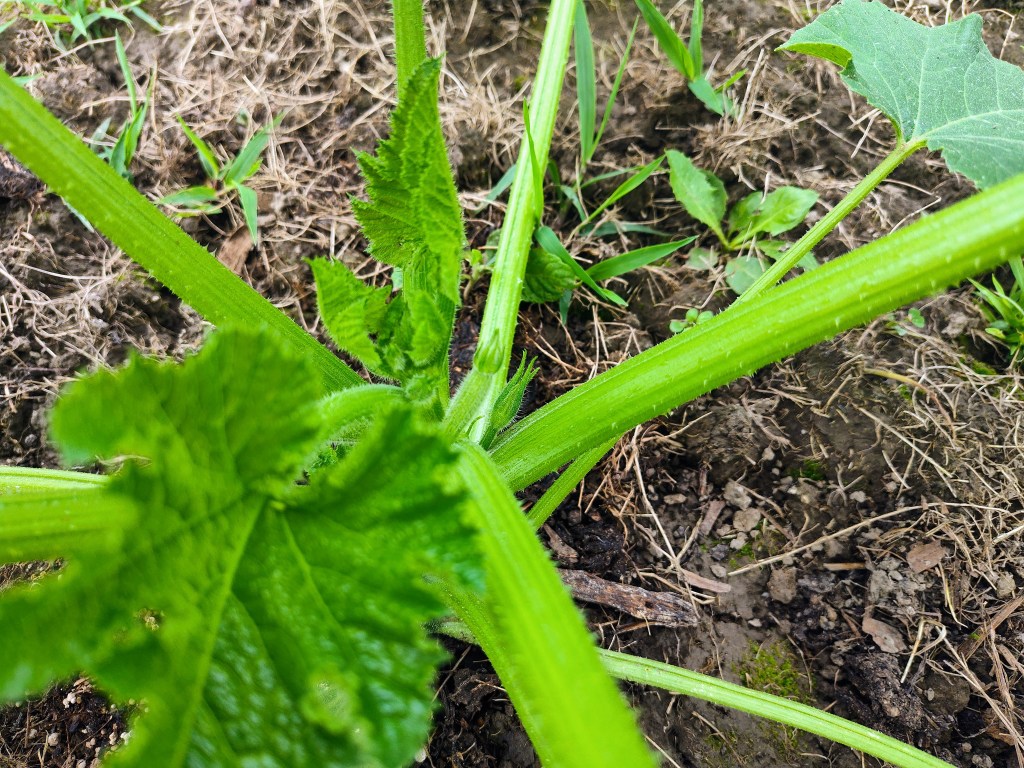
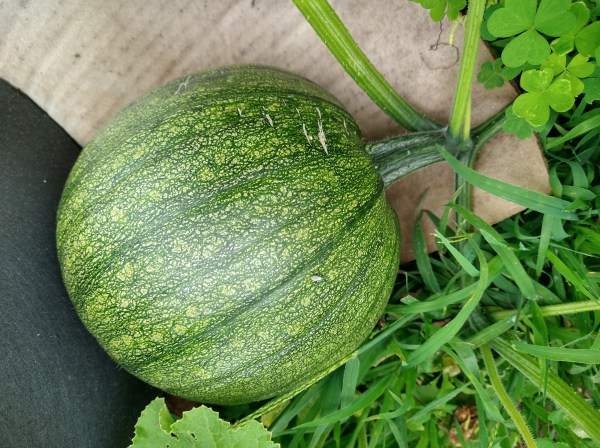
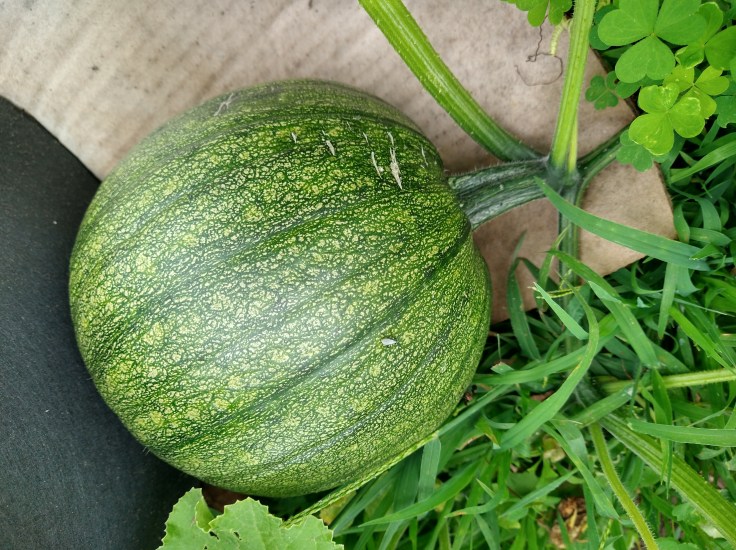
One look at this picture, and it’s obviously a pumpkin, right? That’s what we’re thinking now too. The skin is giving off serious pumpkin vibes, and the stem is thick and curved much like a pumpkin. Heck, even the leaves look like pumpkin leaves. And I expect that by early September it should begin to turn orange. So why did we think it was a melon? The answer is simple: we didn’t plant any pumpkins in this bed this year. In this section of the bed, we planted three varieties of melons, and for most of the plant’s life, I thought it was a melon plant. I obviously wasn’t paying attention to the leaf shape, which looks nothing like a melon leaf. This begs the question of how do we have a pumpkin when we didn’t plant pumpkin seeds?
Pumpkin
This pumpkin started out as a melon, or so we thought.

I think there are only two possibilities. One is that the envelope of Cream of Saskatchewan melon seeds we received actually had pumpkin seeds in it. I don’t think this is the case because I believe I would have noticed if the seeds looked like pumpkin seeds rather than watermelon seeds. Also, in this same row, we have several melon plants growing, so I’m confident we received and planted the proper seeds.

The other possibility is that this seed was left on the ground from last year and grew this spring. I’m confident this is what happened. We grew pumpkins in this bed last year, including a New England Sugar Pie variety, which is what this pumpkin looks like. There were a couple of pumpkins that deer started to eat, allowing seeds to fall on the ground. Then, this spring, I likely tilled them into the soil when I was turning it over, allowing this seed to germinate and grow. It’s similar to the rogue tomato plants we have in this same bed. Those are also growing well. I’m getting a kick out of how this happens, and we’re pretty happy with this pumpkin plant since the plants we’re intentionally growing aren’t doing all that well.

Squash, Beans, and First Tomato

We’re continuing to harvest summer squash, with the yellow crooknecks being ready to pick. We’ve also been picking more Costata Romanesca and Lebanese White Bush and have learned the importance of consistent watering and waiting until the vegetables are fully ripe before picking. One of our Costata Romanescas was firm for about 75 percent of its length before tapering to a soft section in the last 2 inches. We picked two Lebanese White Bushes. One was white and the other was a pale green. We learned that they need to be white before picking because it indicates full ripeness. We’re also starting to see the first patty pan squashes growing on the plants. Last year, these were our favorite summer squash to eat, so we’re really excited to be able to eat them again soon.

One thing I can’t figure out is why our winter squash have done nothing. We planted a couple varieties with multiple plants of each variety. Some of the plants have completely died off, while others haven’t taken off, and we haven’t seen any fruit development. It’s a similar story with our intentionally planted pumpkins. I’m unsure if this is the result of the intense heat wave we had in June or something else, but last year, our winter squash grew very well.

We continue to have an excellent year for beans. We’re picking a batch of them every couple of days and have been enjoying eating our fresh snap and wax beans. We’re also seeing pods on our shelling beans, which is really exciting.

Cherokee Wax, Blue Lake Bush, Iroquois Skunk Pole
Cherokee Wax, Blue Lake Bush, Iroquois Skunk Pole Beans

Finally, we harvested our first tomato last night. It was a cherry tomato was delicious. Our tomatoes have been kind of weird this year. The plants took off after being transplanted into the garden, but inconsistent watering, weed issues, and uneven temperatures led to some issues. At one point, it looked like most plants were going to die, but that’s no longer the case. There are a lot of tomatoes growing and starting to turn red, but the leaves are still brown and don’t look healthy. I’m choosing to focus on the positives in that we’re going to be able to harvest tomatoes from plants that don’t look great while thinking about ways to improve next year.

Cucumber Bitterness

One of the most disappointing vegetables this year has been our cucumbers. Like our tomatoes, the plants took off after being transplanted, but a combination of not remembering how far the Bushy variety spreads and not being able to see the vegetables below the leaves has made it difficult to pick the cucumbers at the ideal size. And the flavor of these cucumbers has been hit and miss. Some have been amazing and similar to the freshest-tasting cucumbers I’ve ever eaten. Others, though, have been bitter and not pleasant to eat. This was due to the heat wave we had in June since cucumbers are apparently very heat-sensitive and respond to it by developing thicker skins, which causes bitterness. We may take a year off from growing cucumbers next year because they’re a bit finicky and annoying to grow. But when we do grow them again, I want to find a variety that is less heat-sensitive because we tend to get one weeklong heatwave each summer.

Up Next

Do you have any experience with cucumbers being bitter? If so, do you have any tips for addressing the issue at this point in the summer?
Weekly Garden Update #4 – Continued Tomato Problems, Blossoms Galore, and Zucchini

In this week’s update, I go over a very helpful comment I received about how to fix a tomato problem we were having. I also highlight some of the incredible progress we’re seeing in the garden, including zucchinis that are close to being ready for harvest.

Tomato Issues

Last week, I wrote about a problem we were having with a single tomato plant in our garden. This plant was clearly dying even though all the surrounding plants were healthy. A wonderful reader commented on the post to say that it was likely a fungus that was the result of the tomato’s leaves touching wet grass. I knew this and addressed it last year but had forgotten to take care of it prior to receiving the comment. On Saturday, I went out and addressed the tomatoes by trimming some of the branches that weren’t producing fruit and were low enough to touch the grass. I then staked the tomatoes to hold them upright and removed the grass growing below them. They immediately looked more maintained and healthier; however, unfortunately, it may have been too late, or there’s a larger issue at hand.

It rained a lot on July 4th and 5th. Our rain gauge, which I had emptied on the morning of July 5th, showed 3.25 inches on July 6th. I know that rain gauges aren’t always the most accurate, but it’s safe to say that we received a ton of rain. Yesterday, the majority of the plants I trimmed looked stressed. The leaves were drooping, and the stems appeared to have no strength to hold themselves upright. What’s really weird is that another tomato plant in the same bed looks fine. Also, the rogue plants that are growing in another bed are looking healthy. It’s weird because if there was a fungal issue, I think it would affect all plants in the same bed. I’m also now questioning the need to rotate vegetables if our tomatoes were successful last year in another bed even though the same grass issues were present. I don’t have a lot of hope that the tomato plants are going to survive, but this morning, they did look healthier than they did last night, so it could be that the soil needs to drain and that they were simply overwatered. It would be amazing if that were the case.

So Many Blossoms

We have so many blossoms on our plants, and it feels like it happened all at once. Like one evening they weren’t there, and the next morning they were. It’s happening on our squash, cucumber, bean, melon, and tomato plants. We’ve had cucumber blossoms and baby cucumbers for a few days now, and the Costata Romanesca zucchini plants have had blossoms for a bit. But the other zucchinis, beans, tomatoes, and melons are all more recent.

This time of the year is amazing for gardening. It feels like things are changing all the time and that there’s something new to look at every time you go into the garden. One of my favorite things is noticing the difference between the varieties of a vegetable. For example, our Montreal Market melon blossoms are different from the Pride of Wisconsin blossoms. I’m taking pictures of the different varieties to share in an upcoming post.

Zucchini

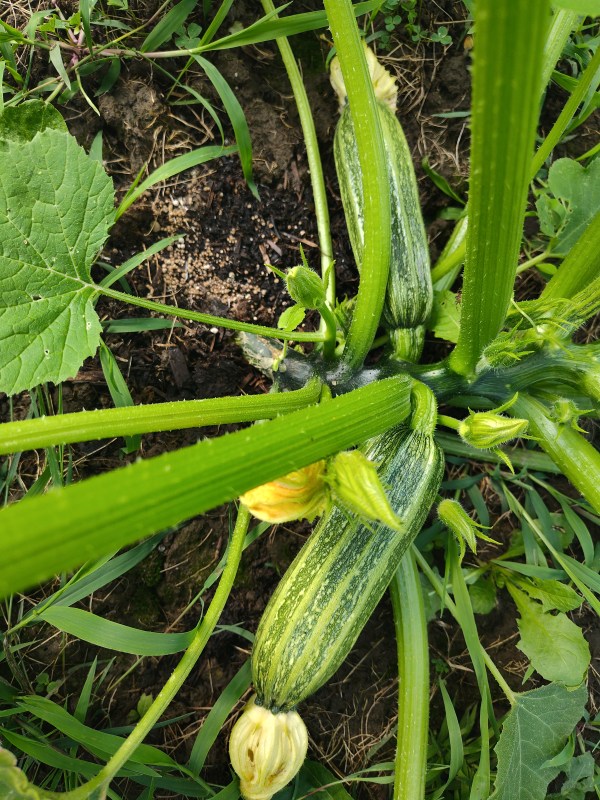
The most exciting garden development has been the appearance and growth of two Costata Romanesca zucchinis. Late last week, we noticed that one of the plants was putting fruit on, with two of them reaching finger length. When we looked last night, one zucchini was roughly six inches long, and the other was four inches long.

costata romanesca zucchini, zucchini
Costata Romanesca zucchini

Unlike other zucchinis, though, this variety shouldn’t be picked until it reaches 12 inches. We may be able to pick the first one at the end of this week, which is so exciting. Take a look at how beautiful these zucchinis are.

Up Next

I think the biggest thing we’ll be monitoring this week is the health of our tomatoes. Will they survive or die? We’re also looking forward to harvesting the first vegetables this week. Lastly, we’re still seeing evidence that deer are getting into the garden bed where our corn is growing. I have a rough idea of how to get the fence higher, but we’ll see if it works. Happy gardening!

What’s Wrong With This Tomato Plant?

Our garden is doing very well this year. Our squash plants are thriving and putting on finger-length fruit, our tomatoes have a lot of blossoms, and our corn is up to my waist. In general, we are ecstatic with how much success we’re having. But this is a garden, so let’s be realistic: we’re not achieving perfection. And one example of where something is failing is this single tomato plant.

tomato plant, gardening
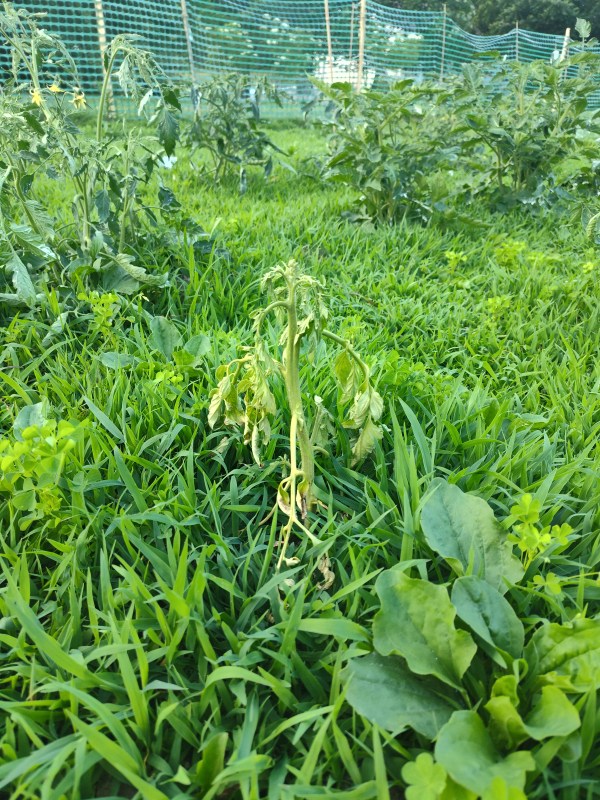
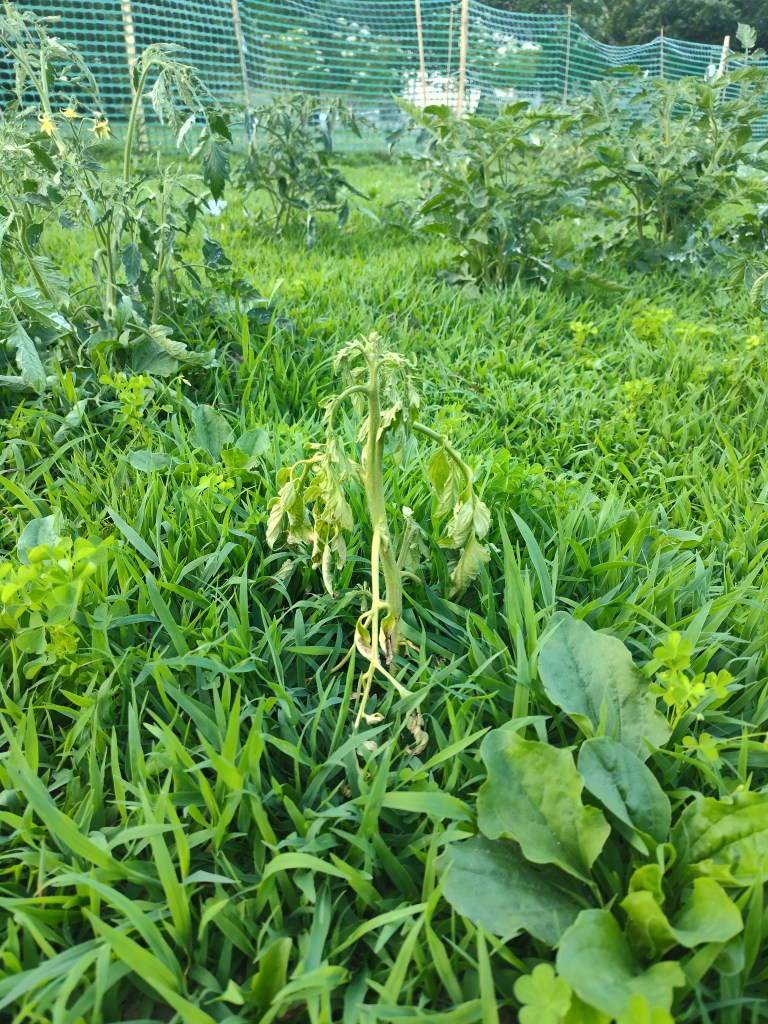
A dying tomato plant.

I took this picture last evening, and it’s pretty clear that the plant is going to die, but the thing I can’t figure out is why. I know that there is a lot of grass and other weeds growing around it. We’re in the process of remedying that with cardboard, but the grass is present around our other plants, and they’re thriving. It’s not the soil, moisture levels, nutrients, or amount of sun. This bed is full of tomato plants, and this is the only one that looks like this. For comparison’s sake, here’s the tomato plant that’s right beside it.

tomato plant, gardening
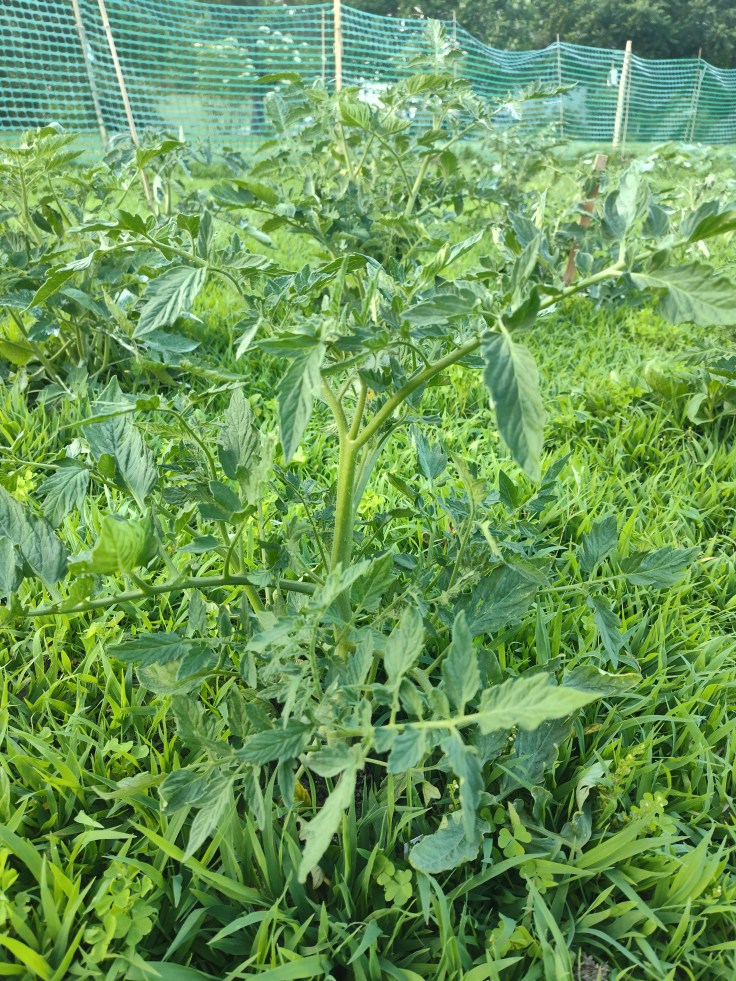
An example of a thriving tomato plant.

This tomato plant is the same variety and only planted about 18 inches from the dying one. It has healthy leaves, it’s standing upright without support, and it has blossoms on it. By all counts, it’s doing very well and will produce fruit. The majority of our tomato plants look just like this one. Side note: we’re going through a week-long heat wave, so the plants show signs of stress from the heat before the sun goes down. Besides that, though, they’re incredibly healthy with a lot of flowers. So, if everything is the same between the dying plant and this one that is thriving, what is the cause? I honestly don’t know, but if you have any theories, I would love to hear them, because I’m perplexed.

Actually, although I wish I knew the answer to what’s causing the plant to die, there is something so refreshing about gardening, with how you don’t always have solutions. Gardening is quite analog when almost everything in our world is digital. And even though there is a lot of science behind a successful garden, you also need to rely on your senses. Is a tomato plant’s leaves curled? Do they feel brittle? How firm is the zucchini? Does the soil feel moist when you place a finger in it? These are all things that research can’t give you straightforward answers to. Sure, books, blogs, and videos can describe how something should feel, look, or smell, but you have to experience it for yourself.

We were watching something on YouTube last night about the lack of silence in the world today, which is something I’ve expressed frustration over in recent years. The video included a clip of Fred Rogers from Mr. Rogers’ Neighborhood. In it, he said:

Our society is much more interested in information than wonder, in noise rather than silence…And I feel that we need a lot more wonder and a lot more silence in our lives.

With the explosion of data, social media, and the internet’s intrusion into our lives, the quote could easily be from 2026. But if you’re familiar with Fred Rogers, you’ll know that he passed away in 2003. That quote was actually from 1994 or 1997. Charlie Rose interviewed him twice, and I’m having some difficulty determining which interview this quote is from, but I believe it’s 1994. Either way, though, it was at least a couple of years before the Internet became a household norm and at least a decade before the first iPhone. He was concerned about the wave of information long before it reached its current level.

Gardening is great because you can escape the oppressive nature of technology and information. When you look up the cause of tomato leaf curl, you’ll get a lot of different answers. It could be too much water. It could be too little water. It could be too much sun. It could be not enough sun. A lack of nutrients could be the problem. It could be root rot. And then there are the endless number of pests it could be. Because gardening is an extension of nature, it feels like it’s beyond the realm of technology, and I think that’s what draws many of us to it. My job requires me to be on a computer on a daily basis, which I’ve accepted because it’s allowed us to buy a house and have a garden. But beyond that, I generally hate technology even though I’m guilty of doom scrolling on Reddit or picking up my phone because I’m bored. But nature and gardening allow us to escape that, if we choose to. It’s like John Muir said: “Into the woods I go, to lose my mind and find my soul.” I’ve seen woods replaced with forest, but I also think garden or nature work here. As a society, it seems that we’ve grown afraid of not knowing the answer to something, but that mindset causes us to lose all wonder and creativity. It leads to an absence of being motivated to discover the answer on our own.

To circle back to our dying tomato plant, I have no idea what caused it to die, but I’m sad about it. I’m also comfortable with not knowing the answer at this time. Plants are living creatures, just like humans and animals. Unfortunately, they get sick like we do, and sometimes we just don’t know the reason. But I’ll continue to hone my gardening skills so that this happens less over time, and if you have any ideas as to why it died, I’d love to hear them. I’m not interested in researching the answer and becoming overwhelmed by information, but I’m always up for a good conversation. And in the meantime, happy gardening!

2026 Weekly Garden Update #3 – Rogue Tomatoes, Blossoms, Slow Pepper Growth & More

In this week’s update, we’ve been noticing tomato plants popping up in a bed where we didn’t plant them this year. We’ve also had great growth in our cucumbers and intentionally planted tomatoes and now have blossoms on them. Still, one vegetable that isn’t growing as well as we’d like is pepper. But with a heat wave on the horizon, that may change this week. Finally, I expanded our trellises to accommodate the pole beans we’re growing. Let’s dive in.

Rogue Tomato Plants

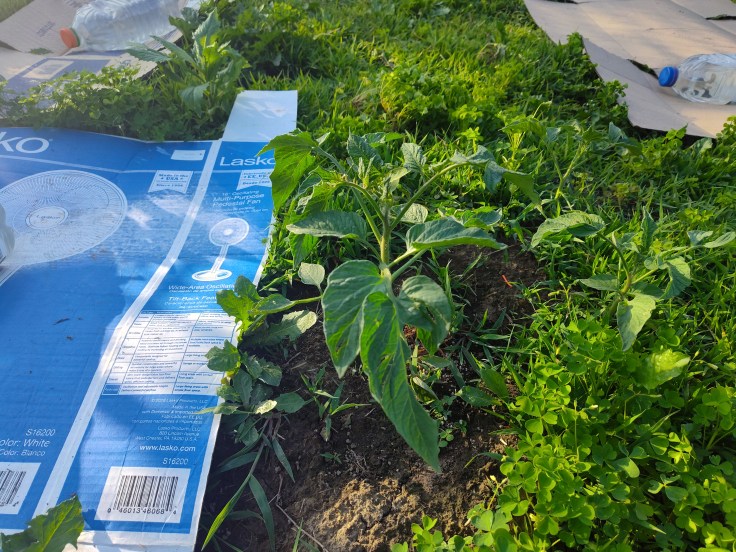
Something pretty bizarre and funny is happening in our garden this year: we’ve had close to a dozen tomato plants germinate that we didn’t plant. The bed they’re appearing in is where we grew tomatoes last year; however, this year, we’re growing cucumbers, molokhia, and melons in it. I’m pretty certain what happened is that seeds germinated from tomatoes that fell off the plants last year, but it’s still pretty crazy. We had a really cold winter last year, so I’m surprised that the seeds survived. I also tilled the soil this spring, but that may have brought the seeds closer to the surface and helped with germination.

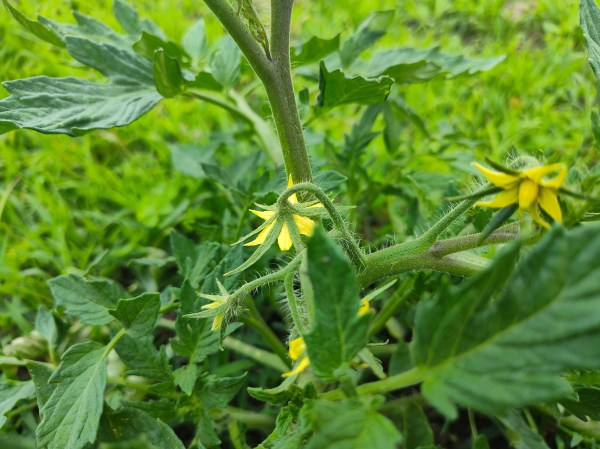
Tomato plant
The rogue tomato plant in our cucumber/melon bed.

I know that we could have pulled them immediately, but for the most part, they aren’t growing in places where they’ll hinder the growth of our melons, molokhia, and cucumbers, so we’ve let them go. The funny part is not knowing what varieties they are. There appear to be at least three varieties, but until they grow more and start producing fruit, we won’t know what they are. At this point, we’re committed to letting them grow to maturity unless they start to affect the plants we planted this year. The best case is that we have extra tomatoes. The worst case is that they never produce fruit or we have to pull them. It’s a fun journey.

Plants Are Blossoming

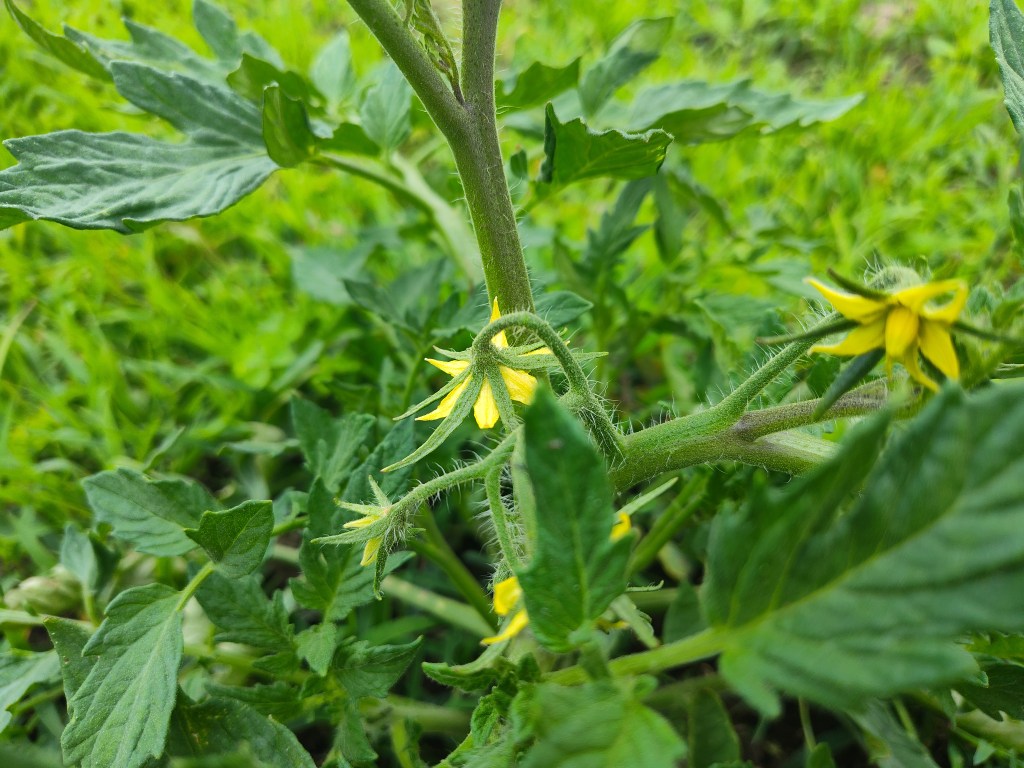
Elsewhere in the garden, some of the plants we intentionally planted have started to put on blossoms. Three of our cucumber plants (the fourth one died) are flowering and have teeny-tiny cucumbers growing behind the flowers. Several of our tomato varieties have blossoms on them, including Large Red, Roma, Heinz, Sub Arctic Plenty, and Little Bing. Also, our first batch of Iroquois Skunk Pole beans is putting on flowers.

This is very exciting, because I don’t think there are many better things in life than a tomato eaten fresh off the plant. And because of how our pole beans are growing, we should be done harvesting beans from the first batch by the time the other two batches are reaching maturity. I think this is the part of gardening that’s the most fun.

Expanding Our Trellises

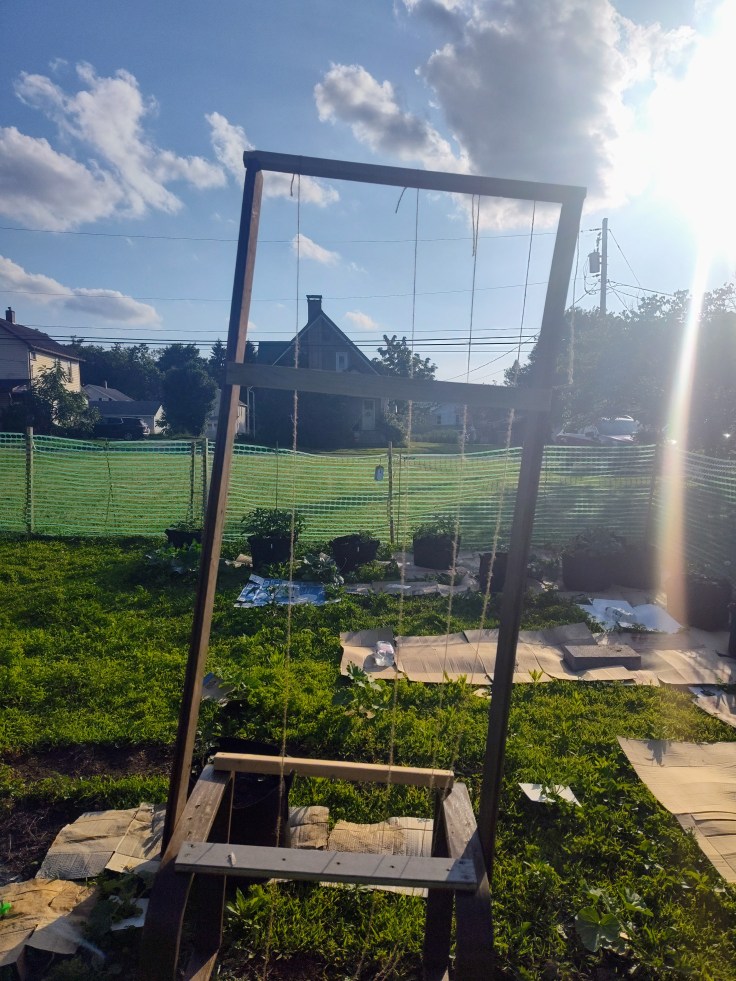
Because two of the final three batches of pole beans are starting to take off, I had to adapt and expand the trellises I built from old Ikea furniture. If you recall, these three planters were originally used for other things: Sour Mexican Gherkin cucumbers, Cherokee Trail of Tears beans, and Grandma Nellie’s Mushroom beans. None of these were successful, so I started Iroquois Skunk Pole beans in all three. These trellises have gotten weird.

On one of them, I took the other side from one of the Ikea chairs, cut it down, and used the curved pieces in opposite directions to get the height where it needed to be. I then used a scrap piece of lumber for stability, added a piece to hold the twine, and tied the twine.

Trellis, bean plants, Iroquois Skunk Pole Bean
The extension I added to the trellis I built. It’s a bit wonky, but it was made entirely from scraps.

For the other trellis, I attached two pieces of scrap lumber that was in our garage when we bought our house to the existing planter. That got it to the necessary height. I then used a couple of scraps to strengthen the trellis and tied the twine. Both are ready for the plants to climb.

Upcoming Heatwave

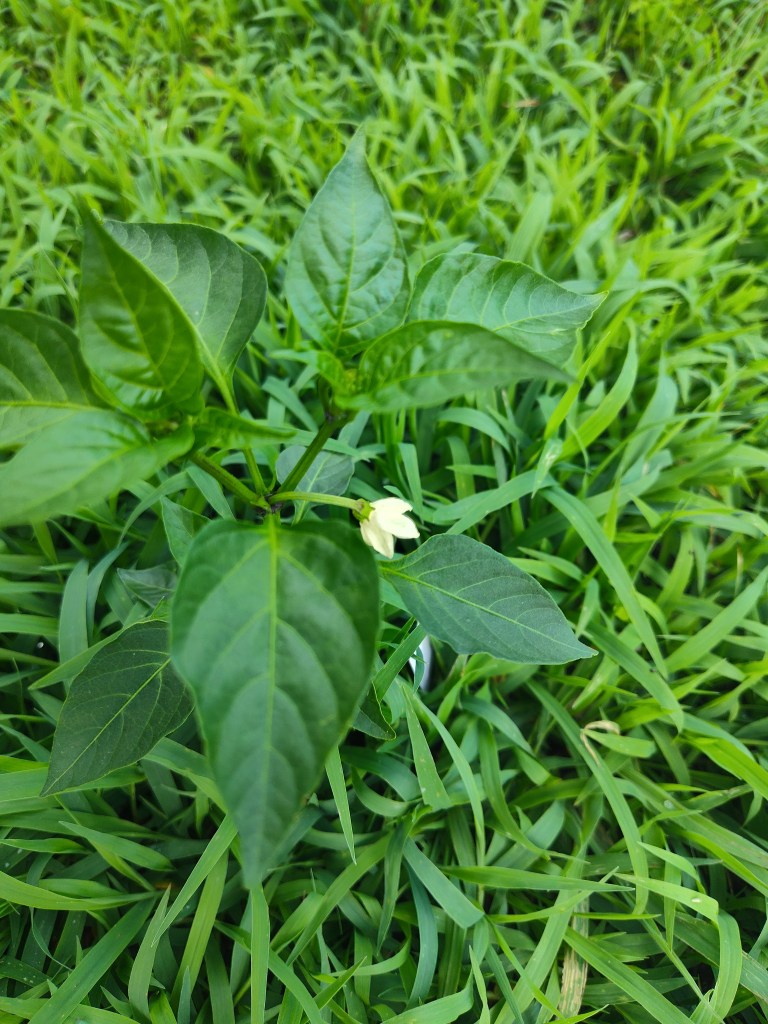
This week, a large portion of the Eastern United States, us included, is under some sort of a heat advisory. Starting tomorrow (Tuesday), through Friday, the high is supposed to be in the mid-to-upper 90s. This is both good and bad. It’s bad because when it’s that hot and humid, being outside isn’t fun. It’s good because our soil needs to dry out a bit, which will benefit our plants. Our pepper plants are looking pretty healthy, but they’re still small because it hasn’t been overly warm to this point. The heat, humidity, and sunlight should go a long way to addressing this problem. My hope is that because of how much rain we’ve gotten, we’ll only need to water once during the heatwave, if at all.

Up Next

If you’re in an area that’s going to face this heatwave, please stay safe. Drink lots of water, and stay in the shade as much as possible. For your garden, I hope the heat benefits yours as much as we’re hoping it benefits ours. Also, have you ever had rogue plants pop up in garden beds where they don’t belong? Happy gardening!

Tomatoes: A Brief History

A research project that started with my looking into Pennsylvania’s native plants has expanded into a general overview of where our most popular commodity crops originated. I’ve said this before: I’m a history nerd and struggle to only do surface-level research. It’s quickly becoming evident that what started as a brief historical post is now a full-fledged project, which I’m excited about. It’s been a long time since I’ve been this excited or interested in doing historical research. Moving forward, I’m going to look at the history of many of the vegetables we grew in our garden this year. Starting out are tomatoes, which are probably the most commonly-grown “vegetable” in the United States.

From South America to Europe to the World

As many know, tomatoes aren’t vegetables. They’re technically fruit and are members of the nightshade, which also includes potatoes, eggplants, peppers, and tobacco. The part of the tomato plant that we eat is the berry, although we eat it as a vegetable rather than a fruit.

The modern tomato’s origins go back to Western South America in Ecuador and Peru where it grew wild. Around 500 B.C., it was first domesticated by the Aztecs and Mayans in modern-day Mexico. It wasn’t until the 16th century that Europeans first saw them as they conquered the people groups of Central and South America. Spanish priest Bernardino de Sahagun reported seeing tomatoes in Aztec markets in what is now Mexico City (known as Tenochtitlan at the time). In 1544, they first appeared in European literature in Pietro Andrea Mattioli’s herbal. Mattioli was an Italian doctor and naturalist whose commentary on medicinal plants was pivotal. At this time, tomatoes were viewed as a new type of eggplant, and in 1554, he referred to them as “golden apples.”

After the Spanish first encountered tomatoes, they took the fruit with them as they continued their mission of conquering the Caribbean and (eventually) the South Pacific. From the Philippines, they were taken into Southeast Asia and reached China in the 16th century. In Italy, they were mostly grown ornamentally due to toxicity fears associated with other nightshades. In fact, they weren’t incorporated into cuisine until the late 17th-early 18th century.

Elsewhere, the tomato reached the island of Great Britain until the late 15th century, but due to the spread of misinformation by John Gerard that tomatoes were poisonous, it took centuries before they were widely consumed. Tomatoes reached the Middle East in the late 18th to early 19th century when a British diplomat transported them to Aleppo, Syria.

Tomatoes were first mentioned in the United States in 1710 when they were recognized by an English herbalist named William Salmon in modern-day South Carolina. It’s speculated that they arrived via the Caribbean and were grown on plantations in the Southeast by the 1750s. Like other parts of the world, the majority of Americans (or colonists prior to the American Revolution) maintained the view that tomatoes were poisonous and should not be consumed. However, that mindset changed during the 19th century as horticulturalists began breeding tomatoes for commercial sales. The most famous of these horticulturalists was Alexander Livingston, who was responsible for helping to develop a tomato that was uniform in size, smooth, and sweet. In 1937, the USDA that he was behind over half the major tomato varieties that were available at the time. Since that time period, more than 100,000 varieties of tomatoes have been identified, and they are largely broken down into five or so categories.

Types of Tomatoes

Tomatoes are generally categorized in the following ways:

Beefsteak

The beefsteak variety is the largest variety of tomato, often measuring nearly 8 inches in diameter and weighing a pound or more. It’s one of the most popular types grown in the United States, and gardeners love beefsteaks for their wide range of uses, including in sandwiches and salads; however, they aren’t a good saucing tomato due to the large and numerous seed cavities. Popular varieties include the Brandywine, Cherokee Purple, and Mortgage Lifter.

Cherry/Grape

Although cherry and grape tomatoes are technically separate varieties of tomatoes, I’m writing about them together because people tend to grow them for the same purpose: fresh eating. Cherry and grape tomato plants produce small fruits, from the size of a blueberry up to a golf ball. Cherry tomatoes tend to be spherical and more uniform in size, while grape tomatoes are often oblong. These types are the ones most closely related to the wild varieties that were grown in South and Central America. Cherry and grape tomatoes are usually eaten fresh or in salads. Popular varieties include Matt Wild Cherry, which shares many characteristics with its ancient, wild relative, Black Cherry, and Yellow Pear.

Oxheart

The oxheart tomato is similar to the beefsteak in size, but different in shape. Whereas beefsteaks are round and spherical, an oxheart tomato will be shaped like a heart or strawberry with a round top that tapers to a point at the bottom. They have fewer and smaller seed cavities than beefsteak tomatoes, which means less water. They are a versatile type of tomato and can be used in everything from fresh eating to canning. Common varieties include Amish Paste and Oxheart Pink.

Paste/Plum

Paste/plum tomatoes are the perfect tomatoes for making sauces and canning due to their low number of seed cavities. This means they have less water content than other types of tomatoes, making them perfect for cooking down into sauces and pastes. Their plants are often determinate, so all their fruit will ripen around the same time, making it easier to harvest batches for processing. Some of the most popular varieties to grow are Amish Paste, Roma, and San Marzano.

Slicing/Globe

Globe tomatoes are likely the ones that come to mind when you think of tomatoes. They’re uniformly round, can be red or green, and can be cooked or eaten raw. They’re easy to slice and serve on sandwiches and can be chunked for salads. They are sweet, but only have a mild tomato flavor. There are many varieties of globe tomatoes, but some popular ones are Black Krim, Mountain Princess, and Bumble Bee.

There you have it; a very brief history of the tomato and the categories they are separated into. I say it’s very brief because there are entire books dedicated to the history of the tomato. One is The Tomato in America: Early History, Culture, and Cookery by Andrew Smith. That is a phenomenal book to read if you can find it. It’s also available to borrow digitally for free through Open Library. Tomatoes are one of the most important and popular vegetables grown commercially and in home gardens, so it was always going to be impossible to provide an in-depth history in a single blog post. But, if you’re like me, you will find this interesting and be intrigued to embark on additional research.

I’m going to continue to do these brief histories of vegetables, but they won’t be a weekly occurrence. I’ll publish them as I’m able to work on them and sprinkle them in with other out-of-season content. Next up, I am going to start writing about the seed catalogs we’ve received for the 2026 growing season.

Create a website or blog at WordPress.com

Up ↑