I love eating peppers but in general have hated growing them. They have fairly specific weather and temperature requirements, seem to be picky about soil quality, and hate weeds. And when you’re still early into the process of converting your yard into a garden, growing peppers in the ground can be a real struggle.
In 2022, when we had an all-container garden, we grew jalapenos and bell peppers in five-gallon buckets. The jalapenos grew very well, and we had enough to can Cowboy Candy with them. Meanwhile, the bell peppers were less successful, but we still harvested a few of them. Last year, when we had our first in-ground garden at our house, we started and transplanted bell peppers and Scotch Bonnet peppers. The seeds started well but began to struggle not long after being transplanted into the garden, and ultimately, we may have harvested a single bell pepper and no Scotch Bonnets. I chalked it up to inconsistent temperatures, poor soil, and weeds.
For this year’s garden, I wanted to try growing peppers in the ground again, thinking that we had addressed some of the issues. That didn’t happen. We started seeds for bell peppers, jalapeno peppers, habanero peppers, and gochugaru peppers. They did well after being started, but we once again ran into issues when they were transplanted. Another year of inconsistent temperatures and struggles with weeds led to the plants never reaching full height. In some cases, they died off fully. One habanero and one bell pepper plant grew enough to produce fruit, with the habaneros even producing enough to pick three of them, but it was still largely a failure. And this is where I’ll bring up growing peppers in containers.
Success With Container Growing Peppers
The pepper plants we grew in the five-gallon buckets were successful but imperfect. Due to the solid plastic of a bucket, drainage is always a problem with that style of container growing. This led to issues of overwatering if we went through a period of excess rainfall. And when we weren’t consistently getting rain, it was difficult to judge if the soil and roots had enough moisture without going overboard and causing root rot.
In May of this year, I decided to restart some gochugaru seeds inside. I could see from the beginning that the initial batch of gochugarus wasn’t doing well and wanted to have success with them. With the new batch, I focused on starting them in containers that were larger than they needed, ensured they had the right amount of water without overwatering them, and kept the grow light at the right height the entire time. By the time they were ready to be moved outside in late June, they were more than 12 inches tall and weren’t root-bound or leggy.
At the time of transplanting, we had a batch of potatoes die, so we took that grow bag, refreshed the soil, and planted the four gochugaru peppers in the bag. They immediately took off. Because it was July, the temperature was perfect for growing peppers, and we were able to ensure they had appropriate watering. Before long, the plants reached two feet in height, had dozens of blossoms, and were growing small fruit.
The bag was a great container for growing peppers compared to the bucket. The fabric material of the bag allowed for adequate drainage and airflow, ensuring that the roots stayed healthy. The soil also remained free of weeds and grass, and pests didn’t seem to be an issue either. So, did we successfully grow gochugaru peppers? Yes and no.
The peppers grew amazingly well, with dozens of fruit on the plants, including some that were three and four inches long. However, time wasn’t our friend. We begin to have overnight lows in the upper 40s as early as mid-September, and by early October, we’ve usually had our first frost. Those temperatures are not conducive to growing peppers, and since I didn’t transplant them until late July, there wasn’t enough time to ripen on the plants.
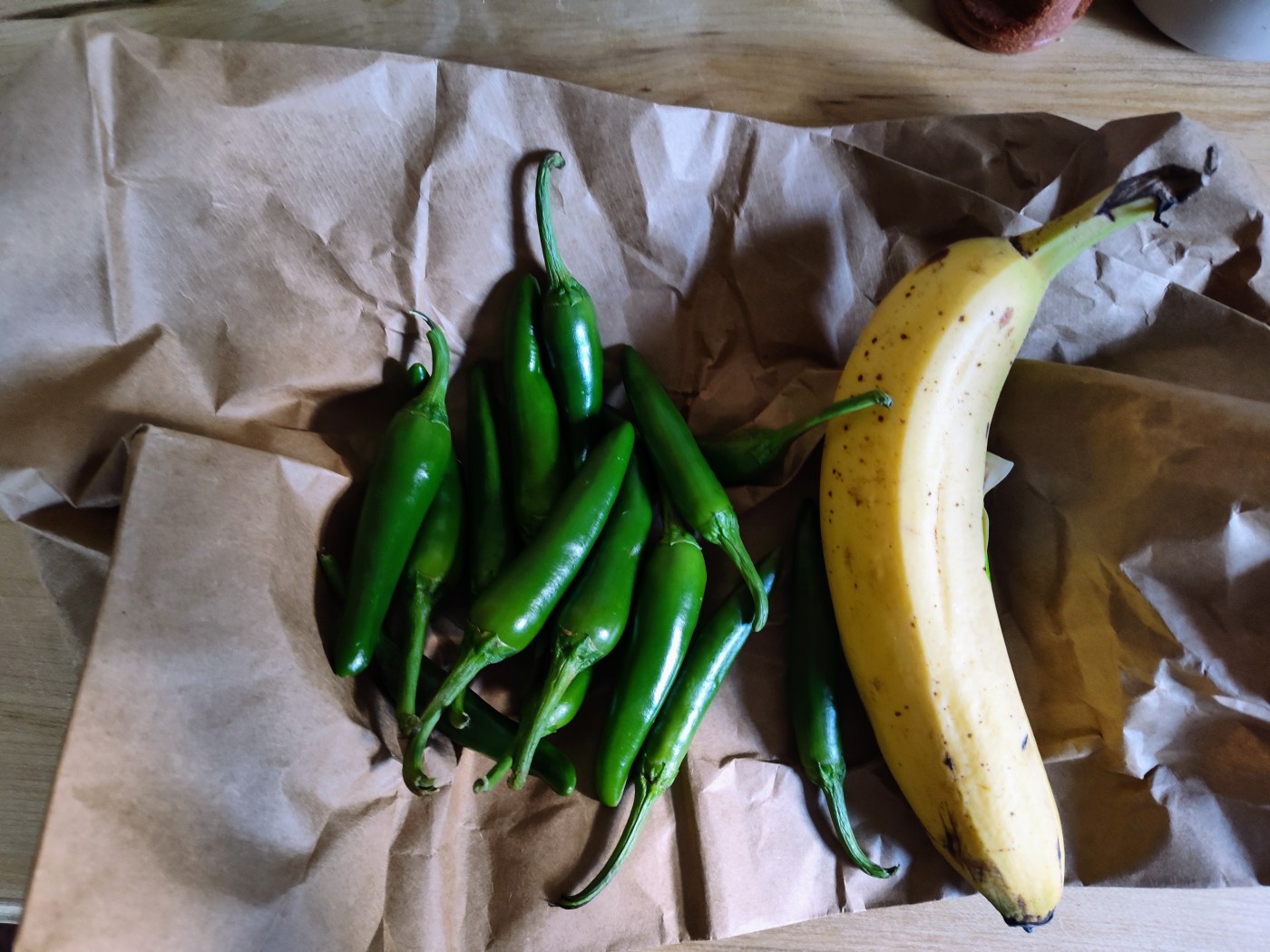
This past Sunday the overnight low was forecast to be 36, which is far too close to a frost for my liking when it comes to keeping plants alive. We made the decision to pick the full-size peppers early even though they hadn’t ripened. We did this because we want a shot at ripening them inside if possible. Apparently, this is a pretty common occurrence for growers of this type of peppers, and I learned that people will often wrap their unripe peppers in a towel or paper bag, placing a banana or apple with the peppers. As the apple or banana ripens, it releases ethylene, which will help the peppers ripen too. We’re still early in the process and don’t know if it’s going to work yet, but we’re feeling confident that we’ll be able to use these peppers, which we were so excited to grow.
Regardless of the success we have ripening them inside, we’re confident in our ability to grow peppers in bags now. We’re always excited to grow peppers but have become discouraged seeing them fail each year. Successfully taking the peppers from seed to harvest is a big boost moving forward, and we’re going to continue growing them in bags, at least for the time-being. Have you ever grown peppers in containers or bags? If so, did you have success?


Leave a comment