
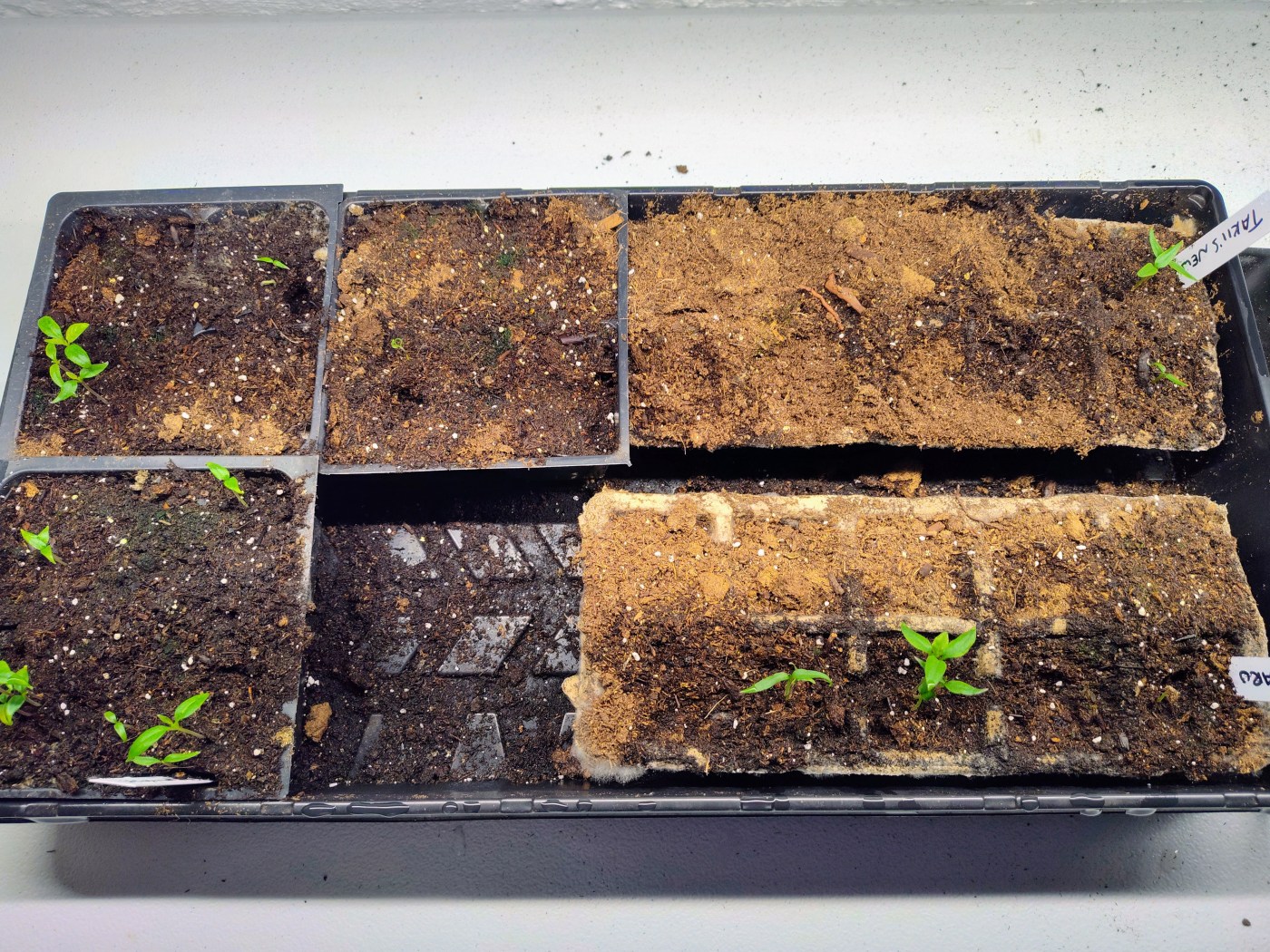
Last week, I wrote a post that posed the question, “When is it time to restart seeds?” The reason for that question was that our pepper seeds were taking forever to germinate and were already past their expected range. In the end, I argued for a patient approach to seed starting and not being too quick to pull the plug before restarting them. But I did write that if our Takii’s New Ace sweet peppers didn’t germinate by this past Sunday, (April 12) I was going to restart them. Thankfully, I was rewarded for this decision, and we saw our first seeds sprout late last week. Additionally, we saw more of our jalapeno, habanero, and Gochugarju peppers sprout. I don’t want to exaggerate the success, though.
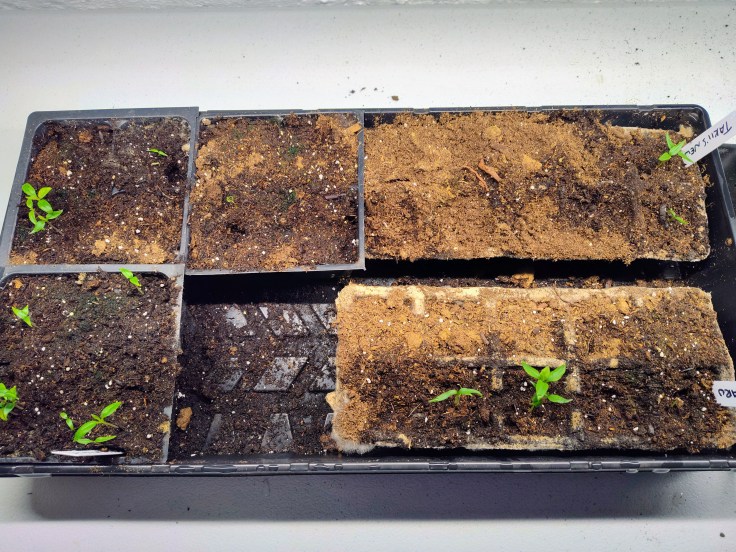
We are far from a 100 percent germination rate, as only 2 of the 10 Takii’s New Ace, 3 of the 10 Gochugarju, and 8 of the 10 habanero cells succeeded. We did have one jalapeno cell germinate, but it died off pretty quickly. I’m unsure what caused the seeds to fail, but a couple of factors I’ve considered are the use of an old seed-starting mix and inadequate moisture levels. Either way, I addressed both of them with the second batch of seeds I started.
Speaking of starting more seeds, on Monday evening, I started a second batch of pepper seeds, using the rest of the Takii’s New Ace seeds and the majority of the remaining pepper seeds. I believe I started 6 Takii’s New Ace, 8 Gochugarju, and 8 jalapeno cells. I switched to a new bag of seed-starting mix, which I think will yield better results. It’s lighter with more drainage amendments and less debris (twigs, clumped soil, etc.). I also ensured that the seeds and soil were thoroughly moistened and have been keeping the soil damp until the seeds germinate. Finally, I moved the seeds that did succeed off the heat mat to keep the roots from getting too warm.
Lessons Learned
An attitude I want to have with everything I do, gardening included, is learning something and having takeaways. I think it’s an important mindset to have to feel like you haven’t wasted time, which can lead to disappointment. In this case, I learned that having patience with your seeds is the right call. If you have the time, there’s virtually no harm in giving your seeds an extra day or two to germinate before starting over. Giving yourself and your seeds extra time to succeed can have a big payoff down the road. I also learned that it may be best to start with new seed-starting mix each spring. I wanted to use some leftover mix from last year to not be wasteful, but I think it’s best to use new, unopened mix. The old mix can be composted, so it still won’t be wasted.
Finally, I learned that I’m never going to start more than 2 seeds per cell moving forward. I’ve always been a gardener who puts 3 or 4 seeds in each cell to maximize the likelihood that each cell produces a start. However, after having a lot of our pepper seeds fail to germinate this spring, I feel like I wasted a lot of seeds that could have been spread out among more cells. My new approach is going to be using as many cells as I need but using the seeds more efficiently. Please note that this approach will only apply to starting seeds indoors. When direct sowing, I’ll still use 3 or 4 seeds per hole to not waste space in the bed.
When you start seeds, how many seeds do you use per cell? Also, are there any vegetables that you struggle to get started? For me, it’s always peppers.

