
The most intimidating part of sewing for me has been pattern drafting. Possessing the understanding to draft a pattern for a garment demonstrates the knowledge of how the pieces of the clothes we wear every day are put together, plus having the foresight to sketch out the shapes on the fabric in a 3D form. It’s a lot! But that is how clothing makers have designed and crafted pieces for most of fashion history. Before the paper pattern was made available in the mid-19th century, garment makers had to understand how to create these building blocks.

“All devotees of home sewing should know these two names: Madame Demorest and Ebenezer Butterick. Madame Demorest, wife of a successful New York merchant, was the first pattern maven. In the 1850s, she began selling tissue-paper patterns for home sewers via mail order advertisements in fashion periodicals such as the Ladies Gazette and Godey’s Lady’s Book. Initially, these patterns were ungraded, meaning that the seamstress had to enlarge or reduce the pattern to fit her figure. Garment elements such as sleeves, bodices and skirts were sold individually so that the sewer could create her own dress. In 1860, Madame Demorest began to sell her patterns through her own publication, called The Mirror of Fashion. Patterns were also sold via “Madame Demorest’s Magasins des Modes” shops, of which there were 300 national and international locations by the middle of the 1870s. By the late 1880s, Madame Demorest and her husband had sold their pattern empire and turned their interests to philanthropy. Though Madame Demorest may have been the first to sell tissue-paper patterns, Ebenezer Butterick was the first to sell graded patterns. According to Butterick’s corporate history, Butterick created graded patterns in response to a comment his wife made when sewing a garment for their son. “
Museum, F. (2009, August 4). Sewing patterns. FIDM Museum. https://fidmmuseum.org/2009/08/sewing-patterns.html
What I have challenged myself to do in my journey of sewing is to understand these building blocks to create my unique patterns and connect with the craft of it as a maker. I’m a nerdy person, I love digging into the story beneath what we do. That’s why majoring in History called to me even as my desire was to study fashion. I realized through the mentorship of a great professor that I could understand the motivation behind the garments and how people lived their lives in them which would provide a deeper understanding of fashion history. How cool is that? Since that point in my studies, I’ve craved a deeper connection to clothes. It became more than just an artistic exercise of sketching a design I had in my head, I wanted to understand why fabrics are the way that they are. How trends interacted with culture and history. And so as I was looking to go deeper in 2021, I consumed a lot of Bernadette Banner, Nicole Rudolph, Karolina Zebrowska, Morgan Donner, and Cathy Hay’s content. They dig into the meat of garment construction and silhouette in a way I wasn’t introduced to fashion design by Vogue or Harper’s Bazaar. In doing so I knew, yes paper patterns would be necessary to learn from, but I needed to learn how to draft the shapes in the old way to make things I couldn’t find in the pattern envelopes of Joann Fabrics or Mood’s Sewceity.

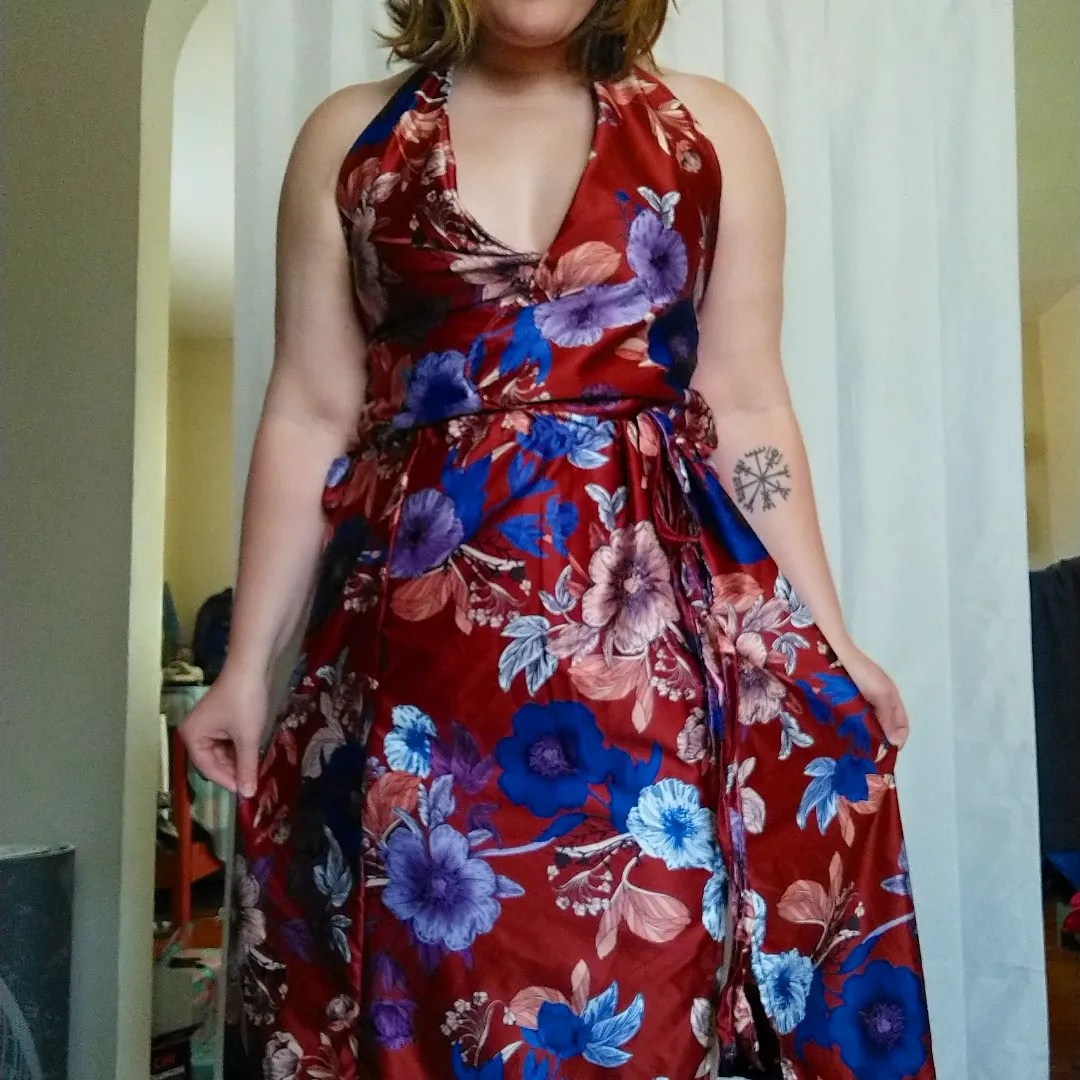
For example, the silk halter dress and black and white tank dresses were hand drafted from my own measurements, being draped and cut based on my own form. In comparison, the light blue summer suit above was made with the assistance of two paper patterns to understand the construction of a collared shirt and shorts, two pieces that are essential building blocks of a wardrobe. But after I used the pattern to understand how to shape a collar and cut lines of shorts it was time to go back to drafting what the garment would look like based on my own pattern pieces. Yes, the suit is quite messy and I’m not thrilled with the fit of how it came out. I realized the tailoring was goofy because I deferred too much to a standardized pattern shape and now if I re-made it I could draft the whole pattern by hand according to my own custom measurements.
That is why the learning process of pattern drafting has been such a rewarding quest, it has de-programmed my brain from the effect of standardized sizing and fast fashion. Those pre-made patterns while essential to learn, can’t fit everybody and every shape it’s not possible. My student garments have not been the most flattering or pretty to behold because I am learning the process of fitting, it’s been a slow burn but when it all comes together I can see how much clothing is actually made for an individual instead of a mass market is just so dang luxurious to wear. Even when it is not perfect I’ve felt the reward. The bigger reward though is that because it is a learning process, eventually the tailoring and my construction skill set will catch up to the ideas in my head and my clothes will turn out exactly how I picture them.
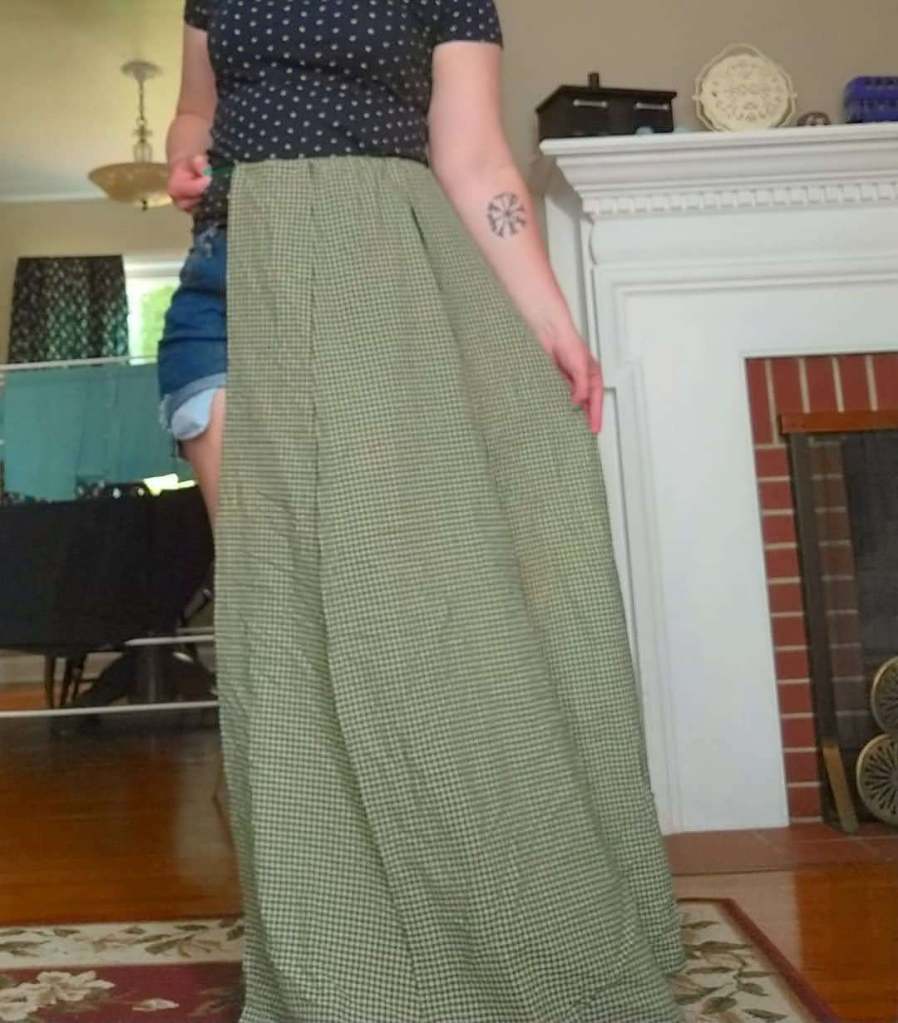
I think sometimes we underestimate the effect fast fashion is having on our minds in the way we relate to clothes. We are accepting uncomfortable, cheap-quality, synthetic fabric clothing that is made to be disposable. It is not supposed to be like that. Take this dress featured below, it is made from 100% cotton that I purchased for $4.00 a yard from a quilting fabric store. Because it was a natural material it held up to wear and washing and was breathable. It was such a comfortable fabric to wear in the summer and did not fall apart. The dress I made was drafted according to an older style of skirt, with 10 skirt panels that were tapered to the waist to make the skirt swish, as taught to me by Bernadette Banner’s videos. I then drafted the bodice using historical dress-making techniques from the Victorian era, as taught by Cathy Hay’s videos. This garment fits me better than my wedding dress. Hands down the best-tailored garment I’ve made according to traditional construction techniques! It took me four months to complete, as I was still learning how to sew and draft. It only cost me $16 dollars in fabric although it looked far more expensive when it was done. I guess my point is by sharing this is to share with you, reader, is to share how valuable it can be to learn the old techniques instead of deferring to technology. Let our knowledge and craftsmanship define our creations instead of a piece of technology, like AI. Not all of our modern ways know best. Fast fashion certainly doesn’t!

 One Rabbit Riot