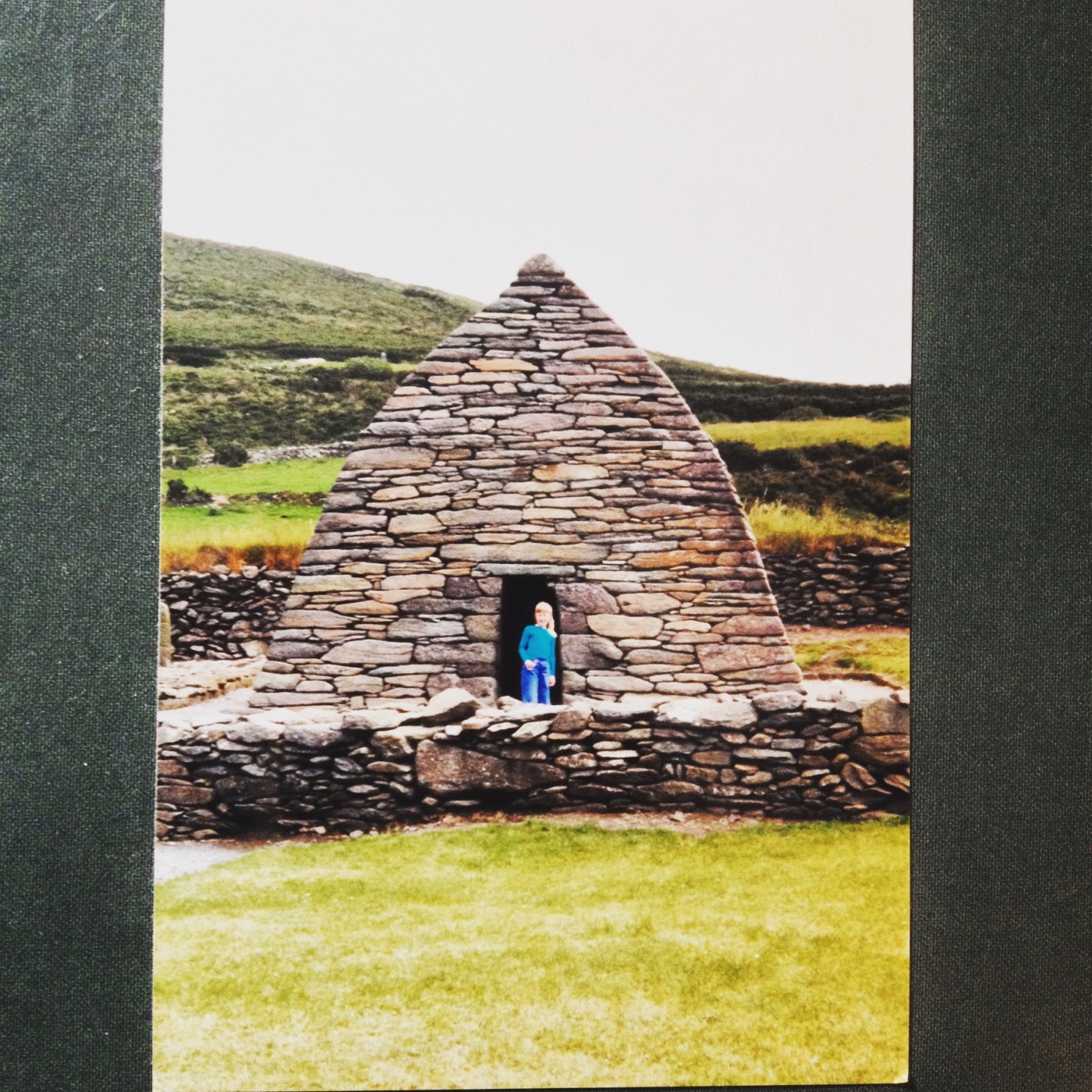
I think my fascination with Ancient Ireland began when I was eight, on a family trip back to Ireland to see “the old country” and meet up with our cousins who live on the homestead in County Antrim. It was a tour around the island, starting in Dublin and rounding the coastline to the Wild Atlantic Way, finishing with the North. As a child, seeing both modern Ireland and ancient ruins next to each other was unlike anything I had experienced before coming from America. I mean, my hometown was founded in 1802, not very old compared to the beehive monastery I’m standing next to in the image above. To me, a storybook had come to life, and what intrigued me the most was what these ancient people were doing with these now stone ruin buildings that were so odd to me compared to how buildings function in our modern context. I was fascinated to understand what this world looked like.

Fast forward to high school, I am impatiently waiting to learn about ancient Ireland as I sit through World History, American History, and European History hoping maybe just maybe this is where I’ll catch a break, but no there was nothing but a short line about the Potato Famine, Oliver Cromwell and the obligatory St. Patrick mention on March 17. I wasn’t the only one disappointed by the underwhelming coverage of world history, a classmate didn’t even get the chance to learn about his home country of Australia.
But one day in my college class History 201 I was assigned a final project that fit the bill, a historical abstract and thesis, on any topic I wanted, this was the moment! Fascinated by this unknown Ireland, puzzled by why Belfast was closed down on our trip for violence, and curious to know why there was tension between my Irish Republic and Northern Irish relatives, I decided to dig into the 1916 Uprising and Home Rule Movement.
When we toured Dublin, I remembered that bullet holes pointed out in the post office, which I found odd at the time, and started there. What I didn’t expect to discover as I did this research was this call back to Ireland’s identity, and ancient Ireland before the Norman Conquest of 1069 AD. One of the High Kings and great legends, castles, and beauty. Ireland of the ruins I saw, a land of fortresses to defend against Vikings and neolithic structures that seemed impossible to build. I also found a deep Catholic sacrificial nature to this rebellion, an identity so complex it was so much deeper than I was expecting and made me crave more! Even after three months of researching for my thesis, I felt like I had just begun there are innumerable layers to the Irish fight for freedom.
A few semesters later as a junior, I had the opportunity to plan my own independent study. I decided to feed my curiosity about the inspirations behind the Uprising and Gaelic culture revival which began before the fight for Home Rule. I wanted this independent study to help me understand the poets, the language, and the culture. I chose the Early Medieval period from the 5th century to the 11th-century invasion by the English to basically study an overview of how Ireland turned from a pagan faith to Christianity, what this meant to the culture and how did Ireland look during this time of Vikings and High Kings. I dove into the legends of the mythical first Irish that enchant the spirit of the ancient culture. The storytelling and imagination were so beautiful to me. This space before the Normans came and began centuries of despair was so pure to me at the time, like Harry’s first time in Diagon Alley or Hogwarts Castle.
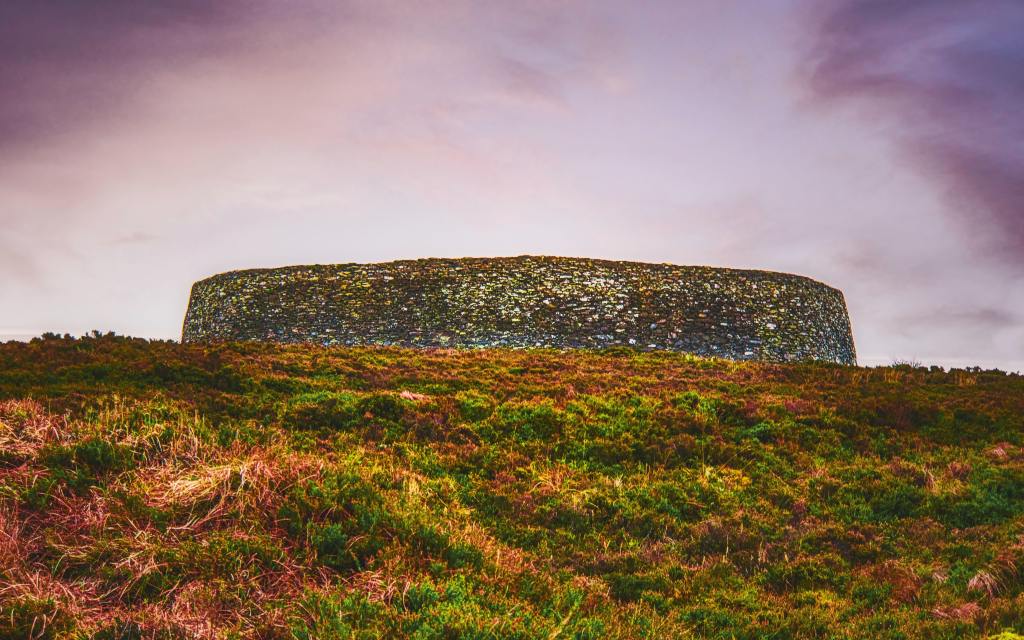
I carried this sense of wonder into adulthood, determined to understand this world of myth and legend deeper. When life gave me a few curve balls and I found myself with empty, looming days of unemployment, this sense of wonder carried me into creativity by starting the Muirin Project site and plotting out the novel Udal Cuain, complete with side journals of the Celtic calendar and character journals to fully immerse the reader in this world of my imagined storybook Ireland that my eight-year-old self wanted to explore. But I didn’t expect it to get so dark, and it did get very, very murky. Not that this is a bad history or unworthy to be studied, but I did learn to be careful of what you open yourself up to.
To be continued.
 One Rabbit Riot