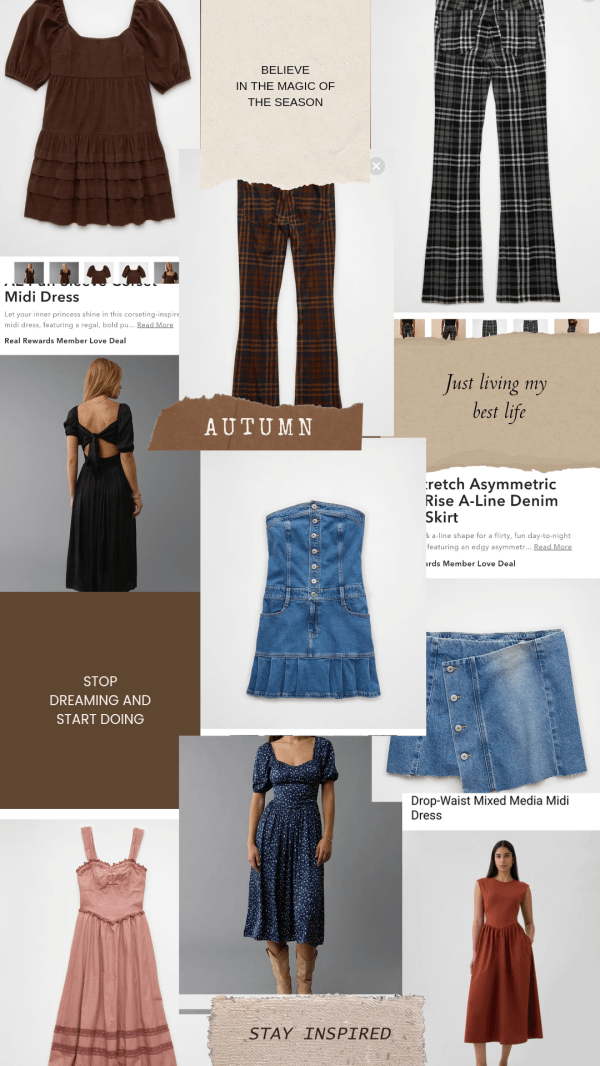
The start of September feels like the start of the Gilmore Girls season. Probably because it used to start airing around this time of the year, but also the show follows a seasonal structure. Usually beginning before or during the school year as Rory embarks on her next academic chapter. A key aspect of Lorelai and Rory’s life is the Friday Night Dinners at Richard and Emily’s house, every week. Emily and Richard, being rather formal people, expect a dress code for their family dinners being formal. It reminds me a bit of dressing up for church as a kid.
There is also a silhouette to the outfits each of the Gilmore Girls wear. They wear a lot of dresses with small cardigans over top, but they also pair fitted blouses with a knee length skirt, usually flared for Rory or a pencil skirt for Lorelai. Rory dresses with a more demure style, that reflects her academic personality where as Lorelai is a bit bold with her patterns, textiles, and colors. It matches her personality of being independent and need to separate her life from her parents’ world.
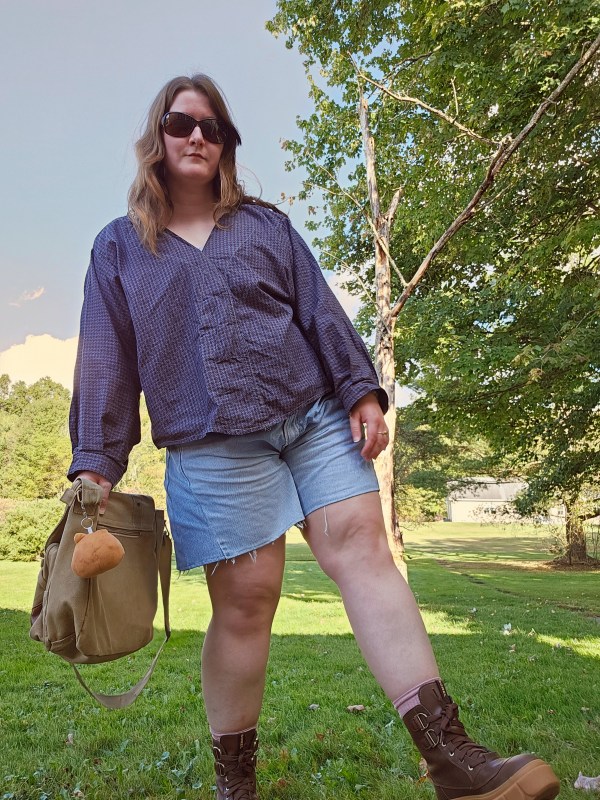
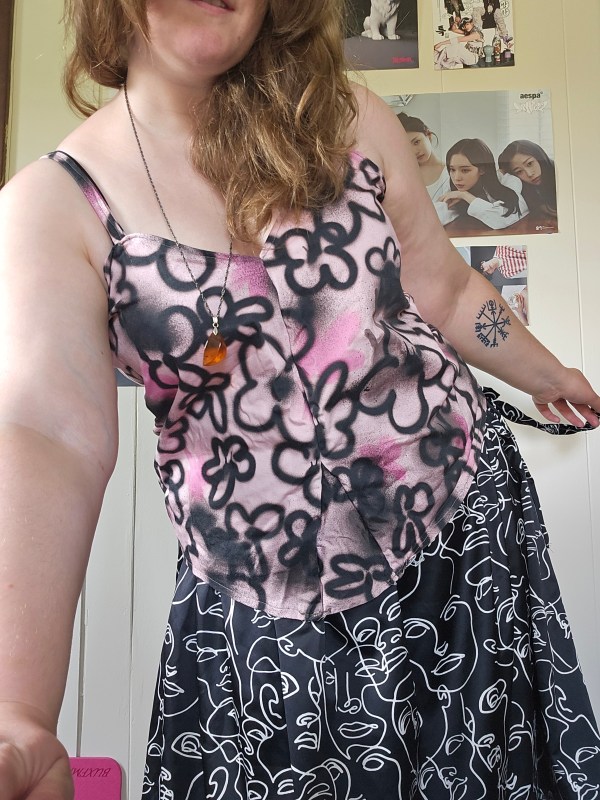
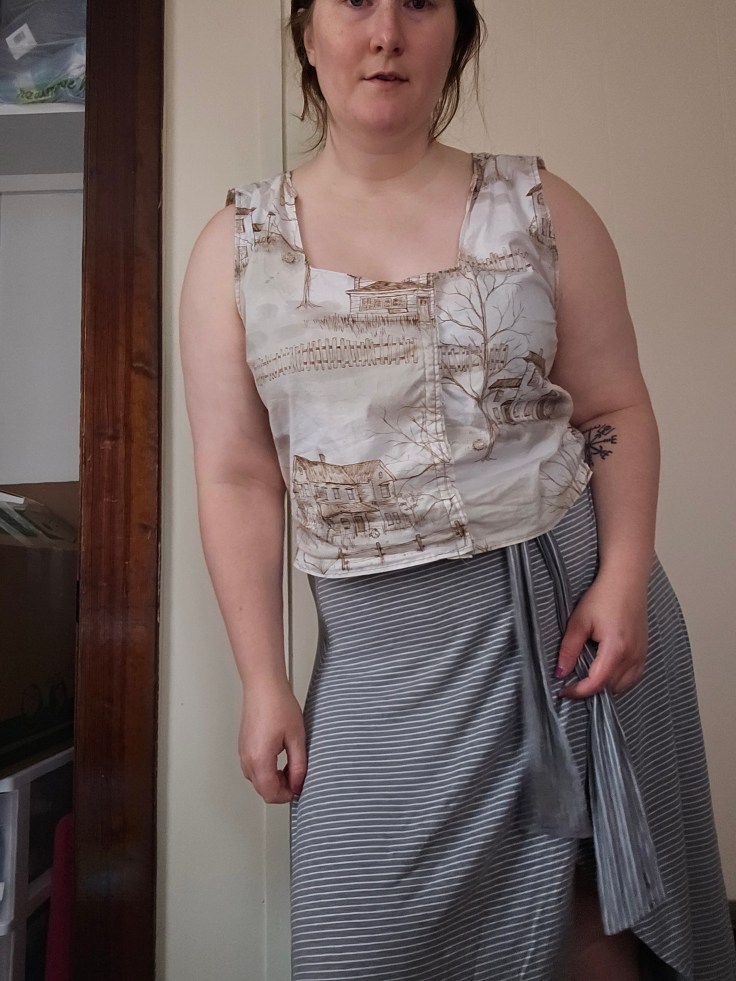
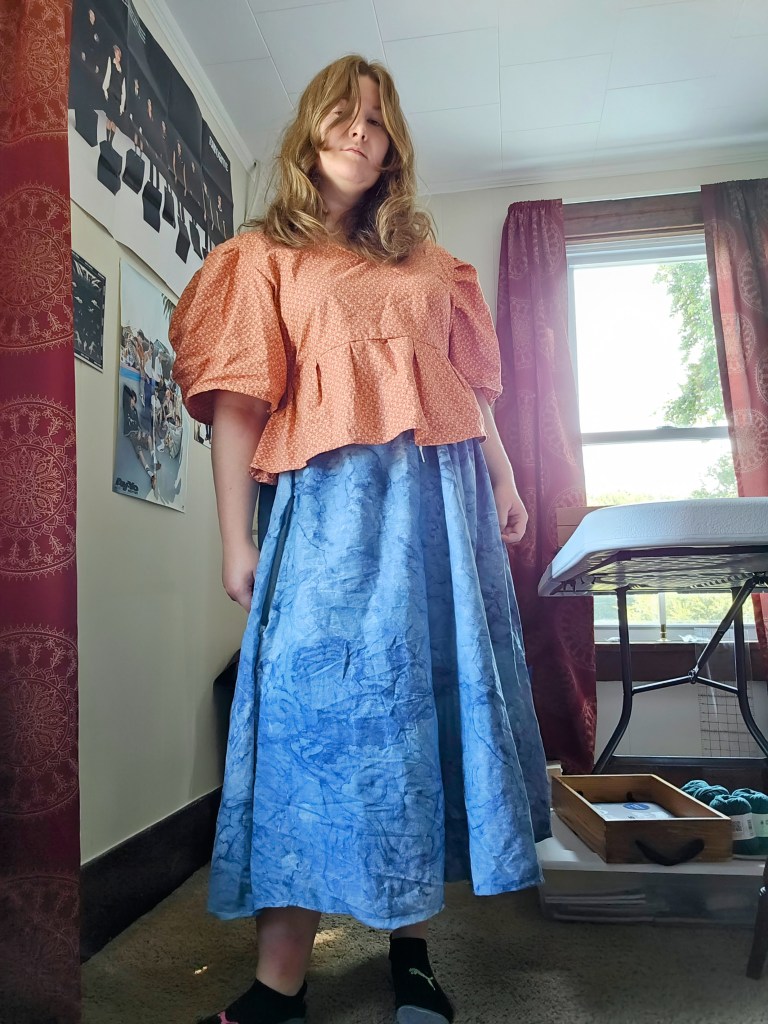
I thought this combination married both the silhouette of Rory’s style with the bold and playful textiles of Lorelai’s personal style. The blazer is not a Potato Technology piece, I ordered it from YesStyle, but the bustier top and skirt are my own designs. The Floral Print Grafitti Bustier Tank, I designed in 2023 from 1/2 a yard of fabric. This piece was draped and cut on the form. I wish I had known about making craft paper patterns at the time because it’s going to be a challenge to reproduce. The Expressions and Lines Skirt is a new design from this summer. It is a satin graphic print that for the first time, I was able to cut out the pattern directionally without any mishaps! I’m so pleased. 😀
I think the combination of pieces look a bit 2000s, mid 2000s for sure, and capture the essence of the time period. The blend of Lorelai and Rory’s style is a reflection of how I consume the show now. Which character I relate to is a blend as I get closer to Lorelai’s age when the show begins instead of Rory’s age, which is so weird to realize. I’ve truly grown up with this story, being just 12 when I first watched it. Lorelai’s story finds me more each time I watch it.
In honor of National Sewing Month and the 160 years of their existence the big four – Simplicity, McCall’s, Butterick, and Vogue Patterns are taking a look back at their patterns. The Simplicity Creators group turned this little moment of fashion history into a challenge, Sew Your Decade. I first learned about this through a video from Stephanie Canada where she took a look at the patterns Simplicity was highlighting on their ‘Stitch in Time’ historical presentation of patterns and fashions made by these four companies over the years. A lot of them were reproduction patterns and had dubious choices, including some 1950s patterns in the 1960s. But that’s more of an editing problem.
Because I have a lot of other projects in progress but I love historical fashion, I thought I would take a look through the historical pattern wiki and choose a pattern from each decade of what I would want to make if I had the time to make a garment from each era. I’m using the vintage patterns wikia and historical sources instead of the patterns on Simplicity’s site because the originals are just more appropriate and imaginative than the ones selected on the timeline and the reproductions they sell currently.
1800s Era (1860s-1890s)
Butterick 9111; ca. 1897; Ladies’ and Girls’ French Bathing Costume. Pictured in September 1897 Butterick catalog.
I choose this bathing costume because it is such a unique relic from the past but also because we’ve seen some new designs for swimwear come out recently that reimagine the typical 20th century-21st century swim suit, that look less like bikinis and more like a crop top and a skirt.
1900-1910s Era
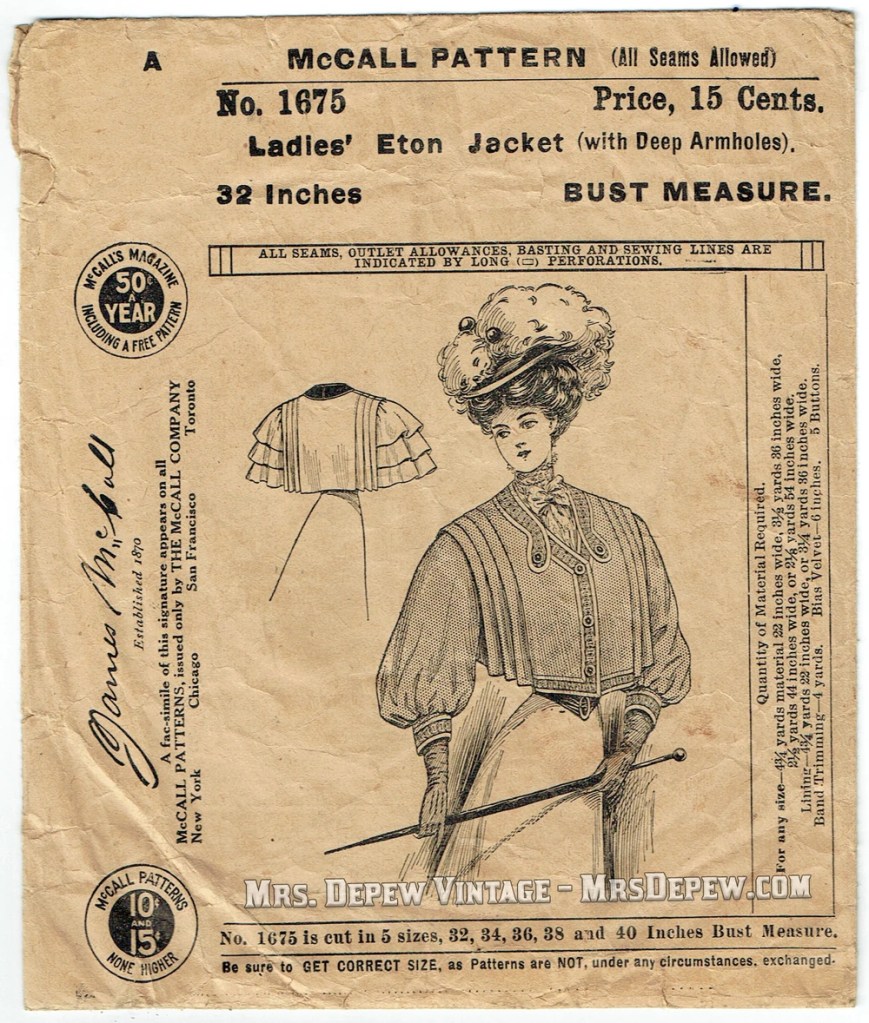
McCall 1675; ca. 1907; Ladies’ Eton Jacket (with deep armholes). Featured in McCall’s Magazine September 1907.
What a fabulous jacket! That’s why I would choose this Eton jacket from 1907 because not only would it create a great historical silhouette, I’d love to try styling it with other items from my modern wardrobe.
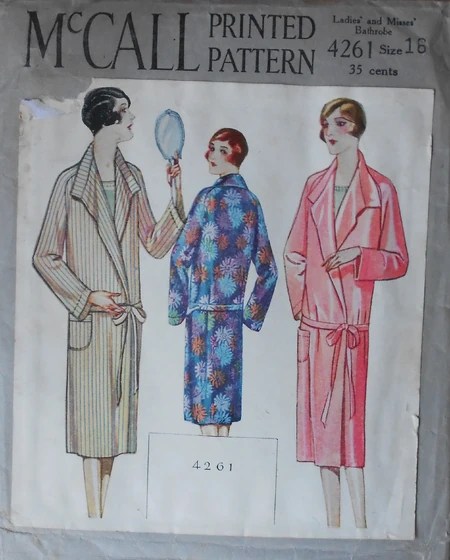
The flapper dress patterns you see in the store are so played out and inaccurate. My choice was influenced by the wonderfully boxy lines of this robe. It encapsulates the straight up and down silhouette of the time while looking like a piece that could be dressed up or down, for around the house or used for wearable garment in the right fabric.
1930s Era
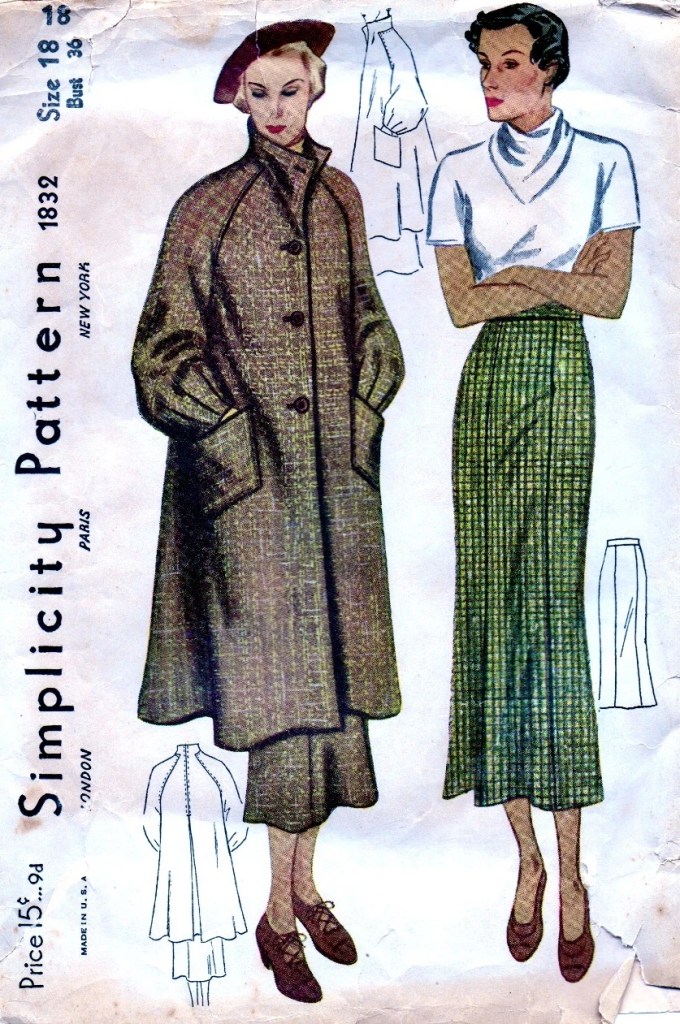
Simplicity 1832; ca. 1935; Ladies Swagger Coat and Six Gore Skirt. Coat has full raglan sleeve tucked at the wrist, patch pockets, stand-up collar and inverted back pleat.
Oh my goodness, this coat is fabulous. I may try to track this down in the future just to try my hand at it because I love these style lines. I love the raglan sleeves with the contrast of the narrow 1930s skirt. It’s so chic.
I like the academic style of view A and the elegant style lines of view B. I think I would get a lot of wear out of a dress in this style. The 1940s are one of my favorite eras for vintage fashion, I love the style lines of this time period and the 1920s-1930s.
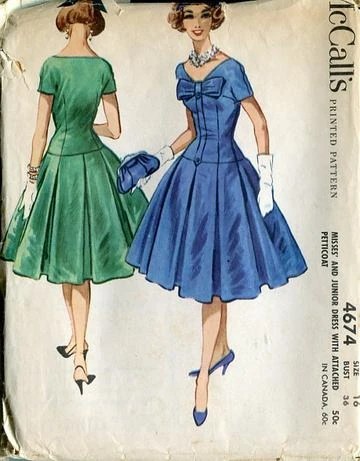
The 1950s is not my favorite era of fashion, mainly because this silhouette looks horrible on me and it’s really over done when people think of “vintage” so for inspiration I went to 1958, the year my grandparents got married to find something interesting. I like the bow on the front of this and flounce of the skirt. The shape reminds me a bit of a bridesmaids dress I tried on that my grandma wore for her friends’ wedding in the 1950s.
1960s Era
Vogue Paris Original 1434; ca. 1965; Pierre Cardin – Suit. Side-buttoned jacket with standing, bias ring collar and cuffs. Tie belt at front, welt pocket and three-quarter length sleeves. Slim skirt.
I chose this one, first because I had yet to choose a Vogue pattern and secondly, because this suit is sharp and screams 1960s glamour. I love the over sized buttons. The classic shape and the slightly mod-artsy feel of the over all look.
This is a unique pattern. I like how many styling options we get in the line drawings. It’s an interesting jumpsuit I could see made up in several types of fabric for casual or fancy styling. I should see the blazer made in a contrast fabric or the same. Jumpsuits were a staple of the 1960s and 1970s so I think this is a great option to represent the decade.
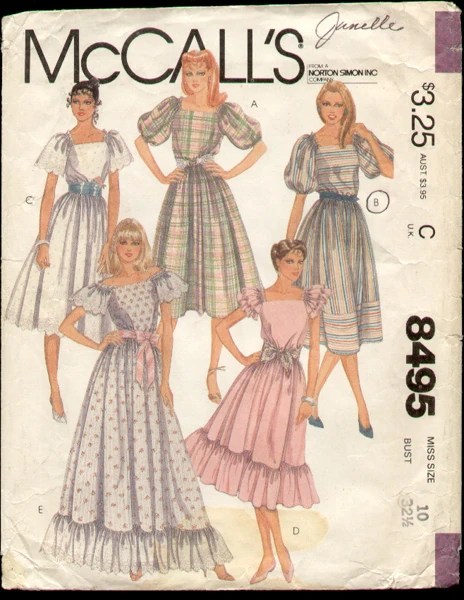
This pattern is so extra. I didn’t realize how much the cottagecore aesthetic pulled from this time period – wow! I thought the 1980s was just inspired by the 1940s, but there is a lot more there to see. I think this would be a great upcycling project with bedsheets.
I originally wanted to pull from 1993, but this pattern is too perfect for me. I honestly want to make all three of these. I have fabric that would work for view B. I wonder how difficult it would be to track down?
Closing Thoughts
A special thanks to Vintage Pattern Wikia for making it possible to browse vintage patterns and for keeping these moments of fashion history alive. Thanks also to Stephanie Canada for putting this on my radar and for sewists like her who are keeping vintage patterns accessible to us to sew with. This was a fun challenge posed by the Simplicity Creators group and Simplicity itself for putting this on all of our radar. Although I’m not going to sew anything from what I found because I seriously have to many projects to add another right now. It’s a great way to appreciate vintage paper patterns and the effect they have had fashion and clothing in the last 160 years. Sewing your own clothes is such a great way to make things that fit you, and have your own flair, they also combat the unhinged mayhem that is fast fashion. It’s a win win 🙂
In the spring and summer of this year, I was on a self-imposed low buy to sew through my stash in order to use up fabric that had been hanging out in my stash for a few years and have less to move to the new place.
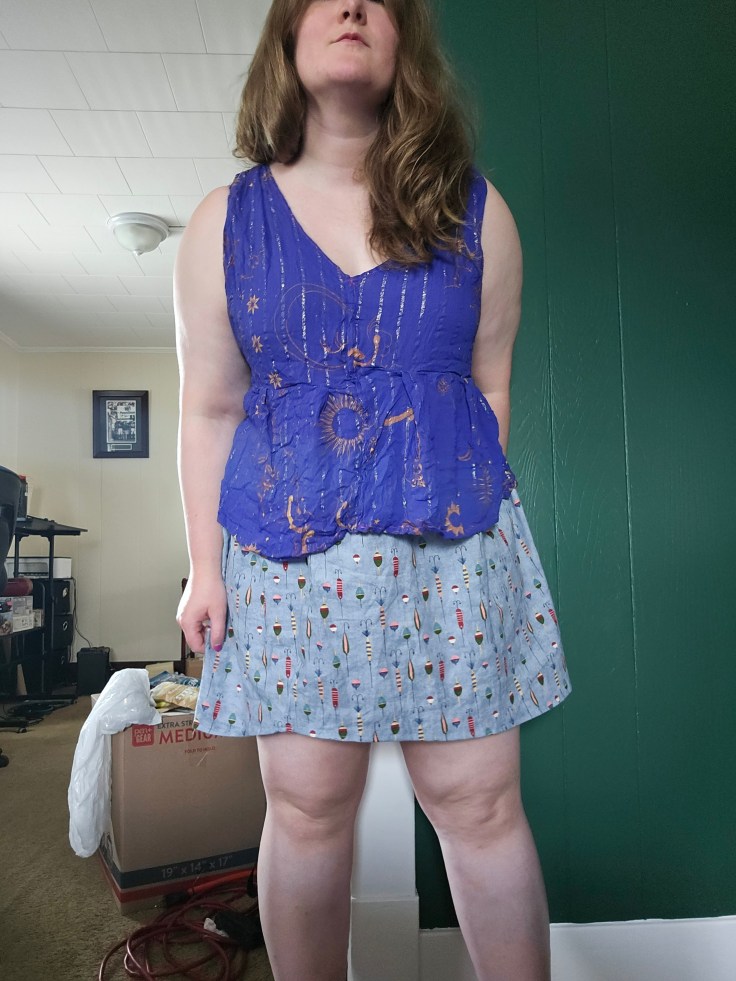
One of those fabrics was this lovely vintage blue that evokes blueberries to me with the dainty floral print. I had made a previous garment with it and had less than 1.5 yards left in my stash. This was a fabric I brought with me to my mom’s while we waited for closing so I set another challenge in front of myself – make something that would use as much of the fabric as possible and make something that would teach me a new skill. It also needed to serve a real purpose in my wardrobe not just something that I “could” make. Something I liked.
I landed on this sundress design with a button front placket, embroidery floss buttonholes, and tapered panels to give the dress an easy flounce. I made the panels similar to skirt panels with a bell shape and gathered them to fit, hiding the gather with the straps. It was a fun little project that taught me how to utilize my stash.
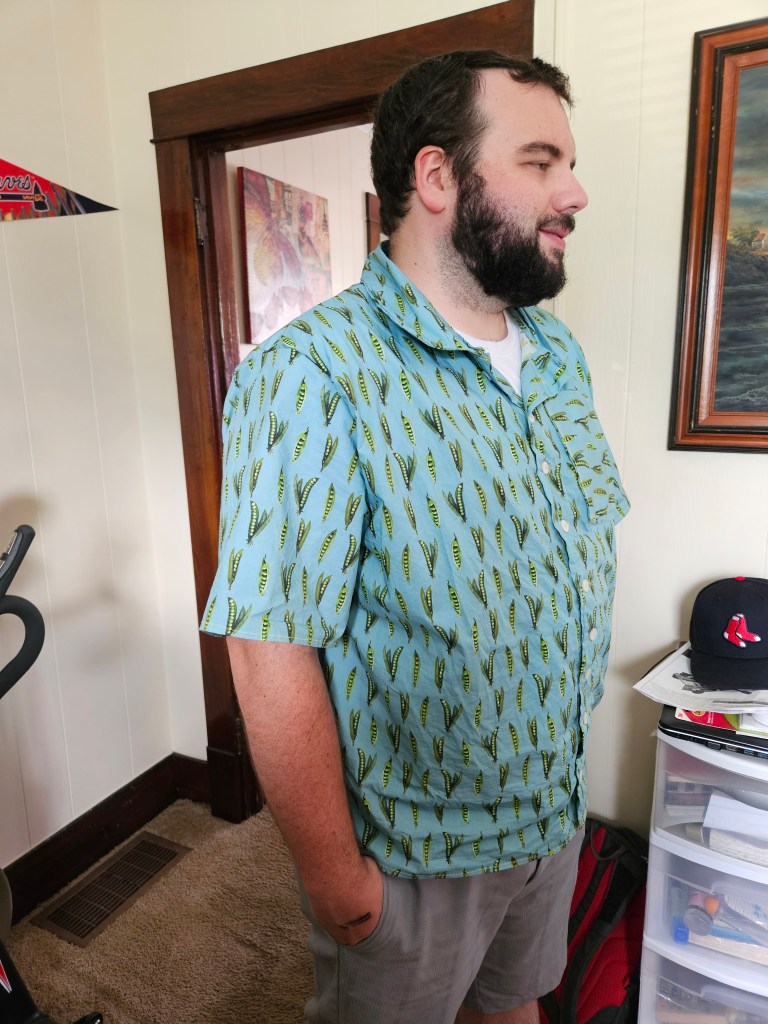
This was a special make for my husband Kyle who loves to find short-sleeve button-down shirts with fun and unusual patterns for the summer. This started early in our marriage at the thrift store where he found some nautical print button-downs. I slowly added to his collection finding a lobster print, a pina colada-themed shirt, and a shark one. Now that I sew, I approach this differently by browsing the fabric stores.
When I saw this print on Mood Fabrics’ website I knew exactly what it would be – a short sleeve button-down for Kyle. And it did not disappoint!
When I first heard of making small snipping cuts into the curves of seams for necklines and arm openings, I thought this was a bunch of nonsense. An extra step that only overachieving sewing people do. But once I gave it a try – there was night and day difference with how non-stretch fabrics draped against the form. The comfort and fit has been a level up to professional feeling. It’s totally worth it and I can’t believe I was stubbornly against putting the extra effort in. Looking back, there were definitely projects I made that I didn’t like because the neckline and arm openings fit wonky. If only I had tried this weird sounding hack.
In the curve of seams, make a very small cut in the seam allowance, not the actual part of the seam you are going to sew. For structural integrity that’s important. You don’t want your seam to have a cut or it will rip. The cuts in the seam allowance give the illusion of stretch and help the non-stretch fabric curve without warping the line of the curve. It creates shape without bulk and proper fit. The quality of a garment, I’m learning is not the fabric quality alone, it’s the planning and care put into the construction. Proper pattern cutting can make or break the fit of the look you are going for.
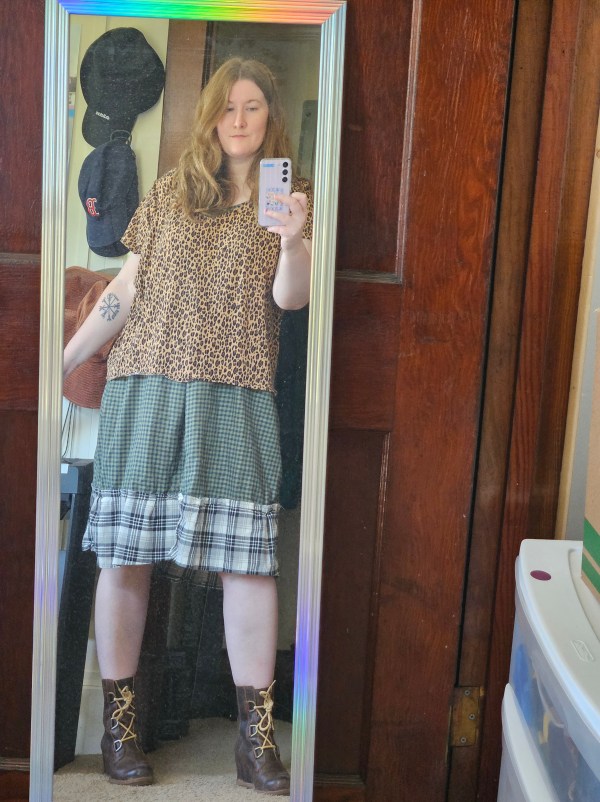
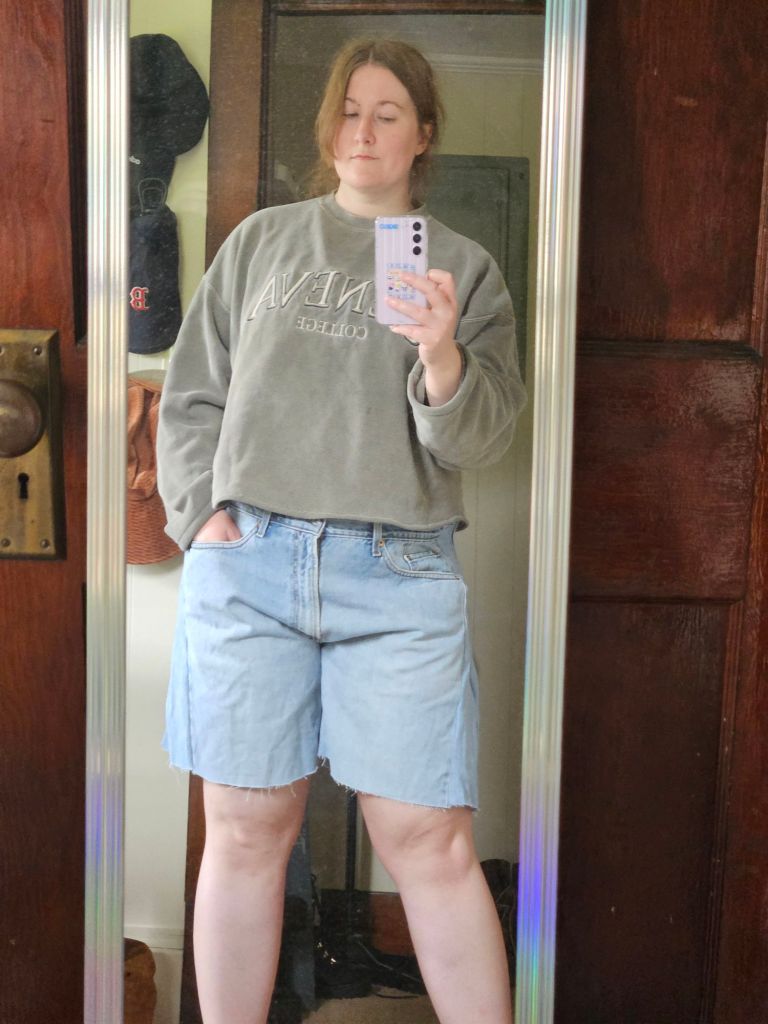
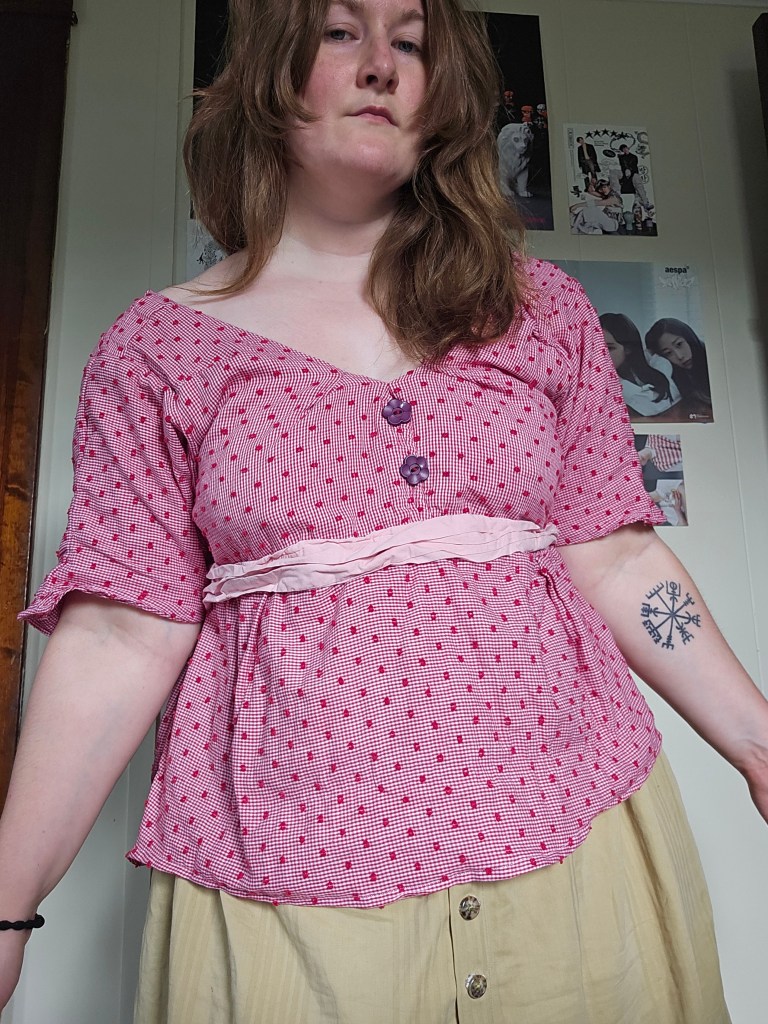
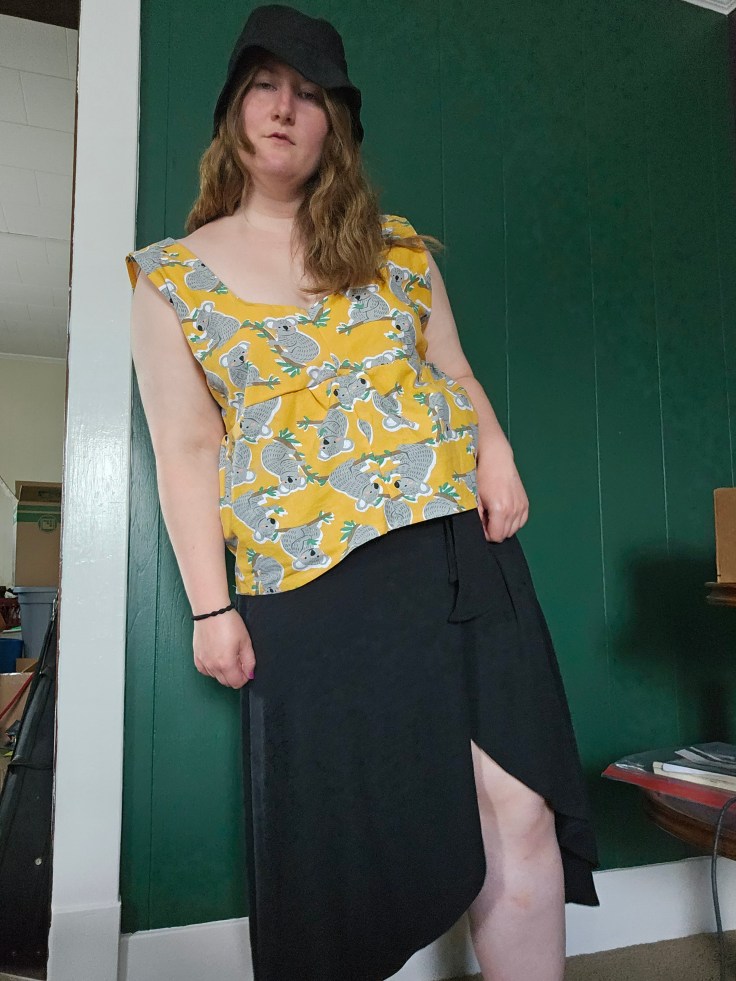
I’ve been sewing my clothes for nearly four years now, which had some unexpected results. I knew I would like the clothes I made better than those off the rack once my tailoring skills caught up to my ideas and that has happened. I didn’t expect the rocky period of making things I liked that didn’t fit into my wardrobe. This has been a problem over the last two years. I think because my style was changing. I think the clothes I was buying at stores were not really me but more a trendy persona to blend in. Going into 2024, I wanted my clothes to be more cohesive.
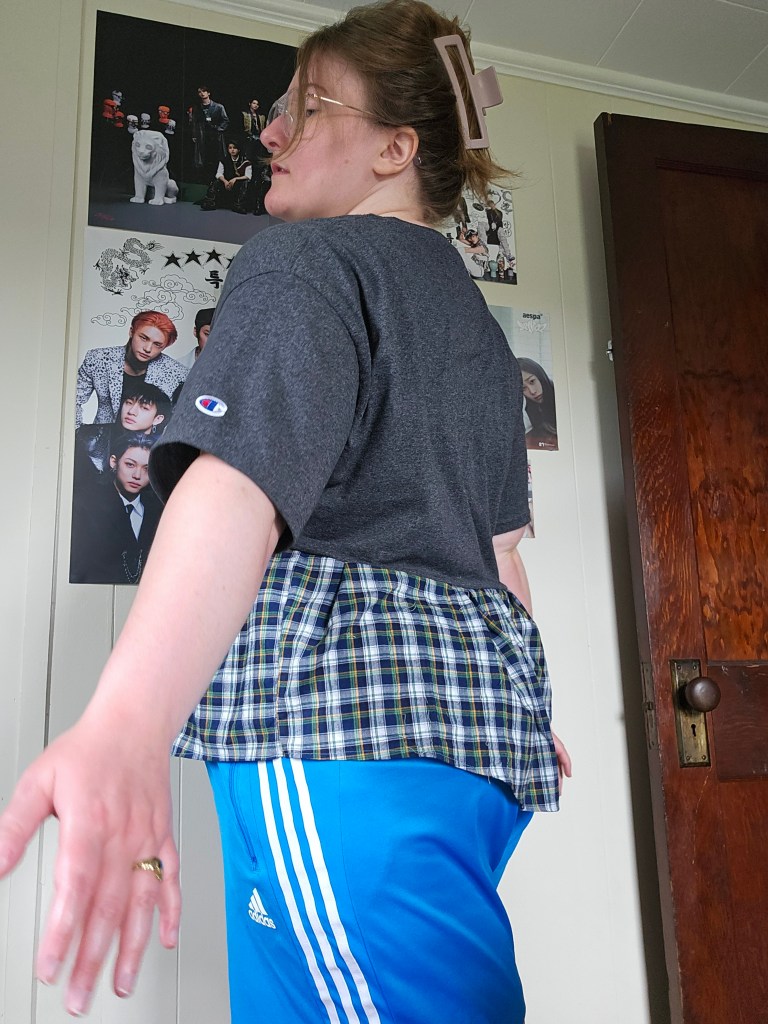
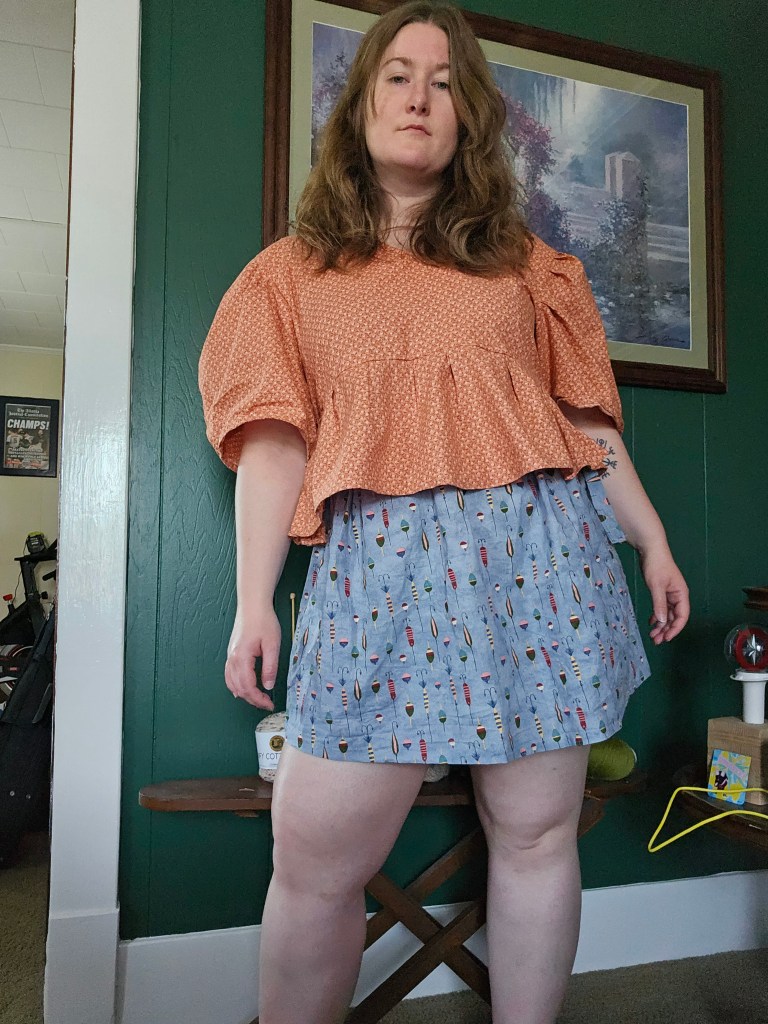
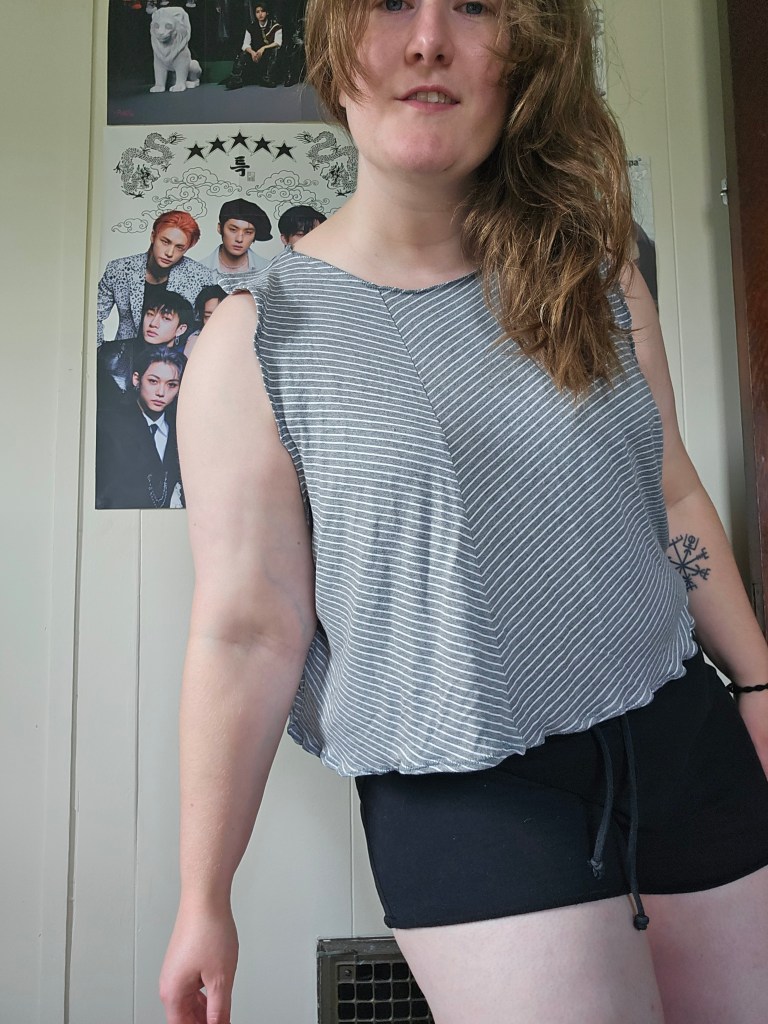
I’ve been more intentional with what I sew and how I will wear it with the pieces already in my wardrobe. I’m also less afraid to upcycle and repurpose existing clothes I’ve bought or made into something that will work with my current clothing and accessories. This summer I’ve felt like I every piece has had a purpose in my wardrobe and everything feels like an accurate reflection of who I am. It’s been a lot of fun to mix and match pieces, even dabbling in layering garments in ways I may not have tried before. With how busy this summer has been unpacking, I’ve been less likely to reach for my accessories, which I’d like to get better at because I know that would truly bring an outfit together.
In the meantime, I think this has been a successful season of making and wearing because I reached for my pieces more than anything else in my wardrobe. It feels good to know they are getting used and can easily mix and match with other garments in my closet to get as much use out of the items I made as possible.
I started keeping track of my outfits because of my Instagram and blog, to catalog my makes and it has been a fantastic way to see what I am wearing and what I should repurpose or re-home. If you are feeling stuck in a style rut I’d highly recommend keeping a record of what you wear and how you wear them. It’s been a helpful tool to find my personal style.
Designing clothing has been a journey of learning how outfits come together within an existing wardrobe. That is my biggest takeaway from the last four years and what I’m excited to apply to my future creations as a designer and maker.
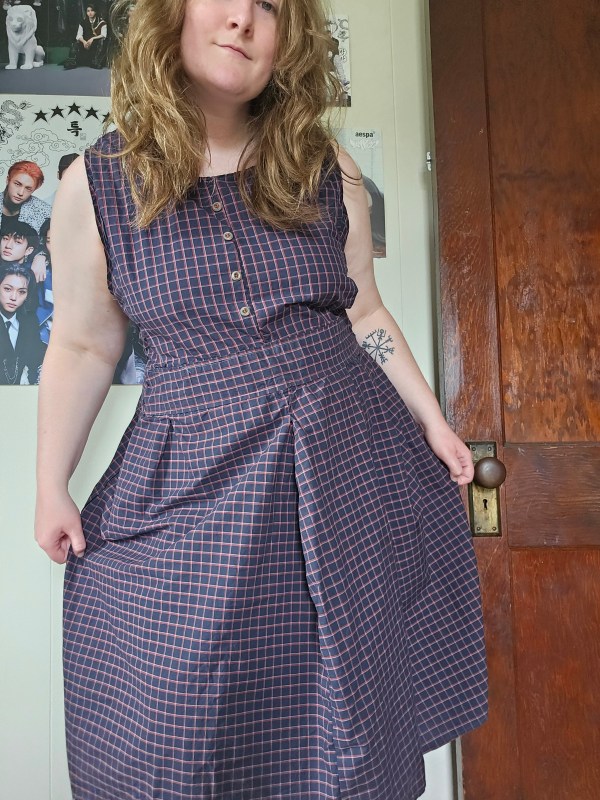
You will recognize this fabric if you’ve been here since I shared my Spring/Summer 2023 collection. I originally purchased it for a Christmas present project as part of my Autumn/Winter 2022 Collection for a pair of pants. I happened to not share it on the site. With the extra yardage, I made a blouse and a matching skirt I styled in 2023 as separates and a set.
This got me thinking, should I just make it a dress? So I did, I sewed the two together with mixed results. I liked the dramatic drape of the shoulders in contrast with the defined waist but the fabric is thin and I knew I wouldn’t wear it as a long sleeve garment. So I chopped the sleeves to a flutter sleeve option.
This felt even worse when I wore it as a short-sleeved dress. The dress was constructed well, the fabric of good quality, and the color scheme flattering but I did not reach for it. The sleeves made me feel weird and wide instead of cute. I didn’t feel like me. Have you ever experienced that with a garment or a project you have made? There’s nothing technically wrong with what you made or what you tried on, but it feels off. This left me with one more option. No sleeves.
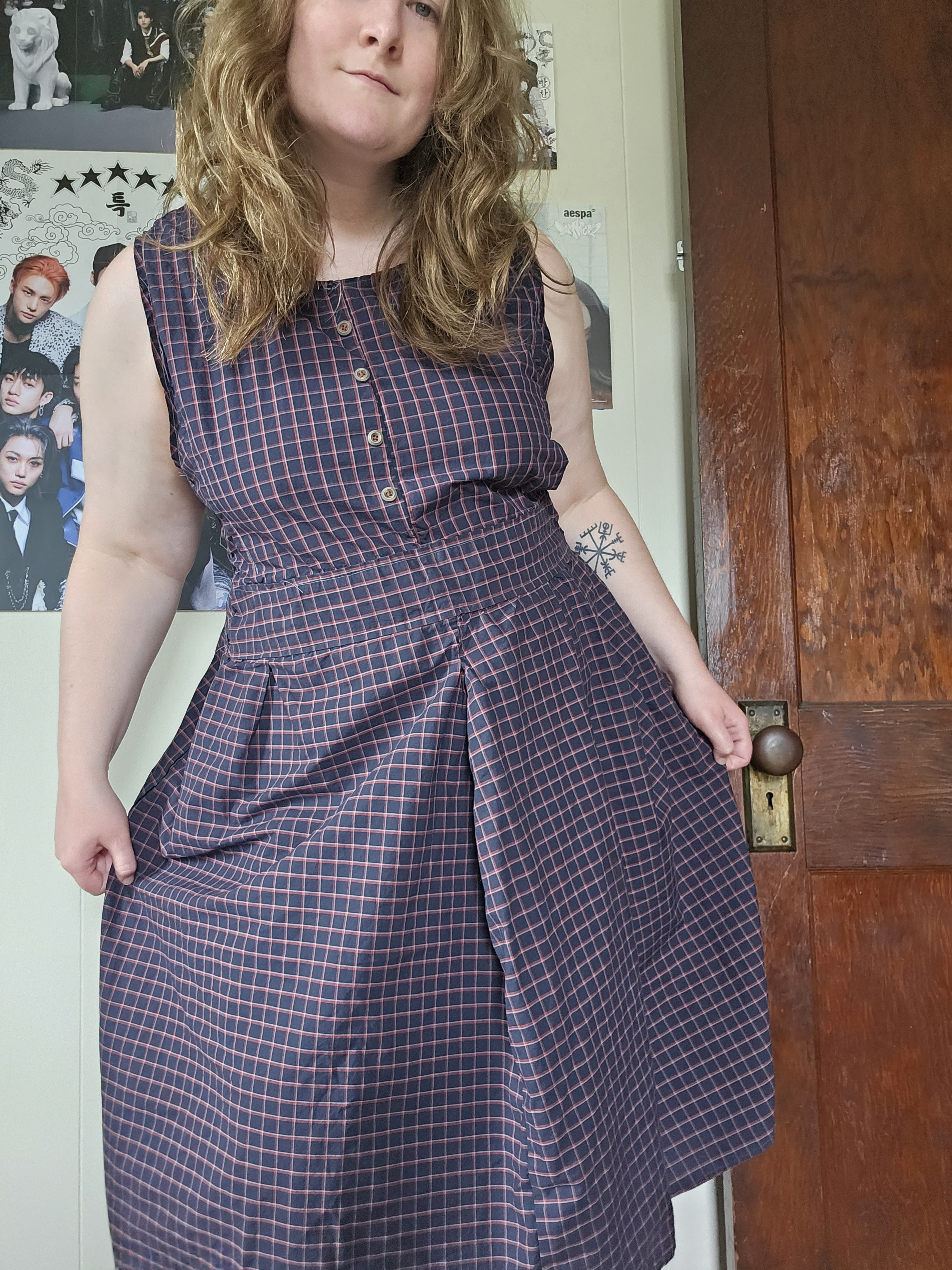
So I chopped the sleeves entirely and that’s when I felt like I struck gold! It looks like a dress my Grandma used to wear. Shirtwaist dresses were her staple dress and I see why. They are versatile and practical. I can dress this up or down. I can layer over or under for different looks. It’s a dress I know I’ll be making again with a proper button placket and pockets for sure.
In early 2024, I read through the book of Proverbs and planned to share more of my study, but this year, I’ve been feeling imposter syndrome about sharing what I’m reading and what God is teaching me. I’m not sure why either because I love cataloging my notes from my reading and sharing them here for whoever would like to read them. I enjoy a good book discussion and I want to see how my understanding of books, like books in the Bible, changes over time as I re-read passages and gain deeper knowledge of the text.
I’ve been doing this with Pride and Prejudice and other Jane Austen stories through a podcast/YouTube channel creator named Ellie Dashwood, who I’ve mentioned before. I’ve been watching through her historical videos which explore fascets of Regency Era England to bring greater context to the characters of Jane Austen’s works of literature. I think the combination of a video I watched following what Elizabeth Bennet’s life would be like as the lady of Pemberley and a recent video by With Love, Kristina brought me back to Proverbs 31 and the woman described. It’s a bit of a web, but I’ll explain.
In Ellie’s video, she walks the viewer through what it would be like to be a Regency-era lady of a large estate like Pemberley, which is a pretty fascinating thing to consider because we don’t learn a lot about this period in history classes! What we as the viewers learn is that Lizzie would have a rather full day. It’s honestly much busier than I ever thought because history tends to paint women in a few scant roles like wife or mother, object of desire, or damsel in distress. It’s frustrating because we aren’t that different from people of the past and it doesn’t make sense to me why women would be so lacking in life and personality until 1900’s?
I thought Lizzie would be a lady forced to read and not take long walks, as she so enjoys, and have to take turns about the room with Caroline Bingley. But actually, being the mistress of Pemberley gave her a lot of jobs to do. Like Cora in Downton Abbey, Elizabeth would be in charge of the house such as making sure it was running smoothly, would be in charge of entertaining, etc. Lizzie would also be in charge of running the budget of the house to keep their expenses within their means.
Pemberley is a large estate in Darbyshire, therefore they would have tenants and Elizabeth would make social calls as part of her role as mistress of Pemberley. It was part of building a good community. As the family with the most money and resources, they were to take care of their tenants, as lady bountiful she would call on the poor and the sick and bring them food from their table. They would also have people staying at Pemberley and balls which would be hosted at the estate that Elizabeth would be in charge of planning.
I could tell from watching the video that Ellie put a lot of research into discovering what a lady of the gentile class’ life would look like. I think it sounds like a much more fulfilling role than I imagined, especially with the income disparities of the time, I was happy to learn that if the family who held an estate like Pemberley were good people the poor and the sick would be taken care of as well as the staff, like we see in Downton Abbey.
How does this connect to the video I was watching the other day, from With Love, Kristina’s channel? She mentioned the woman in Proverbs 31 but challenged me to dig deeper than the trite “Proverbs 31 woman” stereotype that gets peddled around Christian women content on social media. I was quite pleased to hear what she reminded me of because it reminded me a bit of the Mistress of Pemberley as well as what life looks like as a 2024 woman.
Kristina is a full-time YouTube creator and fiction author who is also a stay-at-home mom with five kids. In a lot of her videos, she discusses the intentionality and work it takes to find a balance between all these roles. She is incredibly down-to-earth and that is why I find myself sticking around on her channel when she is not talking about vintage fashion, writing, neurodivergence, or vintage cleaning routines because I don’t have five kids, I don’t have any kids, but her real-life perspective and authenticity teach me things that I wouldn’t know otherwise and I find common ground where I didn’t expect it.
In the video that sparked me to write this post, she was discussing the outside opinions viewers share in the comments about how lucky she is to be just a wife and just a stay-at-home mom, and what she shared I connected with. My husband and I share labor, as I have transitioned in lockdown from bringing in income from my full-time job to pivoting towards a new path, my role changed. Since I temporarily couldn’t provide financially anymore for our lives, I wanted to take a more active role in the unpaid domestic labor that makes life happen. I became much more serious about housekeeping and cooking because it made me incredibly uncomfortable to not contribute financially. It was a struggle actually to let him fully take that role, something I continually struggle with and strive to change because that’s who I am.
I’ve had people in my life treat me like a spoiled brat who doesn’t want to work or got saved from working by my husband like I’m a kept woman and this truly irks me. It irks me how people in my life can’t see that paid or unpaid, domestic labor is work and also on top of that, I am working to build something for myself through knitting and sewing which is still in process. But just because I don’t have that “job” or typical career anymore, my time is devalued and seen as me “playing all day with my crafts” not spending 8 hours a day doing domestic labor and my own work on Instagram, the blog, and my current projects. It hurts but I can’t make people see things differently than how they want to see them.
This is where the Proverbs 31 woman stereotype came in, after I was laid off a few people in my life brought up the Proverbs 31 woman as my new role model from the season I was in being unemployed and just a wife. I could just “wife” like her and have kids and make my little crafts and donate to charities and be a woman of good moral character that is secondary to her husband. That’s what the Proverbs 31 woman is. But she’s not that actually if you read the text, and Kristina reminded me of this.
The Proverbs 31 woman works and has a successful income all on her own. She buys land with the money she earns and contributes to her family’s finances through her work spinning wool and flax into textiles. She is a wife, a mom, an artisan, and a lady bountiful with whom she shares her blessings with her community. She is a fully developed character with a big life. A woman that I can connect with and I think most women today will as well. She is not the watered-down version I see on social media that is mostly clothed in dignity and grace like good things just came to her because she is special. It’s not about health and wealth gospel and faith in God providing you with three wishes like Aladdin.
I think it’s a shame that we are under-explaining her in the Christian bubble to create engagement and sell people a fake sense of Biblical feminity. I love studying literature and seeing that women are not NPCs and haven’t always been NPCs. Women are an active part of the storyline. Both inside and outside of the Christian bubble, we should be able to agree on this and, sadly, it isn’t always the case. How much more could we be supporting each other if we realized this? How much stronger could our communities be? And how could this bring light to overwhelm modern-day women are experiencing?
Her husband has full confidence in her and lacks nothing of value. She brings him good, not harm, all the days of her life. She selects wool and flax and works with eager hands. She is like the merchant ships, bringing her food from afar. She gets up while it is still night; she provides food for her family and portions for her female servants. She considers a field and buys it; out of her earnings she plants a vineyard. She sets about her work vigorously; her arms are strong for her tasks. She sees that her trading is profitable, and her lamp does not go out at night. In her hand she holds the distaff and grasps the spindle with her fingers. She opens her arms to the poor and extends her hands to the needy. When it snows, she has no fear for her household; for all of them are clothed in scarlet. She makes coverings for her bed; she is clothed in fine linen and purple. Her husband is respected at the city gate, where he takes his seat among the elders of the land. She makes linen garments and sells them, and supplies the merchants with sashes. — Honor her for all that her hands have done, and let her works bring her praise at the city gate.
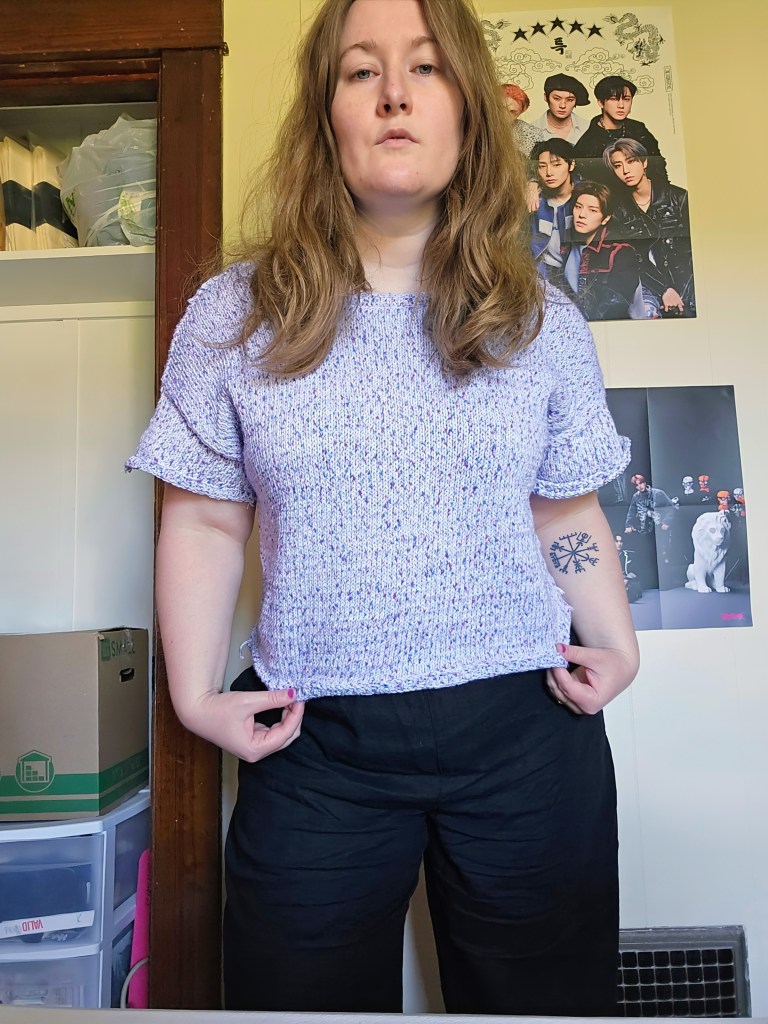
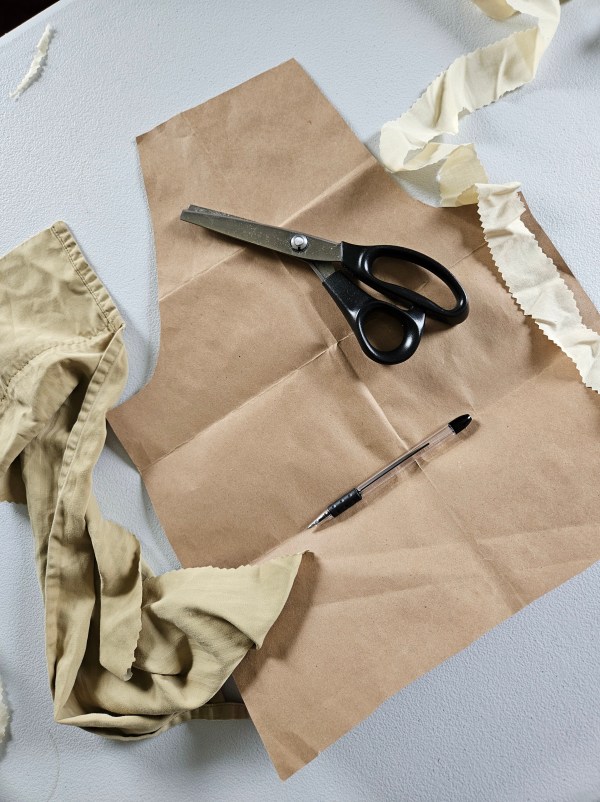
It’s a bit silly to think about now, but learning how to sew from Youtube meant that using all the correct drafting tools, was a process of failing in order to realize I needed them.
I made a series of pants and shorts in 2021, 2022, and 2023. Some were okay, many were awful, some turned out better than expected because of a pattern. What I was missing in my sewing tool kit though was the predictability of the french curve.
Once I began drafting with this wonderful comma, I saw an improvement in my pattern drafting, ease of wear for garments made with this tool, and a reduction of fabric waste from cutting the curve wrong.
This July has been the first time I’ve recognized that feeling of time passing. The year is halfway over, what do I want to do with these last six months to finish the year strong?
In May, I felt like my life was done, as I knew it. Like a video game, I was done, out of hearts, out of health, game over. June felt like an exciting adventure and a respawn of my little game character in a new environment but the same life. It was thrilling and overwhelming at times, there was so much to catch up on and so much to do to begin our life in our house. July however has been this month of my brain feeling like it is in hyperspeed. Now that I have a new space to create, I also have new creative energy. That two-month break spent packing, moving, and waiting, was like a creative refresh and since then July has been a sprint.
I think some of this wild energy has been all the excitement of this month as part of the STAY fandom, this has truly been a one-of-a-kind comeback, but also I’ve been seeking distraction. My mom is walking through a health condition that came out of nowhere and in a matter of a few weeks she went from my companion packing boxes to being unable to do much physical activity without her body sending off alarm bells. I’ve never seen her like this before, and if I stop to think about it too much, I freak out.
I’ve turned my attention to what the second half of the year could bring. There have been so many wonderful things on the horizon, my friend’s wedding, my sister-in-law’s new place, Kyle’s new woodshop, the possibility of adopting a rabbit from E.A.R.S, Shakerwoods, the Pittsburgh Renaissance Festival, apple picking, Pumpkinville, etc. I’ve begun planning Christmas presents for loved ones, trying to be more ambitious than ever to push myself to learn something new in the process. I’ve also been feeling the itch to actually sell my pieces. I think it’s time, I just have to figure out where and how.