I have a history with 1920s fashion, 1920s Ireland, and 20th-century football at Geneva College. My first successfully hand-knit sweater is a blend of all these flavor notes. As I consider how this piece came to be, it truly feels like the best possible way to write a love letter to the things that have become a piece of me, whether through ancestry or by my own seeking out, it is my beginning spark that pulled me into the world of designing knitwear.
I’ve been knitting for a decade now with degrees of success. I’ve kept to the small projects. Things like scarves, hats, mug warmers, a tea cozy, and tried my hand at mittens. There have been attempts at sweaters and even an oversized cardigan that turned out okay, but not what I had hoped. But then a movie was made that created exactly what I was looking for, they even made them by historical techniques and by hand. That movie is Martin McDonagh’s The Banshees of Inisherin.
The collar, the shoulders and silhouette of these pieces of knitwear look pulled out of a vintage collection of 1920s extant garments. Because they made these for the movie, it gave me hope that I could capture something historical from the weaving of my needles. This is what I came up with:
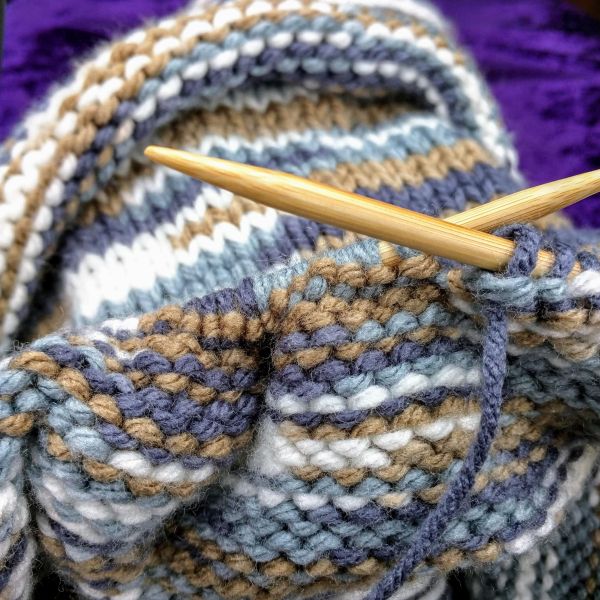
Originally, my plan for this sweater was to recreate a sweater I bought from H&M in 2011. I loved the striped boxy shape and easy to pair because of the neutral color story. I was knitting the body while I watched The Banshees of Inisherin for the first time and was taken aback by the knitwear of Padraig O’Sullibhean’s character. It was rugged, cozy, and yet practical in a beautiful celtic sea blue, almost teal hued wool yarn.
With only the body finalized and a sleeve on my needles, I realized I could pivot. I craved the chance to make something like the 1920’s football sweaters of Geneva’s yearbooks but I also wanted to capture the old style of sweater making from the early 20th century. Being from Irish descent, with my ancestors being from the O’Sullibhean clan out of Cork, it seemed like the stars aligned on this project. So I pivoted and widened the shoulders to look more inline with football attire. I added a longer ribbing to the bottom for a vintage feel and lastly I recreated the open collar of Padraig’s sweater.
The finished project perfectly marries the football feel with the connection to the past I desired, wrapped up in a sweater silhouette that I hope more people attempt. Historically inspired knitting was a blast. It also stands out which makes me happy. ☺️
After ten years, I finally did it! Knitting this, my first successful sweater, by my own drafted pattern was even sweeter. Thank you reader, for letting me share this project with you. It is one of my favorites.
What is an escape map you ask? Beginning in World War I, the Australians developed an escape map in July 1918 for Allied soldiers to escape from the German Holzminden prisoner-of-war camp. To do this, the creators needed a material that would be durable, unlike paper which could be destroyed by water, and so sections of the map were sewn into the clothing of prisoners who escaped through an Allied tunnel.
Moving forward into World War II, the British Royal Air Force, and the United States military used maps printed on a silky material called rayon. This is where the concept of silk escape maps comes from. If shot down in enemy territory the servicemen could use these maps to get back to safety or evade capture. Thousands of these maps were created during the war and during the post-war era these maps remained but for a different purpose. The destruction of the war was evident across Europe, during this period of rebuilding there was a lack of everything, including fabric and so these escape maps and parachutes were repurposed into clothing. For more examples of what these items looked like I highly recommend checking out this BBC article and this piece by Hannah Steinkopf-Frank for their wonderful images and research.
Just a Girl with Aviation in Her Blood and a Passion for Dress History
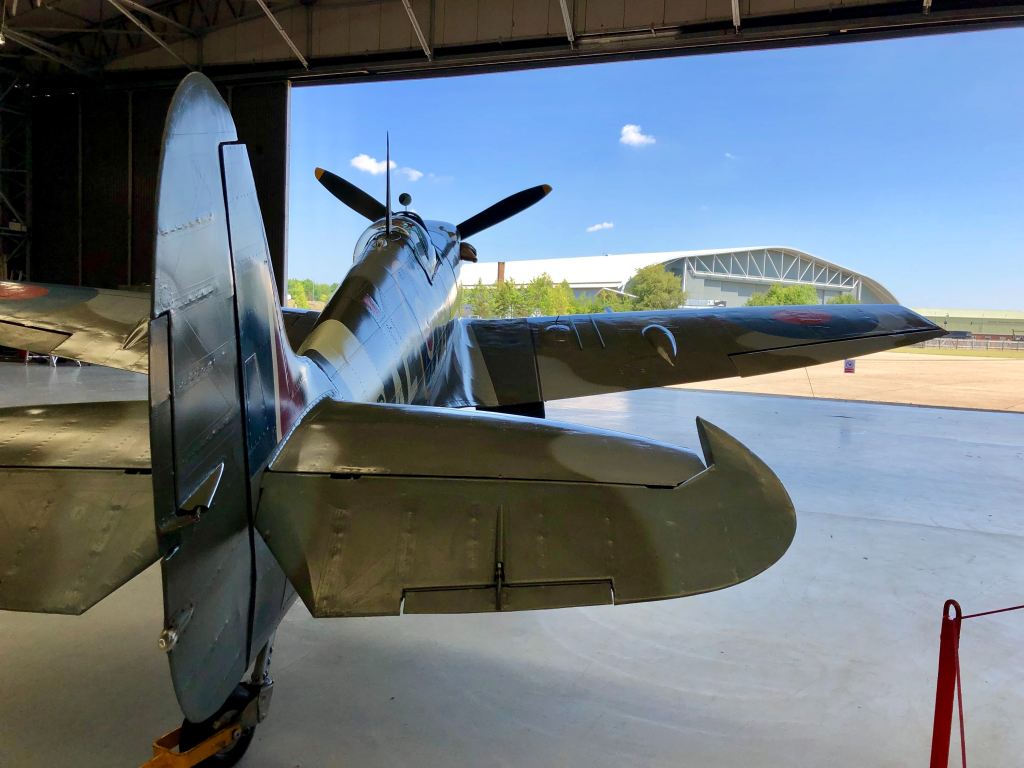
I’ve always been fascinated with unique garments from history and the story behind them. That is what makes dress history one of a kind because the garments were not just objects of history, people lived their lives in them. It tells us about what they looked like, what their life consisted of, their status, and their creative ability. The parachute and escape map garments truly speak to the resilience within the makers to find the normal and reclaim their humanness during one of the darkest times in human history. With that being said, what makes these dresses truly special to me is the connection to aviation. My dad is a pilot, aviation nerd, and history fan. From our conversations I have a well of random airplane knowledge I’m never going to apply to my life, but it truly fascinates me. It is his passion for it that I understand because I am so much like him. Although I have gone through bouts of hating aviation because it feels like the thing that comes between me and my dad having a close relationship, anything airplane related reminds me of him.
When I saw this fabric on sale at Hobby Lobby, I knew I had to get it. It is a canvas material, so a far stretch from the silken rayon of the WWII Escape maps, it is covered in what looks to be aviation charts crisis-crossing the world. It immediately made me think of the escape map garments and although the fabric cutter thought I has lost my mind when I said I was going to sew a garment out of it, I’m glad I didn’t listen. This dress is constructed from one of the comfiest and most flattering self-drafted patterns I have made. I wear it often and it makes me feel special because it is closely tied to my own story. Although I can’t share this dress with my dad I know he would be proud and that feels good.
I’ve found there is something serene about mending your own clothes. I find it almost a joy to launder the items and collect them in a pile for a day of slow, methodical stitches and problem solving. It makes the chaos of holes and rips into the calm of rejoined fabric and orderly hems. There is a satisfaction in fixing an item that was broken, making it as good as new. It reminds me that in life when the problems come, and there will be problems big and small, that it’s not over when trouble comes.
Like last night, when a scratching and rustling sound echoed from our chimney to the fireplace below. All I could picture was that scene in National Lampoon’s Christmas Vacation when the squirrel terrorizes the living room, scurrying from table to chair, knocking things over and crawling on Clark.
Of course this happened after dark, naturally as it does, when the stores are closed and the exterminator or animal control would be closed. In a frenzy we grabbed a sheet of plywood from the wood shop and covered the hearth opening. I called my neighbor, who has become like framily (friend-family) to me. They shared advice from their own experience with critters in their house, wrapped me in a hug and calmed me down with some good laughs. When I came back home, although the bat or squirrel or whatever it is, may still be on the other side that plywood I felt okay.
Having caring and friends who love and support you is the mending thread of our lives when things get weird.
Seams and a New Gadget
Today’s mending agenda consisted of re-attaching a missed seam on a pair of underwear I bought from a big brand, the pieces of fabric were connected across the seat seam with a serger aka overlocking machine and it either ripped the fabric which dislodged it from the seam or the pieces did not get sewn together in the first place. I have a love-hate relationship with the practice of serging ends and seams. I know it saves time and uses less fabric to finish seams but dang, they tend to unravel like nothing else. So, is it really better? I’m not sure. But that’s my opinion.
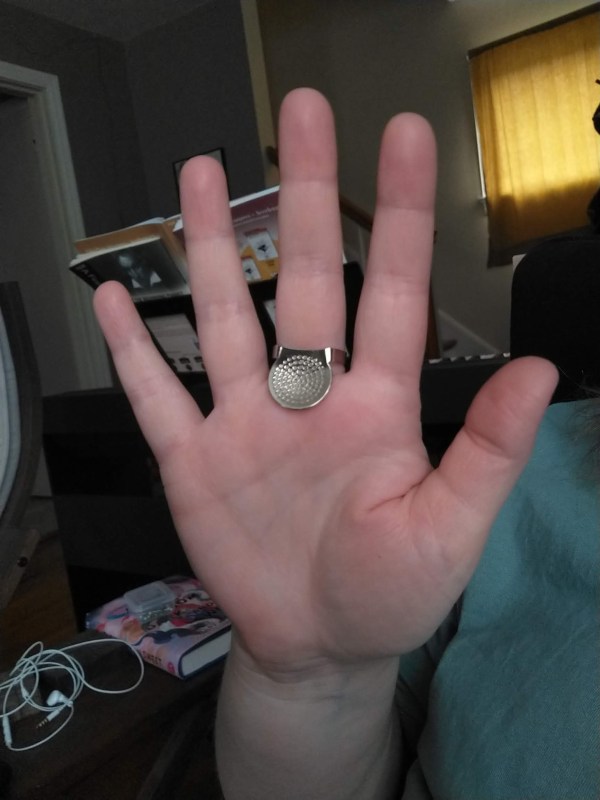
I’m doing a repair on a tank that I made from a burnt orange knit fabric. I made an unwise decision to take it in at the armhole which made the fit around the bust odd. It’s pulling and the stitches are placing too much stress on the knit fabric, which I saw the aftermath of while unpicking the stitches that made the armhole smaller. There were some big rips! Now the underside of each armhole looks like it was chewed up. Which to honest made me feel a bit stressed out because I enjoy wearing this piece and I don’t have any more fabric to patch the whole with. Thankfully my new gadget made this process of closing each rip easier – the palm thimble!
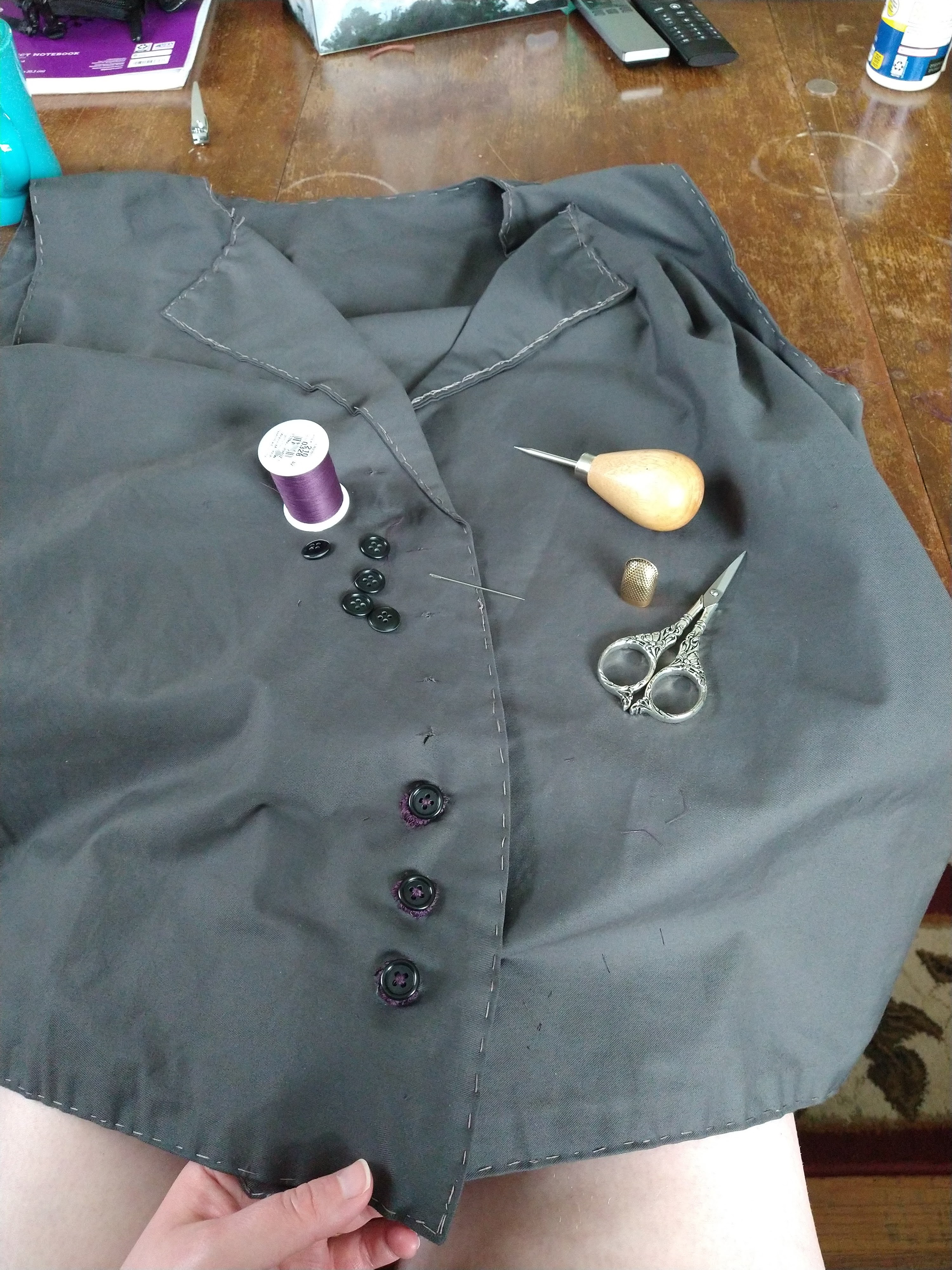
As I mentioned before in #21 – Sewing When I Lost the Love For It I have developed tendinitis in the knuckle of my middle finger of my sewing hand. This is what drove me to stop hand sewing in general and get used to using my Heavy Duty Singer machine. But alas, there are still times when you need to sew by hand like when inserting a zipper, mending rips and holes in fabric, and button and buttonhole insertion. I ran into this problem whilst completing this vest for my father-in-law. Just a few hours of hand sewing these buttons and button holes, awaken my injury and my knuckle was not happy. It’s made hand sewing a bit tense for me because what if it keeps getting worse? I love doing this, I don’t want to stop making things or knitting.
But, I was browsing my Instagram feed a few days later and behold a creator I follow named Geri In Stitches was sporting an intriguing accessory – the Sashiko thimble by which she pushed the needles through the fabric with her palm instead of putting stress on her finger. I used mine today for mending and it was a completely difference experience! My finger is not in pain, the knuckle is not inflamed or swollen. It worked! I’m over the moon excited about it.
Taking in Garments
Along with mending today, I also took in three pairs of shorts that were just draped to the point of looking silly. It’s an interesting feeling when I have to take items in because there is that feeling of, dang, now I have to fix something that wasn’t even broken just for the right fit. And there is also a feeling of accomplishment because I have been getting healthier.
I’m tackling my inflammation from food allergy and stress, toning up through interval training sessions, and making healthier choices that is helping me slim down a bit. I went through a decade of gaining weight and not understanding why I couldn’t lose it. It was frustrating and discouraging to feel so out of control. If only I had the wisdom to see how much the mind and the body are connected. The food allergy was giving my body anxiety and inflammation, making it difficult to maintain let alone get in better shape. Mind was so foggy from the stress and emotions of that time period that I didn’t want to take care of myself because I thought – what is the point?
When I have the opportunity to do these alterations, it’s this little moment of progress without having to weigh myself on a scale which is my ultimate trigger into a unhealthy spiral, but also to feel this moment of this will be an easy sewing project today. The item is already completed, and well loved. It’s relaxing compared to garment construction when I can still screw things up.
Later on today, I have another round of alterations, replacing a waistband tie on a pair of shorts and adjusting the fit on another pair of shorts. And then it will be time to put my thimble away and leave process for the next time. But with each wear I will remember the time and love put into these clothes to keep them in good order. A well loved closet.
Do you mend your own clothes? Have you ever taken a garment to be altered or do you just make it work? Before learning to sew, I would just accept my fate if items broke or stopped fitting. It’s a freeing feeling to not be stuck in letting the clothes decide for you. I’d recommend giving it a try or finding someone who can help you with their own sewing skills. It truly makes a difference.
I tried an experiment. This spring, instead of planning out a schedule of sewing projects, I decided to balance my time between my sewing workroom and my other projects by the changing of seasons.
Now, as a type B person, I’m a bit of a procrastinator. My creative nature doesn’t lead to a rigid structure, even though I wish sometimes it did so I could be an organized maker. But I have the personality that I have, and that is okay. I can still be productive even with a procrastinating nature. That’s what I did this spring. At times it felt like pushing off work that I needed to do, but really I learned that living seasonally means there are rhythms to the process at hand.
What made this plan interesting to me was the unknown. I didn’t know how the schedule for making items would come together. I didn’t know if the weather would dictate more lightweight tops first or lead me into shorts. It was purely figured out by what item in my wardrobe I thought I would need next.
Sewing Schedule
As I mentioned before in Sewing When I Lost My For It I decluttered the warm weather clothing that no longer fit me, was worn out or simply was not working anymore. So I was going into the new season with nothing but my workout shorts and shirts. I wanted to challenge myself to find my style by brainstorming on Pinterest and planning items that I actually want to wear.
For this summer wardrobe, I knew I wanted a few basics, statement tops, flowy skirts, comfortable but cute shorts, and a dress if I found a style that I liked. I wanted to design clothes differently than I had in the spring and summer of 2022. Last year I focused on reading patterns, and trying out new types of garments like blouses and pants. My guiding force was found in tutorials and patterns instead of my own style sensibilities. This produced items that were average, not my style but not unwearable. Not exciting though.
I didn’t want to make the same mistake and so from fabric shopping onward, I decided on a motif. I chose a color palette of greens, black, brown, and blue and decided on a closet of shorts, a few skirts, t-shirts, and sleeveless blouses to mix and match. Everything with easiness, like the athletic shorts I used to wear to work for the paint crew. My design philosophy was decided – movement with effortless style, able to style with sneakers.
In total, I’ve created 8 pairs of shorts, 11 tops, one skirt, and two dresses. I made these items off and on since the end of February, so around two and a half months of work. I planned my sewing days based on the forecast for the upcoming week. Spring came early and so I began March making at least three pieces a week. If the weather cooled down I would stop sewing and switch to other projects. If a warm spell came through I pushed to make four or five items to be ready to wear on the incoming 80-degree days. Back and forth like tides of the ocean. Sometimes I barely sewed at all, and other weeks I did nothing else but run my machine.
The Results
What did I learn from this experience?
Planning out your fabric choices and the color palette is a fantastic use of time. This keeps you on track with creating pieces that not only go together but will pair well with the items in your closet. In fact, reviewing my current wardrobe before I purchased fabric kept me focused while browsing so that I bought the fabric I would actually wear instead of fabric that looked cool on the bolt.
Seasonality does not produce balance. Although it was fun to create by the weather and made me more in tune with the changing of the seasons, it did not provide a healthy balance work-life balance. During those sewing benders, I made a lot of things to be ready for the warm temperatures but it also hurt my neck, back, and shoulders to use my machine for 8 hours a day, day after day. Sewing is truly hard work.
I have a greater appreciation for the people who make clothing. Not the designers, the underpaid workers who sew for these brands we buy from. Sewing is hard on the eyes and the upper body, it requires attention to detail. Without the men and women who make our clothes, we would be lost. I have a greater appreciation for those who cut out the fabric, threaded the machines, sewed the armholes, hemmed the pants, and put so much care into items that we so easily take for granted in America.
Will I Do This Again?
I think I will do an adapted version. I like the seasonality of the project and how it allowed me to see the changing season in the same way gardening has. It makes you appreciate the passing of time. That being said, I need more balance. If anything this system showed my type B personality, that type A personalities have a point when it comes to organization. I would prefer an actual schedule, that I could use to keep myself accountable. Not to keep myself from procrastinating, but to keep me on track with stretching, water breaks, and workouts. I neglected a healthy pattern of rest and exercise which made my mind feel cluttered and my shoulders quite stiff.
So, next time you are getting dressed, look at the careful stitches of the garment. Note the complexity that is garment construction. Look at the label and see where it was assembled. Take a moment to appreciate whoever made your clothes and be grateful that someone took the time to pattern and sew your wardrobe so that you could get dressed today.
Red Dead Redemption 2 was not a game I thought I would love or even appreciate. In fact, I’ve never played it myself, I’ve only watched my husband play, and seriously, I enjoy watching him play. The world created in the second game is so immersive and aesthetically pleasing that my dress historian heart sings when I see the detail and research the developers put into making Arthur Morgan and the cast of characters feel well-placed in a game of re-imagined history.
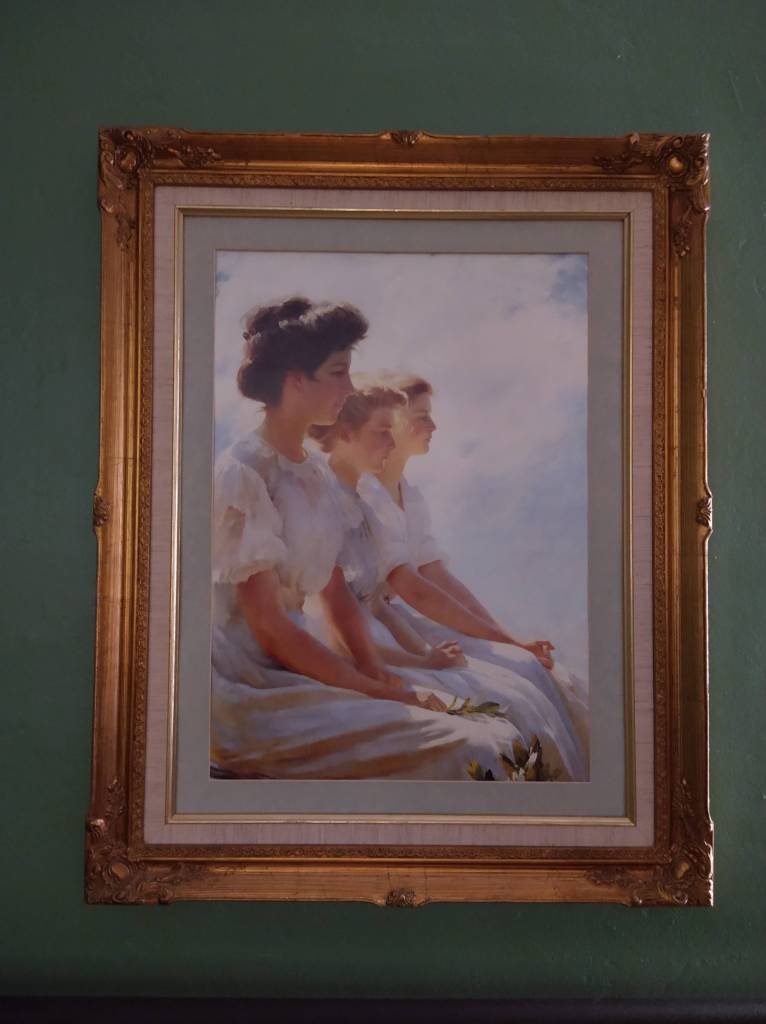
The 1890s have long been a favored period for me. From the popularity of the Gibson Girl look to the Anne of Green Gables movies, puff sleeves, bicycle jackets, and the pigeon breast silhouette with long walking skirts have long captured my imagination. Maybe it was the years of seeing these portraits of my 1890s ancestors above the mantel at my grandparents’ house. Or this Gibson Girl-inspired painting in my Grandma’s bedroom. It made an impact on my appreciation for this time period and design aesthetic.
There is such a quintessential Victorian-ness about it. But also this aura of possibility. The world was changing rapidly during this time through industrialization the Gilded Age brought splendor and wonder. The Arts and Crafts Movement was at its height which is why I think I am so drawn to this style. Arts and Crafts era houses are among my favorite styles of architecture, bringing forth the Craftsman style along with Frank Lloyd Wright’s prairie style. Maybe it was growing up in an old Victorian house too?
And so this game, Red Dead Redemption 2 with its 1899 time stamp and varied styles of architecture has brought me so much joy and comfort. Even the Bayou Nwa of Lemoyne is a delightful reminder of my time living in coastal Georgia. Especially the alligators, which seemed to lurk in every body of water. But those cypress trees still call, like the delightful menswear of Arthur Morgan’s wardrobe, and the wonderfully decorated towns of St. Denis, Strawberry, Rhodes, Valentine, Annesburg, and Blackwater. And so I find myself sewing Arthur Morgan-inspired pieces, for both myself and my husband. Who knows where inspiration will find you? I certainly didn’t think a Rockstar-developed video game would bring me such joy and fashion design inspiration. But it truly shows that inspiration is everywhere if you take the time to appreciate it.
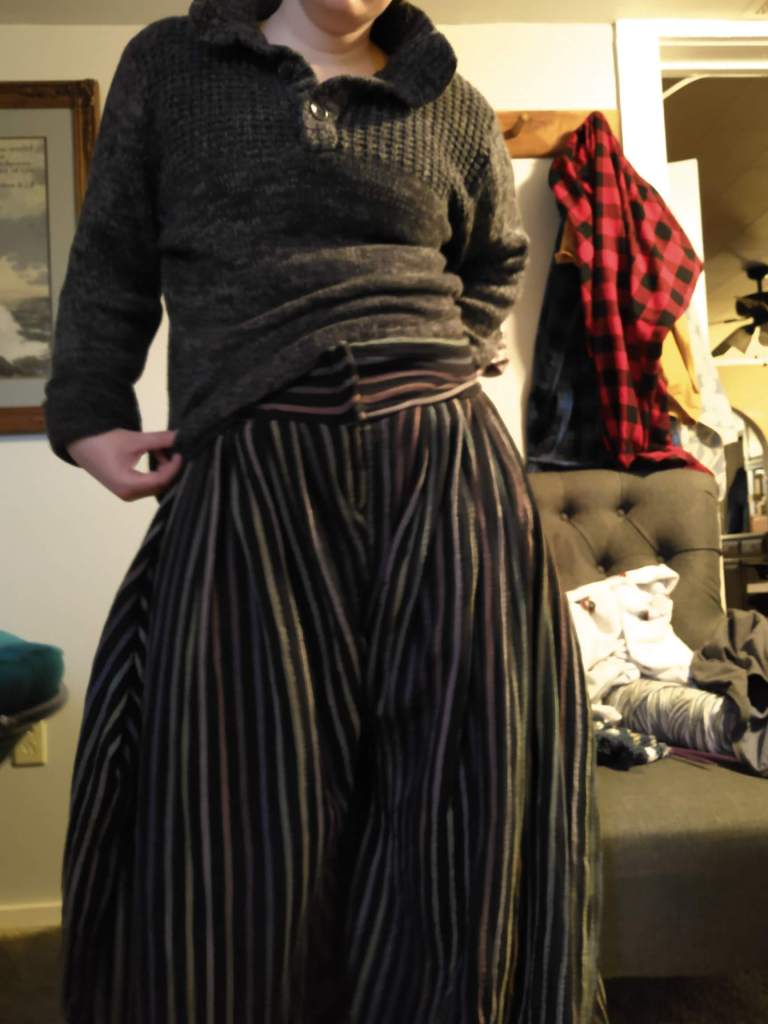
L to R: 1890s long underwear-inspired dress, Vest with high neck in the 1890s tailoring style, Exaggerated 1890s menswear stripe pants
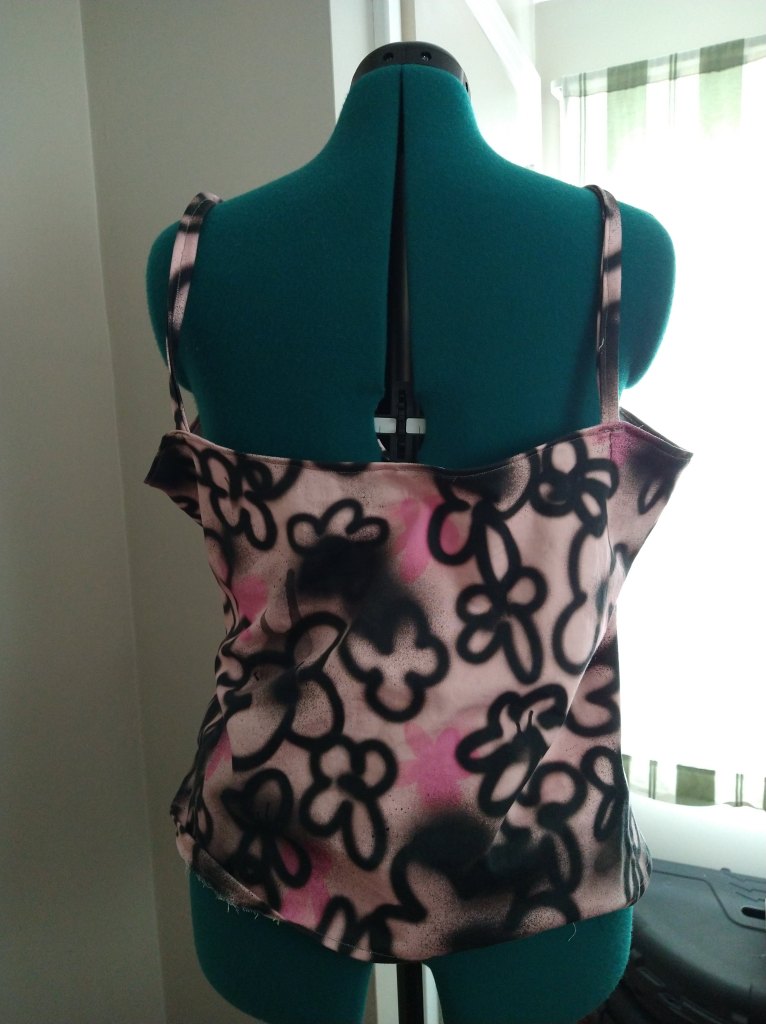
L to R: I Dream of Fashion Polly Bustier, Chocolate Bunny Three Piece Set, Glitch Mode Herringbone Skirt, Wilson Plaid Midi Skirt, 254 4th Street Blouse, White Rabbit Tank, Peach Perfect Drawstring Shorts, Engarde Cardigan, Pleated Chambray Tank, Red Currant Blouse and Skirt, Grayscale Summer Kilt, The Mirage Reversible Knit Top & Skirt (4 combinations), Digital Snake Print Dress
It’s the start of a new project. I select my needle gauge and yarn ball. The time to cast on is here. Time to begin the endless loops of yarn twisting around the knitting needles. Let’s make something out of a static strand.
Knitting as a creative process for me has been something akin to ‘The Curse of Oak Island’. Are they ever going to find the treasure? Am I ever going to be good at this? I know what I want to accomplish. I can see the project in my mind and then it’s a blur. It’s like the stitches take the lead and maniac style they wreak havoc.
When the stitches take the lead, things go awry, why am I wasting my time? It’s been a creative tragedy in the Greek theatrical sense of the word, a project unraveled by Act Three. So, why do I keep trying? I want to succeed like all these other knitters I see on Pinterest and Instagram. They make such cute designs. Knitting your own piece is a lot cheaper. It’s rewarding to see your handiwork not just make the design of the garment but the actual fabric! As a seamstress and creative person, I want to climb this mountain no matter how long it takes so that I can finally taste sweet success.
Accepting Trial and Error
It’s weird, knitting has been the most frustrating yet fascinating hobby because, unlike sewing, you begin with nothing. It’s a ball of yarn and two sticks, that come together to create shapes based on how you loop the yarn, stitch after stitch. Negative space to positive.
The tantalizing simplicity of knitting sucks me every time, and yet in three years of trying, and countless attempts, I’ve made one garment that I like. One garment came out the way I pictured in my head. That’s a terrible conversion rate if you think about that in terms of football. What would be the point in continuing unless you love playing the game. Because at its core, knitting is an investment in time. If you want to make a project of size and use, like a sweater, it’s a multiple-month commitment if you’re a quick and capable knitter. It is a slow process. Like painstakingly slow for me at times, and repetitive.
Patience is not my strong suit, and so knitting has challenged me. It has frustrated me to my core when I have dropped a stitch and I have to frog (unwind) row after row of work. Hours of progress dissolved from my project in a minute, only to remain in my memory. But when you get it right, as what happens in life when you accomplish a goal you’ve had for a long time, the victory is sweet. Completing a panel of a sweater or a hat without failure, and the project removed from the needles looks like what you imagined in your head – well that is euphoria!
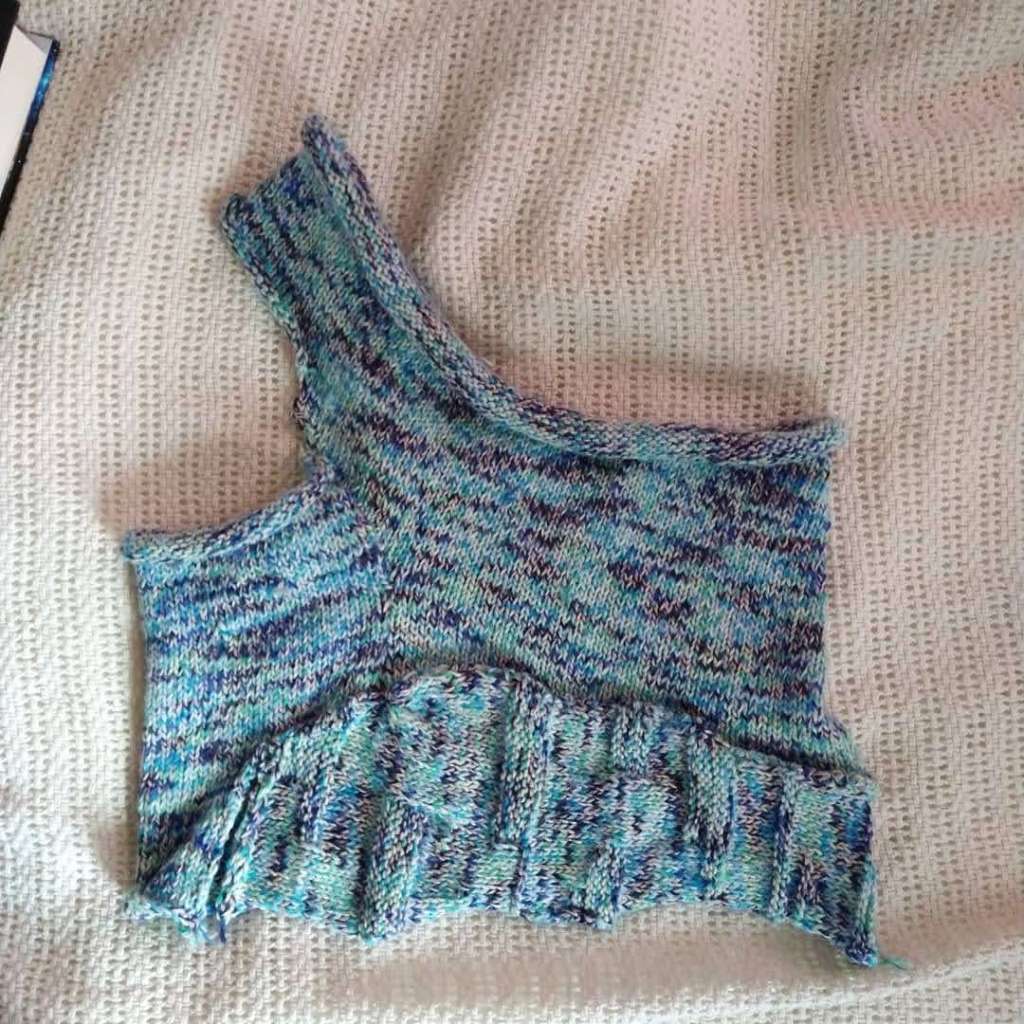
Because of how tricky executing a knitwear project has been for me I get excited even when it sucks. Like this experimental tank I made in 2021.
It’s weird and avant-garde. My lack of understanding of how knitwear stretches and shapes based on needle gauge caused some rolling issues. The tank was not what I expected but also not a disaster. It’s weird being pleased with your own mediocrity. I think that is what is so interesting about this skill-acquiring process. It’s student work, but it’s your student work so there is a sense of pride. I made this thing and it doesn’t fall apart! It also looks like a crop top – woohoo! There’s an accomplishment in finishing, like when you took a terrible class in college and instead of dropping it and starting over you grind for the credits. I guess it is character-building!
Experimental Success
It hasn’t all been for naught, I would say it is Yarn – 10, Magz – 7. That’s a decent record. It’s cool to look back at things I’ve learned along the way like this Steeple stitch and see that yes, I am getting better. I love the texture of this piece and hope to remake it someday with the proper sizing and needle gauge. Below there is a ribbed hat with pom-pom, a striped scarf, a rugby stripe hat and matching scarf (not pictured), and a Flying Geese Stitch cardigan coat. It hasn’t been a waste of time even though knitting has made me very frustrated. It’s a nice skill to have.
The most intimidating part of sewing for me has been pattern drafting. Possessing the understanding to draft a pattern for a garment demonstrates the knowledge of how the pieces of the clothes we wear every day are put together, plus having the foresight to sketch out the shapes on the fabric in a 3D form. It’s a lot! But that is how clothing makers have designed and crafted pieces for most of fashion history. Before the paper pattern was made available in the mid-19th century, garment makers had to understand how to create these building blocks.
“All devotees of home sewing should know these two names: Madame Demorest and Ebenezer Butterick. Madame Demorest, wife of a successful New York merchant, was the first pattern maven. In the 1850s, she began selling tissue-paper patterns for home sewers via mail order advertisements in fashion periodicals such as the Ladies Gazette and Godey’s Lady’s Book. Initially, these patterns were ungraded, meaning that the seamstress had to enlarge or reduce the pattern to fit her figure. Garment elements such as sleeves, bodices and skirts were sold individually so that the sewer could create her own dress. In 1860, Madame Demorest began to sell her patterns through her own publication, called The Mirror of Fashion. Patterns were also sold via “Madame Demorest’s Magasins des Modes” shops, of which there were 300 national and international locations by the middle of the 1870s. By the late 1880s, Madame Demorest and her husband had sold their pattern empire and turned their interests to philanthropy. Though Madame Demorest may have been the first to sell tissue-paper patterns, Ebenezer Butterick was the first to sell graded patterns. According to Butterick’s corporate history, Butterick created graded patterns in response to a comment his wife made when sewing a garment for their son. “
What I have challenged myself to do in my journey of sewing is to understand these building blocks to create my unique patterns and connect with the craft of it as a maker. I’m a nerdy person, I love digging into the story beneath what we do. That’s why majoring in History called to me even as my desire was to study fashion. I realized through the mentorship of a great professor that I could understand the motivation behind the garments and how people lived their lives in them which would provide a deeper understanding of fashion history. How cool is that? Since that point in my studies, I’ve craved a deeper connection to clothes. It became more than just an artistic exercise of sketching a design I had in my head, I wanted to understand why fabrics are the way that they are. How trends interacted with culture and history. And so as I was looking to go deeper in 2021, I consumed a lot of Bernadette Banner, Nicole Rudolph, Karolina Zebrowska, Morgan Donner, and Cathy Hay’s content. They dig into the meat of garment construction and silhouette in a way I wasn’t introduced to fashion design by Vogue or Harper’s Bazaar. In doing so I knew, yes paper patterns would be necessary to learn from, but I needed to learn how to draft the shapes in the old way to make things I couldn’t find in the pattern envelopes of Joann Fabrics or Mood’s Sewceity.
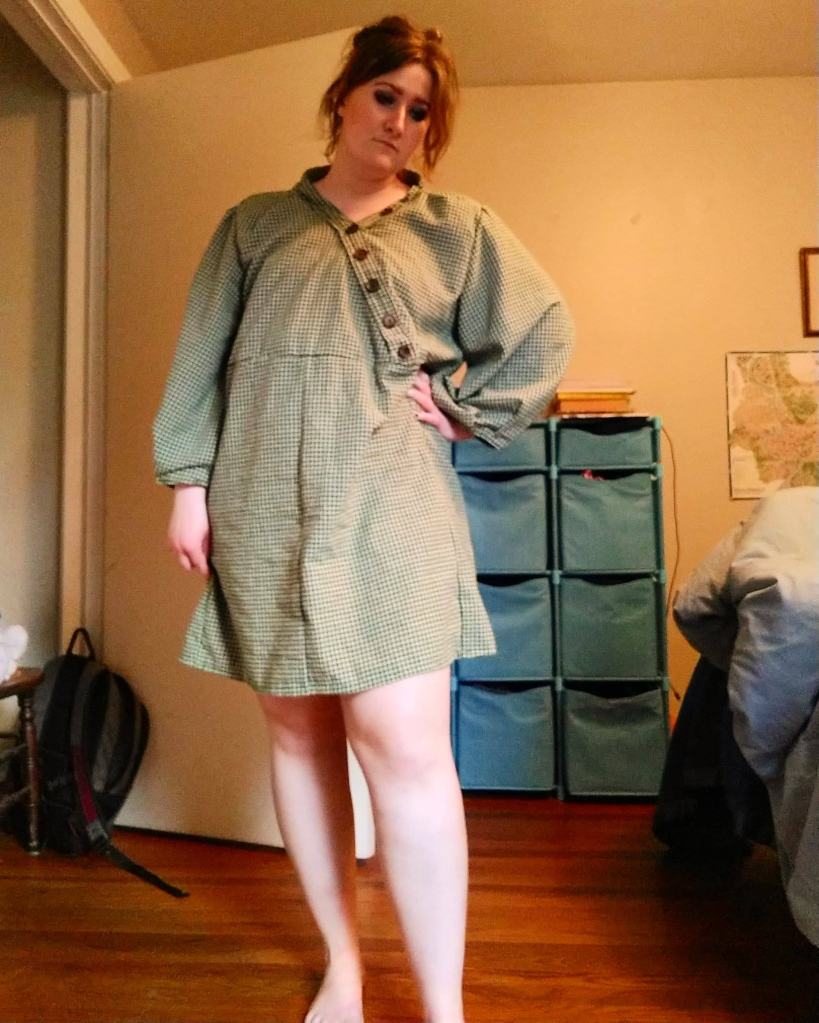
For example, the silk halter dress and black and white tank dresses were hand drafted from my own measurements, being draped and cut based on my own form. In comparison, the light blue summer suit above was made with the assistance of two paper patterns to understand the construction of a collared shirt and shorts, two pieces that are essential building blocks of a wardrobe. But after I used the pattern to understand how to shape a collar and cut lines of shorts it was time to go back to drafting what the garment would look like based on my own pattern pieces. Yes, the suit is quite messy and I’m not thrilled with the fit of how it came out. I realized the tailoring was goofy because I deferred too much to a standardized pattern shape and now if I re-made it I could draft the whole pattern by hand according to my own custom measurements.
That is why the learning process of pattern drafting has been such a rewarding quest, it has de-programmed my brain from the effect of standardized sizing and fast fashion. Those pre-made patterns while essential to learn, can’t fit everybody and every shape it’s not possible. My student garments have not been the most flattering or pretty to behold because I am learning the process of fitting, it’s been a slow burn but when it all comes together I can see how much clothing is actually made for an individual instead of a mass market is just so dang luxurious to wear. Even when it is not perfect I’ve felt the reward. The bigger reward though is that because it is a learning process, eventually the tailoring and my construction skill set will catch up to the ideas in my head and my clothes will turn out exactly how I picture them.
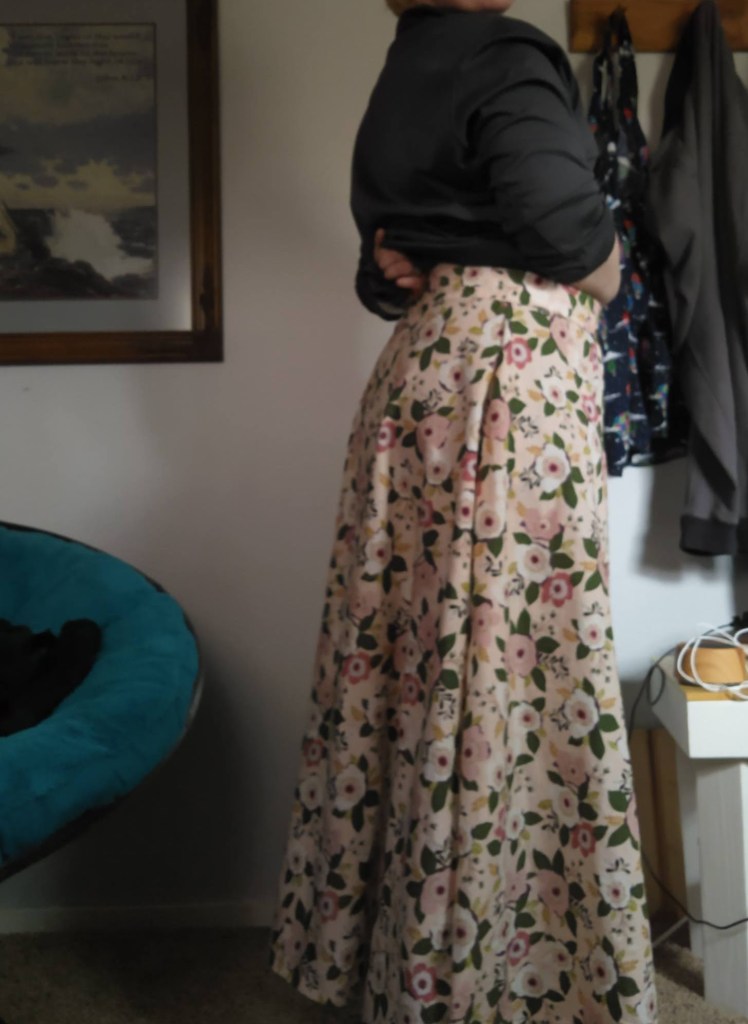
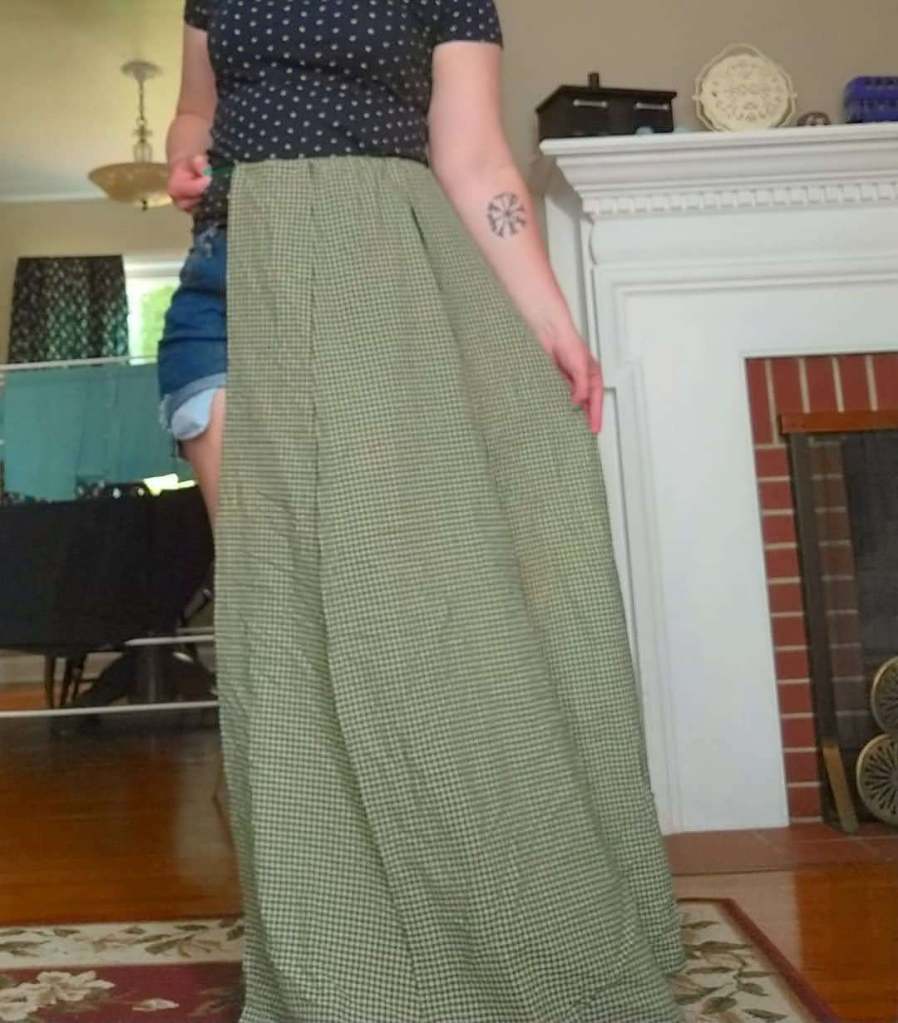
I think sometimes we underestimate the effect fast fashion is having on our minds in the way we relate to clothes. We are accepting uncomfortable, cheap-quality, synthetic fabric clothing that is made to be disposable. It is not supposed to be like that. Take this dress featured below, it is made from 100% cotton that I purchased for $4.00 a yard from a quilting fabric store. Because it was a natural material it held up to wear and washing and was breathable. It was such a comfortable fabric to wear in the summer and did not fall apart. The dress I made was drafted according to an older style of skirt, with 10 skirt panels that were tapered to the waist to make the skirt swish, as taught to me by Bernadette Banner’s videos. I then drafted the bodice using historical dress-making techniques from the Victorian era, as taught by Cathy Hay’s videos. This garment fits me better than my wedding dress. Hands down the best-tailored garment I’ve made according to traditional construction techniques! It took me four months to complete, as I was still learning how to sew and draft. It only cost me $16 dollars in fabric although it looked far more expensive when it was done. I guess my point is by sharing this is to share with you, reader, is to share how valuable it can be to learn the old techniques instead of deferring to technology. Let our knowledge and craftsmanship define our creations instead of a piece of technology, like AI. Not all of our modern ways know best. Fast fashion certainly doesn’t!
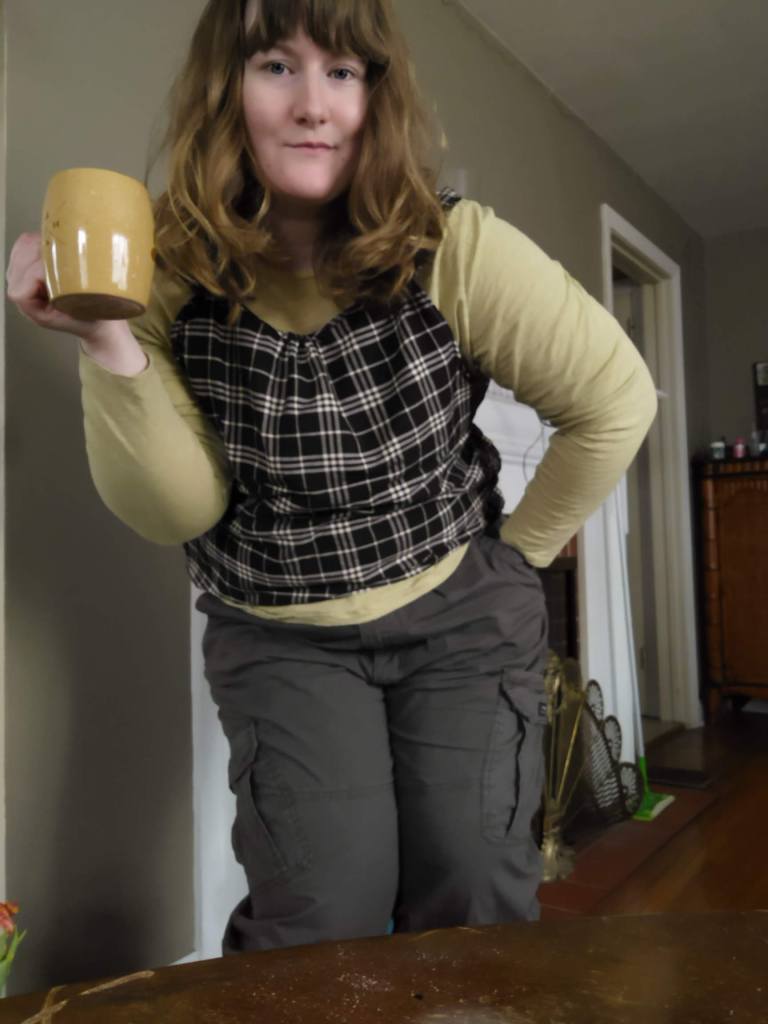
A satin hem. Rosalina of the Mario universe. A blanket that has been an heirloom for 50 years. Comfort at the final moments. These are ingredients that wove together my inspiration for this unusual dress design.
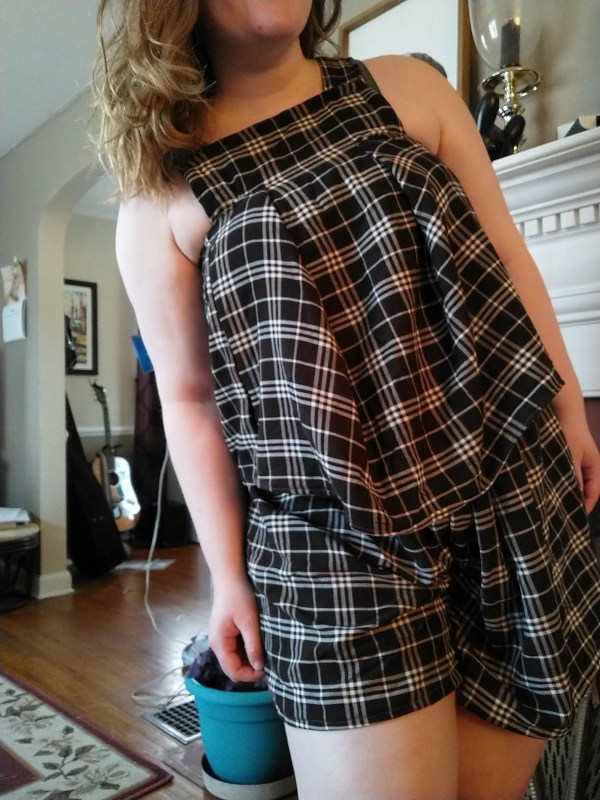
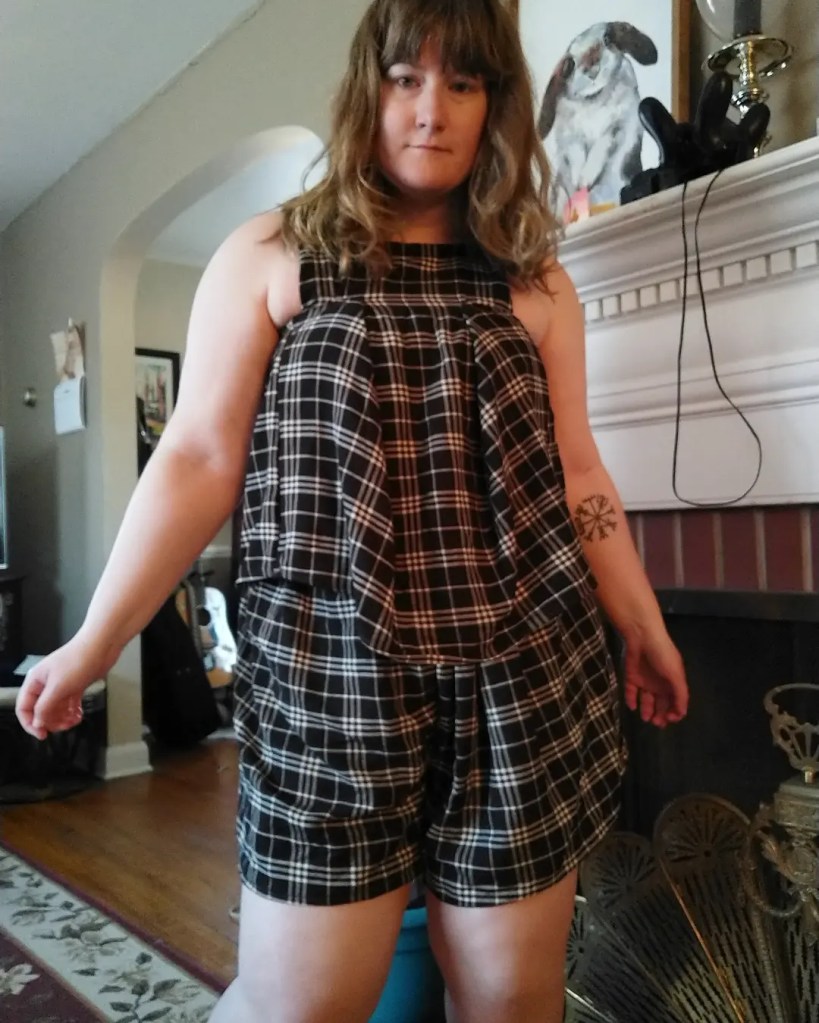
This was a project of perseverance. I initially wanted to make a long midi dress with a shirttail hem. It was supposed to have a button placket and straps instead of sleeves. The mockup was not pretty! I felt like a thick column of plaid, compared to the easy breezy girl walking the beach I had in my mind.
As a maker, what do you do when the pieces are already cut? There’s no going back. Especially if it is a self-drafted pattern, which it was. You have to sit with it and see the piece for what it has become. Accept that your choices led you to this destination and figure out how to keep moving forward. It’s just like life and how things that happen, good or bad, shape us into the people we are today.
Some days I feel like pattern pieces that don’t fit together, but other days those pieces I can see make something beautiful. It’s all about the perspective we see the world in. Mine comes from God’s word and so I know that God is working all things for the good of His Kingdom. (Romans 8:28)
Making the Best of Things
But how do I apply that to a failing project? I try to see each project as worthy of improvement. Instead of getting frustrated and quitting, I try to give the materials the respect to make the best possible garment out of what the fabric is providing. It was plaid, casual, and oh-so-cozy to the touch! Those are good qualities! So I tried it on again and tucked the skirt so that it hit around the knee- it looked pretty cute! I decided it was time I hacked it off. This part is always nerve-wracking but thankfully I cut it straight.
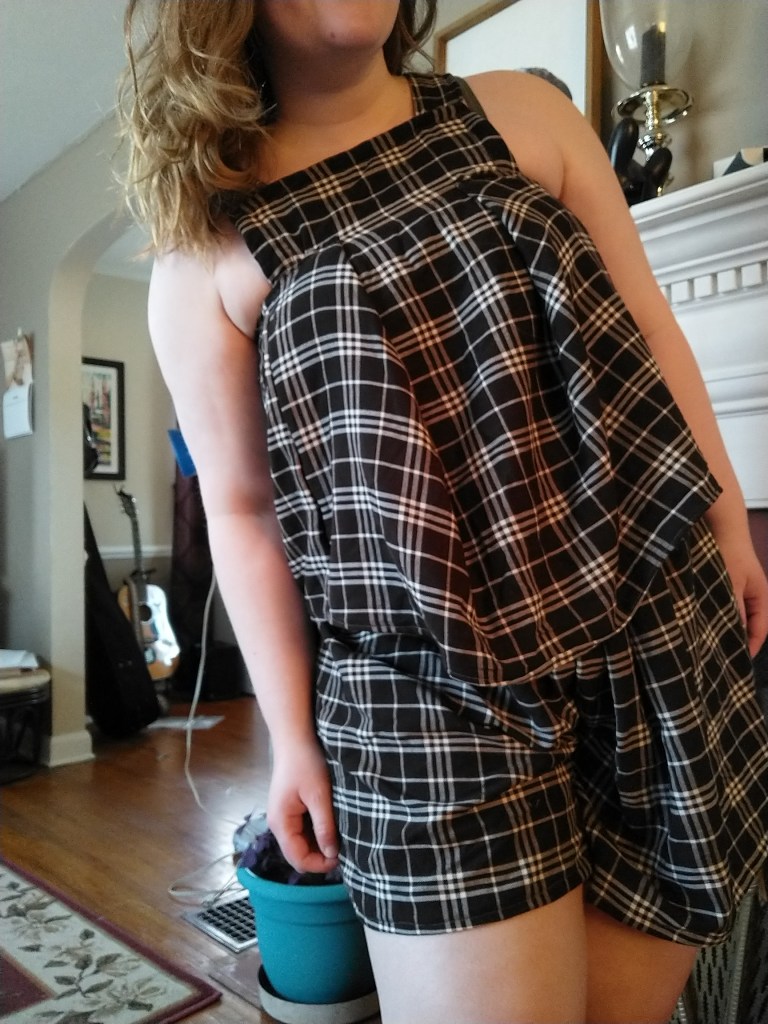
With the dress in two pieces, the bottom portion of the skirt no longer looked like a skirt. It featured that shirttail hem I mentioned before, which curved like a familiar shape. I realized if I turned them upside down they looked a lot like the curve of a sleeve! A lovely oversized bell sleeve that would insert easily into the already sewn shoulder straps. Perfect.
Looking whimsical already, and giving me Rosalina from Mario vibes, I went digging through my stash for a specific trim – satin blanket edge binding. Suddenly this uncertain design became a dress of nostalgia.
On my bed, since I was a little girl, I had a blanket with a satin edge binding. It was a blanket similar to my grandparents’ one on their bed through 52 years of marriage. When Papa was sick he had a small blanket with a satin blanket edge binding on his hospital bed. He kept it there through the isolation of lockdown. He gave it to me as he passed on, and it now lives in my trunk.
End of Project Wrap Up
This dress even in its upcycled state still had some fit issues that have kept me from wearing it like a closet staple, but this project reminded me that sometimes you got to make things that evoke emotions and memories. Things that make you happy! When I see that style of blanket on my bed I smile because it reminds me of the memories that have shaped me into the person I am today. I know that if they could see this dress my grandparents would be amused and that brightens my day.
In the future, I hope to re-make this dress with either a stretch fabric or a stretch cotton twill that will help with the shape. It slides off my shoulders so I may need to add a tie across the back, spanning the opening of my shoulder straps, or create a snap system that can attach to my undergarment. I think this dress could be fun in another print or maybe a solid. There are a lot of possibilities to explore!
As a kid, I used to sketch clothing. My friends and I imagined our own fashion brands and collected these sketches into booklets, like homemade catalogs dreaming of our Delia’s. We were obsessed with Mary-Kate and Ashley Olsen, Sister Sister, Lizzie McGuire, Totally Spies, Destiny’s Child coordinated outfits, The Cheetah Girls, etc. If it had a fashion twist, we were lining up to consume it. We excitedly watched What Not To Wear, America’s Next Top Model, and Project Runway, hoping one day that we would be a fashion force to reckon with. I gravitated to the design side while my friends were more interested in modeling, stylist, and it-girl/influencer ideal. To be honest, I think that girl of 11 would not believe the garment that would solidify my feeling of a true designer would be a set of loungewear instead of an avant-garde gown.
My sewing plan for 2022 had been simple, make, make, and make some more. I scoured Joann’s clearance bins and drooled over Mood’s selection of prints itching to make something of a higher caliber than my previous tries. I had drafted my own coat, tried some vintage patterns, and successfully made lounge pants for my husband yet had struggled with fitting my own pants. I had dabbled in tops but didn’t understand shoulder seams or hoods. I was still quite green! But I needed some new pajamas and thought hey, let’s do this. So I dug out of my fabric stash this cheerful blue gingham in soft cotton shirting. It felt like being wrapped in a hug with a little drape. I was feeling cocky after sewing two vintage patterned dresses earlier in 2022 and thought, how hard could it be to make myself some pants. I figured out that 1940s pattern, I got this. And actually, it turned out to be one of my favorite early pieces!
This set was made of a pair of high-waisted drawstring pants with oversized balloon-style pants that tapered into a cuffed ankle. The matching crop top featured a generous hood and long sleeves with a boxy fit that just felt so relaxed and cool. With the hood up I felt like Princess Leia in her original white dress. The geometric pattern and unusual silhouette gave me the confidence to seek out my own style with sewing, not just be a vintage hobbity cottage-core girl that was so popular around this time. This helped me to remember to be playful with my designs and inspire the little girl who sketched clothes while she was supposed to be taking notes in class. It reminded me of the Cheetah Girls matching track-suits and avant-garde silhouettes I craved from street style.
What made this feel full circle was not just how good I felt in the garment, but the doors it opened up. My cousin’s daughter fell in love with the piece and wanted me to make her one. That was the first time I had made something that people wanted to buy. It felt incredible! But also taught me that the vision of what I dreamed of becoming, was not that far off from those designs I sketched as a kid. They weren’t show-pieces for a runway, they were real-life clothing that was playful and useful for living life in. I realized I do have a place in the fashion space even if I’m not in a fashion capital, running a brand. The world right now doesn’t need more ballgowns or high fashion editorial pieces, it needs functional clothing made locally and created with love for the people we love. I could be a fashion designer who could make humble pieces a little more special. That’s where Potato Technology became a tangible idea instead of a pipe dream.
























 One Rabbit Riot