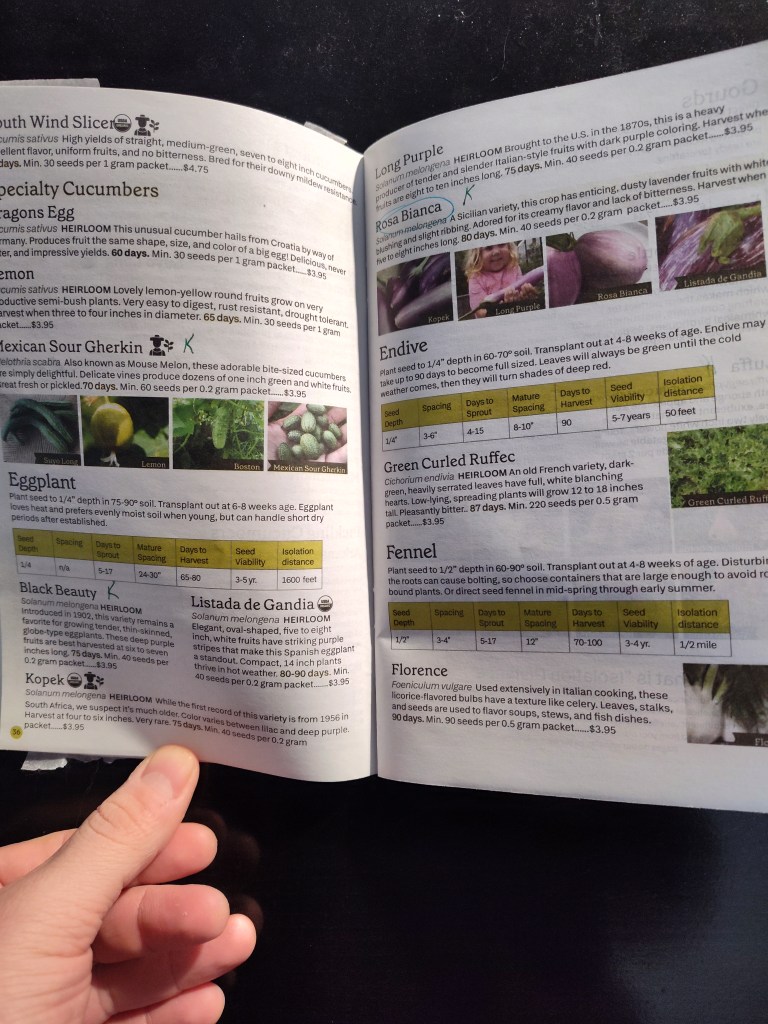
Reviewing High Mowing Organic Seeds’ 2026 Seed Catalog

Ahead of the 2025 gardening season, one of my first posts on the blog was titled “Where to Buy Garden Seeds.” There was a heavy emphasis on the seed catalogs we requested, what we liked about each one, and the ones we purchased seeds from. This year, I’m doing things a bit differently by dedicating a post to each seed catalog. In each post, I’ll review the catalog, go over the things I like and dislike about it, and score the catalog. Here’s how I’m scoring all the catalogs.

Scoring Criteria

I’m going to be looking at the following areas and applying them to each catalog we receive:

  • Number of pages – 1 point per page over 100 pages; minus-1 point per page under 100 pages.
  • New varieties – 1/2 (.50) point for each new variety for 2026.
  • Total number of seeds – 1/4 (.25) point per seed.
  • Selection of “Specialty Seeds” – By “Specialty Seeds,” I mean any specially designated seeds that are separated from the other seeds. Examples are All-American Selections, Italian Gourmet, and Indigenous Royalties. – 1 point will be awarded for each specialty category.
  • Images – 1 point if there is an image for every seed; 1/2 (.50) point if fewer.
  • Non-Seed Offerings – 1 point for each category (fertilizers, seed-starting items, merchandise, weed control, pesticides, garden gear, etc.)
  • How Is it Organized/Ordered? – 1 point if its order is a positive; minus-1 point if it’s a negative.
  • Beauty – This is completely subjective, but it’s my way of determining if it’s aesthetically pleasing to look at. Does it include original artwork? Are the images crisp and clean? Is the text easy to read? A maximum of 10 points can be awarded.
  • What Sets it Apart or Makes it Unique? – This is another subjective category. What about a catalog makes it stand out from the others? A maximum of 10 points can be awarded.

Links to Other Reviews

Pages – 21 Points

The 2026 High Mowing Organic Seeds catalog has 121 pages.

New Varieties – 24 Points

The company is offering 48 new varieties this year, which are conveniently featured on the first page of the catalog.

Total Number of Seeds – 227.5 Points

High Mowing is selling 775 vegetable, 87 flower, and 48 herb varieties for a total of 910.

Specialty Seeds – 1 Point

The only specialty seeds offered are the Galaxy Suite Tomatoes, which are tomatoes bred at Cornell University. High Mowing is the only producer of these tomatoes.

Images – 1 Point

There is one image for each seed and item listed in the catalog.

Beauty – 10 Points

The catalog is full of stunning, high-quality images that allow you to clearly see the color differences between varieties. I also love that they place the images beside each other (rather than always beside the seed listing) so that you can compare vegetable sizes and qualities.

Non-Seed Offerings – 9 Points

High Mowing sells non-seed items in the following categories: Seeds and Pots, Potting Soil, Heat Mats, Seeding, Labels, Inoculants, Clips, Harvesting, and Merch.

Unique Quality – 9 Points

High Mowing only offers organic seeds, which is unique in its own right, but that’s not specifically related to the catalog. Their catalog also has thumb tabs that make it quick to find the different vegetables, which other catalogs have. However, what makes their tabs unique is the addition of seed images on these tabs. I don’t know of another catalog that does this. Another unique aspect is the presence of stories through the catalog. These include stories about the farms and co-ops they work with, projects they support, and individuals who are making a difference in fighting food insecurity.

How Is it Ordered/Organized? – 1 Point

The catalog is categorized into vegetables, flowers, and herbs, and each category is alphabetized. The pricing system is very clear and easy to read.

Review

High Mowing is yet another seed company whose catalog we received for the first time last year. I learned about the company through a Google search, and I think we’re both very thankful that we did. Everything about High Mowing conveys how much they care about providing gardeners and farmers with the best seeds possible. But they take it further with their clear mission of helping to educate and provide food security to those in at-risk communities. That is something Magz and I are passionate about, so it’s fitting that we have found seed companies that also care. Their catalog reflects everything they are about: the vegetables take center stage with quality images and detailed descriptions. The pricing tables are also easy to understand, and I love reading stories about farmers, partners, and those who are helping give back.
Score: 303.5 Points

Reviewing Sow True Seeds 2026 Seed Catalog

Ahead of the 2025 gardening season, one of my first posts on the blog was titled “Where to Buy Garden Seeds.” There was a heavy emphasis on the seed catalogs we requested, what we liked about each one, and the ones we purchased seeds from. This year, I’m doing things a bit differently by dedicating a post to each seed catalog. In each post, I’ll review the catalog, go over the things I like and dislike about it, and score the catalog. Here’s how I’m scoring all the catalogs.

Scoring Criteria

I’m going to be looking at the following areas and applying them to each catalog we receive:

  • Number of pages – 1 point per page over 100 pages; minus-1 point per page under 100 pages.
  • New varieties – 1/2 (.50) point for each new variety for 2026.
  • Total number of seeds – 1/4 (.25) point per seed.
  • Selection of “Specialty Seeds” – By “Specialty Seeds,” I mean any specially designated seeds that are separated from the other seeds. Examples are All-American Selections, Italian Gourmet, and Indigenous Royalties. – 1 point will be awarded for each specialty category.
  • Images – 1 point if there is an image for every seed; 1/2 (.50) point if fewer.
  • Non-Seed Offerings – 1 point for each category (fertilizers, seed-starting items, merchandise, weed control, pesticides, garden gear, etc.)
  • How Is it Organized/Ordered? – 1 point if its order is a positive; minus-1 point if it’s a negative.
  • Beauty – This is completely subjective, but it’s my way of determining if it’s aesthetically pleasing to look at. Does it include original artwork? Are the images crisp and clean? Is the text easy to read? A maximum of 10 points can be awarded.
  • What Sets it Apart or Makes it Unique? – This is another subjective category. What about a catalog makes it stand out from the others? A maximum of 10 points can be awarded.

Links to Other Reviews

Pages – 3 Points

The catalog has 103 pages, and none of them have advertisements on them.

New Varieties – N/A – 0 Points

Neither the catalog nor the website indicate which seed varieties are new for 2026, so I had to give this category 0 points for not applicable and unavailable.

Total Number of Seeds – 146.5 Points

Sow True has 414 vegetable, 111 flower, and 61 herb seed varieties for a total of 586.

Specialty Seeds – 2 Points

Sow True features two types of specialty seeds – Slow Food’s Ark of Taste varieties and Small Farm Grown. Ark of Taste seed varieties are ones designated by the non-profit Slow Food to be vital to culture and should be preserved at all costs. Small Farm Grown varieties are ones grown on smaller-scale farms, which reflects Sow True’s commitment to support smaller farms when possible.

Images – .5 Points

Roughly half the seeds have images.

Non-Seed Offerings – 20 Points

The catalog and website sell non-seed items in 15 categories: hand tools, garden gloves, kids tools, soil amendments, soil testing, fertilizers, cover crops, seed starting, seed saving, growing supplies, pest management, indoor growing, gifts, merchandise, and books. They also have pages of the catalog dedicated to educating gardeners with a planting guide, a seed-starting guide, seed saving tips, a companion planting guide, and definitions of open-pollinated, heirloom, cold stratification, and scarification.

How Is it Ordered/Organized? – 1 Point

The catalog is divided into categories of vegetable seeds, bulbs & live plants, vegetable seeds, herb seeds, and flower seeds, and each category is ordered alphabetically. Each category also has a marker on the edge of the page for quick reference.

Beauty – 10 Points

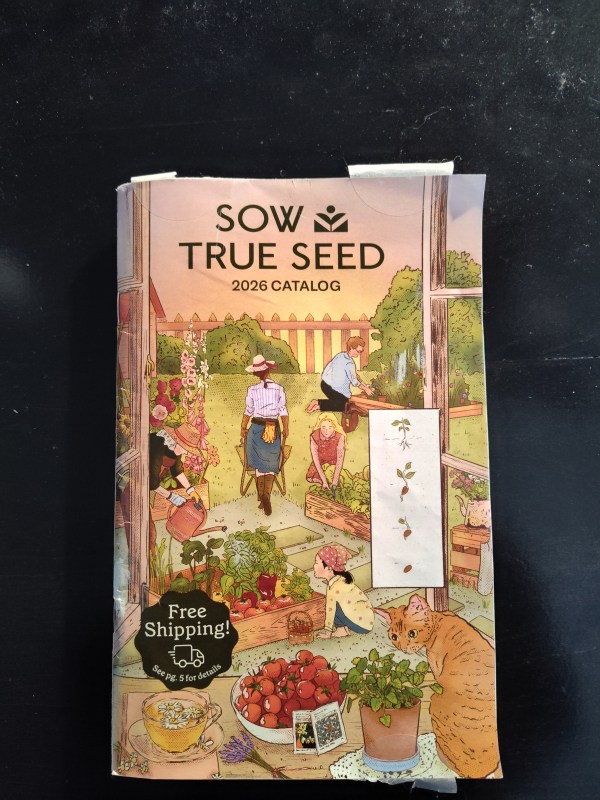
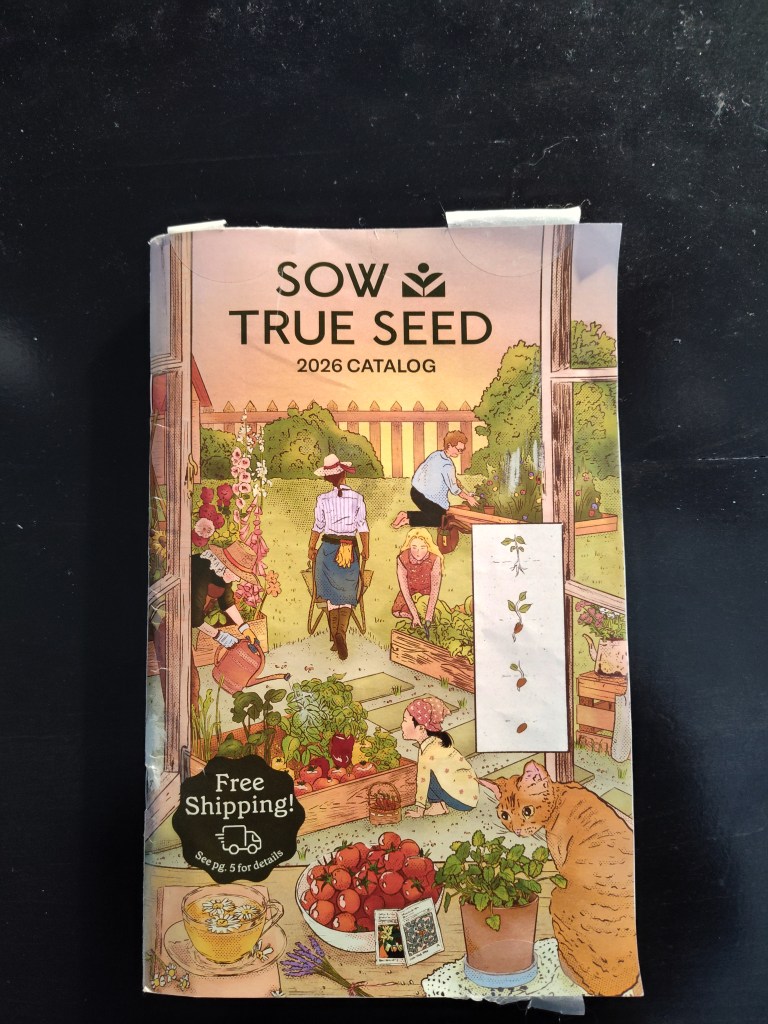
The catalog is easy-to-read, colorful, and features crisp imagery. One of my favorite parts of their catalog is the artwork that graces the cover and the featured seed packets.

What Sets it Apart or Makes it Unique? – 10 Points

I find Sow True Seeds’ catalog to be among the most unique that we receive. It’s shorter and narrower than others, being shaped similar to a book rather than a magazine. This compact shape makes it easy to carry and tuck in a pocket, as you would a journal. I also love the blend of artwork and photography, and the free guides make it more of an educational resource than a simple catalog.

Review

Like Pinetree Gardens, 2025 was the first year we received Sow True Seeds’ catalog or purchased seeds from them. They are an excellent seed company. They’re located in Asheville, North Carolina and operate as a co-op rather than a traditional business. That buy-in is reflected in the quality and care of everything they do. They go out of their way to support small farmers, to educate, and to create a community. It’s also reflected in their catalog. The seed descriptions are brief, clear, and informative. They provide all the necessary information with little extra. There are tables for each vegetable that provide the seed depth, spacing, germination time, days to maturity, and isolation distance. Combine that with the bonus guides, and it’s one of the best catalogs you can request.

Score: 193 Points

Reviewing Pinetree Gardens 2026 Seed Catalog

Ahead of the 2025 gardening season, one of my first posts on the blog was titled “Where to Buy Garden Seeds.” There was a heavy emphasis on the seed catalogs we requested, what we liked about each one, and the ones we purchased seeds from. This year, I’m doing things a bit differently by dedicating a post to each seed catalog. In each post, I’ll review the catalog, go over the things I like and dislike about it, and score the catalog. The first installment will be Pinetree Gardens catalog, but before digging into the review, here’s how I’ll score all the catalogs.

Scoring Criteria

I’m going to be looking at the following areas and applying them to each catalog we receive:

  • Number of pages – 1 point per page over 100 pages; minus-1 point per page under 100 pages.
  • New varieties – 1/2 (.50) point for each new variety for 2026.
  • Total number of seeds – 1/4 (.25) point per seed.
  • Selection of “Specialty Seeds” – By “Specialty Seeds,” I mean any specially designated seeds that are separated from the other seeds. Examples are All-American Selections, Italian Gourmet, and Indigenous Royalties. – 1 point will be awarded for each specialty category.
  • Images – 1 point if there is an image for every seed; 1/2 (.50) point if fewer.
  • Non-Seed Offerings – 1 point for each category (fertilizers, seed-starting items, merchandise, weed control, pesticides, garden gear, etc.)
  • How Is it Organized/Ordered? – 1 point if its order is a positive; minus-1 point if it’s a negative.
  • Beauty – This is completely subjective, but it’s my way of determining if it’s aesthetically pleasing to look at. Does it include original artwork? Are the images crisp and clean? Is the text easy to read? A maximum of 10 points can be awarded.
  • What Sets it Apart or Makes it Unique? – This is another subjective category. What about a catalog makes it stand out from the others? A maximum of 10 points can be awarded.

Links to Other Reviews:

Pinetree Gardens 2026 Seed Catalog Review

Pages – 29 Points

The catalog has 129 pages, and none of the pages are advertisements.

New Varieties – 24.5 Points

Pinetree is offering 29 new varieties this year, including three new tomatoes, two new squashes, and two new melons.

Total Number of Seeds – 311.5 Points

There are 119 herbs, 434 flowers, and 693 vegetable seeds for a total of 1,246 seeds.

Specialty Seeds – 1 Point

Pinetree Gardens offers one specialty type of seed, which are their All-American Selections. These seeds are tested in independent trials.

Images – 1 Point

The catalog has one image for every item offered in the catalog.

Non-Seed Offerings – 24 Points

Pinetree Gardens really shines with its non-seed offerings. I believe they feature more equipment in their catalog than any other seed company. The categories I counted are seed starting, planting mediums, garden labels, watering aides, trellising, inoculant, fertilizers, thermometers, container growing, season extenders, weed control, insecticides, animal deterrents, pollinators, garden gear, household, kitchen gadgets, countertop sprouts, canning essentials, spices, teas, essential oils, and books.

How Is it Ordered/Organized? – 1 Point

The catalog is divided into three sections for its seeds – vegetables, herbs, and flowers. Each section’s seeds are then alphabetized. It makes finding a specific vegetable, flower, or herb very easy.

Beauty – 10 Points

Pinetree Gardens catalog is bright, easy-to-read, and clean. The text color always stands out from the page. The images are high-quality and do a great job of highlighting the product being sold.

What Sets it Apart or Makes it Unique? – 8 Points

There isn’t a lot that makes this catalog overly unique, but that isn’t a bad thing. It’s simply a very good catalog that provides everything you need as a gardener. One unique aspect is the brief growing guide for each vegetable. It includes the germination time and temperature, seed sowing requirements, harvesting information, and more. And if a vegetable is prone to specific diseases, there’s a key that indicates what each seed is resistant against.

Review

2025 was the first year we received Pinetree Gardens’ seed catalog and purchased from them. They have become one of our favorite companies to purchase from, and it started because of their catalog. The 2026 catalog continues what they did so successfully in 2025 (and likely in the preceding years). I love the variety of seeds they carry, their prices, and all the non-seed items they sell. Their keys and icons make it very easy to identify and find what you’re looking for. Finally, I’m a big fan of companies that make their own seed collections. They’re such a great way for gardeners who have difficulty making decisions or are just getting started to try a bunch of seeds at one time. Overall, I think Pinetree Gardens has the best catalog, but we’ll see if the scores reflect that.

As an aside, their employees and customer service are great. They had a very minor issue this year where catalogs were sent to the right address but with the wrong person’s name. They reached out to everyone to explain what happened, which is so kind.

Score: 410 Points

Peace on Earth, Goodwill to Men? I Heard the Bells on Christmas Day in 2025

I Heard the Bells on Christmas Day is one of my favorite Christmas carols/hymns. It regularly appeared in the rotation of songs we would sing when my church went caroling. Still, I haven’t thought about or listened to that song in a few years. This year, however, the song has been at the top of my mind.

If you’ve never listened to it before, here are the lyrics:

I Heard the Bells on Christmas Day
Their old familiar carols play,
And wild and sweet the words repeat
Of peace on earth, good will to men.

I thought how, as the day had come,
The belfries of all Christendom
Had rolled along the unbroken song
Of peace on earth, good will to men.

And in despair I bowed my head:
“There is no peace on earth,” I said,
“For hate is strong and mocks the song
Of peace on earth, good will to men.”

Then pealed the bells more loud and deep:
“God is not dead, nor doth he sleep;
The wrong shall fail, the right prevail,
With peace on earth, good will to men.”

Till, ringing singing, on its way,
The world revolved from night to day,
A voice, a chime, a chant sublime,
Of peace on earth, good will to men!

As you can probably tell by the Old English words, it is a fairly old hymn. Like many hymns, its lyrics and music were at separate times and by different people. The melody/music was written by composer John Baptiste Calkin in 1848, and poet Henry Wadsworth Longfellow penned the words on Christmas Day in 1863. Those words flowed from him following a period of immense grief. His wife of 18 years tragically passed away two years prior, while his oldest son was severely wounded fighting for the Union Army in the Civil War. You can feel the pain in his words, because not only was he dealing with personal grief, but America was also embroiled in the darkest period in the nation’s history. Any time a country’s citizens fight each other, even when the cause is just and moral, it’s difficult to identify a victor no matter the outcome.

For some reason, the lyrics have been on my heart for the past week, especially the third stanza:

And in despair I bowed my head:
“There is no peace on earth,” I said,
“For hate is strong and mocks the song
Of peace on earth, good will to men.”

While we aren’t living in anything close to as brutal and tragic as the American Civil War, America doesn’t feel okay right now. For much of America’s history, her citizens have been able to find commonality and unity in spite of differences. That feels like it’s been eroded away on a daily basis right now. In the past, our presidents have been unifying forces in times of trouble, reaching across the metaphorical aisle to the other side to put the nation’s needs first. For the past nine years, that hasn’t been the case. Hatred and vitriol are on the lips of many politicians, ready to be yelled.

“For hate is strong…”

Rather than operating with wisdom, many act out of emotion first. Donald Trump has made a mockery of the presidential office. Look no further than his poor behavior during this year’s ceremonial Thanksgiving turkey pardon at the White House. What is typically a lighthearted and fun event was used as an opportunity to attack members of the opposite party. Social media and the internet have made it easy for people to loudly share their opinions and attack others without having real conversations with people, and we’re seeing the effect on society and culture. It used to be the minority that would be so vocal, but when a leader is doing it too, it feels different.

“And mocks the song…”

Violence and aggression are the main tactics to arrest, detain, and potentially deport those with the legal right to be in the United States. The country is carrying out military operations in the Caribbean against people we’re told are drug smugglers. We ran covert bombing raids in Iran despite not being attacked first, and we continue to support Israel in Gaza and Palestine even though the operations there have long moved on from being defensive.

“Of peace on earth…”

Then there is the open hatred of America’s immigrant community and the erosion of the country’s social safety net. Governmental funding has been reduced or scrapped altogether, forcing citizens and local/state governments to pick up the slack. And don’t be fooled that it’s because government spending is being reined in. One look at military spending will show the fallacy of that thinking. The destruction of the social safety net has led to a rise in homelessness, food insecurity, and people simply falling through the cracks.

“Good will to men”

Put all of this together, and nothing feels normal. I don’t watch or read the news anymore because it became too depressing and would upset me. I hate seeing people who are hurting, have had their circumstances changed, and their lives uprooted despite having no say in the matter. I can only imagine how upset Jesus would be with this. And it’s easy to leave it there and be bogged down in the sadness…to not look forward to brighter days ahead and focus on the positives. Thankfully, the fourth and fifth stanzas of Longfellow’s poem exist.

Then pealed the bells more loud and deep:
“God is not dead, nor doth he sleep;
The wrong shall fail, the right prevail,
With peace on earth, good will to men.”

Till, ringing singing, on its way,
The world revolved from night to day,
A voice, a chime, a chant sublime,
Of peace on earth, good will to men!

Take heart in knowing that God is still on His throne and that Jesus still died, and more importantly, rose and defeated death for all of us. God has always been and always will be the same. He doesn’t change, which in a constantly changing world, is comforting.

Humans have always done a great job of taking care of each other in the midst of crisis and adversity. Sure, funding cuts have put a lot of strain on non-profits, but people are stepping up to fill the gap. One example is Erie Gives, an annual campaign collects, matches, and distributes money across Erie County, Pennsylvania, non-profits. This year, over $11.3 million was raised for 539 non-profits, destroying the previous record of $9.7 million for 2024. A second example was learning that our town’s police department has vouchers for hotel stays, food, and gas that are reserved for those in need, including people facing homelessness. Humans are coming together to take care of each other and to fight for what they feel is right. That’s heartwarming and eye-opening. If we’re called to be the hands and feet of Jesus, it starts by loving each other as He would.

In this Christmas season, we should focus on the message in Longfellow’s poem and the angel’s message from Luke 2:14 that he was referencing. Because even though it feels dark right now, it’s felt darker at different times in history, and daybreak is always on the horizon. With that, here is my favorite rendition of the hymn.

Tomatoes: A Brief History

A research project that started with my looking into Pennsylvania’s native plants has expanded into a general overview of where our most popular commodity crops originated. I’ve said this before: I’m a history nerd and struggle to only do surface-level research. It’s quickly becoming evident that what started as a brief historical post is now a full-fledged project, which I’m excited about. It’s been a long time since I’ve been this excited or interested in doing historical research. Moving forward, I’m going to look at the history of many of the vegetables we grew in our garden this year. Starting out are tomatoes, which are probably the most commonly-grown “vegetable” in the United States.

From South America to Europe to the World

As many know, tomatoes aren’t vegetables. They’re technically fruit and are members of the nightshade, which also includes potatoes, eggplants, peppers, and tobacco. The part of the tomato plant that we eat is the berry, although we eat it as a vegetable rather than a fruit.

The modern tomato’s origins go back to Western South America in Ecuador and Peru where it grew wild. Around 500 B.C., it was first domesticated by the Aztecs and Mayans in modern-day Mexico. It wasn’t until the 16th century that Europeans first saw them as they conquered the people groups of Central and South America. Spanish priest Bernardino de Sahagun reported seeing tomatoes in Aztec markets in what is now Mexico City (known as Tenochtitlan at the time). In 1544, they first appeared in European literature in Pietro Andrea Mattioli’s herbal. Mattioli was an Italian doctor and naturalist whose commentary on medicinal plants was pivotal. At this time, tomatoes were viewed as a new type of eggplant, and in 1554, he referred to them as “golden apples.”

After the Spanish first encountered tomatoes, they took the fruit with them as they continued their mission of conquering the Caribbean and (eventually) the South Pacific. From the Philippines, they were taken into Southeast Asia and reached China in the 16th century. In Italy, they were mostly grown ornamentally due to toxicity fears associated with other nightshades. In fact, they weren’t incorporated into cuisine until the late 17th-early 18th century.

Elsewhere, the tomato reached the island of Great Britain until the late 15th century, but due to the spread of misinformation by John Gerard that tomatoes were poisonous, it took centuries before they were widely consumed. Tomatoes reached the Middle East in the late 18th to early 19th century when a British diplomat transported them to Aleppo, Syria.

Tomatoes were first mentioned in the United States in 1710 when they were recognized by an English herbalist named William Salmon in modern-day South Carolina. It’s speculated that they arrived via the Caribbean and were grown on plantations in the Southeast by the 1750s. Like other parts of the world, the majority of Americans (or colonists prior to the American Revolution) maintained the view that tomatoes were poisonous and should not be consumed. However, that mindset changed during the 19th century as horticulturalists began breeding tomatoes for commercial sales. The most famous of these horticulturalists was Alexander Livingston, who was responsible for helping to develop a tomato that was uniform in size, smooth, and sweet. In 1937, the USDA that he was behind over half the major tomato varieties that were available at the time. Since that time period, more than 100,000 varieties of tomatoes have been identified, and they are largely broken down into five or so categories.

Types of Tomatoes

Tomatoes are generally categorized in the following ways:

Beefsteak

The beefsteak variety is the largest variety of tomato, often measuring nearly 8 inches in diameter and weighing a pound or more. It’s one of the most popular types grown in the United States, and gardeners love beefsteaks for their wide range of uses, including in sandwiches and salads; however, they aren’t a good saucing tomato due to the large and numerous seed cavities. Popular varieties include the Brandywine, Cherokee Purple, and Mortgage Lifter.

Cherry/Grape

Although cherry and grape tomatoes are technically separate varieties of tomatoes, I’m writing about them together because people tend to grow them for the same purpose: fresh eating. Cherry and grape tomato plants produce small fruits, from the size of a blueberry up to a golf ball. Cherry tomatoes tend to be spherical and more uniform in size, while grape tomatoes are often oblong. These types are the ones most closely related to the wild varieties that were grown in South and Central America. Cherry and grape tomatoes are usually eaten fresh or in salads. Popular varieties include Matt Wild Cherry, which shares many characteristics with its ancient, wild relative, Black Cherry, and Yellow Pear.

Oxheart

The oxheart tomato is similar to the beefsteak in size, but different in shape. Whereas beefsteaks are round and spherical, an oxheart tomato will be shaped like a heart or strawberry with a round top that tapers to a point at the bottom. They have fewer and smaller seed cavities than beefsteak tomatoes, which means less water. They are a versatile type of tomato and can be used in everything from fresh eating to canning. Common varieties include Amish Paste and Oxheart Pink.

Paste/Plum

Paste/plum tomatoes are the perfect tomatoes for making sauces and canning due to their low number of seed cavities. This means they have less water content than other types of tomatoes, making them perfect for cooking down into sauces and pastes. Their plants are often determinate, so all their fruit will ripen around the same time, making it easier to harvest batches for processing. Some of the most popular varieties to grow are Amish Paste, Roma, and San Marzano.

Slicing/Globe

Globe tomatoes are likely the ones that come to mind when you think of tomatoes. They’re uniformly round, can be red or green, and can be cooked or eaten raw. They’re easy to slice and serve on sandwiches and can be chunked for salads. They are sweet, but only have a mild tomato flavor. There are many varieties of globe tomatoes, but some popular ones are Black Krim, Mountain Princess, and Bumble Bee.

There you have it; a very brief history of the tomato and the categories they are separated into. I say it’s very brief because there are entire books dedicated to the history of the tomato. One is The Tomato in America: Early History, Culture, and Cookery by Andrew Smith. That is a phenomenal book to read if you can find it. It’s also available to borrow digitally for free through Open Library. Tomatoes are one of the most important and popular vegetables grown commercially and in home gardens, so it was always going to be impossible to provide an in-depth history in a single blog post. But, if you’re like me, you will find this interesting and be intrigued to embark on additional research.

I’m going to continue to do these brief histories of vegetables, but they won’t be a weekly occurrence. I’ll publish them as I’m able to work on them and sprinkle them in with other out-of-season content. Next up, I am going to start writing about the seed catalogs we’ve received for the 2026 growing season.

Making Pie From Pumpkins We Grew

If you’ve been following our blog since the summer, you’ll know that we grew a lot of pumpkins this year. Or at least we tried to. Some of them didn’t take off, but we eventually had success with seeds we bought and planted in July. You’ll also know that one of my goals with the garden was to make food entirely out of the garden. This Thanksgiving, we’ve been able to accomplish that by roasting pumpkins we harvested in September, puréeing the flesh, and making a pie. Here’s a brief walkthrough of the pumpkins we used, the roasting and puréeing process, and the final product, with pictures of each step.

The Pumpkins

The pumpkins we used were New England Sugar Pies. We bought the seeds from Baker Creek. This variety dates back to the 1860s and is the perfect pumpkin for pie. Baker Creek describes it in the following way: “The noted small sugar pumpkin of New England. The orange fruit weighs 4 to 5 lbs and has fine, sweet flesh superb for pies.” That description is spot-on. Without any added sweetness, the roasted flesh was delightful. It was the perfect pumpkin to use. It was easy to grow, and we’ll certainly grow more of this variety.

Roasting & Puréeing

I had never roasted a pumpkin prior to this week, but I approached it similar to how I’ve roasted spaghetti squash. I split each pumpkin in half and scooped out the seeds. I think we could have washed, dried, and roasted the seeds to eat, but I wasn’t interested in that much work this time. With the seeds out, I brushed some oil on the flesh, pierced the skin in a few places to aid in the roasting process and put them in a 400-degree oven for an hour or so. Our house smelled so good during this time.

pumpkins
Pumpkins split in half

To purée them, I let them cool entirely and used a spoon to scoop out the flesh, which was much easier than I anticipated. The flesh then went into our small food processor and was blended until smooth, with water being added as needed. A note for future me: Buy a larger food processor. It took some time, since it had to be done in batches, but it was an easy process in general. In the end, we had more than a quart of pumpkin purée, which was much more than we needed for the pie, so Magz made a pumpkin soup with the excess. It was delicious.

Making a Pie

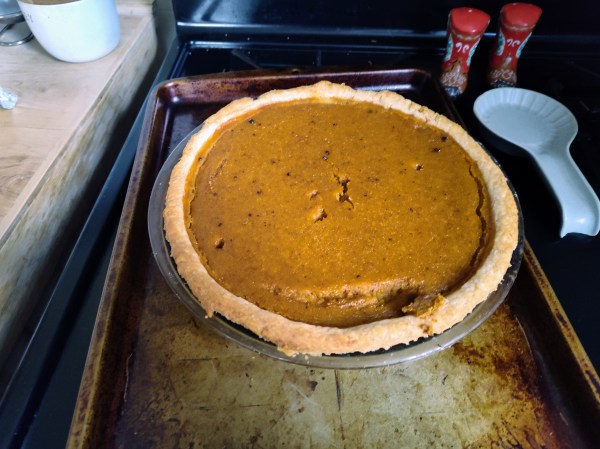
I love making pies. My grandma is an excellent pie maker, so I think I came by it naturally. I also always make a homemade crust. A few years ago, I found a great pumpkin pie recipe that uses almond milk in place of dairy since Magz can’t have dairy. If you weren’t told it was made with almond milk, you’d never know. I used that recipe again this year, and there was no noticeable difference between the homemade purée and canned pumpkin when it came to mixing and baking other than it needed to cook a bit longer due to additional moisture. The end product was great. Please ignore the divot. That was the result of foil touching it when I was trying to prevent the crust from burning. It was absolutely delicious.

pumpkin
Pumpkin pie

Exploring the Origins of Our Crops & The Role Immigration Played in It

I’m continuing my exploration of what is commonly grown in our state of Pennsylvania. Last week, I wrote about the state’s native plants and what we have growing on our property. This week, I’m looking at the commercial crops that are most prominent in the state and if they are native to North America or were brought here during European Expansion. I ultimately want to learn if the origins of Pennsylvania’s most commonly-grown crops align with where most of the state’s immigrants came from during the 17th, 18th, and 19th centuries.

Like Magz, I majored in history, and even though I don’t work in history, I still love it. I also approach a lot of things in life from a historian’s perspective and try to ask questions to dig deeper into topics. The gardening offseason seems like a great time to dive into these sorts of topics. Eventually, I want to look at all the vegetables we grew in the garden in 2025 and learn when they arrived in North America if they aren’t native to the continent.

What Does Pennsylvania Grow?

With this question, I’m not talking about what people grow in their personal gardens. I’m talking about the crops that are commercially grown and contribute to the state’s agricultural sector. Pennsylvania plays a prominent role in the agriculture of the United States, equating to just over $9 billion in 2024. That ranked 23rd in the country.

The majority of what’s grown in the state won’t surprise most people. There are a lot of cereal grains (wheat, oats, barley, and sorghum) as well as corn. These are largely grown on a commercial scale and are used to feed animals, as Pennsylvania is a large producer of dairy products. But there are also some surprising crops that you may not associate with the state and a lot of vegetables that are sold throughout the country and world.

Here are Pennsylvania’s most common crops, along with where they originated:

CropNative/Non-NativeOrigin Location
CornNative
WheatImportedFertile Crescent
OatImportedFertile Crescent
BarleyImportedFertile Crescent
SorghumImportedSudan
SoybeansImportedEast Asia
TobaccoNative
SunflowerNative
PotatoesImportedSouth America
Sweet PotatoesImportedSouth America
ApplesImportedCentral Asia
PumpkinsNative
PeachesImportedChina
MushroomsNative
RyeImportedFertile Crescent
BlueberriesNative
CherriesImportedFertile Crescent

Those crops aren’t in any particular order, but they do make up the bulk of what’s grown commercially in the state. It’s difficult to know exactly when immigration to the United States peaked, but most people think of the 19th and early 20th centuries as a key time period because that’s when large groups of Europeans arrived. They brought with them their cultures, foods, and seeds in an effort to keep a semblance of their home alive with them. It’s now why we grow so many different vegetables, both commercially and in home gardens.

Again, these aren’t in any order, but the countries are:

  • France
  • Netherlands
  • Sweden
  • Britain
  • Germany
  • Wales
  • Northern Ireland (aka Scots-Irish or Ulster Scots)
  • Ireland

If you compare the crops and where they originated with the countries that contributed the most immigrants, you won’t see any connections. On the surface, that is shocking and may lead to the question, “How did those plants/seeds get to the United States?” It requires taking the research to a deeper level, which taught me a few things.

Plants Arrived From Asia Via Europe

It was decades after European immigrants came to the United States that people from Asia, including the Middle East, immigrated in large quantities. And by that time period, the majority of what we grow commercially in Pennsylvania was already established. Instead, these plants were “obtained” by Europeans via colonization and trade and brought back to Europe where they were planted. In some cases, new varieties were established through adaptation that allowed these plants to thrive in different soil conditions and climates.

Ignorance of Where Our Food Comes From

It’s my belief that because of how history gets told in the West certain aspects are conveniently forgotten. In history, we were always taught that popular history is told by the winners/victors/privileged. You usually have to look to find firsthand accounts from the losers of a battle or war or from an underprivileged person. I think this holds true for the history of what we eat. In the United States, we were taught from a young age that Europeans brought their food, including plants and seeds, with them. But there was never a mention or discussion of whether those plants were native to Europe.

It took me until at least high school to realize that the Silk Road, British East India Trading Company, and Dutch East India Trading Company played key roles in transporting ingredients and plants across the globe. Sometimes, that happened through legitimate trade. Other times, it was less legitimate and more forceful. Either way, crops like cereal grains, cherries, soybeans, and peaches all came from the fertile crescent, Central Asia, and East Asia. Meanwhile, the Spanish brought potatoes and sweet potatoes back from Central and South America as a result of the inquisition. Learning this was a reminder to always go one level deeper when researching. I used to do that all the time when taking history classes, but it’s easy to get out of the habit if you aren’t being forced to.

Immigration Always Has & Always Will Play a Key Role in the American Identity

The United States is at a weird, and frankly, sad place in time. While immigrants have always been treated unfairly, including by other immigrant groups, we’re at a crossroads. Immigrants, including those legally in the country, are being rounded up and deported to places that aren’t their home. This is in spite of us being told that only those with criminal records would be subjected to arrest and deportation. Another lie. Forgotten is all the positive impact that immigrants have on communities and the economy, including how we grow our food. We’ve already seen the struggle to produce food at the same level as a result.

For some reason, there is a group of Americans who forgot how the country was started and the fact that immigrants and foreign-born people have always comprised a large part of our population. Unless a person is 100 percent Native American, everyone is in the United States because of immigration. Whether it was pre-Revolutionary War or the 20th century following the brutal genocides in Africa, Europe, and Asia, people have always been welcomed here with open arms. I’m concerned that we’re forgetting that.

American culture is weird. We want to say it’s a melting pot, but that’s not true. It’s better than a melting pot. A melting pot implies that people lose their personal identity and assimilate into each one common culture. What we’ve always had is an ability for people groups to maintain their uniqueness while pushing toward a common goal. Whether it was the millions of Europeans who came over during the 19th and early 20th centuries or the recent movement of those from the Middle East, Africa, and Southeast Asia, everyone has played a key role in shaping and honing what we know as American culture. The culture isn’t set in stone, but is instead one that is always changing and being refined. When we lose sight of that, we become isolationist, nationalistic, and the antithesis of what the nation was founded as.

Very little of what we consume or partake in as Americans is uniquely American. Sure, we’ve refined a lot of the seeds and plants to better serve our needs, but the majority didn’t originate here. And new foods and seeds coming to the country haven’t stopped. I listen to a podcast called Seeds and Their People, where the hosts talk to farmers and gardeners and discuss the origin stories of them as people and their seeds. Recently, they’ve had Palestinian refugees on their podcast who’ve been in the United States since the war in Gaza broke out in 2023. Regardless of where you fall on the Israel-Palestine debate, there are a lot of people whose lives have been completely altered by decisions that never considered their opinions. These farmers have been able to get seeds native to Palestine to plant in America. That may seem like a small thing, but those seeds represent their culture and help them feel at home. We should never lose sight of that.

This post really expanded from what I originally set out to write. I thought that I’d just look at where our state’s most common crops originated. It morphed into a deeper conversation of the importance of immigration to American culture and how we get our food.

Reflecting on a Year With Our Pet Rabbit

Late October marked one year of having our pet rabbit Mia. As her gotcha day anniversary arrived and passed, I did a lot of thinking about what it’s been like to have her for a year and considered putting those thoughts into a blog post. Simultaneously, and funny enough, Magz was having the same thoughts. We’re unable to co-write a post, so we’re both going to share our reflections without discussing them with each other beforehand. It’ll be fun to see what reflections are the same and which ones are different.

Introducing Mia

Magz has written about Mia in quite a few posts since we adopted her, but if you’re new to the blog, or it’s been awhile since we’ve talked about her, she is a Harlequin rabbit. She recently turned four years old but was three when we adopted her from Erie Area Rabbit Society (E.A.R.S.). They are the region’s only rabbit-exclusive animal shelter and are 100 percent no-kill, so if someone surrenders a rabbit or they find an abandoned one, they rescue it and take care of it (including its medical needs) until it gets adopted. While they are a non-profit, they receive no public funding and instead rely on the generosity of others to continue to operate.

Prior to visiting E.A.R.S. and meeting Mia for the first time, I had never petted a rabbit before. I’ve always found them cute, but just never had the chance to be close to one. Magz, meanwhile, had a pet rabbit growing up and knew how to interact with them. We went to E.A.R.S. on the second day of a short three-day trip to Erie last fall and got to meet Mia that day during some one-on-one time. She was one of two rabbits we got that time with, and she was a lot different from the other. She was more interested in exploring the space than being close with us but would come around for pets every few minutes. Initially, she wasn’t our top pick, but after coming home and discussing it for a while, we decided to adopt her.

Reflecting on Year 1

Mia has been the first pet we’ve had together, so it felt really monumental adopting her. And in our first year with her, she has become a member of our family. People always say that pets are members of their family, and in the best circumstances, it’s true. We make plans around her and are always looking for ways to improve things for her – toys, treats, and her diet. But I don’t want it to seem as though it’s been a perfect experience every day. When we first adopted her, we kept her in her x-pen the entire time until she got used to us and the house. It’s a 60″x60″ pen, so it’s plenty big enough and larger than she was used to before adoption, but within a few months, she showed that she wanted to spend more time with us. Unfortunately, we didn’t recognize that at first and thought she was just being grumpy, which rabbits are known for, so we didn’t make changes right away.

There was also a time when she was beginning to display early symptoms of going into GI Stasis, which is basically when a rabbit’s gut health and bacteria become imbalanced. It causes gas build-up and bloating, and if not addressed, is fatal. I noticed it because she wasn’t eating like normal, and rabbits eat all the time because their digestive system is constantly working. We were able to get some gas drops in her, and she lived, but it was very traumatic as a first-time bun owner. It led to me being hyper-focused on her eating habits and noticing when something just seems off about her. Still, we stuck with it and a wonderful relationship has developed and flourished.

Lessons Learned

  • Rabbits are both fragile and tough as nails. Rabbits are fragile in that they generally don’t like to be picked up and should only be picked up when necessary. Their legs and back to be supported, and not doing this can lead to spinal injuries. We still haven’t picked Mia up. At the same time, though, she runs into things periodically, gets underfoot, and seems to be fine with hay getting much closer to her eye than I ever would be.
  • You need to pay attention to them. Rabbits need to be monitored to make sure they’re healthy and doing okay. Because they’re prey animals, they don’t cry or show that they’re injured or sick. Instead, you need to watch them to notice any abnormalities in their behavior that would indicate sickness or injury.
  • Rabbits don’t make noise, but they aren’t quiet. I was shocked to learn how noisy rabbits can be even though they don’t bark or meow. Mia is constantly making noises by foraging through her hay, chomping on her lettuce, chewing her pellets, digging at everything, and chewing on cardboard. Even her hops make noise. If she wasn’t around, the lack of noise would be deafening.
  • Rabbits are very intelligent, especially emotionally. Mia knows when we’re feeling sad. She recognizes those emotions and will hop over to us and comfort us. She also loves doing puzzles, and there are rabbits on YouTube that navigate through mazes. They’re very smart, and Mia is smarter than most dogs I’ve been around.
  • Need stimulation. Rabbits want some type of attention and stimulation most of the time. It’s part of the reason we do puzzles and stacking cups with her. If it isn’t a puzzle or other type of mental stimulation, she wants to be right by us and getting attention from us.
  • Best qualities of cats and dogs. Dogs and cats are (by far) the most popular pets in America. Rabbits have the best qualities of both. They want to be around you and will show you affection, similar to dogs, but they also like their own space and don’t bark, like cats. Rabbits can be litter-trained (Mia is), but their litter doesn’t smell. It’s all very natural because they’re herbivores.

Simply Put, Rabbits Make Great Pets

Rabbits are great pets. They’re affectionate, but like their own space. They’re quiet, but still make noise as they move about. They’re unbelievably intelligent and want to learn. And I think humans can learn a lot from rabbits. Rabbits are gentle creatures. Sure, they can nip at you occasionally, but they aren’t aggressive. Instead, they are passive. They require you to be more gentle than you need to be with other pets. They also have sensitive ears, so you need to be aware of how loud you’re being. It leads to a more peaceful and gentle environment.

Reflecting on our year with Mia has helped me to realize that humans should be more like rabbits, especially in our relationship with the Lord. Mia depends on Magz and I for everything. She needs us to get her food each day and to change her hay pan. She was born at E.A.R.S., so if she ever got outside, she wouldn’t know how to survive in the wild. We should want that relationship with God. He wants us to depend on Him for everything, yet we quickly become self-reliant and believe that we’re providing everything we have. We also should be meek. In Matthew 5:5, Jesus spoke the following: “Blessed are the meek, for they will inherit the earth.” Being meek simply means being humble and gentle. I also think it means being quiet, listening more, and being slow to speak. Mia may not exhibit humility, but she’s got the listening and quietness down. I want to be more like her and less like an aggressive and loud dog.

If you would like a pet but aren’t sold on what animal you’d like, I recommend that you go to a rabbit society like E.A.R.S. and spend some time around bunnies. Experience their unique personalities and how much love they have to give. Rabbits are excellent pets, but they shouldn’t be treated like a second-rate pet compared to cats and dogs. They’re wonderful creatures who deserve love and respect. Having Mia has forever changed my life, and I think a lot of lives would be improved if they gave rabbits a try. And remember, if you are interested, adopt from a reputable shelter. Don’t buy from a pet store or Agway.

Exploring Pennsylvania’s Native Plants

In last week’s post, I wrote about changes that we’re making to our garden for 2026, which are largely the result of the chameleon plant spreading in one of our garden beds. The chameleon plant is an invasive species that is native to Southeast Asia, and once it gets established in an area, it’s very difficult to kill. Learning about this plant led me to become more curious about other invasive species and, more importantly, Pennsylvania’s native plants.

Native plants are important to an area’s ecosystem because they keep the natural environment in a delicate balance. Native plants are adapted to the local soil and growing conditions. In the case of Pennsylvania, they’re also frost-resistant and can handle periods of drought and excess moisture. Native plants also provide food for birds and pollinators. They require little maintenance once they are established and are vital to the region’s biodiversity.

Pennsylvania, Native Plant Species
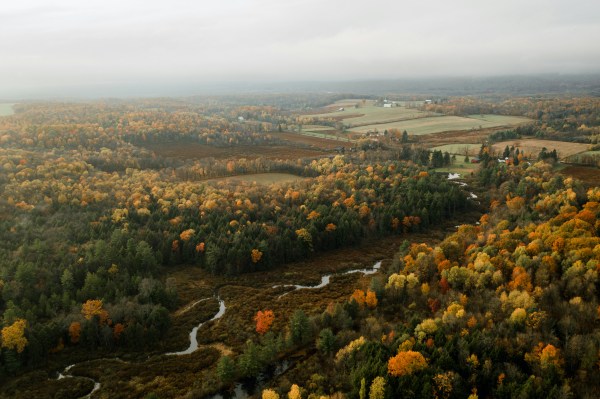
Photo by Donnie Rosie on Unsplash

Pennsylvania’s Department of Conservation and Natural Resources (DCNR) website says that there are roughly 2,100 native plants species in the Commonwealth. By the year 2000, five percent of the state’s native plant species had been eliminated and another 25 percent were at risk of going extinct. Meanwhile, at the turn of the century, there were 1,300 non-native plant species, which represented 37 percent of the state’s total plant species. And the sad part is that this number has only grown since 2000 as more invasive species are added to people’s gardens.

I have been interested in native plant species without realizing it for a long time. I spent a lot of time outside and in the woods growing up, and I also did a lot of hiking and mountain biking from middle school through college. Spending that much time in nature allows you to recognize plants that you regularly see even if you aren’t looking for them. Plants like Mountain Laurel and Elderberry bushes stand out. Trees also begin to be recognizable as bark and leaf characteristics start to become familiar.

In middle school, two things happened that began to increase my interest in nature and native plants. The first was a middle school science project that required finding Pennsylvania tree species and documenting their leaves. The second was borrowing a book on edible plant species. This came after going on a week-long backpacking trip and seeing Wild Carrot and berry bushes along the trail. It sparked my interest and I began foraging for wild edibles around my dad’s house.

I’ve written about this in previous posts, but I’m passionate about stopping the destruction of nature and the environment. We’ve made a lot of decisions over the past few centuries that have destroyed thousands of acres of forests and native grassland in the name of progress. We’ve stripped the soil of its nutrients, cut down millions of trees, and polluted our waterways. Some have been working hard to reverse this trend, but there will always be “leaders” who are willing to sacrifice the environment for financial growth.

Long-Term Project

This is the start of a long-term research project where I learn about our state’s native plants and how we can have more of them on our property. Our goal is to have our yard become a Certified Wildlife Habitat, which requires having native plants that create safe and beneficial environments for local wildlife. By learning about Pennsylvania’s native plants, we can identify any that are already on our property and learn about others that would thrive so that we can introduce them in the future. I was hoping that my research would lead to me learning about native vegetables that the Native Americans grew, but I only found the well-known Three Sisters of squash, corn, and beans.

Many of the other vegetables we grow were introduced after Europeans arrived. Because of that, a follow-up article will be coming that researches what people groups introduced specific vegetables and if the vegetables that are typically grown in Pennsylvania originally came from the most common immigrant groups who came to the state. For now, though, here are the commonwealth’s native plants.

Pennsylvania’s Native Plants

TreesShrubsFernsPerennials/Vines
Alternate-Leaved PagodaAmerican HazlenutBloodrootAlumroot
Black BirchArrowwoodChristmas FernBeardtongue
Black GumBeaked HazlenutCinnamon FernBee Balm
Chestnut OakBig BluestemFalse Solomon’s SealBlack Cohosh
Eastern HemlockBlack ChokeberryLady FernBlack-Eyed Susan
Eastern Red CedarBlack WillowMay AppleBlue Cohosh
Eastern White PineBlackhawkOstrich FernBoneset
Green AshButtonbushPartridge BerryButterfly Weed
HackberryChokeberryRiverbank Wild RyeCardinal Flower
Hop HornbeamHighbush BlueberryRoyal FernDutchman’s Breeches
HornbeamIndian GrassStonecropFoam Flower
Mockernut HickoryLittle BluestemVirginia Wild RyeGarden Phlox
Pin OakLowbush BlueberryWhite GoldenrodGolden Ragwort
Quaking AspenMaple-Leaved ViburnumZigzag GoldenrodGoldenrod
Red BudMountain LaurelGreat Blue Labelia
Red MapleNew Jersey TeaGreat Solomon’s Seal
Red OakNinebarkJacob’s Ladder
River BirchPinxter FlowerJoe Pye Weed
SassafrasPurple LovegrassMarsh Marigold
Service BerryRed ElderberryMilkweed
Sugar MapleRed Osier DogwoodMonkey Flower
SycamoreRose BayNew England Aster
Tulip PoplarSilky DogwoodNew York Ironweed
White AshSilky WillowOxeye Sunflower
White OakSmooth AlderSneezeweed
Wild PlumSpice BushSundrops
SweetfernTall Meadow Rue
Switch GrassTrumpet Creeper Vine
Wild HydrangeaTurtlehead
WinterberryVirginia Bluebells
Witch HazelVirginia Creeper Vine
White Snakeroot
White Wood Aster
Wild Blue Phlox
Wild Columbine
Wild Geranium
Wild Ginger
Wild Sweet William

When I walk around our property and look at the plants and trees, we have few, if any, native plants. It’s clear that the previous owner(s) were not focused on native plants and healthy biodiversity. In addition to the chameleon plants, we have Snowberry bushes, some type of dwarf Holly Bush, and an ornamental tree. While the Snowberry is native to the United States, it is not native to Pennsylvania. Holly is another plant that can be native to the U.S., but because there are a bunch of varieties, including dwarf ones that have been bred to restrict size, most aren’t native. That’s the case with the one in front of our house. Finally, we have one tree on our property at this time. It’s a short, ornamental tree that is certainly not native.

When we bought our house, there were woody shrubs on one side of the house as well as one crab apple tree and an out-of-control lilac bush in the strip of land between the sidewalk and road. They were planted by the borough years ago, but they were partially dead and hadn’t been pruned or maintained in years. We took those down earlier this year.

We have no other trees or plants on the property other than the ones we planted in the spring and what we had in the garden. Our neighbors have done an excellent job of planting beautiful trees and flowers, with the majority of the trees and perennial plants being native. When I look out our windows, I see a couple of poplar trees, several hazelnut trees, and multiple berry bushes. Elsewhere around us, we can see a lot of evergreen trees and many oak and maple trees. Pennsylvania has a lot of trees, and it’s easy to see a variety of native species by keeping your eyes open as you walk or drive around.

Are any of Pennsylvania’s native plants native to where you’re from? What are your thoughts on native vs. invasive species?

Planning Changes in Our Garden

Writing about the garden in fall with winter on the way has been more difficult than I anticipated. I’ve been busy with painting my office, work, planning some woodworking projects, and trying to relax some. My plan is to write posts during the gardening “offseason” that require research, like the one last week about the accuracy of first and last frost dates. But this week, time got away from me a bit, and I didn’t start on anything. Instead, I decided that I’ll go over some of the changes that we’re planning for next year’s garden.

Converting the Space by Our Porch Into a Container Garden

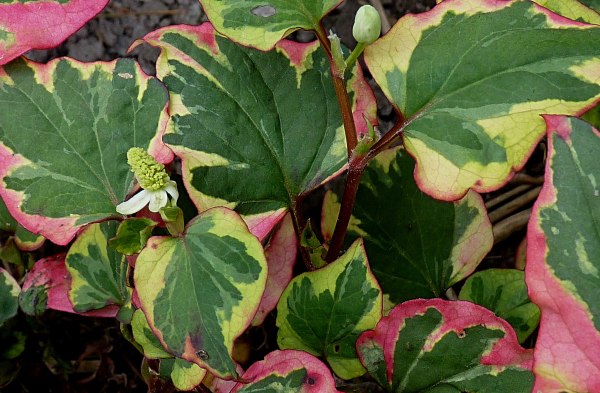
There is an area off our back porch that has dirt in it and is bordered by rocks and landscape timbers. I don’t think that the previous owner or the tenant who lived in the house ever attempted to grow vegetables or flowers in the bed because the soil is poor quality and shallow. Also, at some point, someone planted a chameleon plant there, and it has taken over the entire area. If you’re unfamiliar with the chameleon plant, it’s an invasive species that grows native in Southeast Asia. People used to plant it a lot because it can grow in virtually any condition and has pretty flowers. However, it also takes over everything because its rhizomes spread underground, making it difficult to kill.

Chameleon Plant
Chameleon Plant (Jamain, CC BY-SA 3.0 , via Wikimedia Commons)

Magz and I have disliked this plant since we bought our house and learned what the plant is. Last summer, I thought I could kill it with a string trimmer, but that only temporarily slowed its spread and released a smell that can only be described as disgusting. This year, we took a different tactic by using chemicals. Round Up and other common herbicides didn’t work. We learned that a combination of Dawn dishwashing liquid, salt, and concentrated white vinegar may work, but it didn’t. We eventually bought glyphosate, which was impactful. It actually kills the leaves and the root system, and we got it under control enough that we thought we could plant vegetables in it. Late in summer, we tried to plant some squash and pumpkins in there, but that didn’t prove to be successful, as the chameleon plant came back since we couldn’t continue to spray it with glyphosate. That leads us to where we’re currently at.

Originally, I thought that the best plan was to build up the retaining wall and rock border, kill the chameleon plant, lay down some landscaping plastic, and bring in fresh soil to plant in. Magz had a much better idea given how much soil that would take and still not knowing if the chameleon plant would eventually reappear. Her idea is to kill the chameleon plant and lay down landscaping plastic, but then, instead of bringing in soil, we buy gravel/small stone to pour on top of the plastic. With the plastic fully covered, we will then buy containers to grow potatoes in.

This will allow us to still use that space without needing to worry about the soil quality or if we’ll ever be able to grow in it. We also will get to grow potatoes again, which we struggled with this year and had none to harvest. We’ll also be able to use a space that was previously unusable and make it beautiful, similar to English gardens. The area gets plenty of sunlight, so nearly every type of vegetable can grow there. We also have some outdoor furniture that we’d like to have in this area where we could sit and read a book or simply relax.

Adding Another Garden Bed & Potentially Adjusting Our Existing Beds

We still have plans to expand our garden for next year. This year’s garden consisted of two large gardening areas with five beds. Next year, we want to expand the one area to add a fifth bed to it. Our yard is still a bit larger than we’d like it to be, and there are plenty of additional vegetables that we want to try growing as well as some that we want to grow more of. We also want to have our property be a certified wildlife habitat, which requires having a lot of natural plants that benefit pollinators, birds, and mammals. Additionally, we want to grow flax as part of the PA Flax Project with the goal of regrowing the textile industry in our state. With flax, we can harvest the fibers that get spun into linen, which is one of the best wearable fabrics.

Our original plans for this year’s garden consisted of having this extra garden bed, but we ran out of time. It’ll be a lot easier to create this new bed with the other ones already established. We’re going to get started on creating this bed as soon as this week once a shipment of glyphosate arrives. We attempted to buy it locally, but our town’s Tractor Supply was all out for some reason (even though they had plenty of Christmas decorations to buy). Once it arrives, we’ll spray the area for the new bed as well as the existing beds in order to finally kill all the grass that we battled this year. We want to finally have the grass knocked down so that we only see soil.

The other thing we discussed is converting one of our existing beds into a raised bed. The drainage in that bed is poor, and when we get a lot of rain, it gets swampy. With a raised bed, we can eliminate that problem. However, it does require railroad ties to establish the bed’s boundaries, so we’ll see if we want to spend that money next year or let it go another year.

So, those are our plans for changing how we grow things moving forward. We want to more effectively and efficiently grow vegetables, and we feel this will help accomplish that goal. Do you make a lot of changes to your garden on a yearly basis? Have you had any experience with the chameleon plant, or is there another intrusive plant that gives you fits?

Create a website or blog at WordPress.com

Up ↑