Night Sky Sweater

I’ve mentioned this before, but as a maker, I revisit a single project many times before it is done. Sometimes I will live with a finished object for a month, a few months, or even a year, and suddenly pick it back up again to adjust something that feels off. Honestly, taking a season or two away from that garment – such as, putting away a dress for the winter, or a sweater while you sweat it out for the summer, can give your mind the space to forget and re-acquaint yourself to the garment like you picked it up from the store. It is a whole new piece again, which can lead to me be less than thrilled with past me and her design choices.

Take this vest for example, I began this project in December 2024, wrapping it in February 2025. I wore it a few times, as it stands as a vest that winter and spring, then it was put away for the warm weather. When cool air returned in the fall, I pulled it out of its drawer and set it on my dress form. This vest did not feel complete, it had more to say, even though my hands were weary back in the winter, so I stopped and called this piece done. But its not done, it would be a gorgeous colorful sweater, and it was time to go back to this garment to make it whole.

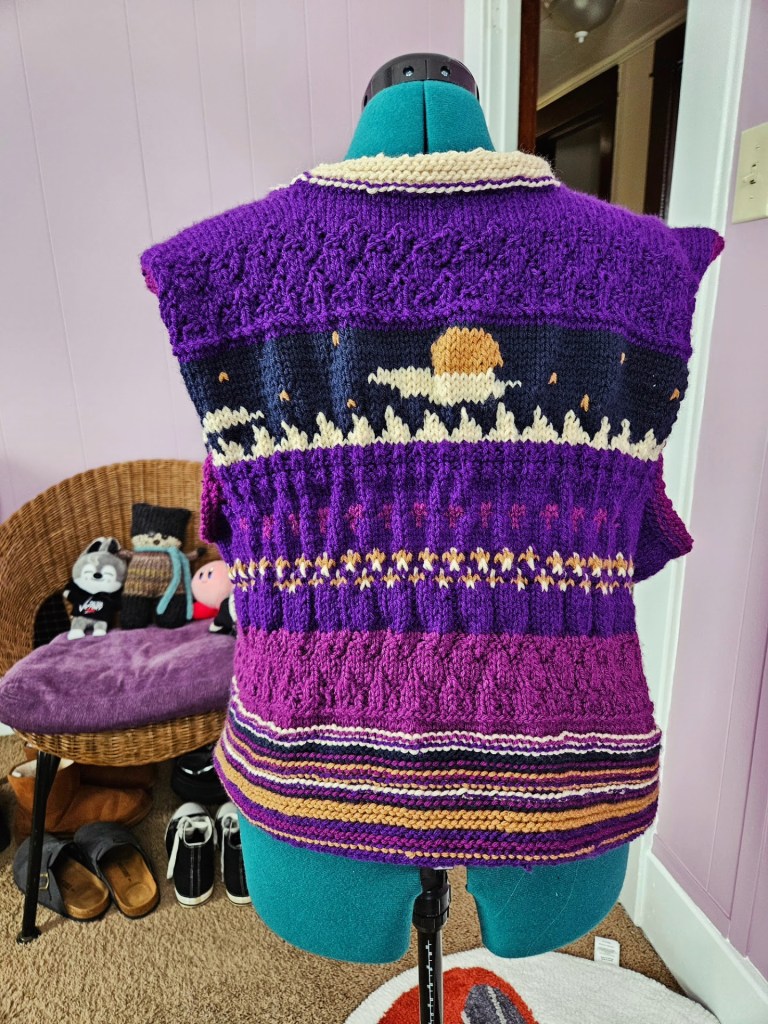
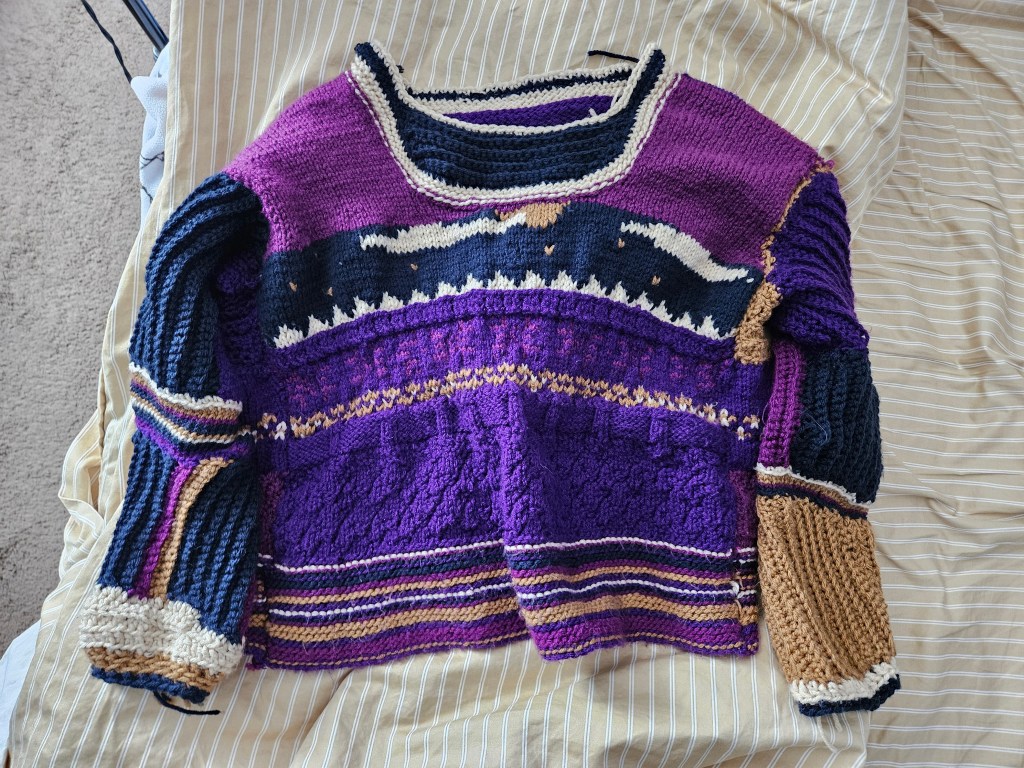
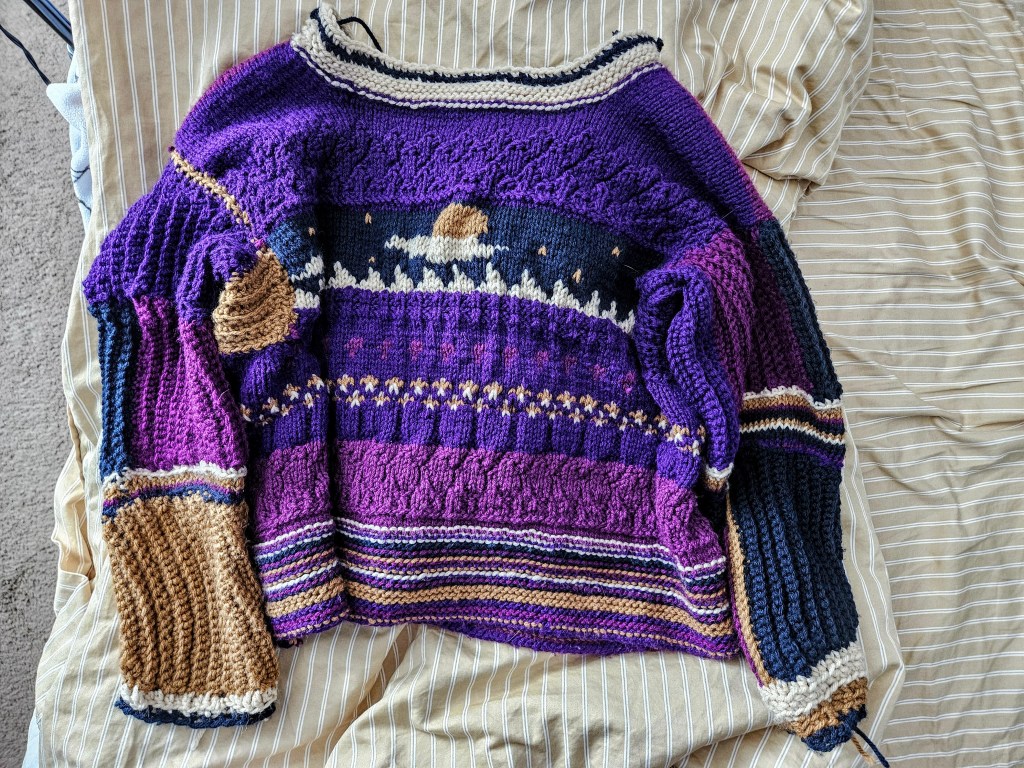
Now, this was a self drafted piece. A complicated self drafted piece that helped me cut my color work chops in a garment. This was the first sweater I made with such a large color palette and the first time I decided to make a knitted piece with the motivation of telling a story. I wanted to evoke a winter sky, with a moon that was visible on the front and back. A moon with stars, and clouds, floating above a forest. This sweater would not only feature colorful forms across the fabric, it would have texture. I chose to use the ‘seersucker stitch’ as it was labeled from a Pinterest chart, to weave a diamond texture into the fabric for a 3-D plush effect. I chose large and miniature color work sections to create ebb and flow in the color story.

For the bind off, I had grown tired of the classic 1×1 rib, so I tried something a little different! I chose to create tight stripes, knit stitched together. Instead of stockinette which used knit (right side) and purl (wrong side) for it’s classic construction, I decided knit stitch, knitting the right side and wrong side, would stabilize the stitches for a lack of curling in the finished fabric. And it worked! The technique and color changes ground the color palette for a cohesive garment.

Keeping these previous choices in mind, when it came time to add sleeves and a new collar, I chose to employee a new to me technique, crochet. I wanted the sleeves to be made in the round, and be completed quickly so I could wear this piece for most of the winter. Crochet is much easier to do in the round, and to make progress quickly. The crochet stitches allowed me to work in new directions too, so the sweater had vertical texture to contrast with the horizontal lines of the original vest. With sleeves complete, this is one of my favorite pieces to date. It tells a story. The color palette reminds me of Stardew Valley. The cloud on the back reminds me of an episode of Avatar: The Last Airbender when Appa is missing, and Aang thinks a cloud flying above is Appa floating above. I love the variety of colors – gold, navy, magenta, violet, and cream.

This was a labor of love, but I would highly recommend trying a complex project such as this if you are interested in making your own garments. Not only does this piece express my identity, it taught me how to be a better fiber artist. I feel proud each time I wear it. Get inspired and start stitching something from your own imagination!
What’s Wrong With This Tomato Plant?

Our garden is doing very well this year. Our squash plants are thriving and putting on finger-length fruit, our tomatoes have a lot of blossoms, and our corn is up to my waist. In general, we are ecstatic with how much success we’re having. But this is a garden, so let’s be realistic: we’re not achieving perfection. And one example of where something is failing is this single tomato plant.

tomato plant, gardening
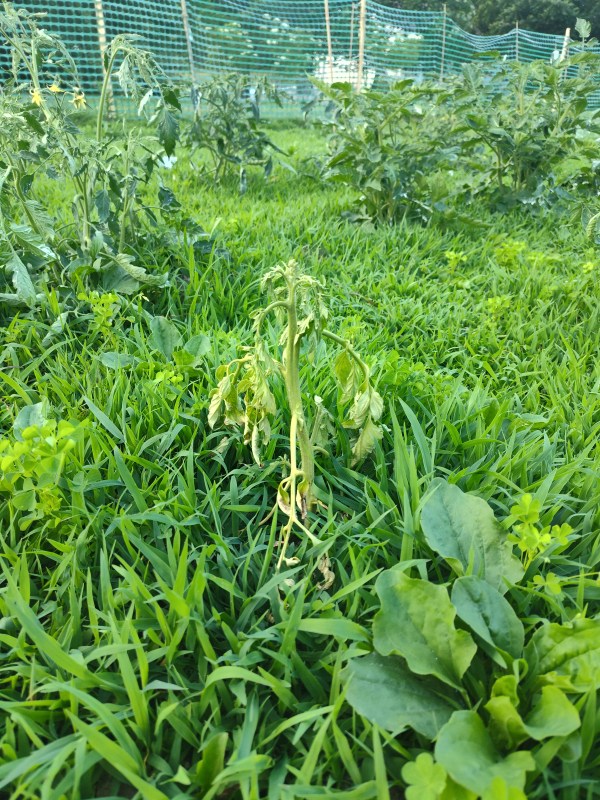
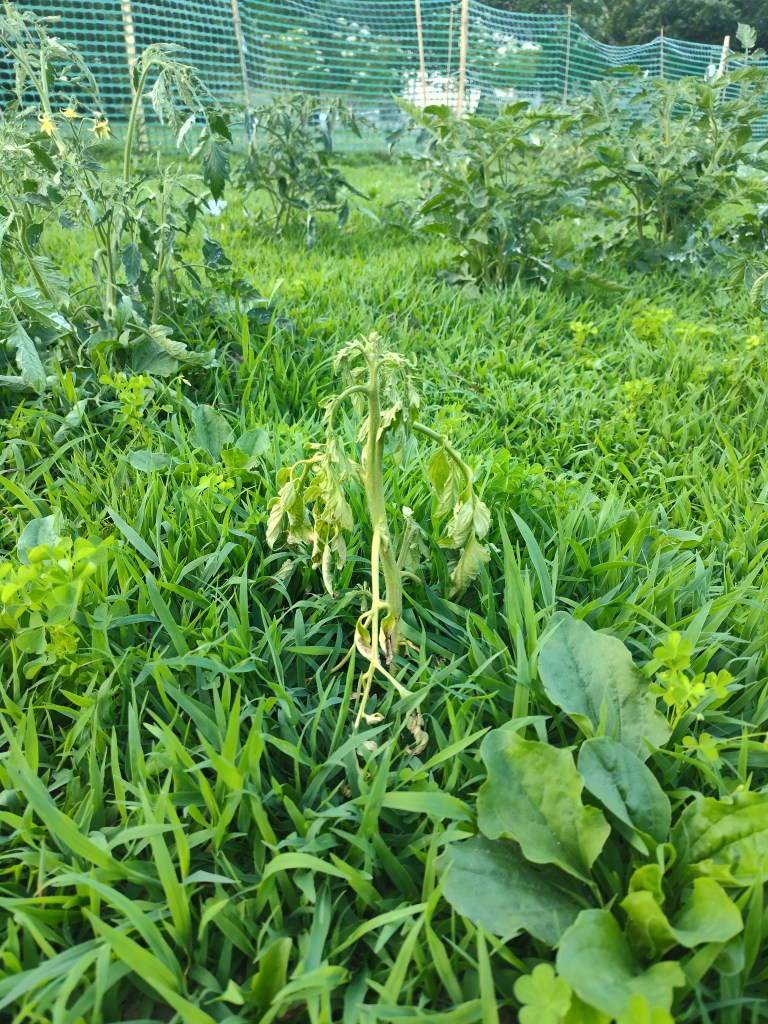
A dying tomato plant.

I took this picture last evening, and it’s pretty clear that the plant is going to die, but the thing I can’t figure out is why. I know that there is a lot of grass and other weeds growing around it. We’re in the process of remedying that with cardboard, but the grass is present around our other plants, and they’re thriving. It’s not the soil, moisture levels, nutrients, or amount of sun. This bed is full of tomato plants, and this is the only one that looks like this. For comparison’s sake, here’s the tomato plant that’s right beside it.

tomato plant, gardening
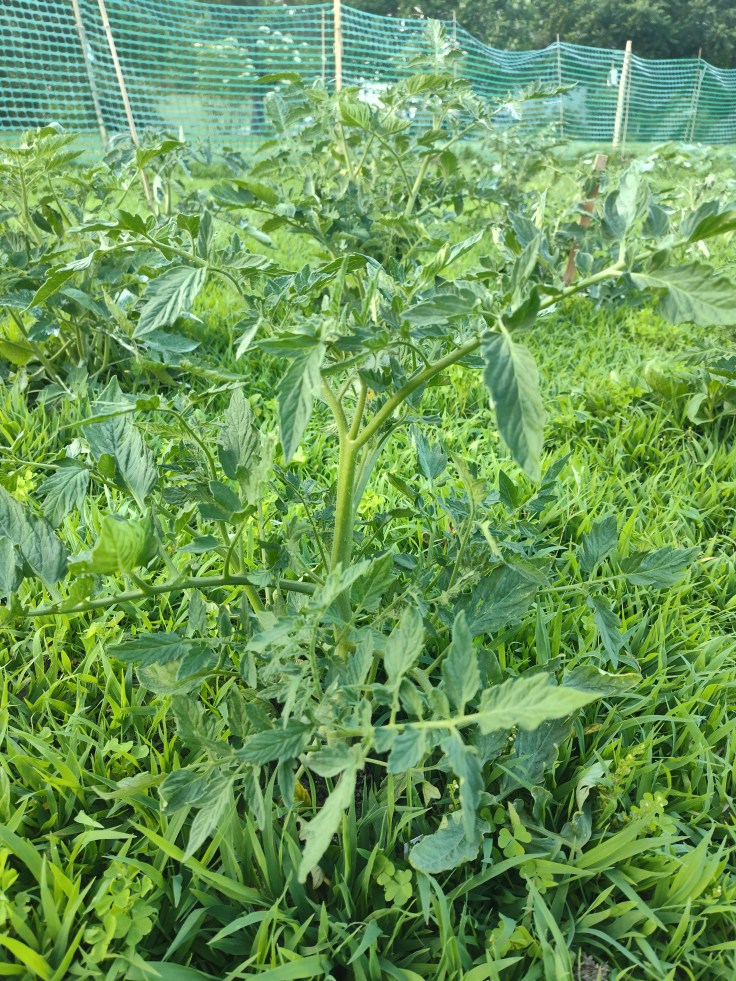
An example of a thriving tomato plant.

This tomato plant is the same variety and only planted about 18 inches from the dying one. It has healthy leaves, it’s standing upright without support, and it has blossoms on it. By all counts, it’s doing very well and will produce fruit. The majority of our tomato plants look just like this one. Side note: we’re going through a week-long heat wave, so the plants show signs of stress from the heat before the sun goes down. Besides that, though, they’re incredibly healthy with a lot of flowers. So, if everything is the same between the dying plant and this one that is thriving, what is the cause? I honestly don’t know, but if you have any theories, I would love to hear them, because I’m perplexed.

Actually, although I wish I knew the answer to what’s causing the plant to die, there is something so refreshing about gardening, with how you don’t always have solutions. Gardening is quite analog when almost everything in our world is digital. And even though there is a lot of science behind a successful garden, you also need to rely on your senses. Is a tomato plant’s leaves curled? Do they feel brittle? How firm is the zucchini? Does the soil feel moist when you place a finger in it? These are all things that research can’t give you straightforward answers to. Sure, books, blogs, and videos can describe how something should feel, look, or smell, but you have to experience it for yourself.

We were watching something on YouTube last night about the lack of silence in the world today, which is something I’ve expressed frustration over in recent years. The video included a clip of Fred Rogers from Mr. Rogers’ Neighborhood. In it, he said:

Our society is much more interested in information than wonder, in noise rather than silence…And I feel that we need a lot more wonder and a lot more silence in our lives.

With the explosion of data, social media, and the internet’s intrusion into our lives, the quote could easily be from 2026. But if you’re familiar with Fred Rogers, you’ll know that he passed away in 2003. That quote was actually from 1994 or 1997. Charlie Rose interviewed him twice, and I’m having some difficulty determining which interview this quote is from, but I believe it’s 1994. Either way, though, it was at least a couple of years before the Internet became a household norm and at least a decade before the first iPhone. He was concerned about the wave of information long before it reached its current level.

Gardening is great because you can escape the oppressive nature of technology and information. When you look up the cause of tomato leaf curl, you’ll get a lot of different answers. It could be too much water. It could be too little water. It could be too much sun. It could be not enough sun. A lack of nutrients could be the problem. It could be root rot. And then there are the endless number of pests it could be. Because gardening is an extension of nature, it feels like it’s beyond the realm of technology, and I think that’s what draws many of us to it. My job requires me to be on a computer on a daily basis, which I’ve accepted because it’s allowed us to buy a house and have a garden. But beyond that, I generally hate technology even though I’m guilty of doom scrolling on Reddit or picking up my phone because I’m bored. But nature and gardening allow us to escape that, if we choose to. It’s like John Muir said: “Into the woods I go, to lose my mind and find my soul.” I’ve seen woods replaced with forest, but I also think garden or nature work here. As a society, it seems that we’ve grown afraid of not knowing the answer to something, but that mindset causes us to lose all wonder and creativity. It leads to an absence of being motivated to discover the answer on our own.

To circle back to our dying tomato plant, I have no idea what caused it to die, but I’m sad about it. I’m also comfortable with not knowing the answer at this time. Plants are living creatures, just like humans and animals. Unfortunately, they get sick like we do, and sometimes we just don’t know the reason. But I’ll continue to hone my gardening skills so that this happens less over time, and if you have any ideas as to why it died, I’d love to hear them. I’m not interested in researching the answer and becoming overwhelmed by information, but I’m always up for a good conversation. And in the meantime, happy gardening!

Create a website or blog at WordPress.com

Up ↑