Locations in Udal Cuain

Udal Cuain was a story of many locations, each with a key purpose and strategic place on the map. When I began writing this novel I found the easiest way for me to develop the setting was to make a map of the places and ideas I had in mind. But where to start? As this was based on some historical structures and locations in Ireland, referencing the Irish map was a great place to begin!

Sketching the Map

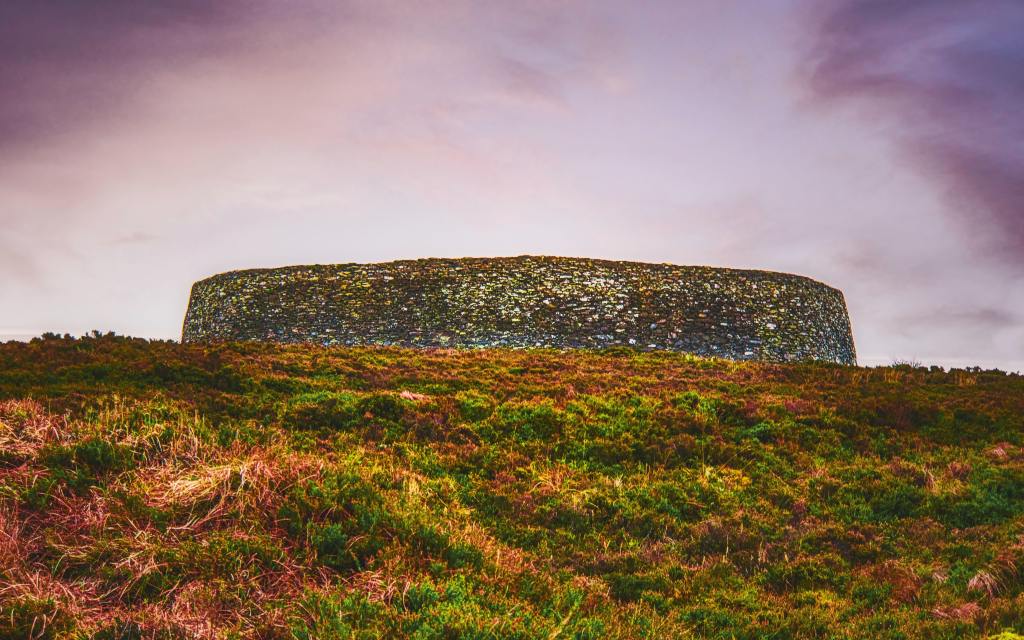
The setting of Udal Cuain was set in western Ireland within the ancient kingdom of Connachtha during the Early Medieval period. Connachtha was one of the historic provinces within ancient Ireland – Ulster to the North, Connachtha to the West, Munster to the South, and Leinster to the East. So looking at four kingdoms, with Meath at the center, the spiritual center of the Druid Celtic faith, the story had a world to research and emulate from the evidence that survives of these kingdoms.

With a title like Udal Cuain, which means “tossed around by the sea” in Gaelic, I settled on Connachtha because it is on the rugged coast of the Wild Atlantic Way. It is also one of the kingdoms on the western side that my family is not connected with. I have family connections to the Munster region and Ulster region, and I wanted something unfamiliar and neutral for these fictional characters. It left the door open to interact with Ulster and Munster if I changed my mind.

County Galway’s geographical features stood out for its port and bay with small islands, perfect for a fictional island to exile my characters on. The Burren of rocky terrain to the south along with the Shannon River provided some interesting options for a secondary chieftain’s home base and the key feature – the Aran Islands at the mouth of the bay. With these three I planned my three smaller fictional kingdoms of warring chieftains:

Galway of the O’Connors

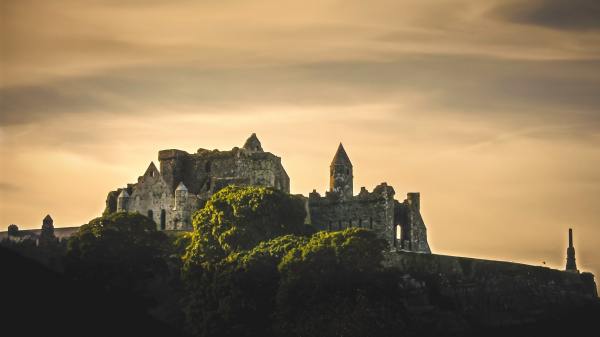
The O’Connors’ kingdom, which I placed at the location of Galway’s current city, was supposed to be a well-established chieftain dynasty, that had many enemies and allies. I wanted the kingdom to be both strong; and yet on the tipping point of losing it all because of the internal strife. I wanted their kingdom’s fortress and main structure to be stationed at the Galway city current location, with the idea that the O’Connors’ land would cover the coast around the bay to the Connemara Bog and down to the Burren at the south so that they had room to farm, hunt, and keep livestock. They would also have access to building materials, road networks to interior Ireland, and the mountains. There would be a connection to Ireland’s spirit within the people and leaders. They would also be connected to the land and there for the Tuatha De Danann, the mythology of Ancient Ireland.

I chose this location because it had a long history in Ireland, but had room to explore imagined locations. Galway doesn’t have historic anchor points for this period, like Newgrange or Glendalough. It allowed me to invent without clashing with the established places or treading on the stories of real people. It also has great geography. The bay provides natural resources like fishing, trade, boat building, etc. It would make sense to have a marketplace there and an imagined fortress. To the interior, there are forests, meadows, mountains, lakes, waterfalls, and rock for quarries.

Aran Islands of Murtagh

The Aran Islands to the far west of Galway Bay, an outpost of the Irish language during the centuries of oppression by the British, and a population decimated by the famine, I wanted to make these islands a key player in my story. They have many stories to tell, but in Udal Cuain, I wanted to bring them back to life as a powerful seat of trade. A necessity to the kingdom of Galway and the enemy to the North, the impending Vikings. I chose to make the Aran Islands kingdom a rival to the O’Connors, with an imagined trading kingdom built around the ancient fort of Dun Aonghasa. I also saw this as a choke point for the Galway kingdom of the O’Connors, they must keep tensions cool with Chieftain Murtagh in order to keep their own economy going and allow free use of the Ocean beyond. Yet as in relationships, this is easier said than done.

Limerick

Limerick on the Shannon River served as a connection to the Viking Age. This city was a settlement historically conquered by Vikings, in Udal Cuain it is a place of cross-cultural influences. There was a historic kingdom in the story, the Ui Neills, that one character is closely connected to. Yet with the changes that took place within Ireland during the Early Medieval period, the Ui Neills, are faced with Viking invasions. I chose to use this location as a place to see the impact, good and bad, of Viking settlements in Ireland. This played a key role in Ireland’s structure historically, with Dublin the capital city being established by Ivar the Boneless. In my fictional setting of Udal Cuain, I wanted this Limerick settlement to explore the Norse and Celtic cultures, while pondering the pain, the greed, the bloodshed.

Searbh

The Island of Searbh is completely made up, yet inspired by the small islands in Galway Bay. Searbh, being a fictional island in Galway Bay was a blank canvas to create my own hub of the story without needing to adhere to established geography or history. Searbh served as an exile and prison for the characters sent for their crimes against the O’Connors, used mainly by Chieftainness Tearlag to reinforce her agenda. The name Searbh in Gaelic means bitterness, that was what I wanted this island to encapsulate, a bitterness of landscape and mindset. The exiles have bitterness in their daily life as prisoners, but it also bleeds into their relationships and attitude toward survival on the island. I wanted to create a place that could be seen as hopeless, or potentially a powder keg of motivation.

These locations form a triangle around the Island of Searbh, furthering the message that the characters sent here are cornered by the adversaries, yet an unlikely alliance might be within reach if they can get off the island. From Searbh, you can see Galway, yet you cannot reach your home. It is psychological warfare. The Aran Islands are beyond sight, but the hope of finding an ally in Chieftain Murtagh lives on in the minds of exiles of their potential support and refuge against Tearlag. Searbh’s location and removal from the actual kingdom with its society and drama, makes Searbh a place of escape from reality. Here the exiles can both dwell and escape the reasons that brought them here.

There aren’t many resources on Searbh and so they are dependent on their captors to stay together, they also learn to adapt to a new life. The exiles learn new skills and have to get creative. Strangely enough, there are many relics on this island, like it has a life beyond what the exiles understand. I wanted there to be a mysterious undertone to the place and toe the line between reality and delusion and the psychological warfare gets in their minds.

If you were going to design a map for an upcoming novel how would you design it? Would you reference a real landscape or would you design purely from the depths of your imagination?
Conn’s Journal – Bringing a Dead Character to Life

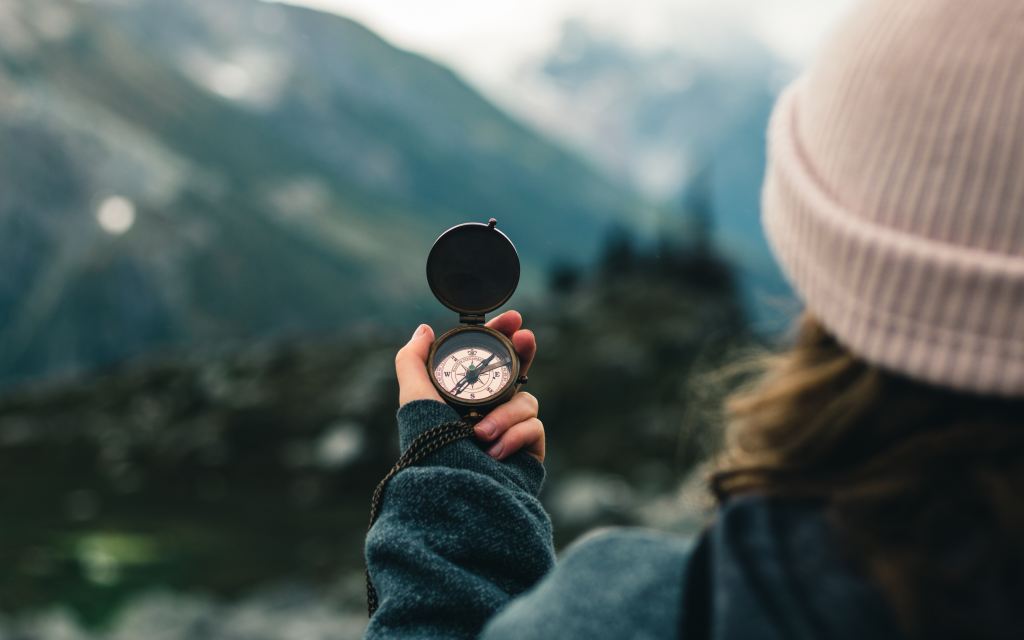
Something I knew I wanted to capture in my novel Udal Cuain, was the deep world of lore that literary classics such as Lord of The Rings, the Hobbit, and Harry Potter present by creating books within books. Such as There and Back Again by Bilbo Baggins, Quidditch Through the Ages by Kennilworthy Whisp, or Fantastic Beasts and Where to Find Them by Newt Scamander. But it had to fit the world I had created in Udal Cuain with the type of literacy and availability of books, according to the time period.

I settled on a private journal that would make sense in the world of a Cheiftain living in Viking Age Ireland, that although Ancient Irish had a spoken language mostly, a brief written language of Ogham based on trees, they did have the influence of monasteries and with it written language and booking making availability. Especially if that Chieftain had studied with monks and was interested in cultures other than his own, a wanderlust and curious man, a recorder of history, both good and bad that could lead to secrets being recorded, that others did not want. A cause for his death? Perhaps! This was my jumping-off point for creating an active character in a story, where this character had already died.

In Media Res

Because I was a novel writing novice I wanted to be as slick and tricky as possible, at times writing myself into a corner by joining the story in media res, jumping into a story in the middle of the narrative without context. This left me with a problem, how do I tell the stories I need to tell without lengthy flashback scenes that may confuse the reader and muddy the plot?

Insert a lost journal. Found by a key character, with similarities to Conn. This character, who is one of the main characters, is named Kinvara. Kinvara is a misfit turned hero, through her pure spirit, she is chosen by the faeries to be their advocate and right the wrongs of her fellow clan. It is she who finds the journal after Conn’s death when she is in exile on Searbh for treason against the reigning Tearlag, widow of Conn. Kinvara desires to understand why her family and their allies were driven from home to this island, and why her parents would align themselves with Riordan and Saoirse, the ones accused of treason by Tearlag when they seem to be such bad people.

Kinvara like Conn, observes people, and so by choosing her as the character to find the journal, it is like we get to experience Conn in these situations and resolved a problem I did not anticipate – How do I make Conn a relatable character when he’s dead? How do I make the reader see his side? By making Kinvara a foil of Conn, her experience with the secrets she discovers inside Conn’s Journal allows the reader to understand who he was. How Kinvara reacts to the information both shows her value system and Conn’s and allows Kinvara to be a fly on the wall of events that apply to her but gives her the knowledge of such information that would not be available to her character otherwise.

It eliminated for me, the need to create an omniscient narrator. Something I wasn’t interested in.

Sowing Seeds of Story

Now came the task of integrating the two. How should this book, Conn’s Journal be presented in the story of Udal Cuain?

I pondered if it should be in reference only, or maybe a separate book? But that felt like I was putting a burden on the reader to seek this out when I didn’t know if anyone would care enough to do so. I don’t have a writing pedigree to fall back on, I’m an unknown writer that may not be engaging or worthy of devoting so much time to, so I thought about how to make the journal part of the chapters.

Integrating the pieces of Conn’s Journal into the chapters seemed like the most efficient option for the reader, if it exists in the story without requiring the reader to look up an additional source, I believed the reader would be more engaged, and more likely to read Conn’s Journal. This was a great strategy, I believe because this opened a new framework to chapters. If I wanted to reveal something from the past, instead of having the characters talk about it, I could paint a whole scene with action and foreshadowing, so that it was like the reader was reading Conn’s Journal like Kinvara and experiencing the story from her perspective, but also Conn’s perspective.

This plan provided a great opportunity to reveal more about the secretive O’Connors and fact-check what son Riordan, daughter-in-law Saoirse, and wife Tearlag were presenting to the characters in the story and telling the reader. It allowed me the chance to experiment with unreliable narrators, which was a lot of fun, and use the tool of dramatic irony.

Because of the seasonal framework, I discussed before in Ancient Irish Calendar, I had a concise way to show the reader when Conn’s Journal took place. His entries could be dated and set in a specific season or month that could be referenced before or later on, like a hyperlink. But, this could be more layered, Conn may have written about an event in his early life that was set in the calendar framework, and I could demonstrate when Conn did this writing later in life with an entry dated so that the reader could feel like Conn was a three-dimensional character. Just as in life, I wanted my characters to feel human and humans have memories triggered by events that are extremely personal in nature. We connect the dots in our own way, and I wanted Conn’s character to have the chance to tell his own story.

Thank you reader for allowing me to muse and reflect on this work with you. I truly miss the story within the story I created with Conn. What do you think about this writing technique? Would you apply it to your own work? Do you enjoy when authors employ in media res, dramatic irony, or books written by their characters? Should dead characters stay dead? It’s a lot to ponder.

#9- Early Medieval Ireland

I think my fascination with Ancient Ireland began when I was eight, on a family trip back to Ireland to see “the old country” and meet up with our cousins who live on the homestead in County Antrim. It was a tour around the island, starting in Dublin and rounding the coastline to the Wild Atlantic Way, finishing with the North. As a child, seeing both modern Ireland and ancient ruins next to each other was unlike anything I had experienced before coming from America. I mean, my hometown was founded in 1802, not very old compared to the beehive monastery I’m standing next to in the image above. To me, a storybook had come to life, and what intrigued me the most was what these ancient people were doing with these now stone ruin buildings that were so odd to me compared to how buildings function in our modern context. I was fascinated to understand what this world looked like.

Fast forward to high school, I am impatiently waiting to learn about ancient Ireland as I sit through World History, American History, and European History hoping maybe just maybe this is where I’ll catch a break, but no there was nothing but a short line about the Potato Famine, Oliver Cromwell and the obligatory St. Patrick mention on March 17. I wasn’t the only one disappointed by the underwhelming coverage of world history, a classmate didn’t even get the chance to learn about his home country of Australia.

But one day in my college class History 201 I was assigned a final project that fit the bill, a historical abstract and thesis, on any topic I wanted, this was the moment! Fascinated by this unknown Ireland, puzzled by why Belfast was closed down on our trip for violence, and curious to know why there was tension between my Irish Republic and Northern Irish relatives, I decided to dig into the 1916 Uprising and Home Rule Movement.

When we toured Dublin, I remembered that bullet holes pointed out in the post office, which I found odd at the time, and started there. What I didn’t expect to discover as I did this research was this call back to Ireland’s identity, and ancient Ireland before the Norman Conquest of 1069 AD. One of the High Kings and great legends, castles, and beauty. Ireland of the ruins I saw, a land of fortresses to defend against Vikings and neolithic structures that seemed impossible to build. I also found a deep Catholic sacrificial nature to this rebellion, an identity so complex it was so much deeper than I was expecting and made me crave more! Even after three months of researching for my thesis, I felt like I had just begun there are innumerable layers to the Irish fight for freedom.

A few semesters later as a junior, I had the opportunity to plan my own independent study. I decided to feed my curiosity about the inspirations behind the Uprising and Gaelic culture revival which began before the fight for Home Rule. I wanted this independent study to help me understand the poets, the language, and the culture. I chose the Early Medieval period from the 5th century to the 11th-century invasion by the English to basically study an overview of how Ireland turned from a pagan faith to Christianity, what this meant to the culture and how did Ireland look during this time of Vikings and High Kings. I dove into the legends of the mythical first Irish that enchant the spirit of the ancient culture. The storytelling and imagination were so beautiful to me. This space before the Normans came and began centuries of despair was so pure to me at the time, like Harry’s first time in Diagon Alley or Hogwarts Castle.

I carried this sense of wonder into adulthood, determined to understand this world of myth and legend deeper. When life gave me a few curve balls and I found myself with empty, looming days of unemployment, this sense of wonder carried me into creativity by starting the Muirin Project site and plotting out the novel Udal Cuain, complete with side journals of the Celtic calendar and character journals to fully immerse the reader in this world of my imagined storybook Ireland that my eight-year-old self wanted to explore. But I didn’t expect it to get so dark, and it did get very, very murky. Not that this is a bad history or unworthy to be studied, but I did learn to be careful of what you open yourself up to.

To be continued.

#6- Novel Writing Novice

Udal Cuain was my first novel. It combined three years of research into a long novel that took two and a half years of devoted world-building to create a complex story set in Viking-age Ireland. This world had maps, multiple kingdoms, Old Norse and Ancient Irish culture, and thirty characters to keep straight. It was an amazing mess to make sense of, all while pushing my non-fiction background into the world of imagination!

What did this project teach me?

Carrying a notebook with me was a game changer for my creatively scattered brain, but when the mood struck I had that little notebook at the ready to jot down anything that came to mind. I learned that my brain is okay with working in a non-linear structure, even with plot planning and note organization. I was fine with having a stream of consciousness on the page to reference, all while flipping through my notebook to find that one detail I needed to pull a scene together. In doing so, I would take notes in a way that sometimes repeated previous messages but built upon them so therefore when I began to write a chapter I had a headstart on the flow of the story. This process worked well for me. Now, I don’t imagine it would work well for organized people, so don’t use this as a template, instead find a notetaking system that is in symbiosis with your mind to enhance your creativity. It really works!

The Visual

A huge source of inspiration for me was Pinterest. When I had an idea for a character or location, I would search for inspirational images of character visuals.

  • Character physical traits
  • Costuming and accessories
  • Setting images based on the environment I had in my head
  • Castles, boats, battle scenes
  • Stylized images of a detail – waves crashing, blood dripping, a bird flying, fire

When I was feeling stuck, Pinterest pulled me back into the scene and the ideas would flow onto the page. The photos and artwork shared within that platform truly inspire creativity, like a scrolling mood board. It was one of the driving forces for what Udal Cuain became, in good ways and bad, but more on that later on.

To the Library

What ultimately keeps the process going though, is research. This may seem like a no-brainer, or this may seem bizarre depending on what type of writing you are thinking about making. Even in the case of a pure fantasy tale, the world can still draw inspiration from what we see in the world we live in. By taking the time to research, there was more of a harvest when it came to transforming ideas into storytelling. In some ways, the historical discipline I learned in college, I believe is better categorized as a skill of creativity than a cut-and-dry practice, because those muscles of interpretation can be applied to the art of storytelling.

By gathering that pantry of details, I learned to think ahead of where the current story was and become acquainted with where we were headed. I researched the world of Ireland in the early medieval period along with Norse history during that time to understand what the aesthetic was and how people in a look-alike world could have functioned to give my characters a rooted flair. I dug into language – Ogham, Gaelic, and Old Norse to understand the culture deeper. I researched clothing, weapons, religions, warfare, house-building techniques, tools, technology, cooking, sports, festivals, farming, etc. It was an involved process.

The Familiar

I chose this type of setting because it was what I was familiar with. I studied Irish History in depth in college and at home, my heritage comes from this part of the world and so getting to know my ancestors brought incredible purpose to this project. I think that is ultimately what I appreciate with deep sweetness looking back on what is essentially a failed project, it connected me when I felt disconnected. Finding a world, a plot for your tale, or even a character type that pulls you into a familiar place I would say based on my own experience is a fantastic way to dive into world-building. Go forth and create with confidence because the world needs storytellers as unique as you.

#4 Muirin Project

If you create something, have success, and walk away was it worth it? Let’s explore that together.

In 2017, I had a blog called Muirin Project where I shared poetry, artwork, personal essays, historical research, and my own very detailed historical fiction novel called Udal Cuain. The title of the novel was a Scottish word, Udal Cuain, which means to be tossed around by the sea. The name Muirin is an Irish word meaning born of the sea. At the time of writing, my life could be described as being thrashed around in confused seas and I was searching for a way to emerge out of the chaos and be “myself” again.

I did not understand why my life was drifting into this stormy sea. Previously in 2015, I was on a high of happiness with life falling into place. College surrounded me with friends, a purpose, mentors, and a mail room job I loved it because I interacted with so many people on my mail runs. During the summer I had a painting job and time with family, who at the time was close-knit with my grandparents as anchors. In 2013, I built a close bond with my fellow female history majors, helped start the first history honors society, and was provided the opportunity by my history mentor to explore dress history. I met my husband and we got engaged in 2015. The same year I graduated with honors and was accepted into a grad program in fashion merchandising.

Due to budget cuts, the program was cut from the degree offerings. I quickly learned like many of us did in the 2010s that the job market was not good, especially in the rust belt. As I stared down my wedding, I was spending my days being an assistant for a local painting company, the only girl on the job site being talked down to for doing man’s work and being harassed for my faith. Meanwhile, my hair was being destroyed by the paint sprayers’ overspray, which had always been my source of confidence. It was the deep end, no longer in the Christian bubble I had blossomed in, and I was feeling underwhelmed by adulthood. In 2016, a week after I got married, I was fired from that job with no explanation, along with my husband who was also let go. We were newlyweds with no future, at least that is what it felt like.

We rallied and searched for jobs, anything and everything, without success. I got interviews but was always missing the right experience like I was chasing an invisible carrot on a stick. Three months later, my grandpa had dangerous surgery for a broken neck, which he never recovered from but placed him in a nursing home where he remained until he passed away. The surgery took such a toll on him that he wasn’t the same and neither was my grandma. In the wake of his surgery, my “close-knit” family imploded into a civil war, I chose the wrong side by not picking a side and was no longer welcome anywhere. It was a deep murky sea, I felt like I was drowning.

A mentor suggested I take my writing skills from college and put them to good use with a blog and some creative writing to build a resume of experience.

So Muirin Project was born along with Udal Cuain, my way to make sense of all these things I did not understand. I clung to this hope of writing myself out of my misery, and so I wrote and wrote. I worked all day, every day to feel alive again. I wrote a hundred chapters and planned a three-book story. I created maps, character profiles, a journal from a character to foreshadow, and a calendar, and studied Gaelic to make sense of Viking age Ireland. It was a fantastic escape! I wrote for two and half years straight until the characters felt like familiar friends in a cozy world only I lived in and survived by gigs and temporary jobs. I gained a following and a community through the process of sharing. It gave me the confidence I needed to feel like a capable adult again instead of a failure.

I am proud of all that this messy time was able to accomplish. Muirin Project, as my mentor said, would help me land my first real job as an app manager producing content and managing people. It was the real adult job I needed to feel like a provider instead of a burden. Because of how much I grew and life blossomed out of this period, I will forever be grateful to the murky sea for how it taught me in the struggle and built a hunger within me to do more with a confidence I didn’t have before the storm.

In the process of success, seasons change and this is where things got tricky. During this time life led me through a season of moves, a short bout of homelessness, job stress, emotional burnout from family abuse, and waves of depression and anxiety. All these distractions, especially work, pulled me out of my little Udal Cuain world. The site became a burden in my mind, another pressure instead of a joy. And so I stopped posting with the intention of going back. A month passed, and then 6 months, then a year. Then I forgot the characters, and it faded into something I used to do. I ultimately closed the site and let go of my notes from Udal Cuain. It became the thing I was instead of the thing I am. Moving beyond it felt strange, like shedding a skin. Leaving it was heartbreaking.

Was it worth it? Should I have stayed? I don’t know what the right answer is. It was such a good thing until it wasn’t, but I still miss it. I think in some way it was alive with me, in that phase of the struggle, and once I matured past that phase and began understanding life didn’t have to be so hard I didn’t need the same outlet anymore. By writing my pain, and seeing the actions mirrored on the page I learned that family can’t treat you with emotional abuse. It reinforced in my mind that I’m not a failure, but I’m also not stuck in that sea anymore, and so the story needed to change. That was hard.

Does the success still matter even though the site and novel doesn’t exist anymore?

I wish I had a physical copy of it, instead of memories, but yes it does matter because it was a stepping stone on the journey to who I am today and where my passions lie. If you have a past success that maybe didn’t pan out the way you planned, celebrate it! It still matters even if you don’t have the social media highlight reel to show for it. It made you who you are and that is something to be proud of.

Create a website or blog at WordPress.com

Up ↑