What I Would Pick for the ‘Sew Your Decade’ Challenge

In honor of National Sewing Month and the 160 years of their existence the big four – Simplicity, McCall’s, Butterick, and Vogue Patterns are taking a look back at their patterns. The Simplicity Creators group turned this little moment of fashion history into a challenge, Sew Your Decade. I first learned about this through a video from Stephanie Canada where she took a look at the patterns Simplicity was highlighting on their ‘Stitch in Time’ historical presentation of patterns and fashions made by these four companies over the years. A lot of them were reproduction patterns and had dubious choices, including some 1950s patterns in the 1960s. But that’s more of an editing problem.

Because I have a lot of other projects in progress but I love historical fashion, I thought I would take a look through the historical pattern wiki and choose a pattern from each decade of what I would want to make if I had the time to make a garment from each era. I’m using the vintage patterns wikia and historical sources instead of the patterns on Simplicity’s site because the originals are just more appropriate and imaginative than the ones selected on the timeline and the reproductions they sell currently.

1800s Era (1860s-1890s)

Butterick 9111; ca. 1897; Ladies’ and Girls’ French Bathing Costume. 
Pictured in September 1897 Butterick catalog.

I choose this bathing costume because it is such a unique relic from the past but also because we’ve seen some new designs for swimwear come out recently that reimagine the typical 20th century-21st century swim suit, that look less like bikinis and more like a crop top and a skirt.

1900-1910s Era
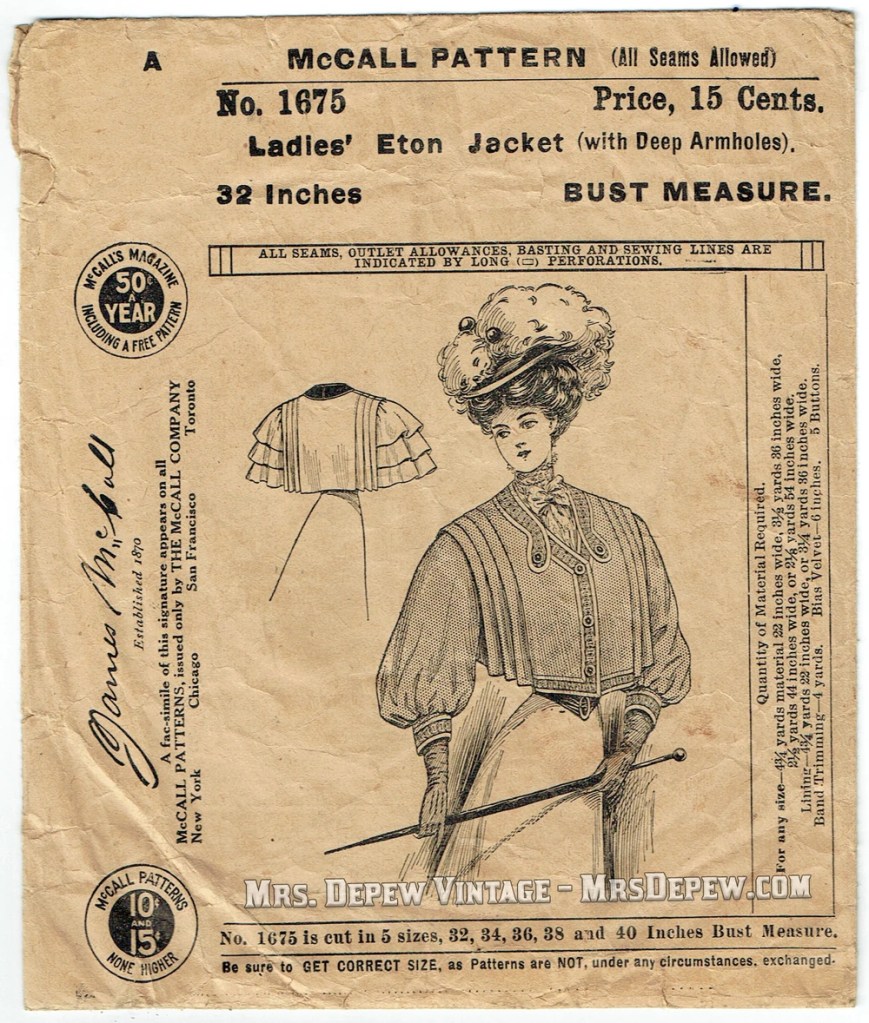
McCall 1675; ca. 1907; Ladies’ Eton Jacket (with deep armholes).
Featured in McCall’s Magazine September 1907.

What a fabulous jacket! That’s why I would choose this Eton jacket from 1907 because not only would it create a great historical silhouette, I’d love to try styling it with other items from my modern wardrobe.

1920s Era
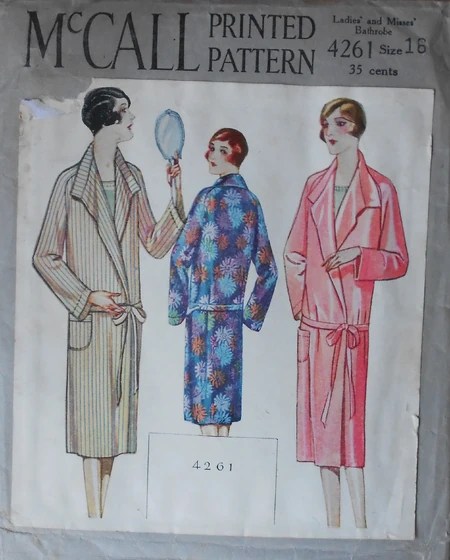
McCall 4261; ©1926; Ladies’ and Misses’ Bathrobe (Vintage Pattern Wikia)

The flapper dress patterns you see in the store are so played out and inaccurate. My choice was influenced by the wonderfully boxy lines of this robe. It encapsulates the straight up and down silhouette of the time while looking like a piece that could be dressed up or down, for around the house or used for wearable garment in the right fabric.

1930s Era
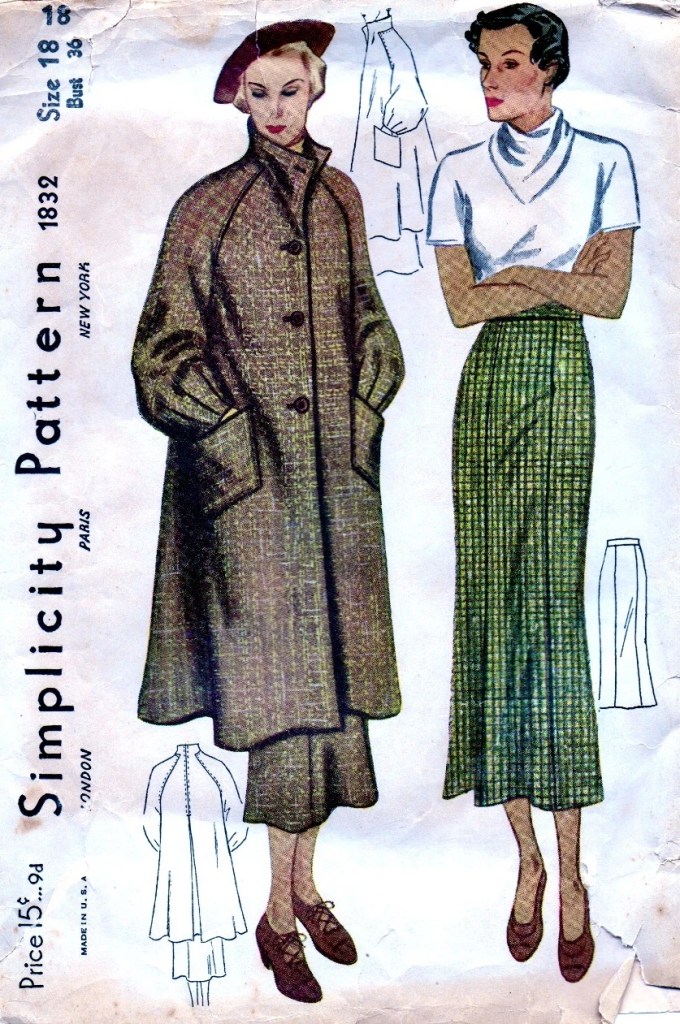
Simplicity 1832; ca. 1935; Ladies Swagger Coat and Six Gore Skirt. Coat has full raglan sleeve tucked at the wrist, patch pockets, stand-up collar and inverted back pleat.

Oh my goodness, this coat is fabulous. I may try to track this down in the future just to try my hand at it because I love these style lines. I love the raglan sleeves with the contrast of the narrow 1930s skirt. It’s so chic.

1940s Era

McCall 4037; ©1941; Ladies’ & Misses’ Dress

I like the academic style of view A and the elegant style lines of view B. I think I would get a lot of wear out of a dress in this style. The 1940s are one of my favorite eras for vintage fashion, I love the style lines of this time period and the 1920s-1930s.

1950s Era
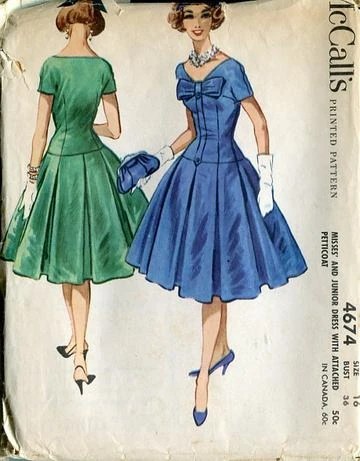
McCall’s 4674; ©1958; Misses’ and Junior Dress with Attached Petticoat.

The 1950s is not my favorite era of fashion, mainly because this silhouette looks horrible on me and it’s really over done when people think of “vintage” so for inspiration I went to 1958, the year my grandparents got married to find something interesting. I like the bow on the front of this and flounce of the skirt. The shape reminds me a bit of a bridesmaids dress I tried on that my grandma wore for her friends’ wedding in the 1950s.

1960s Era

Vogue Paris Original 1434; ca. 1965; Pierre Cardin – Suit. Side-buttoned jacket with standing, bias ring collar and cuffs. Tie belt at front, welt pocket and three-quarter length sleeves. Slim skirt.

I chose this one, first because I had yet to choose a Vogue pattern and secondly, because this suit is sharp and screams 1960s glamour. I love the over sized buttons. The classic shape and the slightly mod-artsy feel of the over all look.

1970s Era

Simplicity 7887; ©1977; Go Everywhere in Misses’ Jumpsuit and Unlined Jacket: Top-stitched jumpsuit with front seam interest has front zipper, buckled back tabs and optional rolled-up cuffs. Top-stitched jacket with collar interest has front button closing, flaps and long set-in sleeves with button trim.

This is a unique pattern. I like how many styling options we get in the line drawings. It’s an interesting jumpsuit I could see made up in several types of fabric for casual or fancy styling. I should see the blazer made in a contrast fabric or the same. Jumpsuits were a staple of the 1960s and 1970s so I think this is a great option to represent the decade.

1980s Era
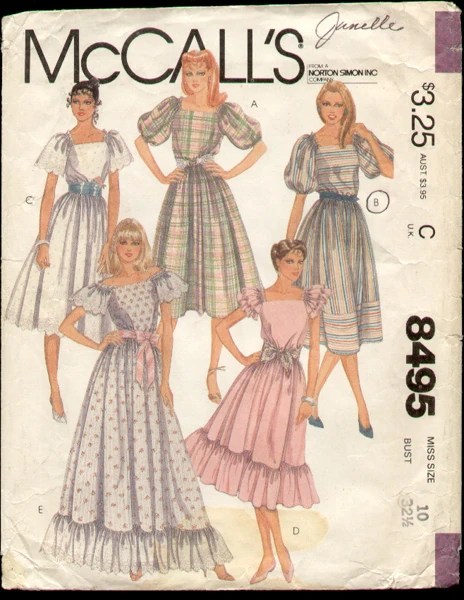
McCall’s 8495; ©1983; Misses’ Dress and Tie Belt: Dress has square neckline, elasticized waistline, center back zipper and sleeves with elastic in shoulder casings. Self fabric tie belt.

This pattern is so extra. I didn’t realize how much the cottagecore aesthetic pulled from this time period – wow! I thought the 1980s was just inspired by the 1940s, but there is a lot more there to see. I think this would be a great upcycling project with bedsheets.

1990s Era (I’m vintage?)

McCall’s 7241; ©1994; Misses’ Jumper and Overalls: Loose fitting jumper view A and B or overalls view C with lined bodices have suspenders fastened in front with buttons or overalls buckles; jumpers have side seam pockets; overalls have front yoke and pockets.

I originally wanted to pull from 1993, but this pattern is too perfect for me. I honestly want to make all three of these. I have fabric that would work for view B. I wonder how difficult it would be to track down?

Closing Thoughts

A special thanks to Vintage Pattern Wikia for making it possible to browse vintage patterns and for keeping these moments of fashion history alive. Thanks also to Stephanie Canada for putting this on my radar and for sewists like her who are keeping vintage patterns accessible to us to sew with. This was a fun challenge posed by the Simplicity Creators group and Simplicity itself for putting this on all of our radar. Although I’m not going to sew anything from what I found because I seriously have to many projects to add another right now. It’s a great way to appreciate vintage paper patterns and the effect they have had fashion and clothing in the last 160 years. Sewing your own clothes is such a great way to make things that fit you, and have your own flair, they also combat the unhinged mayhem that is fast fashion. It’s a win win 🙂
Rediscovering Fiction Writing

I’ve decided to get back into fiction writing! It’s been a long time, so long I almost forgot how to begin. Because of how fuzzy my creative brain has felt, I’ve been stuck in the confines of what feels familiar. I’ve been wanting to go back to what I made before. At first, I wanted to bring back Udal Cuain from memory. The bits and pieces of the characters still live in my mind, but upon trying this without my manuscript – it is a bit daunting, near impossible to remember what I wrote 6 years ago. I considered rebooting it in a new story. I could fix the decisions with the plot that irked me, revising it into a thing, but at that point, why not just branch out to a new world and new characters that embody who I am now as a writer instead of what I was. And so here we are, and I’m excited!

The Writing Prompt

Since about October 2022, the pull to dabble in fiction has returned. This was in part from a close writer friend who challenged me with a writing prompt. She asked me to write about my favorite garment from fashion history and write a story from the perspective of the person who invented the garment. I began to research, to study, to not just pick a garment but pick several and then try to place them in a world with character. There were so many evolutions to this! It was an endless pit of inspiration.

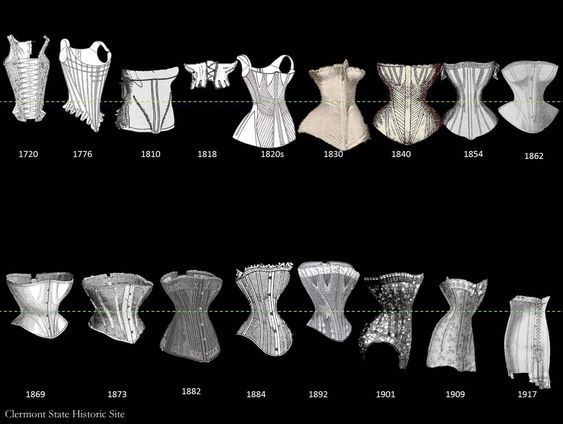
With some time to dream and consider, my first choice was the corset – it is the ultimate historical fashion garment to me because of the craftsmanship, the foundation it created for silhouette and style, and truly to challenge the many people who use it as a scapegoat in the fight against the patriarchy. If only they would do some research (I’m talking to you BBC and Netflix). I ran into a problem – what iteration of the corset would I focus on? Should I include stays? How much is too much detail? Yeah, it was a bit too broad for the kind of historical mind I possess.

My friend suggested I narrow my wild mind down to one era, my favorite era of fashion history. What is my favorite era of fashion history? Well, I broke that prompt too! I could not decide between the 1890s, 1910s, and 1690s. I blame the fantastic fashion history content of Nicole Rudolph’s 1690s-inspired Winnifred Sanderson costuming, Bernadette Banner’s 1890s-inspired garments, and Bernadette’s 1910s Mary Poppins Jolly Holiday Lingerie Dress. My little fashion nerd heart was too enthralled to choose between them. I waded deeper into the idea. Maybe social and cultural norms would flush out the true winner. A character, if I placed her into these time periods, what would her life look like? Could she be a fashion designer like I strive to be or would limitations be placed on her talents?

If she would be prevented by society to make clothing openly, what story would there be to create? I realized I was approaching the prompt from the wrong point of view. It is not if she would be making clothes, it is in what context. A home sewist? A professional seamstress for a rich or royal family? Were women head tailors? Yes, yes they were until the mid-19th century and Frederick Worth changed the industry to a male-dominated designer world. With the right context, there was a bit more wiggle room. She could be a tailor.

There was that curve ball though, I was supposed to write from the perspective of the designer who invented the garment. And this is where my historically trained brain couldn’t seem to get out of its own way. Although I wasn’t finding a credited person for these garments, I was afraid of misrepresenting the history. If nothing else, the fashion industry has built itself on a shady foundation of misappropriating cultures, using questionable materials, pushing toxic beauty ideals, and mistreating its workers. My gut was scared of what romanticizing a garment could do to the real history at play.

Razor Clams and Melancholy

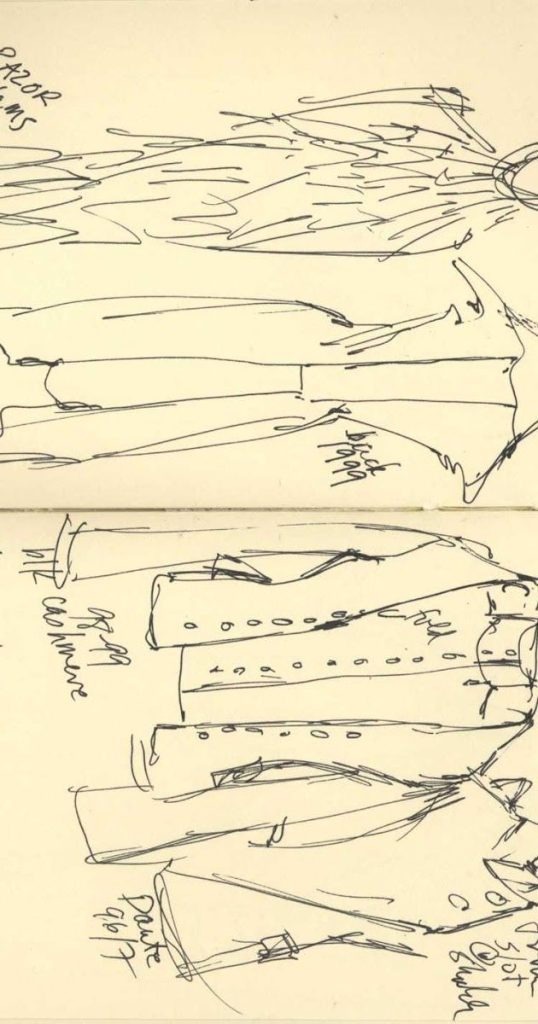
Alright, so what now? Well, I thought, what about the Alexander McQueen Razor Clam dress sketch literally tattooed on my shoulder? I mean isn’t that my ultimate garment? Isn’t he the one designer that captured my imagination? Yes, yes he was. I found security in knowing a rich history of who and how this piece of art came to be. It was safe yet true to my love for fashion design. This dress has always taken my breath away. There is something unbelievable about its construction, yet undeniably beautiful in execution, like a character in a fantasy novel standing before you with a real flying bison and bending to prove it.

I didn’t realize for years that it was made from real razor clam shells, I thought that the shells were 3-D printed. Understanding the realism captured by the use of real shells makes this dress so full of life and story. Literally, these pieces could not be here without a whole story of their own, from their former life as the home of razor clams, amidst the ocean waves to the cleaning and preparation to be sewn one by one into one garment. The time and care required to make this garment is extraordinary. I thought about my own connection to the sea, picking up seashells along the beach. Walking side by side with my Grandma, talking and stopping to discover every little gem of shell and sand. It was our thing. From Marco Island to New Smyrna, to St. Augustine, to Nags Head – we combed those beaches soaking in the memories of time, we can never replace.

I thought about McQueen and his close relationship with his own mom, and the pain that hung over him after she passed away. I pictured in my mind a day of walking the beach, with the razor-clam shells washing up. Could he have been a shell seeker like me? Could he have been as inspired to create as Grandma and I did with our favorite shell finds? Stringing them onto necklaces. A little souvenir of our walks together. As I wrote, the pain and loss washed over the words a melancholy snapshot took form on the page of a heartbroken fictional character making this dress out of heartbreak for the one he loved. The process was awful. As I wrote, tears slipped down my cheeks and I hated it.

Our Creative Well

The next time my friend and I met to discuss our writing progress, I told her of my switch to the Razor Clam dress and how what came out of my writing broke me. I was in a melancholy cloud missing the flurry of indecision compared to this. In all this chaos, I learned an invaluable lesson. As my friend phrased it, I tend to create from a place of sadness. I seek out the dark and dismal places in my brain to feed whatever I am making, like a tortured artist drinking absinthe or the despair of Poe, I am drawing upon the wrong thing to write from and therefore, my projects hurt me. The same thing happened during the Udal Cuain project. It got dark, and I couldn’t live in that world anymore. She challenged me to find a new place to rely on while I write, to create from a place of joy instead of sadness. It’s changed my whole way of creating as I mentioned in #17- Bad Writing Habits.

Where do you create from? Is it a place of joy or of pain? It’s an interesting thing to consider, and can definitely affect your tone, plots, worldbuilding, etc. I think the biggest takeaway from this process of failed writing prompt drafts was to reinvigorate my brain to imagine worlds from a simple inspiration, and to begin the path of research and brainstorming for characters, stories, and plots less traveled by the current influx of fantasies, thrillers, smut-tok, superheroes, and meta-storytelling. We need new kinds of stories. With that in mind, I’m excited to keep moving forward. I hope you join me on this journey.

Create a website or blog at WordPress.com

Up ↑