Dressing Like Elizabeth Swann and Hocus Pocus

If you were forced to wear one outfit over and over again, what would it be?

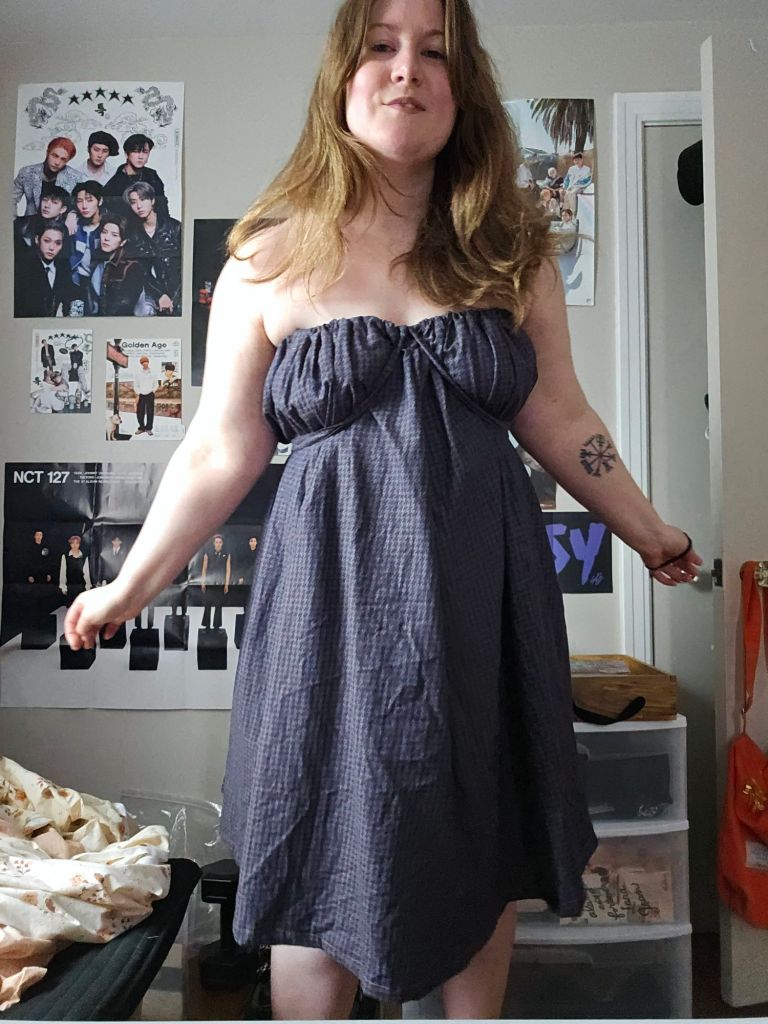
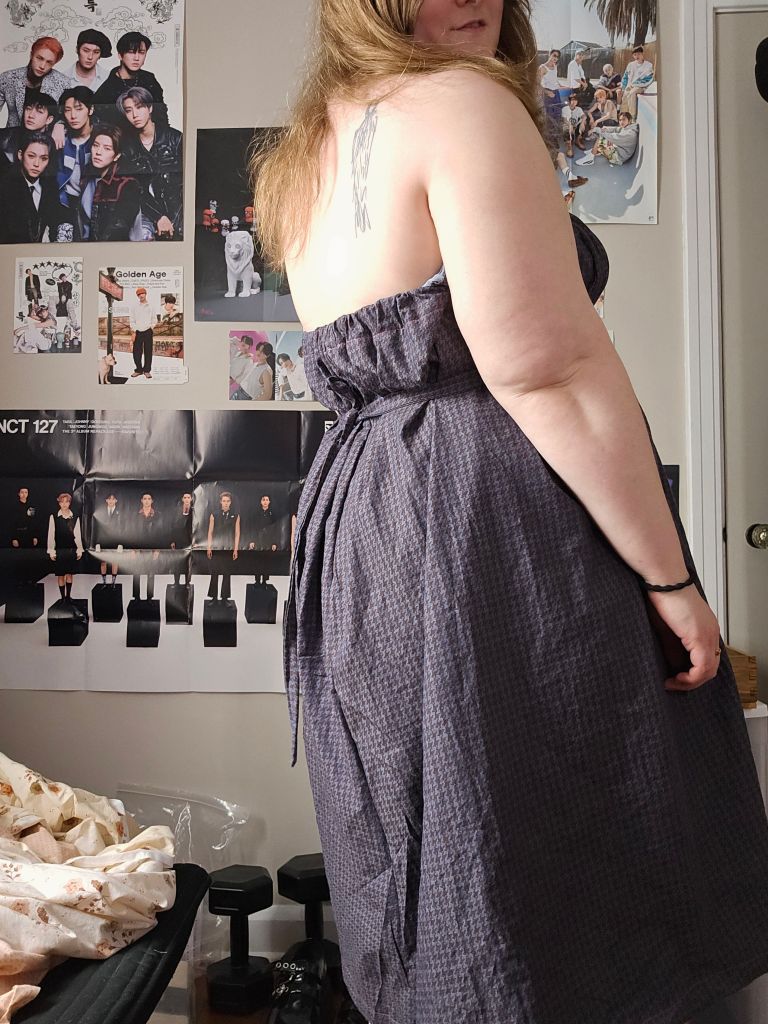
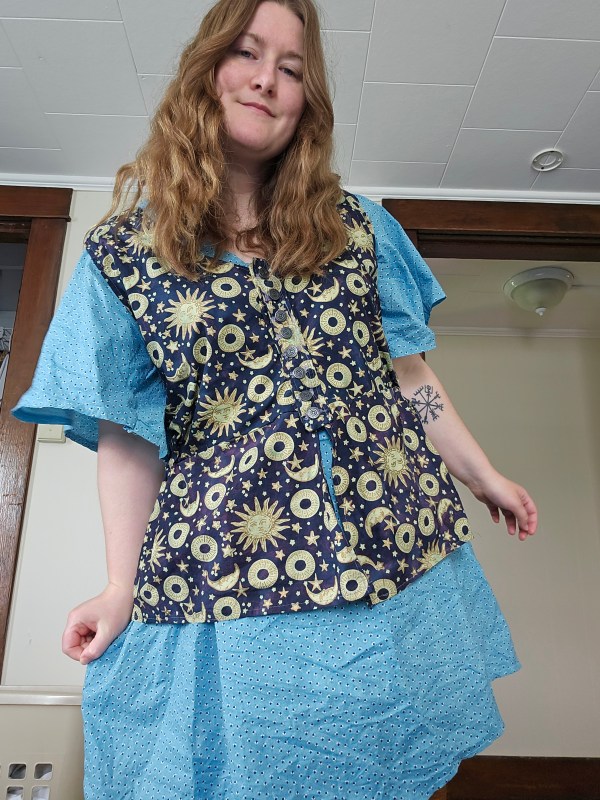
At the moment I would choose this combo because it makes me feel like I’m Elizabeth Swann in Pirates of the Caribbean. I love the way the vest turned out so it looks like a 17th-century men’s waistcoat but over this mini dress, it transforms and has a shift and stays kind of vibe. I feel like I am ready for an adventure!

This vest was inspired by Dani’s costume from Hocus Pocus. It is made from a cotton print with a buttoned bodice and flared-out waist. The dress was made from cotton vintage deadstock fabric that I was gifted from my Grandma Schlachter’s fabric stash.

Creating Sewing and Knitting Tutorials on Instagram

In February, I started sharing short content tutorials, micro-vlogs, and step-by-step knitting patterns for free on Instagram reels. After four months of content creation and thinking like an instructor, how has this changed my thoughts on my purpose? Has it changed my own sewing and knitting skills? Let’s jump in!

I began sharing my work on Instagram back in 2017 as a writer, as my interest in clothes-making pivoted in 2020, so did my Instagram. My intention was a portfolio and not a content creator because, to be honest, that term makes me uncomfortable. It has been a barrier to wanting to share videos consistently when actually making videos that share not just what I made but how I made it, bring me the most joy.

In 2024, I began seeking out a sewing community online, and through this, I found shining examples of creative women and men who yes were creating content but we incredibly passionate about sharing their knowledge and skills to help others create and learn. Instead of it being about a platform and social media fame, it was about education and community to keep art forms like sewing and knitting thriving while helping people see an alternative to fast fashion.

It had a purpose that aligned with where I felt called to be. I want to do more with these skills than just sell people something, I want to create change and equip others with life skills. That’s not to say I wouldn’t love to make fashion that people can and want to wear, that would be awesome! It’s complicated.

I have Potato Technology as a name for my “label” but it is more of an abstract than a business. I’d like to expand more on this at another time, but long story short, I’ve been wrestling with what my skills should be working towards. A business? A fashion line? A following on Instagram? What is success in 2024? What should I define myself with? What is my motivation? These are questions I’ve had and been uncertain how to answer.

What has been a breath of fresh air has been seeing how to apply these skills in a way that they can be useful. In practicing for months these little tutorials, I think I’m discovering why I believe sewing and knitting are vital skills to have. It’s been a journey of discovery! I love showing how I make something. From the tools and tips I have discovered over the past four years or what the process looks like, someone can feel inspired and hopefully confident to give sewing and knitting a try!

That matters to me. I learned to sew and knit through YouTube and it was a game changer. But a lot of things at the moment are being put behind paywalls with subscriptions, courses, memberships, etc. I feel like information that you used to be able to learn from your community or family members is slowly being lost and reshelved behind tipping screens. I don’t think it’s right or fair, nor is it good for our culture to lose art forms that are so vital to daily life. We all wear clothing, we all have garments that need repairs, etc. Making should be an option instead of buying being the only option.

My long-term goal is to find a way to share the tutorials here in a way that makes sense for the platform, as I continue to do I realize all this filming has distracted me from writing. Hopefully, I will find a better balance now that I am moved in and settling into new routines at our house. I’m excited to share more on that story too because it taught me so much about agape love, the kindness of strangers, and how important family and community is to making things go right.

Thank you, dear reader, for taking time for me today. I hope that you know that you are loved, you are worthy, and that without you this blog would be simply a girl with a computer typing into a void. Thank you for your support! I always appreciate it!

My Experience with PDF Sewing Patterns

Earlier this year, when I was planning what I wanted to make as additions to my wardrobe I found a brown, I believe it is taffeta fabric, in my stash. I’ve been at a loss of what to do with it since I got it because it’s so different than what I usually sew with, but that’s a good thing! I know it will push me out of my comfort zone with its hue and shiny finish, so I want that garment to be special when I finally make something out of it. I do not want a repeat of the pink scuba pants!

I’ve pondered using it as a lining fabric for my pirate coat, I’ve also considered using it as an underlayer for a sheer fabric I have in my stash, etc. So far nothing felt right, aside from an idea I saw while watching one of my favorite sewing channels on YouTube. She makes fabulous dresses from self-drafted, big four paper patterns, and buys indie PDF sewing patterns that all turn out so lovely, I want to try them all.

So on a whim, I went first to Mood Fabrics’ Sewciety page to see what they had to offer in their free selection and eventually found myself on Etsy, looking at the exact dress pattern she made on a video I was watching. Spontaneously, I clicked purchase on a dress pattern and clicked instant download. A dress, I thought, that would be perfect! I can style it up and down, in heat and in snow, it will be my go-to piece! To quote Lee Corso, not so fast!

It was mighty easy, but also mighty paper-hungry. This was something I was not expecting. You see, as far as PDF patterns go, I knew they required printing, but I always thought it was like 10 pages max. It seemed like something that would be straightforward. You know what I mean? To my surprise, it was 29 pages of just the pattern plus 5 more pages for the instruction and sizing. Um, holy lots of ink!

Yeah, I was not expecting that from my first one. So I looked more closely at the Mood patterns I was browsing to see if those would be any better and I saw another flaw in my plan, the patterns specifically from Mood use a ridiculous amount of yardage. Like a mini dress was calling for 5 yards of 57″ across the fabric. I can make a mini dress in 3 yards or less. Is this just a ploy to sell fabric? Mood Fabrics’ average price is USD 14-18 per yard, multiplied by 5 and it is beginning to be a very expensive project if you follow the fabric suggestions. I have a lot of questions now.

But anyway, I went back to the Etsy PDF pattern and decided to throw caution to the wind and begin printing. And print we did! The gentle hum of the printer slider traveling to and through filled the room, with the chorus of the squeaky paper roller delivering page upon page of freshly printed pattern sections to be cut out and taped, onto the desk. As I sat, staring at the screen, I began to get fidgety. I began to look around the room and stare at my computer screen, eventually perusing the listing again, and I noticed one small potential problem in this plan. As the pattern maker was an American, I thought for sure the sizing would be in US sizes, but alas the numbers on the chart were slightly askew from the standard. And I realized two things I would have to face, comparing the yardage to the pattern and taking my measurements to determine my size.

It was a slip dress, so the 3.5 yards I had available on the opaque fabric seemed like an obvious choice. There certainly would be enough, surely there would be enough, but oh no, there wasn’t. The pattern wanted more. I also grabbed the measuring tape and prepared for battle because no matter how badly I didn’t want to care what those numbers said. Those numbers always intimidate me. So with butterflies in my stomach, I grabbed the tape measure and learned that it wasn’t going to be my weight that would keep me from being able to make this but my literal body proportions. My frame. My long torso. My straight up-and-down waist.

I didn’t fit into any size proportions, none. Going up or going down a size was all off. As the freshly-inked paper kept rolling off the presses I felt stress, uncertainty, and frustration at myself for being such a novice thinking this would be easy!

But why isn’t it simple? When I buy paper patterns from the big four it is simple! When I’ve looked at vintage patterns, yes there is a little bit of knowledge needed to understand the sizing – your measurements – but other than that simple! Was I really going to have to pattern hack or pattern grade specific pieces on this paid-for, already drafted pattern? Was it basically going to be as complicated as making my own from scratch?

In that moment, I was incredibly humbled. Here I was learning to sew, designing my own clothes, I want to turn it into a business with the most logical option seeming to be PDF sewing patterns, but my word, this is a tough product to produce! This is incredibly more difficult than I imagined and I don’t think this is how I want to contribute to fashion space. Because not only do you have to make the pattern, the instructions, and go through testing, but I think on a PDF format, if you don’t have a vast size range or even a curvy or athletic build variation, I don’t think the pattern is being done properly.

I could not make the slip dress pattern work because it was cut for an hourglass shape and I have a straight up and down waist, no matter how skinny I get, it’s never going to fit me properly without alterations to the lines of the dress. That discouraged me. I stopped the printing and chose to call it a mulligan. The same issues with standard sizing hit me like a wall in a place I never expected.

What the answer is, I don’t know. But I do know I think the PDF pattern market may be the same ship different day repackaged in a way that creates more work and potentially less waste? On that, I’m not convinced because it is so much ink and paper. I don’t know. It still felt like a lot of consumption was happening. It’s a shame. I feel like I accomplished nothing in the long run. I believe I’ve found a problem I’d like to address if/when I ever figure out how to make my own patterns. Thankfully there are a lot of creative people in this world who may be developing the solution already. I hope so.

What about you? Have you purchased an indie PDF sewing pattern? Were you pleased? Did you feel like it was easier than buying paper patterns or self-drafting? Thanks again for spending time with me today, dear reader. I hope you have a lovely day. ❤
A Strawberry Dress for 2024

In 2020, the Strawberry Dress by Lirika Matoshi blew up in popularity becoming one of the most iconic garments from the year. It still remains in my head when I think of a strawberry dress, a garment I wish to buy because it is so joyful. But at USD 490 it’s a bit out of the question for my budget at this time. Although I wish, it isn’t going to happen. But it has become an aspirational garment for me as a designer. I hope to make something with the same amount of joy, attention to detail, and iconic statement!

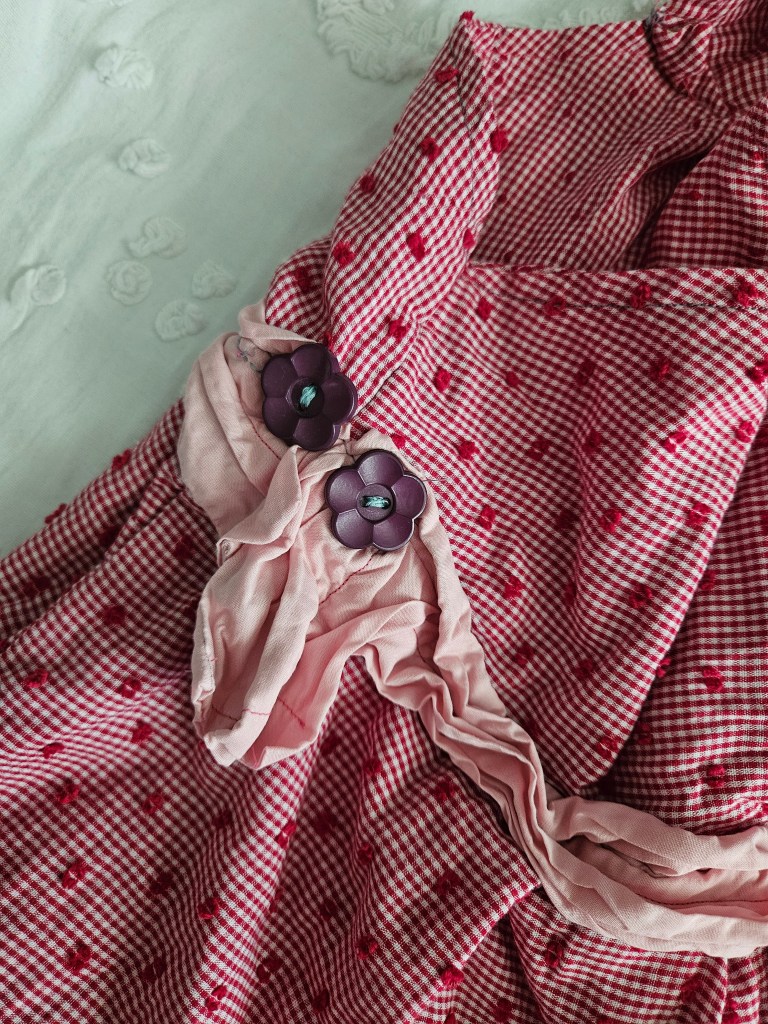
So when I was digging in my fabric stash this winter and found this interesting Swiss dot gingham, light pink trim, and flower buttons I knew one thing I had to make – my own take on a “strawberry” and “Sakura blossom” inspired dress.

Potato Technology: Back to Basics Collection

Almond Ribbed Wrap Top

Materials: 1.5 yards of stretch knit jersey. A remnant cut of fabric. This pattern was self-drafted by draping on myself and adjusting the lines with pen marking. As this was the first garment in this series, there was more trial and error with cutting pieces out of the fabric to reduce waste.

Inspiration: I was inspired by the iconic 1970s wrap dress, designed by Diane Von Furstenburg. I originally planned a wrap dress but scrapped the plan due to a lack of fabric. Because of this, there was probably 1/8 of a yard of fabric left over. With more practice, I’d like to reduce that amount to smaller pieces of scrap leftover.

Cherry Henley Ribbed Top

Materials: 2 yards of stretch knit jersey and 6 buttons. It is a heavier weight jersey and feels like a light sweater. This was a remnant cut. I developed my first official bodice pattern from this process.

Inspiration: 1900s men’s buttoned henley baselayer tops from the gold rush era in the United States. Think “old western” dramas, Deadwood, or Red Dead Redemption. I cut it oversized to carry the theme of it being a men’s garment. During the cutting process, I was able to utilize almost all the fabric with only 2-inch scraps being left over.

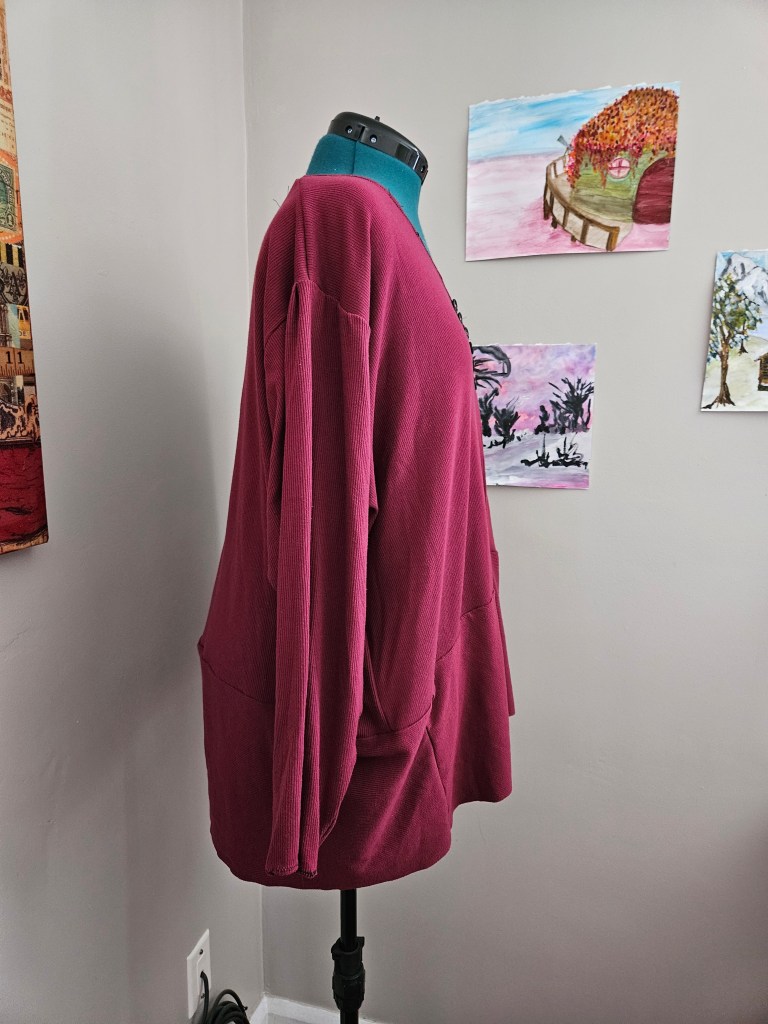
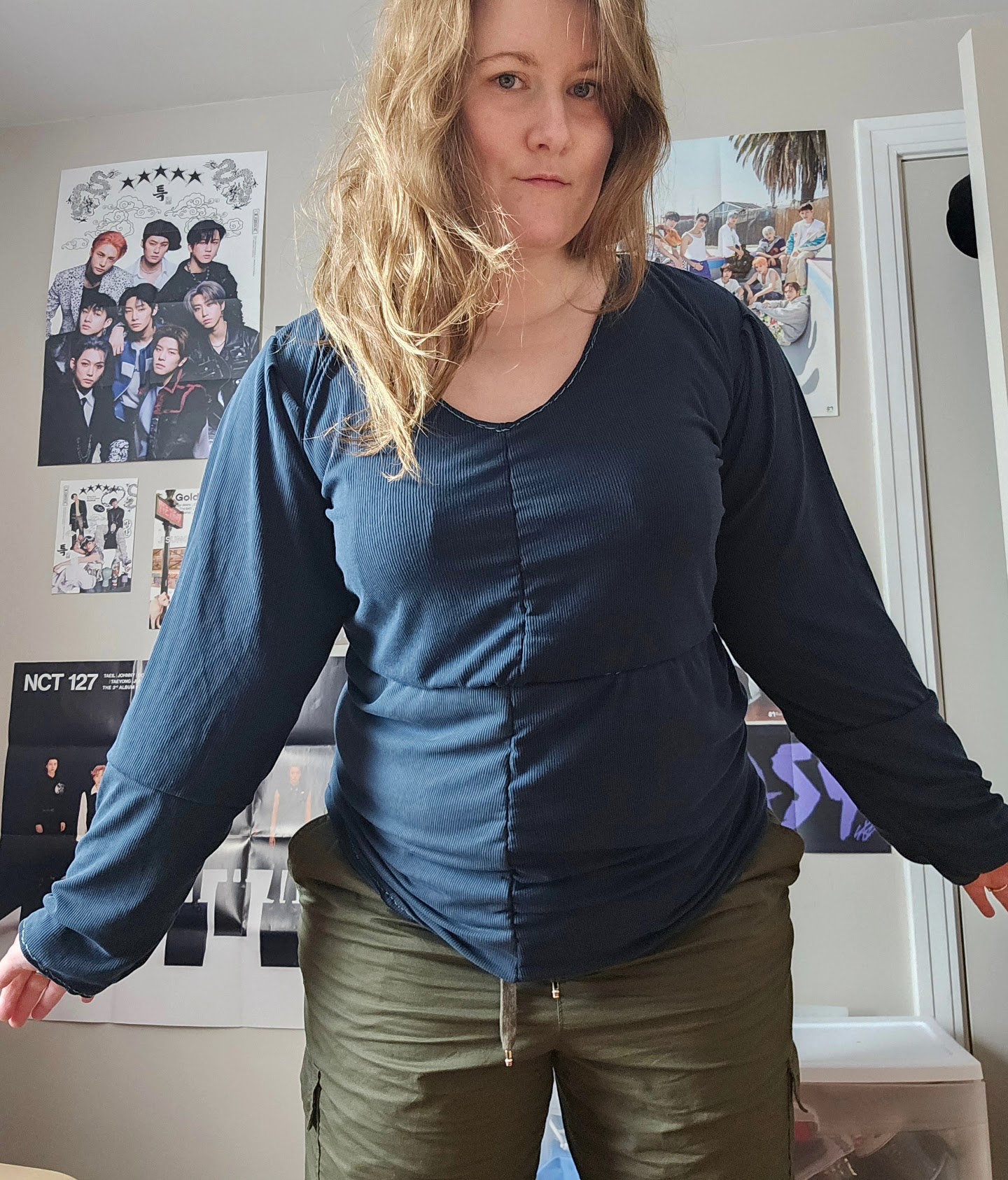
Stormy Seas V-Neck Tunic Top

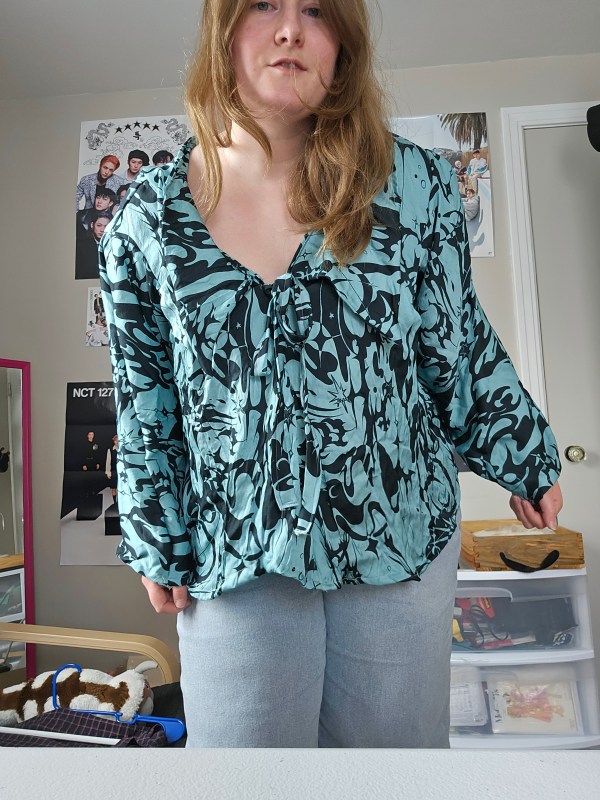
Materials: 2 yards of stretch knit jersey. To utilize as much of the fabric as possible, I chose to get creative with my pattern cutting. To do this, I pieced together the bottom and portions of the sleeves to use up almost all of the remnant, with 2in or less scrap pieces left over.

Inspiration: I was inspired by the design lines of early medieval tunics. I like the simplicity of the lines and the lengthening effect it has on my proportions. For more information about Viking Age tunics, I recommend checking out Project Broad Axe for historical recreations and additional background on the history of Viking Age tunics.

Getting Creative with My Stash: The Black Raspberry Slip Dress

I’ve been challenging myself to be a more frugal sewist this year, using up my stash of fabric and resisting buying fabric that catches my eye. It has been harder than I thought. Mood Fabrics is pretty relentless with its advertisements, Hobby Lobby’s every two-week fabric sale calls, and Joann Fabrics sends me flyers and coupons on the regular, but I had this feeling I needed to be more budget-conscious this year and it is starting to make sense why (more on that later).

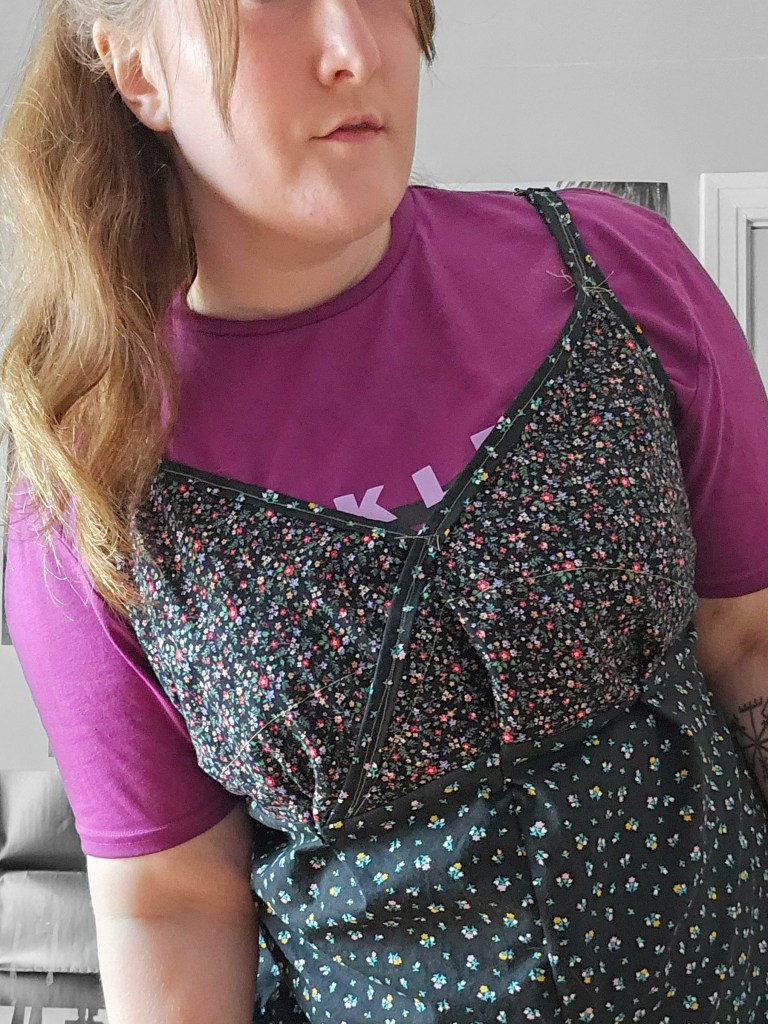
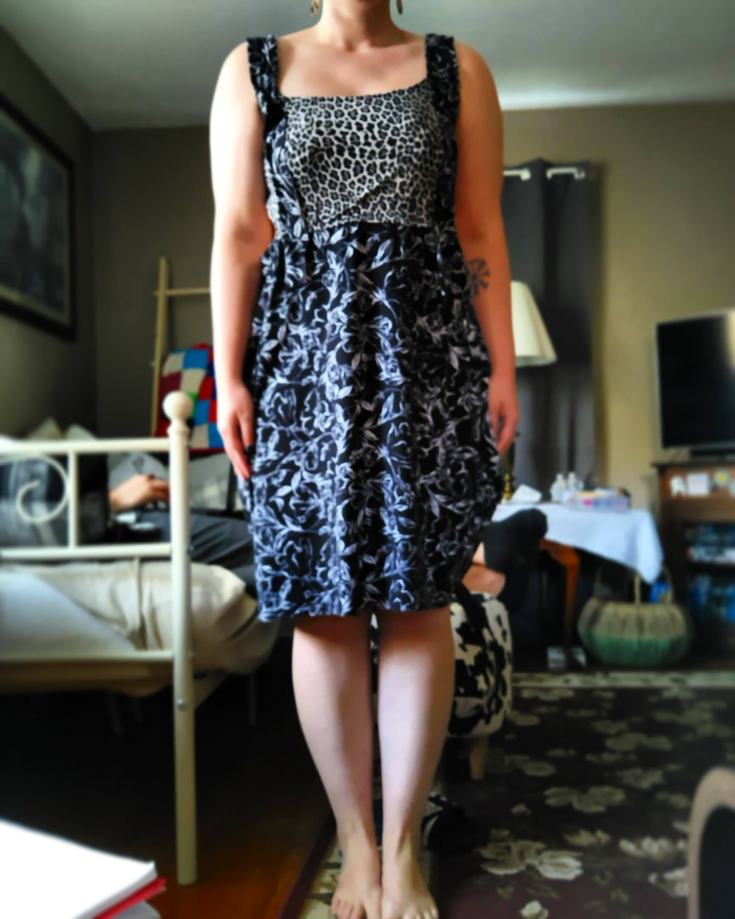
To do this, I rolled up my sleeves and dug into my storage closet, to my Gram’s quilting fabric stash and got creative. These two fabrics spoke to me, but the yardage of the ditzy floral was small maybe a half yard? This is the most frustrating thing about using deadstock fabrics, vintage or remnants, you get the yardage left and that’s that. I wanted to play around with bias tape finishing with a contrast fabric, which I thought the black floral would compliment the ditzy floral. Originally my plan was to make a camisole top, but the more I thought about I questioned if I would wear it and with what? Instead, I pivoted and used the rest of the black floral to lengthen the top into a dress. To keep it cohesive I color-blocked the fabrics – black floral straps, ditzy floral bodice, black floral skirt, and lower ditzy floral skirt.

This was a new style for me, I usually stick to one fabric but this was fun and from this experience, I feel more inspired to design garments from a scrapy style. It opens up a whole crayon box of possibilities for remnants, smaller yardage purchases, pattern mixing, and contrast piping! This is going to be a fun new world!

I decided to draft my own pattern for this dress by draping the bodice on the form. I created the straps by joining the pieces of bias tape at the top of the triangle bust piece for a seamless transition and to add strength. I added a side zipper to tailor the garment closer to the body but account for the zero amount of stretch in this fabric. It reminds me of a slip dress but I feel more comfortable in it because it is a cotton fabric. There is more structure and opacity. The dress has a more casual vibe where I can style it with a t-shirt underneath if I desire to.

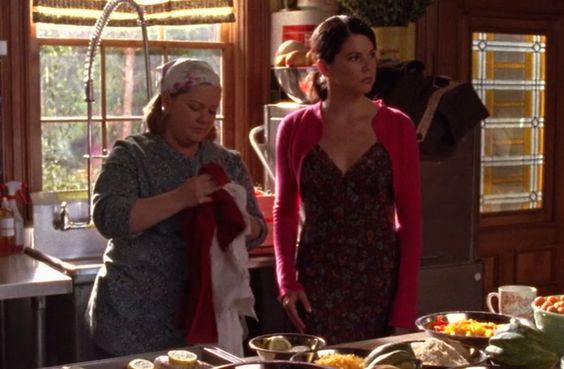
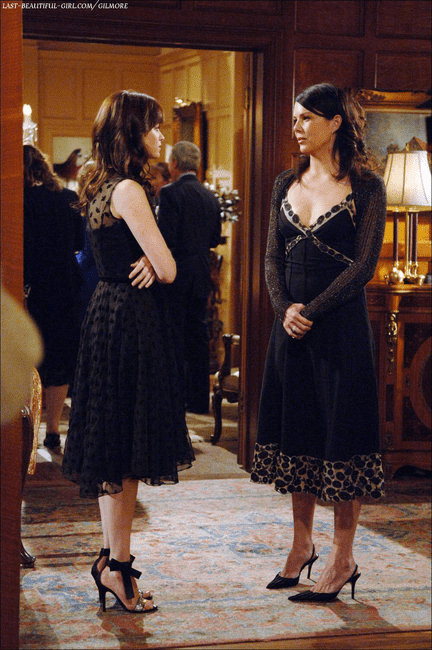
I think subconsciously, I was inspired by Lorelai Gilmore’s dress styling in these episodes. I love her style and I have found that the styles she wears on the show suit my body type and personality more than Rory’s dresses. It’s a dress style I hope to experiment with more by using different fabrics and textures.

Garments I Want to Try Making Again

Two summers ago, in 2022, I tried my hand at making dresses and separates with some mixed results. Some pieces I loved but had fit issues, some were poorly constructed and just fell apart, and some were made with the wrong materials for the project and were doomed to fail from the start. But as a new sewist who is self-taught, it was the only way I was going to learn, by experimenting and making and then doing it all over again.

In 2024, I’ve seen a huge jump in my skill level. I’m beginning to feel comfortable with the craft and I’m wiser about my fabric choices, which makes me think about these former projects. Could I make a better version of them? Have I leveled up my skills enough to do these projects justice and have them in my closet for years to come?

The Blanket Dress

Original Materials: Cotton Flannel, Satin Blanket Edging

Issues: Sleeves fall down and fabric stretches with wear. Not enough structure and bad pattern matching.

2024 Plan: Choose a cotton shirting with more body and keep the plaid pattern or if I stuck with the light cotton flannel, I would add a lining to give structure. Pattern match when cutting out pieces because I can tell I didn’t try at all! Add tie to the back shoulders to keep the sleeves on my shoulders. Add a button placket or zipper to fit the dress to my body better. I would make the bodice even, because I can see how each side of it is a different length.

Will I make this again? Most likely! It is one of my favorite pieces from my early designs.

Amalfi Coast Girl Slip Dress

Original Materials: A very lightweight polyester silk that I found on clearance at Joann Fabrics.

Issues: Very thin, made me paranoid. Being a slip dress I felt uncomfortable, like I forgot to get dressed.

2024 Plan: Lining! I would line this 100% now because that was just silly. I would pick a better fabric though, this one was hot and difficult to sew. I would also fix the bunching in the skirt and fit the bodice better because it looks messy.

Would I make this again? Yes! Potentially this summer if I find the right fabric.

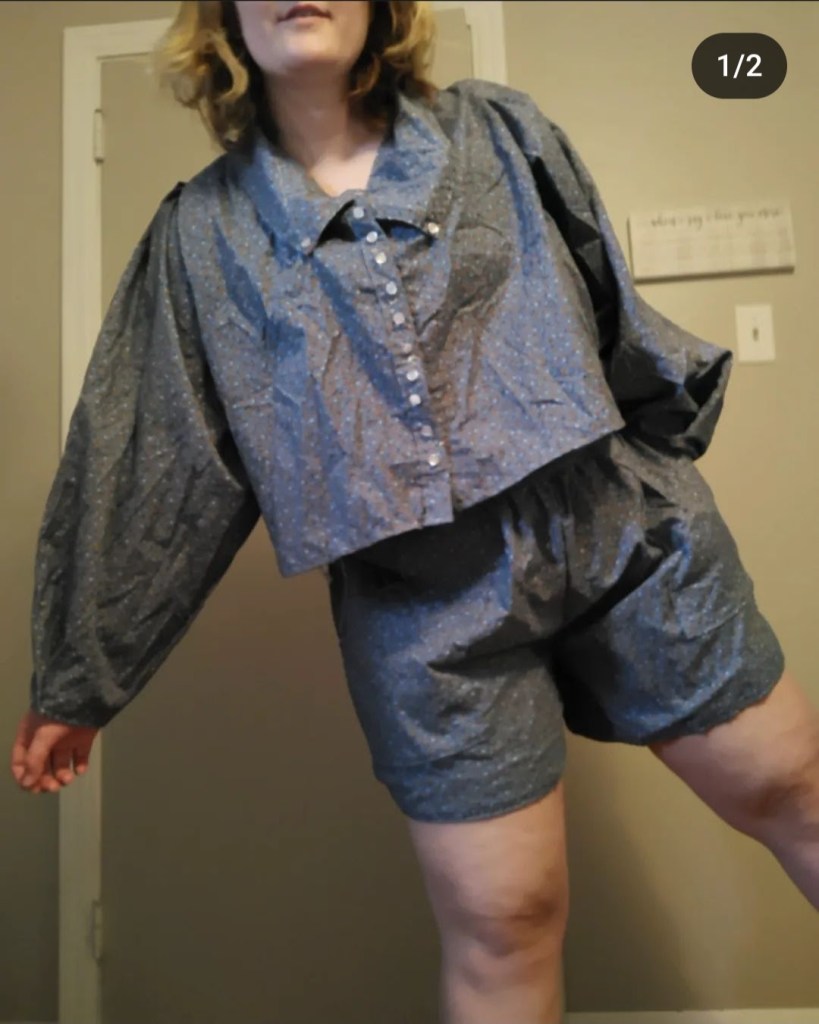
“Linen” Two Piece Set

Original Materials: Vintage Quilting Cotton from my Gram’s stash. Snaps and buttons (because button holes scared me).

Issues: Not real buttons, this was a hassle. The shirt was a bit short and too boxy. The shorts were an absolute mess because I didn’t have a french curve or a proper pattern to make shorts from. The seat was too narrow and the the rise too short, the waist band I didn’t fold over so it provided no structure. A side zip and snaps were an okay closure but they never felt truly secure.

2024: I would buy the cotton gauze fabric or buy linen for the look I wanted. The quilting cotton made this feel like pajamas and it made a little unsure about wearing it out. I would make a proper fitting pair of shorts this time and a real button holes. Other than that, I’m quite pleased with my original idea.

Would I make this again? Yes, it was chic and comfy, if only it had been constructed better I may still have it.

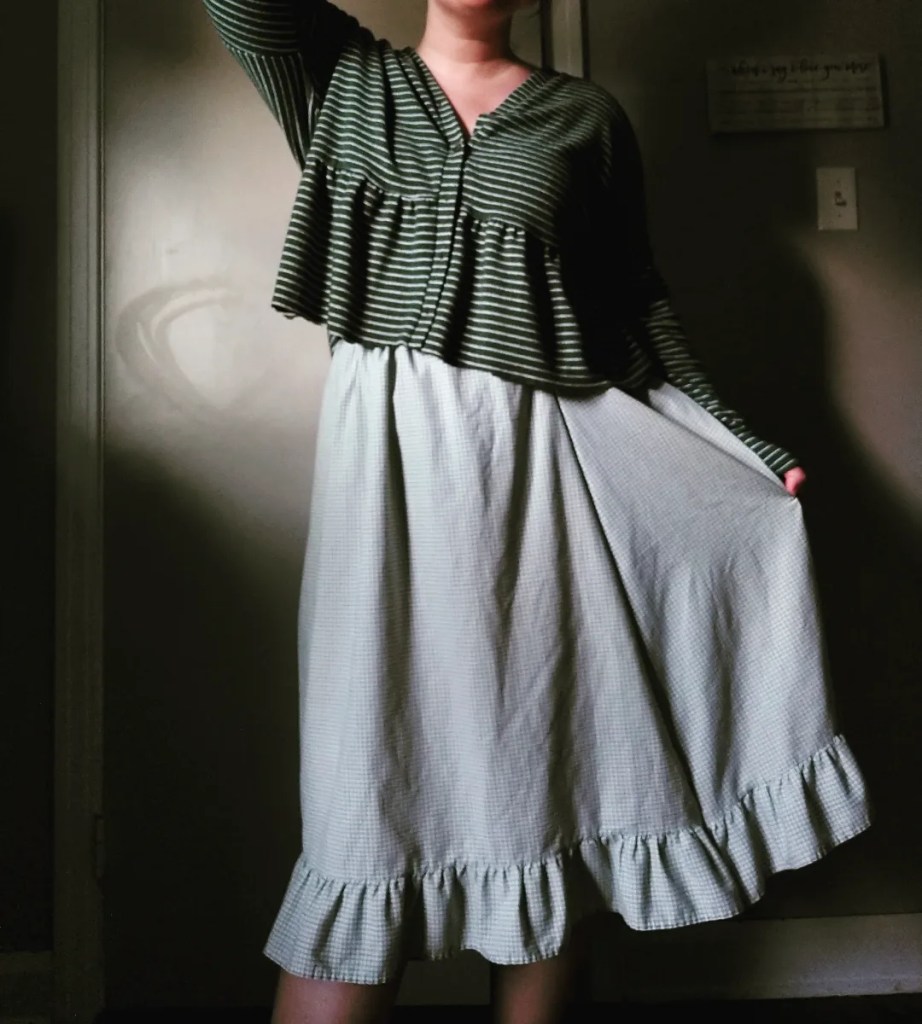
Cropped Cardigan and Ruffle Skirt

Original Materials: Two upcycled pillow cases and a hand-me-down dress I cropped into a cardigan.

Issues: The pillowcase was stained and see through. The cardigan was made from a fast fashion piece that was terrible quality that made it feel weird on the skin. I like the appearance of this look more than I did wearing it.

2024 Plan: Opaque quilting cotton or shirting to feel comfortable. Knit the cardigan in a cotton yarn or a linen yarn to make it versatile for Spring, Summer, and Fall.

Would I make this again? Yes, it’s already on my to do list. I would wear this for so many things.

Silk-ish Halter and Wrap Skirt

Original Materials: A satin polyester from Joann Fabrics. Snaps and a tie made from the fabric.

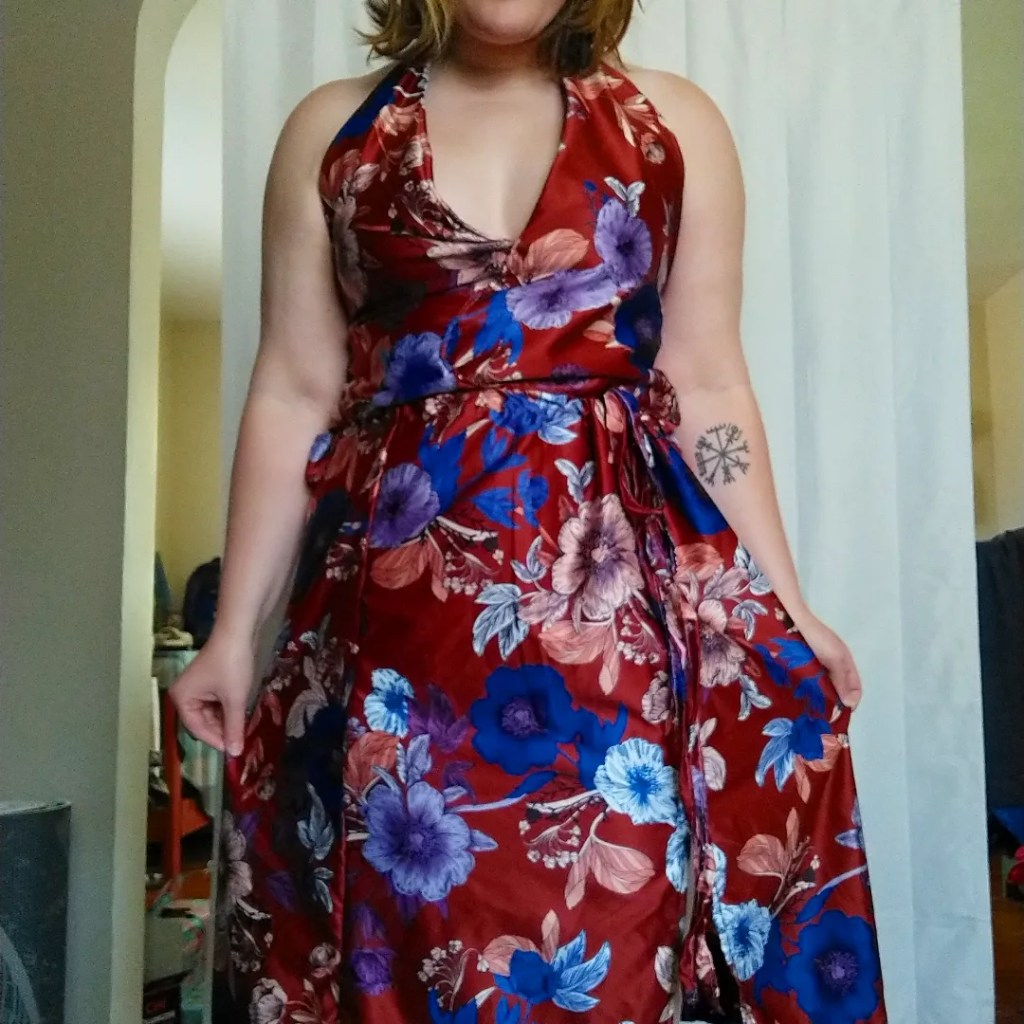
Issues: My halter top gaped, it was poorly draped and did not feel secure at the back snaps or neck snaps. The skirt did not have enough volume. I didn’t feel like myself in it.

2024 Plan: I would properly drape the bodice and add bust cups potentially to the top. I would also not make it a two piece look because I wouldn’t wear the pieces separately. The fabric was nice and I would use something like it again, although I would love for it to not be polyester.

Would I make it again? No, it doesn’t fit into my wardrobe. I would use a similar fabric again for a dress, but not a halter dress.

1990’s Inspired Princess Seam Dress

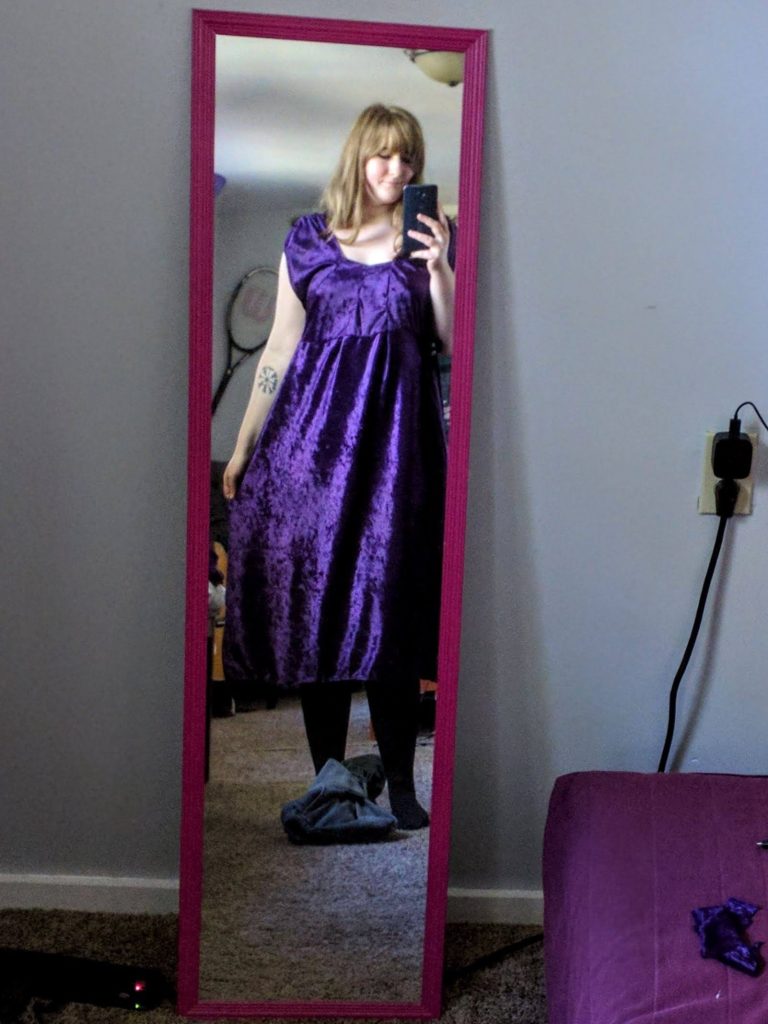
When we were living in Meadville in 2019 and I was getting into thrifting, I found a lovely 1990s dark purple velvet princess seam dress. It was longsleeved and midi length with a scoop neck and stretchy velvet knit that draped lovely from the waist. I could tell from the label it was vintage. It had a different attitude. The dress reminded me of dresses I wore as a kid that were so special yet accessible.

I was thrilled. It was a comfy dress that I would style with lace-up boots, tights or leggings, and a moto jacket. It made me feel special during a period of my life where nothing felt that special. In 2019, I was bored, stuck in a dead-end job, looking for a new purpose, navigating some drama with my dysfunctional family, and getting used to a new city. It was a weird time.

Over the years my body changed and I donated it back but it continued to live in my head, wishing that I had kept it, so much so that the first dress I ever designed was a recreation of the piece which I talked about in #3 – First Sewing Project. Comparing the pieces I made side by side, I can see the growth in my skills and understanding of fabric which makes me pleased to see.

The left dress nailed the color but everything else about it was jacked up. The sleeves were poofy, and the skirt and bodice were draped well but I know the construction was questionable because it was the second item I sewed ever. I think if I can find this fabric again I’d like to recreate it with my current skill set. The dress on the right I cut out with my own drafted pattern piece based on my measurements. I cut it out in two pieces and sewed it with a zig-zag stitch with medium to low tension and tapered the waist with four princess seam darts. I also reinforced the shoulder with a second layer of fabric that anchored the shoulder seam.

I think I’m going to get a lot of wear out of out of my new princess seam dress. I’ve worn this dress over a few days when my local weather shifted from a warm stretch of 70 degrees Fahrenheit to a rainy, cool 50s and 40s. Because this dress is a polyester stretch knit jersey yet is lightweight, it was comfortable on a warm day. Yet when it cooled down I was able to pop on a sweater and found it easy to style with a pair of boots.

With a sweater, this dress looked like a skirt and it has transformed my approach to how I want to wear my clothing. It may seem elemental, but I’ve usually been a pants and top girl in the winter reserving dresses for the summer, but as my style evolves I’m finding that layering and pattern clashing is something I feel most like myself in.

Long story short, my new me-made dress has surpassed my love for the original, thrifted dress. I love the animal print and the fact that this was a remnant fabric from Walmart yet I believe looks like it came from a higher-end fabric store.

I’m excited to continue designing items in this silhouette and utilizing my own paper patterns which has been a huge step in achieving my vision for the garments I make. I’ve also been working in a lot of stretch fabric this year to gain more knowledge and improve my skills to keep growing as a designer. Without the practice and determination to keep going, not to mention patience because mastering any skill takes so much longer than the internet wants us to believe, this would be a different dress. It would not fit me well, it would not be constructed well, it may not have even made it through the sewing process, and would have been scrapped.

That is why practice is so important. And you know what the real big moments are? Not just your successes but being able to look back at the failures, and the mistakes, and see how far you have come. Such as this dress that I made in 2021, which although the design was cute, fell apart because I didn’t understand how to properly construct stretch fabric nor did I understand how to choose the right fabric for a garment for it to be successful. But now I get it and now I understand how to fix it and if I decide to remake it, I could! And that brings me a whole lot of joy!

Create a website or blog at WordPress.com

Up ↑