Project Runway, I Have Notes

In August, Project Runway returned under a new network and reshuffled the format, hosts, and challenges to make a show I think was actually okay. Compared to where the show was left on Bravo in 2023, I think bringing back Heidi Klum was a good choice compared to the choice of Karlie Kloss, whom I didn’t see as an appropriate casting choice for a role that requires personality and colorfulness. It was boring. So were the new judges. The only new casting decision I was excited about at the time was Christian Siriano, my ult bias from the original show. So what was the good and the not-so-good, in my opinion, of season 21? And how has the show changed, for the better, yet in some ways, become less about fashion? These are my thoughts on my beloved Project Runway in 2025.

The Evolution of Project Runway

The original show premiered on Bravo in 2004 with host Heidi Klum, mentor Tim Gunn, and judges Nina Garcia and Michael Kors. It was filmed in NYC, at Parsons The New School for Design, where Tim was on staff, and the competition culminated in three finalists showing their work at NYFW Bryant Park. This format remained for the first five seasons, season four featuring Christian Siriano, who won his season.

After season 5, the show switched networks to Lifetime, where it remained until season 17. This change for season 6 also changed the location, with the show being filmed in Los Angeles at the FIDM campus until the finale, which was held at NYFW. Season 7 returned to Parsons and NYC, where the show stayed the course until season 11, when Zac Posen replaced Michael Kors. Zac Posen, Nina Garcia, Tim Gunn, and Heidi Klum remained through season 16.

Because of Harvey Swinestein being a producer of the show, and #Metoo movement addressing his depravity, Project Runway changed hands and returned to Bravo for season 17, sans the original cast. Karlie Kloss was the new Heidi, Christian Siriano the new Tim, and the judges were swapped for Elaine Welteroth and Brandon Maxwell.

The show remained this way through season 20, until the show changed again, switching to Freeform as its network, returning Heidi Klum to the host position, retaining Christian Siriano as mentor, and returning Nina Garcia to judge, with a new addition of Law Roach as the second judge. It’s a lot of change.

The Three Fashion Musketeers

When Project Runway moved back to Bravo in 2019, it was not the only fashion competition show in the American market; Netflix launched Next in Fashion for two seasons. Finally, Tim Gunn and Heidi Klum launched their own show on Amazon Prime, called Making the Cut, which was the equivalent of the original trio of Top Gear UK launching The Grand Tour on Amazon.

In my memory, from watching these three shows, Project Runway felt like a shell, undercut by Making the Cut, but losing the carefree fun of what Next in Fashion captured with hosts Alexa Chung and Tan France. All this change made me question what was the purpose of these shows anymore? With the rise of fast fashion and social media, it seemed like a relic. I could watch fashion design content on YouTube with varying points of view, to decide for myself what I thought was good fashion. Why would I care about the judges or the magazines anymore?

Project Runway in 2025

So now, six years later, what did the new Project Runway feel like? To be honest, it doesn’t have its own identity anymore, in my opinion. This could easily be RuPaul’s Drag Race with the amount of drama they packed into these episodes. The original format of challenge, runway, judging, and elimination was gone. Now you find out who goes home next week, which was unnecessary for me. I am tuning in each week, don’t make me have to, I want to, so just tell me who goes home so that the point of the show doesn’t seem like it’s an MTV reality show. It was hard to remember what challenge they were judging from last week. In some ways, I didn’t care; I just wanted the new challenge to be presented.

The contestants fought a lot, with Jesus and Veejay being a near constant. It was too much, and that leads me into one of my biggest gripes with the new season of the show. The editing was off. When Veejay was announced as the season 21 winner, I was confused. The final two eliminations before the finale were also edited strangely, because each time it seemed as though they were not going to keep Veejay, the judges’ critiques reflected this, and so it created this uncomfortable tension for the final three episodes, where it seemed like they were keeping Veejay in the competition so that she would become the first trans winner because of all the fighting.

That frustrated me because Veejay was doing good work, but then why make it seem like she was at the bottom, if the judges saw her work in high regard? It was really awkward. So was the out-of-control arguing between Veejay and the Estrada brothers, which I think the producers wrongfully kept in for a toxic series of episodes that is problematic, and I thought was manipulative. I wish for everyone’s sake that they would have paused the competition in a Tim Gunn fashion to unify the contestants again, because I liked this group of people. I can see where Jesus was coming from, and I can understand how bullying from the past can bring up past hurt, like Veejay expressed.

This is where the show shifted for me into a trash television show, such as Teen Mom, The Challenge, Real Housewives, or Keeping up with the Kardashians. Finally, the omission of NYFW for a quick 6-piece collection immediately after filming the bulk of the show felt lame. Every collection for me was a letdown, and this was the production’s fault once again. 8 out of 9 challenges were one-day challenges, so every other day, they were creating a brand new garment; it’s a recipe for burnout and mediocrity. The final runway show was like a fart instead of a spectacle of creativity, and it was underwhelming.

I hope they get a bigger budget for season 22 because the show has captured its thing again, but the finale and shift to the focus on drama over scenes from the workroom was a poor choice in my opinion. When I think of good reality competitions that have carried on throughout the decades, Survivor and Great British Baking Show are great examples that I may dive into in a part two.

Have you ever watched Project Runway? Did you think it was about planes? That’s what I first thought when I heard about the show in the mid-2000s.
Part Two: Sewing Overalls Step by Step

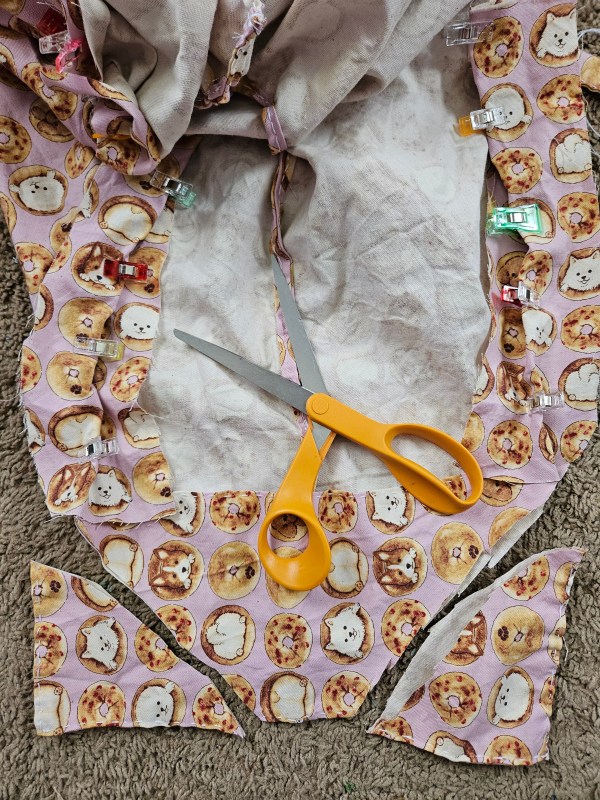
I’ve been looking at how to make a custom overalls pattern, based on drafting techniques, which I began with this post: Drafting Shortalls from Scratch. But how to construct them? Well, that’s what I plan to explore today! To do this, yesterday, I cut out another pair of overalls, this time for the fall-winter-spring season, to retrace my steps.

Step One

With your pieces cut out according to your measurements, you should have four leg pieces – two front and two back. The next two bib pieces should be cut out, with the back piece cut a bit differently to accommodate the straps. This is to anchor the straps at the middle of your shoulders to keep the overalls securely on your frame.

Step Two

I like to begin with the pants or shorts portion of an overall project, because they are foundational to the silhouette. I like to pin the leg pieces together to try on before sewing. Remember to leave several inches of the outer thigh seams pinned for the flies and buttons.

Once you know that the pieces will fit, with seam allowance accounted for, I begin sewing the leg pieces together, leaving out the crotch seam and the top part of the inseam, to attach the two pieces as one pair of pants. After these have been sewn together and I have tried them on, I will move on to the bib.

Step Three

For less bulk, I like to cut the seams of the crotch portion and leg seams that will join together, with pinking shears, to make my hems less thick. This lets the sewing machine, or your hand sewing needle, pass through the seam with ease, and is more comfortable to wear.

How do you join pants? Well, you leave the top of the inseam open so that those two inseams will line up together, making the two legs join at the top where the pelvis is. Remember this is a bifurcated garment, so you want your final shape to be two tubes, joined to make one tube at the top. I’ve messed this up several times; it’s okay even if you sew it wrong the first thousand times. That is what mockups and seam rippers are for!

Step Four

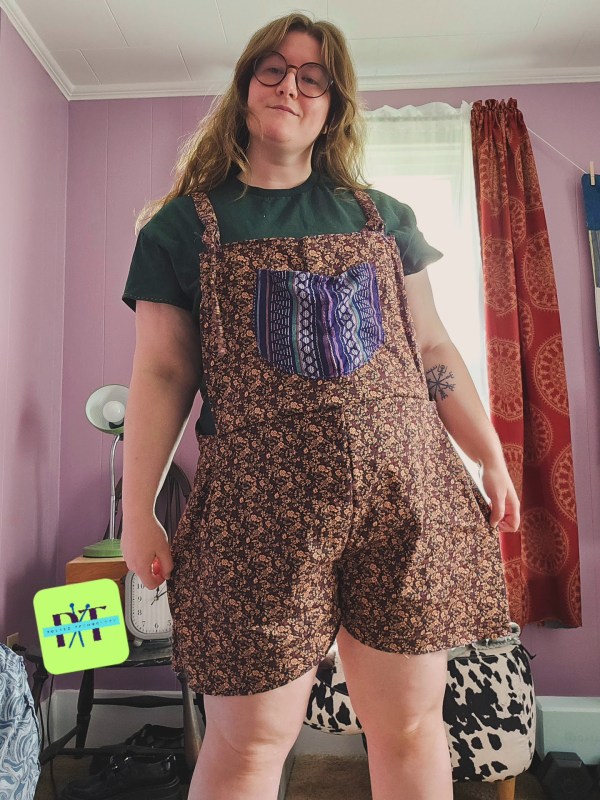
For the bib of these overalls pictured above, they were cut into short pieces, so I just had to join these pieces together. I added a facing to the inside of the bibs, which is just a piece of the fabric’s right side facing inside, so that the bibs are finished cleaner around the neckline.

I inserted the straps between the facing and the bib for a clean and secure stitch. The straps were finished with a loop on either side of the front bib to tie around, instead of the metal fastenings. I was inspired by Lucy and Yak Dungarees.

Step Five

The final touches are the bias tape, the side buttons, and the five pockets. I find the bias tape the most mundane thing; therefore, I choose to do that next, which is a 1-2″ ribbon of the fabric used to finish the raw edges still exposed on the sides.

Step Six

Next, I created the flies on either side by folding over the fabric to make the button placket and button hole placket. This was planned out when I cut out the overalls. After making the button holes and finishing them with either the machine or by hand, I mark out on the other side where the holes overlap to mark for buttons.

Step Seven

Finally, I sew the pockets. I chose a large, half-rounded bib pocket on the front, two smaller rectangle pockets on the backside, and medium side pockets sewn across the hip. Next? Enjoy your creation and feel a sense of accomplishment. You did something hard, and probably felt lost at times, but you persevered to learn a new skill. It’s not cringeworthy to try. So go for it! ❤

Can I Make Mid-Size Overalls from 1 Yard of Fabric?

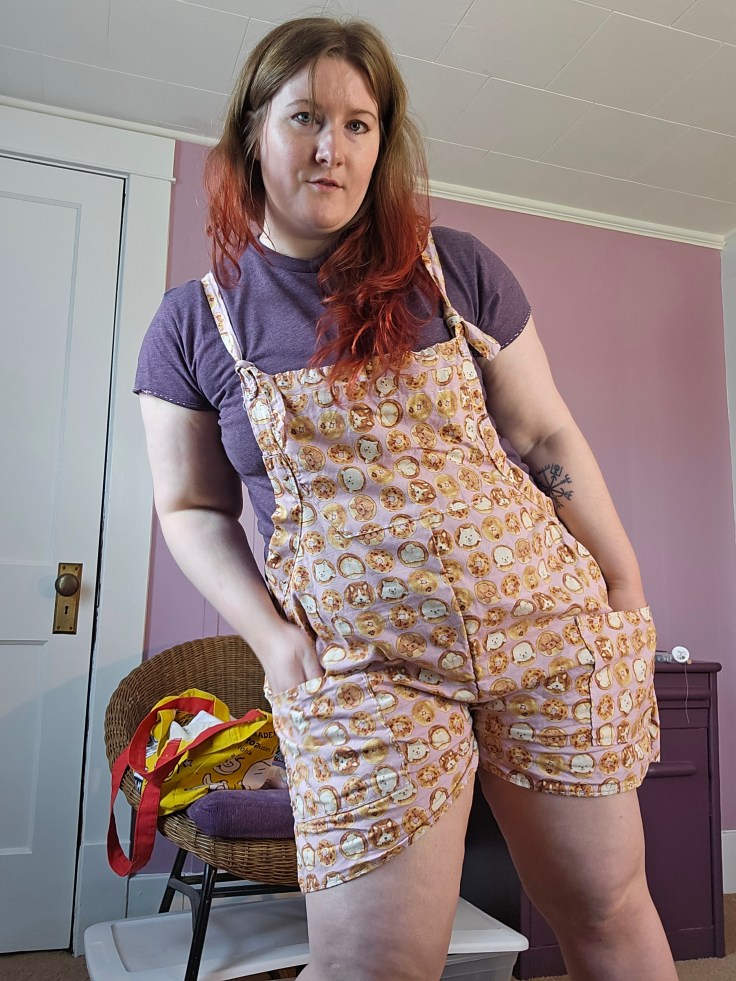
Do you ever think of something you’ve accomplished and wonder if you could do it even smaller? Well, I set a challenge for myself. A year ago, I wrote about creating a summer dress with a button-front from less than 1.5 yards of fabric. That post inspired this one, as this summer I was able to squeak out a pair of shortalls (overall shorts) from a yard of 59″ stretch twill from Mood Fabrics. This was not my first overall attempt, but I think my most ambitious because this yardage was for a pair of shorts with some abundant pockets, but I changed my mind after seeing a variety of overalls styled for spring and summer. I’ve owned this style before in denim. My favorite version I’ve purchased was a pair of vintage ’90s denim shortalls that were baggy and breathable for those swampy summer days. The more fitted versions I’ve found in stores in recent years are not my cup of tea, because for me, overalls are best when they are oversized.

When I cut these overalls out, I had just completed my draft of an overalls pattern from 2 yards of 44″ cotton twill from Kokka Fabrics, and I was itching to make more without fabric shopping, so I went for a dig in my fabric/yarn closet. It’s more of an antique clothing press, to be fair. This is where I found my gold – 1 yard of 59″ across cotton twill in a fun pattern, sturdy enough for a bottom weight garment with just enough fabric to cut the shorts, the bib, the straps. That was all I could muster for sure. I set aside the project and got to work on my Kokka Fabric project, which taught me so many things about sewing overalls that I had overlooked in past attempts.

Firstly, the back bib is not a rectangle. Secondly, a facing for the bib makes the project feel more professional. Thirdly, the buttons on the side need to be properly assembled with the fly for the right stability. Finishing the edges with twill tape made from the project’s fabric helped create a crisp look. Fourth, the overalls need pockets in order for the garment to sit well on the body. Lastly, I did not accomplish these with my 1-yard of fabric overalls. I took some shortcuts.

I ran out of fabric for the pockets, the fly, and the twill tape. To remedy this, I kept the shape to a romper style and less of a traditional overall. The bib is rectangular on both the front and back. The pockets were added from a previous project; I upcycled shorts into pockets. The side does not have any fastening, instead I sewed up the seam and let the boxy cut of the shorts and stretch of the fabric help me compensate for my lack of fabric.

So if this project is a pair of overalls that is not a traditional overall, but more of a romper, why am I writing about this?

Well, because the finished product is a wonderfully comfortable garment, practical for many things – gardening, sewing, cooking, knitting, farmers market, apple picking, cleaning, walking in the woods, going to the beach, etc – and I made it without being an expert. I made this garment through hand sewing, so you don’t even need a sewing machine if it’s out of your current budget. I purchased this fabric on sale for 10 USD/yard. I used less than a spool of thread, and repurposed the pockets from an item in my closet that I didn’t want to wear anymore. Have you seen the price of overalls? They are expensive, even the short version. A low-quality version will still set you back 30 USD.

I made these with 10 USD of fabric for a midsize frame, so this is accessible to all of us, not just the slim people. A lot of popular and cheap DIYs on the internet are made for very small bodies, which makes me nervous that if I try it, it will be expensive, but this wasn’t. Making these overalls was incredibly rewarding, too. These aren’t even the best pair I’ve made this summer, I’ll share the other ones soon! But these ones will have a special place in my heart because they are unique, comfortable, and made with my own hands. So if you have an idea of how you could make something by hand, make it happen! It’s a lot easier than you think, a great learning experience, and there are tons of resources here online to help you succeed!

Flannel Upcycling | Making A Vest

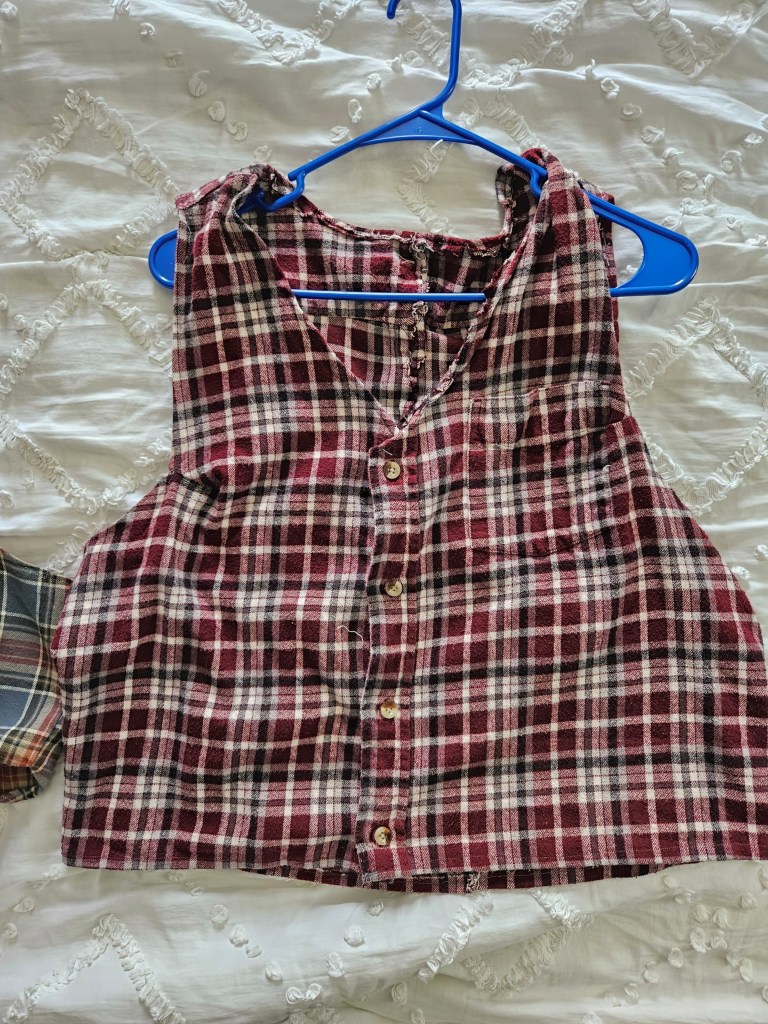
Last summer, I wanted to introduce vests into my wardrobe. I have made vests before for Kyle, but have not sewn a vest for myself before; I have knit them. Because this was a spontaneous idea, I needed to be budget-conscious and find a way to use what I had to make a vest. So I went to my closet and got creative! I had a few flannels in my closet that were hanging there, waiting for me to wear them, but I didn’t. That’s when I looked at the shirts closely – there was a button placket, shoulder yoke, and a sturdy fabric, with room to crop them. I saw the vest within the shirt, so I grabbed my scissors—and was a bit too zealous with the first one! Don’t be like me, have a plan. So how did I make this upcycle work? And what did I learn from my failed attempt?

Shoulder Seams, Yoke, and Waist Length

The crucial points of cutting, I would say, are being aware of the shoulder seams, accounting for the back yoke width, and properly measuring your waist length for a proper fit.

  • Shoulder seams on a flannel are boxy and loose. To achieve the set-in sleeve opening that accentuates and reveals the shirt underneath, you need to cut away the shoulder line – but not too much. Be mindful of how far into the shoulder you plan to cut, so that you are left with a proportional line.
  • The shoulder yoke is a technique used to tailor the shoulder line, while leaving the fabric below the shoulder loose. As a result, there will be more fabric on the back of the vest, which may affect the fit of the arm openings and possibly require a dart to remedy the loose fabric. If not, the back will gape open, looking awkward and like a mistake. A vest should hug the body, be tailored, or else the upcycle will look exactly like you cut up a flannel.
  • The length of the vest determines the style and balance of an outfit. One of my vests I cut too short, and this limits how I can wear it. I find it cuts me off in a regency high-waisted fashion that is fine when I wear it with a high-waisted skirt, but with pants or my linen Darcy shirt, it’s awkward. The other vest was cropped, in a careful fashion, ending at my hip and balancing my body line like a well-tailored garment. It’s far more versatile.
  • Cutting the neckline is crucial. For the front, a tapered cut to the button placket provides the classic look. Be careful not to cut too low for a historical silhouette. Also, remember not to cut the back the same as the front! I made this mistake and had to sew the cut portion back into my vest. This should be a crew neck line, straight across, with a slight dip in the middle for comfort.

Why a Flannel Shirt?

I chose flannel shirts as my medium to work with for three specific reasons. The first one I already mentioned – cost. We had just moved into our house and paid quarterly taxes. The vests were not a necessity, just a whim, so it made sense to me to take an existing item, I didn’t wear to create something I would wear. It’s funny how the sustainable option is sometimes the free option too. Secondly, flannel is a sturdy fabric, appropriate for the structure of the vest, that could be sewn without the addition of a lining, which I could add later if I wished, when I was more comfortable spending money on fabric. Thirdly, flannel is a classic pattern that reminded me of the woven woolen coating fabrics that vests have been sewn with for centuries, so it was a good match! I hope this inspires you to repurpose items you have to make something new! For the rest of the flannel, the pieces I cut away, like the sleeves, stay tuned to see what I did with those. It’s one of my favorite makes. 🙂

Designing Clothing That Fluctuates With You

This is inspired by a discussion from Maybe Bre, which made me reflect on something I hadn’t discussed before. As well as my own experience wearing clothing, as a garden-variety human who loves fashion but doesn’t always enjoy how our clothing is made.

By this, I mean the patterns and fastening of our modern times. The zipper is a wonderful thing, and so is the structured waistband. I love them in jeans because denim that isn’t compromised by stretch is a rugged and sturdy garment that isn’t a piece that conforms to you; your body is housed within the trousers. I feel the same way about a structured coat. In doing so, I buy these pieces oversized for comfort, which leaves me with a garment that most of the time doesn’t technically fit me. If I did buy it to fit me right now, there is no guarantee that over many decades it would continue to fit me – I’ve been burned before by this problem. Hence, all my “staple, investment pieces” from college no longer live in my closet because they are no longer my size. If I had planned ahead and bought them a bit oversized, they might still be with me, but they wouldn’t have “fit” me at the time.

My problem with clothing is becoming clear, isn’t it? I desire longevity and wearability from clothing, in a way that is not offered off the rack. I desire my clothes to grow and shrink with me, depending on how my body changes over time. This has been my design focus in the last few years as I have placed myself in the driver’s seat of my wardrobe through the process of sewing and knitting.

My idea is not innovative; it is historical. Clothing, because it was so expensive and hard to make, was more adaptable in the past. Fastenings such as tie waist, lacing, and buttons with multiple sizes of tightness were common because clothing was not as easy or cheap, and they were not seen as disposable or replaceable. Changing fashions came with garment reworks, ye olde upcycling as it were. This is what I desire: the ability to change the fit of my garment.

I recently figured out how to sew with elastic, which is a game-changer for shorts and gathered sleeve hems! Before this, though, I was making most of my bottomweight garments with tie waists or several options of buttons to let the garment adjust to the needs of the day, I’ve also sewed with intentional relaxed fit, initially due to a lack of tailoring skill but over time it has been to allow wiggle room in pieces I have spent days or weeks of my life crafting.

Being present in the making process has taught me to treat my clothing with more respect, even when it is time to discard the current version of it for something more useful. I’ve stopped donating as much, decluttering, and rebuying, to be honest, to be more intentional with the garment and its life cycle. I am the one who brought it to life, I can’t simply consume and discard it like it is nothing. I am deprogramming my brain from decades of fast fashion insanity.

I believe if clothing were made with this design philosophy, that clothing would fluctuate with you over time, I believe we would enjoy wearing our clothing more because instead of buying stretch fabric everything, we could still wear good natural fibers, maybe a bit bulkier than spandex and less figure hugging and lurex denim, but would be better for the humans and the planet. Style and substance, as they say on the Great British Baking Show!

Playing Animal Crossing Has Improved My Style

As a kid, one of my favorite pastimes was designing. I loved the fashion styling flash games from Lizzie McGuire and My Scene. I designed my own catalog of clothes for a made-up brand with my friends in 4th grade, illustrating with my school supplies and piecing it together with scrap paper. Mary-Kate and Ashley’s movies captured my imagination through their use of clothes to characterize each sister’s personality.

That’s So Raven enveloped me in imagination, not from her psychic abilities, no, Raven Baxter’s closet pulled me in! Raven’s room was a stunner as well, like Zenon Kar’s space station cabin, and my Fashion Polly’s colorful playsets that folded out like Richard Hammond’s caravan. My friends and I discovered shows like What Not To Wear and Trading Spaces, which launched my sketches from clothing brands to interior design. I had a notebook full of room drawings. There were designs with slides, hammock beds, and intricate themes. I drew a Survivor-themed room with a tribal council area on the lower level, an outer space room with circular windows and futuristic lighting, even a beach room with a lofted bed, sunset paint scheme, and a pool placed in the middle of the floor. I wish I knew what happened to these sketches; it’s been such a long time.

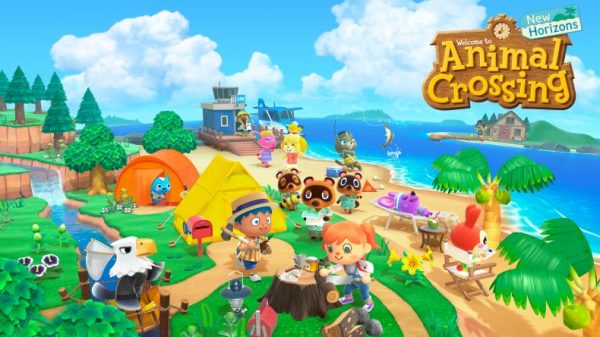
When I discovered Animal Crossing in 2020, I was curious what the fuss was about, and later the next year, we bought a Nintendo Switch, opening a world of design I thought was lost to childhood. I was thrilled! Animal Crossing New Horizons debuted in March 2020, and because of the unique time, it had a huge following for its charming island life. You begin your game landing on a deserted island as part of a Nook Inc. Getaway Package, and assist Tom Nook in developing the island with the help of Timmy, Tommy, Dodo Airlines, Blathers, Isabelle, and the villagers who move to the island with you.

But what about the fashion and the home decor? This game first places you in a tent that you upgrade into a house, with subsequent expansions costing large sums, but with a relaxed payment policy. You also gain the ability to design custom things with Nook Mile redemption upgrades, craft unique recipes from resources on the island, and buy items from Nook’s Cranny and clothing items from Able Sisters. A ridiculous amount of my gameplay, even years later, comes from pairing and collecting new clothing items for my character to wear on her adventures. This game loves coordination!

As a player who is well-versed in the Animal Crossing fashion catalog, I wait and anticipate finding my favorite pieces with each new island. The game has four seasons, with clothing corresponding to the season at play, including specialty garments for holidays. Currently, as I play in June, it’s wedding season and Able Sisters is selling traditional Japanese wedding attire, Nook Shopping is selling Father’s Day items, and International Children’s Day pieces, which include a paper crown that is oh so cute!

How has this impacted my own personal style, though? Well, it has brought me back to the mindset of creating a full look. Working from home or working in professional painting at jobsites for most of my adult life has killed the style I used to have. I no longer felt the need to put together a look, but instead I got used to throwing on pieces and wearing things for function, not fashion. But that’s not who I really am, just what the environment of life drifted me into. I was missing intentionality, Animal Crossing lit that spark once again. My little character doesn’t just get dressed to do life; she wears a head-to-toe look with hats, bags, glasses, specialty socks, clever shoes, cute tools, and interestingly paired garments. This game got me out of jeans and a t-shirt, or a hoodie and leggings, because this game has trousers in many fabrics and shapes, shorts in colorful prints, skirts in a bouquet of fancy, coats, hats a plenty, tops that span the seasons – it’s a blast to explore! There are dresses – modern and traditional. I can where a kimono! I change her outfit at least once, maybe three times a session. You can also curate hairstyles and experiment with colors.

This exercise has shown me that pink hair is something I’d like to try. It’s my most-used fashion color. It has inspired me to introduce cute socks of varying heights and weights to my wardrobe, even making some of them. I’ve started wearing hats anytime I leave the house – it pulls the look together! My taste in bags has changed; no longer an option for a sleek purse that looks designer, instead give me a duck bag with feet. I love colorful knitwear, flowing skirts, and shoes that are beyond my comfort zone of boots and Converse. Taking those moments in the game to pair weird combinations together has positively impacted my design sensibility. When I plan a sewing or knitting project, I take into account what I’ve learned from dressing up my character, seeking to inject the whimsy and delightful wares of Animal Crossing into my real-life closet. I’m not the only one; I’ve seen this across Pinterest, YouTube, and Instagram.

But what about interior design? Well, this game not only presents the opportunity to design your house and the island, but you can also download Happy Home Paradise to design vacation homes for clients. This has really challenged me in a fun sandbox way to care about how a room is put together. I’ve become far more intentional about my furniture layout, what types of pieces I want to bring into my space, and how I want to pair pieces for a style that tells a story.

Buying a house last year was the icing on the cake of this new foray into design, as we have painted rooms and dug the garden beds, I’ve felt like it is Animal Crossing come to life. I have this canvas to put my stamp on. Moving from rented landlord-beige homes to a space where we can be colorful, it has shown me that the little details do make a space more welcoming and conducive for creating. The simple act of moving our dining room table from one side of the room to the center, allowing for walkways on either side, has made the room a place I want to be instead of a place I pass through. By filling the empty gaps of cabinets in our kitchen with tables, shelves, and a microwave stand, we have transformed the empty space into a room that feels complete. The simple change of painting my sewing room lavender created an entire mood, a calming and happy vibe that makes me excited to work within those four walls. The garden beds and the screened-in porch have been works of dimension, the outdoor space has useful and designated spaces for us to use that make it more beautiful and purposeful.

I am filled with a sense of possibility again, like the girl who sketched those rooms in a notebook, instead of a person muddling through life. In this time when we feel burned out by AI and stale creativity, it’s been electric to feel the sparks of imagination. The crafting aspect of the game has inspired me to be more creative in my own house. We repurpose, re-finish, and build things in our house from scratch. Because of life’s twists and turns, I have a lot of second-hand pieces that at first felt like a let down, like I was poor, but now I see them as incredibly meaningful items that I have the pleasure of caring for in my home. The game’s customization tools, such as kits for sale or the custom services of Cyrus, demonstrate how a coat of paint truly pulls a room together without buying something new.

Did I think when I purchased Animal Crossing New Horizons that I would see an impact on my own design sensibility? Not at all, but it has been the gift that keeps on giving. It’s an incredibly cozy game, full of wonder that I have grown fond of, year over year. Four years later, I still look forward to running around the island, hunting for recipes, wishing on shooting stars, and besting those pesky Happy Home Academy judges. I hope that I never lose my zeal for dress up and design because it is such a fun little way to relax in this wild and wacky world.

My 2025 So Far Has Been A Creative Slump

I can’t believe it’s May already, I’ve been so busy with our garden project and a follow up project of screening in our back porch, distracted by Joann’s closure and the evil running rampant in our world that I have been on a slow creative trajectory, and its really catching up to me!

Upcycling, Alterations, Mending

As of late, the bulk of my sewing projects have been preservation, updates, or reworking the garment into something new. In mid-winter, I decided to tailor every t-shirt in my closet. This meant I would be hemming every shirt to end above my hip and bringing the end of the sleeve upward, to end higher on my arm, which is more flattering to my vertical line. I’ve had to repair a few garments and mend some older pieces. I’ve also been taking some of my clothes in and tearing them apart to be upcycled into new projects I can’t wait to share. That I thought I already shared. This leads me to the next point: I have a backlog of projects I held back last fall.

The Head Games of Content

I still battle imposter syndrome, and in doing so, last year, feared that I would run out of ideas. So I slowed down my posting to keep these good ideas and projects in the tank for a rainy day, and instead of this giving me the freedom to create and write without pressure this gave my type-B nature and out to avoid writing, because I had the ideas, and so I sat on them and now it is almost a year later, without these projects having their time to shine. Grinding it out on Instagram last year definitely took my focus from me, and then these constant recession fears have kept me in a place of fear, which has stifled my desire to create, in case I can’t buy more materials in the future. I worry too much. Writing for two years, on this site, led me to a sophomoric slump heading into 2025. I lost the urgency to keep going and backslid into complacency and a lack of creativity. I have also transitioned into a slower creative process in hopes of gaining that spark again!

Hand Sewing 2: Electric Boogaloo

When I began sewing in 2020, I did so through sewing by hand through the tutorials of Bernadette Banner. I did this for two years and then acquired my Heavy Duty Singer, which I switched to using exclusively from the end of 2022 through the beginning of 2025. But this year, I am having some struggles with my sewing machine. I love the speed at which you can make things, but I fear that this boost in speed has dampened my craftsmanship.

When I was sewing by hand, I had the time to consider the project and to ponder where the design was going to lead me. With my sewing machine, I have fallen into a bad habit of making without pausing to ponder. I also started designing simpler, easier-to-sew garments for efficiency instead of art. But speaking of efficiency, I don’t think sewing machines are as efficient as we make them out to be. Mine is quite finicky. It eats fabric and thread. I go through the thread considerably quicker using my Singer than I do by hand. I have to rip seams and sew again, many times, because the machine messed up a stitch or skipped stitches altogether, and I’m tired of it. So my machine and I are taking some time apart.

Slow and Steady, A Life of WIPs

And so, here I am months later with a few finished garments, many WIPs, and a better life balance. Including a refreshed creative well. The time spent working outside with Kyle crafting our screened porch, tilling garden beds, painting, upcycling furniture, studying Japanese, drawing, reading, exercising, etc, has been a wonderful way to remember why I love creating. I find knitting to be my happy place. For a week, I barely knitted, and my mind was filled with far more rage without the needles weaving yarn into cloth. I’ve come to a place in my sewing journey where I want to learn and be ambitious again. I’ve filled my closet with good handmade pieces, but I want to create exceptional, one-of-a-kind things.

I have learned that knitting is my favorite mode of creation, and sewing is the freedom to make what I don’t want to buy or can’t find offered. The process is just as important as the final product, as trite as that is, creation and crafting are where we thrive, not consuming. I find moments of calm in working with my hands and feel satisfaction in stepping away to old creative haunts, like painting or gardening. I think the slump was an important part of growing. I hope that you find creative refreshment and know that you are loved. Stay safe out there, these are dangerous times, and know that I care about you all very much.

What About the Garment Workers? 2025 Edition

There are a lot of things about this new Trump term that are setting my jaw. The newest one, though, happens to be the tariffs zeroing in on Vietnam, and something we are losing sight of in this discussion—what is going to happen to garment workers?

Vietnam is one of many countries in the global south that are responsible for the garments and shoes we wear every day. In May 2024, they surpassed China as the largest textile and garment market share for U.S. imports. The nation employs around 2.5 million people within the 6000 garment and textile factories across Vietnam. This rapid growth of 37 billion USD worth of garments being made in Vietnam in 2024, from 26 billion USD in 2017, is due to the low wages of Vietnam compared to the higher wages of China and even higher wages in the United States. In the 1980s, before Clinton’s NAFTA in 1993, garments sold in American stores were made in the United States, but this changed during the Clinton era and has gotten worse in the 32 years since through the rise of fast fashion and the fashion industry’s reliance on cheap labor at the expense of the garment workers.

So, now we bring the so-called “Liberation Day” of tariffs, and since this is a space I like to keep safe, I’m going to move on because I have nothing nice to say. What I want to focus on is not making this job American again, the rising prices of garments, or anything political, and instead I’d like to zero in on what seeing the world with a Kingdom (God’s Kingdom that is) lens has taught me so far this year.

I’d say that my eyes being opened began last year with diving deeper into Fashion Roadman’s channel, which led me to watch two documentaries – The True Cost of Fast Fashion and Perfume’s Dark Secret in 2024. The other revelations that were exposed in 2024 such as the labor practices of Armani and Dior, were very telling for how are garments are made from luxury to fast fashion. It’s no secret that the fashion industry, including luxury brands, is not concerned with the moral cost of their decisions and is solely focused on getting money in their pockets for their shareholders. So, what is going to happen within the fashion industry as a result of these tariffs set on Vietnam, especially with no sign of negotiation from the Trump Administration? I think it’s going to be bad for everyone.

I think costs from the brands will be cut from the quality of the garments being made, to the materials, to the contracts with these factories. I think garment workers will probably see the biggest hit in their work environment and wages, as their economy is hurt. Or potentially the factories will no longer get these contracts to cut labor costs, meaning the production of garments will be further entrenched with slave labor in countries where workers are exploited. Then what will those women be left with? Garment Workers are primarily women, and they are skilled laborers who could be left without a way to provide income for their families.

It’s not okay for so many reasons.

That is why, as we look towards Easter, I am thinking about those who are oppressed in our world, because Jesus came to be a new Moses and lead us through the Exodus Way. Thank you, dear reader, if you stayed with me on this one. I wish this world weren’t such a downer right now, but just know, although we are from the United States, we are not pleased and empathize with how this is affecting you too. ❤

Potato Technology’s 2024 Autumn Winter Collection

This collection was about upcycling, trying new techniques, and making things that expressed what I like wearing based on previous designs I have made, but with a twist. The items I designed were 75% sourced from existing materials. They were upcycled from items in my closet, hand-me-downs from my mom or grandparents. They were made from destashed yarn I acquired or fabric that had been in my stash for a long time. I focused more on creating with natural materials like wool, linen and as always, I love cotton.

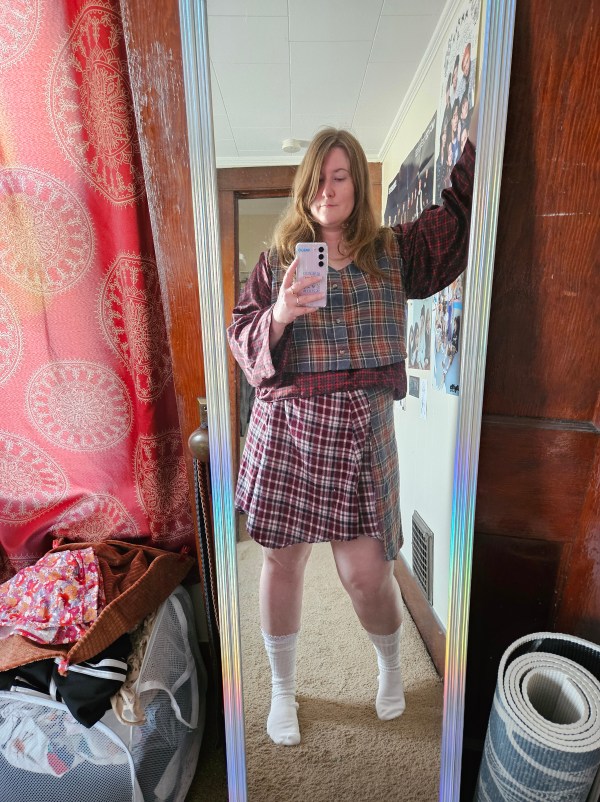
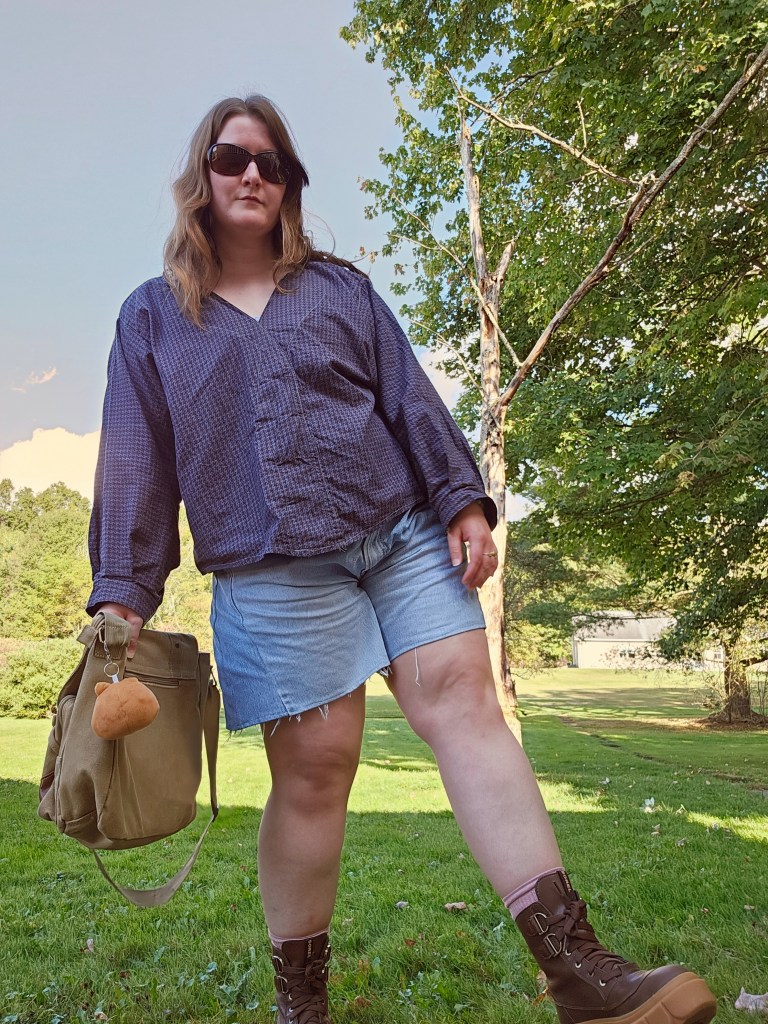
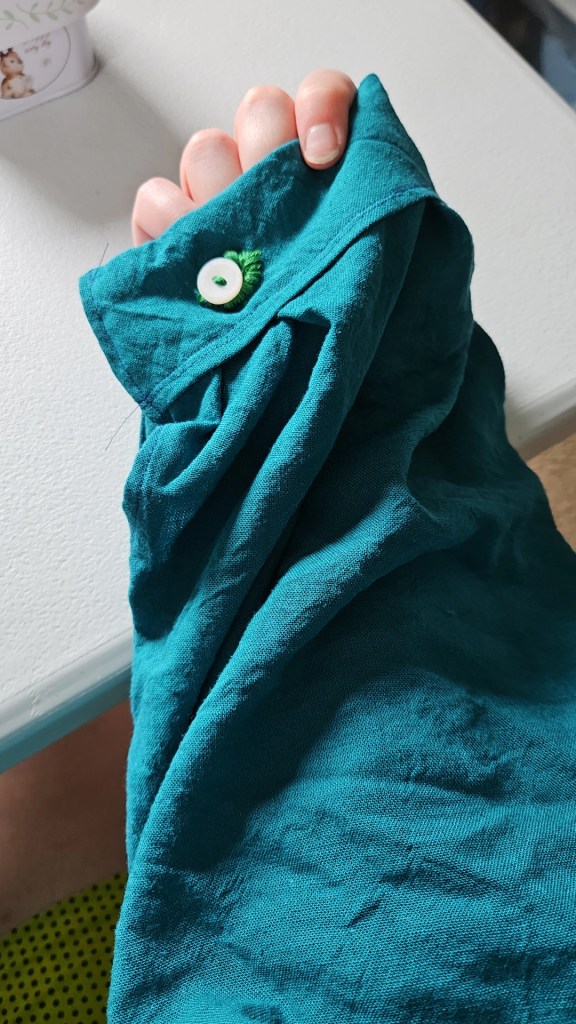
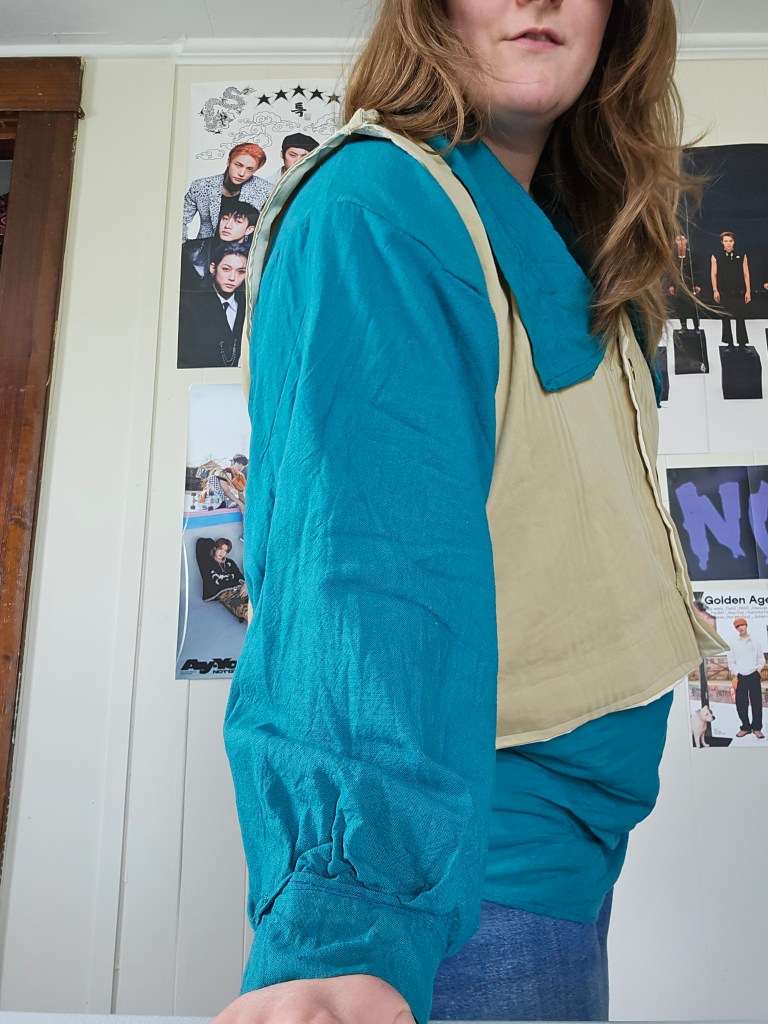
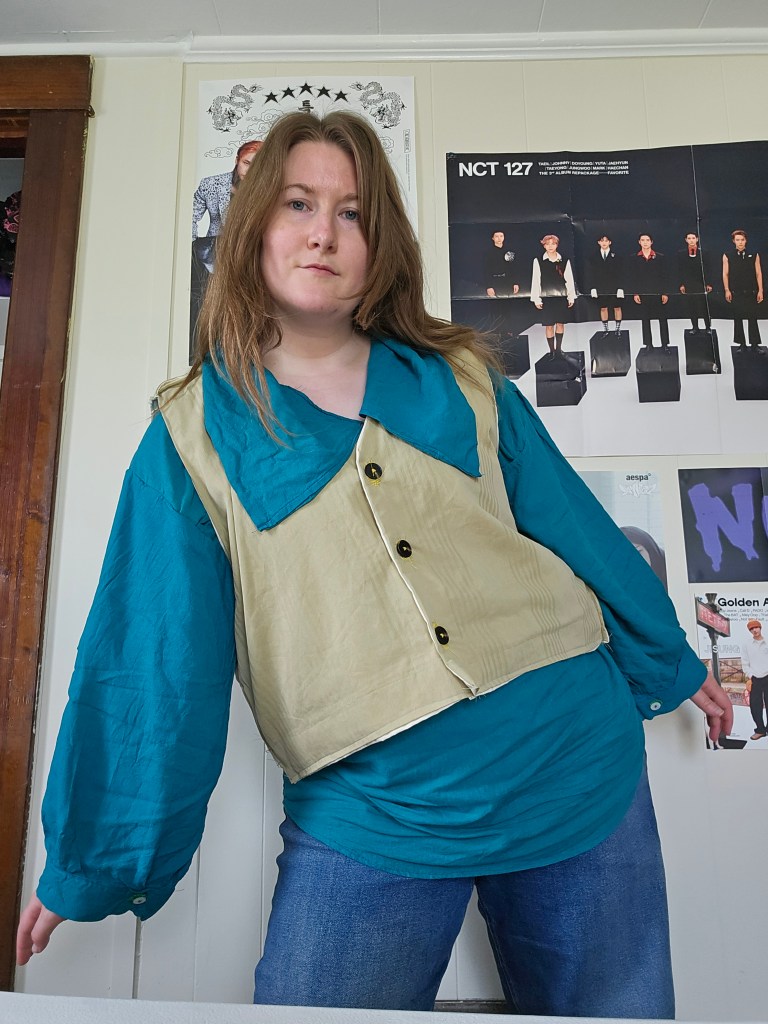
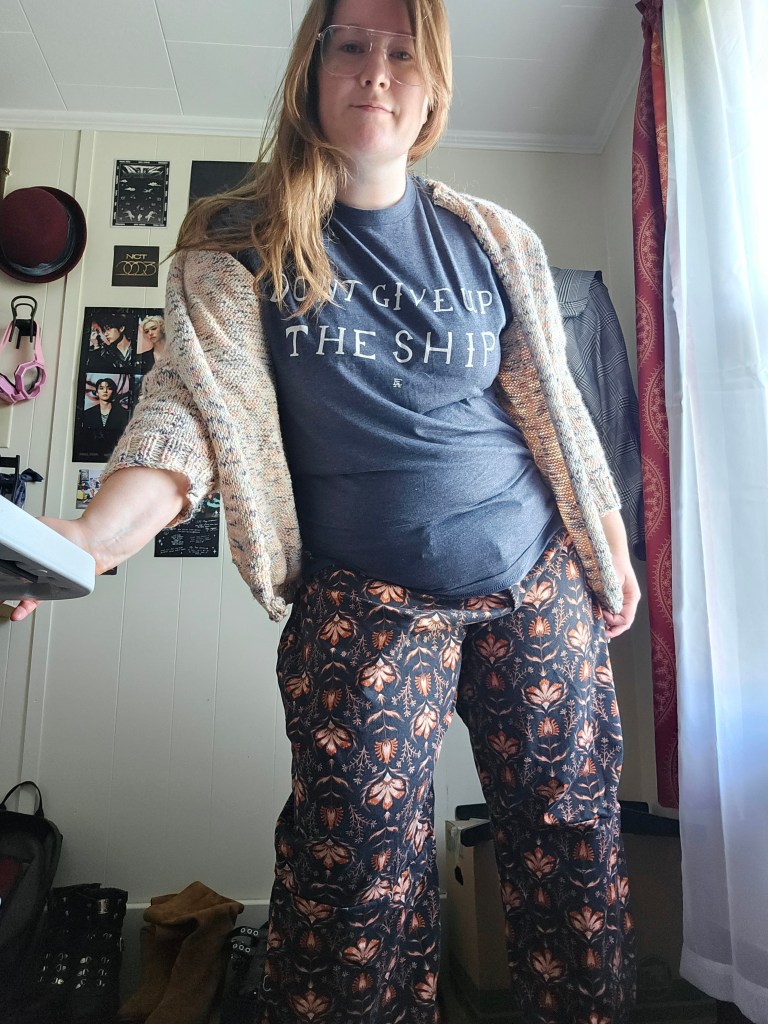
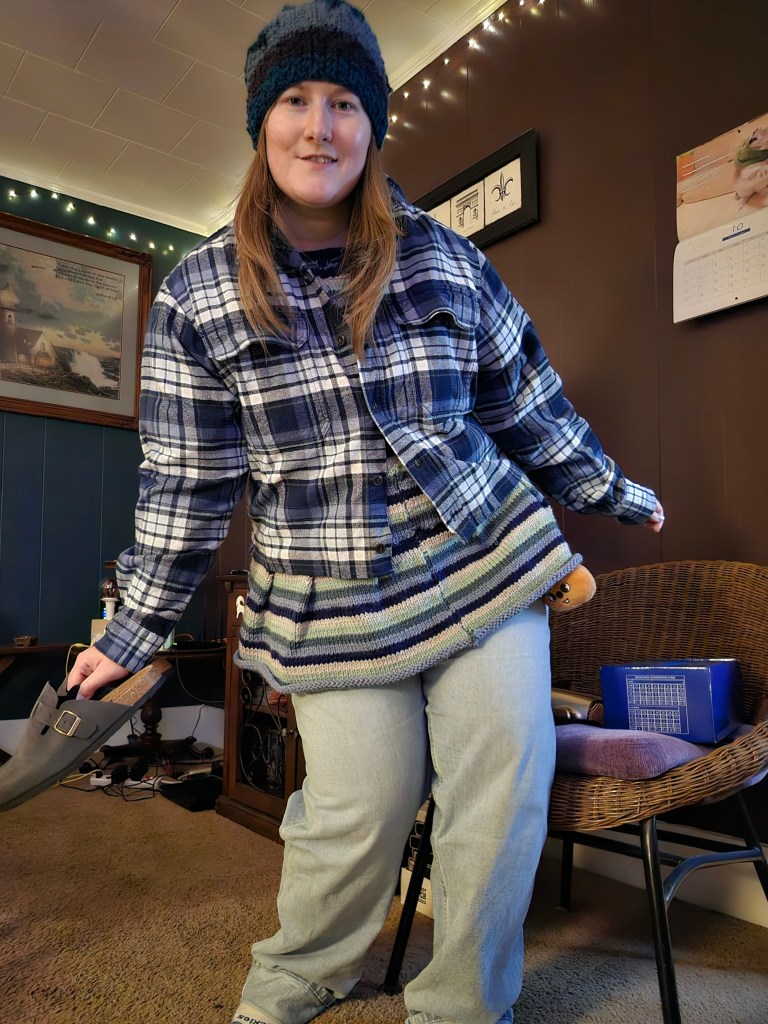
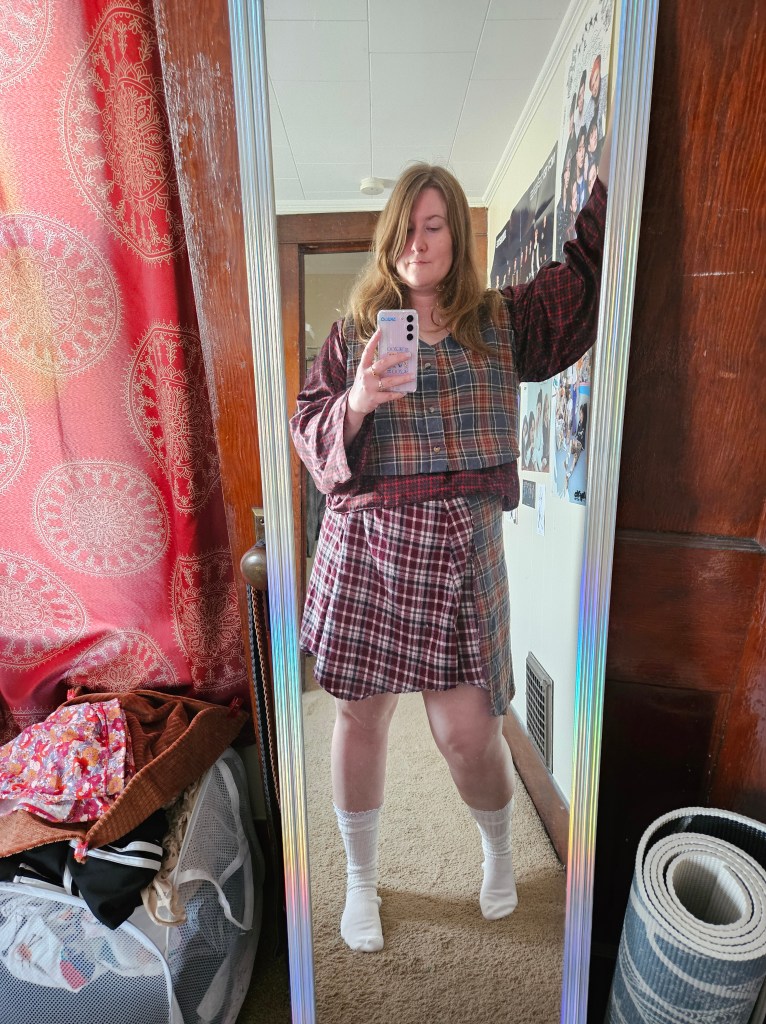
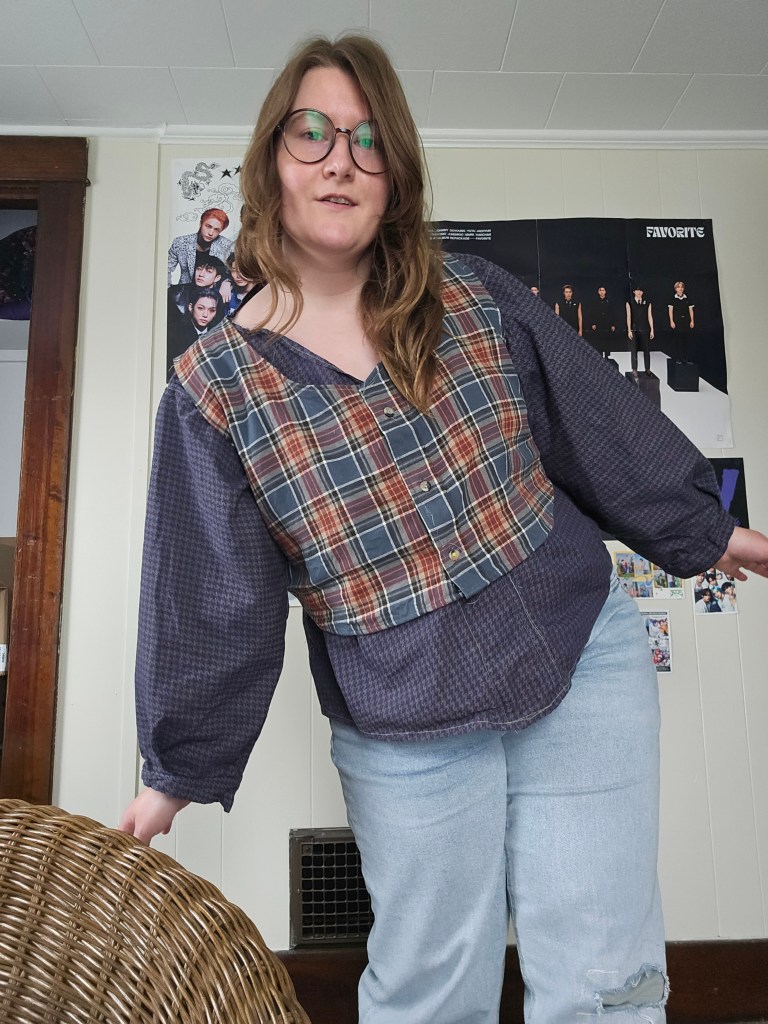
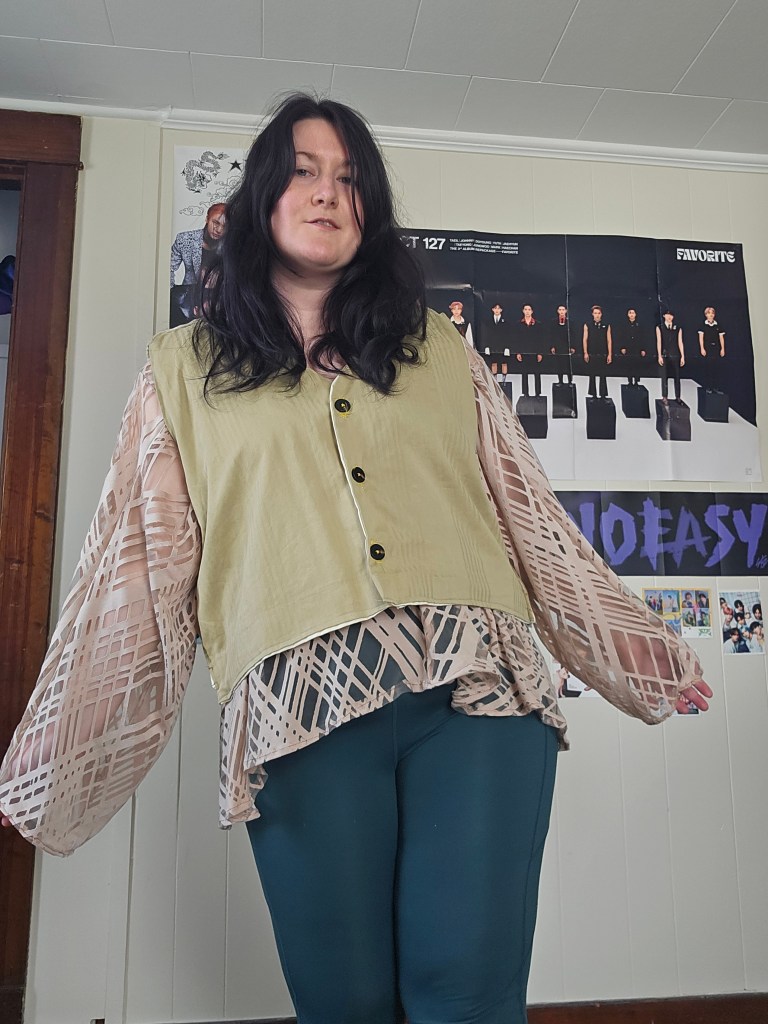
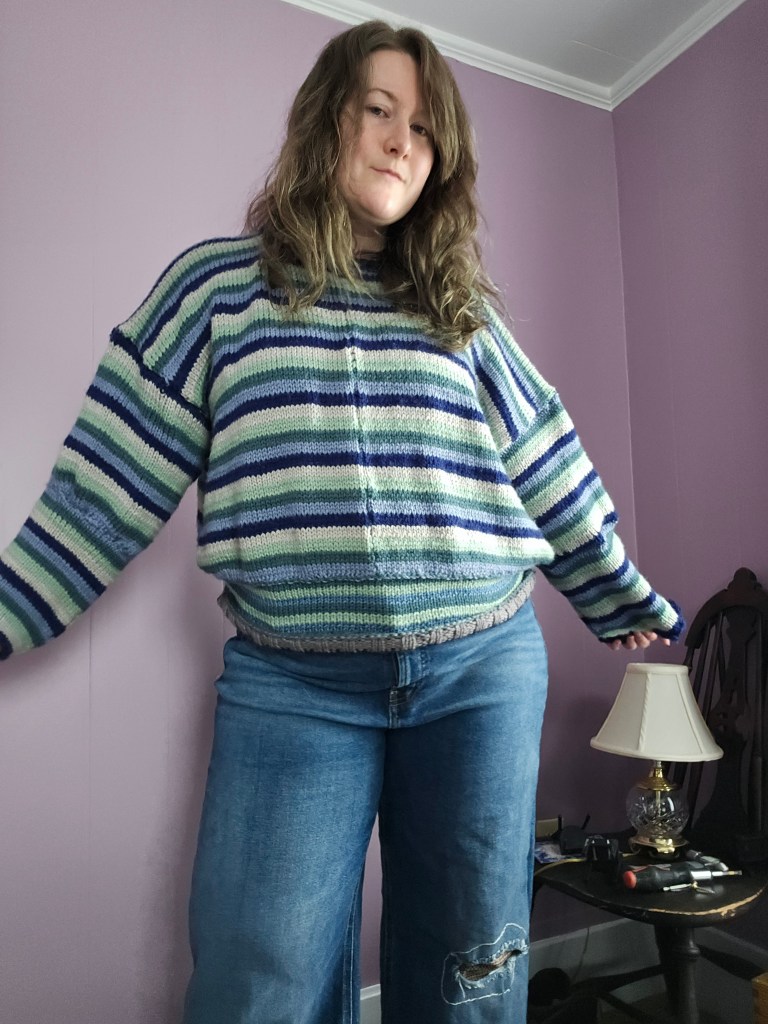
Vests were made from pillow cases and flannels. I re-worked a sweater from the existing sweater and leftover yarn. I dyed denim, deconstructed denim, and made some interesting new shorts and skirts. I combined leftover flannel from Christmas stockings to create a plaid and denim kilt. I used the cut-off sleeves of flannels from my vest projects to create a skirt from four flannel sleeves. I dove deeper into the world of trousers with two new patterns – a floral and railroad stripe. With each pair, I experimented with fastenings and pockets. I constructed my first “Mr. Darcy” shirt from teal linen using Bernadette Banner’s instructions for the body. I put my own spin on the collar, choosing a wider collar similar to a sailor collar that is popular in anime and J-fashion.

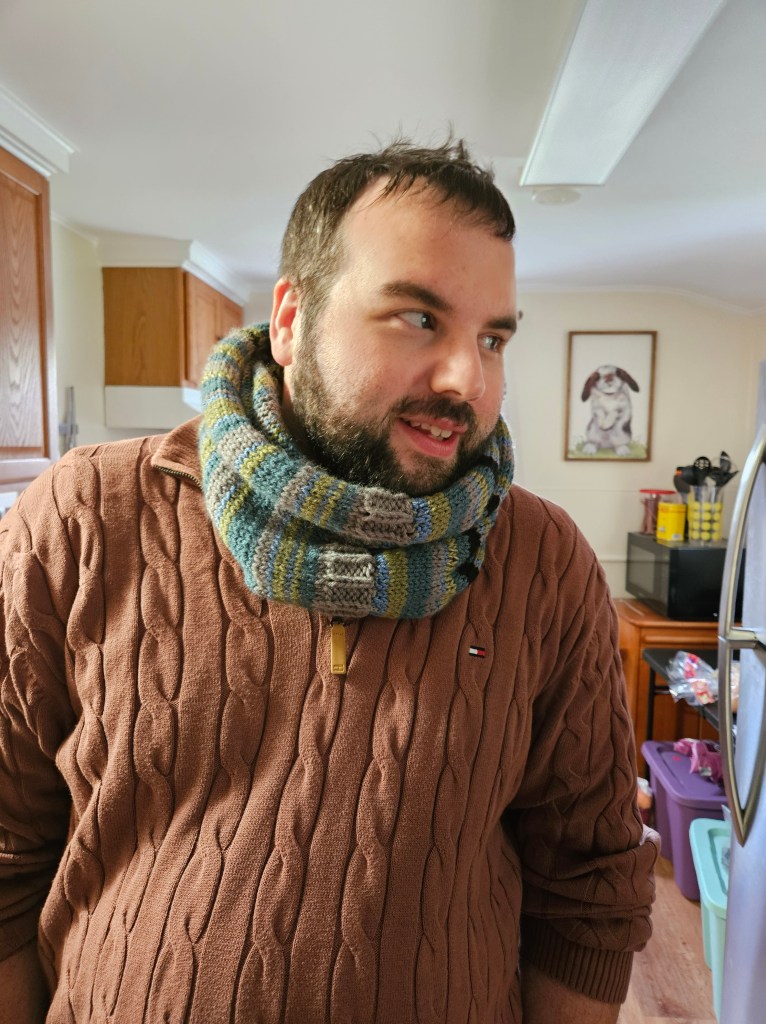
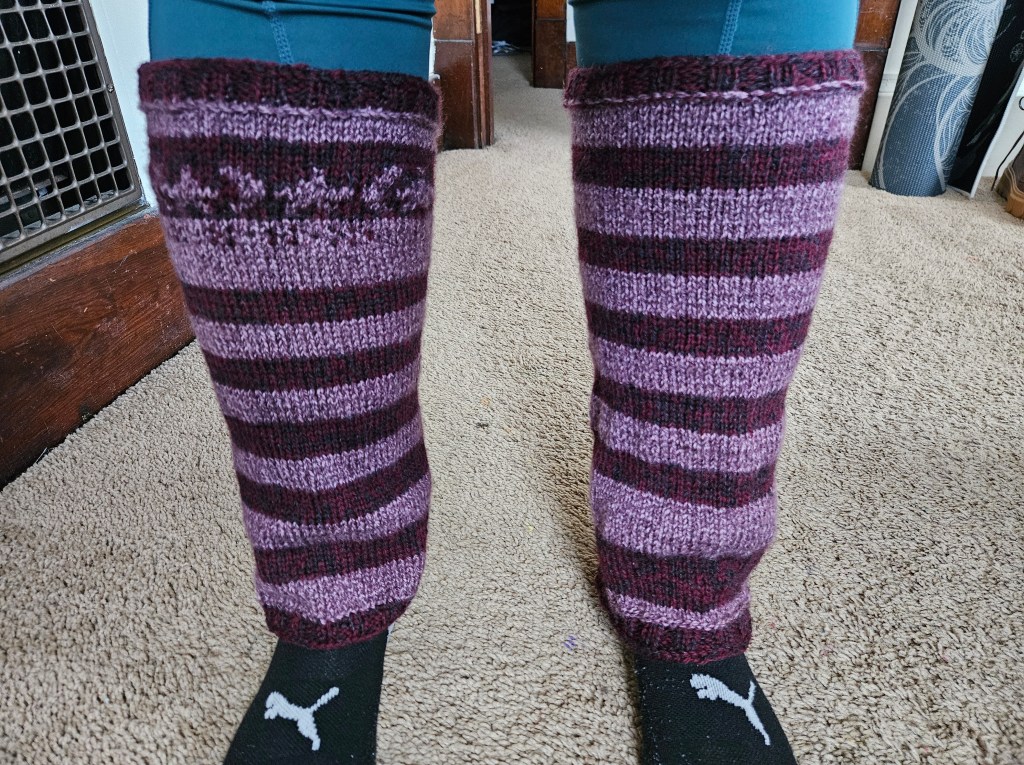
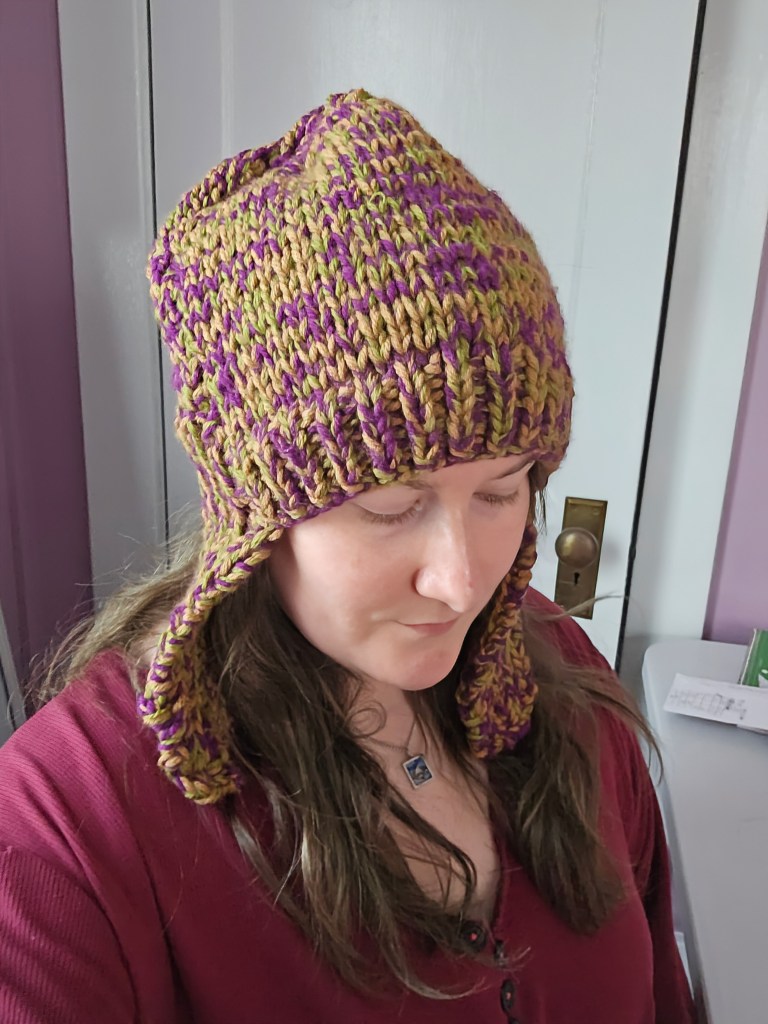
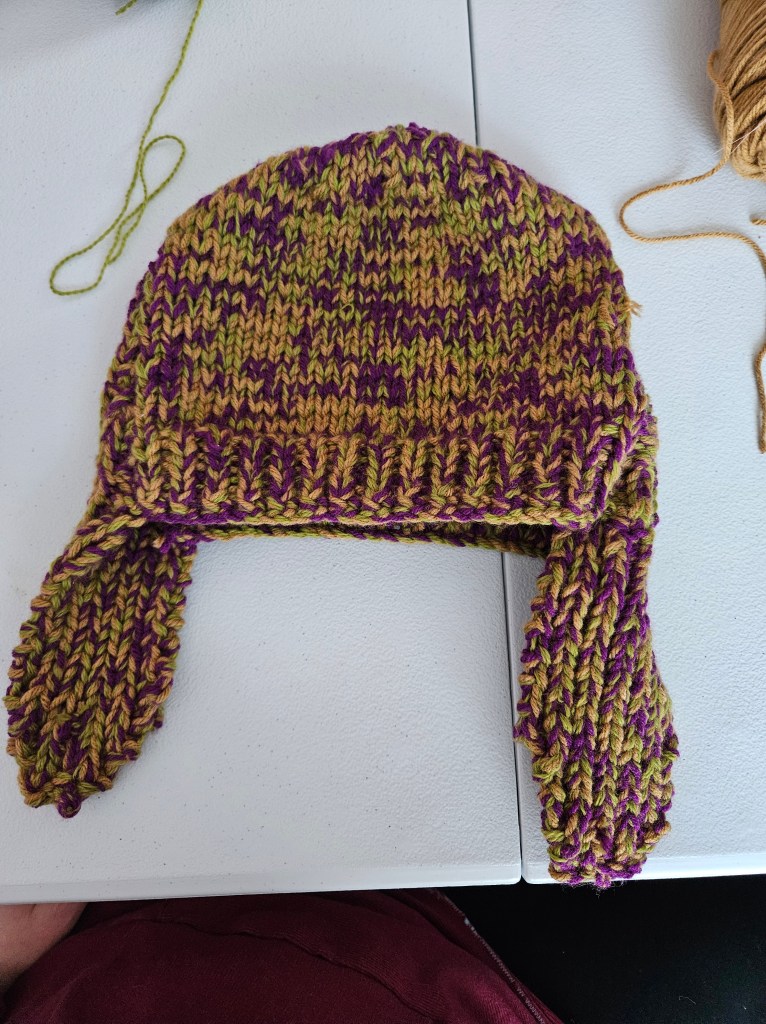
This was the first season I experimented with colorwork in knitting. I made a knit star motif hat from yarn that was leftover from my Magic of Scrap Yarn Cardigan. I made leg warmers, a squirrel motif mitten, and a melange of acrylic and wool to create this ear flap hat that reminds me of medieval European helmets. Although this season of creation was chaotic, I’m not sure if I even included all the projects I worked on, it was a time of great learning. It taught me that fashion design is more than taking raw material and cutting it into a new form.

Great design utilizes new and old. Fashion is about reusing, not wasting, and making things beautiful with careful craftsmanship. It does not mean it needs to be expensive, or need to be made by a great master couturier, it just needs to serve a purpose. We have lost sight of the purpose of fashion, but these projects of upcycling have reminded me that fashion is more than shopping, it is more than consumption, it is about the materials, the vision, the function.

Fashion Feels So Off in 2025

I was talking to my friend recently about fashion week, we bounced between NYFW and PFW in our discussions, primarily NYFW and we both remarked how the spark is gone. Growing up we both lived for those massive February and September issues of American Vogue, but as adults, neither of us read the fashion magazines nor are we swept up in watching a runway show stream on Youtube. In college I remember watching runway shows between classes, soaking up the atmosphere of the music, the makeup, the silhouettes strutting down the long walk away. Now, I hardly care about fashion week. My favorite moments of fashion week are no longer the collections and focus on Hyunjin’s interactions with Donatella at the Versace show and Felix’s runway passes for Nicholas Ghesquiere’s Louis Vuitton Women’s collection.

Out of the two of these collections – Versace and Louis Vuitton, I guess I pay attention to and prefer Donatella’s work, but I’m not looking at the collection, I’m focused on the spectacle anymore with these fashion shows. Versace shows at Milan Fashion Week, not Paris for clarification. I watched a highlight of PFW from Fashion Roadman and was underwhelmed. Even Alexander McQueen cannot get me hyped for the runway anymore. I saw there was a Carhartt collaboration with the brand Sacai which was quite frustrating to me. I’ve worn Carhartt before and it is not my vibe. Some shows reused old items, sorry they presented from the archive, from previous collections for “sustainability” and there was a collection addressing war, which feels a bit like that infamous scene in The Devil Wears Prada.

I know it sounds harsh, but I wish brands would do more for countries around the world than present a “statement” against war with military-inspired pieces when these brands are part of huge conglomerates that have the resources and influence to make a difference and instead, they use fashion to make money from exploited workers. And maybe that is why fashion in 2025 feels so off – fashion is not fun anymore. We know too much, the fashion machine has destroyed so much and is the capitalist monster filled with egos and performative greenwashing.

I’ve mentioned before that I find more inspiration from K-Pop than fashion magazines and that holds true for me in 2025. I’m more interested in customizing my wardrobe and making things personalized to my tastes than following the trend cycle because the trend cycle is regurgitating things from my lifetime that I’m already interested in, such as ballet flats, but assigning them an expiration date and I disagree. By the mid-2010s I was tired of ballet flats, but I had worn them for 10 years at that point and was interested in something new to replace my worn, falling-apart flats. I’d rather pick a reference and get inspired, like watching Seinfeld and writing notes for an outfit I’d like to emulate. But that doesn’t fit with the fashion cycles and seasons, so it’s making the fashion shows seem pointless to me.

But the most off-putting thing I’ve seen this year is the discussion – ‘The Death of Personal Style’ which I have seen explored by Drew Joiner, Mina Le, and Nicky Reardon. This topic has been debated across the internet in spaces I don’t visit like X or TikTok, but I think people are bored and claiming personal style is dying because we need some fresh inspiration. I’ve been in a creative slump so far in 2025 with writing because the internet spaces I hang out in have been so negative this year. Like a communal ennui has rolled in, shrouding creative people in a fog. It’s been hard to not buy into the mindset and I’ve been a member of the club after seeing how worried my loved ones are that are facing being cut from their job or their career sector being gutted. Fiber artists and sewists are definitely in a delicate place right now, finding a new normal after Joann’s.

Yeah, it’s weird. I hate change, and I fear the past being repeated, but something struck me last night after watching two videos that have nothing to do with fashion but humor me. The YouTube creator Suibhne (Swee-nee) makes historical content about countries around the world, I in particular chose The History of Korea and The History of Japan to watch, and it’s heavy. What happened between Korea and Japan in the Sino-Japanese War has had lasting consequences, but so has European colonialism in Asia and America’s forced opening of Japan through Commodore Matthew Perry.

Watching these videos that recount the atrocities of WWII in the Pacific reminds me that the overall concern of what is happening politically in the world and in my home country is coming from a noble place. I think overreaction or potentially appropriate reaction is important to keep any bit of the past from being repeated. It’s staying vigilant, like the servants in Luke 12 who were waiting at the door for the master of the house to return. Complacency is never a good thing.

Stay dressed for action and keep your lamps burning, and be like men who are waiting for their master to come home from the wedding feast, so that they may open the door to him at once when he comes and knocks. 

Luke 12:35-36 ESV

So instead of being concerned by the social worry of WWII attitudes re-emerging, I should see it as a positive that people are taking things seriously and are unwilling to let evil take root again for the good of all. Even when I consider how fashion seems so dark because of unethical labor practices, sometimes I wish I didn’t know about the darkness, and instead I should consider how knowledge is not the enemy, the unethical practices are the enemy. Shopping is not as fun, but why is my pleasure more important than the rights of garment workers? It’s not all about me. Knowing this information is not the end point either, we put the awareness into action for change. So fashion feels off, but I think we’re tilling up ground for something new, not destroying something joyful for us fashion lovers.

I wish you hope, joy, and peace wherever you are. Thank you for taking the time to spend it with me today, dear reader. Until next time ❤

Create a website or blog at WordPress.com

Up ↑