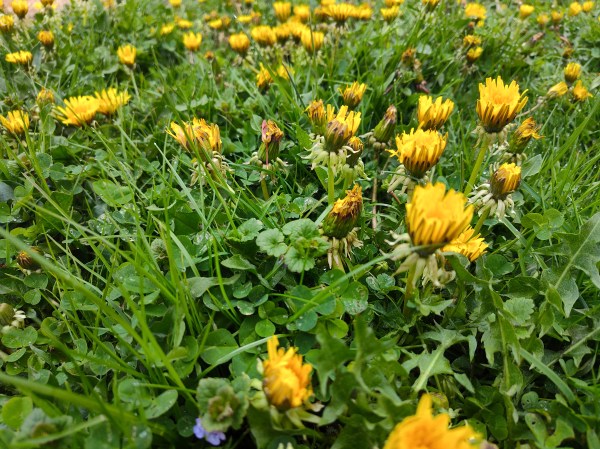
If your town is like ours, you’ll see a lot of manicured lawns with the grass cut even and low with few dandelions and “unwanted” weeds. In spring when there is ample rainfall, these lawns typically look nice and green; however, in the dog days of summer, the lawns will turn brown and crispy because even though the rainfall has lessened, the mowing must continue. And that doesn’t include the people who pay for lawn care companies to spray harmful chemicals on their yard. When we sit on our back porch and look toward the backyard or I look out the side window when working in my office, I see a lot of yards that don’t fit that manicured vibe, thankfully. I see lawns that are lush, thick, and vibrant green; however, there are multiple varieties of grass and the presence of dandelions to confirm that these lawns are natural. Seeing the difference between manicured and natural lawns is quite a shock, and it makes me question why people hate natural beauty, and namely dandelions, so much.
When I was growing up, I remember people complaining about dandelions in their yards, but they usually didn’t do anything to address them. Now, there are millions (probably billions) of dollars being spent on researching, developing, and advertising products designed to attack “weeds” like dandelions. My question is “Why?”
The Invasive Species Argument
One reason people hate dandelions is that they’re considered weeds, and the most in-tune haters will even describe them as invasive species, but that isn’t the whole truth. While dandelions are not native to North America, that does not mean they’re invasive. Invasive species are plants, insects, animals, etc. that aren’t native and have the ability to take over an ecosystem, wiping out the native species. These species also don’t provide the same benefits that native plants, insects, and animals need.
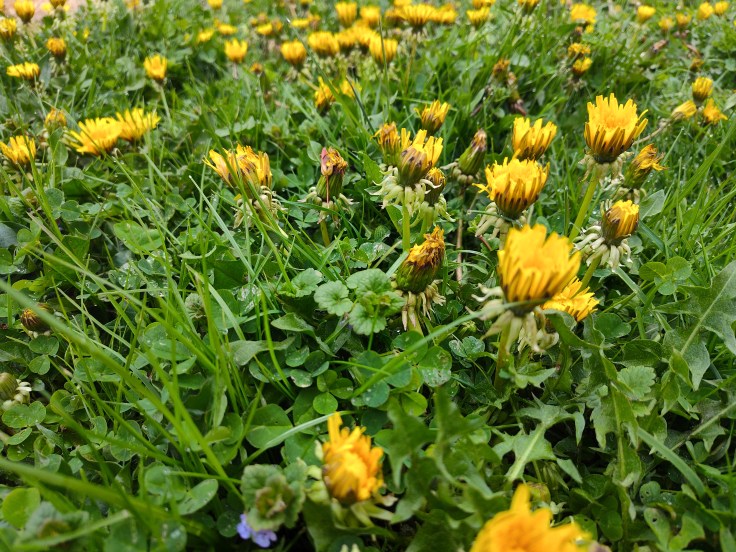
Currently, there are only two states in the USA—Alaska and Oregon—that consider dandelions to be invasive. For every other state, they’re simply non-native. This means they were introduced to the area but don’t cause the damage that invasive species do. In some cases, these plants can still be detrimental because they may have higher moisture requirements than native plants, causing an imbalance in the ecosystem. But even that isn’t the case with dandelions, but more on that in a bit. So, we can debunk the invasive species argument.
The History of Dandelions
Before looking at some other aspects of the dandelion, I want to first touch on where it originated. Dandelions have been around for thousands of years, originating in Eurasia before coming to North America, most likely in the 17th century on the Mayflower. But don’t think that this was by accident. The Europeans who arrived in America during this time period brought dandelions with them intentionally. That’s because the plant served a key medicinal purpose for them, which is one of its many benefits.
Benefits of Dandelions
Many may think of dandelions as nuisances, but the reality is that there are many benefits to them.
Medicinal
I mentioned earlier that Europeans intentionally brought dandelions with them for their medicinal benefits. And like most natural remedies, their positive effects are often minimized by the medical community. However, the Cleveland Clinic published a blog post in 2021 on the benefits of eating dandelions. In it, they mention that dandelions can be used as a good source of vitamins A, C, and K as well as folate, calcium, and potassium. Research and testing have also shown dandelions to help provide antioxidants, reduce inflammation, manage blood pressure, control blood sugar, and lower cholesterol. And while it hasn’t been confirmed, a research paper written by a biochemistry professor in Poland found that dandelions can help fight cardiovascular disease.
Dandelions can be consumed in a number of ways. The greens are delicious when eaten in a salad or sauteed. The flower petals and roots can be steeped into tea. You can also make wine and jelly from the flowers. In general, you can eat them the same way you do other greens grown in the garden.
Soil Improvements
Even if you don’t like the look of dandelions in your yard, one thing that can’t be denied is how it can improve your soil. Because they have deep, tough taproots, they’re able to break up the soil, allowing plants you want to grow to establish strong root systems. As a result, it could even make sense to intentionally plant dandelions in your garden beds to help your crops grow.
In yards, the deep taproots improve drainage and reduce runoff that often comes with lawns. Grasses, especially non-native varieties, tend to have shallow root systems that don’t absorb rainwater as efficiently as other plants. This leads to runoff, soil degradation, and potential flooding. And if you use herbicides or fertilizers on your lawn, the excess chemicals that aren’t absorbed can run off into streams and harm the drinking water supply.
Pollination
This one is pretty obvious, but dandelions are an important food source for pollinators. This is especially true early in spring when they’re one of the few available food sources until other flowers bloom. With pollinators already struggling to find food due to urbanization and the destruction of our ecosystems, it’s important to provide as much food as possible. I’ve already written about my love of the pollinators here, so it shouldn’t be surprising that I’ll keep dandelions around to help them.
Still Not Convinced?
Even if you don’t like dandelions and would prefer a lawn free of them, please be careful with how you address them. Instead of using herbicides that are harmful to the environment, including wild animals, pets, insects, and our water supply, physically remove them. Mowing them down and deadheading them will prevent the seeds from blowing and spreading once the flower dies. Plus, the pollinators will still have the opportunity to use them as a food source before. But at the end of the day, there isn’t a logical reason to kill them. The benefits greatly outweigh the negatives. Plus, they’re beautiful.

