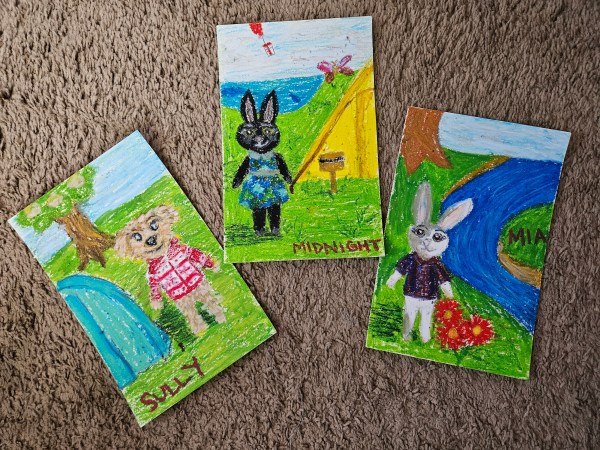
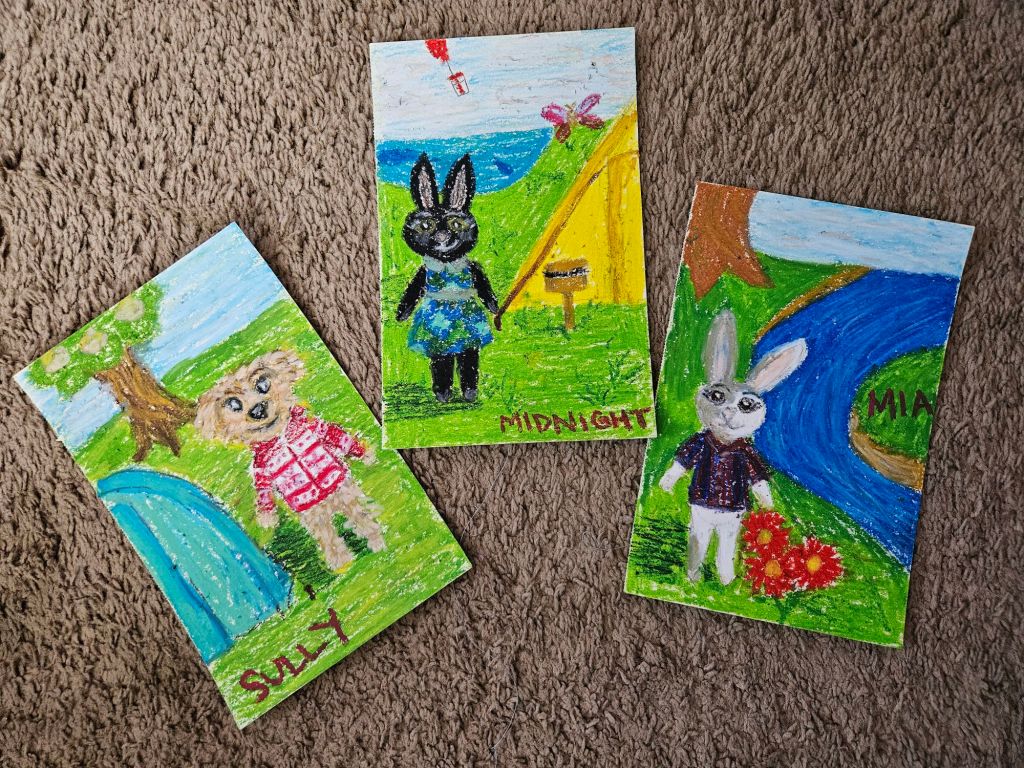
Remember last year when I said I was going to create art consistently, starting with a study of Van Gogh? Oh good, me either. 😅 But in all seriousness, I am committed to making art this year. I miss it. These are three pet portraits I did of Midnight, Sully, and Mia, a few weeks ago in oil pastel.
I was inspired by Rachel Maksy to do this and spark a bit more joy in my life – and it did more than that! It helped me process grief too. I lost Midnight, over 15 years ago and Sully, just last August. Picturing them, hanging with my villager character, on this imaginary ACNH island, is a comforting little story.
For Midnight, I was inspired by Mira, for her spunky personality and fearlessness. I decided to change Midnight’s outfit to a clover dress from game, since loved clover the most of any treats!
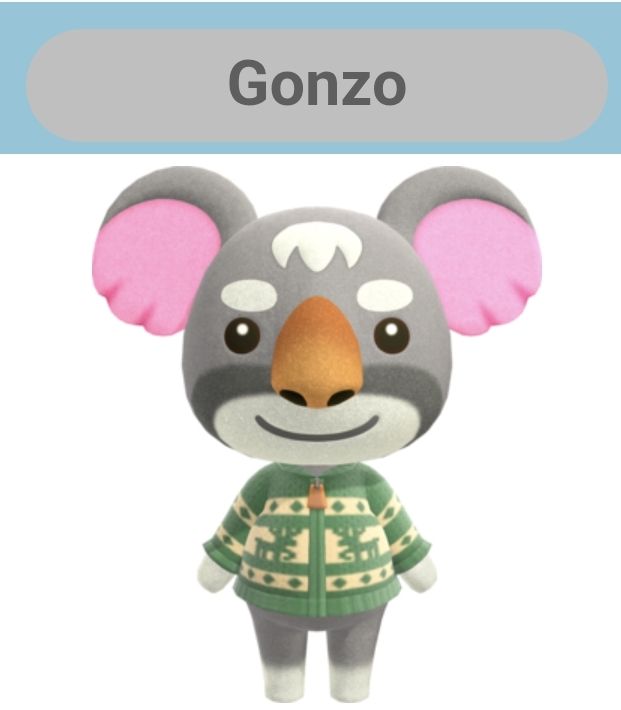
Although Sully was Yorkie-Bichon mix, the dog and wolf characters are draw quite differently than what he looked like. Gonzo the koala in a perfectly Sully-looking sweater was just the ticket to capture Sully’s teddy bear essence.
Finally Mia was easy to pinpoint, Dottie looks like a Dutch rabbit which is similar to Mia’s harlequin color pattern. Since Mia loves baseball, dressing her in a baseball jersey seemed right.
I hope this brings you a little joy today. Wherever you are I hope you know you are special and deserving of love.
If your town is like ours, you’ll see a lot of manicured lawns with the grass cut even and low with few dandelions and “unwanted” weeds. In spring when there is ample rainfall, these lawns typically look nice and green; however, in the dog days of summer, the lawns will turn brown and crispy because even though the rainfall has lessened, the mowing must continue. And that doesn’t include the people who pay for lawn care companies to spray harmful chemicals on their yard. When we sit on our back porch and look toward the backyard or I look out the side window when working in my office, I see a lot of yards that don’t fit that manicured vibe, thankfully. I see lawns that are lush, thick, and vibrant green; however, there are multiple varieties of grass and the presence of dandelions to confirm that these lawns are natural. Seeing the difference between manicured and natural lawns is quite a shock, and it makes me question why people hate natural beauty, and namely dandelions, so much.
When I was growing up, I remember people complaining about dandelions in their yards, but they usually didn’t do anything to address them. Now, there are millions (probably billions) of dollars being spent on researching, developing, and advertising products designed to attack “weeds” like dandelions. My question is “Why?”
The Invasive Species Argument
One reason people hate dandelions is that they’re considered weeds, and the most in-tune haters will even describe them as invasive species, but that isn’t the whole truth. While dandelions are not native to North America, that does not mean they’re invasive. Invasive species are plants, insects, animals, etc. that aren’t native and have the ability to take over an ecosystem, wiping out the native species. These species also don’t provide the same benefits that native plants, insects, and animals need.
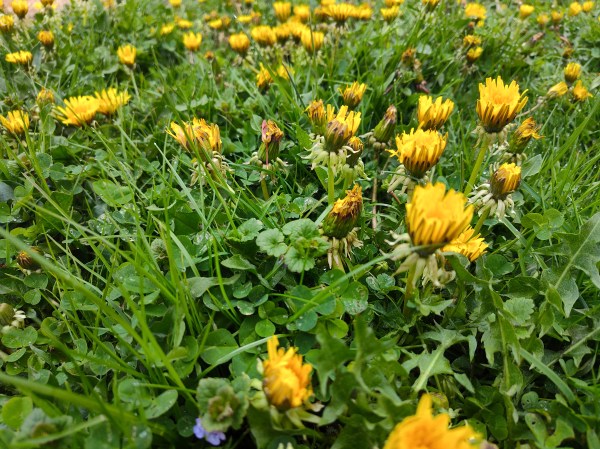
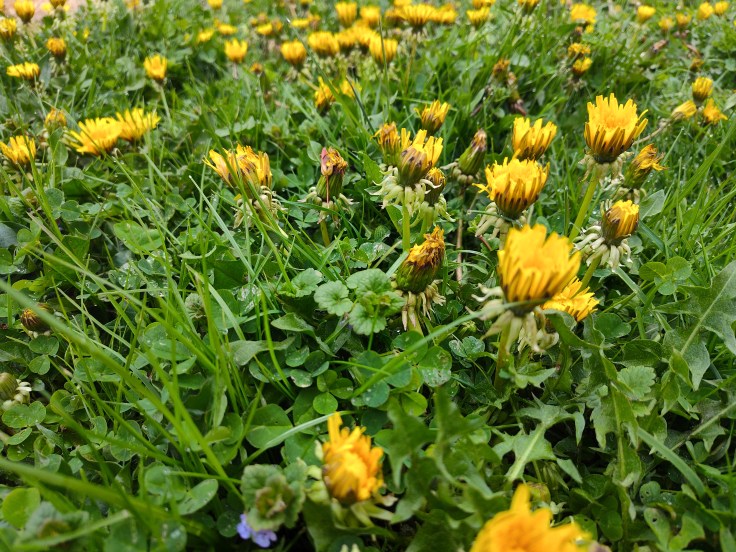
Dandelions in our yard
Currently, there are only two states in the USA—Alaska and Oregon—that consider dandelions to be invasive. For every other state, they’re simply non-native. This means they were introduced to the area but don’t cause the damage that invasive species do. In some cases, these plants can still be detrimental because they may have higher moisture requirements than native plants, causing an imbalance in the ecosystem. But even that isn’t the case with dandelions, but more on that in a bit. So, we can debunk the invasive species argument.
The History of Dandelions
Before looking at some other aspects of the dandelion, I want to first touch on where it originated. Dandelions have been around for thousands of years, originating in Eurasia before coming to North America, most likely in the 17th century on the Mayflower. But don’t think that this was by accident. The Europeans who arrived in America during this time period brought dandelions with them intentionally. That’s because the plant served a key medicinal purpose for them, which is one of its many benefits.
Benefits of Dandelions
Many may think of dandelions as nuisances, but the reality is that there are many benefits to them.
Medicinal
I mentioned earlier that Europeans intentionally brought dandelions with them for their medicinal benefits. And like most natural remedies, their positive effects are often minimized by the medical community. However, the Cleveland Clinic published a blog post in 2021 on the benefits of eating dandelions. In it, they mention that dandelions can be used as a good source of vitamins A, C, and K as well as folate, calcium, and potassium. Research and testing have also shown dandelions to help provide antioxidants, reduce inflammation, manage blood pressure, control blood sugar, and lower cholesterol. And while it hasn’t been confirmed, a research paper written by a biochemistry professor in Poland found that dandelions can help fight cardiovascular disease.
Dandelions can be consumed in a number of ways. The greens are delicious when eaten in a salad or sauteed. The flower petals and roots can be steeped into tea. You can also make wine and jelly from the flowers. In general, you can eat them the same way you do other greens grown in the garden.
Soil Improvements
Even if you don’t like the look of dandelions in your yard, one thing that can’t be denied is how it can improve your soil. Because they have deep, tough taproots, they’re able to break up the soil, allowing plants you want to grow to establish strong root systems. As a result, it could even make sense to intentionally plant dandelions in your garden beds to help your crops grow.
In yards, the deep taproots improve drainage and reduce runoff that often comes with lawns. Grasses, especially non-native varieties, tend to have shallow root systems that don’t absorb rainwater as efficiently as other plants. This leads to runoff, soil degradation, and potential flooding. And if you use herbicides or fertilizers on your lawn, the excess chemicals that aren’t absorbed can run off into streams and harm the drinking water supply.
Pollination
This one is pretty obvious, but dandelions are an important food source for pollinators. This is especially true early in spring when they’re one of the few available food sources until other flowers bloom. With pollinators already struggling to find food due to urbanization and the destruction of our ecosystems, it’s important to provide as much food as possible. I’ve already written about my love of the pollinators here, so it shouldn’t be surprising that I’ll keep dandelions around to help them.
Still Not Convinced?
Even if you don’t like dandelions and would prefer a lawn free of them, please be careful with how you address them. Instead of using herbicides that are harmful to the environment, including wild animals, pets, insects, and our water supply, physically remove them. Mowing them down and deadheading them will prevent the seeds from blowing and spreading once the flower dies. Plus, the pollinators will still have the opportunity to use them as a food source before. But at the end of the day, there isn’t a logical reason to kill them. The benefits greatly outweigh the negatives. Plus, they’re beautiful.
Last week, I wrote a post that posed the question, “When is it time to restart seeds?” The reason for that question was that our pepper seeds were taking forever to germinate and were already past their expected range. In the end, I argued for a patient approach to seed starting and not being too quick to pull the plug before restarting them. But I did write that if our Takii’s New Ace sweet peppers didn’t germinate by this past Sunday, (April 12) I was going to restart them. Thankfully, I was rewarded for this decision, and we saw our first seeds sprout late last week. Additionally, we saw more of our jalapeno, habanero, and Gochugarju peppers sprout. I don’t want to exaggerate the success, though.
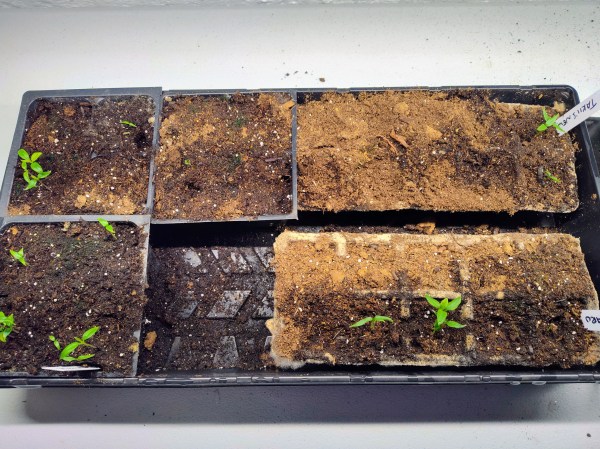
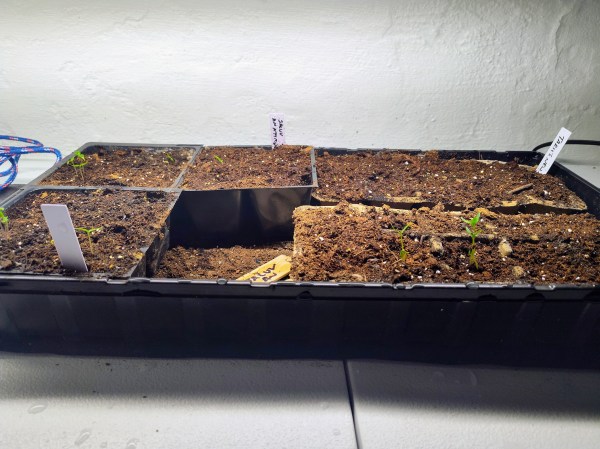
Our pepper seed tray. The left two trays are habaneros, the middle one is jalapenos, the top right is Takii’s New Ace, and the bottom right is Gochugarju.
We are far from a 100 percent germination rate, as only 2 of the 10 Takii’s New Ace, 3 of the 10 Gochugarju, and 8 of the 10 habanero cells succeeded. We did have one jalapeno cell germinate, but it died off pretty quickly. I’m unsure what caused the seeds to fail, but a couple of factors I’ve considered are the use of an old seed-starting mix and inadequate moisture levels. Either way, I addressed both of them with the second batch of seeds I started.
Speaking of starting more seeds, on Monday evening, I started a second batch of pepper seeds, using the rest of the Takii’s New Ace seeds and the majority of the remaining pepper seeds. I believe I started 6 Takii’s New Ace, 8 Gochugarju, and 8 jalapeno cells. I switched to a new bag of seed-starting mix, which I think will yield better results. It’s lighter with more drainage amendments and less debris (twigs, clumped soil, etc.). I also ensured that the seeds and soil were thoroughly moistened and have been keeping the soil damp until the seeds germinate. Finally, I moved the seeds that did succeed off the heat mat to keep the roots from getting too warm.
Lessons Learned
An attitude I want to have with everything I do, gardening included, is learning something and having takeaways. I think it’s an important mindset to have to feel like you haven’t wasted time, which can lead to disappointment. In this case, I learned that having patience with your seeds is the right call. If you have the time, there’s virtually no harm in giving your seeds an extra day or two to germinate before starting over. Giving yourself and your seeds extra time to succeed can have a big payoff down the road. I also learned that it may be best to start with new seed-starting mix each spring. I wanted to use some leftover mix from last year to not be wasteful, but I think it’s best to use new, unopened mix. The old mix can be composted, so it still won’t be wasted.
Finally, I learned that I’m never going to start more than 2 seeds per cell moving forward. I’ve always been a gardener who puts 3 or 4 seeds in each cell to maximize the likelihood that each cell produces a start. However, after having a lot of our pepper seeds fail to germinate this spring, I feel like I wasted a lot of seeds that could have been spread out among more cells. My new approach is going to be using as many cells as I need but using the seeds more efficiently. Please note that this approach will only apply to starting seeds indoors. When direct sowing, I’ll still use 3 or 4 seeds per hole to not waste space in the bed.
When you start seeds, how many seeds do you use per cell? Also, are there any vegetables that you struggle to get started? For me, it’s always peppers.
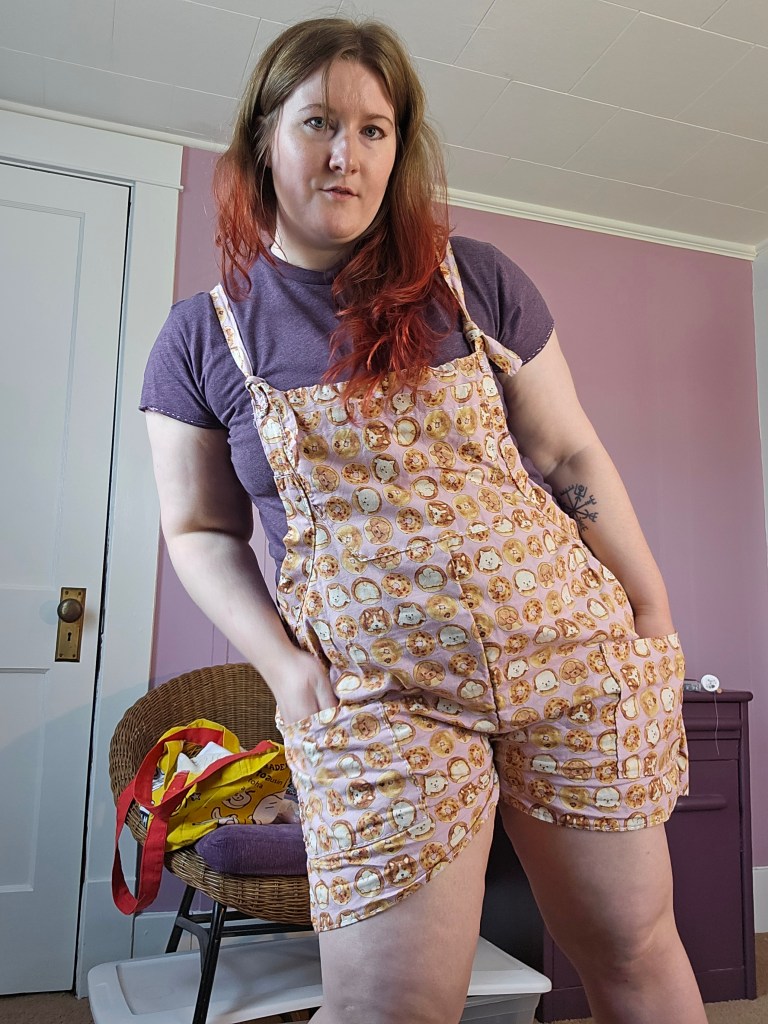
Okay, as a millennial, I can’t hear the word pivot without thinking of this scene from Friends. But, silliness aside, Ross was correct; you have to pivot and pivot well. The longer I sew, the more agitated I get when I make foolish cutting or measuring mistakes in my garments. Like my shortalls from last year, I tried them on over the weekend because it is feeling warm and springlike here, and I was shocked by how poorly I fit the shorts. The top portion of the shorts fits excellently, but not the shorts. No one wants weird bunching when it comes to shorts, and that was exactly the problem!
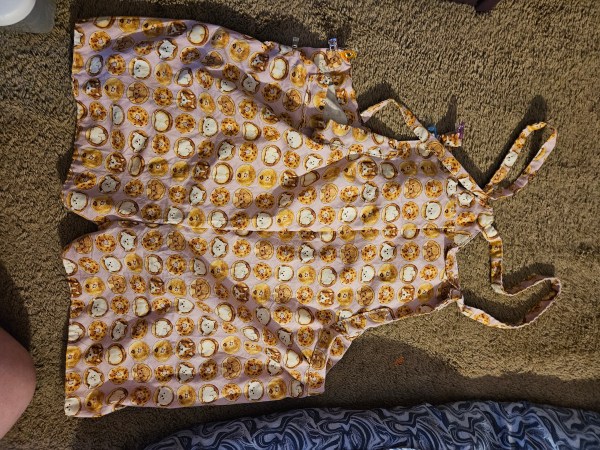
At first, I went through the stages of grief – denial, anger, bargaining, depression, and finally acceptance that no matter how delusional I chose to be, these shortalls are uncomfortable. I would not wear them. This made me feel so many regrets. The pink overalls I drafted completely from scratch, using a special fabric featuring corgis and bread from a Japanese fabric brand called Kokka Fabric, sourced from my local fabric shop, Firecracker Fabrics. The second pair was cobbled together as a challenge of fabric and repurposing. The fabric was 1 yard of 59″ cotton twill from Mood Fabrics, and the pockets were sourced from a pair of shorts in my closet. I refused to scrap these. But what could I do to fix these? With all the patterns at play, adding in a new fabric sounded scary. Cutting these into bags or future quilting projects was throwing in the towel too soon for me.
My solution came to me one night, as I was washing my face; I didn’t have to make a drastic change. I had to address the problem – the way I cut the curve of the pants. I could remove the section that divided the fabric into legs, and transform the shortalls into pinafore dresses with a few cuts and stitches! It was a success! The shorts are now a skirt, by cutting away the curved line and sewing a straight seam on the back and front of the skirt. I also made a quick swap to the back bib of the brown floral pair, adjusting the square bib to the triangle shape of the pink ones. This adjusted the fit of the dress in an excellent way. The purpose of the triangle, I believe, from the fit change on my garment is to eliminate gapping between your shirt and the back bib, so the fit follows the line of your body.
Now, sewing is not the only place to pivot, obviously. Problem-solving is a fundamental part of the creative process. Projects rarely work out the way you want, from knitting to cooking to building a piece of furniture. In this fast fashion, consume and donate, culture poisoning my country’s culture, we are losing the art of problem-solving. This has been exacerbated by the rise of AI and ChatGPT. Why think at all? Why imagine, ponder, or research? Why try if you aren’t going to get “expert” results? That is what the rise of optimization culture is creating: the fear of trying. But you have to try to become an expert. AI is not an expert; it is a thief, stealing the knowledge of humans who have spent years and decades striving to know, unafraid to try and fail. It’s literally the scientific method. So if you are an impressionable person, who is growing up in this current era, don’t give up your creative ability for AI to do it for you. You will lose crucial thinking and creative skills if you don’t exercise your mind and problem-solve on your own. Just do it.
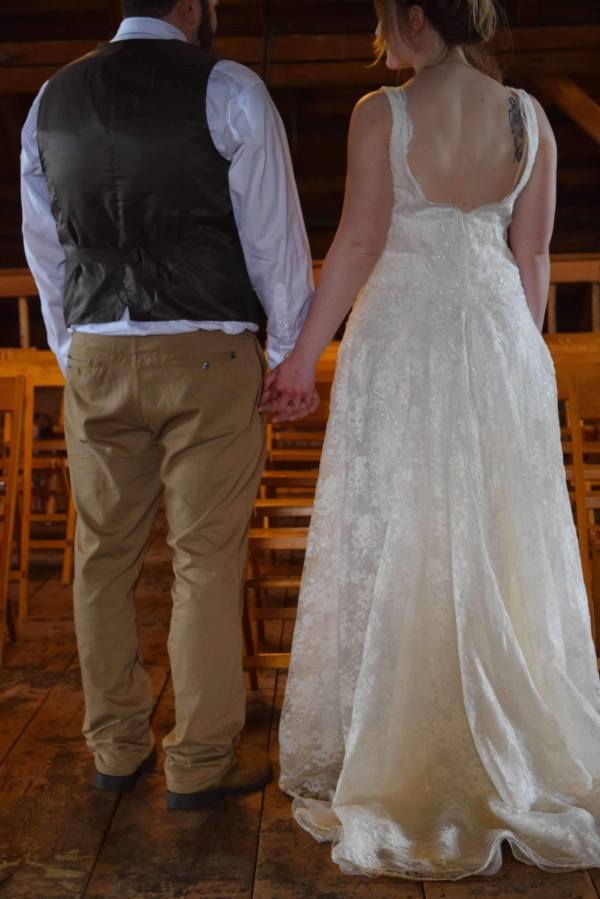
Commitment is scary. It feels like a box that closes around you. My mind wanders to all the negative possibilities. Will I become stagnant? Will I fail? Will I regret this? Commitment is not a bad thing, though; it is a fundamental to our relationships, to building character, and completing goals. Finishing any project, big or small, such as painting a wall or completing a degree, requires commitment. Being there for a friend. Adopting a pet. Planting a garden. Buying a house. Getting married.
The last one fills us as humans, living in the 21st century, with the most trepidation. I think because of how obligatory marriage can become in our human cultures. What is a Jane Austen novel without commentary on the role of marriage in 19th-century England? Women can see it as a burden, a life goal, or a way to survive. It is complex for all people – he, she, they to enter into a legally binding commitment built on the hope that this love we are choosing to pursue until we die, will not fail and consume us both.
As I have mentioned before, my parents got divorced when I was little. It was finalized when I was two, actually, so beyond a PTSD memory that is hard to dwell on, I don’t remember life before my parents divorced. My memory and examples of marriage in my life come from my grandparents and my mom, who married my wonderful stepdad (more like true dad) when I was 16. Without these two positive examples, I’m not certain marriage would have happened for me. It’s hard to understand, unless you experienced it, but living in the aftermath of your parents’ failed marriage shapes your opinion of marriage from a young age.
You are the living proof of failure, and are looked on with pity and dismay from many church people and people in your community. You are the weirdo. People want to “help” experience the normalcy of two parents, as if there is something wrong with the family that you have. I had three parents instead of two, and it felt normal to me. I learned about love, of all kinds – storage and agape, aka “affection” and “unconditional love.”
I think these loves are even more important to grasp as an impressionable youth than fixating on the hope of romantic love someday, because what brings you through marriage is all four loves – charity, agape, philia (friendship), and eros (romantic). Because marriage is built on vows, and keeping those vows is wonderfully challenging some days, but keeping them and not giving up has led to this exciting milestone – our tenth anniversary!
Growing up, knowing that marriage can and will fail for a lot of people, no matter how much you fight for it, scared the crap out of me, staring down the aisle. I didn’t want to fail, like a destiny I couldn’t shake. My parents’ divorce was not a curse to inherit, nor was it Kyle’s to inherit from his parents’ divorce, yet succeeding felt like the highest mountain I would ever climb, and honestly, I do feel that way today. So many things have changed in my life in the past ten years – jobs, friends, locations, family, pets – it’s been a roller coaster, and yet, here we are. We didn’t let the bad times get the best of us – the economy, the pandemic, job loss, grief, and hubris – we figured out how to navigate the things that scared us without ripping the seams to tatters.
What I thought would be the way through this would be never approaching that line, but life actually pushes you to the brink quite often. I think we, as humans, focus so much on perfection that we forget that even when you let your spouse down, you can dust yourself off and recalibrate. Even your worst moments don’t have to break you. Holding on to the highest highs, the wins, is important too. It’s a journey that you walk with your spouse towards the goal. It’s a sanctification process that will break you down with certainty, but I feel refined by the wisdom and the struggle, and the wins.
The bottom may come as close as you can imagine to dropping out, but your fears are not a prophecy for your life. Good things are not there to slip away from you; they are the victories. And so this exciting anniversary feels like a victory over all the voices in my head telling me to give up when things got hard, and to not enjoy the good moments in case something bad would happen. Yeah, good and bad have happened, and will continue to happen, but what Kyle and I are building, this commitment to be there for each other for every step of the journey, is a balm to the soul in these uncertain times. So I encourage you, in these heavy days, to plant your garden.
This is what the Lord Almighty, the God of Israel, says to all those I carried into exile from Jerusalem to Babylon: “Build houses and settle down; plant gardens and eat what they produce…Also, seek the peace and prosperity of the city to which I have carried you into exile. Pray to the Lord for it, because if it prospers, you too will prosper.”
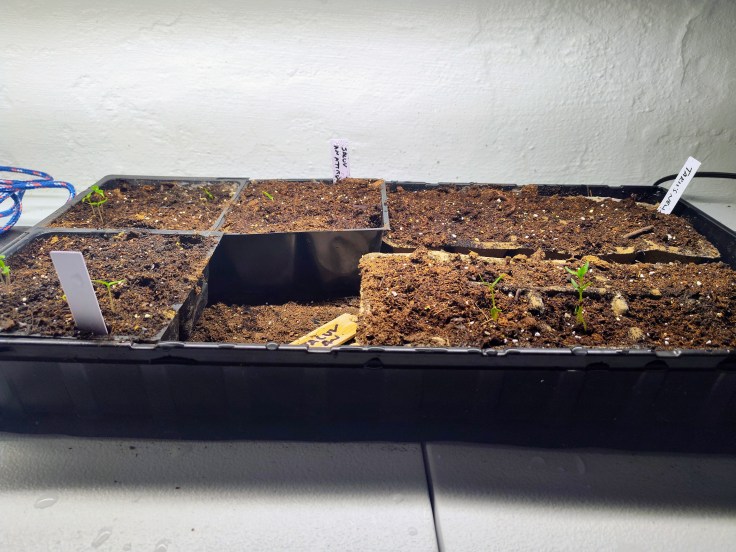
I recently wrote that we began starting pepper seeds for our garden. We’re growing four types of peppers this year: Takii’s New Ace bell peppers, Gochugarju hot peppers, Jaluv an Attitude jalapenos, and West Indies habaneros. We started them on Sunday, March 22, and all varieties take 10-14 days to germinate. The jalapeno seeds were the first to germinate, doing so in nine days (March 31), while the habaneros and Gochugarju did so a few days later (April 3). All three were in the germination window. We’re now more than two weeks out since we started the seeds, and the bell peppers have yet to germinate. Additionally, not all of the cells for the other varieties have sprouted. So, that leads me to the question: When do you admit defeat and restart the seeds that haven’t germinated? I don’t have an answer to this question, but I do have some thoughts that I hope will lead me to a reasonable answer. Hopefully, it can give you some pointers too if you’re unsure of when to restart your seeds.
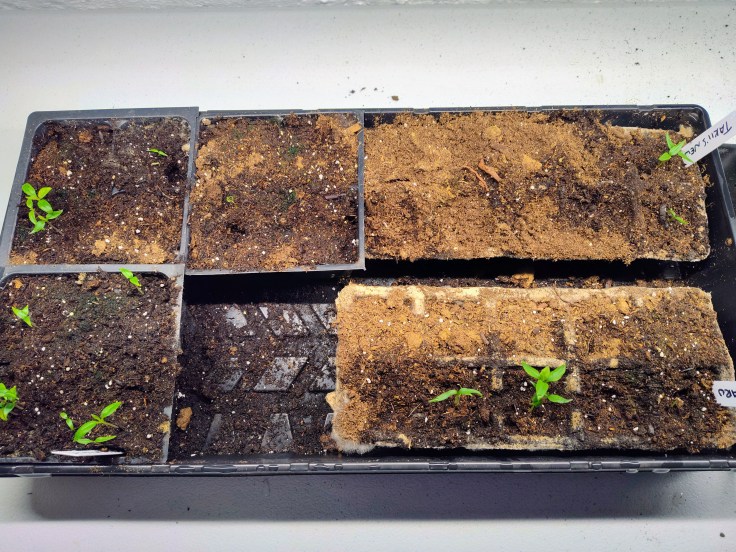
Our seed-starting trays, with some pepper seeds that have possibly failed to germinate.
I never admit defeat or restart a seed that hasn’t germinated until at least a few days past the days-to-germination range. That range of days is a rough estimation for when you can expect the seeds to sprout. Even in the past few days, some of the cells have sprouted even though we’re beyond the range. Because of that, I try to be careful to never quit on the seeds too fast. At the same time, you want to be careful not to wait too long. The seeds and their subsequent starts need enough time to grow so that they can be transplanted into the garden with enough time to mature and produce fruit. And with a slow-growing vegetable like peppers, it’s a delicate balance.
Another aspect that needs to be considered is how many seeds you have left. In our case, we have leftovers for all of our seeds, but unfortunately, we have the fewest Takii’s New Ace seeds of the four varieties. So, I’ll need to be extra careful with restarting seeds so that we don’t run out with no starts to show for it. Of course, we can always order more seeds, either of the same variety or something different, but I’d prefer not to. It’s another reason I want to give the Takii’s New Ace as much time as possible to germinate.
Finally, the last consideration when deciding if it’s time to restart seeds is space. Do you have enough seed cells and room in your seed-starting trays to restart seeds? This may seem like a small aspect to consider, but restarting seeds does mean using additional seed cells, moving cells around within the trays, and making sure that the newly sown seeds can be on a heat mat while the germinated starts can also be under the grow light. Thankfully, we have plenty of space if we have to restart some seeds; however, that’s not the case for everyone and is something that should be taken into account.
So, what are we going to do? I think I’ve decided to wait it out with the Takii’s New Ace until this weekend. It’s currently a Wednesday, so that’ll give the seeds almost three weeks from the date of sowing to germinate. At that point, I think we can assume that the seeds have failed to germinate. If I do have to restart some seeds, I’m only going to use one seed per cell to not waste any more of them. And of course, I’ll keep you updated on how everything goes.
On Friday morning, I woke up to a shocking announcement as a NCTzen, Mark Lee of NCT 127, NCT Dream, and NCT U did not renew his contract with NCT and SM Entertainment, effective April 8, 2026. Just like that, everything has changed once again in NCT. For context, NCT is a very complex project with multiple subunits and a large roster of band members. The NCT sub-unit that I follow closely is NCT 127, the eight-member (used to be nine, until 2024) boy band consisting of Taeyong, Mark, Yuta, Johnny, Haechan, Jaehyun, Doyoung, and Jungwoo. Mark is one of the main rappers, a key part of the sound of these groups, a songwriter with Taeyong for NCT 127, and the leader of NCT Dream. NCT 127 is about to celebrate its 10th anniversary on April 9th – why is this happening?
As a NCTzen, nothing has felt normal in the group since 2024, when leader Taeyong began his military service. While he was gone, NCT 127 released one group comeback album and various solo projects, including Mark’s solo album in 2025. The solo projects have felt like a welcome distraction, as Jaehyun (2024), Doyoung, and Jungwoo (2025) began military enlistment. My favorite solo project so far has been Yuta’s J-Rock style albums that evoke the rock and metal music I loved in high school. Not even the solo projects could distract from the disturbing news, on August 28, 2024, that former member Taeil was no longer a member of NCT due to sexual assault allegations, with SM terminating his contract a few months later. Taeil was convicted in 2025, and is currently serving a prison sentence, a very short prison sentence, unfortunately. So in summation, NCTzens have been through a roller coaster of emotions since 2024.
With Taeyong’s return to group activities for 2026, this was supposed to be a new beginning, not another goodbye. I’m hoping that, in time, more will be revealed as to why Mark is departing so suddenly. I thought his solo album was good; inspired by his faith, it was a light shining in the darkness of 2025. I know that SM is a company with messy dynamics. Three EXO members recently went to court against SM over a contract dispute, and Red Velvet members Wendy and Yeri recently left SM, while remaining members of the band. Mark’s departure from both the band and the company is uncharted waters, and I’m sad. I hope all is well and that whatever is next for Mark, he will be blessed.
This is not the first departure in K-Pop for 2026; it has been an ever-growing list. So far, Danielle from New Jeans, Manon from Katseye (hiatus), Heeseung from Enhyphen, and JYP have departed or changed their roles, in the case of JYPapi. In tricky times such as these, the K-Pop world has one solution: direct hatred towards Stray Kids – and I am so fed up with the hate. In the wake of Mark’s announcement, I saw posts calling for Stray Kids to be next. Wishing all kinds of ills of the members and the group. Why is Stray Kids always the scapegoat? (Also, Jennie. Stop hating on Jennie.)
So, general K-Pop fans who like to dunk on Stray Kids, what has this toxic behavior accomplished for you? The AI-deep fakes have led to legal action by JYP Entertainment in two countries. Stray Kids won major awards, completed the biggest world tour, and wrote multiple hits in response to your hate. Such as God’s Menu, the entire No Easy, aka “noisy” album, S-Class, Comflex, Ceremony, and Phoenix, to name a few. As Bang Chan says in their song, 3RACHA, “They always say the same excuses. While they’re complainin’, we’re producin’.” So can everyone just hush and enjoy the variety in K-Pop?
To a more positive note, I am really enjoying the new BTS album, Arirang. Now, I became a fan of K-Pop at the start of 2022, with my introduction to BTS being Dynamite and Butter. Two songs I quite enjoy, but I didn’t get to experience the true BTS or a full band comeback experience until now, and dang, after a long military hiatus, I’m starting to get the BTS hype. See Army – Stays and Army can co-exist peacefully. Arirang has range. I appreciate the mellow beauty of Swim, and the haunting melancholy of Merry-Go-Round. Aliens, FYA, and Hooligan have been in my head for days. For me, BTS has an interesting duality to their vocal range. Compared to the “racha” subunits I am used to from Stray Kids, or the structure of an Ateez or NCT song, where the rappers and vocalists have clear parts, BTS flows. I’m still learning what each member sounds like, and I’m constantly surprised to learn who is doing what part. I’m excited for what the future holds for BTS, cause yeah, I get the hype now.
It’s a relief, actually, to see that in spite of military interruptions, BTS came back as one cohesive team. What has felt so heavy about Mark’s departure from NCT has been the military service and the removal of the evil one. Can we just get a breath? Will this band still be the same by the time everyone is reunited again, like BTS? I sure hope so.
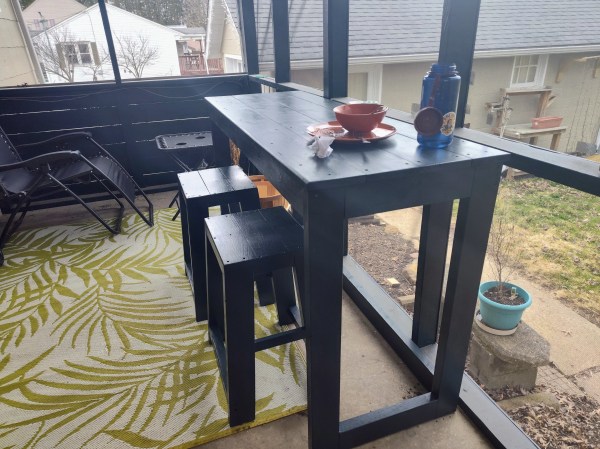
Last year, Magz and I screened in our back porch. It’s an elevated concrete slab that had railings on all three sides except for where the steps are located. We removed the railings, strengthened the posts that hold up the roof, and screened in the three sides. We closed in the two ends so that the screen goes from waist height to the roof for privacy, while the back has floor-to-ceiling screens with French doors where the steps are located. The project was a success in the sense that we had more privacy with plenty of airflow and some protection from the elements, including rain. It also reduced the number of bugs, bees, and flies that we have to deal with, but we still didn’t use the porch as much as we thought we would.
That was largely due to the outdoor furniture that we had. The only option we had that was designed to be outdoors was a narrow glider we bought from Aldi a few years ago. And although it’s comfortable for one person, it’s quite narrow and isn’t comfortable for two people to share. We also repurposed two Ikea Poang chairs that we had previously used inside but no longer had a need for. Although they weren’t intended to be used outdoors, they held up since they weren’t directly exposed to the elements. While these chairs worked, they aren’t the most comfortable, especially if you want to do anything with your hands while sitting in them, like typing, cross-stitching, or knitting. This led to us deciding that we wanted something different, and since I really enjoy building things and hate spending money unnecessarily, we designed and built our alternatives.
The Design
Building outdoor furniture is something I’ve wanted to do for a long time. Outdoor tables, benches, chairs, and swings are projects that call to me, but I didn’t have anything designed or planned. So, on a lovely Saturday in February, Magz mentioned that she’d like to figure out our outdoor furniture before the weather was really nice and we wanted to be on the porch. Quickly, we came up with a design.
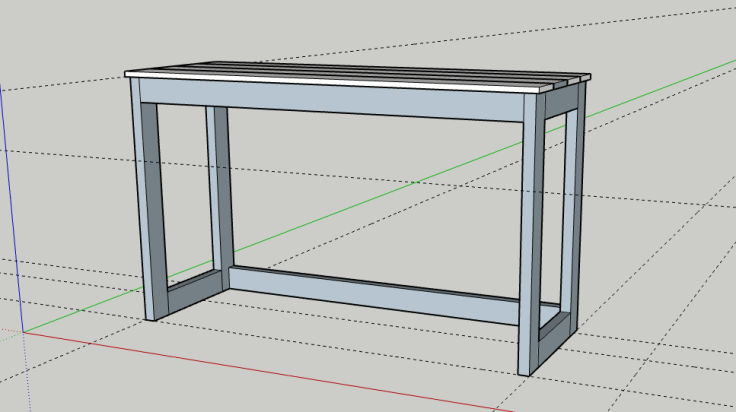
For the table, we wanted something wide enough for us both to sit at it and deep enough that we could play board games or work at it. We also wanted something higher than a coffee table. For the seats, we discussed one long bench versus two individual stools, ultimately choosing the two stools. The freedom for each of us to choose how close or far we sit to the table was important, and having sat at the table multiple times now, it was the right decision.
We were going for something simple and durable. We were fine with it being made of dimensional lumber to make the building process as straightforward as possible. As much as I love building fine woodworking projects, when it comes to outdoor furniture, using dimensional lumber that is designed for strength is often the right move. Here is the design I came up with:
Outdoor table design
When it came to materials, my initial thought was to buy pressure-treated lumber. It would be great to buy cedar, teak, or composite to build this type of furniture, but those are all very expensive. Plus, cedar and teak will eventually break down over time and need maintenance, and composite lumber requires specific saw blades designed to cut it. All three types are also really difficult to find where we live. I love watching old New Yankee Workshop episodes and think that Norm Abram is an excellent woodworker and craftsman, but one of the least relatable elements of the show is his ability to get exotic wood species or high-end cabinet-grade plywood locally. Finding those in store would require at least an hour’s drive, which isn’t worth it most of the time.
Meanwhile, pressure-treated lumber is readily available; however, it isn’t cheap in our town. We don’t have a local Home Depot or Lowe’s, so we rely on regional franchises for lumber and building supplies if we don’t want to leave town. One of the local stores, 84 Lumber, (the same store we bought our materials to screen in the porch) was charging $2 more per 2×4 than Home Depot and $1 more than the other local store, Busy Beaver. 84 Lumber also stores most of their lumber outside, so running it through a saw isn’t a pleasant experience. Even at Busy Beaver, the pressure-treated 2x4s were more than $1 more than kiln-dried pine 2x4s, which led me to begin considering pine as an alternative.
Pressure-treated lumber has its advantages, with the biggest being that it’s designed to withstand the elements. However, it also has its disadvantages. It can be quite expensive, is heavy and often damp, and it will destroy saw blades. Meanwhile, pine can be a great alternative. It’s cheaper, for one. It’s also pretty light since it should be kiln-dried, so it’s easier to maneuver, and it’s easy to cut. And while it doesn’t have the weather protection of pressure-treated lumber, it can be coated with finish or exterior paint and will do well outside. It will need recoated, and it’s best to not let it directly touch the ground, but it can last a long time. Combining all of those together, we decided on buying regular pine. In total, I think we bought 16 8-foot 2x4s and 5 8-foot 1x6s. We also have a bunch of paint left over from the screened-in porch project, so we didn’t need to buy any. After acquiring the lumber, it was time to start cutting and assembling.
Assembly
Building the table was really easy. In 2020, I built a similarly designed table that we currently have in our kitchen. It’s quite straightforward. Working together, we measured and cut all pieces of the same length for the frame. We then pre-drilled the holes, using a pocket hole jig where normal 2 1/2-inch screws wouldn’t work. Along with the screws, we used exterior-rated wood glue to secure the joints. With the frame assembled, we moved on to the top, where once again, we measured and cut all the slats to length at the same time, ensuring consistency. Three of the slats were full 5 1/2-inch wide boards, while the fourth had to be ripped to be narrower. We allowed for a 1/2-inch overhang on the front for aesthetic purposes and roughly an 1/8-inch gap between the slats. They also weren’t glued to the frame and were only attached with screws to allow for expansion due to humidity. After cutting a round over on the front edge with my router and a quick sand, it was ready for paint.
The stools were a bit more difficult to figure out. There’s generally a standard distance between the top of a stool and the underside of a table, but we adjusted it a bit to be more comfortable for us. With that measurement, I had to work down to calculate the length of the legs. With that number, I could move to cutting, using full-width 2x4s for the legs. Quick note: I didn’t think about this, but stools are most comfortable, stable, and strong when the legs are cut on an angle. Initially, I was going to have them be perfectly straight but learned from a plan on Ana White’s website that they should be cut on a five-degree angle and bevel. Then, the rest of the pieces, including the apron and footrest, are only cut at a five-angle without the bevel.
Once the legs were cut, I cut the apron pieces that connect the legs and the seat slats. These were easy cuts, but the next step was pivotal. Because the angle and bevel of the legs are so minimal, it’s hard to tell which orientation the legs need to be in. On the first stool, I flipped the legs around a bunch of times until it was right, but with the second stool, I held the four legs up against each other and marked the inside corner on all. That made assembly more efficient down the road. The footrests and the remaining two supports (on sides perpendicular to the footrests) were cut individually and attached. Like the table, once the frames were together, the slats were easy. It was as simple as cutting all the pieces to length, allowing for a small gap between the slats and attaching with screws.
The Wrap-Up
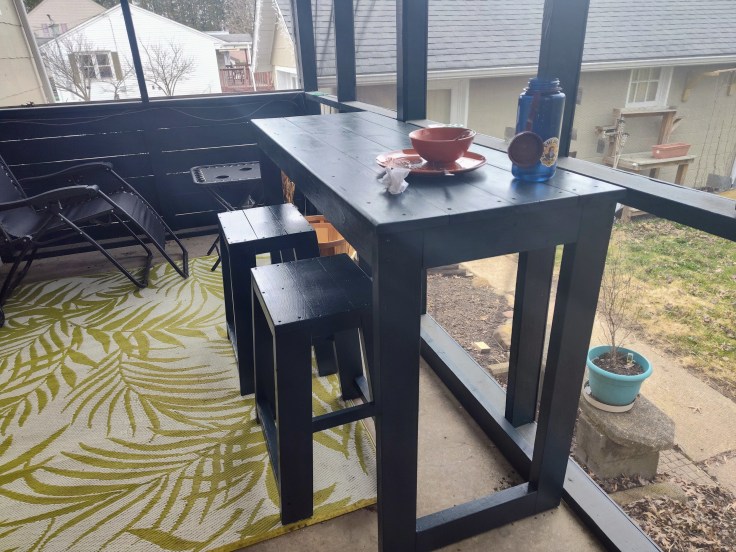
The project flew by and was a lot of fun. On day one, we decided we were going to build these, came up with a design, bought the materials, and had the table’s frame assembled. The stools certainly took more time, but the entire project was done within two weeks, and we’ve been able to sit at the table several times already. It was also very affordable. I think we spent $140 on materials, including the screws, which is much cheaper than anything we could have bought of the same quality. It also could have been built with only minimal power tools, so I would recommend this project for anyone who doesn’t want to overspend on outdoor furniture. And if you find the wooden seats to be uncomfortable, you can always add an outdoor cushion.
The finished product.
Also, we didn’t get rid of our previous furniture. Our glider is going to be placed in front of our back porch in an area where we’re going to grow potatoes in bags. Meanwhile, the Ikea chairs are going to be disassembled, with the backs being used as trellises for climbing plants, and we’re going to build planters for them to connect to.
I’ve been sewing for five and a half years, and yes, it took me close to that amount of time to learn these helpful tips. The skill of taking a needle and thread to fasten pieces of fabric together is one of the most complex technologies I’ve ever learned, and yeah, some of the more obvious things can go over your head because there is so much to learn. Even with half a decade of sewing experience, I am still a rookie. Here are four things I have learned about sewing recently that have changed my sewing experience from a laborious struggle to a relaxing craft I want to do.
Needles
I knew I needed to change out my sewing machine needle consistently (which I usually forget to do), but did you know you should change out your hand needles often? Nope, I did not. I recently began changing my needles after each large project or after two small projects, and wow, the difference in hand fatigue is mind-blowing! My issue with sewing by hand has been the wear and tear on my hands, particularly some on my finger joints, which felt exhausted after hours of pushing the needle through the fabric – apparently that’s not how it is supposed to be. The needle should glide; cheap needles or needles that are dulled from use will not do this. I feel like a silly goose.
Now that I know and have experienced the difference between fresh needles and started purchasing DMC needles from my local fabric shop, I am sewing more. Most importantly, my hands are happy, my stitches are small and straighter – it’s like night and day. The needle glides into the fabric and through to the other side with minimal pressure, my thread is not getting tangled, and I am sewing with more efficiency. If you sew, go change your needles.
Shear Maintenance
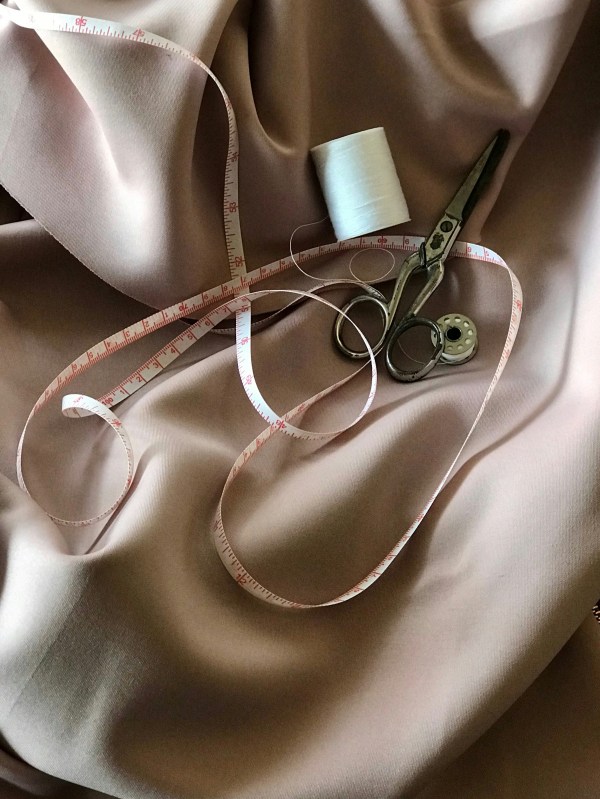
Did you know you should oil and sharpen your fabric shears? I did not. It’s such a simple concept, though. Own thing, use thing, repair thing, use thing more. Repeat. What’s silly is that, in our disposable culture, I thought fabric scissors had a lifespan and had to be replaced once they dulled from wear. But regular maintenance, like a car, keeps them around and working well.
I keep my scissors crisp by cutting aluminum foil from time to time. I oil my shears with a towel, very carefully. Please don’t cut yourself like I did the first time.
Know About Me: Fabric Edition
Kill the doubt, I don’t want it, kill the fear, I don’t want it Kill the rule, I don’t want it, kill the end, I don’t want it
Let me show you that, show you that, mm-mm Know about me…
Let me show you that, show you that, mm-mm Know about me (know about me, that’s that)
– Nmixx, Fe:304 Forward
Researching fabric is important, but when you are first getting started, you feel overwhelmed and like you’ll never be able to cram all this knowledge into your head. There are a lot of fabric types! With two main families – woven and knit that separate into a myriad of options that will make your head spin. But truly, what will make your head spin more is not buying the proper fabric for the project at hand, with one caveat being in the beginning. When you are truly beginning, you just gotta see what is cheap or available because you are going to mess up – don’t use the good or expensive stuff to keep yourself from heartbreak.
I’ve started researching any fabric I am looking at to know if this textile will be applicable for the idea I have in my head, and pivot based on the information I glean. I thought it would be time-consuming, but it’s not. It saves money and fabric from being wasted in the chaos of choosing an incompatible fabric for your garment plan. You don’t want a stretch when you need a structured fabric. When you need opaqueness, a sheer fabric would throw a wrench in your plans. Fabrics, like people, have their own character, attributes, and talents. It’s more of a matchmaking process than just adding to the cart.
Ask a human. Ask a reputable website. Don’t ask ChatGPT. OpenAI is a little busy now with its Department of War contract, but don’t worry, they “promise” not to do mass surveillance or help create automatic weapons.
Hand Posture
I learned this final tip from Abby Cox and Nicole Rudolph during a TikTok Sewing Tutorial Reaction video. Sewing hand posture will determine your sewing experience. Whether you can sew for hours or for half an hour before you need a break. I used to sew with a hand-straining posture that created wrist, hand, and finger discomfort. Pulling the needle to the side, horizontally, reduces strain compared to pulling upward. It uses a light wrist flicking motion. Similarly, holding the fabric to the side with your wrist loosely bent will keep your hands relaxed and reduce hand strain. I have applied this new hand posture to my sewing, and it was a game-changer. I’m not surprised that I was doing it wrong. I am self-taught, but dang, the ability to sew a pair of pants by hand without hand strain was incredible!
I hope these sewing tips help you as much as they helped me. I wish you happy sewing!





 One Rabbit Riot