Reflecting on a Year With Our Pet Rabbit

Late October marked one year of having our pet rabbit Mia. As her gotcha day anniversary arrived and passed, I did a lot of thinking about what it’s been like to have her for a year and considered putting those thoughts into a blog post. Simultaneously, and funny enough, Magz was having the same thoughts. We’re unable to co-write a post, so we’re both going to share our reflections without discussing them with each other beforehand. It’ll be fun to see what reflections are the same and which ones are different.

Introducing Mia

Magz has written about Mia in quite a few posts since we adopted her, but if you’re new to the blog, or it’s been awhile since we’ve talked about her, she is a Harlequin rabbit. She recently turned four years old but was three when we adopted her from Erie Area Rabbit Society (E.A.R.S.). They are the region’s only rabbit-exclusive animal shelter and are 100 percent no-kill, so if someone surrenders a rabbit or they find an abandoned one, they rescue it and take care of it (including its medical needs) until it gets adopted. While they are a non-profit, they receive no public funding and instead rely on the generosity of others to continue to operate.

Prior to visiting E.A.R.S. and meeting Mia for the first time, I had never petted a rabbit before. I’ve always found them cute, but just never had the chance to be close to one. Magz, meanwhile, had a pet rabbit growing up and knew how to interact with them. We went to E.A.R.S. on the second day of a short three-day trip to Erie last fall and got to meet Mia that day during some one-on-one time. She was one of two rabbits we got that time with, and she was a lot different from the other. She was more interested in exploring the space than being close with us but would come around for pets every few minutes. Initially, she wasn’t our top pick, but after coming home and discussing it for a while, we decided to adopt her.

Reflecting on Year 1

Mia has been the first pet we’ve had together, so it felt really monumental adopting her. And in our first year with her, she has become a member of our family. People always say that pets are members of their family, and in the best circumstances, it’s true. We make plans around her and are always looking for ways to improve things for her – toys, treats, and her diet. But I don’t want it to seem as though it’s been a perfect experience every day. When we first adopted her, we kept her in her x-pen the entire time until she got used to us and the house. It’s a 60″x60″ pen, so it’s plenty big enough and larger than she was used to before adoption, but within a few months, she showed that she wanted to spend more time with us. Unfortunately, we didn’t recognize that at first and thought she was just being grumpy, which rabbits are known for, so we didn’t make changes right away.

There was also a time when she was beginning to display early symptoms of going into GI Stasis, which is basically when a rabbit’s gut health and bacteria become imbalanced. It causes gas build-up and bloating, and if not addressed, is fatal. I noticed it because she wasn’t eating like normal, and rabbits eat all the time because their digestive system is constantly working. We were able to get some gas drops in her, and she lived, but it was very traumatic as a first-time bun owner. It led to me being hyper-focused on her eating habits and noticing when something just seems off about her. Still, we stuck with it and a wonderful relationship has developed and flourished.

Lessons Learned

  • Rabbits are both fragile and tough as nails. Rabbits are fragile in that they generally don’t like to be picked up and should only be picked up when necessary. Their legs and back to be supported, and not doing this can lead to spinal injuries. We still haven’t picked Mia up. At the same time, though, she runs into things periodically, gets underfoot, and seems to be fine with hay getting much closer to her eye than I ever would be.
  • You need to pay attention to them. Rabbits need to be monitored to make sure they’re healthy and doing okay. Because they’re prey animals, they don’t cry or show that they’re injured or sick. Instead, you need to watch them to notice any abnormalities in their behavior that would indicate sickness or injury.
  • Rabbits don’t make noise, but they aren’t quiet. I was shocked to learn how noisy rabbits can be even though they don’t bark or meow. Mia is constantly making noises by foraging through her hay, chomping on her lettuce, chewing her pellets, digging at everything, and chewing on cardboard. Even her hops make noise. If she wasn’t around, the lack of noise would be deafening.
  • Rabbits are very intelligent, especially emotionally. Mia knows when we’re feeling sad. She recognizes those emotions and will hop over to us and comfort us. She also loves doing puzzles, and there are rabbits on YouTube that navigate through mazes. They’re very smart, and Mia is smarter than most dogs I’ve been around.
  • Need stimulation. Rabbits want some type of attention and stimulation most of the time. It’s part of the reason we do puzzles and stacking cups with her. If it isn’t a puzzle or other type of mental stimulation, she wants to be right by us and getting attention from us.
  • Best qualities of cats and dogs. Dogs and cats are (by far) the most popular pets in America. Rabbits have the best qualities of both. They want to be around you and will show you affection, similar to dogs, but they also like their own space and don’t bark, like cats. Rabbits can be litter-trained (Mia is), but their litter doesn’t smell. It’s all very natural because they’re herbivores.

Simply Put, Rabbits Make Great Pets

Rabbits are great pets. They’re affectionate, but like their own space. They’re quiet, but still make noise as they move about. They’re unbelievably intelligent and want to learn. And I think humans can learn a lot from rabbits. Rabbits are gentle creatures. Sure, they can nip at you occasionally, but they aren’t aggressive. Instead, they are passive. They require you to be more gentle than you need to be with other pets. They also have sensitive ears, so you need to be aware of how loud you’re being. It leads to a more peaceful and gentle environment.

Reflecting on our year with Mia has helped me to realize that humans should be more like rabbits, especially in our relationship with the Lord. Mia depends on Magz and I for everything. She needs us to get her food each day and to change her hay pan. She was born at E.A.R.S., so if she ever got outside, she wouldn’t know how to survive in the wild. We should want that relationship with God. He wants us to depend on Him for everything, yet we quickly become self-reliant and believe that we’re providing everything we have. We also should be meek. In Matthew 5:5, Jesus spoke the following: “Blessed are the meek, for they will inherit the earth.” Being meek simply means being humble and gentle. I also think it means being quiet, listening more, and being slow to speak. Mia may not exhibit humility, but she’s got the listening and quietness down. I want to be more like her and less like an aggressive and loud dog.

If you would like a pet but aren’t sold on what animal you’d like, I recommend that you go to a rabbit society like E.A.R.S. and spend some time around bunnies. Experience their unique personalities and how much love they have to give. Rabbits are excellent pets, but they shouldn’t be treated like a second-rate pet compared to cats and dogs. They’re wonderful creatures who deserve love and respect. Having Mia has forever changed my life, and I think a lot of lives would be improved if they gave rabbits a try. And remember, if you are interested, adopt from a reputable shelter. Don’t buy from a pet store or Agway.
Socks Are Madness

This is a story of a winding road. It is not just passion that makes us try new and difficult things, but also the desire to fit in. Sometimes the road is bumpy, and bumpier still than we expected.

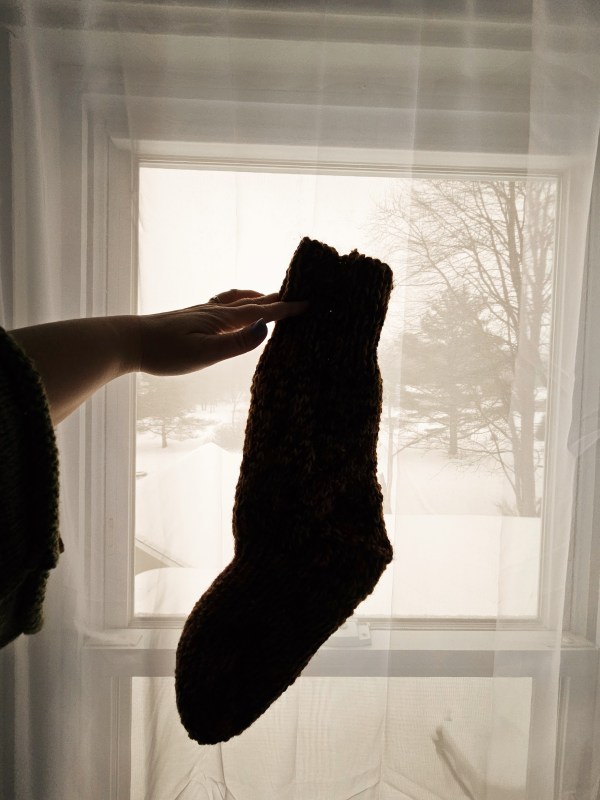
Last winter, I began a journey; at the time, I did not realize how technical this would be, and oh, how I miss the naive wonder of that time. I started my quest to make socks. The sock does not appear technical from the outside. It is a tube of knit fabric which we slip on our feet, most every day. Due to the Industrial Revolution, socks can be knit by machine with ease and speed. This has suspended our connection to the technology that first developed the sock—hand knitting.

In our modern day, socks are affordable and accessible. They are for sale everywhere in a myriad of textures, weights, and styles. We have socks for athleticism, socks for leisure, socks for style. They are boring, mundane Christmas gifts of childhood, and puppets with googly eyes. But what does it take to make a sock by hand?

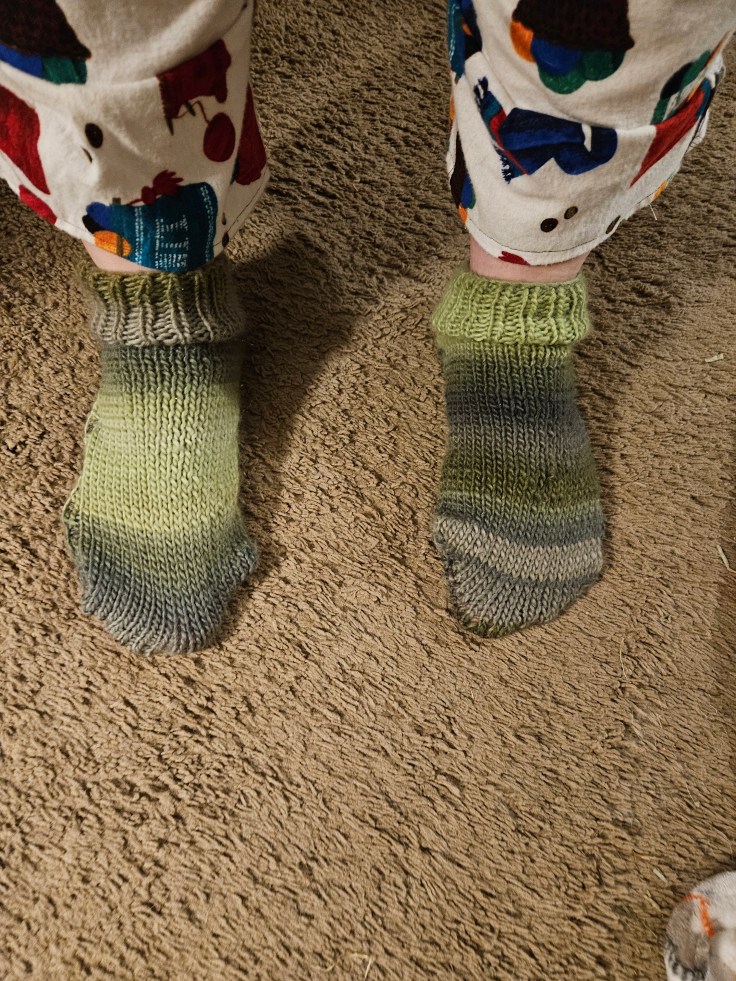
I gave this a shot last year, and it challenged me! I cataloged my experience in Socks, A Journey, and Socks: An Update, where I began knitting socks flat on straight needles and three months later gave circular knitting a try. My first flat knit socks were made top down, in a tube style that negates the heel flap and requires sewing the sock into a tube. They are loose in fit but warm and great socks to wear around the house. My advanced tries, knitting in the round and turning the heel, were more of an adventure. My tension was tight, and my heel flap a nightmare, unable to be duplicated into a second sock, for how off script my technique became. I didn’t grasp the why of what I was doing and therefore messed up the pattern.

This summer, I went to a local yarn shop where I began my journey to sock more traditionally. I picked up a pair of small-gauge double-pointed needles and sock sock-making kit with proper sock yarn of wool and nylon, to do it “properly” and oh my, did this bomb. The toe-up pattern, new to me from my previous projects that were cuff down, pushed me far out of my depth. I sank instead of swimming. The four double-pointed needles and my uncoordinated hands created tension and laddering in the knit, which looks exactly as it sounds. I tried three times to knit a few centimeters before the stitches fell off the needles, the sock falling off with the stitches. In desperation, as the needles were 29 USD and the sock kit 29 USD, I was feeling very silly and wasteful purchasing new needles and new yarn that I couldn’t do anything with.

So I pivoted to my trusty straight needles until I saw my mom later that weekend, and she lent me a pair of small-gauge, small-circumference needles to finish the sock. Still baffled by the heel flap and the vague instructions on the pattern, I tried German short rows for shaping the heel. In a fortnight, I completed the first of the two socks. I cast off and handed it to Kyle to try on, and the size was all wrong. I tried to frog it back into a skein of yarn, but the splitty yarn tangled, ripped, and became a ball of knots. It was over, and I was furious with myself for wasting time, money, resources, and, honestly, hurting my eyes squinting to see my tiny stitches for almost two weeks to accomplish nothing.

Socks are madness. And maybe I should stop beating myself up about my failure when socks are one of the hardest things to make by hand. I am an overachiever and a perfectionist, so this type of failure cuts me deep. I obsess, I rage, and I fall apart in the madness of learning something that may take years to execute once, not even perfectly. But you know what? I have made good socks before! Comfortable, almost perfect for what I was looking to achieve, socks. But I rejected them as being good because I was embarrassed at how I made them. I didn’t follow the right techniques, I used the “wrong” yarn, and I didn’t turn the heel.

Sometimes I have major imposter syndrome as a knitter. I feel like a fraud because I don’t use the exact same patterns, same tools, same yarn as everyone else on the internet. But why is that a bad thing? I’ve listened to other knitters in podcasts discuss how the sameness of knitting is making it boring. Apparently, at Rhinebeck or other knitting events, it is easy to see the same sweater throughout the sea of people, and that is a new thing. Listening to knitters, who have been knitting long before 2020, when I really started knitting consistently, knitters used to do their own thing. Yarn suggestions in patterns were exactly that – a suggestion.

People were designing more and experimenting instead of knitting in the homogenized way we see today, which is one of the ways I feel like an outsider. I don’t want to knit the same things as everyone else, but I also want to be good at the craft, and it leaves me in this push-and-pull tension. It became clear to me, though, that my search to “fit in” with the proper sock kit and the expensive needles didn’t make me a better maker. It was honestly a bit of a handicap. So I guess my takeaway is to be yourself?

I don’t want to stagnate in my skills, but if I can find my own technique to make socks and other garments with the “non-standard” tools and yarn, then is it really stagnation or just getting creative with where my skill level is at? I’ve been pondering this a lot and have more thoughts on this from both the point of view of a knitter and a sewist. But that will have to wait for next time.

Exploring Pennsylvania’s Native Plants

In last week’s post, I wrote about changes that we’re making to our garden for 2026, which are largely the result of the chameleon plant spreading in one of our garden beds. The chameleon plant is an invasive species that is native to Southeast Asia, and once it gets established in an area, it’s very difficult to kill. Learning about this plant led me to become more curious about other invasive species and, more importantly, Pennsylvania’s native plants.

Native plants are important to an area’s ecosystem because they keep the natural environment in a delicate balance. Native plants are adapted to the local soil and growing conditions. In the case of Pennsylvania, they’re also frost-resistant and can handle periods of drought and excess moisture. Native plants also provide food for birds and pollinators. They require little maintenance once they are established and are vital to the region’s biodiversity.

Pennsylvania, Native Plant Species
Photo by Donnie Rosie on Unsplash

Pennsylvania’s Department of Conservation and Natural Resources (DCNR) website says that there are roughly 2,100 native plants species in the Commonwealth. By the year 2000, five percent of the state’s native plant species had been eliminated and another 25 percent were at risk of going extinct. Meanwhile, at the turn of the century, there were 1,300 non-native plant species, which represented 37 percent of the state’s total plant species. And the sad part is that this number has only grown since 2000 as more invasive species are added to people’s gardens.

I have been interested in native plant species without realizing it for a long time. I spent a lot of time outside and in the woods growing up, and I also did a lot of hiking and mountain biking from middle school through college. Spending that much time in nature allows you to recognize plants that you regularly see even if you aren’t looking for them. Plants like Mountain Laurel and Elderberry bushes stand out. Trees also begin to be recognizable as bark and leaf characteristics start to become familiar.

In middle school, two things happened that began to increase my interest in nature and native plants. The first was a middle school science project that required finding Pennsylvania tree species and documenting their leaves. The second was borrowing a book on edible plant species. This came after going on a week-long backpacking trip and seeing Wild Carrot and berry bushes along the trail. It sparked my interest and I began foraging for wild edibles around my dad’s house.

I’ve written about this in previous posts, but I’m passionate about stopping the destruction of nature and the environment. We’ve made a lot of decisions over the past few centuries that have destroyed thousands of acres of forests and native grassland in the name of progress. We’ve stripped the soil of its nutrients, cut down millions of trees, and polluted our waterways. Some have been working hard to reverse this trend, but there will always be “leaders” who are willing to sacrifice the environment for financial growth.

Long-Term Project

This is the start of a long-term research project where I learn about our state’s native plants and how we can have more of them on our property. Our goal is to have our yard become a Certified Wildlife Habitat, which requires having native plants that create safe and beneficial environments for local wildlife. By learning about Pennsylvania’s native plants, we can identify any that are already on our property and learn about others that would thrive so that we can introduce them in the future. I was hoping that my research would lead to me learning about native vegetables that the Native Americans grew, but I only found the well-known Three Sisters of squash, corn, and beans.

Many of the other vegetables we grow were introduced after Europeans arrived. Because of that, a follow-up article will be coming that researches what people groups introduced specific vegetables and if the vegetables that are typically grown in Pennsylvania originally came from the most common immigrant groups who came to the state. For now, though, here are the commonwealth’s native plants.

Pennsylvania’s Native Plants

TreesShrubsFernsPerennials/Vines
Alternate-Leaved PagodaAmerican HazlenutBloodrootAlumroot
Black BirchArrowwoodChristmas FernBeardtongue
Black GumBeaked HazlenutCinnamon FernBee Balm
Chestnut OakBig BluestemFalse Solomon’s SealBlack Cohosh
Eastern HemlockBlack ChokeberryLady FernBlack-Eyed Susan
Eastern Red CedarBlack WillowMay AppleBlue Cohosh
Eastern White PineBlackhawkOstrich FernBoneset
Green AshButtonbushPartridge BerryButterfly Weed
HackberryChokeberryRiverbank Wild RyeCardinal Flower
Hop HornbeamHighbush BlueberryRoyal FernDutchman’s Breeches
HornbeamIndian GrassStonecropFoam Flower
Mockernut HickoryLittle BluestemVirginia Wild RyeGarden Phlox
Pin OakLowbush BlueberryWhite GoldenrodGolden Ragwort
Quaking AspenMaple-Leaved ViburnumZigzag GoldenrodGoldenrod
Red BudMountain LaurelGreat Blue Labelia
Red MapleNew Jersey TeaGreat Solomon’s Seal
Red OakNinebarkJacob’s Ladder
River BirchPinxter FlowerJoe Pye Weed
SassafrasPurple LovegrassMarsh Marigold
Service BerryRed ElderberryMilkweed
Sugar MapleRed Osier DogwoodMonkey Flower
SycamoreRose BayNew England Aster
Tulip PoplarSilky DogwoodNew York Ironweed
White AshSilky WillowOxeye Sunflower
White OakSmooth AlderSneezeweed
Wild PlumSpice BushSundrops
SweetfernTall Meadow Rue
Switch GrassTrumpet Creeper Vine
Wild HydrangeaTurtlehead
WinterberryVirginia Bluebells
Witch HazelVirginia Creeper Vine
White Snakeroot
White Wood Aster
Wild Blue Phlox
Wild Columbine
Wild Geranium
Wild Ginger
Wild Sweet William

When I walk around our property and look at the plants and trees, we have few, if any, native plants. It’s clear that the previous owner(s) were not focused on native plants and healthy biodiversity. In addition to the chameleon plants, we have Snowberry bushes, some type of dwarf Holly Bush, and an ornamental tree. While the Snowberry is native to the United States, it is not native to Pennsylvania. Holly is another plant that can be native to the U.S., but because there are a bunch of varieties, including dwarf ones that have been bred to restrict size, most aren’t native. That’s the case with the one in front of our house. Finally, we have one tree on our property at this time. It’s a short, ornamental tree that is certainly not native.

When we bought our house, there were woody shrubs on one side of the house as well as one crab apple tree and an out-of-control lilac bush in the strip of land between the sidewalk and road. They were planted by the borough years ago, but they were partially dead and hadn’t been pruned or maintained in years. We took those down earlier this year.

We have no other trees or plants on the property other than the ones we planted in the spring and what we had in the garden. Our neighbors have done an excellent job of planting beautiful trees and flowers, with the majority of the trees and perennial plants being native. When I look out our windows, I see a couple of poplar trees, several hazelnut trees, and multiple berry bushes. Elsewhere around us, we can see a lot of evergreen trees and many oak and maple trees. Pennsylvania has a lot of trees, and it’s easy to see a variety of native species by keeping your eyes open as you walk or drive around.

Are any of Pennsylvania’s native plants native to where you’re from? What are your thoughts on native vs. invasive species?

A Procrastinator’s Temperature Blanket Guide

Did you know that you can find daily highs and lows in a database to use for temperature blankets? I didn’t either until a year ago. (Yes, this project post is long overdue.)

I learned this from the lovely Toni Lipsey of TLYarnCrafts, which saved me when I spontaneously decided to make a temperature project last year for Christmas…after Thanksgiving.

I am a last-minute Christmas gift maker, along with many people out there. I am not special or organized, but I’d like to change the second one. Anyways!

What is a temperature blanket?

It is a fiber-based project, knit or crocheted, whose color palette and sometimes its pattern are determined by the daily weather of a specific location over a certain time span. I thought you had to track every day, but you do not, which is amazing because you can make this project on a whim. Although the actual work time will be longer than you may expect, it was for me.

It’s a fantastic stash-busting project or a way to use colorful yarn you may not put together in the same project. You can do whatever you want, and that is what makes this project such a special one. Your color changes will be different depending on what date range you choose and where you live.

It’s like a fiber fingerprint of a certain time, a memory, crafted into fabric.

The traditional date range is a year of weather, usually highs, which is what I did with my first project, but you can do whatever you want, and isn’t that amazing? You can do lows, weather patterns, etc. I had the idea of honoring a family member’s birthday by researching the temperature on their birthday every year since they were born. It truly is a free-form, fascinating way to engage with crafting and nature!

Materials, Temperatures Recorded, and Yardage

I chose to stash-bust my backlog of half-used acrylic skeins for a random color palette, but it can be whatever you like. You can use wool, cotton, or alpaca. You can plan an entire color palette that is unique to your design sensibility. I think an ombre in the same color family would be lovely if you can find the yarn swatches to do this. I think that with the right design eye, this usually random-looking project can look exquisitely planned out.

I believe the most important part of the project is getting the data recorded down into a spreadsheet or notebook, whatever fits your crafting style, so that you can see what temperature ranges are the most common and therefore which ranges will be the most common through the piece. I had a really tough time deciding this, and in hindsight, I wish I had tallied how many of each I had before knitting, because for one color, I almost ran out! It would have been so much easier to have swapped the colors I was using according to the yardage I had instead of choosing at random. I think that is why crafting practice and crafting community are so vital to this work, because sometimes you don’t know until you try, and sharing our experiences informs the greater knowledge for us all.

For my temperature data, I am an analog gal, so I recorded my temperature highs in a notebook and checked off each day as I went to keep track of my progress. I highly suggest doing this in some capacity because otherwise, you are going to have to count rows, and checking off progress in a spreadsheet or notebook is just quicker.

If you are a beginner knitter or crocheter, might I also recommend Caron or Big Twist acrylic yarn for this project? The value for yardage and lack of splitting of these yarns make a huge difference for a first crafting experience, so that this project easily transforms from a skein of yarn to a lovely blanket made with your own hands.

Would you make a temperature blanket? Have you ever tried to make one before? Did you enjoy your experience?

#78 – Can You Feel Optimism in 2025?

This is a bit of a follow-up to my discussion of cultural boredom from earlier this year, a little update to my creative slump, and exciting developments for my hunt to replace my reliable crafting supplies. The world still feels like it is on fire, but I think I am learning how to thrive again. It takes me a long time to process things, so maybe that’s why?

Spaghetti and Gnarly

Le Sserafim released a song that captures the wonderfully nonsensical world of a good K-pop song. Spaghetti is catchy, silly, and makes me crave spaghetti, so that’s what I am cooking tonight. It is what I remember the music videos of K-pop to look like when I took the plunge in 2022. It was fun, and in the last few years, it has lost some of its luster with darker concepts, instead of cute, and a bit uninspired. Although I’m fully into K-pop, it has been repetitive and bland for most of 2025. Except for my favorites – Stray Kids and Nmixx. Enter Gnarly by Katseye. A song that is so jarring it’s bad but also amazing, it’s been a weird one for me, the thesis of this year, it has felt like. “Everything is gnarly.” A phrase that has carried me through bizarre headlines and life’s bumpy road this year. For me, Gnarly was going to be the song that typified what I remember feeling in 2025, until Bleep by Stray Kids dropped in August. But now, I hope I will remember moments that feel like the upbeat wonder of Spaghetti. What about Golden? I desperately need to compile notes for K-pop Demon Hunters because that has been such a gift.

Big Twist at Michaels

Big Twist is back at Michaels, for real, and it’s kind of silly to admit this, but it feels comforting. There’s a Joann Knit and Sew Shop section in the store, and like, maybe it was a bad dream? I mean, all the crafting drama definitely happened this year between private equity, tariffs, and Sci Show declaring the arrival of physicists to help the knitters. The familiarity was maybe all my neurodivergent mind needed to just relax a bit? Now the fabric is not good, but it could get better in time. I’m choosing to be hopeful, I mean, the recent US election showed a strong rejection of the Trump Administration, so as people have said all year, if it can get worse, it can get better. And for me, who hates change with a passion, I’ve learned that if it disappears, it can come back. I just need to work on my patience. I have found a second local yarn store in my own state, and a great local fabric shop. I’d say I’m pleased to the point that I am not missing Joann like I thought I would.

Stitches for Identity

I believe I am finally moving out of the depressed forest that is being laid off due to personal and global trauma. I’ve been listening to Kitchen and Jorn’s Losing Followers Podcast, where they have been talking through the post-Buzzfeed time of their careers. I was in a toxic job at Great Dane Trailers in the late 2010s, and it was freeing yet terrifying to lose that job. Listening to Jen and Kristin talk through the transition of leaving a job that demanded all of them, to be free from that monster, but also lose all connection to the project they built from the ground up, has been a balm to me. When I was laid off, I lost my app and my content calendar, my magazine contribution. I was wrecked, and I didn’t know how to process that for years. I felt like a loser. I dove into crafting, and for years, those stitches of thread and yarn gave me meaning.

The blog, though, and finally this year uploading my manuscript to this website this year connected me back to what makes me feel like me. I have always been drawn to writing, and not having that or a way to work towards something bigger than just sharing my creations on social media was gnarly. But this blog and your community have helped me find my way back. I mean, heck, Udal Cuain and my original blog, where I shared chapters, was the portfolio that landed me the corporate job. Although it’s gone, what I learned and experienced stayed with me and has made me grow into who I am now. This has been a full circle.

It’s been freeing to admit to myself and loved ones that I was depressed by that career loss. Starting over again has been confusing, but it’s not all figured out yet. There is still time to find a new place where I belong. I’m in the process of recalibrating, and that is a direction in itself. I feel freed from the weight of “monetizing my hobby” and the impossible summit of creating a small business as someone who truly is not cut out for the accounting or marketing parts.

Unmasking and Coping for the First Time

Truly, though, as I reflect on this year, getting serious about health – mental, physical, and emotional – for the first time has contributed to the feeling of optimism I have leaving 2025 that I did not have entering 2025. I have healthier boundaries in relationships, more honesty about how I’m doing, and whether I am feeling overstimulated. I recently got into rebounding, aka a fancy term for jumping on a miniature trampoline for cardio. Wow, I like this for my mind! It resets me, and it’s helping me get stronger. I used to feel ashamed of who I am. I didn’t understand why I felt so different, nor did I know how to communicate burnout without pushing friends and loved ones away. Being unmasked was tumultuous for the first couple of months, but now I never want to put that neurotypical mask back on.

How has 2025 changed you? I think it has made me unapologetically empathetic. Bolder to say I disagree with wrong because the stakes have been higher than ever in my lifetime. I hope to carry that forward into 2026, because I think the opposite of late-stage capitalism is community, so let’s burn it down with empathy. Thank you, dear reader, for spending time with me today. I wish you love and kindness.

It’s Okay to Admit You Don’t Like It

A place I didn’t expect to reach this year, was the mental head space of dislike for a dream I’ve had for most of my life. Now could it be burnout and I just need a break? Probably. But I also think it might a healthy thing to acknowledge something you thought you would love, may not actually bring you joy as you wished.

What am I talking about? Sewing. I don’t like sewing as much as I want to. It is tedious, extremely complicated, and requires a level of patience I lack. I’ve been a sewist for 5 years now. I devoted a large amount of my time over the past five years to the study of garment construction, and I realized that it is not my medium, yarn is, and its not a failure to admit I don’t like sewing as much as knitting and crochet.

I think I have known this for about a year, yet refused to verbalize my feeling because it felt like I failed the one thing I always wanted to do. But why is that a failure?

Just because it’s not my passion, doesn’t mean I am going to stop sewing. I think having this space to put less pressure on it to be “my thing” could make me enjoy it more!

Because then I am free to create, to fail, to be a slow learner, to take breaks from sewing when I am ready to cry. I don’t have to feel pressured to get my skills up to par for selling my work. I don’t have to feel pressure to design my own patterns or build a business on sewing. I can go back to basics of what has always been at my core – art. I am an artist, I don’t set out to be, but I know its there inside me too afraid to commit to the bit.

I love what sewing brings me. It’s a fantastic skill to have. I can design my own clothing made to measure and that is luxurious even if my sewing skills are mid.

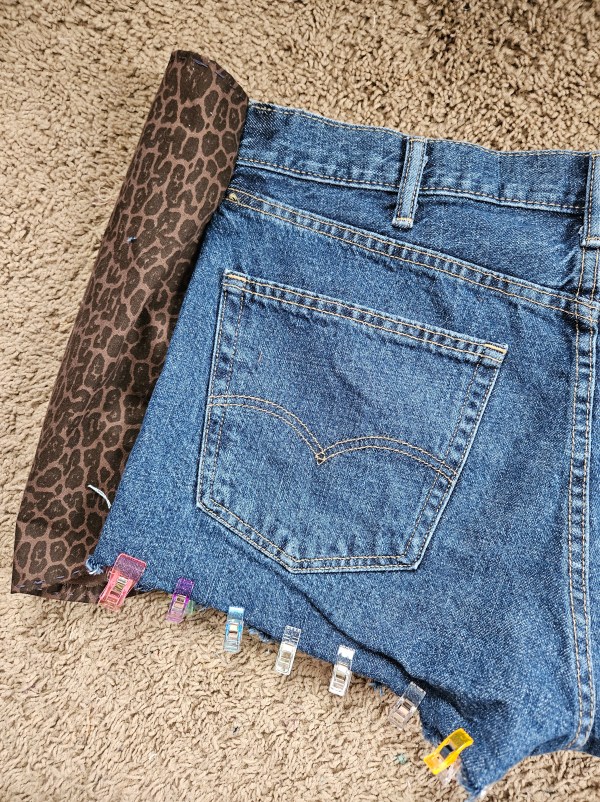
I can experiement with my style through upcycling. I love how I can recycle and repurpose fabric instead of donating. That is a important part of comsumption. We buy and buy but don’t think about the life cycle of the garment, but with needle and thread you can leave the buy and declutter cycle.

Sewing has taught me to be a wiser comsumer as well. I buy garments that I can’t sew. Complex garments. I also price compare fabric against pieces in store to figure out what is more cost effective to sew. Such as buying a 6.99/yard, one yard cut of cotton jersey to make one long sleeve basic tee. You can buy these from retailers for 35 USD compared to sewing one for 7 USD.

It’s not always cheaper, but sometimes it is and that is a huge win!

Finally, by allowing myself to feel these feelings, my hope is that I will be free to explore and create unencombered by goals of monetizing my hobby, instead that I enjoy the creative process again.

Have you ever tried sewing? Did you find it challenging?

Planning Changes in Our Garden

Writing about the garden in fall with winter on the way has been more difficult than I anticipated. I’ve been busy with painting my office, work, planning some woodworking projects, and trying to relax some. My plan is to write posts during the gardening “offseason” that require research, like the one last week about the accuracy of first and last frost dates. But this week, time got away from me a bit, and I didn’t start on anything. Instead, I decided that I’ll go over some of the changes that we’re planning for next year’s garden.

Converting the Space by Our Porch Into a Container Garden

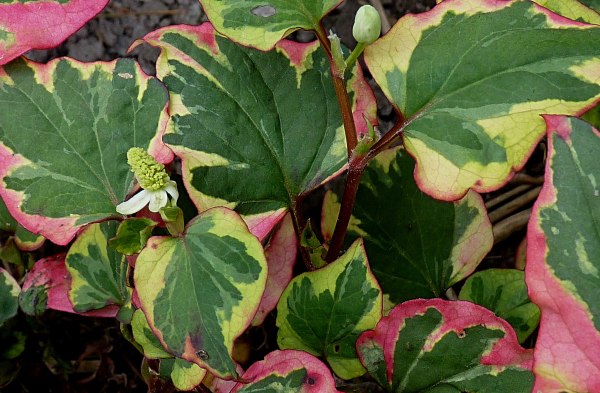
There is an area off our back porch that has dirt in it and is bordered by rocks and landscape timbers. I don’t think that the previous owner or the tenant who lived in the house ever attempted to grow vegetables or flowers in the bed because the soil is poor quality and shallow. Also, at some point, someone planted a chameleon plant there, and it has taken over the entire area. If you’re unfamiliar with the chameleon plant, it’s an invasive species that grows native in Southeast Asia. People used to plant it a lot because it can grow in virtually any condition and has pretty flowers. However, it also takes over everything because its rhizomes spread underground, making it difficult to kill.

Chameleon Plant
Chameleon Plant (Jamain, CC BY-SA 3.0 , via Wikimedia Commons)

Magz and I have disliked this plant since we bought our house and learned what the plant is. Last summer, I thought I could kill it with a string trimmer, but that only temporarily slowed its spread and released a smell that can only be described as disgusting. This year, we took a different tactic by using chemicals. Round Up and other common herbicides didn’t work. We learned that a combination of Dawn dishwashing liquid, salt, and concentrated white vinegar may work, but it didn’t. We eventually bought glyphosate, which was impactful. It actually kills the leaves and the root system, and we got it under control enough that we thought we could plant vegetables in it. Late in summer, we tried to plant some squash and pumpkins in there, but that didn’t prove to be successful, as the chameleon plant came back since we couldn’t continue to spray it with glyphosate. That leads us to where we’re currently at.

Originally, I thought that the best plan was to build up the retaining wall and rock border, kill the chameleon plant, lay down some landscaping plastic, and bring in fresh soil to plant in. Magz had a much better idea given how much soil that would take and still not knowing if the chameleon plant would eventually reappear. Her idea is to kill the chameleon plant and lay down landscaping plastic, but then, instead of bringing in soil, we buy gravel/small stone to pour on top of the plastic. With the plastic fully covered, we will then buy containers to grow potatoes in.

This will allow us to still use that space without needing to worry about the soil quality or if we’ll ever be able to grow in it. We also will get to grow potatoes again, which we struggled with this year and had none to harvest. We’ll also be able to use a space that was previously unusable and make it beautiful, similar to English gardens. The area gets plenty of sunlight, so nearly every type of vegetable can grow there. We also have some outdoor furniture that we’d like to have in this area where we could sit and read a book or simply relax.

Adding Another Garden Bed & Potentially Adjusting Our Existing Beds

We still have plans to expand our garden for next year. This year’s garden consisted of two large gardening areas with five beds. Next year, we want to expand the one area to add a fifth bed to it. Our yard is still a bit larger than we’d like it to be, and there are plenty of additional vegetables that we want to try growing as well as some that we want to grow more of. We also want to have our property be a certified wildlife habitat, which requires having a lot of natural plants that benefit pollinators, birds, and mammals. Additionally, we want to grow flax as part of the PA Flax Project with the goal of regrowing the textile industry in our state. With flax, we can harvest the fibers that get spun into linen, which is one of the best wearable fabrics.

Our original plans for this year’s garden consisted of having this extra garden bed, but we ran out of time. It’ll be a lot easier to create this new bed with the other ones already established. We’re going to get started on creating this bed as soon as this week once a shipment of glyphosate arrives. We attempted to buy it locally, but our town’s Tractor Supply was all out for some reason (even though they had plenty of Christmas decorations to buy). Once it arrives, we’ll spray the area for the new bed as well as the existing beds in order to finally kill all the grass that we battled this year. We want to finally have the grass knocked down so that we only see soil.

The other thing we discussed is converting one of our existing beds into a raised bed. The drainage in that bed is poor, and when we get a lot of rain, it gets swampy. With a raised bed, we can eliminate that problem. However, it does require railroad ties to establish the bed’s boundaries, so we’ll see if we want to spend that money next year or let it go another year.

So, those are our plans for changing how we grow things moving forward. We want to more effectively and efficiently grow vegetables, and we feel this will help accomplish that goal. Do you make a lot of changes to your garden on a yearly basis? Have you had any experience with the chameleon plant, or is there another intrusive plant that gives you fits?

Happy Halloween or Samhain?

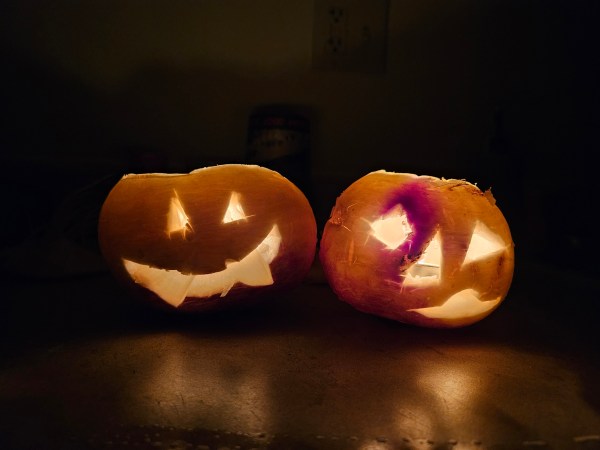
As a kid I carved pumpkins, as I mentioned in my jack-o-lantern pants posts, many moons ago. But as an adult, who has spent many years diving into history, the specifically Irish history of my ancestors, I have found myself switching to a new tradition. Turnips.

The turnip was the orignal carving vegetable for the original halloween, samhain in gaelic. Irish culture gave the traditions of halloween to the British colonizers and Irish immigrants took the traditions with them to America. Trick or treating, costumes, jack-o-lanterns carved pumpkins are all adopted from this key festival of ancient Ireland.

Samhain was a two day celebration. A bit like new year, a bit like day of the dead, and a time when the division between the spirit realm and earthly realm became thin. Fires lit the dark night, masks were worn and turnips carved to warn off evil spirits. The dead could return for a visit and it was unsettling. The world could end, if the gods were not placated.

Of course all this uncertainty is part of the human life and how we make sense of the changing seasons and our unpredictable world. I think its fascinating how they processed these uncertainties in a feast day, abd found ways to distract themselves in the darkness of short days and impending winter. Along with the othet traditions mentioned there was divination and superstitions, like predicting future outcomes with cabbages, or just games of chance, such as finding a small trinket in your slice of pie.

How does the macabre play role in Samhain and why do we have such traditions as graveyards and ghosts? It was a part of the ancient Samhain traditons to visit burial places, make offerings to the dead, and even eat in silence. Of course, while leaving a place at the table for a lost loved one or other spirits that may roam.

There is also a darkness to this festival, and layers to how far things are taken due to beliefs. This is where I stop feeling comfortable, when it gets into the druid roots. It could be quite a sinister feeling ritual, and the druids, well I had to pause my Udal Cuain research because this druid pagan chapter of culture is too dark for me. Any religion that practice human sacrifices is a no for me dawg.

But if you would like to learn more about the lighter and in my opinion, more fascinating parts of Samhain I highly recommend checking out the Ulster Folk Museum’s website.

Happy Halloween!

Planning the Final Makes of 2025

It’s that time of year when the holidays kick in, motivating me to dream of all that I can make before Christmas. But this year I am doing this a little differently.

Stitch/Life Balance

I started working and planning earlier. I usually think about what I want to make around Thanksgiving, a month or less before Christmas which is an impossible deadline. Last year I made a temperature basket and pushed to finish it in three weeks, it was tedious and down right miserable.

Create Better

I had better out comes with smaller projects, like mittens for my mom. This year I am also using distinct inspirations, so the projects are easier to execute well.

Started Earlier

I started my Christmas planning in August and began work in September, a first for me. I am debating on whether to gift a fully completed sweater or keep it, it was made without a clear goal and is a cozy crochet cardigan. If I choose to gift it then, I actually started in July which is the ideal timeline for me. I would like to start making as early as possible next year.

Holding Projects for January

I have made one Halloween project, but other than that I have been focused on making for other people this fall and it feels great. No stress.

There are several projects in my mind, but I am holding them for later. January feels like this depressing months of “after” all the excitement of the holidays. This usually includes a lapse of creativity too. I tend to push myself to make all my winter stuff in fall. To be honest, it’s dumb.

It can frost as late as June where I live, and snow in earlier May. It is cold for at least the first quarter of the year so why limit my timeline?

I am hoping this new creative strategy will lead to better makes and a happier maker.

Soul Crushing Dread

I am struggling this week to not feel down. The Federal Government shutdown and Pennsylvania Government shutdown is causing havoc for a lot of people. SNAP benefits are being paused Nov 1, so is a program in Pennsylvania which helps people pay for heating costs. You can see the blood of the RSF genocide in Sudan from space. ICE is being spotted more in my state. Every thing is gnarly, to quote Katseye. There are some personal things being worked through behind the scenes, that can drag me down, and I just feel sad. My heart is heavy. I would like evil to disappear. As corny as it sounds, I’d like world peace for Christmas.

I hope you are doing well, and know that you are loved. Hang in there. I am struggling as a sensitive person in these overstimulating times.

How Accurate Are First & Last Frost Dates?

Gardeners often pay attention to their area’s first and last frost dates. They help determine when you should plant seeds or transplant starts, especially those sensitive to cool temperatures, and how long of a growing season you have. The Farmer’s Almanac has always been the go-to source for this information, which is how we learned that our average last frost date is May 15 and the average first frost is October 7. With the garden being done for the year, something I’ve been pondering is how accurate these dates are.

Frost
Photo by Caleb Stokes on Unsplash

Mathematically, these averages are correct. Farmer’s Almanac and other sources likely use the same data I found from NOAA, which has historical data for their weather stations. With that data, it’s pretty easy to determine the average across a set of numbers. What I wanted to know is how often the first frost occurs before October 7 and the last frost after May 15.

For my purposes, I used a threshold of 35 degrees Fahrenheit. While people usually think of frosts occurring at 32 degrees Fahrenheit, tissue damage in plants can happen a few degrees warmer. Plus, the temperature is often lower at the ground than what the weather stations show. Here is a table with the results:

YearLast FrostTemp (F)First FrostTemp (F)
2025Jun-334Sep-935
2024May-1235Oct-1133
2023May-1835Oct-1033
2022May-833Oct-931
2021May-1533Oct-1934
2020May-1428Sep-1932
2019May-1633Oct-1333
2018May-230Oct-1435
2017May-1634Oct-132
2016May-1632Oct-1035
2015May-1535Oct-1832
2014May-1935Oct-2630
2013May-2735Sep-2535
2012May-1835Oct-832
2011May-1034Oct-2333
2010May-1029Oct-1233
2009May-1931Oct-635
2008May-2334Oct-435
2007May-1335Oct-2735
2006May-2332Oct-1233
2005May-934Oct-2833
2004May-535Oct-434
2003Apr-2630Oct-230
2002May-2229Oct-734
2001May-3135Oct-731
2000May-1635Sep-2830

Takeaways

  • In the past 25 years, the last frost of the spring occurred after May 15 on 14 occasions. It occurred before that date 10 times. It also fell perfectly on May 15 twice.
  • The first frost of the fall took place after October 7 in 14 years and before October 7 on 9 occasions. It happened on October 7 twice.
  • The last frost of spring had a temperature at or below freezing (32) 8 times, while the first frost of fall was below that threshold in 9 years. Most recently, those occurred in October 2022 and May 2020.
  • The coldest temperature for the first frost was 30 degrees in 2000, 2003, and 2014. For the last frost it was 28 in 2020.
  • This year has been one of the weirdest in recent memory. The last frost was on June 3, and the first frost was on September 9.

After tracking each year’s data since 2000, I looked at some outliers dating back to 1949, the first year that temperature data was recorded for this weather station.

  • The latest last frost of the spring occurred on June 26, 1979, while the earliest last frost was on April 28, 1953. The temperature was 35 degrees both times. The April 28 date is actually later than the earliest last frost recorded in the table above, which took place on April 26, 2003.
  • The earliest first frost of the fall occurred on August 15, 1963, when the temperature dipped to 34 degrees. The latest first frost was on October 22, 1962. It was 35 degrees that day. August 15 is much earlier than any of the past 25 years; however, we had a first frost later than October 22 five times since 2000.

What Can We Learn?

Beyond the obvious realization that the average first and last frost dates for your area are mathematically accurate, there’s only so much importance that should be placed on them. It’s good to know when the averages are, but I think they should be treated as rough estimates rather than set in stone specific dates. Each year brings temperatures and growing conditions, so it’s important to be flexible. This past spring, we had to wait until late June to plant some things because of how wet and cool it was. You can typically get a feel for how spring is going to go early in the year and can get a read on if the average start date will be accurate that year.

I loved looking at this data, and it was fun to remember why primary sources were so much fun to work with when performing historical research. After I wrapped up looking at this data, I started tinkering with precipitation data, specifically first and last snowfall dates, and may look into that more as a fun side project. In general, NOAA’s historical climate data will be something I regularly visit. Did you find this information interesting? Have you found that your area’s first and last frost average frost dates hold true on an annual basis?

Create a website or blog at WordPress.com

Up ↑