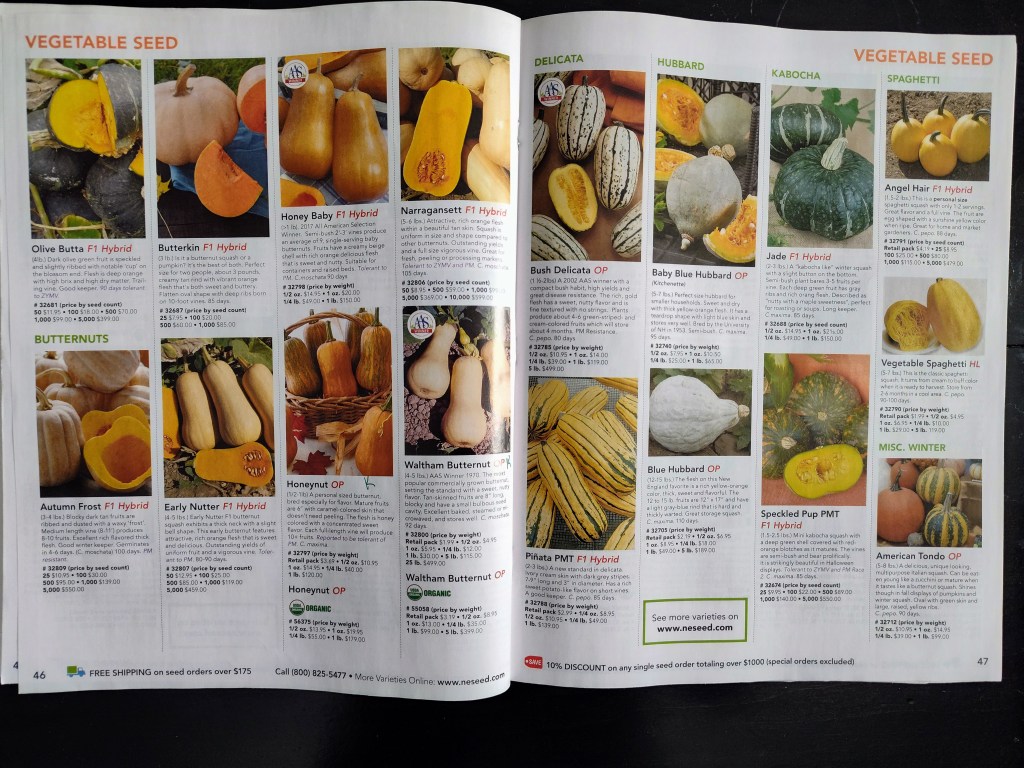
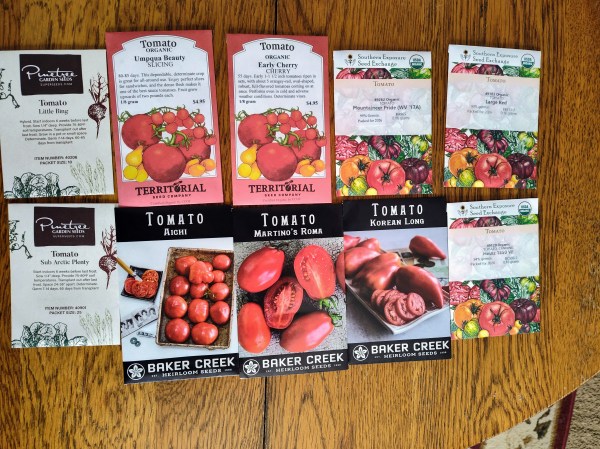
Our 2026 Garden Seeds: Tomatoes

In the final installment for my series highlighting the garden seeds we ordered for our 2026 garden, I’m going over tomatoes. I think we ordered more tomato varieties than any other vegetable. Below, I am including links to the previous installments of the series. Plus, here’s a post that showcases all of the seeds we ordered.

Links to Other Seeds:

Tomatoes

We’re changing up nearly all of our tomatoes from 2025. We had pretty good success with most of them, but we wanted to experience new varieties. In fact, the only variety that isn’t new is the Roma seeds we ordered. In choosing our tomato seeds, we wanted a large range of tomatoes, including multiple cherry tomatoes, paste tomatoes, and slicing tomatoes. One thing we didn’t want was tomatoes of unique or uncommon colors. Last year, we grew yellow pear tomatoes and found it difficult to see the ripe ones in the midst of the leaves. So this year, we’re only growing red tomatoes. I love tomatoes and want to grow as many as we can. I loved being able to make fresh pasta sauce last year and want to take that further this year by being able to can some.
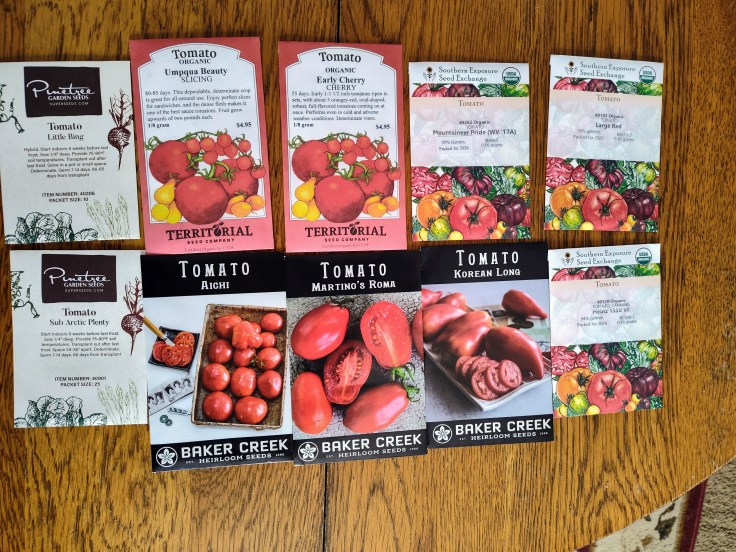
Tomato Seeds
Our tomato seeds for our 2026 garden.

Aichi First

A Japanese heirloom that originated in 1938 in the Aichi Prefecture, the Aichi First variety is a midseason that I would categorize as a slicing or salad tomato with fruits of around a half-pound. This tomato grows on indeterminate plants that mature in 80-90 days. Our seeds came from Baker Creek.

Early Cherry

This cherry tomato variety is one of the earliest ones to ripen in the garden. Its fruit grow in clusters of five on determinate plants. The flavor is described as “robust” and “full.” Successfully grows even in cool weather. These seeds were bought from Territorial.

Heinz

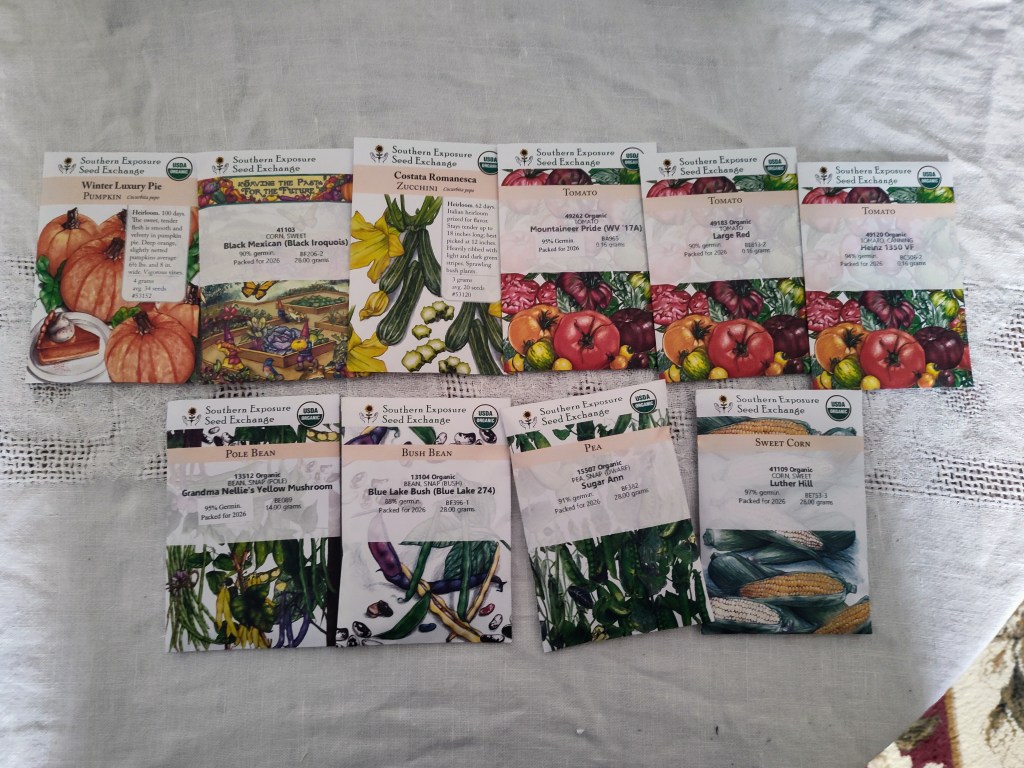
Yes, this tomato’s name is connected to the H.J. Heinz Co. This specific strand, the 1350 VF, was developed by the company in 1963. It’s a paste tomato with excellent processing attributes, making it great for canning and cooking into sauce. Grows on determinate plants, which produce 4-to-6-ounce round fruits, unlike the plum shape of Romas. These tomatoes come from Southern Exposure.

Korean Long

A Korean heirloom that is categorized as a paste tomato, the Korean Long tomato has a unique shape that is elongated (like a plum tomato) with a curved tail that comes to a point. Even though it’s a paste tomato, it has an excellent flavor when eaten fresh. A very meaty tomato that can weigh up to one pound each. Grows on indeterminate plants. These seeds came from Baker Creek.

Large Red

This is an old American heirloom that dates back to the pre-Civil War days, when it was listed in the 1843 Shaker seed company, which was based in their village in New Lebanon, New York. It quickly became one of the most popular varieties sold in the country. The indeterminate plants produce large 2×4-inch round tomatoes that have heavy ribbing rather than a smooth surface. Like most tomatoes with a storied past, the Large Red has a complex flavor that is sweet and tangy. These seeds come from Southern Exposure. And if you want to learn more about Shakers, their villages, and their businesses, check out this video from Kendra Gaylord.

Little Bing

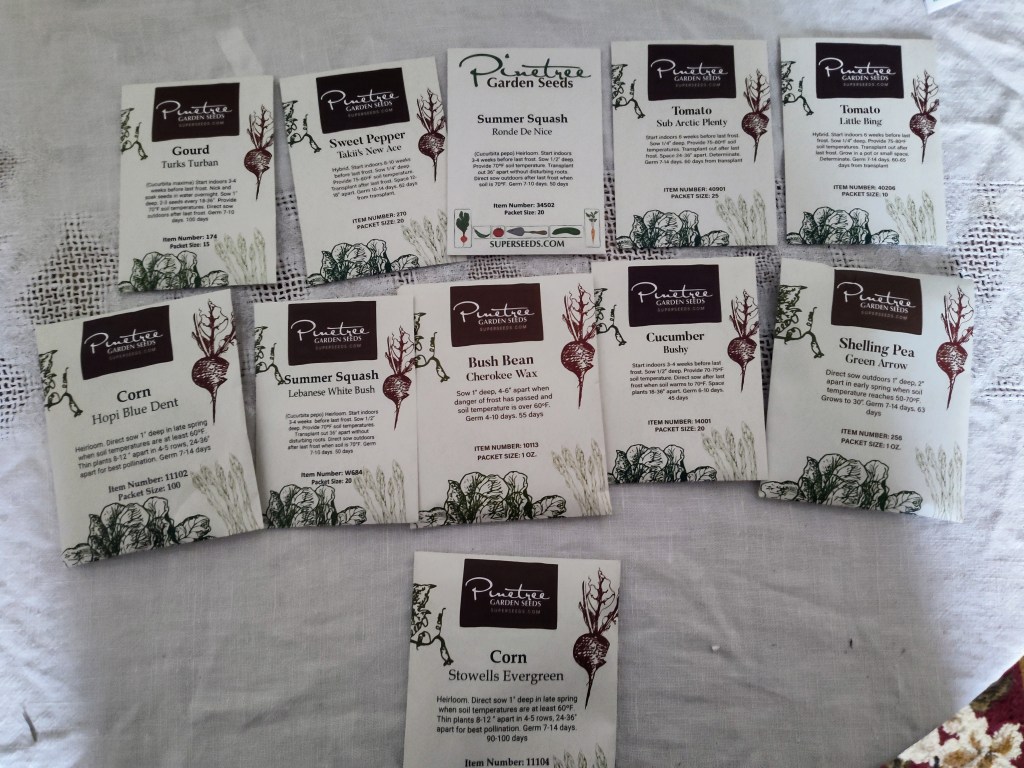
We were drawn to this cherry tomato variety because of Chandler…Bing! As you can probably guess based on the name, Little Bing is a compact plant that will thrive in containers and top out at 24 inches tall. It produces lots of red cherry-sized tomatoes that are flavorful. It’s also an early-season variety that matures in 60 to 65 days. Our seeds came from Pinetree Gardens.

Martino’s Roma

When people think about tomatoes for making sauce, I’m confident that two varieties come to mind: San Marzano and Roma. Martino’s Roma is an Italian heirloom that is a perfect paste tomato. It’s a determinate variety, and the plants don’t need cages, just minimal staking. The plants produce 2-to-3-ounce fruits that are dry and meaty with few seeds. It’s a perfect variety for sauces, pastes, and salsas. Our seeds came from Baker Creek.

Mountaineer Pride

Although Mountaineer Pride isn’t an heirloom, it is the descendant of a variety that was developed in 1963 called West Virginia 63. Mountaineer Pride and its predecessor were developed by West Virginia University professor Mannon Gallegly. Mountaineer Pride wasn’t released until 2017, but it was now larger and with better disease resistance than the original variety. It grows on indeterminate vines with medium-sized fruits that have firm skin and store well. These seeds came from Southern Exposure.

Sub Arctic Plenty

This tomato is one of the earliest varieties to reach maturity, doing so in only 60 days. It was developed in Canada, so you can feel confident that it will grow in cool weather and late springs. It’s a determinate plant, and they can be planted close together so that staking isn’t needed. The fruit grow in clusters of two-ounce tomatoes, so bigger than a cherry but smaller than a salad tomato. These seeds came from Pinetree Gardens.

Umpqua Beauty

The images of these tomatoes in the Territorial seed catalog and on their website show one of the most beautiful tomatoes I’ve ever seen. They’re perfectly round with smooth, vibrant red skin and pink flesh with few cavities. The Umpqua Beauty comes from the Umpqua River Valley in southern Oregon, and both were named for the Umpqua Native American tribe that has lived there for more than a thousand years. The tomato is a determinate variety with fruit that can grow up to two pounds and are versatile. It is great as a slicing tomato on sandwiches and salads and also makes a great paste tomato due to the low number of seed cavities it has. I’m very excited to grow these.

And there you have it: Our 2026 collection of seeds. Were there any that stood out? Are you growing any of the same varieties or are there any that you think we should grow?
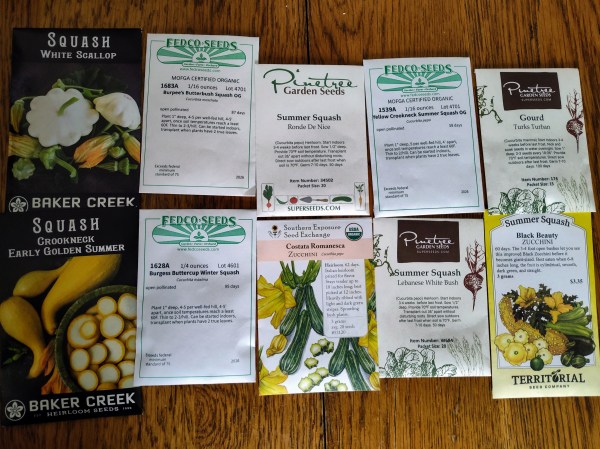
Our 2026 Garden Seeds: Pumpkins & Squash

In a continuation of my series highlighting the garden seeds we ordered for our 2026 garden, I’m going to combine two vegetables into one post. This post will go over our pumpkin and squash seeds. Below, I am including links to the previous installments of the series. Plus, here’s a post that showcases all of the seeds we ordered.

Links to Other Seeds:

Pumpkins

Pumpkins are one of the most enjoyable crops to grow. We had a blast with them last year. It was delightful seeing the bright orange fruit jump out from the dark green backdrop. But equally enjoyable was the success we had. We harvested multiple midsize pumpkins last year that we used to bake pies for Thanksgiving. This year, we’re growing one variety that we grew last year as well as a new one. We also have some seeds from last year that we may try to replant. Our focus on picking pumpkin seeds is flavor over everything else. It’d be great to grow the biggest pumpkin possible, but if it isn’t flavorful and can’t be used for cooking and baking, we aren’t that interested.

Pumpkin seeds, garden seeds
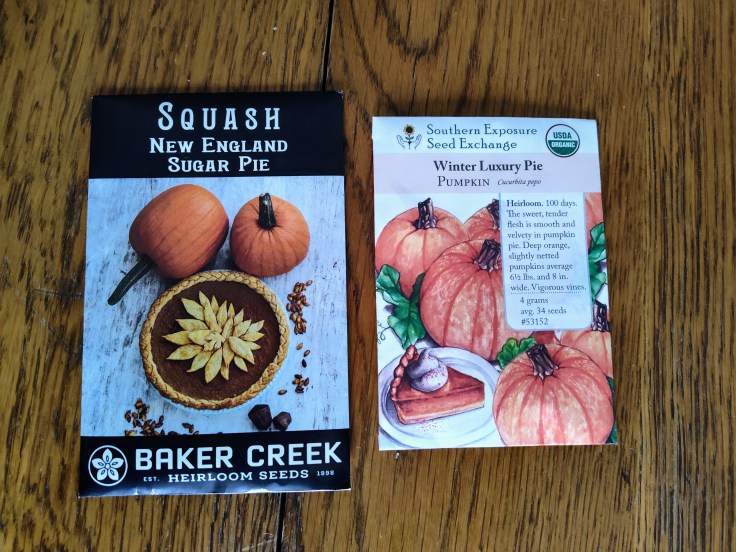
Our pumpkin seeds for our 2026 garden.

New England Sugar Pie

We grew this variety last year and loved it. The plants grew beautiful green vines with massive leaves and put on multiple volleyball-sized pumpkins. The pumpkins stored well, and we processed them into puree for our pies at Thanksgiving. It produced the best-tasting pumpkin pie any of us have ever had. We can’t recommend this pumpkin variety enough. Like last year, our seeds come from Baker Creek.

Winter Luxury

This heirloom variety dates back to 1893 and was improved in 1917. Grows medium-sized pumpkins that have the traditional orange skin. It’s described as being a great pumpkin for pies. This is our first year growing this variety, and we bought our seeds from Southern Exposure.

Squash

We love squash, both winter and summer. Last year, we grew zucchini and White Scallop for summer squash but didn’t do a deep dive into winter squash. We eventually started buying butternut squash (a winter variety) from the grocery store and fell in love with the flavor, so we’re growing it this year. We picked multiple zucchini, yellow squash, and winter squash varieties.

Squash seeds, garden seeds
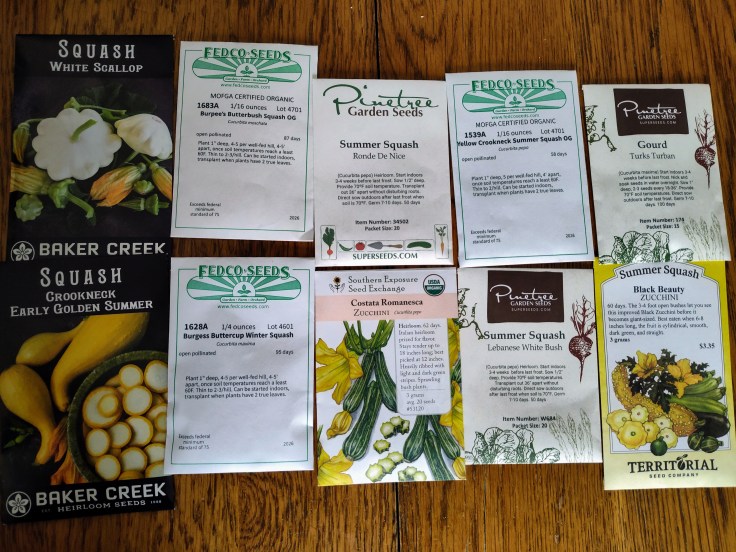
Our squash seeds for our 2026 garden.

Black Beauty

One of the standard zucchini varieties, I think we grew Black Beauty last year. If so, it was extremely productive and flavorful. We got a late start planting the seeds, but in around two months, we were harvesting zucchini. I love that the plant stays contained yet open, which makes it easy to harvest. These seeds come from Territorial.

Burgress Buttercup

An heirloom that dates back to 1925, after the Quality and Essex Hybrid varieties were crossed, Burgress Buttercup first appeared in a seed catalog in 1931. The Buttercup is a winter squash with sweet orange flesh. It can be used in savory and sweet recipes. However, it does not store as long as other winter squash. Our seeds came from Fedco.

Burpee’s Butterbush

The Burpee’s Butterbush is a butternut squash similar to the popular Waltham variety but produces smaller 2-to-3-pound fruit. The flesh is sweet and moist but not watery. It matures in only 87 days, which is early for a winter squash. Although a determinate variety, its vines can still reach 10 feet long. It stores very well. We started eating butternut squash last year and fell in love with the flavor. We’re really excited to grow these seeds this year. Our seeds come from Fedco.

Costata Romanesca

An Italian heirloom zucchini, the Costata Romanesca is renowned for its flavor. Its plants are more vigorous than other zucchinis, and the fruit are best when picked at 12 inches, larger than most zucchini varieties. Still, the fruits remain tender even at 18 inches. We’re very excited to learn how the flavor differs from the typical zucchini we eat in the U.S. Our seeds come from Southern Exposure.

Crookneck Early Golden

This heirloom yellow squash variety is one of the standards for summer squash. It has been grown in North America since before Columbus arrived and has been one of the most popular varieties ever since. Matures early at 50 to 60 days and stays contained in a bush-growing habit. We’ve never grown yellow squash, but we love eating it and are excited to have a large supply of it this summer. Our seeds come from Baker Creek.

Lebanese White Bush

We stumbled upon this summer squash variety late in our seed searching process and are intrigued by it. It’s an heirloom that is similar to a zucchini, but the skin is light green and the flesh is white. The fruit appears to be pretty small, perhaps the size of a hand. It has a bush-growing habit and is supposed to be prolific. This is a new variety for us, and we’re excited to grow it. Our seeds came from Pinetree Gardens.

Ronde De Nice

This is another variety that we haven’t grown before and found it in the catalogs. It’s a French heirloom that dates back to the 1800s. It’s a summer squash, but it has the shape of an acorn squash, which is a winter variety. The plants are compact, vigorous, and produce lots of small, 4-inch fruit. These seeds come from Pinetree Gardens.

Turk’s Turban

The Turk’s Turban winter squash first caught my attention in our 2025 seed catalogs, but I didn’t highlight it and wasn’t confident enough to grow it. This year, it caught my attention again, and we’re giving it a go. It’s bright orange with green and white stripes on the top and sides. It is shaped like a butternut squash and categorized as an Aladdin-style squash or even a gourd, but I would describe its shape as being similar to a mushroom. It is stunning and can be used for decorations but is also edible and delicious. Our seeds came from Pinetree Gardens.

White Scallop

We grew this variety last year after never eating a patty pan squash before. It immediately became our favorite type of summer squash. The White Scallop is an old heirloom that was grown by Native Americans as far back as the 16th century. The plant produces many 5-to-6-inch round, flat fruits in compact bushes. They’re also delicious. We love slicing them and roasting them in the oven with a bit of oil, Season All, and pepper. My mouth is watering just thinking about them. The seeds come from Baker Creek again.

Yellow Crookneck

Similar to the crookneck variety described above, this variety has warts on its skin that come to mind when you think of crookneck squash. It’s an heirloom that was grown by Native Americans in the Northeast/New England region before Americans started growing it in the 19th century. We’ve never grown this type before. These seeds come from Fedco.

What are your favorite types of squash to grow? Have you ever grown a patty pan squash? If not, I recommend giving it a try. It’s a game-changer.

Our 2026 Garden Seeds: Peppers & Potatoes

In a continuation of my series highlighting the garden seeds we ordered for our 2026 garden, I’m going to combine two vegetables into one post. This post will go over our pepper seeds and seed potatoes. Below, I am including links to the previous installments of the series. Plus, here’s a post that showcases all of the seeds we ordered.

Links to Other Seeds:

Peppers

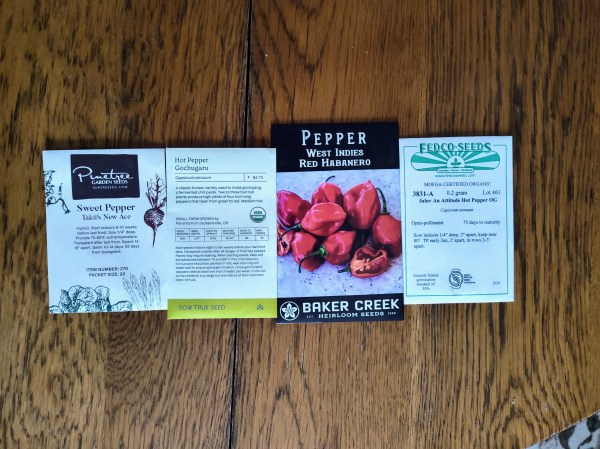
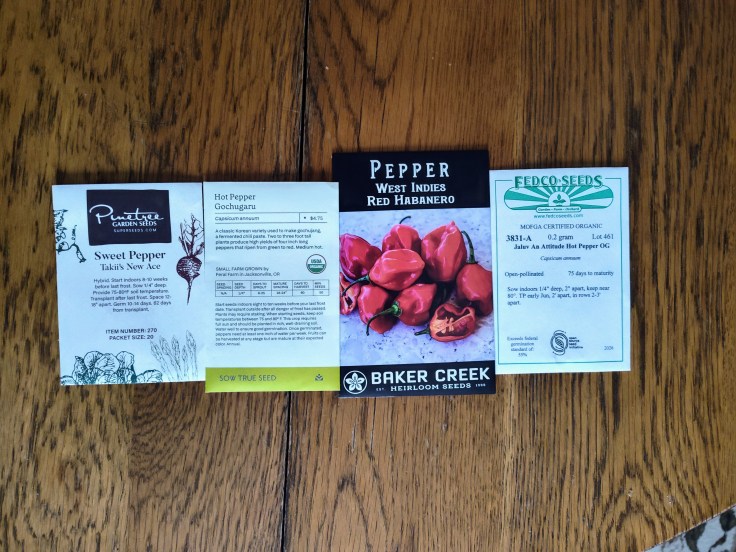
Gochugaru

We love using Gochujang in our cooking, and this is the pepper it’s made from. Gochujang is a fermented red chili paste used in Korean cuisine, and while it’s spicy, it still has flavor. We’re really excited to grow these seeds. The peppers grow to four inches long and are narrow. Our seeds come from Sow True Seed.

pepper seeds, garden seeds
Our pepper seeds for 2026.

Jaluv an Attitude

Each year, Fedco Seeds designates one seed as their Seed Without a Price variety. It’s usually a seed with a unique backstory, and any profit that they would normally earn for the seed goes into their Seed Farmers Resilience Fund. This money is used to help Fedco’s seed farmers who face crop and livelihood disruptions. This year’s Seed Without a Price is the Jaluv an Attitude pepper. It’s a hot pepper that was developed by a breeder named Relentless. It looks like a jalapeno with a thicker skin and the flavor of a jalapeno. Jalapenos can be hit or miss for me. I love jalapeno poppers, preserving them into cowboy candy, and throwing them into salsa. But it isn’t a pepper I reach for just to add spice to a dish. That being said, I’m still really excited to grow these.

Takii’s New Ace

For our sweet pepper for 2026, I wanted a red, orange, or yellow bell pepper that matures quickly and succeeds in cool weather. Neither of us is a big fan of green bell peppers since they are often bitter and can lead to stomach aches. We tend to have inconsistent spring and summer weather where we live, so it’s hard to trust that we’ll have a hot summer that peppers love. Takii’s New Ace seems like the perfect pepper. It sets fruit in cool weather and has high disease resistance. Our seeds come from Pinetree Gardens.

West Indies Red Habanero

I love Jamaican jerk chicken, which traditionally uses Scotch Bonnet peppers. Unfortunately, Scotch Bonnet peppers and their seeds are difficult to find. Last year, Baker Creek sold them, but this year, they weren’t on their website. The West Indies Red Habanero was the closest variety I could find and happened to also be offered by Baker Creek. I’m curious to know if we can successfully grow this variety since it requires hot weather and lots of sunshine, but I think it’s possible.

Potatoes

We had some difficulty sourcing seed potatoes this year. In 2022, we ordered from Fedco and had great success growing them in containers. Last year, we ordered from Fedco and High Mowing because Fedco had sold out of some of the varieties we wanted. We weren’t able to harvest any potatoes, and the ones we received from Fedco were moldy and rotten when they arrived.

So, this year, we weren’t sure if we wanted to give Fedco another try. There’s a chance we could receive rotten potatoes again, plus their shipping costs are very high. High Mowing didn’t have all the varieties we wanted, and their prices are high since they’re all organic. That led me to search the web for specific seed potato varieties and resulted in me finding Urban Farmer, a seed company located in Indiana. We bought all our seeds from them.

Adirondack Blue

This midseason potato has blue skin and blue flesh and retains its color through the cooking process. The Adirondack Blue potato has antioxidants that can lower the risk of heart and neurological diseases. This potato is a fresh-eating variety with a short storage life.

German Butterball

The German Butterball potato is a quintessential late-season potato. It has yellow skin and flesh and is great for roasting and frying. It also stores well.

Magic Molly

The Magic Molly potato is one of the most beautiful varieties you can grow and eat. It’s a late-season fingerling with purple skin and flesh. We recently bought a bag of these from the store, and they made wonderful smashed potatoes. We grew these in 2022 and were amazed at their flavor.

Red Norland

The Red Norland is a wonderful early-season red-skinned potato. They are delicious, uniform in size, and store fairly well. My preferred way to eat them is boiled with butter, sour cream, salt, and pepper.

What are your favorite potato varieties to grow, if you grow your own potatoes? Also, have you had success growing hot peppers? If so, please share any tips.

Our 2026 Gardening Seeds: Melons, Molokhia, and Peas

In a continuation of my series highlighting the garden seeds we ordered for our 2026 garden, I’m going to combine several vegetables into one post. This post will go over our melon, molokhia, and pea seeds. Below, I am including links to the previous installments of the series. Plus, here’s a post that showcases all of the seeds we ordered.

Links to Other Seeds:

Melons

Last year, I think we grew four types of melons: one watermelon, one cantaloupe, and two specialty melons. We had moderate success and were able to harvest one cantaloupe and multiple specialty melons. Given that we didn’t know what we were doing, I was pretty happy with the outcome. This year, we’re dialing it back by only growing three varieties of melons and no watermelons, which was the only type to not produce an edible fruit last year. The three varieties we bought were also bred to grow in northern climates, so we should be in a good position to succeed even if we have a cooler summer.

Melon Seeds, Molokhia Seeds, Pea Seeds
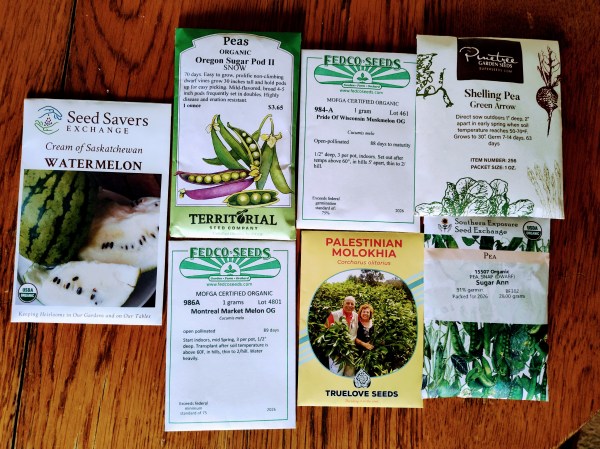
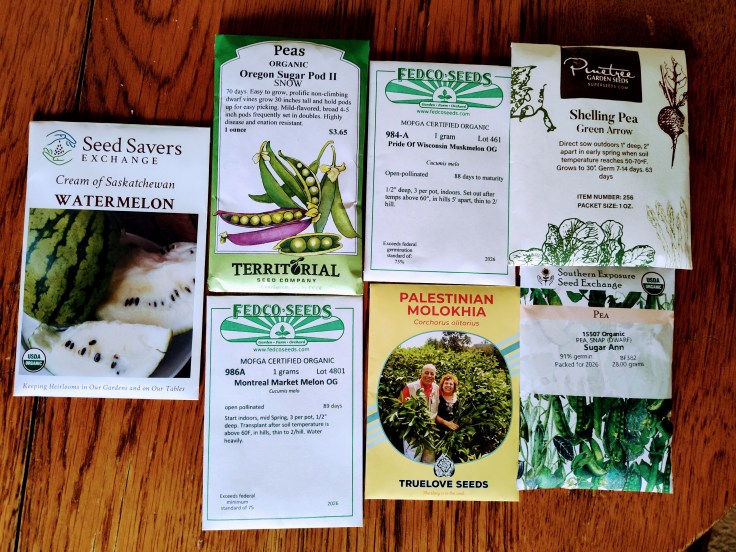
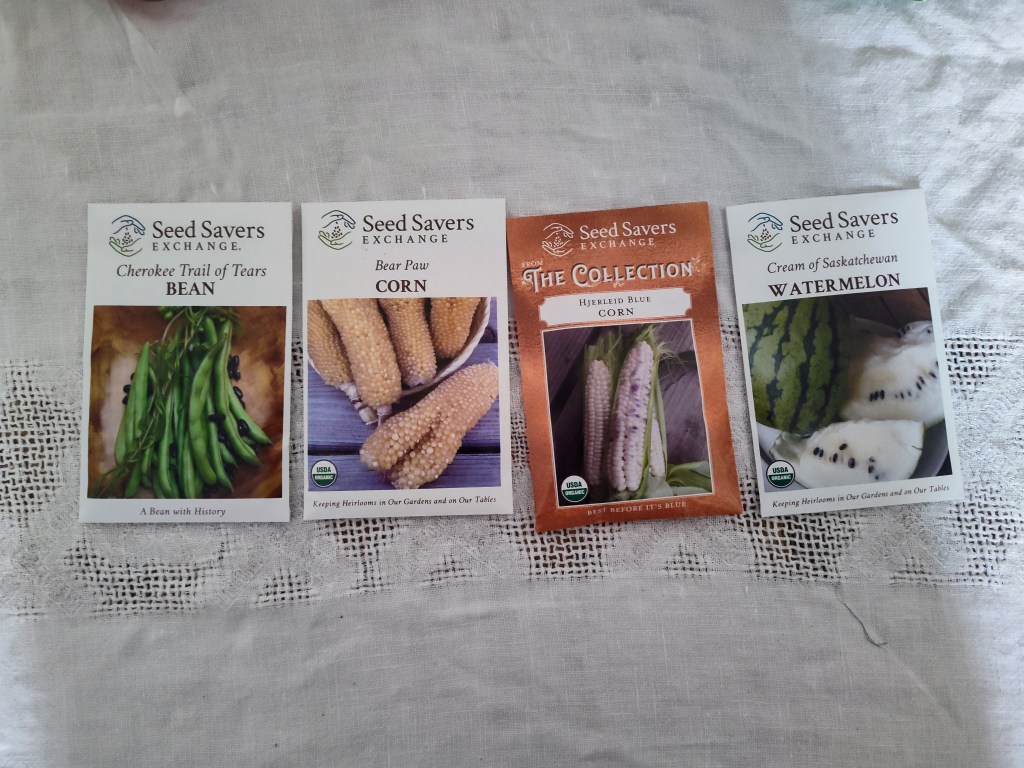
Our melon, molokhia, and pea seeds for 2026.

Cream of Saskatchewan

This white-fleshed watermelon has Saskatchewan in its name, but its origins are Russian. It grows very well in northern climates that have shorter growing seasons. Despite its white flesh, it is known for its sweetness and great flavor. It has a very thin rind and does not store well. This heirloom seed was bought from Seed Savers Exchange.

Montreal Market

This muskmelon has a fascinating story. The seed dates back to early French settlers of North America (to at least the 17th century), and Burpee commercialized it in 1881, but at one point it was thought to be extinct. Thankfully, a group of Montreal seed preservationists located a few seeds in 1996 and brought it back. A green-fleshed variety, Montreal Market has a sweet and spicy flavor that is unique. Grows very well in cool climates. Our seeds came from Fedco.

Pride of Wisconsin

Fedco, who we bought this seed from, describes the Pride of Wisconsin as the “best full-size open-pollinated muskmelon.” It was introduced by the St. Louis Seed Co. in 1923 and nearly went extinct during hybridization. The taste is supposed to be divine, and the flesh is edible down to the rind.

Palestinian Molokhia

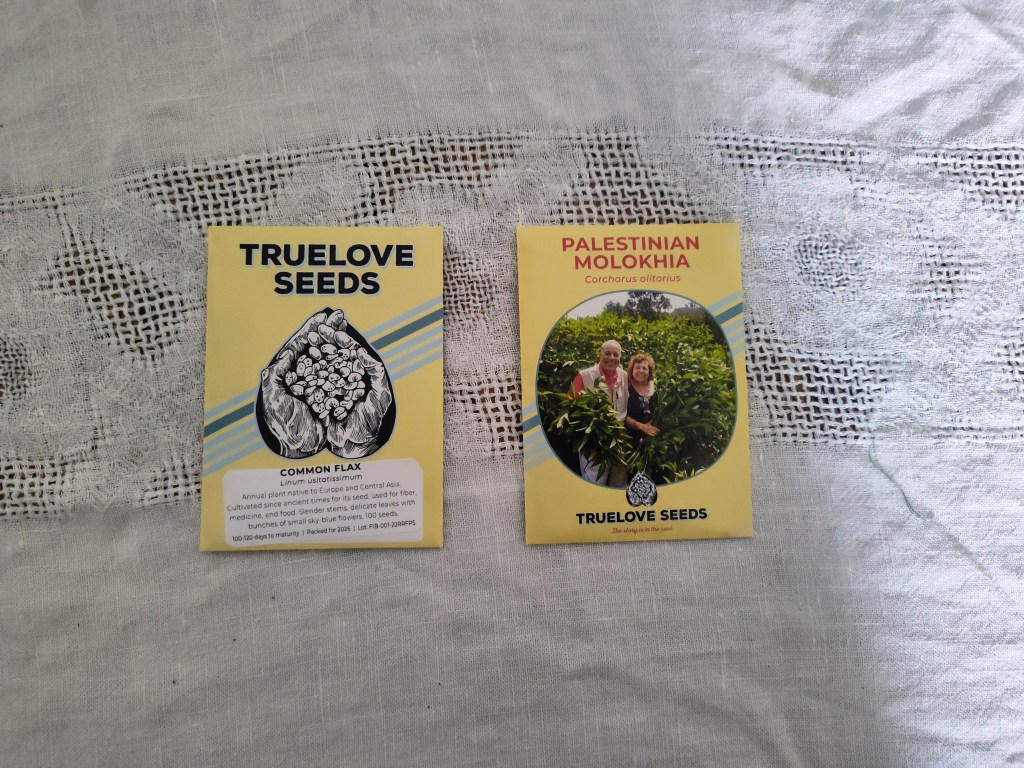
I first learned about Molokhia in a podcast from True Love Seeds called Seeds and Their People. If you haven’t listened to that podcast yet, I recommend it. Magz came across molokhia when she was looking for flax seeds, buying both from True Love Seeds despite not knowing that I listened to their podcast. Molokhia is a green that is natively grown in the Middle East, North Africa, and East Africa that is rich in vitamins and minerals. It’s eaten like spinach and is also called Egyptian Spinach, while its fiber is used to make twine, rope, and rugs.

This variety comes from Palestinian refugees/immigrants living in the United States. Molokhia should be picked throughout the season for a perpetual harvest, and the leaves can be frozen or dried. Side note: I may not always love modern technology and the modern world, but the ability to learn about and purchase seeds that are vital to a culture halfway around the world is amazing. Buying and growing this seed is especially important, as the Palestinian culture, including its foodways, is being threatened. By learning about Palestinian culture and humanizing the Palestinian people, we are able to better understand them. The relationship between the Palestinian and Israeli people can be tough to understand, but one thing we should be able to agree on is that no one should have to worry about their culture being destroyed. As a Christian, I have no problem using the word “genocide” to describe what’s happening to the Palestinian people.

Peas

Peas get such a negative reputation, which is unfair. It’s probably because of people’s experience eating canned peas as children. While I also like those, fresh peas are amazing. Last year, we grew a couple of rows of snap peas and had some success, but we had issues with weeds and our corn shading the plants too much. This year, we’re growing all new varieties and picked one variety each of snap peas, snow peas, and shelling peas.

Green Arrow

Full transparency: This shelling pea variety’s name caught our attention and is the main reason we chose it. I’ve been watching the TV series Smallville over the past six months or so, and Oliver Queen (aka Green Arrow) is one of my favorite characters. As a seed, the Green Arrow pea is an heirloom that has been developed to have good disease resistance and high production. We got our seeds from Pinetree Gardens.

Oregon Sugar Pod II

The Oregon Sugar Pod II is a snow pea that has a contained growing habit with only 30-inch-tall vines that don’t climb. Like Green Arrow, this variety is highly disease resistant and very productive. Our seeds were bought from Territorial.

Sugar Ann

This variety is a snap pea that is known for its exceptional flavor and was named an All-American Winner in 1984. It grows in a bush habit with only 18-inch vines that don’t need to be trellised. Snap peas are my favorite, and I have a hard time not eating them fresh off the vine. Can be planted late in summer for fall harvesting. Our Sugar Ann seeds came from Southern Exposure.

Have you grown any of these varieties before, or have you grown molokhia in the past?

Our 2026 Gardening Seeds: Cucumbers, Flax, and Leeks

In a continuation of my series highlighting the garden seeds we ordered for our 2026 garden, I’m going to combine several vegetables into one post. This post will go over our cucumber, flax, and leek seeds. And if you missed the previous installments, you can read about our bean seeds and corn seeds. Plus, here’s a post that showcases all of the seeds we ordered.

Links to Other Seeds:

Cucumbers

I love cucumbers, so much so that I dug into the history of them in this post. They’re one of my favorite vegetables to eat during the summer heat, and I crave the coolness they provide. Last year, we planted a lot of cucumber plants, and the vines went everywhere. They intersected with each other and other plants and were difficult to navigate through. We also had more cucumbers than we knew what to do with and lost some ripe ones that were buried underneath leaves. Because of that, we’re scaling back our cucumbers in this year’s garden. We still want variety that can be eaten fresh and pickled. Plus, there’s still a specialty cucumber that I couldn’t resist.

Cucumber Seeds, Garden Seeds, Leek Seeds, Flax Seeds
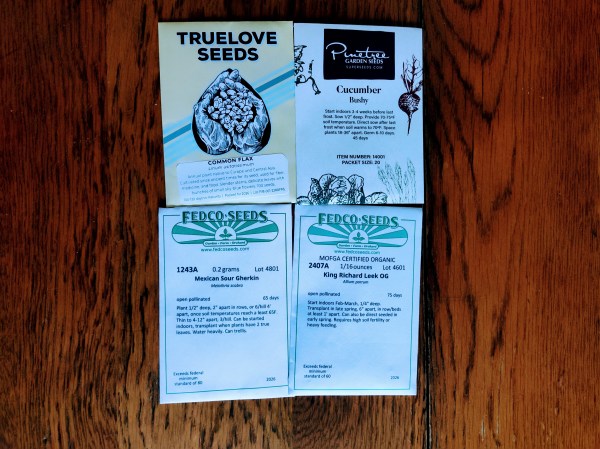
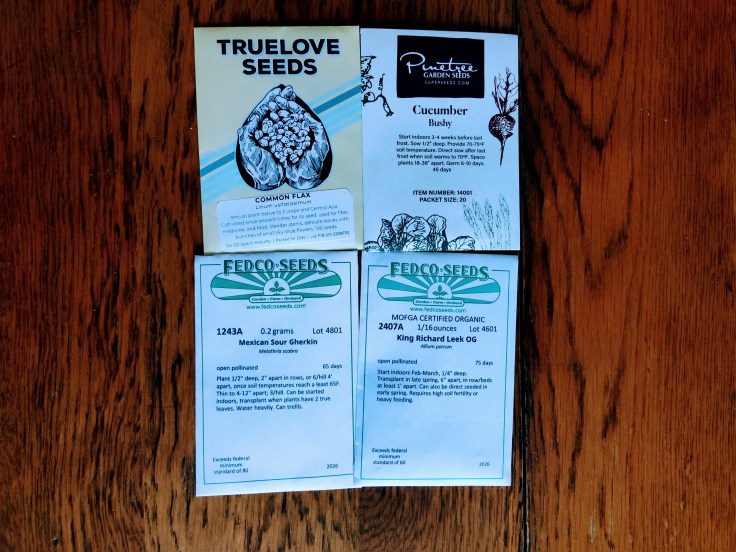
Our cucumber, flax, and leek seeds for the 2026 garden.

Bushy

This short-season cucumber is one of the earliest varieties you can find, maturing in 45 to 50 days. This variety has a bush-growing habit, as is evident by its name, and can even be grown in containers, which we are considering. The cucumbers are excellent for fresh eating and pickling. The Bushy cucumber originated in Moscow, Russia, where plants that thrive in short summers are essential. We haven’t grown this variety in the past. The seeds come from Pinetree Gardens.

Mexican Sour Gherkin

This is a variety I’ve been interested in for a couple of years. Also called Cucamelon or Mouse Melon, the Mexican Sour Gherkin is native to Central America and has been eaten there since before the Europeans arrived. This variety grows on vines, so it needs a trellis or fence and grows many 1-inch fruits that resemble tiny watermelons. Our seeds come from Fedco.

Flax

Historically, Pennsylvania grew a lot of flax, which was milled, spun, and used to create linen for clothing, bedding, and more. Its oil is what we call linseed oil. Over time, the commonwealth stopped growing flax on a large scale, and we no longer have mills for processing. Last year, Magz learned about the PA Flax Seed Project, which has a goal of reestablishing flax as a commodity crop in Pennsylvania. As a result, we became interested in being part of the movement to see flax grown in PA once again.

Common Flax

We were originally going to participate in the Square Yard Project, which is part of the PA Flax Project, but their website for signing up was down when we were ordering seeds. So, Magz found seeds from True Love Seeds, which is based in Pennsylvania. According to their seed description, common flax is mostly grown in Europe and Central Asia. Linseed can be used medicinally for its anti-inflammatory properties. The oil and seeds can be consumed and are rich in omega-3s. Plus, the fiber can be used to create textiles. We bought a single pack of it with the goal of learning how to grow it. It’s supposed to be very easy to grow.

Leeks

We have never grown leeks and, to my knowledge, have only cooked them once or twice. But with a flavor that’s described as being similar to a green onion but sweeter, we’re confident that we’ll like them. One of my gardening goals is to grow onions in the future, but they can be finicky and can take a lot of preparation, so leeks seemed like the next best thing.

King Richard

I knew that I wanted a leek variety with the shortest time to maturity that I could find in case we have another late spring or an early frost in the fall. The King Richard Leek fits that mold, only needing 75 days to mature. Our seeds come from Fedco.

Do you have a favorite cucumber variety to grow? If so, I’d love to hear about it and possibly grow it in the future. Also, have you ever grown flax or leeks? I look forward to hearing from you.

Our 2026 Gardening Seeds: Beans

It may still be winter with snow on the ground here in Pennsylvania, but the garden is just around the corner. What has been a harsh and frigid winter, with the temperature not getting above freezing for nearly two consecutive months and two feet of snow on the ground, is starting to break. When I started this blog post, it was bright and sunny outside, and the daily high has remained above freezing for nearly two weeks. For us, that means garden preparations, which have snuck up on me. One day, we were beginning to receive our catalogs in late November, and what felt like the next, we realized we needed to place our orders before things sold out.

Links to Other Seeds:

In early February, we placed our orders, and the seeds have all arrived. So, now is as good of a time as ever to go over everything we ordered and what starts we’re going to purchase from our local greenhouse.

Starts We’re Buying From the Greenhouse

Before diving into the seeds we purchased, I want to go over the vegetables we’re going to buy starts for instead of seeds. There are a couple of reasons for this. One is that we’ve never grown the vegetable before and want to begin with an established start that only needs to be transplanted rather than attempting to start our own seeds. My preference is to start my own seeds, but beginning with a start that only needs to be transplanted increases the chance of success. A couple of vegetables that fall into this category are broccoli and cauliflower. Technically, we tried growing broccoli last year, but they barely reached the transplanting stage and quickly failed. We’ve never tried growing cauliflower.

Check Out Our Other Seed Posts:

The second reason is that we like the options our greenhouse offers for a specific vegetable. Ground cherries and eggplant fall into this category. We bought starts for these last year and had success and will buy the same ones this year. Eventually, we’d like to buy additional eggplant varieties to grow, but we’re content with the Asian-style eggplant we got from the greenhouse last year. Finally, there are some vegetables that we will likely buy extra plants for. These will mostly be tomatoes and peppers. We bought seeds for both, but we would like to have an abundance of fruit from both, so adding extra plants is never a bad thing.

Seed Picks

Now, we move to the seeds we ordered.

Beans

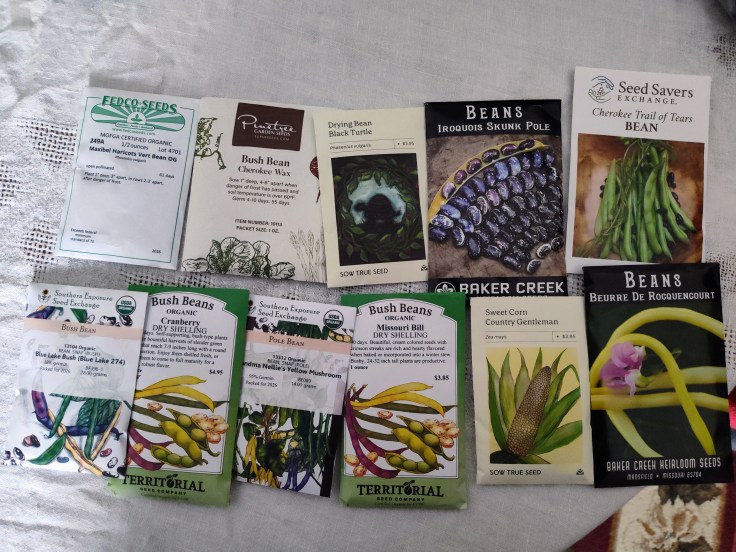
Our bean seed choices are reflective of our larger approach to seed selection for this year’s garden. We wanted a variety of styles (wax, green, dry, and French), growing habits (bush and pole), and colors (green, yellow, red, black, and brown). You’ll soon see just how much we love beans.

Bean Seeds, Gardening Seeds
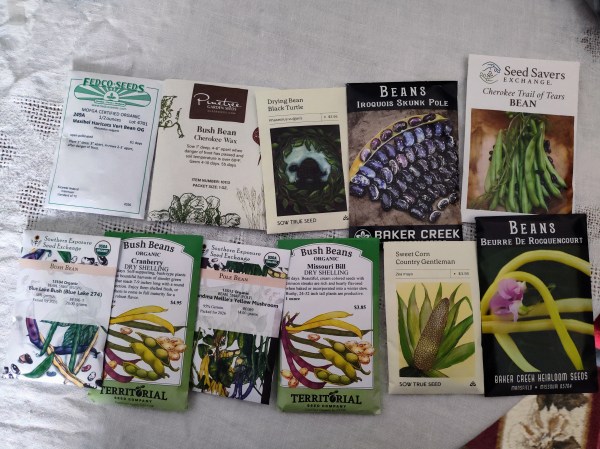
Our 2026 bean seeds.

Beurre de Rocquen

A wax-style bean from France that descended from the first wax beans to be introduced to the country from Algeria in the mid-19th century. A bush-growing habit that should flower and produce early in the season. Supposed to be a delicious bean. It’s our first time growing it. Purchased from Baker Creek.

Black Turtle

We grew these beans last year and had moderate success. The plants generally grew well and produced pods. We were able to harvest a 1/4 cup of beans that dried on the plant. I greatly underestimated how many plants you need to have an abundant harvest. We’re growing more this year. These are the traditional black beans that are popular in Latin American cuisine. They’re intended to dry on the plant and in the pod, and the plants will stay relatively compact in a bush habit. Last year, we bought the variety from Baker Creek. This year, they came from Sow True Seeds, and the seed packet is gorgeous.

Blue Lake 274

One of the most popular bush beans grown in the United States, Blue Lake 274 has been grown since the 1940s. It’s a versatile and productive bean that is great for fresh eating, freezing, and canning. We’ve never grown this variety. Our seeds came from Southern Exposure Seed Exchange.

Cherokee Trail of Tears

I’ve been curious about this variety since we started gardening and finally bought them for 2026. It’s an heirloom variety that dates back to at least the 1830s when members of the Cherokee Nation were forcefully relocated from the Smoky Mountains to Oklahoma by the U.S. government. That became known as the Trail of Tears, which is where the bean gets its name from. As for the bean, it grows on a pole habit with beautiful pinkish-purple flowers and develops green pods, but the bean is black. It can be eaten fresh or dried. We bought our seeds from Seed Savers Exchange.

Cherokee Wax

Not quite an heirloom, the Cherokee Wax bean was introduced by Clemson University in the 1940s and has been a favorite for gardeners ever since. Has a bush-growing habit and produces lots of yellow bean pods that are great for fresh eating and preserving. I love pickling wax beans into dilly beans. This is our first time growing this variety. Our seeds came from Pinetree Gardens.

Cranberry

An heirloom bean that can be tracked back to 1825 from England, the Cranberry bean is a horticultural style. I’ve since learned that horticultural beans have flatter pods than snap beans. The Cranberry bean produces beautiful scarlet-colored beans with lighter swirls. I’m a little unclear on what color the pods are, but some descriptions list them as green, while others list them as having pink highlights, so we’ll see. It’s very exciting. These have a bush habit. As you can probably tell, it’s our first year growing these. The seeds come from Territorial.

Grandma Nellie’s Yellow Mushroom

This is a unique heirloom variety that we’re really excited about. It’s a pole bean that requires trellising and produces yellow pods with beans that have an umami element similar to mushrooms. This variety originated in Russia and arrived in the United States via Saskatchewan. This is our first year growing these. The seeds come from Southern Exposure.

Iroquois Skunk Pole

Magz got me these as a Valentine’s Day gift this year, and they’re a fascinating bean variety. They’re an heirloom variety that has been grown by members of the Iroquois nation in the Great Lakes region for centuries. These grow on 6-foot vines with green pods. The beans can be eaten fresh as a snap bean or left to dry when the beans become beautifully speckled in black and white. These seeds come from Baker Creek.

Maxibel Haricot Vert

This is the classic French filet green bean. The pod may be green, but the bean is a speckled brown. Grows in a bush habit and is supposed to be delicious. This is our first time growing these, and we bought them from Fedco.

Missouri Bill

Missouri Bill is a shelling bean that is supposed to be great in stews or when baked. These have a compact, bush habit that develops rosy white flowers. The beans are buff-colored with scarlet-brown streaks on them and are stunning. Why they’re called Missouri Bill is a bit confusing, with one source I found claiming that the seeds were saved by a guy from Missouri named Bill. We bought ours from Territorial, and they state that their seeds originally came from the San Juan Islands off the coast of Washington. It’s our first year growing them.

Have you grown any of these varieties before? Let me know in the comments. In the next post, I’ll look at the corn seeds we picked.

2026 Garden Seeds Collection

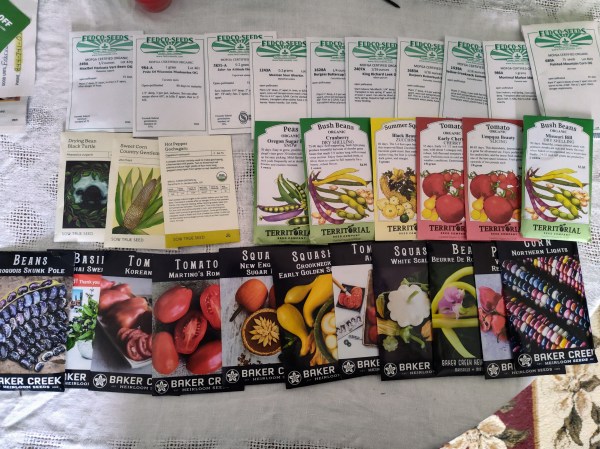
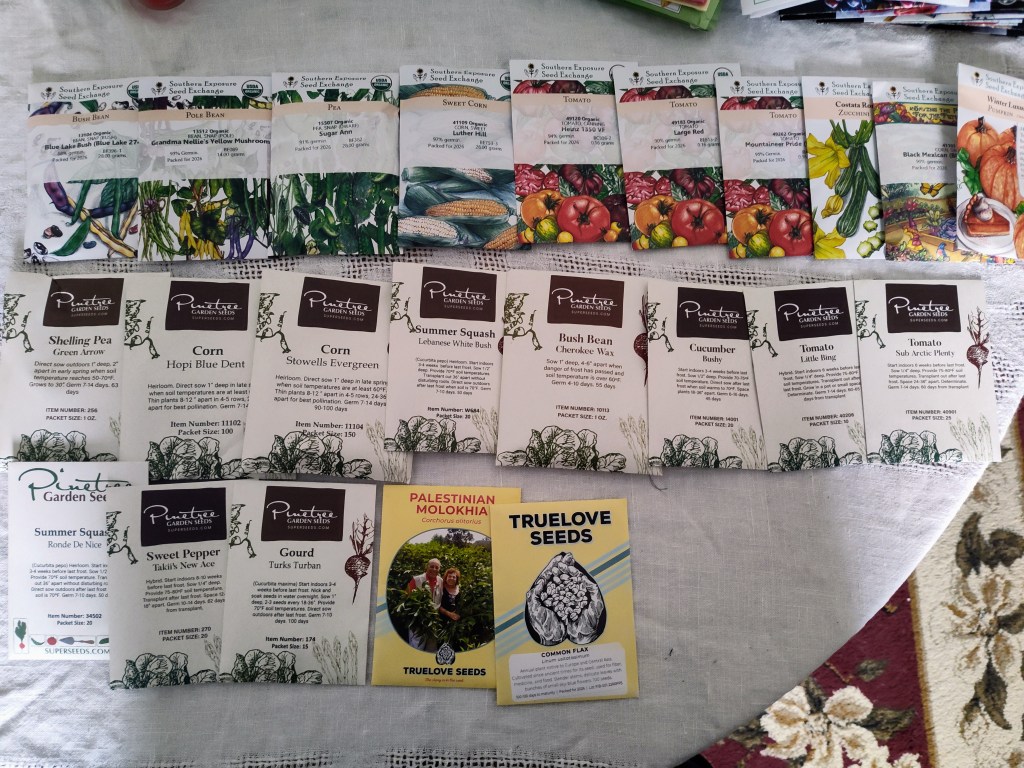
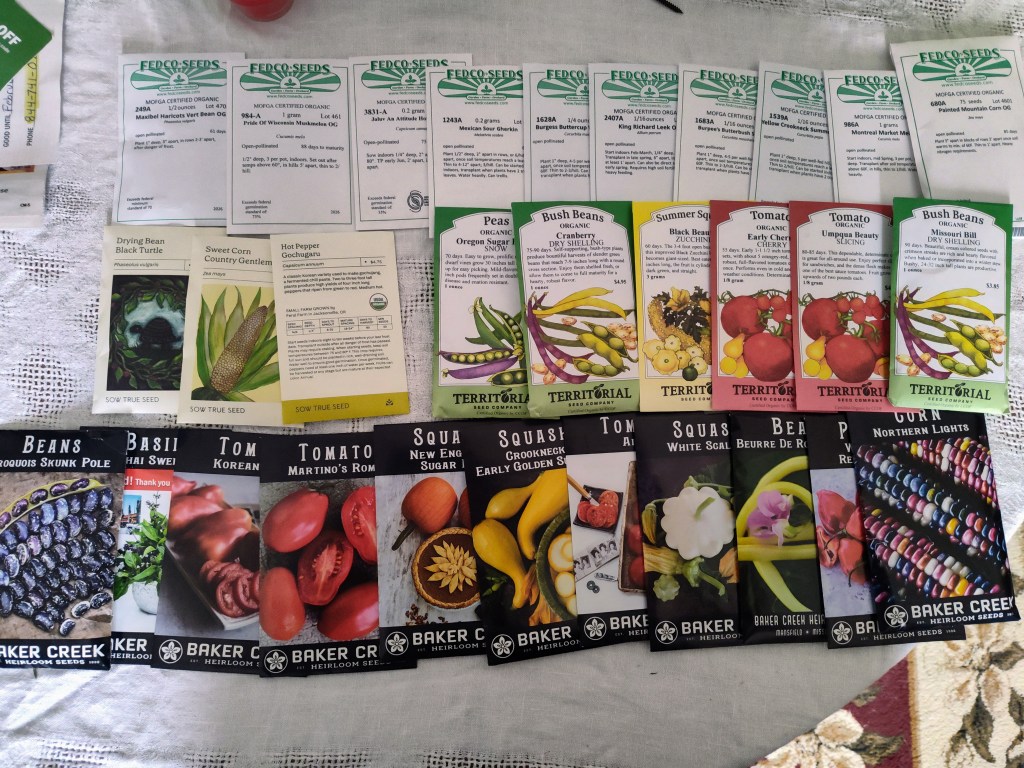
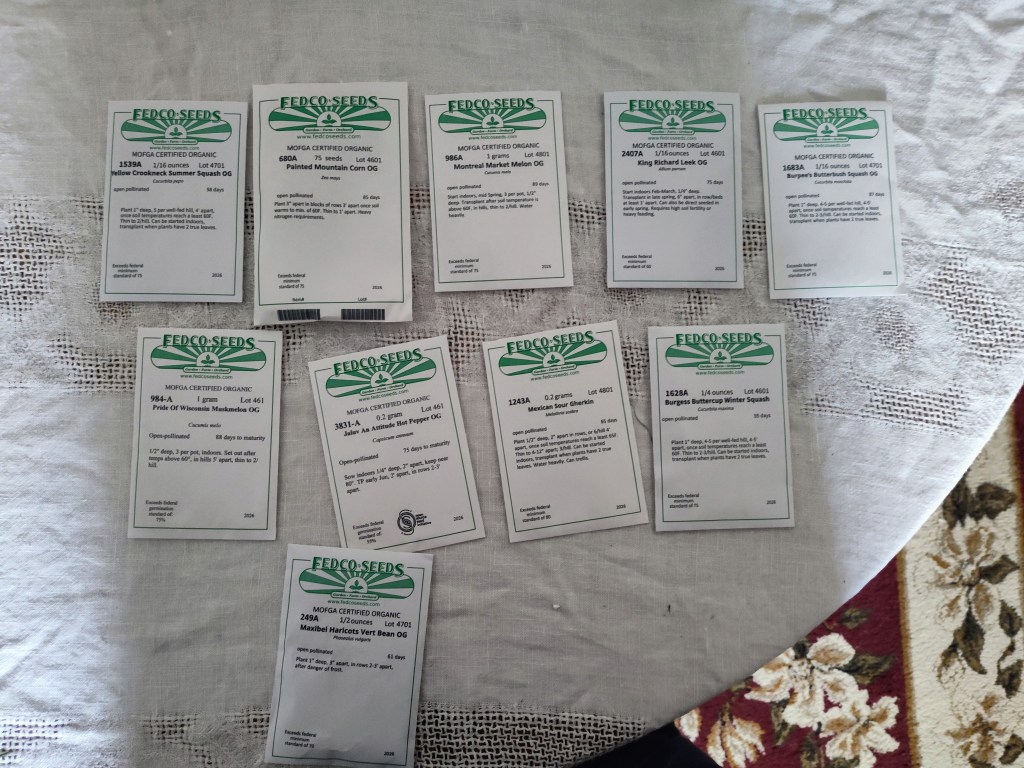
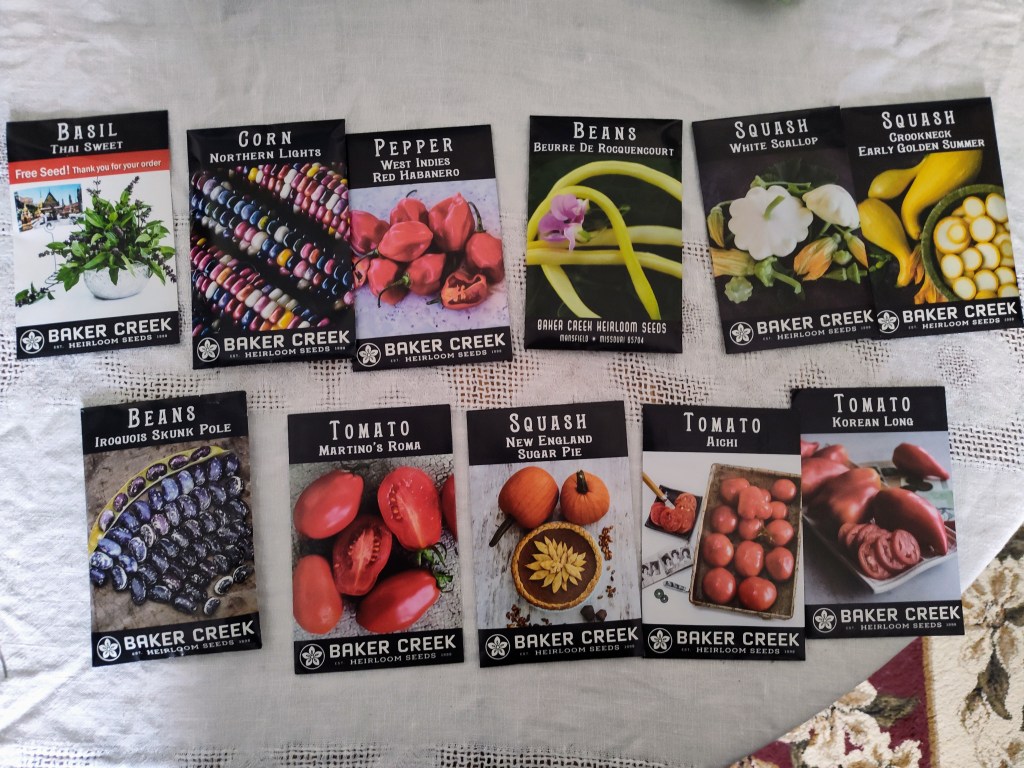
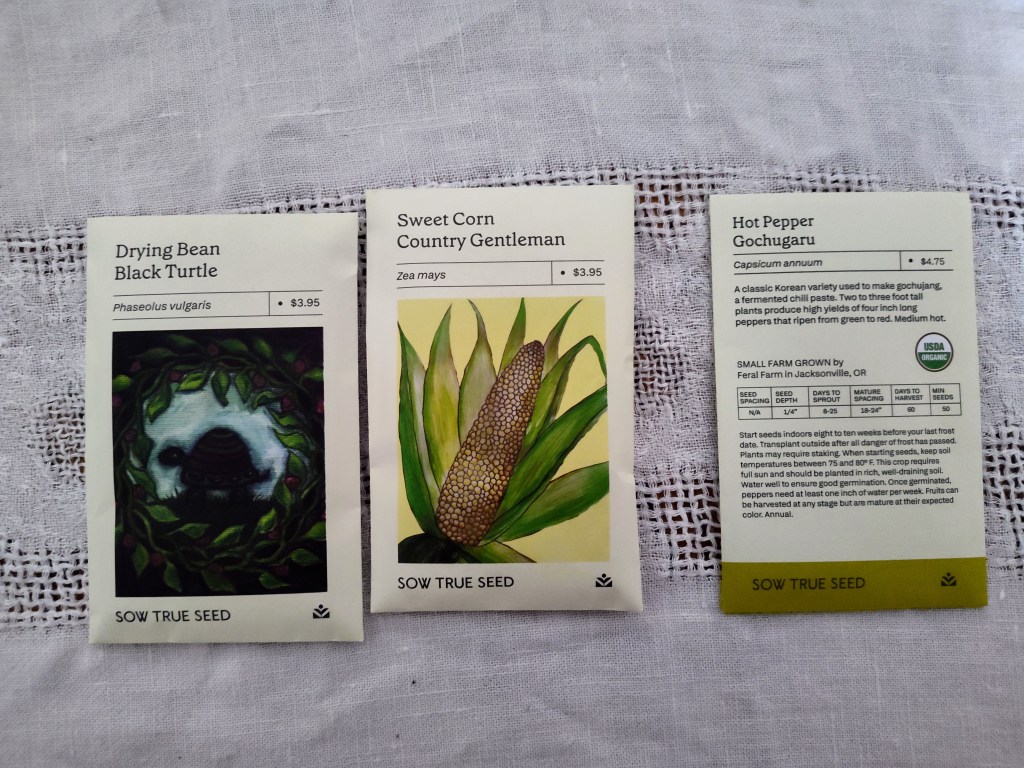
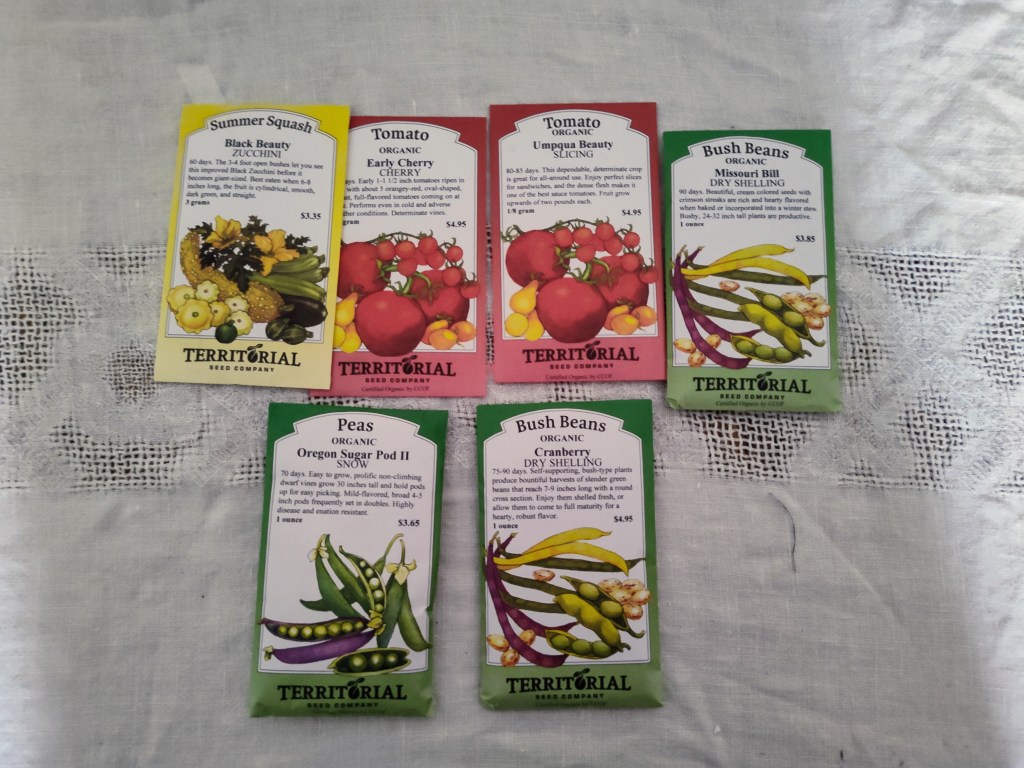
All of our garden seeds for 2026 have been ordered and delivered, so I thought I’d share pictures of everything. This is just a short post, but I’m in the process of writing a longer post (or perhaps a series of posts) explaining all the seeds we bought.

Links to Seeds Posts:

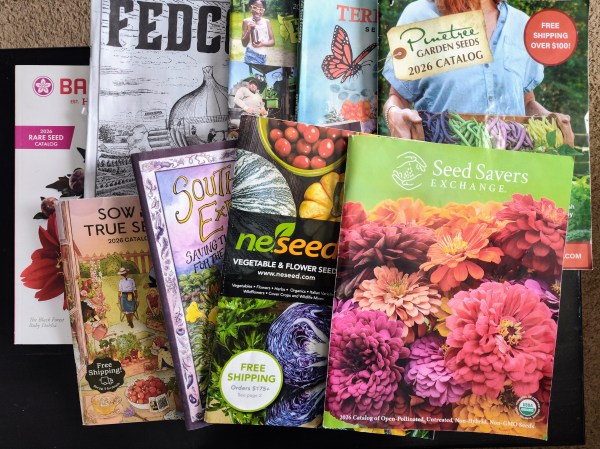
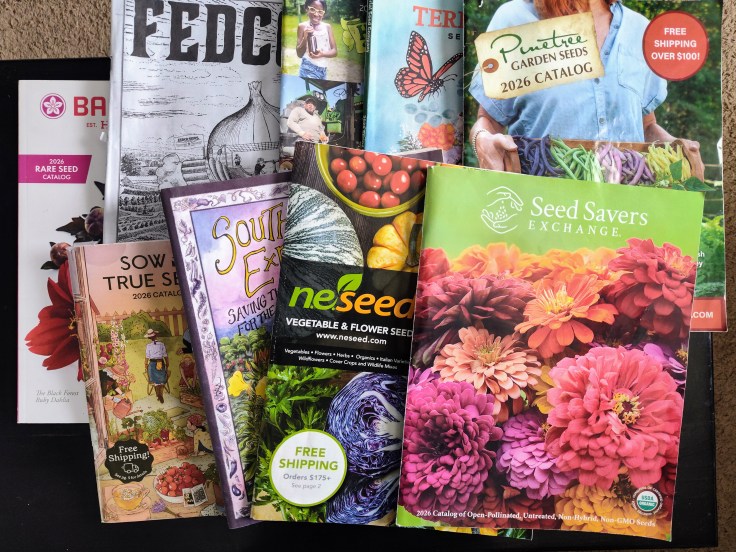
What Is the Best Garden Seed Catalog for 2026?

Over the past month, I have been reviewing the garden seed catalogs that we have requested for 2026. In total, I looked at and scored nine catalogs. If you missed them, links for each review are located below, and for a refresher, here is the criteria I used to score them:

  • Number of pages – 1 point per page over 100 pages; minus-1 point per page under 100 pages.
  • New varieties – 1/2 (.50) point for each new variety for 2026.
  • Total number of seeds – 1/4 (.25) point per seed.
  • Selection of “Specialty Seeds” – By “Specialty Seeds,” I mean any specially designated seeds that are separated from the other seeds. Examples are All-American Selections, Italian Gourmet, and Indigenous Royalties. – 1 point will be awarded for each specialty category.
  • Images – 1 point if there is an image for every seed; 1/2 (.50) point if fewer.
  • Non-Seed Offerings – 1 point for each category (fertilizers, seed-starting items, merchandise, weed control, pesticides, garden gear, etc.)
  • How Is it Organized/Ordered? – 1 point if its order is a positive; minus-1 point if it’s a negative.
  • Beauty – This is completely subjective, but it’s my way of determining if it’s aesthetically pleasing to look at. Does it include original artwork? Are the images crisp and clean? Is the text easy to read? A maximum of 10 points can be awarded.
  • What Sets it Apart or Makes it Unique? – This is another subjective category. What about a catalog makes it stand out from the others? A maximum of 10 points can be awarded.
Seed Catalogs
2026 Seed Catalogs

Without further ado, here are the scores for the catalogs:

  1. Fedco – 543.25 Points
  2. Baker Creek – 451.25 Points
  3. Territorial – 417 Points
  4. Pinetree Gardens – 410 Points
  5. High Mowing Organic Seeds – 303.5 Points
  6. Seed Savers Exchange – 247.75 Points
  7. Southern Exposure Seed Exchange – 238.5 Points
  8. NE Seed – 221.5 Points
  9. Sow True – 193 Points

Do the Scores Match My Subjective Opinions of the Catalogs?

The short answer is no. When I was putting these reviews together, I looked at each catalog and wrote the review individually, so I didn’t pay attention to the scores and how they compared to each other. Solely based on my subjective views, my order would be:

  1. Sow True
  2. Southern Exposure
  3. Pinetree Gardens
  4. Fedco
  5. Seed Savers Exchange
  6. Baker Creek
  7. High Mowing Organic Seeds
  8. Territorial
  9. NE Seed

The biggest surprise here is that the lowest-scoring catalog, Sow True, is actually my favorite. I love the design and shape of their catalog even though it’s on the smaller side. Territorial’s catalog, which scored high, was one of my least favorite catalogs, although the 5-8 catalogs on my subjective list are pretty close together.

I think the reason for this discrepancy is that my scoring system placed a lot of weight on the number of pages in each catalog, with one point being awarded for each page over 100. The reason for that was to award seed companies for offering thick catalogs that go above and beyond. I still think it was smart to award the catalogs for how many pages, but perhaps points should have been given on a tiered basis (1 point for 100-110 pages, 2 points for 111-120, 3 points for 121-130, etc.) Another scoring system would have been to award one point for every 5 pages above 100.

Another reason is that my scoring system intentionally awarded the objective traits, such as the number of seeds being offered, new seed varieties, and non-seed offerings. This naturally rewards the larger companies that can offer more seeds than the smaller companies. I wanted to reduce the likelihood that my personal thoughts and feelings could unfairly create imbalance in the scoring system. That was successful, but I think I went too far in the opposite direction, and some of the most beautiful catalogs didn’t rank highly. Ultimately, it doesn’t matter, because I can still follow up with my personal rankings, but I will adjust the scoring system for next year in an attempt to be more fair.

What Did I Learn?

I learned that I love catalogs from the companies that go beyond simply selling seeds. As a gardener, you can buy seeds almost anywhere in the spring. Go to any box store, home improvement store, or Agway, and you’ll find seeds. But not all seeds and seed companies are created the same. Some seed companies are businesses and operate with the goal of turning a profit. Others care more about educating gardeners and building a sustainable future than making money. You can perceive that difference in the companies’ catalogs. I prefer the catalogs that offer more than seeds. They’ll tell stories and teach lessons. I want to buy from companies that give back and support small farmers.

I know that I learned a lot by reviewing the seed catalogs. It forced me to slow down and really pay attention to what I was seeing and reading. Now, we begin the process of selecting the seed varieties that we want to buy, and I’ll be curious to know if we buy the bulk of our seeds from the highest-scoring catalogs (subjective or objective) or if they’ll be evenly divided. I’ll follow up with a post on what seeds we order. Thank you for reading.

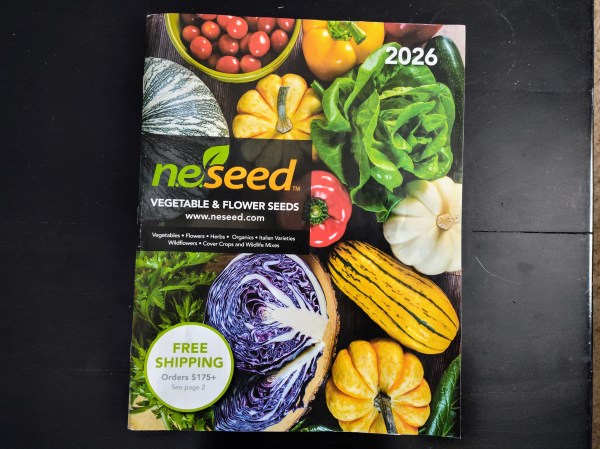
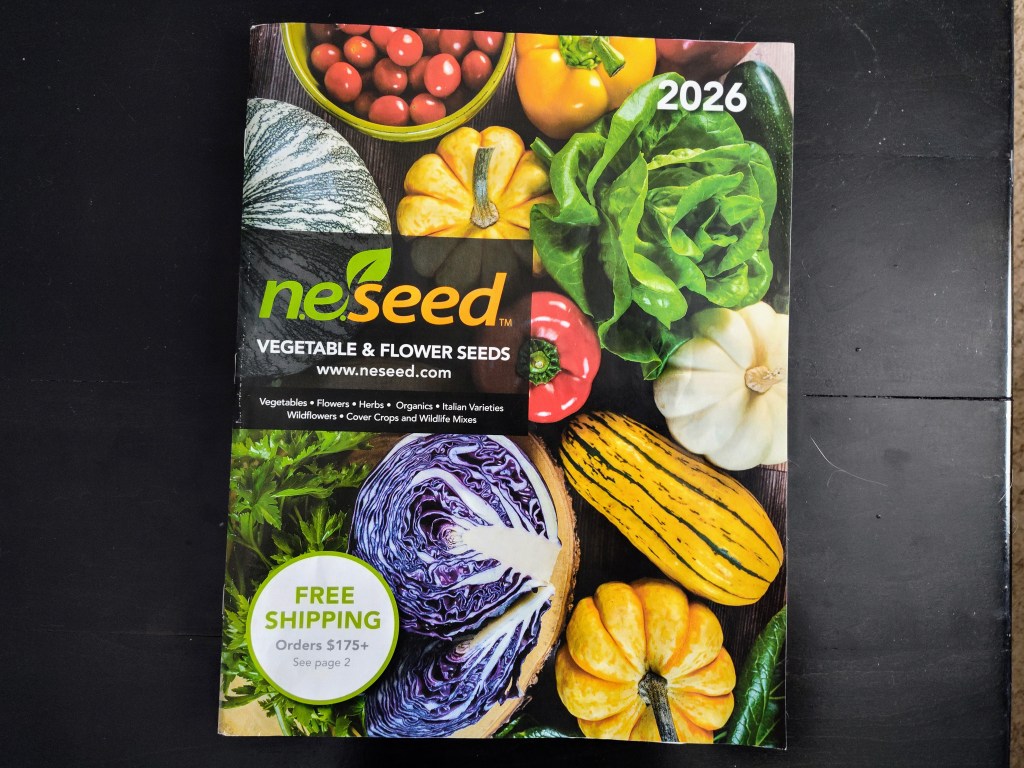
Reviewing NE Seed’s 2026 Catalog

Ahead of the 2025 gardening season, one of my first posts on the blog was titled “Where to Buy Garden Seeds.” There was a heavy emphasis on the seed catalogs we requested, what we liked about each one, and the ones we purchased seeds from. This year, I’m doing things a bit differently by dedicating a post to each seed catalog. In each post, I’ll review the catalog, go over the things I like and dislike about it, and score the catalog. Here’s how I’m scoring all the catalogs.

Scoring Criteria

I’m going to be looking at the following areas and applying them to each catalog we receive:

  • Number of pages – 1 point per page over 100 pages; minus-1 point per page under 100 pages.
  • New varieties – 1/2 (.50) point for each new variety for 2026.
  • Total number of seeds – 1/4 (.25) point per seed.
  • Selection of “Specialty Seeds” – By “Specialty Seeds,” I mean any specially designated seeds that are separated from the other seeds. Examples are All-American Selections, Italian Gourmet, and Indigenous Royalties. – 1 point will be awarded for each specialty category.
  • Images – 1 point if there is an image for every seed; 1/2 (.50) point if fewer.
  • Non-Seed Offerings – 1 point for each category (fertilizers, seed-starting items, merchandise, weed control, pesticides, garden gear, etc.)
  • How Is it Organized/Ordered? – 1 point if its order is a positive; minus-1 point if it’s a negative.
  • Beauty – This is completely subjective, but it’s my way of determining if it’s aesthetically pleasing to look at. Does it include original artwork? Are the images crisp and clean? Is the text easy to read? A maximum of 10 points can be awarded.
  • What Sets it Apart or Makes it Unique? – This is another subjective category. What about a catalog makes it stand out from the others? A maximum of 10 points can be awarded.

Links to Other Reviews

Pages – -13 Points

The 2026 NE Seed catalog is 87 pages, which makes it the smallest catalog that I’ve looked at this year.

New Varieties – 4 Points

The catalog lists 8 new varieties for the 2026 gardening season, all of which are listed at the beginning of the catalog.

Total Number of Seeds – 217 Points

The catalog and company are selling 621 vegetable, 179 flower, and 68 herb varieties for a total of 868.

Specialty Seeds – 2 Points

NE Seed sells specialty seeds in the following areas: All-American Selection and Italian Gourmet Collection.

Images – .5 Points

The catalog doesn’t include an image for each seed listed, so it only gets a half-point.

Beauty – 6 Points

The NE Seed catalog is a bit different from the others I’ve reviewed in that it’s more commercially focused. Not all of their seeds are sold in typical retail packets, and you can buy nearly all their seeds in bulk. It also lists commercial gardening tools. And if you spend over $1,000, you get 10% off, but that total is unlikely to be reached by a typical home gardener. That being said, the catalog is still beautiful to look at. The images are crisp and clear, and the company is clearly dedicated to transparency.

Non-Seed Offerings – 4 Points

NE Seed offers inoculants, seed-starting supplies, planters, and what they call hard goods.

Unique Quality – 3 Points

Because the catalog is partially focused on commercial growers, it’s less unique than the other catalogs I’ve reviewed. If 5 is the score I’d give an average catalog, the NE Seed catalog has to be scored slightly below average for uniqueness. It is everything you’d expect from a seed catalog in that it lists a large variety of seeds and features clear descriptions. There are also a few recipes sprinkled in, but it doesn’t really go beyond that.

How Is It Ordered/Organized? – 1 Point

The catalog is categorized into vegetables, herbs, and flowers and then each category is alphabetized.

Review

It’s difficult to compare this catalog to the others because I think it’s intended for a different audience and serves a different purpose. It has a commercial focus but still applies to the average home gardener, but you have to know that not all seeds are available in packets. There’s still a large variety of seeds sold in packets, but it can be frustrating to read a seed’s description only to learn that it’s unavailable in a packet. In general, NE Seed sells a large variety of vegetables, including a selection of heirloom seeds. They also pledge the same Safe Seed Promise as the other companies, indicating their dedication to seed saving practices. Also, because they sell commercially, their prices are excellent on a per-seed basis, but you may need to make sacrifices to find varieties sold in smaller quantities. Overall, I would recommend checking out NE Seed and their catalog. They’re a good company, but it’s wise to have the proper expectations.

Score: 224.5 Points

A Refined Approach to Our 2026 Garden

On the Saturday before Christmas, Magz and I met at our favorite local coffee shop to hang out and discuss our plans for and thoughts about the 2026 garden. While it was definitely a low-key affair, it was a productive meeting, and we left the coffee shop with clarity over our upcoming garden. Items we discussed included:

  • Vegetables we want to grow again vs. new vegetables we want to try vs. vegetables we won’t grow again in 2026
  • Growing habits/types of vegetables that we are interested in
  • Seeds vs. starts for each vegetable

In the end, we were able to refine our approach to the 2026 garden and feel confident in our plan. Here are some of the decisions we reached.

What Vegetables Are We Growing in 2026?

There are a number of vegetables that we have decided to not grow again in 2026. They are beets, carrots, tomatillos, greens, and bok choy. We were unsuccessful in growing beets and carrots in 2025 and have never had luck with bok choy as much as we love them. We’ll likely revisit all three again in the future. We didn’t enjoy eating tomatillos as much as we thought, so we won’t dedicate garden space to them again this year. Finally, we enjoyed the mustard greens we grew, but we ran out of ideas for how to use them. They needed to be harvested all at the same time, and it became overwhelming.

The vegetables that we’re growing again in 2026 are beans, broccoli, bunching onions, corn, cucumbers, eggplant, ground cherries, melons, peas, peppers, potatoes, pumpkins, squash, and tomatoes. We either had success with all of them in 2025 or want to have another go at growing them.

Finally, there are three new vegetables that we want to try: leeks, okra, and cauliflower.

Varieties We Won’t Grow in 2026

There are also a number of varieties that we attempted to grow in 2025 that we won’t try again in 2026, but it doesn’t mean we’re writing off the entire vegetable or fruit. These are:

  • Melons: Tigger, Ali Baba, Noir des Carmes, and Kajari
  • Beans: Chinese Red Noodle Yard Long
  • Squash: Zapallito Del Tronco
  • Tomatoes: Yellow Pear, Queen Aliquippa

There were various reasons for not growing these varieties again. Some were because we didn’t like the flavor (Tigger, Kajari), others were because of the texture (Chinese Red Noodle Yard Long bean, Zapallito Del Tronco), and determining when the tomatoes were ripe was a nightmare. Finally, the Ali Baba watermelon probably would have been delicious, but it requires a longer growing season than we can consistently expect and want a shorter-season watermelon for 2026.

Growing Habits/Types of Vegetables That We’re Interested In

In 2025, we learned what growing habits and vegetable types that we like and dislike growing. That was refined during our meeting:

  • Beans – As many bush habit plants as possible, with one or two pole bean plants sprinkled in.
  • Cucumbers – Fewer plants overall, with most having a compact growing habit.
  • Melons – Short-season varieties, with an emphasis on ones that were bred for cooler environments. Also interested in growing varieties that can be trellised.
  • Tomatoes – As many determinate varieties as possible, and none that stay yellow or green when ripe. They’re too difficult to know when they’re ready to be picked.

A common theme is that we want as many compact plants as possible. While we have plenty of room in our garden, my preference is to not have vines all over the place. Last year, we had vines intersecting each other, which made it difficult to know where each vine originated. Plus, with compact plants, we can actually plant more things.

Seeds vs. Starts

Last year, I was all about starting as many varieties from seeds as possible. We did end up buying some vegetable starts from our local greenhouse, including tomatoes, peppers, eggplant, tomatillos, and ground cherries. This year, we’re going to be really intentional about what vegetables and varieties we buy seeds for and which ones we get starts for.

For example, if it’s a new vegetable we haven’t successfully grown before but want to try, we’ll likely buy starts for it. Broccoli, cauliflower, and ground cherries fall into this category. We want to get really good at growing a vegetable before trying to start it from seed, removing one potential point of failure. There are also some vegetables, like eggplant, that we bought starts for and had a lot of success. We simply want to replicate that success in 2026. We’ll also likely supplement our tomatoes with starts to increase the likelihood that we have plenty of tomatoes for sauce.

Basically, it boils down to this: if it’s a vegetable we have experience with, we’ll grow it from seed. If it’s one we’re inexperienced with, we’ll buy a start.

Final Thoughts

If there’s going to be a theme for this year’s garden, it’s “improvement and refinement.” We want to get really good at growing the vegetables we are already good at. We’re placing an emphasis on growing fewer varieties and vegetables but having a high success rate with the ones we do grow. Last year, we were so excited to have an in-ground garden that we picked far too many varieties, and toward the end of the season, it became a bit overwhelming. This year, we’ll have fewer varieties but grow more of each variety and have an abundant harvest.

Now that we’re in the new year, the excitement is building for the upcoming garden. All but one of our seed catalogs have arrived, and we’re starting to narrow down what seeds we’re going to order. It’s wild to think that we’re only a few months away from getting back into the dirt.

Create a website or blog at WordPress.com

Up ↑