When planning an upcycle, one thing that I consider with care is how to use the entire garment in the most innovative way possible. Maybe it’s all those episodes of Project Runway guiding me?
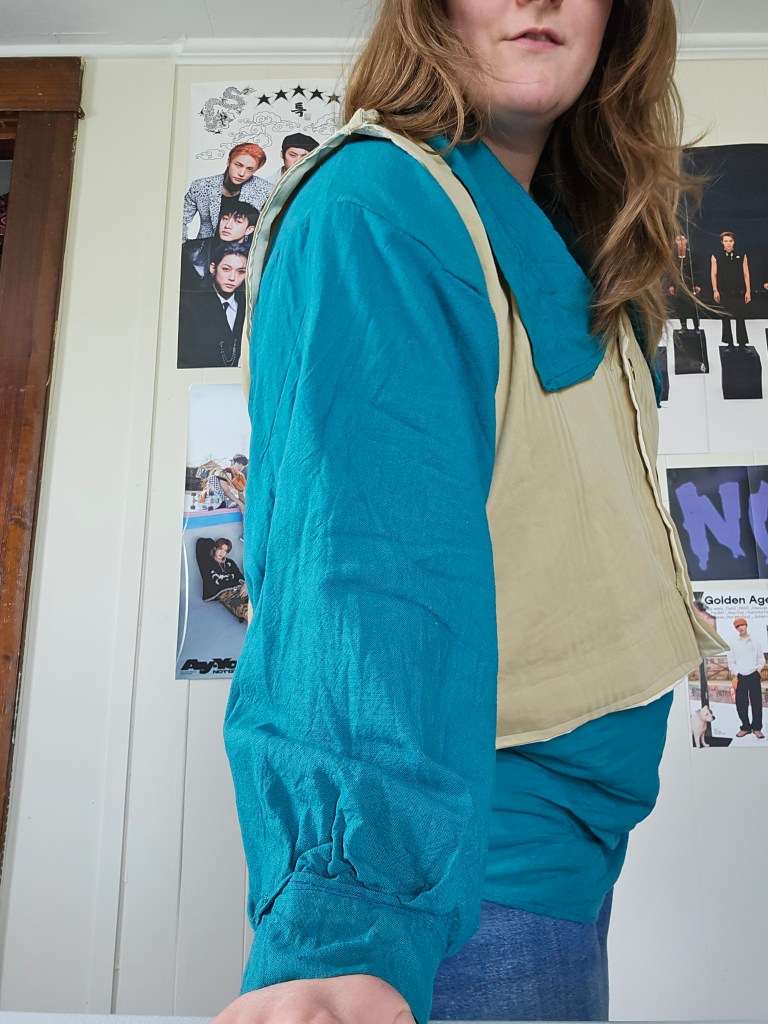
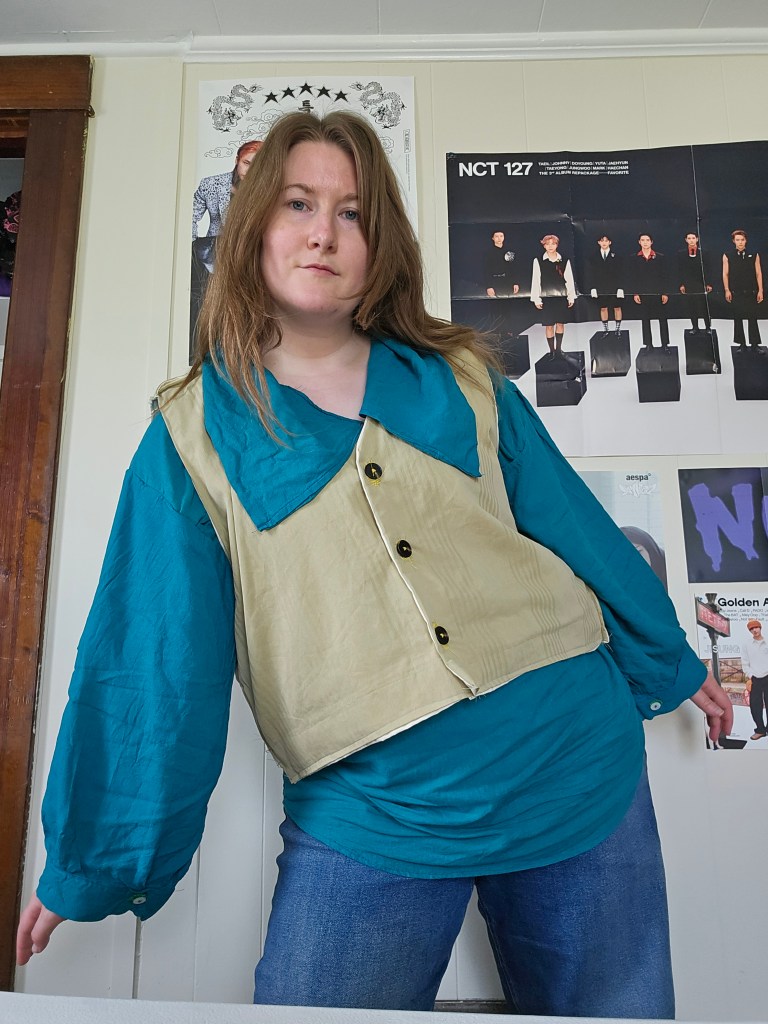
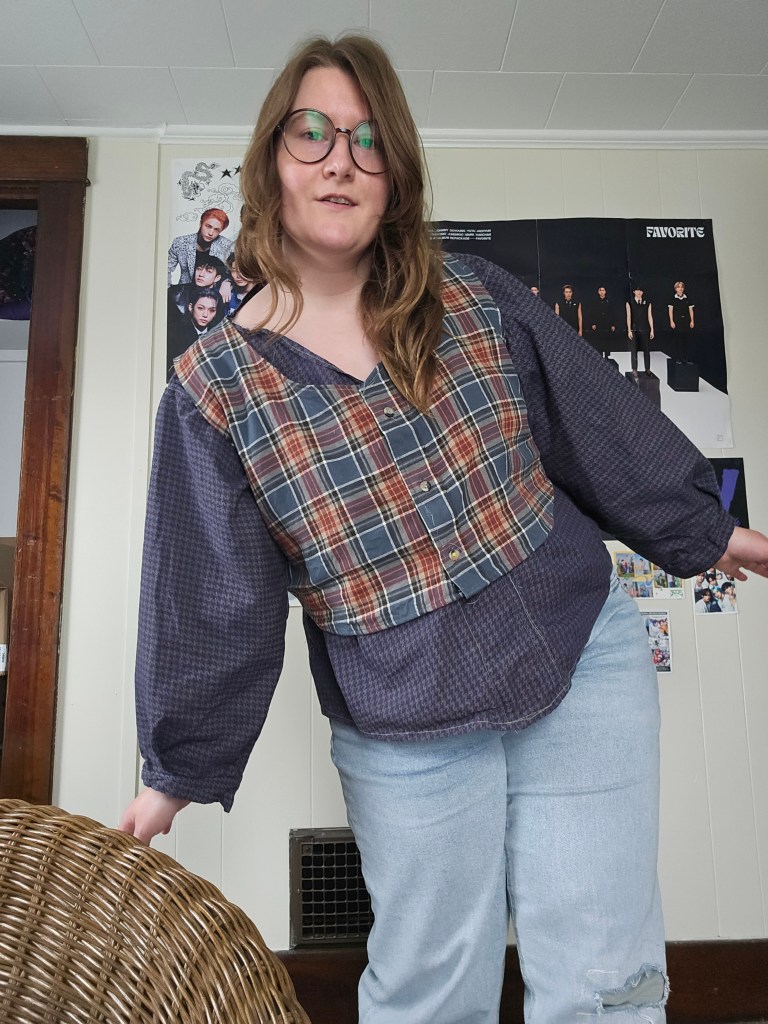
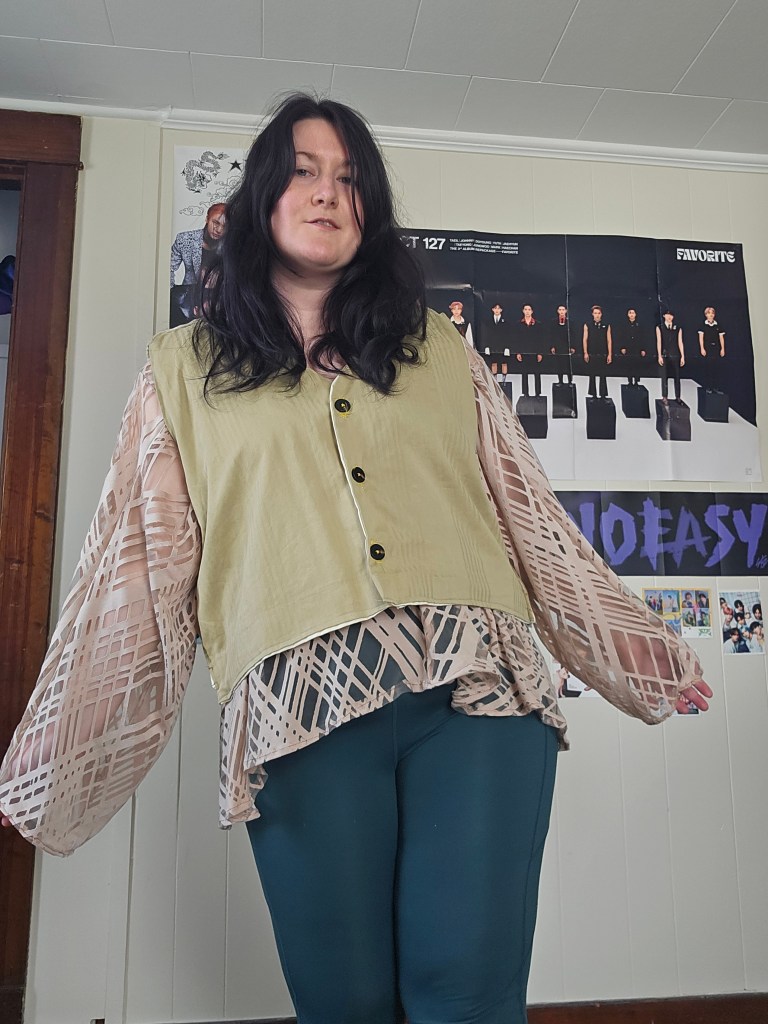
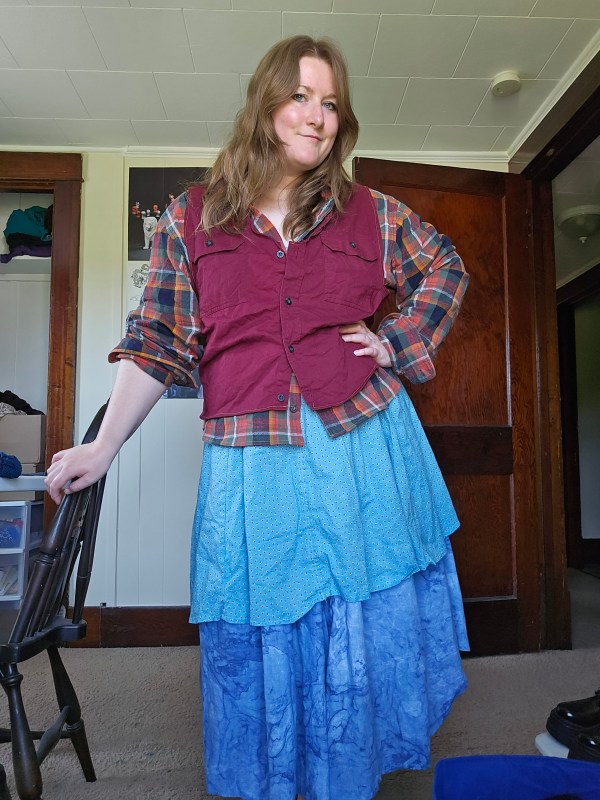
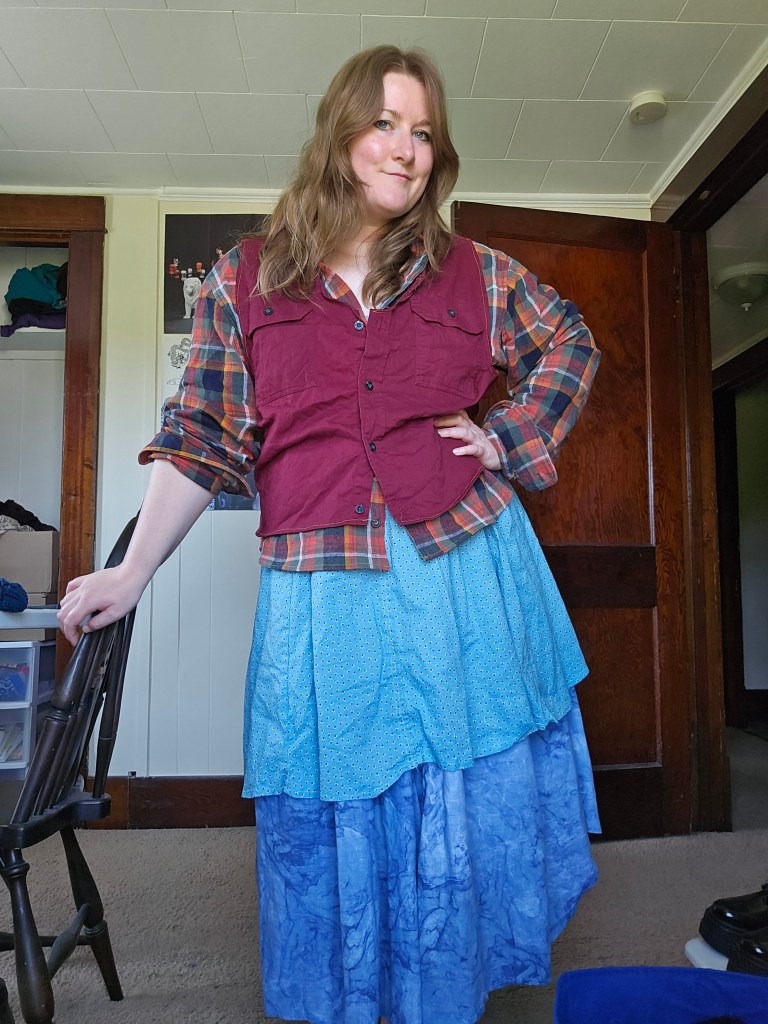
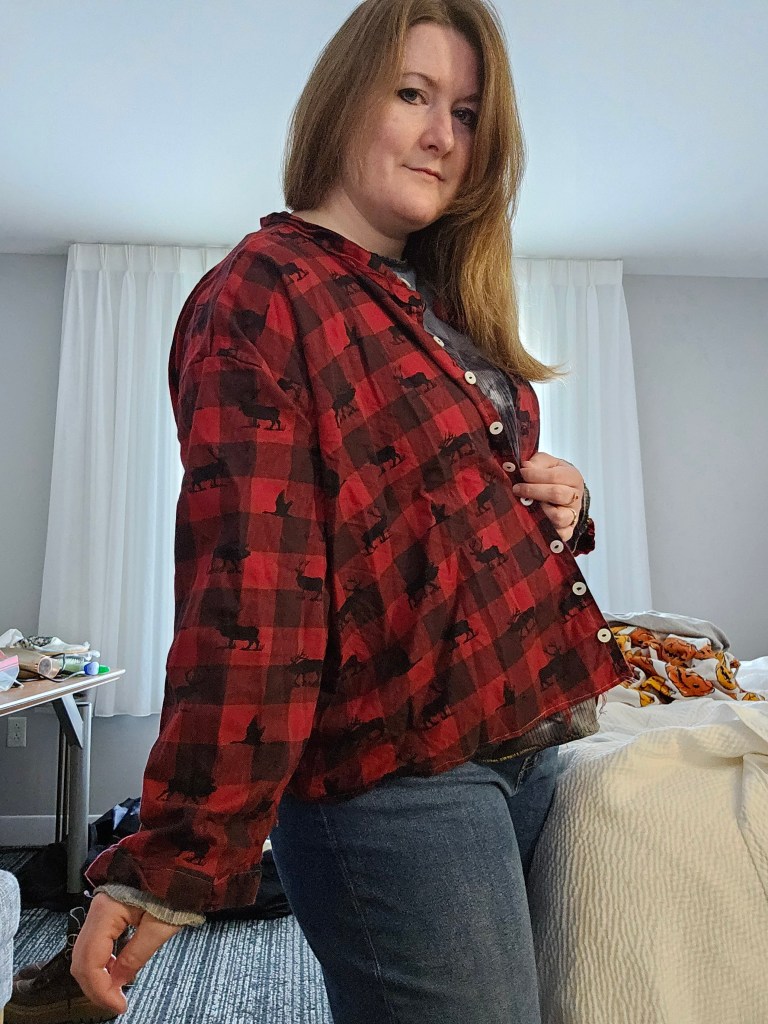
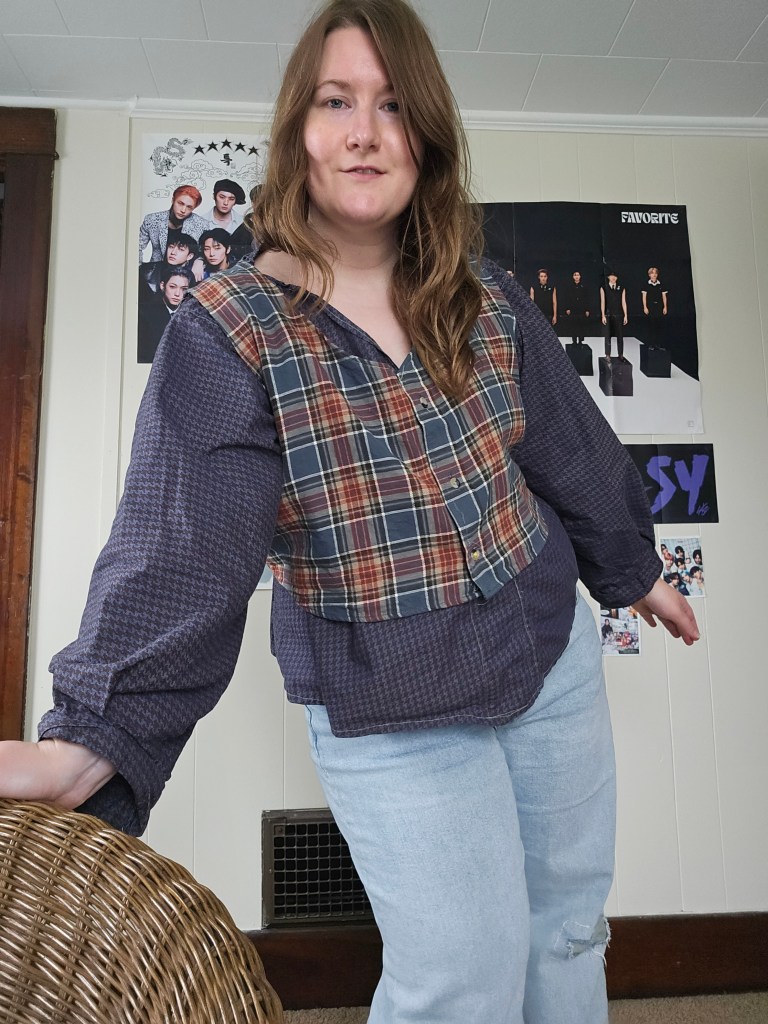
When I began my flannel upcycling project, and planned to transform them into vests, they needed a real purpose.
I began this project last year, as the summer was winding down, with fall whispering in the trees. Fall is an unmistakable inspiration for me. I love the color palette, traditional fabrics, and the academic style that returns to fashion every autumn season.
Sleeves Find New Life
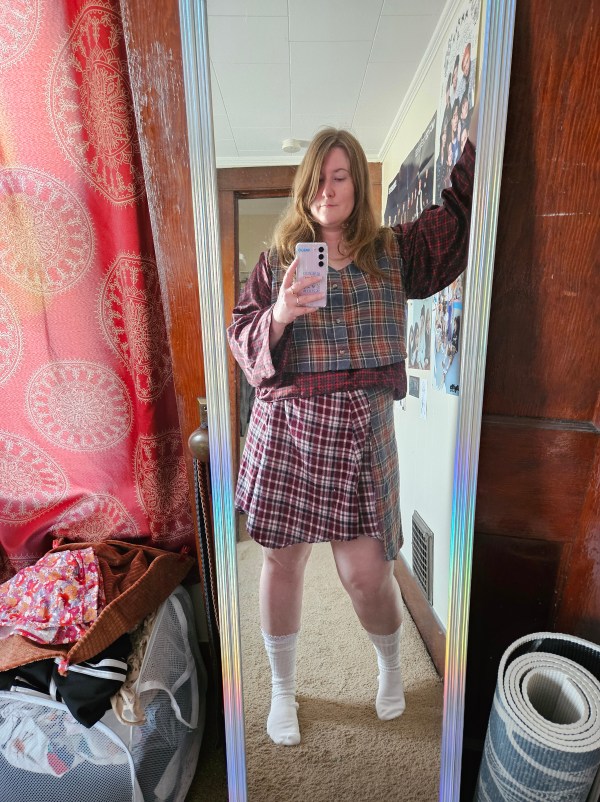
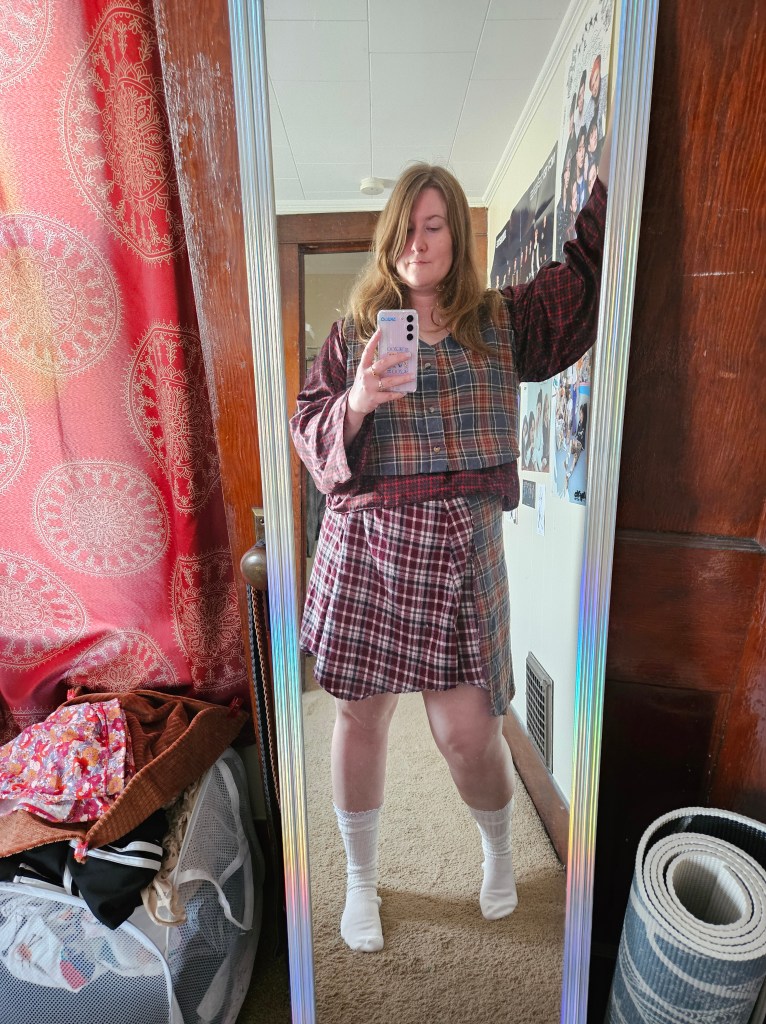
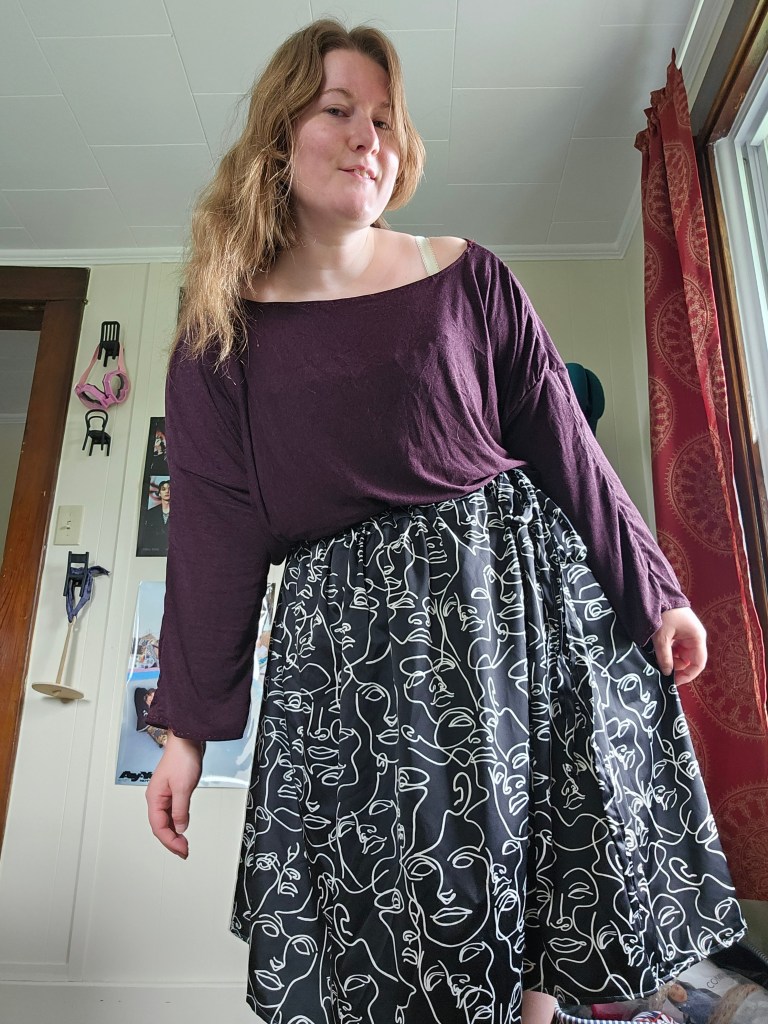
Knowing how much yardage there is hidden in those sleeves, I had an idea – a plaid skirt with alternating colored plaid skirt panels connected by a waistband.
To do this, I cut the sleeves carefully from the shoulder seam to retain as much width and length as possible. This would become the bottom of the skirt. Next, I cut the cuffs from the sleeve; this tapered end was perfectly shaped for the waistline of the skirt for a flared effect.
For the waistband, I had yet to understand elastic, and was growing tired of waist ties, so I got a bit creative! I decided to use buttons, four of them to start, and created an adjustable button closure skirt, like the hook and eye of a bra band. The buttons were actually repurposed from the buttons of the shirt. For ease of getting dressed, I sewed the skirt on all the side seams, leaving a 2.5-3 inch opening to adjust the waistband, in a way that the fabric would cross over for security.
If you are looking for an easy and cute fall upcycle for the new season, I would highly recommend this project! You can even pair the vest and skirt together for a complete outfit!
This collection was about upcycling, trying new techniques, and making things that expressed what I like wearing based on previous designs I have made, but with a twist. The items I designed were 75% sourced from existing materials. They were upcycled from items in my closet, hand-me-downs from my mom or grandparents. They were made from destashed yarn I acquired or fabric that had been in my stash for a long time. I focused more on creating with natural materials like wool, linen and as always, I love cotton.
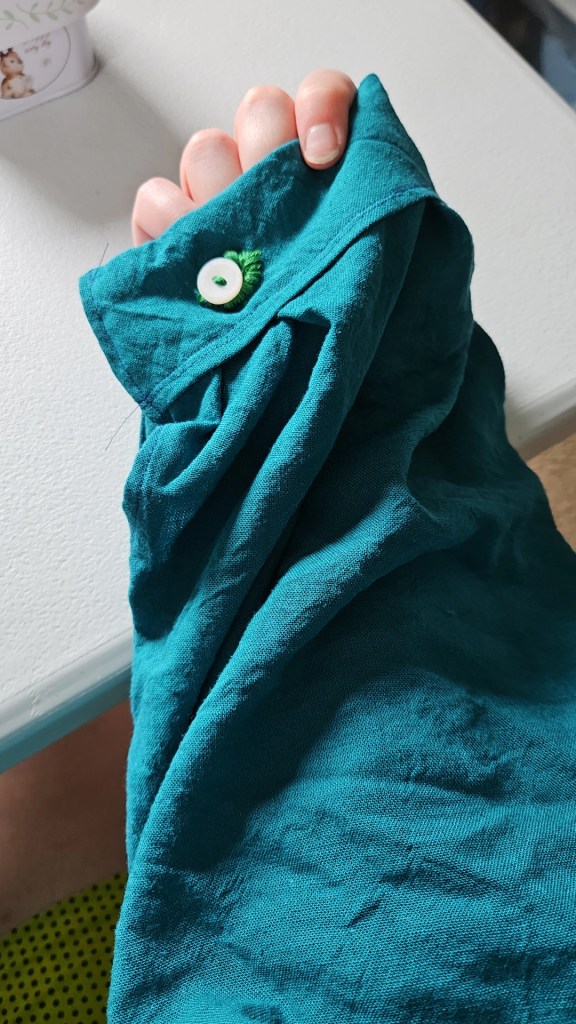
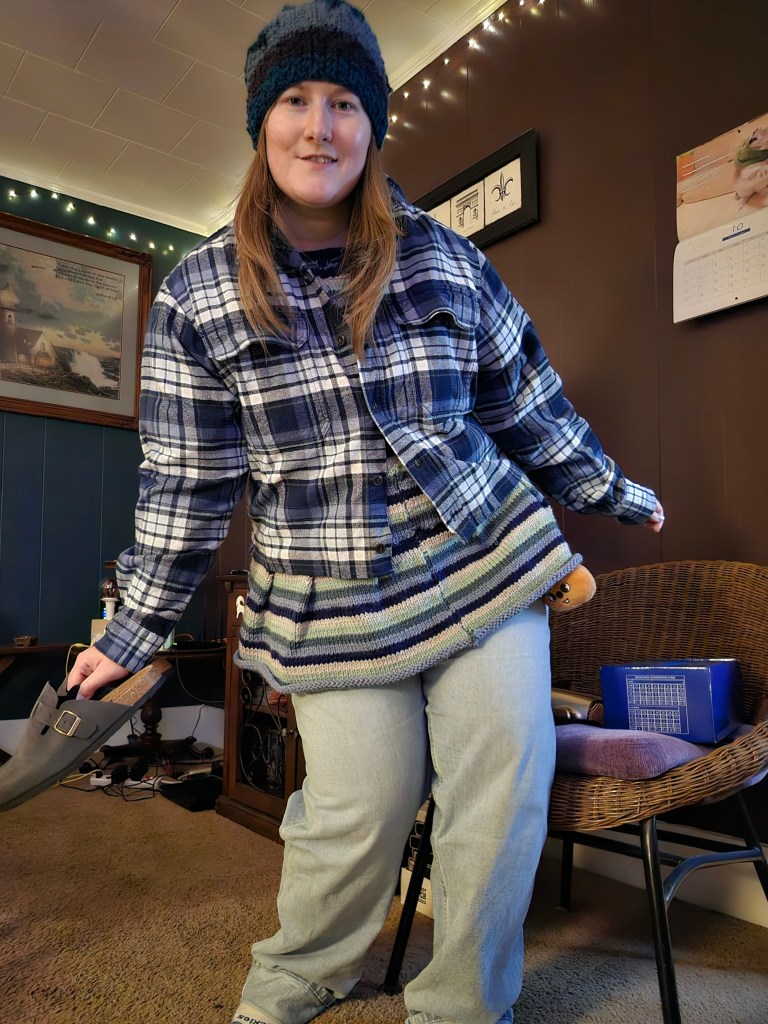
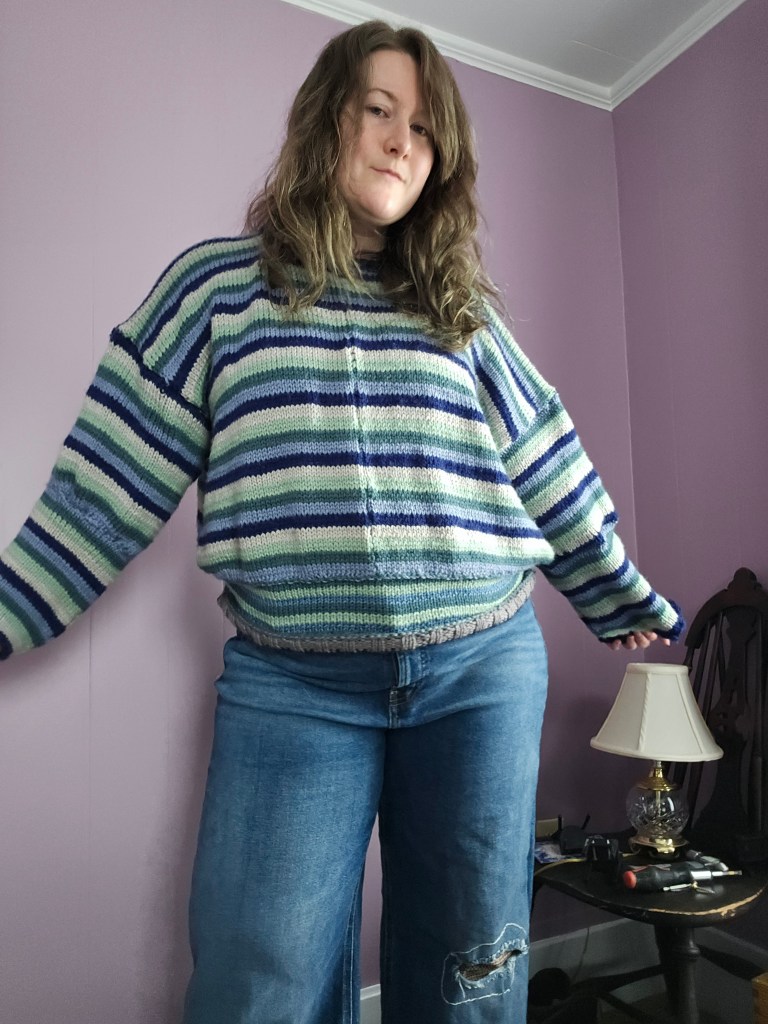
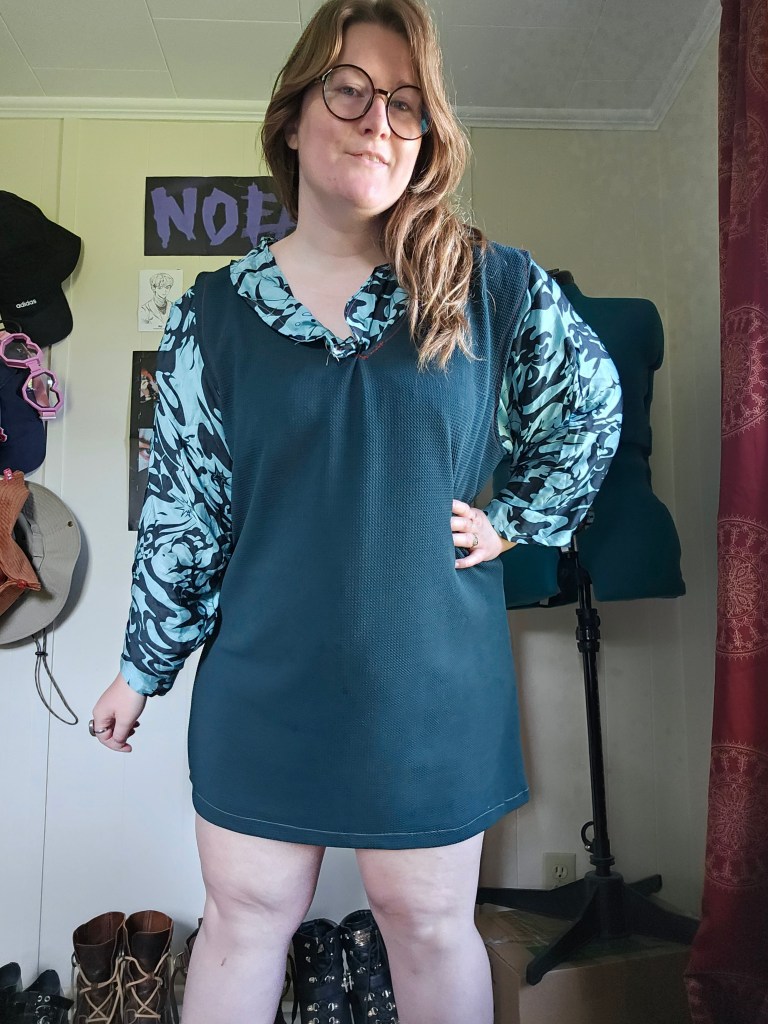
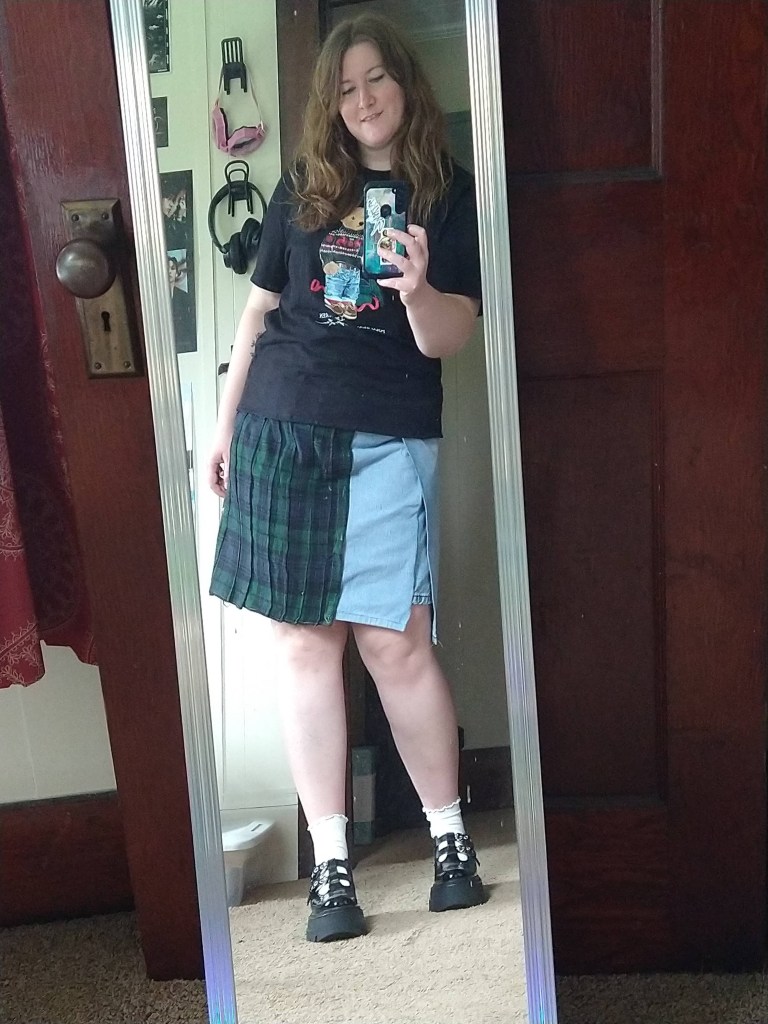
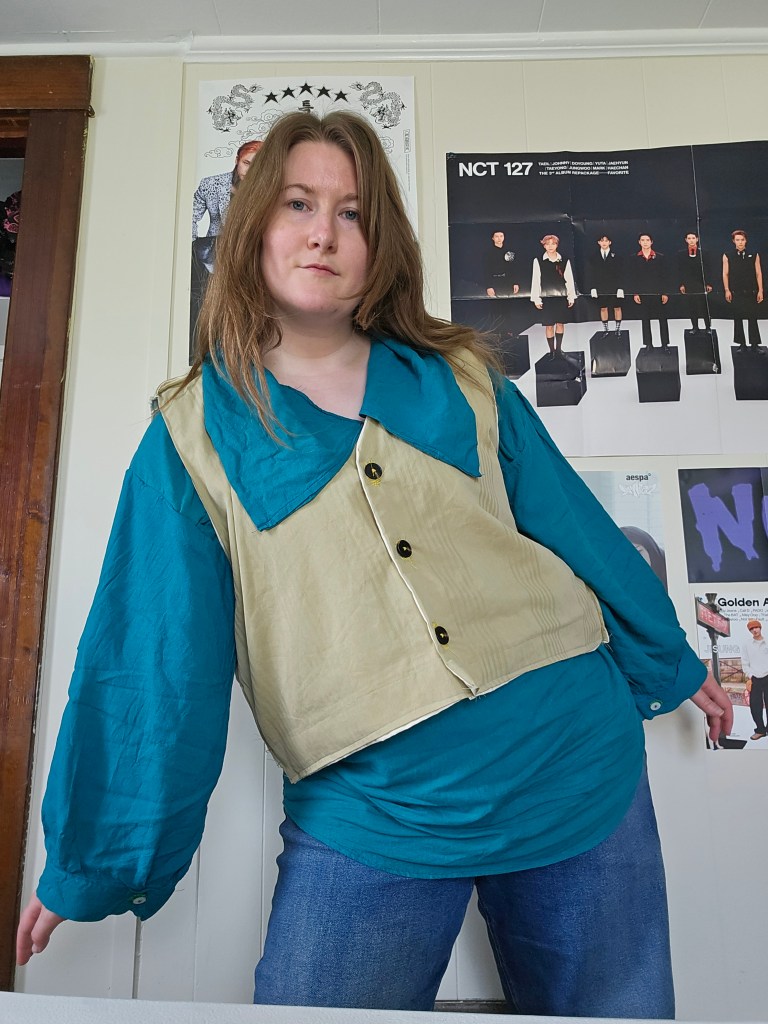
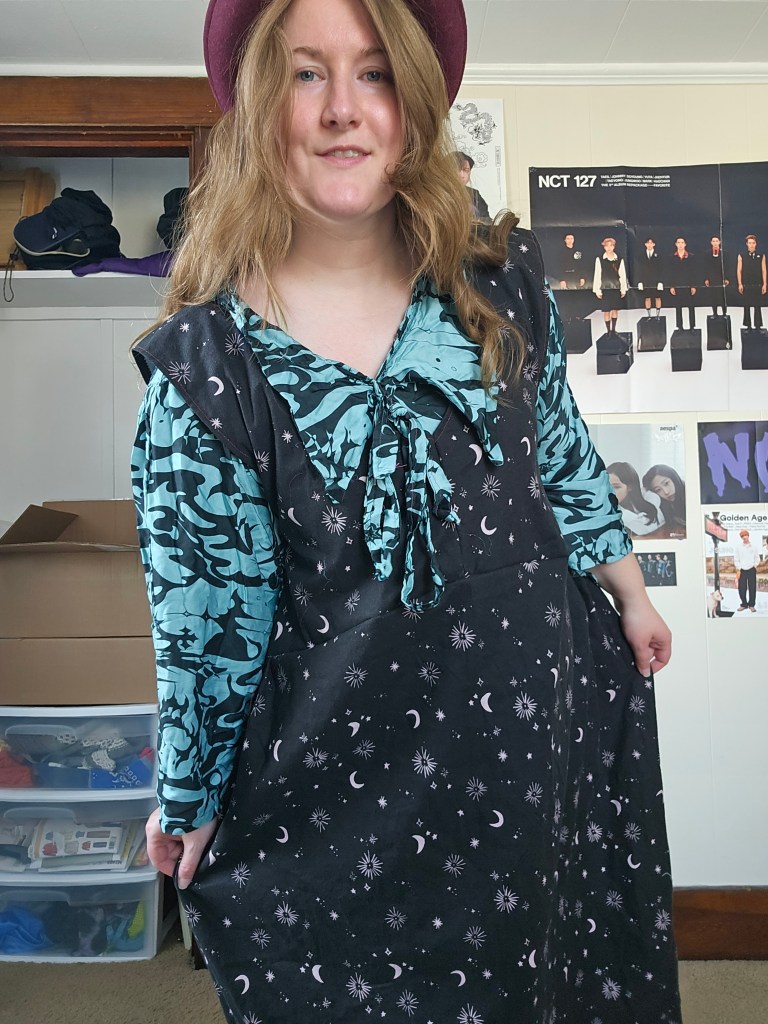
Vests were made from pillow cases and flannels. I re-worked a sweater from the existing sweater and leftover yarn. I dyed denim, deconstructed denim, and made some interesting new shorts and skirts. I combined leftover flannel from Christmas stockings to create a plaid and denim kilt. I used the cut-off sleeves of flannels from my vest projects to create a skirt from four flannel sleeves. I dove deeper into the world of trousers with two new patterns – a floral and railroad stripe. With each pair, I experimented with fastenings and pockets. I constructed my first “Mr. Darcy” shirt from teal linen using Bernadette Banner’s instructions for the body. I put my own spin on the collar, choosing a wider collar similar to a sailor collar that is popular in anime and J-fashion.
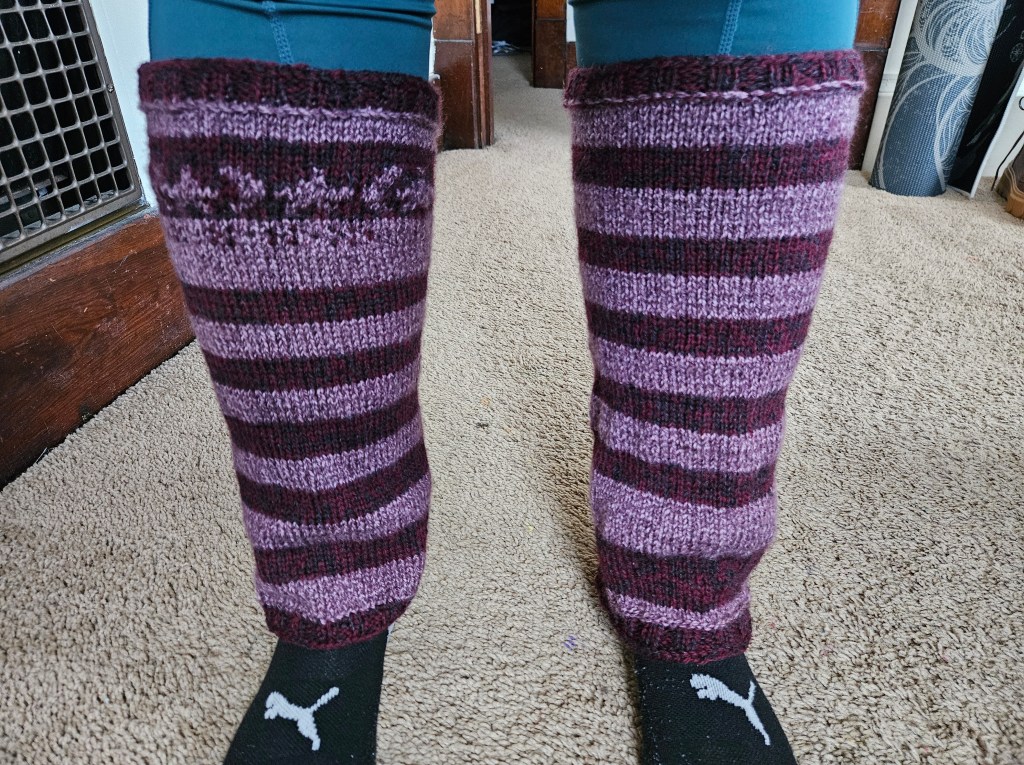
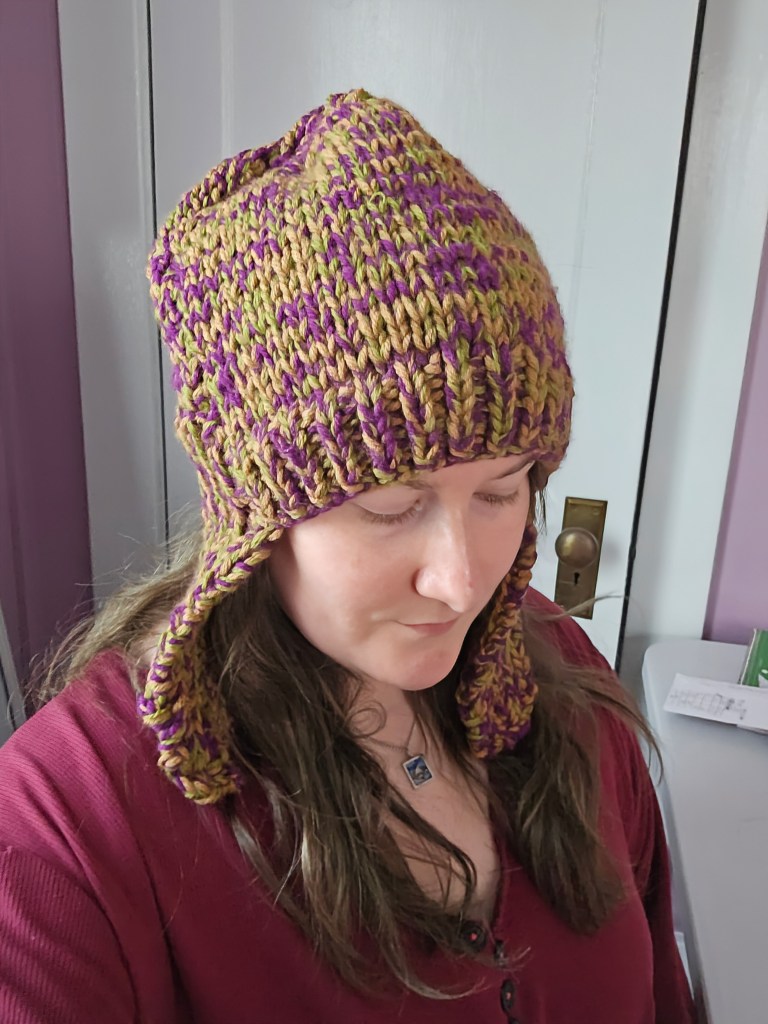
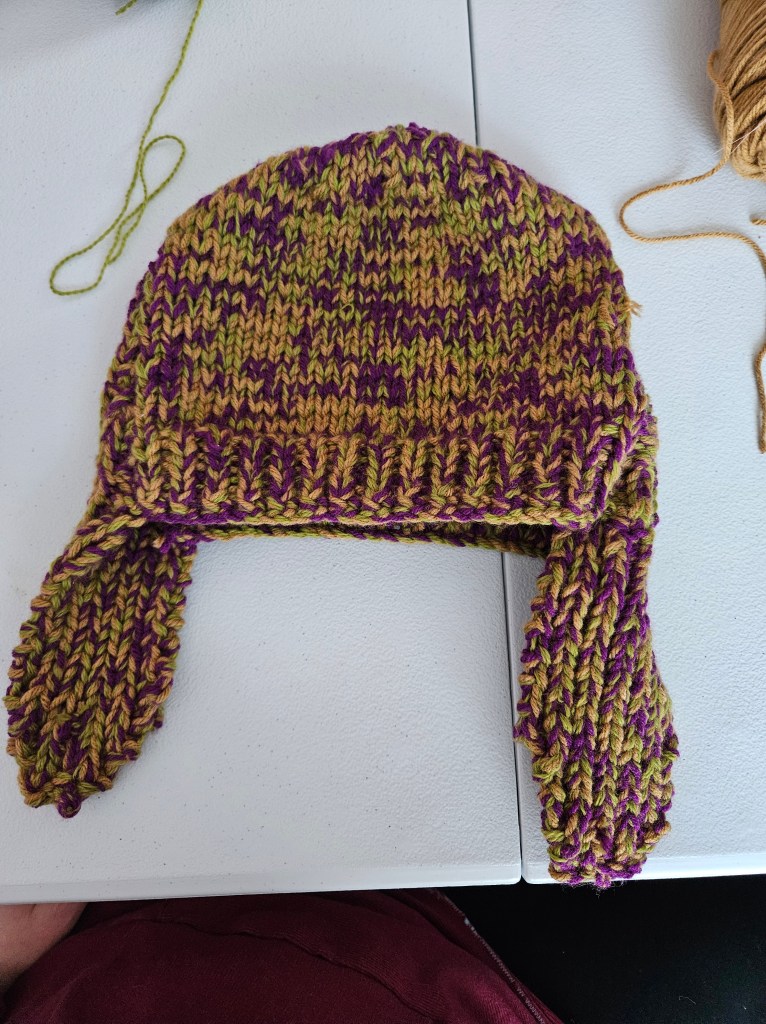
This was the first season I experimented with colorwork in knitting. I made a knit star motif hat from yarn that was leftover from my Magic of Scrap Yarn Cardigan. I made leg warmers, a squirrel motif mitten, and a melange of acrylic and wool to create this ear flap hat that reminds me of medieval European helmets. Although this season of creation was chaotic, I’m not sure if I even included all the projects I worked on, it was a time of great learning. It taught me that fashion design is more than taking raw material and cutting it into a new form.
Great design utilizes new and old. Fashion is about reusing, not wasting, and making things beautiful with careful craftsmanship. It does not mean it needs to be expensive, or need to be made by a great master couturier, it just needs to serve a purpose. We have lost sight of the purpose of fashion, but these projects of upcycling have reminded me that fashion is more than shopping, it is more than consumption, it is about the materials, the vision, the function.
I was gifted a set of skeins. This yarn lot was made from peruvian wool, bulky weight in shades of slate gray, purple, and navy. It was some yardage but not enough to know what to use it for. 500-600 yards always trip me up. It’s close enough to be a garment so my mind wanders down that path, but too much to be an accessory, unless its a really extra, truly special accessory. I used to knit big scarves like that. I think maybe I got burnt out? Or maybe the scarf as a project feels like I am staying stagnant, not trying hard enough to make? I’m uncertain why I see it from a view point of melancholy.
Around the same time I was also passed down other bulky weight yarn, a green and red acrylic, a bright blue of wool-acrylic blend, and an olive green much chunkier fiber of many balls of yarn. More than I knew what to with. They were all random, similar im weight, and sort of related in color story. Aside from the red, the red was too bold.
Have you ever seen those absolutely scrappy sweaters? Those ones, usually worn by someone in Copenhagen or another chic city where the handknit garment is exquisitely random? A varied and unplanned web of yarn scraps, carefully made into a uniform pullover or cardigan. I love them. I pin them to boards. I save the posts. They fill the void of completeness of most projects, whether fabric or yarn, because they gobble up the bits left over, like a quilt, to rid the maker of left over yarn without wasting it.
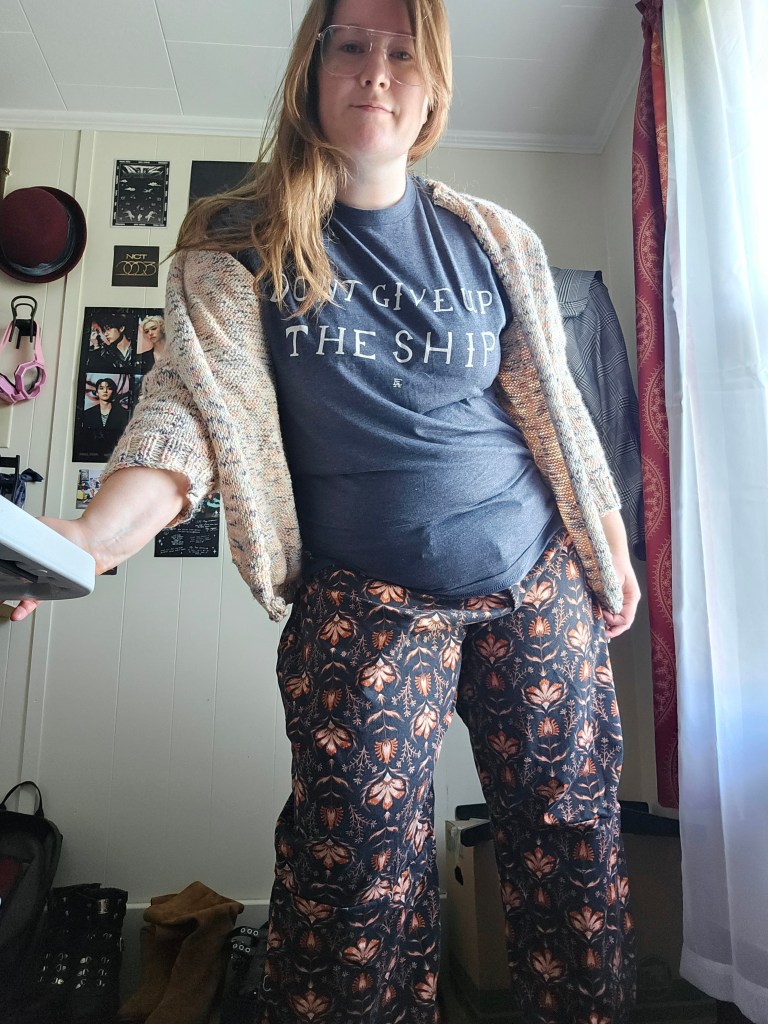
In 2024, I was inspired to start making pants. I had attempted making pants before and they were successful but I struggled to make them feel like more than just a pair of lounge pants. Part of this was caused by not choosing a good bottom-weight fabric, and instead opting for a lightweight summer cotton that draped beautifully but didn’t give me that tailored look. I also tried an ill-fated scuba fabric in 2023 that crashed and burned because my thread tension was off. Enter this checkerboard denim print I purchased at Hobby Lobby. It was denim but lighter, not too heavy to be a problem for my sewing machine. But how would I find the right pattern?
I had a pants pattern in my stash for menswear trousers, that I considered using on this project. It’s a solid pattern and would make a straight-fit pair of jeans, maybe not the style I was going for though. I considered buying a new pattern, but then I fretted that the pattern would fit me weirdly or might not fit at all. The current style in 2024 still featured that tapered-in waist on pants that favor an hourglass figure, not my rectangle athletic build, so should I risk it? A big reason I chose to make pants in the first place was that I was sick of shopping and trying on pants that made me feel weird about my body. The men’s section was my go-to for their up-and-down pattern cutting, compared to the extreme tapering and high waist silhouette of women’s pants. Even low rise was stuck in mid-rise inseam, not the true low waist inseam I was accustomed to in the 2000s and early 2010s that helped me find good-fitting jeans because they favored my shape not the post-bbl world of fashion. I digress, my point is that buying a pattern someone else drafted felt like a risk because the fit is such a personalized thing.
My solution was to take a pair of pants in my wardrobe that I liked the fit of and to trace that pair of pants to gauge the shape. I did this with a pair of jeans that were high waist but had a nice loose fit through the hip and leg for the K-pop-inspired baggy jeans style I was interested in making with this 1990s Vans checker board print. This worked swimmingly! So much so that I traced the jeans onto a piece of brown craft paper for a quick pattern to reach for on future projects.
I chose to record this project, start to finish in video from instead of video to have a memory of how I did this to learn for myself and remember what I did but to also inspire others to try this. Pants are intimidating, especially from a paper or PDF pattern. The written instructions and diagrams have puzzled me in past projects but truly, pants are simple once you see how its done. I wanted to help others feel that freedom to create because at least in my American fashion market, fast fashion has destroyed the craftsmanship of pants and standardized sizing. I referenced this in a previous post, Shaping Up where I had to confront the dressing room terror of things not fitting and seeking to not be defined by my jeans size, when trends and pattern cutting shape shift sizes, but to take control of it on my end and get healthier in 2023.
This pants project was one of the most challenging and rewarding projects of 2024. I faced my fear of sewing denim, inserting pockets, and fastenings. I chose to not attempt a fly into I had more pants sewing experience, instead I planned to make what I knew I could achieve under my skill set. I opted for a side closer with a drawstring to have an adjustable fit since the denim had zero stretch. The denim containing no stretch was a feature I sought because I believed it would be easier to work with as it was my first project of this kind, and I wanted a crisp tailoring from the woven fabric. A key thing to note is that the jeans I used for my template also are non-stretch denim. For an accurate this is paramount or else the project will not work. Either you will cut your project too large or too small. It is also essential to leave a seam allowance on your pattern pieces. When self-drafting it is your responsibility to take charge of the seam allowances and plan ahead.
I messed this up with the crotch line and had to make a quick fix. My fix was a diamond gusset. Popular in women’s leggings, this diamond gusset shape piece allows for greater mobility while maintaining the strength of the seams.
The second challenge I faced was the problem of a narrow bolt and an all-over pattern. This fabric was quite narrow and because I was cautious with my seam allowance, I cut my pieces large. This meant that I was not cutting from the longest side, but the most wide. The pattern pieces were cut out missing length on the leg. My solution was to add on to the bottom and pattern match. It’s easier to match than people say, it just takes patience and intentional sewing. I’m pleased with how seamlessly I got my pieces to match up.
The pockets were a challenge. How do you place them? How do you insert them with strength so the pockets can be used without pulling the pants down or ripping? I chose to place them angled on the sides, aligned with my hips so that they would be practical and not create weird bunching at the front of the pants. No wonky crotch fit here!
Would you make your own pants? I hope I inspired you to get creative and go for it if you are sewing-inclined. Thanks, reader, for joining me once again on this quest to grow my fashion design skills. Have a wonderful day!
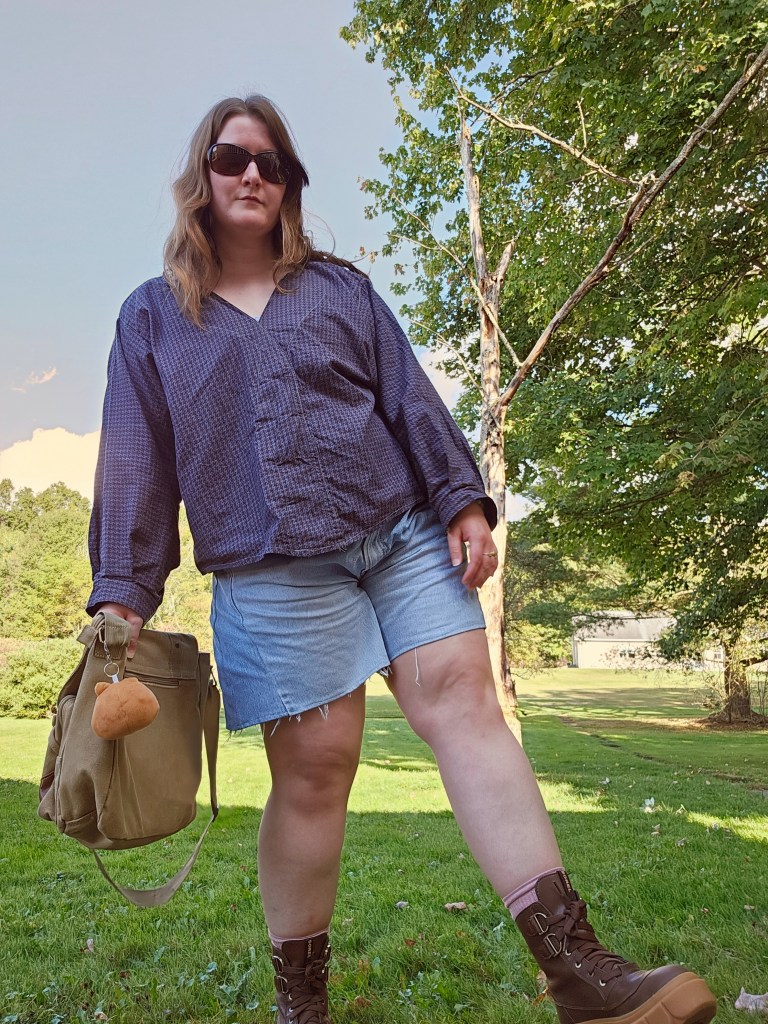
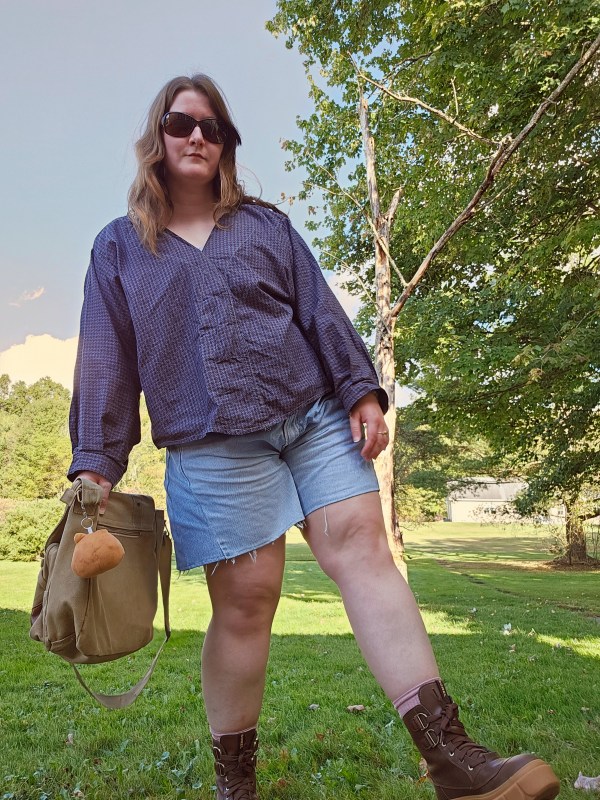
It’s that time of year when I am ready to wear long sleeves but the weather isn’t so convinced. This blouse is a project I made at the end of March 2024-early April 2024, that I completed and put into my closet to wear later. I was excited as soon as it began to cool off for the chance to style this piece! All summer long I’ve worn its sister piece, my denim houndstooth skirt that can also be worn as a dress that was absolutely lovely material to wear. It’s so breathable and has a bit more visual interest than the usual chambray, something I look for. This fabric is from Mood Fabrics, it looks like they no longer carry it which is a shame because I have two pieces from this cut of fabric, and I want to make more.
This piece is special to me because I did something a little different with the collar, I stitched in white the lines of a blazer lapel and lines of a jacket crossing over, for a bit of a formal feel. I originally wanted to make this fabric into a jacket but ran out of material, and I think it worked out for the best. I want to play with this stitching a bit more. It resembles a tailor’s chalk marking to me and I like that.
As the fall progresses and the temperatures continue to drop I’m looking forward to styling this piece with pants, vests, dresses, skirts, boots, scarves, etc. Styling this piece with new color combos excites me. I’ve only paired it with this brown and blue combo so far, which sparks my interest the most. I’d like to try this stitching application on trousers and dresses too with a solid fabric or maybe another pattern.
Do you like contrast stitching? Do you like clothing with a bit of whimsy like this faux blazer collar? Are you a fan of patterns? I like how different we all are and how tastes and preferences make this fashion thing, full of endless creativity. Thank you, dear reader, for stopping by. I hope we meet again soon. ❤
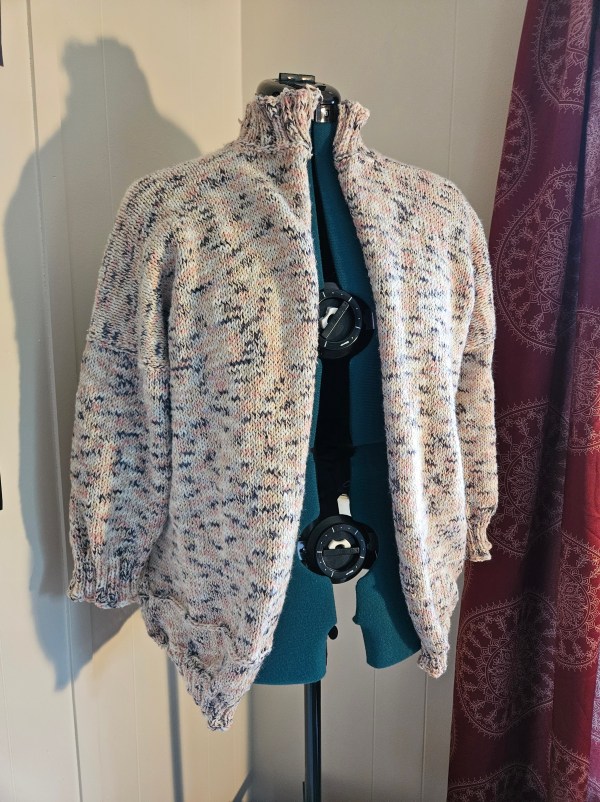
Fall knitting is here! I’ve been working on this cardigan, off and on, amid a myriad of projects since July. As the days have passed, and a slightly cooler air awakens, I am thrilled to say this piece is ready to wear! I used to struggle to finish sweater projects and I would wander along with my yarn, for three or four months, dilly-dallying on a section because I was bored. This led to a lot of plans and not a lot of garments. This is in the past though. 2024 has been the year of sweaters for me, this being my seventh finished sweater this year! And its only September so I’m excited to see what else I can do in the last quarter of the year.
Do you remember what episode of Gilmore Girls this audio clip is from?
This Comfy Cotton Blend yarn from Lion Brand is a 1 to 1 ratio of polyester and cotton and the tag labels this color blend as chai latte. As I knit it, I saw it more as a banana split blizzard color and now in the spooky cloudy light of fall, I see it as candle light with highlights and shadows. Hence the name, the Candle Light Cardigan. I opted for now to keep this as an open cardigan without a button placket. Not out of laziness, but out of my intention to wear it. This was a cardigan I made specifically for the changing seasons, as a piece I could layer over my summer dresses and tops to get a little more wear out of them on these days when it is both cool and warm as the day progresses. I have two more yarn cakes of this color way which I can use to add a button placket at a later time if I change my mind.
I received this yarn as a gift from my mom as she was de-stashing it. It has been a lovely weight to knit and I like how soft it is. My only notes for Lion Brand would be to work on the splitting. This yarn split often as I was knitting which caught on my needles and led to messy stitches. Either because my needle held on to the stitch below or the yarn split and left some of the stitch behind. It was frustrating at times but not impossible to work with. The fabric it made has a good breathability and warmth to it which I was looking for in a changing seasons layering piece. This is a self drafted pattern that I knit on US 7 straight needles.
Happy Fall everyone one! (And Happy Spring to the southern hemisphere!)



























 One Rabbit Riot