If you missed it, I made a Game of Wool Bingo card for episodes 1-3, because in my opinion, this show should not be taken seriously. I’ve given up watching, interacting with recaps, etc. I’m not going to watch beyond episode 3, and that is because hate-watching is validation in the attention economy of 2025. That got me thinking, what do I wish Game of Wool was instead of what it is? Game of Wool, just like Project Runway, I have notes!
No Kits or Internet Dressing Projects
I don’t want any themed-making kits sold per episode. They have been doing this for the episodes I have watched, each week partnering with a big yarn company, honestly making kits that serve no purpose other than a cash grab. I also don’t want to watch weekly episodes with challenges that create useless items. Useless from a practical and technical standpoint.
Crochet and knit swimwear is dumb. You can’t wear it other than for a photo shoot, which places it in the “internet dressing” category. It’s for a photo. It’s not even practical for a music festival. But it does resemble a “Coachella” look.
A crochet deck chair had potential, but it was not used within the materials provided or the time frame.
A dog sweater with a required hat is not kind or practical for dogs. The sweater is comfortable, but the hat is not comfortable for the dog. Again, it is for a photo. Washability was not discussed either.
The mohair sweater was the only challenge that was the closest to being a useful challenge, for design teamwork and wearability, but they ruined it with the ridiculous time frame.
A couch cover is useless, because I have thought about constructing one for my own couch to stash bust, but it’s just not practical for anything other than a showpiece. Which is how they judged it, so a lot of wool was wasted to make a big, useless swath of fabric.
The fair isle vest misrepresented a heritage craft of the region they were filming in. Why not just film a historical film set in the Renaissance, and put the actresses in Victorian corsets without a chemise, tight-laced? Same level of idiocy to be flashy!
This Game of Wool presents everything that late-stage capitalism is in relation to crafting and hobbies, thanks to greed, social media, and the attention economy. The British farmers could use the income; how about sourcing locally? What about sustainability and slow fashion? Yeah, 12-hour challenges do not represent anything but hustle culture. Girl boss, slay!
How Would I Fix It?
Real experts, not these two ladies.
Either all amateurs or all expert contestants. Pick a lane. Either be the Bake-Off or be Project Runway and offer a CFDA mentorship kind of prize.
Bring in a real mentor to help in the wool barn.
Take them on field trips to see wool being processed, dyed, and spun. Same with flax for linen.
Tell the story of why textiles matter and why fair trade for the animals, farmers, and ethical standards matter.
Explain why local matters for the economy and the ecology of the region.
Teach the history of cottage industries.
Teach the history of how knitting has changed the world, such as the development of textile machinery and the creation of the binary code. Essentially, fill in the gap of what Sci Show failed to do.
Set real challenges that teach, showcase the skill of the fiber artists, and show innovation.
Do a challenge that involves unravelling sweaters for yarn and teach the world about this amazing, sustainable possibility.
Task the fiber artists to design patterns, and explore what goes into design and proper pattern writing, because it is a technical skill.
Make things that will be auctioned off for charity.
Bring in people as guest judges who will bring professional connections and opportunities for the fiber artists.
Set realistic deadlines, and slow down the pace of the show. Follow a timeline like Mind of a Chef that explores moments of cooking over an entire season.
Let the makers make, unencumbered by the pace of the internet. Take note from Bernadette Banner and other makers out there that celebrate true craftsmanship and sustainability in the heyday of microplastics.
I’m tired of this show discounting a skill that has been tossed aside as a Grandma hobby since the Industrial Revolution. In these weird and wacky times, slow fashion and an appreciation of craftsmanship are in short supply in the media. This show had such potential! But they are truly chasing the money over integrity.
As a knitter, a crocheter, and a fan of shows such as Bake Off and Project Runway, I am hate watching Game of Wool. Yes, it is that mediocre. It’s frankly, shocking how unlikeable the judges are portrayed, and how blatantly the production is profiting off the design kits, while not openly compensating the designers. It’s been a disappointment for sure. So here’s a bingo card to make your watch through a bit more fun!
For those unfamiliar with him, Jeremy Clarkson is a well-known British TV presenter most famous for his work in the automotive journalist industry. His role as co-creator and host of the Top Gear reboot from 2002 to 2015 relaunched the show and made it a global hit. In 2015, he was fired from the show, and together with co-hosts Richard Hammond and James May, he launched The Grand Tour on Amazon Prime, which debuted in 2016. That series ran for six series before concluding in 2024.
In the background of his career as a TV presenter, Clarkson owned a 1,000-acre working farm in the Cotswolds that he purchased in 2008. Until 2019, he had a contract Farmer running the farm, but that changed when the farmer retired, which led to Clarkson taking over the farm and launching Clarkson’s Farm, also on Amazon Prime, in 2021. Four seasons of the show have aired thus far, with the most recent debuting in May 2025. A fifth series has been ordered, with filming likely done by this time in preparation for a May 2026 premiere.
Lessons Learned From Clarkson’s Farm
When Clarkson’s Farm premiered in June 2021, which covered the 2019-2020 farming season, Jeremy had zero farming experience. Previously, he lived in the farmhouse on the estate and allowed a farm manager to handle everything on the farm. He had to buy equipment, hire farmhands, and learn to operate everything. While it is a loosely-scripted TV series, it is non-fiction and filmed in a documentary style. Plus, because of Jeremy’s honesty, which he’s always been known for, you know you’re getting the truth. He isn’t trying to sugarcoat anything. Due to that, his ambitions, successes, and failures, of which there are plenty, teach you the viewer a lot as Jeremy learns.
Everything Is Farmable
In season 3, Jeremy has the idea of making money from the non-arable portions of his farm. This means turning to the areas that don’t have fields in them and aren’t used for animals. He begins harvesting the blackberries that naturally grow on the property and he buys piglets that can live in the woods on terrain that is too steep to plant in. It’s a reminder that you don’t need the perfectly groomed and idyllic land to grow things. Plants will grow in less-than-perfect soil, and some of the sweetest fruit grows naturally and in the harshest conditions, if you’re willing to go after it.
Farming Struggles
Season 1 starts a trend that has continued in every season: Farming is really hard, and there’s a lot that’s out of farmers’ hands. Weather plays a major role in their livelihood and can dictate a farm’s survival if there are consecutive years of poor weather. At different points, Jeremy has to do with record-breaking floods and historical droughts. Extended cool periods restrict plant growth, while lengthy warm periods scorch them.
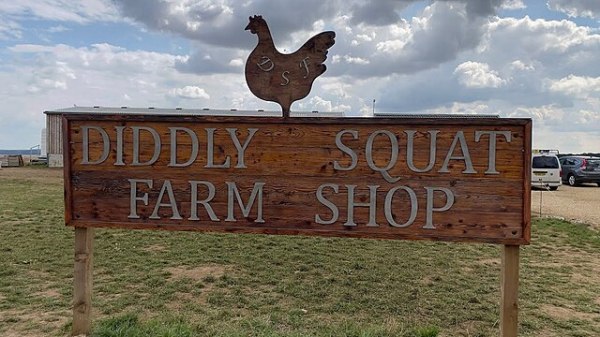
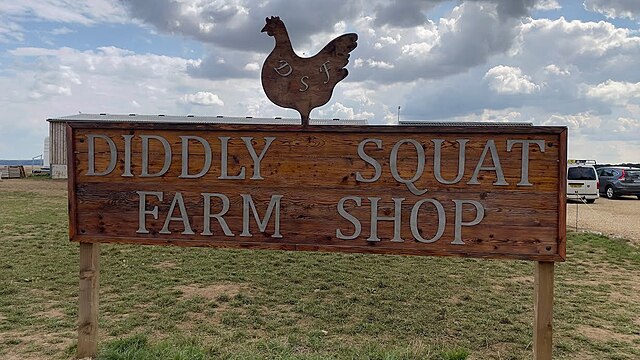
Diddly Squat Farm (aka Jeremy Clarkson’s farm) [kTb, CC BY 3.0 , via Wikimedia Commons]
Aside from weather, there are the emotions that come with becoming attached to animals that have to be butchered or die from natural causes. You always think about how the meat industry is a business, but if you have a heart, like many farmers do, it crushes them each time animals have to be delivered to the abattoir.
Additionally, equipment breaks and needs to be fixed or replaced, prices fluctuate due to global events (natural or political), and governments make decisions that affect your ability to purchase and sell products. It’s not an easy business, but most farmers stick with it because they’re passionate about it.
Gardening this year showed us just a hint of how difficult growing your own food can be. Some of our plants never grew because of the wet spring we had. Then, the summer brought extended periods of drought that stripped the soil of its moisture. It was hard to keep up with everything while also managing life. I can’t imagine how difficult it must be for farmers on a much larger scale.
Sacrificing Production for Long-Term Viability
In seasons 1 and 3, Jeremy makes two decisions that result in a short-term sacrifice with the goal of establishing long-term viability and success. Season 1 consisted of him planting native wildflowers in portions of his arable land to attract pollinators. He also let these areas go unmaintained to allow animals to establish habitats.
In season 3, he brought in well-known musician-turned-farmer Andy Cato who has established a business built on regenerative farming that replenishes soil nutrients while also producing a sellable crop. Much to the disbelief of Jeremy’s farm manager, Kaleb Cooper, Jeremy stuck with this plan, sacrificing that year’s profit potential in order to rebuild the soil that had been stripped of its nutrients following years of commercial farming practices.
Both decisions represented the importance of exchanging short-term opportunities for long-term potential. By dedicating a portion of his land to native growth and flowers, he willingly gave up the possibility of planting a grain that could be sold. It’s similar to season 3. While he still grew a sellable crop, it wasn’t as lucrative as selling a commonly-grown crop, such as rapeseed, wheat, or barley. However, the benefit of reestablishing nutrients in the soil was more important to Jeremy.
Learning New Skills Can Be Difficult
I believe Jeremy was 60 when Clarkson’s Farm debuted. He had spent the majority of his life behind the wheel of cars. He had no idea how to operate tractors, reverse trailers, raise and lower plows, or fill a spreader with seed. There was a major learning curve, especially for someone who has been very successful in his previous endeavors. Thankfully, he surrounded himself with people who do know what they are doing and taught him, albeit with a bit of sarcasm and attitude. He also humbled himself, which was a new path for someone who was famous for his smug face on Top Gear. Eventually, by the end of season 4, Jeremy actually had an idea of what he was doing. He could generally attach a trailer to a tractor by himself and knew what was happening on his farm.
It’s a reminder that regardless of how much experience you have in a field, it’s always difficult to learn a new skill or hobby. In our garden this year, I learned a lot even though I had gardened in the past. We planted vegetables we hadn’t grown before, experienced insects that we hadn’t encountered, and in-ground gardening brought with it new struggles not found with container gardening.
Impact of Clarkson’s Farm
Bringing Attention to the Farmer’s Struggle
With this show, Jeremy has used his massive platform to draw attention to how badly farmers struggle to make it. I think a lot of people believe that farmers have an idealistic agrarian lifestyle that consists of planting in the spring, harvesting in the fall, a bit of fertilizing in between, and being around animals. But that’s not the case. With so many aspects of their lives out of their hands, they are left at the mercy of the weather, economy, governments, and even global pandemics. One bad decision can lead to them losing their farm. They often can’t take risks because the potential to lose everything is too great. A disease can spread throughout their herd of animals and wipe out an entire year’s worth of income. Yes, there is insurance for these kinds of events, but they aren’t guaranteed to pay full value and can take a long time to pay out.
The Importance of Our Food System & How Fragile it Is
By watching Clarkson’s Farm, you realize how delicate our food system is. We have a great system of trade and infrastructure that allows countries to obtain raw materials grown on the other side of the world. But it’s also a system that can easily become imbalanced. One year of bad weather can result in a nation needing to import wheat for flour rather than growing it domestically. An idiot’s war in Ukraine can upset the world’s food security and lead to scarcity in developing nations.
Thus, it’s important to be able to grow stuff domestically when we can while also accepting that we live in a global society now where nations are dependent upon each other. As much as certain people like to complain about how much we import in the United States, we also export a lot of raw materials and goods. A drought in California or the temperature staying below freezing in Florida can upset the world’s agricultural market. It’s extra important to consider what we as individuals and families can grow. It also reflects the importance of having our own gardens when possible. And remember that when a natural disaster occurs or a weather pattern changes, it’s not the farmer’s fault that the prices fluctuate. Most of that is out of their control, and they certainly aren’t seeing an increase in their income.
Governments Set Farmers up to Fail
An unexpected part of the show is Jeremy, Kaleb, and Charlie Ireland’s encounters with the local and federal governments in the United Kingdom. Most of the show so far has featured Jeremy getting told “no” by the local council for everything plan he tries to implement. Restaurant? No. Farm shop? No. Pub? No. It’s like the council doesn’t want to generate revenue for the local community and district. On the federal level, they have to deal with the fallout of Brexit and the UK needing to develop domestic sources of food or pay more than they were before to import the food. The government promised subsidies to British farmers, but that money went away in 2024.
In the United States, the story is the same. The typical farmer has long struggled for survival. Dairy farmers barely make any money for their milk, and it leads to many converting to beef farming. They’re forced to plant corn for ethanol production rather than feed for their animals. Trump’s idiotic “leadership” has led to an increase in the cost of fertilizer and other farm chemicals because many of them are produced outside the U.S. Then, he doubled down on it by cutting or reducing most government aid programs.
Oh, and it gets better because of his decision to round up and deport immigrants who have been peacefully living in the U.S. for years. Those immigrants are often ones that farmers need as hands to operate their farms because Americans are usually too good for that kind of work. Those immigrants are the ones that we were told would be safe because they’re peaceful. It was just another lie that has resulted in Americans being victimized. Tariffs were supposed to result in other countries buying the vegetables we grow here, especially soybeans, but recent articles I’ve read have said that also hasn’t come to fruition. In fact, it’s worse than it was last year. Trump’s tariffs have led to retaliatory tariffs by China, resulting in them no longer buying our soybeans. Those farmers grew a crop that is no longer selling. At every turn, governments are making decisions that hurt their farmers. Leaders may say that they’re trying to help the farmers, but look at their actions. They speak much louder than words.
Clarkson’s Farm Has Been a Roaring Success
In the years since the show debuted, Jeremy has been honored numerous times by the British Farming Society. He has won awards for his work to bring attention to British farmers and the environment they find themselves in. It’s clear that he’s having an impact on the people who matter: the farmers themselves. He’s quick to point out that he is lucky to have other revenue streams, including the show itself, as well as the amount he earned from previous work. Most farmers have that opportunity or savings to fall back on. At the end of season 1, he gave the honest assessment that the farm couldn’t have continued without those other income sources.
A lot of people hate Jeremy Clarkson due to his brashness and how opinionated he is. But he has always been honest, even if you don’t like his delivery. That transparency is really refreshing in a society where things are masked and people make content just to generate clicks and views. Jeremy has become the voice of the farmer in the United Kingdom, and here in the United States, I think we should adopt him as ours as well. He speaks the truth and his dedication to finding innovative ways to farm is inspiration. I know that after watching the show, I wanted to do everything I could to be more agrarian. Gardening isn’t farming, but it’s at least related to it. They’re cousins. If you haven’t watched Clarkson’s Farm, I urge you to give it a go. It’s not a glamorous portrayal by any means, but it’s honest. And that’s what we need right now.
I’m currently watching the newest season of The Great British Bake Off, and it is bringing back wonderful memories from my childhood, thanks to one special contestant – Iain Ross. Iain is from Belfast, Northern Ireland, and his Irish charm reminds me of my trip to Ireland as a kid. He reminds me of the people I met, including my family members who live in County Antrim. He reminds me of my grandma, Florence, and my Gormley family tree. But I also remember the wonder of exploring this place called Ireland (and Northern Ireland) as an 8-year-old kid, who heard the legends of the places we saw, and found the stories truly magical.
Now, for political reasons, I wasn’t able to see Belfast due to some tensions around Orangemen’s Day. But there were lots of other cities and sites were got to see. There were stories of Dunluce Castle’s kitchen falling into the sea during a party. That was probably true. There are the ruins of tall towers, made to hide in safety from Viking raids, and also historical. But then there were the stories that lean into the fantastical, like the story of Finn MacCool and the Giant’s Causeway.
I had forgotten about the magical origin story of Giant’s Causeway until Iain turned the story into a pastry sculpture for the showstopper round. Finn MacCool, also known as Fionn ma Cumhaill in Gaelic, led a band of mythical warriors called the Fianna. Now, a giant Finn was in a rivalry with another giant in Scotland called Benandonner. To reach him, Finn created the causeway on the coast of County Antrim, which faces Scotland’s coast across the Irish Sea. When Finn saw how big Benandonner, standing in the distance across the sea, Finn decided this might not be a wise idea. Instead, Finn fled to his house, where he hatched a clever plan. He asked his wife Oonagh, to help him hide himself under a blanket, to disguise himself as a baby. Benandonner passed across the sea on the causeway, determined to settle the fight with Finn. He knocked on the door, but instead of Finn, he was greeted by Oonagh and a rather large sleeping baby, which Oonagh introduced as her son, Oisin. This terrified Benandonner. What could his father look like if this were the size of the baby? Benandonner fled back to Scotland, thwarted by the cleverness of Finn MacCool. In his haste, Benandonner ripped up the Causeway so that remnants only remain on the coast of Antrim, at the Giant’s Causeway site, and on the Scottish island of Staffa at the Fingal’s Cave site.
We know now that the hexagonal basalt rocks are evidence of volcanic eruptions that formed the Causeway in Ireland, but isn’t the creativity of my ancestors better? This story is one of my favorites. I may have been able to see through Santa Claus, but this filled me with the possibilities of a land where giants and magic roamed, and it filled me with a sense of wonder to exist in this place of extraordinary things. That’s what I began to explore in Udal Cuain and what continues to bring me back to Halloween every year – Samhain. The original celebration from Ireland.
Have you ever been to Giant’s Causeway? Did you know about the myth, and what do you think of it?
In August, Project Runway returned under a new network and reshuffled the format, hosts, and challenges to make a show I think was actually okay. Compared to where the show was left on Bravo in 2023, I think bringing back Heidi Klum was a good choice compared to the choice of Karlie Kloss, whom I didn’t see as an appropriate casting choice for a role that requires personality and colorfulness. It was boring. So were the new judges. The only new casting decision I was excited about at the time was Christian Siriano, my ult bias from the original show. So what was the good and the not-so-good, in my opinion, of season 21? And how has the show changed, for the better, yet in some ways, become less about fashion? These are my thoughts on my beloved Project Runway in 2025.
The Evolution of Project Runway
The original show premiered on Bravo in 2004 with host Heidi Klum, mentor Tim Gunn, and judges Nina Garcia and Michael Kors. It was filmed in NYC, at Parsons The New School for Design, where Tim was on staff, and the competition culminated in three finalists showing their work at NYFW Bryant Park. This format remained for the first five seasons, season four featuring Christian Siriano, who won his season.
After season 5, the show switched networks to Lifetime, where it remained until season 17. This change for season 6 also changed the location, with the show being filmed in Los Angeles at the FIDM campus until the finale, which was held at NYFW. Season 7 returned to Parsons and NYC, where the show stayed the course until season 11, when Zac Posen replaced Michael Kors. Zac Posen, Nina Garcia, Tim Gunn, and Heidi Klum remained through season 16.
Because of Harvey Swinestein being a producer of the show, and #Metoo movement addressing his depravity, Project Runway changed hands and returned to Bravo for season 17, sans the original cast. Karlie Kloss was the new Heidi, Christian Siriano the new Tim, and the judges were swapped for Elaine Welteroth and Brandon Maxwell.
The show remained this way through season 20, until the show changed again, switching to Freeform as its network, returning Heidi Klum to the host position, retaining Christian Siriano as mentor, and returning Nina Garcia to judge, with a new addition of Law Roach as the second judge. It’s a lot of change.
The Three Fashion Musketeers
When Project Runway moved back to Bravo in 2019, it was not the only fashion competition show in the American market; Netflix launched Next in Fashion for two seasons. Finally, Tim Gunn and Heidi Klum launched their own show on Amazon Prime, called Making the Cut, which was the equivalent of the original trio of Top Gear UK launching The Grand Tour on Amazon.
In my memory, from watching these three shows, Project Runway felt like a shell, undercut by Making the Cut, but losing the carefree fun of what Next in Fashion captured with hosts Alexa Chung and Tan France. All this change made me question what was the purpose of these shows anymore? With the rise of fast fashion and social media, it seemed like a relic. I could watch fashion design content on YouTube with varying points of view, to decide for myself what I thought was good fashion. Why would I care about the judges or the magazines anymore?
Project Runway in 2025
So now, six years later, what did the new Project Runway feel like? To be honest, it doesn’t have its own identity anymore, in my opinion. This could easily be RuPaul’s Drag Race with the amount of drama they packed into these episodes. The original format of challenge, runway, judging, and elimination was gone. Now you find out who goes home next week, which was unnecessary for me. I am tuning in each week, don’t make me have to, I want to, so just tell me who goes home so that the point of the show doesn’t seem like it’s an MTV reality show. It was hard to remember what challenge they were judging from last week. In some ways, I didn’t care; I just wanted the new challenge to be presented.
The contestants fought a lot, with Jesus and Veejay being a near constant. It was too much, and that leads me into one of my biggest gripes with the new season of the show. The editing was off. When Veejay was announced as the season 21 winner, I was confused. The final two eliminations before the finale were also edited strangely, because each time it seemed as though they were not going to keep Veejay, the judges’ critiques reflected this, and so it created this uncomfortable tension for the final three episodes, where it seemed like they were keeping Veejay in the competition so that she would become the first trans winner because of all the fighting.
That frustrated me because Veejay was doing good work, but then why make it seem like she was at the bottom, if the judges saw her work in high regard? It was really awkward. So was the out-of-control arguing between Veejay and the Estrada brothers, which I think the producers wrongfully kept in for a toxic series of episodes that is problematic, and I thought was manipulative. I wish for everyone’s sake that they would have paused the competition in a Tim Gunn fashion to unify the contestants again, because I liked this group of people. I can see where Jesus was coming from, and I can understand how bullying from the past can bring up past hurt, like Veejay expressed.
This is where the show shifted for me into a trash television show, such as Teen Mom, The Challenge, Real Housewives, or Keeping up with the Kardashians. Finally, the omission of NYFW for a quick 6-piece collection immediately after filming the bulk of the show felt lame. Every collection for me was a letdown, and this was the production’s fault once again. 8 out of 9 challenges were one-day challenges, so every other day, they were creating a brand new garment; it’s a recipe for burnout and mediocrity. The final runway show was like a fart instead of a spectacle of creativity, and it was underwhelming.
I hope they get a bigger budget for season 22 because the show has captured its thing again, but the finale and shift to the focus on drama over scenes from the workroom was a poor choice in my opinion. When I think of good reality competitions that have carried on throughout the decades, Survivor and Great British Baking Show are great examples that I may dive into in a part two.
Have you ever watched Project Runway? Did you think it was about planes? That’s what I first thought when I heard about the show in the mid-2000s.
If there is a new fall tradition from the 2020s, it must be Gilmore Girls. Maybe it’s the 20 year rule of trend cycles? Or the power of a tiktok phenomena? But this little show, that was niche throughout my time as a teen and into my twenties, is now a cornerstone of American autumnal celebration in our modern age.
I am honestly thrilled to see this story and its characters embraced by a new generation. It was a connecting point for me, my mom, and a few of our close friends. For a while it felt like a secret club, always disappointing me when I would make a new friend and ask – do you like Gilmore Girls? They shoot me a look of puzzlement, like it was a figment of my imagination. It was my comfort show throughout my teens, and finally others are finding its charm!
The only thing that I don’t if I agree with, is Gilmore Girls being crowned as a fall show when I believe it is a show that showcases the seasons. I guess, that’s why the follow up series – A Year In the Life had a seasonal format. At the time I thought it was ASP doing her own thing again, and it might be, but it may also be, artistic focal point to bring attention to what the show’s storytelling is rooted in – all four seasons.
So I took a look at the episodes, season by season, and tallied fall, winter, spring, and summer. I did not count Season 7 because creators, Amy Sherman Palladino and Daniel Palladino, departed after season six.
Fall: 38 episodes
Winter: 43 episodes
Spring: 28 episodes
Summer: 20 episodes
This is why I don’t understand the hype for this being solely a “fall” show. It is a winter show. A spring show. It is a story about four seasons. I’m happy people are finding joy in something that has brought me so much enjoyment. I just don’t agree that Gilmore Girls is only a fall show. I think it sells a show short, when it celebrates the seasons better than most.
Do you agree? Have you ever watched Gilmore Girls? What is your favorite way to celebrate the beginning of fall?
The biggest trend I think I’ve seen this year is the sentiment that everything feels boring right now. Whether it is fashion, film, or books, the art of storytelling is supposedly dead. This phenomenon has even crept into my unpredictable and exciting world of K-pop, and up until yesterday, I’d say I agreed. But as I sit here, I would like to put forth a different thesis.
Escapism from the Super Massive Blackhole
What if everything feels boring because you are running on empty? This year was the first time since discovering K-pop in 2022 that I felt bored and indifferent to my favorite bands. Some of this was due to outside forces beyond my control, like controversies, military service, and straight-up evil in the case of Taeil. Yet, some of this boredom, I believe, was caused by how much I was leaning on these safe spaces to find joy when nothing felt joyful or safe. There has been a constant pulse of uncertainty, like tectonic tremors, making us all question the point of it all. There is such a dreary air. A hopelessness, especially in people my age and younger, who are not able to reach milestones due to broken systems. Since I discovered the band Stray Kids, I run to their music for a safe place. But in 2025, I had stretches of time where even SKZ had no appeal. I had listened to every release over and over again until even their most addictive tracks had no appeal. I couldn’t believe how much I was craving a new album until a week before Karma released. As the week progressed, I could feel a hunger for a happy distraction. This year has been the first time my usual pick-me-ups have felt numb, and I wonder if one prong of this boredom we seem to be feeling isn’t coming from this exact situation.
To be honest, I think this could be why K-pop Demon Hunters exploded in popularity; it was new and fun when things seemed darker than ever. Same thing with Twice and their Lollapalooza performance, it was a night where everything felt normal for a second.
Have I Entertained You?
This attention economy is reminding me of that iconic line from Gladiator, and I don’t like what it is doing to art, music, storytelling, fashion, all of it. There is no room to reflect and craft something beautiful. We are pushing things too fast. I’ve been reflecting on this for a while. I see commentary on trends, relating to fashion, which usually goes something like – there is nothing new, everything and nothing is trending, yada, yada, yada. Sprinkle in a bit about clothing quality from the past, and the brain rot of the algorithm, which is killing creativity and subcultures because of a curated vitality. Like it’s a beast unleashed upon modernity, instead of stopping to think critically about it.
It’s obvious after some consideration that making things for vitality is not the same as making something to stand the test of time. Modern romance novels are being created for TikTok vitality first, and quickly, to keep up with the lazy decision of publishing houses to invest in AI over true writers. We blame the current author pool for a lack of creativity instead of holding publishing houses accountable for ruining their reputation through unethical practices. Because, truly, as an author, why would you feel inspired to create a story like Jane Austen when this is the current state of publishing? You could make a true work of art, and be rejected because they would rather steal work to create the same story through AI, or the publisher doesn’t want to take a chance on a good story when the algorithm is fickle and shallow.
Boring People Are Bored
AI is doing exactly what I expected; lazy people are becoming lazier, except that it is currently being rewarded. We used to know how to entertain ourselves. We used to know how to create, enjoy, and take pleasure in things, but I think AI is a snare that is making people boring, and it doesn’t have to. AI is an easy way out of daily life. It can be a friend, a relationship you don’t have to nurture, but is hollow. It can create art, but you will have no artistic skill of your own as a result. It can write you a book, without telling a story. It can create a music video, like JUMP for Blackpink, without any effort from the actual talent, and create a nightmare image of Rose with Jungkook’s facial structure. Do you see the pattern? It’s like cheating your way through school; it produces nothing and wastes precious resources, like time, or in the case of AI, drinking water and electricity.
Cringe > Innovation
What I have seen as the most flagrant accusation of boredom has been the dissonance of innovation and cringe. Let’s take, for example, Ceremony. It’s a song that has no chorus until the end of the song. It’s layered, has high production value, and features something new for Stray Kids and boy band offerings. But what do I see online? It’s awful. Stray Kids are braggy and loud, no talent. K-pop is boring; everything sounds the same. Except, Stray Kids, it’s too experimental. No wait, it sounds like all their other songs, yawn….etc. How can we have the audacity to complain about being bored while we punish bands for taking risks? It’s not just Stray Kids, I have seen similar criticism being launched at Nmixx, NCT, Ateez, Twice, Aespa…the list goes on.
It’s no different when it comes to the world of fiber arts. People complain about how crochet and knitting are getting boring and want new things to make, because everyone is knitting the same things, yet don’t branch out from a few massive pattern makers, like Sari Noorland, Petite Knit, and Andrea Mowry, to name a few. There are so many smaller creators crafting joyful patterns that would disrupt the slump, but no one wants to stand out these days.
I think as this year enters its final act, we should decide what we value more: being entertained? Or being authentic? Do you want to truly discover something new? Do you want to dig deeper for something fresh? It requires us to act, to search, and to participate, because we are allowing ourselves to become boring people, and it is spreading across culture, where it will stay unless we choose to be interesting again. I get it. This year has been demoralizing, and it’s made me feel like giving up many times, but there is always a reason to keep going. What if your big idea is the thing that makes this dull and dreary world sparkle again? You could be the change we need, so stop scrolling and find something that ignites passion in your heart once again!
I have a bad habit, I’ve acquired over the past few years: I bottle things up so people don’t leave me. Hi, I’m Magz and I have a problem. A two-prong issue, actually, I am not processing my feelings, and I am irrationally concerned about rejection. It’s not good. I was taught to believe by family and society that it was because of divorce, specifically placing the blame on my dad, and to be honest, I believed that for a long time. But that answer leaves all of us who have experienced that or who fear rejection in this weird pseudo-reality of things being out of our control, which doesn’t help. It turns the intensity up all while limiting personal growth. How can you move on if this is baked into your personality, right? I mean, everyone who knows your story will instantly know your flaws – your parent or parents “didn’t love you enough” to stick around. Yeah, this is a toxic bunch of nonsense.
So what has helped me get more clarity on this, honestly, is learning about what makes my mind tick and how I can work with myself to be healthier. For me specifically, learning about neurodivergence, and specifically the possibility of undiagnosed autism or adhd, has helped me understand that there might be more to my penchant for brutal honesty than just being an off-putting person or a bad person. It might be that my brain simply processes differently, yet because I want to fit in – masking, I fall into people-pleasing patterns to “fit in” with those around me. Similar to learning about high-masking autism in females, with adhd, there is a sensitivity to rejection and difficulty with emotional regulation that makes processing the rejection more difficult. I can see these in the ways I have interacted with people throughout my life, especially family members.
I get stuck in these camps of either feeling the need to be brutally honest, especially if I feel an emotional meltdown coming on from bottling everything up, or I clam up and shove it down, no matter how much it hurts to “please” the person. All this does is create a cycle of emotional repression, overwhelm, and meltdown behind the scenes. Loneliness, anger, bitterness, shame, fear of rejection, and pain. This is not what a healthy person looks like.
For too long, I’ve mistaken being “tough” with being healthy. It’s been the one-two punch of finding Elena Carroll’s reflective essays and watching Scrubs for these to start clicking in my brain. I find myself pinballing between being like Dr. Dorian, who lets people like Elliott walk all over him, and Dr. Cox, who shoves it all down and sinks into a pit of loneliness behind the shadows because dealing with my problems makes me feel uncomfortable.
My constant dysfunctional relationship, which gets more unhinged every year, my relationship with my mom is the place where I see all these problematic habits come to the surface. I will bottle something up for a decade, afraid of the confrontation, and then one day I will just explode about something else. To be fair, when I do blow up, it’s usually after my mom has contributed to my anger with a gem of guilt or a little nugget of criticism on some part of my personality. Like recently, I was told she was intentionally withholding her health updates after two concerning ER visits, because I am too “sensitive” to handle anything after I told her it has been scary thinking of being sick because I love her. Yep, I see where I have learned to shove everything down – you can’t be weak and express emotions, that’s for losers.
So where does that leave me? Well, I can either choose Option #1 – be honest about my frustrations and stand up for myself, which comes with consequences, Option #2 – bottle it up and fake a smile, all while my shoulders knit themselves into a stress knot and my jaw clenches like a bear trap, Option #3 – I avoid the relationship for months at a time and pretend like nothing happened. Lately, I’ve been thinking, why can’t I just be honest as it comes, instead of bottling up to the point where I am furious? I don’t live there anymore, there are no consequences for being honest gently, and in the moment that I disagree? That would be healthier, and somehow, over all these years, I forgot how to do this. Because adulthood is lonely. Grief is lonely. Sometimes that fear of rejection and people pleasing is all that you crave just to keep a relationship with a loved one steady, because you miss how easy it was when you were a kid.
I think health, though, might be more important than the illusion of peace, because I have not been managing stress well over the last ten years. My mental health took a toll, and so did my physical health. I’ve stored so much stress in my body, pretending I was happy about things that hurt me because I didn’t want to hear how I was different, not enough like my mom’s family, or weak for being sensitive, or a bad person for getting angry sometimes. I’ve had the same knot at the base of my neck for 5 years, which is not healthy at all. So what am I doing with all these revelations about who I am and what is healthy and what is not? I am slowly shifting through it. I’m taking space and a break from some of my more trying family relationships to get this stress worked out of my body and find my calm again. My husband, friends, and my beloved bun deserve better than for me to let things out of my control take a toll on my mental and physical health. Especially when they are the ones who pick up the pieces when I fall apart.
How do you manage stress? Do you struggle with people pleasing or bottling up emotions? Have people ever told you to change who you are to fit their standards?
This post is inspired by current Wuthering Heights and Jane Austen adaptation discourse, in particular, the thoughtful discussion of the Regency Rumours podcast that sparked my musings. Which novels would I love to see adapted that have not been made into a movie or streaming show?
My list will be organized by author, since for some, there are multiple books I am featuring. I will try my hardest to tease the story without giving spoilers so that you can enjoy these stories on your own. Let’s jump in!
Elizabeth Lim
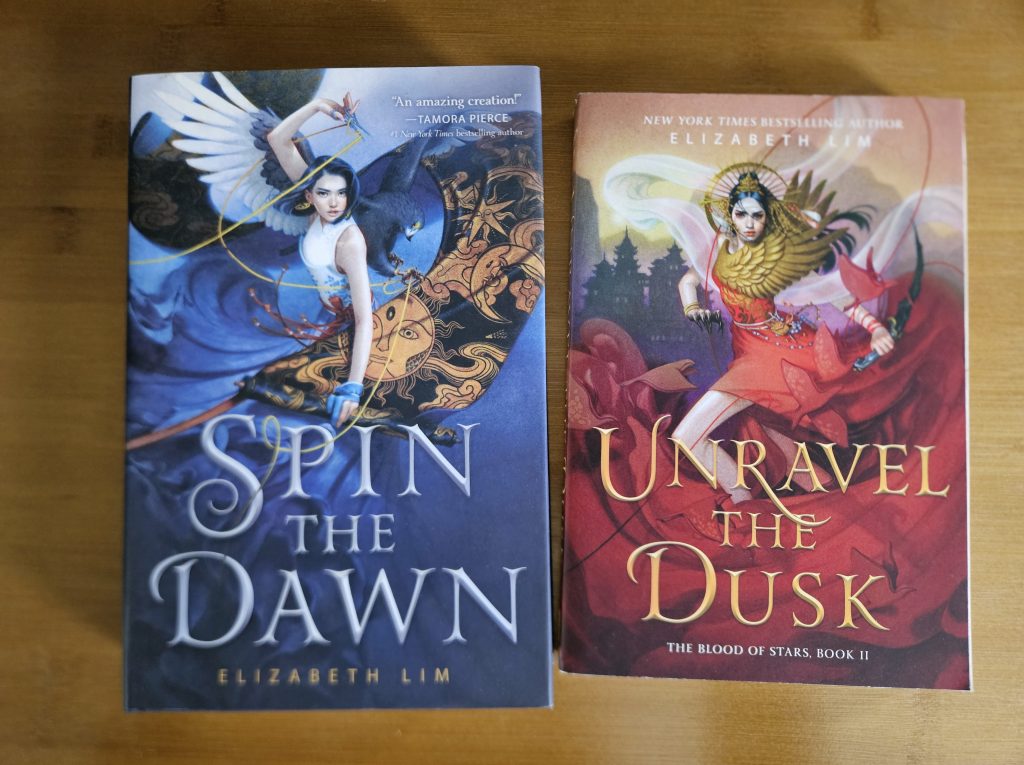
It started with Spin the Dawn, concluding with Unravel the Dusk. Now I find myself fully enveloped in another masterpiece of Chinese fairytale-inspired adventure fantasy – Six Crimson Cranes. The sequel, The Dragon’s Promise, and the prequel, Her Radiant Curse.
Why? These stories have imagination, action, twists, and flawed characters that experience growth. They live in both a fantastical world and also feel tangible to our everyday life.. Although magic is a driving force, the experiences of the plot feel incredibly human. Family, love, freedom, and facing down injustice, these are real-world issues placed in a far-off land.
I think these stories need grandeur, like C-dramas and the imagination of other magical favorites, like the school in Scotland with the magicians. Spin the Dawn features sewing, a dangerous competition, a perilous journey, a curse, a Kingdom in danger, and a main character facing crushing grief. Six Crimson Cranes features the confusion of adulthood, the consequences of our choices, looming corruption, and the fear of losing it all.
I think these two duologies – The Blood of the Stars duology (Spin the Dawn/Unravel the Dusk) and Six Crimson Cranes duology (Six Crimson Cranes/The Dragon’s Promise) would make excellent mini-series. Like the concise one or two-season format of K-Drama shows. With her Radiant Curse either being a separate show or a movie. I believe Elizabeth’s work will be beloved for generations to come for her imagination, unique settings, and plot pacing. Please, someone, adapt these stories and adapt them well.
Judy I. Lin
You know what really bugs me about the creative world? How can we can’t have nice things. That we compare and put down. I think it is idiotic for readers to compare Lin and Lim for their work of reimagining Chinese fairytales when Judy I. Lin created a magic system unlike anything I’ve encountered before – tea. But some people like to yuck my yum and say Lin is a lesser Lim, and to that I say, you’re missing out. A Magic Steeped in Poison and A Venom Dark and Sweet would translate well to film. Think Avatar: The Last Airbender and Murder on the Orient Express, but in a Chinese fairy tale. These books sing!
What if you needed to solve a murder, while sneaking into a national competition, with a skill you have to master overnight, and you have an undeniable connection with a person who may or may not be responsible for your demise? It’s just so dang good.
Susanna Kearsley
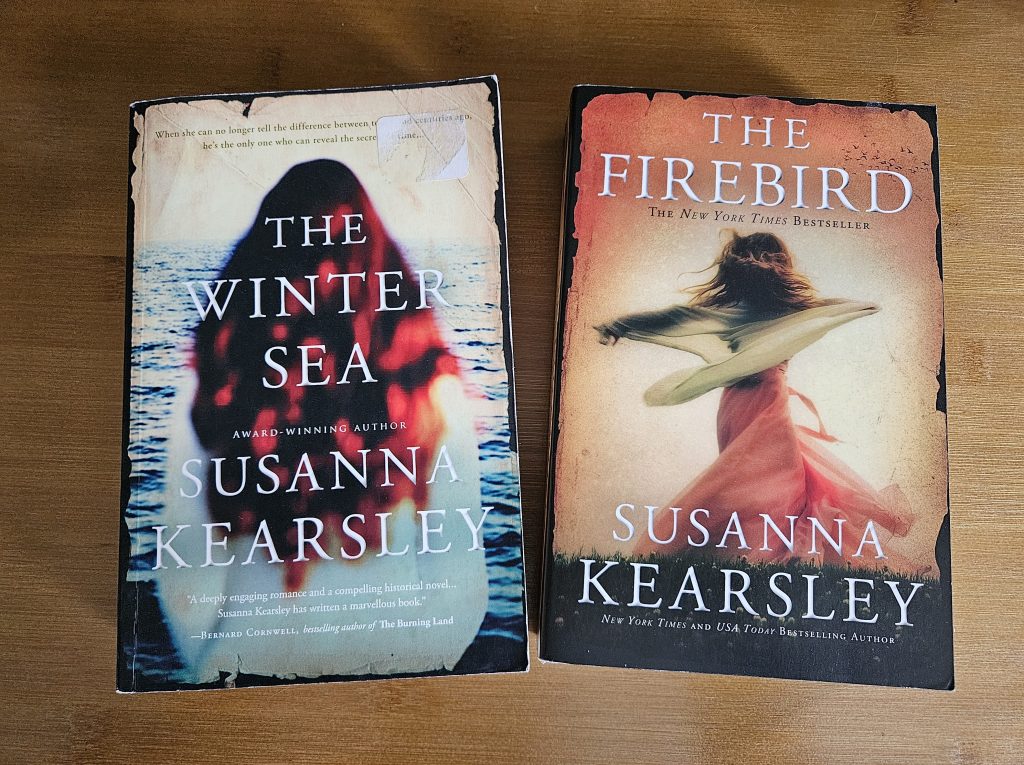
I have read most of Susanna Kearsley’s body of work. She is my favorite historical fiction author. Her romance-filled stories are closed-door, but charismatic, like a satisfying slow burn of a Jane Austen novel. The first book I encountered of her work was The Shadowy Horse, set near Hadrian’s Wall at an archaeology dig. This book feels a bit like Jurassic Park, Indiana Jones, and The Banshees of Inisherin. A movie would be great for a Halloween watch.
What about a cozy Cornwall mystery? Featuring a cozy rom-com protagonist, like a Kathleen Kelly who has a connection to the town and the house she rents that is stronger than she would ever imagine. The romance in this one gets me every time. Will they actually get together?! I’ve read this multiple times, and I am still on the edge of my seat. A movie of this would be lovely.
What about the Jacobean period, vaguely pirate in nature? What about romance, a castle, and the intrigue of spies? How about a two-book arc over several points of view, generations apart? Could history truly come to life from the relics of the past? I wish I could weave a story together with the same ease as Susanna can. This would be excellent as a mini-series with elaborate costumes.
With the rise of historical dramas in Hollywood and beyond, I think Susanna Kearsley’s stories should be shared in this way. Fans of Outlander would be intrigued, as well as Austenites, Bridgerton fans, and costume lovers.
Kayla Cagan
Were you an art kid? Did your parents ever discourage you from pursuing a career built on your artistic passions? Has your home life been disrupted by that one relative who is selfish and dysfunctional? Have you ever felt trapped in your hometown?
Piper Perish and its sequel, Art Boss, will pull on your heartstrings. The desire to pursue our dreams is a journey we can all empathize with. This coming-of-age story would make a great two-part movie set or a small mini-series. The art, the fashion, the settings! It could be fierce.
Annie Gray
Adapt a cookbook? With a historical interpreter. Yas queen. Mrs. Crocombe is that girl. She ran the kitchen at Audley End in the mid to late Victorian Era, a position also held by men. It was a great responsibility to prepare, plan, and manage the food systems on site and beyond in Audley End’s local produce. She had to keep up with trends and changing fancies, all while providing elegant meals for the family and their guests. In addition, cooking for the staff.
The restaurant world is a wonderful canvas to build a show upon. This would appeal to fans of Downton Abbey, The Mind of A Chef, The Bear, Great British Baking Show, and Chef’s Table.
Elizabeth Kostova
Alright, this last book is technically in progress. The rights have been sold, but nothing has moved forward for a movie or series. This could be a horror masterpiece.
This story pulls me in, to the point of drowning in the world that feels too real for comfort. It is Dracula, unlike the world has seen him before. It needs to be played out on screen.











 One Rabbit Riot
