Sewing Stretch Fabric Struggles

Do you ever spend time learning a skill just to forget it when you need to use it? That’s me. That’s how I sew stretch fabric on my machine. I just jump in and completely forget that I need to first properly adjust the tension and stitch type or else mayhem ensues. Mayhem like my machine having a nice little snack on my fabric.

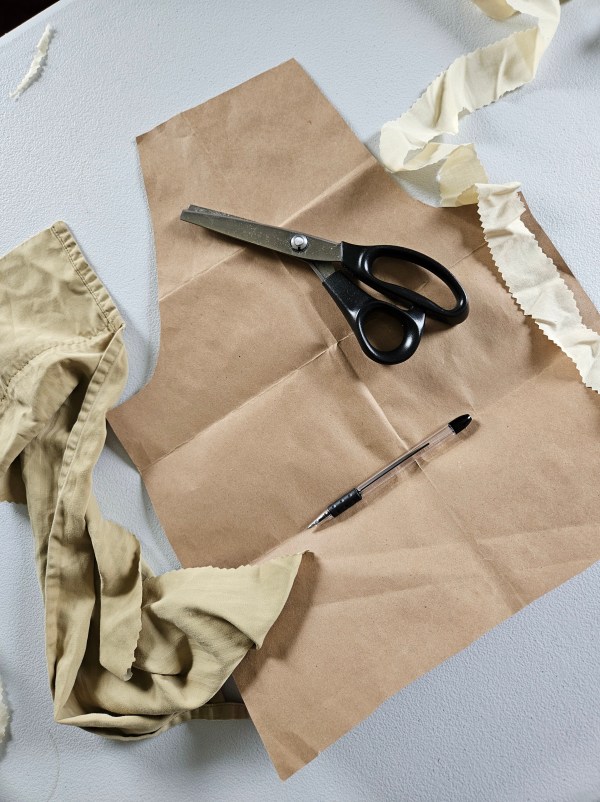
Sometimes the machine gets extra bold and drags the hem under into the bobbin’s domain, jamming the machine. This is what I am talking about:

In the moment of panic, when I realize the fabric is stuck down in the machine a few thoughts dance through my mind.

  • Why didn’t you sew this by hand?!
  • You did it, you finally broke the machine you maniac!!
  • It’s ripped to shreds, isn’t it? The whole project might be gone in a moment.
  • This machine hates me. How do other people sew so effortlessly??

But it’s not the machine’s fault and it’s not the fabric that caused this, and it’s not even my fault. It’s morally neutral, it’s an accident and a learning experience to grow from!

As I was writing this, I caught myself crafting sentences to describe the situation with very negative and demeaning language towards myself for making a simple mistake. (A mistake that once I freed the fabric from the machine, I corrected and carried on to make the finished garment. The tight thread tension actually made a happy accident, a lettuce edge hem.)

It is not something that I should hold with such severity against myself that I internally tell myself I am an idiot, a lousy sewist, or useless.

Because how would I respond to hearing someone say that to another person? I would be disappointed in the speaker and make them stop.

How would I respond if I spoke with such aggression to another person? I would be ashamed.

I am learning through these sewing setbacks to temper the internal monologue and be a more gentle and loving person towards myself, to maintain better mental health, and establish the practice in my mind so that I can be a source of gentleness and kindness to others.

How do you speak towards yourself and others when they make a mistake?

Sewist Reacts: What In the Vintage Inspiration Is This?!

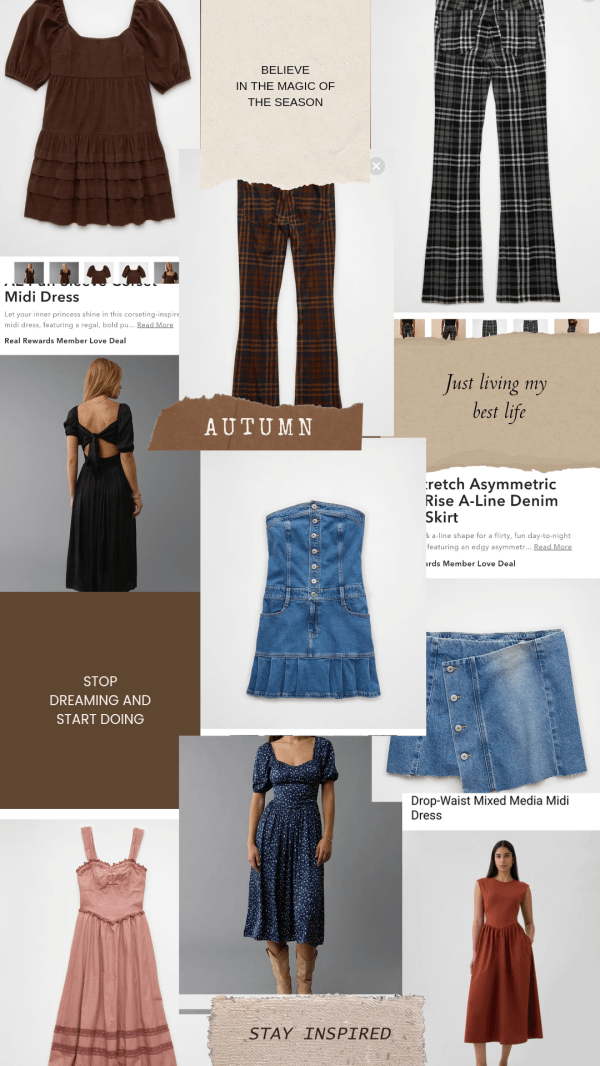
Fast fashion is a problem for many reasons. The overconsumption. The exploitation of workers. The lack of quality in construction and fabric. Polluting water sources and landfills. Ruining thrift stores with Shein products. But one I hadn’t considered was how these fast fashion brands are watering down design to the point that they are misrepresenting fashion terms like corset, choosing the wrong fabrics for construction, and not even trying to pattern match. It’s becoming nonsensical!

Fall fashion trends and fall sales are in full swing here in the US. I’m seeing ads everywhere, in between Instagram stories, in my email inbox, on YouTube, on television advertisements, etc. It’s bonkers! You would think that we had empty closets and had never owned cold-weather clothing before! Each season you need to completely restock your wardrobe! Buy, buy, buy!

So I caved and I started to look at these websites. Looked, not purchased. That is the key here because I found some wacky things masquerading as vintage and historical-inspired pieces of fashion. These fashion brands are two that are quite popular in my neck of the woods.

The Gap does Medieval Plate Armor

A brand I get a lot of ads from, which amuses me because I don’t like this brand, is the Gap. I probably see ads because I do buy occasionally from Old Navy and they are owned by the same company. If only the Gap knew how I feel about them, they would realize it is a lost cause. I think that the Gap cuts its patterns weirdly, is expensive for the quality, and is dry toast in terms of its aesthetic. So I wasn’t surprised to see a rather vanilla dress. What surprised me were the style lines of this dress and the fabric they chose.

This dress looks inspired by 16th-century plate armor, a breastplate specifically, but it is made out of what I would guess is a stretch jersey because there is no structure or fastenings in the photos. So a rigid garment, being made out of a stretch shapeless fabric, just isn’t right. There is something off about the shape of the bodice and how it hangs on the body. This is a missed opportunity. I think they could have added boning channels or made this out of a stiff woven fabric. Maybe a coordinating vest? Vests have come back in popularity. It’s a misrepresentation of the historical garment they were inspired by and as a dress historian, it bugs me. This dress is already an attempt at thinking outside the box, so why not do it properly and celebrate the design? 🙂

There is an exhibit at the Met, linked above showing a historical example of what I am talking about, featuring an exhibit of 16th-century armor with beautifully sculpted lines.

A Corset That is Not a Corset

This dress is not a corset. Maybe it is a Victoria’s Secret definition of a corset with the stretch smocking on the back, but this is not in form or function, what a corset is or was. The corset was a supportive undergarment, a foundation garment as they were called that shaped the body and supported the bust according to the specific standard of beauty at the time. The first iteration of the corset appeared in the 16th century, called a pair of bodies. This was followed by stays in the 17th and 18th centuries and the transition to the corset in the 19th century which held popularity until the 1920s when the corset began to fall out of fashion for other types of garments. This is a very quick overview and I probably oversimplified this so I would recommend checking out historical costuming YouTube for a better reference, also the V&A has an online exhibit featuring Victorian corsetry.

Because of the lack of familiarity, we have with the corset in our 21st-century mind, we tend to slap the word corset on any shape that looks like a formed bodice, which is what this is a bodice cut to accentuate the waist but will fall flat because it is not made with any structure to give the garment a shape. There is no lacing, cording, fake baleen, or steel to give this any shape beyond the body that will wear it. It is all smoke and mirrors. But that bugs me, because American Eagle, the maker of this dress, is a popular teenage and young adult brand that can shape the minds of the future by their experience with clothing!

So why not ride this wave of aesthetic TikTok dressing and go full-on corsetry? Tight lacing is not required, nor was it popular for most women historically, except for the Kim Kardashians of antiquity who did it for the spectacle, people of the past needed to move and breathe just like us so it could be a corseted bodice, and not be controversial! It’s just a thought. I do appreciate the trim on the skirt, it is very 1890s, and I like it.

This dress has the same problem, this is not a corset and this is barely a puff sleeve. This is bad marketing and bad fashion education. You could never corset an open-back dress and to puff a sleeve you need quite a lot of volume and possibly some Tarleton to help keep the sleeves voluminous. The Fashion Institute of Technology has an online exhibit featuring the Gigot sleeve, a beautifully puffed historical design.

When it comes to historical dress there are so many cool designs from the past, and with the amount of research that exists and abilities to connect through technology, there are endless ways to be inspired from the past but not screw it up. I think we should embrace the gift we have of historical dress knowledge and technology like sewing machines, the internet, etc to make something beautiful. These companies have so many resources at their disposal, that I wish they would try a bit harder to make good clothing. But alas, they are fast fashion, and this is one of the worst fast fashion blunders I have seen from these two brands, the Gap and American Eagle until I found this one pair of plaid pants, but that is another story!

Thank you, reader, for going on this adventure into historical dress with me. If you are as tired as I am of the current state of fashion, I encourage you to learn how to sew! It’s the best hack I’ve found.

Slow It Down, Make It Bouncy

I think the only thing bouncy here is me feeling like I’m bouncing off the walls of my creative box after setting a goal in 2024. This goal was to get serious about my sewing and knitting Instagram account, use the creator metric tools, and learn how to use my digital marketing background to create engagement.

The Focus

I wanted a lifestyle change, an actual commitment to taking this seriously and it has worked. Follower count is a garbage stat on Instagram as mine hops around like a binkying rabbit, but engagement, interactions, and reach have been insightful tools to see how this can grow and what I should be working towards.

Now that it is Q4, um, I am creatively burnt out. So many reels, so much video recording, so many moments having to stare at my own face and body because I am the model, and try not to get body dysmorphia or feel self-absorbed. Yikes it messes with the head. The way some pieces of content have huge runs of traffic and some fall flat must be what it feels like to find the crab and miss the crab on the same string of pots. It’s wild.

My Internal Monologue

I spend time tracking and comparing one piece of content against another one that performed better on a different day or was posted at the same hour, so why did it perform differently? Did I use the right tags? How do I capture the same magic in a new piece of content? Should I use a formula for my pictures or videos? Oh no! Am I one note? How do I mix it up? Was that the right song? Should I create more content with trendy sounds? Was it my hair? Is it because I haven’t painted my sewing room yet? If I paint it a color I like will it perform better or worse? Should I paint it a sad beige? No that’s insane.

I miss the days of making content that didn’t feature my face, or my designs, and was not solely based on my own deadlines. But I hated that job?! Why do I miss the days of launching that Employee App or writing for an internal corporate magazine that was employee propaganda? I think its the artistic blues mixed with the echo chamber of the algorithim. When I get stuck in the metrics and the trends, I’ve noticed I have blinders to the things that are going well. Instead of appreciating any person who takes the time to watch my reels or like my posts, I refuse to let myself feel happiness.

It’s really unhealthy. It’s killing my mindset and keeping me from feeling inspired to create or to write. I’m just bottling it all up because I’m embarrassed of how this is getting to me. I feel silly. And because I am building something, and don’t feel like I have something to show for it, even though I do because it is on the internet. But how else in 2024 can you reach people in our world of technological disruption to our sense of community? So its not silly. It is work and can lead to something.

Wake Up

It’s time I creatively refresh and slow down. I’ve accomplished my goal of making it a habit and learning how to grow engagement. It’s time to shift gears. It’s October and I’ve barely written a piece of fiction or poetry. My artistic practice has slowed, my sketchbook gathering dust. What about Japanese, Korean, and the language of the piano? So dusty.

How about my goal to knit socks? It’d be nice to try at least one before 2025.

So as October, November, and December stretch out to the horizon, I’m looking forward to finishing this year strong and with renewed purpose. This blog is for all my hobbies; unfortunately, sewing is my coping mechanism. And when that landlord said we had to buy or get out, I went into a full-on sewing spiral.

It’s been a fun time. I’ve sewn so much more than I’ve even had the time to share on Instagram or the blog. It’s starting to get lost, all those moments, with haste instead of being shared with patience and proper love.

So I’m going to start. This afternoon I sat down and learned how to play the beginning of Für Elise. Tomorrow I hope to write and to feel free to create slowly. To be intentional with my time and pull my mind back into writing and the things I want to write about in my heart. Maybe some yoga thrown in there too.

What I Would Pick for the ‘Sew Your Decade’ Challenge

In honor of National Sewing Month and the 160 years of their existence the big four – Simplicity, McCall’s, Butterick, and Vogue Patterns are taking a look back at their patterns. The Simplicity Creators group turned this little moment of fashion history into a challenge, Sew Your Decade. I first learned about this through a video from Stephanie Canada where she took a look at the patterns Simplicity was highlighting on their ‘Stitch in Time’ historical presentation of patterns and fashions made by these four companies over the years. A lot of them were reproduction patterns and had dubious choices, including some 1950s patterns in the 1960s. But that’s more of an editing problem.

Because I have a lot of other projects in progress but I love historical fashion, I thought I would take a look through the historical pattern wiki and choose a pattern from each decade of what I would want to make if I had the time to make a garment from each era. I’m using the vintage patterns wikia and historical sources instead of the patterns on Simplicity’s site because the originals are just more appropriate and imaginative than the ones selected on the timeline and the reproductions they sell currently.

1800s Era (1860s-1890s)

Butterick 9111; ca. 1897; Ladies’ and Girls’ French Bathing Costume. 
Pictured in September 1897 Butterick catalog.

I choose this bathing costume because it is such a unique relic from the past but also because we’ve seen some new designs for swimwear come out recently that reimagine the typical 20th century-21st century swim suit, that look less like bikinis and more like a crop top and a skirt.

1900-1910s Era

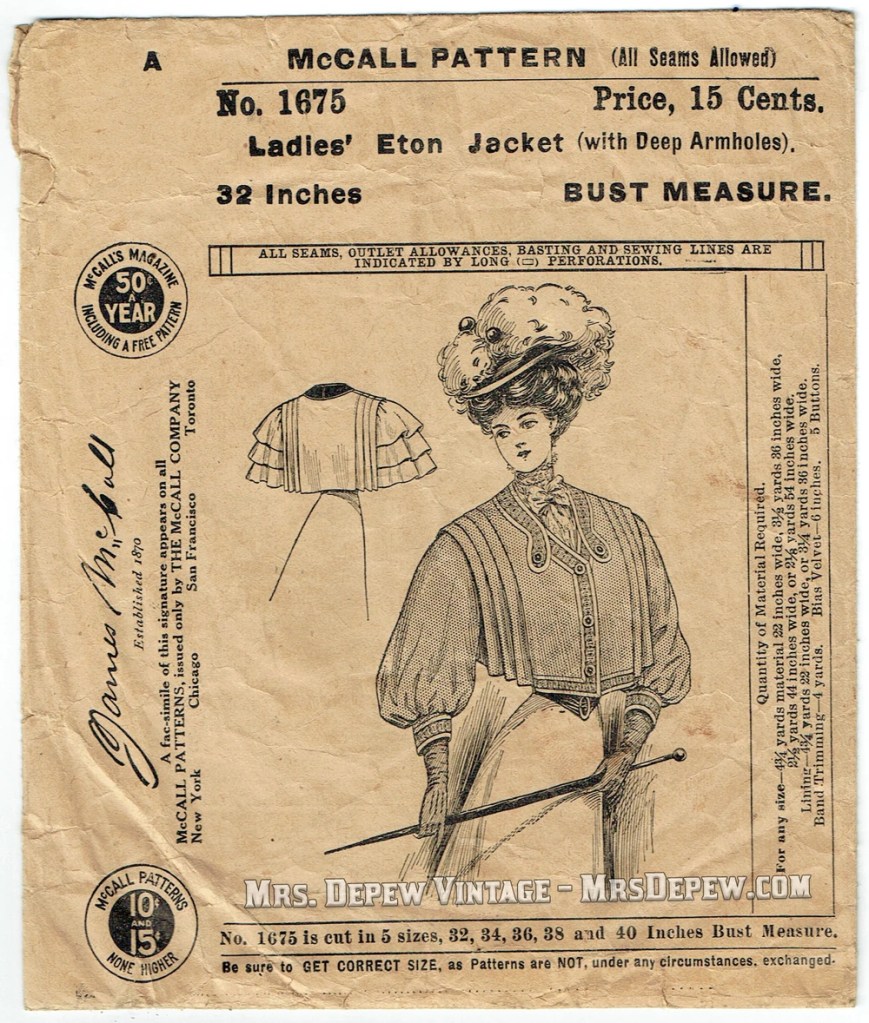
McCall 1675; ca. 1907; Ladies’ Eton Jacket (with deep armholes).
Featured in McCall’s Magazine September 1907.

What a fabulous jacket! That’s why I would choose this Eton jacket from 1907 because not only would it create a great historical silhouette, I’d love to try styling it with other items from my modern wardrobe.

1920s Era

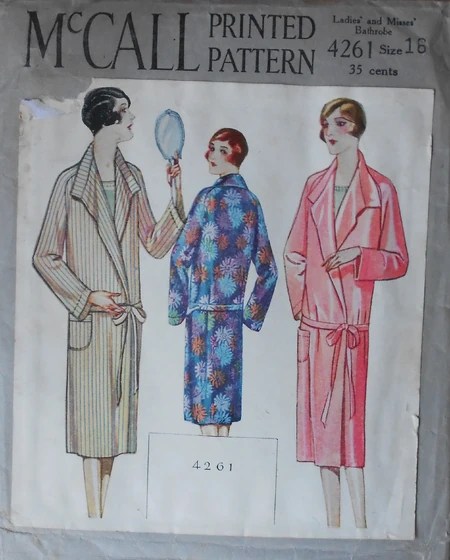
McCall 4261; ©1926; Ladies’ and Misses’ Bathrobe (Vintage Pattern Wikia)

The flapper dress patterns you see in the store are so played out and inaccurate. My choice was influenced by the wonderfully boxy lines of this robe. It encapsulates the straight up and down silhouette of the time while looking like a piece that could be dressed up or down, for around the house or used for wearable garment in the right fabric.

1930s Era

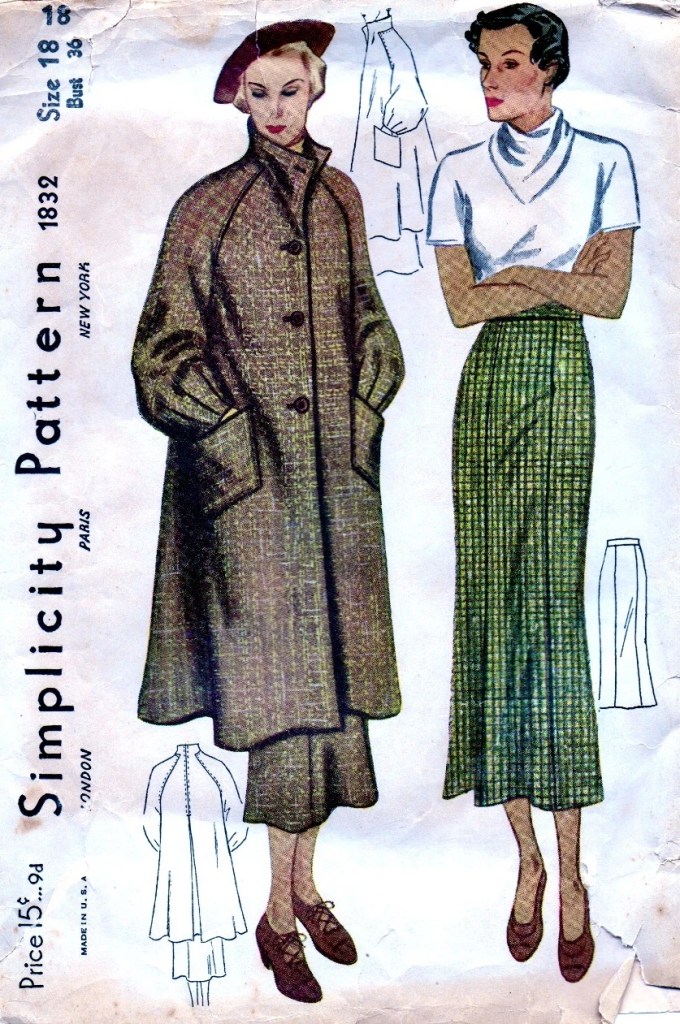
Simplicity 1832; ca. 1935; Ladies Swagger Coat and Six Gore Skirt. Coat has full raglan sleeve tucked at the wrist, patch pockets, stand-up collar and inverted back pleat.

Oh my goodness, this coat is fabulous. I may try to track this down in the future just to try my hand at it because I love these style lines. I love the raglan sleeves with the contrast of the narrow 1930s skirt. It’s so chic.

1940s Era

McCall 4037; ©1941; Ladies’ & Misses’ Dress

I like the academic style of view A and the elegant style lines of view B. I think I would get a lot of wear out of a dress in this style. The 1940s are one of my favorite eras for vintage fashion, I love the style lines of this time period and the 1920s-1930s.

1950s Era

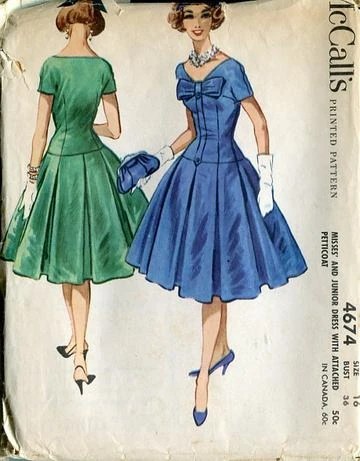
McCall’s 4674; ©1958; Misses’ and Junior Dress with Attached Petticoat.

The 1950s is not my favorite era of fashion, mainly because this silhouette looks horrible on me and it’s really over done when people think of “vintage” so for inspiration I went to 1958, the year my grandparents got married to find something interesting. I like the bow on the front of this and flounce of the skirt. The shape reminds me a bit of a bridesmaids dress I tried on that my grandma wore for her friends’ wedding in the 1950s.

1960s Era

Vogue Paris Original 1434; ca. 1965; Pierre Cardin – Suit. Side-buttoned jacket with standing, bias ring collar and cuffs. Tie belt at front, welt pocket and three-quarter length sleeves. Slim skirt.

I chose this one, first because I had yet to choose a Vogue pattern and secondly, because this suit is sharp and screams 1960s glamour. I love the over sized buttons. The classic shape and the slightly mod-artsy feel of the over all look.

1970s Era

Simplicity 7887; ©1977; Go Everywhere in Misses’ Jumpsuit and Unlined Jacket: Top-stitched jumpsuit with front seam interest has front zipper, buckled back tabs and optional rolled-up cuffs. Top-stitched jacket with collar interest has front button closing, flaps and long set-in sleeves with button trim.

This is a unique pattern. I like how many styling options we get in the line drawings. It’s an interesting jumpsuit I could see made up in several types of fabric for casual or fancy styling. I should see the blazer made in a contrast fabric or the same. Jumpsuits were a staple of the 1960s and 1970s so I think this is a great option to represent the decade.

1980s Era

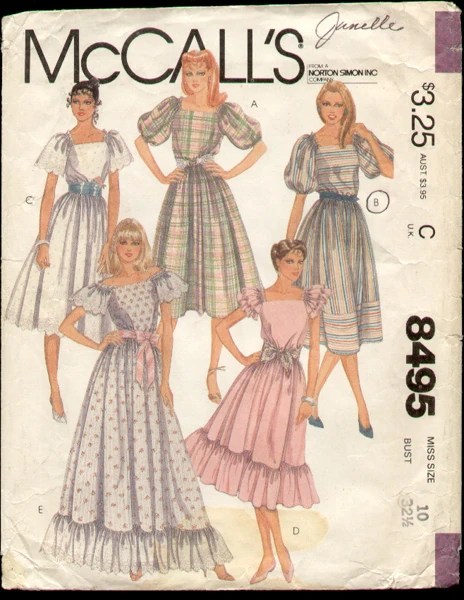
McCall’s 8495; ©1983; Misses’ Dress and Tie Belt: Dress has square neckline, elasticized waistline, center back zipper and sleeves with elastic in shoulder casings. Self fabric tie belt.

This pattern is so extra. I didn’t realize how much the cottagecore aesthetic pulled from this time period – wow! I thought the 1980s was just inspired by the 1940s, but there is a lot more there to see. I think this would be a great upcycling project with bedsheets.

1990s Era (I’m vintage?)

McCall’s 7241; ©1994; Misses’ Jumper and Overalls: Loose fitting jumper view A and B or overalls view C with lined bodices have suspenders fastened in front with buttons or overalls buckles; jumpers have side seam pockets; overalls have front yoke and pockets.

I originally wanted to pull from 1993, but this pattern is too perfect for me. I honestly want to make all three of these. I have fabric that would work for view B. I wonder how difficult it would be to track down?

Closing Thoughts

A special thanks to Vintage Pattern Wikia for making it possible to browse vintage patterns and for keeping these moments of fashion history alive. Thanks also to Stephanie Canada for putting this on my radar and for sewists like her who are keeping vintage patterns accessible to us to sew with. This was a fun challenge posed by the Simplicity Creators group and Simplicity itself for putting this on all of our radar. Although I’m not going to sew anything from what I found because I seriously have to many projects to add another right now. It’s a great way to appreciate vintage paper patterns and the effect they have had fashion and clothing in the last 160 years. Sewing your own clothes is such a great way to make things that fit you, and have your own flair, they also combat the unhinged mayhem that is fast fashion. It’s a win win 🙂

Less Than 1.5 Yards of Fabric to Sew With

In the spring and summer of this year, I was on a self-imposed low buy to sew through my stash in order to use up fabric that had been hanging out in my stash for a few years and have less to move to the new place.

One of those fabrics was this lovely vintage blue that evokes blueberries to me with the dainty floral print. I had made a previous garment with it and had less than 1.5 yards left in my stash. This was a fabric I brought with me to my mom’s while we waited for closing so I set another challenge in front of myself – make something that would use as much of the fabric as possible and make something that would teach me a new skill. It also needed to serve a real purpose in my wardrobe not just something that I “could” make. Something I liked.

I landed on this sundress design with a button front placket, embroidery floss buttonholes, and tapered panels to give the dress an easy flounce. I made the panels similar to skirt panels with a bell shape and gathered them to fit, hiding the gather with the straps. It was a fun little project that taught me how to utilize my stash.

How to Make Curved Seams Lay Flat

When I first heard of making small snipping cuts into the curves of seams for necklines and arm openings, I thought this was a bunch of nonsense. An extra step that only overachieving sewing people do. But once I gave it a try – there was night and day difference with how non-stretch fabrics draped against the form. The comfort and fit has been a level up to professional feeling. It’s totally worth it and I can’t believe I was stubbornly against putting the extra effort in. Looking back, there were definitely projects I made that I didn’t like because the neckline and arm openings fit wonky. If only I had tried this weird sounding hack.

In the curve of seams, make a very small cut in the seam allowance, not the actual part of the seam you are going to sew. For structural integrity that’s important. You don’t want your seam to have a cut or it will rip. The cuts in the seam allowance give the illusion of stretch and help the non-stretch fabric curve without warping the line of the curve. It creates shape without bulk and proper fit. The quality of a garment, I’m learning is not the fabric quality alone, it’s the planning and care put into the construction. Proper pattern cutting can make or break the fit of the look you are going for.

Potato Technology’s Version of a Vintage Shirtwaist Dress

You will recognize this fabric if you’ve been here since I shared my Spring/Summer 2023 collection. I originally purchased it for a Christmas present project as part of my Autumn/Winter 2022 Collection for a pair of pants. I happened to not share it on the site. With the extra yardage, I made a blouse and a matching skirt I styled in 2023 as separates and a set.

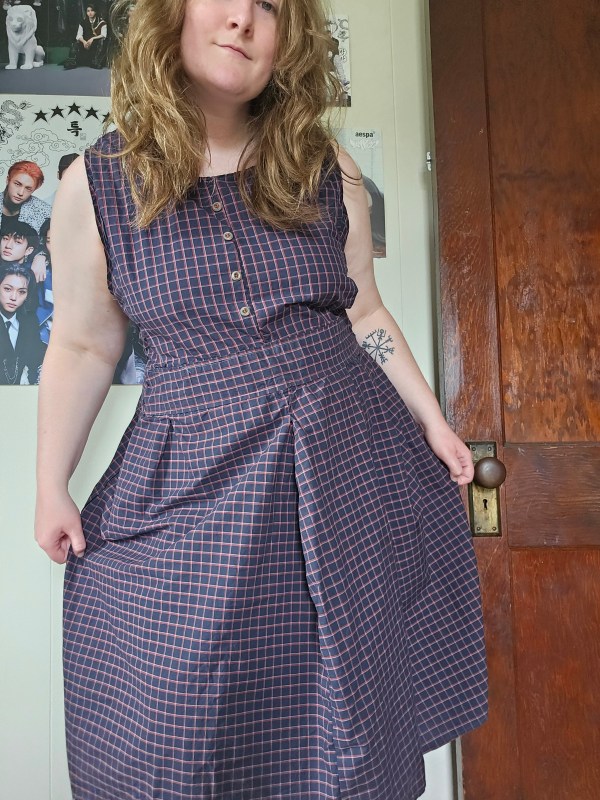
This got me thinking, should I just make it a dress? So I did, I sewed the two together with mixed results. I liked the dramatic drape of the shoulders in contrast with the defined waist but the fabric is thin and I knew I wouldn’t wear it as a long sleeve garment. So I chopped the sleeves to a flutter sleeve option.

This felt even worse when I wore it as a short-sleeved dress. The dress was constructed well, the fabric of good quality, and the color scheme flattering but I did not reach for it. The sleeves made me feel weird and wide instead of cute. I didn’t feel like me. Have you ever experienced that with a garment or a project you have made? There’s nothing technically wrong with what you made or what you tried on, but it feels off. This left me with one more option. No sleeves.

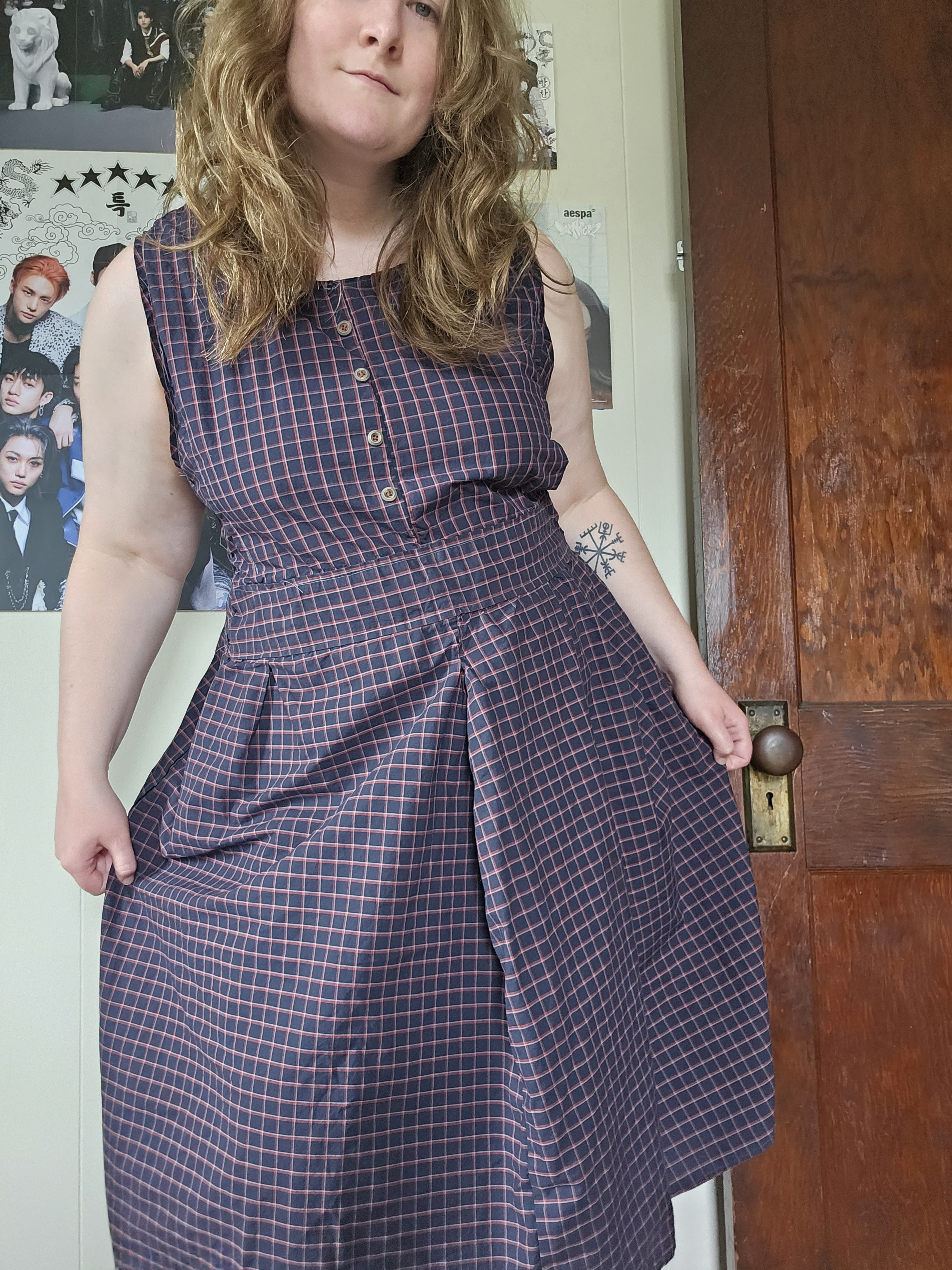
So I chopped the sleeves entirely and that’s when I felt like I struck gold! It looks like a dress my Grandma used to wear. Shirtwaist dresses were her staple dress and I see why. They are versatile and practical. I can dress this up or down. I can layer over or under for different looks. It’s a dress I know I’ll be making again with a proper button placket and pockets for sure.

How to Use a French Curve

It’s a bit silly to think about now, but learning how to sew from Youtube meant that using all the correct drafting tools, was a process of failing in order to realize I needed them.

I made a series of pants and shorts in 2021, 2022, and 2023. Some were okay, many were awful, some turned out better than expected because of a pattern. What I was missing in my sewing tool kit though was the predictability of the french curve.

Once I began drafting with this wonderful comma, I saw an improvement in my pattern drafting, ease of wear for garments made with this tool, and a reduction of fabric waste from cutting the curve wrong.

Looking to the Future

This July has been the first time I’ve recognized that feeling of time passing. The year is halfway over, what do I want to do with these last six months to finish the year strong?

In May, I felt like my life was done, as I knew it. Like a video game, I was done, out of hearts, out of health, game over. June felt like an exciting adventure and a respawn of my little game character in a new environment but the same life. It was thrilling and overwhelming at times, there was so much to catch up on and so much to do to begin our life in our house. July however has been this month of my brain feeling like it is in hyperspeed. Now that I have a new space to create, I also have new creative energy. That two-month break spent packing, moving, and waiting, was like a creative refresh and since then July has been a sprint.

I think some of this wild energy has been all the excitement of this month as part of the STAY fandom, this has truly been a one-of-a-kind comeback, but also I’ve been seeking distraction. My mom is walking through a health condition that came out of nowhere and in a matter of a few weeks she went from my companion packing boxes to being unable to do much physical activity without her body sending off alarm bells. I’ve never seen her like this before, and if I stop to think about it too much, I freak out.

I’ve turned my attention to what the second half of the year could bring. There have been so many wonderful things on the horizon, my friend’s wedding, my sister-in-law’s new place, Kyle’s new woodshop, the possibility of adopting a rabbit from E.A.R.S, Shakerwoods, the Pittsburgh Renaissance Festival, apple picking, Pumpkinville, etc. I’ve begun planning Christmas presents for loved ones, trying to be more ambitious than ever to push myself to learn something new in the process. I’ve also been feeling the itch to actually sell my pieces. I think it’s time, I just have to figure out where and how.

The Curse of Rusty Twill

Like a slinking shadow, the smell crawled through the air, around corners, through doorways into my senses. A stench. Burnt, rotten, the stank of a memory I wanted to forget. Alive in the darkness, its origin story, a wasteland of fashion monsters of dye. But what was it that was haunting me? Is its origin or its nightmare of an olfactory bouquet?


It began one innocent day, the day I met the monster of rust and cotton. On an innocent bolt it dared to rest its head, in the middle of the broad day, have it no decency? It was a fabric unlike any other. It called to me. Upon its skin was a color shift, a creasing of sorts that changed it from a monotone to a cacophony of lighter wrinkles depending on its movement. Oh, little fool you were then, innocent, blind. Dreaming dreams of Japanese raw denim and its way of embossing life on its fiber with wear and time. This was no Japanese denim. This cotton twill, was its foil, a disappointment wrapped in the innocence of Hobby Lobby’s fabric aisle. A devil creeping.

But our devil wasn’t creeping, it was clever. It hid its true form, pretending to be normal, a kind soul of twill and natural fiber. A fabric you can count on for pants, jackets, a workhorse, a staple. These were my dreams before the nightmare began.

Maybe it achieved consciousness? An impatient menace, you waited in my fabric cabinet as we packed up and slumbered in our storage unit as time passed by. Did you act out because you thought you were forgotten?


How could I forget how we met? It was one golden summer day, a day full of promise. A new life began in 2×4 frame and carpeted meadows that roam my floor. A washer and a new dryer. As I invited you out of your slumbering resting place, your weave was rough, and a little stuffy, but I thought nothing of it.

That was your warning sign, a marker of what you are. We walked together. I carried you down the steps. I wanted to keep you safe. Gently I washed you with my hypo-allergenic laundry soap. There were no corners cut. I welcomed you into the fabric family but this was no ordinary wash. Something changed about you in that water. You became a monster. Swampy. A whiff smacked me across the face.

In horror, I smelled the washer. A stench emanated from the room. What could it be? My mind raced – did something crawl into the washer and die? Shaking off the fear, I placed you into the dryer which was a deal with Winifred Sanderson. A cauldron of heat and dry air transformed you into a thing of scent not even a dog could love.


With the dryer’s final squeal, I plucked you from your transformation machine. A stink with strength. Fortitude and funk. Your form was different. Your threads were softer, malleable, and even toned. But your evil had spread, and with fear, I pulled towels from the dryer. They became one of your covens, in a soft amber tone. The smell, it was pungent, accosting.

Lost in thought I carried you upstairs and contemplated my fate. Was it the washer or perhaps the dryer? That old, squeaky dryer. What kind of mayhem did the dryer succumb to in its former life? Was it contagious? I shook the thoughts from my mind and tossed the towels back in the hamper, encrusted in a stench that made me question whether they were washed with soap or copper pennies.

But you, the problem, the evil in rust and twill, you, I placated with Febreze and time. I brought you back to my sewing studio and waited. Instead of getting to know the Febreze and fresh air, you woke me up to the stench of your fibers wafting from the room. You evangelized your rancid agenda and spread it throughout my room. A beast of smell, there you sat proudly, smirking at the work of your hands.

You were an enemy beyond my wildest dreams. A creature lurking in the depths of the nose. An odor I could taste, it lingered, it languished in my mind into paranoia. And that was what it was living with you after your second wash, you monster.


I tried to live with you, accept you for your true form but the stench of your dye was a war cry of all that comes from you. You lead the charge of fashion’s destruction of our peace. Rust is your form. Toxic, destructive, you had to go.

I thought you were going to win. Even with you out of my room, your smell lingered. A nightmare with no end. Burnt, acrid, copper pennies, a smell that dries out the senses like the desert of Fury Road. Why must you torment me?

You gaslit me. A smell that lived on. The towels held on to your evil. Third wash, a scream at the growing wall of your fortress. A sinister scent crept, it jumped from the towels to anything washed them with. An evil baked in. Will this nightmare end? What do you want from me? An enemy without logic but hungry for conquest.

The stench was set into the fiber of your being and I played right into your trap for revenge. Foolishly I gave you more to feed on, as I looked in sadness at the towels helplessly smelly lying on the floor. Could they be saved? How far would your campaign of olfactory pain carry on?!

Your rusty threads were a root system taking hold of me. I could feel them choking me in my dreams. A smell that could not be forgotten. A creature unwilling to die. An assassin of fiber. Mutated from fast fashion’s evil realm.


One day, when io began to lose all hope, a bright light, like a sword dropping from the heavens came to me. A plan. I hurried before you could imprison me forever in your devilish arms, running towards the light. I had to dispose of you and your ground zero stank.

With all my might, I held back your reach, your scaly hands from taking the towels with you. A splash of white vinegar. A bottle of vinegar. I drowned your sinister stench, I killed it in the name of all that is good and pleasing, fresh air rejoiced for the freedom to exist again.

Although you are dead and buried somewhere far away, I worry you’ll come back with your creeping stench. Rusty twill of my nightmares…I think you might be alive.

Create a website or blog at WordPress.com

Up ↑