
In this week’s update, we’re starting to see our garden really take off. Plants that were already big have started to bloom and produce fruit, while plants that were small or looked a little unhealthy have started to grow and look like they’re going to make it. We also needed to tackle some of the grass in the beds that was becoming unruly, and we side-dressed many of our plants with bone meal. Finally, what is this update’s seed of the week?
Visible Growth
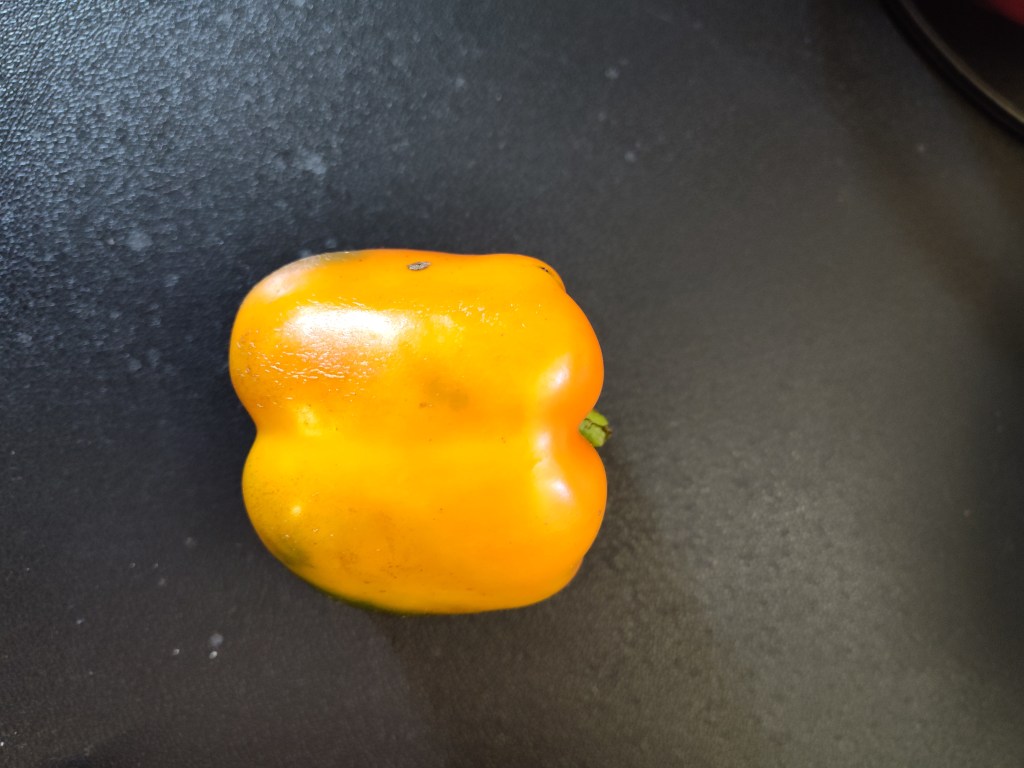
Since last week’s update, we’ve been blown away by how much growth there has been in the garden. The tomato plants we bought from the greenhouse, as well as the original Queen Aliquippa plants I started, have all started to blossom and produce fruit. The Cherokee Purple, Black Krim, and Yellow Pear plants all have fruit on them, while the Queen Aliquippa plants have numerous blossoms. Our pepper plants are the same way, with two of the Cal Wonder plants having at least one fruit. The small starts that we transplanted last weekend have grown and are looking healthy.
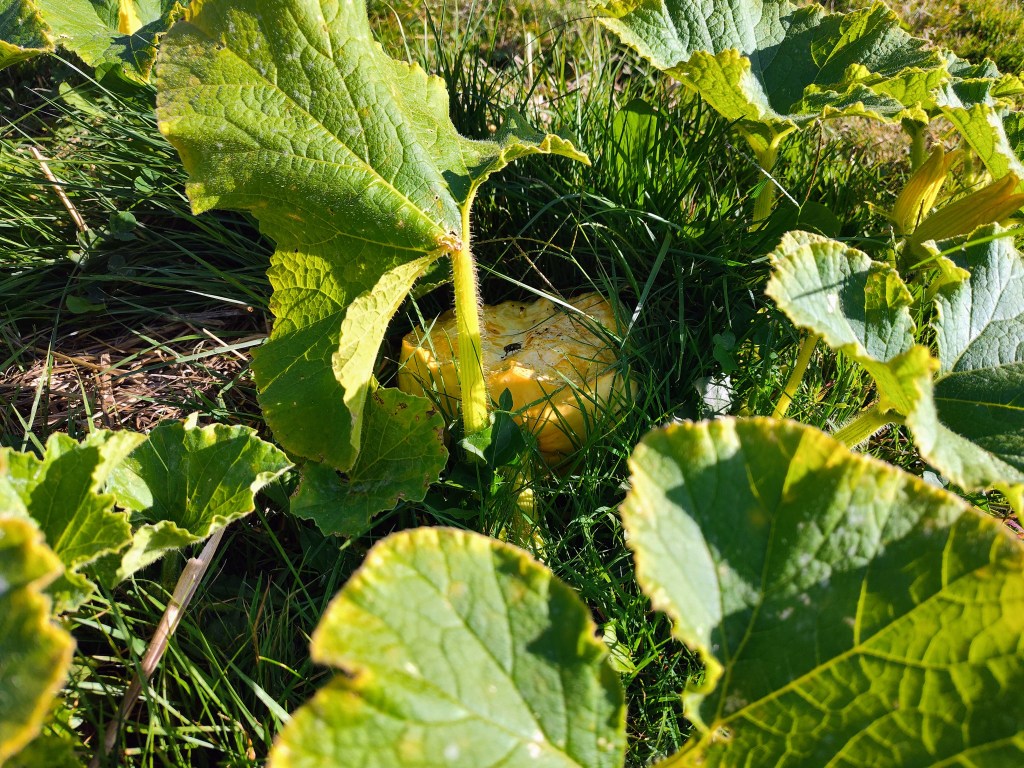
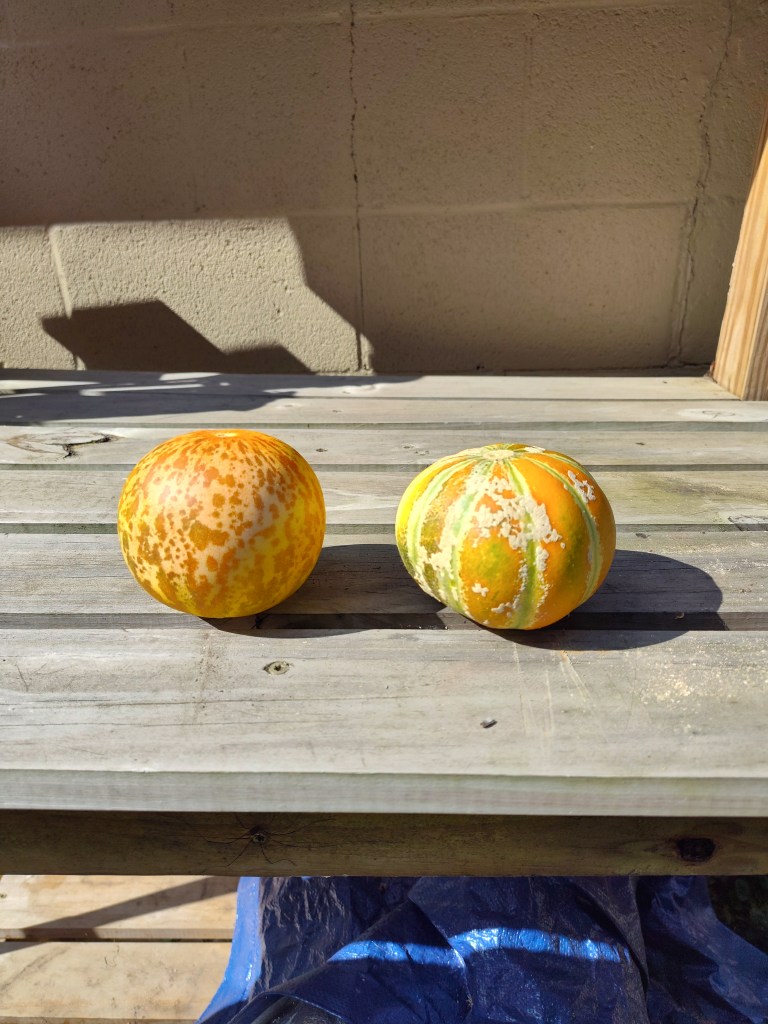
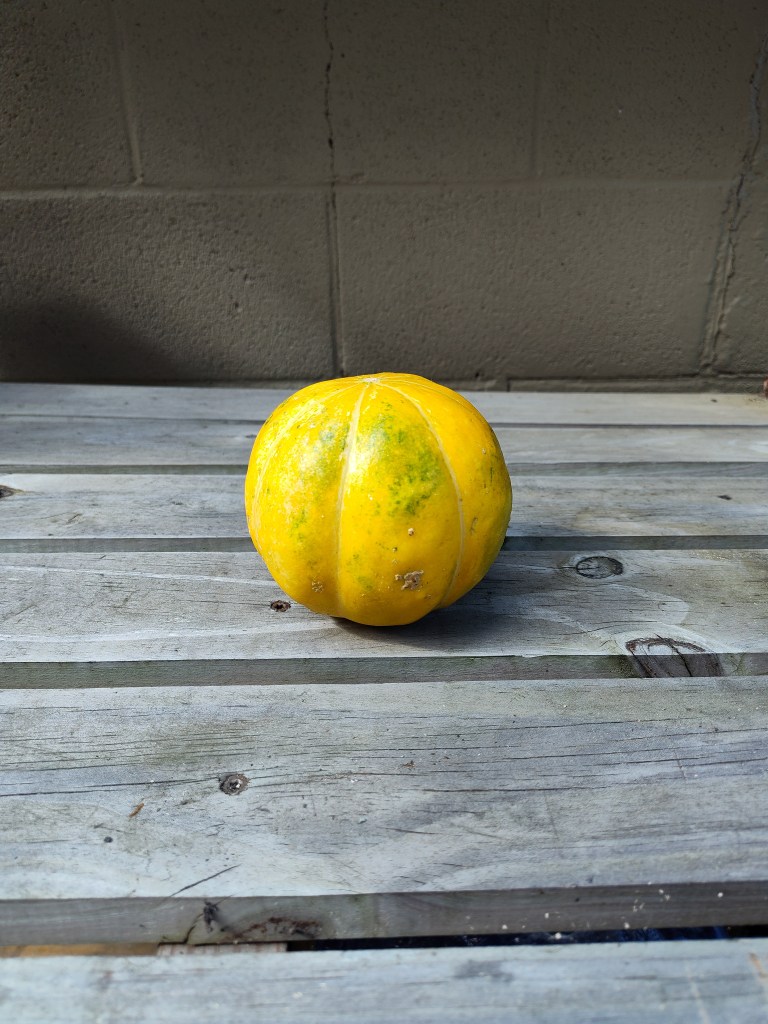
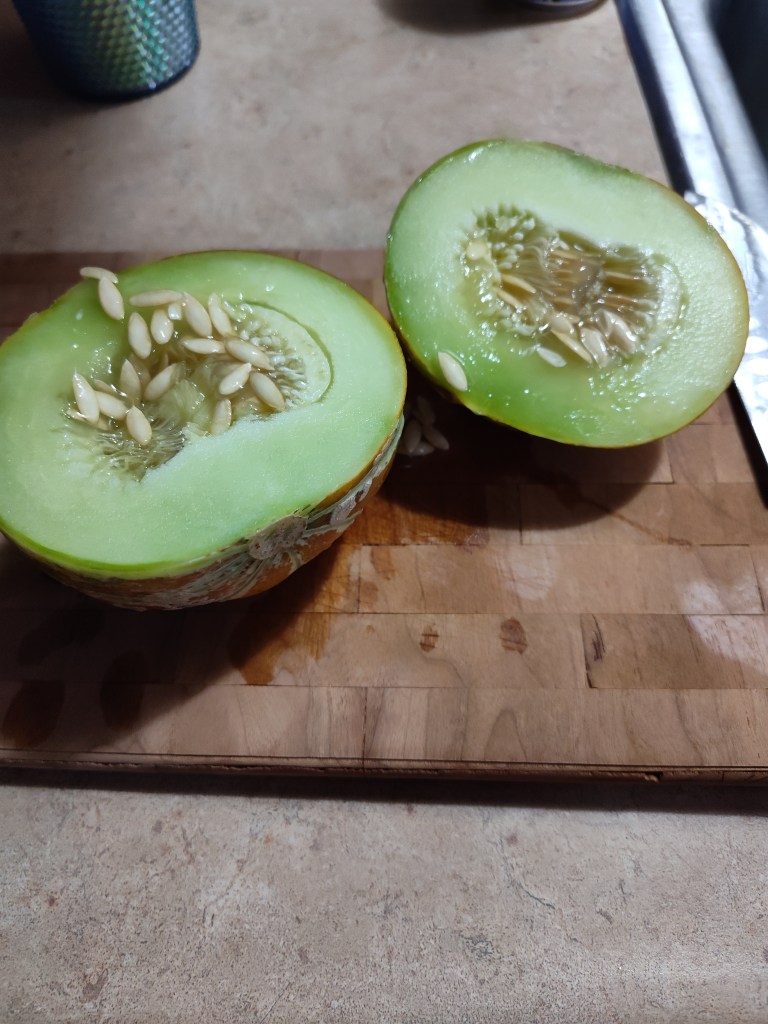
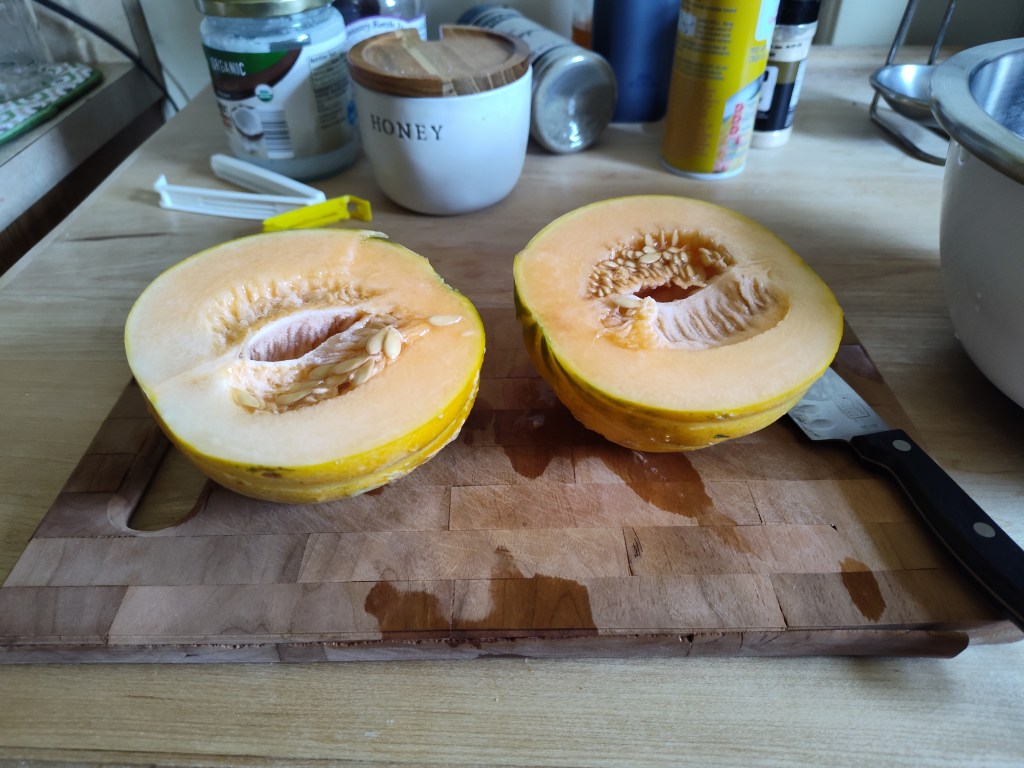
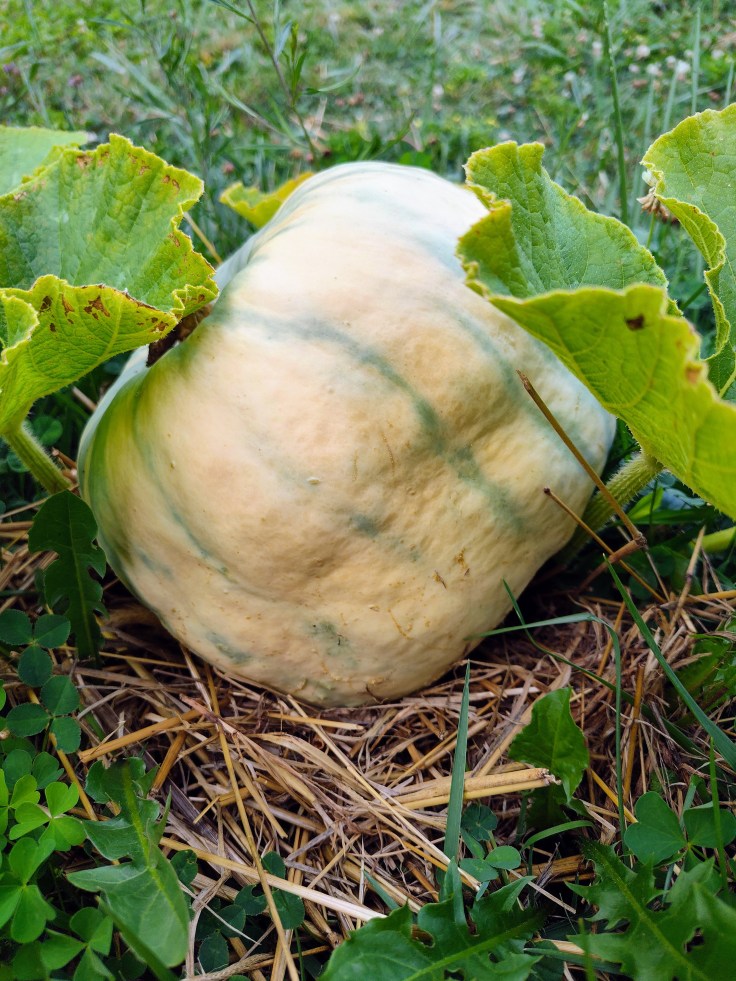
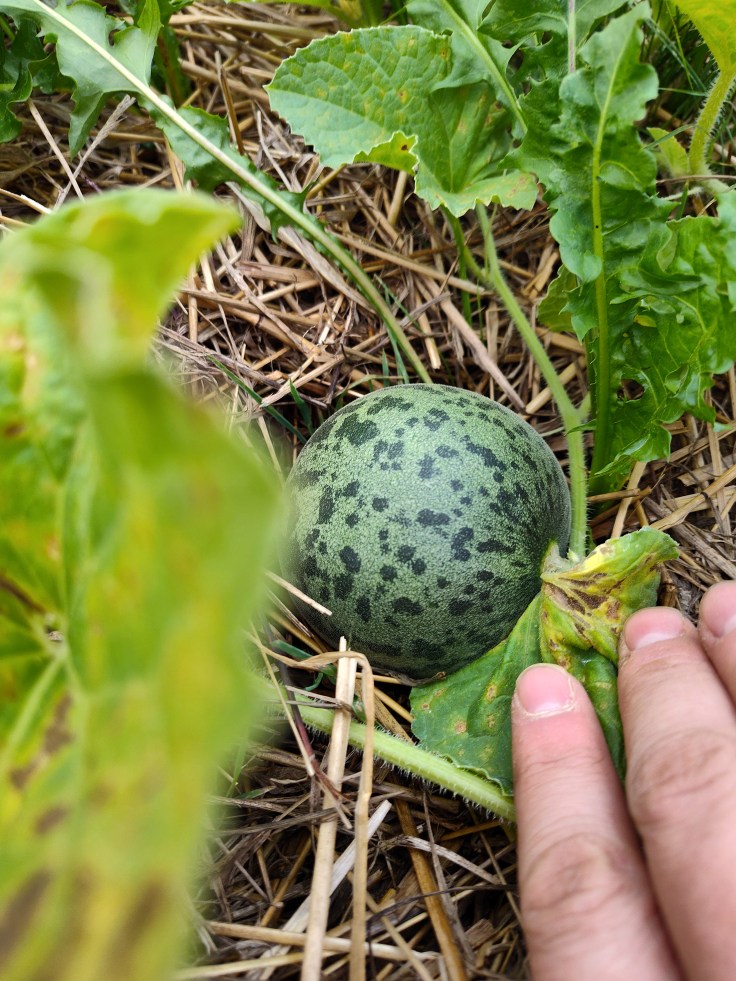
Our melon, squash, and cucumber plants are also showing a lot of growth. The spaghetti squash plant we bought at the greenhouse has 15 or so blossoms on it, while another plant that I started inside (we think it’s a pumpkin) is also blossoming. All but a few of the plants in our melon bed are doing very well, including our cucumber plants, where we’re starting to see baby cucumbers growing behind the blossoms. Lastly, our eggplants are growing a lot of fruit, with the largest being roughly three inches in length. It’s safe to say that the heat and sunshine have been wonderful for our garden.
Mowing Inside Our Garden Beds
This weekend, we realized that we needed to deal with the grass that was growing in the last garden bed we planted in. We had been using long shears to trim everything, but Magz smartly suggested that we try getting the mower in between the plants. Yesterday, we did and had so much success that we used the mower in our other beds, which made for much less work by hand. I maneuvered the mower while Magz helped me not run over any plants. While no plants were harmed, I did run over a wooden marker, but after 30 minutes or so and many squeaks from Magz, we were done. She is my Richard Hammond. We’ll be using this method moving forward to save time and work.
Side Dressing Plants
With our plants growing well and starting to bloom, I applied a layer of bone meal to our tomatoes, peppers, beans, and our more mature melons, squash, and cucumbers. I like bone meal because it’s easy to apply and gets absorbed pretty well, but I want to find a better fertilizer. I like bone meal when transplanting starts, but I would like to find something more water soluble or even a liquid fertilizer for side dressing needs later in the season. The bone meal has worked, though. The day after I applied it, we got a nice rainstorm, and the plants looked perkier afterward.
Seed of the Week
This week’s featured seed is the Black Krim tomato. We’re growing these from seed and from starts that we purchased at a greenhouse. These tomatoes are originally from the Crimean Peninsula in the Black Sea and were named after the Isle of Krim. They gained popularity in that region during the 1850s but didn’t become commercially available in the United States until the 1990s. They may have been the first “black” tomato to be sold in the U.S. These are the first black tomatoes we’ve grown.
Up Next
At this point in the garden, we’re largely managing the garden. We’re dealing with weeds, making sure the plants are properly watered, and generally ensuring that everything is healthy. There’s a chance that by next week’s update, we’ll have harvested at least one tomato, eggplant, and/or cucumber. How are your gardens doing? Happy gardening!
Of the 82 seed packets we ordered earlier this year, we have planted nearly all of them, with only the fall crops still remaining. So, I wanted to write two articles: one on the hardest seeds to start and a second on the easiest ones.
I’m starting with the hardest seeds. My experiences with these are just that – my experiences – and are in no way an indictment on them or the seed companies they were purchased from. I could have done something wrong that caused failure, and if you’re curious about them, you should still buy them. Without further ado, here they are.
5.) Principe Borghese Tomato
We bought these seeds to be our paste tomatoes for the year, opting for this heirloom Italian variety over the more popular Amish Paste or San Marzano. We were intrigued because of their history, that they could also be sun-dried, and because they were spherical rather than the typical oblong. Unfortunately, we had nothing but problems with them.
I started these seeds the same way and at the same time as all the other tomato seeds; however, for some reason, these didn’t germinate as well as the others, and the ones that did germinate got leggy within a few days. Side note: Nearly all our tomato starts got leggy due to inadequate lighting, but these starts were worse than the others. When I attempted to harden them off and transplant them into the garden, none of them made it. To be fair, only one variety of tomato plants successfully transplanted due to poor weather conditions, but these were the worst. Later, I attempted to direct sow them in the garden once the soil temperature was warm enough, but it’s been at least two weeks now, and we’ve seen no signs of germination. These seeds not working is disappointing because we were excited about them. There’s a good chance we’ll try them again in the future, but we’ll buy a second type of paste tomatoes if we do.
4.) Calabrese Broccoli
We wanted to grow broccoli this year despite having no experience with it. We chose the Calabrese variety because it is supposed to be a traditional-style broccoli that produces smaller heads and multiple side shoots. Everything I read made me confident that it would grow well in our area. I started them indoors 4-to-6 weeks before the last frost, as the seed packet suggested.
The seeds germinated well, but the new starts immediately struggled. I didn’t know this at the time, but broccoli is sensitive to warm temperatures. That is something I struggled to monitor and control with our seed-starting setup because I started vegetables with different temperature requirements at the same time. Additionally, our current grow light gives off heat but needs to be very close to the plant to provide enough light. This created a lose-lose scenario. Understanding this, we may direct sow late in summer for a fall crop. I think this will result in a better growing experience, but it’s anything but a “set it and forget it” seed.
3.) Husk Tomatoes – Ground Cherries & Tomatillos
I’m combining these two because they’re part of the same husk tomato family, grow in similar manners, and seem to be susceptible to the same issues. This is another vegetable/fruit that we’ve never grown before. Actually, we don’t think we’ve ever eaten ground cherries before and have only had tomatillos in salsa. We had similar issues with these that we had with other seeds: When they germinated, they went leggy pretty fast. One difference, though, was that these seeds took a long time to germinate and were slow to grow after they did.
When it became clear that getting any fruit off our starts was going to be a struggle, we bought a plant of each at the local greenhouse. They were very healthy and already had fruit forming. We transplanted them into one of our garden beds and quickly encountered issues. It started with the three-line potato beetle that required a non-organic spray to treat and has only continued with the plants struggling to grow. I think it’s the result of too much moisture in the soil, but as a bright spot, our ground cherry plant is still producing fruit, and last evening, we were able to harvest one. It wasn’t ripe enough yet, but it was rewarding to get something from it.
We also bought a few more tomatillo starts and transplanted them into a different garden bed with better drainage. I preemptively sprayed them to prevent beetle infestation and staked them. They’re still doing very well with dark green leaves and fruits that continue to develop. We’ve learned a lot since we first started these seeds, and we’re certain that 2025 won’t be the only year we grow them.
2.) Ping Tung Eggplant
We gave these seeds a shot because they were unique compared to the Italian eggplant that is more common in the United States. These originate in Taiwan and have a more cylindrical shape compared to the bell shape of the Italian style. Before purchasing, we were aware of the struggles that some gardeners have experienced with these seeds. Some talked about the issues of successfully moving from germination to transplanting. That’s the same problem we had. They germinated quite well, but like other plants, they quickly went leggy and died. I tried restarting them in May, but they didn’t even get past the germination stage. It’s quite a bummer.
We bought two eggplant starts from the greenhouse, and they’ve been doing very well since being transplanted. I don’t think they’re Ping Tung eggplants, but they are an Asian variety. They have been flowering for more than a week, and several fruits are beginning to develop. We were also gifted an eggplant start from our neighbor. We were unable to transplant it right away, so the plant was looking unhealthy by the time it was transplanted, but it has since recovered and is growing nicely. The Ping Tung seeds may just be difficult to start; I’m unsure, but I think we’ll give this variety another shot in the future, either this fall or next spring.
1.) Ishakura Bunching Onions
The final item on this list is an Asian-variety bunching onion seed. We chose these because we like Asian vegetables and were intrigued by being able to grow onions in the spring. Like the Ping Tung eggplant seeds, there were some mixed reviews from gardeners, so I knew there was a chance of some issues. I attempted to start these inside, which is what the seed packet recommends. In fact, it says to start these up to three months before the last frost date, so I had an expectation of slow but consistent growth, because it’s hard to keep starts going that long without needing to transplant them.
I began them in normal seed cells and had successful germination in the expected timeframe. They grew to about three inches and then stopped. They didn’t grow any taller or thicker. I thought that it could have been part of their growing process and that they would take off after being transplanted, but that wasn’t the case. Transplanting them was difficult due to the fragile root structure, and none survived. I later attempted to direct sow a row of them in the garden, but none germinated. This seed was easily the most disappointing of the season. Part of that is because we were excited about these onions and never experienced a hint of success.
I think part of this was the result of poor growing conditions. I think that growing them in a container would yield better results. You can tightly pack these seeds in, so in a 12″ diameter pot, you can probably grow two or three dozen plants. This would also allow for better moisture management. Still, for how easy the seed description said they were to grow, these were a letdown.
Giving Up or Trying Again
This is the decision we’ll find ourselves with next spring. Do we give up on these seed varieties and buy a different seed or a start, or do we try again with the knowledge we didn’t have before? It’ll likely be a combination of both. We had a conversation last evening about these seeds, and we are unsure if we’ll buy husk tomato seeds next year. They’re quite difficult to start, and the starts are very affordable. That doesn’t mean we won’t try starting them from seed again in the future, but I want to have confidence in successfully growing them to harvest before going back to the starting point again. The Calabrese broccoli seeds may be the same way.
But I think we’ll buy the bunching onions, Principe Borghese, and Ping Tung seeds again. I can pinpoint what went wrong with all of those, make changes, and be confident that we’ll have a different result. We’re going to upgrade our growing light, which will help, and our weather this spring was unusually bad. An improvement back to the norm would have a big impact.
I am planning on doing this article each year as we try new seeds. I’m also going to be doing a post on the five easiest seeds to start. Happy gardening!
In this week’s update, the rainy weather finally came to an end, we’re seeing a ton of growth in our garden, including the grass and weeds, and I’m starting a new section called Seed of the Week. Let’s dive in.
Heat Wave
We had one of the coolest and wettest springs that I can remember this year. If you’re a regular reader of our blog, you know that this delayed our planting and slowed growth. That pattern broke as the official start of summer arrived with a four-day heat wave that has brought temperatures in the 90s, humidity, and a UV index above 10. There was no gradual transition between seasons this year. While it’s not my preferred weather, I’m very thankful that the ground can start drying out and plants can begin to take off.
The extreme heat can make working in the garden less fun, but it’s a reminder to take breaks, stay hydrated, and get as much work done outside the hottest part of the day. I failed at the last part of that this past weekend by working in the middle of the day, which is a mistake I won’t make again during this heat wave.
Lots of Growth
Even though the recent weather pattern hasn’t been ideal, it is allowing our plants to take off. With ample moisture in the ground, all that the plants needed was warmth and sunshine, and now that they have it, the plants have shown measurable growth in recent days. I want to highlight a few plants where this has been most evident.
Corn: Our corn is now about 15 inches tall and on pace to meet the “knee-high by the 4th of July” saying that I heard growing up. The base of the stalks looks strong, and the leaves are a beautiful green with that lovely waxy and silky texture. I continue to side dress them with blood meal every couple of weeks.
Beans and Peas: Our beans have exhibited consistent growth since germinating in mid-May. All the beans, except for the red bush beans that I started in early June, are about 8 inches tall. Our snow peas are also at this height, which led me to build a trellis for them this past week.
Eggplant & Spaghetti Squash: We transplanted a couple of eggplant starts a few weekends ago, and they are doing exceptionally well. They have been consistently producing flowers, and I even felt the start of a fruit on Sunday. We planted a lot of squash and melons this year, and the spaghetti squash start we bought in early May is doing wonderful. It’s spreading outward from the main stem and is starting to show where the flowers and fruit will grow.
Tomatoes & Peppers: Our tomato and pepper plants have started to flower, and one of the yellow pear tomato plants has fruit on it. This hot weather should help produce more fruit and help that first tomato ripen.
One small downside to the weather we’ve had is that weeds and grass have continued to grow at a fast pace. Managing the grass that’s inside our garden fences has been difficult from the beginning. We have a plus sign-shaped walkway between our garden beds. I’m able to tackle that with the mower, but the grass within the garden beds is a different story. We’ve been using hedge-trimming shears to cut down all the grass, which has been surprisingly effective. Hopefully, the hot weather will lead to the grass growing a bit slower moving forward.
Seed of the Week – Queen Aliquippa Tomatoes
This is the first installment of a new section I’m calling Seed of the Week. Each week, I’ll go over a seed we’ve grown and are particularly fond of. I won’t go in-depth with the seed’s history in this weekly post (I’m saving that for a standalone series), but I may briefly highlight the seed’s name inspiration. I will also go over our experience with the seed, including how it is to grow, and what the fruit should look like when it’s ripe. I considered many options for the first Seed of the Week section, but I am going with the Queen Aliquippa tomato, which I briefly highlighted when I wrote about the seeds we bought for this year’s garden.
Queen Aliquippa tomato packet
We bought our Queen Aliquippa seeds from Sow True Seeds, which is located in Asheville, North Carolina. The seeds are named for Queen Aliquippa, a Seneca tribe leader from the 18th century who lived in Central and Western Pennsylvania, which is where Magz and I are from. Queen Aliquippa is a well-known name where we live, so we had to try seeds named in her honor. We’ve never grown these seeds or even seen the tomatoes in person, but the tomatoes are categorized as slicing, so they’re likely larger than pear tomatoes but smaller than a beefsteak. They stay green when ripe but are supposed to be incredibly sweet.
Our experience with growing these seeds has been positive. They were some of the earliest seeds I started, and they were easy to germinate. Unfortunately, not having a strong enough grow light prevented them from growing as big as I would have liked before transplanting them, but we did finally get them outside in late May. We started with two plants going outside when they were about 4 inches tall, and they’ve done remarkably well in spite of the poor weather. As of yesterday, they were over a foot tall. The leaves are beautiful, and we haven’t experienced any leaf curl, which is common with a lot of tomato plants.
Up Next
This coming week will be focused on making sure our plants are watered and aren’t showing any signs of stress from the heat. We’re also looking forward to seeing more flower and fruit development, as well as the potential for harvesting our first tomatoes. Happy Gardening!
Prior to 2025, the only way Magz and I were able to garden was in containers. As renters, the opportunity to build raised garden beds or dig beds into the ground wasn’t there. In this post, I’m going to walk you through our history with container gardening, including the containers we used and what we grew, and discuss the pros and cons of gardening this way. Finally, at the end, I’ll ask the question, “Is it for you?”
Our Experience With Container Gardening
The Containers We Used
We have grown in many different containers. Our first experience was a terracotta pot that many people are familiar with. That was in 2016, and we used these pots in the years that followed. We’ve also used hard plastic planters of various sizes. They’re affordable and easy to find. The most unique containers we’ve gardened in are plastic totes and 5-gallon buckets. In 2022, we wanted to try growing a bunch of different seeds but couldn’t have an in-ground garden. So, we bought roughly a dozen plastic totes and two dozen buckets, along with some plastic planters and shallow totes for lettuce.
Finally, the most unique and potentially gimmicky planter was the GreenStalk. If you’re unfamiliar with GreenStalk, it’s a tiered growing system that maximizes the space to grow many plants. It has an ingenious design that trickles water down from the top tier. We had the 3-tier system that is currently sold for $110. We’re still technically gardening in a container with the planter box I built for our long beans. It was cheap to build and only took two hours. We also have a plastic rectangular planter that we have butterfly peas in.
I would say that of all the containers we’ve used, my favorites are the homemade wooden one I built and the GreenStalk. The wooden one is nice because it’s homemade and doesn’t use plastic. Anything we can do to reduce our dependency on plastic, even if it isn’t single-use, is a good thing. I also really liked the GreenStalk design. It allows you to grow a lot of vegetables in a small area and is relatively easy to use.
What Did We Grow?
We have grown a bit of everything in containers. In our GreenStalk, we tried growing lettuce, carrots, beets, bok choy, chamomile, and herbs. Prior to the GreenStalk, we grew a cherry tomato plant at our first apartment. Those are all pretty standard things. That all changed when we did our 2022 garden.
We unintentionally pushed the boundaries of what’s possible with a container garden. We attempted everything we could think of and were interested in. That included potatoes (early and mid-season), corn, cabbage, pumpkins, musk melon, watermelon, and Brussels sprouts. We also grew the vegetables that most people grow: cucumbers, tomatoes, peppers, lettuce, and beans. And for the most part, it all grew.
Were Our Container Gardens Successful?
In general, yes, our container gardens were successful, with each attempt producing more than the previous one. We got a few tomatoes from the first tomato plant we grew; however, it eventually died because we had to travel for work that summer and couldn’t find anyone to water it.
Our GreenStalk garden was doing well until we moved. We started everything from seed in early May and had successful germination. Unfortunately, two things happened that caused the plants to die before reaching full maturity. We had a week of intense rainfall not long after germination, which restricted early plant growth, and we unexpectedly had to move later in May. The move led to the plants experiencing shock. After moving, we were unable to tend to them for a week while we were getting some things settled, and by the time we got back, it was too late.
Our 2022 container garden was very successful. I believe people thought we were crazy for trying to grow plants that typically aren’t “container-friendly,” but we harvested multiple ears of corn, at least one big head of cabbage, many pounds of potatoes, and more than one watermelon, musk melon, and pumpkin. We also had a lot of success with our tomatoes, beans, and cucumbers.
Pros & Cons of Container Gardening
I’ve gone over some of our experience with container gardening, the majority being positive, but that doesn’t mean there weren’t some negatives. Here are some pros and cons of gardening in containers.
Pros
You’re (Almost) Guaranteed to Have Good Soil
When container gardening, you are typically bringing in soil to fill the containers. I think most people buy their soil in bags, but you can also buy it in bulk from landscape centers or garden supply stores. This soil is typically nutrient-rich, balanced, and light. It tends to drain well because it has vermiculite, perlite, or coconut coir in it. This is important when container gardening, but more on that in a bit. This type of soil makes it easier to have success when growing root crops like carrots and beets, as well as potatoes, since the roots don’t have to battle compacted soil to grow. If you’ve been following our blog from the beginning, you’ll know that good soil isn’t a guarantee.
Maneuverability
Container gardens give freedom that is impossible with traditional in-ground or raised bed gardens. You can place the containers in “creative” ways to maximize your space and relocate them to give them more sun or shade as needed. If you need to move around them, they can be moved for that reason too.
Opportunity to Garden
If you rent a house, you may not have the chance to build a raised garden bed or till up the lawn to create an in-ground garden. And if you live in an apartment, you certainly don’t have that chance. Containers give you that chance. I think it’s important that people have a connection to their food. Knowing how your food is grown gives us an idea of how much work goes into that vegetable you’re about to eat. A container garden may allow you to only grow a few plants, but that is better than nothing. The joy of harvesting your first successfully grown tomato or pepper is hard to describe.
Cons
Weight
Containers may provide maneuverability that rigid gardens don’t, but they’re not easy to move. The totes we grew in, especially the 33-gallon ones that our potatoes were planted in, were very heavy when full. We never weighed them, but I would guess that each was over 50 pounds. I could pick them up, but it was awkward and gave me some back pain. Dragging them was the easier option. Moving them a couple of feet each week to mow around them wasn’t a problem, but anytime I needed to move the rows around, it was a struggle. The buckets were much easier with their handles.
Another part of the weight is moving the soil around. If you buy soil in bulk, you have to get it into the containers. If you use bagged soil like we did, you have to carry those bags around. An individual bag may only weigh 40 pounds, but when you buy 20 of them at a time, it quickly adds up.
Watering
Something I didn’t know about container gardening before we began our 2022 garden was how different watering is compared to an in-ground garden or raised beds. Traditional gardens retain moisture quite well, so you can get away with only watering them once a week. You place your finger into the soil, and if it’s dry a couple of inches down, it needs water. It’s pretty straightforward. A container garden requires a much more hands-on and active approach. Even though the soil is good, the containers still don’t drain as well as raised beds or in-ground beds. The top of the soil will often dry out, while the bottom retains moisture. This can lead to overwatering and root rot. I found that you need to check the moisture level at a greater depth. Depending on the weather, we either needed to water the containers daily or every other day, but it was rare that the plants went more than a couple of days without water.
Cost
Starting a garden of any type can be expensive. I’ve gone into the costs of this year’s garden in various posts. Container gardens are no different and may actually be more expensive. If you don’t have the containers, you need to buy them. When we bought our totes, each one cost $5.98, so we spent roughly $80 on those. Each bucket was around $3, so we probably spent $50 on those. You also need soil and various amendments to help with draining. We bought perlite and broke up foam to put in the bottoms of the containers. Then you need to buy the seeds/starts, fertilizers, and plant supports that are needed for any garden. It quickly becomes expensive, and it doesn’t include the cost of water. We probably spent $500 on that year’s garden and got rid of most of the containers at the end of the year. For a one-year experience, it wasn’t cheap.
Neither a Pro Nor a Con
Amount of Work
Gardening in any form is a lot of work. It requires physical labor and time. I don’t think this is a bad thing, but it’s a commitment, and oftentimes, it’s done in hot weather. Container gardening is no exception. You don’t have to deal with the digging and weeding required with traditional gardens, but the amount of work is comparable. Each container needed to have drainage holes drilled. They were then filled with the perlite or foam and soil before the seeds were sown. And as I mentioned, the containers needed to be moved. I even moved them into our garage early in the year when we had torrential downpours. It was a lot of work, so please don’t start a container garden, especially a big one, if you think it will be light on work.
Do I Recommend Container Gardening?
Absolutely. If you’re interested in growing your own food but either can’t have a traditional garden or don’t want to commit to one, growing in containers is a great alternative. It is a ton of fun, and if you can commit to only having a few containers, it’s not too much work. The payoff can be huge and can take advantage of space that may otherwise go unused.
Tips for Container Gardening
After recommending gardening in containers, I want to share some tips that can hopefully help you. These are things we learned through our experiences.
1.) Buy the Right Seeds
It’s important to buy the right seeds when container gardening. A vegetable variety that works well in the ground could be problematic in containers. This is often due to the depth of the roots and the height of the plant at maturity. For root crops like carrots, you will have more success with shorter carrots like oxhearts than you will with longer ones like yellowstones. Most containers won’t have enough soil for carrots to reach their full size of 7 to 9 inches, so it’s best to stick to varieties that are only intended to reach 5 to 6 inches.
For non-root crops, you should look for container or determinate varieties. These are only intended to grow to a set height, making it easier to contain them. You can also look for bush varieties that don’t need trellising or supports. You can find bush varieties of beans and cucumbers and determinate varieties of tomatoes. For corn, we looked for varieties that only reached a height of 5 feet. That will reduce the risk of them getting too tall and blowing over in strong winds. There are a lot of container-friendly plant varieties now, so don’t be afraid of growing what you want to eat.
2.) Choosing the Right Size of Container
It’s important to choose the proper container size for the plant you’re growing. When in doubt, go with the bigger option. Plants want soil for their roots to explore, so give them as much depth as possible. You can put multiple plants in one container, but don’t crowd them. We tried growing more than one pepper and bean plant in 5-gallon buckets, which was a mistake. Your plant will be happier and grow fuller with extra room.
3.) Have Fun, and Don’t Worry About Mistakes
Gardening can be a lot of fun. It’s meant to be relaxing and helps us connect with nature. It can also be stressful. Accept that you will make mistakes, but please don’t let that get you down. Keep going (and growing) and focus on the success you’re having. At the end of the season, you can think about ways to improve next year’s garden.
If you’re thinking about container gardening but have been unsure if it’s a good option for you, I hope this post helps you feel confident. It’s certainly worth it.
In this week’s update, we continued to harvest greens and radishes as they were ready. We also bought some starts for plants we were having trouble germinating, we navigated weeds and grass getting a bit out of control, and the rain just won’t stop.
Buying and Planting the Final Starts
We made a decision this past weekend to revisit our local greenhouse and buy some more vegetable starts. This decision came on the heels of struggling to get our Principe Borghese tomato and eggplant seeds to germinate. Earlier in the spring, I had success with getting the Principe Borghese seeds to germinate, but I’ve struggled with the eggplant seeds. We bought 2 eggplant starts, 4 San Marzano tomato plants, and 1 cherry tomato plant. We have some cherry tomato plants started, but we wanted a more mature plant at this point.
Our eggplant start
We also bought 4 Cal Wonder pepper plants, 3 tomatillo plants, and 1 basil plant. We have a few Cal Wonder plants started, but the cool weather and rain have made growth slower than we’d like. We bought more tomatillo plants after our struggles with the three-striped potato beetle that I mentioned in last week’s update. Finally, we bought a basil plant because we didn’t have any basil until now. Those were all transplanted into the ground on Sunday.
The basil plant we picked up
Last week, we also got the majority of our own starts into the ground. We planted all our squash, cucumbers, and melons, which were the bulk of our remaining starts. We also planted our final beans, yellow squash, and zucchini seeds. That leaves us with only a few tomato plants and any seeds we want to succession sow until we plant our late-season crops.
Dealing With Weeds
Weeds are something that every gardener has to deal with each year. You can do everything to prevent them from growing, but they’ll still pop up. In our situation, the weeds have been as bad as we expected. Because this is our first year gardening in this space, the property was covered with thick grass and many weeds, mainly dandelions. We didn’t have the chance to kill off the grass and weeds before tilling. Ideally, we would have laid out our garden beds in the fall, killed the grass with chemicals or plastic, and tilled them in the fall so that everything could have taken effect during our very cold winter.
When we initially tilled the beds, the weeds and grass were largely removed, and in the rows where we planted things, that’s remained the case, for the most part. In the first bed we planted in, the grass has come back in full force, which is annoying. It’s difficult to see the carrot and beet tops through the grass, but we’re managing. Our plan is to re-till that section of the bed after the carrots, beets, and parsnips are harvested. I did that in another section of the bed, and the grass has mostly stayed away. In the meantime, we are using a weeding tool to dig up dandelion roots (who knew they were so woody) and pruning shears to cut back the grass. After everything is harvested for the year, we’re going to take an aggressive approach to remove all the weeds.
More Rain
This spring has been one of the wettest I can remember. Early last week, we had several days of sunny, dry weather that allowed the soil to dry out nicely, which the plants loved. The end of last week brought more rain, however, and lots of it. Even though the meteorologists were only calling for about a half-inch of rain, we got more than 2 inches. It led to our beds temporarily flooding until the water drained through the soil. Thankfully, the soil did drain, which indicates that our efforts to amend the soil have been successful, but there’s still so much rain.
The plants aren’t growing as fast as they normally would because of the lack of sunshine, but they’re holding on. It has taught me so much about how hardy plants can be. The 10-day forecast provides some positive news. Although there is some rain in the forecast for the next 4 days, the total rainfall isn’t a lot (about three-quarters of an inch). After that, we’re supposed to have 4 consecutive days of hot, sunny weather, which the plants will love. Hopefully, the meteorologists get it right this time.
Up Next
We are definitely getting to the end of the planting portion. We’ll get our remaining tomato and pepper plants in the ground, and that’ll be it. I still need to build the trellis system for our beans, which I’m hoping to do this week. But in general, it’s starting to become a time period of maintenance and slowness, which I’m looking forward to.
Our long beans are taking off
Have you had any problems with your gardens this year? Is it a wetter-than-usual spring where you live? Thanks for reading, and Happy Gardening!
In several of my weekly gardening updates, I have mentioned that we installed a rain barrel. I have known several people with them and have been excited to have one of my own for quite a few years. The opportunity to save some money on water? Sign me up!
Before buying our house last summer, we had been renters, so this was our first opportunity to have a rain barrel. As we were planning our garden, the idea of having one for this year came to mind as a potential reality rather than a long-term thought. We knew that we’d need a large amount of water for the garden, and we were looking to reduce our dependency on city water.
Our Barrel
We picked up a 55-gallon food-safe blue barrel from Rural King. It was previously used for transporting drink concentrate. It was $30, so it would quickly pay for itself. We also needed to buy the spigots and a filter for keeping leaves and other debris out of the barrel. Those items came from Amazon.
Rain barrel
When adding a rain barrel, you can either buy one that is completely put together or repurpose something else. We went the latter route and saved money ($50), but it is a good deal of work. Instructions can also be vague, and YouTube videos may not apply to your setup. It’s also helpful to have power tools for cutting and drilling and have confidence in your ability to operate them. We were able to keep costs down because we have the power tools and only needed to buy a drill bit for the holes that the spigots go through. In total, I think it took an hour to get everything set up. Future ones will take less time now that we know what we’re doing.
If someone isn’t interested in converting a regular barrel into a rain barrel, they can easily buy one. A quick Google search shows many options with prices ranging from $50 to above $100. Some of the lower-priced options are collapsible, which sounds a bit precarious, and the more expensive options hold more than 55 gallons. These rain barrels typically include everything you need to get started.
What Makes a Rain Barrel a Game-Changer?
Simply put: Being able to convert rainwater into water for the garden is a difference-maker. Instead of paying for water (like we do) or using water from a well or spring, you get to use water that would normally run off the roof and be drained somewhere else. In our case, this was the yard, and it was running off into our garden beds. Converting something free into a usable resource has given us a sense of freedom that I didn’t expect.
Having the rain barrel has made us more aware of how much water we use when watering the garden and our flowers. It’s a 55-gallon barrel, but because there is an overflow spigot near the top, it probably holds around 52 or 53 gallons. We water with cans that hold a combined 4.5 gallons, so we get around 11 or 12 trips when using both cans, which is enough to water the entire garden. As a result, we are aware of the importance of not overwatering because the excess runs off, and it’s wasting the water we collected.
Using a rain barrel has also helped to contribute to the slow and quiet nature of gardening that I love. Because the rain barrel is gravity-fed without pressure, it doesn’t fill the cans as fast as our garden hose does. And that’s okay. It’s nice to take a break and let the cans fill at a slower pace. It’s also quieter than a typical hose setup due to the lack of pressure.
Naturally, a big reason to use a rain barrel is the money you can save. At the top, I said that we probably spent around $50 on everything. We don’t know what we pay for water on a per-gallon basis, but we will save enough money with the rain barrel this summer to pay for it. Gardening can use a lot of water, especially when you first start seeds, and being able to use free water that doesn’t need to be treated is wonderful.
Since we started using our rain barrel, we’ve found ourselves excited to see rain in the forecast, especially if it’s been dry in recent days or weeks. Every gardener gets excited for rain after a dry spell, since it means the plants are getting water, but with a rain barrel, you also get excited for your barrel to refill. A full rain barrel after a dry spell means your plants are watered AND you have a full supply to pull water from as needed. Speaking of refilling the rain barrel, I’m amazed at how fast it will fill. A half-inch of steady rain will fill it from empty in a few hours.
Get a Rain Barrel if You’re Able To
If you’re a gardener (flower or vegetable) and have the chance to, I recommend buying or creating a rain barrel. The financial, environmental, and plant health benefits vastly outweigh any negatives. It’s a relatively simple process to set one up, and they can be placed almost anywhere with a downspout.
Magz recently told me that some states have some restrictions against collecting rainwater, which I looked into. It appears that most of the restrictions apply to only using the rainwater for non-potable (aka non-drinking) purposes. That is an understandable restriction. Rainwater is not necessarily safe to drink, especially if it’s running off your roof and through a gutter/downspout system. Please don’t drink it. If you live in an area with more severe restrictions, I recommend trying to change those laws. Many university extension offices (here’s Penn State’s as an example) as well as the Environmental Protection Agency argue for the benefits of a rain barrel. Local municipalities and states should recognize those benefits as well.
We currently have one rain barrel but are planning to get at least one more. Collecting twice the amount of rainwater would further reduce our reliance on city water. When we create that rain barrel, I’ll take pictures and create a step-by-step article.
So, that is our experience with rain barrels and the benefits we’ve seen so far. Water conservation is very important, and being able to participate in it, even minimally, can be a difference-maker. Rain barrels also help to reduce run-off and soil degradation thanks to the presence of grass. The benefits vastly outweigh any perceived negatives. If you have the chance to, I recommend getting one. You almost certainly won’t regret it.
Do you have a rain barrel that you use for your garden? If so, what are your experiences with it?
In this week’s update, some of our early crops were ready to be harvested. We’ll tell you what plants and how they turned out. We also encountered an unfamiliar pest and were forced to turn to non-organic pesticides. Finally, Magz helped me to realize that it’s okay to say we’ve done enough for this year and that the rest can wait until next year.
First Harvest
Over the past few weeks, we’ve been able to watch our plants grow by leaps and bounds. Our greens have developed their baby leaves, our bean and melon plants have their second sets of leaves, our corn is 4 inches tall, and our radishes have started to poke their roots above the soil. Taking note of this, we went out on Sunday and harvested about half of our French Breakfast radishes and took the first cut from some of our greens (Komatsuna and Cherokee Blue). The greens were harvested at the baby leaf stage and were delicious in a salad. They both had a peppery taste with the Cherokee Blue being the spicier of the two. Its spiciness is comparable to horseradish.
Radishes and greens
The radishes weren’t too big (about 1/2-inch in diameter and 3 inches long). This is slightly narrower than the seed packet says they should be, but that is likely the result of us not thinning them enough or the ground being a bit too compacted still. Either way, we ate them raw in a salad, and they were delicious. Radishes aren’t something that I remember people eating a lot of growing up, and most of the people who did eat them were a bit older. I only started to try them within the past few years and find that they add a nice little “pop” to a salad. They’re also very nutritious, providing calcium, Vitamin C, riboflavin, and niacin, among other nutrients.
Tomatillo Pest
Last week, when I was walking through the garden, I noticed that our tomatillo leaves had a lot of holes in them. Even worse was that something was eating its stem, which isn’t something I’ve encountered before. A quick Google search revealed that it was being attacked by the three-striped (also called three-lined) potato beetle. I did some research and learned that despite its name, this beetle doesn’t go after potato plants and only rarely goes after tomato plants, a relative of the tomatillo in the nightshade family. Trying to find an insecticide revealed the unfortunate information that organic measures generally don’t work against these beetles. Instead, you need specific chemicals to go after the larvae.
In our case, we found Garden Tech Sevin at our local Tractor Supply. While it doesn’t list the three-lined potato beetle among the insects it kills and repels, it does list the Colorado potato beetle, which is closely related. Since spraying the plant, including the undersides of the leaves, we haven’t seen more damage, but only time will tell if we caught it in time. It’s starting to produce buds, and you can see where the fruit will grow eventually, so we’ll see and keep you updated.
Knowing When to Stop
For months, we’ve planned on having six garden beds for this year. If you’ve been following along, you’ll know that we have plants in four beds, have one bed finished and ready for planting, and another that has been started but isn’t completed. I’ve been feeling stressed about needing to finish the last bed in recent weeks with all the other things that need to be done. This past weekend, Magz kindly told me that we don’t absolutely have to have the sixth garden bed this year and that it can wait until next year.
For a lot of people, this realization may seem obvious, but I’ve always struggled with reaching this conclusion. If I have a plan in place, I feel that I have to see it through, even if it’s unnecessary or not good for my physical or mental health. My natural inclination is to put myself in stressful situations by pushing through even when it isn’t needed. Having a wife who will help me to see that we can wait until next year’s garden to have that sixth bed is wonderful, because even at 33, I am unable to see that myself.
We still have starts and seeds that need to be planted in the ground, and we could certainly fill that sixth bed this year, but we also don’t have to. We’re going to have plenty of plants and work to do with our five beds. We will circle back to that final bed this fall, when we can till it for our winter cover crops.
Up Next
Over the next couple of days, we’re going to need to fence in the fifth garden bed so that we can plant in it this week. After a rainy weekend, plus thunderstorms in today’s forecast, Tuesday through Friday are looking nice with sunny skies. Our plan is to plant our squash and zucchini seeds this week and transplant our remaining melon, tomato, and pepper starts.
In this week’s update, I share a planter box I made over the weekend to grow some beans in, and we had a lot of germination take place. We also got to experience how gardening can help spark conversation and make friends.
Building a Planter Box
When we were picking our seeds for the year, we bought a packet of Chinese Red Noodle long bean seeds. These plants produce pods up to 18 inches long, and the plants can grow up to 7 feet. Safe to say that they need some support to climb that tall. But because these grow so tall, we couldn’t plant the seeds in the same space as our other beans since they grow to different heights. Instead, we decided to plant them outside our garden beds in a raised box and in a location where they can have ample space to reach their full height. A lot of gardeners would buy something for this purpose, but because I love woodworking and building things, I had to make it.
Planter box filled with soil and seeds
It would have been nice to make the planter box out of cedar, red oak, teak, or fir, but I didn’t want to waste the red oak I have on this project and didn’t have any cedar, teak, or fir. Instead, I had a bunch of pressure-treated lumber left over from our screened-in porch project. Pressure-treated lumber often gets a bad reputation, but it is a versatile product that is affordable and will last a long time if maintained. Decades ago, it wouldn’t have been safe to use in gardening applications, but it’s now perfectly safe as long as you aren’t chewing on it.
My goal was to use as many scrap pieces as I could without having to cut too many of the full-size pieces. That’s why there are smaller pieces between the two longer pieces on the sides. This allowed me to only take a little bit from one of the remaining full-size 1x6s I have left. All told, the box is 11 inches front-to-back, 40 inches wide, and 10 inches tall. There are vertical supports inside to attach the stacked side pieces to each other, corner supports to connect the four sides, and horizontal supports to strengthen the sides. There are also a few holes in the bottom for drainage and feet on the bottom to lift the box off the ground. It’s quite heavy and should serve our needs.
Planter box
Once the box was done, we lined it with a couple of black garbage bags. A lot of gardeners will buy black plastic that is sold specifically for gardening, but it’s essentially the same thing as the thick garbage bags people use for collecting lawn clippings. They both serve the same purpose: lining the box so there’s some separation between the lumber and the soil. It should also help the box last longer and create less of a mess.
With the liner installed, we cut drainage holes into the bottom and filled it with soil and Garden Tone and planted the seeds. After a thorough watering, it was ready to go. The seeds are supposed to take 5-8 days to germinate, so we’ll monitor them. The box was placed on the side of our garage/my woodshop where the plants will be in direct sunlight for most of the day. The only time it won’t get sunlight is at the very end of the day. To accommodate the trellis system, I’m going to build two brackets that will hang on the garage. The brackets will have holes in them to hold a dowel or bamboo stake, which will have garden twine tied to it. That twine will hang down to the planter box so the plants can climb.
Germination Update
In last week’s update, I mentioned that we were going to restart some of our seeds. That was the result of some of the starts not doing well and the rain preventing us from transplanting them for a few weeks. It led to some plants being leggy. There was also the fact that I messed up starting some of them, and I wanted to get a second chance with them. Last week, I restarted all of our tomato varieties, peppers (Cal Wonder and Scotch Bonnet), melons, cucumbers, eggplants, tomatillos, and ground cherries. I took extra time this go around by pre-moistening the soil and pressing it down a bit to pack the cells a bit more. The soil remains light and airy, but there’s more soil now for the roots to grow in.
In the 5 or 6 days since sowing the seeds, most of the varieties have germinated. The majority of the tomatoes and nearly all the melons have already sprouted and are looking healthy. This morning, I moved the cells with germinated plants in them off the heat mat and into another tray under the grow light. I’m attempting to be a bit more proactive with moving the starts sooner this time. The goal is to have the starts inside for a few weeks so that they can develop strong root structures before moving them outside.
In the garden beds, we have also started to see the successful germination of seeds, including corn, beans, carrots, and beets. The root crops have been growing pretty well for a few weeks now, but things have been a bit slower with the corn and beans. Corn is a slow germinating plant, so patience is key, but with the heavy rains we had not long after sowing, as well as the cool weather, I don’t think we were overly confident in their germination. However, on Sunday, we noticed that both had sprouted. The corn stalks were only about an inch above the soil, and the beans about two inches, but sure enough, they’re growing. That is incredible news! And with how fast bean plants grow, we should see them take off pretty quickly since we’re supposed to finally get some seasonally-appropriate temperatures this week.
Meeting a Neighbor
Yesterday, when we were working in the garden, our neighbor from across the street walked over and introduced herself. She is an older lady whom we hadn’t met yet, but she wanted to say hello and bring us a few cucumber starts that she had. It was such a wonderful gift and a great way to get to know a neighbor. Gardening is a great way to make friends and spark conversation.
Up Next
That’s it for this week’s update. Between now and next week’s post, we’re going to finish tilling the last bed, plant some sunflowers in front of the corn rows, and sow some butterfly pea seeds in a store-bought planter box. Thanks for reading, and Happy Gardening!
In this week’s update, we were able to finally get our vegetable starts in the beds, spent a lot of time in the garden watering and weeding, and got a start on the last two garden beds. Plus, I share a few mistakes I’ve made with our garden and my plans to remedy them.
Transplanting Starts
In last week’s update, I mentioned that we had transplanted a bunch of flowers we bought last weekend. Those were planted in various places throughout our yard; however, due to cool overnight temperatures (high 30s) and a ton of rain (over 3 inches in a 24-hour period), we were uncomfortable with transplanting our vegetable starts. This past weekend, we were able to get them all in the ground. That included all the plants I started from seeds as well as a few starts we bought from the greenhouse. These were Black Krim tomatoes, tomatillos, ground cherries, and spaghetti squash. These were plants that we either didn’t have seeds for or wanted more security in transplanting larger starts.
Transplanting a tomato start
Transplanting these was straightforward but time-consuming. Fitting the starts into beds that already have seeds takes some planning. We want our plants to complement each other by pulling and supplying nutrients in a mutually beneficial relationship. We also want to make sure we’re giving them enough space while also planning for more starts to be transplanted in the future. This process appears to have been successful.
We were very intentional in adding the appropriate soil amendment for each plant and also tried to keep the soil loose around the plant. If you remember back to the beginning of my writing about our garden, our soil is compact clay. We don’t think it’s ever been grown in, so the grass was pretty thick with well-developed roots.
Spending Time in the Garden & Watering
With seeds and plants in the ground, we’ve been able to spend a lot of time in our garden. We’ve largely transitioned from the planning phase to the establishing phase. We’re in the garden on a daily basis, checking for progress and assessing the need for natural pesticides or weeding. We also water on a daily basis at this stage while the seeds are still germinating or the transplants are taking root, and it takes a lot of water! We really enjoy watering with cans because it’s a more hands-on experience and bought a second watering can to help.
Nasturtium, tomatoes, tomatillos, and ground cherries
Regular watering also means we’re getting to put our rain barrel to use. Earlier in the spring, we bought a 55-gallon blue barrel and converted it into a rain barrel with water coming from our garage’s downspout. It’s difficult to believe how quickly it fills. A steady rain over a few hours will fill it from empty. It’s been nice not having to pay for the water we’re using. At the time of writing this, we have only had to fill one watering can with city water. Everything else has come from the rain barrel. I’m sure that will change throughout summer when it’s hotter and we may go a week or two without rain, but it’s still a wonderful blessing. We also plan to buy a second barrel for the other side of the garage. It’d be nice to eventually have three or four barrels around our house so we only have to use city water on rare occasions.
Starting the Final Beds
On Sunday and Monday, we got the final two beds started. On Sunday, Magz mowed down a large portion of grass and did the first pass with the tiller. On Monday, I followed up by tilling it a second time and also going back to a bed I started a few weeks ago and giving that one its first pass. With those beds started, we can see the finish line. We’re only a few tiller passes away from being done with that step in the gardening process, which feels like a huge accomplishment. It will also mean that the hardest work is done. When they’re done, the work will mostly consist of what I call maintenance: watering, weeding, and amending the soil. That will eventually lead to harvesting time.
What’s Next? Recognizing Seed Starting Mistakes
Between now and next week’s update, the plan is to continue tilling the last two beds, build a raised planter box for our long beans, and restart some seeds. The plan was always to start additional seeds once the first batch of seedlings was transplanted. We want to take advantage of the beds we have and grow as much as possible. What I didn’t plan for was the mistakes I made when starting our initial batch of seeds.
I have experience starting seeds and have had success doing so. However, before this year, it had been three years since we gardened, and I felt rusty. I turned to YouTube and blogs to refresh my memory, and I think they led me a bit astray. When putting the seed starting mix in the cells, I kept the soil loose rather than pressing it a bit, which resulted in the roots struggling to develop. I noticed a big difference between our starts and the ones we bought at the greenhouses. The greenhouse starts had roots that wrapped around the soil and allowed everything to come out in one cube. Meanwhile, our starts were loose with shallow roots. I think the soil composition had something to do with this. Other things I’m confident I messed up are how I watered the seedlings and the way I thinned them.
Moving forward, I’m going to make the following changes:
Tamping down the soil a bit before adding the seeds and also pressing down the soil that is added on top. In recent days, I’ve read about the importance of having contact between the soil and seed, which makes sense.
Pre-moistening the soil rather than relying on watering after the seeds are sown.
Watering from below rather than above. I went back and forth between using a spray bottle and a cup to water the seeds/starts. It became difficult to not flood the cells or potentially damage the young starts. This time, I’m going to fill the trays and allow the cells to dry out a bit in between waterings.
I will be thinning the starts by cutting them at the soil surface rather than plucking. I’ve learned that pulling the starts disturbs the roots of the plants you want to keep, which I saw evidence of.
I will follow up with how successful these changes are. Have you made mistakes in your garden that forced you to make changes? If so, I’d love to hear about it. I hope the mistakes I learned can help you in your garden. Happy Gardening!
I originally wanted to write a seed history post on this seed, the Kebarika bean. Unfortunately, I have struck out with my research. Instead, I wanted to share the seed’s beauty with everyone and also discuss some of the information I was able to find. It’s an heirloom variety from Kenya and was probably introduced to the United States sometime in the 1970s or 1980s. According to sources, it first appeared in the 1985 edition of the Seed Savers Exchange Yearbook. It was later provided to the Victory Seed Company by seed conservationist Mark Futterman in 2004. Victory Seed Company has an excellent resource that compiles Futterman’s seed notes; however, for the Kebarika bean, it only mentions the years he grew it.
Kebarika Bean Seeds
Beyond that, there’s very little information. It doesn’t appear to be an overly popular bean and has a relatively short life as a commercially-grown seed. I attempted to determine the word’s meaning in Swahili, but that led to a dead end. Also, the auto-detect feature of Google Translate read the word as being of Malagasay origin, which is one of the languages spoken on Madagascar, so that’s very confusing.
My plan is to continue researching the seed and its history in an attempt to learn anything about it. In the meantime, though, we’re going to see how it grows and tastes. It’s a shelling bean, so we’ll dry the pods to save the beans to be rehydrated in the future. I’m also planning to do actual seed origin posts in the future.