In part one of this two-part series, I looked at the history of food and food systems becoming a weapon and tactic in war. This idea of writing this series came to me after I listened to a podcast episode that discussed the horrible circumstances that Palestinian olive growers found themselves in last fall and winter. That, combined with the sad news events coming out of Gaza, led me to explore the conditions people are living in. If you haven’t read part one, I encourage you to do so before moving forward.
In part two, I’m going to go over some examples I’ve found where people display incredible resilience during times of hardship and aggression. I’m also going to look at some vegetables and seeds we can easily obtain and grow in the United States that are the result of people protecting and transporting them.
Resilience in the Face of Hardship
Something that always stands out to me is human resilience in the midst of darkness and hardship. In the wake of natural disasters, people come together to meet needs and rebuild. In situations of persecution, people are able to endure so much more than we think is possible. We’re seeing that in areas where global conflict is taking place.
Refugees & Immigrants Carrying Seeds & Keeping Food Culture Alive
Circling back to seeds and the preservation of food culture, there are many examples of people going to great lengths to keep their culture alive. Sometimes, this happens when immigrants leave their homes to travel for new opportunities. This has always been the case when immigrants arrive in the United States. They bring their recipes, flavors, ingredients, and seeds to have something familiar around them in a new place. Often, people of the same ethnic backgrounds have settled in the same location, which has further helped them preserve their culture. This has resulted in amazing restaurants becoming engrained in communities as well as festivals that celebrate their culture. An example of this is Erie, PA, which is a city of fewer than 100,000 people. Annually, it hosts festivals that celebrate Greek, Italian, Polish, German, Russian, and Irish heritage. Additionally, there is a sizable Nepalese and Indian community, which is reflected in restaurants that serve their cuisine. None of these would be possible if people hadn’t kept their culture alive when moving to a small city in Northwest Pennsylvania.
Other times, groups are forced to leave their homeland with very few possessions in hand. They grab their most important things, which sometimes includes seeds, and hold non-tangible items close to their heart. Many native African vegetables came to the United States this way via the slave trade. Other situations saw Native Americans transport seeds as they were removed from their homeland, and refugees from Asia and North Africa have brought seeds common in their cuisine. As a result, it’s easy to purchase seeds native to other parts of the world, and they’re being selected to grow in a new climate. The ability for immigrants and refugees to grow familiar vegetables in order to cook their culture’s food is vitally important. And we all benefit from a culture that is being strengthened and refined through new additions. After all, the majority of Americans are immigrants in some manner. This also illustrates the importance of seeds and food to a person’s culture.
Palestine Heirloom Seed Library
One way we’re seeing seeds be saved and preserved for the future is through the Palestine Heirloom Seed Library. Earlier, I mentioned that the Palestinian Seed Bank in Hebrom had been attacked and destroyed by Israel. Thankfully, that library wasn’t the only location where Palestinian seeds were being saved. In 2014, the Palestine Heirloom Seed Library was started by a Palestinian woman named Vivien Sansour. The organization’s goal is multifaceted, but the primary work consists of collecting and conserving Palestinian seeds. The seeds are often grown, with the plant producing the next generation of seeds, further ensuring their survival. While some of the work still takes place in Palestine, the library works with partners around the world, including the Experimental Farm Network in Philadelphia to grow seeds and store them in U.S. seed banks. Seed companies within this network, including Philadelphia’s Truelove Seeds, make these seeds available for purchase, allowing refugees around the world to grow seeds they’re familiar with as well as introducing these vegetables to a new generation of people. It was from Truelove Seeds that Magz bought the Molokhia seeds for our garden this year.
An extension of the library is a project called The Traveling Kitchen. As its name suggests, it’s a traveling educational and art experience that creates engaging conversation on the topics of bio-cultural heritage and agrobiodiversity. Part of that consists of educating audience members on the realities of global conflict and its impact on food culture.
Learning About Seeds & Their Growers
I think a smart way to approach anything is to educate oneself on the subject. While it doesn’t seem like there is much an individual can do to make a huge difference when what’s occurring in Palestine is thousands of miles away. But learning about victims’ culture and finding ways to support the people is a step that can go a long way. Listening to podcasts, like Seeds & Their People and Gravy, is a really simple and helpful step.
Telling Their Stories – Seeds & Their People and Gravy
Another area of encouragement that I see is the ways people are exposing what’s going on. I listen to a number of podcasts. Some are faith-related, some cover sports, and others are more historical/social in nature. Two that fit into that last category are Seeds & Their People and Gravy. Seeds & Their People is published by Truelove Seeds and tells the stories of unique seeds and the people who have preserved them to allow them to be grown in the United States. It’s through this podcast that I first learned about Palestinian Molokhia. Magz later came across Truelove and Molokhia when she was searching for flax seeds. She didn’t know that I listened to Truelove’s podcast or that I had listened to an episode dedicated to Molokhia and its path to arriving in the U.S. Other people groups that have had their stories told on the podcast are the Karen from Burma, Iranians, Mexicans, and even people from the Deep South. It’s a fascinating podcast, and I’ve learned so much.
Gravy is a podcast published by the Southern Foodways Alliance and tells the story of the food and people living in the ever-changing South. Some episodes that stand out are the thriving Asian community in Northwest Arkansas and a series dedicated to telling the stories of black farmers who were affected by the Pigford vs. Glickman case. I can’t recommend the episodes enough. Just today, I listened to Gravy’s newest episode about a Georgian restaurant in Pensacola, Florida. The owner and head chef emigrated to the U.S. after the fall of the Soviet Union and has successfully blended Southern cuisine with elements of Georgia. Gravy isn’t solely dedicated to gardening and seeds, but the theme of preserving food culture persists.
Buying Seeds
I think that one way we can make a difference and support people groups being targeted is to learn about their food systems and grow their vegetables if they can be grown in your location. In the United States, many of the vegetables we eat on a regular basis are the result of forced relocation. From Africa, we have yams, okra, rice, peanuts, black-eyed peas, and watermelon that were transported during the African slave trade. From West Asia and the Levant, we have molokhia and many varieties of peppers, cucumbers, eggplants, and tomatoes. From East Asia, we have perilla, radishes, mustards, kabocha, and pepper varieties. We eat many of these in our daily life.
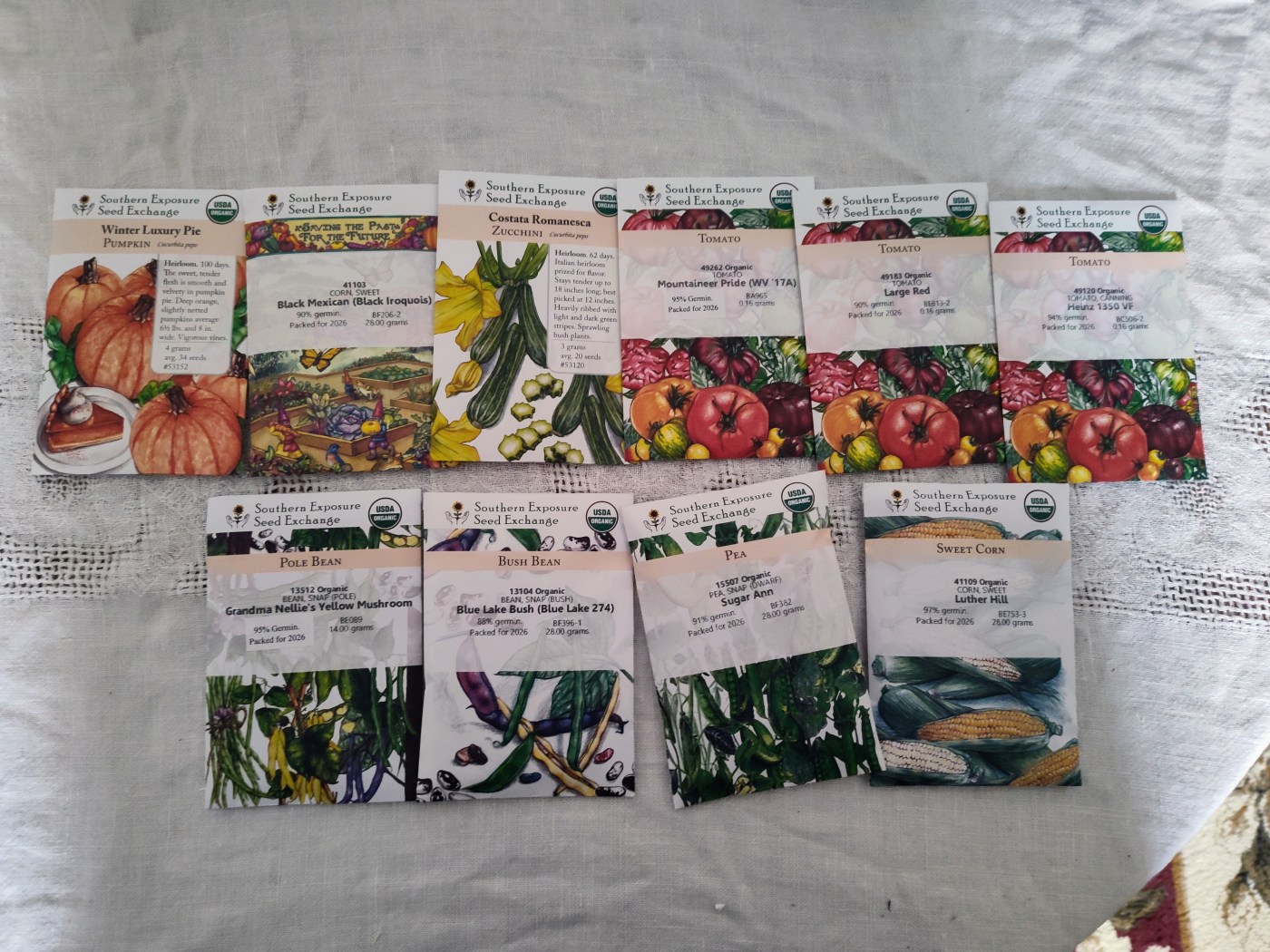
On many seed companies’ websites, there are categories for seeds that are native to different parts of the world. True Love Seeds, for example, has collections for the African Diaspora, East Asia, Seeds of the Levant, South Asia, and Southeast Asia. Buying those seeds helps us to learn about the culture and food systems as well as to support the farmers who keep these seeds alive. In my opinion, any seed company worth its weight will give a percentage or set amount back to these farmers to help them grow or simply maintain their farm. For example, True Love Seeds gives 30 percent of its annual sales back to their growers. That’s important. Other companies that clearly communicate how they support growers are Fedco, Sow True Seeds, Southern Exposure, and High Mowing. That’s not to say that other companies don’t do this, but that these four are transparent.
You can also look for heirloom seeds and seeds that are part of Slow Food’s Ark of Taste. Ark of Taste seeds are ones considered at-risk and must be protected at all costs. Purchasing and growing these seeds helps promote biodiversity and sustainable growing practices. Although there are different definitions, heirloom seeds are ones with an origin that dates back to before hybridization took off. For some, this is at least 50 or 100 years old, and for others, the seeds must have originated before the conclusion of World War II or 1951. The majority of the seeds that we know Native Americans or African slaves transported are heirlooms. Others are the result of immigrants transporting them to the U.S. during the 19th century. Purchasing heirloom seeds as much as you can is never a bad idea.
In the past, Magz and I have bought what I call seeds of resistance because we were intrigued by the vegetable’s characteristics – taste, color, growing habit. As history majors, we’re also motivated to keep history alive, and by buying heirloom seeds with an interesting story, we were doing that. Now, we’re committed to growing these at-risk vegetables. A few seeds that we have bought for past gardens or bought for this year’s garden include the Cherokee Trail of Tears and Iroquois Skunk beans, Hopi Blue corn, Ali Baba watermelon, and Candy Roaster, Yellow Crookneck, and White Scallop squash. All of these varieties have unique histories and stories. It’s pretty fun to participate in that story by growing them.
Where Do We Go From Here?
I set out writing this post wanting to explore the tragic acts taking place in Palestine at the hands of Israel that I label genocide and ethnic cleansing. I achieved that and much more. Through history classes, including one dedicated to genocide, I was aware of the acts that add up to genocide as well as previous instances where genocide occurred, so I was confident that my research would support my take on what’s happening to the Palestinians. I didn’t expect my research to necessarily take me throughout the history of criminalizing starvation and how recently it happened. I was left with a deep sadness at how humans treat each other. When differences are realized, the first instinct is often fighting and conflict. And if that conflict isn’t resolved soon enough, or if the aggressor doesn’t feel like they’re achieving their goal efficiently, they’ll use deplorable acts to find victory. They have no problem dehumanizing other people, and oftentimes, it’s even their goal.
In the United States, we’ve been taught to support Israel no matter what. Even as a Christian raised in the U.S., Israel and the Jewish people are considered sacred. That they’re the ones being attacked and not the aggressors. Yet their acts over the past two years have changed that narrative. By committing acts of genocide against the Palestinians, they’re doing the very same thing that that happened to them in the past and led to the diaspora. And I can’t help but be sad. Warfare is a vicious act, but destroying another culture is deplorable. Targeting food systems is part of the cultural destruction. Food plays a key role in day-to-day life, both because it’s sustenance and nourishment for life and because it connects us to our past and others who share the same background.
So, where do we go from here? I’m not entirely sure. Ideally, we stop treating each other with such disrespect and hatred. Even when we disagree with others, we see them as humans worthy of respect and compassion. We don’t attempt to cleanse their culture from society. Unfortunately, humans are evil and act sinful, so it’s unlikely that we stop treating each other so poorly short of an act of God. In the meantime, I think we continue to share information when we learn it, we reach out and help people as we can, we educate ourselves, we act out of compassion instead of hatred, and we refuse to accept the status quo.
I know that this post was way out of the norm for me, and it wasn’t overly related to gardening, but I felt that it was important to discuss. Silence only continues the evil. If you were unaware or unfamiliar with the situation, I hope this was enlightening and eye-opening. In the meantime, I encourage you to check out the links in this post and listen to some of the podcasts I mentioned.
 One Rabbit Riot
Leave a comment