
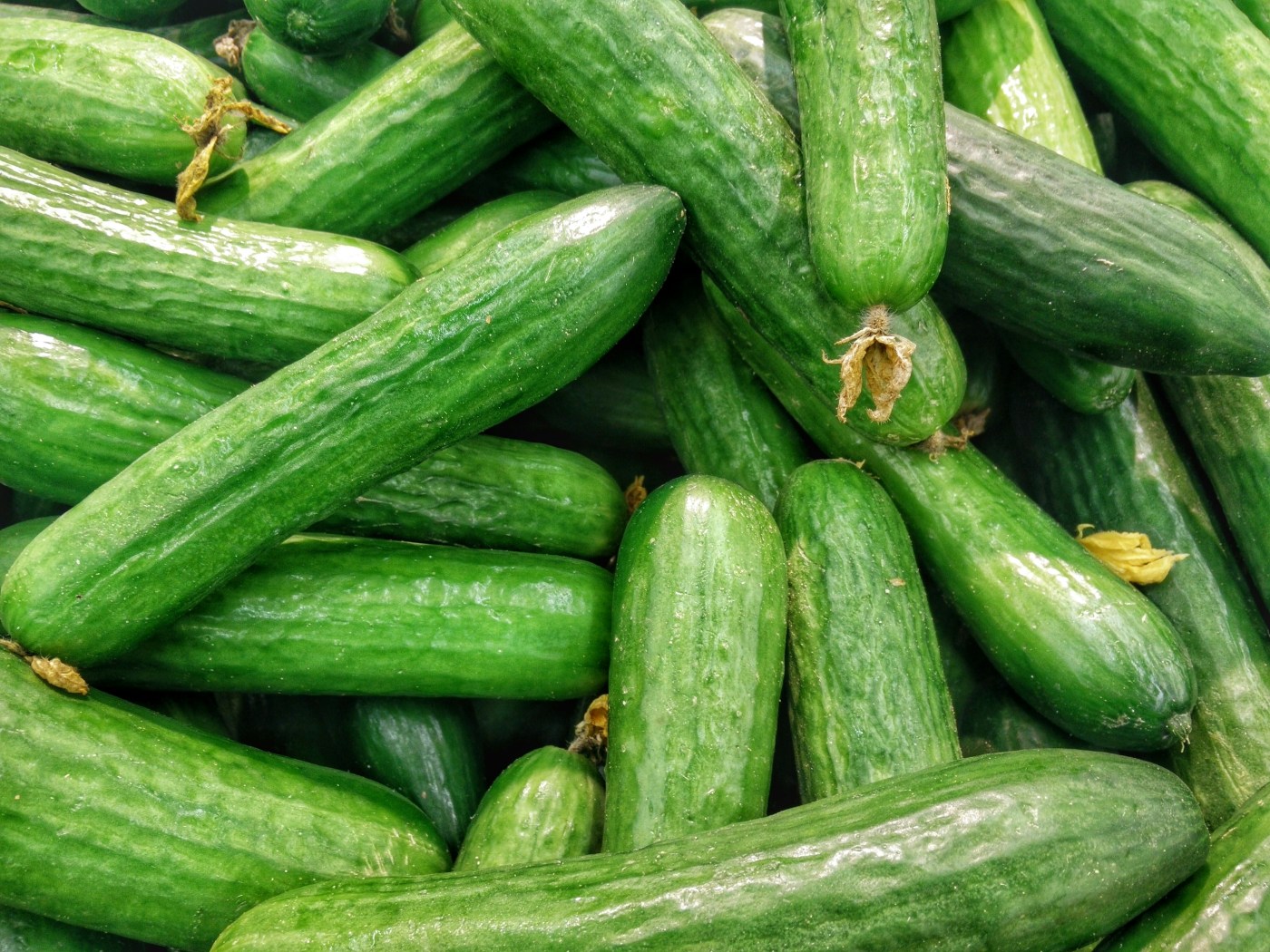
In early December, I started a series on the history of vegetables with a post on the history of the tomato. My plan was to make that a weekly or bi-weekly post; however, it’s now been more than a month since I wrote it. Holiday busyness along with the arrival of seed catalogs pushed this idea to the back burner for a bit, but I finally have some time to research and write the next installment: The history of the cucumber. Cucumbers are a very popular vegetable all around the world and play a key role in many cuisines. I knew that the cucumber was a global vegetable given the diversity of variety names that pay homage to where they originated. Boston Pickling, Armenian, and Shintokiwa are three popular varieties and point to three different parts of the globe. So, where did the cucumber originate, and how did it spread? I was shocked to learn its history and how it was transported to become a popular food item all across the world.
Foothills of the Himalayas
The modern cucumber dates back more than 3,000 years to India where it grew wild in the foothills of the Himalayan Mountains. This early predecessor to the modern cucumber was likely very bitter, which can still be found in today’s cucumbers. This bitterness works as a natural repellent against insects and pests. It started to be domesticated around 1,000 B.C., and soon, three varieties emerged: slicing (Eurasian), pickling (East Asian), and burpless.
The cucumber spread from there, moving east and west. While we don’t know exactly when the cucumber arrived in China and Japan, records show that they were present by the 10th century. We have better records for how it was transported west. Via trade routes, it made its way to Egypt, and the Old Testament book of Numbers, Moses wrote about cucumbers: “We remember the fish we ate in Egypt that cost nothing, the cucumbers, the melons, the leeks, the onions, and the garlic.” (Numbers 11:5) In Egypt, it was cultivated, as both the Greeks and Romans took a liking to it.
Greeks & Romans Brought Cultivation
We likely have the Greeks and Romans to thank for introducing the cucumber to Europe. Roman naturalist and author Pliny the Elder wrote that Emperor Tiberius ate cucumbers daily as part of his diet. The Romans also developed an artificial growing method similar to the modern greenhouse. They used sheet mica to cover the frames of the wall and roof. This allowed cucumbers to be grown and eaten all year long. At this point, cucumbers were eaten for both culinary and medicinal purposes, as it was believed that they could treat fevers, inflammation, and indigestion. Even in modern culture, cucumbers are often viewed as a dieting food due to its high water content.
In Europe
As mentioned above, the cucumber was likely introduced to Europe by the Greeks and Romans. Records show that emperor Charlemagne grew them in Italy in the 8th and 9th centuries, and we know that they were grown in France in the 9th century. The English word “cucumber” actually derives from the Latin “cucumerem,” which became “cocumbre” in Old French. Because of Charlemagne, who helps to unify Europe, the cucumber spread throughout Western Europe, and under King Henry VIII, it was first introduced to England in the 15th and 16th centuries.
Introduction to The New World
In elementary school, we learned the simple rhyme: In 1492, Columbus shared the ocean blue. It was an easy device to remember when he set sail for the New World. On that voyage, he and his sailors brought cucumbers with them, first arriving on Hispaniola in 1494. From there, it spread like many other vegetables: across the Caribbean and into North America. By 1539, Spanish explorer/conquistador Hernando de Soto identified cucumbers growing in modern-day Florida and judged them to be better than what was grown in Spain.
During the 16th century, trappers and fur traders transported them westward and used them as a bartering tool in trade with the Native Americans. This resulted in them quickly being grown throughout the Great Plains and Midwest United States. The growing popularity of cucumbers wasn’t consistent, though, and during the late-17th century, their popularity began to decline when people thought that raw vegetables were poisonous and only should be fed to farm animals. Thankfully, that erroneous opinion didn’t persist.
By 1806, eight distinct cucumber varieties existed in the United States. And later, in 1876, Henry J. Heinz, founder of the H.J. Heinz Company began making pickles commercially, and the cucumber’s popularity continued to grow. Today, cucumbers are grown commercially on every continent except Antarctica, and new varieties continue to be developed and released.
Types of Cucumbers
There are generally three types of cucumbers:
Slicing
Slicing cucumbers are ones that are typically sliced and eaten fresh. They’re crunchy with a juicy texture. Their skins are thicker, smooth, and stay uniform in color. They also tend to be longer cucumbers. Some popular varieties of slicers include Straight 8, Marketmore, Muncher, Suyo Long, and Armenian.
Pickling
Pickling cucumbers are often shorter varieties that have less uniformity in color. Their flesh is drier, which makes them perfect for pickling because it efficiently absorbs the pickling liquid. They can be cut into spears or coins, and some of the smaller varieties can even be pickled whole. Many pickling cucumbers also have a more compact growing habit than slicing varieties. Popular varieties include Boston Pickling, Homemade Pickles, National Pickling, Arkansas Little Leaf, and Bushy.
Burpless
Burpless cucumbers have been bred throughout the centuries to cause less burping than a standard cucumber. Cucumbers contain cucurbitacin, which can cause digestive issues, including burping, in humans. Burpless varieties have less cucurbitacin in them, which means fewer digestive issues. Many slicing cucumbers are burpless, but not all of them. Popular varieties include Armenian, Suyo Long, and Summer Dance.
I hope this brief history of the cucumber was informative and that you were able to learn something new. I know that I did.
 One Rabbit Riot