
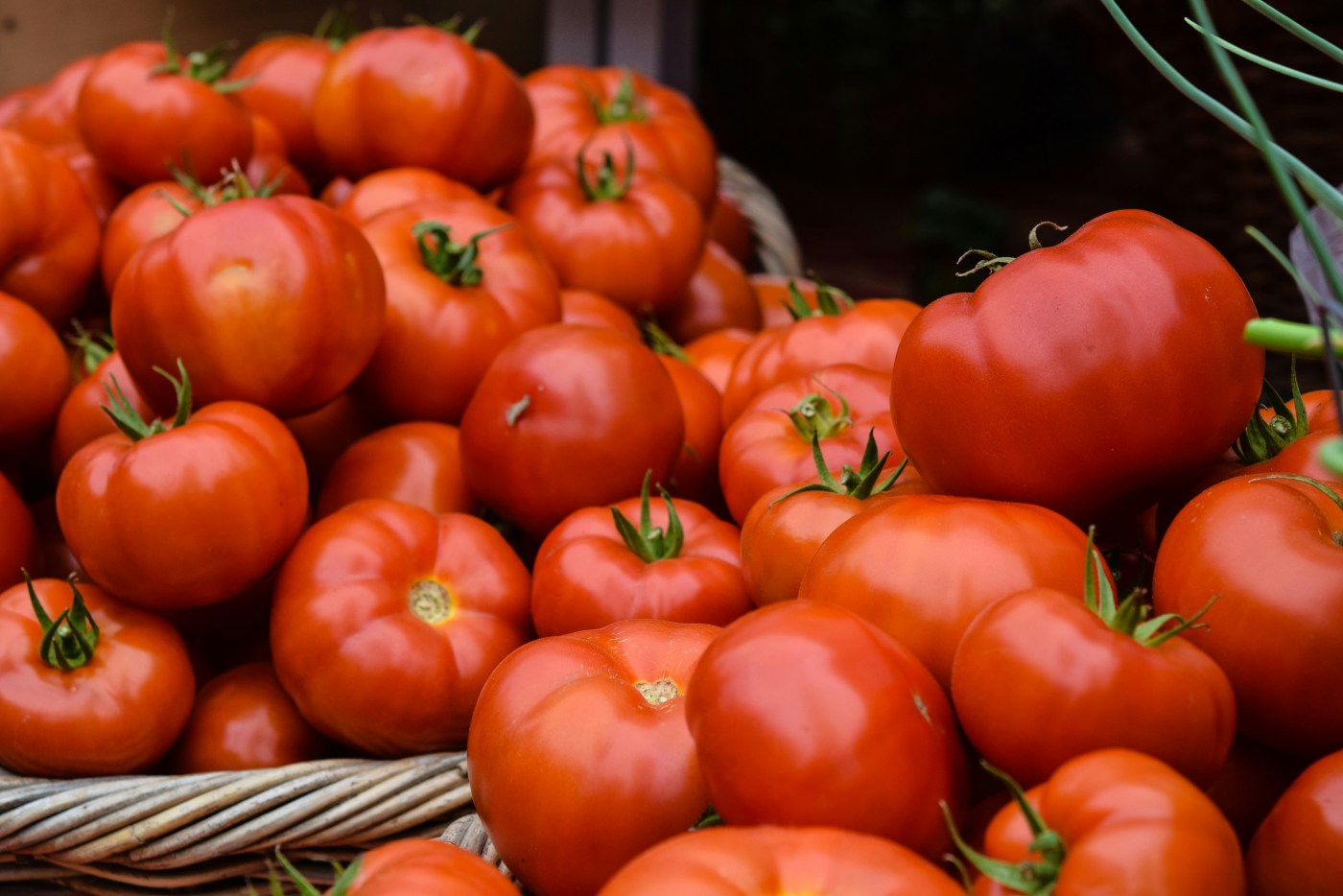
A research project that started with my looking into Pennsylvania’s native plants has expanded into a general overview of where our most popular commodity crops originated. I’ve said this before: I’m a history nerd and struggle to only do surface-level research. It’s quickly becoming evident that what started as a brief historical post is now a full-fledged project, which I’m excited about. It’s been a long time since I’ve been this excited or interested in doing historical research. Moving forward, I’m going to look at the history of many of the vegetables we grew in our garden this year. Starting out are tomatoes, which are probably the most commonly-grown “vegetable” in the United States.
From South America to Europe to the World
As many know, tomatoes aren’t vegetables. They’re technically fruit and are members of the nightshade, which also includes potatoes, eggplants, peppers, and tobacco. The part of the tomato plant that we eat is the berry, although we eat it as a vegetable rather than a fruit.
The modern tomato’s origins go back to Western South America in Ecuador and Peru where it grew wild. Around 500 B.C., it was first domesticated by the Aztecs and Mayans in modern-day Mexico. It wasn’t until the 16th century that Europeans first saw them as they conquered the people groups of Central and South America. Spanish priest Bernardino de Sahagun reported seeing tomatoes in Aztec markets in what is now Mexico City (known as Tenochtitlan at the time). In 1544, they first appeared in European literature in Pietro Andrea Mattioli’s herbal. Mattioli was an Italian doctor and naturalist whose commentary on medicinal plants was pivotal. At this time, tomatoes were viewed as a new type of eggplant, and in 1554, he referred to them as “golden apples.”

After the Spanish first encountered tomatoes, they took the fruit with them as they continued their mission of conquering the Caribbean and (eventually) the South Pacific. From the Philippines, they were taken into Southeast Asia and reached China in the 16th century. In Italy, they were mostly grown ornamentally due to toxicity fears associated with other nightshades. In fact, they weren’t incorporated into cuisine until the late 17th-early 18th century.
Elsewhere, the tomato reached the island of Great Britain until the late 15th century, but due to the spread of misinformation by John Gerard that tomatoes were poisonous, it took centuries before they were widely consumed. Tomatoes reached the Middle East in the late 18th to early 19th century when a British diplomat transported them to Aleppo, Syria.
Tomatoes were first mentioned in the United States in 1710 when they were recognized by an English herbalist named William Salmon in modern-day South Carolina. It’s speculated that they arrived via the Caribbean and were grown on plantations in the Southeast by the 1750s. Like other parts of the world, the majority of Americans (or colonists prior to the American Revolution) maintained the view that tomatoes were poisonous and should not be consumed. However, that mindset changed during the 19th century as horticulturalists began breeding tomatoes for commercial sales. The most famous of these horticulturalists was Alexander Livingston, who was responsible for helping to develop a tomato that was uniform in size, smooth, and sweet. In 1937, the USDA that he was behind over half the major tomato varieties that were available at the time. Since that time period, more than 100,000 varieties of tomatoes have been identified, and they are largely broken down into five or so categories.
Types of Tomatoes
Tomatoes are generally categorized in the following ways:
Beefsteak
The beefsteak variety is the largest variety of tomato, often measuring nearly 8 inches in diameter and weighing a pound or more. It’s one of the most popular types grown in the United States, and gardeners love beefsteaks for their wide range of uses, including in sandwiches and salads; however, they aren’t a good saucing tomato due to the large and numerous seed cavities. Popular varieties include the Brandywine, Cherokee Purple, and Mortgage Lifter.
Cherry/Grape
Although cherry and grape tomatoes are technically separate varieties of tomatoes, I’m writing about them together because people tend to grow them for the same purpose: fresh eating. Cherry and grape tomato plants produce small fruits, from the size of a blueberry up to a golf ball. Cherry tomatoes tend to be spherical and more uniform in size, while grape tomatoes are often oblong. These types are the ones most closely related to the wild varieties that were grown in South and Central America. Cherry and grape tomatoes are usually eaten fresh or in salads. Popular varieties include Matt Wild Cherry, which shares many characteristics with its ancient, wild relative, Black Cherry, and Yellow Pear.
Oxheart
The oxheart tomato is similar to the beefsteak in size, but different in shape. Whereas beefsteaks are round and spherical, an oxheart tomato will be shaped like a heart or strawberry with a round top that tapers to a point at the bottom. They have fewer and smaller seed cavities than beefsteak tomatoes, which means less water. They are a versatile type of tomato and can be used in everything from fresh eating to canning. Common varieties include Amish Paste and Oxheart Pink.
Paste/Plum
Paste/plum tomatoes are the perfect tomatoes for making sauces and canning due to their low number of seed cavities. This means they have less water content than other types of tomatoes, making them perfect for cooking down into sauces and pastes. Their plants are often determinate, so all their fruit will ripen around the same time, making it easier to harvest batches for processing. Some of the most popular varieties to grow are Amish Paste, Roma, and San Marzano.
Slicing/Globe
Globe tomatoes are likely the ones that come to mind when you think of tomatoes. They’re uniformly round, can be red or green, and can be cooked or eaten raw. They’re easy to slice and serve on sandwiches and can be chunked for salads. They are sweet, but only have a mild tomato flavor. There are many varieties of globe tomatoes, but some popular ones are Black Krim, Mountain Princess, and Bumble Bee.
There you have it; a very brief history of the tomato and the categories they are separated into. I say it’s very brief because there are entire books dedicated to the history of the tomato. One is The Tomato in America: Early History, Culture, and Cookery by Andrew Smith. That is a phenomenal book to read if you can find it. It’s also available to borrow digitally for free through Open Library. Tomatoes are one of the most important and popular vegetables grown commercially and in home gardens, so it was always going to be impossible to provide an in-depth history in a single blog post. But, if you’re like me, you will find this interesting and be intrigued to embark on additional research.
I’m going to continue to do these brief histories of vegetables, but they won’t be a weekly occurrence. I’ll publish them as I’m able to work on them and sprinkle them in with other out-of-season content. Next up, I am going to start writing about the seed catalogs we’ve received for the 2026 growing season.
 One Rabbit Riot