
Growing up, one of my favorite video games was John Deere: American Farmer. Released in 2004 on PC, it allowed you to take ownership of a farm and operate it with the goal of expanding and making a profit. You were able to pick your location in the United States, buy your machinery and attachments (all John Deere, of course), and plan out your fields. You also could buy animals to raise. If I remember correctly, there were cows and pigs, but there may have been more. You were able to pick what crops to plant, but the biggest downside was not driving the machinery. Instead, you selected the field, the job (planting, fertilizing, harvesting, etc.), and which farmhand you wanted to perform the work. After that, you essentially “ran” it, and the non-playable character (NPC) did all the actual work.
I have very fond memories of playing that game, but I think I only played it for a year before moving (literally) and moving on to other video games. But I think playing that game was an important part of growing up. It greatly shaped the types of video games I enjoy in that I don’t like first-person shooter or online games. I would much rather play sports games or ones with long storylines. In fact, I’ve only owned one Call of Duty game in my life, and it was over 10 years ago. I’ve never played Battlefront, and the last military-style game I really enjoyed was Medal of Honor: Rising Sun, which came out in 2003. I enjoy games that have replayability and are even a bit repetitive, such as MLB the Show.
The other thing I learned from playing John Deere: American Farmer is that I enjoy games that are rooted in real life. Granted, I’ve never been a farmer (although I did work on a dairy farm when I was 15), but I have always enjoyed animals, planting, and growing things. The game also looked like everything around me, where there were countless fields and farms. It felt relatable, realistic, and achievable. There wasn’t any stress when playing the game. Instead, it was calm and relaxing. It’s what I would describe as a cozy game, although I’m unsure the term existed at the time.
Cozy Games
Cozy games are great if you enjoy playing video games as an escape and don’t want a lot of stress, fighting, and action when playing. Instead of intricate levels or storylines that require a lot of decisions and quick reactions, cozy games are often more open-ended and allow you to progress at your desired pace. I first started hearing this term in 2020 during COVID, and I think it’s obvious why. People were looking for an escape from reality, especially when they were stuck at home during lockdown, and a game like Animal Crossing: New Horizons was perfect for this. But, if you look back, earlier games fell into this category, including other installments in the Animal Crossing franchise, all The Sims versions, and many simulator games (Roller Coaster Tycoon, Zoo Tycoon, Sim City, Flight Simulator, etc.). By default, these games were able to be as complex or simple as you wanted.
I played most of these growing up, but I largely stopped in high school. However, in 2019, Sims 4 arrived on my radar after many YouTubers started making playthrough videos of it. We bought a copy for the PS4 and dedicated many hours to it, but it didn’t feel cozy. The game could still be played cozily, but most of the playthrough videos were dedicated to challenges (100 Baby Challenge, Rags to Riches, survival challenges, etc.), which made the game feel rushed and stressful. There were also plenty of ways to make the game dark and sinister, which goes against the cozy game ideal.
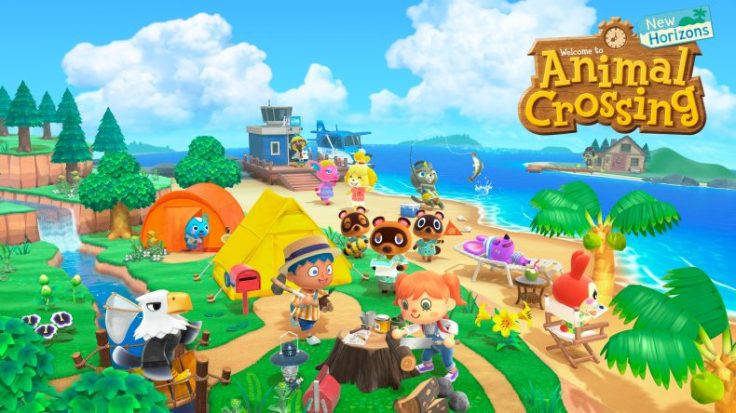
In 2021, we moved and bought the Animal Crossing edition Nintendo Switch that November. Magz had been introduced to the series in 2020 when New Horizons was released and was really interested in all the coziness that came with it. At the same time, I was looking for something equally cozy and remembered playing John Deere: American Farmer. I searched to see if there were updates in recent years (there weren’t) and looked for similar games in the same genre. That’s how I stumbled upon Farming Simulator, which met all the criteria I had: cozy, immersive, and could be played on the PS4. FS22 had just been released in November 2021, so I was able to get the previous version (FS19) at a great price when we bought the Switch. And it’s at this time, that I want to transition into a common theme of Animal Crossing and Farming Simulator: gardening/growing food. While not the sole focus for either game, both series dedicate a lot of time and attention to gardening or growing food, and gardening has become a popular theme in many games, especially in recent cozy games.
Gardening/Farming in Video Games
While farming in video games is really popular now, it’s far from a new thing. John Deere: American Farmer dates back to 2004, and the first Farming Simulator game was released in 2008. I even think about Farmville, which was played through Facebook and was released in 2009. While I played the game, I don’t remember a lot about it, but I do know it was massively popular.
Other video games with a farming element are Fields of Mistria, Roots of Pacha, and Wanderstop. I haven’t played any of these, but the reviews are great, and they’re very popular. Instead, I want to discuss three farming/gardening games that I have played and talk about what makes them great as well as areas of improvement. Lastly, I’m going to talk about how realistic each is.
Farming Simulator
I have only played one installment of this series: Farming Simulator 19. Giants, the game’s developer, tends to release a new one every two years; however, they’ve gone three years between the last three installments. I have watched people play both FS22 and FS25, so even though I haven’t played them, I feel pretty familiar with the series and its recent releases. Farming Simulator is a pretty great representation of farming. I know that I titled this post “Gardening in Video Games” and that it’s gone in a farming direction, but I think any game where you can grow crops on a small scale qualifies.
Best Qualities
- Mods: Even though you only start with a few maps and a select number of tractors, combines, machinery, etc., the game’s mod library/community provides nearly endless possibilities. If there’s a tractor being used on a farm somewhere in the world, there’s a good chance it’ll make its way into the game. The best example for this was being able to buy Jeremy Clarkson’s Lamborghini tractor from Clarkson’s Farm. It’s not one of the most popular tractors used by farmers, but because he used it, it was modded into the game. The maps are another great example. In FS19, you start with one European and one North American map. Both are pretty good, but you quickly become bored with only two options. In the mod library, you can find maps from many European countries and US states. While not necessarily designed to perfectly replicate a specific town, it’s fun playing on a map that closely resembles where you live or a place you enjoy.
- Complete Freedom: Farming Simulator gives you the freedom to do pretty much whatever you want. You can create fields where they previously didn’t exist, establish thick forests for logging, and become a dairy or sheep farmer if you want to raise animals. You don’t have to play a set storyline and can stick with a map for as long as you want. Because there are no goals or requirements, you have the freedom to determine what is success.
- Driving Machinery: The coolest part of Farming Simulator is the ability to drive tractors, combines, excavators, and other pieces of machinery that most people will never have the chance to operate. When cultivating a field or spreading fertilizer, you have to manually raise and lower the cultivator and engage/disengage the muck spreader to not cause problems. It makes you feel like you’re really controlling the equipment.
- Seasons: By default, Farming Simulator doesn’t have seasons; however, since FS19, there has been a mod to add them. You can adjust the season length from one day per month to eight days. Seasons give the game an extra touch of reality since crops have to be planted in the spring and harvested before winter, like real life.
Worst Qualities
- “Helpers”: Farming Simulator has NPCs that you can hire to help do work in the fields. Setting it up is pretty easy; however, they rarely do the work as effectively as you expect. The helpers will get lost in the fields, are easily impeded by non-existent obstacles, and don’t complete the task before saying they’re done. They’re meant to be beneficial, but they only get in the way and distract you.
- Repetition: It doesn’t take long for the game to become a bit repetitive. You do the same tasks (plow, cultivate, plant, fertilize, and harvest) on repeat. This is made better with the Seasons mod, but it still feels repetitive. There are animals that can be raised, but taking care of them requires the same repeated tasks.
- Lack of Improvements: A big issue that Farming Simulator has had is that there are few improvements between the games. FS22 added some pretty interesting productions to the game, but that was about it. There are many crops that players would like to see in the game, but they remain absent.
- Terrain Problems: This could also fall into the Lack of Improvements section, but Giants has forever struggled to make the terrain look real, especially when it’s being dug for crops or modified to level the ground. Tire marks from the equipment also never look real.
How Realistic Is It?
Fairly realistic in that you get to use equipment modeled after real-life examples and they all operate a bit different. With Seasons enabled, you have to operate within the growing parameters and can only grow what works in each season and climate. The things that are unrealistic include how quickly/slowly your vehicles consume fuel, the lack of damage, the monetary structure, and how animals are handled. I also wish that you could do some of the smaller jobs that happen on farms in the game. Things like leading the animals out of the barn and into the fields or feeding the calves would be really fun.
In general, my experience with Farming Simulator has been good, even though I haven’t played it in at couple of years. The repetition led me to become burnt out on it. I also grew frustrated with the controls on the console version, as they are finicky. That leads me to another improvement that could be made: make the console-playing experience better. That said, I do recommend playing it.
Score: 6/10
Animal Crossing: New Horizons
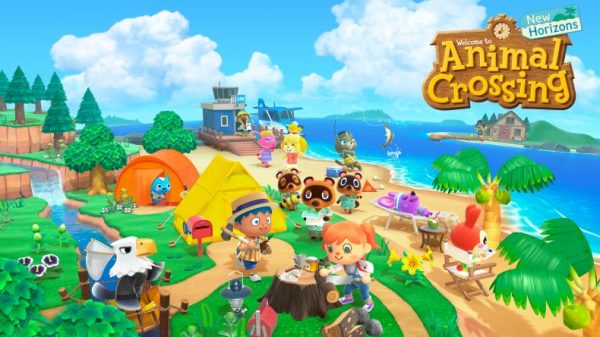
New Horizons is the first game in the Animal Crossing series that either of us have played, and I know that farming wasn’t part of previous games or this one when it was originally released. But I am glad they added it, because it brings something extra to the game. Farming isn’t too serious in ACNH. You get seeds or starts depending on the vegetable, dig a hole, and plant it. You water it every day, and after three days, the vegetables will be full grown and ripe. You harvest them, and the plant continues to produce indefinitely. It’s very simple, but it’s incredibly calming to see your character whip his or her watering can around. It takes an already cozy style of game and somehow makes it cozier. The only stressful part is when your watering can breaks in the middle of watering.
Best Qualities
- Variety: For a game that isn’t solely a farming game, ACNH has a surprising amount of vegetables that you can grow. These are tomatoes, carrots, potatoes, wheat, sugarcane, and three colors of pumpkins. I was surprised the first time I learned that there are so many different vegetables that can be grown. And the best part is that they all can be used in different crafting recipes, some are used in cooking, while others are used to make furniture or decorations.
- Simplicity: Because farming only plays a small role in ACNH, it’s not a complex process, which is great. It’s a series that’s designed to be played by people of all ages. You simply plant, water them every day it doesn’t rain, and harvest. That’s it. There are no fertilizers to worry about, and all vegetables grow in all seasons.
- Graphics: I was blown away by the graphics of ACNH when I first saw Magz play it. I didn’t really have any expectations (high or low) for the game’s visuals, so I was shocked that it was so stunning. It’s not 3D, but everything has depth. My favorite thing is how the trees, weeds, and plants will sway when it’s windy or how you can see the plants glisten after you water them.
Worst Qualities
- Would love to see more vegetables: I mentioned how happy I was with the variety of vegetables, but would love for there to be even more varieties. I’d love to be able to grow corn, beets, broccoli, and cabbage. It’d be a lot of fun to see how these vegetables would be modeled as well as the crafting recipes that would come with them.
How Realistic Is It?
It’s not at all. Plants don’t reach full maturity from seed in three days. Pumpkins, wheat, and carrots don’t continue to grow once you harvest them. You also can’t grow tomatoes, a plant that doesn’t tolerate cold weather, in winter. But that’s not the point of ACNH. It’s meant to be a lighthearted, fun, and enjoyable game. And I love it for that. I think it’s brought me the most happiness of any game I’ve ever played. You can play it for 10 minutes or two hours. If you’re down or in a bad mood, it’ll lift you up. It’s pure joy.
Score: 10/10
Stardew Valley
I came to Stardew Valley nearly 10 years after it was released in 2016. Magz bought it in (I think) 2023 and took a bit to really get into it. She eventually fell in love with the game and would have difficulty putting the Switch down when she played, and I had no idea what was happening. I didn’t understand what the mine levels were, how difficult fishing was, or who Haley is and why she’s so mean at the beginning of the game. After watching videos of people playing it, I downloaded the game in Dec. 2024 and spent a lot of hours playing it around Christmas. I quickly realized why everyone loves it. It’s immersive, entertaining, creative, can be quite difficult at times, and gives you a ton of freedom. What ConcernedApe continues to do with the game is amazing, and all the updates are free.
Farming plays a large role in the game, although you can farm as little or as much as you want. You have a farming skill that is developed as you harvest crops and interact with your animals. You can go through the entire game and beat the main storyline by not farming, but it’s definitely a better experience when you farm.
It isn’t difficult to farm in Stardew Valley, but it does require a lot of planning and thought. You manually hoe the plot you want to plant in. You buy your seeds at the town’s general store or use ones that you find throughout the world or are gifted. You can also purchase or craft fertilizers to improve the quality of your crop. Once a seed is planted, it needs to be watered every day to achieve the highest quality. Then, once the vegetable is mature, you harvest it and either wait for new vegetables to grow or plant something new.
Best Qualities
- Freedom: By far, the best thing about Stardew Valley is the freedom you have. While there is a main storyline that you should play to reach 100% completion and to experience everything the game offers, it isn’t required. You can choose to focus on farming, mining, fishing, or foraging. I’ve reached 100% on Red Dead Redepemption 2, which is supposed to take well over 100 hours to complete, and Stardew Valley blows it away.
- Variety: There are roughly 50 crops you can plant in Stardew Valley, ranging from items commonly found in real life (corn, beets, etc.) to some that I’d consider fantasy (powdermelon and ancient fruit). Each type has a season (or two) in which it can be grown as well as the number of days it requires to reach maturity. You can also grow giant versions of some varieties, and each will have quality levels (regular, silver, gold, and iridium). Vegetables are used in crafting recipes, can be given as gifts, and need to be used in pursuit of beating the main storyline. Oh, and this doesn’t even include the variety of fish you can catch or gems you can find when mining.
- Tools don’t break or wear out: In ACNH, tools eventually fail, forcing you to craft or purchase a replacement. And while I know each tool lasts a set number of uses, it feels as though they always fail at the most inopportune time. In Stardew Valley, that doesn’t happen. You are given the following tools to start: axe, pickaxe, watering can, and hoe. These can all be upgraded, which allows you to do more and use less energy in the process.
- ConcernedApe’s dedication: The game’s developer, Eric Barone (aka ConcernedApe), has poured his heart and soul into the game. He released the game independently after working on it for more than four years and continues to release updates that improve the game all these years later. He listens to the game’s fans when working on updates, and you can tell that he genuinely cares about the game, unlike a lot of developers.
Worst Qualities
- Not always relaxing: Stardew Valley is a wonderful game, but it isn’t relaxing at all times the way ACNH is. The mines, and especially the skull cavern and Ginger Island volcano, can be very stressful and difficult. Time can also make the game not relaxing. Time is always advancing unless you’re in your storage or are crafting. A full day takes 14 minutes of real-life time without pauses, and you have to be in bed by 2:00 a.m. or you will pass out, which can lead to you losing items in your backpack. You also have to monitor your energy level, because if is depleted, you’ll pass out. All of this means you have to plan out your day to ensure you get everything accomplished while not taking too much time or using too much energy. It can be a lot.
- Can cause eye strain: This may be a personal issue, but Stardew Valley strains my eye worse than any other game. I think it has to do with the default contrast levels of the graphics as well as the pixelated graphics. It means I can only play the game for a couple of hours at a time without stopping, which isn’t a bad thing, but it is more tiring than other games.
How Realistic Is It?
Stardew Valley doesn’t use a real-world clock, but a year in the game is divided into four 28-day seasons. Each season has four weeks of seven days. The seasons are like real life (spring, summer, fall, winter), and in all but winter, there are season-specific vegetables/fruit that can be grown. Those are all quite realistic for a game that has monsters and has fantasy elements. I also love that your energy gets consumed as you perform tasks or engage in combat. Finally, I like that you have to use hand tools. It’s so much more engaging and fun than using large pieces of machinery.
Score: 9/10
Do you have a favorite video game, farming or other genre? If so, I’d love to hear about it. Have you played one of the games discussed in this post?



 One Rabbit Riot