What I Would Pick for the ‘Sew Your Decade’ Challenge

In honor of National Sewing Month and the 160 years of their existence the big four – Simplicity, McCall’s, Butterick, and Vogue Patterns are taking a look back at their patterns. The Simplicity Creators group turned this little moment of fashion history into a challenge, Sew Your Decade. I first learned about this through a video from Stephanie Canada where she took a look at the patterns Simplicity was highlighting on their ‘Stitch in Time’ historical presentation of patterns and fashions made by these four companies over the years. A lot of them were reproduction patterns and had dubious choices, including some 1950s patterns in the 1960s. But that’s more of an editing problem.

Because I have a lot of other projects in progress but I love historical fashion, I thought I would take a look through the historical pattern wiki and choose a pattern from each decade of what I would want to make if I had the time to make a garment from each era. I’m using the vintage patterns wikia and historical sources instead of the patterns on Simplicity’s site because the originals are just more appropriate and imaginative than the ones selected on the timeline and the reproductions they sell currently.

1800s Era (1860s-1890s)

Butterick 9111; ca. 1897; Ladies’ and Girls’ French Bathing Costume. 
Pictured in September 1897 Butterick catalog.

I choose this bathing costume because it is such a unique relic from the past but also because we’ve seen some new designs for swimwear come out recently that reimagine the typical 20th century-21st century swim suit, that look less like bikinis and more like a crop top and a skirt.

1900-1910s Era
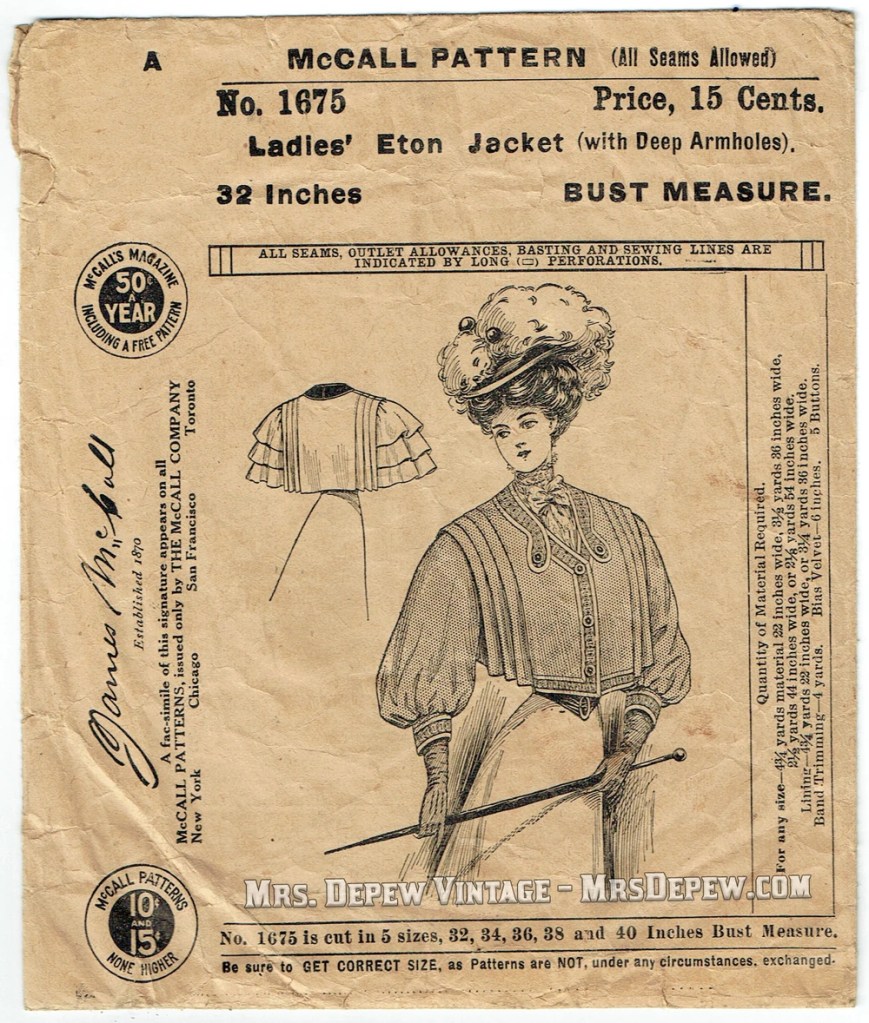
McCall 1675; ca. 1907; Ladies’ Eton Jacket (with deep armholes).
Featured in McCall’s Magazine September 1907.

What a fabulous jacket! That’s why I would choose this Eton jacket from 1907 because not only would it create a great historical silhouette, I’d love to try styling it with other items from my modern wardrobe.

1920s Era
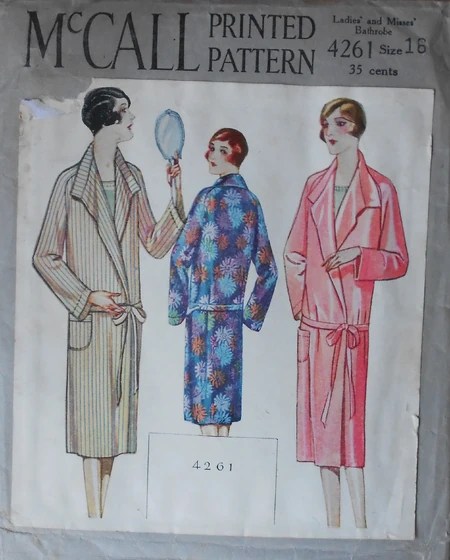
McCall 4261; ©1926; Ladies’ and Misses’ Bathrobe (Vintage Pattern Wikia)

The flapper dress patterns you see in the store are so played out and inaccurate. My choice was influenced by the wonderfully boxy lines of this robe. It encapsulates the straight up and down silhouette of the time while looking like a piece that could be dressed up or down, for around the house or used for wearable garment in the right fabric.

1930s Era
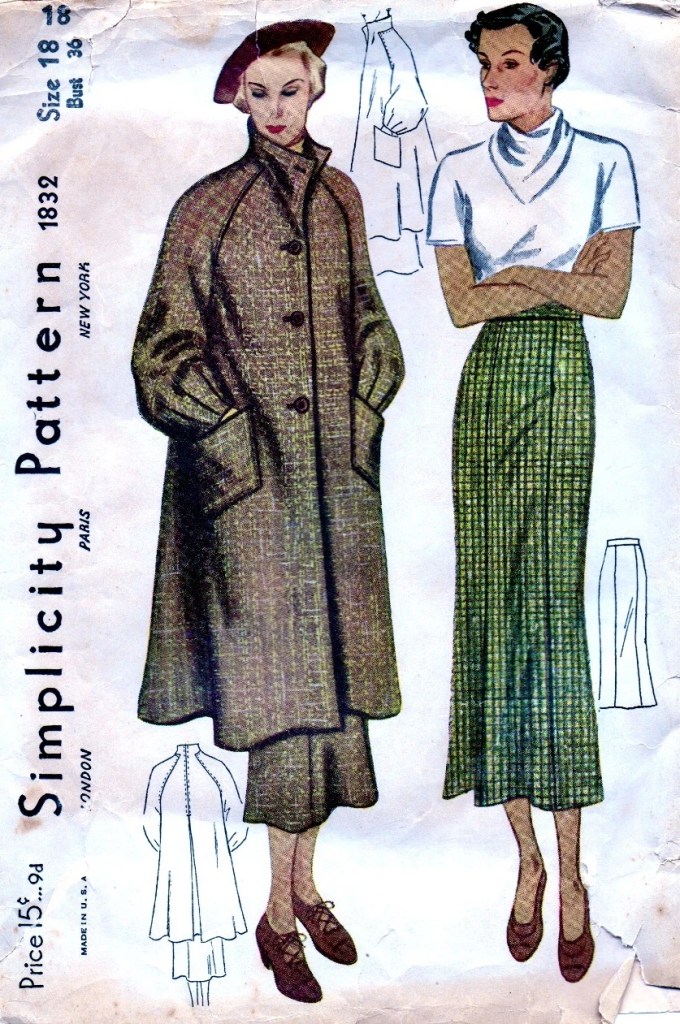
Simplicity 1832; ca. 1935; Ladies Swagger Coat and Six Gore Skirt. Coat has full raglan sleeve tucked at the wrist, patch pockets, stand-up collar and inverted back pleat.

Oh my goodness, this coat is fabulous. I may try to track this down in the future just to try my hand at it because I love these style lines. I love the raglan sleeves with the contrast of the narrow 1930s skirt. It’s so chic.

1940s Era

McCall 4037; ©1941; Ladies’ & Misses’ Dress

I like the academic style of view A and the elegant style lines of view B. I think I would get a lot of wear out of a dress in this style. The 1940s are one of my favorite eras for vintage fashion, I love the style lines of this time period and the 1920s-1930s.

1950s Era
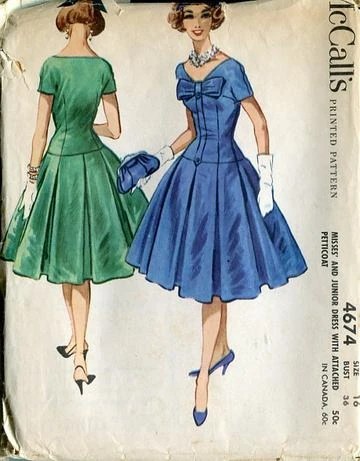
McCall’s 4674; ©1958; Misses’ and Junior Dress with Attached Petticoat.

The 1950s is not my favorite era of fashion, mainly because this silhouette looks horrible on me and it’s really over done when people think of “vintage” so for inspiration I went to 1958, the year my grandparents got married to find something interesting. I like the bow on the front of this and flounce of the skirt. The shape reminds me a bit of a bridesmaids dress I tried on that my grandma wore for her friends’ wedding in the 1950s.

1960s Era

Vogue Paris Original 1434; ca. 1965; Pierre Cardin – Suit. Side-buttoned jacket with standing, bias ring collar and cuffs. Tie belt at front, welt pocket and three-quarter length sleeves. Slim skirt.

I chose this one, first because I had yet to choose a Vogue pattern and secondly, because this suit is sharp and screams 1960s glamour. I love the over sized buttons. The classic shape and the slightly mod-artsy feel of the over all look.

1970s Era

Simplicity 7887; ©1977; Go Everywhere in Misses’ Jumpsuit and Unlined Jacket: Top-stitched jumpsuit with front seam interest has front zipper, buckled back tabs and optional rolled-up cuffs. Top-stitched jacket with collar interest has front button closing, flaps and long set-in sleeves with button trim.

This is a unique pattern. I like how many styling options we get in the line drawings. It’s an interesting jumpsuit I could see made up in several types of fabric for casual or fancy styling. I should see the blazer made in a contrast fabric or the same. Jumpsuits were a staple of the 1960s and 1970s so I think this is a great option to represent the decade.

1980s Era
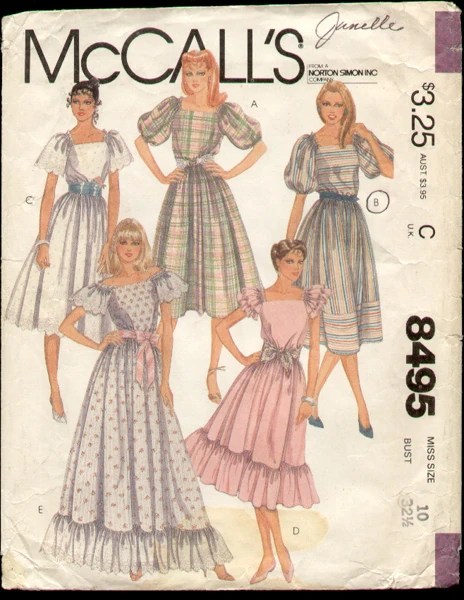
McCall’s 8495; ©1983; Misses’ Dress and Tie Belt: Dress has square neckline, elasticized waistline, center back zipper and sleeves with elastic in shoulder casings. Self fabric tie belt.

This pattern is so extra. I didn’t realize how much the cottagecore aesthetic pulled from this time period – wow! I thought the 1980s was just inspired by the 1940s, but there is a lot more there to see. I think this would be a great upcycling project with bedsheets.

1990s Era (I’m vintage?)

McCall’s 7241; ©1994; Misses’ Jumper and Overalls: Loose fitting jumper view A and B or overalls view C with lined bodices have suspenders fastened in front with buttons or overalls buckles; jumpers have side seam pockets; overalls have front yoke and pockets.

I originally wanted to pull from 1993, but this pattern is too perfect for me. I honestly want to make all three of these. I have fabric that would work for view B. I wonder how difficult it would be to track down?

Closing Thoughts

A special thanks to Vintage Pattern Wikia for making it possible to browse vintage patterns and for keeping these moments of fashion history alive. Thanks also to Stephanie Canada for putting this on my radar and for sewists like her who are keeping vintage patterns accessible to us to sew with. This was a fun challenge posed by the Simplicity Creators group and Simplicity itself for putting this on all of our radar. Although I’m not going to sew anything from what I found because I seriously have to many projects to add another right now. It’s a great way to appreciate vintage paper patterns and the effect they have had fashion and clothing in the last 160 years. Sewing your own clothes is such a great way to make things that fit you, and have your own flair, they also combat the unhinged mayhem that is fast fashion. It’s a win win 🙂

Potato Technology: Back to Basics Collection

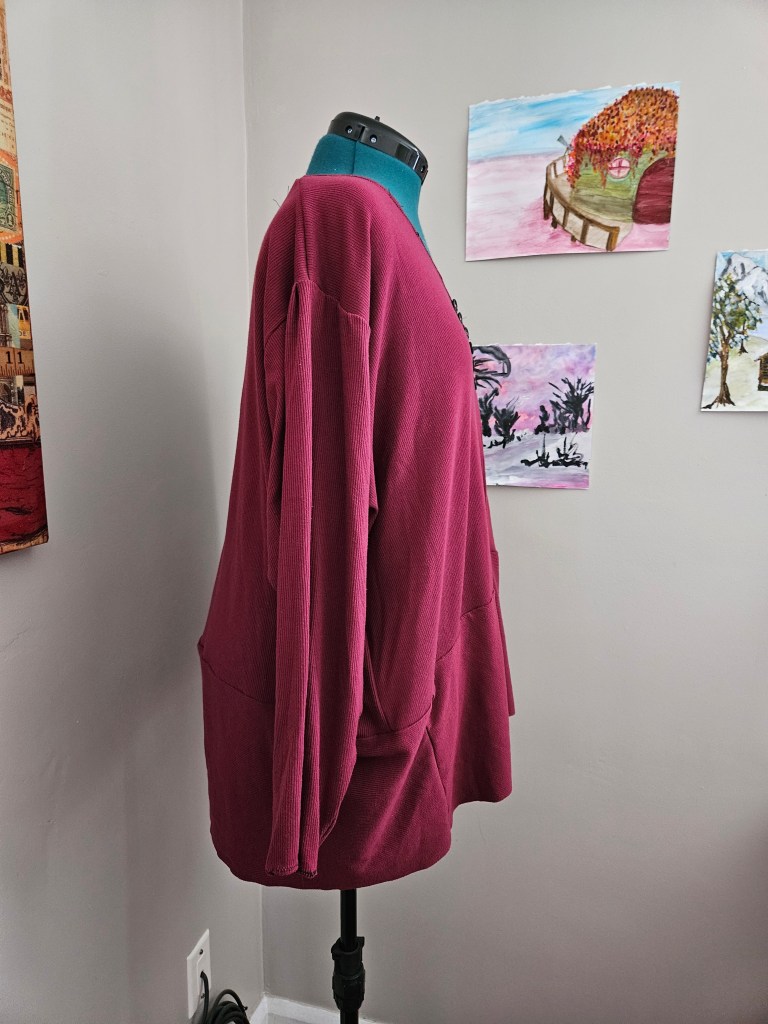
Almond Ribbed Wrap Top

Materials: 1.5 yards of stretch knit jersey. A remnant cut of fabric. This pattern was self-drafted by draping on myself and adjusting the lines with pen marking. As this was the first garment in this series, there was more trial and error with cutting pieces out of the fabric to reduce waste.

Inspiration: I was inspired by the iconic 1970s wrap dress, designed by Diane Von Furstenburg. I originally planned a wrap dress but scrapped the plan due to a lack of fabric. Because of this, there was probably 1/8 of a yard of fabric left over. With more practice, I’d like to reduce that amount to smaller pieces of scrap leftover.

Cherry Henley Ribbed Top

Materials: 2 yards of stretch knit jersey and 6 buttons. It is a heavier weight jersey and feels like a light sweater. This was a remnant cut. I developed my first official bodice pattern from this process.

Inspiration: 1900s men’s buttoned henley baselayer tops from the gold rush era in the United States. Think “old western” dramas, Deadwood, or Red Dead Redemption. I cut it oversized to carry the theme of it being a men’s garment. During the cutting process, I was able to utilize almost all the fabric with only 2-inch scraps being left over.

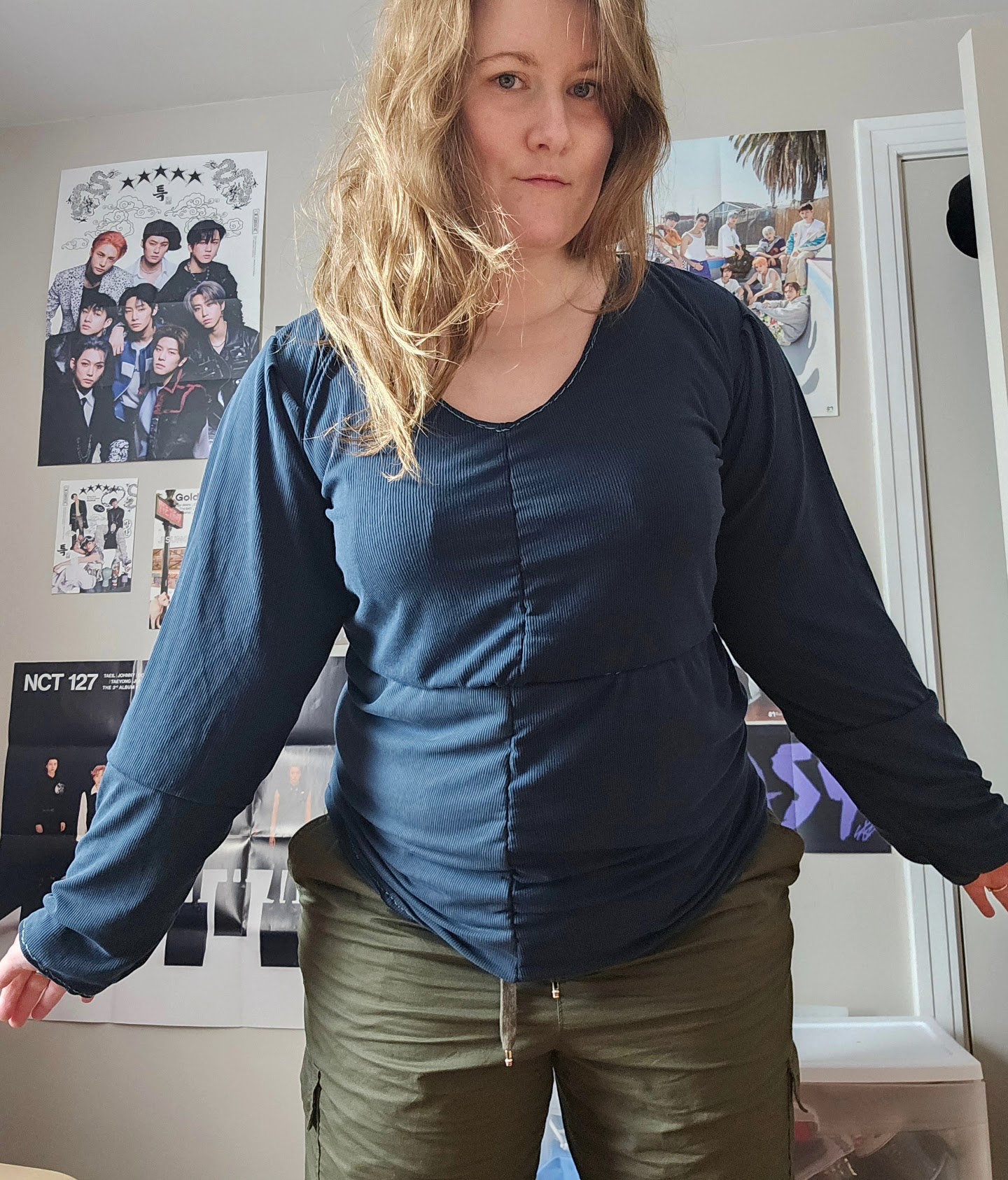
Stormy Seas V-Neck Tunic Top

Materials: 2 yards of stretch knit jersey. To utilize as much of the fabric as possible, I chose to get creative with my pattern cutting. To do this, I pieced together the bottom and portions of the sleeves to use up almost all of the remnant, with 2in or less scrap pieces left over.

Inspiration: I was inspired by the design lines of early medieval tunics. I like the simplicity of the lines and the lengthening effect it has on my proportions. For more information about Viking Age tunics, I recommend checking out Project Broad Axe for historical recreations and additional background on the history of Viking Age tunics.

Sewing the 1890s Aesthetic

Red Dead Redemption 2 was not a game I thought I would love or even appreciate. In fact, I’ve never played it myself, I’ve only watched my husband play, and seriously, I enjoy watching him play. The world created in the second game is so immersive and aesthetically pleasing that my dress historian heart sings when I see the detail and research the developers put into making Arthur Morgan and the cast of characters feel well-placed in a game of re-imagined history.

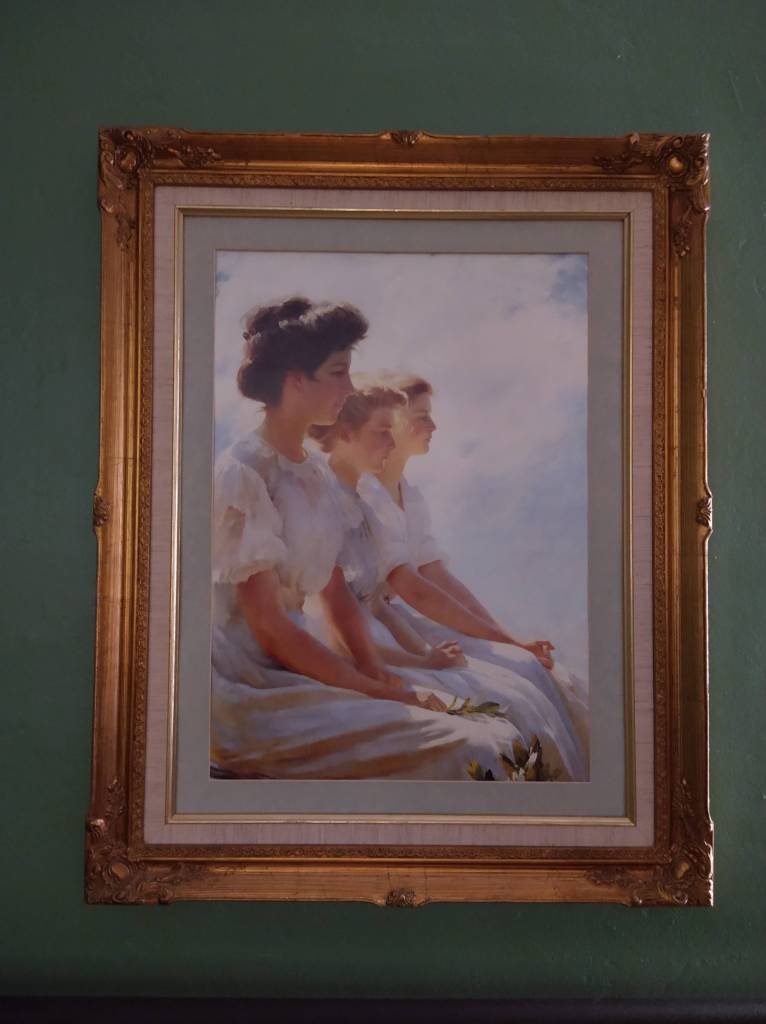
The 1890s have long been a favored period for me. From the popularity of the Gibson Girl look to the Anne of Green Gables movies, puff sleeves, bicycle jackets, and the pigeon breast silhouette with long walking skirts have long captured my imagination. Maybe it was the years of seeing these portraits of my 1890s ancestors above the mantel at my grandparents’ house. Or this Gibson Girl-inspired painting in my Grandma’s bedroom. It made an impact on my appreciation for this time period and design aesthetic.

There is such a quintessential Victorian-ness about it. But also this aura of possibility. The world was changing rapidly during this time through industrialization the Gilded Age brought splendor and wonder. The Arts and Crafts Movement was at its height which is why I think I am so drawn to this style. Arts and Crafts era houses are among my favorite styles of architecture, bringing forth the Craftsman style along with Frank Lloyd Wright’s prairie style. Maybe it was growing up in an old Victorian house too?

And so this game, Red Dead Redemption 2 with its 1899 time stamp and varied styles of architecture has brought me so much joy and comfort. Even the Bayou Nwa of Lemoyne is a delightful reminder of my time living in coastal Georgia. Especially the alligators, which seemed to lurk in every body of water. But those cypress trees still call, like the delightful menswear of Arthur Morgan’s wardrobe, and the wonderfully decorated towns of St. Denis, Strawberry, Rhodes, Valentine, Annesburg, and Blackwater. And so I find myself sewing Arthur Morgan-inspired pieces, for both myself and my husband. Who knows where inspiration will find you? I certainly didn’t think a Rockstar-developed video game would bring me such joy and fashion design inspiration. But it truly shows that inspiration is everywhere if you take the time to appreciate it.

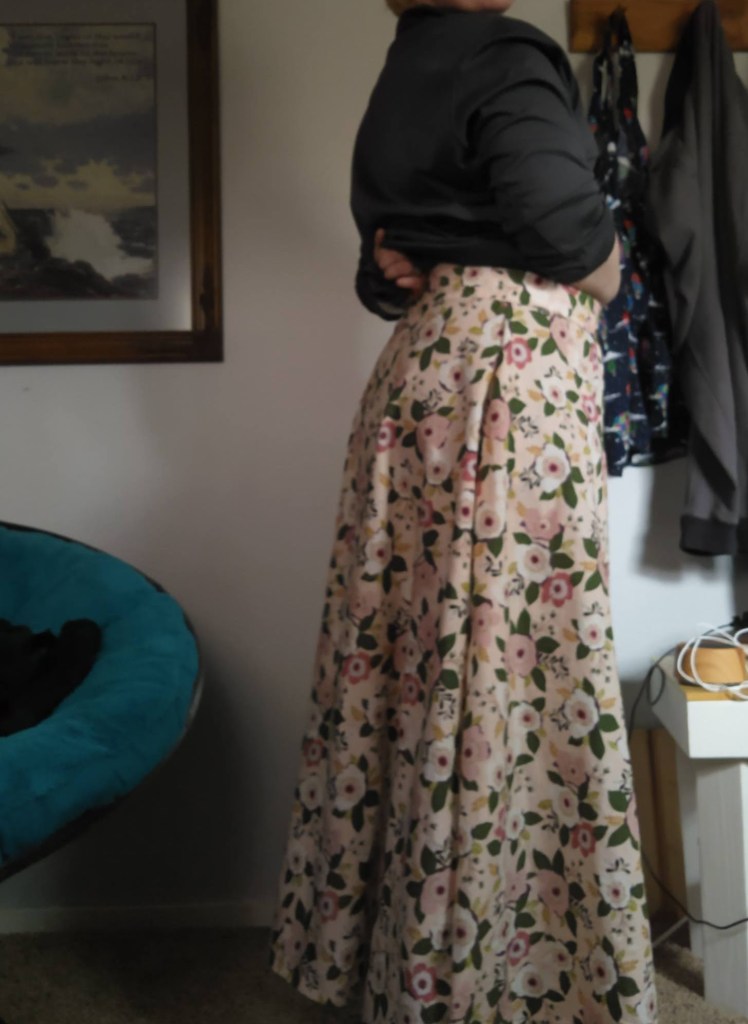
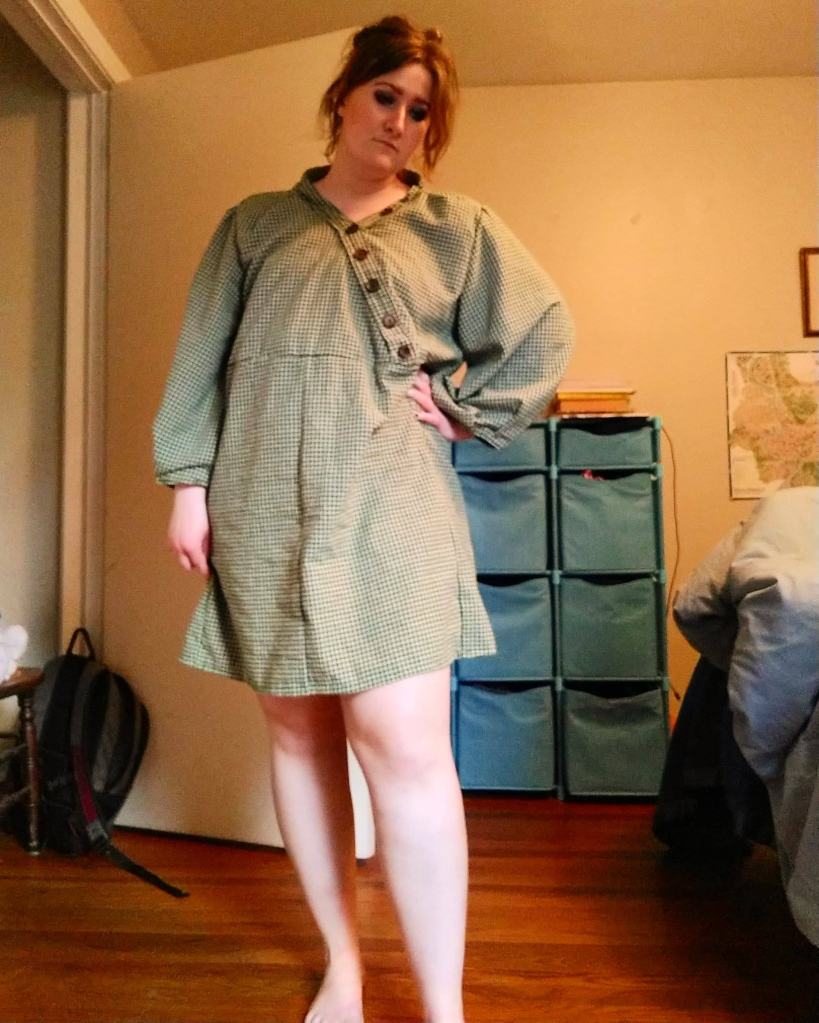
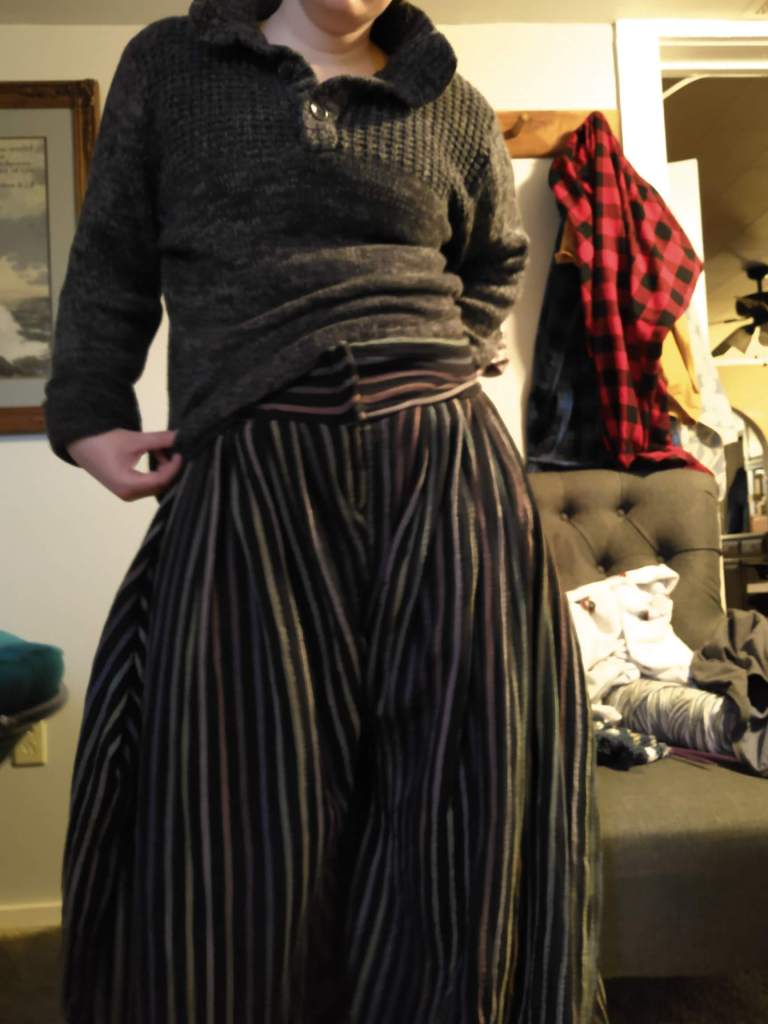
L to R: 1890s long underwear-inspired dress, Vest with high neck in the 1890s tailoring style, Exaggerated 1890s menswear stripe pants

Create a website or blog at WordPress.com

Up ↑