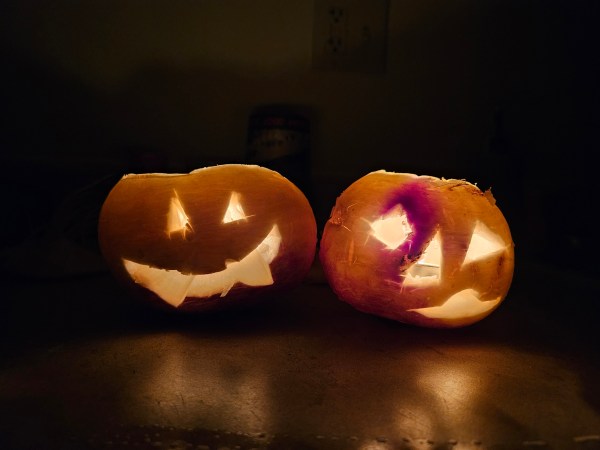
As a kid I carved pumpkins, as I mentioned in my jack-o-lantern pants posts, many moons ago. But as an adult, who has spent many years diving into history, the specifically Irish history of my ancestors, I have found myself switching to a new tradition. Turnips.
The turnip was the orignal carving vegetable for the original halloween, samhain in gaelic. Irish culture gave the traditions of halloween to the British colonizers and Irish immigrants took the traditions with them to America. Trick or treating, costumes, jack-o-lanterns carved pumpkins are all adopted from this key festival of ancient Ireland.
Samhain was a two day celebration. A bit like new year, a bit like day of the dead, and a time when the division between the spirit realm and earthly realm became thin. Fires lit the dark night, masks were worn and turnips carved to warn off evil spirits. The dead could return for a visit and it was unsettling. The world could end, if the gods were not placated.
Of course all this uncertainty is part of the human life and how we make sense of the changing seasons and our unpredictable world. I think its fascinating how they processed these uncertainties in a feast day, abd found ways to distract themselves in the darkness of short days and impending winter. Along with the othet traditions mentioned there was divination and superstitions, like predicting future outcomes with cabbages, or just games of chance, such as finding a small trinket in your slice of pie.
How does the macabre play role in Samhain and why do we have such traditions as graveyards and ghosts? It was a part of the ancient Samhain traditons to visit burial places, make offerings to the dead, and even eat in silence. Of course, while leaving a place at the table for a lost loved one or other spirits that may roam.
There is also a darkness to this festival, and layers to how far things are taken due to beliefs. This is where I stop feeling comfortable, when it gets into the druid roots. It could be quite a sinister feeling ritual, and the druids, well I had to pause my Udal Cuain research because this druid pagan chapter of culture is too dark for me. Any religion that practice human sacrifices is a no for me dawg.
But if you would like to learn more about the lighter and in my opinion, more fascinating parts of Samhain I highly recommend checking out the Ulster Folk Museum’s website.
I’m currently watching the newest season of The Great British Bake Off, and it is bringing back wonderful memories from my childhood, thanks to one special contestant – Iain Ross. Iain is from Belfast, Northern Ireland, and his Irish charm reminds me of my trip to Ireland as a kid. He reminds me of the people I met, including my family members who live in County Antrim. He reminds me of my grandma, Florence, and my Gormley family tree. But I also remember the wonder of exploring this place called Ireland (and Northern Ireland) as an 8-year-old kid, who heard the legends of the places we saw, and found the stories truly magical.
Now, for political reasons, I wasn’t able to see Belfast due to some tensions around Orangemen’s Day. But there were lots of other cities and sites were got to see. There were stories of Dunluce Castle’s kitchen falling into the sea during a party. That was probably true. There are the ruins of tall towers, made to hide in safety from Viking raids, and also historical. But then there were the stories that lean into the fantastical, like the story of Finn MacCool and the Giant’s Causeway.
I had forgotten about the magical origin story of Giant’s Causeway until Iain turned the story into a pastry sculpture for the showstopper round. Finn MacCool, also known as Fionn ma Cumhaill in Gaelic, led a band of mythical warriors called the Fianna. Now, a giant Finn was in a rivalry with another giant in Scotland called Benandonner. To reach him, Finn created the causeway on the coast of County Antrim, which faces Scotland’s coast across the Irish Sea. When Finn saw how big Benandonner, standing in the distance across the sea, Finn decided this might not be a wise idea. Instead, Finn fled to his house, where he hatched a clever plan. He asked his wife Oonagh, to help him hide himself under a blanket, to disguise himself as a baby. Benandonner passed across the sea on the causeway, determined to settle the fight with Finn. He knocked on the door, but instead of Finn, he was greeted by Oonagh and a rather large sleeping baby, which Oonagh introduced as her son, Oisin. This terrified Benandonner. What could his father look like if this were the size of the baby? Benandonner fled back to Scotland, thwarted by the cleverness of Finn MacCool. In his haste, Benandonner ripped up the Causeway so that remnants only remain on the coast of Antrim, at the Giant’s Causeway site, and on the Scottish island of Staffa at the Fingal’s Cave site.
We know now that the hexagonal basalt rocks are evidence of volcanic eruptions that formed the Causeway in Ireland, but isn’t the creativity of my ancestors better? This story is one of my favorites. I may have been able to see through Santa Claus, but this filled me with the possibilities of a land where giants and magic roamed, and it filled me with a sense of wonder to exist in this place of extraordinary things. That’s what I began to explore in Udal Cuain and what continues to bring me back to Halloween every year – Samhain. The original celebration from Ireland.
Have you ever been to Giant’s Causeway? Did you know about the myth, and what do you think of it?
Yes, I finally did it. I found the manuscript and shifted through the 250+ pages to wrangle this story of years past down to a neat 187 single-spaced. It was a mental challenge to revive these characters I knew so well and remember who they were and why they were important to me. More important to me than I think I gave them credit in years past. Saoirse, Kinvara, and Biorn were characters I felt connected to because they were just as lost as I was. They had life toss them about, treading water for meaning in the dramatic family civil war they found themselves in. It mirrored life. It foreshadowed the losses I knew were to come and helped me sort out the mysteries of my own life in an imagined Viking Age Ireland full of shifting alliances and invaders.
After all this time, why now? I have two other novel ideas I want to explore yet I felt unable to write again until Udal Cuain was laid to rest. The leviathan of the past which helped me forward when I was stuck. I believe I needed creative closure. It was a manuscript without an ending. I revised and revised the story in 2018, taking it into darker waters. It became too dark for me to continue as my life was moving from darkness towards the light once again, there were things from history and Irish Celtic culture, as well as Norse culture I was unwilling to interact with anymore.
When I was first working on this project, I was steeped in historical research from my independent study about Early Medieval Ireland and fresh from watching the television show Vikings. It was a time when I was hiding behind a shell, numb from unresolved trauma that I was a shell of myself. Hidden away from my true self, masking and unhealthy. The violence of this show and the research on Irish pagan rituals were something I ignored, even though I cannot think of them without shuttering now. These were things, details I needed to remove from my own writing to find my own peace. Not to censor it but instead to be authentic to who I am. If you want to learn more, this novel will just be a stepping stone for more research because I cannot in good conscience tell a story with such evil and bring that evil to you the reader.
The bulk of my revisions were just that, removing things I no longer felt comfortable with to have the story reflect who I am now.
Being in the present, and seeing through the time how I have found peace in my personal life since writing Udal Cuain in 2017, allowed me to give it an ending. I didn’t know where to leave my characters when I was walking through a season of confusion. I see now that I had to read more of my own story before I could write their story.
Why am I sharing this novel on my blog instead of shopping it around to publish or publishing it as an E-book? I don’t know if this novel is something at this time that I am pleased with as a representation of who I am as a writer. It was a story that I needed to write for myself but not something I felt like it was a story I wanted to have out there for people to rip apart. I don’t feel ready to put it to market so I am sharing it on this blog for you the reader to read if you would like to do so.
Analyzing how I wrote the story and talking through the novel planning process has been more rewarding than seeing it as a published book. It was a process that gave me meaning then and still rewards me now for the things I learned through trying something new. When I started jotting down ideas for Udal Cuain I was a non-fiction writer, preferring essays and historical research as a medium to write, as well as a creative expression like poetry. World building? Not a thing I thought I could do, nor did I think that creating characters and crafting dialogue would be as fun as I thought. If you have an idea, go for it! You will surprise yourself by what the discipline of writing and creating will do for your mind. It’s challenging, confidence-building, and relaxing to escape into a world of your imagination. I believe you can do it!
Thank you, reader, for supporting me and viewing those Udal Cuain novel writing posts. It gave me the encouragement to go back and finish what I started many years ago.
Materials: 1.5 yards of stretch knit jersey. A remnant cut of fabric. This pattern was self-drafted by draping on myself and adjusting the lines with pen marking. As this was the first garment in this series, there was more trial and error with cutting pieces out of the fabric to reduce waste.
Inspiration: I was inspired by the iconic 1970s wrap dress, designed by Diane Von Furstenburg. I originally planned a wrap dress but scrapped the plan due to a lack of fabric. Because of this, there was probably 1/8 of a yard of fabric left over. With more practice, I’d like to reduce that amount to smaller pieces of scrap leftover.
Cherry Henley Ribbed Top
Materials: 2 yards of stretch knit jersey and 6 buttons. It is a heavier weight jersey and feels like a light sweater. This was a remnant cut. I developed my first official bodice pattern from this process.
Inspiration: 1900s men’s buttoned henley baselayer tops from the gold rush era in the United States. Think “old western” dramas, Deadwood, or Red Dead Redemption. I cut it oversized to carry the theme of it being a men’s garment. During the cutting process, I was able to utilize almost all the fabric with only 2-inch scraps being left over.
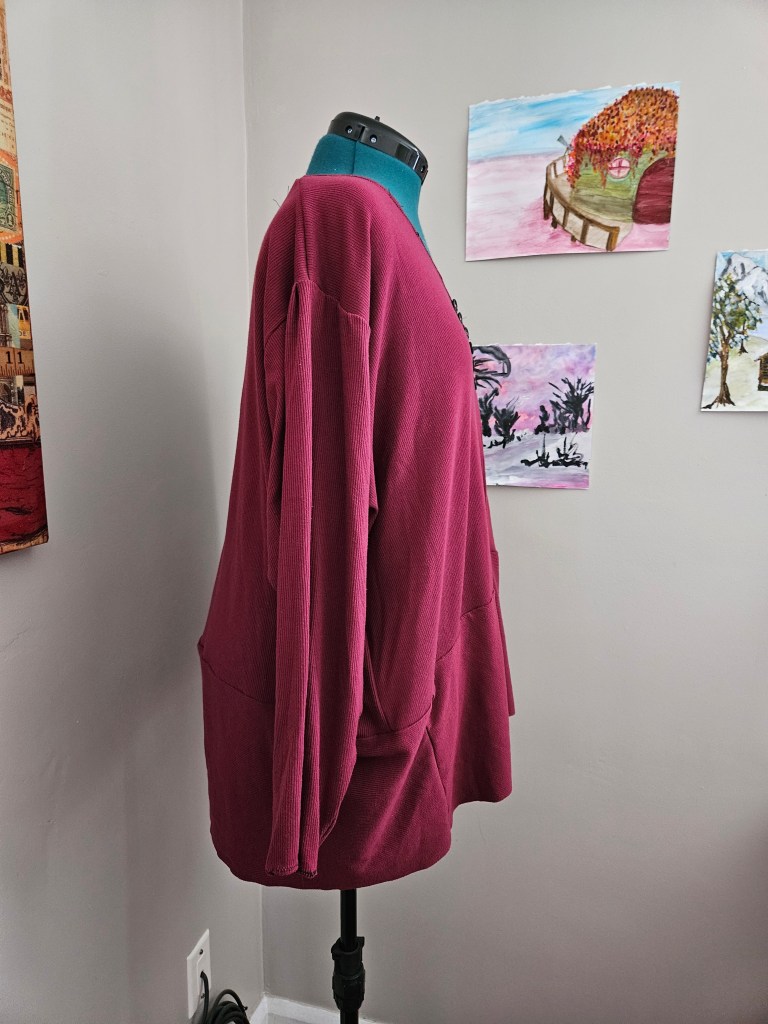
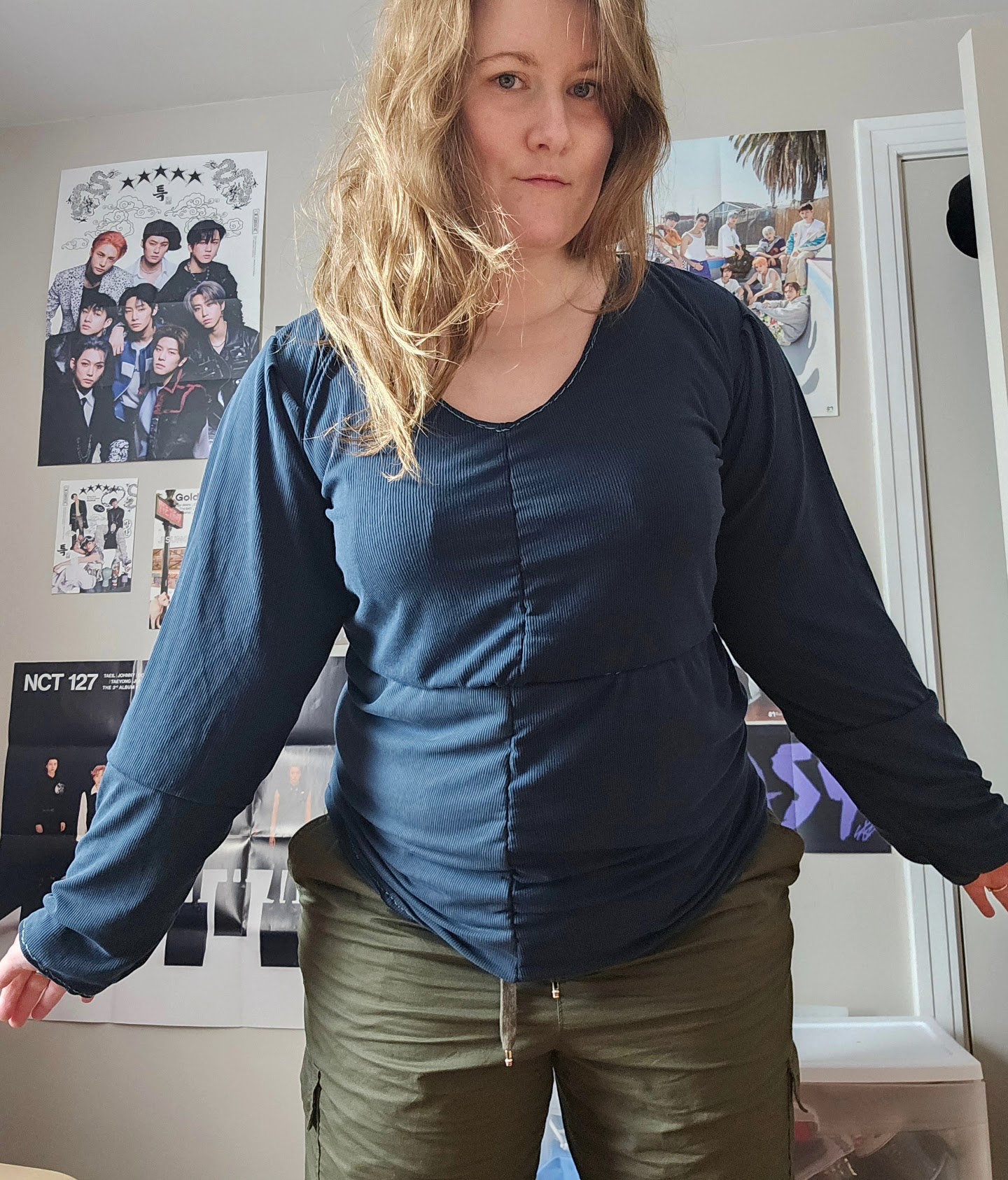
Stormy Seas V-Neck Tunic Top
Materials: 2 yards of stretch knit jersey. To utilize as much of the fabric as possible, I chose to get creative with my pattern cutting. To do this, I pieced together the bottom and portions of the sleeves to use up almost all of the remnant, with 2in or less scrap pieces left over.
Inspiration: I was inspired by the design lines of early medieval tunics. I like the simplicity of the lines and the lengthening effect it has on my proportions. For more information about Viking Age tunics, I recommend checking out Project Broad Axe for historical recreations and additional background on the history of Viking Age tunics.
I have exciting news! Yesterday, while I was transferring larger video files from my phone to my Google Drive, something amazing happened. Honestly, it was one of the most surreal things I can remember happening to me.
As the files transferred, a folder with several documents that I swore were deleted, showed up in my cloud. At first, I thought they must be just showing the recent files I had looked at because, to be honest, I don’t go into my drive very often. I saw old work documents I deleted and Udal Cuain. So, as a joke, I clicked on it expecting my drive to tell me that the file did not exist anymore. But to my surprise, that’s not what happened!
I found every draft version of my unfinished manuscript from 2018 – Udal Cuain in this folder. It had the original version, the version with an updated timeline and calendar, the version when I divided the document into two books, and the draft where I began revising and changed the beginning.
It was all there, but it shouldn’t be. I clearly remember deleting it. I remember deciding I never wanted to work on it again. And dang, after looking through all the work I put into this story over two years, I am so glad that whatever glitch happened, did happen because I regretted deleting it. I really did.
I looked at the word count yesterday, around 124,000 words or 250+ pages single-spaced. There’s too much work there to abandon. I have to revise it, right? If I took out the dark directions it drifted towards and reengineered those motifs to a place that reflects who I am instead of who I was trying to be, it could work. It could really work!
I already had a non-fiction book idea I was planning to write this year, so I guess, what is one more project? 🙂
I’m grateful and excited to get started on the revising process because this shouldn’t have happened and I am pleasantly surprised that it did. It makes those lost years of confusion and wandering in a desert of shut doors feel like they were all for something important, something that started that I should have never given up on just because I got a job.
I never thought I would see that project again, and in some way, that’s what I needed for a time, but in 2023, I began to question if I made the right choice abandoning it. I wish I hadn’t but learned to accept that I made a choice and that was that. It’s taught me to keep hold of things, and wait and see instead of making snap decisions. I guess it’s maturity. But, I’m getting a second chance here and that’s pretty freaking awesome!
I’ve been thinking, to be honest since I put the Udal Cuain project on a permanent hiatus in 2019, should I attempt to finish it or revise it in some way that would be less dark and depressing? It’s the truth, the story went off the rails into a very dark place that I no longer enjoyed working on. But could I potentially unweave the threads of plots that took the story in an unsatisfying direction? That is something I’d like to ponder. And hopefully, this project is not doomed by its subject material! I think this is applicable to all creative processes because as you make something there is that tightrope feeling that you are balancing between success and utter crap. At least that’s been my experience.
Well, I think the only way to sort through this is to look at the things I think the story should keep and what was an utter disaster. I’m going to give each storytelling technique a grade for a bit of structure. Let’s jump in!
Religion
Udal Cuain is set in the Early Medieval period aka the Viking Age aka the dark ages, which is not as well known as other historical periods. Especially when it comes to Irish history as it was known as Hibernia at the time to the Western world. The Romans were tired of dealing with the Celts and so they built Hadrian’s Wall and left them be. The only group to venture closer were Christian missionaries, including St Patrick, St Brendan, and St Brigid in the 5th century AD. As Udal Cuain was set in the west of Ireland in the 8th century AD, with most of Ireland converting to Christianity and leaving Druidism, the choice to include a druid-influenced calendar and have open belief in the Druid Irish gods was a wise decision. It feels like a plot hole to the historical evidence we do have available. For this reason, I give this religious storytelling choice an F for disregarding history.
I wasn’t as committed to my faith at the time of writing and so I was not interested in bringing Christianity into this world, although I chose the setting to be in the era of a well-established church for the sake of being in the Viking raiding age. That was a bit of a faff and something I would definitely change today if I was re-writing this story. I would either set the story back before the 5th century and nix the Viking Age plot in order to explore the Druid era for continuity’s sake or would remove the Druid part and have a more nuanced approach to these cultural legends in the framework of the 8th century where the High Kings were part of the church and monasteries were a key part of the societal structure. I would probably choose the second option because the Druid world is so incredibly dark and evil – not exaggerating, human sacrifice was prominent – so I would prefer to research something a bit more light-hearted.
Villains
A goal I had for this story was to make a cunning and diabolical villain out of Tearlag, I wanted her to be so good at being bad that the reader could almost respect her but also be waiting for her demise. When we meet her in the story she is a widow who exiled her son and grandkids by force out of her kingdom. She is hypercritical of her children and conniving in her marriages. Her husband Conn was beloved by all but Tearlag has a Machiavellian streak to her. I wanted her to be untrustworthy and truly good at executing evil plans against her enemies, including her family members. As the Dowager Chieftainness I wanted her to have a legacy that she couldn’t quite nail down, but she would use to exact every last drop from her allies.
Tearlag became one of my favorite characters to write, she had so much sass and pure nerve to accomplish what she wanted without giving a hoot what people thought. In the end, it made me sad to know she would have to be defeated. I would say for Tearlag’s character I would give her a B+ because she accomplished all I wanted her to, but now I think I could make her character even more polished. I would develop her character even more to see the layers of how she became this way and search to find if there is any good in her or if she was always born to the villain of her life.
My secondary villain was Tearlag’s son Riordan, who was a chaotic character and a bit of a brat. I didn’t want him to be likable, I wanted his character to wear his misguided decisions like a badge as the selfish person I created his character to be. His flaws drove the plot, and his mistakes bred characterization for other key players in the story. His depression for a lost love that should have never been, all while being married to another woman displayed his inability to handle responsibility that would inevitably inspire his exile. I would give Riordan’s character a solid A because his character did not waiver into plot holes, it was a disagreeable anchor to the story. I would let his story sit in the plot and flush out his failings a bit more so that his exile is more clear to the reader. I may consider if he is redeemable or if a story arc would add anything to his character.
Protagonist
I’m going to start off by being brutally honest that I don’t care for either of my protagonists anymore and would have to re-write them. Both Kinvara and Saoirse fall into the trope of “not like other girls” and I don’t like that. It was such a common storytelling trope at the time of writing that I didn’t see I was falling into it when actually I was trying to make them outsiders in their respective worlds. For this reason, I give them each the grade of D because they’re not hopeless characters but they need some revisions.
Kinvara was the opening protagonist of the book, she is shy yet observant and doesn’t like the current place she finds herself, as an exile on Searbh because of her parents’ loyalty to Riordan and his wife Saoirse. Kinvara is intelligent but a bit judgmental, and has great dislike for her sister Aoibheann as being a frivolous girl for chasing after boys, yet Kinvara effortlessly gets along with the boys, making her a bit of a pick me girl too. Not what I intended! My revisions for Kinvara would be to eliminate with tension with her and her sister, making Kinvara more likeable. I’d also like to make her a bit braver and more willing to seek after the connection to the faeries, in doing so going on her quest without a guy to help her. I’d love to see her face down with Tearlag in a David and Goliath kind of scenario, completely humbling Riordan in the process for fighting this battle for him.
Saoirse was just too dang whiny. Like, if Riordan made her life that miserable I’m not sure why I kept them together? Through the process of the handfastening marriage they had a year to figure out if they wanted to be married, Saoirse could have left after a year since Riordan never stopped his relationship with Caoimhe. I’d like to keep Saoirse’s inner struggle with managing her emotions and feelings of rejection. Her addiction I think brought a depth to her character as self-hatred was a demon she was wrestling with. A relatable thing. Her mentorship with Cheiftain Conn was a plot line I didn’t explore enough, as well as the friendship with Brigid. Saoirse fell into the trap of being defined by her relationship which was not the kind of female lead I intended to create. Defintely a lack of experience in character development on my part.
Faeries
I absolutely loved developing out the idea of faeries in the story based on Ireland’s legendary origin story of a mythical people who founded Ireland called the Tuatha de Danaan and the Formorians. It’s where the legend of the banshee, Finn McCool, and the Children of Lir come from. The imagination of Irish storytelling is incredible and I wanted to incorporate that possibility back into the land of Ireland itself through the character of the faeries who communicated with the sensitive in society – Kinvara and Chieftainn Conn.
This provided a space to dabble into fantasy with magical portals to another dimension and unexplainable powers that would be channeled through the land itself, particularly the sea. Sometimes it would be channeled through specific characters in the story like Caoimhe being endowed with the powers of the raven, essentially a morrigan or banshee. Kinvara could sense would the faeries wanted and could feel the lack of peace within the land itself for the evils being carried out by the Viking raids and Tearlag. For how much imagination and possibility this storyline gave to the story of Udal Cuain, truly a driving force for the adventures and conflicts that awaited the characters I would give it an A+ grade. This was the best part of the story and made it feel unique.
Combat
As a sensitive person I didn’t expect to enjoy writing fight scenes but it was a lot of fun to write moments of struggle and strategic movements. It was something that grew in scope as the story evolved to a point where the characters were sometimes even fighting the environment around them. This added a spooky element to the battle scenes as the enemy was not clear. Would it be a human opponent? A human opponent with a pull over nature itself because of their connection to the faeries? Would the enemy be almost supernatural in strength like the Raven? Or would they just be a dang good fighter? These were ingredients for the pacing and intrigue for the story as it was a battle of kingdoms and ideas. I would give the combat scenes a B for their solid plot movement, but I’m holding back from giving it an A because I could have created more dimension in the story if I had been willing to lean into these battles more and move the story forward instead of being wishy-washy on characters dying.
Final Thoughts
I recommend taking a look at your writing in this rating type of analysis because as I wrote this I felt such clarity on what I liked and didn’t like. I think if I had done this while I was still working on the project I may have been able to revise and carry on instead of getting overwhelmed and burn out from the stress of my day job. Thanks, dear reader, for going on this little retrospective journey with me.
I’ve decided to get back into fiction writing! It’s been a long time, so long I almost forgot how to begin. Because of how fuzzy my creative brain has felt, I’ve been stuck in the confines of what feels familiar. I’ve been wanting to go back to what I made before. At first, I wanted to bring back Udal Cuain from memory. The bits and pieces of the characters still live in my mind, but upon trying this without my manuscript – it is a bit daunting, near impossible to remember what I wrote 6 years ago. I considered rebooting it in a new story. I could fix the decisions with the plot that irked me, revising it into a thing, but at that point, why not just branch out to a new world and new characters that embody who I am now as a writer instead of what I was. And so here we are, and I’m excited!
The Writing Prompt
Since about October 2022, the pull to dabble in fiction has returned. This was in part from a close writer friend who challenged me with a writing prompt. She asked me to write about my favorite garment from fashion history and write a story from the perspective of the person who invented the garment. I began to research, to study, to not just pick a garment but pick several and then try to place them in a world with character. There were so many evolutions to this! It was an endless pit of inspiration.
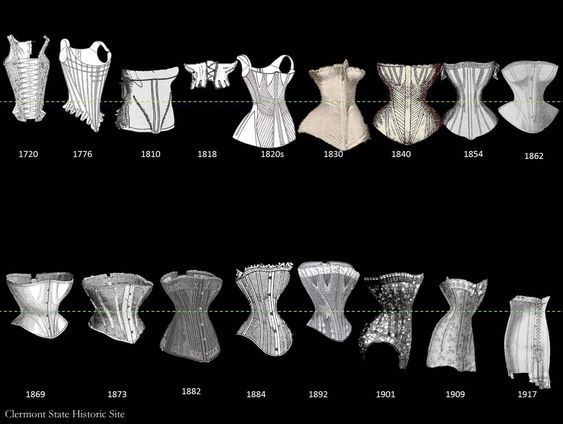
With some time to dream and consider, my first choice was the corset – it is the ultimate historical fashion garment to me because of the craftsmanship, the foundation it created for silhouette and style, and truly to challenge the many people who use it as a scapegoat in the fight against the patriarchy. If only they would do some research (I’m talking to you BBC and Netflix). I ran into a problem – what iteration of the corset would I focus on? Should I include stays? How much is too much detail? Yeah, it was a bit too broad for the kind of historical mind I possess.
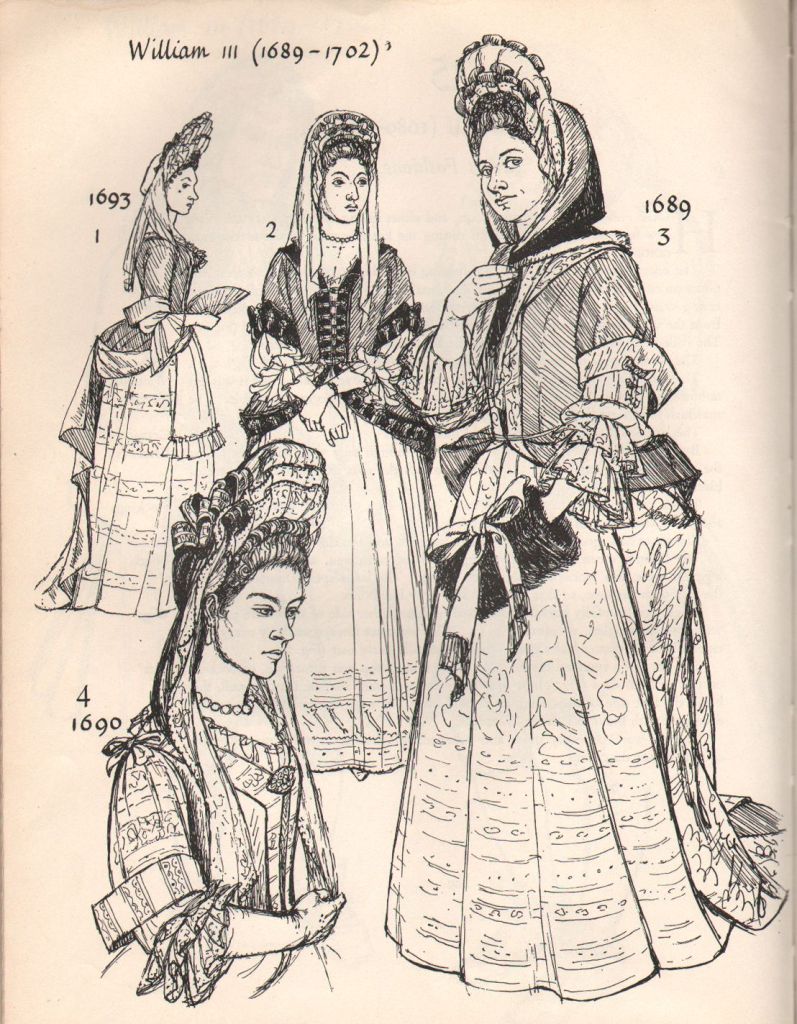
My friend suggested I narrow my wild mind down to one era, my favorite era of fashion history. What is my favorite era of fashion history? Well, I broke that prompt too! I could not decide between the 1890s, 1910s, and 1690s. I blame the fantastic fashion history content of Nicole Rudolph’s 1690s-inspired Winnifred Sanderson costuming, Bernadette Banner’s 1890s-inspired garments, and Bernadette’s 1910s Mary Poppins Jolly Holiday Lingerie Dress. My little fashion nerd heart was too enthralled to choose between them. I waded deeper into the idea. Maybe social and cultural norms would flush out the true winner. A character, if I placed her into these time periods, what would her life look like? Could she be a fashion designer like I strive to be or would limitations be placed on her talents?
If she would be prevented by society to make clothing openly, what story would there be to create? I realized I was approaching the prompt from the wrong point of view. It is not if she would be making clothes, it is in what context. A home sewist? A professional seamstress for a rich or royal family? Were women head tailors? Yes, yes they were until the mid-19th century and Frederick Worth changed the industry to a male-dominated designer world. With the right context, there was a bit more wiggle room. She could be a tailor.
There was that curve ball though, I was supposed to write from the perspective of the designer who invented the garment. And this is where my historically trained brain couldn’t seem to get out of its own way. Although I wasn’t finding a credited person for these garments, I was afraid of misrepresenting the history. If nothing else, the fashion industry has built itself on a shady foundation of misappropriating cultures, using questionable materials, pushing toxic beauty ideals, and mistreating its workers. My gut was scared of what romanticizing a garment could do to the real history at play.
Razor Clams and Melancholy
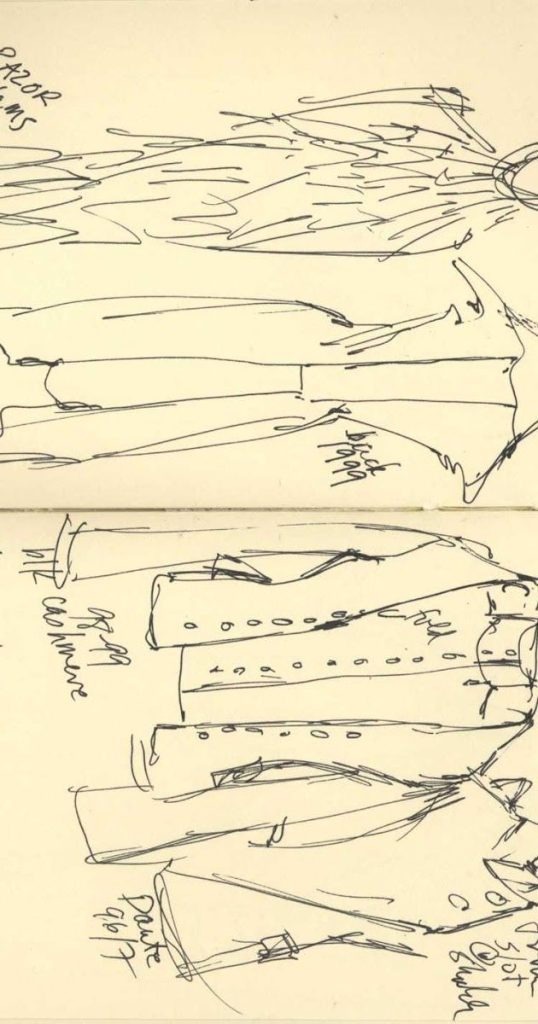
Alright, so what now? Well, I thought, what about the Alexander McQueen Razor Clam dress sketch literally tattooed on my shoulder? I mean isn’t that my ultimate garment? Isn’t he the one designer that captured my imagination? Yes, yes he was. I found security in knowing a rich history of who and how this piece of art came to be. It was safe yet true to my love for fashion design. This dress has always taken my breath away. There is something unbelievable about its construction, yet undeniably beautiful in execution, like a character in a fantasy novel standing before you with a real flying bison and bending to prove it.
I didn’t realize for years that it was made from real razor clam shells, I thought that the shells were 3-D printed. Understanding the realism captured by the use of real shells makes this dress so full of life and story. Literally, these pieces could not be here without a whole story of their own, from their former life as the home of razor clams, amidst the ocean waves to the cleaning and preparation to be sewn one by one into one garment. The time and care required to make this garment is extraordinary. I thought about my own connection to the sea, picking up seashells along the beach. Walking side by side with my Grandma, talking and stopping to discover every little gem of shell and sand. It was our thing. From Marco Island to New Smyrna, to St. Augustine, to Nags Head – we combed those beaches soaking in the memories of time, we can never replace.
I thought about McQueen and his close relationship with his own mom, and the pain that hung over him after she passed away. I pictured in my mind a day of walking the beach, with the razor-clam shells washing up. Could he have been a shell seeker like me? Could he have been as inspired to create as Grandma and I did with our favorite shell finds? Stringing them onto necklaces. A little souvenir of our walks together. As I wrote, the pain and loss washed over the words a melancholy snapshot took form on the page of a heartbroken fictional character making this dress out of heartbreak for the one he loved. The process was awful. As I wrote, tears slipped down my cheeks and I hated it.
Our Creative Well
The next time my friend and I met to discuss our writing progress, I told her of my switch to the Razor Clam dress and how what came out of my writing broke me. I was in a melancholy cloud missing the flurry of indecision compared to this. In all this chaos, I learned an invaluable lesson. As my friend phrased it, I tend to create from a place of sadness. I seek out the dark and dismal places in my brain to feed whatever I am making, like a tortured artist drinking absinthe or the despair of Poe, I am drawing upon the wrong thing to write from and therefore, my projects hurt me. The same thing happened during the Udal Cuain project. It got dark, and I couldn’t live in that world anymore. She challenged me to find a new place to rely on while I write, to create from a place of joy instead of sadness. It’s changed my whole way of creating as I mentioned in #17- Bad Writing Habits.
Where do you create from? Is it a place of joy or of pain? It’s an interesting thing to consider, and can definitely affect your tone, plots, worldbuilding, etc. I think the biggest takeaway from this process of failed writing prompt drafts was to reinvigorate my brain to imagine worlds from a simple inspiration, and to begin the path of research and brainstorming for characters, stories, and plots less traveled by the current influx of fantasies, thrillers, smut-tok, superheroes, and meta-storytelling. We need new kinds of stories. With that in mind, I’m excited to keep moving forward. I hope you join me on this journey.
Something I knew I wanted to capture in my novel Udal Cuain, was the deep world of lore that literary classics such as Lord of The Rings, the Hobbit, and Harry Potter present by creating books within books. Such as There and Back Again by Bilbo Baggins, Quidditch Through the Ages by Kennilworthy Whisp, or Fantastic Beasts and Where to Find Them by Newt Scamander. But it had to fit the world I had created in Udal Cuain with the type of literacy and availability of books, according to the time period.
I settled on a private journal that would make sense in the world of a Cheiftain living in Viking Age Ireland, that although Ancient Irish had a spoken language mostly, a brief written language of Ogham based on trees, they did have the influence of monasteries and with it written language and booking making availability. Especially if that Chieftain had studied with monks and was interested in cultures other than his own, a wanderlust and curious man, a recorder of history, both good and bad that could lead to secrets being recorded, that others did not want. A cause for his death? Perhaps! This was my jumping-off point for creating an active character in a story, where this character had already died.
In Media Res
Because I was a novel writing novice I wanted to be as slick and tricky as possible, at times writing myself into a corner by joining the story in media res, jumping into a story in the middle of the narrative without context. This left me with a problem, how do I tell the stories I need to tell without lengthy flashback scenes that may confuse the reader and muddy the plot?
Insert a lost journal. Found by a key character, with similarities to Conn. This character, who is one of the main characters, is named Kinvara. Kinvara is a misfit turned hero, through her pure spirit, she is chosen by the faeries to be their advocate and right the wrongs of her fellow clan. It is she who finds the journal after Conn’s death when she is in exile on Searbh for treason against the reigning Tearlag, widow of Conn. Kinvara desires to understand why her family and their allies were driven from home to this island, and why her parents would align themselves with Riordan and Saoirse, the ones accused of treason by Tearlag when they seem to be such bad people.
Kinvara like Conn, observes people, and so by choosing her as the character to find the journal, it is like we get to experience Conn in these situations and resolved a problem I did not anticipate – How do I make Conn a relatable character when he’s dead? How do I make the reader see his side? By making Kinvara a foil of Conn, her experience with the secrets she discovers inside Conn’s Journal allows the reader to understand who he was. How Kinvara reacts to the information both shows her value system and Conn’s and allows Kinvara to be a fly on the wall of events that apply to her but gives her the knowledge of such information that would not be available to her character otherwise.
It eliminated for me, the need to create an omniscient narrator. Something I wasn’t interested in.
Sowing Seeds of Story
Now came the task of integrating the two. How should this book, Conn’s Journal be presented in the story of Udal Cuain?
I pondered if it should be in reference only, or maybe a separate book? But that felt like I was putting a burden on the reader to seek this out when I didn’t know if anyone would care enough to do so. I don’t have a writing pedigree to fall back on, I’m an unknown writer that may not be engaging or worthy of devoting so much time to, so I thought about how to make the journal part of the chapters.
Integrating the pieces of Conn’s Journal into the chapters seemed like the most efficient option for the reader, if it exists in the story without requiring the reader to look up an additional source, I believed the reader would be more engaged, and more likely to read Conn’s Journal. This was a great strategy, I believe because this opened a new framework to chapters. If I wanted to reveal something from the past, instead of having the characters talk about it, I could paint a whole scene with action and foreshadowing, so that it was like the reader was reading Conn’s Journal like Kinvara and experiencing the story from her perspective, but also Conn’s perspective.
This plan provided a great opportunity to reveal more about the secretive O’Connors and fact-check what son Riordan, daughter-in-law Saoirse, and wife Tearlag were presenting to the characters in the story and telling the reader. It allowed me the chance to experiment with unreliable narrators, which was a lot of fun, and use the tool of dramatic irony.
Because of the seasonal framework, I discussed before in Ancient Irish Calendar, I had a concise way to show the reader when Conn’s Journal took place. His entries could be dated and set in a specific season or month that could be referenced before or later on, like a hyperlink. But, this could be more layered, Conn may have written about an event in his early life that was set in the calendar framework, and I could demonstrate when Conn did this writing later in life with an entry dated so that the reader could feel like Conn was a three-dimensional character. Just as in life, I wanted my characters to feel human and humans have memories triggered by events that are extremely personal in nature. We connect the dots in our own way, and I wanted Conn’s character to have the chance to tell his own story.
Thank you reader for allowing me to muse and reflect on this work with you. I truly miss the story within the story I created with Conn. What do you think about this writing technique? Would you apply it to your own work? Do you enjoy when authors employ in media res, dramatic irony, or books written by their characters? Should dead characters stay dead? It’s a lot to ponder.













 One Rabbit Riot