Unrelatabilty and 2025 Holiday Campaigns

I had plans originally to write about Ralph Lauren Christmas on its own, but then I saw two advertisements, one from local brand Steel City and another from Banana Republic, so bizarre that I knew I would be here. Hopefully not ranting too much, for the goal of this discussion for me is to think more deeply about the subtle oddities in my culture, I see weaving themselves in, like they are normal. Overconsumption, cultural appropriation, and the cosplay of wealth.

Banana Republic’s Holiday Edit

So what does fippery have to do with it? Fippery is another word for ostentatious; it’s showy. Frivility in dress or style. I also find the attitudes of these two brands, and I do want to write about exactly that. Banana Republic has always been in my mind, a bit ridiculous. But with every re-watch of Seinfeld, I see J. Peterman in Banana Republic’s threads, but their recent holiday commercial pushed me over the edge. They are that nonsense.

The holiday commercial is set in Ireland, County Cork, and I know I haven’t been to Ireland in 20 years, but dang, nothing about this commercial felt authentic. They play a cover of “Linger” from the Cranberries over the holiday scene in a pub, wandering around the town, finding a telephone booth with Irish Gaelic on the sign. They are all wearing vaguely Irish clothing, but really it looks like cast walked through a Premium Outlets on their way to Castletownshend, Cork. There are lovely Irish Christmas songs and many other songs by Irish bands that would have captured the spirit of the season better than a breakup song. No shade to the Cranberries, I love them. There were better Cranberries songs to pick. Personally, I would have looked at Dreams, Ode to My Family, and I Can’t Be With You to capture the nostalgia of the season with a non-traditional song.

Moving beyond the music, there was nothing really Irish about this ad. We barely see the town, we barely see the people, or the ancient beauty of Ireland. Think about movies such a Waking Ned Devine or Banshees of Inisherin – the landscape is a character, so is the music, and community. Ireland felt warm, not in temperature, but in the warmth of the people. The land feels like there is magic just under the surface, an imagination unbreakable, and a spirit that carries the culmination of all those who came before in an essence that makes you want to know more. The sweaters are intricate, made with the intention of preserving heritage crafts. Just take a look at Banana Republic’s holiday page compared to Blarney Woolen Mills, which is based in County Cork! The source material was right there. I guess what I am trying to say is obvious: Banana Republic’s collection is the fast fashion version of Irish style, don’t fall for it, no matter how they try to sell you on the “luxury” of it all. Now, what really bugged me about this ad was, in my opinion, the cultural appropriation of it all.

There is a fairisle sweater in this Irish collection, which is actually a Scottish heritage craft from the Shetlands. This sweater contains wool from Italy, being sold as an Irish-inspired sweater. You couldn’t even use Irish wool? Or include iconic Aran sweaters? Fisherman sweaters like the iconic one from When Harry Met Sally? The Donegal Wool sweater and sweater vest, straight up annoy me because these are again Italian wool. There is a wonderful mill in Donegal called McNutt that could have supplied true, authentic craftsmanship. We still have our clothing pieces from this store and Blarney Woolen Mills, 20 years later. I don’t like Ireland, which has been used for centuries, been the butt of the joke for centuries, being used again to peddle some lackluster clothes.

Gap, Inc. is a huge brand; they should have invested in sustainable Irish materials and supported the local Irish economy by using Irish craftspeople to create this collection. But just like J. Peterman, they come and see, then they steal other cultures’ designs to make a quick buck from subpar clothing. Look at the prices! The Banana Republic sweaters, made in Italy with Italian wool, versus the Blarney Woolen Mills sweaters made in Ireland from Irish wool, both made from merino wool, too. Local is better. Also, look at the craftsmanship of the Blarney sweaters; those cables are stunning and also affordable. Shame on you, Gap!

Steel City, What Are You Doing?

Actually, to quote the Big Fat Quiz Show, “You slag!” Steel City is a brand no one outside of the Pittsburgh area will know about, and that’s okay. Small businesses are great, and when this brand first started, they were cool. Their claim to fame was hyper-local graphic tees of beloved cultural things such as Turners Tea, the Stillers (aka the Steelers), Kennywood, Mr. Rogers, the Pens (Pittsburgh Penguins), and nostalgia. Over time, though they have expanded, which is great, creeping out to the suburbs of Cranberry and Ross Park Mall, and that is where things have taken a bizarre turn. In 2022, I went to their location in Cranberry Township and was appalled by how tissue-paper-thin the new items were. We had bought pierogi and Potato Patch shirts, which were of great quality, but the new stuff was off. The prices, quite higher than before, and I was no longer interested in their stuff.

But as targeted ads go, I keep seeing their stuff everywhere, and it has gone in some random places. There was a motorcycle and a desert aesthetic to their pieces now? Okay, odd. Neither of these things has anything to do with Pittsburgh. I guess the name is the only connection? Next, I got ads for quiet luxury workwear pieces, the local graphic tees, now behind a t-shirt club paywall. It felt soulless, and I was incredibly disappointed. I thought in the beginning maybe they were going to make the items in Pittsburgh, but they are made overseas. This morning, though, I got an ad that straight up felt out of touch.

Seriously? In this economy? With the amount of destruction the fashion industry creates on our planet? Honestly, Steel City, what the flipping heck are you doing? This brand is neither relatable nor cool anymore. Wasteful consumption is not in style, no matter what the internet says.

Ralph Lauren Christmas

Now, Ralph Lauren isn’t promoting this; this is just a TikTok trend, and I just wanted to drop my two cents. I’ve spent the last five years chasing the nostalgia of old Christmas, Christmas before everything hurt. Before people died. When I was a kid, things were simple. No matter how much you spend, decorate, chase – this aesthetic is not going to fix what is broken in your heart. I encourage you to seek out authenticity this Christmas. Volunteer time at shelters, donate supplies, check on neighbors. Call those friends or those family members you haven’t seen in so long and connect once again. The Home Alone house is stunning, but remember, what brings the true Christmas spirit is the relationships reconciled for the Old Man and Kevin on Christmas morning. People over things, always.
What If Game of Wool Celebrated Design and Craftsmanship?

If you missed it, I made a Game of Wool Bingo card for episodes 1-3, because in my opinion, this show should not be taken seriously. I’ve given up watching, interacting with recaps, etc. I’m not going to watch beyond episode 3, and that is because hate-watching is validation in the attention economy of 2025. That got me thinking, what do I wish Game of Wool was instead of what it is? Game of Wool, just like Project Runway, I have notes!

No Kits or Internet Dressing Projects

I don’t want any themed-making kits sold per episode. They have been doing this for the episodes I have watched, each week partnering with a big yarn company, honestly making kits that serve no purpose other than a cash grab. I also don’t want to watch weekly episodes with challenges that create useless items. Useless from a practical and technical standpoint.
  • Crochet and knit swimwear is dumb. You can’t wear it other than for a photo shoot, which places it in the “internet dressing” category. It’s for a photo. It’s not even practical for a music festival. But it does resemble a “Coachella” look.
  • A crochet deck chair had potential, but it was not used within the materials provided or the time frame.
  • A dog sweater with a required hat is not kind or practical for dogs. The sweater is comfortable, but the hat is not comfortable for the dog. Again, it is for a photo. Washability was not discussed either.
  • The mohair sweater was the only challenge that was the closest to being a useful challenge, for design teamwork and wearability, but they ruined it with the ridiculous time frame.
  • A couch cover is useless, because I have thought about constructing one for my own couch to stash bust, but it’s just not practical for anything other than a showpiece. Which is how they judged it, so a lot of wool was wasted to make a big, useless swath of fabric.
  • The fair isle vest misrepresented a heritage craft of the region they were filming in. Why not just film a historical film set in the Renaissance, and put the actresses in Victorian corsets without a chemise, tight-laced? Same level of idiocy to be flashy!

This Game of Wool presents everything that late-stage capitalism is in relation to crafting and hobbies, thanks to greed, social media, and the attention economy. The British farmers could use the income; how about sourcing locally? What about sustainability and slow fashion? Yeah, 12-hour challenges do not represent anything but hustle culture. Girl boss, slay!

How Would I Fix It?

  • Real experts, not these two ladies.
  • Either all amateurs or all expert contestants. Pick a lane. Either be the Bake-Off or be Project Runway and offer a CFDA mentorship kind of prize.
  • Bring in a real mentor to help in the wool barn.
  • Take them on field trips to see wool being processed, dyed, and spun. Same with flax for linen.
  • Tell the story of why textiles matter and why fair trade for the animals, farmers, and ethical standards matter.
  • Explain why local matters for the economy and the ecology of the region.
  • Teach the history of cottage industries.
  • Teach the history of how knitting has changed the world, such as the development of textile machinery and the creation of the binary code. Essentially, fill in the gap of what Sci Show failed to do.
  • Set real challenges that teach, showcase the skill of the fiber artists, and show innovation.
  • Do a challenge that involves unravelling sweaters for yarn and teach the world about this amazing, sustainable possibility.
  • Task the fiber artists to design patterns, and explore what goes into design and proper pattern writing, because it is a technical skill.
  • Make things that will be auctioned off for charity.
  • Bring in people as guest judges who will bring professional connections and opportunities for the fiber artists.
  • Set realistic deadlines, and slow down the pace of the show. Follow a timeline like Mind of a Chef that explores moments of cooking over an entire season.
  • Let the makers make, unencumbered by the pace of the internet. Take note from Bernadette Banner and other makers out there that celebrate true craftsmanship and sustainability in the heyday of microplastics.

I’m tired of this show discounting a skill that has been tossed aside as a Grandma hobby since the Industrial Revolution. In these weird and wacky times, slow fashion and an appreciation of craftsmanship are in short supply in the media. This show had such potential! But they are truly chasing the money over integrity.

What About the Garment Workers? 2025 Edition

There are a lot of things about this new Trump term that are setting my jaw. The newest one, though, happens to be the tariffs zeroing in on Vietnam, and something we are losing sight of in this discussion—what is going to happen to garment workers?

Vietnam is one of many countries in the global south that are responsible for the garments and shoes we wear every day. In May 2024, they surpassed China as the largest textile and garment market share for U.S. imports. The nation employs around 2.5 million people within the 6000 garment and textile factories across Vietnam. This rapid growth of 37 billion USD worth of garments being made in Vietnam in 2024, from 26 billion USD in 2017, is due to the low wages of Vietnam compared to the higher wages of China and even higher wages in the United States. In the 1980s, before Clinton’s NAFTA in 1993, garments sold in American stores were made in the United States, but this changed during the Clinton era and has gotten worse in the 32 years since through the rise of fast fashion and the fashion industry’s reliance on cheap labor at the expense of the garment workers.

So, now we bring the so-called “Liberation Day” of tariffs, and since this is a space I like to keep safe, I’m going to move on because I have nothing nice to say. What I want to focus on is not making this job American again, the rising prices of garments, or anything political, and instead I’d like to zero in on what seeing the world with a Kingdom (God’s Kingdom that is) lens has taught me so far this year.

I’d say that my eyes being opened began last year with diving deeper into Fashion Roadman’s channel, which led me to watch two documentaries – The True Cost of Fast Fashion and Perfume’s Dark Secret in 2024. The other revelations that were exposed in 2024 such as the labor practices of Armani and Dior, were very telling for how are garments are made from luxury to fast fashion. It’s no secret that the fashion industry, including luxury brands, is not concerned with the moral cost of their decisions and is solely focused on getting money in their pockets for their shareholders. So, what is going to happen within the fashion industry as a result of these tariffs set on Vietnam, especially with no sign of negotiation from the Trump Administration? I think it’s going to be bad for everyone.

I think costs from the brands will be cut from the quality of the garments being made, to the materials, to the contracts with these factories. I think garment workers will probably see the biggest hit in their work environment and wages, as their economy is hurt. Or potentially the factories will no longer get these contracts to cut labor costs, meaning the production of garments will be further entrenched with slave labor in countries where workers are exploited. Then what will those women be left with? Garment Workers are primarily women, and they are skilled laborers who could be left without a way to provide income for their families.

It’s not okay for so many reasons.

That is why, as we look towards Easter, I am thinking about those who are oppressed in our world, because Jesus came to be a new Moses and lead us through the Exodus Way. Thank you, dear reader, if you stayed with me on this one. I wish this world weren’t such a downer right now, but just know, although we are from the United States, we are not pleased and empathize with how this is affecting you too. ❤

Is A Yarn Made From Recycled Marine Plastics Any Good?

As I have dove deeper into the world of fiber crafts and created often, I’ve become more conscious of the fibers I choose. Mainly because when a project doesn’t work, I feel like a jerk for making that mistake in hard to break down acrylic. I would feel less of a fool if my mistakes were constructed in biodegradable natural fibers like wool, cotton, linen, or bamboo. Starting in 2024, I began to migrate back to natural fibers, which I mentioned before in my Summer Knitting Plans post from last year. I had been hesitant to use wool before that, supposed allergies that I debunked in 2024, which led me to explore the many fiber offerings of Knit Picks.

When I was looking at sock yarns in the fall, a particular fiber caught my eye – Oceana. The Oceana line has this vibrant kaleidoscope of colors that evokes the tropical hues of a coral reef. It’s stunning! When my stepdad gifted me a Knit Picks gift card for Christmas, I knew exactly what I would order – the Oceana! Not just for the colors, but the innovative fiber content.

L to R: Sea Lettuce, Spirulina, Tiger Fish, Swordfish, Axoloti

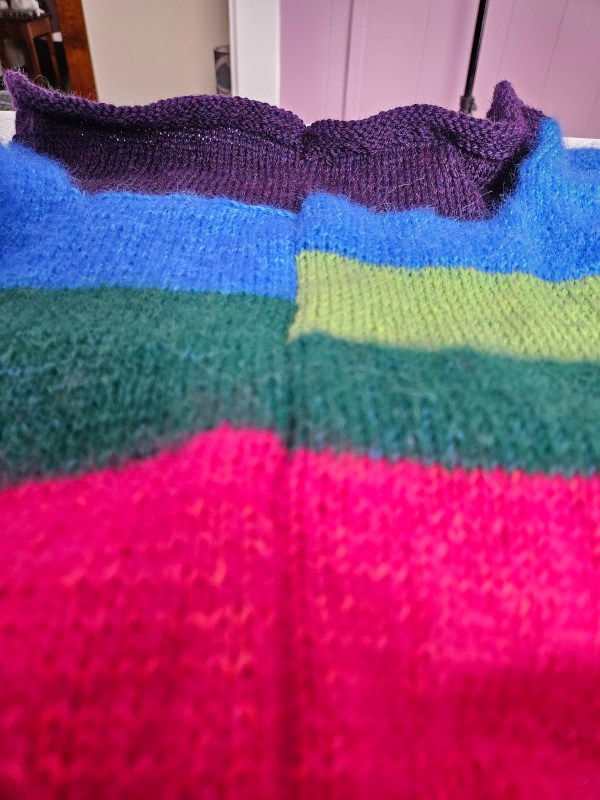
This yarn is composed of 54% Superfine Alpaca and 46% Polyester SEAQUAL, which is made from marine litter cleaned from the ocean, and that plastic is then recycled into polyester (acrylic) yarn that is blended with the Alpaca fiber to create the Oceana yarn. The halo seems to be the Alpaca, based on my experience working with this yarn, and the interior chain fluffy fiber strand seems to be a combo of the recycled polyester and Alpaca fiber. Now, fiber blends are not the best for decomposing, but I like the motives behind this yarn. Instead of using newly created polyester, which doesn’t break down easily and is cluttering our environment, they are taking the trash out of the ocean and repurposing it into something useful. How cool is that? Can more polyester-based products start with recycling the plastic litter before making more? We literally have endless resources of trash, thanks to Shein and our rampant overconsumption.

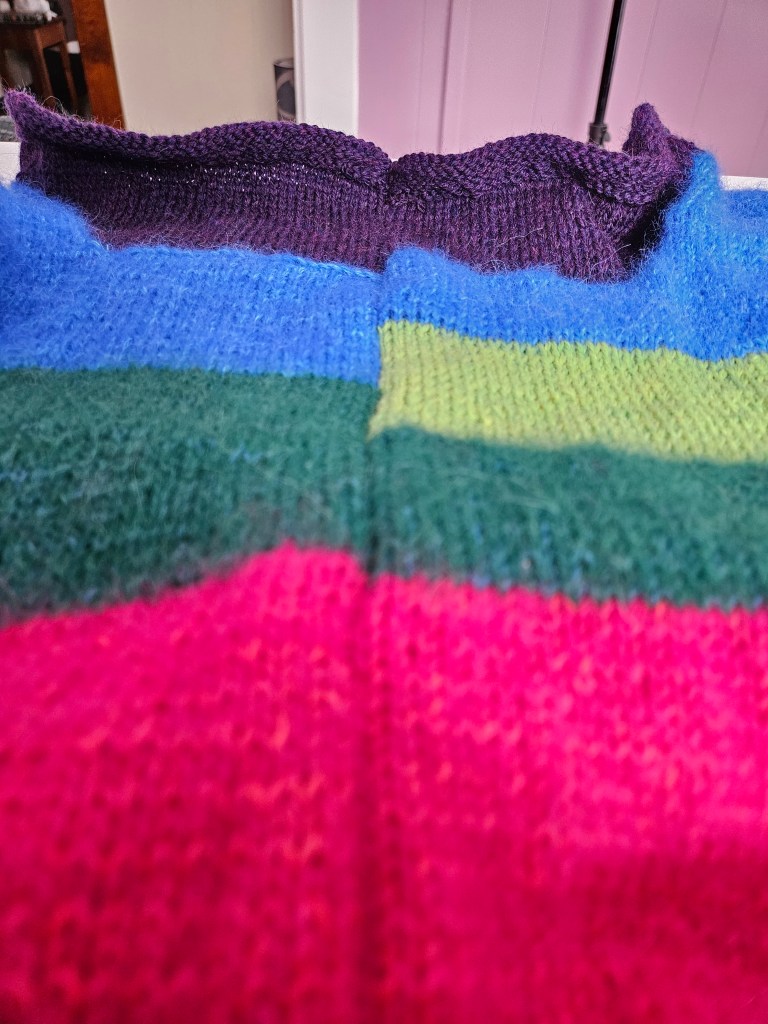
So how does this yarn knit up? Excellently! It has this plush texture with a fuzzy halo that to me looks like those mohair strands knitters use to plush up a sweater.

I’d say the only cons I have are the price and the yardage. I didn’t find this yarn went far, and had to play yarn chicken a few times. I secondly was only able to order five skeins with my gift card, the yarn was on sale might I add, with a 50 USD gift card. When I ran out of yarn, I chose to supplement with Knit Picks Palette yarn in fingering weight, held in double strands to match gauge. I do understand that part of the price is the process of SEAQUAL and the Alpaca fiber costs as well, but it was just a bit too much for me to purchase more at full price when I ran out, especially when I had existing yarn in my stash that could work.

I had planned to have this project done by the time I reviewed the yarn, but as it is now April, and I’ve shifted to summer and spring knitting it is unlikely this project is wrapping up soon. Here’s a look at the project at its current state. 🙂

Sewist Reacts: Plaid Trousers and Fast Fashion

Plaid. Tartan. The Ancient Celts. Punks. Lumberjacks. Kilts. Pumpkin Patch. A Christmas wrapping paper. A simple pattern of perpendicular stripes, woven together to create a fabric that has stood the test of time. Unsurprisingly, plaid comes around again in the trend cycle each fall and winter. It’s an iconic textile that makes various garments that connect us across cultures. I was delighted to see the plaid trousers as one of these tartan offerings this year. But there is one thing about this trend that I think we should talk about more. Pattern placement. Specifically pattern matching and how this changes depending on garment quality and silhouette. I believe there may be a wrong way to make a plaid trouser even though it should be straightforward. This classic has gone down a bad path this season.

But How Does it Look On a Human Body?

Something that has struck me this year about plaid trousers – how do these pants look worn on a human form, viewed from all angles? I’ve seen many ads from various retailers have been advertised to me, with increasing tempo as we inch closer to Black Friday, and there is one common thread about retail and the fashion industry in 2024. Low quality. Clothing across the board from fast fashion to luxury items are at the lowest quality they have been as brands look to cut costs every step of the way. The fabrics chosen are cheap and not cheerful, and the items themselves are being sewn under inhumane labor conditions in the global south and China. To learn more about this I’d check out the documentary The True Cost of Fashion and check out Fashion Roadman’s commentary also on YouTube. He has a book club discussing How Luxury Lost Its Luster by Dana Thomas.

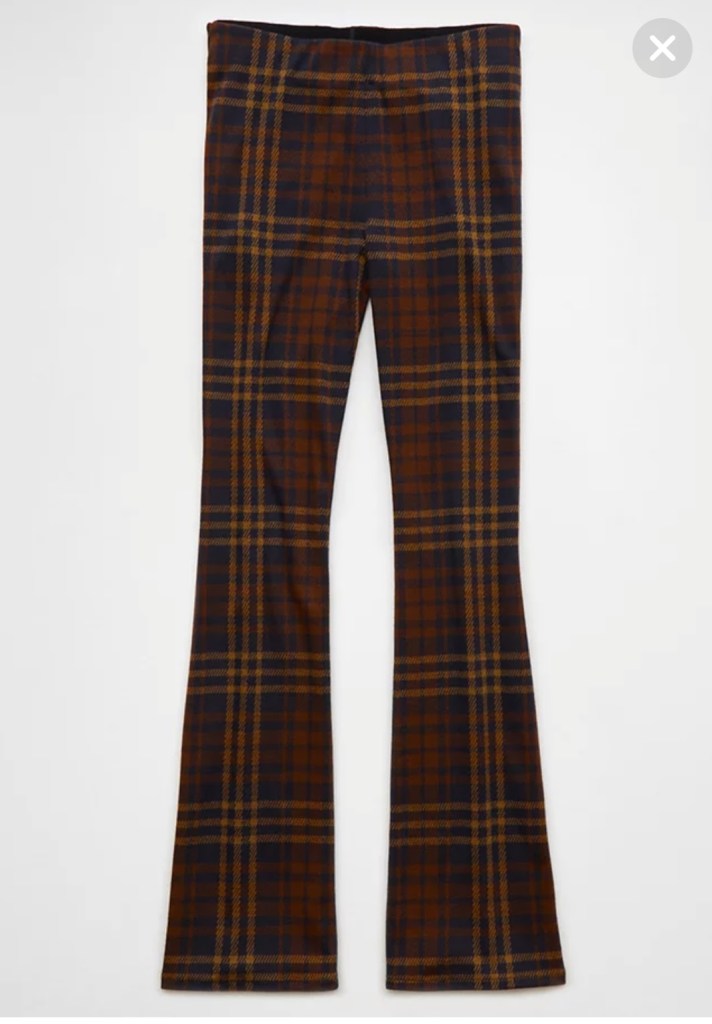
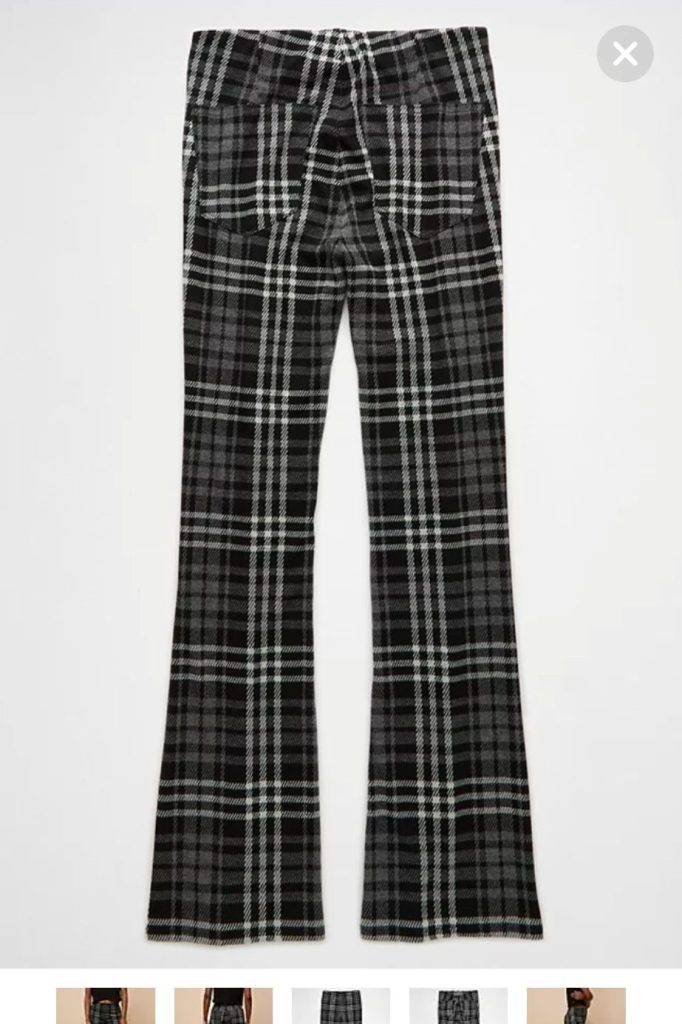
My opinion is not hyperbole or subjective conjecture, of the three examples I took screenshots of two of the three brands that are known to work with factories in Bangladesh, where the Rana Plaza tragedy happened 9 years ago. Old Navy and American Eagle are these brands, fast fashion brands, that work with factories in Bangladesh, India, Vietnam, and Indonesia. Old Navy, part of the Gap brand that also produces Gap, Athleta, and Banana Republic, which is an odd name for a brand, works with factories in Bangladesh, Cambodia, Sri Lanka, China, El Salvador, Guatemala, China, Nicaragua, and the Philippines. It’s not great.

The third example is from Ralph Lauren, which I am under no guise that because it’s a designer brand the factories are more humane or that the fabric is always better because that’s not the case anymore. Look at Chanel and their gold-plated hardware, or Dior and Armani’s labor controversy in Italy. Ralph Lauren works with factories in China, Italy, the United States, Hong Kong, Pakistan, Sri Lanka, Turkey, Mexico, Cambodia, Vietnam, and India.

They are a little better I’d say but just barely. Their attention to detail in the design of their clothing though, it’s night and day to Old Navy and American Eagle who have gone the way of H&M, Zara, and Shein.

American Eagle: Pattern Alignment and Patch Pockets

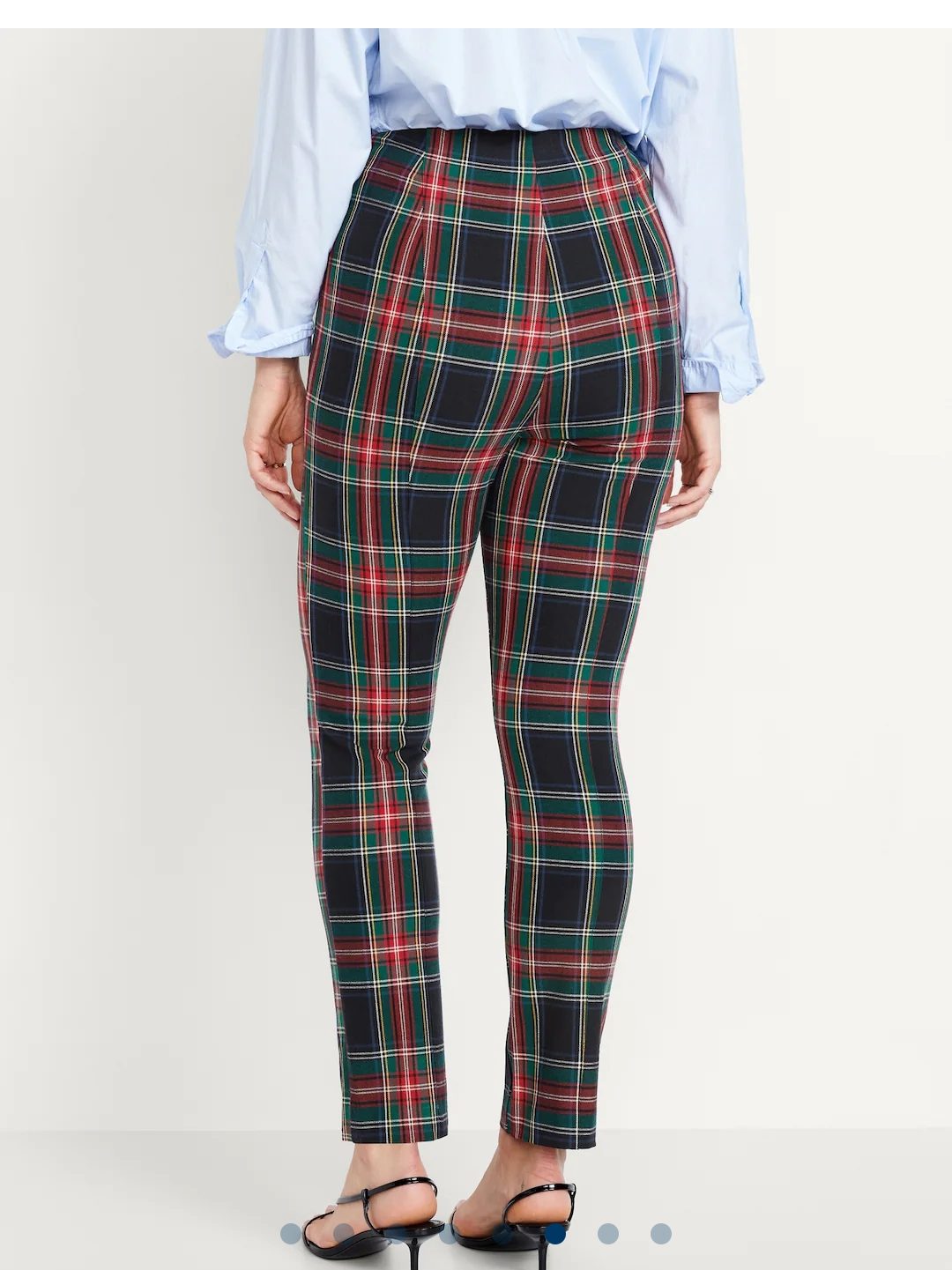
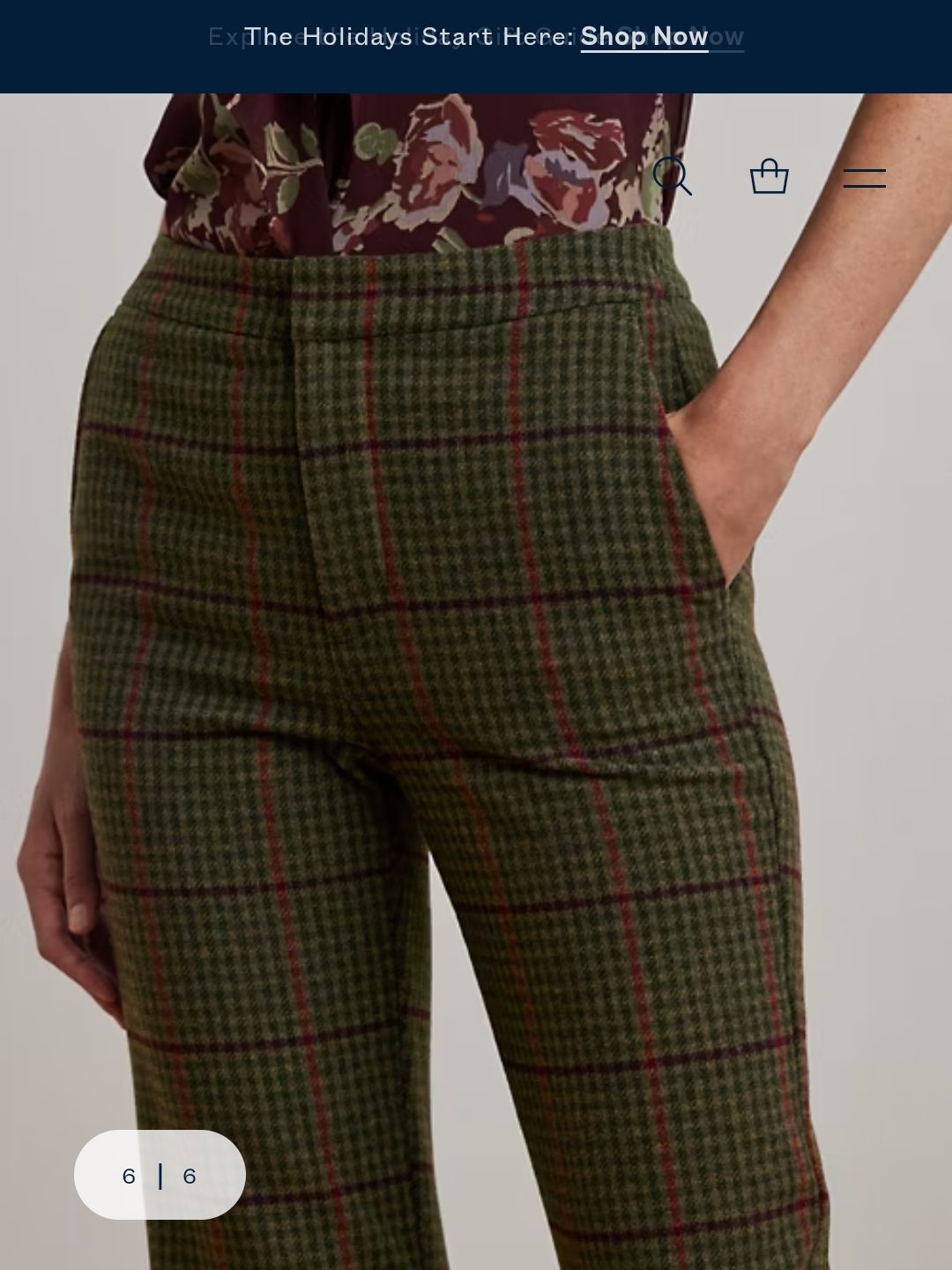
These are a pair of pants that I like in theory. I think a plaid trouser with a closer fitting hip that flares out gently at the bottom is a great idea and would be a versatile item. The plaid print is also matched up quite well in the front view. Something wild happens when you turn the garment around. Those pockets are a bad idea. That’s impossible to match and it detracts from the line of the pants. It emphasizes the way the plaid pattern has to bend with the line of the pants because they chose to change the orientation of the pattern on the butt of the pants only. I think it could be done better and this garment suffers from TikTok lens. It photographs okay and they would be cute from the front, which you can keep as the only view if they are being shown online, but once they enter the real world I don’t think they are going to look as cute. That’s a lot of attention being drawn to one area.

Old Navy: The Lines in the Seat Are Crazy, But Good Pockets

I do think this pattern looks like Audrey Hepburn time traveled through the 1970s punk scene and ended up with Christmas wrapping paper cigarette pants that are cut like leggings. These look really stretchy. Remember in the 2010s when we were wearing patterned leggings? These remind me of them. But they aren’t leggings, they are tailored pants with insert rear pockets and darts at the hip line. I think that is where the problem lies with this garment, the fabric and the fabric needed to make this silhouette.

The product description states the fabric is 55% cotton, 40% viscose-rayon, and 5% spandex. This is not a structured bottomweight fabric. This is a stretchy fabric that is going to have softness and contour your body which is fine in a solid but in a pattern that leads to complications with the pattern. I think the pattern looks odd on the back, particularly along the seat of the pants and the front seam. I think these high-contrast patterns are not a good choice for this application and another type of plaid is better for pants where the distortion of the lines and the seams themselves will not be spotlighted. It’s not where you want the focus of your outfit to be, at the seat line of the garment, that’s uncomfortable. They offered a black watch tartan with lower contrast which was a much better option.

Ralph Lauren: Fabric Choice and Silhouette, but it’s Pricey

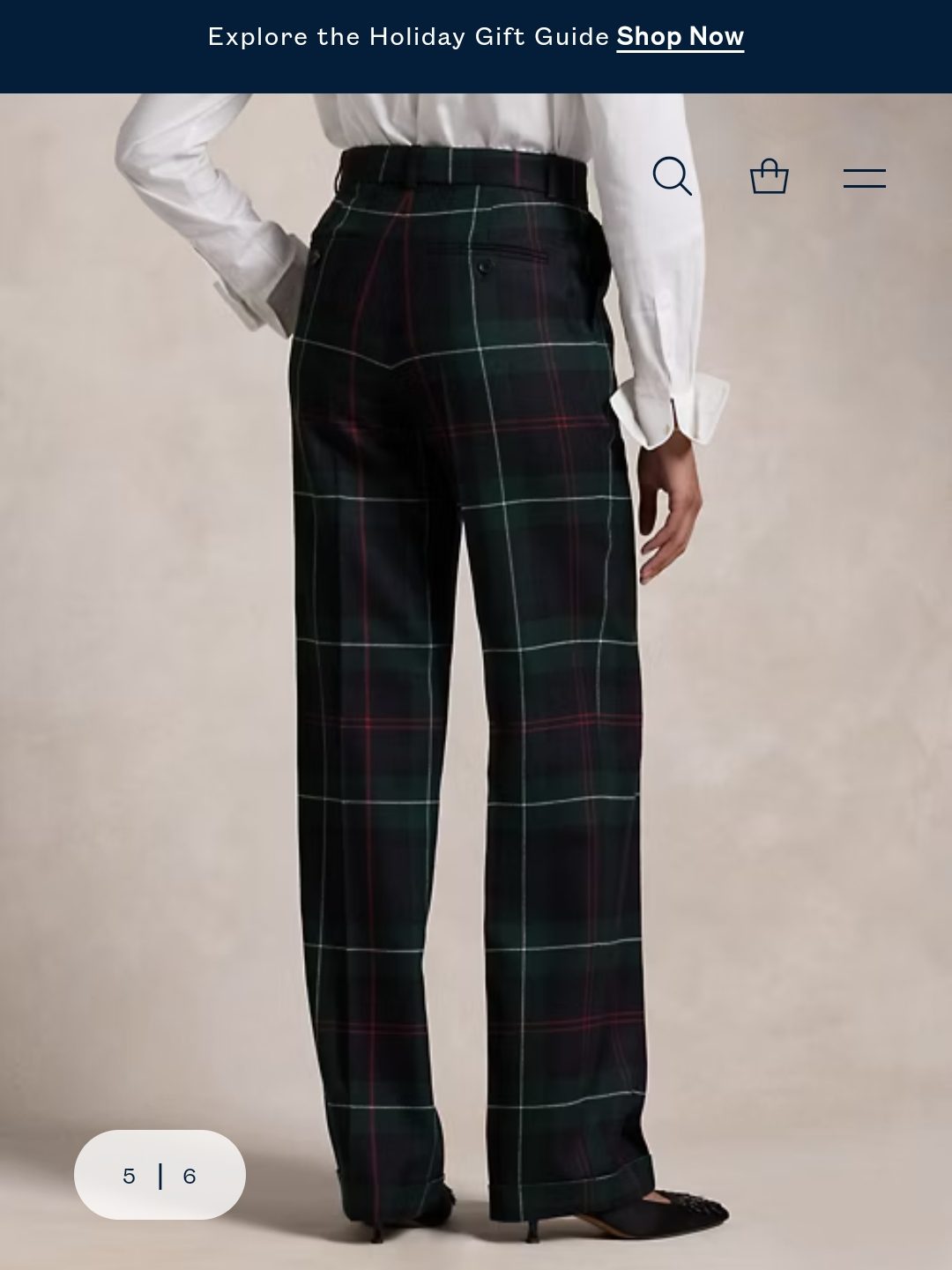
These trousers are comparable to both the Old Navy and American Eagle options for style and silhouette. They have the slight flare of the American Eagle pants and the slim trouser style with insert rear pockets of the Old Navy option. What is different, and in my opinion is a better design choice for these Ralph Lauren pants is the lower contrast plaid style of the fabric and the weight of the fabric which adds structure, eliminating the need for stretch to create the shape. These pants are cut in a way that emphasizes the shape of the wearer in strategic places while also draping away from the body. The pattern cutting of this garment is doing the heavy lifting, not your physique being asked to have the ideal shape to give the pants life.

The plaid is a lower contrast allowing for those tricky seams to fade into the background instead of drawing attention to the problems. On the back seam, the designer chose to use sections of the plaid that were darker, cutting off the pink vertical stripe on both sides before the seam so that the pink appears to flank the seat and therefore draws attention away from the pattern matching of this seam. In the front they follow a similar format, seamlessly integrating the fly into the pattern. The side pockets are tapered again so that the pink vertical begins lower at the hip, drawing the eye to the hip and the waist in a way that enhances the form of the trousers. Again this does not rely on stretch to accomplish this. It takes longer to do, and because of this it has been relegated as a “luxury” feature when actually if you take a bit longer to design to initial pattern after that process it will be easy to grade and use over and over. It’s not a luxury, it’s thoughtful and what design is about.

You can see this attention to detail repeated again in these plaid wool trousers. The back seam was mitigated again by thoughtful lines and fabric structure. Because the wool is a heavier fabric and has structure, it can float across the body instead of stretching across it so the diagonal lines of the plaid do not detract from the design of the garment. It also keeps the vertical line of the trousers even though the lines change direction and the pattern is altered here from the standard perpendicular plaid fashion. This shouldn’t be considered a luxury feature either. Wool is a sustainable textile that is durable and creates much less water pollution than stretch fabrics that shed microplastics or denim which requires a vast amount of water to dye.

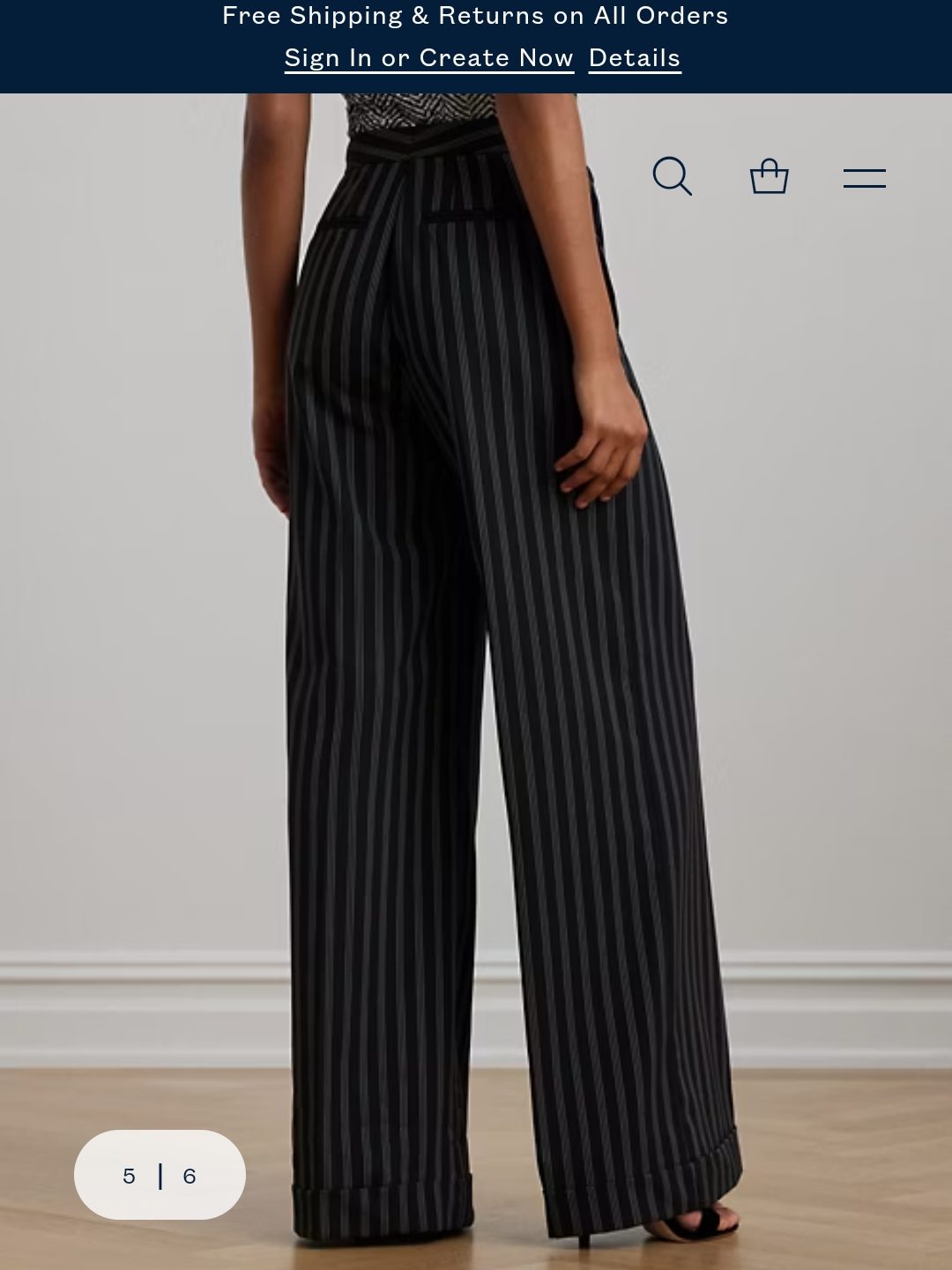
This last example is not plaid but striped, yet the lines of the garment I think still apply. This is another smart design that works with the pattern to create a garment that looks good from all angles. Part of that comes from the wider leg silhouette and the fact that the pant celebrates drape. If this was made from a stretch fabric and was a skinny leg design, a legging basically disguised as a pant, this would be an awkward-looking garment. But affordable should not mean crap design and as consumers we are letting companies determine this as a fact.

Let’s be more discerning in our consumption and look for good design, learn to sew, or support sewing people who can make a good trouser. These Ralph Lauren pants are almost 300 USD and they are not worth that price tag. The Old Navy and American Eagle pants are 50 USD and they aren’t worth that price either. Which leaves the customer with no good option while the brands cash in. We need better clothes made in ethical labor conditions and clothes with good designs that are made to last so that we don’t need to consume so much.

Knit Star Keychain Pattern

Back in the spring, I had this grand idea that I would learn how to crochet. I had a friend who crocheted next door, I had recently found TL Yarn Crafts on YouTube. Toni made it look so fun. I was enamored by what I saw others creating with crochet hooks. Crochet rose in mainstream popularity again through 2020 and beyond in 2024.

My Impression of Crochet

The internet is chock full of crochet plushies, dresses, sweaters, bags – you name it you can crochet it. I didn’t see this kind of creativity from my corner of the knitting internet. I had this impression that knitters were serious and crocheters were mavericks. So the hook was calling to me.

I bought a crochet hook and spent a few weeks watching videos, perusing a book my neighbor lent me, and getting the hook into some loops. It’s a weird transition from knitting. I apparatus from two is a change. There is a posture, one hand, and yarn holding. There is a new way to keep yarn tension, and there are a lot of new stitches. There was more emphasis on turning your work than the orientation of the wrong side and right side. Single crochet and double crochet were not a one-for-one of knit and purl. That surprised me.

Granny squares were a bit more involved than I expected. It’s an art form that deserves respect. I definitely respect it. It kept me back, I had the tightest tension and felt like I had never done yarn crafting before. I was shocked, shouldn’t this be a piece of cake? I’ve been knitting off and on since 2012. Yeah, it’s not that simple.

Fluff Around and Find Out

To be honest, the way that I learn best is to just go for it, and doing these basic crochet stitches on a project that was a rectangle, all while it looked like a tattered mess was discouraging. I wanted to make one of the little plushies or shapes that seemed to be a sculpture that only crochet could create. But I was seriously not getting it. So I paused and thought about it. Is there any way to apply this creative point of you, the sculpting of yarn that only crochet can, but try it with knitting needles?

This might seem weird to consider if you don’t knit or crochet but the processes seem vastly different to me. There’s a strategy to knitting. You have to do things in stages, like knitting a section and transferring stitches to a stitch minder or picking up stitches that were bound off or are just part of a knit edge. While crocheting builds on itself and is an amorphous thing that is truly sculpting and adding as you go.

So I decided, what if I made something with the sculpting element of crochet but with knitting steps. I decided on a star as you can see above that was crafted out of multiple knit sections that were stitched together. This pattern has a lot of little steps but I think it was effective.

Star Knitting Pattern

Star Point Diamond – Row 1: Cast on, Knit 1, Row 2: Purl 1, Add Stitch, Row 3: Knit 2, Add Stitch, Row 4: Purl 3, Add Stitch, Row 5: Knit 4, Add Stitch, Row 6: Purl 5, Row 7: Knit 4, Decrease 1, Row 8: Purl 3, Decrease 1, Row 9: Knit 2, Decrease 1, Row 10: Purl 1, Decrease 1, Row 11: Knit 1 and Bind Off.

Repeat four times until five are made. Then using a tapestry needle, join the five points together at the center so that you have the base for a star, then join the sides of the diamonds together so that you have a flat star. Repeat the whole process one more time so that you have two flat stars and then sew them together with the tapestry needle.

So now that you have a star what can you do with it? I had planned originally to make a star garland for Christmas, but then the Fire Nation attacked and I had to move.

So we pivot to the bag decoration trend of 2024. This is a combination I’d say of Kpop, Xiaohongshu style trends, and the Japanese Ita bag becoming popular in the West. If you would like to learn more about Ita bags, I would highly recommend Addy’s video on YouTube. And these little stars in the original green and its pink starfish cousin have made excellent DIY plushie keychains.

Finished Product Used as a Keychain

Final Thoughts

I think creativity is about experimentation and learning as you go. I think sometimes it is important to do it the normal way and other times it is more satisfying to try a new method, a new medium, and make something you may not have thought you could. I still have incredible respect for crochet and I also think knitting has more potential than I thought. I have also learned that if a key chain or other small trinkets are not specifically branded I should try making them before I buy. It’s a great way to use up materials in my stash, level up my skills, and keep my consumption down and my wallet happier.

Sewing Stretch Fabric Struggles

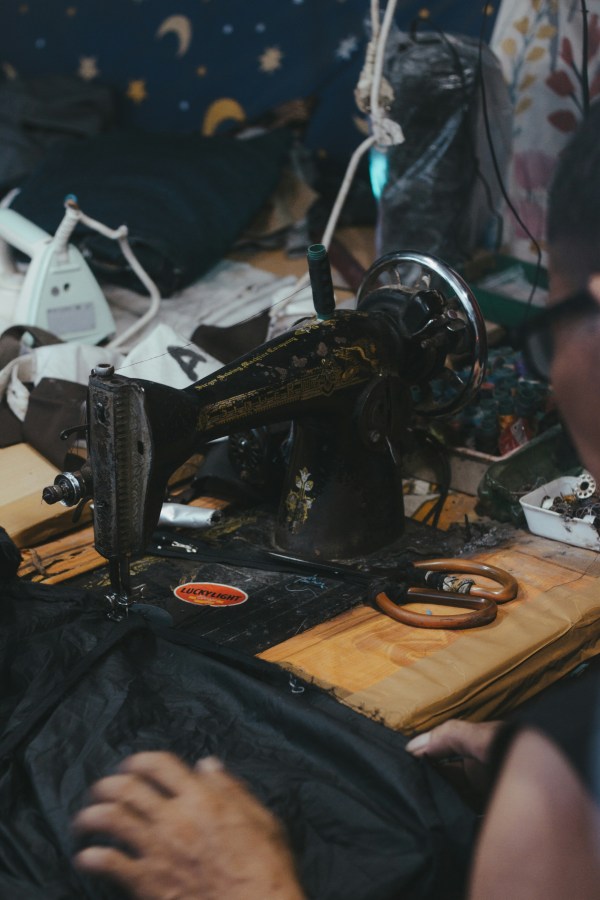
Do you ever spend time learning a skill just to forget it when you need to use it? That’s me. That’s how I sew stretch fabric on my machine. I just jump in and completely forget that I need to first properly adjust the tension and stitch type or else mayhem ensues. Mayhem like my machine having a nice little snack on my fabric.

Sometimes the machine gets extra bold and drags the hem under into the bobbin’s domain, jamming the machine. This is what I am talking about:

In the moment of panic, when I realize the fabric is stuck down in the machine a few thoughts dance through my mind.

  • Why didn’t you sew this by hand?!
  • You did it, you finally broke the machine you maniac!!
  • It’s ripped to shreds, isn’t it? The whole project might be gone in a moment.
  • This machine hates me. How do other people sew so effortlessly??

But it’s not the machine’s fault and it’s not the fabric that caused this, and it’s not even my fault. It’s morally neutral, it’s an accident and a learning experience to grow from!

As I was writing this, I caught myself crafting sentences to describe the situation with very negative and demeaning language towards myself for making a simple mistake. (A mistake that once I freed the fabric from the machine, I corrected and carried on to make the finished garment. The tight thread tension actually made a happy accident, a lettuce edge hem.)

It is not something that I should hold with such severity against myself that I internally tell myself I am an idiot, a lousy sewist, or useless.

Because how would I respond to hearing someone say that to another person? I would be disappointed in the speaker and make them stop.

How would I respond if I spoke with such aggression to another person? I would be ashamed.

I am learning through these sewing setbacks to temper the internal monologue and be a more gentle and loving person towards myself, to maintain better mental health, and establish the practice in my mind so that I can be a source of gentleness and kindness to others.

How do you speak towards yourself and others when they make a mistake?

Potato Technology: Back to Basics Collection

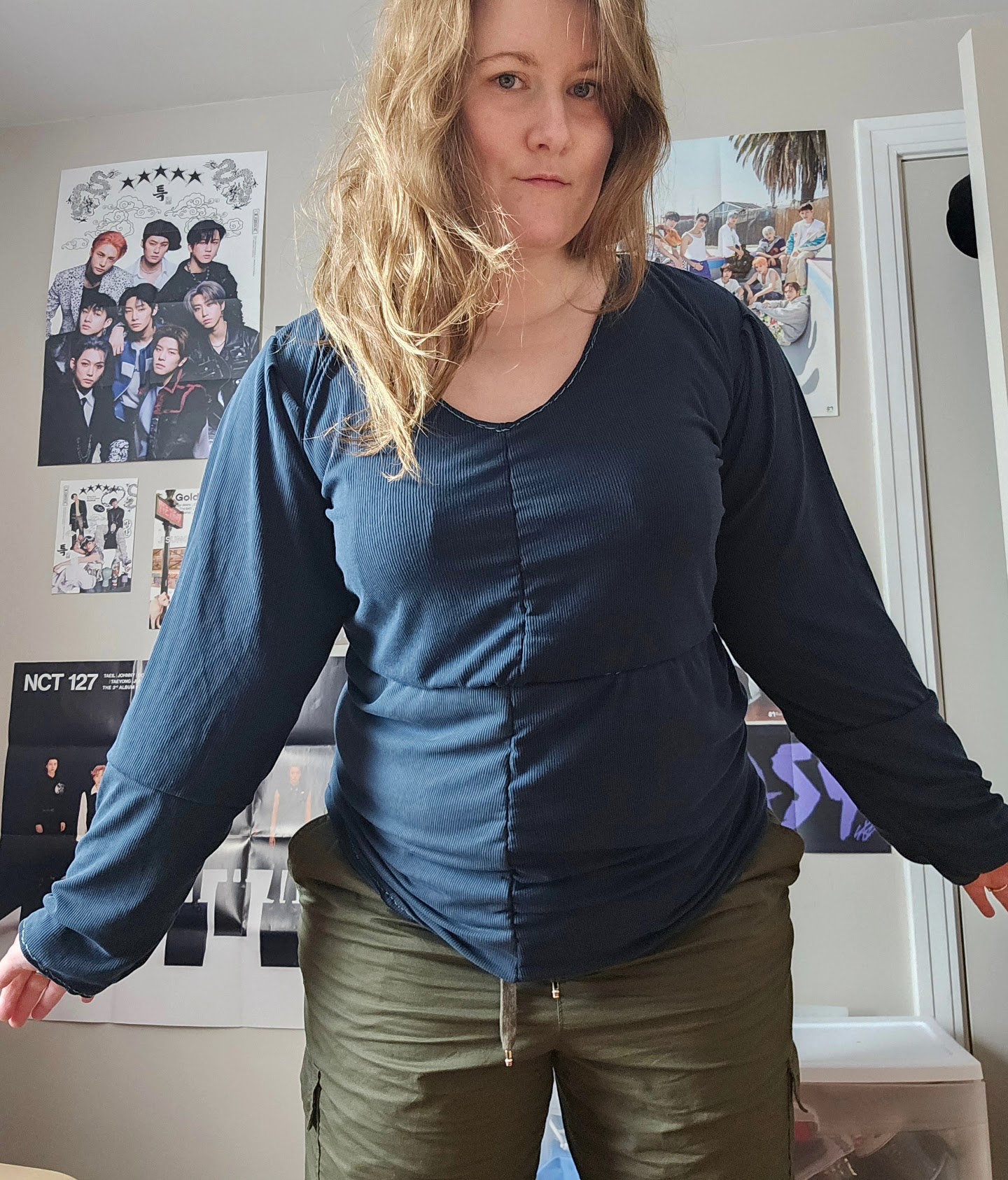
Almond Ribbed Wrap Top

Materials: 1.5 yards of stretch knit jersey. A remnant cut of fabric. This pattern was self-drafted by draping on myself and adjusting the lines with pen marking. As this was the first garment in this series, there was more trial and error with cutting pieces out of the fabric to reduce waste.

Inspiration: I was inspired by the iconic 1970s wrap dress, designed by Diane Von Furstenburg. I originally planned a wrap dress but scrapped the plan due to a lack of fabric. Because of this, there was probably 1/8 of a yard of fabric left over. With more practice, I’d like to reduce that amount to smaller pieces of scrap leftover.

Cherry Henley Ribbed Top

Materials: 2 yards of stretch knit jersey and 6 buttons. It is a heavier weight jersey and feels like a light sweater. This was a remnant cut. I developed my first official bodice pattern from this process.

Inspiration: 1900s men’s buttoned henley baselayer tops from the gold rush era in the United States. Think “old western” dramas, Deadwood, or Red Dead Redemption. I cut it oversized to carry the theme of it being a men’s garment. During the cutting process, I was able to utilize almost all the fabric with only 2-inch scraps being left over.

Stormy Seas V-Neck Tunic Top

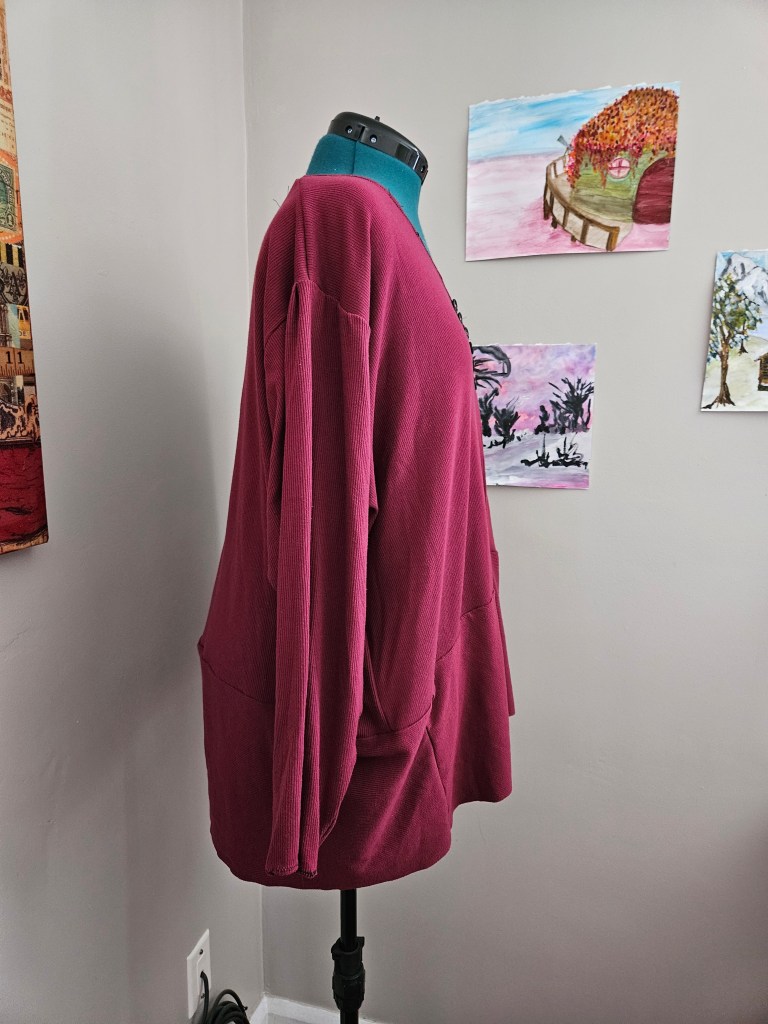
Materials: 2 yards of stretch knit jersey. To utilize as much of the fabric as possible, I chose to get creative with my pattern cutting. To do this, I pieced together the bottom and portions of the sleeves to use up almost all of the remnant, with 2in or less scrap pieces left over.

Inspiration: I was inspired by the design lines of early medieval tunics. I like the simplicity of the lines and the lengthening effect it has on my proportions. For more information about Viking Age tunics, I recommend checking out Project Broad Axe for historical recreations and additional background on the history of Viking Age tunics.

Making a Pocket for My New Phone

When I purchase fabric, I aim to use as much of it as I can. Whether this means altering the project to incorporate as many large scraps as possible, saving some scraps for future mending projects, or creating a secondary garment from the scraps – I’m in! My recent corduroy trouser project left behind a particular set of scraps, a set of pockets that I chose to leave out of the finished trousers. These made the perfect scraps to make an unexpected project for the new year!

Upgrading My Tech

Around Christmas, I saw an interesting sale – a discount on a phone with an impressive camera and quite attractive collaboration. Since leaving my family’s Verizon’s new every two for my own plan I’ve kept it cheap. I’ve had some bad spills with my phone like shattering my phone camera’s lens on I’m assuming my keys as it bounced around my bag. I also lost my most expensive phone, the LG Voyager back in 2009 by losing it in the ocean. I had it for a month when it dropped out of my pocket one fateful evening and made its way out to sea. The last thing I saw was the screen light go out as it was swallowed up by the incoming tide. So going above the USD 99-149 price range I was a bit nervous about myself and my propensity for mayhem.

This is the Galaxy S23 with the SL/BS JYP Entertainment Skzoo Collaboration case. I got it 50% off from Google Fi and bought the matching SKZOO Leebit Suitcard to theme the inside of my phone to match the case. It is also lilac, a shade of my favorite color purple. It was a delayed 30th Birthday present, to be honest, and a step forward to improve my photo-taking ability for my designs. The camera is absolutely crisp and sharp compared to my Moto Power which I thought was pretty nice for the $149 price tag. Was I swayed by the color, and Changbin’s song for this phone, yes, but it has shocked me how much the camera and integrated photo editing, like the magic eraser feature, have helped me capture better photos of my work on a budget. Safe to say I’ve been babying this phone – I do not want to ruin this one! 😉

A Pocket For My Phone

Because this is a newish phone, there was the upgrade of my wired headphones no longer being compatible – there is no audio jack. This means an adapter, which I wanted to keep organized while out and about with my earbuds and phone. Creating this little pocket made perfect sense!

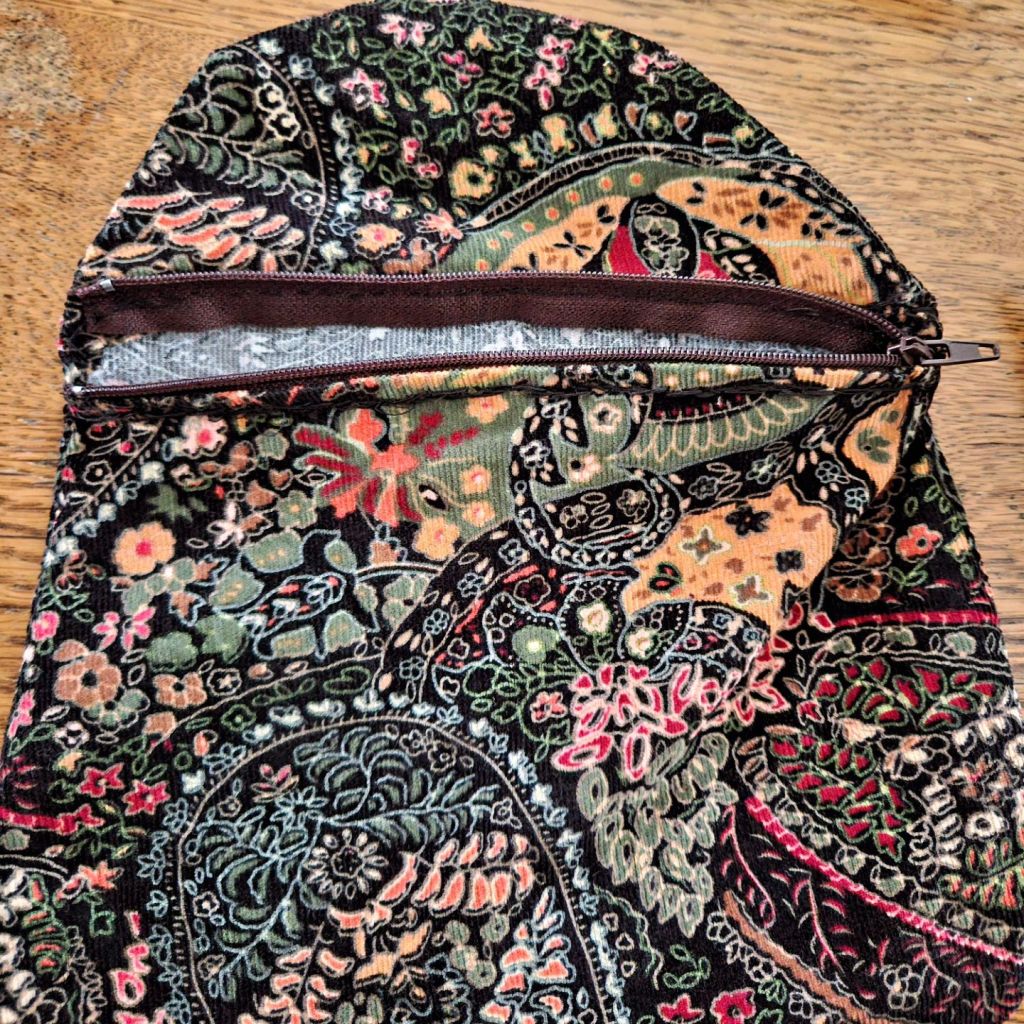
To create the pocket, because of the corduroy fabric’s structure, I didn’t include a lining. I began with my two pocket pieces and cut one of them into a square and a semicircle. With three pieces, I matched the semicircle together and pinned and sewed the square onto the intact pocket piece, on three sides. This left an opening for the pocket. Next, I sewed the semicircles together. Lastly, I inserted a zipper to securely close the pocket. I love the finished product!

It’s a cute little pocket that is easy to place in my purse and in my pockets, it gives that extra layer of protection across the camera lenses and screen while keeping those loose little accessories in one place. This project has alleviated a lot of fear I had of breaking my phone in my purse again. As a result, I actually pull my phone out less unless I have a specific purpose for reaching for my phone like answering a text, a call, taking a photo, or listening to music. It’s subtly helping me be more present and in the moment which I greatly appreciate. 🙂

I also love the antique vibe of this pocket. It reminds me of pockets that used to be tied onto skirts in historical fashion. I guess this is the next version of the same concept, and it looks like a pattern from the 1800s, 1700s, etc. Always save your big scraps, they come in handy! If I had purchased a pouch for my phone, I’m sure it would have been fine but it’s an added expense that I want to cut out in 2024. It’s fun using the items at hand to make useful things and cut down on my spending while making use of the entire cut of fabric. Would you make a pocket like this?

Create a website or blog at WordPress.com

Up ↑