New Habits to End 2025

First off, Happy New Year! Thank you to anyone and everyone who took the time to check out our work in 2025. You are a blessing to us!

It’s been a much better end to the year, from where we wandered in 2025. I swear this year was mentally, more taxing than others. I never knew marriage could be this difficult. Or being a daughter. There were some big moments, behind the scenes where I felt like my life as I know was as stable as an earthquake and I couldn’t tell anyone.

I’ve gotten better at sitting with my problems by myself. That is one thing, I am finding comfort in again. Being by myself, without a bunch of screens to make me feel like I am being “social” when I am not.

Habit #1

Since Thanksgiving Day, I have been limiting my time on social media. I have a timer set to a few minutes for Instagram, most days. I have done this successfully now for 5 weeks. At first it was a but tought to keep it at zero, so I cushioned myself to 15 mins. By Christmas week, I didn’t feel any pull to open the app. The only connection I do feel to my account is a few online friends I have met, who without Instagram, are disconnected from my life. Therefore I am keeping my account, but I am detoxing my addiction. With a record of two weeks without posting.

Habit #2

In December I started challenging myself to do pushups again. They started with knee pushups and have risen to a record of 20 real pushups in a set. My goal moving into 2026, is to do these consistently throughout the week and be more fit, along with the other exercises I do – rebounding, wall pilates, and yoga. More consistency.

Habit #3

Books. I am watching less Youtube when I knit and reading more. I listen to audiobooks through Libby and read while working on other days. So far I have completed four books, which sounds pathetic, but I had not been reading at all for years. I would read a book or two per year since we moved to our current town. I missed the previous city’s library and the mental wellness to focus. But this summer, we joined a local to us library and restoked my desire to be bookish again.

Final Thoughts

Unintentionally, I already started my “resolutions” and it feels great. It shows me that maybe finishing a year on a good note is about setting yourself up with good habits before the “fresh start” and if you are feeling a bit off going into 2026, maybe get off of socials too? Except for wordpress, truly a great group of people on here. 💖

What If Game of Wool Celebrated Design and Craftsmanship?

If you missed it, I made a Game of Wool Bingo card for episodes 1-3, because in my opinion, this show should not be taken seriously. I’ve given up watching, interacting with recaps, etc. I’m not going to watch beyond episode 3, and that is because hate-watching is validation in the attention economy of 2025. That got me thinking, what do I wish Game of Wool was instead of what it is? Game of Wool, just like Project Runway, I have notes!

No Kits or Internet Dressing Projects

I don’t want any themed-making kits sold per episode. They have been doing this for the episodes I have watched, each week partnering with a big yarn company, honestly making kits that serve no purpose other than a cash grab. I also don’t want to watch weekly episodes with challenges that create useless items. Useless from a practical and technical standpoint.

  • Crochet and knit swimwear is dumb. You can’t wear it other than for a photo shoot, which places it in the “internet dressing” category. It’s for a photo. It’s not even practical for a music festival. But it does resemble a “Coachella” look.
  • A crochet deck chair had potential, but it was not used within the materials provided or the time frame.
  • A dog sweater with a required hat is not kind or practical for dogs. The sweater is comfortable, but the hat is not comfortable for the dog. Again, it is for a photo. Washability was not discussed either.
  • The mohair sweater was the only challenge that was the closest to being a useful challenge, for design teamwork and wearability, but they ruined it with the ridiculous time frame.
  • A couch cover is useless, because I have thought about constructing one for my own couch to stash bust, but it’s just not practical for anything other than a showpiece. Which is how they judged it, so a lot of wool was wasted to make a big, useless swath of fabric.
  • The fair isle vest misrepresented a heritage craft of the region they were filming in. Why not just film a historical film set in the Renaissance, and put the actresses in Victorian corsets without a chemise, tight-laced? Same level of idiocy to be flashy!

This Game of Wool presents everything that late-stage capitalism is in relation to crafting and hobbies, thanks to greed, social media, and the attention economy. The British farmers could use the income; how about sourcing locally? What about sustainability and slow fashion? Yeah, 12-hour challenges do not represent anything but hustle culture. Girl boss, slay!

How Would I Fix It?

  • Real experts, not these two ladies.
  • Either all amateurs or all expert contestants. Pick a lane. Either be the Bake-Off or be Project Runway and offer a CFDA mentorship kind of prize.
  • Bring in a real mentor to help in the wool barn.
  • Take them on field trips to see wool being processed, dyed, and spun. Same with flax for linen.
  • Tell the story of why textiles matter and why fair trade for the animals, farmers, and ethical standards matter.
  • Explain why local matters for the economy and the ecology of the region.
  • Teach the history of cottage industries.
  • Teach the history of how knitting has changed the world, such as the development of textile machinery and the creation of the binary code. Essentially, fill in the gap of what Sci Show failed to do.
  • Set real challenges that teach, showcase the skill of the fiber artists, and show innovation.
  • Do a challenge that involves unravelling sweaters for yarn and teach the world about this amazing, sustainable possibility.
  • Task the fiber artists to design patterns, and explore what goes into design and proper pattern writing, because it is a technical skill.
  • Make things that will be auctioned off for charity.
  • Bring in people as guest judges who will bring professional connections and opportunities for the fiber artists.
  • Set realistic deadlines, and slow down the pace of the show. Follow a timeline like Mind of a Chef that explores moments of cooking over an entire season.
  • Let the makers make, unencumbered by the pace of the internet. Take note from Bernadette Banner and other makers out there that celebrate true craftsmanship and sustainability in the heyday of microplastics.

I’m tired of this show discounting a skill that has been tossed aside as a Grandma hobby since the Industrial Revolution. In these weird and wacky times, slow fashion and an appreciation of craftsmanship are in short supply in the media. This show had such potential! But they are truly chasing the money over integrity.

Socks Are Madness

This is a story of a winding road. It is not just passion that makes us try new and difficult things, but also the desire to fit in. Sometimes the road is bumpy, and bumpier still than we expected.

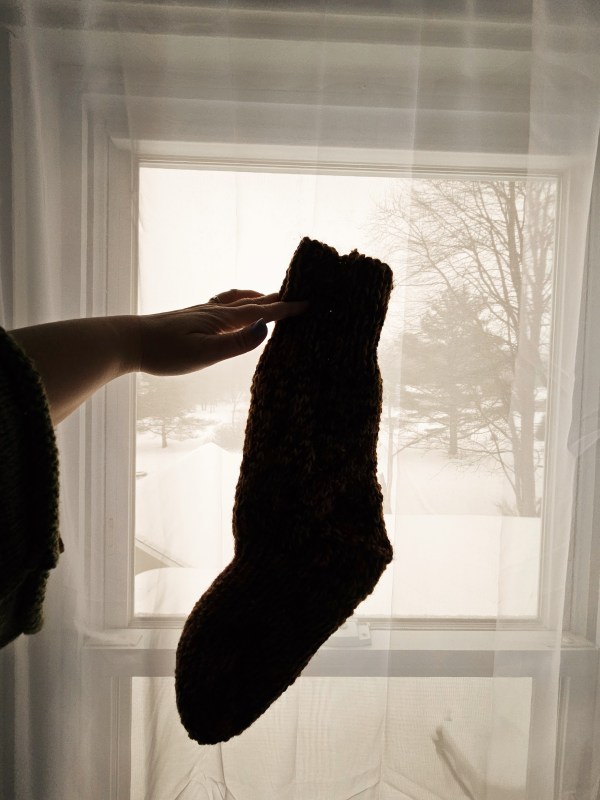
Last winter, I began a journey; at the time, I did not realize how technical this would be, and oh, how I miss the naive wonder of that time. I started my quest to make socks. The sock does not appear technical from the outside. It is a tube of knit fabric which we slip on our feet, most every day. Due to the Industrial Revolution, socks can be knit by machine with ease and speed. This has suspended our connection to the technology that first developed the sock—hand knitting.

In our modern day, socks are affordable and accessible. They are for sale everywhere in a myriad of textures, weights, and styles. We have socks for athleticism, socks for leisure, socks for style. They are boring, mundane Christmas gifts of childhood, and puppets with googly eyes. But what does it take to make a sock by hand?

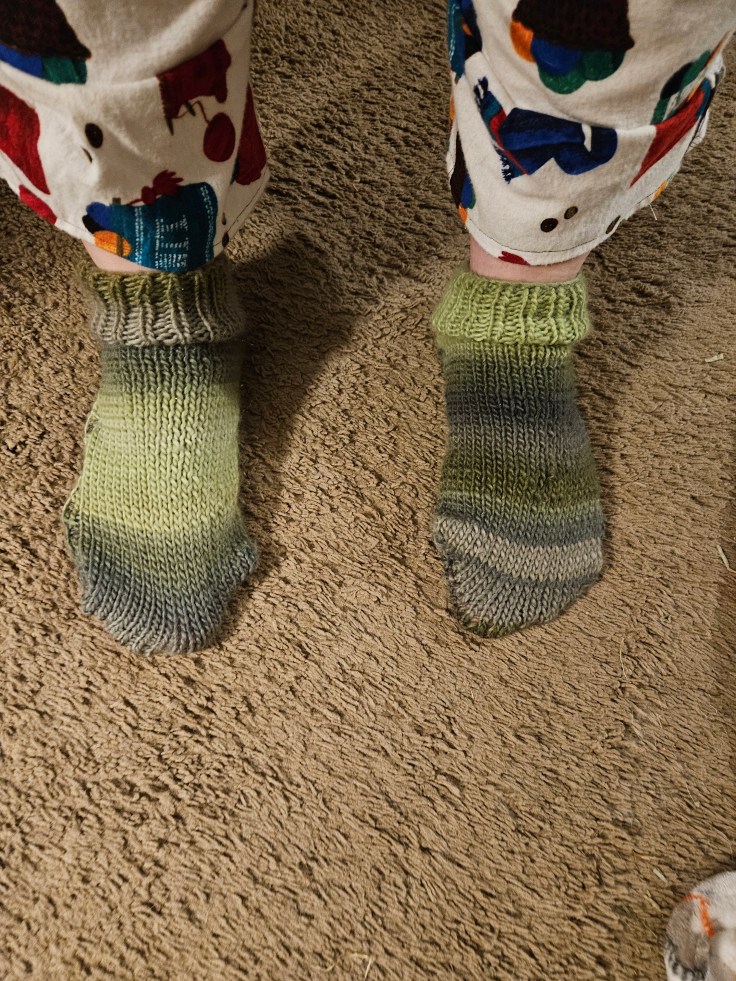
I gave this a shot last year, and it challenged me! I cataloged my experience in Socks, A Journey, and Socks: An Update, where I began knitting socks flat on straight needles and three months later gave circular knitting a try. My first flat knit socks were made top down, in a tube style that negates the heel flap and requires sewing the sock into a tube. They are loose in fit but warm and great socks to wear around the house. My advanced tries, knitting in the round and turning the heel, were more of an adventure. My tension was tight, and my heel flap a nightmare, unable to be duplicated into a second sock, for how off script my technique became. I didn’t grasp the why of what I was doing and therefore messed up the pattern.

This summer, I went to a local yarn shop where I began my journey to sock more traditionally. I picked up a pair of small-gauge double-pointed needles and sock sock-making kit with proper sock yarn of wool and nylon, to do it “properly” and oh my, did this bomb. The toe-up pattern, new to me from my previous projects that were cuff down, pushed me far out of my depth. I sank instead of swimming. The four double-pointed needles and my uncoordinated hands created tension and laddering in the knit, which looks exactly as it sounds. I tried three times to knit a few centimeters before the stitches fell off the needles, the sock falling off with the stitches. In desperation, as the needles were 29 USD and the sock kit 29 USD, I was feeling very silly and wasteful purchasing new needles and new yarn that I couldn’t do anything with.

So I pivoted to my trusty straight needles until I saw my mom later that weekend, and she lent me a pair of small-gauge, small-circumference needles to finish the sock. Still baffled by the heel flap and the vague instructions on the pattern, I tried German short rows for shaping the heel. In a fortnight, I completed the first of the two socks. I cast off and handed it to Kyle to try on, and the size was all wrong. I tried to frog it back into a skein of yarn, but the splitty yarn tangled, ripped, and became a ball of knots. It was over, and I was furious with myself for wasting time, money, resources, and, honestly, hurting my eyes squinting to see my tiny stitches for almost two weeks to accomplish nothing.

Socks are madness. And maybe I should stop beating myself up about my failure when socks are one of the hardest things to make by hand. I am an overachiever and a perfectionist, so this type of failure cuts me deep. I obsess, I rage, and I fall apart in the madness of learning something that may take years to execute once, not even perfectly. But you know what? I have made good socks before! Comfortable, almost perfect for what I was looking to achieve, socks. But I rejected them as being good because I was embarrassed at how I made them. I didn’t follow the right techniques, I used the “wrong” yarn, and I didn’t turn the heel.

Sometimes I have major imposter syndrome as a knitter. I feel like a fraud because I don’t use the exact same patterns, same tools, same yarn as everyone else on the internet. But why is that a bad thing? I’ve listened to other knitters in podcasts discuss how the sameness of knitting is making it boring. Apparently, at Rhinebeck or other knitting events, it is easy to see the same sweater throughout the sea of people, and that is a new thing. Listening to knitters, who have been knitting long before 2020, when I really started knitting consistently, knitters used to do their own thing. Yarn suggestions in patterns were exactly that – a suggestion.

People were designing more and experimenting instead of knitting in the homogenized way we see today, which is one of the ways I feel like an outsider. I don’t want to knit the same things as everyone else, but I also want to be good at the craft, and it leaves me in this push-and-pull tension. It became clear to me, though, that my search to “fit in” with the proper sock kit and the expensive needles didn’t make me a better maker. It was honestly a bit of a handicap. So I guess my takeaway is to be yourself?

I don’t want to stagnate in my skills, but if I can find my own technique to make socks and other garments with the “non-standard” tools and yarn, then is it really stagnation or just getting creative with where my skill level is at? I’ve been pondering this a lot and have more thoughts on this from both the point of view of a knitter and a sewist. But that will have to wait for next time.

Project Runway, I Have Notes

In August, Project Runway returned under a new network and reshuffled the format, hosts, and challenges to make a show I think was actually okay. Compared to where the show was left on Bravo in 2023, I think bringing back Heidi Klum was a good choice compared to the choice of Karlie Kloss, whom I didn’t see as an appropriate casting choice for a role that requires personality and colorfulness. It was boring. So were the new judges. The only new casting decision I was excited about at the time was Christian Siriano, my ult bias from the original show. So what was the good and the not-so-good, in my opinion, of season 21? And how has the show changed, for the better, yet in some ways, become less about fashion? These are my thoughts on my beloved Project Runway in 2025.

The Evolution of Project Runway

The original show premiered on Bravo in 2004 with host Heidi Klum, mentor Tim Gunn, and judges Nina Garcia and Michael Kors. It was filmed in NYC, at Parsons The New School for Design, where Tim was on staff, and the competition culminated in three finalists showing their work at NYFW Bryant Park. This format remained for the first five seasons, season four featuring Christian Siriano, who won his season.

After season 5, the show switched networks to Lifetime, where it remained until season 17. This change for season 6 also changed the location, with the show being filmed in Los Angeles at the FIDM campus until the finale, which was held at NYFW. Season 7 returned to Parsons and NYC, where the show stayed the course until season 11, when Zac Posen replaced Michael Kors. Zac Posen, Nina Garcia, Tim Gunn, and Heidi Klum remained through season 16.

Because of Harvey Swinestein being a producer of the show, and #Metoo movement addressing his depravity, Project Runway changed hands and returned to Bravo for season 17, sans the original cast. Karlie Kloss was the new Heidi, Christian Siriano the new Tim, and the judges were swapped for Elaine Welteroth and Brandon Maxwell.

The show remained this way through season 20, until the show changed again, switching to Freeform as its network, returning Heidi Klum to the host position, retaining Christian Siriano as mentor, and returning Nina Garcia to judge, with a new addition of Law Roach as the second judge. It’s a lot of change.

The Three Fashion Musketeers

When Project Runway moved back to Bravo in 2019, it was not the only fashion competition show in the American market; Netflix launched Next in Fashion for two seasons. Finally, Tim Gunn and Heidi Klum launched their own show on Amazon Prime, called Making the Cut, which was the equivalent of the original trio of Top Gear UK launching The Grand Tour on Amazon.

In my memory, from watching these three shows, Project Runway felt like a shell, undercut by Making the Cut, but losing the carefree fun of what Next in Fashion captured with hosts Alexa Chung and Tan France. All this change made me question what was the purpose of these shows anymore? With the rise of fast fashion and social media, it seemed like a relic. I could watch fashion design content on YouTube with varying points of view, to decide for myself what I thought was good fashion. Why would I care about the judges or the magazines anymore?

Project Runway in 2025

So now, six years later, what did the new Project Runway feel like? To be honest, it doesn’t have its own identity anymore, in my opinion. This could easily be RuPaul’s Drag Race with the amount of drama they packed into these episodes. The original format of challenge, runway, judging, and elimination was gone. Now you find out who goes home next week, which was unnecessary for me. I am tuning in each week, don’t make me have to, I want to, so just tell me who goes home so that the point of the show doesn’t seem like it’s an MTV reality show. It was hard to remember what challenge they were judging from last week. In some ways, I didn’t care; I just wanted the new challenge to be presented.

The contestants fought a lot, with Jesus and Veejay being a near constant. It was too much, and that leads me into one of my biggest gripes with the new season of the show. The editing was off. When Veejay was announced as the season 21 winner, I was confused. The final two eliminations before the finale were also edited strangely, because each time it seemed as though they were not going to keep Veejay, the judges’ critiques reflected this, and so it created this uncomfortable tension for the final three episodes, where it seemed like they were keeping Veejay in the competition so that she would become the first trans winner because of all the fighting.

That frustrated me because Veejay was doing good work, but then why make it seem like she was at the bottom, if the judges saw her work in high regard? It was really awkward. So was the out-of-control arguing between Veejay and the Estrada brothers, which I think the producers wrongfully kept in for a toxic series of episodes that is problematic, and I thought was manipulative. I wish for everyone’s sake that they would have paused the competition in a Tim Gunn fashion to unify the contestants again, because I liked this group of people. I can see where Jesus was coming from, and I can understand how bullying from the past can bring up past hurt, like Veejay expressed.

This is where the show shifted for me into a trash television show, such as Teen Mom, The Challenge, Real Housewives, or Keeping up with the Kardashians. Finally, the omission of NYFW for a quick 6-piece collection immediately after filming the bulk of the show felt lame. Every collection for me was a letdown, and this was the production’s fault once again. 8 out of 9 challenges were one-day challenges, so every other day, they were creating a brand new garment; it’s a recipe for burnout and mediocrity. The final runway show was like a fart instead of a spectacle of creativity, and it was underwhelming.

I hope they get a bigger budget for season 22 because the show has captured its thing again, but the finale and shift to the focus on drama over scenes from the workroom was a poor choice in my opinion. When I think of good reality competitions that have carried on throughout the decades, Survivor and Great British Baking Show are great examples that I may dive into in a part two.

Have you ever watched Project Runway? Did you think it was about planes? That’s what I first thought when I heard about the show in the mid-2000s.

Gilmore Girls Fall

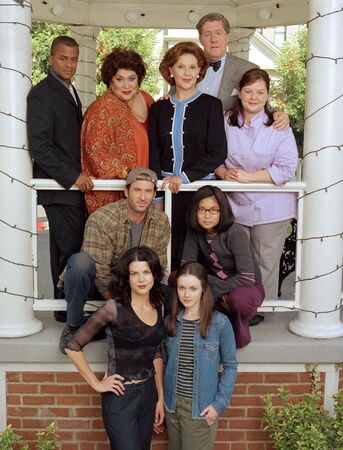
If there is a new fall tradition from the 2020s, it must be Gilmore Girls. Maybe it’s the 20 year rule of trend cycles? Or the power of a tiktok phenomena? But this little show, that was niche throughout my time as a teen and into my twenties, is now a cornerstone of American autumnal celebration in our modern age.

I am honestly thrilled to see this story and its characters embraced by a new generation. It was a connecting point for me, my mom, and a few of our close friends. For a while it felt like a secret club, always disappointing me when I would make a new friend and ask – do you like Gilmore Girls? They shoot me a look of puzzlement, like it was a figment of my imagination. It was my comfort show throughout my teens, and finally others are finding its charm!

The only thing that I don’t if I agree with, is Gilmore Girls being crowned as a fall show when I believe it is a show that showcases the seasons. I guess, that’s why the follow up series – A Year In the Life had a seasonal format. At the time I thought it was ASP doing her own thing again, and it might be, but it may also be, artistic focal point to bring attention to what the show’s storytelling is rooted in – all four seasons.

So I took a look at the episodes, season by season, and tallied fall, winter, spring, and summer. I did not count Season 7 because creators, Amy Sherman Palladino and Daniel Palladino, departed after season six.

Fall: 38 episodes

Winter: 43 episodes

Spring: 28 episodes

Summer: 20 episodes

This is why I don’t understand the hype for this being solely a “fall” show. It is a winter show. A spring show. It is a story about four seasons. I’m happy people are finding joy in something that has brought me so much enjoyment. I just don’t agree that Gilmore Girls is only a fall show. I think it sells a show short, when it celebrates the seasons better than most.

Do you agree? Have you ever watched Gilmore Girls? What is your favorite way to celebrate the beginning of fall?

Individuals Without Individuality

What does it mean to be an individual? Are you a person? A sum among parts? An island? A unique person, maybe? What does it mean to do things individually? What does individuality mean to an individual? I really wish this word, and its forms, weren’t so tricky to spell with my slightly dyslexic mind (not formally diagnosed, but it runs in the family). It’s a lot to digest, but this has probably been stewing in my mind for the past year, waiting for me to plate it up.

My culture is incredibly individualistic, and this is expressed in good ways and bad. One good way is that my country is a land of immigrants and indigenous people, meaning there are voices, ideas, and ways of doing things. But when there are people, there are forces of wanting to fit in, wanting to control and suppress, and prescribed ideas of the “best” way. I think this has been at the forefront of my mind because I see a vast amount of content being shared online saying originality is dead, or personal style has been killed by the algorithm. We are all core-ified or aesthetically boxed in, and social media has commodified subcultures. But it’s the internet, critiquing the internet, so we’re of course using broad, and extreme brushstrokes here.

Where my mind has drifted to is the sameness. I see people online discussing the boringness of everything from movies to the same cosmetic procedures, the bland landscape of interior design, and starter pack cliches for “types” of women. There is a sea of Petite Knit patterns, a galaxy of Marvel media that repeat the same formula, reboot television, and romantic tropes pushed by publishers and BookTok to make everything fit nicely in the digital marketing ecosystem. Then we fall into nostalgia, like recession pop, which I found myself listening to the other day, reminiscing about my first summer as a member of Geneva’s painting crew in 2010. Thinking about how different life was before I even had a Facebook.

What we talked about and the memories I made with the women and men of my team were tangible, not digital. We discovered what we liked based on environmental forces, like books assigned in school, books suggested by a friend, etc. Music was discovered and shared by radio play, recommendations from others, and shared playlists that your friend curated, not the music streaming platform or the algorithm. I thought a bit less about my appearance, I mean, in adolescence, you are quite aware, but not as much as the smartphone era has brought attention to the physical image of ourselves. I had fewer pictures, grainier pictures, but more memories. Strong memories are tied to tangible things, like songs, food, books, buildings, and movies. We were all very different from each other, yet we could find commonality, and this is where the gears in my mind started turning.

We were part of a group, but had individuality. Yet, nowadays I feel more like I’m in a void, of no commonality, except for how everyone is into the same things, and wears the same clothes, yet we are not connected, communicating, nor would I even consider that despite our shared things we are on a team or part of a community. It’s hollow.

I think we are missing the point of life. We are not working towards something together. We are not part of communities. We are part of aesthetics. We have become fans not of art or sport but of corporations like Target, Lululemon, Sephora, Stanley, and Tesla. Well, probably not Tesla anymore. Target is also being boycotted, so…anyways. Apple, Alo, Rhode, Kate Spade, Trader Joe’s, Labubu. That’s more 2025, phew. Why are we stanning companies? Why are we considering shopping for a hobby? This is not a way to connect; it is a way to consume and drown in stuff instead of substance. Our roots are becoming so shallow, and our debt is vast; we are plants choked out by the weeds of hyper-individualism. We have let originality become a thing achieved not by character formation and real-life community, but by the path of purchase. Purchases for ourselves. It snuck in so fast, I didn’t realize how the art of gift giving has become a self-care checklist. Yikes! It wasn’t until playing Stardew Valley and Animal Crossing: New Horizons that I was struck by how topsy-turvy my own culture has become. Our priorities are whack, and I believe it has made us lonely, shells, devoid of individual thought, buying our way to “happiness” because all we think about is our individual needs above all. We have forgotten that humans are fulfilled by the relationships and communities we are rooted in. It’s time to break the spell.

Phone Calls in the Smartphone Era

As a Zillennial, on the cusp of both Gen Z and Millennials, my generation(s) have been stereotyped by the older folks as being afraid of phone calls, preferring a text to a voice on the other end of the line. And for a while, I’d say, yeah, I fell into this place of preferring a text as a teenager or chatting online, in my moody, insecure teenagedom, but then the phone call became this novelty of a thing. Calling someone seemed so serious, I became apprehensive if my question or answer was “serious” enough to warrant a call.

I didn’t want to be a burden, which is such a strange upside-down world from childhood, when the phone was the only way to contact your friends. I remember in the days of late elementary school, email being another exciting tool to communicate, like letters, but now email has become an intrusive contact on my smartphone. And maybe, that’s because email felt like real mail, when you could only check it on your window of computer time on the shared family computer. There was a boundary between online and offline. My mind has been marinating on this since watching a Theresa Yea video called, Why the Internet Will Never Be Cool Again.

I’m currently stuck in an endless game of phone tag, which is quite common when I am talking regularly to one of my parents. With my dad, it was a long game of waiting for that perfect window of nothingness. His layover in a city he found boring, I’d keep him company as he complained about life. Entertaining him and supporting him in his time of boredom, because if he were home, he was on the go every single moment. If I needed him, he would usually call me back on a drive home with a small set window for his attention span or horrible service.

My mom, in a similar fashion, gets stuck in these loops going non-stop. Except she answers the phone in loud restaurants, in the car, or at events, just to tell me that she is not available. She will even talk to other people around her, making me wait, or will pass the phone to the people she is with, as if I want to say hi to them when I really just wanted to converse with her about something important.

There is nothing like being on the brink of a panic attack and having your mom pass you to an acquaintance to say hi instead of listening to your crisis. Especially when you called because you thought they were home and available, but really, your loved one is always on the go. Not emotionally available. I hate calling and being met with passive-aggressive pressure to stop talking and let her go, even though she chose to answer the phone and enter into conversation like she was available at first, only to break that illusion as soon as you answer “how you are doing”. Read the room, kid, but honestly, how can I? This is particularly confusing when my parents both let me know how they would prefer me to live closer so I would be more available, but would it matter?

The video call and the text have become two of the most intrusive manners of communication, because a text should be responded to promptly and a video call, in her mind is perfectly normal to answer in a public setting like a restaurant or car without letting me know before I speak, what I believe I am saying in private to a person who is available to talk, to be swiftly gotcha-ed by the fact that I am not alone, and my privacy is not respected. The video call is like a two-edged sword; it is nice to connect with friends and family over long distances, but it is also a tool that hinders connection. It drops in unannounced and forces conversations that should be private to be open to the room.

I crave the dedicated correspondence of my grandma’s era, when she moved to another town, which meant that calling her mom would be categorized as long distance, and so she and her mom wrote letters to each other every day. I haven’t had that kind of connection with my mom since she got remarried, and I miss that feeling of connection, of being heard. It’s something that carried through my Grandma and my Aunt Florence’s generation, my phone calls with them being so intentional and full of connection. It was a visit, a catch-up, and was treated with hard boundaries. The common thread here is the lack of a smartphone.

Phones were still seen as tools to converse, not mini-computers full of distractions. I find this intentionality coming back to conversations I have with my friends; there are boundaries and moments set aside to converse without distractions. We have planned phone calls or dedicated pauses to set aside other tasks to write longer messages, like letters, through messaging apps. It has improved our communication and respect for each other’s time, in a way that I wish I could have with my parents. I just want to connect and not be connected. I want to converse and not call. I want to correspond and not text.

It is all a pipe dream, because this is never going to happen, they are just too enamoured with technology and the endless possibilities of their boomer generation, and the financial leg up that their generation has to be on the go and do things nearly constantly. We live in two different worlds, and that makes me sad.

A Shy Girl Goes To The DMV

I’d say this photo, featured above accurately represents how I feel in situations like going to the DMV (Department of Motor Vehicles) to renew my driver’s license. It’s a blur of moments, faces, government jargon, and touch screens. The big stack of papers signed and passed along in the process of closing on a house is more etched in my brain than the 20 minutes at my local DMV location. There is something about the dull, harsh lighting and bland walls covered in bulletins, electronic screens, and directions. It’s overstimulating and yet underwhelming. It is not a place I feel comfortable in.

This feeling began many years ago during the driver’s permit test process, in a different DMV, equally dull and filled with too many signs and screens. There was always one piece of information I was missing. A document my mom and I forgot, or a process out of order. The test was deceptively easy to study and terrifyingly tricky when taken, and I almost missed too many answers due to the sheer amount of distraction of the dull yet harsh environment.

This time, was one of those such times. Renewing in 2017 was easy, it was a new DMV with friendly people. Renewing in 2021 was an absolute breeze because there was no need to go in for the photo, just click and pay at home. It spoiled me. Renewing this time in 2025 was one of those DMV experiences fraught with tricky trip-ups.

Not surprising for me, it’s been a place I have been thwarted for years, from nervously failing the parallel park portion because I was afraid of my test proctor and his gruff demeanor or forgetting to keep my permit up-to-date and having to renew to test to wait four months for another testing time. The government process is nothing if not inefficient and a war of attrition.

The gauntlet was thrown down. Waiting for Christmas and New Year to pass, I renewed my license online and got stuck in a loop of changing my address. I then could not reach the process to renew anymore, because it was updating my address. So I mailed my renewal and waited. I then received two separate address updates for the license set to expire, but no update on my renewal.

Two weeks passed and I began to anxiously check the internet for a timeline – usually within 15 business days. Oh no, business days…I sent it in the mail on Jan 2, how many days would spend in the USPS system? Then a former president passed, delaying mail service. Was renewing it a month in advance not enough?! We then checked online, showing it had been renewed. Phew! But, when? I received another piece of mail, updating my voter registration automatically, but no temporary license or camera card.

Each day as the mail came, I ran to check it like Ralphie waiting for his Little Orphan Annie secret decoder pen. I began to worry, was my license going to expire waiting for it to show? Was it all going to unravel because of the sluggish pace of the government institution? How was I going to follow behind in my car when my husband’s car went for inspection in February? Was it back to walking for me?

Then one beautiful day I heard the mailbox close with a slam (it’s a very old cast iron mailbox), I scurried from my work room and descended the stairs with the promise of the future in my eyes. My delight was palpable as my hand pulled a DMV envelope from the mailbox. The envelope tore with ease, revealing the temporary license and camera card in my hands. All was saved!

On the next good weather weekend (it’s been a winter of snow squalls) we made our way to the DMV for the last battle left, the camera portion. Now as a shy person, this is the part that still makes me want to recoil. I never liked picture day at school. When a camera is pointed at me I can’t smile normally. I feel like a spotlight bears down upon me, filling me with dread. My smile looks unnatural, sometimes like a grimace if I smile with teeth. If I smile with a closed mouth like I did throughout my braces era, it looks uncomfortable, my shyness written across my face.

Filled with shyness, I sallied forth, pulling my ticket in preparation for a long wait. To my surprise, my number was called immediately and I had to go to a completely separate area, by myself. Something I dread in unfamiliar places. So in a flurry of adrenaline, I went into the photo room and unbeknownst to me went to the wrong side of the table to sit down. The DMV lady shouted at me, my face immediately turning red. Embarrassed and ashamed at my accident, my apologies flowed forth. She continued to scold me in front of the other citizens there to get their photo. It was incredibly awkward.

She was sweet to the other people and continued to speak to me with contempt, even though I continued to apologize for my mistake. I was flustered. Ripping my paperwork and not knowing where to go. Soon the others in front of me were served. It was my time to smile but to be honest, I was so embarrassed and concerned they were going to remove me as a security threat, I knew that wasn’t going to be possible.

Then the weirdest thing happened the lady switched from harsh to calm, saying she needed to yell at me for the camera on the ceiling or she would face consequences. (What? That’s bizarre.) It was tough to trust the nice demeanor, was she going to snap at me again if I made another mistake?

At that point, I was introvert drained from the drama, and wanted to hide. My posture could not hide my internal feelings as I sat down in front of the camera. Flash, the first picture snapped displaying a red-faced blank expression. She offered me a retake and snap, and a turtle-necked miserable-looking photo appeared on screen. I believe she offered me another retake but my mind was far away.

I continued to make mistakes, including selecting Arabic on my screen to fill out a few more things for completion. As she handed me my card, she apologized finally for scaring me, which I appreciated and I wished her a good day. I looked at my ID card and was horrified, the person doesn’t even look like me. The bottom half of the image is stretched out, compared to my photo from 2017 it looks like I aged and let myself go from how distorted the image is from what I saw on the screen.

It was the cherry bomb on top of the 2025 battle: DMV vs. Shy Girl.

I’ve tried to remind myself that what is important is that I did it, I didn’t cry when shouted at, and I didn’t give into my anxiety and bail. I did it and persevered, the bad picture happened but it doesn’t reflect what I actually look like and no one is really going to see it. But dang, what an awful experience! I think why the new picture feels like such a jump scare is it is all my fears wrapped up into one – aging and looking ugly and fat. My culture is obsessed with thinness and beauty. Plastic surgery is becoming normalized and it is sickening how vain we all are becoming. I forgot to do my hair, I didn’t wear foundation just a little eyeliner, and I forgot to gua sha.

The picture was just me and things out of my control like getting scolded, bad lighting, and a stretched image created something without beauty, because beauty is not the goal for the DMV, it is clinical and for the process of identification. It is a stark contrast to the world of filters, good lighting, and curated perfection fed to us in this current age. Seeing that ugly image, rocked my confidence because even though I find my worth in Christ, I still live in this fallen world that equates beauty and youth with virtue and worth. So what happens when life happens and time passes? We become older, we gain weight and no longer look like the size 2 self from our teen years?

Is everything past that point worthless? I realized, as I looked at the image of my expired license and the new one that having the same picture for two renewals, warped my view of how I am aging. The younger version also was far more curated as a coping mechanism. I used to be a stickler for straightening my hair, wearing makeup, jewelry, and food restriction to be in the beauty standard to blend in, like an outer shell. Protective, candy-coated.

But the younger version of myself would have been unable to cope with a stranger yelling at me without crying and shutting down. Any picture of myself I saw as ugly, I had no confidence even at my skinniest. All the things that have happened since 2017 – loss of loved ones, getting shunned by family members, reconnecting with my dad and his family only to get hurt again, losing my place to live, having nowhere to live, and crashing in people’s guest rooms for a few weeks, moving to Georgia and back, subsequent moves out of sketchy landlord situations, my first job, my first layoff in a global pandemic, etc.

It’s been a lot and through that process, I grew character and began to unmask. So what if I don’t look the same as I did in 2017? I thought I looked ugly and fat in my 2017 ID photo and was ashamed. It’s just a photo on a driver’s license card. I like the person God has shaped me to be more now in 2024, than the person who was lost and far from God in 2017. Cheers to growth!

2025 Intentions

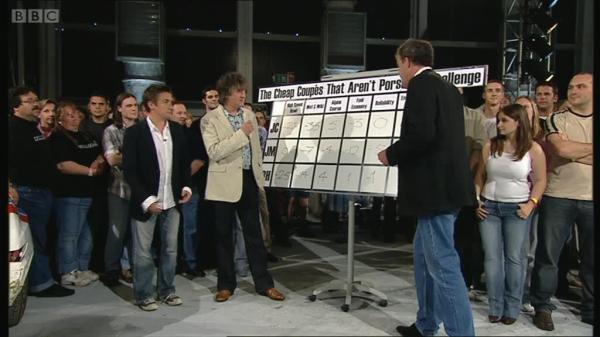
Have you ever watched one of the Top Gear UK challenges, from the good old days of Clarkson, May, and Hammond?

The amphibious cars, DIY caravans, lorry drivers, hot-hatchbacks, cheap Porsches, etc. There is one thing in common. There is a scoreboard, the points make no sense, it’s all a big laugh, and on that terrible disappointment, it’s time to end.

This is what I equate growing an Instagram was like in 2024.

I did the things. I’ve made many pieces of content across stories, reels, and posts. I’ve sewn and knit a varied amount of things. I’ve done silly trends, serious reviews, inspirational posts, filmed tutorials, recorded thoughtful voice overs, and participated in the “add yours” cards on stories.

I turned on metrics. I carefully analyzed posting times, consistently shared things to keep engagement up, took breaks to avoid spamming, carefully thought of 3-second hooks, transcribed subtitles, filmed artistic shots, and agonized over lighting. I networked, supported other creators, and tried to make genuine connections. Got burned a few times by people who only interacted with me for the follow and stopped talking to me and following me after months of supporting them. It’s tricky making friends on that platform. Connections are either amazing, lovely people, or not at all. I met several lovely people too, it wasn’t all bad.

I ended the year with higher engagement, more friends, and negative or neutral growth depending on the refresh. The metrics contradict themselves constantly. I’ve lost as many followers as I’ve gained. I’ve learned I had ghost followers who were keeping my engagement low. I also had accounts following me that left the platform through Meta’s deactivation due to idleness. It’s one of the worst algorithms, showing your followers your posts days after you share them. Zuckerberg, do better.

I ended 2024 feeling like I was on a Top Gear challenge. Meta added and subtracted points to my metrics total willy nilly, like Richard Hammond getting minus “exactly the points he had” so that he ends with naught. It was nonsensical and mind-boggling. This platform provides no satisfaction in what you accomplish.  I got one point here, minus a thousand there, 20 points for this task – yada, yada, yada.

So 2025, what am I doing with my time? What am I working towards? I am going to write more and move on from growing an Instagram account to open a shop. Not interested anymore. It’s not happening and I think it’s a blessing. Fiber art creation is going back to being a hobby. I’m not going to be a fashion designer, or a pattern designer, or a sewing educator, or a part of fixing fashion. I am going to make things I like and have fun, and share what I want where I choose for the fun of it. I have a backlog of projects that I haven’t shared here because of the distraction of Instagram. I am looking forward to writing more, new things, and celebrating the victory of finishing the Udal Cuain manuscript. Available to peruse here. I’m going to do art, I’m going to garden, to bake, learn things, and work hard. I’m excited about it. The key intention is to focus on fulfillment over productivity, and when my to-do list is crossed off to feel fulfilled, not productive.

What are your plans or goals for 2025?

Can It End With You and Them?

I think the most shocking thing for me from the aftermath of the ‘It Ends With Us’ film and subsequent press tour has not been Blake Lively’s seemingly out-of-touch behavior by promoting her brands alongside this movie nor the disturbing allegations detailed in the 80-page lawsuit filed by Lively against Baldoni and Wayfarer Studios, but it is that this movie and novel which at their core are about domestic violence continue to skate around the subject matter instead of using this project to help bring real change to our culture.

After looking at the PDF of the lawsuit, I question all motive behind any of the money Baldoni’s company donated to the charity No More, because the details in this lawsuit are too specific to be made out of thin air, in my opinion. There are cell phone screenshots and bizarre accounts from the set of behavior that is straight up inappropriate for any work place. So many that I’m not sure one person could manage that many levels of lies. If Blake Lively was able to pull this out of thin air, she needs to start writing books, because dang it is layered and disturbing.

George Constanza said it best when he explained how to con people, “It’s not a lie if you believe it.” That seems to be what the production held as their mantra because a movie about domestic violence with unsafe work environment screams delusion and narcissist behavior. Things that the internet is still giving Baldoni a pass on and heralding Lively as a crazy woman for reporting in her lawasuit. It’s very strange to me. How can we forget the ‘Me Too’ movement so rashly? What about Harvey Weinstein and Prince Andrew? The infamous Epstein list? Or the unfolding case of Diddy? Like Prohibition in the United States was installed to stem the tide of domestice violence, in my state of Pennsylvania, during the 2020 lockdown, alcohol sales were limited by the Governor to get ahead of the problem. On Live on Patrol, the Ramsey County sheriff department can attest to how the rate of domestic violence corresponds to the weather, with winter being the time they get the most reports of violence at home. It’s a well documented problem in America. So why would it not be possible on this film set at the hands of a handsome guy claiming he wants to help women? Just think about it. Do all bad people look like bad people?

There is a rampant evil that has pervaded every corner of our world, so I fully believe everything in that 80-page lawsuit could be proven true in court. Power is an influence that corrupts. Hollywood is powerful and has a long standing history of unsafe conditions going all the way back to the golden age, when doctors prescribed uppers and downers to keep stars working, making the studio money, instead of caring for the actor’s wellbeing. This happened to Judy Garland on the set of the Wizard of Oz when she was only 17. Now do I believe all film companies are bad and everyone is just there to use and abuse people to make millions? No, not at all. I think there are good people and bad people everywhere, in every industry.

I also think two things can be true at once. I think that Lively can be a victim worthy of our compassion and can also be a self-absorbed human that made questionable decisions, when she marketed her products during a movie that called for wisdom and tact. But I think we should all be given grace. Yes internet, give her a break. I also think we should held accountable for our actions in order to grow, and I don’t think Baldoni, Wayfarer Studios and the others named in the lawsuit have been held accountable by society. I think Lively has because Lively is rich, she pretty, she has played some mean girl roles and I think those roles stick in our minds more than we realize. If the actress who played Blair Waldorf, Leighton Meister, was in this movie I think society may have a different view because Blair was a more sympathetic character. The Weekend faced similar backlash to Lively, after his character in ‘The Idol’ because we as humans blur the lines between performance and real life. I find it weird that Baldoni is not facing the same backlash as The Weekend when they both portrayed abusive men, why is Baldoni special?

Simply, I believe because we don’t know these people and so our imaginations fill in the blanks. I think as humans we get jealous of successful, beautiful people and enjoy tearing them down. Baldoni has the novelty of being more unknown and can shape shift, if that’s what he is doing.

I’m trying to keep an open mind, and respect the fact that these are allegations but it is hard to not question all his motives when he separated himself from the group during the press tour and so eloquently spoke about ending domestic violence. It was an excellent opportunity to build a case against Lively and discredit her. I’ve personally experienced this from men and women in my life, they entrap you before you realize it and then scapegoat your reputation to cover their own bad behavior. It’s bizarre to me that the film production of this story, ‘It Ends With Us’ was filled with so many cross overs to the subject matter. In some ways it appears, in my opinion, that Wayfarer and Baldoni, have such a hero complex that they are unaware of the darkness in their actions and the hubris of hurting women on a set that was portraying the story of a woman who is abused.

It’s like how Colleen Hoover writes these books that have such dark and triggering subject matter, and some people still think its a romance novel, or in Hoover’s case, that trigger warnings aren’t needed for her books. It’s such a bizarre universe that makes me question what is the point of the art?

For Hoover, is it to educate and bring awareness to domestic violence? Is it to sell books because violence and violence against women sell? Hollywood would seem to prove this point with how violent and disrespectful they are two female characters with the stories that are greenlit. For Baldoni, why did he choose to adapt this film? Was it to tell a story to reach his fellow men to change their hearts or is he a dangerous narcissist that thrives on this kind of treatment of women? For Lively, why did she choose this project? Was it to inspire hope for women who are survivors and tell their story or was it for her personal brand, to boost her product sales? I don’t know.

I think in advertently this movie and the drama surrounding it, including the public opinions swirling around the internet, show that I don’t think we as a society are taking this seriously enough. Even myself, who although I experienced the trauma of having an abusive biological father, I was quick to fall for Baldoni’s interviews and found myself disgusted with Lively because of how little she seemed to care about a subject that was so important. I may have fallen for the lies, again. I don’t think this issue is a problem that can be tackled through movies or books to create real change. With every book and movie I question, where the does the line blur into glorification? And why, when so many people experience domestic violence and abuse, do we have to read it replayed in books or portrayed on screen? I think we are fully aware of the problem and are giving the evil acts too much room to live rent-free in our imaginations.

Domestic violence, narcissists, sociopaths, and abuse are woven well into the fabric of society so well that it is hard to unravel it completely. The cycles of trauma carry down through generations. It’s a ripple on a lake, fanning out farther and farther.

I hope that whatever comes out of this unfolding lawsuit, that the real evil is exposed and that it creates real conversations for change so that we keep our eyes and ears open to those in our midst that are suffering silently from dangerous people lurking in their homes, their families, and the workplace. I also hope that the actors involved, on both sides, the studio, and the author will think more about the victims of domestic violence and get involved. They have money, influence, and could do some good in our communities if they would think outside the bubbles they are in. I also hope as a society we begin to consider the kind of content we consume, so that tales of abuse can never again be marketed as a romance story, cause that’s sick and wrong, in my opinion.

Create a website or blog at WordPress.com

Up ↑