Pockets Are Friends Not Foes

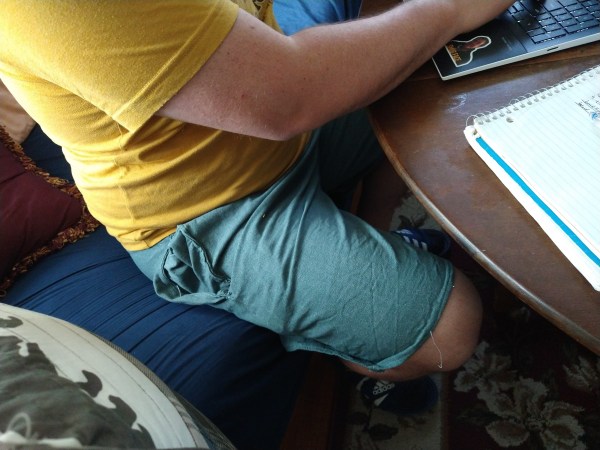
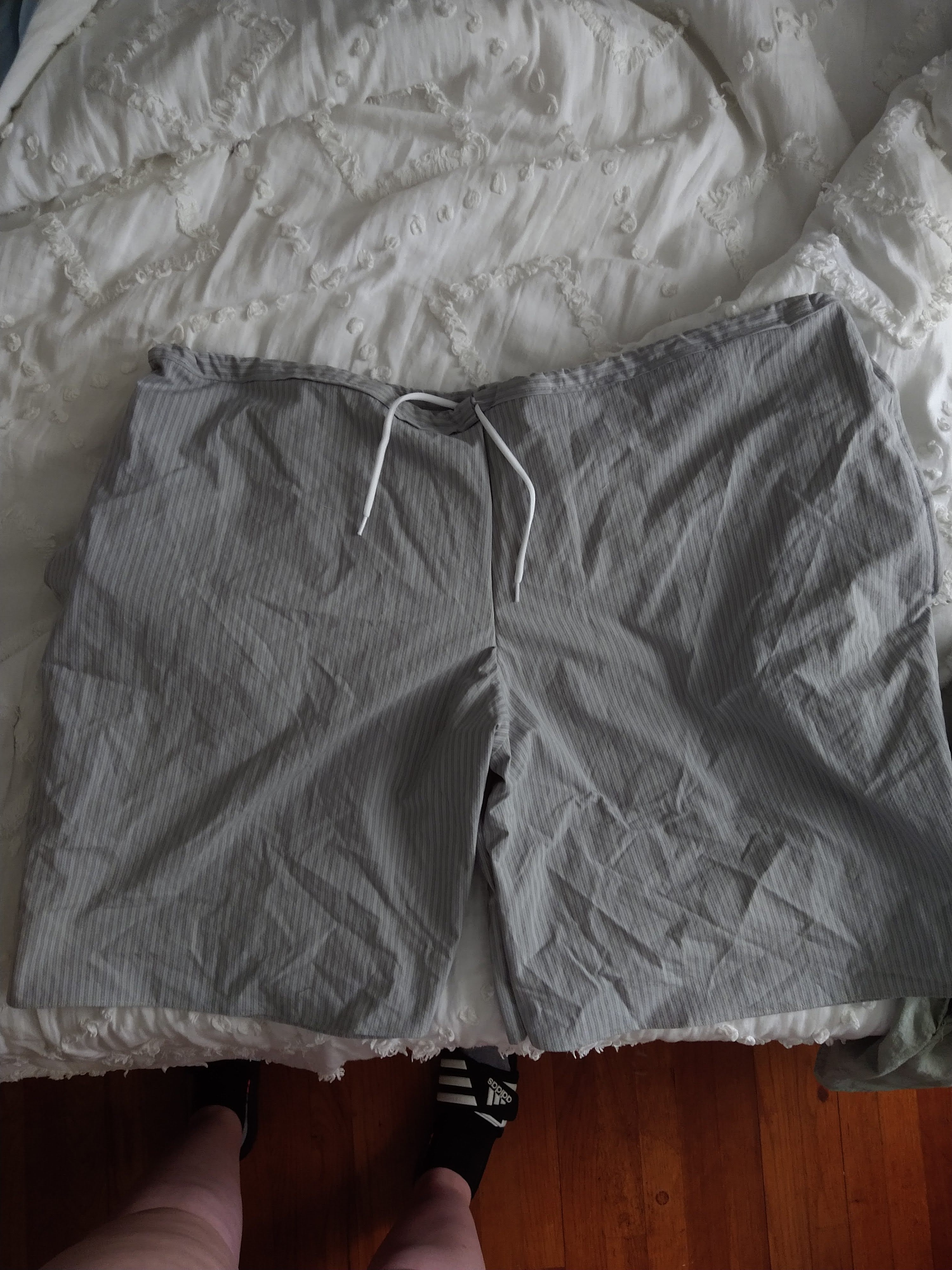
It should have been a compliment or even a point of affectionate doting that instead of buying shorts from the outlets or the myriad of options online, my husband wanted me to make him a pair of shorts to replace an old pair. Instead, the mere thought filled me with dread. Shorts? Menswear shorts? I can barely make my own shorts! (Not true, I’ve made eleven attempts at this point and only a few tries did not pan out.) I don’t have the right pattern! (Also not true, I do, a very good one that is classic and versatile in silhouette for pants and shorts.)

Both of us could see through my excuses and my lame attempt at avoiding a task that would make me grow and apply the skills I have learned this year. A good thing to do. Economical and customizable. A win-win scenario. I was feeling confident. His encouragement and confidence in me was brimming. The fabric selected a quality, not too heavy cut of canvas material. And yet, my overachieving penchant to be the best pushed me forward, to the pages of Mood’s online store. Another two cuts of fabric were ordered in a sturdy striped shirting of gray and another of green.

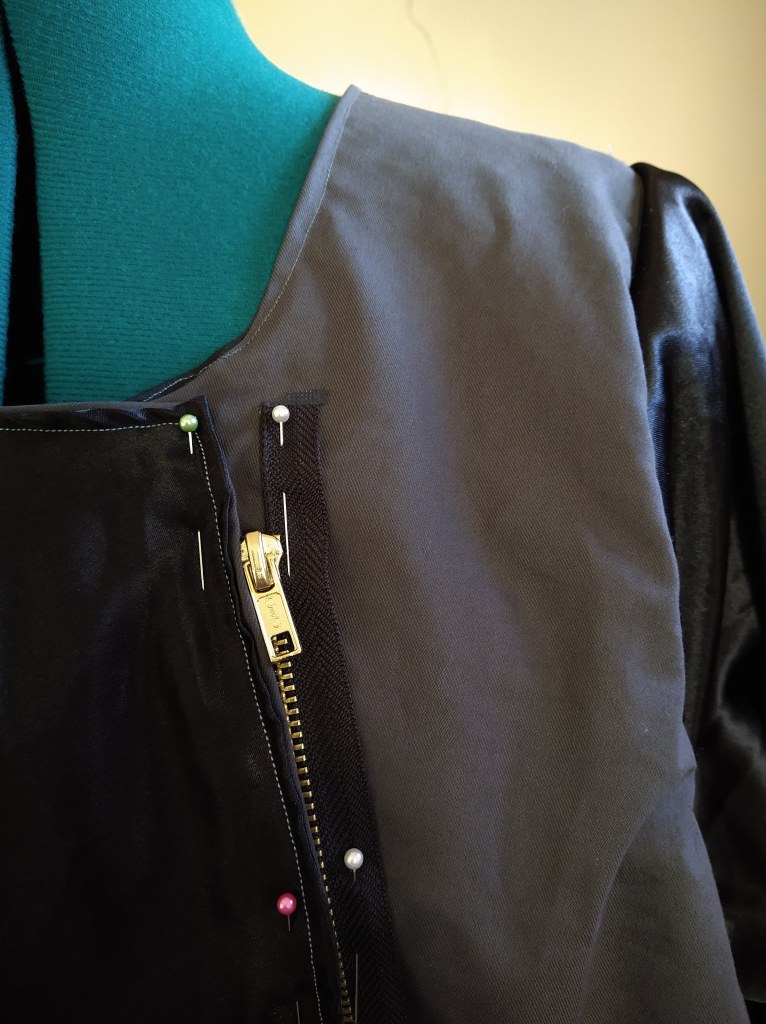
Yet they sat in my stash as I pondered. I hemmed and I hawed, until one day the pattern called to me from my sewing stash. Afraid I would deny the voice for another month, on that June day I cleared my table and grabbed my scissors ready for a fabric fight. I carefully spread the fabric across the horizontal expanse and with purpose, I dug out the first pattern piece. The front, cut two, mind the seat curve. Again with the back, the waistband, and then I remembered I promised him pockets. Pockets and a zip fly. Oh dear, how could I forget such a crucial step? In a flurry of tissue paper patterns and fabric scraps, I dug through the bigger offcuts until a pocket was procured. I rinsed and repeated twice until a stack of short building materials and a dusting of scraps fell beneath my feet.

I’m not sure why pockets intimidate me so, I think it could be how they are inserted. You must make them even, strong, and seated on the hips just right so that they tuck into the pants without creating wonky bulk or disturbing the line of the garment. They’re not hard to do with my sewing machine, yet I avoid them like a wasp flying at my head. Zippers too create such a fine finish, compared to the chore that is buttons and buttonhole creation, yet I’ve stayed away from those two in 2023. I think we get into comfort zones and become afraid of stepping out, even though we have the skills and are fully prepared for the next step, we just forget to move. It’s a shame because, without those friendly pushes from people who love us, we may never venture into a new great thing.

I’m glad Kyle believed in me and didn’t let me avoid this project because these shorts gave me such a sense of accomplishment! I now want to insert pockets into the garments chose not to, mostly my own clothes. I want to sew with more care moving forward so that the items I make have more polish. My skillset is leveled up to do this, I don’t have to hide in simple projects anymore. Pockets are friends, and zippers are a fun challenge. Buttonholes are still foes though, at least for now.

#29 – The Satisfaction of Mending and Alterations

I’ve found there is something serene about mending your own clothes. I find it almost a joy to launder the items and collect them in a pile for a day of slow, methodical stitches and problem solving. It makes the chaos of holes and rips into the calm of rejoined fabric and orderly hems. There is a satisfaction in fixing an item that was broken, making it as good as new. It reminds me that in life when the problems come, and there will be problems big and small, that it’s not over when trouble comes.

Like last night, when a scratching and rustling sound echoed from our chimney to the fireplace below. All I could picture was that scene in National Lampoon’s Christmas Vacation when the squirrel terrorizes the living room, scurrying from table to chair, knocking things over and crawling on Clark.

Of course this happened after dark, naturally as it does, when the stores are closed and the exterminator or animal control would be closed. In a frenzy we grabbed a sheet of plywood from the wood shop and covered the hearth opening. I called my neighbor, who has become like framily (friend-family) to me. They shared advice from their own experience with critters in their house, wrapped me in a hug and calmed me down with some good laughs. When I came back home, although the bat or squirrel or whatever it is, may still be on the other side that plywood I felt okay.

Having caring and friends who love and support you is the mending thread of our lives when things get weird.

Seams and a New Gadget

Today’s mending agenda consisted of re-attaching a missed seam on a pair of underwear I bought from a big brand, the pieces of fabric were connected across the seat seam with a serger aka overlocking machine and it either ripped the fabric which dislodged it from the seam or the pieces did not get sewn together in the first place. I have a love-hate relationship with the practice of serging ends and seams. I know it saves time and uses less fabric to finish seams but dang, they tend to unravel like nothing else. So, is it really better? I’m not sure. But that’s my opinion.

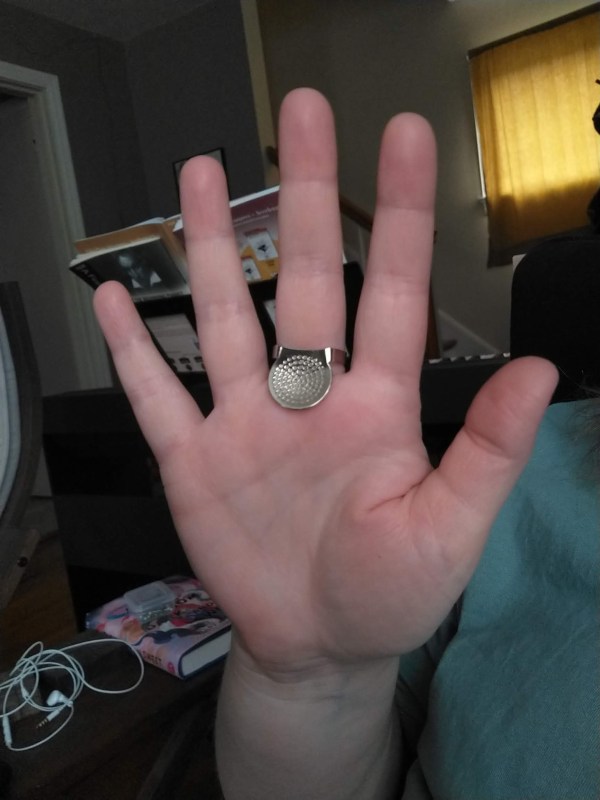
I’m doing a repair on a tank that I made from a burnt orange knit fabric. I made an unwise decision to take it in at the armhole which made the fit around the bust odd. It’s pulling and the stitches are placing too much stress on the knit fabric, which I saw the aftermath of while unpicking the stitches that made the armhole smaller. There were some big rips! Now the underside of each armhole looks like it was chewed up. Which to honest made me feel a bit stressed out because I enjoy wearing this piece and I don’t have any more fabric to patch the whole with. Thankfully my new gadget made this process of closing each rip easier – the palm thimble!

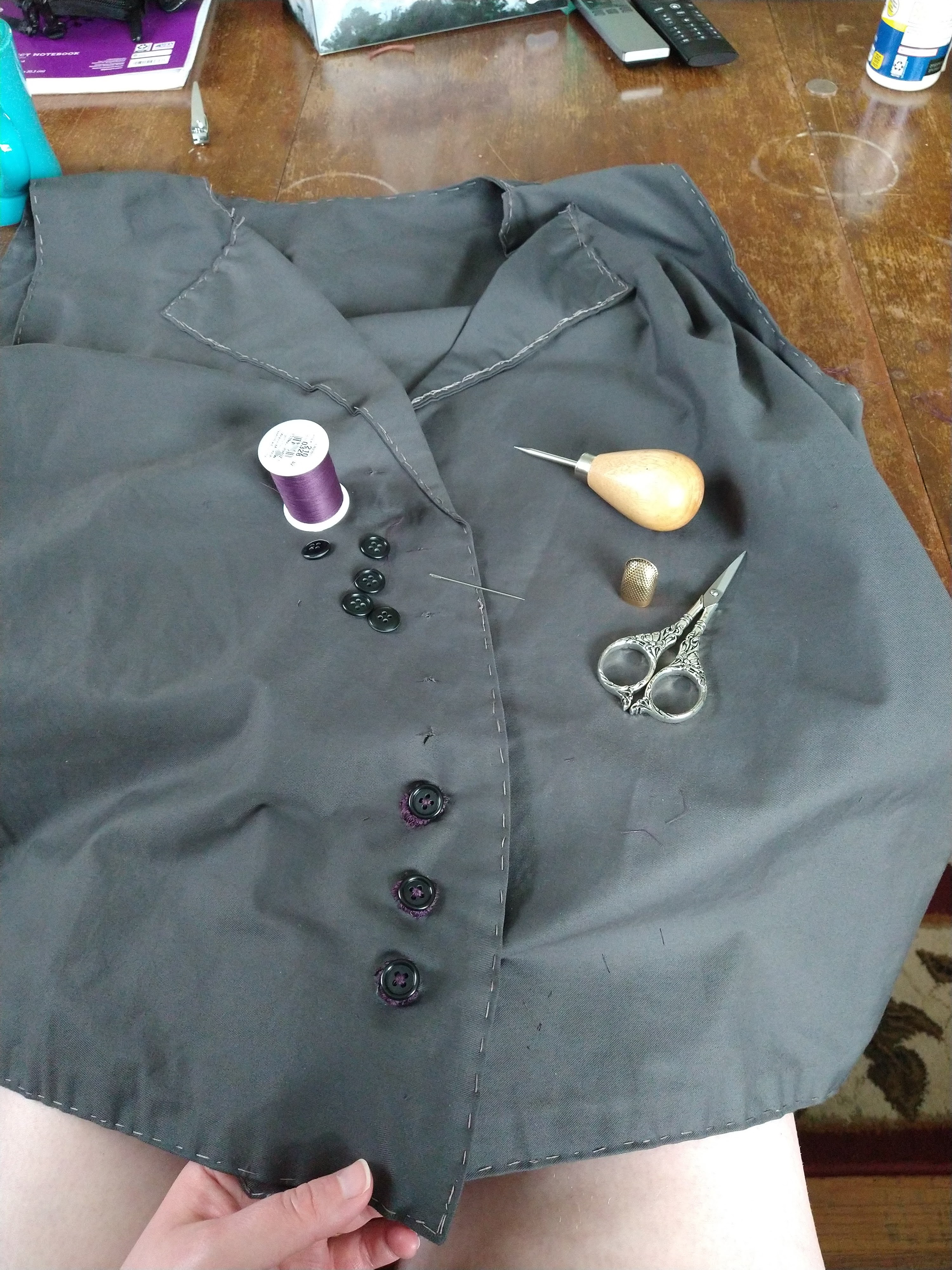
As I mentioned before in #21 – Sewing When I Lost the Love For It I have developed tendinitis in the knuckle of my middle finger of my sewing hand. This is what drove me to stop hand sewing in general and get used to using my Heavy Duty Singer machine. But alas, there are still times when you need to sew by hand like when inserting a zipper, mending rips and holes in fabric, and button and buttonhole insertion. I ran into this problem whilst completing this vest for my father-in-law. Just a few hours of hand sewing these buttons and button holes, awaken my injury and my knuckle was not happy. It’s made hand sewing a bit tense for me because what if it keeps getting worse? I love doing this, I don’t want to stop making things or knitting.

But, I was browsing my Instagram feed a few days later and behold a creator I follow named Geri In Stitches was sporting an intriguing accessory – the Sashiko thimble by which she pushed the needles through the fabric with her palm instead of putting stress on her finger. I used mine today for mending and it was a completely difference experience! My finger is not in pain, the knuckle is not inflamed or swollen. It worked! I’m over the moon excited about it.

Taking in Garments

Along with mending today, I also took in three pairs of shorts that were just draped to the point of looking silly. It’s an interesting feeling when I have to take items in because there is that feeling of, dang, now I have to fix something that wasn’t even broken just for the right fit. And there is also a feeling of accomplishment because I have been getting healthier.

I’m tackling my inflammation from food allergy and stress, toning up through interval training sessions, and making healthier choices that is helping me slim down a bit. I went through a decade of gaining weight and not understanding why I couldn’t lose it. It was frustrating and discouraging to feel so out of control. If only I had the wisdom to see how much the mind and the body are connected. The food allergy was giving my body anxiety and inflammation, making it difficult to maintain let alone get in better shape. Mind was so foggy from the stress and emotions of that time period that I didn’t want to take care of myself because I thought – what is the point?

When I have the opportunity to do these alterations, it’s this little moment of progress without having to weigh myself on a scale which is my ultimate trigger into a unhealthy spiral, but also to feel this moment of this will be an easy sewing project today. The item is already completed, and well loved. It’s relaxing compared to garment construction when I can still screw things up.

Later on today, I have another round of alterations, replacing a waistband tie on a pair of shorts and adjusting the fit on another pair of shorts. And then it will be time to put my thimble away and leave process for the next time. But with each wear I will remember the time and love put into these clothes to keep them in good order. A well loved closet.

Do you mend your own clothes? Have you ever taken a garment to be altered or do you just make it work? Before learning to sew, I would just accept my fate if items broke or stopped fitting. It’s a freeing feeling to not be stuck in letting the clothes decide for you. I’d recommend giving it a try or finding someone who can help you with their own sewing skills. It truly makes a difference.

#20 – A Beethoven Milestone

When I moved to coastal Georgia, it was a big, unknown kind of step. New family, new culture, new job description, new kind of humidity I’d only heard of. It was disorienting at times, exhilarating at others. Yet it made me perceive what really made me feel at home. I realized it was a piano. No really, a piano.

Life of a Piano Teacher’s Kid

When I was very little my mom and I moved in with my grandparents, at the time my grandma was a full-time piano teacher. My grandma’s living room had not one but two pianos – an upright piano and a grand piano. Due to wear and tear, the two consolidated down to one new grand piano that filled the house with music from 6:00 am to 6:00 pm during the week. My breakfast routine included the broken melodies of piano lessons and a bowl of cereal. At the time, I would grow tired of the piano music, but as an adult, I look back on those days with fondness.

Something that I think is interesting, is that before I left for Georgia, my grandma gave me my old piano lesson books that she kept from my failed lessons in 2nd grade. I thought that was really sweet, and I think a bit of comfort from the Lord because I did not anticipate how hard homesickness was going to hit 6 weeks into my new life. I was all settled into a nice apartment and little community, a new church, and a new side of the family to hang out with, yet bam I was thrown into this wave of sadness.

I felt like part of me was missing. For some reason, those piano lessons came to my mind and, all I wanted was to hear the piano music again.

I would say before this point I appreciated classical music but it wasn’t a regular rotation within my Spotify profile, it then became my comfort music with Claire Hwangci’s Rachmaninoff Preludes album being one of my favorites. My grandma used to play Rachmaninoff, Chopin, Brahms, and Beethoven. Moonlight Sonata was one of her favorites. Since then I’ve been determined to learn piano, one day. The problem was the keyboard I had access to was pretty busted, with a whole octave not registering noise when I tried to play.

Grandma encouraged me to keep going even if my keyboard was not great, she was thrilled that I felt the call back to music lessons.

We eventually moved back to Pennsylvania, and as the ebb and flow of my time changed, I had a lot more time to practice in my new routine. The problem was I lacked discipline and was a lazy student. Instead of seeking to learn musical theory again, I went to my Pinterest and YouTube feed, to find quick learning techniques. Watered down piano guides and on Pinterest, I literally found pins that were just the notes in sequence. I learned a watered-down version of Hedwig’s Theme, The Phantom of the Opera Overture, and Jurassic Park. It was a good way to gain quick satisfaction, and it was a blast to hear the piano music again.

It filled my heart a bit fuller again when I felt empty.

The Yamaha P-45

Fast forward to 2023, I had let the broken keyboard go and was keeping my eye out for a used free piano on Craigslist, but truly my current rental is too small to accommodate such an instrument. But something really cool happened, Kyle found a music shop nearby and encouraged us to go. He was on the hunt for an electric guitar. The music shop was incredible. It smelled like all the piano shops I had gone to with my grandma as a kid. A flood of memories came back, warmth deep in my heart. With great surprise, they carried something that would make me feel reconnected with my past – a digital piano with weighted keys that felt the same as my grandma’s grand piano!

Since she passed away in December 2022, I’ve felt a bigger emptiness in my heart. A vast homesickness that can’t be solved until I move on from this world. But, when I put my hand on those keys, the expanse felt a bit smaller. Have you ever felt that way? It’s this pure bliss of memory that is like a big hug to your weary heart.

There is one elephant in the room, pianos even digital ones are quite expensive.

Like, it’s not an impulse purchase. But that is where another principal comes in – delayed gratification. Over several months and previous months of careful saving, we were able to purchase the digital piano and stand. Through the process of waiting, saving, and dreaming, I was primed and ready to dive in and be a committed student. This was not going to be a repeat of my previous tries, I even bought a piano theory book!

To my surprise, all those mornings of eating breakfast to the accompaniment of piano lessons, some of those lessons stuck.

The book is teaching me musical theory, treble and bass clef, and how to read music – the foundation. And the foundation is jogging my memory to all the little techniques my grandma used. How to navigate the guide notes, how to skip thirds, and to make sure to not play by ear but truly understand the technique of what I am doing, and have good form with my fingers. Although sometimes I get sad that she doesn’t get to know this part of me, through my memories, I feel as though I am still getting to do this with her.

Crescendo

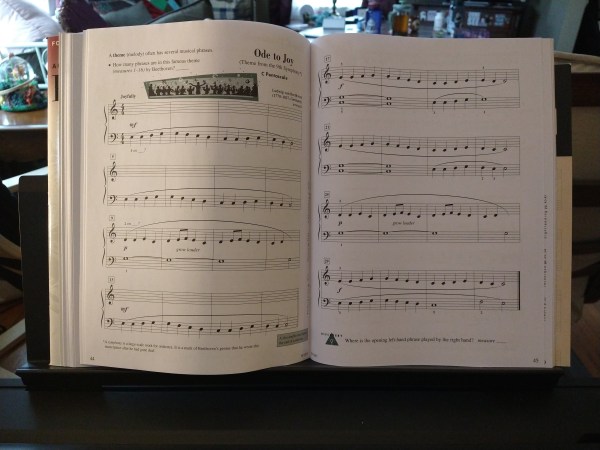
Sunday I felt the peak of my piano success, a real milestone. I have been diligently playing through my lesson book, learning and repeating the instructional songs, even if I feel like I know them. I want to remember and have the skills not hubris. And so, to begin my lesson I went back a few pages, as I do. I played through the French Minuet sample, a bit of Mozart samples, onto Home on the Range, through a taste of bass clef practice. Moving to the understanding of C Pentascale, on to let’s play hands together up to a bigger octave. I am so engrossed in my lesson that I begin to play a familiar tune without stopping to see what it was. I moved on to this song, not thinking much of it because I’m learning here, really getting it and somehow I am playing hands together! With a rhythm and respect to the time signature, who are these hands? But my hands, are uncoordinated and frustrating! They don’t do this, right?

I feel the same thrill that came when I drove our standard transmission for the first time in top gear. It feels good.

Then I stopped to notice, hey, this is my first Beethoven piece.

A simplified version of Beethoven’s Symphony No. 9, Ode to Joy or the Hymn ‘Joyful, Joyful, We Adore Thee’ depending on your context. What a milestone! I wanted to learn how to play the piano, with theory and discipline, and learn not a popular tune but a classic. In that moment I understood why good things take time. It is a craft. It cannot be rushed.

I look forward to my next piano milestone!
#19 – Canning, No Reservations, Gratitude

We had a busy weekend, many canning projects to preserve, and some errands to run. The usual weekend things. I’ve noticed the more hobbies my husband and I take on, the happier we are because there is just something enticing to us about going to bed worn out from the hard work with a smile of accomplishment on our faces. I’ve started to keep a journal of our weekends, how we did the projects, and little details that happened – like little silly things that make me smile or how we put the recipes together. Having that little record of these weekends that otherwise could be a blur of repetition and hard work makes all these moments spent with Kyle, sweeter.

Friday Sunshine

I want to remember those tiny drops of sunshine moments that make life a remarkable story. To slow down and think through those bits of joy sprinkled within the mundane and chaotic. On Friday after work, we stopped by our local Aldi to pick up potatoes and vegetables to preserve and the mushrooms we wanted were in stock and $0.99 a carton. The sun was warm, bright, and revealing the splendor of summer to come. We drove with the windows down listening to Babel by Mumford and Sons – a college throwback.

Moderngurlz posted a banger of a video about Chanel and I spent my late afternoon soaking in the sounds of nature while I wrapped up a panel of a sweater tank. In the golden hour, my next-door neighbor, a good friend texted me and I stopped by for a visit – I love those moments of fellowship and Kpop discussion. Her daughter had a fundraiser for her school and I had the opportunity to participate in what makes communities great – helping each other. That evening we watched round one of the Pro Bull Riding Tour in Everett, Washington. My favorite animal athlete Domino had a good out, and the Cowboys got a few qualified rides but mostly injuries.

Saturday Fluff

I started the day with the newest Bernadette Banner upload on corsetry and a bowl of fresh kiwi, scone, and dairy-free whipped cream. On Saturday, the weather became a whole new season. It was the misty, cool gray of an Irish day. With rain jacket in tow, we went to Walmart which is not my favorite place on a Saturday – because it seems to be everyone’s favorite place on a Saturday – it was the most happening place in town. Despite the crowd, we met the nicest employee who helped us match some paint. Well we tried to match some paint and it didn’t go as planned but those moments of searching for the right color formula for the paint shade “Reindeer Fur” while discussing the quirks of horse hair plaster were a joy. Like watching an episode of Gilmore Girls, the small-town charm peaked.

My favorite place to run an errand is the Agway store. What is Agway? A local feed supply, pet, and garden store that dots the South Western Pennsylvania landscape. It has the garden things that you actually need and knowledgable people, it has the smells from hay, to fish food, to blood meal fertilizer – the funkiest garden smell. It also has bunnies and ferrets! I used to have a pet bunny, and my friend had a pet ferret, I love small furry creatures so this place gives me all the feels. I want to adopt another bunny, yet our current rental does not allow pets so for now I soak up the small moments of bunny cuteness at the Agway. This time did not disappoint! I got to hear the bun nibble on a small snack, flop on her bed and make some teeth purr chatter as she drifted off to a nice nap. I also got to pet a ferret! The employees regularly tend to any animals they have and so while the employee was playing with one of the ferrets she called me over to give the ferret some attention. It did try to bite me but it was still cute.

Later on, the day was a symphony of potato peels, random snacks, canning jars, and episodes of No Reservations. The Ozarks and Heartland episodes. Recently, Domino’s opened a store in my town, one of the only delivery places I can eat at since I have a dairy/beef intolerance. My food of choice is Mango Habanero Wings. Not having to cook was a delight but then our delivery driver showed up in a sweet street-style look with bright orange sneakers and a black and white camo coat. The fashion scene around here is pretty dull, so seeing anyone mix it up gives me a small delight. In the late hours of canning, we caught a live show on Sirius XM The Message from Blessing Offor. His music is uplifting and soulful. Highly recommend checking him out. With a cup of Chamomille tea in hand, the night ended with a Simple Living Alaska video. A great way to end a long day of hard work.

Sunday Steam

A dish I make a lot is Miso Soup, a dish you need a good broth to layer as the base. A pantry staple Kyle and I have wanted to learn is the art of crafting a layered, umami-bomb-style, broth. I’m happy to say, it turned out well! Adding another table to our canning setup made the difference, there was so much counter space this time. We spent the day chopping, stirring, and managing the steam emanating from the kitchen.

I leveled up in my piano lesson book to Unit Five. The short round of the PBR was theatrical to the end. I sewed my sweater tank together and began the final panel. We watched a mix of No Reservations and Hometown. I dreamed of wallpapering a future historical house like Erin and maybe visiting Africa one day, while taking in Anthony Bourdain’s travels through Namibia and Ghana. At the end of the day, I reveled in a bowl of noodles with fresh broth and tried to not think of The Historian by Elizabeth Kostova as we enjoyed the Romania episode of No Reservations. T’was a good weekend.

Knitting Tests My Patience

It’s the start of a new project. I select my needle gauge and yarn ball. The time to cast on is here. Time to begin the endless loops of yarn twisting around the knitting needles. Let’s make something out of a static strand.

Knitting as a creative process for me has been something akin to ‘The Curse of Oak Island’. Are they ever going to find the treasure? Am I ever going to be good at this? I know what I want to accomplish. I can see the project in my mind and then it’s a blur. It’s like the stitches take the lead and maniac style they wreak havoc.

When the stitches take the lead, things go awry, why am I wasting my time? It’s been a creative tragedy in the Greek theatrical sense of the word, a project unraveled by Act Three. So, why do I keep trying? I want to succeed like all these other knitters I see on Pinterest and Instagram. They make such cute designs. Knitting your own piece is a lot cheaper. It’s rewarding to see your handiwork not just make the design of the garment but the actual fabric! As a seamstress and creative person, I want to climb this mountain no matter how long it takes so that I can finally taste sweet success.

Accepting Trial and Error

It’s weird, knitting has been the most frustrating yet fascinating hobby because, unlike sewing, you begin with nothing. It’s a ball of yarn and two sticks, that come together to create shapes based on how you loop the yarn, stitch after stitch. Negative space to positive.

The tantalizing simplicity of knitting sucks me every time, and yet in three years of trying, and countless attempts, I’ve made one garment that I like. One garment came out the way I pictured in my head. That’s a terrible conversion rate if you think about that in terms of football. What would be the point in continuing unless you love playing the game. Because at its core, knitting is an investment in time. If you want to make a project of size and use, like a sweater, it’s a multiple-month commitment if you’re a quick and capable knitter. It is a slow process. Like painstakingly slow for me at times, and repetitive.

Patience is not my strong suit, and so knitting has challenged me. It has frustrated me to my core when I have dropped a stitch and I have to frog (unwind) row after row of work. Hours of progress dissolved from my project in a minute, only to remain in my memory. But when you get it right, as what happens in life when you accomplish a goal you’ve had for a long time, the victory is sweet. Completing a panel of a sweater or a hat without failure, and the project removed from the needles looks like what you imagined in your head – well that is euphoria!

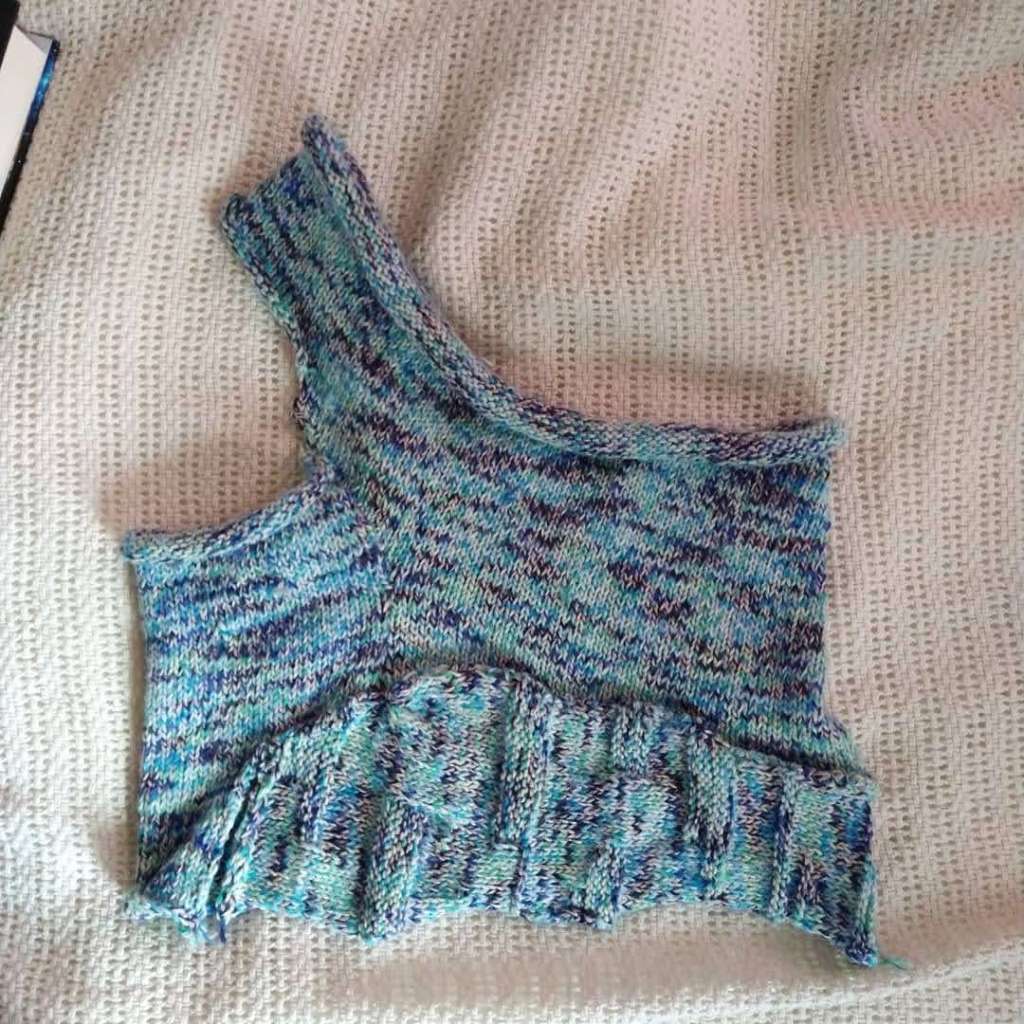
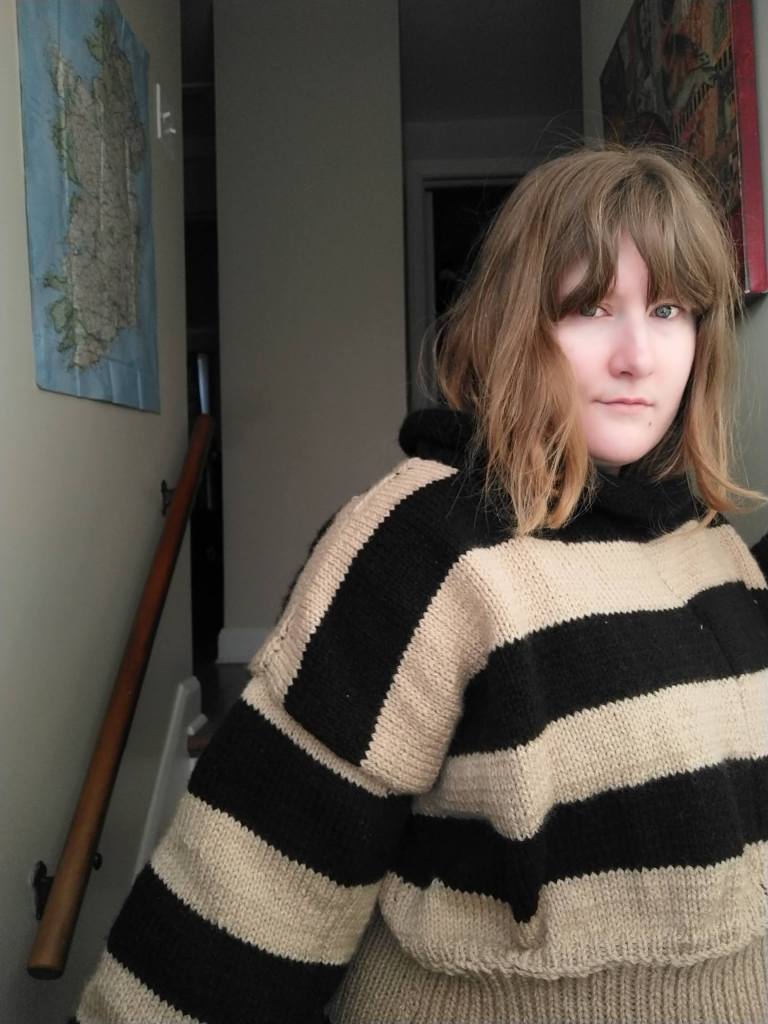
Because of how tricky executing a knitwear project has been for me I get excited even when it sucks. Like this experimental tank I made in 2021.

It’s weird and avant-garde. My lack of understanding of how knitwear stretches and shapes based on needle gauge caused some rolling issues. The tank was not what I expected but also not a disaster. It’s weird being pleased with your own mediocrity. I think that is what is so interesting about this skill-acquiring process. It’s student work, but it’s your student work so there is a sense of pride. I made this thing and it doesn’t fall apart! It also looks like a crop top – woohoo! There’s an accomplishment in finishing, like when you took a terrible class in college and instead of dropping it and starting over you grind for the credits. I guess it is character-building!

Experimental Success

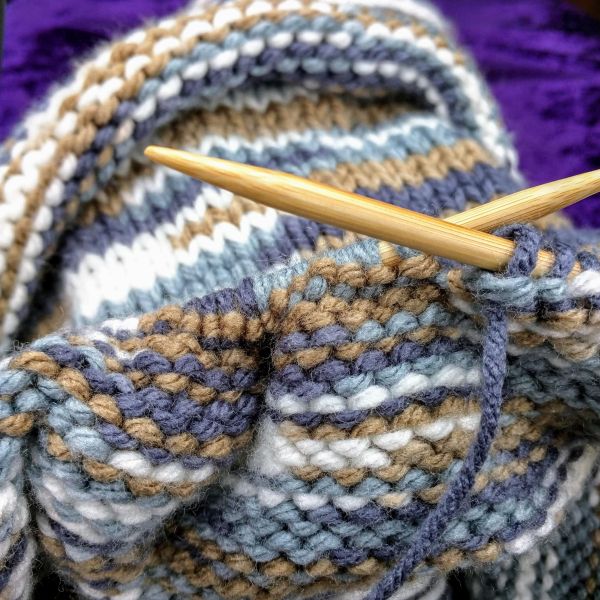
It hasn’t all been for naught, I would say it is Yarn – 10, Magz – 7. That’s a decent record. It’s cool to look back at things I’ve learned along the way like this Steeple stitch and see that yes, I am getting better. I love the texture of this piece and hope to remake it someday with the proper sizing and needle gauge. Below there is a ribbed hat with pom-pom, a striped scarf, a rugby stripe hat and matching scarf (not pictured), and a Flying Geese Stitch cardigan coat. It hasn’t been a waste of time even though knitting has made me very frustrated. It’s a nice skill to have.

#15 – Pattern Drafting

The most intimidating part of sewing for me has been pattern drafting. Possessing the understanding to draft a pattern for a garment demonstrates the knowledge of how the pieces of the clothes we wear every day are put together, plus having the foresight to sketch out the shapes on the fabric in a 3D form. It’s a lot! But that is how clothing makers have designed and crafted pieces for most of fashion history. Before the paper pattern was made available in the mid-19th century, garment makers had to understand how to create these building blocks.

“All devotees of home sewing should know these two names: Madame Demorest and Ebenezer Butterick. Madame Demorest, wife of a successful New York merchant, was the first pattern maven. In the 1850s, she began selling tissue-paper patterns for home sewers via mail order advertisements in fashion periodicals such as the Ladies Gazette and Godey’s Lady’s Book. Initially, these patterns were ungraded, meaning that the seamstress had to enlarge or reduce the pattern to fit her figure. Garment elements such as sleeves, bodices and skirts were sold individually so that the sewer could create her own dress. In 1860, Madame Demorest began to sell her patterns through her own publication, called The Mirror of Fashion. Patterns were also sold via “Madame Demorest’s Magasins des Modes” shops, of which there were 300 national and international locations by the middle of the 1870s. By the late 1880s, Madame Demorest and her husband had sold their pattern empire and turned their interests to philanthropy. Though Madame Demorest may have been the first to sell tissue-paper patterns, Ebenezer Butterick was the first to sell graded patterns. According to Butterick’s corporate history, Butterick created graded patterns in response to a comment his wife made when sewing a garment for their son. “

Museum, F. (2009, August 4). Sewing patterns. FIDM Museum. https://fidmmuseum.org/2009/08/sewing-patterns.html

What I have challenged myself to do in my journey of sewing is to understand these building blocks to create my unique patterns and connect with the craft of it as a maker. I’m a nerdy person, I love digging into the story beneath what we do. That’s why majoring in History called to me even as my desire was to study fashion. I realized through the mentorship of a great professor that I could understand the motivation behind the garments and how people lived their lives in them which would provide a deeper understanding of fashion history. How cool is that? Since that point in my studies, I’ve craved a deeper connection to clothes. It became more than just an artistic exercise of sketching a design I had in my head, I wanted to understand why fabrics are the way that they are. How trends interacted with culture and history. And so as I was looking to go deeper in 2021, I consumed a lot of Bernadette Banner, Nicole Rudolph, Karolina Zebrowska, Morgan Donner, and Cathy Hay’s content. They dig into the meat of garment construction and silhouette in a way I wasn’t introduced to fashion design by Vogue or Harper’s Bazaar. In doing so I knew, yes paper patterns would be necessary to learn from, but I needed to learn how to draft the shapes in the old way to make things I couldn’t find in the pattern envelopes of Joann Fabrics or Mood’s Sewceity.

For example, the silk halter dress and black and white tank dresses were hand drafted from my own measurements, being draped and cut based on my own form. In comparison, the light blue summer suit above was made with the assistance of two paper patterns to understand the construction of a collared shirt and shorts, two pieces that are essential building blocks of a wardrobe. But after I used the pattern to understand how to shape a collar and cut lines of shorts it was time to go back to drafting what the garment would look like based on my own pattern pieces. Yes, the suit is quite messy and I’m not thrilled with the fit of how it came out. I realized the tailoring was goofy because I deferred too much to a standardized pattern shape and now if I re-made it I could draft the whole pattern by hand according to my own custom measurements.

That is why the learning process of pattern drafting has been such a rewarding quest, it has de-programmed my brain from the effect of standardized sizing and fast fashion. Those pre-made patterns while essential to learn, can’t fit everybody and every shape it’s not possible. My student garments have not been the most flattering or pretty to behold because I am learning the process of fitting, it’s been a slow burn but when it all comes together I can see how much clothing is actually made for an individual instead of a mass market is just so dang luxurious to wear. Even when it is not perfect I’ve felt the reward. The bigger reward though is that because it is a learning process, eventually the tailoring and my construction skill set will catch up to the ideas in my head and my clothes will turn out exactly how I picture them.

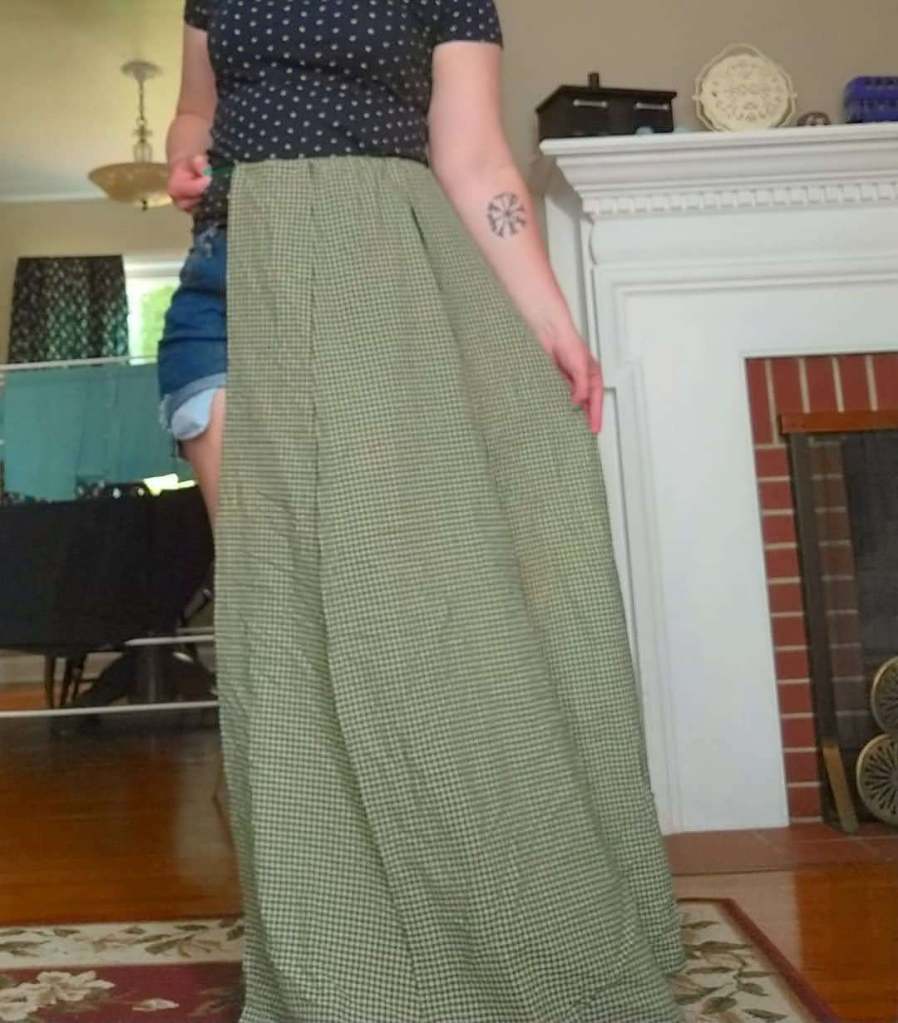
I think sometimes we underestimate the effect fast fashion is having on our minds in the way we relate to clothes. We are accepting uncomfortable, cheap-quality, synthetic fabric clothing that is made to be disposable. It is not supposed to be like that. Take this dress featured below, it is made from 100% cotton that I purchased for $4.00 a yard from a quilting fabric store. Because it was a natural material it held up to wear and washing and was breathable. It was such a comfortable fabric to wear in the summer and did not fall apart. The dress I made was drafted according to an older style of skirt, with 10 skirt panels that were tapered to the waist to make the skirt swish, as taught to me by Bernadette Banner’s videos. I then drafted the bodice using historical dress-making techniques from the Victorian era, as taught by Cathy Hay’s videos. This garment fits me better than my wedding dress. Hands down the best-tailored garment I’ve made according to traditional construction techniques! It took me four months to complete, as I was still learning how to sew and draft. It only cost me $16 dollars in fabric although it looked far more expensive when it was done. I guess my point is by sharing this is to share with you, reader, is to share how valuable it can be to learn the old techniques instead of deferring to technology. Let our knowledge and craftsmanship define our creations instead of a piece of technology, like AI. Not all of our modern ways know best. Fast fashion certainly doesn’t!

#12 – Pyjamas

As a kid, I used to sketch clothing. My friends and I imagined our own fashion brands and collected these sketches into booklets, like homemade catalogs dreaming of our Delia’s. We were obsessed with Mary-Kate and Ashley Olsen, Sister Sister, Lizzie McGuire, Totally Spies, Destiny’s Child coordinated outfits, The Cheetah Girls, etc. If it had a fashion twist, we were lining up to consume it. We excitedly watched What Not To Wear, America’s Next Top Model, and Project Runway, hoping one day that we would be a fashion force to reckon with. I gravitated to the design side while my friends were more interested in modeling, stylist, and it-girl/influencer ideal. To be honest, I think that girl of 11 would not believe the garment that would solidify my feeling of a true designer would be a set of loungewear instead of an avant-garde gown.

My sewing plan for 2022 had been simple, make, make, and make some more. I scoured Joann’s clearance bins and drooled over Mood’s selection of prints itching to make something of a higher caliber than my previous tries. I had drafted my own coat, tried some vintage patterns, and successfully made lounge pants for my husband yet had struggled with fitting my own pants. I had dabbled in tops but didn’t understand shoulder seams or hoods. I was still quite green! But I needed some new pajamas and thought hey, let’s do this. So I dug out of my fabric stash this cheerful blue gingham in soft cotton shirting. It felt like being wrapped in a hug with a little drape. I was feeling cocky after sewing two vintage patterned dresses earlier in 2022 and thought, how hard could it be to make myself some pants. I figured out that 1940s pattern, I got this. And actually, it turned out to be one of my favorite early pieces!

This set was made of a pair of high-waisted drawstring pants with oversized balloon-style pants that tapered into a cuffed ankle. The matching crop top featured a generous hood and long sleeves with a boxy fit that just felt so relaxed and cool. With the hood up I felt like Princess Leia in her original white dress. The geometric pattern and unusual silhouette gave me the confidence to seek out my own style with sewing, not just be a vintage hobbity cottage-core girl that was so popular around this time. This helped me to remember to be playful with my designs and inspire the little girl who sketched clothes while she was supposed to be taking notes in class. It reminded me of the Cheetah Girls matching track-suits and avant-garde silhouettes I craved from street style.

What made this feel full circle was not just how good I felt in the garment, but the doors it opened up. My cousin’s daughter fell in love with the piece and wanted me to make her one. That was the first time I had made something that people wanted to buy. It felt incredible! But also taught me that the vision of what I dreamed of becoming, was not that far off from those designs I sketched as a kid. They weren’t show-pieces for a runway, they were real-life clothing that was playful and useful for living life in. I realized I do have a place in the fashion space even if I’m not in a fashion capital, running a brand. The world right now doesn’t need more ballgowns or high fashion editorial pieces, it needs functional clothing made locally and created with love for the people we love. I could be a fashion designer who could make humble pieces a little more special. That’s where Potato Technology became a tangible idea instead of a pipe dream.

#5 – Fashion Design

Potato Technology is my brand, my design studio. As I became a more experienced sewist and designer I realized I wasn’t happy just making things. I wanted a brand I could work towards, a cohesive vision to find my voice in fashion. So I followed my dream. Here’s a taste of what I plan to share with you on this platform!

Wonderland Jacket, A/W 2022.

Banshee Sweater, A/W 2022.

Black Currant Blouse, S/S 2023.

#3 – First Sewing Project

As I think back on drafting my first garment, my first reaction is I probably should have bought a pattern. That being said this is how I dove into my favorite hobby, the world of sewing!

Currently, I’ve been sewing my own clothes for 2 years and 8 months. It’s been a wild ride of exciting transformations from fabric to form, absolute failure where I chuck the garment, and moments of great frustration that have tested my mental fortitude. Fashion is not for sissies, as Tim Gunn once said, and I wholeheartedly agree! So, how did I start the process? Kind of on a whim to be honest.

It was the end of summer and autumn was making its way into our world even though it was late August 2020. We were all coming out of the lockdown world to that long-awaited green status. It was a time of excitement. Small pieces of normalcy were taking root and calm returned to life. My husband and I had used all the endless downtime of the lockdown to get crafty! We dove in and made cards, jewelry, furniture, scarves, home decor, and a lot of bread! It was a blast and also a bit of a weird blur. I sometimes feel nostalgic for that weird time for how much resilience that impossible situation taught me. I probably wouldn’t have begun sewing without those months of training my creativity.

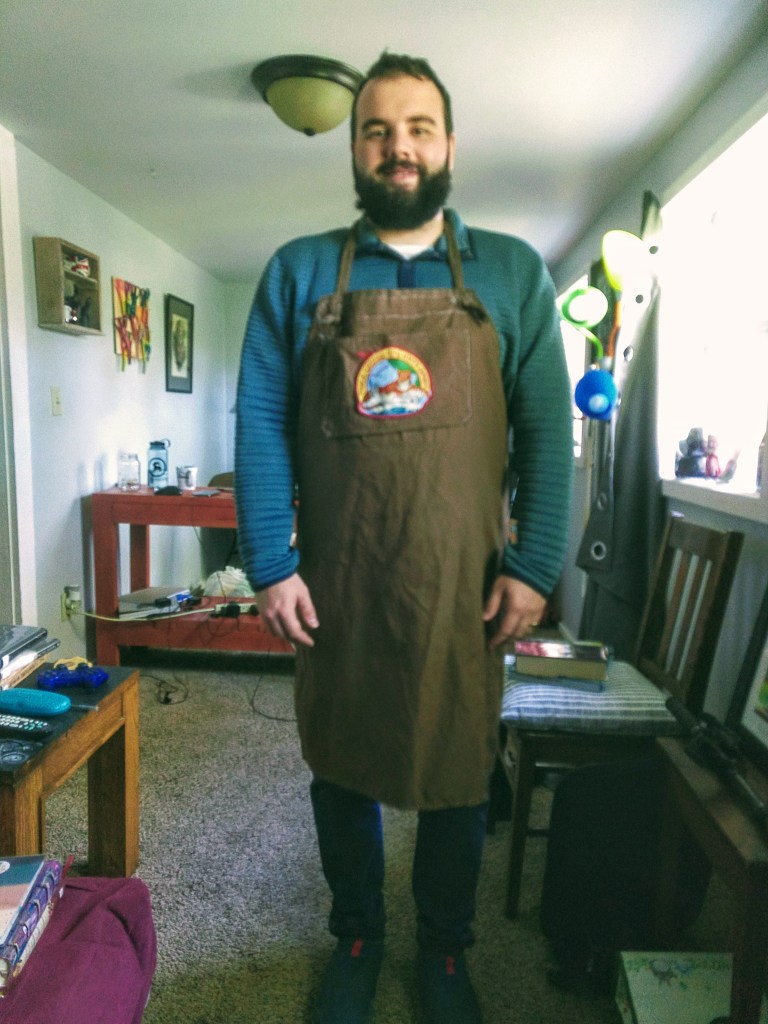
He asked me if I thought I could draft a woodworking apron.

I remember being nervous about trying this new artistic medium, even more so about purchasing the materials because I was laid off and financial security seemed up in the air. Every decision felt momentous because of how much change we were all reeling from. I was concerned about wasting money on a failed project. What if I fail? What if I make a mistake and I wasted this precious resource. What if was a theme phrase of 2020. I think we were all living in a state of fight or flight. I one know thing I did not feel confident! I was more excited and nervous.

Because of the low-contact world, we were living in, I believe I made a Joann’s pick-up order. There was no grand fabric shopping moment, I bought without feeling the weight of the fabric. I didn’t look to see how wide it would be or how much I would need with a project estimator. I bought brown canvas, two yards, and three yards of purple stretch velvet. Unbeknownst to me these are two of the most challenging fabrics to start with! Good choice, Magz, good choice!

The canvas was surprisingly easy to cut. I bought tailor’s chalk to trace out a design based on measurements and sketched out the entire garment in pieces on the fabric. Being a sturdy fabric the canvas held the drape, responded well to my stitches, and with the understanding of stronger sewing techniques, such as finishing my seams, this piece would have held up. Unfortunately, I did not and the first wash frayed the poor apron to bits. It was tragic.

On the other hand, my purple dress was a disaster in the context of silhouette and seam puckering. The bubbling sleeves, uneven neckline, and crinkly hem were not good. But, it stayed together remarkably well, and with a pattern to properly shape the garment, it had the potential to be a dress that became a wardrobe staple for me. The problem I ran into, was the tailor’s chalk disappeared with every stroke, but truly it was being a greenhorn. I scrapped my entire drafting plan and decided to wing it. The result shows how free-form this dress was. I half-draped-half pattern pieced this dress into life. Let’s focus on the positives though – it’s a dress. Not a blob. A real-life, genuine dress! I was so proud.

Looking back on it with a lot more experience, all of these decisions seem incredibly reckless but at the time I’m grateful I just dove in head first. I seem to make the most progress that way. That is what life is about. So if there is something you want to do, do it. Even if you make the wrong choices in hindsight, I learned about fabrics, construction, and how to pattern cut on the fly. It was pretty exciting! The projects turned out fairly well for not using a pattern too, so believe in yourself! Most importantly, remain teachable. My grandma always reminded me to keep a teachable spirit with all my endeavors, and you know what? She was right.

#1 – Welcome

Hello! Thank you reader for taking the time to check out my little corner of the internet. My name is Magz and I have a lot of hobbies. Some might say too many, but I prefer having things to keep busy. 

Since my rocky post-grad start at building a career, I have learned to seek out skills and personal development to become a well-rounded person in times when I felt like I didn’t have a purpose. This began in 2016 when I created a blog called Muirin Project to fill the creativity void. From there I wrote an entire novel called Udal Cuain and spent time soaking up as much quality time with my grandparents before they both passed away in 2020. Along the way, I found a job that helped me understand how to manage an app and taught me that burnout at a dead-end job would not be my future. 

During the lockdown, I was laid off, buried my grandpa, and threw my empty heart into creating. I made paper beads, hand-stamped greeting cards, starting knitting again, all while escaping into fashion history/sewing on Youtube. In the fall, I bought my first sewing kit which changed everything. At this high, was an incredible loss with my mentor and kindred spirit, my grandma, passing away too. I took the next two years to be a sewing apprentice for myself, cataloging my sewing journey on Instagram, which culminated in my first real collection being completed at the end of 2022 for my brand, Potato Technology. 

In 2023, I have slowed down to dwell on what is next. My plan was to open a shop in 2023, but as this year unfolds, I don’t have the same peace about this being my next challenge. I have felt discouragement and confusion about the purpose of my skills will be. In the meantime, I have been learning Japanese and asking God to direct my path and show me what is next in my life. The answer that surprised me was “You should write again.” 

This blog will be a little of this and a little of that, just like the way my life has taken shape. You will find blog posts, fictional stories, and my sewing journey featured just as it is on Instagram. I look forward to seeing where this little website takes us together.

If you would like to tip me for my work, you can do so at Ko-fi.

Create a website or blog at WordPress.com

Up ↑