Using Stretch Fabric and A New Technique

Stretch fabric and I have been at odds since I began sewing. I fight with it during the cutting process. The pins slip out while sewing. I’ve cut on the wrong stretchway and ended up with ill-fitting items and not enough scrap to fix it. My Heavy Duty Singer sewing machine which is named, Señor Senior Singer, tends to eat my flimsy knit fabric and lightweight gauze projects, dragging them underneath to jam the machine, and ripping the fabric in the process!

It’s overall been a losing battle, so much so that I have been wary to purchase stretch fabric unless it is on a ridiculous clearance sale because my patience is shot.

This is literally how I feel when the fabric gets trapped under the needle plate and the only way to jailbreak it is to rip it. It drives me bonkers! Why must it keep eating the nice fabric I cut, pinned, and draped into this beautiful form. Was it done so that you, my sewing machine could devour it like a snack?! I digress.

This is where I had to humble myself, accept that something was missing in my technique, and do some research. It turns out I needed to change my approach, which is progress! I first, took a break from my machine sewing, because we needed some relationship counseling at this point, and returned back to hand sewing. I took an approach that matched the speed of a tortoise, sewing small pieces together each day. Work on it no longer than 90 minutes or give my fingers a break or the tendonitis returns in my knuckles. It was tough to keep myself to this snail’s pace of a schedule. It took a week to sew one shirt. That is incredibly slow, even for me when I was hand sewing, but it allowed me to remember, and appreciate, why my relationship with my sewing machine is important. And why I needed my technique to change because this pace drove me mad.

It turns out the secret fix to my woes was adjusting my tensioner on the machine way down, like below five to a section of the dial I didn’t realize actually existed. I thought this would make my garments flimsy but instead, it allowed my fabric to feed under the needle without getting gobbled up.

Secondly, I needed to begin seams about an inch or two away from the edge and sew from there, backtracking at the end to finish the seam. This allowed the fabric to have a tail that guided it over top of the needle plate as I started sewing instead of getting drug underneath by the needle.

Lastly, Kyle helped me add some structure to my sewing table, by adding support under the middle of the table directly under my machine to keep the machine from vibrating and bouncing my seams into nonsensical shapes. I purchased an anti-vibration mat for my machine to sit up on and a matching anti-slip mat for the pedal to have more control and finesse in my sewing, instead of chasing my pedal with my foot.

It was a night and day difference. Dare I say fun? Yes, it made sewing the stretch fabric and the light flimsy fabric a blast. A quick, neat seam was no problem in my sewing studio now!

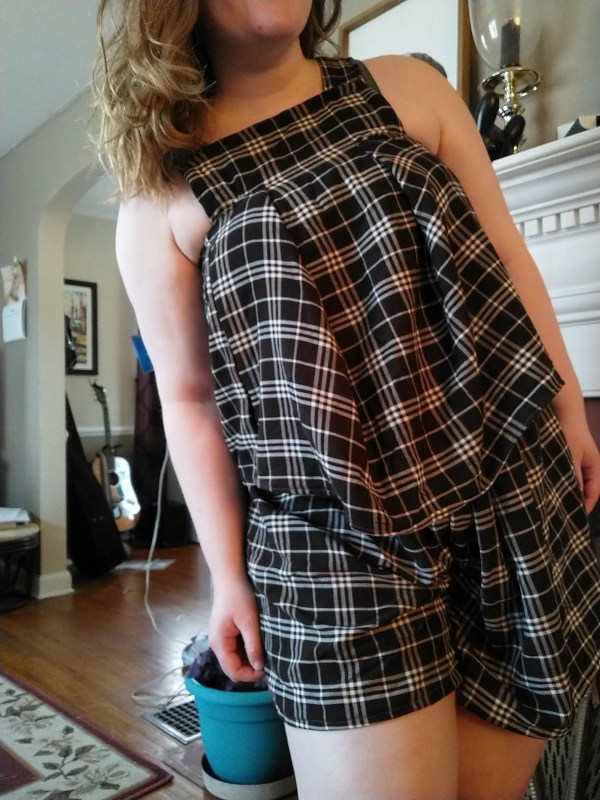
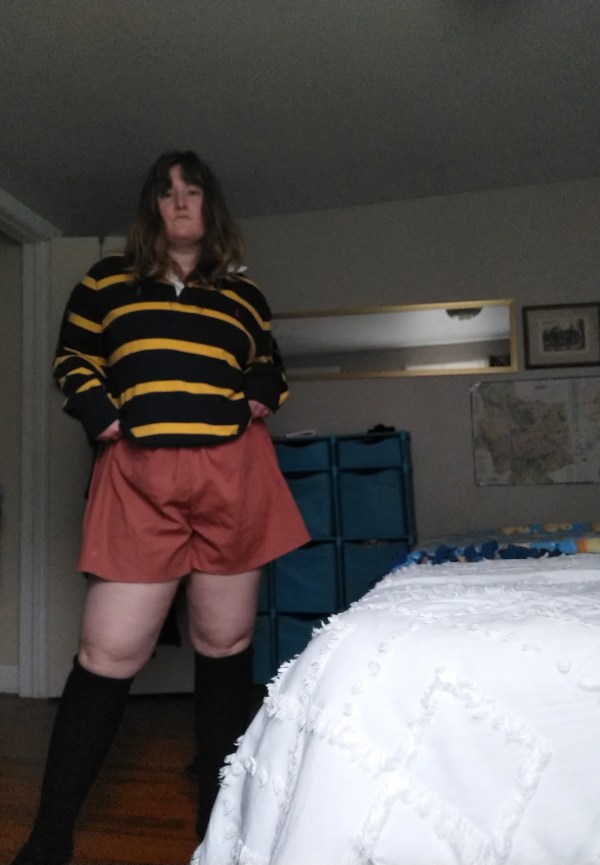
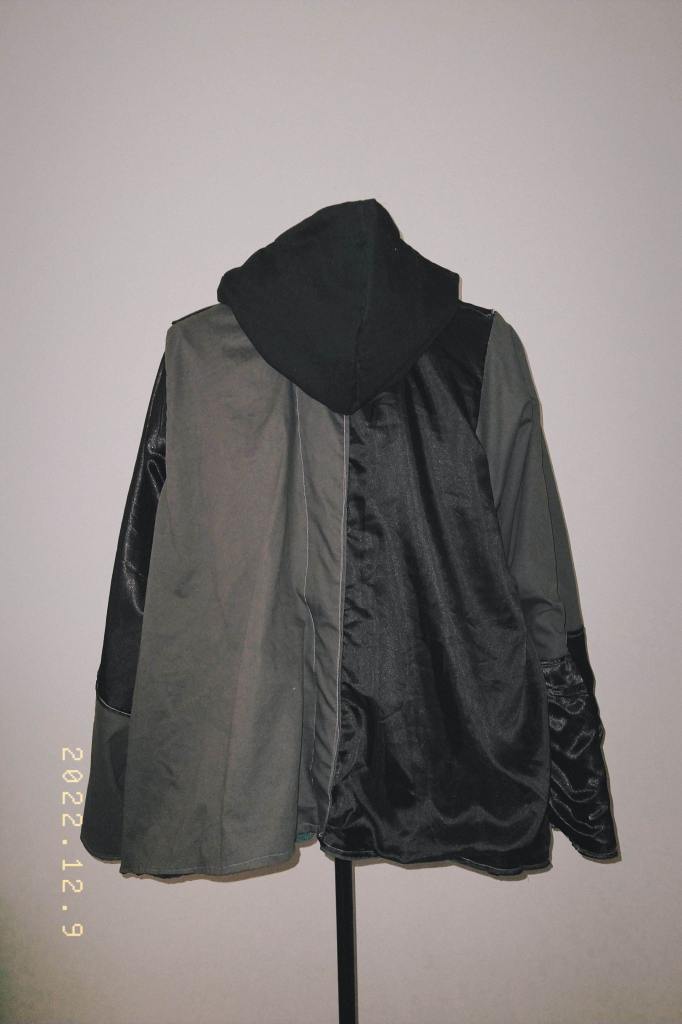
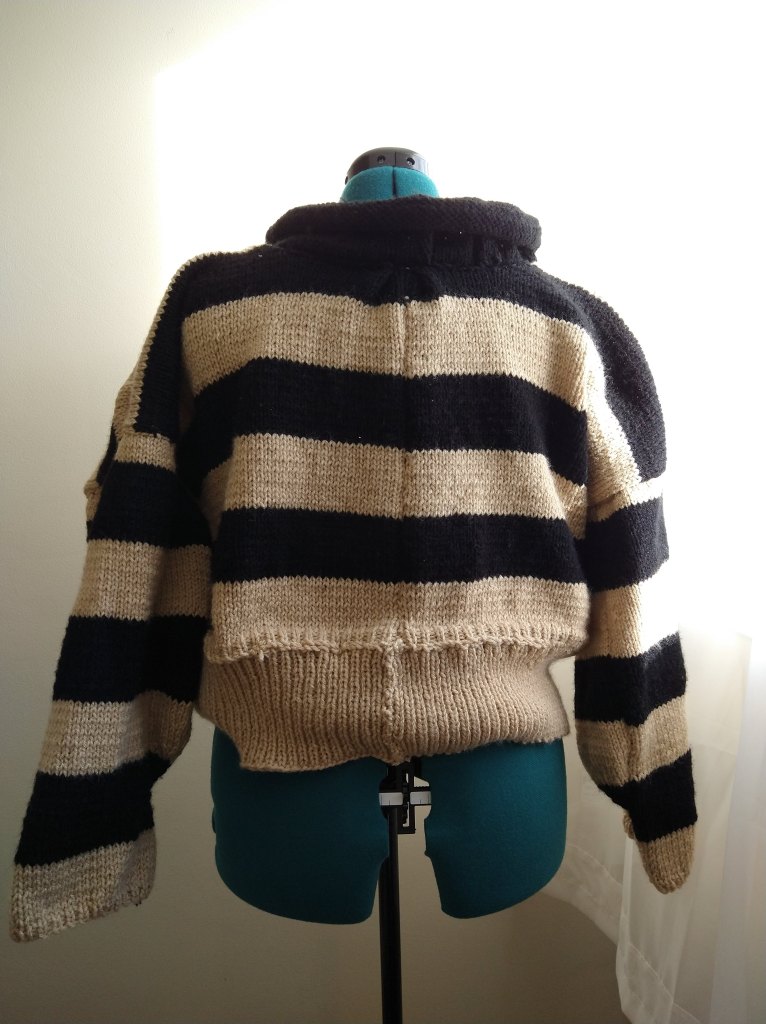
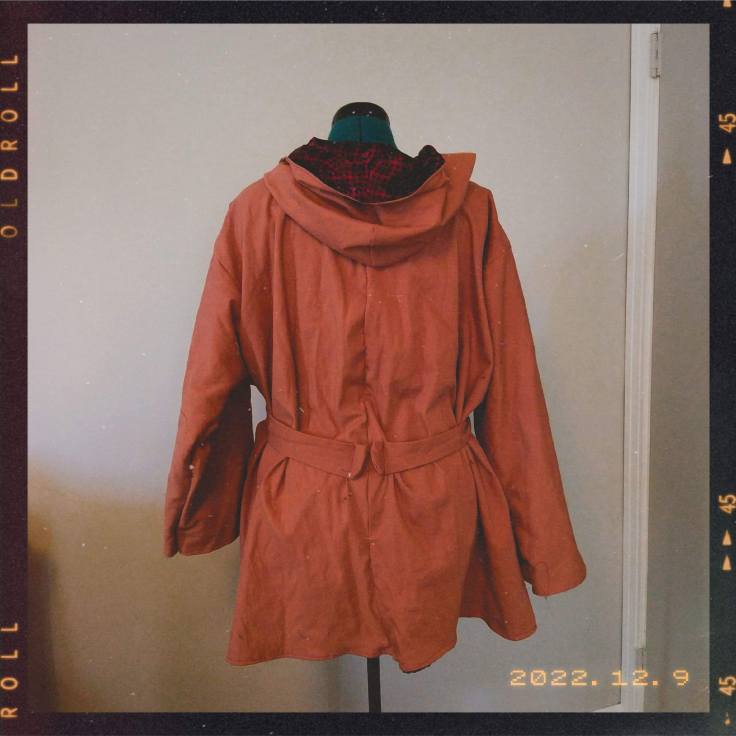
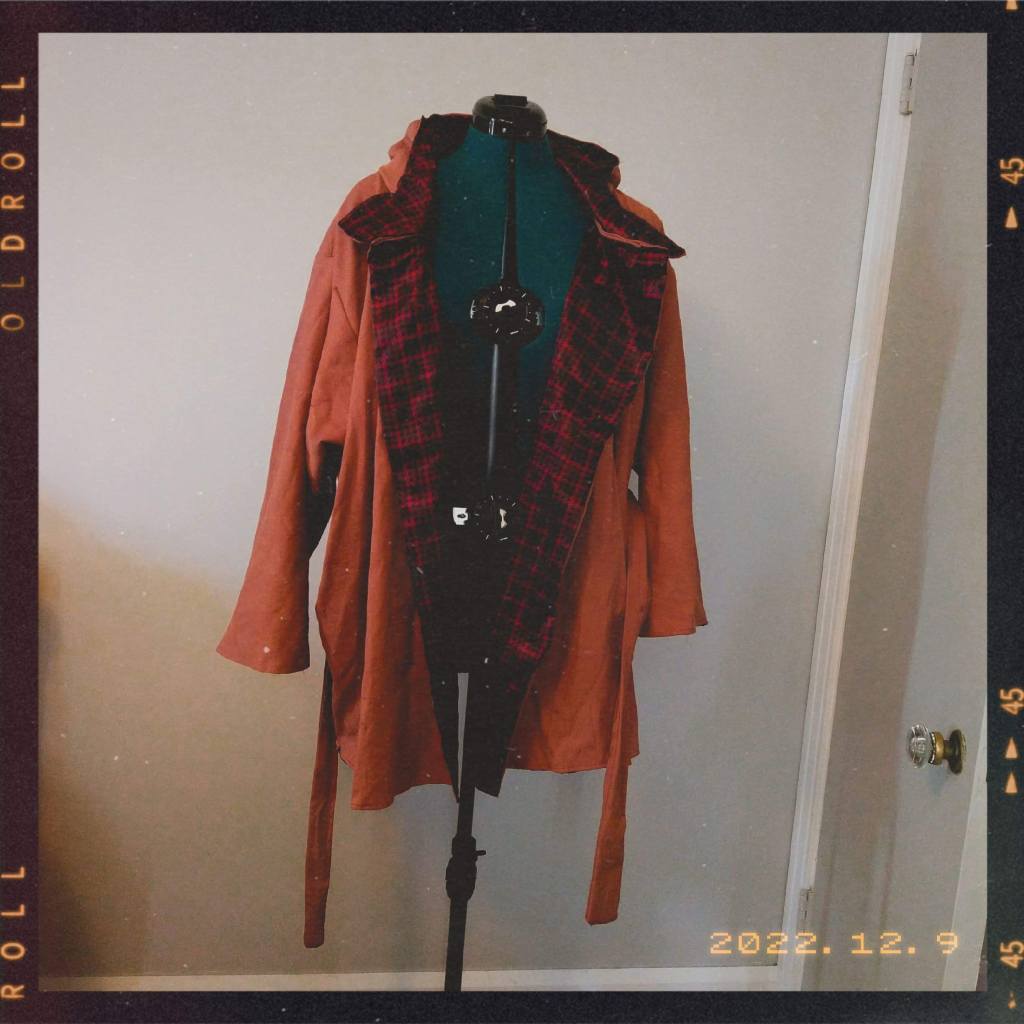
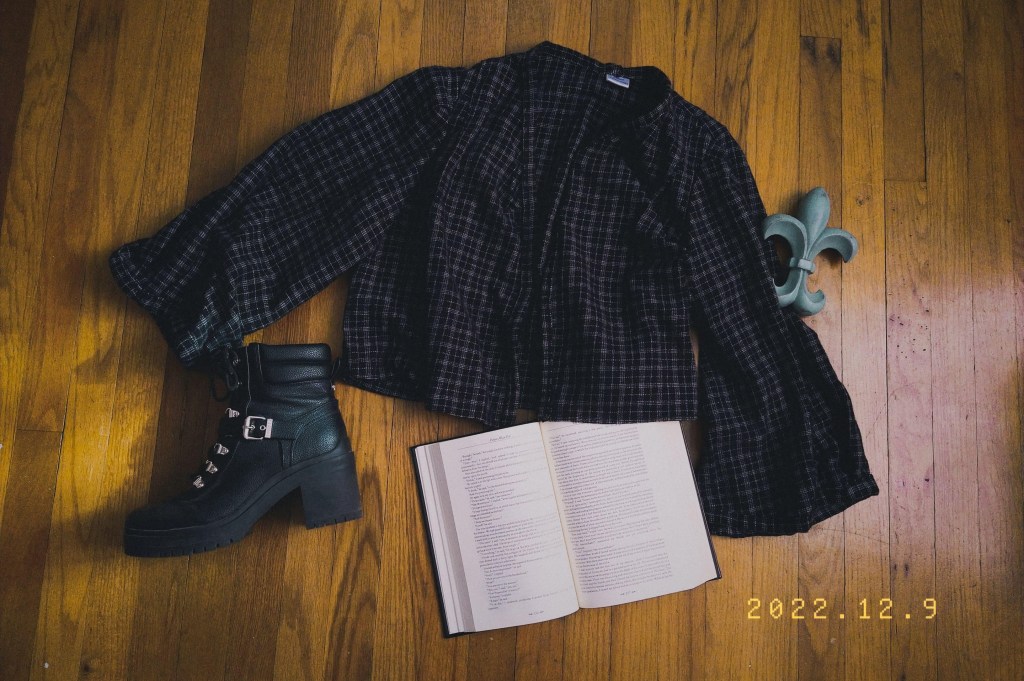
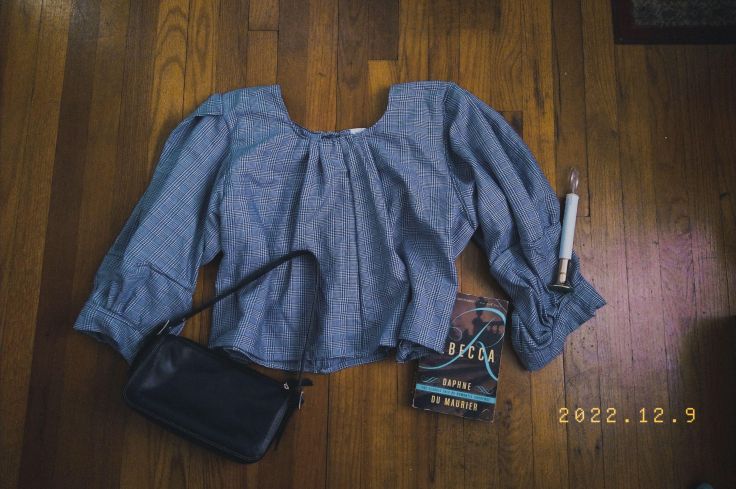
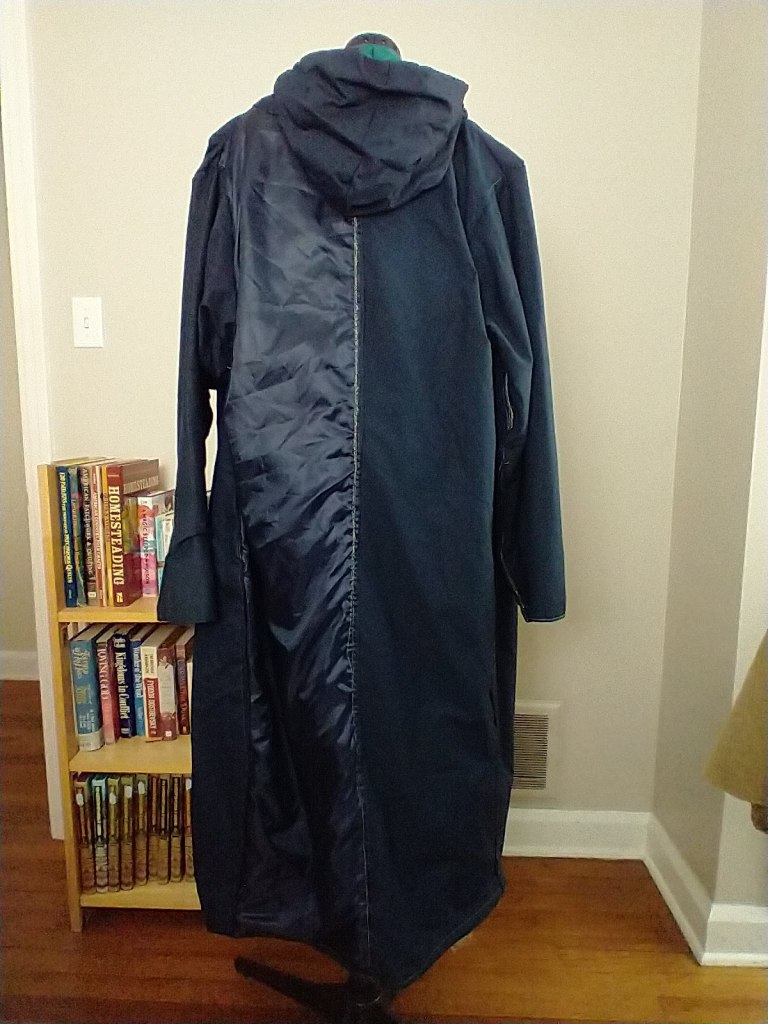
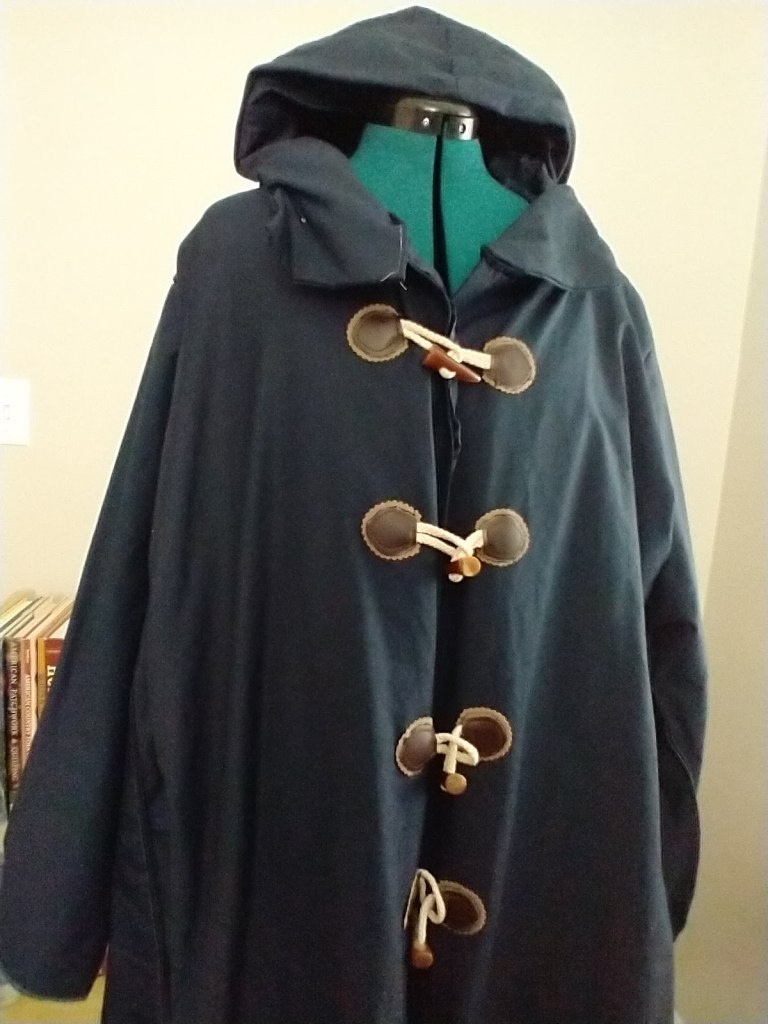
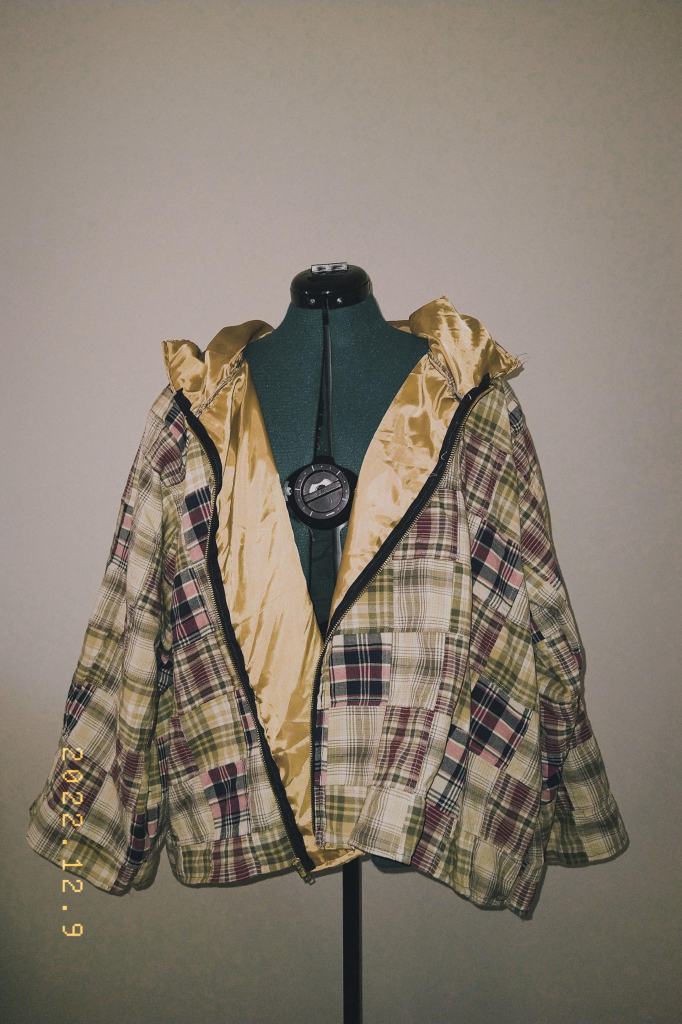
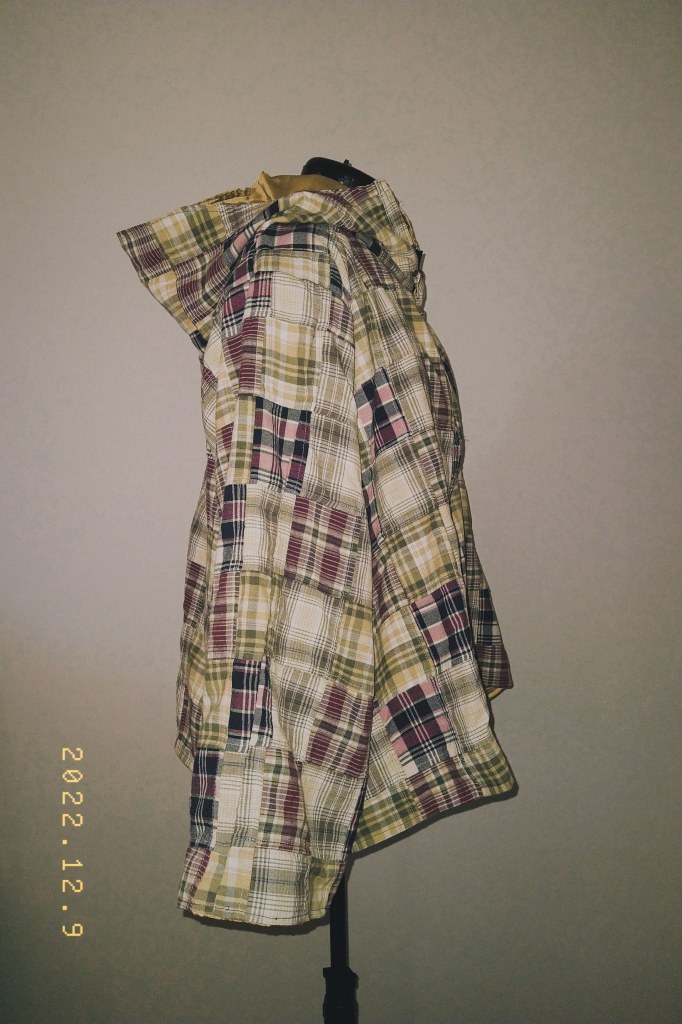
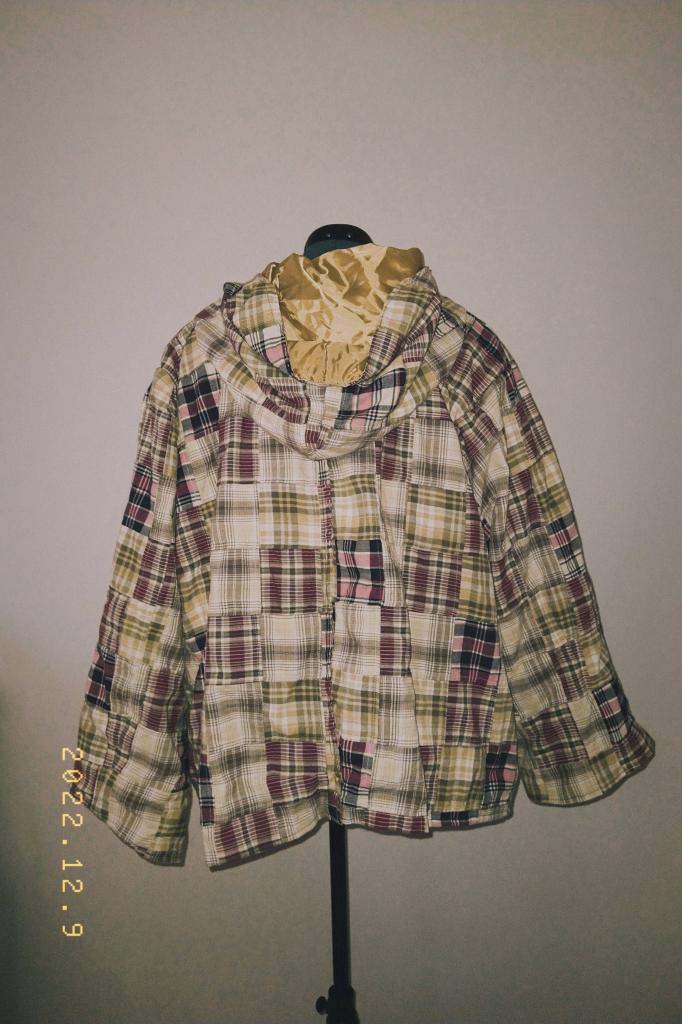
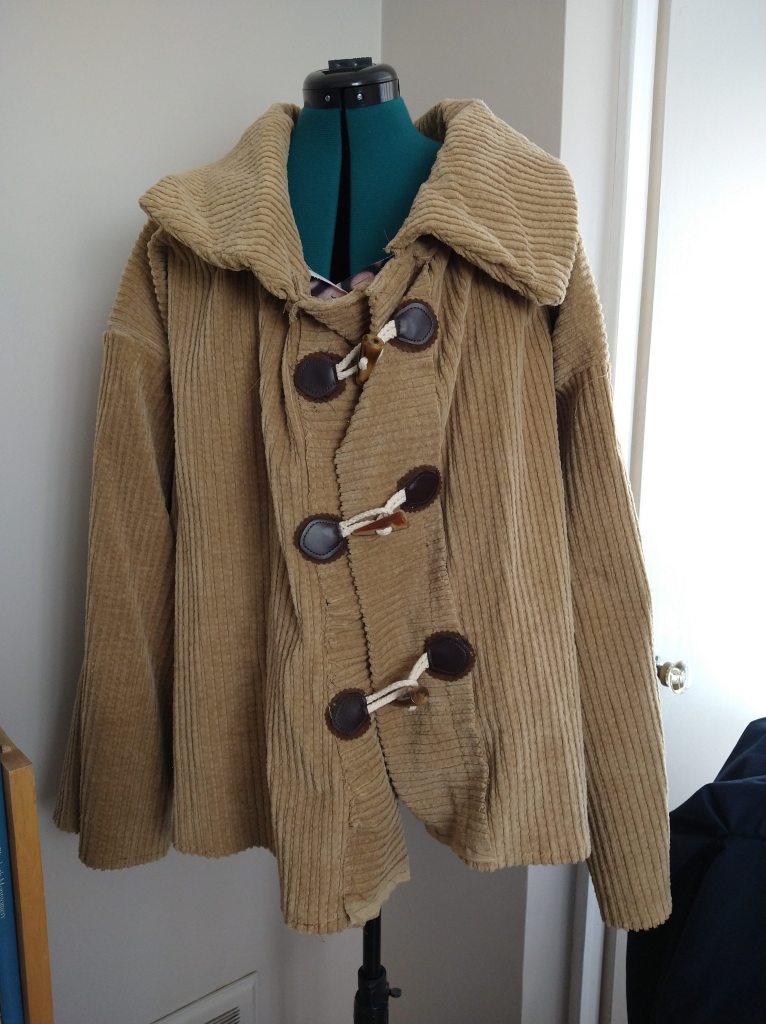
Here’s the result of my new-found knowledge – four new properly sewn stretch garments that make me feel properly chuffed! The moral of this story is to not give up but to have a teachable spirit when life throws you some curve balls. There is always room to grow and improve if we are willing to seek out the wisdom.

#48 – Craft Paper

An item that I added to my sewing tools in 2024 is brown craft paper and it has been a game changer! It’s not only transformed my creative process but has helped me create new garments that fit me better with less fabric waste. How cool is that?

Learning is Hardwork

As with every new skill, the first phase of creating is messy and full of flaws, this was my creative process. You have to start and in starting you are an imperfect sewist, fitting and pattern cutting are tricky and this really bothered me to accept. I like getting things right the first time. Learning to accept that this was going to be a journey, was frustrating at first. I have a vision in my head but I can’t always execute the vision at this stage. These things are part of the learning process, like using existing patterns to learn the techniques and accepting that things are going to fit poorly until I can learn to tailor them. Which is happening! With each garment I make, I can see a progression toward the goal, slow and steady but still moving forward.

But there has been a process I did not expect and that is making pieces with my silhouette and my body type in mind, not just my measurements. Things I want to make may not look fantastic on my proportions. That was a time of trial and error in my creative process that I wasn’t expecting because when you go to a store and try on clothing, the design decisions are already made and you only have to decide on which silhouette you would like to choose. But with fashion design, self-drafting patterns in particular, I realized what was going to make me happy was experimentation. Trying a little bit of everything and playing around with different styles to see what I liked and what looked good on my body.

Sometimes just an inch here, a lowered line there, a rise adjustment, or nipping in a shoulder can transform a project from a flop to a success. It’s subtle yet effective and a skill I see you are only capable of learning from experience, either from your own by the process of being self-taught or from the instruction of more skilled designers. It is sculptural, artistic, and honestly sometimes like architecture or construction. It may be fabric and tread but the same principles apply. The foundation is crucial, and the foundation of any garment is the fabric and how you cut it.

Enter the Craft Paper

How do you replicate a project that works? You need a template, a jig, or a blueprint. A pattern. I thought that understanding the dimensions alone would suffice when I am cutting, but there is nothing like having the template to keep my cutlines accurate for curves and hem allowance. It takes the guesswork out of this process which if you are cutting blind is like a chess match with the fabric and your memory of what you have made before. It’s too difficult so I needed to work smarter and make my own pattern pieces out of paper. There were two tops that I had designed that fit me quite well out of a stretch knit and before they were properly sewn together, I took the pins out and traced them onto my craft paper.

Two bodice types – one scoop neck, one v-neck, and one sleeve template. From this inexpensive paper I have found a cipher to make things with more finesse. A tried and true bodice and sleeve that can be used for tops or dresses. A foundation to build upon that has streamlined my making process. You don’t have to be an expert at your craft to make a template, I thought I had to reach mastery before I was worthy to do this, it is simply part of the making process to make things with excellence in mind.

Fix On

I’ve watched a few creators for too long without questioning why “good enough” was their motto. I in turn also fell back on this type of approach to my designs as I learned because learning is hard work. Striving to be better is not fun, it’s maintaining a critical eye and raising your standards for yourself. In this sewing journey of learning and making, instant gratification and impatience are my Achilles heel. I want to do things quickly because everything is done quickly now. I get stuck in that loop of making more, making faster, chasing after goals, and feeling left behind because I am still not selling my patterns or garments, still.

But “good enough” is fine for Youtubers who have an established brand and following, but that’s not going to get me anywhere near my goals of design. I have to continually “fix on” as Mingi says, to the goal ahead and stop paying attention to what others have done to achieve their success. They are already in that space and that is the path their life has taken, I have to find my own thing and continue to work hard.

I’m sharing this to encourage you dear reader to not settle and to challenge yourself to be your own person. I believe that God gave you unique talents and has a plan tailor-made for your life so fight the hive mind of our current world and do the strange thing – work hard, strive for excellence, and be uniquely you! I hope that wherever you are today you remember that you are special, you are loved, and that you have potential for excellence. No matter what has happened in your life and how gray the skies are above you, there is still hope for a future.

#46 – Sewing Studio

One afternoon day, I hit a wall and found a solution in my workout room. You see I’d been sewing in the living room, not because I wasn’t provided the opportunity to have a sewing room, I think I was just being stubborn. Throughout 2023 though, I began to outgrow the living room setup, galavanting from the coffee and dining room tables. My projects were scattered across the first floor of our home. It was chaos. Fabric scraps, yarn fluffs, knitting needles, pins, computer, charger, sewing machine, sewing pedal, notebooks, paintbrushes, etc.

I hit a wall when I felt frustrated for the 1000th time that my sewing machine was bouncing against the circular antique table instead of being balanced on a proper sewing table. I then switched to cutting out a pattern on the coffee table, littered with life and projects, in this ineffective space I cut the wrong piece. In frustration, I realized this was a product of my own decision-making. It was time to level up and clean the workout room for a proper studio.

I think I had been thinking about this longer than I realized, because, after Christmas, I hung up my new bunny calendar and K-pop posters in the workout room, like a future studio. Even though I wasn’t planning the conversion to a studio, it all worked out seamlessly. I moved some things around, decluttered others, and brought the white folding table up from the coat closet. I brought my machine and sewing notions up, including my sewing treasure chest Kyle made me last year. With art supplies, notebooks, and my computer in toe, there was a magic that happened. It was perfect!

The only money I spent on the conversion were new curtains to keep the space warmer, than the repurposed sheets I had sewn into curtains. It’s the breathing room I need to create and the space from this work I need. Knowing I can step away from a project for the night, without having to clean up the items for dinner, is life-changing. I’m sleeping better.

I think since getting married and working from home, I missed that private space, like having my own room again. I can shut the door and escape into my own little world. That was one of my favorite things about life as a single person. It’s good to keep those things, after life changes. I love my life, but I like who I am more with this studio. I am a lot more patient.

My favorite part of this workspace is the natural lighting. It’s so bright and airy, that it lifts my spirits every time I walk into the space.

Little Black Top

I love finding a good deal on fabric, and this one was a remnant – score! I got 2 yards of this heavy-weight knit jersey in pinstripe for either 6 USD or 8 USD. My original plan in the store was to try my hand at making a hoodie. Then I pivoted to a flowy jersey dress for winter. I cut the pieces out and began to drape on a form to see what this idea was going to turn into. I liked the drape but I was concerned it was too boxy for my frame, hitting mid-thigh.

In shaping the sleeve, I noticed this fabric although a jersey more kin to athleisure portrayed the weight and image of a suiting pinstripe of the classic menswear blazer. Especially if I straightened out the curve in the shoulder. And that got me thinking, should I go for a jacket?

I drafted some lapels for a collar and cut open the front of the dress. It was going well, looked like an interesting coat silhouette. But the fabric’s drape from the knit jersey began to betray the design. It was droopy instead of structured, like a cardigan? So I went back to the drawing board.

Today I decided to trim the bottom off, and then I trimmed a bit more because I cut it wrong. With the lapel collar pinned and one sleeve sewn in, I tried it on and reflected on the length. The long cardigan shape now a cropped hip-skimming garment, stopped and pondered. It needed something.

I looked through the pieces, discarded on the table from my cuts, and began to play with options.

If I was going to make a blazer I would need a button placket on either side for the buttons and button holes to be anchored securely. The lapels needed mitigation from the awkward state of their current appearance. I began to place the collar in different postures along the neckline opening and down the front.

I hemmed the bottom and sewed in a possible placket onto the opening of the jacket. As I re-situated the collar, I realized I could make this a blouse with the placket and drape the collar to change the posture of the garment from a structured piece to a more flowy and relaxed garment more in line with the fabric’s character without losing menswear blazer inspired look.

With this in mind, I attached the second sleeve and sewed up the front, connecting left to right with the bridge of that placket piece. By using the stripes in a contrasting way, the centerpiece and collar flow together like a false scarf sewn into the top. It retained the elevated chic attitude I was looking for in a blazer but with the comfort of the cardigan. I think I will get a lot of wear out of this piece. I tend to gravitate towards dark and cool-toned colors in the fall and winter.

As Chanel declared the little black dress as a wardrobe staple of any woman’s closet, I believe a little black top that you can dress up and dress down is just as important because 100 years later, sportswear separates are the gold standard building blocks for our wardrobe. What is one of your favorite colors to wear? Do you have a staple piece in your wardrobe? I tend to gravitate towards dark and cool colors in the fall and winter.

#22 – A Sewing Experiment

I tried an experiment. This spring, instead of planning out a schedule of sewing projects, I decided to balance my time between my sewing workroom and my other projects by the changing of seasons.

Now, as a type B person, I’m a bit of a procrastinator. My creative nature doesn’t lead to a rigid structure, even though I wish sometimes it did so I could be an organized maker. But I have the personality that I have, and that is okay. I can still be productive even with a procrastinating nature. That’s what I did this spring. At times it felt like pushing off work that I needed to do, but really I learned that living seasonally means there are rhythms to the process at hand.

What made this plan interesting to me was the unknown. I didn’t know how the schedule for making items would come together. I didn’t know if the weather would dictate more lightweight tops first or lead me into shorts. It was purely figured out by what item in my wardrobe I thought I would need next.

Sewing Schedule

As I mentioned before in Sewing When I Lost My For It I decluttered the warm weather clothing that no longer fit me, was worn out or simply was not working anymore. So I was going into the new season with nothing but my workout shorts and shirts. I wanted to challenge myself to find my style by brainstorming on Pinterest and planning items that I actually want to wear.

For this summer wardrobe, I knew I wanted a few basics, statement tops, flowy skirts, comfortable but cute shorts, and a dress if I found a style that I liked. I wanted to design clothes differently than I had in the spring and summer of 2022. Last year I focused on reading patterns, and trying out new types of garments like blouses and pants. My guiding force was found in tutorials and patterns instead of my own style sensibilities. This produced items that were average, not my style but not unwearable. Not exciting though.

I didn’t want to make the same mistake and so from fabric shopping onward, I decided on a motif. I chose a color palette of greens, black, brown, and blue and decided on a closet of shorts, a few skirts, t-shirts, and sleeveless blouses to mix and match. Everything with easiness, like the athletic shorts I used to wear to work for the paint crew. My design philosophy was decided – movement with effortless style, able to style with sneakers.

In total, I’ve created 8 pairs of shorts, 11 tops, one skirt, and two dresses. I made these items off and on since the end of February, so around two and a half months of work. I planned my sewing days based on the forecast for the upcoming week. Spring came early and so I began March making at least three pieces a week. If the weather cooled down I would stop sewing and switch to other projects. If a warm spell came through I pushed to make four or five items to be ready to wear on the incoming 80-degree days. Back and forth like tides of the ocean. Sometimes I barely sewed at all, and other weeks I did nothing else but run my machine.

The Results

What did I learn from this experience?

  • Planning out your fabric choices and the color palette is a fantastic use of time. This keeps you on track with creating pieces that not only go together but will pair well with the items in your closet. In fact, reviewing my current wardrobe before I purchased fabric kept me focused while browsing so that I bought the fabric I would actually wear instead of fabric that looked cool on the bolt.
  • Seasonality does not produce balance. Although it was fun to create by the weather and made me more in tune with the changing of the seasons, it did not provide a healthy balance work-life balance. During those sewing benders, I made a lot of things to be ready for the warm temperatures but it also hurt my neck, back, and shoulders to use my machine for 8 hours a day, day after day. Sewing is truly hard work.
  • I have a greater appreciation for the people who make clothing. Not the designers, the underpaid workers who sew for these brands we buy from. Sewing is hard on the eyes and the upper body, it requires attention to detail. Without the men and women who make our clothes, we would be lost. I have a greater appreciation for those who cut out the fabric, threaded the machines, sewed the armholes, hemmed the pants, and put so much care into items that we so easily take for granted in America.

Will I Do This Again?

I think I will do an adapted version. I like the seasonality of the project and how it allowed me to see the changing season in the same way gardening has. It makes you appreciate the passing of time. That being said, I need more balance. If anything this system showed my type B personality, that type A personalities have a point when it comes to organization. I would prefer an actual schedule, that I could use to keep myself accountable. Not to keep myself from procrastinating, but to keep me on track with stretching, water breaks, and workouts. I neglected a healthy pattern of rest and exercise which made my mind feel cluttered and my shoulders quite stiff.

So, next time you are getting dressed, look at the careful stitches of the garment. Note the complexity that is garment construction. Look at the label and see where it was assembled. Take a moment to appreciate whoever made your clothes and be grateful that someone took the time to pattern and sew your wardrobe so that you could get dressed today.

#21 – Sewing When I Lost the Love For It

A few weeks ago I shared part one of my Spring/Summer Collection for 2023. It’s not quite a capsule wardrobe, because I think I made too many pieces for it to count as a capsule but I used the capsule/collection philosophy. By this I mean, making a selection of clothing items with the intention of mixing and matching with the other created pieces and existing items in my wardrobe. Basically one complete thought. I chose to sew the new items instead of buying them for the experience and control over the aesthetic and silhouette I saw in my head.

This was different than my Fall/Winter Collection for 2022 of which I kept one piece, the rest being presents for family and friends. With that collection, I intended to shower love and tailoring on those who have encouraged me to pursue my dream of sewing. I found it easier to stay motivated in crafting the pieces I was giving away. The perfectionist in me was wrapped in ambition and drive to showcase the best possible garment. If I am doing something for myself though, the timetable gets a little scattered.

Stuck in My Head

I began the year 2023 with some setbacks, an injury to my hand, tendonitis in my fingers, my sewing machine had a gremlin in the tensioner, and I had a blow to my confidence.

Two members of my dysfunctional family accepted their gifts with some digs to my construction and design, requesting a whole new item at my cost. I felt like a failure. If my loved ones wouldn’t accept my designs, why should I bother chasing this fashion design dream? Wouldn’t I just end up in tears again? I sat with my fabric stash for a month, reviling it, wishing it would wander off in the night. Then I remembered the resources that were spent purchasing the fabric to make a summer & spring wardrobe. Yeah, I had to keep sewing. I was going to be extremely wasteful not to.

Armed with the encouragement of my husband and my best friend, they got me back in the design frame of mind. With it being the end of February, the Western Pennsylvania weather decided it was time to ride a roller coaster of seasons – one day spring, one day summer, next day winter. Winter for a week, summer for a week, and so forth. This truly lit a fire under me because I had donated or repurposed all the shorts that didn’t fit me for the opportunity to design my own. I budgeted for fabric not shopping – it was time to stop wallowing and figure out how to design some dang shorts!

Scrap Fabric to Shorts

These were the first pair, out of scrap material from the Antrim Coat. I figured out the cut lines for the seat and leg holes from The Essentials Club on Youtube, adapting my waistband for a drawstring of a shoelace. They are a little big but I love how floaty the leg openings are!

New Found Confidence in the Skill, not the Audience

I learned that sometimes the best way to bounce back from discouragement is to keep moving forward. I sewed through it, with the right people behind me. I determined why I was sewing – not to find approval from two family members that can be fickle but instead to finish what I started. Commitment to the craft, and commitment to learning. Actually being my own customer helped me define what I like and who I want to be. Who I want to be is not a business owner with an atelier or a designer that is unconnected to hard work. Starting a shop, which was my goal in 2023, is now a thing of the past.

Sharing my clothes as gifts was a fun idea, but selling is not where I feel called to be right now. Sewing every day, although it was fun before Christmas, wrecks my shoulders and back. I actually hate it and don’t want to do it. It changed my perspective on what being a sewist and fashion designer can mean, but more on that later.

Anyways, my point is, sometimes a closed door is a waypoint for a better thing on the horizon. A setback is not always a bad thing. They reveal what we are and who we want to be. I think the important thing is to remain teachable and ready for the twists to become a better version of ourselves.

#3 – First Sewing Project

As I think back on drafting my first garment, my first reaction is I probably should have bought a pattern. That being said this is how I dove into my favorite hobby, the world of sewing!

Currently, I’ve been sewing my own clothes for 2 years and 8 months. It’s been a wild ride of exciting transformations from fabric to form, absolute failure where I chuck the garment, and moments of great frustration that have tested my mental fortitude. Fashion is not for sissies, as Tim Gunn once said, and I wholeheartedly agree! So, how did I start the process? Kind of on a whim to be honest.

It was the end of summer and autumn was making its way into our world even though it was late August 2020. We were all coming out of the lockdown world to that long-awaited green status. It was a time of excitement. Small pieces of normalcy were taking root and calm returned to life. My husband and I had used all the endless downtime of the lockdown to get crafty! We dove in and made cards, jewelry, furniture, scarves, home decor, and a lot of bread! It was a blast and also a bit of a weird blur. I sometimes feel nostalgic for that weird time for how much resilience that impossible situation taught me. I probably wouldn’t have begun sewing without those months of training my creativity.

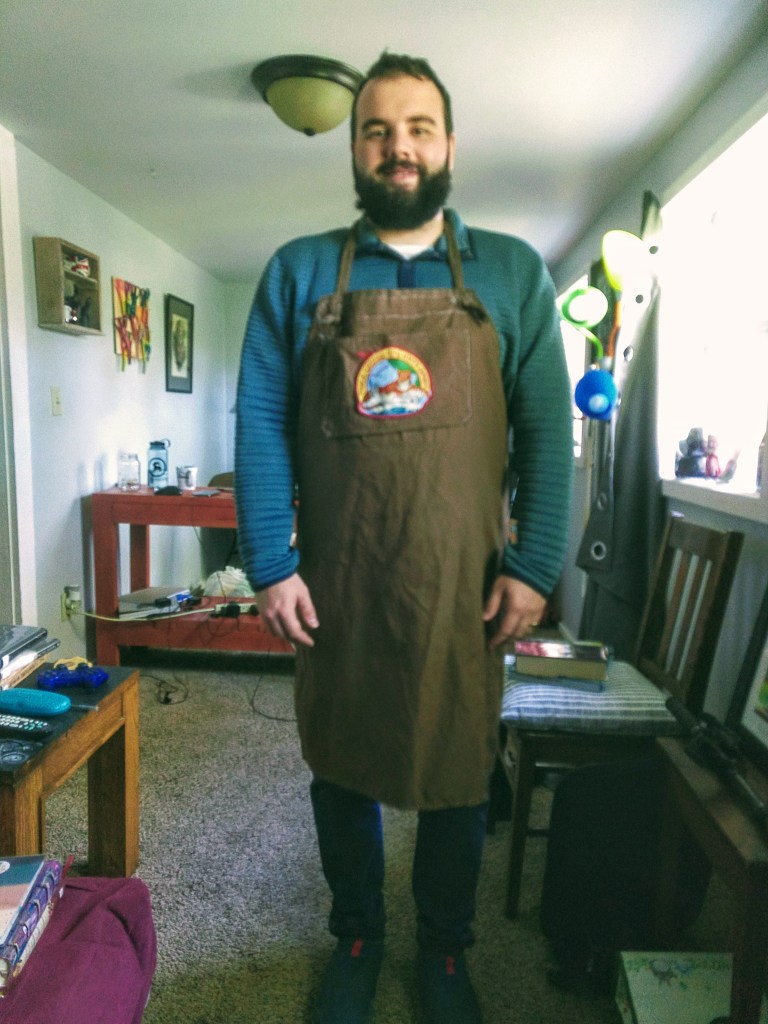
He asked me if I thought I could draft a woodworking apron.

I remember being nervous about trying this new artistic medium, even more so about purchasing the materials because I was laid off and financial security seemed up in the air. Every decision felt momentous because of how much change we were all reeling from. I was concerned about wasting money on a failed project. What if I fail? What if I make a mistake and I wasted this precious resource. What if was a theme phrase of 2020. I think we were all living in a state of fight or flight. I one know thing I did not feel confident! I was more excited and nervous.

Because of the low-contact world, we were living in, I believe I made a Joann’s pick-up order. There was no grand fabric shopping moment, I bought without feeling the weight of the fabric. I didn’t look to see how wide it would be or how much I would need with a project estimator. I bought brown canvas, two yards, and three yards of purple stretch velvet. Unbeknownst to me these are two of the most challenging fabrics to start with! Good choice, Magz, good choice!

The canvas was surprisingly easy to cut. I bought tailor’s chalk to trace out a design based on measurements and sketched out the entire garment in pieces on the fabric. Being a sturdy fabric the canvas held the drape, responded well to my stitches, and with the understanding of stronger sewing techniques, such as finishing my seams, this piece would have held up. Unfortunately, I did not and the first wash frayed the poor apron to bits. It was tragic.

On the other hand, my purple dress was a disaster in the context of silhouette and seam puckering. The bubbling sleeves, uneven neckline, and crinkly hem were not good. But, it stayed together remarkably well, and with a pattern to properly shape the garment, it had the potential to be a dress that became a wardrobe staple for me. The problem I ran into, was the tailor’s chalk disappeared with every stroke, but truly it was being a greenhorn. I scrapped my entire drafting plan and decided to wing it. The result shows how free-form this dress was. I half-draped-half pattern pieced this dress into life. Let’s focus on the positives though – it’s a dress. Not a blob. A real-life, genuine dress! I was so proud.

Looking back on it with a lot more experience, all of these decisions seem incredibly reckless but at the time I’m grateful I just dove in head first. I seem to make the most progress that way. That is what life is about. So if there is something you want to do, do it. Even if you make the wrong choices in hindsight, I learned about fabrics, construction, and how to pattern cut on the fly. It was pretty exciting! The projects turned out fairly well for not using a pattern too, so believe in yourself! Most importantly, remain teachable. My grandma always reminded me to keep a teachable spirit with all my endeavors, and you know what? She was right.

Create a website or blog at WordPress.com

Up ↑