

In this week’s update, we harvested our first ears of corn and ate them the same day. We have had an abundance of cucumbers, which led to me making some pickles and giving them to neighbors. Finally, our melon plants are setting fruit, and we’re starting to see what makes each variety unique. Finally, what is the seed of the week in this update?
Harvesting the First Ears of Corn
On Friday, Magz and I harvested the first ears of corn from the garden. For several weeks, our Butter & Sugar stalks have had silk growing, which began turning brown last week. I was originally going to let it go a bit longer because I thought it took a long time to ripen. But, after coming back inside, I researched how to determine when corn is ready to be harvested, and I’m glad I did. If you are like me and don’t know, it’s when the silk starts to dry out at the end. You can also pull back the top of the husk to feel the kernels. If they’re full and have some give, it means they’ve reached the milk stage and are ripe. In total, we harvested about half of the Butter & Sugar ears.
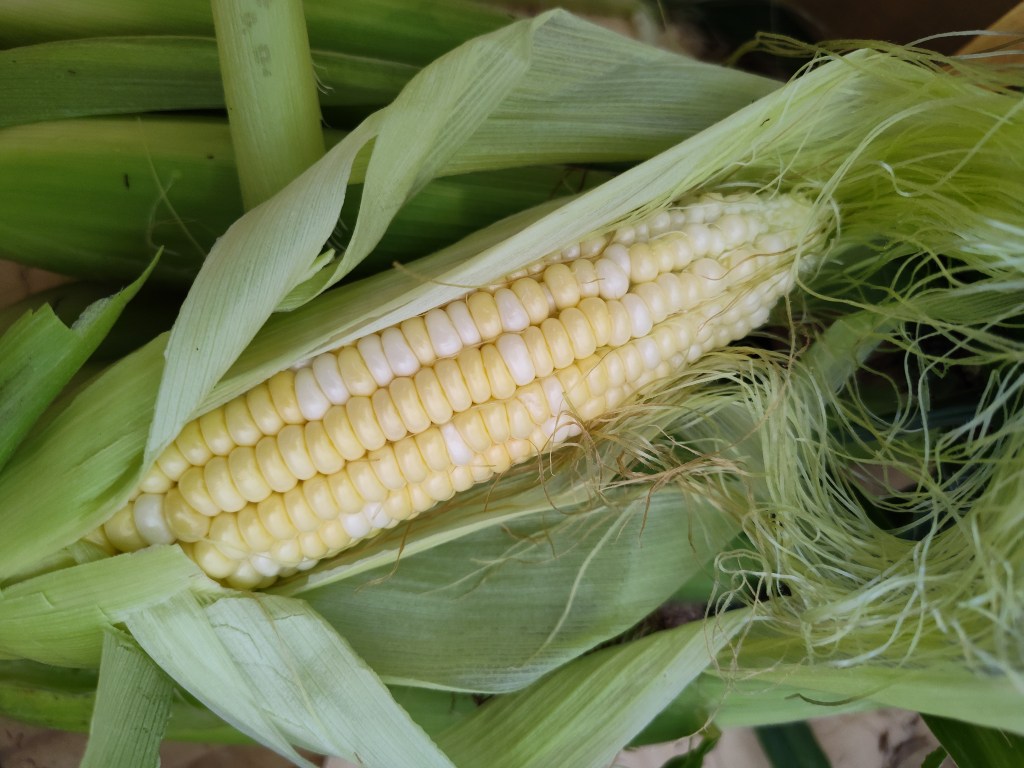

We also checked the Sweet Mexican/Black Iroquois corn that has shown similar progress to the Butter & Sugar – full tassel with silk for over a week. However, the first ear we pulled didn’t have the dark blue to black kernels that define this variety. They also weren’t at the milk stage yet. We’re going to leave them on the stalk for a few more days to a week to see if they’ll be ready at that time. After gathering all the ears, we promptly husked and boiled them, eating about half the ears for dinner. We even split the Sweet Mexican ear that we prematurely harvested. There is nothing like eating corn that fresh. From stalk to plate, it probably only took 30 minutes. The Butter & Sugar was incredibly sweet, with full kernels. It’s every bit as good as that corn you can buy from roadside stands in rural parts of America. The ears weren’t big (about seven inches long and two inches in diameter), but the majority were full.
Making Pickles
Our cucumber plants are regularly producing ripe fruits, and we’re able to harvest at least one per day right now. The only variety we haven’t harvested any cucumbers from yet is the Richmond Green Apple, which is the variety I’m most excited about…because of course it would be. Anyway, last week, we had a half-dozen or so cucumbers in the fridge, and something needed to be done with them, so I made pickles.
I love pickles and have made them before. I’ve tried making both dill and bread and butter versions. Unfortunately, though, they weren’t great. They were either too salty or not dilly enough. They also didn’t retain their crunch. So, this time, I wanted to make refrigerator pickles that don’t need to be canned. By not canning them, chilling the cucumbers and jars, and letting the brine cool to room temperature before pouring it into the jars, the cucumbers can stay firm and retain their crunch. They were a great success. They still have their crunch after a week of being in the brine. The downside is that they won’t keep as long as they would if they were canned, but they can still last more than a month before going bad. The recipe I used came from Love and Lemons. I didn’t have fresh dill or garlic on hand, so I substituted them for dried dill and jarred garlic in oil, and it was still delicious. Magz isn’t the biggest fan of dill pickles, and she really likes them!
Baby Melons
In recent updates, I’ve mentioned that we’ve seen some of our melon plants put on fruit. Since last week’s update, at least one fruit for each type of melon is close to golf ball size. At this size, we’re starting to see small differences develop between the different varieties. Some examples of the differences are:
- The Candy Roaster Melon/Seminole Pumpkin starts yellow before turning green. It is also staying perfectly round.
- The Kajari Melon is very small-about the size of a marble-but it already has dark and light green alternating stripes.
- The Ali Baba Watermelon looks like, well…a very small watermelon.
What I have found fascinating about our melon plants is how the plants look similar to each other. Most have similar leaf structures and vine in the same manner. They also put on flowers that are nearly identical. I knew that the varieties would eventually separate themselves, but I didn’t expect it to happen so early in the fruiting process. I can’t wait to watch them grow more and continue to see each variety’s unique qualities.

Notes From the Garden
- Our tomato plants’ leaves have been curling recently. I can’t tell if it’s because they need water, have too much water, need nutrients, have too much fertilizer, or have some sort of disease. And the internet isn’t helpful at all. The fruit still looks good, though, so I’m not too concerned about it. I’m also going to water the plants with leaves that are dry on the edges. I’ll probably let the others go.
- Also about tomatoes, our paste variety has a ton of tomatoes on the plants, but none have ripened yet. It’s a similar story with our Queen Aliquippa plants. Being patient while they ripen is a struggle.
- Our Hopi Blue corn has reached nine feet, which seemed impossible at the beginning. I never thought that we’d be able to get the corn stalks that tall.
- In the above section on our corn harvest, I mentioned that the ears weren’t as long as I expected, nor were they as thick. I haven’t done the research yet, but I’m curious to know what causes that. Initial speculation is that there is not enough nitrogen. I fed those plants once a month or so, but I wonder if feeding them every two weeks would have produced larger ears. I’m going to be more consistent in feeding the new rows of corn to see if it makes a difference.
- We lost our first Spaghetti Squash, which is super sad. The vine it was growing on died out of nowhere. I think it either got too damp and died off or there was a pest problem.
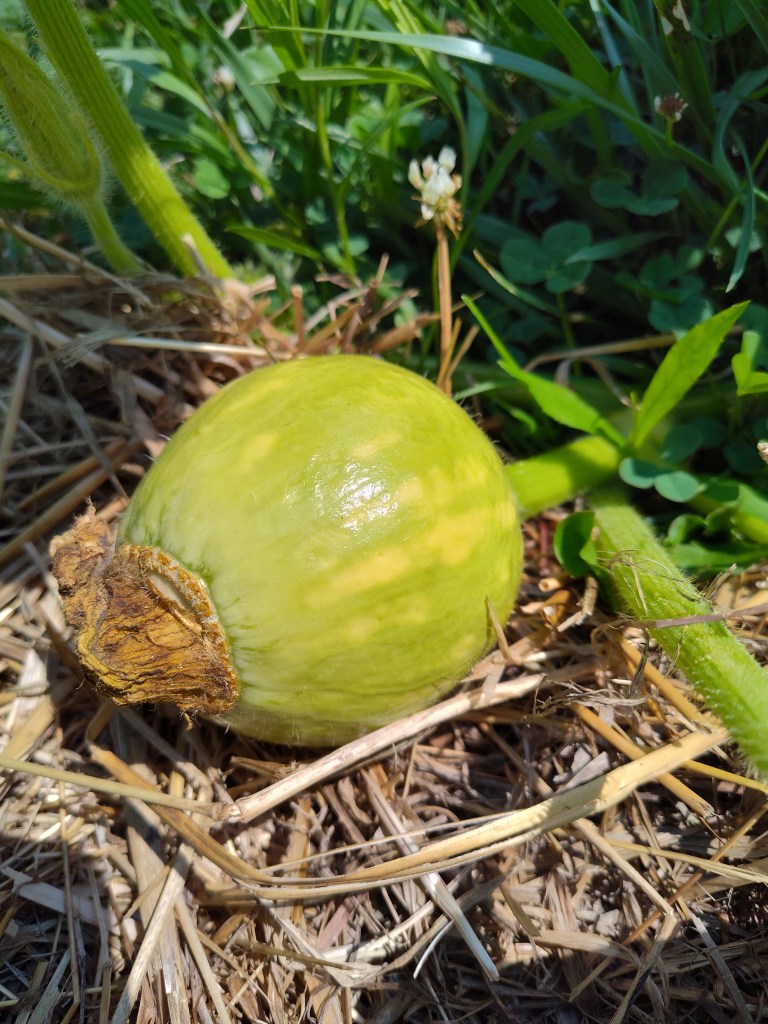
- We think we know what the mystery melon that’s been growing is. Or at least we’ve narrowed it down to two options: Seminole Pumpkin or Candy Roaster Melon Winter Squash. This plant is one of the starts that I transplanted without a marker, so we have no idea what it is, but the color and shape look like one of these varieties.
- Our tomatillos are starting to get papery husks on them, which is supposed to be an indicator of them continuing to ripen properly. I’ve read that tomatillos are a vegetable that requires a ton of patience.
- Our Chinese Long Beans have put on their first bean pod. It’s currently longer than my hand and is a beautiful purple color.


Seed of the Week
This edition of the Seed of the Week takes us back into the cornfield since we harvested and ate many ears of it last week. I’ve already written about the Hopi Blue and have discussed the Sweet Mexican/Black Iroquois corn in several places on the blog. So, I’m going to highlight the third variety we’re growing: Butter & Sugar sweet corn. It isn’t an heirloom, nor does its history span the centuries, but it’s one of the most popular and best-tasting corn varieties grown in the United States. When we were picking corn seeds in the spring, we wanted one variety that was relatively easy to grow and has a track record of success. That led us to this bi-color variety. Ours came from NE Seed in Connecticut.
Up Next
Hopefully, we’ll definitely learn what the mystery melon/squash is this week. The fruit shows visible growth on a daily basis, with the color consistently changing too. It started yellow, went to a light green, and currently has some yellow streaks on it. I’m also hoping that our paste and Queen Aliquippa tomatoes ripen.
 One Rabbit Riot