In a continuation of my series highlighting the garden seeds we ordered for our 2026 garden, I’m going to combine two vegetables into one post. This post will go over our pepper seeds and seed potatoes. Below, I am including links to the previous installments of the series. Plus, here’s a post that showcases all of the seeds we ordered.
Links to Other Seeds:
Peppers
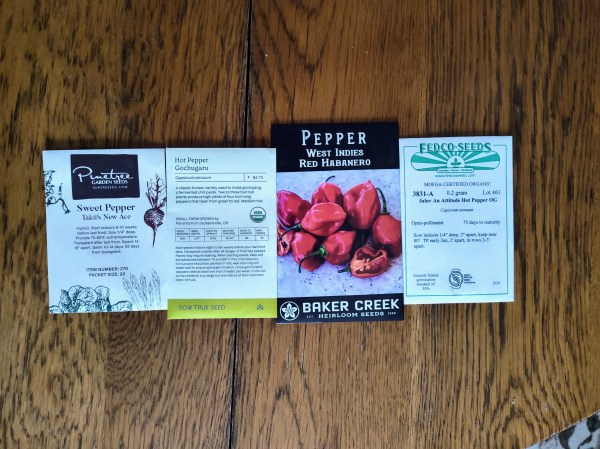
Gochugaru
We love using Gochujang in our cooking, and this is the pepper it’s made from. Gochujang is a fermented red chili paste used in Korean cuisine, and while it’s spicy, it still has flavor. We’re really excited to grow these seeds. The peppers grow to four inches long and are narrow. Our seeds come from Sow True Seed.
Jaluv an Attitude
Each year, Fedco Seeds designates one seed as their Seed Without a Price variety. It’s usually a seed with a unique backstory, and any profit that they would normally earn for the seed goes into their Seed Farmers Resilience Fund. This money is used to help Fedco’s seed farmers who face crop and livelihood disruptions. This year’s Seed Without a Price is the Jaluv an Attitude pepper. It’s a hot pepper that was developed by a breeder named Relentless. It looks like a jalapeno with a thicker skin and the flavor of a jalapeno. Jalapenos can be hit or miss for me. I love jalapeno poppers, preserving them into cowboy candy, and throwing them into salsa. But it isn’t a pepper I reach for just to add spice to a dish. That being said, I’m still really excited to grow these.
Takii’s New Ace
For our sweet pepper for 2026, I wanted a red, orange, or yellow bell pepper that matures quickly and succeeds in cool weather. Neither of us is a big fan of green bell peppers since they are often bitter and can lead to stomach aches. We tend to have inconsistent spring and summer weather where we live, so it’s hard to trust that we’ll have a hot summer that peppers love. Takii’s New Ace seems like the perfect pepper. It sets fruit in cool weather and has high disease resistance. Our seeds come from Pinetree Gardens.
West Indies Red Habanero
I love Jamaican jerk chicken, which traditionally uses Scotch Bonnet peppers. Unfortunately, Scotch Bonnet peppers and their seeds are difficult to find. Last year, Baker Creek sold them, but this year, they weren’t on their website. The West Indies Red Habanero was the closest variety I could find and happened to also be offered by Baker Creek. I’m curious to know if we can successfully grow this variety since it requires hot weather and lots of sunshine, but I think it’s possible.
Potatoes
We had some difficulty sourcing seed potatoes this year. In 2022, we ordered from Fedco and had great success growing them in containers. Last year, we ordered from Fedco and High Mowing because Fedco had sold out of some of the varieties we wanted. We weren’t able to harvest any potatoes, and the ones we received from Fedco were moldy and rotten when they arrived.
So, this year, we weren’t sure if we wanted to give Fedco another try. There’s a chance we could receive rotten potatoes again, plus their shipping costs are very high. High Mowing didn’t have all the varieties we wanted, and their prices are high since they’re all organic. That led me to search the web for specific seed potato varieties and resulted in me finding Urban Farmer, a seed company located in Indiana. We bought all our seeds from them.
Adirondack Blue
This midseason potato has blue skin and blue flesh and retains its color through the cooking process. The Adirondack Blue potato has antioxidants that can lower the risk of heart and neurological diseases. This potato is a fresh-eating variety with a short storage life.
German Butterball
The German Butterball potato is a quintessential late-season potato. It has yellow skin and flesh and is great for roasting and frying. It also stores well.
Magic Molly
The Magic Molly potato is one of the most beautiful varieties you can grow and eat. It’s a late-season fingerling with purple skin and flesh. We recently bought a bag of these from the store, and they made wonderful smashed potatoes. We grew these in 2022 and were amazed at their flavor.
Red Norland
The Red Norland is a wonderful early-season red-skinned potato. They are delicious, uniform in size, and store fairly well. My preferred way to eat them is boiled with butter, sour cream, salt, and pepper.
What are your favorite potato varieties to grow, if you grow your own potatoes? Also, have you had success growing hot peppers? If so, please share any tips.

 One Rabbit Riot