It’s Okay to Admit You Don’t Like It

A place I didn’t expect to reach this year, was the mental head space of dislike for a dream I’ve had for most of my life. Now could it be burnout and I just need a break? Probably. But I also think it might a healthy thing to acknowledge something you thought you would love, may not actually bring you joy as you wished.

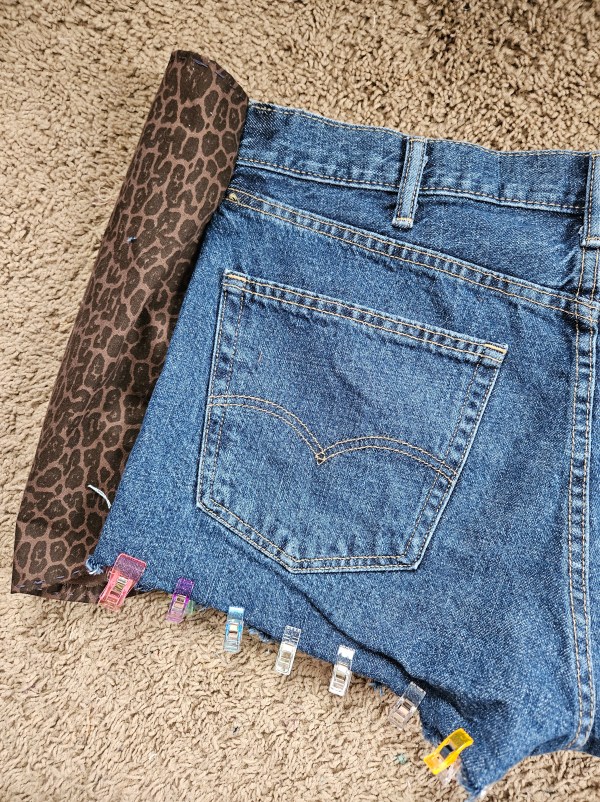
What am I talking about? Sewing. I don’t like sewing as much as I want to. It is tedious, extremely complicated, and requires a level of patience I lack. I’ve been a sewist for 5 years now. I devoted a large amount of my time over the past five years to the study of garment construction, and I realized that it is not my medium, yarn is, and its not a failure to admit I don’t like sewing as much as knitting and crochet.

I think I have known this for about a year, yet refused to verbalize my feeling because it felt like I failed the one thing I always wanted to do. But why is that a failure?

Just because it’s not my passion, doesn’t mean I am going to stop sewing. I think having this space to put less pressure on it to be “my thing” could make me enjoy it more!

Because then I am free to create, to fail, to be a slow learner, to take breaks from sewing when I am ready to cry. I don’t have to feel pressured to get my skills up to par for selling my work. I don’t have to feel pressure to design my own patterns or build a business on sewing. I can go back to basics of what has always been at my core – art. I am an artist, I don’t set out to be, but I know its there inside me too afraid to commit to the bit.

I love what sewing brings me. It’s a fantastic skill to have. I can design my own clothing made to measure and that is luxurious even if my sewing skills are mid.

I can experiement with my style through upcycling. I love how I can recycle and repurpose fabric instead of donating. That is a important part of comsumption. We buy and buy but don’t think about the life cycle of the garment, but with needle and thread you can leave the buy and declutter cycle.

Sewing has taught me to be a wiser comsumer as well. I buy garments that I can’t sew. Complex garments. I also price compare fabric against pieces in store to figure out what is more cost effective to sew. Such as buying a 6.99/yard, one yard cut of cotton jersey to make one long sleeve basic tee. You can buy these from retailers for 35 USD compared to sewing one for 7 USD.

It’s not always cheaper, but sometimes it is and that is a huge win!

Finally, by allowing myself to feel these feelings, my hope is that I will be free to explore and create unencombered by goals of monetizing my hobby, instead that I enjoy the creative process again.

Have you ever tried sewing? Did you find it challenging?

Beauty Advent Calendars and the Gift of Prayer

Advent calendars are becoming a strange phenomenon. When I was a kid, I knew Advent as the thing that happened on Sunday morning in more formal churches, like the ornate Presbyterian church in town, compared to the less formal Alliance church I went to, which had a gymnasium/sanctuary. A wreath would appear the Sunday, four weeks before Christmas, and a series of candles were lit in purple and pink, until Christmas Eve when the white candle was lit. There was scripture reading, as we looked forward to the coming of Jesus, by recalling the moments throughout the Bible pointing to his birth. It was a time of preparation and reflection on the deeper meaning of Christmas in the Christian context. I didn’t grow up with an advent wreath at home but I thought they were fascinating. I was more familiar with those small, wooden, or felt Christmas calendars that involved opening a door or moving a little trinket to a new pocket each day.

The term Advent calendar now has a different image in my mind. I can probably thank Alexandria Ryan’s Beauty Advent Calendar unboxings for this. I think of small samples, expired makeup, Augustinus Badder’s ‘The Rich Cream’, and Charlotte Tilbury. Now I should explain before this makes her channel sound posh and out of touch. I found her channel many years ago, I believe in 2017, as a makeup subscription box unboxing channel. Since then, it has evolved into a channel with ‘advent season’ that usually wraps up in spring or summer. She purchases beauty and snack advent calendars and opens them to see if they are worth the money by comparing the cost of the box with the total value of the items inside.

It’s a lot of math! For most calendars, it is a lot of samples and Ali-Express private-label junk being sold as exclusive items. It all started back in 2019 with the Sephora Holiday Advent Calendar, which was so poor quality, that she recreated the items from the Dollar Store. This led to an annual Sephora Advent Calendar tradition and grew to Advent calendar season each year. Including Halloween Advent calendars, which are now a thing for companies to sell. The word Advent is slowly changing in meaning from a particular Biblical preparation process to a countdown to Christmas Day to a catch-all seasonless countdown mystery box that can be 12 days(for the twelve days of Christmas)-24 days-25 days or even a 7-day after-advent calendar for the week after Christmas, to a free-form countdown signifying word which correlates to opening a box of mystery items from themed packaging. Instead of being opened daily, most of these are opened all at once and are treated as a good deal, a content generator, or a gift people give themselves or others. It’s far from the chocolate Advent calendars of childhood, it’s a whole cross-section of the consumer market now with Advent calendars that will hold anything and everything, for humans and pets alike.

Now, I’m not here to discuss this from a Biblical point of view, because Advent is not a tradition pulled directly from the Bible like communion, Passover, or baptism, it’s something the church began doing and traditions vary. The date of the celebration of Christmas varies between Orthodox and Catholic/Protestant calendars. Jesus was not born in December, it’s all cultural and has been adapted from European solstice and winter festivals, so it’s not a big deal to me. This is more of a fascination I have with humans and the way we imagine whole new things in such a short amount of time. Our culture of Advent calendars changed rapidly within 5 years! I don’t remember them being such a cultural fixation until a few years ago. Now every store and every company seems to have an Advent calendar that they are ready to sell you!

I believe this happened because we were looking for something to make sense of those weird holidays at the beginning of the decade, combined with late-stage capitalism and hyper-consumption, and boom – it’s a perfect storm for the boxes upon boxes of tiny things being offloaded into these boxes for a hefty price. It’s a way for companies to make a quick buck, offload products they need to sell but won’t move, or rip off customers by filling their calendars with useless junk – like the 2024 VIB Reward Advent Calendar from Sephora.

Even the word calendar is changing with this phenomenon, what is a calendar? Is it a way to track the time and year, by seeing a month at a time until twelve months have passed? Is it a box with doors that contain presents? How many doors equal a calendar? What separates this from a mystery box? Is it simply the doors, the numbers, and the packaging? Does it have to be tied to a holiday at all? Just like Advent in concept is changing so is the meaning of calendar and it’s interesting to me that as humans we do this and we do this so seamlessly? Language is such a curious medium. I can see through this process how words shift in meaning, dialects are formed, and why communicating with someone in the past or future speaking the same technical language as me would be quite difficult.

But what about Advent calendars without the products? Do they still exist and are they fun? I did an Advent calendar this year, the first time I’ve ever had my own. It was a 24-day Advent calendar, that I received in the mail from Prison Fellowship, and was a 24-day of prayer Advent calendar. It was completely free. I didn’t know I was being sent this item until it showed up in my mailbox a few days before Thanksgiving. There were no items to receive each day, just a scripture reading and a prayer. The prayer requests covered the varied needs of their ministry – those who are incarcerated, their families, the corrections officers, the children of those incarcerated, the ministry team of Prison Fellowship, people like me who donate, the communities and churches across the nation so that we can all work in synergy to be prepared and ready to serve God through our part in this mission.

What I appreciated the most about this calendar was how it felt interwoven, it covered needs at all levels. For example, over the 24 days, I prayed for those who were incarcerated who come to Prison Fellowship events and those who haven’t. I prayed for comfort in the isolation of being incarcerated, especially during the holidays when the incarceration process removes you from all connections, not to mention the pain caused by the action that led to incarceration. It is a time of pain for prisoners, their families, and friends. I prayed for the ministry of Angel Tree, the children of prisoners and families of prisoners, for comfort and reconciliation, and spiritual redemption. I prayed for churches and communities, as well as prisons and corrections officers to all work as one to facilitate the redemptive work of God in these communities inside and outside of prison.

It was truly powerful and did not feel like something that was made without prayer itself, because the scripture readings were so intricately tied to the prayers each day. A human could not have done that on their own. It was the first time I’ve prayed the prayers written for me without deviating. I usually try to say my own words and thoughts when given a prayer request, but I felt deep down that repeating the request inscribed behind the door was what was being called for most. It taught me that prayer is not about me nor my wish to put my stamp on it as a creative person. Prayer is more than just communion with God, it is about God and his purposes. His plan over my plan.

I don’t know why I specifically received this. I don’t know if everyone who has donated was sent one or just some people? I haven’t seen much reference to this calendar, but I am so grateful that I did receive it. It was an incredible experience and taught me that even if Advent calendars are being transformed into cash grabs and tools of overconsumption, they can still be a process that prepares us for the Christmas season and brings the focus to God and His work in our lives. It can also be a fun concept that brings holiday cheer, like Catvent, an Advent calendar for cats filled with cat toys. That was an Advent calendar my Instagram friend shared daily on her stories this year which I absolutely loved! It’s truly becoming a multi-layered concept and I’m intrigued, so much so that it is January and I am looking forward to catching up on the next Advent calendars to be unboxed by Alexandria in the new year.

I hope wherever you are you have a lovely day or evening or night. Thanks for spending time with me, dear reader. Until next time!

Sewist Reacts: What In the Vintage Inspiration Is This?!

Fast fashion is a problem for many reasons. The overconsumption. The exploitation of workers. The lack of quality in construction and fabric. Polluting water sources and landfills. Ruining thrift stores with Shein products. But one I hadn’t considered was how these fast fashion brands are watering down design to the point that they are misrepresenting fashion terms like corset, choosing the wrong fabrics for construction, and not even trying to pattern match. It’s becoming nonsensical!

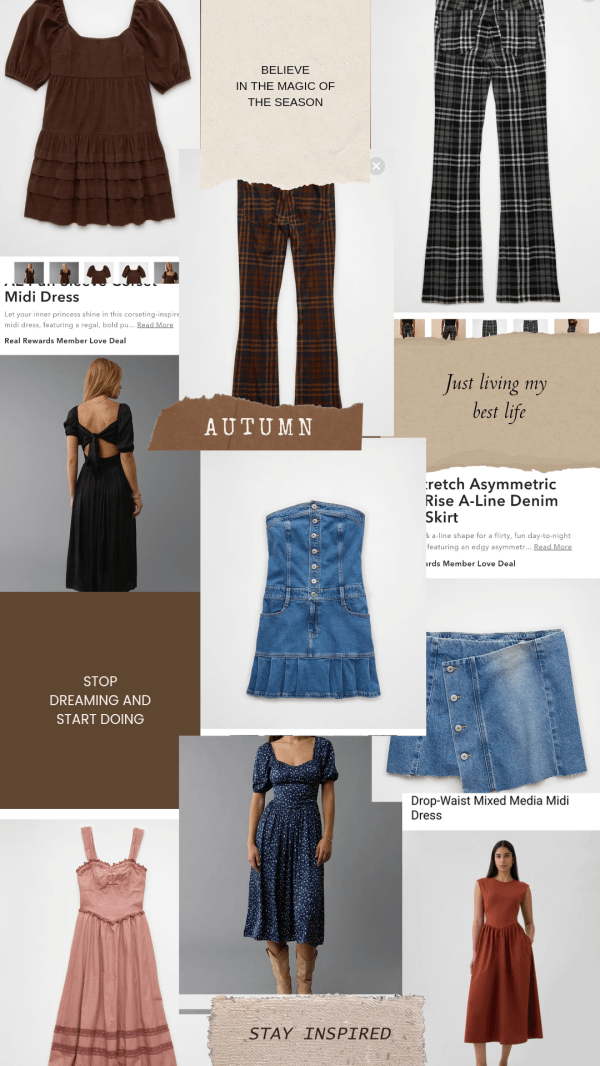
Fall fashion trends and fall sales are in full swing here in the US. I’m seeing ads everywhere, in between Instagram stories, in my email inbox, on YouTube, on television advertisements, etc. It’s bonkers! You would think that we had empty closets and had never owned cold-weather clothing before! Each season you need to completely restock your wardrobe! Buy, buy, buy!

So I caved and I started to look at these websites. Looked, not purchased. That is the key here because I found some wacky things masquerading as vintage and historical-inspired pieces of fashion. These fashion brands are two that are quite popular in my neck of the woods.

The Gap does Medieval Plate Armor

A brand I get a lot of ads from, which amuses me because I don’t like this brand, is the Gap. I probably see ads because I do buy occasionally from Old Navy and they are owned by the same company. If only the Gap knew how I feel about them, they would realize it is a lost cause. I think that the Gap cuts its patterns weirdly, is expensive for the quality, and is dry toast in terms of its aesthetic. So I wasn’t surprised to see a rather vanilla dress. What surprised me were the style lines of this dress and the fabric they chose.

This dress looks inspired by 16th-century plate armor, a breastplate specifically, but it is made out of what I would guess is a stretch jersey because there is no structure or fastenings in the photos. So a rigid garment, being made out of a stretch shapeless fabric, just isn’t right. There is something off about the shape of the bodice and how it hangs on the body. This is a missed opportunity. I think they could have added boning channels or made this out of a stiff woven fabric. Maybe a coordinating vest? Vests have come back in popularity. It’s a misrepresentation of the historical garment they were inspired by and as a dress historian, it bugs me. This dress is already an attempt at thinking outside the box, so why not do it properly and celebrate the design? 🙂

There is an exhibit at the Met, linked above showing a historical example of what I am talking about, featuring an exhibit of 16th-century armor with beautifully sculpted lines.

A Corset That is Not a Corset

This dress is not a corset. Maybe it is a Victoria’s Secret definition of a corset with the stretch smocking on the back, but this is not in form or function, what a corset is or was. The corset was a supportive undergarment, a foundation garment as they were called that shaped the body and supported the bust according to the specific standard of beauty at the time. The first iteration of the corset appeared in the 16th century, called a pair of bodies. This was followed by stays in the 17th and 18th centuries and the transition to the corset in the 19th century which held popularity until the 1920s when the corset began to fall out of fashion for other types of garments. This is a very quick overview and I probably oversimplified this so I would recommend checking out historical costuming YouTube for a better reference, also the V&A has an online exhibit featuring Victorian corsetry.

Because of the lack of familiarity, we have with the corset in our 21st-century mind, we tend to slap the word corset on any shape that looks like a formed bodice, which is what this is a bodice cut to accentuate the waist but will fall flat because it is not made with any structure to give the garment a shape. There is no lacing, cording, fake baleen, or steel to give this any shape beyond the body that will wear it. It is all smoke and mirrors. But that bugs me, because American Eagle, the maker of this dress, is a popular teenage and young adult brand that can shape the minds of the future by their experience with clothing!

So why not ride this wave of aesthetic TikTok dressing and go full-on corsetry? Tight lacing is not required, nor was it popular for most women historically, except for the Kim Kardashians of antiquity who did it for the spectacle, people of the past needed to move and breathe just like us so it could be a corseted bodice, and not be controversial! It’s just a thought. I do appreciate the trim on the skirt, it is very 1890s, and I like it.

This dress has the same problem, this is not a corset and this is barely a puff sleeve. This is bad marketing and bad fashion education. You could never corset an open-back dress and to puff a sleeve you need quite a lot of volume and possibly some Tarleton to help keep the sleeves voluminous. The Fashion Institute of Technology has an online exhibit featuring the Gigot sleeve, a beautifully puffed historical design.

When it comes to historical dress there are so many cool designs from the past, and with the amount of research that exists and abilities to connect through technology, there are endless ways to be inspired from the past but not screw it up. I think we should embrace the gift we have of historical dress knowledge and technology like sewing machines, the internet, etc to make something beautiful. These companies have so many resources at their disposal, that I wish they would try a bit harder to make good clothing. But alas, they are fast fashion, and this is one of the worst fast fashion blunders I have seen from these two brands, the Gap and American Eagle until I found this one pair of plaid pants, but that is another story!

Thank you, reader, for going on this adventure into historical dress with me. If you are as tired as I am of the current state of fashion, I encourage you to learn how to sew! It’s the best hack I’ve found.

Empty Cup of Humanity

It’s January, mid-winter. It’s the NHL mid-season, a time when we look to the championship season, it’s all the internet can talk about. The Stanley insulated cup in hot pink and red versions. THE Stanley cup.

Stanley Has Arrived

What is the Stanley Cup? The oldest championship trophy that is currently awarded in North America. Dating back to 1892, it was commissioned by Lord Stanley of Preston, the Governor General of Canada at the time. It is the symbol of victory in the NHL. (The Hockey Writers 2023) The ultimate goal of players and franchises alike. It is the most coveted Stanley Cup, right? Not even close.

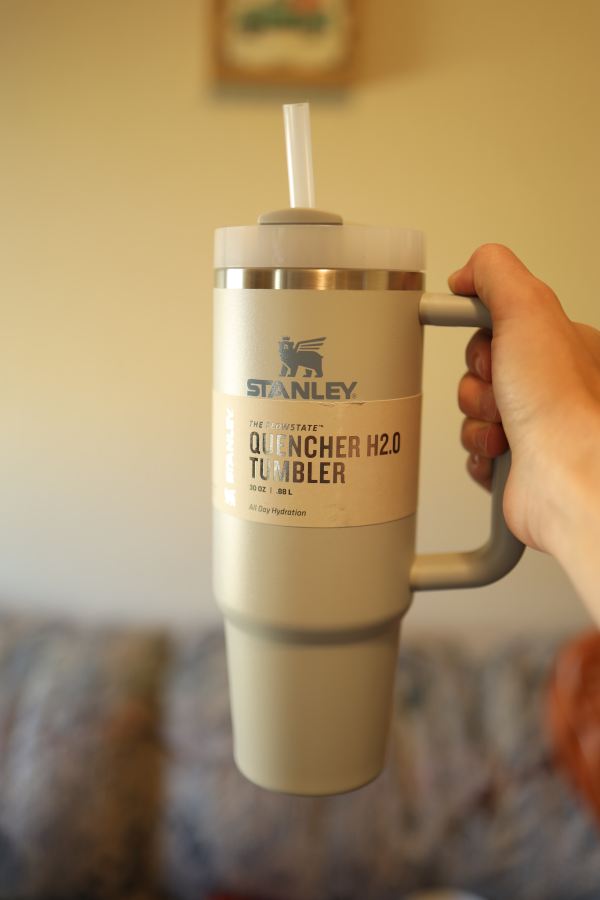
Enter 2023, the year the Stanley insulated cup with straw, handle, and lid, retailing for USD 45 each became THE cup of choice. These two cups may be shiny, metal, and iconic holders of liquid but only one has sent a wave of chaos in 2024. Specifically the Target x Stanley Cup Valentine’s Day Tumbler and the Starbucks x Stanley Winter Wonderland Tumbler. These two limited drops have made me question, truly, how empty the cup of humanity is. And how do we refill this empty cup with improved priorities? 

A disclaimer, I’m not judging people’s interests. I have wanted an old-school Stanley thermos for years. It’s a cool technology and built to last. These cups are pretty cool. The handle looks sturdy, and it’s easy to drink from too. The colors are cute, even the ones featured in these winter drops. What I am unimpressed with is the scarcity of marketing tactics for these limited drops, the dark side of a highly individualistic culture that rears its ugly head in these situations, and the out-of-control reseller market. What was concerning about this release was the character exhibited by a few which echoed louder than the positives. 

The Drop into Nonsense

On December 31 the Valentine’s Day cups were released at Target to customers camping out, harassing Target employees, and caught on camera running others down, shoving, and fighting over cups to get a piece of the merchandise. Similarly, the Starbucks release (in Target) on January 3 had extra spice on top. Thanks to the modern age of TikTok and filming in public, a Starbucks drop in San Bernadino showed how far people will go to get their hands on these exclusive water carriers. First, there was fighting in the line, next a man jumped over the Starbucks counter, working in tandem with his sister, they attempted to grab merchandise and dash. The man shoved the barista out of the way and grabbed a box of cups while his sister tried to grab cups already purchased by customers and ran for the doors. Luckily, they were not the best burglars because the man was tackled by others in line before he reached the door. His sister was only able to rip the Starbucks paper bag. The most amusing part of the video was that they left and came back because the man left his phone, and left again as the police were on their way. These clips I saw by the way through Kiki Chanel’s Youtube channel, she put together a great video about the subject that put this on my radar. (Kiki Chanel 2024)

In her video, she also shared clips of these limited-edition Stanley cups being listed by resellers online with a ludicrous. (Side note, I realized I don’t know how to properly spell ludicrous without looking it up – my brain defaults to Ludacris.) There were also clips she found on TikTok of people purchasing a substantial number of these cups, with reselling appearing to be the intent. After I saw the markup these cups have on the resale market it became clear why, in this economy, holy moly it is quite the profit! These USD 45 Stanley cups are being resold online for between USD 90-230. That’s an insane return if you can move them. And this is where I believe we can reclaim our empty cup of humanity. 

Social Clout 

I understand the economy is rough, inflation is happening and everyone could use extra income but this is silly. It’s a reusable cup, and price gouging, hoarding, and stealing to resell to pay the bills? This is hardly Jean Valjean stealing a loaf of bread to feed his family. The Stanley tumbler is not a necessity, it is a status symbol for social clout. Its market value is also not permanent. As we know from the virality of TikTok, this will be replaced by a new thing before those who use these have time to even enjoy these cups. I’m more of a water bottle girl so I’m not participating in this trend, but a lot of people have. They are a symbol of social standing, but they don’t have to be. It’s not that deep. 

This morning on the radio, I heard a story that truly was a shame to hear but I know it’s true because I remember this happening when I was a kid. It’s human behavior. A girl received an off-brand tumbler for Christmas and took it to high school to use because she liked it. The girl was bullied for not having a Stanley Tumbler and her mom bought her a Stanley Tumbler to stop the bullying. (WayNation 2024) I know why her mom chose that as the solution, her mom gave her the off-brand tumbler for Christmas, and as moms do, she probably felt like the bullying was her fault. She wanted to fix it and I got it, my mom would do the same. What sucks about this whole situation is the barometer of the culture and the values prevailing by the bullies. 

Hypocrites We Are

Gen Z and Millenials are supposed to be environmentally conscious. If she was using a reusable cup, who cares? It’s hypocritical to bully her and then encourage overconsumption by prompting the parent to buy a new cup to stop the bullying. Brand names do not maketh the man or woman. Manners do, to quote Agent Galahad of the Kingsman (Vaughn 2014). Bullying will continue its bullying ways because the manners and moral convictions of the bullies were not addressed. That’s not the responsibility of the victim or the victim’s mom.

The Bailey Button Sweater Uggs, Miss Me jeans, the Sidekick, the iPod classic, Livestrong bracelets, the North Face jacket, Abercrombie’s Moose Logo, Rhinestone Affliction Tees, etc. These were some of the sought-after items of my high school experience that we coveted and felt less than for not having, but at the end of the day, it was just a thing. An item. None of those things matter now. Are Affliction or Miss Me even brands anymore? The point is people matter, and things pass away. Isaiah 51:6 NIV says, “Lift up your eyes to the heavens, look at the earth beneath; the heavens will vanish like smoke, the earth will wear out like a garment and its inhabitants die like flies. But my salvation will last forever, my righteousness will never fail.” God created us for more than this social construct.

We are giving material goods too much agency in our lives. Materialism and overconsumption are rotting our brains. We thought Black Friday madness died in 2020, but the terrifying reality is that it has risen from the ashes like a phoenix in the name of scarcity marketing. After the holiday rush and spending from November to Christmas, scarcity marketing created two Black Friday-type scenarios less than two weeks later. And it can happen again and again and again, if we let it. But we don’t have to buy in. We can choose to not let our worth be defined by our participation in trends and we can keep our greed from taking advantage of others who are lost in their greed and worship of trends, to preserve our humanity. 

Closing Thoughts

USD 45 can do a lot of good. It can feed members of our community at a food bank, it can provide toiletries and shelter to homeless missions, mosquito nets, provide education and reconciliation through prison ministries, help those who are rebuilding after natural disasters, and provide necessities and shelter to refugees of war. The possibilities are endless for what that money can do. I get caught up in consumerism too, I have gone through waves of shopping addiction and still struggle with retail therapy. The first step though, is acknowledging the problem and taking a step back to evaluate and reconsider. Not living solely for ourselves but for our communities and for me personally, living for my Savior has been instrumental in freeing me from the crushing weight of overconsumption and trend cycles. Because at the end of the day, it is an empty cup. 


References

The Hockey Writers. 2023. “Stanley Cup: Stats, History, News.” The Hockey Writers. https://thehockeywriters.com/docs/stanley-cup/.

Kiki Chanel, dir. 2024. Episode The Stanley Tumbler Craze is Out of Control, “Kiki Chanel.” Aired January 4, 2024.

Vaughn, Matthew, dir. 2014. Kingsman: The Secret Service.

WayNation. 2024. The Wally Show, radio program, daily morning show. Nashville, TN, USA: WayFM.

Create a website or blog at WordPress.com

Up ↑